Read more of this story at Slashdot.
Read more of this story at Slashdot.
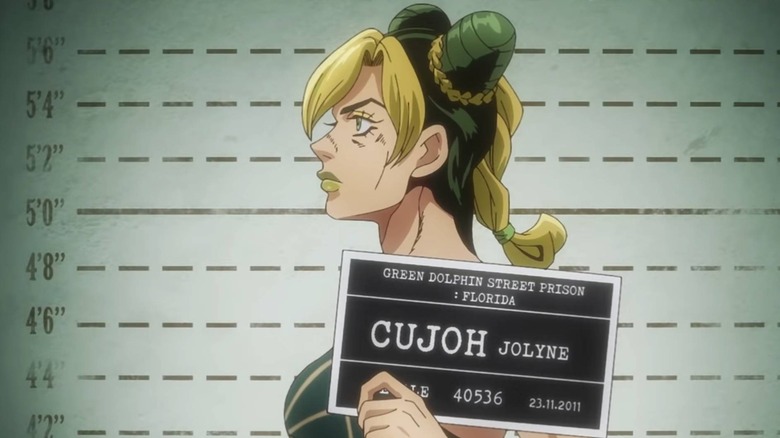
If you can't stand to wait much longer, there's good news on the horizon: part two of "JoJo's Bizarre Adventure: Stone Ocean" will soon be gracing our Netflix selection screens! Like part one, part two will consist of 12 episodes (episodes 13 to 24, to be exact).
Set in 2011, part two of the "Stone Ocean" arc will continue to follow the adventures of the wrongfully incarcerated Jolyne Cujo, a fan favorite of "JoJo's Bizarre Adventure" manga readers (and cosplayers), and the only female JoJo to date. For those unfamiliar with the "Stone Ocean" arc, here's what you can expect according to the official Netflix summary:
Florida, U.S.A, 2011 -- After an accident while on a drive with her sweetheart, Jolyne Cujoh falls into a trap and is sentenced to fifteen years at the state-run maximum-security correctional facility Green Dolphin Street Prison — AKA "the Aquarium." On the verge of despair, she receives a pendant from her father that causes a mysterious power to awaken inside of her.'There are things in this world that are more terrifying than death, and what's happening in this prison is definitely one of them.' A message from a mysterious boy who appears before Jolyne, inexplicable events that occur one after another, the horrifying truth told to her by her father when he comes to visit, and the name DIO... Will Jolyne ultimately be set free from this stone ocean they call a prison? The final battle to end the century-long, fateful confrontations between the Joestar family and DIO begins!!
Check out the trailer below!

Let's talk about my earlier use of the word "soon." Soon can mean a lot of things, and in this case it means "fall 2022." Although many fans were hoping for a spring 2022 release date, the series track record shows that the next installment of the beloved, chaotic anime will be well worth the wait. Still, the exasperation at a longer wait time than previously anticipated is understandable, especially when many anime fans tend to prefer a weekly release schedule over the chunky staggered release treatment that Netflix has given the series.
How it feels to be a Stone Ocean fan rn pic.twitter.com/tozUP9TKOL
— 🦀Reapeageddon🦀 || COMMISSIONS OPEN (0/3) (@reapcykes) March 26, 2022
While binge-watching is fun, there is something to be said for the excitement that comes with anticipating a new episode of your favorite anime every week.
Why do Netflix batch episodes suck for stone ocean? Episodes 13-24 will drop late September and again we'll have no idea about the next batch for 6months. It will kill the hype again. The weekly episodes of Japan have had better quality of animation & sound.
— JOLYNE KUJO IS HERE? (@Saitamagoated) March 26, 2022
I mean, look at the way "Demon Slayer" managed to trend for months on end due to Hulu opting for weekly episode premieres rather than dropping the entire thing at once or in multi-episode bundles.
Read this next: The 10 Best Anime Moments Of 2021
The post JoJo's Bizarre Adventure: Stone Ocean Part 2 Trailer, Release Confirmed for Fall 2022 appeared first on /Film.
Read more of this story at Slashdot.
Let’s face it, nobody really wants to buy life insurance.
After all, adding an extra expense to your budget for something you’ll (hopefully) never use isn't at the top of most people’s wish lists.
However, life insurance coverage is a critical part of most sound financial plans. It also becomes absolutely necessary when you have dependents to care for.
Unfortunately, by the time most of us begrudgingly admit that life insurance is something we truly do need, we’re already well beyond the ideal age to purchase it.
So, when is the best time to get life insurance?
The true answer to this question will depend in large part on your individual circumstances, but, in simple terms, the answer is “The sooner the better.”
When looking at life insurance coverage from a pure cost perspective, some may say that the best time to buy life insurance is as soon as possible after birth. That’s because a life insurance policy gets more expensive with every year that passes by.
However, this isn’t practical, or advisable, for most people.
In our younger years, other priorities take precedence. Many of us have to focus on getting out of debt first. We’re also saving up to meet important goals like creating a sufficient emergency fund, buying our first home, and saving for retirement.
Related: How to be a pro at growing your wealth
Millennials and other younger people are also choosing to delay marriage until later in life and tend to have less income and more debt than their parents did. These circumstances all contribute to the “deal with it later” attitude that most young people have when it comes to purchasing life insurance.
However, you might be surprised to learn that, in almost all cases, it’s ideal to purchase your life insurance coverage well in advance of your 35th birthday. Unfortunately, most people in this age bracket mistakenly believe that they can’t afford life insurance premiums.
A 2015 study released by the nonprofit Life Happens and LIMRA found that 80 percent of the people surveyed significantly overestimated the cost of life insurance. Those who fell in the Millennial age bracket overestimated the cost by as much as 213 percent, while Gen Xers overestimated it by 119 percent.
This misinformation has led over 54 percent of Americans to say that they’re unlikely to purchase a life insurance policy within the next 12 months. This is despite 43 percent of people admitting that they would feel a significant financial impact if their household’s primary wage earner were to pass away.
The sad reality is that less than 40 percent of Americans currently own life insurance, while close to 70 percent know that they need it. Don’t let yourself fall into this trap! Keep reading to learn more about the reasons why you might need life insurance even if you don’t have dependents, the true cost of life insurance coverage, and how easy it is to purchase your own policy.
It’s easy to understand why you might think that you don’t need life insurance if you don’t have a family to care for. However, there are other valid reasons to carry life insurance from an early age. Here are the top four.
One of the most important reasons a young, single person needs life insurance is to cover your debts. Many young people who simply don’t earn enough to pay for their expenses end up taking out an unsecured credit card for day-to-day purchases and other necessary costs. As you rack up debt, ideally, you should have a life insurance policy that’s large enough to cover your outstanding balances.
If credit cards and loans are in your name only and your estate doesn’t have enough money to cover your debts, then creditors might be out of luck. But, if you have a joint credit card or a co-signer on any of your loans, the person who is left behind will be responsible for paying off the entire balance. This could put your loved ones in quite a predicament.
Although marriage rates are down from 70% in 1967 to less than 50% today, more people than ever are living in dual-income households. Unmarried couples sharing expenses need to consider how the loss of their income would impact the other party. If you were to pass away today without life insurance, would your significant other be able to maintain their current standard of living? If you’re not sure, then now is probably a good time to consider a life insurance policy.
If you’re eligible for group life insurance as part of your employment benefits, this is usually a great deal. These policies are often very expensive, of your employer might even cover the entire cost. However, if you leave your job, you don’t usually get to take your policy with you.
Related: Here’s a scientific system to build your wealth now
When you’re young, it’s likely that you’re not going to stay at the same job for the rest of your life. Depending solely on a group policy could leave you without coverage when you need it most. It's better to purchase your own individual policy and consider any group policies as icing on the cake.
Even if you don’t have any dependents or outstanding debt, if you were to pass away today, it’s likely that your loved ones would have to spend anywhere from $6,000 to $9,000 for your funeral services. If your loved ones are financially well-off and this expense won’t impact them, then you still may not need life insurance. However, if you believe this would create a financial burden, then you may want to consider purchasing a small policy to help cover these expenses.
According to the quote comparison website Policy Genius, the cost of a 30-year, $200,000 term life policy for a healthy 40-year-old male starts at $53 per month. That same policy for a 25-year-old male is just $31 per month. Over the lifetime of the policy, that’s a difference of $7,920!
In addition, the longer you wait to purchase your policy, the greater the chances are that you could develop a health condition that makes it significantly more expensive. In some circumstances, like if you develop cancer or conditions like high blood pressure or obesity, insurance companies might even deny you coverage altogether. This will leave you with a huge gap in your financial plan and could expose your loved ones to serious financial insecurity.
Since term life insurance premiums don’t go up even if you develop health conditions, it’s usually a good idea to lock in your rate while you’re young and healthy.
We’ve already mentioned that most people overestimate the cost of life insurance. The truth is that a young, healthy individual can almost always get a term life insurance policy for less than the cost of your daily coffee habit. Studies also show that most of the people who think they can’t afford life insurance make room in their budgets for conveniences like cable and internet services and cell phone data plans. The harsh reality is that if you have money to go shopping, go out to eat, take a vacation, or spend an evening out at the movies, you can afford a life insurance policy.
Some insurance salespeople might recommend a permanent life policy with cash value. They’ll tell you that it makes sense to purchase this type of policy because you can use the cash for things like a mortgage down payment or the kid’s college tuition. However, this is rarely good advice.
Permanent life insurance is far more complicated than a term policy and the added fees, expenses, and surrender charges make these types of policies an unnecessarily costly option. Often, premiums for a whole life policy can be as much as 10 times more than a term policy with the same death benefit. When you’re trying to fit life insurance premiums into your budget, this is clearly not an appealing option. Especially if you're first starting out, purchasing a simple, inexpensive, term policy is almost always your best bet.
If you’ve read all of these facts and are now convinced that this is the right time for you to buy a life insurance policy, you’re probably wondering how to get started. Luckily, it’s much easier than you might think. Follow these five simple steps, and you can have a policy in place by the end of the day!
If, despite reading all of the above information, you truly believe you don’t need life insurance, that’s okay.
However, it’s important to keep your future goals in mind and decide if the cost of waiting is worth it to you. Considering that most people can purchase a term policy for less than the cost of a night out on the town, planning ahead is almost always in your best interest. This can help you create a secure financial future for your loved ones and save yourself a significant amount of money over the course of your lifetime.
Expectancy Wealth Planning will show you how to create a financial roadmap for the rest of your life and give you all of the tools you need to follow it.
Read more of this story at Slashdot.

(Welcome to Year of the Vampire, a series examining the greatest, strangest, and sometimes overlooked vampire movies of all time in honor of "Nosferatu," which turns 100 this year.)
There's something about the grime of punk rock and its lifestyle that melds seamlessly with the bloody fundamentals of vampirism. Throughout history, vampires have been quite buttoned up and proper. After all, their stories have existed throughout modern history, and their legacy extends back to the early 1800s. At that time, elegance wasn't a choice, it was a requirement — and thus, vampires and their stories have followed a similarly restrained trajectory throughout their existence. There have been outliers, but even today, we still enjoy the classic vampire stories that the world came to love first. However, there's no denying that new spins on the concept continue to captivate audiences in the now.
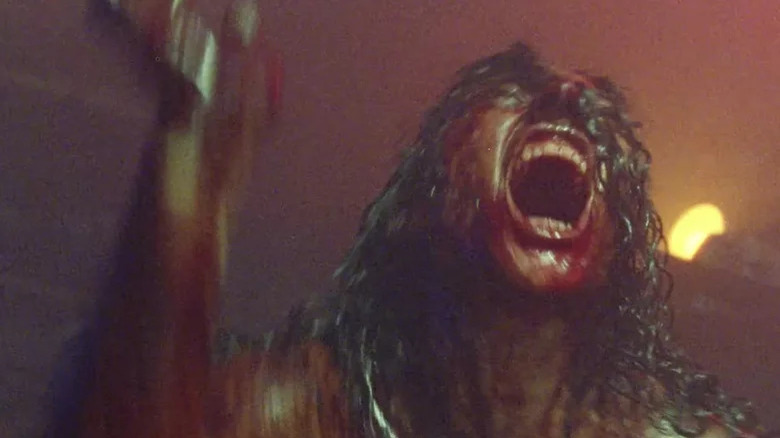
Enter Joe Begos' 2019 gritty, neon-soaked vampirical horror show called "Bliss." The film follows painter Dezzy Donahue, famous in the Los Angeles scene for her raw approach to art and a penchant for partying and hard drugs. When her inspiration starts to run dry just days before a major exhibition, Dezzy starts taking Bliss, a psychedelic drug that seems to unlock a primal need for blood in her. However, as she starts to unwittingly fall down the rabbit hole that the substance pulls her into, she comes to find there is more than meets the eye when it comes to her bloodlust.
A Gaspar Noé film meets a hardcore show meets a thoughtful exploration of art, "Bliss" is engaging, enraging, rapturous, and raucous all at once — and it's wholly different from nearly anything in the vampire genre before it.
Something that will always draw me to a film, no matter the genre, is specificity and uniqueness. If a movie feels singular, I can promise you that I probably quickly fell in love with it. It's the same feeling that led me to love the few vampire films I'm attached to: "The Transfiguration," "Ganja & Hess," "What We Do in the Shadows," even Francis Ford Coppola's "Dracula." And that is what innately draws the audience into "Bliss."
The film's neon-tinged edge and punk rock flavor burst onto the screen in the first seconds and permeate the screen throughout the movie's runtime, with the production design being a particular standout. It's full of genuinely fun and flawed characters who round out the story around Donahue as her life comes undone before her eyes. The drug sequences are pitch perfect at conveying the pace of the high as it overtakes the body. The cast, led by Dora Madison as Donahue, is absolutely on fire and their commitment to the concept is a major player in what makes this film, its ideas, and its world flourish on screen. The soundtrack and score is an excellent complement to the movie's aesthetic and overall worldbuilding. The film also contains a level of gore that is more unhinged than most vampire stories, based on their conventionally standard lean toward traditionally
"Bliss" is just different from most vampire stories in so many ways, yet claims its foundation in the classics. And that's what made me interested in it, what sucked me into its story, and why I still get lost in it with every rewatch.
"Bliss" is currently streaming on Shudder.
Read this next: The 31 Scariest Movie Scenes Ever
The post Year of the Vampire: Joe Begos' Bliss Is a Neon-Soaked Punk Rock Bloodbath All Its Own appeared first on /Film.

Spring has officially started, and if that makes you want to get out and explore, you’re not alone. But with gas prices continuing to soar, a road trip may not be the most cost-effective way of doing that right now.

Spare tires fall into the category of things you forget about until you desperately need them. But that’s not exactly the safest approach.
While bats have been closely associated with vampires for centuries, there are actually only three species of bats that drink blood. Most of them eat fruits, insects, nectar and small animals, like frogs and fish, instead. Blood is low in calories, while being rich in iron, protein and little else, making it a terrible, terrible food source. Now, a team of scientists has figured out how and why those vampire bat species are the only mammals that can live solely on a diet of blood.
Upon comparing the genome of common vampire bats to 26 other species, the scientists found 13 genes in the blood-sucking mammals that either no longer work or are missing. Three of those losses had been reported in another study published in 2014, with all of them indicating a reduced sense of taste reception in vampire bats. The remaining 10 gene losses are new discoveries, according to the team.
The loss of a gene called REP15 indicates enhanced iron uptake in the animals' gastrointestinal cells, which they also shed and excrete quickly. This prevents iron overload that can have severe detrimental effects. The absence of two other genes allow glucose to remain longer in the bats' bodies and prevent hypoglycemia, since blood contains minimal carbohydrates. Another absent gene might also be the consequence of the "extensive morphological and physiological modifications" in the stomach of common vampire bats. Instead of being a muscular organ, their stomachs are expandable structures used to store large amounts of liquid and serve as a major site of fluid absorption.
The loss of one gene even contributed "to the evolution of vampire bats’ exceptional social behaviors." Since they can't survive too long without feeding, seeing as blood is very low in calories, vampire bats can regurgitate their meals and share with others. They can also keep track of who shared with them in the past and will extend extend help to them in the future if needed. Hannah Kim Frank, a bat researcher at Tulane University, told AP: "It's totally bizarre and amazing that vampire bats can survive on blood — they are really weird, even among bats."
The study revealing the loss of genes that allow them to live off blood doesn't make vampire bats any less weird, or intriguing. You can read the whole study in the Science Advances journal.
with the free and open source MIST - macOS Installer Super Tool:
% mist list
┌──────────────────┐
│ INPUT VALIDATION │
└──────────────────┘
  ├─ Kind will be 'installer'...
  ├─ Include betas in search results will be 'false'...
  ├─ Output type will be 'ascii'...
┌────────┐
│ SEARCH │
└────────┘
  ├─ Searching for macOS Installer versions...
  └─ Found 23 macOS Installer(s) available for download

Identifier │ Name              │ Version │ Build   │ Size     │ Date
───────────┼───────────────────┼─────────┼─────────┼──────────┼───────────
071-08758  │ macOS Monterey    │ 12.3    │ 21E230  │ 12.23 GB │ 2022-03-14
002-66265  │ macOS Monterey    │ 12.2.1  │ 21D62   │ 12.16 GB │ 2022-02-17
002-57041  │ macOS Monterey    │ 12.2    │ 21D49   │ 12.16 GB │ 2022-01-26
002-42435  │ macOS Monterey    │ 12.1    │ 21C52   │ 12.16 GB │ 2022-01-14
002-23774  │ macOS Monterey    │ 12.0.1  │ 21A559  │ 12.13 GB │ 2021-12-01
002-77154  │ macOS Big Sur     │ 11.6.5  │ 20G527  │ 12.42 GB │ 2022-03-14
002-65695  │ macOS Big Sur     │ 11.6.4  │ 20G417  │ 12.45 GB │ 2022-02-17
002-57023  │ macOS Big Sur     │ 11.6.3  │ 20G415  │ 12.44 GB │ 2022-01-26
002-42341  │ macOS Big Sur     │ 11.6.2  │ 20G314  │ 12.44 GB │ 2022-01-14
002-23589  │ macOS Big Sur     │ 11.6.1  │ 20G224  │ 12.43 GB │ 2021-12-01
071-78704  │ macOS Big Sur     │ 11.5.2  │ 20G95   │ 12.45 GB │ 2021-08-18
001-68446  │ macOS Catalina    │ 10.15.7 │ 19H15   │ 08.75 GB │ 2020-11-11
001-57224  │ macOS Catalina    │ 10.15.7 │ 19H4    │ 08.75 GB │ 2020-10-27
001-51042  │ macOS Catalina    │ 10.15.7 │ 19H2    │ 08.75 GB │ 2020-09-24
001-36801  │ macOS Catalina    │ 10.15.6 │ 19G2021 │ 08.75 GB │ 2020-08-12
001-36735  │ macOS Catalina    │ 10.15.6 │ 19G2006 │ 08.75 GB │ 2020-08-06
001-15219  │ macOS Catalina    │ 10.15.5 │ 19F2200 │ 08.74 GB │ 2020-06-15
001-04366  │ macOS Catalina    │ 10.15.4 │ 19E2269 │ 08.75 GB │ 2020-05-04
061-86291  │ macOS Catalina    │ 10.15.3 │ 19D2064 │ 08.69 GB │ 2020-03-23
061-26589  │ macOS Mojave      │ 10.14.6 │ 18G103  │ 06.52 GB │ 2019-10-14
061-26578  │ macOS Mojave      │ 10.14.5 │ 18F2059 │ 06.52 GB │ 2019-10-14
041-88800  │ macOS Mojave      │ 10.14.4 │ 18E2034 │ 06.53 GB │ 2019-10-23
041-91758  │ macOS High Sierra │ 10.13.6 │ 17G66   │ 05.71 GB │ 2019-10-19

Of all the feature films based on "Star Trek: The Next Generation," "Star Trek: First Contact" is my favorite (it even takes the top spot as my favorite "Trek" film). "First Contact" focuses on the trauma Captain Jean-Luc Picard suffered when he was assimilated into the Borg, and how the Enterprise's quest to stop the Borg from rewriting history unveils a deep-seated rage within the normally calm Picard. Not only does this film feature what may be Patrick Stewart's finest performance as Picard, but it follows in the footsteps of the most revered "Trek" film, "The Wrath of Khan" -- and flips the dynamic. And a large part of that has to do with Stewart requesting a major change to the original script.
Last year, "First Contact" screenwriter Ron Moore conducted a pair of interviews with SyFy Wire and the Hollywood Reporter, respectively. During both interviews, Moore revealed that the original script featured two characters in very different roles, and that he and co-writer Brannon Braga decided to shift those roles due to Stewart's request.
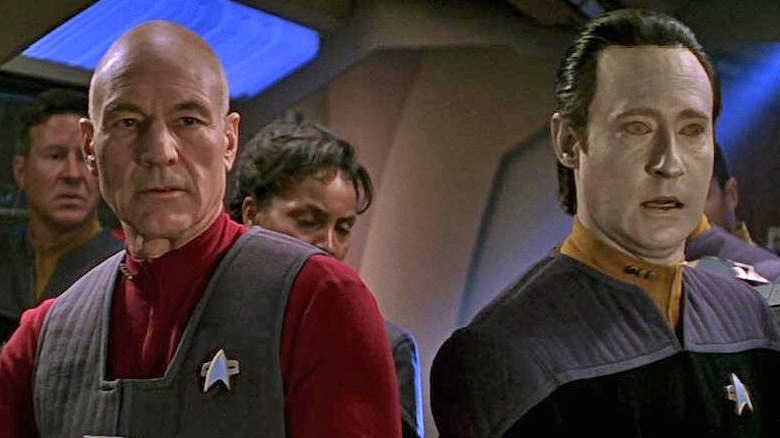
The original draft of "First Contact" had Picard traveling to the mid-21st century version of Earth in order to make sure scientist Zefram Cochrane successfully invented the warp drive -- which led to first contact with the Vulcan race and the creation of Starfleet -- while his first officer Will Riker (Jonathan Frakes, pulling double duty as star and director) led a battle to take back the Enterprise from Borg invaders. Moore told SyFy Wire that Stewart requested that Picard and Riker's roles be reversed.
"We did at least a draft or two of that version, and I know Patrick wanted to be on the ship. Patrick had really liked doing the ['TNG' episode] 'Starship Mine,' where he was alone on the Enterprise-D and running around. And I think he overtly referenced that in a way like, 'I would really like to be the one on the ship fighting the Borg, instead of down on the surface.' And Rick Berman relayed that to us and I think Brannon and I just immediately went: 'Yeah, actually that that's better. That makes more sense.'"
The end result makes for a far stronger movie, as Picard struggles with taking back the Enterprise and his anger at the Borg -- resulting in the infamous "The line must be drawn here!" speech. It also beats the draft that had the Enterprise crew traveling to the Renaissance era (Stewart refused to wear tights, according to Moore).
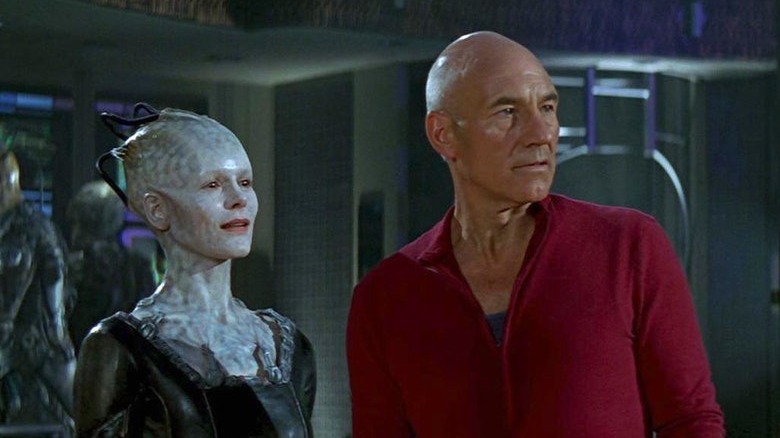
Stewart's requests even saw Moore and Braga briefly booted off of "First Contact." Per Moore's interview with the Hollywood Reporter:
"There was a point where Patrick wanted some rewrites of his scenes, and he pressed Rick to bring on his own writer to do that ... Rick did it, and Brannon and I were not happy. I wasn't particularly aggrieved about it, but then, that didn't work out."
Eventually the other writer departed, leaving Moore and Braga to re-board the film. Stewart even called them to his trailer and said he hoped they could all move on from the kerfuffle -- not entirely an apology, but it was enough for Moore and Braga to move on. In an era where "creative differences" rear their ugly head, leading to writers and directors departing big blockbusters, it's nice to see one of these conflicts resolved. Considering the less-than-warm reception to "Star Trek: Insurrection" and "Star Trek: Nemesis", it looks like Stewart could have used their input on the screenplays.
Read this next: The 14 Greatest Science Fiction Movies Of The 21st Century
The post Patrick Stewart Was Very Picky About His Star Trek: First Contact Role appeared first on /Film.
Read more of this story at Slashdot.
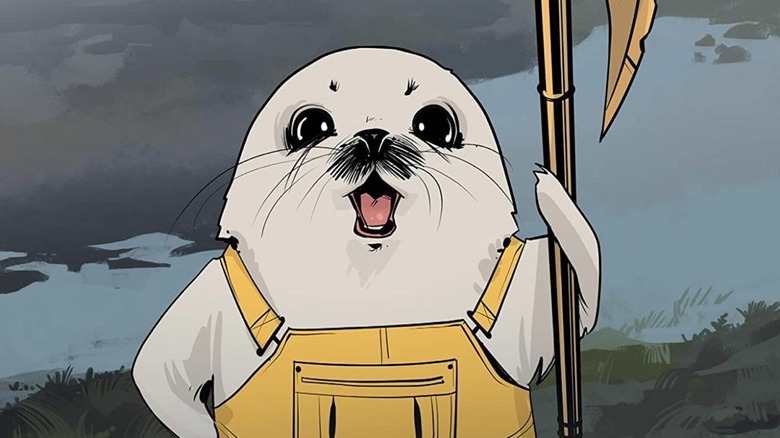
You've binged every season of "The Umbrella Academy" and made your way through the graphic novels — written by Gerard Way and illustrated by Gabriel Bá — that they were based on. So, what's next? Here are some comics to check out if you like "The Umbrella Academy" and want to read something with a similar vibe and/or subject matter. There are a lot of reasons to love "The Umbrella Academy," and most of those reasons can be partially found in other comics.
"The Umbrella Academy" isn't as cynical as Garth Ennis and Darick Robertson's "The Boys," but it is a little more emo and a bit more sarcastic than most mainstream superhero comics. These suggestions come from the edge of the mainstream and beyond, with a few having popular big-screen adaptations already (and others with not-so-popular adaptations). Some of these comics have yet to be adapted, and may never be, and that's fine, too! Not every comic requires an adaptation, right?
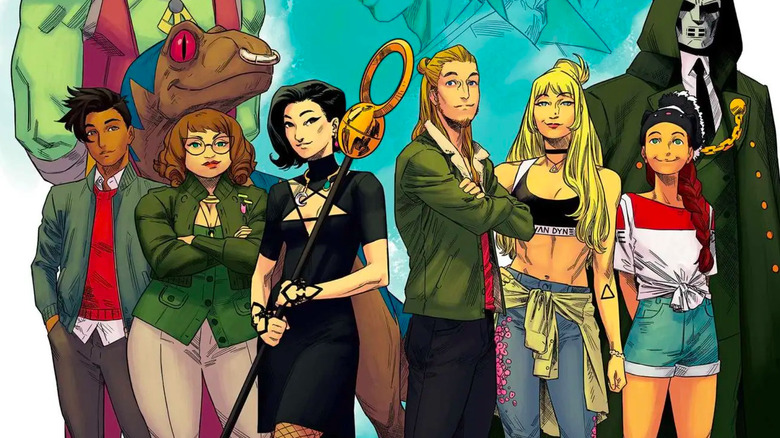
Let's begin with a comic that is mainstream-adjacent. Rainbow Rowell's recent "Runaways" run (say that five times fast) is particularly excellent. This team of young Marvel heroes would probably have more than a few things to discuss over coffee with the members of the Umbrella Academy. The group banded together upon realizing that their parents were members of an evil cult and basically supervillains. They're not exactly the same as Hargreeves, but similar enough. In Rowell's revival, the group comes back together after some time apart — much like the Umbrella Academy at the beginning of their story. There's also time travel, emotional support robots, angsty romance, and a healthy balance of enthusiasm and cynicism.
If you want to start from the beginning, check out Brian K. Vaughan's original "Runaways" run. But there's going to be a lot of Vaughan on this list, so we're spreading the love. There was also a Marvel Studios adaptation of the series on Hulu (now available to stream there and on Disney+) that never got quite as weird as the comic, but it came pretty close and does a great job representing the characters.
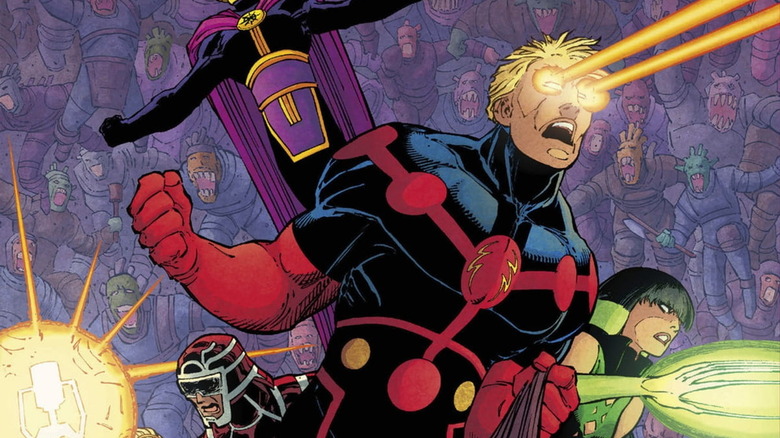
This Marvel superhero team is decidedly more mainstream following Chloé Zhao's film adaptation, but Neil Gaiman's comic still flies under the radar. The name most associated with the team is original creator Jack Kirby, and understandably so. But Gaiman's "Eternals" miniseries finds the ancient heroes scattered and with no memory of their life and legacy. Just like "The Umbrella Academy," it is the story of a bunch of weirdos getting the band back together. It's about former superheroes who, with some supernatural nudging, have moved on and tried to create normal lives.
It's also about a family that isn't related in a traditional sense and doesn't necessarily get along. Comic books are particularly good at telling stories about dysfunctional and/or found families, aren't they? The characters in "Eternals" and "The Umbrella Academy" have a history. Gaiman's run, drawn by John Romita Jr., also has more muted colors than Kirby's ... worth mentioning for no reason whatsoever.

Another revival series that might appeal to fans of "The Umbrella Academy" is BOOM! Studios' reboot of "Buffy the Vampire Slayer" from Jordie Bellaire, Dan Mora, and Raúl Angulo. The series starts the Slayer's story over, set squarely in the 21st century. The "Buffy"-verse is weird and as sardonic as "The Umbrella Academy," with a lot of concepts that feel of a similar ilk. For example, the Commission in "The Umbrella Academy" feels a lot like some of the Powers That Be that show up in "Angel." Why this comic, in particular? It's a fresh start, a great entry point, and it manages a little course correction with regards to some elements from the "Buffy the Vampire Slayer" televisions series that haven't aged particularly well.
Not all, however. As for the elephant in the room, the new series is "reimagined under the guidance of series creator Joss Whedon," and his name is pretty big at the top of each issue as the creator. Bellaire is the writer, and this reimagining could be seen as a way for uneasy "Buffy the Vampire Slayer" fans to find their way back to the Hellmouth. If you're trying to totally distance yourself from Whedon monetarily, though, this may be a pass.
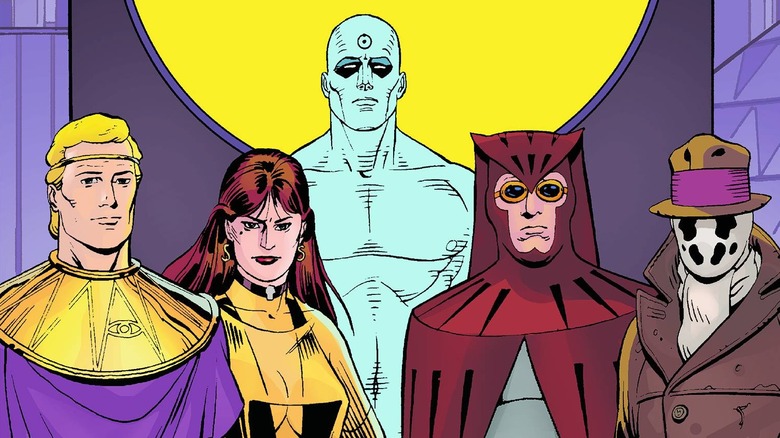
Why break something that doesn't need to be fixed? "Watchmen," technically a DC Comics property, is a classic. If you love the off-beat nature of "The Umbrella Academy," check out one of the most famous graphic novels to subvert the superhero genre. Much like "The Umbrella Academy," it also explores an alternate history. Alan Moore and Dave Gibbons aren't exactly emo, per se, but they do treat their audience with respect and tell an intelligent story.
Once again, this is the story of superhero misfits who are past their prime and trying to put their vigilante days behind them. That's a bit reductive, but please allow it for the purposes of comparing "Watchmen" with "The Umbrella Academy" in a general plot sense. Also, in both stories, the characters reunite after the death of someone from their past. It's pretty clear that "Watchmen" inspired "The Umbrella Academy" in many ways, actually — making it the perfect thing to pick up when you're looking for a similar vibe.
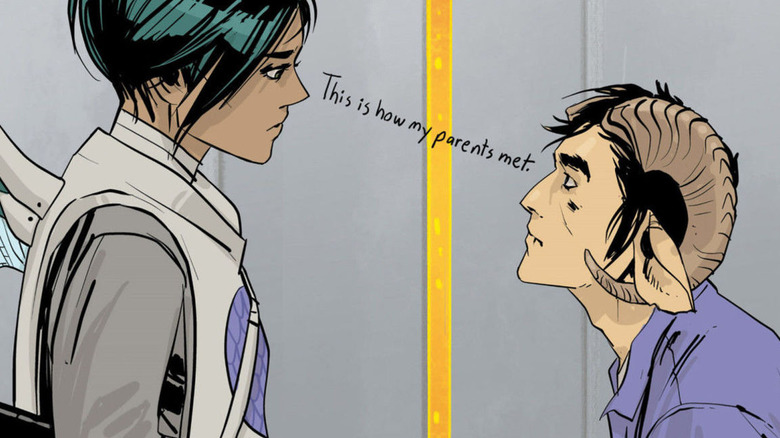
If you like "The Umbrella Academy" and are looking for something that isn't connected to DC or Marvel in any way, "Saga" is a great place to start. Brian K. Vaughan and Fiona Staples' graphic novel series is, well, epic. It's a space opera set in a romantic wartime fantasy, and it is not for children. The series just returned in 2022 after a four-year-long hiatus, so now is a great time to get caught up.
"Saga" is about Alana and Marko, lovers from different planets and different species whose people are in the midst of a brutal war. They defect together and go on the run with their newborn daughter Hazel — who would certainly be of interest to multiple parties if she were to be discovered. The family goes on many adventures, together or apart, as they try to survive and find answers about their homelands and the war. With 56 issues spread out over four books and ten volumes (and counting), "Saga" is a long read, but totally worth it.
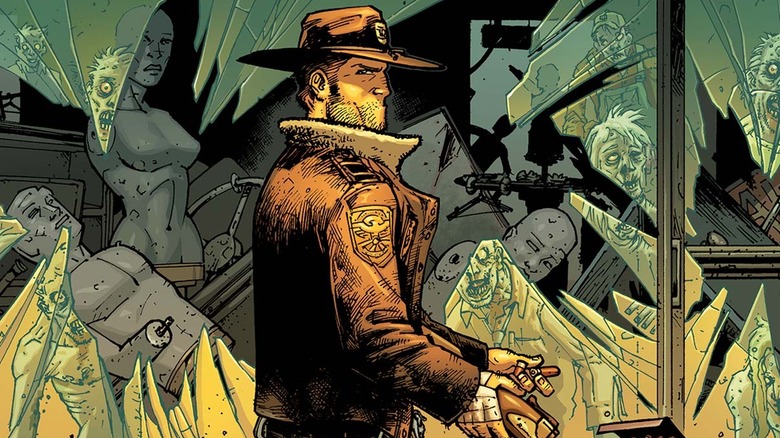
Speaking of long-running comics that are unassociated with DC or Marvel, another one worth checking out is Robert Kirkman's post-apocalyptic zombie epic. (That said, thanks to the juggernaut that is Atlanta Film, there is a lot of cast overlap between "The Walking Dead" television series and the Marvel Cinematic Universe.) This is a great, isolated story that you can dig into. There are 193 issues so, like "Saga," it's a nice long read.
As you may know from the popular AMC series, "The Walking Dead" is the story of a group of survivors in the wake of a zombie outbreak. They are led by Sheriff Rick Grimes who wakes up from a coma to discover that the world has ended. "The Walking Dead" handles the found family theme like nothing else, and it doesn't really get supernatural beyond the zombie stuff. That being said, it does get weird. The various cults and charismatic villains that Rick's group encounter over the graphic novel's long run are certainly out there at times, to say the least.
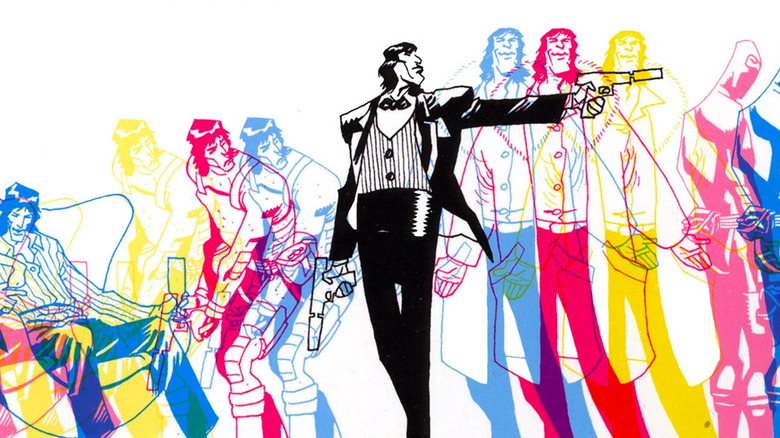
One of the artists for this series, Gabriel Bá, also did "The Umbrella Academy," so if you like the way this looks, suffice to say you may be interested in reading this comic as well. (The other artist on "Casanova" is his twin brother, Fábio Moon.) "Casanova" is also written by Matt Fraction, arguably one of the best working writers. Instead of superheroes, "Casanova" is a spy story. The titular character, Casanova Quinn, is a thief who gets pulled into a parallel universe and blackmailed into going undercover as himself.
Like "The Umbrella Academy," the characters in "Casanova" hop from the past to the future and work in alternate timelines, and also deal with complex sibling dynamics. Also similar to "The Umbrella Academy," it starts with a funeral. If you like espionage and a lot of comic book time travel nonsense (that's a compliment), "Casanova" should be added to your reading list.
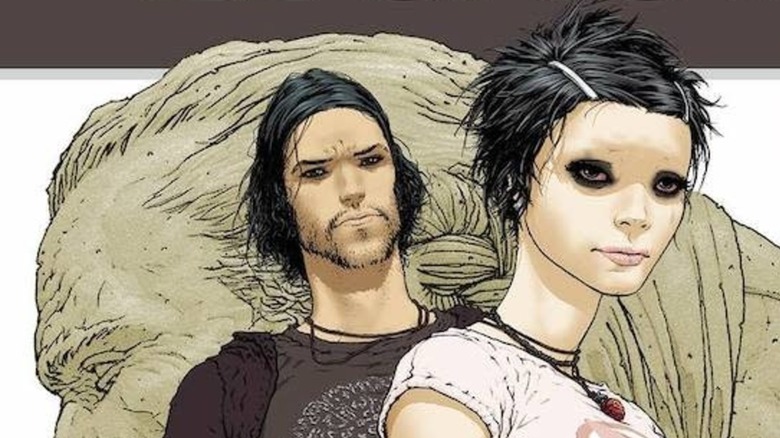
The 2021 Netflix adaptation of Mark Millar and Frank Quitely's graphic novel was canceled after one season, but nothing's stopping you from going to the original source material. If you like your superheroes with daddy issues, and you probably do if you enjoy "The Umbrella Academy," this is a great avenue to explore.
"Jupiter's Legacy" certainly isn't the first to imagine what it would actually and realistically be like if superheroes existed and held celebrity status in society. What this series focuses on, in particular, is what it would be like for the next generation. How could you ever live up to your parent's reputation if they were superheroes? If you followed in their footsteps, would that be nepotism? Would the pressure drive you to become a supervillain or just towards regular mortal self-destructive tendencies like any other rich kid? Like "The Umbrella Academy," "Jupiter's Legacy" is also about how difficult it would be to grow up famous. There's also a storyline regarding the parents and if they are or are not willing to toe the line as heroes as well.
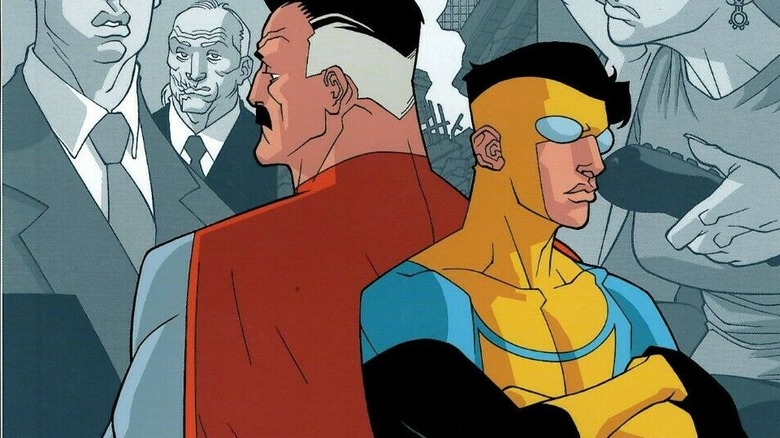
This coming-of-age comic is also about a kid whose dad is a powerful superhero. It has a lot in common with other books on this list and is another long read with over 140 issues. Written by "The Walking Dead" scribe Robert Kirkman, the comic was also adapted to series in 2021 on Prime Video. The source material is surprisingly dark, despite the colorful look of the artwork and the fact that each volume is named after a sitcom. It's of the gritty superhero variety, just like "The Umbrella Academy."
Mark Grayson, a teenager who's pretty average despite having a famous father named Omni-Man, suddenly manifests superpowers due to his father's alien DNA. He becomes the hero Invincible and joins a teen team of vigilante heroes. But, there are some skeletons in the closet of his seemingly charmed life, and a lot of people and other beings have conflicting ideas as to what Mark's destiny should be.
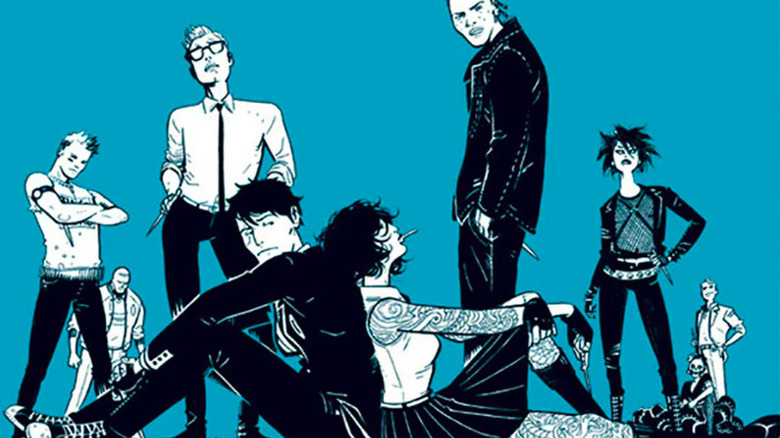
The television adaptations of "Deadly Class" and "The Umbrella Academy" debuted around the same time and had very similar looks in both the design and the advertising. So chances are, if you're familiar with one, you may be familiar with the other. But while the comic book that "Deadly Class" is based on might appeal to fans of "The Umbrella Academy," they aren't actually all that similar.
"Deadly Class" is about a group of students attending an underground boarding school called the King's Dominion Atelier of the Deadly Arts. Instead of training to be superheroes like in "The Umbrella Academy," though, they're training to be young assassins. Similar to a few other properties on this list, the characters are living in the shadows of their parents. But this time, the parents are just run-of-the-mill organized crime bosses and hired killers. The protagonist, an orphan named Marcus Lopez Arguello, thinks that he'll no longer be an outcast when he arrives at King's Dominion ... but he is (womp womp).
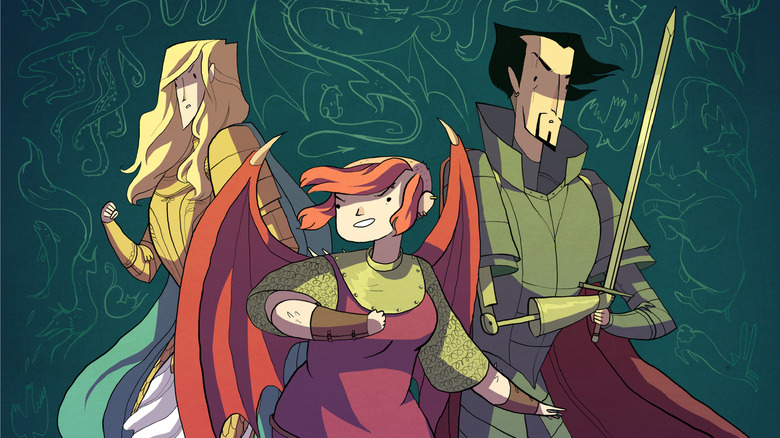
You know ND Stevenson's work from "She-Ra and the Princesses of Power" on Netflix, but their graphic novel "Nimona" is a Cinderella story for the ages — in that the comic itself has had quite a rise. It started as Stevenson's senior thesis and a web comic. It was later published as a graphic novel, won an Eisner Award, and was adapted into an audiobook. The comic was supposed to become an animated film, but the project was unfortunately canceled. Fingers crossed that it gets uncanceled in our lifetime because "Nimona" is something special!
The comic is set in a fantasy world with dark magic, jousting, and television. It's about a young girl named Nimona who becomes the sidekick to Lord Ballister Blackheart, colloquially believed to be the villain in the land. However, Blackheart and Nimona set out to flip the script and prove that the heroes — including Blackheart's former BFF Ambrosius Goldenloin — are actually the bad guys.
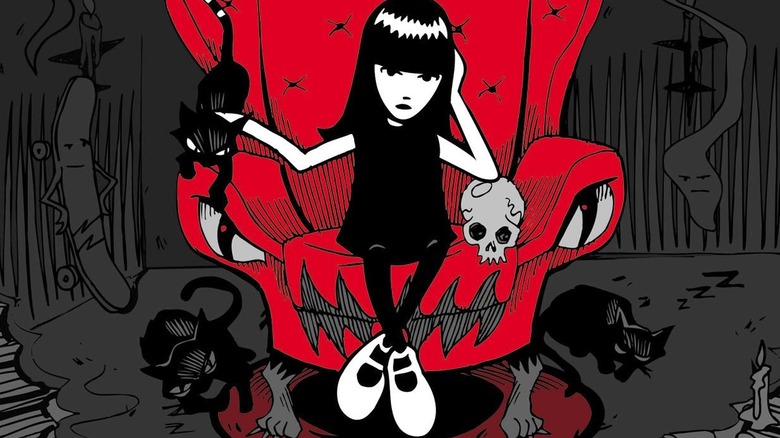
Okay, emo kids, this one's for you. If you came to "The Umbrella Academy" for the Gerard Way of it all, check out one of the most Hot Topic-y comics out there. Her face is as famous as other famous alternative chicks like Wednesday Addams and Daria. "Emily the Strange" stickers were distributed at concerts, skate shops, and record stores in the '90s to promote Rob Reger's clothing line. So why not get into the comics — the images behind the image — also created by Reger?
Emily is a moody teenager who loves art, black cats, and going against the grain. She's a little bit of an inventor who solves mysteries and is also a skater girl. Her comics involve spirits, time travel, magic, and doppelgangers. But the real appeal of "Emily The Strange," just like with "The Umbrella Academy," is the character. She has a real personality, and gets bored a lot.
Read this next: The 15 Most Anticipated Comic Book Movies And Shows Of 2022, Ranked
The post Comics To Read If You Love The Umbrella Academy appeared first on /Film.
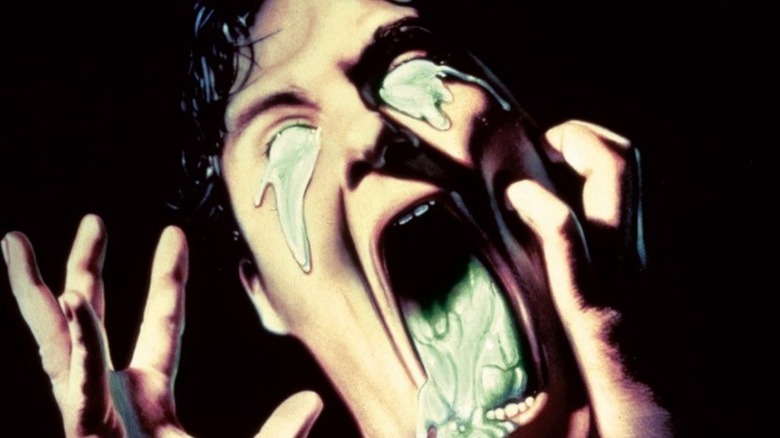
Body horror is without a doubt one of the most viscerally affecting subgenres in cinema. In an essay for The Rumpus on body horror and its relationship with later period capitalism, Davey Davis wrote, "Far more than being merely stomach-turning, [body horror] runs fantastically and viciously rampant with the anxieties we all have about our own physical vulnerability." Part of what makes body horror films so effective is their obsessive preoccupation with the corporeal, the carnal, and the contaminated.
Even under the umbrella of these signifiers, body horror is a very diverse aisle of the proverbial video store, with no universal consensus on what is or isn't a proper body horror picture. While there have been many examples of body horror in animation ("Princess Mononoke" and "Akira," for example, contain elements of it), this list will be focused strictly on live-action movies. Here are 16 of the best body horror films ever made.
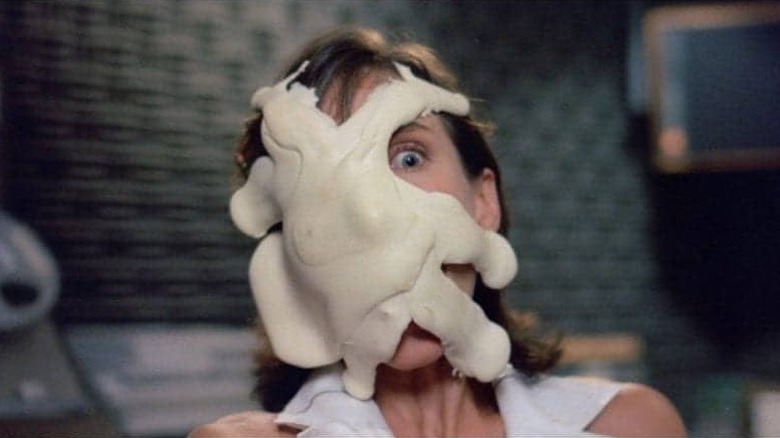
Either "The Blob" or its 1988 remake could have made this list, but as far as viscous body horror films go, consider checking out "The Stuff" instead. A 1985 picture from schlock maestro Larry Cohen ("It's Alive," "Maniac Cop"), "The Stuff" recounts the story of a sentient white goop that bubbles up from beneath the earth and begins taking over peoples' minds, turning them into Stuff-addicted drones. When the Stuff is marketed to the masses as an ice cream alternative, the only people standing in its way are Michael Moriarty's ex-FBI agent, an ad executive (Andrea Marcovicci), and a precocious boy named Jason.
"The Stuff" has everything: "Saturday Night Live" original cast member Garrett Morris, a cameo by Danny Aiello, Paul Sorvino as the leader of an army of right-wing survivalists, the woman from the Wendy's "Where's the beef?" commercials, and the immortal line "Well, everybody's got to eat shaving cream once in a while."
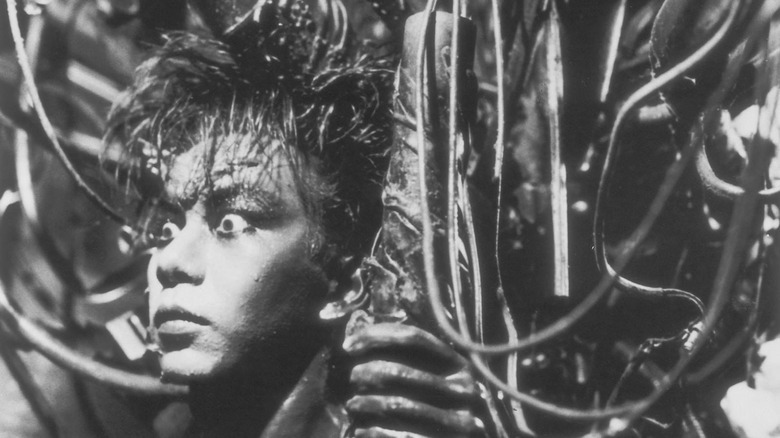
When discussing body horror, it would be foolish to overlook the legacy of pioneering Japanese cyberpunk splatter-fest "Tetsuo: The Iron Man." Released just a year after "Akira" (which famously also features a character named Tetsuo whose body fuses with machinery), Shinya Tsukamato's short but unforgettable film tells the story of an ordinary salaryman undergoing a surprising cyborg transmogrification. Tomorrow Taguchi's protagonist (referred to simply as "Man" in the credits) is bedeviled by a fetishistic maniac obsessed with all things metallic, and the carnage and X-rated insanity that follow are truly something to behold.
Midnight movie expert Michael J. Weldon described "Tetsuo: The Iron Man" in his Psychotronic Video magazine as a "fast-paced, shocking, scary (and funny!) movie [that] features stop motion, surprising special effects, monsters, a mutant cat, flashback sex, and lots of sweat, pain, spurting blood, maggots, mutating and loud screams." "Tetsuo: The Iron Man" also features a sex scene that may be even more obscene and outrageous than some of the other films listed here, so viewers beware.
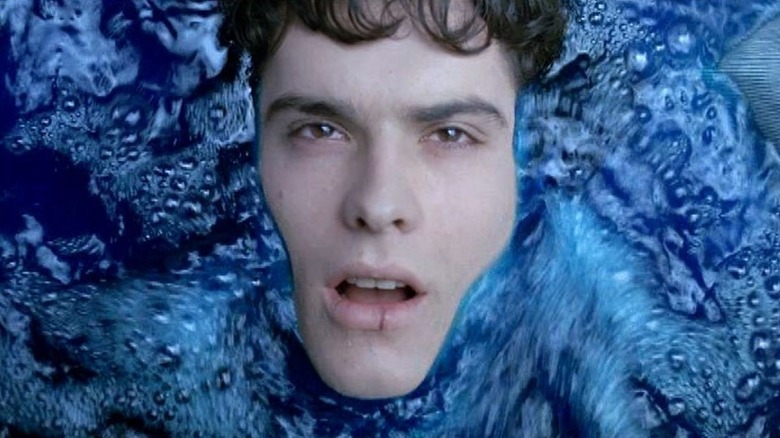
Frank Henenlotter's 1988 take on Nancy Reagan's "Just Say No" campaign, "Brain Damage," is a lurid and profane portrayal of addiction. Rick Hearst stars as Brian, a disaffected New Yorker who encounters an anthropomorphic alien slug named Aylmer, who's voiced by cult horror movie host John Zacherle. Aylmer subsists by injecting human hosts at the nape of their neck with a proboscis that feeds them an ecstasy-like hallucinogenic liquid. He also eats brains, and "Brain Damage" does not shy away from depicting this as graphically as possible.
This darkly funny low budget gem, shot on location in the last vestiges of grimy '80s Manhattan, is soaked in vibrant retro lighting and borders on reprehensible. According to Henenlotter, the crew walked off during the filming of one particularly explicit scene. "Brain Damage" is also notable for being the only film listed here to feature a musical number.
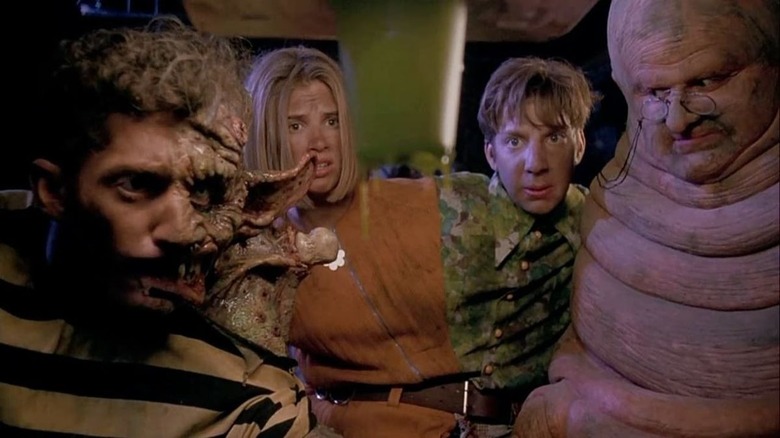
While "Freaked" is frustratingly hard to track down, if you can find it you're in for a hell of a good time. Co-directed by "Bill & Ted's Excellent Adventure" star Alex Winter and Tom Stern, "Freaked" stars Winter as a narcissistic actor named Ricky Coogan who is hired by a nefarious corporation to be the spokesperson for a chemical compound called Zygrot 24. En route to the company's South American factory, hijinks ensue and Coogan finds himself at a "freak farm" overseen by Randy Quaid's Elijah C. Skuggs. There, he meets a makeshift family of mutants that includes a man with a sock for a head (Bobcat Goldthwaite), a bearded lady (Mr. T), a giant worm-man, a character who's basically just a nose, and a bipedal cow named "Cowboy" played by John Hawkes.
Coogan soon finds himself deformed at the hands of Skuggs and his "Tasty Freaks Machine" and must band together with the farm's other misfits to plot their escape. "Freaked" also includes cameos by Winter's "Bill and Ted's Bogus Journey" co-stars William Sadler and an uncredited Keanu Reeves as the Che Guevara-esque Ortiz the Dog Boy. Screaming Mad George, a Japanese emigrant who also contributed to "Predator" and "Big Trouble in Little China," lent his talents to the film's elaborate effects.
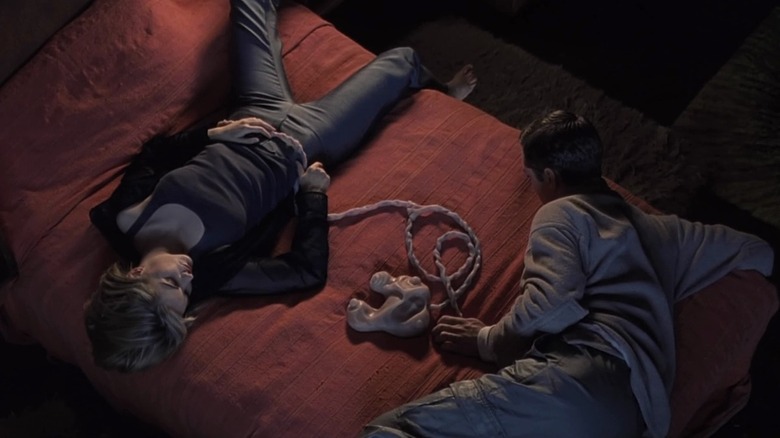
"eXistenZ" is auteur David Cronenberg's grand statement on video game culture, injected with his signature body horror inclinations. In what hopefully doesn't stand as his final effort in this subgenre, Jude Law and Jennifer Jason Leigh star as a marketing agent and world famous game developer, respectively, who get ensnared in a deadly conspiracy in the near-future. Leigh's Allegra Geller has pioneered an immersive new game platform that involves squirming, sexualized consoles that literally plug into their users' bodies.
Similarities abound to Cronenberg's "Videodrome" (more on that film later). There is a fleshy gun that shoots human teeth as bullets, and the ending is both ambiguous and horrifying. Much like its fellow 1999 classic "The Matrix," "eXistenZ" features nested realities and interrogates what is real and what is virtual. It's a remarkably prescient film that speaks to our increasingly detached and digitally-rapt world, despite dripping with dated turn-of-the-century aesthetics. As Law's Ted Pikul puts it, "Everything here is dirty, absurd, grotesque!"
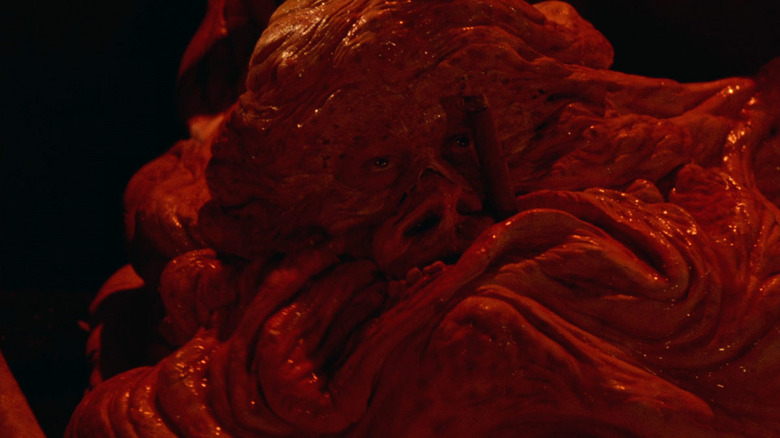
If you can stomach it — there is a very good chance that this film is the most disgusting entry on this list — director Brian Yuzna's "Society" is well worth your time. This 1989 cult flick starts out as a soapy teen melodrama before metamorphosing into a revolting and perverse satire about the superficiality of the Beverly Hills bourgeoisie. We watch as high school senior Bill (Billy Warlock) grows increasingly paranoid and comes to suspect that something sinister is lurking under his neighborhood's sunny facade.
What Bill comes to learn is that virtually everyone else in the Hills are aliens of unknown origin who literally feast on the poor. The film's unforgettable climax is what makes it truly remarkable: The third act centerpiece, "the Shunt," is a massive, incestual, cannibalistic orgy in a ritzy Los Angeles mansion. Set to Strauss' "The Blue Danube," the Shunt is a writhing bacchanalia of contorted limbs, fused flesh, slimy mutations, and torture. Once again, these debauched and debased special effects were the work of the ever-impressive Screaming Mad George.
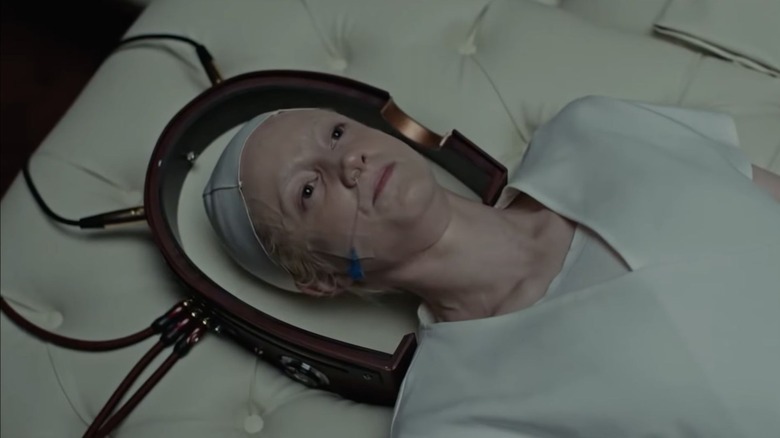
2020's "Possessor" is the second mind-bending feature from Brandon Cronenberg, son of David, the king of body horror. Though he's denied drawing inspiration from his father's "eXistenZ," the similarities are hard to deny. For example, both films include Jennifer Jason Leigh as an inscrutable higher-up at a mysterious corporation. As Cronenberg says, the film's psychedelic imagery drew inspiration from giallo auteur Dario Agrento's "Opera."
The plot of "Possessor" concerns a mercenary named Tasya Vos, played by Andrea Riseborough ("Mandy"), who utilizes an unexplained technology to hijack other peoples' brains in order to execute her targets with zero consequences. Things go terribly awry during her latest mission, and before long the boundaries between Tasya and her host body begin to blur, leading their identities to battle one another for control. What follows is a nightmarish procession of ultraviolence and psychological warfare. Like the best body horror films, "Possessor" explores the intersections between sexuality and violence, but it's also distinctly modern, addressing the alienating nature of the metaverse and the loss of privacy and agency in the digital age.
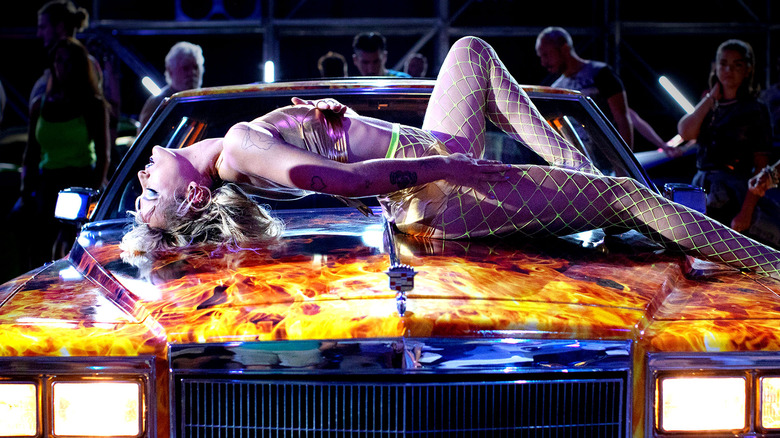
Julia Decourneau's mesmerizing 2021 Palme d'Or winner "Titane" toes the line between body horror, magical realism, and New French Extremity. But it's so much more than that — it's equal parts brainy, gory, suspenseful, and unexpectedly tender. "Titane" stars Agathe Rousselle as Alexia, an exotic dancer who performs at car shows and has a metal plate in her head, the result of a devastating car crash she survived as a child. Alexia's obsession with automobiles goes beyond mere admiration, however, and veers into the erotic (to elaborate further would be to spoil one of the film's many surprises; "Titane" is a ride best enjoyed with little to no context).
In his book "Terminal Identity: The Virtual Subject in Postmodern Science Fiction," film scholar Scott Bukatman ruminates on the "Cyborg Manifesto" of feminist theorist Donna Haraway, something that "Titane" evokes, whether intentionally or not. "Haraway's new cyborg mythology ... overturns the artificial discontinuities of gender-based ideology," Bukatman says. Performative gender identity, toxic masculinity, and psychopathy are only some of elements rumbling around in the film's souped-up engine. That said, "Titane" is far from an antiseptic intellectual exercise. It's every bit as shocking and violent as Decourneau's 2016 cannibal coming-of-age film "Raw."
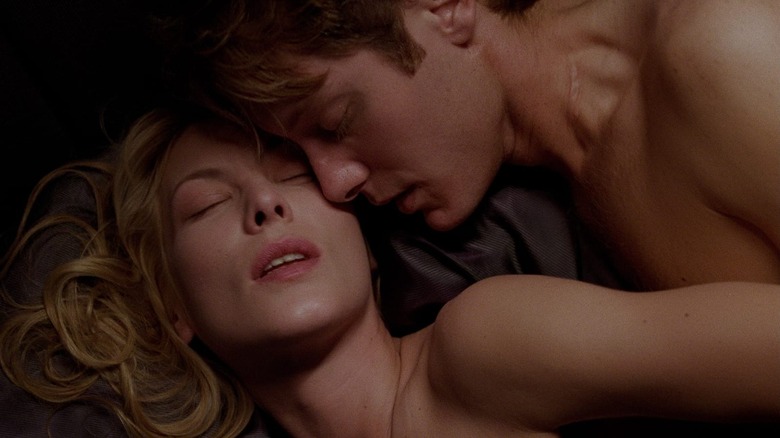
Released at the tail end of the late '80s and mid-'90s erotic thriller boom, "Crash" adapts J.G. Ballard's lightning-rod novel of the same name, which he termed "the first pornographic novel based on technology." Widely considered one of David Cronenberg's finest films, "Crash" explores a seedy subculture of fetishists afflicted with symphorophilia who get a sexual thrill from staging car accidents. They adhere to a "benevolent psychopathology" that believes car crashes are "fertilizing" events. James Spader stars as a polyamorous bisexual filmmaker under the spell of cultish sadomasochist Dr. Robert Vaughan (Elias Koteas). Holly Hunter and Rosanna Arquette help ground the film's depravity in supporting roles.
Like other films in Cronenberg's oeuvre, "Crash" belies a fascination with wounds, the frailty of human flesh, and the intersection between sexuality, machinery, and mortality. "Crash" won a Cannes Special Jury Prize in 1996, and has endured as a high-water mark for the body horror genre.
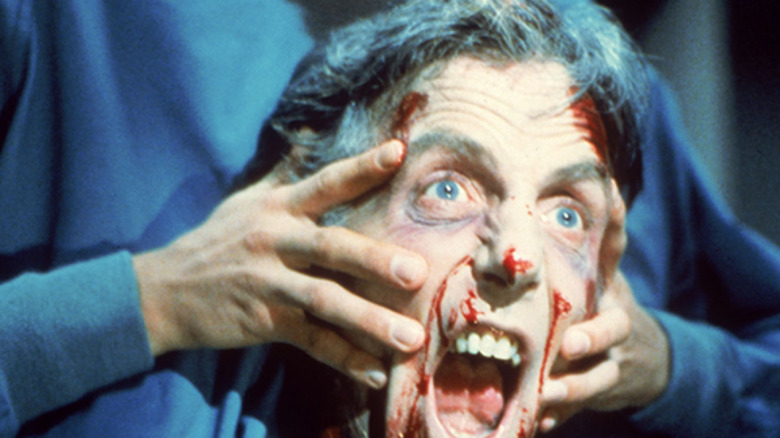
Loosely adapted from a serialized novel by H.P. Lovecraft, "Re-Animator" is a seminal work for a number of reasons. The 1985 film marked the directorial debut of the late Stuart Gordon and coronated Barbara Crampton and Jeffrey Combs as horror movie royalty (Crampton would go on to star in "Chopping Mall," "Castle Freak," "You're Next," and "The Lords of Salem"; Combs featured in "From Beyond," "The Frighteners," "House on Haunted Hill," and more). A Brian Yuzna of "Society" fame production, "Re-Animator" stars Bruce Abbott as aspiring medical student Dan Cain. He shortly finds himself in the clutches of his oddball roommate, Herbert West, who's been perfecting a technique for resuscitating the dead. Naturally, West's methods have ... consequences.
Gordon has been quoted as saying "Horror and sex go hand in hand," and boy is that ever on display in "Re-Animator." The climax is outrageously gruesome and, like some other entries on this list, includes a magnificently gory head-crushing. As with the best body horror films, "Re-Animator" also features a deliciously ironic coda.
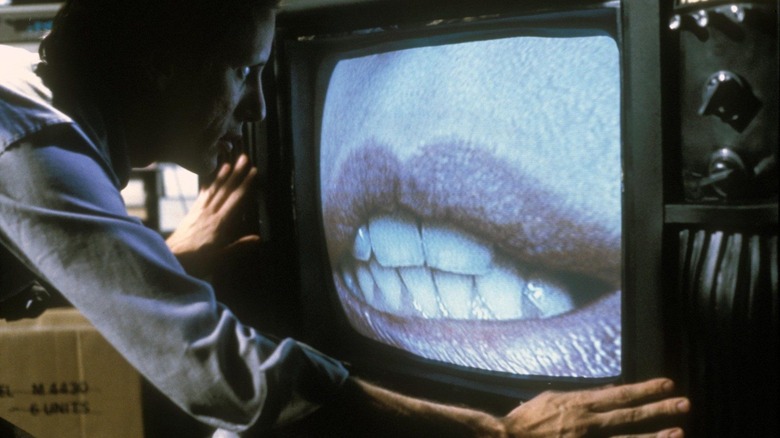
Parsing the plot of David Cronenberg's "Videodrome" is a tall order. It recounts the odyssey of sleazy bootleg cable TV broadcaster Max Renn (James Woods), who becomes fixated on a tumor-inducing pirate video signal that airs horrific snuff footage, and is soon drawn into a larger mystery involving figures with names like Barry Convex and the Dr. Mabuse-esque Brian O'Blivion ("Videodrome" is not particularly subtle in this regard). All the while, Renn undergoes a physical transformation straight out of the body horror textbook: His chest grows a vaginal orifice, and his hand fuses with a pistol (or does it?).
Taking inspiration from the works of philosopher Marshall McLuhan, this BDSM-laden precursor to "eXistenZ" is likewise concerned with screen addiction and the ways in which televised or digital images can warp one's perception. In an essay for The Criterion Collection, Gary Indiana asserts that "'Videodrome' simultaneously suggests and discounts the widespread view that exposure to violent imagery desensitizes us, making us so emotionally numb that we can get sensation only from pain." Undoubtedly one of Cronenberg's greatest triumphs, "Videodrome" won't be his last film to make this list.
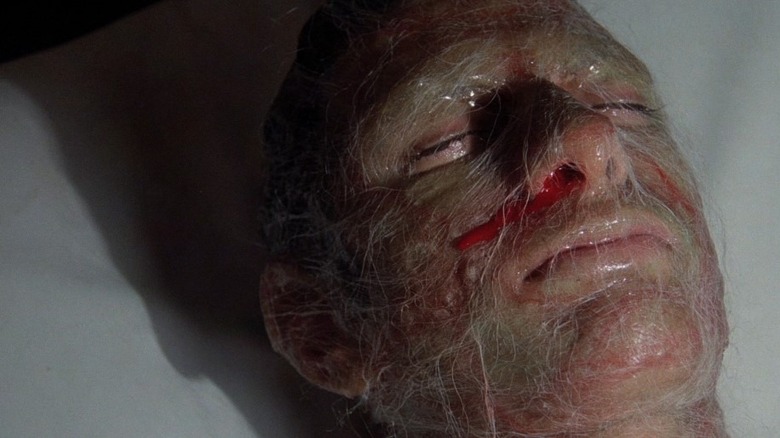
Set against the backdrop of Bay Area bohemia, 1978's "Invasion of the Body Snatchers" shares similarities with the number two pick on this list. It's an exemplary remake of a black-and-white '50s thriller that investigates the incalculable horror of losing autonomy over your own body. Director Philip Kaufman grabs viewers immediately with the film's trippytitle sequence and doesn't relent from there on, proffering an atmosphere of dread and anomie for the duration of the film's runtime.
The cast of "Invasion of the Body Snatchers" is tremendous: Brooke Adams, Veronica Cartwright, Leonard Nimoy as a New Age-y psychiatrist, a young Jeff Goldblum at his squirrelly best, and Donald Sutherland in the lead role of San Francisco health inspector Matthew Bennell. As in the 1958 original, the plot revolves around a parasitic alien incursion that replicates human bodies in order to grow an army of zombies. The film is tactile, disturbing, and unfortunately all too relevant in today's pandemic-ravaged era of disinformation and societal unease.
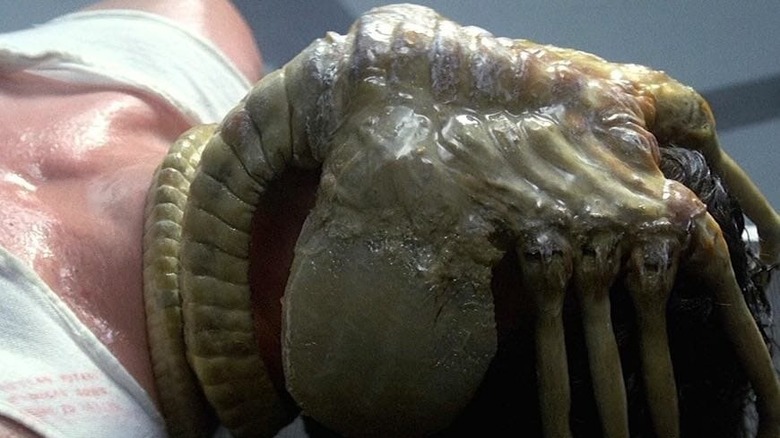
Typically, denying "Alien" the top spot on a "best of" list would be a crime against cinema. But since this is exclusively body horror we're talking about, and since "Alien" has one insectoid foot firmly planted in the sci-fi genre, top honors will be going to a title that truly embodies pure, unadulterated body horror.
Still, it's the titular Xenomorph's creature's unique life cycle that qualifies "Alien" for this list. Its neonatal form is the "facehugger," which orally impregnates its victims. Afterwards, the Xenomorph fetus gestates inside the unwilling bodies of its prey, ultimately beginning life as a literal "chestburster" before rapidly maturing into an unstoppable seven-foot-tall killing machine.
The extraterrestrial menace embodies a host (pun intended) of human fears. Many critics have noted how "Alien" plays on our anxieties about sex, reproduction, and maternity. According to Scott, though? "Its only point is terror, and more terror."
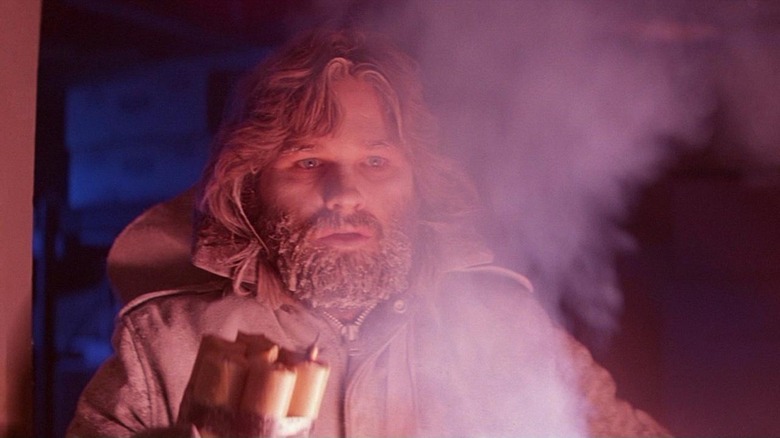
In the halcyon summer of 1982, moviegoers could head to the theater and see "Blade Runner," "Mad Max 2: The Road Warrior," "E.T. The Extraterrestrial," "Star Trek II: The Wrath of Khan," "Tron," and John Carpenter's underseen and widely-panned "The Thing," which has since been reappraised and enshrined as an all-time classic of the horror genre and one of the best remakes ever made. Based on the 1938 novella "Who Goes There?," "The Thing" offers a gauntlet of paranoia for its all-male ensemble. In a remote Arctic research facility, an alien shapeshifter crash lands in the nearby tundra and begins possessing the hardened men, moving from host to host on a bloody rampage.
Rob Bottin's creature work on "The Thing" (with an assist from the legendary Stan Winston) is a near-peerless example of the quality of old-school practical effects. Carpenter himself is also operating in complete God mode. Every single frame of "The Thing" is suffused with claustrophobia and dread. As the alien invader's body count rises, the hyper-masculine crew begin to turn on one another. Losing control over one's own body is one of the most frightening things imaginable, a fear that "The Thing" masterfully exploits.
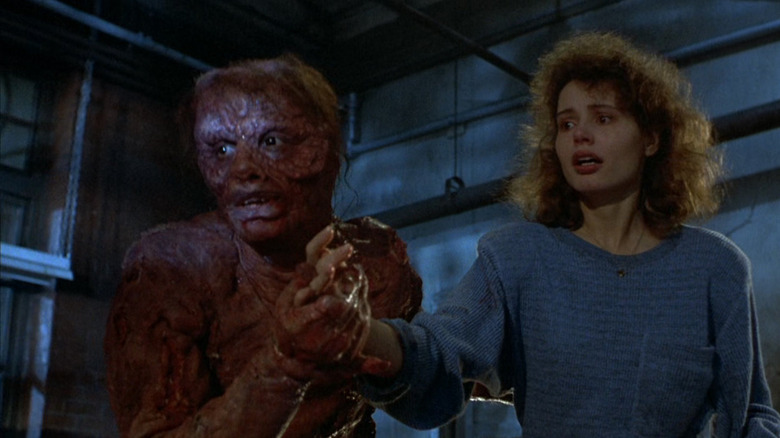
The top spot on this list had to be reserved for the movie that best exemplifies the concept of body horror. "The Fly," David Cronenberg's crowning achievement in the subgenre, relays the tragic story of Seth Brundle (Jeff Goldblum), a genius inventor who develops a method for teleporting organic matter. As in the 1958 original, there are grim repercussions when an errant fly lands in one of Brundle's teleportation pods while he's arrogantly testing it on himself. As a result, Brundle undergoes a gradual and excruciating transformation into a bipedal insect-human hybrid, costing him his budding relationship with charming journalist Veronica Quaife (Geena Davis).
The Oscar-winning make-up and special effects by Chris Walas and Stephan Dupois hold up to this day, and serve as the ideal execution of Cronenberg's morbid fixations. What differentiates "The Fly" from the films above is that, beyond being a masterwork of body horror, it's ultimately a doomed romance, and Goldblum and Davis give their all in their performances. The vulnerability and inevitable deterioration of the human flesh has rarely been so eloquently depicted on screen.
Read this next: Horror Roles That Changed Actors Forever
The post The 15 Best Body Horror Movies, Ranked appeared first on /Film.
Competitive multiplayer gaming is hugely popular. Fortnite, Apex Legends, Call of Duty, and PUBG are some of the games that have millions of active players per month. Unsurprisingly, some players use cheating software to gain an unfair advantage in these games.
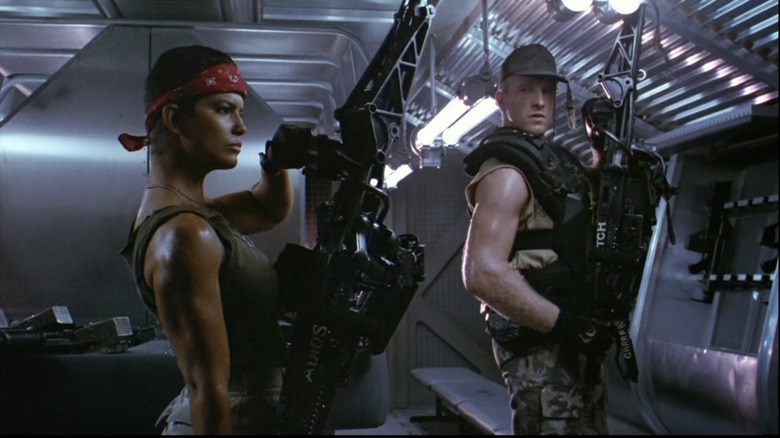
Your girl Jenette Vasquez is finally getting the fully fleshed-out backstory she deserves. I mean, there's probably plenty of fan fiction out there that covers all of the bases (and a few bases you never would have imagined), but it's still nice to see the ripped, bandana-wearing Xenomorph killer become the subject of a new "Aliens" book. And to make the news even better, it'll be hitting shelves soon(ish). The elaborately titled "Aliens: Vasquez" will drop by way of Titan Books on October 25, 2022 and it's difficult for me to imagine a better Halloween gift for yourself or others. Hell, you could start a book club around it.
Written by V. Castro, who has previously authored the evocatively titled books "Goddess of Filth" and "The Queen of the Cicadas" (both of which are immediately going on my reading list), "Aliens: Vasquez" will follow Vasquez from the beginning, chronicling her family's military history, her time spent in a street gang, getting sent to prison, and eventually making her way into the Colonial Marines, a job that forced her to leave her two children behind on earth and eventually lead to her death. While a few slivers of her story have been told in "Aliens" comics, this book sounds like the real deal.
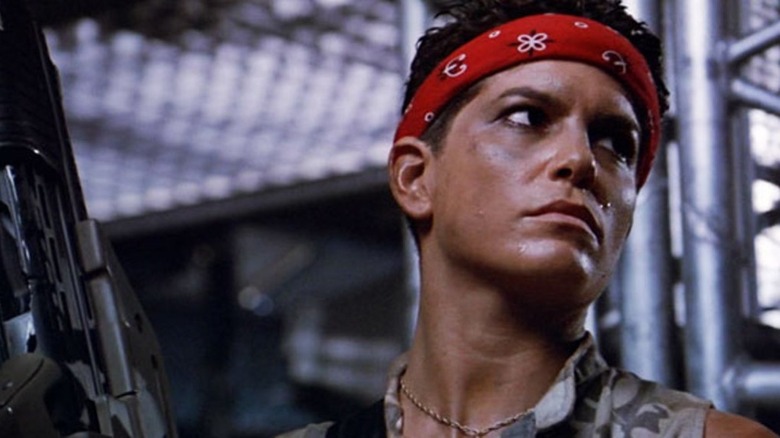
Castro clearly has a lot to work with here. While Vasquez is a vital part of "Aliens" and her character's attitude and charisma make her one of the most fun personalities in the movie, she's not bogged down with backstory. Almost anything could have happened to Vasquez to bring her to the doomed Hadley's Hope on LV-426, which makes exploring those choices feel more exciting. We may know how Vasquez's story ends, but there's a world of large and small decisions that lead her there. On top of that, Vasquez's children make for an interesting way to prolong the story past her death. What are they like? What do they know of their mother? Do they also have her cool sci-fi gun skills? There are a lot of questions surrounding Vasquez's story and we'll definitely be getting some answers.
It's also nice to know that Castro seems as excited to tell Vasquez's story as fans are to read it. Soon after the novel was announced, Castro tweeted about her own connections to Vasquez's story as well as her enthusiasm at being the first Latina to write an "Aliens" book. Worry not, "Aliens" fans, it looks like your girl is in good hands.
Read this next: The 10 Best Sci-Fi Movie Villains
The post Aliens Character Vasquez Gets the Respect She Deserves with a Solo Book About Her Backstory appeared first on /Film.

The autosear, or "Glock switch", is a tiny chunk of molded plastic and/or metal which makes handguns (and AR-style rifles) fully automatic. Installed in seconds, they cost about $20. Or you can just make your own in a metal shop or with a 3D printer. — Read the rest

The water dispenser on your fridge is a modern convenience that many of us take for granted. Usually, it tastes better than the tap and it’s perfectly chilled. But sometimes, the dispenser can develop issues that cause the water to taste funky, even if the fridge itself is new. Here are some potential causes and…
Roberta and Ken Williams are back. After 25 years out of the video game industry, the legendary founders of Sierra On-Line are working on a new project with an old twist – they’re rebuilding the classic text-based game Colossal Cave Adventure as a 3D experience with a VR component.
Maybe that’s an old project with a new twist, but regardless, Colossal Cave 3D Adventure is a complete reimagining of the original title and it’s due to come out this fall for PC and Quest 2 VR headsets. Not only will this new interpretation add graphics to the text adventure, but it’ll be in first-person 3D, with details filled in by the minds that brought us King’s Quest and Phantasmagoria.
In traditional Williams fashion, Ken is in charge of the code as chief engineer, while Roberta is creative director, building the narrative and working across all aspects of the project. There are 16 people on their team at Cygnus Entertainment and they’ve all worked together remotely through the COVID-19 pandemic.
“We've had our stressful moments,” Roberta said. “There have been moments that Ken and I have said, what are we doing? Why did we do this? And other moments are just really exhilarating and exciting. I've learned a lot, Ken has learned a lot. We have a really good team and I'm just so excited to have met them – not in person – but they're very experienced in 3D graphics and programming.”
That last bit is especially important, considering 3D development is a new arena for Roberta and Ken, who are best known for ’80s and ’90s narrative adventures and full-motion video titles. It’s been a quarter of a century since they last stepped into the world of game development, and they’re jumping straight into VR and Unity, a 3D development platform.
By her own admission, Roberta hasn’t even played games for the past 25 years. She and Ken have kept tabs on the industry, but mostly, they’ve been checked out.
“It was like, if we thought about it too much, we could be drawn back in,” Roberta said.
Instead of staring at computer screens and dreaming of digital worlds, Roberta and Ken spent 15 years traveling the planet on a 60-foot boat. They would land wherever they wanted and spend a few months, half a year, in one spot before hopping back on the trawler and sailing to a new location. Ken wrote four books about their travels during this time, plus another one about Sierra On-Line; Roberta wrote a historical novel about the Great Famine in Ireland.
“Which didn't sell as well as his book,” Roberta said, laughing. “But anyway, after that we were looking for something to do and I noticed that Ken was doing a lot of YouTube tutorials on some sort of 3D engine, some sort of 3D programming language.”
She didn’t think much of it at first. Ken outlined a game idea he was toying with, where players would learn programming as they went, building simple experiences within his digital ecosystem. Kind of like Roblox, but with more emphasis on learning real-world programming skills.
“He was telling me this and he had some ideas on how to do it and make it fun,” Roberta said. “And I said, well, will it be fun?”
Ken assured her it would be, but she wasn’t convinced. That night when she was in bed, mulling over her husband’s dull-sounding idea, Colossal Cave Adventure popped into her head.
“I remember laying there and thinking, why did it do that?” she said. “You know, it's like, is this a sign?” In the morning, Roberta brought her late-night revelation to Ken.
“I hadn't really wanted to get back in the industry, but I just suddenly felt this urge, almost kind of like when I sat down and did Mystery House,” Roberta said. “And I don't know why, and I mentioned it to him and I saw his eyes kind of light up.”
Mystery House was Sierra On-Line’s debut game and when it landed in 1980, it was the first-ever graphic adventure. Roberta mapped out Mystery House in a quiet frenzy after playing the original Colossal Cave Adventure, a text-only game, in the late 1970s – as an avid reader, she was inspired by its interactivity and narrative heft, and her imagination got to work. She acquired a giant piece of paper from a local stationery store and started drawing rooms, connecting them and finding creative ways to get from one area to another. This ended up being the flowchart for Mystery House, and Ken, an avid programmer, brought it to digital life.
“Colossal Cave is the game that started Sierra On-Line,” Roberta said. “It started my career.”
Colossal Cave Adventure creators Don Woods and Will Crowther never copyrighted their work, which means anyone can do what they want with the IP, including the Williamses. Still, they got on the phone with Woods himself to ask permission, and the original developer had one request: Never try to copyright it. Keep the Colossal Cave franchise open, unowned and free for anyone to play with.
Roberta and Ken agreed, and they got to work. In June 2021, they revealed there was a new, secret game in development at their studio, Cygnus Entertainment. Colossal Cave 3D Adventure is due to come out this fall, primed to capture the imaginations of a new generation of players.
TV shows spun off from successful movies have a spotty history. Some become successes in their own right, such as classics like "Dr. Kildare," "Alice," and "M*A*S*H," and more recent efforts such as "Fargo," "Friday Night Lights," and "Westworld." However, for every spin-off show that emerges from the shadow of its cinematic forebear, there are dozens that remain not just failures, but obscurities.
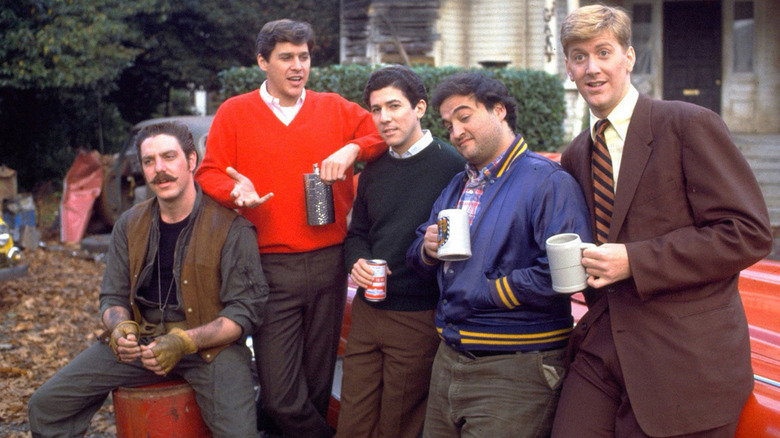
One such show was 1979's "Delta House," a spin-off and semi-sequel to 1978's hit college comedy "National Lampoon's Animal House." Lasting just one half-season of 13 episodes, "Delta House" failed to please either fans of "Animal House" or general audiences, finding itself cancelled before the year was even half-over. While there are a number of reasons the show never found its footing, it's ironic that it's largely been forgotten, given that it contained a surprising amount of talent behind and in front of the camera.
Where most spin-off TV shows lazily use the name of the movie they came from, and often don't have the involvement of any of the original cast or crew, "Delta House" at least attempted to maintain a sense of continuity both on-screen and behind the scenes. Executive produced by the same team of Ivan Reitman and Matty Simmons, "Delta House" saw "Animal House" actors John Vernon, Stephen Furst, Bruce McGill and James Widdoes reprise their characters, and actress Priscilla Lauris not only returned to her role as a secretary from the film, but she was finally given a character name, too.
While the original actors for the lead characters of Pinto (Thomas Hulce) and Otter (Tim Matheson) were simply replaced by Richard Seer and Peter Fox, respectively, there was some thought put into addressing the show's most glaring absence. Rather than recast the role of John "Bluto" Blutarsky as portrayed by John Belushi, original "Animal House" writers and series creators Harold Ramis, Douglas Kenney and Chris Miller created the character of Jim "Blotto" Blutarsky, Bluto's younger brother. In the pilot episode (seen above, the only one of the series to be written by Ramis, Kenney and Miller), Blotto is positioned as the show's core character, a new student and inductee into the Delta House who just happens to resemble his now graduated older brother in every way. Sadly, Josh Mostel (son of Zero Mostel) could not reach the gloriously manic levels of Belushi's performance.
It wasn't entirely Mostel's fault, however. "Delta House" was always going to be confined by television's more strict standards and practices of that period, meaning that the boundary-pushing, immature crassness of the film would be impossible to properly replicate. Adding insult to injury, the ABC network chose to air the series during the infamous "family hour," a timeslot where shows were even more closely scrutinized for any slightly objectionable content. Thus, "Delta House" found itself having to cut back and/or sanitize all sexual innuendo and coarse language, making a show about rambunctious misbehaving college frat bros into a bizarrely safe and largely joke-less sitcom. The use of a laugh track over a single-camera shooting style only serves to increase the dissonance, though the style at least adapts John Landis' slick directing from the film well enough (Landis, by the way, would go on to make his own semi-sequel reference to "Animal House" in his segment from "Twilight Zone: The Movie").
The returning members of "Animal House's" cast and crew were far from the only notable names that signed up for "Delta House." The show became an early credit for writer John Hughes, who was upgraded from his position as a regular contributor to "National Lampoon Magazine." Hughes would go on to write the similarly ill-fated follow-up, "National Lampoon's Class Reunion," before finally hitting it big with scripts for "Mr. Mom" and "National Lampoon's Vacation," eventually writing and directing his own influential and classic films.
"Delta House" also featured some other up-and-comers: Carl Gottlieb, one of the co-writers of "Jaws," got some early directing work on a few episodes of the show, and Dana Kimmel (a frequent TV guest star during the '80s, and Final Girl of "Friday the 13th Part III") appeared in a couple episodes. However, the biggest breakout star of "Delta House" is undeniably Michelle Pfeiffer. Beginning with the second episode, Pfeiffer appeared as a series regular known only as "The Bombshell," a largely silent role capitalizing on the actress' beauty. Thanks to her appearance on the show, she caught the attention of more filmmakers, leading to her emergence as a star just a few short years later.
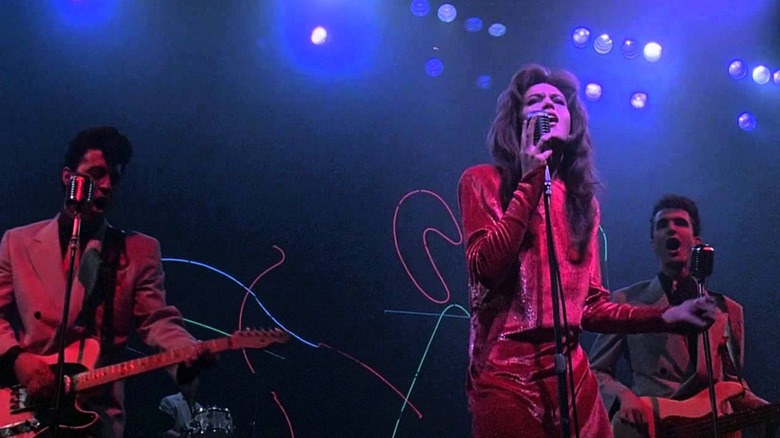
Perhaps the most intriguing bit of "Delta House" trivia is the involvement of Jim Steinman. The songwriter was already a known hitmaker and renowned musician when accepting the gig to write the series' theme song, dutifully adapting the show's early '60s setting into a jazzy, sax-and-piano-filled rock n' roll ditty using the title as a chorus. The song turned out so well that when "Delta House" was quickly cancelled, Steinman reused the melody from the theme song for another tune, "Dead Ringer for Love," which was eventually performed by Meat Loaf and Cher. What's more, he took a background vocal part from "Delta House" and adapted it into the song "Tonight is What it Means to Be Young," the climactic number of Walter Hill's "Streets of Fire."
While "Delta House" is far from an unfairly maligned hidden gem, it has a history and intriguing quality that makes it a more worthwhile look than most misfires. Had it been made just a little later, during the more permissive era of cable, it might've become a show worthy of its cinematic ancestor. Instead, it resembles the average person's college experience: nothing too special, but not worth completely forgetting, either.
Read this next: 14 Awesome Comedies That Never Got Sequels
The post The Animal House TV Spinoff You Likely Forgot Existed appeared first on /Film.
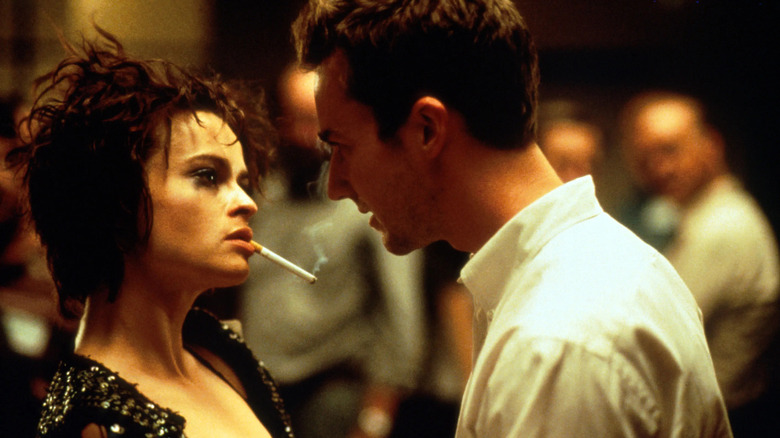
1999 was a weirdly great year for movies, with "The Matrix," "The Sixth Sense," "American Beauty," "The Green Mile," and a couple dozen other soon-to-be classics hitting the theaters around the same time. Joining their ranks was David Fincher's "Fight Club," the fast-paced, hyper-stylized psychological thriller about two guys who start an underground fight club that quickly escalates into a terrorist organization. It's a strange movie, and while the exact message it's trying to make with its social commentary is often disputed, but it's undoubtedly an entertaining watch.
One thing that makes the movie flow so well is the use of narration. Edward Norton's character, who technically is never given a name, talks to the audience constantly throughout the movie, providing extra context to all the crazy stuff that's happening. In the first draft of the script, however, there was no voiceover. As Fincher explained in an interview with Cinephilia Beyond:
"A lot of the typical development-speak was being thrown around: "You can't have it all in voiceover because voiceover's a crutch." The first draft had no voiceover, and I remember saying, "Why is there no VO?" and they were saying, "Everybody knows that you only use VO if you can't tell the story." And I was like, "It's not funny if there's no voiceover, it's just sad and pathetic."
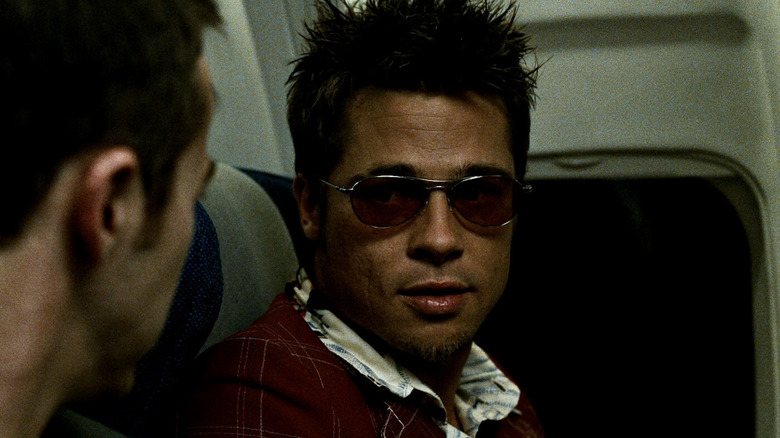
They weren't entirely wrong with that line of reasoning. Voiceover in movies is sometimes crutch for lazy storytelling, a sign that the writers don't trust the audience to understand what's happening on the screen. One of the most famous examples of this, before "Fight Club," was the original cut of "Blade Runner," where the studio basically forced Harrison Ford to read five minutes' worth of narration split across the film. Most of that narration was redundant, uninteresting, and poorly delivered. As Fincher put it, it "sounds like a guy reading prose while he's sitting on the john." With both Ford and director Ridley Scott being against its inclusion, most modern "Blade Runner" fans vastly prefer the director's cut where the voiceover was removed.
The narration in "Fight Club," meanwhile, is made up mostly of the narrator's stray thoughts, guiding the viewer through sequences of events without ever calling too much attention to itself. As the movie jumps back and forth in time, showing us a skewed version of reality where Norton's Narrator sees himself as two separate people, the narration becomes a grounding presence for the viewer. Rather than tell us things that are already evident from the scenes themselves, the voiceovers here serves as the glue that helps everything stick together. Fincher compares the style to the stream-of-conscious prose of the source material:
"I remember having a conversation early on when we were discussing what the feel of the first act should be. I was saying, "It's not a movie, it's not even TV, it's not even channel-changing, it's like pull-down windows. It's like, pffpp, take a look at it, pffpp, pull the next thing down—it's gotta be downloaded. It's gotta move quick as you can think. We've gotta come up with a way that the camera can illustrate things at the speed of thought."
The 208-page novel of the same name written by Chuck Palahniuk is a similarly erratic story centered around a unique, deeply unreliable narrator. Although the movie changes and streamlines a lot of what happens in the book, the embracing of its unreliable narrator is something they stayed true to the whole way through. The stream-of-consciousness is a key part of what made the book so interesting, after all, and Fincher did right by rejecting the conventional wisdom on voiceovers.
Read this next: 13 Box Office Bombs That Are Truly Worth A Watch
The post The Studio Wanted to Cut One of Fight Club's Defining Features appeared first on /Film.
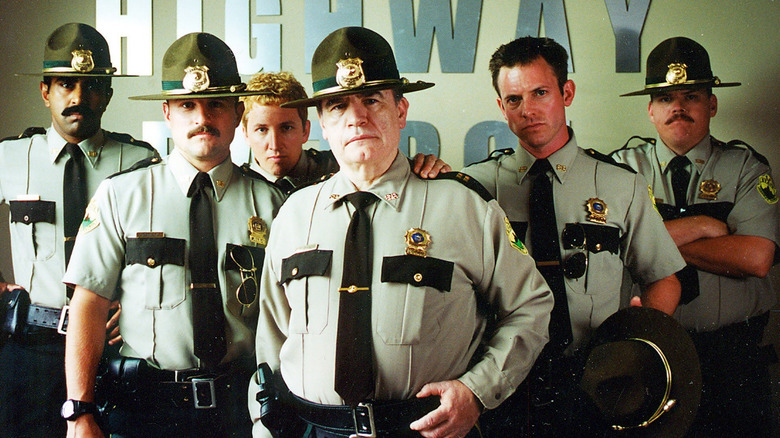
Throughout the history of pop culture, there have been a number of venerable comedy troupes to grace the big and small screen. From classics like the Marx Brothers and the Three Stooges to imports like Monty Python and Kids in the Hall, to more modern groups like The Tenderloins (who may be better known as the "Impractical Jokers") and The Lonely Island, these groups have made legions of fans laugh out loud. Even the crew from "Jackass" have carved out a nice place for themselves in this category over the past two decades. But we mustn't forget about Broken Lizard.
Consisting of Colgate University grads Jay Chandrasekhar, Kevin Heffernan, Steve Lemme, Paul Soter, and Erik Stolhanske, Broken Lizard made their mark on a generation of people (especially the college crowd) with their cult classics "Super Troopers" and "Beerfest." Both films were filled with insanely quotable moments and bits that livened up any party. Over the years, I know that I've had my fair share of drinks from Das Boot or tried to play the meow game with my friends. But when it comes to their breakout film from 2001 about goofy highway patrol cops, it almost ended much differently than we all remember it.
Typically, this is the part where I would advocate for owning physical media over digital. One of the main arguments is because no one can erase your DVDs or Blu-rays from your collection without your knowledge (unless someone breaks into your house and robs you), but a bonus is all the great features that come on a physical disc. Interviews, trailers, and deleted scenes are just a few perks that enhance your movie collection. Although, when it comes to "Super Troopers," it's okay to skip the alternate ending clip found in the Special Features section. In this case, if you were to watch it, you could clearly see why it was left on the cutting room floor.
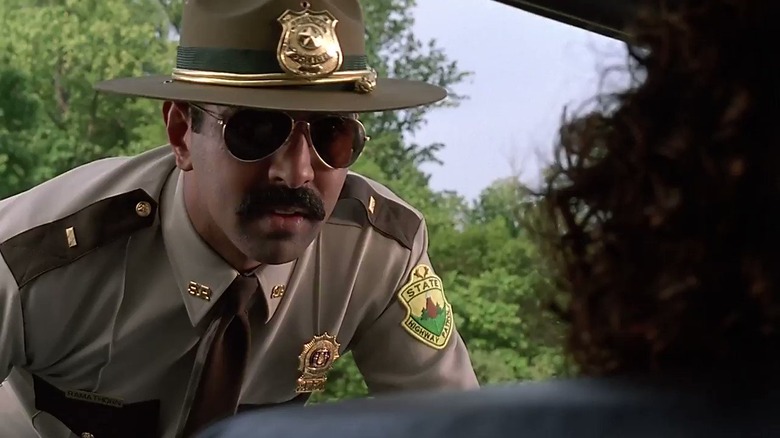
In the theatrical ending for "Super Troopers," Captain O'Hagen's ragtag group of state troopers solve Spurbury's rampant drug problem when they uncover the local police department's involvement with the smugglers. However, despite their best efforts, the governor still decides to close their station. Three months later, we catch up with Rabbit and Ramathorn as they deliver a keg of St. Anky Beer to the three kids that they arrested at the beginning of the movie. Initially shocked to see the officers at their doorstep, these underage drinkers start teasing Thorny and his rookie when they learn that the deliverymen are no longer state troopers. But just as the jokes reach a crescendo, the St. Anky uniforms come off to reveal Spurbury PD uniforms. Mac, Foster, Farva, and Ursula walk in as the party disperses. And as the credits roll, the newly minted cops crack open the keg and kick it with the trio of youngsters.
However, in scrapped ending, we don't get the fun callback to the film's opening or all the hilarious gags that unfold as the credits roll. Instead, the time jump picks up with Ramathorn, Foster, Mac, and Rabbit working at a Pork-Rite meat packing plant. The four former Vermont state troopers begrudgingly pack boxes on the assembly line. In an attempt to maintain their trademark sense of humor, Foster is surprised to find a severed hand in one of the boxes. As Rabbit holds up the "bloody" forearm where his hand used to be, Mac exaggeratedly gestures that he cut it off, which makes their friends chuckle. The laughter is short-lived because their boss comes in and demands that they prepare some barrels of expired meat to be distributed to their customers. When Foster questions the order due to the tainted meat, the foreman makes an outdated reference to famed "60 Minutes" correspondent Mike Wallace. The funny foursome reply, "Oh baby, even better." That's when they take off their Pork-Rite uniforms to reveal their Spurbury PD gear and pursue the perps around the factory before being joined by Ursula and Farva.
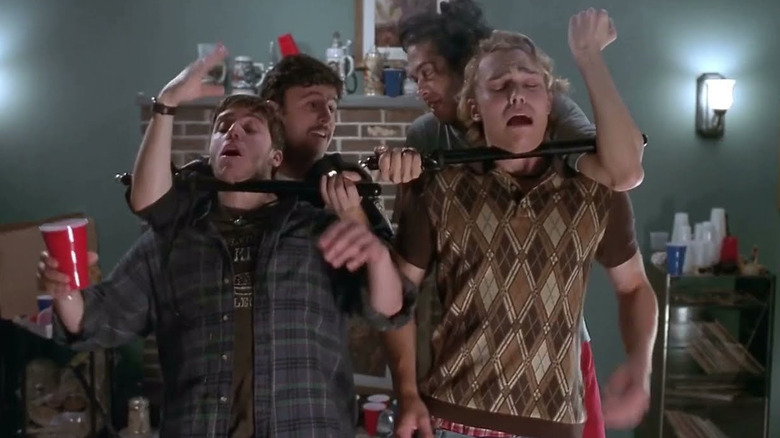
Yeah, that's not as great of an ending. Luckily, director Jay Chandrasekhar and company revised it before it hit theaters. Even though it's basically the same joke, the final product just works better all around. They punched up the initial joke by bringing the whole movie around full circle to catch up with the kids played by Andre Vippolis, Joey Kern, and Geoffrey Arend, which was an opportunity that was too good to pass up. It goes even further since this whole ordeal with disguises, a truck, and cover stories was put into motion because of a little noise complaint.
At the end of the day, the alternate ending is fine, but it doesn't elicit the same laughter from the audience as they're leaving the theater (or taking the disc out of their player at home). The ending of "Super Troopers" that we've come to know and love sends the crowd home happy. And if not home, maybe to their local breakfast spot for some maple syrup and a liter of cola.
Read this next: 20 Underrated Comedy Movies You Need To Watch
The post The Alternate Ending in Super Troopers That We're Glad Didn't Make the Cut appeared first on /Film.
Every great, memorable icon of cinema needs a unique obsession. Gollum had the One Ring, Indiana Jones was driven by the need to recover priceless artifacts and place them in museums (though I suspect he got more pleasure out of punching Nazis than absconding with cultural relics, understandably), and Batman, predictably enough, is all about justice. So what about Vic Van Allen (played, amusingly enough, by previous Batman Ben Affleck), the protagonist of Hulu's recently released "Deep Water" with a certain kink for cuckolding? Well, he has his snails.
Even beyond the real-life drama of the erotic thriller — which famously brought stars Ben Affleck and Ana de Armas together for a brief period of time and captured the attention of locked-down movie fans suffering from a collective case of cabin fever at the beginning of the pandemic — the murderously jealous character's little sanctuary of snails ended up grabbing the lion's share of attention once the film finally made its way to Hulu earlier this month. /Film's Danielle Ryan even went out of their way to put together a bona fide snail explainer for all of us left slightly confused by the film's rather intense focus on the little critters.
That some of us would come away a little distracted by that is probably no surprise, given just how often those snails are featured throughout the movie, gently caressed by Affleck in loving (and weirdly intimate?) close-ups. Vic doesn't hesitate in bringing people over to his transformed garage/shed to gawk at the shelled gastropods, matter-of-factly accepting comments about how "weird" he is and all but overtly threatening one of his wife's suitors who blithely suggests the utterly unthinkable: actually eating those snails for dinner. But whether they're pets or fixations or just some really bizarre, symbolic extension of his own sexual fetishes, the practical nature of filming these snails meant that director Adrian Lyne had to hunt down some sort of snail wrangler who could find all the snails needed for the production.
Luckily for us all, a self-proclaimed Mollusk Man swooped in and came to the rescue, providing the whopping 1500 snails used to adapt the original Patricia Highsmith book into the gloriously entertaining (if extremely goofy) movie that it became. Trust me, I'm not just saying this — you're going to want to read on for all the details about how this came together.
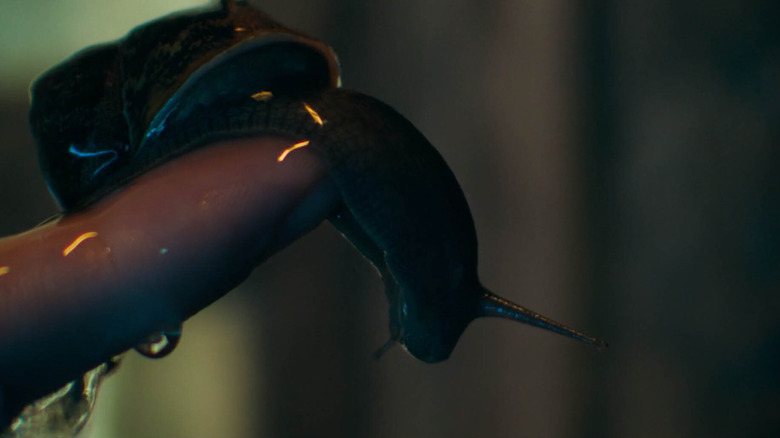
Okay, so maybe "Deep Water" didn't end up kickstarting a long-overdue return to the trashy adult fare that Adrian Lyne made himself known for in years past. On the bright side, it's given us an excuse to spend hundreds of words focusing on snails. The Independent has all the juicy (slimy?) inside info for us, detailing (de-snailing? Okay, I swear I'll stop now) the fascinating origins of all those snails. First of all, we can thank author Patricia Highsmith for the concept in the first place. Her original book of the same title is just as focused on them because, as it turns out, Highsmith herself was as well. She apparently kept "hundreds" as pets of her own and, in one case (according to The Guardian), "smuggled her cherished pet snails through French customs by hiding six or eight of them under each bosom." Simply incredible stuff.
Anyway, The Independent spoke to the Mollusk Man extraordinaire, Max Anton, who the production recruited to, ah, shell out and hand over the ridiculous amount of snails for the filming of "Deep Water." As Anton put it, he got involved when, "[One day] I get an email from a guy who says he's a prop master with a Hollywood film and he needs a thousand snails on set. I thought it was a scam. Like someone is tailoring a scam just for me? That's flattering. But it turns out it was legit and amazing. And that was 'Deep Water.'" The story only gets better from there, as he explains how he went about collecting so many snails:
"[The director, Adrian Lyne] wanted big snails, like massive, unrealistically big snails, and they exist but to get them we'd have to go overseas or shell out a lot of money and that wasn't feasible at the time. There are also illegal means, but we didn't want to go down that route either. So we settled for domestic species that we could get in the United States fairly quickly.
I flew to California and ended up in San Diego and Los Angeles, probably collected 600-700 of the brown garden snails that trip. I even collected some from the hill where the Hollywood sign is only to take them all the way back to New Orleans."
You didn't think that was the end of the saga of the snail (rumor has it that "The Saga of the Snail" was a proposed alternate title for "The Power of the Dog" before everyone woke up and came to their senses, but you didn't hear that from me), did you? Anton goes on to describe exactly how he managed to fly hundreds of snails back to New Orleans. We kindly request that anyone reading this who may or may not be affiliated with TSA look away now.
"To the best of my knowledge, it is not illegal to transport snails that are already established domestically inside the United States. I also know from experience that the TSA gives people trouble about stuff like that. So, I got creative and was able to get them through the x-ray machines without detection... The specific methods I will keep proprietary."
He goes on to briefly explain how the absolute worst creature he snuck through security ended up being black Widow spiders and how one, horrifically, hatched all sorts of tiny eggs that — yeah, I'll stop there. You'll have to click through to the original interview if you want more on that.
In slightly more wholesome news, the Mollusk Man also explains the difference between Ben Affleck and Ana de Armas' approach to the snails.
"If you haven't handled snails before, sometimes it's easy to make a mistake and pick them up wrong, or squeeze in the wrong spot and the shell can crack or something like that. Ben [Affleck] could take instructions. He listens. He was patient, even though I don't know if he liked the snails or not; I don't think he was a fan of the slime. He took it very slow and was very gentle and I really appreciated that about him."
"I actually felt bad for [Ana de Armas] because [the director] was like, 'Get your hand all the way in that pile of snails,' and she was like, 'No!' I was kind of mean to her. I snuck a couple of extra snails inside the wallet that she had to pick up. So when the wallet fell open snails were just tumbling out."
Happily, no snails were harmed in the making of the movie and Anton even kept a few from the shoot!"Deep Water" is currently streaming on Hulu.
Read this next: The 35 Best Documentaries You Can Watch On Netflix Right Now (March 2022)
The post Hollywood Has a Mollusk Man, and He Tracked Down 1500 Snails For Deep Water appeared first on /Film.
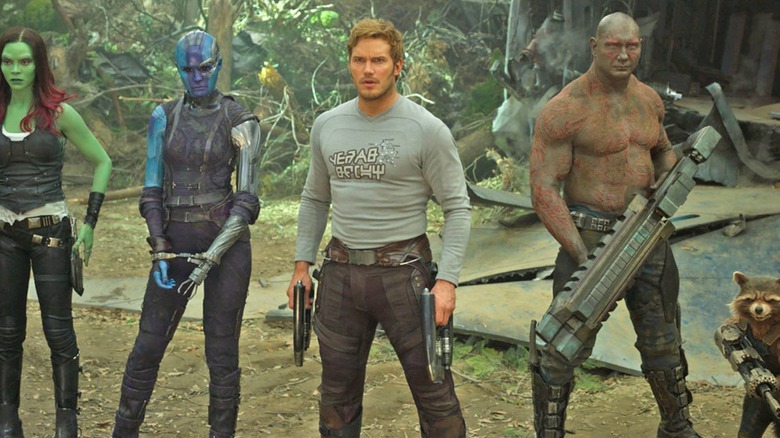
Marvel is getting into the holiday spirit! Joining other famous (or infamous) holiday specials as the one Lucasfilm would rather you forget is James Gunn's upcoming "Guardians of the Galaxy Holiday Special," which is all but guaranteed to make Groot's heart grow three sizes.
Though little is known about the holiday special at this time, we do have enough hints to be both excited and worried. For one, it is meant to be canon, and apparently required viewing before "Guardians of the Galaxy 3." Gunn has also revealed that the special will introduce "one of the greatest MCU characters of all time," though he recognizes his odd opinions. Now, he gives us another bit of crucial info — news that will surely change how everyone views this upcoming project.
Are you ready? Hold onto your butts, because in an interview with RadioTimes, James Gunn confessed his belief that the upcoming "Guardians of the Galaxy Holiday Special" is nothing less than "the greatest thing I've ever done in my life."
"It's totally ridiculous, and every day we can't believe that we're making it," Gunn continued. "We all completely love it. It is unlike anything that anyone's ever seen before. I can't wait for people to see it."
While it is easy to dismiss that quote as just a guy doing his job and promoting his product, you know he means it. That's because the last time he was this enthusiastic about a project, we got "Peacemaker." That show was one of the (if not the) best things Gunn has done, a series that gave us a messy bisexual hero, and a genius opening credits sequence. Gunn seems to have enjoyed "Peacemaker" so much he is sticking with DC for more TV projects.
Now, I don't know about you, but I have seen a lot of things before, so I'll need some convincing on that front. Still, Gunn has earned the benefit of the doubt. For the "Guardians of the Galaxy Holiday Special," it is unlikely we will get much gore or jokes about superheroes being intimate with fish, but that doesn't take away from the beautiful promise of, say, Groot wearing a Christmas hat. But when can we expect to see this special? We don't have a specific date, but Gunn pointed out the obvious, telling RadioTimes: "[I]t's out pretty soon. You know, it's out this Christmas. It's not like people have to wait that long."
Read this next: 11 Marvel Comics Villains We Really Want To See In The MCU
The post James Gunn Calls the Guardians of the Galaxy Holiday Special the 'Greatest Thing' He's Ever Done appeared first on /Film.

Is nuclear war a suitable subject for comedy? Stanley Kubrick certainly thought so. During his research for his masterful Cold War satire, "Dr. Strangelove or: How I Learned to Stop Worrying and Love the Bomb," he came to see comedy as the only sensible way of doing the subject real justice. Having bought the film rights to Peter George's novel, "Red Alert," he started out with the goal of making a serious drama. Yet the more he found out about thermonuclear war and the concept of mutual assured destruction (MAD), the more absurd the whole thing seemed to him. He explained:
"My idea of doing it as a nightmare comedy came in the early weeks of working on the screenplay. I found that in trying to put meat on the bones and to imagine the scenes fully, one had to keep leaving out of it things which were either absurd or paradoxical, in order to keep it from being funny; and these things seemed to be close to the heart of the scenes in question."
Kubrick's instinct was correct. "Dr. Strangelove" is one of the master director's greatest films, regarded as one of the best comedies ever made while its very serious, similarly-themed rival "Fail Safe" is largely forgotten. It was nominated for four Oscars at the 37th Academy Awards, criminally losing out to "My Fair Lady" on three — Best Picture, Director, and Actor (Peter Sellers). It's a film packed with iconic moments, right down to its tour de force ending. It's pretty clear what happens there - the world ends in a nuclear holocaust — but let's dig into some of the finer points of that magnificently haunting conclusion.
In a UK air base, US Air Force Brigadier General Jack D. Ripper (Sterling Hayden) has gone insane. Worried about the Soviets sabotaging good old American "precious bodily fluids," he orders his bombers, airborne a few hours flight from targets inside the USSR, to launch a pre-emptive attack. At gunpoint, RAF Group Captain Lionel Mandrake (Peter Sellers) reluctantly follows his orders.
With their radios set only to receive messages preceded by a special code known only to Ripper, the planes head towards their targets. Over in the War Room in the Pentagon, General Buck Turgidson (George C. Scott) relays the bad news to President Muffley (Sellers in another role). It is now a race against time to try recalling the bombers before they drop their nuclear warheads and provoke a massive retaliatory attack from the USSR. Gung-ho Turgidson figures the best way is to go for broke, but then they find out about the Soviet's Doomsday machine.
After General Ripper commits suicide, all the bombers are recalled... apart from one, under the command of Major "King" Kong (Slim Pickens). With the plane's radio damaged and unable to receive the recall signal, they proceed to target as planned. As hope fades, the President turns to ex-Nazi scientist Dr. Strangelove (Sellers yet again) for last minute solutions.
Strangelove is the wackiest and most memorable of the three characters played by Sellers in the film, but of course I would say that: As a Brit I was brought up by shows like "Fawlty Towers" and "'Allo 'Allo!" to find comedy German accents hilarious. The part of Major Kong was also written for the unpredictable comedy genius, but he was worried about nailing the accent. After he also suffered an ankle injury, the role went to Pickens instead. That was perhaps a happy accident, because one more Sellers character might have been too much of a good thing. As great as his three parts are, it is the fantastic performances of Hayden, Scott, and Pickens that really tie the whole thing together and keep me coming back the most.

Dr. Strangelove, the sinister wheelchair-bound ex-Nazi scientist acting as an advisor to Professor Muffley, is only in a few scenes but overshadows the whole film. It's such a fascinatingly weird performance from Sellers, squirming around in his chair and struggling with random outbursts that suggest at least part of him is still loyal to his old boss. Add to that his psychotic hand with a mind of its own, and you have the most outright funny character in the movie.
This ridiculous character didn't appear in Peter George's original book, but was a composite of several real-life people. There are elements of Herman Kahn, the strategist who theorized about the prospect of a winnable nuclear war in his 1960 book "On Thermonuclear War" (via New Yorker), and John von Neumann of the Manhattan Project, who helped develop the US's first nuclear weapons and advocated the strategy of MAD. For Sellers, the key inspiration was Wernher von Braun, a leading Nazi rocket scientist who ended up working for the Americans after World War II. Having developed the V-2 rockets that rained down on London in the last year of the conflict, his later work for NASA helped put the first man on the moon.
Von Braun was one of around 1,600 German scientists captured and taken to the United States under the secret intelligence initiative codenamed Operation Paperclip (via History.com). With the Russians doing the same as the Cold War settled in, President Harry Truman had little choice but to sanction the scheme, although he didn't want to take any Nazi party members on board. The CIA's forerunner found ways around that, however, whitewashing records so ex-Nazis like von Braun could play on the American team.
To my knowledge, none of these people suffered from alien hand syndrome. That part was from Sellers, taking a cue from the mad scientist character in Fritz Lang's "Metropolis" and borrowing one of Kubrick's black leather gloves to complete the look.
Turgidson, clearly influenced by Kahn and his controversial book "On Thermonuclear War," advises the President to go all-in and try knocking out the Soviets first. What's 10-20 million deaths? "I'm not saying we wouldn't get our hair mussed," he admits.
That idea is scuppered when the Russian ambassador gravely announces fearfully that the Soviets have built a Doomsday machine as a nuclear deterrent. It's so new and top secret that the Russian Premier hasn't had chance to announce it yet. As if the prospect of a nuclear exchange isn't bad enough, the device is a whole bunch of nuclear bombs buried in tons of cobalt, rigged to automatically go off if the Soviet Union is ever attacked. By Strangelove's calculations, any survivors they manage to hide away in deep mine shafts would have to wait 100 years before they could emerge again.
The Doomsday machine would be the logical conclusion of the nuclear arms race, resulting in a weapon so destructive that it would all but completely assure the demise of mankind. "Salting" the nukes with cobalt results in the metal turning into highly radioactive cobalt-60 when detonated. Compared to regular nuclear fallout, which decays after a short while, cobalt-60 fallout would render large swathes of the planet completely uninhabitable for many decades (via Nuclear Weapons Archive).
The concept of the Doomsday machine, originating in the '50s, was supposed to be purely hypothetical (via Britannica). However, thanks to its nuclear capabilities, the Russians' "Dead Hand" system was essentially regarded as a Doomsday machine, an automated device with the capability to launch as many warheads as it deemed appropriate in the event that all the Soviet leaders were wiped out. Then, as recently as 2015, rumors surfaced that Russia had developed "a new intercontinental, nuclear-armed, nuclear-powered, undersea autonomous torpedo," or "a kind of doomsday device" (via NPR). Sleep tight, everyone!
To the men in the War Room, Strangelove's vision of life in the mine shafts doesn't sound all that bad, busily procreating with a ratio of 10 women to each guy. Then Turgidson starts worrying about a "Mineshaft gap," referencing the concept of a "missile gap." This was when the US government were concerned that they were lagging behind the USSR in terms of missile tech and the amount of warheads at their disposal (via Arms Control).
Strangelove has another plan but then realizes he is on his feet, uttering the immortal line, "Mein Führer, I can walk!" Cut to a montage of mushroom clouds set to "We'll Meet Again," the signature tune of Dame Vera Lynn. The English singer was a beloved "Forces Sweetheart" during WWII, and the sentimental song struck a chord with many people waving goodbye to their loved ones going off to fight.
Less than 20 years after the end of the war, it must have been brutal for many viewers hearing the song used in the context of "Dr. Strangelove." The irony of the lyrics is bitter enough now; if there was a nuclear war, very few people would be meeting anyone else ever again.
There is an extra wrinkle to this. During the Cold War, the BBC made plans for a Wartime Broadcasting System so it could stay on air if there was a nuclear attack (via BBC). A selection of radio shows and tunes was put together to help the public keep their chin up during such an apocalyptic event. One of the songs included was "We'll Meet Again."
Kubrick sure knew how to pair a great tune with an unforgettable image to end a movie. Just think about the Starchild orbiting Earth to "Also Sprach Zarathustra" in "2001: A Space Odyssey" or the steadicam moving in on that ambiguous party photo to "Midnight, The Stars and You" in "The Shining." Setting Vera Lynn to armageddon was a stroke of genius, giving us one of the most chillingly beautiful film endings of all time.
Read this next: The 20 Greatest War Films Of All Time
The post Dr. Strangelove Ending Explained: We'll Meet Again appeared first on /Film.
Thanks to the open source nature of Android, people can tailor the OS exactly to their needs. For example, the developers of Bliss ROMs maintain a version of Android known as Bliss OS for the classic x86 platform. The project has now hit its next milestone, as the first Android 12L beta release that people can run on their virtual machines or PCs is now available for download.
Notably, there have been two alpha builds for Bliss OS 15 based on Android 12, both released back in December last year. While the Bliss OS codebase is being rebased on top of Android 12L, Jon West, aka XDA Recognized Contributor electrikjesus, has shared the first glimpse of vanilla Android 12L running on a PC through a work-in-progress vanilla Android-x86 build. Now, the maintainers believe the Android-x86 release is mature enough for common PC configurations, hence the first beta build is up for grabs.
Apart from the regular novelties coming with Android 12L, the release has also extended compatibility with the desktop hardware by integrating additional drivers and UI enhancements. The Android-x86 project has historically always stuck to an interface close to stock Android, but this custom release includes a desktop mode launcher as an alternative launcher, which should be better suited for usage with keyboard and mouse.
And of course, I had to throw in Smart Dock for a familiar UX somewhat pic.twitter.com/XQvKD6WMCh
— Jon West (@electrikjesus) March 12, 2022
The installation workflow is optimized for a UEFI-based environment with a GUID partition table (GPT) file system, but power users can tinker with the GRUB parameters and make it boot on legacy platforms as well. There is no need to flash a separate GApps package, as the Play Store and other Google services are preinstalled in the build.
Here is the full changelog of the initial beta release:
If you’re interested in trying out Android 12L on your PC and learn more about the project, head over to the official website of Bliss OS. Keep in mind that installing Android on a PC is not as straightforward as flashing a ROM on your phone, so the developers require you pass a little test before downloading the ISO package from there. Nonetheless, the direct download link can be found below, but make sure to do your research and carefully read through the installation instructions before getting your hands dirty.
Download Android-x86 12L Beta 1 from Bliss OS Developers
Source: Jon West on Twitter
The post Bliss OS developer brings Android 12L your x86 PC appeared first on xda-developers.