Have you ever looked at a flower or plant and wondered, "What flower is this?", or "What kind of plant is this?". Fortunately, it's possible to use your phone to identify a flower by a picture. You just have to use a flower identification app to get the answer.
Remember the Quake 4 in Quake 2 Demake we shared last month? Well, modder TheMrBenpulido is back with a similar mod for the first Quake game. As the title implies, this mod demakes all of the Quake 4 levels for id Software’s classic Quake game. In order to recreate these levels, the modder used assets … Continue reading Quake 4 in Quake 1 Demake is now available for download →
A Japanese startup called H2L Technologies wants you to be able to feel pain inside the metaverse, via a wristband that dishes out small electric shocks. Futurism reports: "Feeling pain enables us to turn the metaverse world into a real [world], with increased feelings of presence and immersion," H2L CEO Emi Tamaki told the Financial Times. The Sony-backed startup's wearable isn't designed with only inflicting pain in mind. It's also meant to convey "weight and resistance feeling to users and avatars on the Metaverse," according to the company.
Thanks to the wristband's electrical stimulation, it can mimic a range of sensations from catching a ball to a bird pinching the wearer's skin. Tamaki's goals are much greater than a simple wristband. She's hoping to "release humans from any sort of constraint in terms of space, body and time" within the next decade.
Before I kick this blog post off, I'd like to thank Lina L for her excellent work in developing and sharing her work, both on Twitter, as well as in a blog post. Both are thoughtful, cogent, and articulate.
In her blog post, Lina references detection techniques, something that is extremely important for all analysts to understand. What Lina is alluding to is the need for analysts to truly understand their tools, and how they work.
Back around 2007-ish, the team I was on had several members (myself included) certified to work PCI forensic investigations. Our primary tool at the time for scanning acquired images and data for credit card numbers (CCNs) was EnCase (at the time, a Guidance Software product)...I believe version 6.19 or thereabouts. We had a case where JCB and Discover cards were included, but the tool was not finding the CCNs. Troubleshooting and extensive testing revealed that the built-in function, isValidCreditCard(), did not apply to those CCNs. As such, we worked with a trusted resource to write the necessary regexes, and override the function call. While this was slower than using the built-in function, accuracy took precedence over speed.
The point is, as analysts, we need to understand how our tools work, what they do, and what they can and cannot do. This also applies to the data sources we rely on, as well. As such, what I'm going to do in this blog post is expand on some of the items Lina shared in part 3 of her blog post, "Detection Methodology". She did a fantastic job of providing what amounts to elements of an artifact constellation when it comes to the evasion technique that she describes.
Let's take a look at some of the detection methodologies Lina describes:
1. Review event logs for 7045, 7035, 7034, 7036, 7040, 4697 service creation
Most of these event IDs appear in the System Event Log, with a source of "Service Control Manager" (event ID 4697 is found in the Security Event Log) and they all can provide indications of and useful information about a service.
2. Review registry keys for services:
Given the content of Lina's post, this is an excellent source of data. In the face of anti-forensic techniques, also consider extracting deleted keys and values from unallocated space within the hive file, as well. Also, look for unusual LastWrite times for the parent keys, particularly if you're performing a live "triage" response and collecting Registry hives from live systems.
3. Review command line logging for signs of services being created using “sc.exe”, “at.exe”
I'm not sure about how "at.exe" would be used to create a service (maybe we can get Lina to share a bit more about that particular item...), but definitely look for the use of "sc.exe" if you have some sort of command line logging. This can take the form of enabling Process Tracking (along with the associated Registry modification to add the full command line) in the Security Event Log, installing Sysmon, or employing an EDR capability.
4. Review artefacts for execution i.e. Shimcache, Prefetch, Amcache
Prefetch files are a great artifact if you're looking for artifacts of execution, but there are a couple of things analysts need to keep in mind.
First, Prefetch files can contain up to 8 time stamps that refer to when the target file was executed; as such, be sure to extract them all.
Second, application prefetching is controlled via a Registry value, and while that value is enabled by default on workstation versions of Windows, it is not enabled by default on the server versions. Accordingly, this means that it can be disabled on workstations; as such, if you're NOT seeing a Prefetch file when you would expect to, check the value and the LastWrite time of the key. I highly recommend this as a means of validation, because without it, saying, "...the file was not executed..." is just guessing. Think about it...why delete a file or artifact, when you can simply tell Windows to not generate it?
Third, Dr Ali Hadi has done some great work documenting the effect of launching files from ADSs on Prefetch file creation and location. I'm not sure how many folks are aware of this, but it's something to keep in mind, particularly if a threat actor or group has previously demonstrated a proclivity for such things.
Finally, it's easy to say that ShimCache and AmCache entries constitute "artifacts of execution", but that's not completely accurate. While both data sources do constitute indicators of execution, they're just that...indicators...and should not be considered in isolation. While they may be incorporated into artifact constellations that demonstrate program execution, by themselves they do not definitively demonstrate execution.
So, if we create an artifact constellation, incorporating ShimCache, AmCache, Prefetch, command line logging, etc., and all of the constituent elements include time stamps that align, then yes, we do have "artifacts of execution".
7. Detect the malicious driver on the disk (can also be done without memory forensics by correlating creation timestamps on disk)
This is a good detection technique, but we need to keep things like file system tunneling and time stomping in mind. I've seen cases where the adversary time stomped their malware, and when it was 'recorded' in the ShimCache data, the analyst (mis)interpreted the time stamp as the time of execution. This meant that during a PCI forensic investigation, the "window of compromise" reported to the PCI Council was 4 yrs, rather than the true value of 3 wks. For anyone who's been involved in such an investigation, you very likely fully understand the significance of this "finding" being reported to the Council.
Some Additional Thoughts, Re: Windows Event Log Evasion Locard's Exchange Principle tells us that when two objects come into contact with each other, material is exchanged between them. We can apply this equally well to the digital realm, and what this ultimately boils down to is that for something bad to happen on a system, something has to happen.
As a result, when it comes to Windows Event Log "evasion", we would want to look for other changes to the system. For example, if I want to hide specific event records within the Security Event Log, there are three approaches I might take. One is to use the LOLBin auditpol.exe to enable ALLTHETHINGS!, and overwhelm the Security Event Log, and subsequently, the analyst. I've been one engagements before where so much was being audited in the Security Event Log that while we had data going back weeks or months in the other logs, the Security Event Logs covered maybe 4 hours. I've also seen much less, about half of that. The overall point here is that the Windows Event Logs are essentially circular buffers, where older event records aren't "pushed off the stack" and into unallocated space...they're overwritten. As such, "older" records aren't something you're going to be able to recover from unallocated space, as you would in the case of cleared Windows Event Logs. As a result, things like type 10 login events (event ID 4624 events) can get overwritten quickly, and will not be recoverable.
Clearing Windows Event Logs is easy (via wevtutil.exe), but it is also easy to detect, based on artifact constellations such as a Prefetch file for the LOLBin, event IDs 1104 and 102, etc. And, as we saw with a great deal of the work done following the NotPetya attacks in 2017, cleared event records are pretty trivial to recover from unallocated space. I say, "trivial", but I completely understand that for some, something like this would not be trivial at all. While we do have a process available to help us recover the data we need, it isn't easy for some. However, clearing Windows Event Logs is tantamount to a streaker running across the field at the Super Bowl or the World Cup...it's a way of letting everyone know that something bad is going on.
The other option might be to simply disable logging all together. You can do this via the Registry, without disabling the Event Log service, and the great thing is that if there's nothing deleted, there's nothing to recover. ;-)
The third option is a bit more involved, and as such, potentially prone to discovery, but it is pretty interesting. Let's say you're accessing the system via RDP, and you have admin-level access. You can use different techniques to escalate your privileges to System level, but you have to also be aware that when you do, your activities will populate artifacts in a different manner (but this can be a good thing!!). So, start by using wevtutil.exe to backup all but the last 4 min of the Security Event Log, using a command such as:
Now, this is where the elevate privileges come in...you need stop the EventLog service (via 'net stop'), but you first have to stop its dependent services. Once everything is stopped, type:
Now, restart all the services, in reverse order that you stopped them, and delete the Security_export.evtx file. You've now got a Security Event Log that is missing the last 4 min worth of event records, and the "interesting" thing is that when I tested this, and then dumped the Security Event Log, there was no gap in record sequence numbers. The log apparently picks right up with the next sequence number.
But again, keep in mind that this activity, just like the other options presented, is going to leave traces. For example, if you use PSExec to elevate your privileges to System, you're going to need to accept the EULA the first time you run it. You can use something else, sure...but there's going to be a Prefetch file created, unless you disable prefetching. If you disable Prefetching, this causes a Registry modification, modifying the key LastWrite time. And if you disable Prefetching, what about the "command line logging" Lina mentioned?
Ultimately, the choice of option you decided upon, even if it's one that's not mentioned in either Lina's blog post or this one, is going to depend upon you weighing your options regarding the artifacts and traces you leave.
DEMON'S TILT for Windows is now available completely free on the Epic Games Store. This offers the chance to be a pinball wizard where the twist is bullet hell gameplay, rather than anything about...
Come July, the EPA plans to retire the archive containing old news releases, policy changes, regulatory actions, and more. The Verge reports: The archive was never built to be a permanent repository of content, and maintaining the outdated site was no longer "cost effective," the EPA said to The Verge in an emailed statement. The EPA announced the retirement early this year, after finishing an overhaul of its main website in 2021, but says that the decision was years in the making. The agency maintains that it's abiding by federal rules for records management and that not all webpages qualify as official records that need to be preserved.
The EPA says it plans to migrate much of the information to other places. Old news releases will go to the current EPA website's page for press releases. When it comes to the rest of the content, the EPA has a process for making case-by-case decisions on what content can be deleted -- and what is relevant enough to move to the modern website. Some content might be deemed important enough to join the National Archives. The public will be able to request that content through the Freedom of Information Act.
The archive is the only comprehensive way that public information about agency policies, like fact sheets breaking down the impact of environmental legislation, and actions, like how the agency implements those laws, have been preserved, [says Gretchen Gehrke, one of the cofounders of a group called Environmental Data and Governance Initiative (EDGI) that's fighting for public access to resources like the EPA's online archives]. That makes the archive vital for understanding how regulation and enforcement have changed over the years. It also shows how the agency's understanding of an issue, like climate change, has evolved. And when the Trump administration deleted information about climate change on the EPA's website, much of it could still be found on the archive. Besides that, Gehrke says the content should just be available on principle because it's public information, paid for by taxpayer dollars.
Hacking has become popular because of the rapid transmission of information online. Ethical hacking helps identify vulnerabilities in a system and increases security by repairing them. It also secures systems against hackers who might steal valuable information.
During GDC 2022, Intel has hosted various sessions talking about features supported by their Arc Alchemist GPUs such as XeSS & Raytracing. Intel highlighted the advantages of their technologies and how they will allow for better performance and better image quality compared to the rivals.
Intel Showcases Arc Alchemist GPU Performance With XeSS, Raytracing & Hybrid CPU Combos
This isn't the first time we will be talking about Intel's XeSS or Raytracing implementations but they did share some new details and performance metrics.
Intel XeSS is a super-sampling technique that leverages Machine Learning to reconstruct a low-resolution frame into a high-resolution frame, running at a fraction of the cost of rendering at a higher resolution such as 4K. The core principle of XeSS is to take advantage of ML through the integrated XMX AI acceleration hardware that is featured on the Xe-Cores for Arc Alchemist GPUs. XeSS will be fully compliant with DirectX 12 and uses the Intel Vector Shading language-based NN (Neural Networking) running on Intel's Arc SIMD architecture.
Compared to native resolution (4K), XeSS 4K with XMX takes less than half the cost to render a scene. The technology is also DP4a compliant which means it can run on GPUs without AI or ML acceleration engines such as XMX but offer similar performance and image quality.
In terms of image quality, Intel XeSS will eliminate all kinds of ghosting with minimal artifacts (such as shimmering) when compared to other upscaling methods such as TAAU. It also comes with its own built-in sharpening engine and will be replacing TAA. Intel has stated that XeSS can achieve much higher scaling ratios without compromising quality than Temporal Supersampling or Spatial upscaling.
Intel also shared a brand new XeSS Rens demo which was running on an Intel Arc Alchemist GPU that was running at a fixed frequency. The demo was run on 1440p with raytracing and 4K with raytracing enabled. The demo was run at each resolution on 5 different XeSS presets that range from Ultra Performance, Performance, Balanced, Quality, and Ultra Quality. The Ultra performance mode offers up to 2.53x performance boost over native while Ultra Quality offers a 27% boost in performance over native at 4K resolution.
Next up, Intel talked about its raytracing approach and how they are making it better than AMD's and NVIDIA's approach. Intel will be bypassing SIMD divergency for hit shaders, textures and using a set of HW sorting for rays and threads to maximize uptime of each lane. This would allow Intel to essentially automatically accelerate raytracing on hardware.
In a slide showcasing performance metrics on a pre-production Intel Arc Alchemist silicon, the GPU offers 0.775x performance in RayQuery (relative) vs DXR1.0. Intel states that this is a bigger perf hit than competitor 1 (NVIDIA) while competitor 2 (AMD) takes an even bigger hit. Intel also offers their own conclusion and fixes to why this performance hit is seen on their GPUs.
12th Gen Hybrid Core Technology (GDC 2022 Demo)
Moving away from GPUs for a bit, Intel also discussed how they can leverage their hybrid design introduced in 12th Gen Alder Lake CPUs within game engines. Intel and IO Interactive have been optimizing both the GPU and CPU sides of things. It is stated that developers can leverage back-ground tasks such as AI acceleration, Character Animation, Physics, Collisions, audio-processing, and more, leaving the performance cores with their leading single-threaded performance to be available for the more demanding tasks.
We finally have a performance evaluation shared by Intel, comparing just the P-Cores with a P-Core and E-Core enabled configuration in the Hitman 3: Dartmoor benchmark:
Intel states that the 12th Gen Hybrid architecture allows for up to 4% faster average frame rate, 12% faster 90%tile, and 2 just 2% slower 10%tile FPS. The biggest improvement is within the physics framework which sees a wait time reduction of 55%, 90% reduction by 1.7ms, and a 25% reduction in overall frame time. The faster frames do slow down a bit due to the requirements to wait on the render thread.
These are just the initial details and we are looking forward to the launch of Intel's first Arc Alchemist GPUs on 29th March.
Yesterday, Luminous Productions (Final Fantasy XV) have showcased the cutting-edge technologies they're implementing for their next game Forspoken, starting with Microsoft's DirectStorage API (available now as a public SDK release).
The stated goal for Forspoken is to reach the astoundingly low loading time of one second on NVMe M.2 SSDs capable of over 5000MB/sec speed. While NVME M.2 SSDs can already improve loading times in existing PC games, DirectStorage can truly leverage their hardware potential, as evidenced in the below slide.
With DirectStorage, multiple queues (such as loading and decompression) can be created and executed in parallel, and multiple read requests can be synchronized at once. The API is also optimized for asynchronous streaming data transfers of file chunks from NVMe M.2 SSDs with low GPU overhead.
As showcased below, DirectStorage unlocks the file I/O speed of an NVMe M.2 SSD, which is nearly doubled compared to the Win32 API. By comparison, the file I/O speed of a SATA SSD is only marginally improved. However, in the actual loading time of a game scene from Forspoken, the SATA SSD demonstrates a larger improvement (0.8 seconds vs 0.2 seconds) than the NVMe M.2 SSD.
The reason is that file I/O speed is no longer a bottleneck for loading times with DirectStorage. Analyzing the Forspoken data, Luminous Productions noticed that the new bottlenecks are decompression and asset initialization.
Ono-san said that both need to be optimized more than ever to further improve loading times. Additionally, the future introduction of GPU decompression (such as the promised NVIDIA RTX I/O) will be pivotal to reducing CPU processing and improving efficiency. Still, even with these bottlenecks, the goal to attain a one-second loading time in Forspoken has been attained in some scenes thanks to DirectStorage.
The other half of the presentation was handled by Aurelien Serandour (Senior Developer Technology Engineer at AMD), who revealed that the collaboration between Luminous Productions and AMD began in July 2021. The goal is to ensure the correctness of the implementation of the many AMD features available in Forspoken.
The game will include:
AMD FidelityFX Downsampler
AMD FidelityFX Ambient Occlusion
AMD FidelityFX Denoiser
AMD FidelityFX Screen Space Reflections
AMD FidelityFX Variable Shading
AMD Hybrid Shadows
AMD FidelityFX Super Resolution
The SPD or Single Pass Downsampler offers a good performance improvement over multiple dispatches or draw calls, according to AMD. It is extensively used in the Luminous Engine to downsample depth buffer for screen space reflections, color buffer, water refraction, and so on.
Forspoken supports AMD's CACAO (Combined Adaptive Compute Ambient Occlusion). It was chosen by Luminous Productions because of its sharpness. It can be used in conjunction with RTAO (ray traced ambient occlusion) to further improve the quality of the ambient occlusion effect. The implementation of RTAO takes 2.3 ms of frame time to render at 4K resolution with a Radeon 6900 XT graphics card.
Forspoken also supports stochastic screen space reflections (SSSR). The Luminous Engine already featured support for regular SSR, but AMD's version resolved several existing issues thanks to its occluder rejection.
Variable Rate Shading is available, too, to leverage the Direct12 hardware feature that helps reduce the load on the pixel shader.
Forspoken supports hybrid ray traced shadows, which are only ray traced where it matters most (in penumbra regions). This process takes 3.3 milliseconds to render at 4K resolution on a Radeon 6900 XT graphic card, though that is before optimization.
Last but not least, Serandour talked about AMD FidelityFX Super Resolution 1.0. Forspoken will support FSR 2.0, but the implementation is still a work in progress, even though it should take less than a week overall. Meanwhile, FSR 1.0 already provides 21% faster performance in Ultra Quality mode (1.3x scale) and 26% faster performance in Quality Mode (1.5x scale).
All of those AMD FidelityFX features are available on both PC and PlayStation 5, by the way. It is unclear whether that includes FSR 2.0, but we'll inquire with AMD to find out.
Meanwhile, Luminous Productions published a short video to recap and showcase some of the technologies discussed above. As a reminder, Forspoken has been recently delayed to October 11th.
AMD have revealed more about FSR 2.0, the major overhaul of its FidelityFX Super Resolution upscaling tech, after a detail-light announcement last week. FSR 2.0 will represent a switch from simple spatial upscaling to more closely match the advanced temporal upscaling techniques of its rival, Nvidia DLSS – and while it won’t use DLSS-style machine learning, AMD say the trick to FSR 2.0’s improved performance is down to some good-old-fashioned human brainpower.
I think "platformer" and my next thought is "slick". Hollow Knight springs to mind, as does Ori, as does Celeste. They all have precise and snappy movement, with upgrades and new abilities that add complexity without stodge. As for 3D platformers, Super Mario 64 remains a glowing example of how movement makes exploration joyful. String together rolls and jumps and you're not just navigating a world, but bounding through it like a gymnast (who's also a part time plumber to help pay the costs of serious competition).
Elden Ring is a terrible platformer. It's stiff and awkward and less gymnast, more Gimli on the Buckfast. But this is what makes its platforming sections good. They force you to embrace your limited toolset and channel your amateur longjumping, golfing, and climbing skills you definitely don't have.
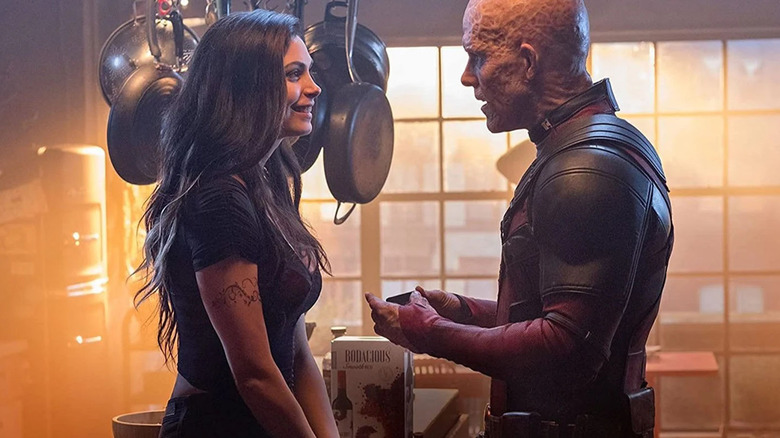
It's good to know we're not the only ones dying out here for some new "Deadpool" action. One of the franchise's stars, actress Morena Baccarin, is just as ready for more 'Pool as we are — and honestly, we should thank her for her insistence on annoying Wade Wilson himself (Ryan Reynolds, duh) about the next steps for the merc with a mouth. In an interview with The Wrap, published on Wednesday, March 23, Baccarin — who plays Wilson's girlfriend Vanessa in the first two movies — waxed potentials about an upcoming "Deadpool 3" film:
"I hope I get to be in it. I don't know. They're very, very annoyingly tight lipped. I text Ryan every six months, and I'm like 'What's going onnnn?' He's like, 'Hey, how are you? How's your family?' I'm like, 'Not what I'm asking youuuu!'"
The third "Deadpool" film has been something of a unicorn since the release of "Deadpool 2" in 2018: a creature you want to believe exists, but that you've seen little evidence of. Naturally, some behind-the-scenes shuffling is to blame — especially when it comes to the whole Marvel/Fox scenario. The first two "Deadpool" films were produced by Fox, and the company was eager to keep the R-rated edge to the character in this movie, which thrilled audiences. Three years ago, Disney acquired Fox, which means Deadpool became part of the Marvel Studios family — but he has yet to be seen on screen as part of the MCU just yet. That's what we need "Deadpool 3" for!
A Light At The End Of The Tunnel
Thankfully, there has been a bit of movement on the third "Deadpool" film as of late. On March 11, The Hollywood Reporter revealed that "Free Guy" director Shawn Levy — with whom Reynolds also worked on the recent Netflix original sci-fi movie "The Adam Project" — was in negotiations to sign onto the project as director.
Considering the success of "Free Guy" following Disney's acquisition of the title through the merger, it seems like using Levy on "Deadpool 3" is a bet they're willing to make. Plus, Disney has been wary of making "adult" content in recent years, but they have warmed up to the type of media they populate on the Disney+ app (hello, Netflix MCU titles) and to what they are greenlighting. It's possible that they just finally feel ready to expand the Disney brand, and hopefully "Deadpool 3" is one of the ways they plan on doing that.
In February 2022, Reynolds gave some reassuring words to Collider about the potential third film. He said, "We pretty much talk about everything, but I'll say this about that particular subject is I'll have a batch of updates on that sooner rather than later, I hope. So I'll be able to get into stuff about 'Deadpool' a little bit more clearly and definitively down the road." That quote was given prior to Levy's involvement, so let's just hope that the "regenerating degenerate" train is picking up full steam now.
To say Stanley Kubrick was demanding is an understatement. The director was a notorious perfectionist, with his film shoots notoriously stretching on for months and months with actors doing countless takes just to get it exactly the way Kubrick had in his head. He also was not shy about not being considerate or kind to the people he worked with, most apparent by his treatment, or mistreatment to be more precise, of Shelley Duvall on the set of "The Shining." Plenty of actors could tune in to the intensity of the filmmaker, such as Tom Cruise and Jack Nicholson, but plenty could not. To some, working for someone operating at the height of their craft is enough, courtesy be damned.
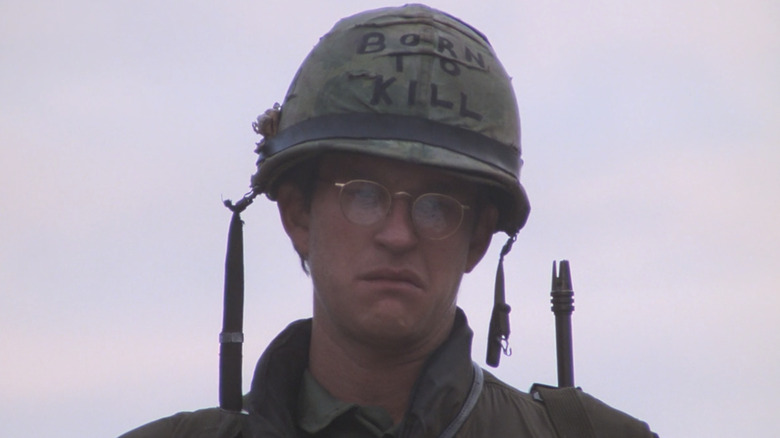
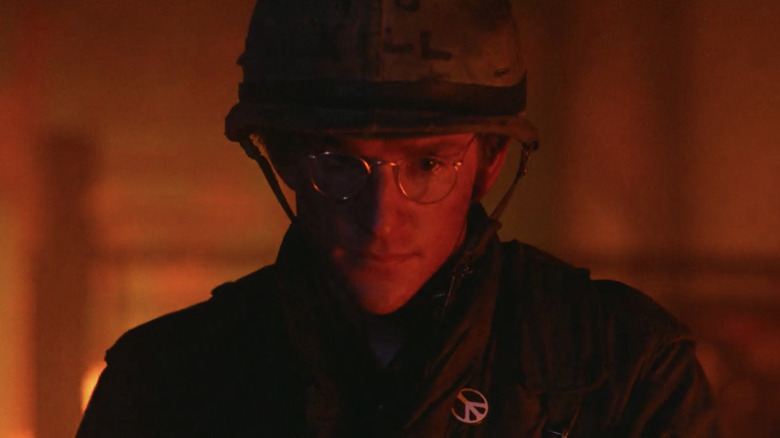
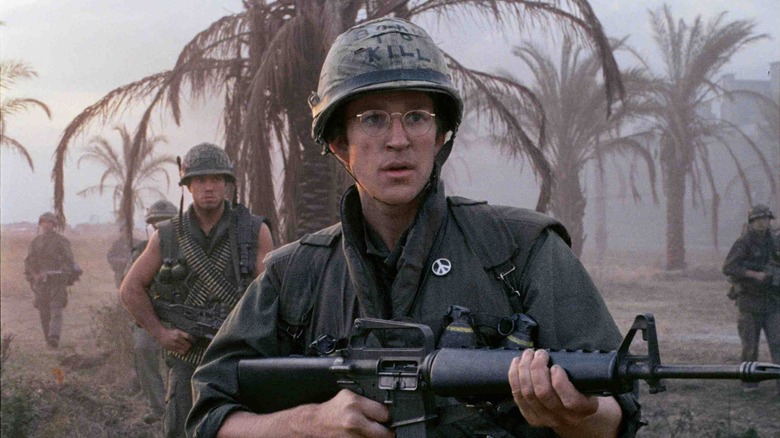
Well, Matthew Modine certainly had a complicated time making the director's penultimate film, "Full Metal Jacket." Production for that film was enormous, consisting of a shoot that stretched over two years and building a replica of the Vietnamese jungle in the United Kingdom. All of the principal actors were still very young and were thrown into this arduous production about a terrible war. But for Modine, something else was going on at the time that led to a heated argument with Kubrick ... resulting in Modine pulling a knife on the director.
Modine Almost Missed The Birth Of His First Child
In an interview with Unframed, Matthew Modine recounted an argument with Kubrick that occurred at a time when Modine should have been at his happiest. You see, while he was shooting "Full Metal Jacket," his wife was about to give birth to their first child, Boman (now a working producer and assistant director in the film business). Naturally, Modine wanted to be in the hospital for his child's birth. Kubrick was not too keen on that. Modine says:
"We found out that [my wife] was going to have an emergency Cesarean. The baby wasn't growing right in the womb. She was very early, seven months. I knew I couldn't just not show up for work. When they picked me up [to bring me to the set], I knew I wasn't going to work that day — they were shooting Dorian Harewood [who played Eightball]. I wasn't involved in that scene. So I raced to work and Stanley didn't show up on time. It was seven o'clock, eight o'clock, nine o'clock. I was freaking out. He finally showed up for work and I told him the situation. He said 'What are you going to do? Are you going to stand in the operating room? You'll faint as soon as they cut her open! You'll see all that blood and you'll pass out. You're just going to be in the way of the doctors.'"
There is a really unfortunate attitude many people have when it comes to cisgender men and birth. Many people simply think birth is the job of a woman. Why should a man stop his job to attend another person's work? Of course, building a family with a committed partner isn't a business. Stanley Kubrick trying to rob Matthew Modine and his wife from this life-changing moment is completely insane.
'I Didn't Film For Three More Days'
Modine was not going to let Kubrick's protestations stop him, and that's when he pulled out a knife. He continues:
"I said, 'No, I have to go. I have to be there with my wife.' And he started telling me all these really practical reasons why I didn't need to be there. I had a pocket knife with me; I put it in my palm and I said 'Look, I'm going to cut my hand open and I'm going to have to go to the hospital, or you can let me go to the hospital to be with my wife.' He moved away from me and he said 'Okay, but come back immediately after it's done.'"
It should not take the brandishing of a weapon to be allowed to attend your child's birth. It really shouldn't. Also, it's not like Kubrick was in a massive hurry anyway. He already showed up late to the shoot, and we all know he really loves taking his time making a movie. Letting Matthew Modine have a couple of days with his wife and newborn should have been easy. But it was Stanley Kubrick. Nothing is easy. Thankfully, Modine did get to enjoy that experience. And to put the capper on it:
"I came back and I handed out cigars. I didn't film for three more days."
Hey, how have you been? Yes, I still haunt this space, especially when my brain desires to share something that tickled its fancy in a way that Twitter isn’t suited to convey.
A short while ago, I was looking for a way to break the encroaching creative inertia preying on my brain. I decided to dig into my PDF library of RPGs and look at “The Magus“. I had bought it last year during a Twitter-driven “Sell me an amazing Indie RPG” thread but I hadn’t gotten to reading it yet. All I remembered was that it looked gorgeous.
The tl;dr version of it is a roleplaying game you play out alone by interacting with its rules and whose output is a series of multimedia journal-like entries. You are roleplaying with yourself by reporting the story of your character in an analogue or digital medium.
The Magus was created by designer Momatoes, a Souteast Asian designer and published on itch.io in January 2021. Among its many qualities, it’s the first RPG designed with Power Point using AI generated art. As far as I know, this was considered one of the design challenges behind the game.
Fine, what’s it about?
Playing The Magus makes you chronicle the rise and fall of a powerful, yet isolated wizard, a character who craves power for reasons you explore through a series of semi-scripted events made of randomly generated writing prompts intertwined with difficult questions to answer.
As you progress through up to 7 events and a few periods of reflections, you meet characters with whom you form bonds. Bonds you can either reinforce or outright betray for more power in later events. You also learn spells with randomly generated, yet profoundly evocative names, to further your goals. Each spell requires you to roll dice against your character’s stats to test if you correctly learn it and conquer the challenge that comes with it.
Failure brings consequence that invariably start a downward spiral that might lead to world spanning calamities. Partial successes leaves you scarred, subjected to complications that might come back later to make your life worse.,
If your Magus manages to make it to the end of a 7th event, they retire and you envision how they spend their future and what how they handle the burden of their actions.
The game is somber and tackles heavy subjects like solitude, betrayal, and one’s care for others. It can go from “One to Dark” pretty fast. Fortunately, the game document has a section about the validity of skipping parts or how you should keep writing journal entries as long as you enjoy it and stop when you no longer do.
I recently played one session. Being the verbose writer that I am, I clocked in a 3000 words story I’m pretty proud of. I really had a lot of fun writing it.
Turns out I can write arrogant bastard pretty well.
More importantly, this game gave me the desire to write creatively again, something I have not felt in more than a year. I’m really happy I bought it.
Game Design Elements
The game is advertised as “crunchy”, a term I’ve grown leery to acknowledge.
In The Magus‘ particular case, this declaration by its designer rests in the use of several polyhedral-based mechanics. After establishing your Magus’ origins by answering a few key questions including the possibility to roll on some tables, you get to engage with events documented in the game’s 55 “slides”, which are mostly made of events you navigate by rolling a d6 and a d4 and “advancing” by the absolute value of their difference. So if you last played Event 3 and then rolled a 2 and a 4, you’d advance to Event 5 and play it out.
Each event is a one “slide” description for one of two types of events: Bond or Spell.
Bond events introduce a new NPC you are invited to describe as someone you create a new relationship with. Using dice prompts, you pick a name for them and determine who they are. Alternatively, whenever you have the opportunity to create a new Bond, you can decide to invest yourself into an already existing one, strengthening it.
Spell events describe a moment in your Magus life when they attempt to acquire mastery over new magic to further their goals. Evocative spells names are generated on tables and you’re prompted to describe what effect the spell has in the world you Magus occupies. But that’s not all, learning the spell comes with a challenge, something that tries to interfere with your casting it. That challenge, which you are asked to described based on specific prompts, requires rolling a series of dice based on your character’s “Power” stat. The further you progress with the game, the harder it becomes to learn and cast a spell without having to pay a cost.
Yes, that’s 100% the kind of thing I like in modern RPG design.
Total or partial successes and failure drive the game onwards. Your Magus might gain Focus from tremendous successes, allowing them rerolls in later events. Partial successes will come with a cost in the form of a narrative scar that forever marks your Magus unless a future success cancels it. Failures affect your Magus’ control over themself. Failure to control a situation gone awry leads to a Calamity, some apocalyptic event that leaves the whole world changed. When that happens, or when your Magus loses control over their own power, you must retire them, writing an epilogue based on the wizard’s remaining bonds and consequences of their actions.
How Was it, Then?
I loved it and I look forward to trying it again. I’ll soon share the whole journal in blog form for you to see how the game went. Stay tuned!
Nicolas Cage is the gift that keeps on giving, be it his desire to play an "absolutely terrifying" Egghead in a future "The Batman" sequel or the fact that he might just be playing a bonkers, unforgettable version of Dracula in the upcoming horror-comedy, "Renfield." Now, Cage has declared that he will never exercise for a role again, and the reasoning behind this decision is equally pragmatic and hilarious.
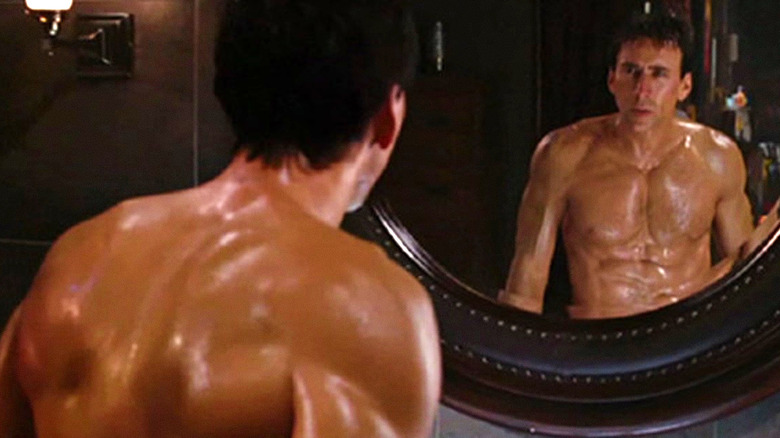
Speaking to GQ while answering fan questions/theories during their "Actually Me" segment, Cage revealed that he won't be working out "that hard again" for a role since people never believe his abs are real anyway. This answer was prompted by a fan's Quora question about whether Cage's abs in "Ghost Rider" were real or CGI, to which Cage exasperatedly answered the following:
"They [Cage's ab muscles] are real, and that's why I'll never work out that hard again. Because nobody wanted to believe they were real and they wanted to believe it was CGI, which it wasn't so what's the point?"
I mean, the man's not wrong. That's a smart move. Check out Cage's interview with GQ in its entirety below.
'What's The Point?'
Cage's rendition of Johnny Blaze/Ghost Rider is entertaining in a hilarious, over-the-top way, which is in keeping with most of Cage's meme-worthy, iconic roles, such as the one in "The Wicker Man." Blaze as a character did not necessarily need to sport such defined abs, and the still-prevailing disbelief that Cage's abs in "Ghost Rider" were not CGI is reason enough for his decision to not overextend himself physically for a role.
Apart from this, Cage spent the rest of his segment debunking rumors and confirming online speculations. Cage went on to debunk fan speculation that he and Gary Oldman were originally considered for the roles of Harry and Lloyd in "Dumb and Dumber," saying that while Jim Carrey wanted him involved, he chose '"Leaving Las Vegas" instead. He also went on to say how he's not invested in social media, although he is aware of the numerous Nic Cage memes that circulate online, calling the Nic-Cage-is-actually-a-vampire-from-the-1870s meme his favorite.
Cage also went on to answer a fan query about the aborted Tim Burton film, "Superman Lives," answering that he hopes "there's still a chance" for it to materialize in the future (we hope so too). Moving on to his other superhero roles, Cage talked about how much he enjoyed playing Spider-Man Noir in "Spider-Man: Into the Spider-Verse," and how he took inspiration from noir actors in the '30s and '40s, including icons like Humphrey Bogart and James Cagney:
"Well, Spider-Man Noir was great. I really enjoyed playing that part. I liked it because I was able to bring some of my own personal interests in the early actors of the '30s and '40s, like Bogart and Cagney, that were in all those noir films. So that was fun for me. And they let me do it, which is unusual."
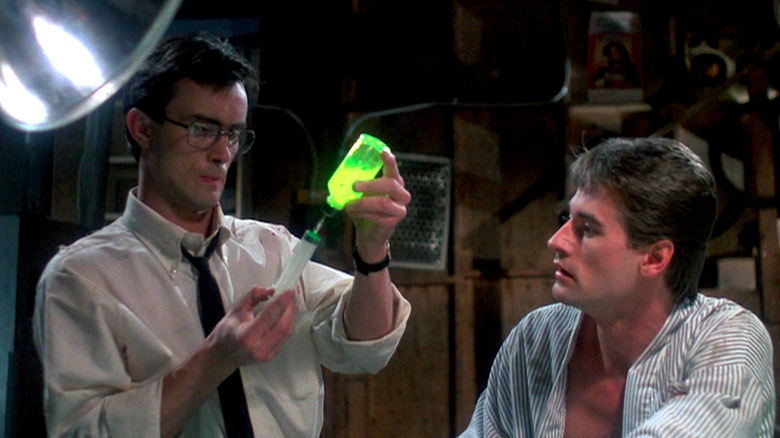
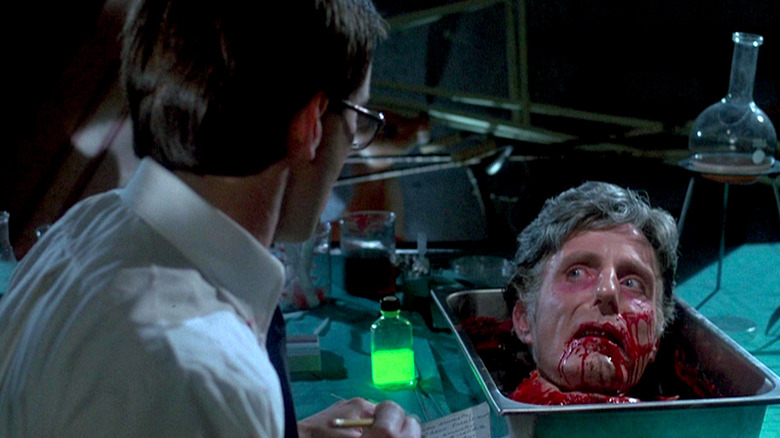
Whenever I think of Stuart Gordon's "Re-animator," I think of severed heads. Dr. Hill and his noggin made a distinct impression on me the very first time I watched the film. There are so many things to love about this story that revolves around a mad Dr.Frankenstein-esque scientist named Herbert West, but one of my absolute favorite things is the way Gordon manages to inject the goofiest, crassest humor into an already bizarre film. Hill and his head provide some of the best examples of the kind of humor and perversity that animate (pun only slightly intended) the entire movie. "Re-animator" is not a film for everyone, but for much of the horror community, it is a classic that simply cannot be missed.
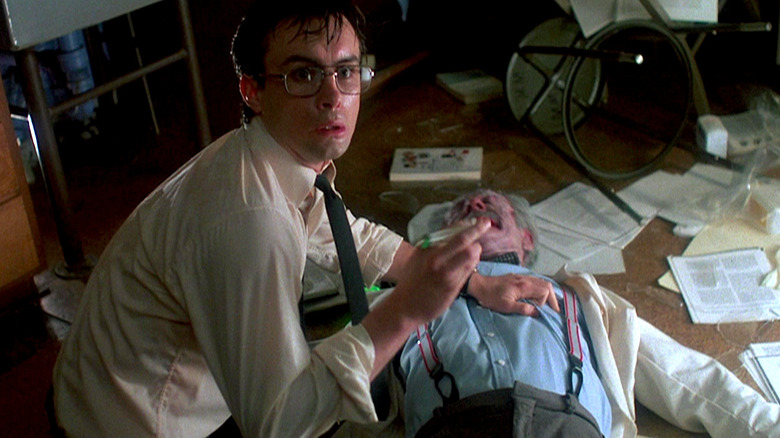
Based on the H.P. Lovecraft story, "Herbert West — Reanimator," the film tells the tale of a mad scientist who has created a serum that reanimates dead bodies. The only problem is, after reanimation, the dead tend to not be too keen on being alive again. They exhibit violent tendencies and are uncontrollable. While the serum does technically bring them back to life, they are a far cry from the people they were before they died. West, however, does not care. Feeling he is on the verge of a breakthrough, he infiltrates the local hospital morgue and injects cadavers with the reagent serum to study them. What follows is a wonderful mash-up of hijinx and gore so ridiculous you can't help but love it.
"Re-animator" is so unashamedly gross that it's hard to imagine it as Gordon's first feature. He came from a theater background that was decidedly un-horror. His early career begs the question, how did such a crazy horror story become the first feature film of this new movie director, especially when he was more involved with experimental, art-house type plays rather than the bloody world of severed heads and feral, reanimated house pets?
How Stuart Gordon Got Ahead In Movies
To be frank, the short answer is money. In an interview with Paste, Stuart Gordon explained how horror was the most obvious genre for his first feature if he wanted to have a shot at making a movie. "A friend of mine suggested that I do a horror film, explaining that it was the easiest thing to raise money for and the easiest way for investors to get their money back, no matter how terribly it turned out," he said. While he had some trouble convincing his company to allow him to film a horror movie in their theater ("They did think we should be doing an art film and refused to allow me to do a horror film there."), he did not let go of the horror genre and continued to look for the right story to adapt.
Finally, after talking with a friend who suggested he read Lovecraft's story about mad scientist Herbert West, his interest was piqued. He told Paste he had been "complain[ing] that all anyone wanted to make was vampire movies, and [he] wanted somebody to make a "Frankenstein" movie." After reading the story, he knew he had his film. And really, what is "Re-animator" if not just a crazy, albeit modified, re-telling of "Frankenstein"?
Shortly after reading "Herbert West — Reanimator," Gordon set about trying to adapt it, but before it became the movie we all know and love, it had a very different start.
From TV Screen To Movie Screen
In the early days of bringing "Re-animator" to life, Stuart Gordon envisioned the script as a TV adaptation rather than a feature film. He explained to Paste that he tried to get public television to pick up "Re-Animator" as a series, "but they were just not interested in it." If it had been made as a show, it would have been a six-part miniseries that followed the six individual stories that Lovecraft wrote about Herbert West. "We tried doing it as half-hour episodes, then an hour, but we couldn't get it going for television," explained Gordon. The series was also going to be based in the same period as the original stories, a choice that would have drastically changed the way the story feels. Still, it might have been an interesting watch. Since Gordon couldn't get anyone to take the script for television, he had to look elsewhere. Enter Brian Yuzna.
Filmmaker Brian Yuzna was given the "Re-animator" script and felt the story lent itself better to film. He was between projects, so he decided to take it on with Gordon. What resulted is the crazy, bloody 96 minutes of fun that is beloved by genre fans everywhere. Yuzna went on to work with Gordon on many of his later films such as "From Beyond," "Dolls," and both of the sequels to "Re-animator." Gordon became a name synonymous with the horror genre, and fans could not possibly imagine the genre without his particular blend of gore and comedy. The world may have lost a great horror director in 2020, but his movies, just like Herbert West's bodies, remain animated and very much alive in the hearts of horror fans.
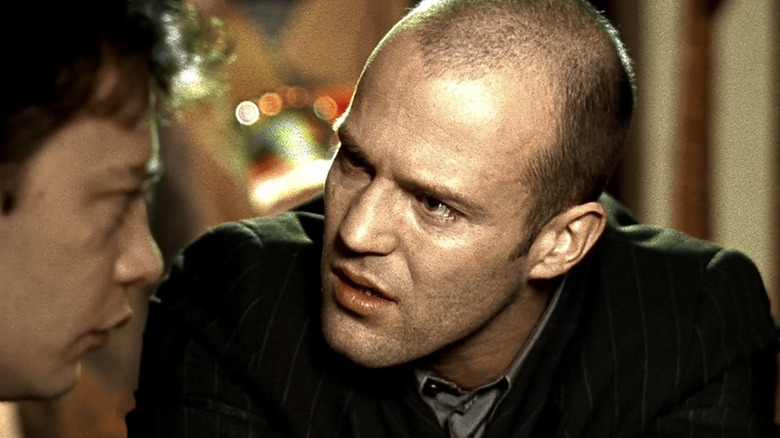
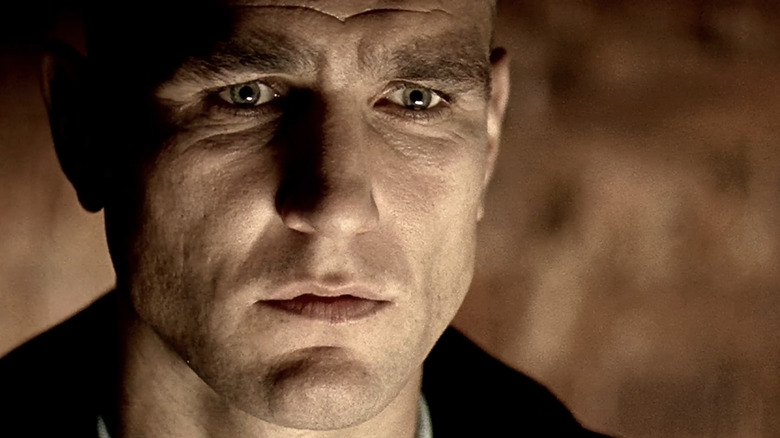
Guy Ritchie's BAFTA Award-nominated crime comedy, "Lock, Stock and Two Smoking Barrels," served as his directorial debut and the feature-film debut of Vinnie Jones and future action star Jason Statham. However, the movie and indeed their careers might have been confined to direct-to-video purgatory in 1998 if Tom Cruise hadn't come to the rescue.
Cruise was not involved with the making of "Lock, Stock and Two Smoking Barrels." He just happened to be acquainted with executive producer Trudi Styler. Matthew Vaughn, who would go on to become an accomplished director in his own right with films like "Layer Cake" and "X-Men: First Class," served as the top producer of "Lock, Stock and Two Smoking Barrels." Yet in a 2015 interview on BBC Radio 4's The Business of Film with Mark Kermode, Vaughn admitted that the movie "faced a chorus of no's," as Kermode put it, when they tried to secure theatrical distribution for it.
Vaughn was almost ready to retire because of it, but he asked Styler to reach out to Cruise and see if he would attend a buyers' screening in the U.S. for "Lock, Stock and Two Smoking Barrels." This was not some glitzy Hollywood premiere where they were going to be rolling out the red carpet for Cruise's limo arrival. It was happening in what Vaughn called a "tiny little screening room on the Sony [Pictures] lot." He said:
"It was hysterical. You had all these mid-level executives sitting there, and Cruise walked in. He saw them all sit up and pay attention, all getting on their phones, and suddenly all these senior executives joined the screening. [...] At the end, Tom got up in front of everyone and said 'this is the best movie I've seen in years, you guys would be fools not to buy it.'"
And Then There Was Snatch
When Cruise gave "Lock, Stock and Two Smoking Barrels" his official superstar stamp of approval, it set off a bidding war. Vaughn said that his film career went "from nearly ending to starting" because of it. He and Ritchie would reteam in 2000 for another ensemble-driven crime comedy, "Snatch," which beefed up Statham's screen time, allowing him to take on the main role of the boxing promoter, Turkish, opposite an up-and-coming Stephen Graham as Tommy. Vaughn and Ritchie also brought in Cruise's "Interview with the Vampire" co-star, Brad Pitt, as a mumbling bare-knuckle boxer nicknamed "One Punch" Mickey.
The result was a film that was an even bigger success than "Lock, Stock and Two Smoking Barrels." According to The Numbers, "Snatch" grossed $83.5 million worldwide on an estimated budget of $10 million.
After that, Vaughn, Ritchie, and Statham were off to the races. And it all happened because a movie star with a winning smile by the name of Tom Cruise took time out of his busy schedule to show up at a buyers screening and give an independent British film a little promotional push.
I like to knit, sew, and do assorted crafts. So, for a long time, I was a big fan of the Jo-Ann flyers that would come in the mail. There would always be at least one really valuable coupon, giving you 40% off any full price item, which I would usually save for a big cut of fabric. But you couldn’t use it if your…
Growing your own food is immensely satisfying—but only when you get a crop that’s delicious, plentiful, or definitely worth the effort. It’s a different story when you’ve spent all summer doting on a single eggplant that turns out to not even be that good. To know where to focus your gardening efforts, here are the…
If you’re interested in spending more time in the yard this summer, but need to increase your shaded areas to make it more cool and comfortable, a shade sail might be for you. Unlike a roof, a shade sail is intended to let air circulate through it while providing a cooler spot. Shade sails are also removable, making…
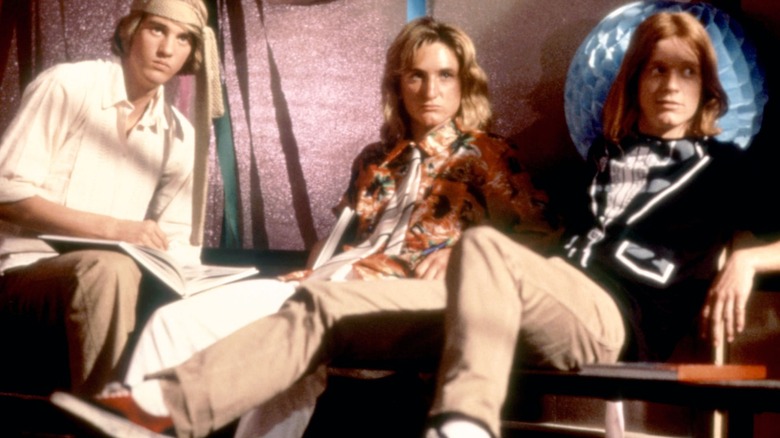
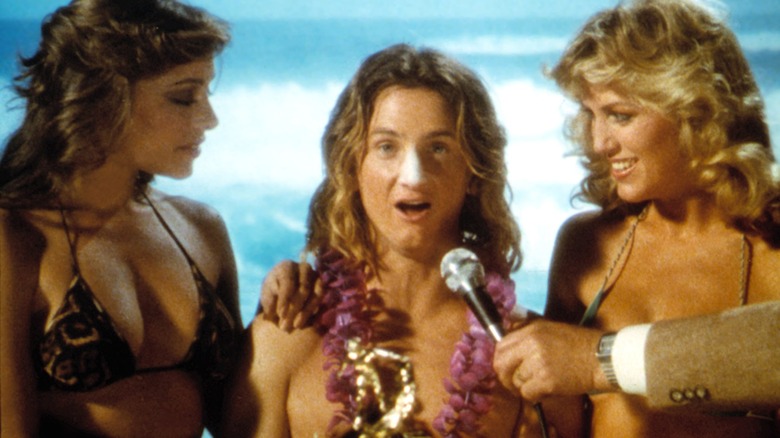
Sean Penn is an enigmatic tour de force in Hollywood. The actor/director/activist is a two-time Best Actor Oscar winner known for his range and powerful performances in films such as "Mystic River" and "Milk." But he's also known for his questionable takes on issues such as toxic masculinity and inserting himself into the middle of all sorts of controversies. And despite all the accolades, activism, and political wrangling, Penn is often remembered most for his role as the stoner surfer Jeff Spicoli in "Fast Times at Ridgemont High."
The 1982 high school comedy directed by Amy Heckerling is one of the most memorable in a decade full of great comedies. Spicoli, who mused with a relaxed drawl, "All I need are some tasty waves, a cool buzz, and I'm fine," also started the early '80s Vans sneaker trend with his iconic checkered pair. Surfer Today explains that the Spicoli character embodied the stereotypes of the 1960s and 1970s surf scene as a stoner beach bum with a carefree attitude.
Penn's performance created a template for the cinematic stoner still seen today. But what few know is that his work behind the scenes to become Jeff Spicoli is almost as memorable as the role itself.
Spicoli Was Based On A Real Person
Method acting, also simply known as "the Method," is the process of an actor identifying with a character by sharing authentic experiences like those the character might have gone through. The Ringer notes that Sean Penn might be the first stoner method actor. Producer Art Linson explains that Penn arrived on the set of "Fast Times at Ridgemont High" as Spicoli and remained in character until the end of the production. Linson said:
"Sean was clad at all times in full beach ensemble — all conceived and put together by him — including a long, sun-thrashed wig."
Penn, who wouldn't let anyone call him by his real name during filming, channeled a childhood friend from Malibu to help create the character. It's only fitting that Penn would draw upon realism to perfect the character. Spicoli is, after all, is based on a real person. To write the book that the film was adapted from, 22-year-old Cameron Crowe attended a Southern California high school undercover to get an accurate portrait of teenage life. This is how the Spicoli character was discovered and brought to life.
Penn's rigorous preparation for the role not only influenced fans of "Fast Times at Ridgemont High" but nearly every stoner in popular culture still to come.
Spicoli Still Dominates Pop Culture
As The Ringer opines, nearly all potheads in cinema that followed "Fast Times at Ridgemont High" could be considered descendants of Spicoli. They cite Slater (Rory Cochrane) in "Dazed and Confused," Floyd (Brad Pitt) in "True Romance," and more recently, Saul (James Franco) in "Pineapple Express." Heck, even The Dude (Jeff Bridges) in "The Big Lebowski" is a grown-up Spicoli (almost all in our top 15 list of Best Stoner Movies Ever).
While Penn didn't create the stoner surfer stereotype, he certainly perfected it. Even today, the trope reverberates throughout popular culture. In the World Wrestling Entertainment, former MMA fighter and current WWE superstar Matt Riddle is a carbon copy of Spicoli, with long blonde hair, a ring entrance that involves flip flops and a scooter, and a theme song that begins with, "Brooooo..."
Not everyone got a kick out of Penn's memorable performance. Just after the film's release, the president of the National Scholastic Surfing Association (yes, that's a thing) told Surfer Magazine, "You can no longer get away with long hair, cussing, or bad behavior."
Does Penn have any regrets about the role? Apparently, a little bit. As People notes, in 2003 Penn was asked if he had any guilt for the dimwitted surfer image he helped create, he responded, "I accept full responsibility." While surfing scholars might not have appreciated Penn's portrayal of their ilk, many agree that Spicoli is one of film's most memorable surfers.
Similar to how Apple charges customers a monthly fee for using its services, the company is said to be working on something similar for iPhones and other hardware products.
Just Like Subscribing to Digital Services, Customers Could Pay a Monthly Fee to Own an iPhone or Any Other Hardware Product
People familiar with the matter have informed Bloomberg that Apple’s plan is currently in development. The individuals who informed the source about these plans have asked that their identities remain anonymous. Just as how users pay a monthly or yearly fee for using an app or any other service, the same approach will be applied towards owning an iPhone or iPad.
In the U.S., Apple currently allows customers to finance nearly hardware purchases using the Apple Card. In addition, customers can upgrade to their desired iPhone using the iPhone Upgrade Program and get a newer model every 12 months. The new hardware subscription service is expected to launch by 2022, or in 2023, depending on how things fold. This service could get tied into Apple One and AppleCare bundles.
According to Bloomberg, this hardware subscription service will be Apple’s ‘biggest push yet’ into recurring sales. Given how inflation has affected the world and has limited the purchasing power of customers, it becomes difficult owning a brand new iPhone, iPad, or an even more expensive Mac model by paying the upfront cost.
Though carrier services allow customers to pay a monthly fee for iPhones, it does not apply to Macs or other products, so this service will primarily cater to those who do not have the financial capacity to immediately pay a small fortune to acquire the latest hardware.
This hardware subscription service could easily allow Apple to increase ownership of various products while also increasing adoption for different operating systems. We expect the service to be available in the U.S. first, then be branched out to other regions. Given how Apple enjoys massive sales in the U.S., it makes perfect sense to launch the service in the United States.
Perhaps Apple’s competitors will take note of the company’s efforts and aim to provide something similar in the coming months.
The thing about adaptations from book to movie is that they are so often polarizing. Die-hard fans of the book are often never satisfied with the way a film takes on one of their favorite stories, but those who are less attached to the original source material can often find positives within a new retelling. Thus, two distinct camps are born — book versus movie — and the internet arguments commence. People are very passionate about their favorite stories, which is actually a beautiful thing, and if we think about writers who have been recently getting the adaptation treatment, one big name comes to mind: Stephen King. His books have constantly been being turned into movies and television shows for a very long time — now more than ever — but perhaps one of the best King adaptations also just happens to be the first.
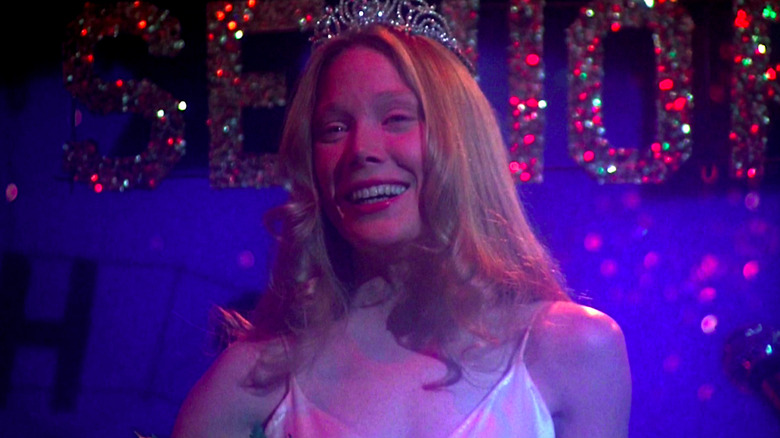
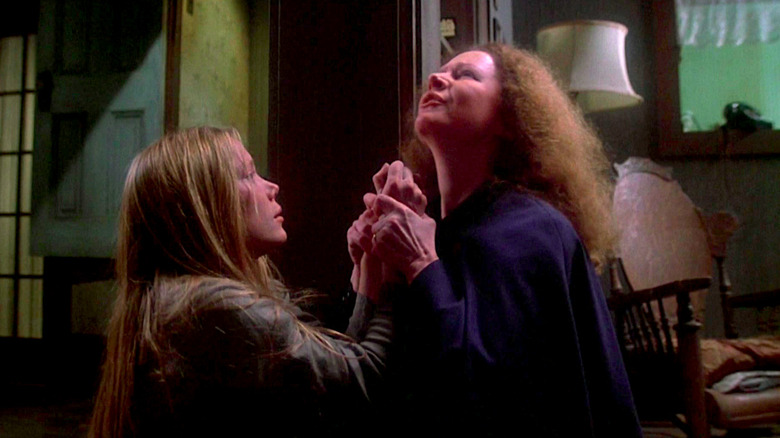
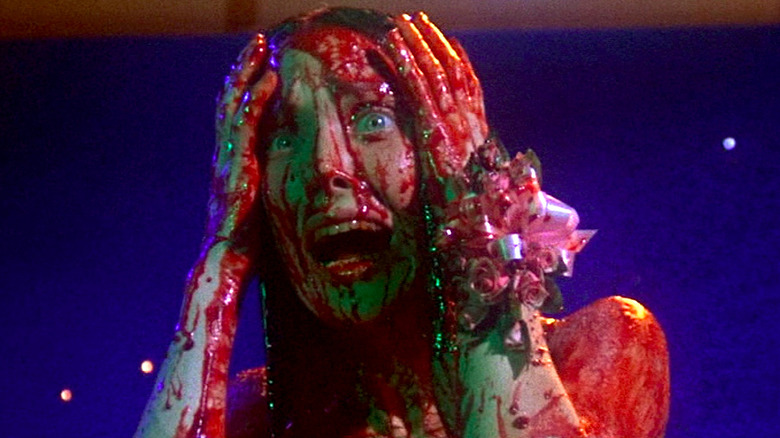
"Carrie" is a story about a telepathic teenage girl who lives alone with her extremely devout and overbearing mother. She is often the subject of teasing and ridicule at school simply because of her strict religious upbringing. One day, the teasing gets out of hand, setting in motion a disastrous chain of events that end in fire and death. It's a decent first novel, and it's obvious to see why King took off in popularity, but it's not perfect.
However, director Brian De Palma saw great promise in the book and made it into a movie starring Sissy Spacek a few year's after "Carrie" was published. And King was very pleased with the results.
Pouring The Metaphorical Pig's Blood Of Critique
It's a well-known fact that Stephen King does not approve of Stanley Kubrick's adaptation of his book, "The Shining." He hates it so much that he really cannot seem to ever stop talking about it. This is kind of a shame because many horror fans absolutely love what Kubrick decided to do with Jack Torrence and the Overlook Hotel, but alas, it was all done much to the dismay of the creator of the film's original source material. It's not uncommon for King to dislike films made from books he has written, and I imagine it must be painful to see your work turned into something you don't recognize, but there are certain adaptations of King's work that he does genuinely appreciate.
If you ask me, De Palma's "Carrie" is one of the greatest film adaptations of a book ever made. It masterfully keeps all the good parts about the book intact while simultaneously improving upon the areas that could have used a little more work. I, however, am just one person with an opinion. But the one person you can always count on to tell you the truth about an adaptation is the author of the original work themselves. In this case, King himself has given his opinion on De Palma's "Carrie," and it's surprisingly pleasant.
Impressing The King With A Prom Queen
In a 1983 interview for Playboy, King was asked about the adaptations of both "Carrie" and "The Shining." While he had nothing but bad things to say about "The Shining" ("I'd admired Kubrick for a long time and had great expectations for the project, but I was deeply disappointed in the end result"), he was very pleased with De Palma's take on King's telekinetic teen. Calling De Palma's adaptation "terrific," King critiqued his own work saying, "I still think [it's] a gripping read but [it's] impeded by a certain heaviness, a Sturm und Drang quality that's absent from the film." De Palma's version on the other hand, King felt is "far more stylish than [his] book." Ultimately, he had a lot less to say about "Carrie" than "The Shining" (which he criticized for awhile), but perhaps that's because he simply finds nothing to dislike that much about De Palma's take.
King doesn't seem to feel as positive about the 2013 "Carrie" remake, though. In fact, he told Entertainment Weekly that he doesn't understand why the film was going to be potentially remade when De Palma did such a great job to begin with. The most interesting thing about his feelings about the remake were that he was hoping Lindsey Lohan (!) would get cast in the title role and that David Lynch (!!) or David Cronenberg (!!!) would be allowed to direct. None of those things ever came to fruition, and the remake came out to generally lackluster reviews. Perhaps we should have listened to the creator of "Carrie" in the first place and just allowed ourselves to be happy with De Palma's knockout of a film.
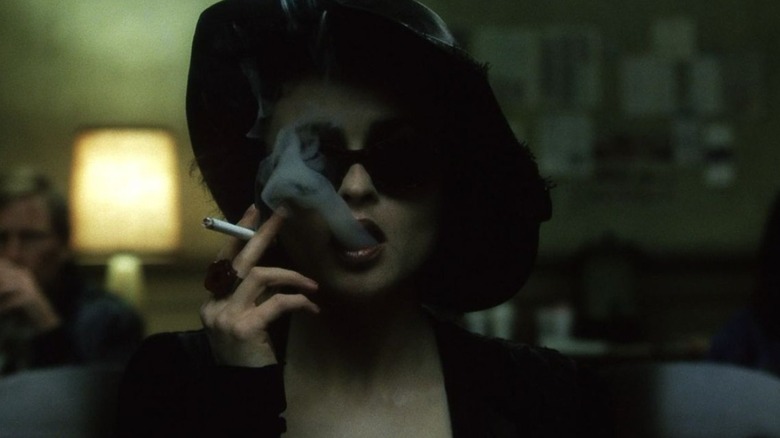
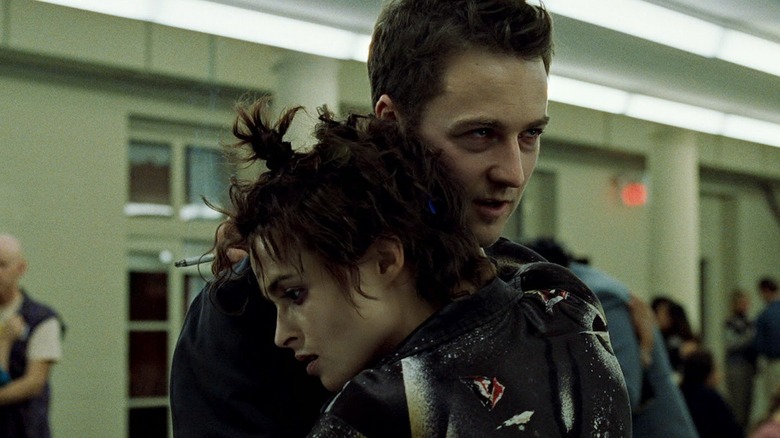
Helena Bonham Carter is a rare jack of all trades -- and master of every damn one, when it comes to her eclectic career. She's played royalty -– herself being granted a royal title, per CBS News, in 2011 -– in films like "The King" and Netflix's "The Crown." There's the near-endless catalog of beloved roles she's had in Tim Burton classics and her terrifyingly-deranged portrayal of Bellatrix Lestrange. Each reveals Carter's love for eccentric and dark characters. So it might come as a mild surprise that when she was handed the script of "Fight Club" by director David Fincher, she hesitated on taking the part.
Today, it's hard to imagine anyone else embodying the whirlwind of razzled complexity that is Marla Singer other than Carter. What makes the actor's apprehension more interesting is the fact that early in her career she'd begun to be typecast as "virginal English rose," according to the Sunday Times –- which annoyed her. That perception started to change when she appeared as the tragic and ambitious character of the Henry James novel "The Wings of the Dove." It's her acting in this film that placed her atop Fincher's list for the delightfully despondent and fatalistic Singer. Not to mention if there was ever a role that would adamantly reject her previous typecast, it was this one, without a doubt. So, what did Carter have to fear?
Carter's Mom Was Repulsed By The Script
Turns out we have Brad Pitt to thank for Carter being considered for the role. In an excerpt from the book "Best. Movie. Year. Ever." by Brian Raftery posted on The Ringer, it's revealed that it was Pitt who recommended Fincher view "The Wings of The Dove" in the first place. After seeing Carter's "exquisitely emotional" portrayal of the morally ambiguous Kate Croy he immediately sent her a copy of the "Fight Club" screenplay. Her initial reaction? Less than enthused. But her mother? Thoroughly repulsed.
"Mum put the script outside her bedroom, because it was a pollutant!" the actor said. "I didn't get it when I first read it, either. I thought, 'This is weird. Is this message particularly life-enhancing?'"
Since both the film (and novel, for that matter) were released, they've become a sad rallying cry for men who idolize a sentient id like Tyler Durden. Just like Edward Norton's Narrator, their existential disappointment with a vapid and commercial world leads them angrily towards nihilistic and dangerously fascist worldviews. So there's plenty that feels dangerously possible to misinterpret, which was a clear concern for Carter after reading through the screenplay and getting a taste of her character. So she set up a meeting with Fincher, the purpose of which was "to ascertain that he wasn't a complete misogynist." It was a meeting that also helped turn on Carter to the possibilities for Singer's character.
Who Is Marla Singer?
Carter evidently saw no evidence of Fincher being a hyper-masculine sadist. So after their meeting in Los Angeles, she sent him a fax that doubled as a list of concerns and an attempt to convince herself to take the part.
"I just said, 'I've got to play it with a big heart.' Marla had to have a heart, otherwise she'd be just a nightmare. I was talking myself into it. By the end of the letter I'd convinced myself to do it."
Immediately after accepting the role Carter got in touch with "Fight Club" costume designer Michael Kaplan, who'd also worked on films like "Blade Runner," to create Singer's wardrobe aesthetic.
"Helena said, 'Who the f*** is Marla Singer? You're going to have to help me with this one,' " Kaplan recalled. "My response was 'Think Judy Garland for the millennium. Not the actress in The Wizard of Oz — think Judy Garland later on, when she was a bit of a mess, drinking and doing drugs while her life was falling apart.'"
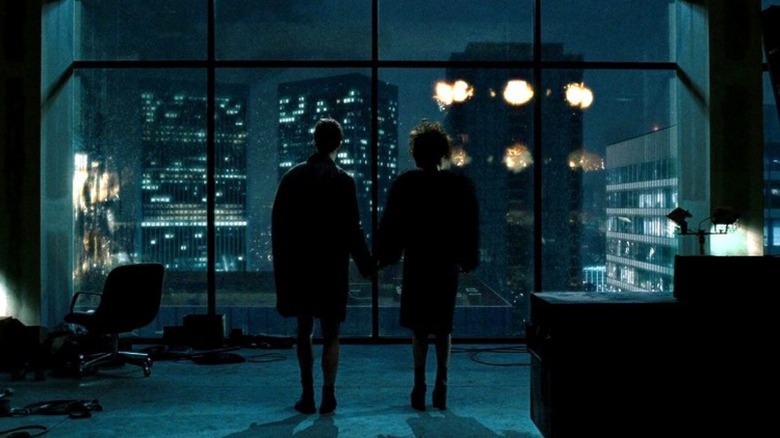
Trusting in the vast expertise of Kaplan, who designed Durden's fabulously loud style, Carter cloaked herself in outfits true to Singer's soul. From her drably chic furry black coat to the iconic and morbid, with a discarded bridesmaid dress: It was a foreshadowing of Carter's future playing gothic caricatures. But it's the heart she gives Singer that brings out some of the very life-enhancing themes she believed were missing. Chuck Palahniuk has said the central theme of most of his works is that of "a lonely person looking for some way to connect with other people." We can't think of any more quintessential fulfillment of that desire for connection than the final scene from the film, where the Narrator and Singer are holding hands. Carter might've been right to hesitate when she first read the script, but it's hard to see anyone but her bringing out the absolute best in the character.
With food costs rising, many people are contemplating starting a garden. This makes sense, since human beings have been growing their own food for thousands of years. The stuff just comes out of the ground and literally grows on trees. Gardening offers a lot of benefits: It can be spiritually and emotionally…
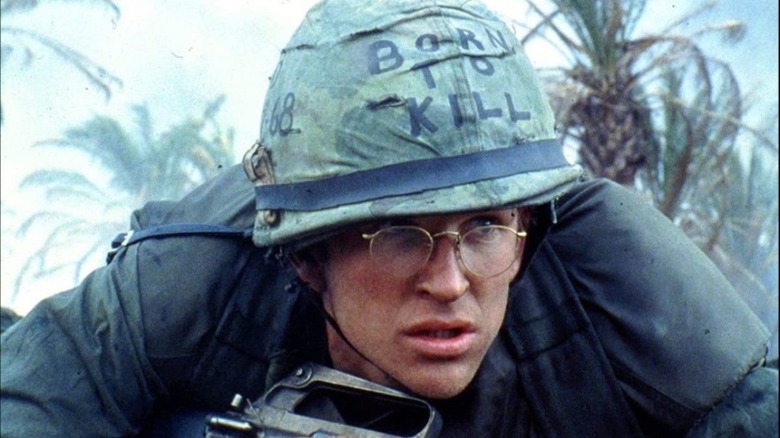
It's almost impossible to discuss the greatest war movies of all time without bringing up "Full Metal Jacket." Stanley Kubrick's 1987 Vietnam War epic stars Matthew Modine as young Marine, Private — though he later becomes Sergeant — J.T. "Joker" Davis, who we follow all the way from the brutality of boot camp to the even harsher reality of war. The film is remembered not only for its brutal commentary on war in general, but also for unforgettable performances from Modine, Vincent D'Onofrio, Adam Baldwin, and of course, the late R. Lee Ermey.
Like the sets of other Kubrick films such as "A Clockwork Orange" or the "The Shining," the shoot was demanding to say the least. Modine even released a diary chronicling the intense two-year experience back in 2005. The actor may have been stellar as Private Joker, but he came by the role in a rather interesting way. In fact, a star who had practically nothing to do with "Full Metal Jacket" was at least partially responsible for Modine being considered for the part. So, how did Val Kilmer help him land his starring role in "Full Metal Jacket?"
A Chance Meeting
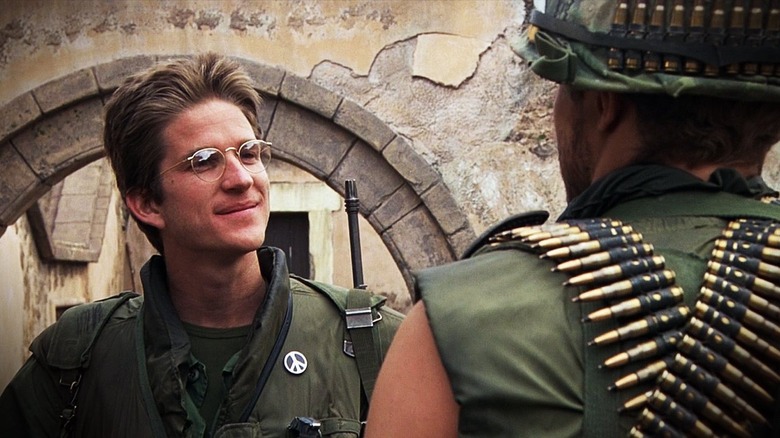
While it's impossible to imagine anyone other than Modine as Joker, he wasn't initially in consideration for the part — at least not that he knows of. When speaking to Unframed, Modine recounted a fascinating tale about how he got the role of Private Joker:
"It's a funny story. I was with a good friend of mine, David Alan Grier; we were having pancakes at a place on Sunset Boulevard called the Source, and over David's shoulder there was a guy looking at me, giving me the hairy eyeball. David looks over and says 'Oh, that's Val Kilmer, he's a really nice guy,' [and] he introduced me. Val says 'Yeah, I know who you are. I'm sick of you.' I had been on this run of films—'Birdy,' 'Mrs. Soffel,' and 'Vision Quest.' And Val says, 'Now you're doing Kubrick's film.' When we finished our breakfast I called my manager. He didn't know anything about it. I knew [Kubrick] was making a film with Warner Bros., so we asked [director] Harold Becker to send a print of 'Vision Quest,' and we asked Alan Parker to send some dailies from 'Birdy.' It turns out that maybe Stanley didn't know anything about me and Val Kilmer might have been responsible for me getting the part in 'Full Metal Jacket.'"
According to IndieWire, Kilmer was up for the part himself, so perhaps that accounted for his seemingly sour sentiments. It does appear to have all worked out for the best though, since if Kilmer hadn't said those words, Modine may never have wound up on Kubrick's radar in the first place. Interestingly, Kubrick's first choice to play Joker was actually Anthony Michael Hall (via Metro), best known at the time for his roles in John Hughes' movies, but they were unable to reach an agreement.
Modine did have a string of hits throughout the '80s as he mentioned above, but he's also had a long and varied career, appearing in unforgettable films such as "Short Cuts," as well as beloved TV series like "Weeds." Speaking of shows people love, the actor is likely best known to modern audiences as the villainous Dr. Martin Brenner from "Stranger Things," who may or may not return in the show's upcoming 4th season. Next up, Modine has a role in Christopher Nolan's star-studded "Oppenheimer," which is set to hit theaters in 2023. He has worked with the director previously on "The Dark Knight Rises."
During GDC 2022, Arkane Studios held a presentation titled A Guided Tour of Blackreef: Rendering Technologies in Deathloop to showcase the engine advancements featured in the game; the final section delivered some interesting information on the upcoming implementation of FSR 2.0.
Deathloop will be the first game to support AMD's new version of FidelityFX Super Resolution, which moves from a spatial upscaling solution to a temporal upscaling solution to greatly improve image quality.
Indeed, AMD Developer Technology Engineer Lou Kramer began her talk by pointing out with a screenshot comparison that the edges of the wooden pattern are very well reconstructed in the FSR 2.0 image (Quality Mode, from 1440p to 4K), to the point where they even look better than the native 4K image with TAA and Sharpener enabled.
Kramer then discussed the input sources of FSR 2.0 in Deathloop, such as color buffer, depth buffer, and motion vectors. The input color buffer is in Linear Color Space, and the image format is R11G11B10_FLOAT. To improve the precision in the target image format, the values are multiplied with a pre-exposure value. Since FSR 2.0 needs to do this too, the pre-exposure value is passed down to it as a per-frame parameter. Deathloop also provides the exposure texture for input, though this is not required as FSR 2.0 can compute one of its own.
When it comes to output, Kramer said Deathloop's presentation is very soft even when rendered natively, so there is a sharpener available in the graphics menu. However, FSR 2.0 has its built-in sharpener, RCAS (Robust Contrast Adaptive Sharpener); once FSR 2.0 is enabled, Deathloop's own is disabled to avoid excessive sharpening.
Deathloop is set to support all of FSR 2.0's modes (from Quality to Ultra Performance) and even Dynamic Resolution Scaling.
The most interesting part of the presentation came in last when we got a first look at the performance improvements FSR 2.0 is set to deliver in Deathloop.
It's worth noting the numbers were registered on beta versions, so they might be different in the final version. That said, compared to native 4K with TAA, Sharpening and Raytracing enabled, FSR 2.0 can boost up performance by up to 50% in Quality Mode (reconstructed from 1440p), by up to 69% in Balanced Mode (1270p), by up to 90% in Performance mode (1080p), and by up to 147% in Ultra Performance mode (720p). That is on an AMD Radeon RX 6900 XT graphics card.
In another GDC 2022 talk dedicated entirely to FidelityFX Super Resolution 2.0, AMD engineer Thomas Arcila revealed the upsampling part of FSR 2.0 to be handled through Lanczos, the famous high-quality interpolation filter. Ringing artifacts are avoided through clamping.
While the new version of FidelityFX Super Resolution will be cross-platform, AMD did spend some time optimizing processes for RDNA 2 architectures. For example, optimizing the Lanczos calculations includes storing precomputed Lanczos lookup tables in a texture and then sampling them at runtime. According to AMD engineer Colin Riley, this is faster on some RDNA 2 architectures.
Additionally, AMD found that running some FSR 2.0 shader workloads in Wave64 instead of Wave32 can improve runtime by up to 12% on a Radeon RX 6800XT. However, some of these RDNA 2 optimizations would run slower on non-RDNA 2 GPUs, including both previous Radeon graphics cards and competitor products.
In these cases, the optimizations are marked and have a fallback implementation present so that they are disabled for certain GPUs. For example, the aforementioned WaveSize optimization is only active where performance would get an improvement.
Finally, AMD provided timeframe estimates for FSR 2.0 integration. Games that already support NVIDIA DLSS 2.0 are the quickest (less than three days), whereas games without support for decoupled display/render resolution or motion vectors can take up to four weeks or even longer.
The first AMD FSR 2.0 games are expected to be available in Q2 2022. Stay tuned for more on FidelityFX Super Resolution 2.0 in the lead-up to its launch.
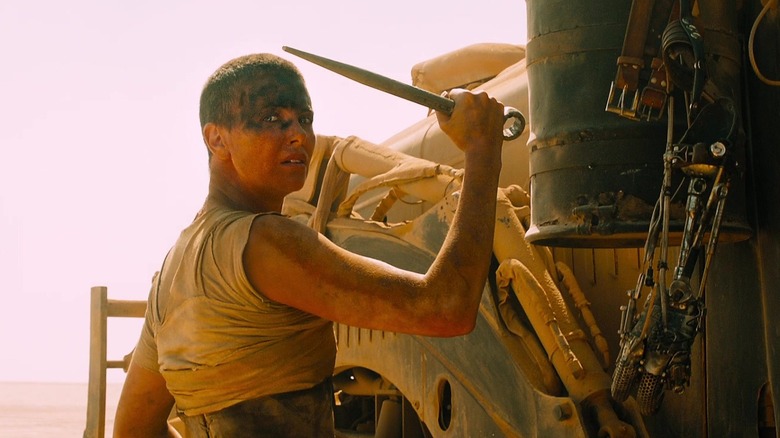
"Mad Max: Fury Road" is one of the greatest films of all time because of its specificity. Other films would be content to have great action sequences, striking visual design and an exciting narrative that riffs on second wave feminism. Masterpieces have been made with less. But the cast and crew of "Fury Road" wanted something more than a great film. They wanted to create a world that felt distinct, that had a sense of texture, history and depth. Creating this world took years of work, the dedicated labor of many smart and talented individuals, and an expense of nearly two hundred million dollars. Thankfully, they pulled it off.
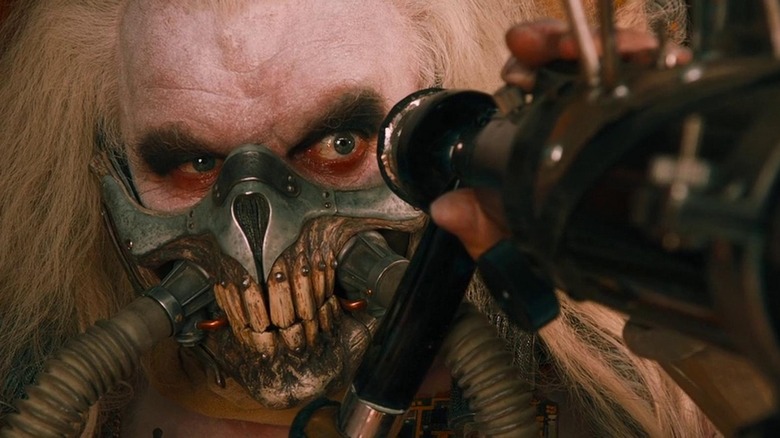
A massive spiked tanker truck. A bird skull bobbing on a spring. A fire-spitting guitar. Mention these to a fan of "Fury Road" and they will recite the names and context of each prop with the intensity that accompanies religious scripture. These props are as important to the film as the actors, because they are characters themselves. In the recently published oral history "Blood, Sweat & Chrome: The Wild and True Story of Mad Max: Fury Road," journalist Kyle Buchanan interviews several members of the "Fury Road" crew. In the process, he uncovers what any fan of the movie may have suspected from repeated rewatches and close attention. If every object in the world of "Fury Road" appears to have a story of its own, that is because they were designed that way.
'We Found Thins That We Thought Were Beautiful Enough To Salvage'
The world of "Fury Road" was forged from junk. By command of George Miller, "everything has to be created out of found objects repurposed." To this purpose, the crew bought, stripped and retrofitted used cars. They cut the heads off dolls and turned them into steering wheels. They paid daily visits to "the boneyard," a nearby junkheap loaded with objects ripe for the taking. "We found things that we thought were beautiful enough to salvage," said production designer Colin Gibson. "Or at least...to think, I wonder what it was?" The props of "Fury Road" were not just built, but discovered. Each a rescue in spirit from obscurity in the wastelands. Sometimes they were repurposed, often transformed, but at the center of each prop was some mysterious object that caught the eye.
The crew of "Fury Road" were as concerned with function as form. The harshness of the film's universe demanded economy and ease of use. On set, Gibson requested that each prop have three or more functions. In "Blood, Sweat & Chrome," salvage artist Matt Boug brings up a tool kit used in the film as an example. The tool kit comes with a crowbar, which can be used to remove a tire as well as bludgeon somebody over the head. But the crowbar is also cross-shaped, and thus a religious icon. Tool, weapon and fetish. The crowbar fulfills each of these functions, and therefore develops three-dimensionality.
The Guitar Of Theseus
The Doof Warrior's guitar presents a fantastic example of the dangers of form over function. Pieced together from a porcelain bedpan and a french horn, the result greatly impressed George Miller. But then he asked the fateful question: "Does it play?" The crew had thought carefully about how the guitar would look, and they'd done the work to ensure that it would spit fire on command. Yet they found themselves rushing at the last second to break apart their work and reassemble it around an actual guitar. The final result was workable, but so heavy that they had to add a bungee cord to the set to provide the Doof Warrior with support. According to Australian singer iOTA, the Doof Warrior himself, "It is the shittiest guitar I've ever had the misfortune to have hanging in front of me."
The secret sauce that made "Mad Max: Fury Road" is the genuine respect for the film's world and its people. The crew of "Fury Road" did not simply strive to pack the movie with cool objects. They thought about whether the prop was convenient or inconvenient to use and what that said about the person who owned or inherited it. They took the lives and psychologies of the film's characters seriously, even when those characters were named things like "The Bullet Farmer" or "Toast the Knowing." Best of all, they thought through how these characters might express themselves through the objects surrounding them. For the reclusive Vuvalini, a team of older warrior women, Boug developed a fuel tank cover made of knitted electrical wire. It could be used as protection, but also functioned as a kind of tea cozy for machines.
I'm Gonna Die Historic On The Fury Road
In an interview with the Guardian in 2015, George Miller confirmed that despite the harshness of "Fury Road," art and self-expression does exist within its universe. "If you look at all human culture, no matter how impoverished the circumstances, it doesn't mean that there's not a strong aesthetic," he says. He expresses a similar sentiment in the "Blood, Sweat and Chrome" book, "Just because it's the wasteland, it doesn't mean that people can't make beautiful things." In other words, people are people regardless of their surroundings. For this reason, the film's style and art direction is not simply affect but instead a direct expression of the characters and their psychology.
At this point you may be asking yourself, "If this is the right way to do things, why doesn't every movie take this route?" What does "Fury Road" have that most modern blockbusters simply do not? Money and talent are two possible explanations, but I think the correct answer is time. Due to a series of costly disasters, "Fury Road" took over a decade to make. This caused enormous stress to the cast and crew, and it worked the executives at Warner Bros. into a froth. But it was this protracted production schedule that allowed the crew to flesh out the world of "Fury Road" to such a degree. The characters evolved, their cultures were developed and reworked, the designs were iterated again and again. The final results were undeniable, but only because the artists had managed to stump the executives every step of the way.
The props of "Fury Road" may have been short-lived art, produced only to be destroyed at the film's end. But in the arc of their short lives, the fire is unmistakable. They represent a freak accident in the course of film history that may never be repeated, even were the same cast and crew to reassemble. Each of us in our own way may carry the lesson forward, that in the awful heat and cold of the desert there are people who might build things for the joy of it.
Israel blocked Ukraine from buying NSO Group's Pegasus spyware for fear that Russian officials would be angered by the sale of the sophisticated hacking tool to a regional foe, The Guardian reported Thursday, citing people familiar with the matter. From the report: The revelation, following a joint investigation by the Guardian and Washington Post, offers new insight into the way Israel's relationship with Russia has at times undermined Ukraine's offensive capabilities -- and contradicted US priorities. The Ukrainian president, Volodymyr Zelenskiy, has been critical of Israel's stance since Russia launched its full and bloody invasion of Ukraine on 24 February, saying in a recent address before members of Israel's Knesset that Israel would have to "give answers" on why it had not given weapons to Ukraine or applied sanctions on Russians.
People with direct knowledge of the matter say that, dating back to at least 2019, Ukrainian officials lobbied Israel to try to convince it to license the spyware tool for use by Ukraine. But those efforts were rebuffed and NSO Group, which is regulated by the Israeli ministry of defense, was never permitted to market or sell the company's spyware to Ukraine.