Shared posts

04 Jun 01:35

The New South Park Movie Is A Giant Middle Finger To Streaming Platforms Everywhere

by BJ Colangelo

The latest Paramount+ exclusive "South Park" movie just dropped on the streamer, with the aptly given title, "The Streaming Wars." The long-running animated series from Trey Parker and Matt Stone is currently breaking the sole rule of Ghostbustin' by crossing the streams, as the current 25 seasons of "South Park" live on HBO Max until 2025, when they'll finally join the movie specials and pivot over to Paramount+. Until then, "South Park" is double dipping between two major streaming services, and decided to laugh in the faces of the entire streaming industry with their new meta movie while cashing their simultaneous checks.

I was six-years-old when "South Park" debuted on Comedy Central, and when my school's PTA sent a warning letter to parents to make sure they knew this "new cartoon" was not actually for children, it only motivated my family even more to see what the fuss was about. I've been watching the show for as long as I have been able to process media, and while "South Park" frequently misses the mark, when they hit, they blow it out of the park. There's a lot to criticize about "South Park," but I'm a firm believer that the show serves like a moral Rorschach test, where the way you interpret or respond to the material says a lot more about you than it does the creators' intent. "The Streaming Wars" is no different.

A Plan For Everyone

Trey Parker and Matt Stone are about as subtle as a sledgehammer in a glass menagerie, so the streaming wars in this special are literal. Denver is in a drought thanks to the effects of ManBearPig (the show's symbolic terror for climate change) and the water commissioner cuts a deal with Randy Marsh and Steve Black that as long as their weed farms use less water than what is allotted by the government, they can sell their unused water to the city. If they're smart, they could even sell it on a monthly basis through different plans. Randy and Steve are now in direct competition with one another, trying to convince buyers to sign up for their specific "streaming service," all the while rich jerks try to find a way to weasel their way into the market.

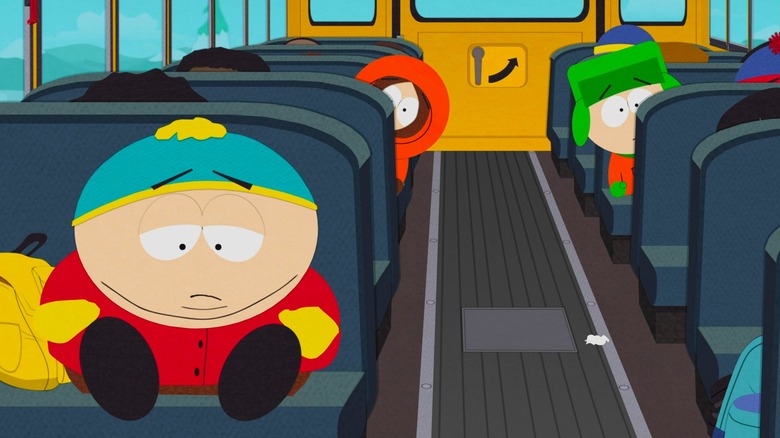
Stan and Tolkien use this battle as an opportunity to make money for themselves, as in order to prove the water from South Park is making it to Denver, the boys make popsicle stick boats to serve as physical proof that the stream is flowing every day. Suddenly, all of the streaming services want to pay them for their popsicle stick boats. After all, you have to put something on the stream to know the service is good. The boys have no loyalty to the streaming services regardless of whose parent owns what -- they are loyal to the almighty dollar. They're the ones making what the people want, so if any of the streaming services has an issue with it, they'll just lose out on the popsicle stick boats they've proven bring in new subscribers. Again. Subtle as a sledgehammer.

'They Don't Give A F*** About How Good Anything Is'

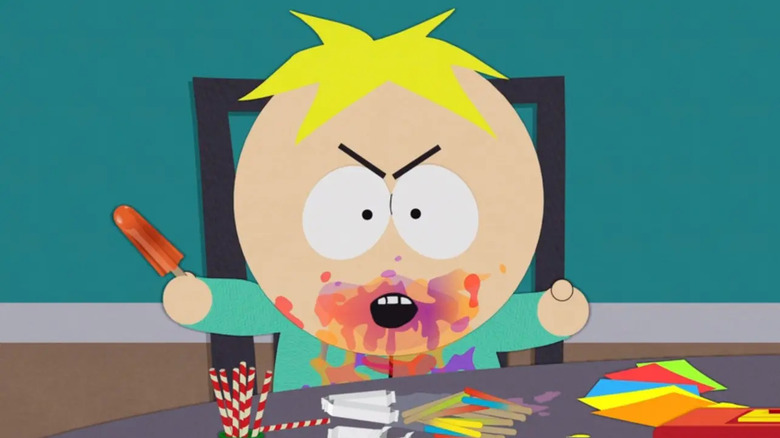
Due to the high demand for boats, Stan and Tolkien get all of the usual crew in on their scheme, which means a lot of boat building and popsicle eating. Butters, always the voice of reason, goes on a sugar-filled rant about their workmanship after Kyle criticizes that Cartman's boat looks like crap and stresses the importance of a good product:

"They don't give a f***, Kyle! They're going to take everything that they can get. Everyone knows at the end of the day there's only going to be like three streaming services! So they, like, everyone just wants to have their s*** on their stream and get bought out, you know? And they don't give a f*** about how good anything is. And the people who make all the deals, they don't give a f*** 'cause they're all going to get fired anyway, you know? And everyone working at this streaming service is now working over at that streaming service. No one gives a s*** about what f****** goes on in it."

Butters seldom swears on the show, so you know the message is a serious one if "Oh, hamburgers" gets replaced by "THEY DON'T GIVE A F***, KYLE!" This rant is the most on-the-nose punchline in the whole special, because it's Butters likely serving as a megaphone for Parker and Stone's personal feelings about the way a demand for quantity has impacted the quality of shows, including their own. Again, there's plenty to critique about "South Park," but it's punk as f*** to see a show continually bite the hand that feeds in the name of quality satire.

This Isn't The End

The special has a side plot that results in Cartman getting breast implants after his mom calls his bluff (this deserves its own article), giving Liane Cartman the most character development she's had over the course of the show's 20-plus year run, and Tolkien receives a devastating phone call following his father's showdown with ManBearPig. There's no real way to predict where the story is going to go next, and I mean that literally. Chances are, similarly to the way the first two Paramount+ "South Park" movies were connected, the next movie will be a continuation of the story. But I also wouldn't put it past Parker and Stone to put the story's conclusion in one of their standard run episodes, forcing viewers to subscribe to both Paramount+ and HBO Max to get the full picture. Regardless of their plan, this isn't the end of the streaming wars.

At least, not until ManBearPig takes us all out.

Read this next: The 13 Best Comedy Shows On Amazon Prime Right Now

The post The New South Park Movie is a Giant Middle Finger to Streaming Platforms Everywhere appeared first on /Film.

04 Jun 01:34

Engineer Sues Amazon For Not Covering Work-From-Home Internet, Electricity Bills

by BeauHD
An anonymous reader quotes a report from The Register: Amazon's attempt to dismiss a lawsuit, brought by one of its senior software engineers, asking it to reimburse workers for internet and electricity costs racked up while working from home in the pandemic, has been rejected by a California judge. David George Williams sued his employer for refusing to foot his monthly home office expenses, claiming Amazon is violating California's labor laws. The state's Labor Code section 2802 states: "An employer shall indemnify his or her employee for all necessary expenditures or losses incurred by the employee in direct consequence of the discharge of his or her duties, or of his or her obedience to the directions of the employer." Williams reckons Amazon should not only be paying for its techies' home internet and electricity, but also for any other expenses related to their ad-hoc home office space during the pandemic. Williams sued the cloud giant on behalf of himself and over 4,000 workers employed in California across 12 locations, arguing these costs will range from $50 to $100 per month during the time they were told to stay away from corporate campuses as the coronavirus spread. [...] Amazon's lawyers, however, believe the broadband and utility bills, and similar expenses, aren't the company's problem since it was following shelter-at-home orders, which require employees to stay away from the office. But Vince Chhabaria, a US federal district judge in northern California, slapped down Amazon's attempt to kill off the lawsuit, and said the local government's orders don't necessarily absolve the company from liability. "What matters is whether Williams incurred those expenses 'in direct consequence of the discharge of his or her duties, or of his or her obedience to the directions of the employer'," Judge Chhabaria ruled [PDF] this week. "According to the complaint, Amazon expected Williams to continue to work from home after the stay-at-home orders were imposed. That is sufficient to plausibly allege liability, even if Amazon itself was not the but-for cause of the shift to remote work. Williams also plausibly alleges that his expenditures were necessary to do his job." Chhabaria did grant Amazon's request to dismiss the engineer's claims that it violated California's laws alleging "unfair business practices," but gave Williams's legal team 14 days to file an amended complaint.

Read more of this story at Slashdot.

04 Jun 01:32

An Ode To The Fascinating Acting Career Of David Cronenberg

by Erin Brady

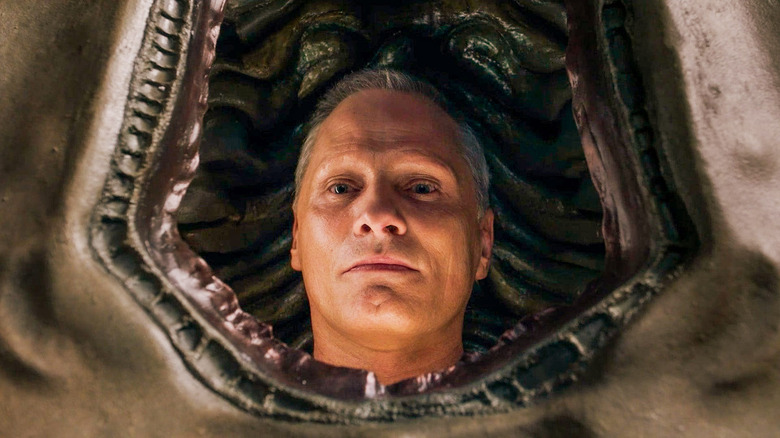
Ah, David Cronenberg. When you think of gross body horror or bleak ultraviolence, his name probably comes to mind. The Canadian director has an extensive history of making audiences uncomfortable, grossed out, or even aroused with his movies. "Crimes of the Future," his first movie in eight years, is no exception to this reputation, and what a reputation he carries!

However, Cronenberg is not as one-note as his reputation or the overused Twitter memes about how horny his movies make him out to be. He's delved into other mediums, such as novels and comic books, but perhaps his most intriguing side career has been his acting. Cronenberg has appeared in several movies and television programs, usually in cameos but sometimes in fully-fledged roles, and his choices are just as interesting as his movies. To honor the release of "Crimes of the Future" and all things Cronenberg, let's toast to the strange but wonderful acting resume of the man The Independent crowned "The Baron of Blood."

Director Cameos And Other Notable Cameo Appearances

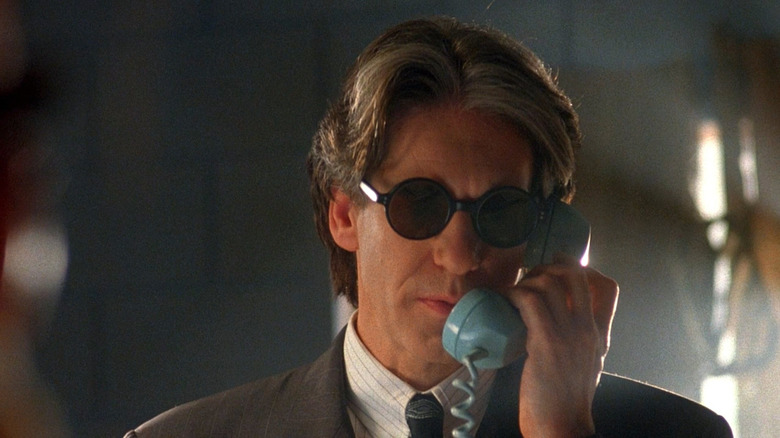
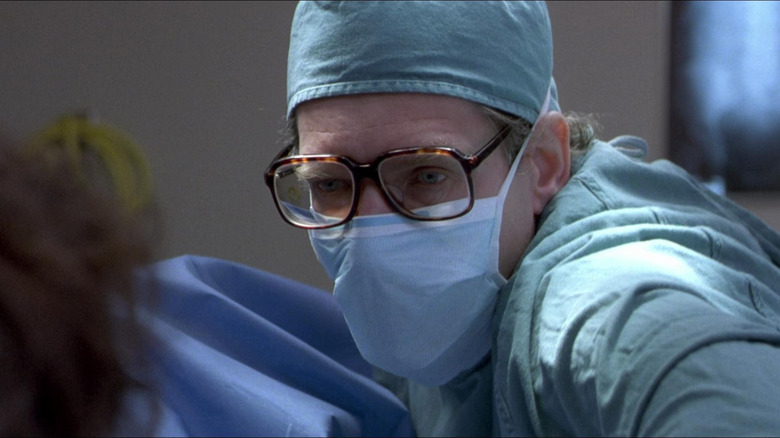
This thought might be hard to describe, but directors making cameos in their own movies just hit differently. Cronenberg's cameos are no exception; although he usually kept his appearances in the earlier years of his career, they are still highly memorable to anyone who spots them. He cameoed as one of the infected in 1975's "Shivers," eventually doubling for James Woods in helmet scenes during "Videodrome." He also played doctors in two other movies: an imaginary gynecologist in "The Fly" and an obstetrician in "Dead Ringers."

He doesn't only cameo in his movies, however. He has made cameos in two John Landis movies, which is arguably two movies too many, but we digress. He portrayed a supervisor in 1985's "Into The Night" and appeared as a postman in 1996's "The Stupids." Other non-Landis movies he had cameo roles in include 1994's "Trial by Jury," 1995's "To Die For," 2010's "Barney's Version," and 2019's "Disappearance at Clifton Hill."

Nightbreed

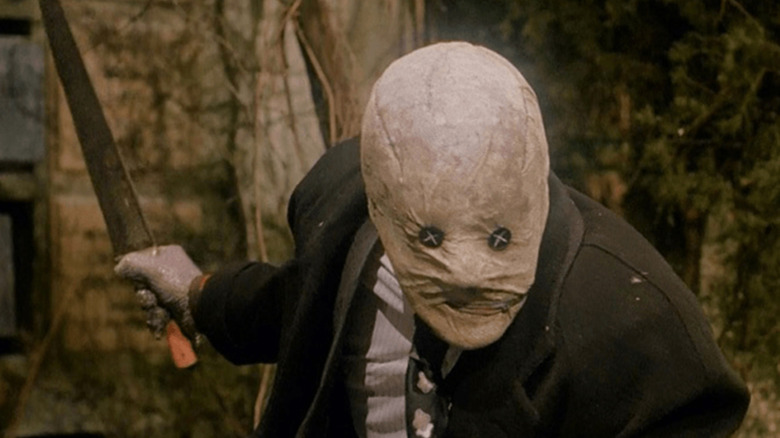
Cameos are one thing, but a fully-fledged acting role is something else entirely. The first main role that Cronenberg ever had was the 1990 film "Nightbreed," the second feature film directed by author Clive Barker. Like his directorial debut "Hellraiser," this movie was an adaptation of a Barker novella, 1988's "Cabal." Although this movie was a box office flop, it has built up a passionate and deserved cult following due to its overt LGBTQ+ themes.

Cronenberg plays Dr. Decker, a psychotherapist by day and a serial killer by night. He discovers the existence of the Nightbreed, the titular group of monsters that band together in a rejection of societal norms, after he finds that he cannot kill his newly-transformed patient Aaron Boone (Craig Sheffer). That doesn't stop him from trying, though, as he is able to convince the local police to take up a hysteric witch hunt against Boone, claiming that he has been behind the killings Decker caused.

Jason X

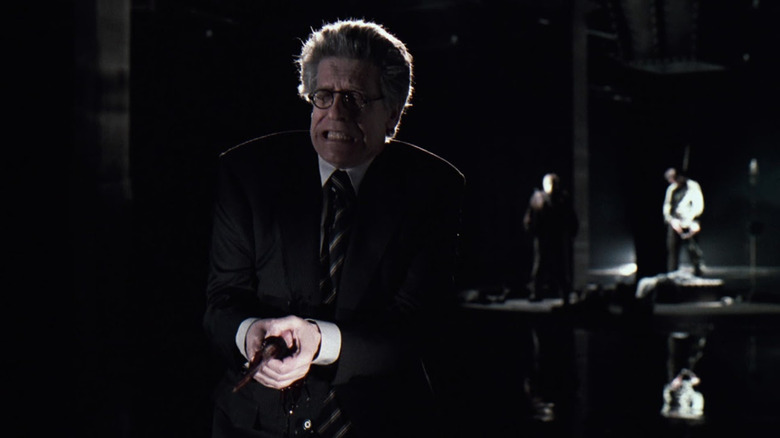
Cronenberg's involvement in "Jason X" is legendary, and it is likely that you clicked on this article so you see it get mentioned. Well, good news! It's mentioned. Given how iconic his appearance is for genre movie buffs, there is not much to really discuss other than how sick his brief appearance as the generically evil scientist Dr. Wimmer was.

What is worth discussing, however, is the bizarre way that his appearance even came about. In an interview with The AV Club, "Jason X" screenwriter Todd Farmer revealed that it was because the team had brought on Cronenberg mainstay Jim Issac for their special effects. Issac was able to bring on the rest of his and Cronenberg's effects team for the movie only because the director wanted a cameo role in it. He apparently also wanted to rewrite all of his lines before filming. Farmer elaborated on this in the interview:

"Jimmy wanted us to use Cronenberg's effects team, which was Jimmy's effects team. And so he'd gone to David out of respect and said, 'Do you mind if I use the guys on this?' And Cronenberg said, 'I don't mind at all, but you have to cast me.' What kind of confidence does it take for Cronenberg to say, 'Yeah, I want to be in the tenth installment of the Friday the 13th franchise.'"

Alias Grace

This Margaret Atwood adaptation mixes the real-life case of Grace Marks with historical fiction. Given how not much information about the 1843 murders of Thomas Kinnear and Nancy Montgomery was preserved, Atwood and the adaptation written by Sarah Polley had to draw a few conclusions based on what was already known. Despite this hiccup, "Alias Grace" drew high praise from viewers and critics, particularly due to how its strong cast portrayed the subject material.

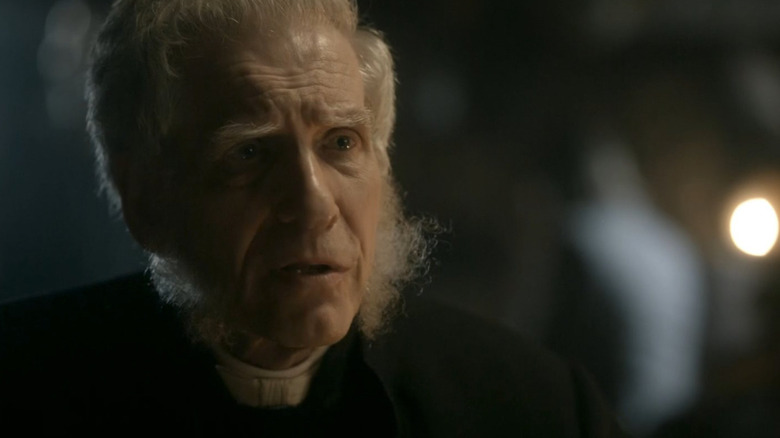
Among those in the cast was, you guessed it, Cronenberg. He appeared in four episodes of the six-part miniseries, wearing an incredible facial hair piece and playing a Reverend. He is among the many who want to see Marks acquitted for the murders she was originally accused of assisting in. Marks had a very passionate group of believers who rallied for her acquittal for over a decade after she was convicted, claiming that there was not enough evidence to support that she intended to kill Kinnear and Montgomery along with stableman James McDermott.

Falling

If there is any Cronenberg mainstay who can be considered one of his best friends in real life, it has to be Viggo Mortensen. Their frequent collaborations have resulted in great movies and more than one instance of red carpet kissing, so it makes sense that the director would accept a role in Mortensen's directorial debut. I mean, seriously. There are so many photos of them either leaning in for a kiss or just straight up smooching. Google it if you don't believe me.

Anyways, where we were? "Falling," which premiered at the 2020 Sundance Film Festival, centers around a gay man (Mortensen) who takes in his bigoted but ailing father when he begins showing signs of dementia. Cronenberg might not play the father, but that character is played by Lance Henriksen, which is arguably just as cool. Instead, Cronenberg has a more lowkey role that doesn't involve bickering over homophobia — he has a cameo as a proctologist.

Slasher: Flesh & Blood

It is a known fact that one of the best types of mysteries is the whodunit. Think "Murder on the Orient Express" or "Clue" — a group of people being hunted one by one by an unknown assailant, with no one trusting the other over fears that they are orchestrating the entire thing. "Slasher: Flesh & Blood," the fourth season of the Canadian horror show "Slasher," takes this to an especially bloody level. Think of a cross between "Succession," "Knives Out," and "You're Next," and you've got a decent idea of what we're dealing with.

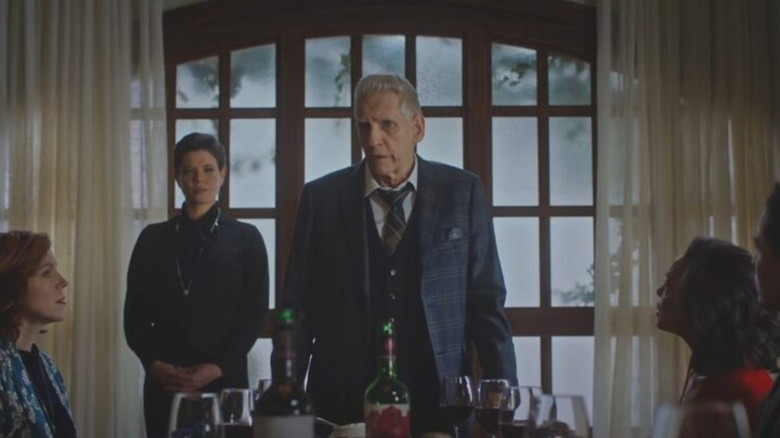
The season centers around the wealthy Galloway family, who have all gathered together to compete for the patriarch's inheritance. The only problem lies in a vicious masked killer stalking the originally secluded island, stoking paranoia among the family. With a plot like that, it shouldn't be surprising that Cronenberg appears as Spencer, the ailing but ruthless Galloway patriarch who wants to suss out the appropriate heir to the family's name and fortune.

Star Trek: Discovery

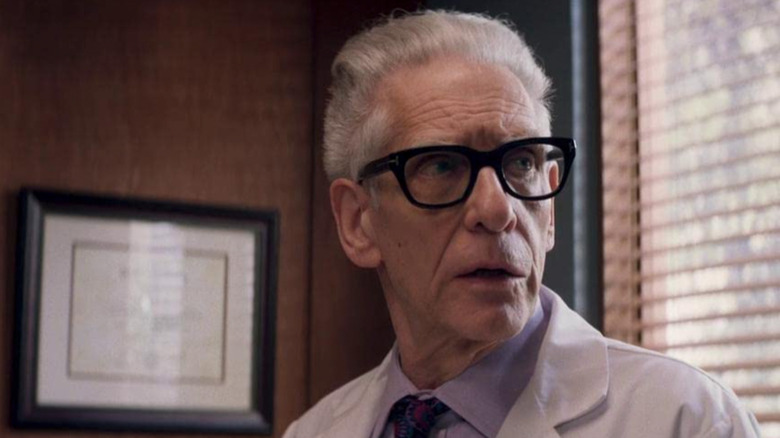
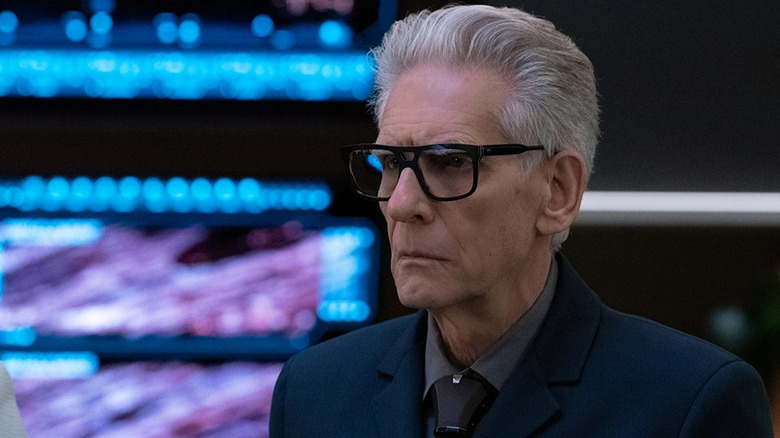
Finally, we have what is arguably the most mainstream piece of media that Cronenberg has ever had a role in, which also makes it that much stranger. The third and fourth seasons of "Star Trek: Discovery" featured Cronenberg in a mysterious recurring role. That is, unless they move production out of Toronto – Cronenberg told Star Trek Explorer that executive producer Alex Kurtzman discovered that some of the show's casting agents also knew the director, prompting him to send out an offer.

Cronenberg plays Kovich, an official of the Human Federation that serves a significant role in elaborating on the show's version of the Mirror Universe. He is the official that first attempts to interrogate a Mirror version of Philippa Georgiou (Michelle Yeoh), who is not deceased but rather the 23rd century's powerful Terran Emperor. Shortly after Mirror Georgiou returned to the 23rd century, Kovich helped in the reopening of the long-closed Starfleet Academy.

No, you're not imagining things; Cronenberg and Yeoh have shared multiple scenes together. Now he needs to cast her in a movie, please!

Read this next: 12 Shows Like Stranger Things You Definitely Need To Stream

The post An Ode to The Fascinating Acting Career of David Cronenberg appeared first on /Film.

04 Jun 01:32

Becoming An Actor Wasn't Something Ray Liotta Set Out To Do

by Devin Meenan

Life is a series of unexpected journeys. Often the path we walk isn't the one we thought we'd be on just a few years prior. Someone who probably would've agreed with my dime store philosophizing is the recently late, always great Ray Liotta. You probably already know Liotta was the star of "Goodfellas" — what else is there to say there? His 21st century run as a character actor was just as enjoyable. I'll go on record as a huge fan of his turn as scummy divorce lawyer Jay Marotta in "Marriage Story." Yet despite appearing in so many great films (and being great in them), Liotta became an actor almost by accident.

An Unexpected Drama Major

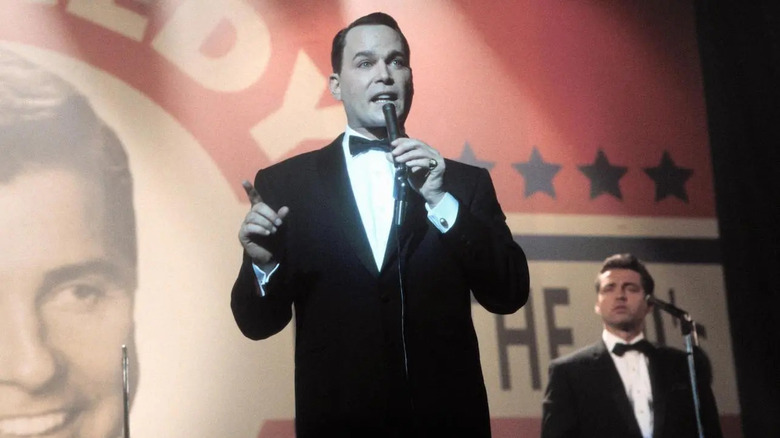
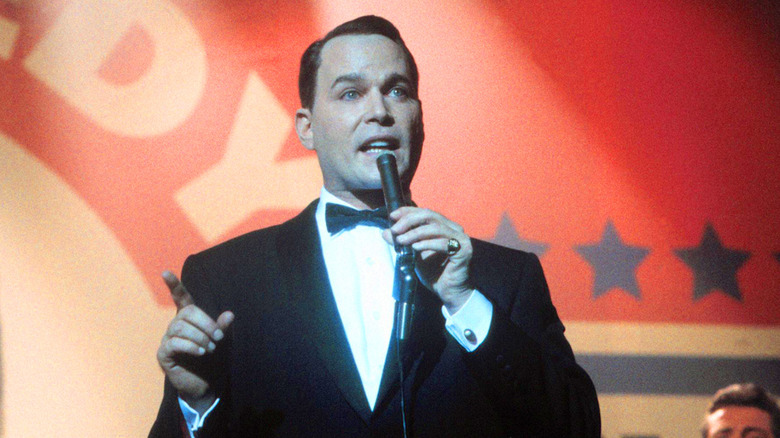
During a 2016 interview with NPR, Ray Liotta discussed his experience playing Frank Sinatra in the 1998 HBO film "The Rat Pack." This was naturally a part that required singing. When asked if Liotta had prior singing experience, he revealed how his earliest acting stint was in musicals at his alma mater, the University of Miami. However, he also explained that he didn't go to college intent on earning a theater degree.

According to Liotta, his father's advice about higher education had been, "Go wherever you want. Take whatever you want. He just really believed in getting out and being exposed to different things." But Liotta had no idea what he wanted to take. When he had to register for classes, he spotted a line of students registering for drama. With the sword hanging over his head of having to take math or history classes, Liotta opted for theater arts.

Since he'd joined the department on a whim, Liotta initially wasn't an enthusiastic student. He only auditioned for the school play because a fellow drama major berated him for his lack of interest. He continued to NPR: "So I went, and I auditioned for the play. And it was for 'Cabaret.' So then you had to sing and dance. I said, 'how am I going to sing and dance? I'm a jock from New Jersey.'"

With some help from his classmate, Liotta crafted a routine based on "Magic To Do" from the Broadway show "Pippin," and the band Freddie and the Dreamers. "There was a dance called 'the Freddie' ... So I just did the refrain [of 'Magic To Do'], and I did 'the Freddie.' And I got into it. And the first year, all I did were musicals."

Liotta's Mentor

Even after crafting his song-and-dance routine, Ray Liotta still saw drama as just a placeholder until he could figure out what he truly wanted to study. What changed his attitude was his teacher Robert "Buckets" Lowery. The "Buckets" nickname came from Lowery's past playing basketball. Liotta, as a "jock from New Jersey," found it easier to connect with "Buckets" than he did with many of his classmates. As he told NPR:

"[Drama students] wouldn't be the people that I would normally hang out with. And I didn't care what they thought 'cause here I am thinking, 'I'm just going to be here for one year. It doesn't matter.' So for some reason, I just really committed and listened to what Buckets said. And thank God he was an acting teacher who was — it was kind of the Stanislavski, you know, the Russian director and acting teacher. I just listened to what he said and kind of understood and just learned. And if it wasn't for Buckets, I probably would've left. But I came back the next year. And I ended up going the whole four years. But during those four years, I graduated to doing Riff in 'West Side Story' and just different musicals."

Even without having seen that "West Side Story," I can totally see Liotta having the right swagger and punk edge for Riff; it's those qualities that made him so good as Henry Hill. Based on Liotta's recounting, we have not just the man himself and Martin Scorsese to thank for that performance, but Buckets Lowery too.

Read this next: Every Martin Scorsese Feature Ranked From Worst To Best

The post Becoming an Actor Wasn't Something Ray Liotta Set Out To Do appeared first on /Film.

03 Jun 20:12

Numerous N64 games will support Path Tracing thanks to this upcoming N64 emulator plugin

by John Papadopoulos

DarioSamo, the man behind the Ray Tracing Mod for the unofficial PC port of Super Mario 64, has announced a new Ray Tracing plugin for Nintendo 64 emulators. This plugin will allow you to enable native ray tracing effects on numerous games, will support DLSS, and will allow you to play the original N64 games … Continue reading Numerous N64 games will support Path Tracing thanks to this upcoming N64 emulator plugin →

The post Numerous N64 games will support Path Tracing thanks to this upcoming N64 emulator plugin appeared first on DSOGaming.

03 Jun 20:12

Yellowjackets Executive Producer Drew Comins On The Line That Never Made It Into The Show [ATX]

by Valerie Ettenhofer

The thrilling new series "Yellowjackets" may be in the off season, but the buzz around the freaky, excellent wilderness survival drama hasn't died down. Today, /Film's Ryan Scott is reporting from ATX Television Festival, where executive producer Drew Comins is breaking down some of what made the show's first season so singular.

According to Comins, the show's success and uniqueness lies not in its plot, which he says people tend to describe as "a young, female 'Lord of the Flies'" or "'Lost' with teenage girls," but in the execution of its often bone-chilling tone. Particularly, Comins said he was struck by an understanding of what the show would become when he heard a wickedly dark line of dialogue that didn't make it into the final version of the show's pilot.

"Yellowjackets" follows two timelines. In one, a championship-bound high school girls' soccer team crash lands in the wilderness in 1996 and must learn to survive in a challenging, and eerie, environment. In the other — set in the present day — the traumatized and secretive survivors struggle to maintain their privacy about what transpired over twenty years ago, still facing prying questions from those around them. The cut line of dialogue Comins referenced apparently related directly to those nosy questions, and laid the underlying premise of the show bare early on.

Shauna Gets Real

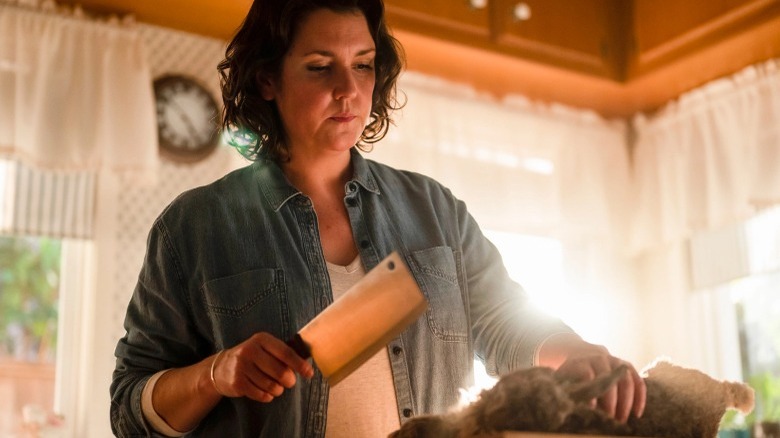
Comins says crash survivor Shauna (Melanie Lynskey) was originally going to confront a reporter in the first episode of the series, saying, "I know what you really want to ask. You want to ask if we f***ing ate each other."

It's true, if you somehow missed it: "Yellowjackets" is also about cannibalism. This would have been an incredible line, and it's easy to picture Lynskey delivering it with a niceness that edges almost imperceptibly into a threat; however, it never made it into the show's final edit. Instead, the show's early allusions to potential cannibalism were just dream-like and subtle enough to keep viewers guessing if it would really happen. With a second season in the works, the show has plenty of time to explore that burning question further.

Comins says hearing the line for the first time while in a room with the show's writers and creators made his blood run cold. The producer thinks that it's a great example of how the show's strong tone shines through, making it a one-of-a-kind story. "It kind of goes there," he says. "It says those indelicate things, and it asks very indelicate questions of the audience." It sure does. 

"Yellowjackets" season 1 is available on Showtime.

Read this next: The 15 Best Horror TV Shows Of All Time

The post Yellowjackets Executive Producer Drew Comins on the Line That Never Made it Into the Show [ATX] appeared first on /Film.

03 Jun 18:11

Darth Maul's Entire Timeline Explained

by Liam Gaughan

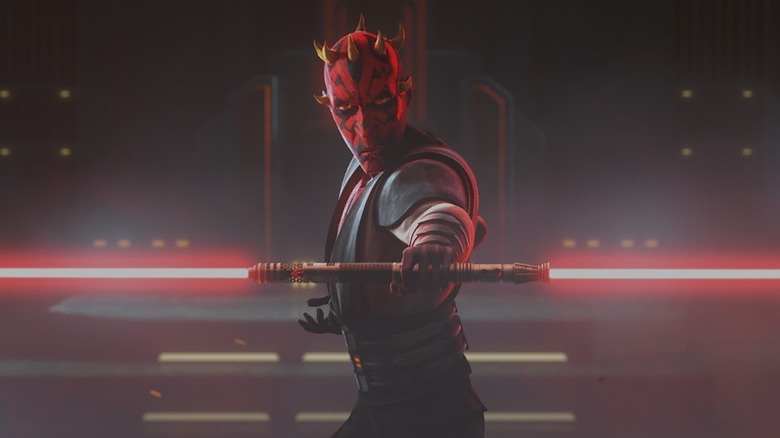
Darth Maul is one of the most iconic characters in the "Star Wars" franchise. Although opinions on the prequel trilogy are generally mixed, most fans would agree that Darth Maul's appearance in "Star Wars: Episode I — The Phantom Menace" is one of the best parts of the trilogy. Maul proved that you didn't need dialogue to be memorable, having only a few brief lines in the film. His double-bladed lightsaber was unlike anything that fans had ever seen before.

Maul appeared just long enough to leave the audience asking for more. After he kills the Jedi Master Qui-Gon Jinn (Liam Neeson), Maul is cut in half by Obi-Wan Kenobi (Ewan McGregor). His body tumbles down to the bottom of a Naboo chamber. However, the event didn't prove to be fatal. In the third season of Dave Filoni's animated series "Star Wars: The Clone Wars," Maul's survival is revealed. He becomes a major antagonist throughout "The Clone Wars," and appeared in both "Rebels" and "Solo: A Star Wars Story." Maul has been portrayed by a few different actors. In "The Phantom Menace," he is played by the stuntman Ray Park, but voiced by Peter Serafinowicz. Sam Witwer provides the voice for Maul in "The Clone Wars," "Rebels," "Solo," and various video games. Outside of the films and television shows, Maul has had other adventures in both the Legends and canon "Star Wars" stories. Here is Darth Maul's entire history, explained.

Maul's Non-Canon Legends History

After Lucasfilm was purchased by the Walt Disney Company, the "Star Wars" timeline was completely relaunched. A majority of the content that was previously established in the Expanded Universe was deemed non-canon, as part of the "Legends" timeline. Although they're no longer considered to be official, many of these Legends stories are still worth checking out. Darth Maul has had many memorable appearances in these older stories.

Michael Reaves' 2001 novel "Darth Maul: Shadow Hunter" explored Maul's training under Darth Sidious during events that directly preceded "The Phantom Menace." The Sith have yet to reveal themselves to the galaxy, so Palpatine trains Maul in secret within the underbelly of the capital planet Coruscant. Maul handles his duties with discretion, leading many assassination missions for his master. After a member of the Trade Federation decides to betray Nute Gunray, Palpatine assigns Maul to track down the traitor. James Luceno's short story "Darth Maul: Saboteur" was included with the release of "Shadow Hunter." "Saboteur" explores another mission that Sidious assigns to his apprentice. In preparation for the Battle of Naboo, Maul helps take over mining colonies, so they can be claimed by the Trade Federation. In the 2014 novel "Maul: Lockdown," Maul fights in a gladiator arena at Sidious' command.

Maul's Backstory In The Modern Canon
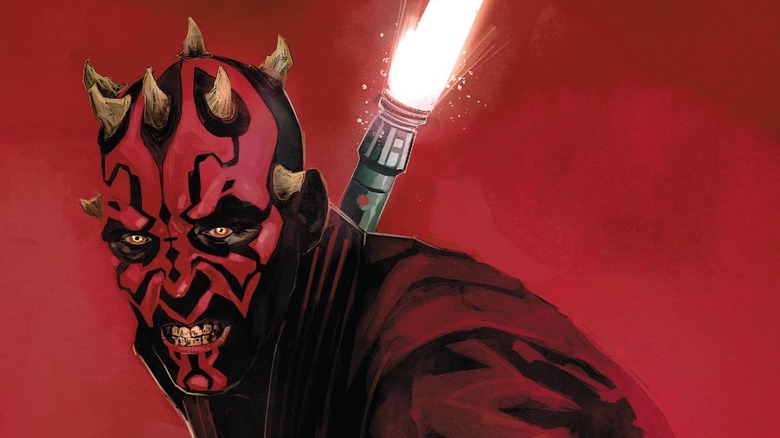
Disney was keen to flesh out Maul's backstory after his appearances in both "The Clone Wars" and "Rebels." "The Clone Wars" had only hinted at Maul's upbringing on the planet Dathomir, where he is raised by the Nighsisters and Mother Talzin, trained at a young age to be a ruthless warrior. Sidious senses Maul's strong connection to the force and takes him on as his apprentice.

The 2017 Marvel comic book series "Darth Maul" explores Sidious' training practices. Although Maul has faced many crime lords and small-time bounty hunters, he has yet to encounter a foe who is strong in the force. Sidious realizes that in order for the Sith to emerge from hiding, Maul must have experience fighting the Jedi. Maul tracks down a Jedi padawan named Eldra Kaitis and kills him. This series helped to flesh out Maul as a character, and it's hard not to feel a little bit of sympathy for him. Maul has been raised to be a killer since he was a child, and Sidious' mentorship is hardly nurturing. Is Maul a villain, or a victim? This series also explores Maul's indoctrination into the dark side. Sidious explains the history of the Sith Order, and how the Jedi forced them into hiding for 1,000 years. Shortly after, a one-shot issue of Marvel's "The Age of Republic" series depicted another mission by Maul to destroy a criminal cartel.

Maul's First Appearance In The Phantom Menace
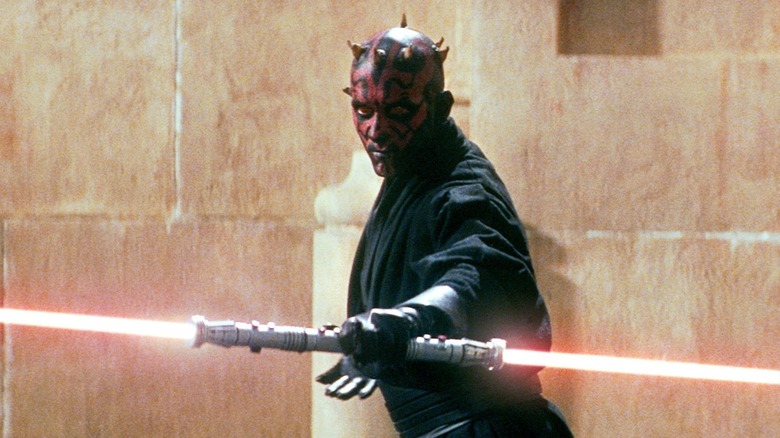
"At last, we will reveal ourselves to the Jedi. At last, we will have revenge." Maul's brief line in "The Phantom Menace" was enough to indicate that the Jedi were about to have their hands full. The Sith have been in hiding for a millennium, and Mace Windu (Samuel L. Jackson) explains that the ancient force-wielders operate under a "Rule of Two" system: there is only ever one master and one apprentice. Maul has trained in secrecy with his master, Darth Sidious (Ian McDiarmid), but finally gets his chance to face off with the Jedi.

"The Phantom Menace" featured the most intense lightsaber duel in the franchise thus far. In the original trilogy, we had only seen an older Obi-Wan (who was past his prime), Darth Vader (who was slower because of his cybernetic components), and Luke (who was just learning the ways of the force). The first prequel film finally showed what it was like when the Jedi and Sith were both in their prime. The prequels featured a lot of computer-generated imagery, but the practical stunt work in the "Duel of the Fates" sequence didn't require the advantages of digital editing. Maul's double-bladed lightsaber allowed him to engage both Obi-Wan and Qui-Gon at the same time. Qui-Gon's death marks a huge turning point in the saga, where Anakin is denied the mentor he truly wants, and Obi-Wan never gets the chance to bid farewell to his father figure.

Maul's Survival Revealed In The Clone Wars Season 3
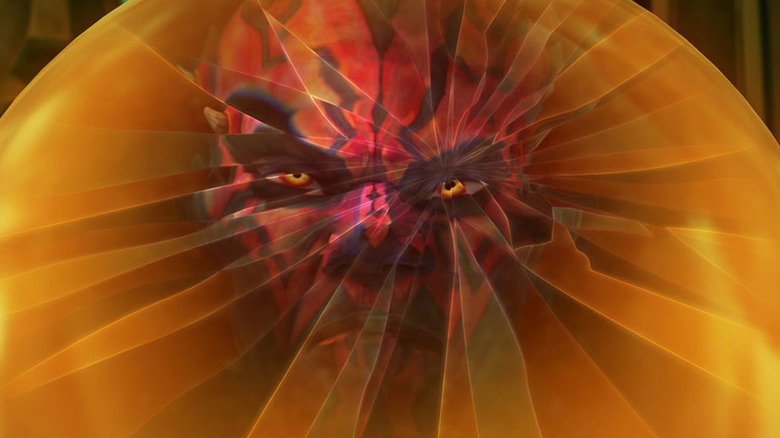
Maul was presumed dead at the end of "The Phantom Menace," and any storylines featuring his survival had been strictly considered to be "non-canon," even before the new timeline was launched. However, George Lucas and Dave Filoni decided that Maul was too good of a villain to waste. In the third season of "Star Wars: The Clone Wars," Maul's brother Savage Opress (Clancy Brown) learns that his brother is still alive.

Before he returns, we learn a little bit more about Maul's upbringing on the planet Dathomir. In the episode "Nighsisters," Darth Sidious (Ian Abercrombie) realizes that Count Dooku's (Corey Burton) protege, Asajj Ventress (Nika Futterman), has grown too powerful in the force. Sidious is well aware of how the "Rule of Two" works, and orders Dooku to kill Ventress. Ventress barely survives the assassination attempt. She returns to her home planet, Dathomir, and reunites with the ancient force-wielder Mother Talzin (Barbra Goodson). In the episode "Monster," Talzin helps Ventress select an apprentice of her own. Like his brother, Savage has trained as a warrior for his entire life. "Monster" shows the intense training regime that the men of Dathomir endure in order to learn combat skills. Ventress is impressed by Savage's abilities and recruits him to help get revenge on Dooku, but their assassination attempt is unsuccessful. Seeking a new master, Savage returns to Dathomir, where Mother Talzin reveals a vision that indicates Maul's survival.

Maul's Return In The Clone Wars Season 4
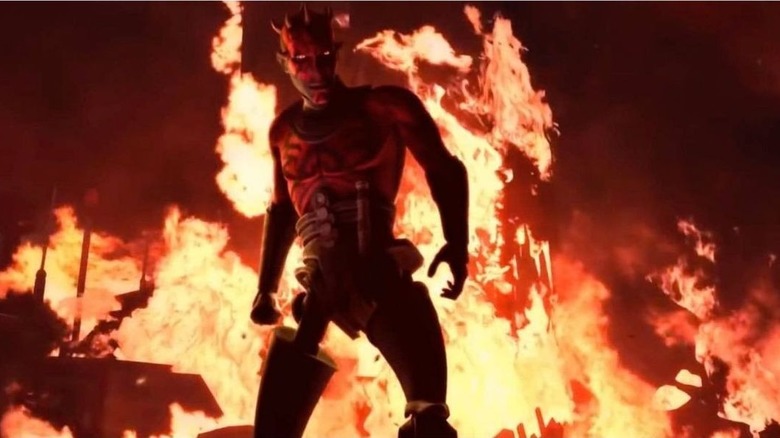
After the game-changing reveal at the end of the third season, "Star Wars: The Clone Wars" took its time bringing Maul back into the canon. In the aftermath of Ventress' rebellion against Dooku, the Separatists are dispatched to wipe out the Nightsisters. General Grievous (Matthew Wood) leads a droid invasion on Dathomir, wiping out the planet's infrastructure and forcing Ventress to go on the run once again. After flirting with the idea of becoming a mercenary in the episode "Bounty," Ventress realizes that her former partner, Savage, is more dangerous than she initially expected.

In the episode "Brothers," Savage travels through the ravaged junk planet Lotho Minor in search of Maul. Talzin's visions had only given him a rough idea of his brother's location. When the two brothers are finally united, Maul is hardly the same Sith that we first saw in "The Phantom Menace." He has descended into madness and has no knowledge of his past, crawling around with cybernetic spider legs. Savage successfully manages to bring his brother back to Talzin. Using the ancient art of Nightsister magic, Talzin restores Maul's consciousness and gives him new cyborg legs. Once Maul is finally restored to prominence in the episode "Revenge," he sets his sights on Obi-Wan Kenobi (James Arnold Taylor). Maul lures Obi-Wan into a trap and captures him. However, Ventress surprisingly comes to Obi-Wan's rescue and the two work together to escape from Maul and Savage.

Maul's Rise To Power In The Clone Wars Season 5
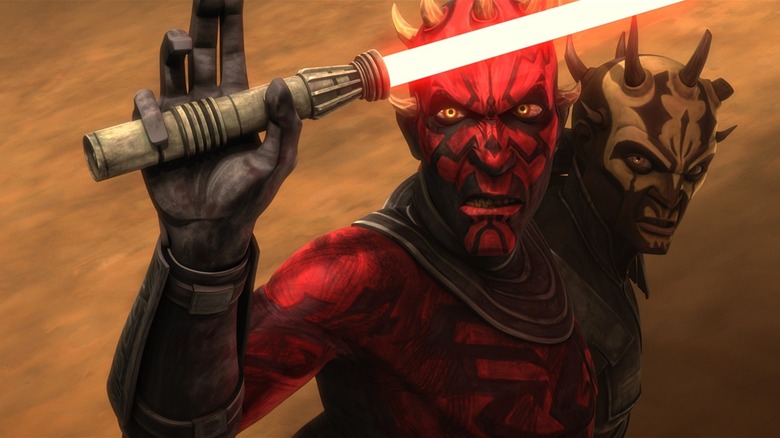
The events of the fourth season have left Maul furious. He meticulously plans the perfect way to kill Obi-Wan, as Maul doesn't want his vengeance to come at a random moment. He wants Obi-Wan to suffer like he has been suffering for the past decade. Maul also wants vengeance on his master, Darth Sidious, for leaving him to die. He decides to start his own empire and gathers various criminal groups together from across the galaxy.

In the episode "Revival," Maul unsuccessfully tries to recruit Hondo Ohnaka (Jim Cummings) and his pirates to join him. Although Savage manages to kill the Jedi Master Adi Gallia (Angelique Perrin), Obi-Wan escapes again, forcing Maul and Savage to regroup. In "Eminence" and "Shades of Reason," they take over the planet Mandalore. The Mandalorians follow an ancient code of chivalry, and must swear loyalty to whoever wields an ancient weapon known as "the darksaber." Maul challenges the leader of the Mandalorian Death Watch, Pre Vizsla (Jon Favreau), to a duel, then slays Vizla and claims his place as the planet's new leader. In the episode "The Lawless," Obi-Wan travels to Mandalore to rescue his former lover, the Duchess Satine Kryze (Anna Graves). Maul cruelly executes Satine in front of Obi-Wan, but the conflict is short-lived. Sidious makes a rare appearance outside of Coruscant to deal with his former apprentice, killing Savage and torturing Maul with force lightning.

Son Of Dathomir: Maul's Scrapped Arc For The Clone Wars

"Star Wars: The Clone Wars" was canceled at the end of its fifth season, leaving many storylines unresolved. However, many of the arcs that had been intended for later seasons of the show were adapted into other Expanded Universe material. The 2014 comic book miniseries "Darth Maul: Son of Dathomir" adapted the scripts for the canceled "The Clone Wars" episodes "The Enemy of My Enemy," "A Tale of Two Apprentices," "Proxy War," and "Showdown on Dathomir."

After he is captured by Sidious at the end of "The Lawless," Maul is taken to a Separatist prison. He finally gets the chance to meet Count Dooku, who replaced him as Palpatine's apprentice. Maul manages to escape and regathers with his criminal allies. After an intense showdown with General Grievous, Maul is once again forced to go on the run. He learns that Talzin is his biological mother, but Grievous kills her before they get the chance to reunite.

Maul's Siege Of Mandalore In The Clone Wars Season 7
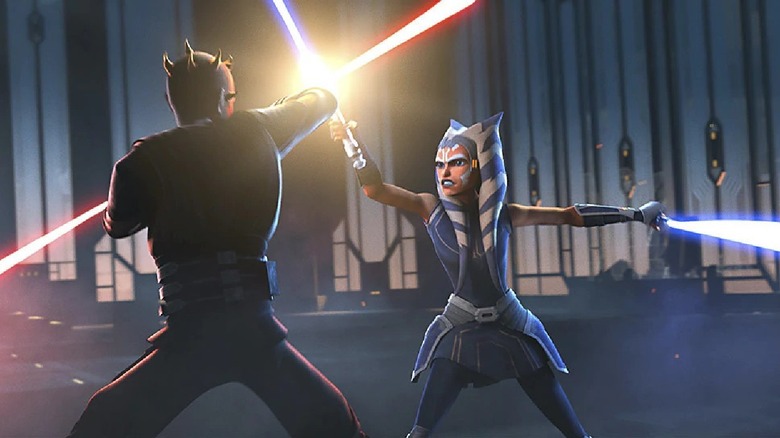
"The Clone Wars" fans were left heartbroken that their beloved series never received a proper conclusion. However, Disney+ finally released a seventh and final season of the show in 2020. The last three story arcs wrap up the events of the series, and directly lead into "Revenge of the Sith." Ashoka Tano (Ashley Eckstein) has to face the inevitability of the Jedi purge when she is betrayed by her clone troopers. This comes after she leads her last mission where she is dispatched to Mandalore to defeat Maul, who has regained control of Mandalore. 

While Obi-Wan and Anakin have to travel back to Coruscant to rescue Palpatine from General Grievous, Ashoka is left to lead Captain Rex (Dee Bradley Baker) and the 501st Legion to deal with Maul. After an intense lightsaber duel, Ashoka successfully captures Maul aboard a Republic transport. However, the chaos of Order 66 allows Maul to break out of jail.

Maul's Cameo In Solo: A Star Wars Story
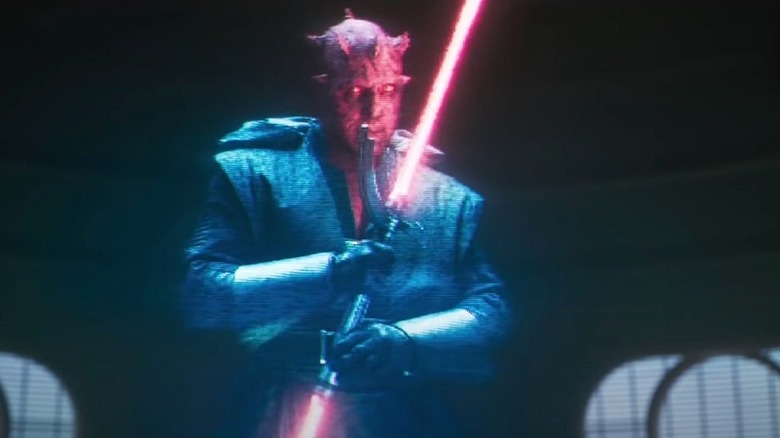
The criminal empire that Maul created in "The Clone Wars" became a powerful force of havoc in the "Star Wars" universe. Maul had gathered allies from the Mandalorian Death Watch, the Hutt clan, the Pykes, and the Black Sun. In "Solo: A Star Wars Story," Han (Alden Ehrenreich) makes the mistake of dumping a shipment of cargo that belonged to the crime syndicate known as "Crimson Dawn," which is allied with Maul's crime empire.

The Crimson Dawn mob boss Dryden Vos (Paul Bettany) allows Han, Chewbacca (Joonas Suotamo), Tobias Beckett (Woody Harrelson), and Qi'ra (Emilia Clarke) to steal a new shipment of cargo from the planet Kessell. Qi'ra is able to defeat Vos and takes his place as the new leader of Crimson Dawn. She receives a mysterious holographic message from Maul, who then commands Qi'ra to join him on Dathomir.

Maul Hides On A Sith Planet In Rebels Season 2
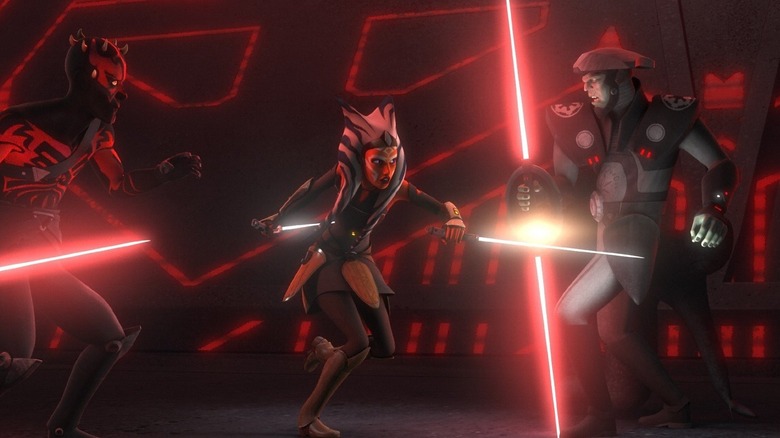
"Star Wars: Rebels" continued many of the storylines that were first introduced in "The Clone Wars." The series takes place over 10 years after the events of "Revenge of the Sith." The Galactic Empire rules the galaxy with an iron fist, and only a few brave freedom fighters are able to resist the fascist dictatorship. The rebels Hera Syndulla (Vanessa Marshall), Kanan Jarrus (Freddie Prinze Jr.), Sabine Wren (Tiya Sinclar), Zeb (Steven Blum), and the droid Chopper (Dave Filoni) lead a resistance group on the planet Lothal. Kanan is a former Jedi Padawan who survived Order 66. He discovers a force-sensitive boy, Ezra Bridger (Taylor Gray), and begins training him as his apprentice.

Hera receives orders from an enigmatic rebel leader named "Fulcrum," who at the end of the first season is revealed to be Ashoka's secret identity. In the Season 2 finale, "Twilight of the Apprentice," Ashoka, Kanan, and Ezra travel to the ancient Sith planet Malachor. When Ashoka and Kanan duel with Darth Vader's Imperial Inquisitors, Ezra discovers Maul in the ruins of a Sith temple. Maul helps Ezra elude the Inquisitors, but tries to turn him to the dark side. Maul is able to escape from Ashoka and Kanan using a TIE Fighter. Ezra wrestles with his darker impulses for the rest of the series.

Maul Duels Obi-Wan Kenobi In Rebels Season 3
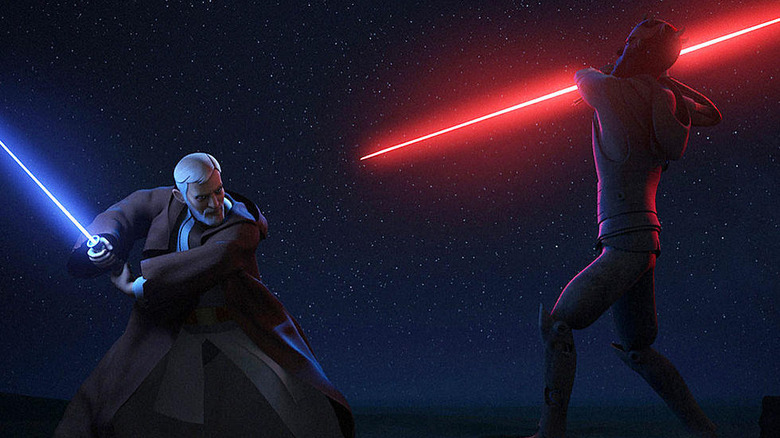
Maul had forsaken his title as a Sith but remains devoted to the dark side, attempting to court Ezra to be his new apprentice throughout the events of the third season of "Rebels." Kanan and Ezra are forced to form an unlikely alliance with Maul to search for an ancient Holocron. Kanan fears that Maul's influence is corrupting Ezra, who has begun to adopt some of Maul's qualities, believing that the only way to defeat the Empire and Sith is to be just as brutal as they are.

In the episodes "The Holocrons of Fate" and "Visions and Voices," Maul finally gets access to an ancient Holocron. This allows Maul to finally track down his old nemesis, Obi-Wan Kenobi, to Tatooine. Ezra is called by a similar vision, seeking out Obi-Wan to ask for his guidance. Obi-Wan shares his wisdom with Ezra but encourages him to leave before Maul arrives, knowing that this is one battle that he must fight on his own. The highly-anticipated duel between Obi-Wan and Maul in the episode "Twin Suns" is relatively brief, with both characters having grown slower in their old age. Maul is only holding on to his animosity, while Obi-Wan retains hope that Luke will restore peace to the galaxy. Obi-Wan lands a fatal blow, and before he dies Maul tells Obi-Wan that the "Chosen One" will avenge them both.

The Legacy Of Darth Maul
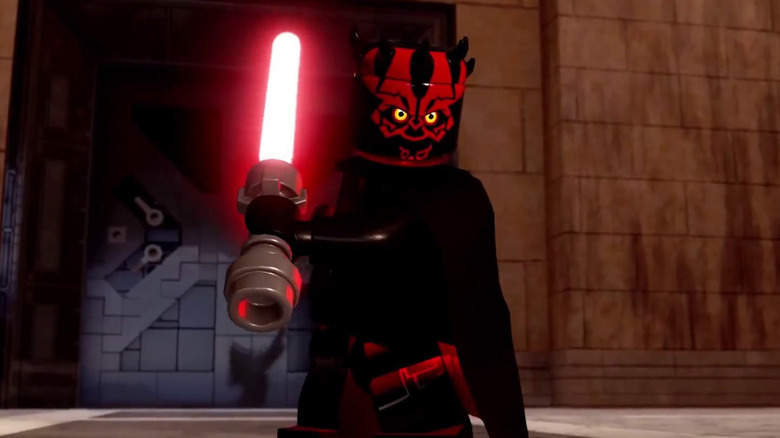
Maul has been embraced by all types of "Star Wars" fans. If you ever get the chance to attend a comic con event or "Star Wars Celebration," you will surely see many fans dressed in cosplay as their favorite Sith apprentice. Maul has also been a favorite among "Star Wars" gamers, with Sam Witwer returning to voice the character in "LEGO Star Wars: The Complete Saga," "Battlefront II," and "Disney Infinite 3.0."

Younger fans that did not make it out to the movie theater in 1999 finally got the chance to see Maul on the big screen in 2012. Lucasfilm had planned to theatrically re-release the first 6 films in the "Star Wars" saga in 3D, beginning with "The Phantom Menace," and Maul was a huge part of the marketing campaign. If you compare the re-release trailer with the original teaser for the film, there is significantly less Jar Jar Binks and way more footage of Maul. The re-release of "The Phantom Menace" coincided with the airing of the fourth season of "The Clone Wars."

Non-Canon Appearances: Star Wars Tales Comics
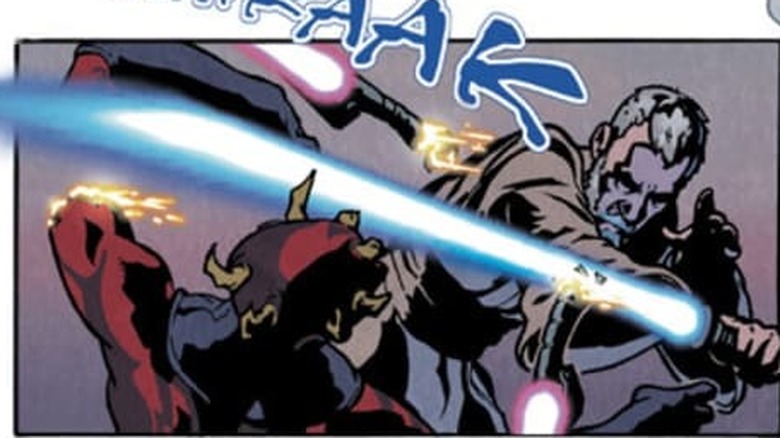
"Star Wars Tales" and "Star Wars: Visionaries" are some of the best comic book runs that Dark Horse ever released. The two series were anthology collections of adventures set in the galaxy far, far away. The Dark Horse writers had a fun time bringing Maul back in an unofficial capacity.

Before they dueled at the end of "Star Wars: Rebels," Obi-Wan and Maul faced off on Tatooine in the "Star Wars: Visionaries" one-shot "Old Wounds." Maul's depiction in "Old Wounds" is very similar to how he appears in "The Clone Wars." His severed torso is replaced with cybernetic legs. Similar to "Rebels," Obi-Wan kills Maul (for the second time), saving a young Luke. Who would win in a fight, Darth Vader or Darth Maul? This was a question that the "Star Wars Tales" writers addressed in the one-shot "Resurrection." An ancient cult called the Prophets of the Dark Side uses ancient magic to create an identical clone of Maul. After an intense duel, Vader destroys the resurrected clone.

Read this next: The 20 Best Clone Wars Episodes Ranked

The post Darth Maul's Entire Timeline Explained appeared first on /Film.
03 Jun 17:31

Why You Should Book a Budget Hotel Over Luxury Lodging (Besides Saving Money)

by Meredith Dietz

With the growing consensus that Airbnb isn’t worth its cost these days, you’re probably back to booking hotels as the top choice for your upcoming travel this summer. And if you can afford it, you might automatically assume it’s better to opt for the most luxurious accommodations within your budget. But does a higher…

Read more...

03 Jun 17:28

The Controversial Australian Horror Movie That Was Almost Lost Forever

by Lee Adams

"Wake in Fright" is one of the most violent movies I've ever seen. I don't mean in terms of actual violent acts, because there are very few other than its most controversial scene, which we'll come to in a bit. I'm talking more about the tone, an atmosphere of latent aggression that made me want to duck for cover, as if someone was about to burst in at any moment and kick my head in.

The peculiarly unsettling vibe of Ted Kotcheff's blazing outback masterpiece has led many critics to call it a horror, but does it fit that genre? Well, if you think about horror in terms of maniacs in masks or malevolent ghosts, then maybe not. I regard it as a horror more in the sense that Colonel Kurtz in "Apocalypse Now" uses the word. He has seen the cruel primal instincts that lurk just beneath the pretenses of civilized society, and the speed — and even eagerness — that some people regress back to them.

"Wake in Fright" revels in that caveman id bubbling just below the surface of everyday life, and it's scary just how quickly our outwardly respectable protagonist embraces it, thoroughly debasing himself before the shame comes crushing in. One wobble at the wrong moment and anyone can lose themselves, it suggests. It is a grueling watch, but one that I gladly put myself through over and over again, simply because it is such an intensely vivid experience. 

Yet if it wasn't for the intervention of a few determined individuals, "Wake in Fright" is a classic that might have been lost forever.

So What Happens In Wake In Fright Again?

It's the last day of term before the Christmas break in Tiboonda, a tiny outpost in the scorching Outback. Middle-class teacher John Grant (Gary Bond) can't get away fast enough, looking forward to a few weeks back in civilization with his girlfriend in Sydney. He has no choice but to return, though, because he is bonded for another year in this desolate no-horse town.

He takes the train to Tiboonda to Bundayabba, a brawny mining town where blokes outnumber women by about ten-to-one. With one night in "The Yabba" before his flight to Sydney, Grant decides to check out the nightlife, which mostly involves drinking superhuman amounts of beer in hot, crowded rooms and gambling on a coin toss game called Two-up. He also meets two men who will serve as his dubious guides through his lost weekend; Jock Crawford (Chips Rafferty), an imposing local policeman, and Doc Tydon (Donald Pleasance), an alcoholic doctor who survives in the community with no money at all, thanks to the Yabba's aggressive hospitality.

Grant tries his luck at Two-up, and wins a decent stack at first. He suddenly sees a way of buying out his contract early and can't resist playing again, but this time loses every penny. Now he's stranded with no means of getting to Sydney. A crazy amount of drinking follows as Grant launches himself into a grim downward spiral of debauchery, hitting rock bottom as roomies with Tydon in his fly-blown shack. With the limitless hospitality of the locals and all roads apparently leading back to the Yabba, will Grant ever escape?

Why Was Wake In Fright Controversial?

"Wake in Fright" performed poorly at the box office in Australia, upsetting audiences with its raw depiction of working-class life in the Outback. It received a better reception abroad, especially in France, where it ran for five months and received a nomination for the top prize at Cannes. The film also generated controversy thanks to its infamous kangaroo hunt scene, where Grant and his newfound drinking buddies drunkenly slaughter a whole bunch of the creatures. It only lasts a few minutes but feels like forever, and I always skip forward on a rewatch because it's very upsetting. Director Kotcheff said in a 2009 interview:

"One thing I feel would be totally immoral and unacceptable, to hurt or kill any kangaroo for the sake of a film... so it created problems for me, that sequence, because I was not going to allow that to happen, as a matter of principle."

Kotcheff navigated that problem by filming professional kangaroo hunters and splicing the footage with shots of the actors firing their rifles. The director is still visibly disturbed by what he saw on the hunt:

"Around two o'clock in the morning, they started to miss. When I say 'miss,' they shot the animal, but they didn't hit them in the kidneys, the heart, or the brain, they just shot the animal, and there would be blood gushing everywhere, it was nightmarish. And I couldn't understand what was happening. When I glanced in, there was two thirds of a bottle of scotch had been consumed, because it was cold out there, and ... it interfered with their aim. I hate to say it, because... we used that footage, of course, because our characters were not professionals and they were missing."

"Wake in Fright" carries a disclaimer advising viewers that the footage is from a professional hunt, but that does little to soften the impact of the scene. Twelve people reportedly walked out of a screening at Cannes in 2009 (via Senses of Cinema), and the kangaroo slaughter is the main reason the film still holds an 18 certificate in the UK (via BBFC).

How Wake In Fright Was Rescued From Oblivion

For its reputation as one of the key films that kicked off the Australian New Wave, "Wake in Fright" was considered lost for decades. If it wasn't for the persistence of Anthony Buckley, who worked as editor on the film, this brutal masterpiece might have joined the list of long-lost classics like "London After Midnight" and "The Story of the Kelly Gang."

How did "Wake in Fright" get lost in the first place? The sad answer is that in the past, sound and image recordings weren't always regarded as something worth keeping. In Australia, even after the National Film & Sound Archive was established in 1984, it was still standard practice to destroy prints of movies after the theatrical run was over. Especially if it was a flop (via The Conversation), and "Wake in Fright" certainly fell into that category at home.

With the master negative missing and existing copies used until they were irreparably damaged, "Wake in Fright" was fading from existence. Thankfully, in 1996, Buckley set out to find the missing negative. Through a combination of detective work and sheer determination, he eventually traced it to a storage vault in Pittsburgh, where the long lost 35mm negative sat in a container full of material marked "for destruction." The film was salvaged and, eight years after Buckley started his search, "Wake in Fright" arrived back in Australia for the process of restoration.

Thanks to Buckley, "Wake in Fright" still exists in all its grimy, brawling, beer-chugging glory, ready to put the sweats on many future generations of movie lovers.

Read this next: Batman Movies Ranked From Worst To Best

The post The Controversial Australian Horror Movie That Was Almost Lost Forever appeared first on /Film.
03 Jun 17:07

The Unexpected Inspiration Behind Raised By Wolves' Mother

by Kaylee Dugan

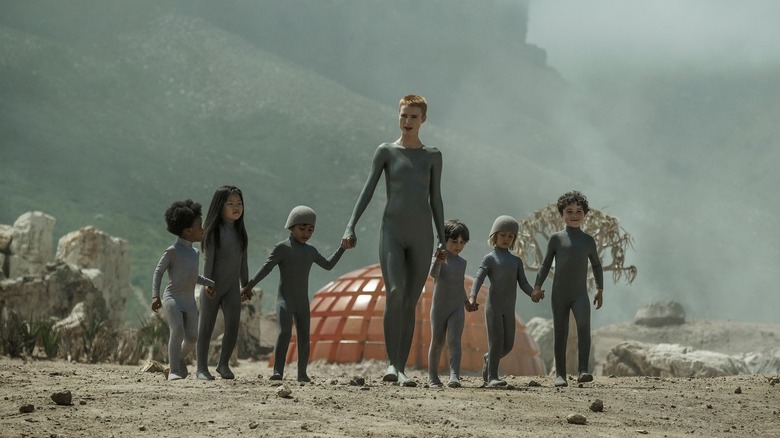
"Raised By Wolves" might be one of the strangest sci-fi shows on television right now, so it makes sense that Ridley Scott is involved. The show, which follows two androids who go only by the names "Mother" and "Father" (which isn't unsettling at all) who are raising a brood of human children on a not quite desolate planet, asks all sorts of big questions about what it means to be human and nature versus nurture, and is grim, strange, and studded with mysteries. And while it's true that you can get inspiration from anywhere, Scott's inspo for the incredibly determined Mother comes from a pretty surprising place.

In an interview with The Hollywood Reporter, Scott explained that his main inspiration for Mother, who is a reprogrammed military android that can kill people with her screams (like I said, grim and weird), is the "Atlas" statue in New York:

"The best piece of sculpture in New York is "Atlas" holding the world on his shoulders right outside Rockefeller Plaza. I always stand there going, 'F*** me. That's amazing.' And I thought, 'I'm going to do a female version of that.' That's what happens [in this scene]. Trust your intuition. She will be bronze, she can fly, and I won't explain how. She can kill, and I won't explain how. She will have this disturbing predatorial shriek. Those are my intuitions. Everybody just looked at me and went, 'This is dodgy.' But when you have strong intuition, you have to learn to trust that."

Mother, Tell Your Children Not To Walk My Way...

It's certainly not what I would have guessed, but it's still fun. And, despite how out of left field it sounds, I can see what Scott is talking about here. The androids, especially Mother, do have this sort of statuesque, otherworldly quality. They seem larger than life and, somehow, subdued at the same time if that makes any sort of sense. The costuming definitely helps here, since Mother and Father wear skintight suits in a sort of neutral metallic color. Gunmetal? Is that what you would call it. 

Anyway, Scott was definitely aiming for scary and awe-inspiring here, as he explained in another interview with Den of Geek:

"I used to stare at that thinking, 'That's Mother.' Except, she'll be supremely female. And so I kind of modeled Mother on that. But she's pretty impressive, isn't she? Scary as hell."

Yes, Ridley. We all love our scary, murder-y, kind of sexy Mother.

Read this next: The 10 Best Sci-Fi Movie Villains

The post The Unexpected Inspiration Behind Raised By Wolves' Mother appeared first on /Film.
03 Jun 17:06

[RELEASE] Morrowind Rebirth 5.9

[RELEASE] Morrowind Rebirth 5.9
This is the full version of Morrowind Rebirth 5.9.
03 Jun 17:06

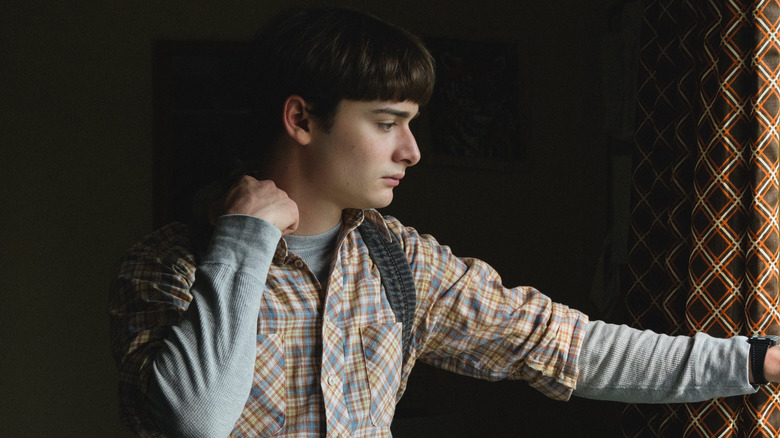
The Duffer Brothers Promise Will's Sexuality Is Addressed In Part 2 Of Stranger Things Season 4

by Sandy Schaefer

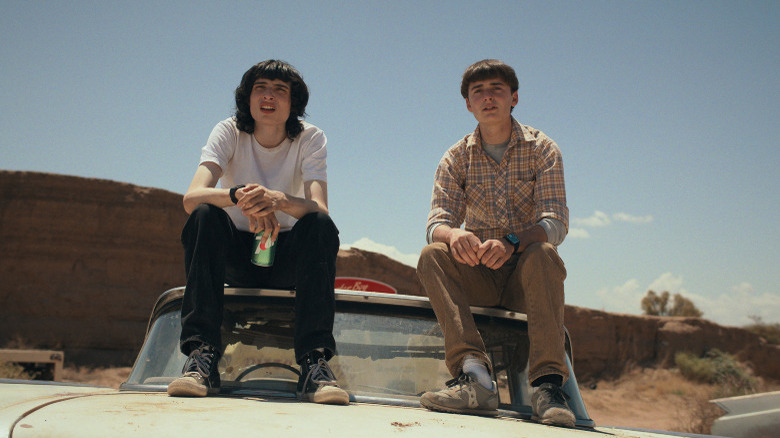
Nearly four-fifths of the way through its run, "Stranger Things" still doesn't know what to do with Will Byers (Noah Schnapp) beyond trapping him in the Upside-Down or making him a vessel for the Mind Flayer. This issue has really come to a head in "Stranger Things" season 4 Vol. 1. When he isn't looking on sadly as Eleven (Millie Bobby Brown) is bullied at school or moping around as the third wheel on her dates with Mike (Finn Wolfhard), Will spends his time shooting longing glances at Mike while waiting for a chance to finally give him the painting Will clearly made for him.

Far from a new development, sensitive Will has always been queer-coded on "Stranger Things," with mentions of him being called homophobic slurs at school (and by his own terrible dad) going back to season 1. The show's hints about his sexuality have only gotten more heavy-handed since then, to the degree that it really just feels like queer-baiting at this point. Not helping matters, the show's cast and creatives have been reticent to discuss the matter, with Schnapp having once said, "It's really up to interpretation" if viewers believe Will is queer or not.

Speaking to TVLine, "Stranger Things" creators Matt and Ross Duffer promised the show will, at long last, shed some light on the matter in season 4 Vol. 2. Said Matt Duffer:

"This is where it gets tricky since we haven't released the whole season yet. I just want people to watch the final two episodes [of season 4]."

Justice For Will

The ambiguity around Will's sexuality is far from the only reason "Stranger Things" owes the character an apology. So far, the poor kid has spent season 4 looking, to put it bluntly, like a reject from "Dear Evan Hansen," between his ill-fitting clothes and bad haircut (one that isn't even, per se, accurate to the show's 1980s backdrop). Be these an attempt to disguise how much Noah Schnapp has matured since season 3 came out in 2019, or, as /Film's Deshawn Thomas suggests in her season 4 spoilers review, a way to show that Will is struggling to grow as a person, the series has simply dropped the ball when it comes to Will in its latest batch of episodes.

Is there anything season 4 Vol. 2 can do with Will that would make the character's journey this season more satisfying in hindsight? That seems like a tall order, but Ross Duffer has assured that payoffs are coming in season 4's final two super-sized episodes:

"We have story arcs and we have character arcs. How we structured [the season], we've released the first two acts of this story. The final act, which is the last two episodes, resolves a lot of things, both character and story, and then some of it is also setting up for our final season."

We will just have to wait and see how things play out when "Stranger Things" season 4 Vol. 2 drops on July 1, 2022. In the meantime, if you're looking for a show that does right by its sensitive queer teen lead to celebrate Pride Month, "Love, Victor" is right over there on Hulu and will premiere its third and final season on both Hulu and Disney+ on June 15, 2022.

Read this next: /Film's Top 10 Movies Of 2021

The post The Duffer Brothers Promise Will's Sexuality is Addressed in Part 2 of Stranger Things Season 4 appeared first on /Film.
03 Jun 17:04

Cronenberg Knows His Films Are Polarizing And He Doesn't Care

by Shae Sennett

David Cronenberg is the king of visceral horror, but he isn't a fan of shock value. His huge body of highly acclaimed films are characteristically unsettling and beloved by an ever-growing cult audience of horror nerds and movie buffs, but he definitely isn't for all tastes. The filmmaker has always been well-aware of the alienating nature of his work, but he isn't interested in appealing to everyone. From "Videodrome" to "Crimes of the Future," Cronenberg upholds his own demented creative vision, making him one of the most stylistically identifiable directors of all time.

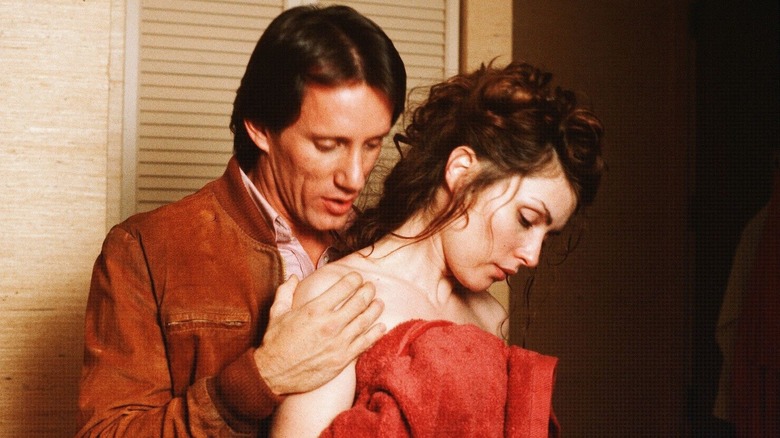
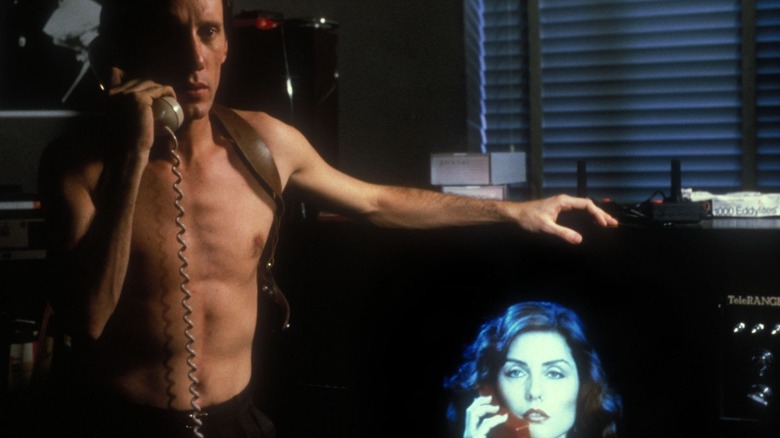
"Videodrome" is a 1983 surreal science fiction film about a seedy television producer, Max Renn (James Woods), in desperate need of more viewership. In search of programming that will shock an audience into watching his channel, he finds Videodrome, the unfiltered broadcast of extreme torture. When his girlfriend (Deborah Harry) auditions for the show, she mysteriously disappears, incentivizing Max to investigate the nefarious goings-on at Videodrome productions. The result is one of Cronenberg's more notable ventures into his canon of body horror.

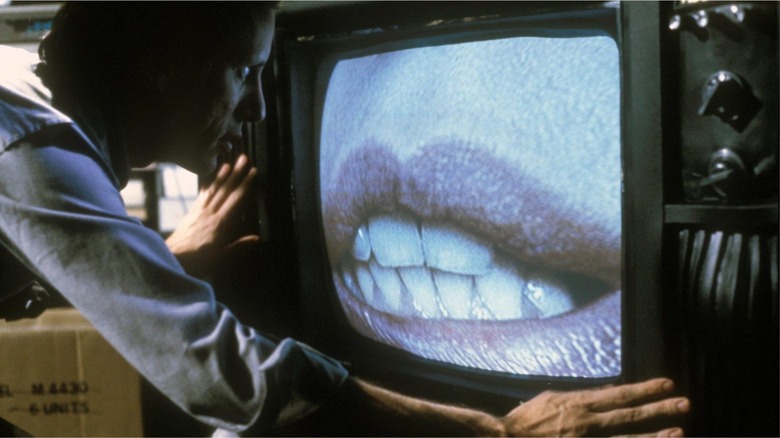
Cronenberg undoubtedly uses graphic imagery in this film, but he uses it intentionally to illustrate poignant themes. One of the most memorable components of "Videodrome" is Max Renn interacting with his television, a dynamic that incidentally predicted many aspects of our modern relationship to technology. The director admits that the film was at least mildly prophetic in an interview with the Flashback Files. "Not that I invented the internet," he muses, "but I did invent interactive television, which in a way is a metaphor for the internet."

He's Committed To Maintaining His Vision

The "Videodrome" director knows that "film audiences are fragmented," that his work is polarizing by nature, "and that there are people who will just not understand or not care to know" what goes on in his films, he explained in a "Videodrome" featurette (via Revok). That's all the same to Cronenberg. To him, "that's inevitable, that's no surprise at all." This philosophy is what allows him to approach his work with a true commitment to his artistic pursuit.

The acclaimed filmmaker is unafraid of making films that shock his audience, because he makes a world that allows for shock, and even anticipates it. He doesn't employ this imagery for the sole purpose of soliciting a "cheap" reaction from his audience, though. In fact, he abhors that practice. He gives an example of an animal that is slaughtered for real in the middle of a traditional narrative fiction film, explaining that he "find[s] that very offensive because it's a whole different level of reality interjected into the middle of a fiction." He doesn't think there should be any limitations or restrictions as to what can be shown on film, but he is an advocate for ontological continuity.

Cronenberg continues to push boundaries in his filmmaking today. He crafts a diegetic and fictional world that is surreal and unnerving, injecting it with the terrifying monsters and mind-bending moments that he has become known for. If you can stomach the discomfort of his films, you will find them more than worth it. They are not only pertinent, but often prophetic. Those who "will just not understand or not care" for Cronenberg do themselves a massive disservice, denying themselves some of the most revolutionary works in the history of cinema.

Read this next: 20 Underrated Rom Coms You Need To Watch

The post Cronenberg Knows His Films Are Polarizing And He Doesn't Care appeared first on /Film.
03 Jun 17:03

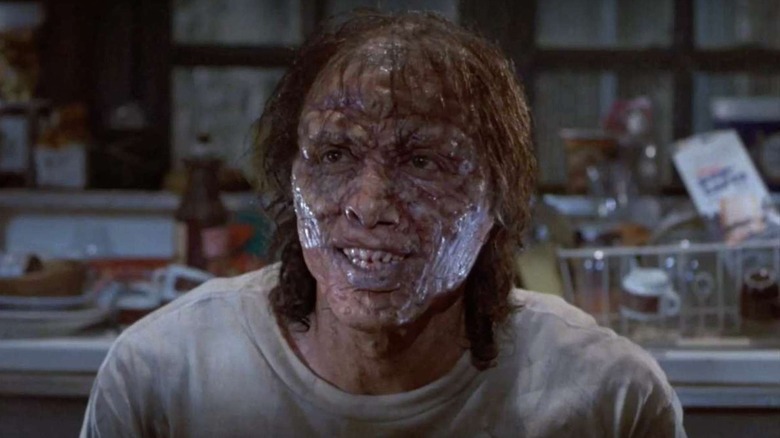
The Grossest Body Horror Moments In David Cronenberg's Films

by Kayleigh Donaldson

There is no greater filmmaker of body horror than Canada's finest genre director, David Cronenberg. For over 50 years, he's been redefining what cinema can do when it comes to revealing the true grotesqueries of the human (and occasionally non-human) body. Cronenberg once said that his films should be seen "from the point of view of the disease," and that is certainly evident throughout his vast and varied filmography. Even in his more "respectable" films, he continues to be obsessed with the ways that we mentally and physically disintegrate. 

Now, Cronenberg is back on the big screen for the first time in eight years with "Crimes of the Future", which centers on a world where humans grow new organs in their bodies and one man turns this into performance art. The filmmaker has promised that it will incite many responses of pure revulsion, which sounds like the ultimate endorsement to us! But before you see "Crimes of the Future," take a gander at the most iconic and stomach-churning moments of body horror and mutation in Cronenberg's past work.

The Fingernails Come Off (The Fly)

There are many revolting moments throughout Cronenberg's remake of the sci-fi B-movie "The Fly" -- enough to fill out its own list. The brilliant but obsessive scientist Seth Brundle uses himself as the test subject for his teleportation device, only to find that his body has started to mutate into a human-fly hybrid thanks to the surprise presence of a bug in his invention. 

Watching Jeff Goldblum deteriorate, quite literally, is truly horrifying, thanks to the extensive practical effects put together by Oscar-winning make-up artist Chris Walas. Sores form on Seth's body, he vomits digestive enzymes onto his food, and even his poor girlfriend Ronnie dreams of giving birth to a giant maggot. But, for our money, the moment that makes us squirm every single time is the way that Seth slowly picks off his own fingernails. It's a quiet moment, but one that instantly hits at our visceral fear of our own bodies failing us.

The VHS Stomach Slot (Videodrome)

Long live the new flesh. Long before reality TV was seen as the source of generational mind-rot, Cronenberg offered his scathing take on mindless entertainment with 1983's "Videodrome." James Woods stars as Max, the sleazy CEO of a small TV station in Toronto that specializes in only the most sensationalist of programming. So, of course he is delighted to stumble across something called Videodrome, which seems to be endless snuff. Yet its powers extend well beyond that of morbid curiosity. The more he watches Videodrome, the more Max's mind and body begins to change. At one point, Max sees a slit form on his abdomen that looks an awful lot like a slot for a VHS tape. Being able to access one's own body in such a way is pretty terrifying for poor Max, especially when he pulls a gun from his guts with ease.

Exploding Head (Scanners)

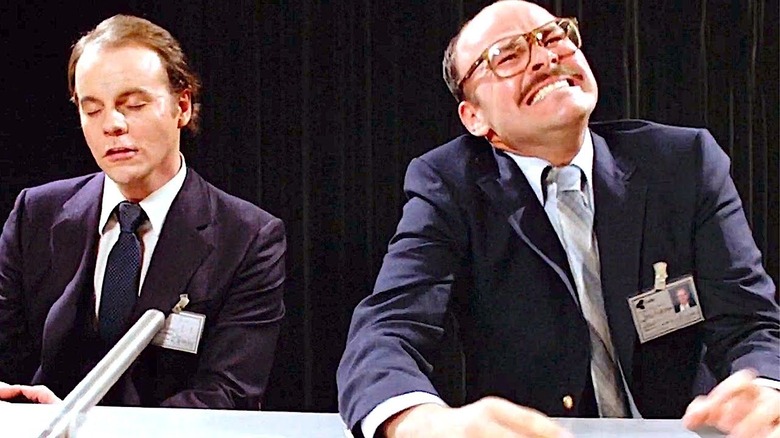
There maybe no moment on this list as purely iconic as that head exploding in "Scanners," the 1981 sci-fi horror that helped Cronenberg to break through into the American box office. You've probably seen it as a meme more times than you can count, and yet even out of context, it's a shock that continues to startle all these decades later. 

The "scanners" of the title are people with telepathic and psychokinetic abilities that are difficult to control and easy to hurt others with. The head explosion comes when one scanner hopes to host a demonstration of his abilities, only to come up against the villainous Darryl Revok, who wants to wreak revenge on those who drove him mad. It ends, well, with a lot of blood and brains on the floor. The scene happened thanks to a plaster skull, a latex body, and a whole load of gross stuff (including leftover hamburgers) being blown to pieces with a shotgun. CGI could never hope to replicate it!

Newborn Hell (The Brood)

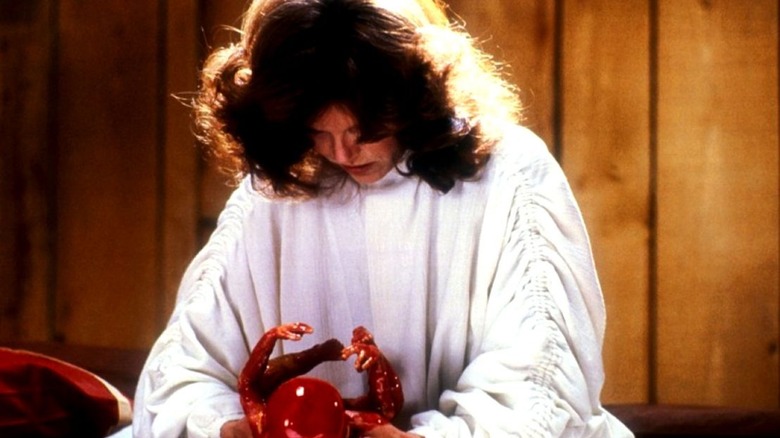
Many filmmakers use their work to explore their personal issues. When Cronenberg went through a messy divorce and bitter custody battle over his daughter, he poured his frustrations into "The Brood," a movie he described as being "my version of Kramer vs. Kramer, but more realistic." 

An unconventional psychotherapist treats Nola, a disturbed woman dealing with divorce who has been accused of hurting her daughter during visits. Her ex, Frank, tries to move on, but finds that many people who dare to get close to him and his child soon end up dead thanks to a strange murderous creature that looks human but isn't. A particularly memorable climax reveals that Nola has been birthing these beings through a psychoplasmically-induced external womb, the offspring of her rage. This is revealed to Hal when she births another child and licks it clean like an animal. It's the most primal depiction of the genuine horror of childbirth that horror cinema has given us.

A Curious Scar (Crash)

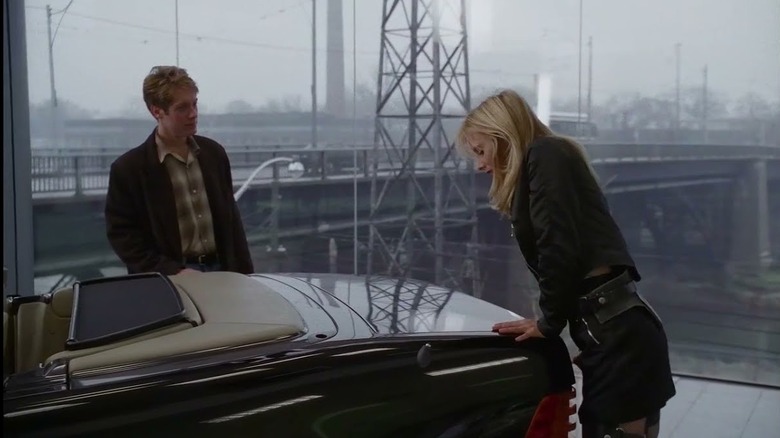
You would think a film about people who are turned on by car crashes would be more bloody than it is, but "Crash," an adaptation of the novel by J.G. Ballard, is Cronenberg at his coldest and most clinical. Maybe that's why it proved so shocking upon release in 1996, being banned in several locations and decried as obscene by various politicians. 

In the film, people engage in sex with the enthusiasm of someone waiting in line at the bank, and people's scars are treated with greater eroticism than the sex itself. The moment that proved too much for some involves Rosanna Arquette's character, a disabled woman who wears braces on her legs. On the back of her thigh, she has a scar that can only be described as vaginal, and James Spader decides to get it on with that part of her body while they copulate in the car. It fits in a narrative concerned with the ways that technology can transform the body, although you may wonder about the logistics for a while.

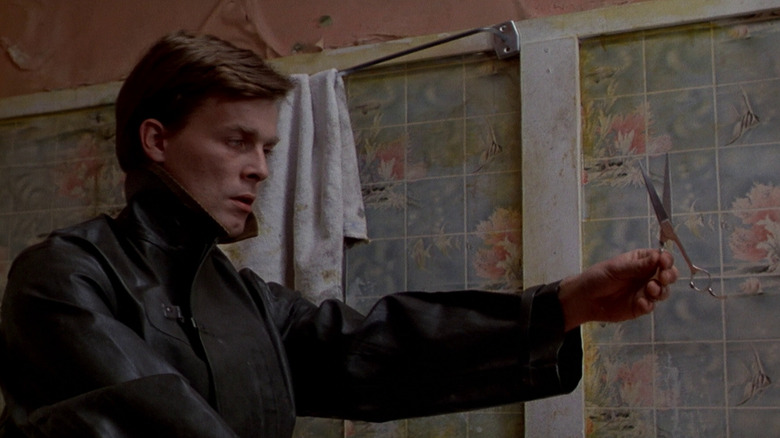
Suicide By Scissors (The Dead Zone)

Stephen King knows a thing or two about body horror, but the one adaptation of his work directed by Cronenberg isn't really as blood-forward as one would have expected. "The Dead Zone" is much more focused on the mind, with Christopher Walken playing Johnny Smith, a teacher who awakens from a coma to find he has psychic powers. He is asked to help with a murder case and discovers that the local sheriff is the killer. Rather than face justice, the cop decides to end his life in the most impractical and upsetting manner possible: He impales his skull on an open pair of scissors. We don't see the deed itself but the methodical way he plans the moment followed by the aftermath makes for a moment so cringe-inducing that you barely care for how weird it is.

The Worst Medical Tools Ever (Dead Ringers)

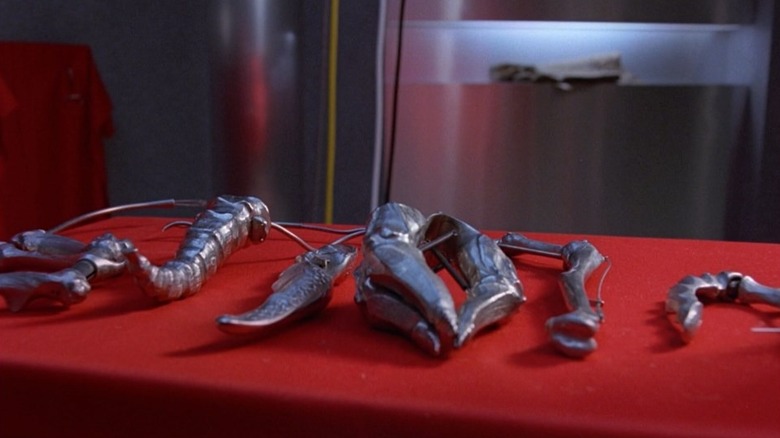
A 2015 list by the Toronto International Film Festival listed "Dead Ringers" as the seventh most important Canadian film of all time. It's certainly got the clout to be considered his best film, and is considered so by many hardcore Cronenberg fans (and "Oldboy" director Park Chan-wook!) At the very least, it features the greatest performance in his filmography thanks to Jeremy Irons' astounding turn as identical twin gynecologists who seduce women as one man and slowly descend into mutual madness. 

The concept of a woman being tricked into sex with an unknown partner is petrifying enough, especially when you consider these men's occupations, but things take a more clinically upsetting turn. One twin commissions a set of new and bizarre gynecological instruments for "mutant women," each of which looks like an instrument of torture designed by H.R. Giger. Fortunately, he is unable to use it on an unconscious patient but we dare you to look at those tools and not immediately cross your legs.

The Butthole Bug Talks! (Naked Lunch)

How do you make a film out of one of the most unadaptable novels ever written? Cronenberg found a way. His William S. Burroughs' 1959 novel "The Naked Lunch" is one of the most important titles of the Beat generation but it doesn't invite a simple movie version, thanks to its loosely connected vignettes on drug addiction, metatextual drama, and, of course, a talking backside. Cronenberg's version is appropriately surreal and adds a somewhat more linear plot involving secret agents and drugs derived from giant bugs. One bug assigns a mission to our extremely high protagonist, but not before demanding that he have some hallucinogenic insecticide rubbed upon his lips. Which look an awful lot like, well, you know. The bugs somehow get weirder from there.

Read this next: The Horror Movies We Can't Wait To See In 2022

The post The Grossest Body Horror Moments in David Cronenberg's Films appeared first on /Film.
03 Jun 17:02

Did A Ghoulish Prank Involving Drew Barrymore's Dead Granddad Inspire Weekend At Bernie's?

by Lee Adams

It's only natural that a place as storied as Hollywood has its fair share of myths and urban legends, and Tinseltown has produced some real blockbusters over the years. There is the debunked rumor that one of the actors playing a Munchkin took his own life on the set of "The Wizard of Oz" and can be seen swinging from a tree in one scene; or the claim that Walt Disney is cryogenically frozen beneath the "Pirates of the Caribbean" attraction at Disneyland; or the sadly true tale of actress Peg Entwistle, who leapt to her death from the Hollywood sign.

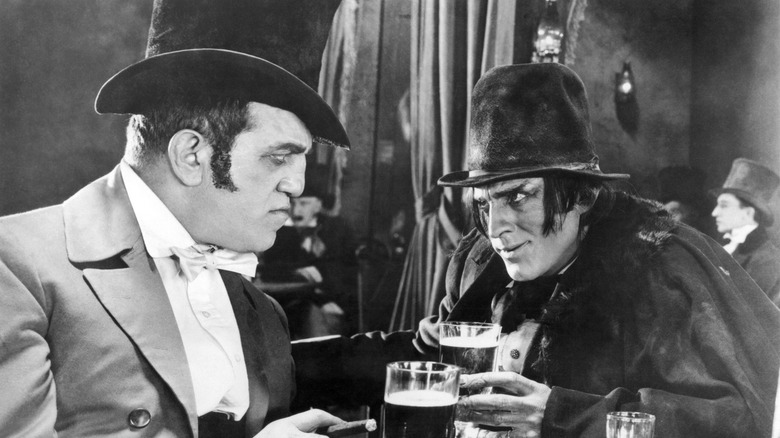
One of the strangest of these Hollywood urban legends involves Drew Barrymore's grandfather, John Barrymore. The actor was one of the big stars of early Hollywood, famous for his roles in "Dr. Jekyll and Mr. Hyde" and "Grand Hotel." He was also a heavy drinker, hellraiser, and member of the Bundy Drive Boys, a group of over-the-hill artists and boozers who gathered to make merry, which also included W.C. Fields, Errol Fynn, Sadakichi Hartmann, and John Decker. Gene Fowler, a journalist who was also a member, wrote (via LA Times):

That brown beamed studio was a place of meeting for still-lively survivors of Bohemian times, an artists' Alamo where political bores never intruded and where breast-beating hypocrites could find no listeners .... These men lived intensely, as do children and poets and jaguars.

It sounds like a blast, but not the kind of company who would let you skip a party. Not even if you were dead.

The Strange Tale Of The Partying Corpse

John Barrymore passed away on 29 May 1942, aged 60, of cirrhosis of the liver and kidney failure caused by his heavy drinking. The urban legend tells that some of his friends from Bundy Drive decided to give him a little send-off, after the fact.

The earliest version of the story emerged in Errol Flynn's autobiography in 1959, claiming that director Raoul Walsh and his friends bribed a mortuary attendant $200 to "borrow" Barrymore's body for an hour. They took the corpse to Flynn's house and propped "Jack" up in a chair. He recalled:

As I opened the door I pressed the button. The lights went on and my God - I stared into the face of Barrymore! His eyes were closed. He looked puffed, white, bloodless. They hadn't embalmed him yet.

I let out a delirious scream.

Years later, Raoul Walsh corroborated the story in his own memoir. Perhaps understandably, his version was more light-hearted than Flynn's:

The two of us had a hard time propping Jack up on the couch. Alex [Flynn's butler] said again Mr Barrymore looked terrible, but I insisted that he was just plain dead drunk. I told him to pour Mr Barrymore a drink, as it might help to bring him to. Alex did so and put the drink on the coffee table. I then told Alex to make him some hot coffee, which might help bring him to, and Alex proceeded to the kitchen.

It sounds just like a scene right out of the movie "Weekend at Bernie's."

So What Happens In Weekend In Bernie's Again?

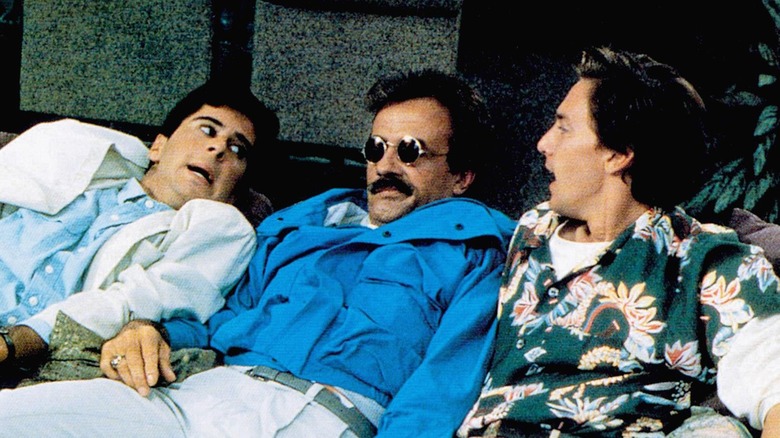
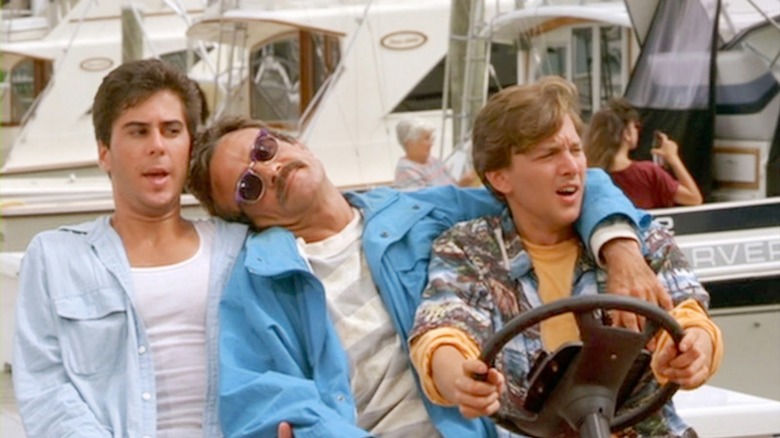
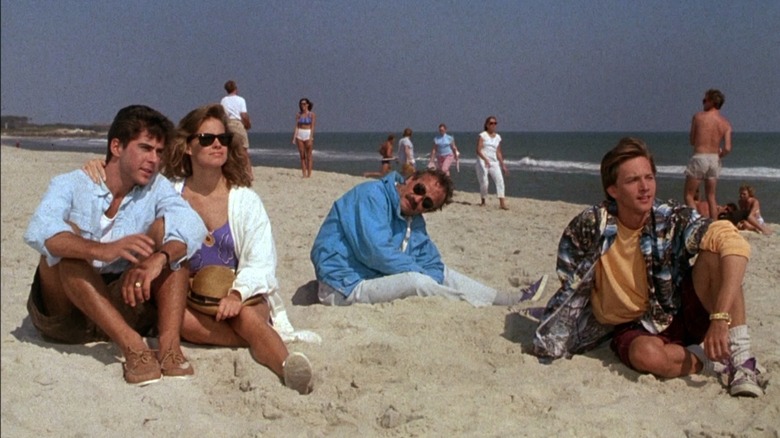
Larry (Andrew McCarthy) and Richard (Johnathan Silverman) are two dorky employees at a big New York insurance company. They discover a discrepancy in the reports and think that it will be their leg-up in the company, informing their loathsome CEO, Bernie Lomax (Terry Kiser). Bernie offers his thanks by inviting them out to his house in the Hamptons for the weekend.

Unbeknown to them, Bernie committed the fraud himself and arranges with a mob boss to have Larry and Richard whacked. It's agreed, but since Bernie is sleeping with the boss's girlfriend, they send a hitman to kill him instead. The boys arrive at the plush beach house just after Bernie is murdered, looking forward to a long weekend of top-notch food, drink, and parties.

At first they're gutted that Bernie was inconsiderate enough to die on them, ruining all the fun. But when Bernie's friends arrive and don't notice he's dead, Larry persuades Richard to keep up the ruse and pretend Bernie is still the life of the party.

I had fond memories of "Weekend at Bernie's," but it hasn't aged well. It's hard to believe it comes from Ted Kotcheff, the director of "Wake in Fright" and "First Blood." It takes almost 40 minutes of tired banter and generic romance before the boys even realize Bernie is dead. The film's major saving grace is Kiser as Bernie, pulling off some inspired slapstick as the hapless stiff and blowing away McCarthy and Silverman without moving or saying a word.

Did The Legend Inspire Weekend At Bernie's?

In 2020, Drew Barrymore confirmed the story about her grandfather's excursion from the morgue on "Hot Ones." When asked if it was true, she said:

"Not only yes, but there have been cinematic representations of that. A Blake Edwards film called 'S.O.B' that's just brilliant and fun to watch no matter what, and then I've heard things about 'Weekend at Bernie's.' I can't know, ever, if that's even true, but yes, they did. And I will say this: I hope my friends do the same for me. That is the kind of spirit I can get behind, just prop the old bag up, let's have a few last rounds."

That would seems to close the matter, but then there is the story of Gene Fowler, another Bundy Boy who held an all-night vigil beside Barrymore's body and saw no-one absconding with the corpse. According to Barrymore's biographer, the only other visitor that night was a sex worker paying her last respects.

So while Barrymore enthusiastically embraces the urban legend, it is just possible her granddad never left the morgue for his final send off. She later asked Andrew McCarthy if he knew whether the story inspired "Weekend at Bernie's." He said:

"That could well have been true, but we do not have such a fine pedigree as that. We were just fools running around with this dead body."

While "Bernie's" screenwriter Robert Klane may have heard the legend, two more traditional sources are often cited: a 1959 Brazilian novella called "The Two Deaths of Quincas Wateryell" and the 1983 Hindi film "Jaane Bhi Do Yaaro," which both share a similar premise. Since the book came out the same year as Flynn's memoir, is it possible one influenced the other?

Read this next: Alfred Hitchcock's 20 Best Films Ranked

The post Did a ghoulish prank involving Drew Barrymore's dead granddad inspire Weekend at Bernie's? appeared first on /Film.

03 Jun 17:01

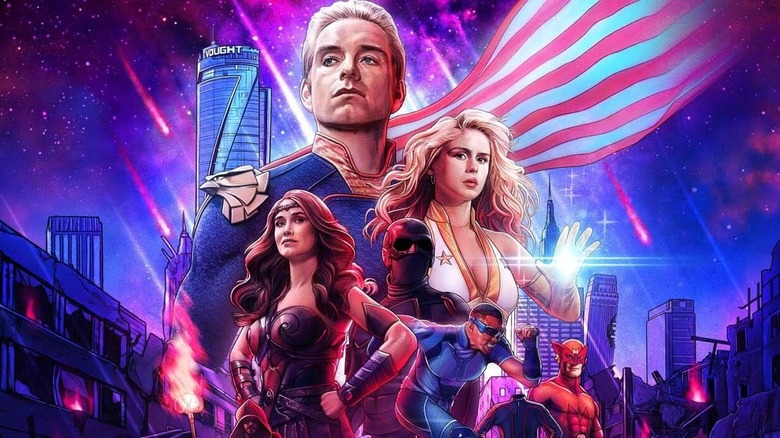
Between Doctor Strange 2 And The Boys Season 3, It's Clearly [Redacted]'s Year For Superhero Cameos

by Debopriyaa Dutta

Warning: Major spoilers ahead for "The Boys" season 3 and "Doctor Strange in the Multiverse of Madness."

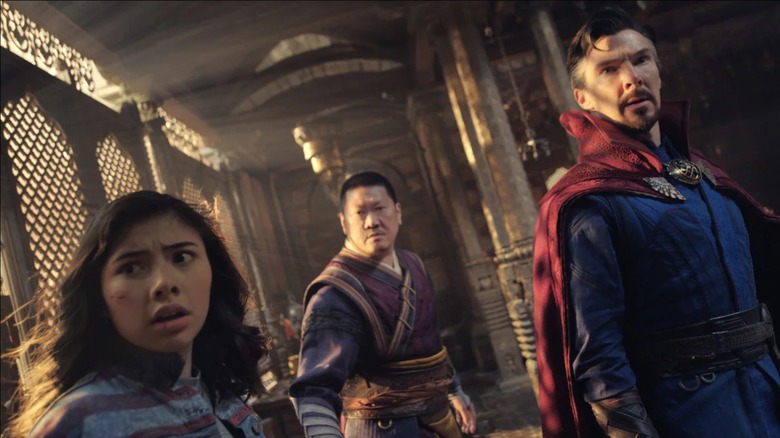
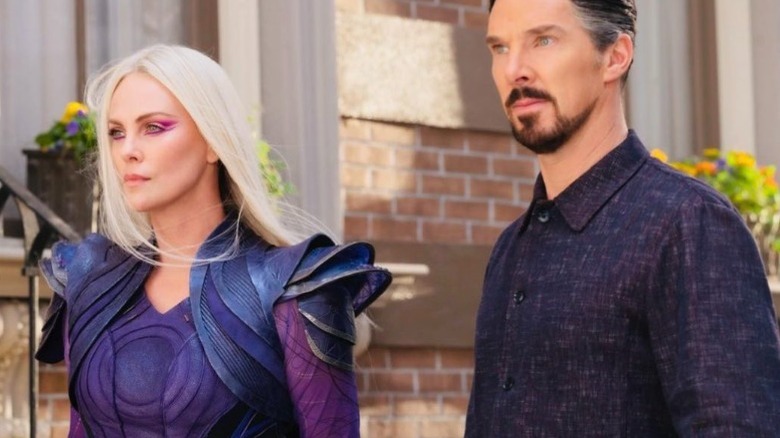
Superhero cameos are huge this year, especially after the cameo-laden spectacle of "Doctor Strange in the Multiverse of Madness," which culminated in THAT scene in which the Scarlet Witch (Elizabeth Olsen) butchers a bunch of powerful heroes. The most surprising cameo came in the form of Charlize Theron popping up in the mid-credits scene as Clea, would-be ruler of the Dark Dimension and Strange's future partner.

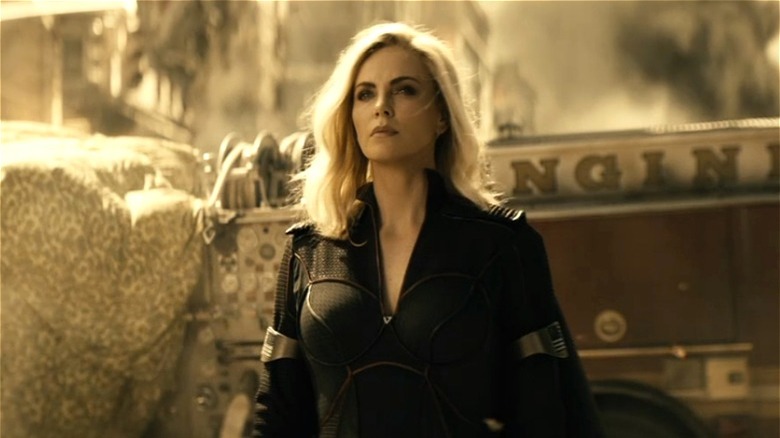
However, this is not the only superhero cameo Theron has been seen in. The movie star also appears as a version of Stormfront (Aya Cash) in season 3 of "The Boys." 

While the Prime Video show has taught me to expect anything — from hilarious celebrity cameos to bonkers sequences (see: Butcher using a supe newborn to laser through some men) — nothing had prepared me for Theron as Stormfront.

This Is What Happens When You #ReleaseTheBourkeCut

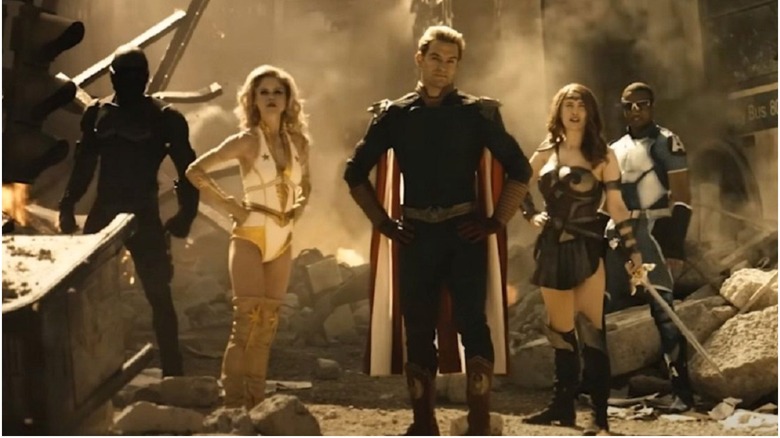
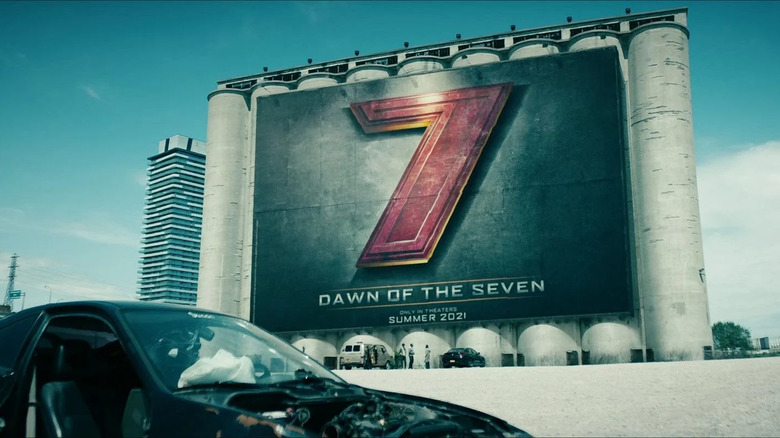
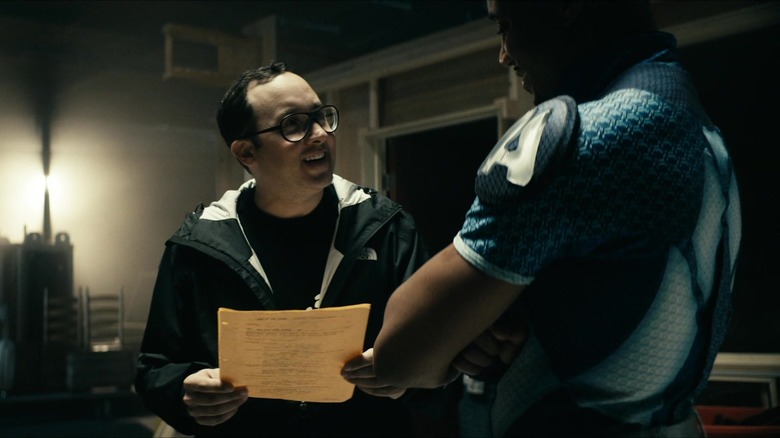
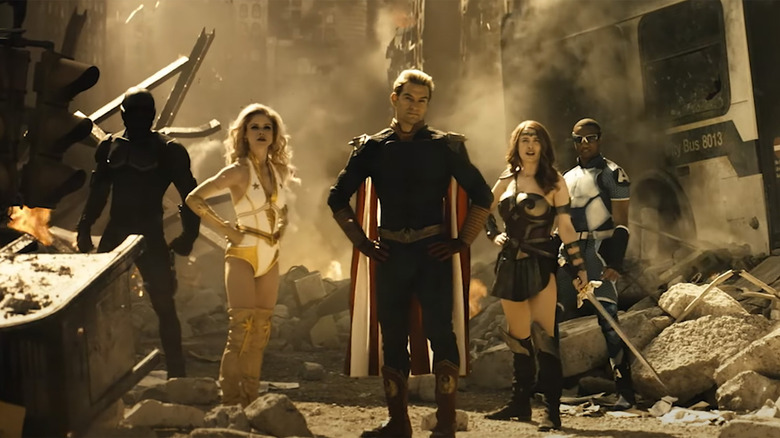
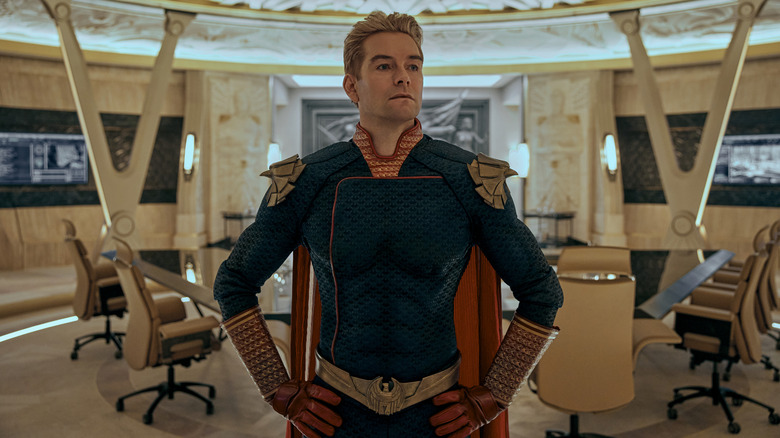
Season 3 of "The Boys" opens with a shot from the Vought-funded movie, "Dawn of The Seven," which has a bit of a complicated history. Originally intended to be an origin story for all the members of The Seven, who band together to fight a common threat, the production process of the film was halted after Stormfront was exposed as a Nazi and remained incapacitated after Ryan Butcher (Cameron Crovetti) used his powers to burn her to a crisp.

While the movie was about to be shelved, fans of director Adam Bourke rallied on Twitter with demands to release the Bourke Cut, which led to Stormfront being recast and being presented as the villain instead. Theron as Stormfront asks Homelander (Antony Starr) to join her in her mission to "create a perfect race" together and reign for a thousand years. Homelander refuses and attacks her with the aid of the rest of The Seven.

Satire lies at the heart of "The Boys," and the parallels between the demands for the release of the Bourke Cut and the Snyder Cut are pretty clear, although the whole thing is supposed to be extremely tongue-in-cheek. These sequences work perfectly as satirical riff-offs, making fun of the often-ridiculous trends associated with superhero films, including hamfisted A-lister cameos.

This Is A Charlize Theron Stan Account

Back to Theron, 2022 is clearly the year she has chosen to (pleasantly) surprise viewers with her sudden appearance when you least expect it. While her appearance is sudden in "Multiverse of Madness," Clea's character will definitely be an integral part of Doctor Strange's narrative moving forward, making Theron a key addition to the franchise. We can expect to see a lot more of Clea, as the comic book version of the character has embarked on a great number of adventures with Strange.

While Theron's fake-Stormfront cameo in "Dawn of The Seven" is a one-time thing, it adds greatly to the already hilarious tone set by the promotional material that Vought churns out daily. The gulf between appearance and reality when it comes to Vought and The Seven is massive, as the former only means to acquire more power while producing soulless cash grabs on the side. As for The Seven, everyone barring Maeve (Dominique McElligott) and Starlight (Erin Moriarty) couldn't care less about saving lives, so there's that.

Here's hoping that Theron appears in more sudden cameos, superhero or not, as it is great to see her pop up in anything. I still remember her guest-starring as the time-traveling thief Pria Lavesque in "The Orville" for one episode. Needlessly to say, I was over the moon. 

Season 3 of "The Boys" is currently streaming on Prime Video.

Read this next: Every MCU Post-Credits Sequence Ranked From Worst To Best

The post Between Doctor Strange 2 and The Boys Season 3, It's Clearly [Redacted]'s Year For Superhero Cameos appeared first on /Film.
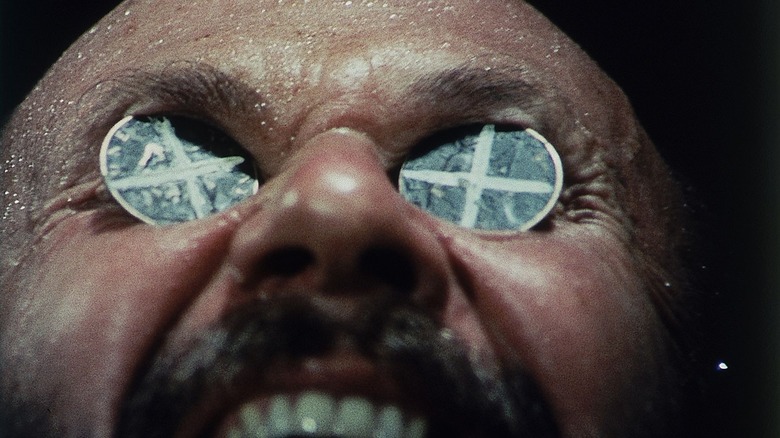
03 Jun 17:00

The Boys Season 3 Delivers A Savage Takedown Of The MCU And Online Fans

by Devin Meenan

2022 is shaping up to be yet another year of superhero movie glut. There's been four comic book movies released so far and, barring schedule changes, six more will be coming in the year's latter half. Freshly returned, however, is the counter programming to this comic book colored zeitgeist. Prime Video's "The Boys" has premiered its third season and it's just as angry as always; the series has as much use for subtlety as Homelander (Antony Starr) does for a flak jacket.

"The Boys" is both a superhero parody and a broader cultural satire; using supes as the vehicle for satire makes sense since comic books and American culture have become so intertwined. The season 3 premiere has some vicious roasting of the movies which made superheroes culturally omnipresent.

Warning: spoilers ahead for season 3 of "The Boys."

The Vought Cinematic Universe

A subplot in season 2 of "The Boys" was the filming of "Dawn of the Seven," wherein Vought International's number one supe team play themselves in a fabricated, sanitized version of their origin. It was this subplot that gave us, "Girls get it done," which showrunner Eric Kripke confirmed was a shot at the "she's not alone" scene in "Avengers: Endgame," the peak of corporate, hollow, #Girlboss feminism.

In "Payback," season 3's first episode, we finally get to see some of "Dawn of the Seven." The episode opens "Scream 2" style at the premiere. Homelander lands in a ruined city, facing a miraculously recovered Stormfront (Aya Cash). But when the camera reveals Charlize Theron in a Stormfront suit and Homelander's "super friends" show up beside him, it's clear what the bait and switch is.

The camera work and blocking (if you can call it that) are right out of the first "Avengers" film. Medium close-up shot reverse shot for dialogue scenes, before the camera goes wide for the group shot. There's also the setting of NYC in ruins but which is clearly just a soundstage; prop rubble and green screen barely sell the illusion.

The dialogue strikes the right pitch of vacuous. There's the quips, from A-Train's (Jessie Usher) "Can't let you guys have all the fun" to Homelander's retort to Stormfront, "Guess this means we're breaking up ... Nazi b*tch." Charlize-Stormfront pulls out, "You and I are the same" to Homelander, the most old hat "hero/villain'' dialogue in the book. Stormfront's dialogue is further seasoned with some superfluous (and unaccented) German, just in case you forgot she's a Nazi.

In-universe, the purpose of the movie is to launder Homelander's reputation after his relationship with Stormfront in season 2. "Dawn of the Seven" is propaganda for Vought like how Marvel movies are often cited as propaganda for the U.S. military.

#ReleaseTheBourkeCut

"The Boys" is an equal opportunity critic when it comes to pot shots at superheroes; DC doesn't get let off either. For one, the "Dawn of the Seven" in season 2 was clearly modeled after the "Batman v Superman" one. Season 2 episode 5 "We Gotta Go Now" featured a scene of the film being shot, where Homelander jokes, "This new Joss rewrite really sings," a reference to the "Justice League" reshoots that's only gotten funnier.

"Dawn of the Seven" director Adam Bourke (P.J. Byrne) tells a red carpet reporter, "After the 'Stormfront's a Nazi' thing we had real talks about shelving the movie, or at least dumping it on Vought+, but the fans spoke with those Release The Bourke Cut hashtags -- guys, I love you!"

This reference goes beyond obvious; it's a transparent allusion to "Release The Snyder Cut," the hashtag-fueled campaign by Zack Snyder's online devotees that saw the director's four hour "Justice League" cut released on HBO Max in 2021. Snyder himself poked fun at the reference.

Just like Bourke calling out to the fans on camera, Snyder has used the platform Vero to communicate directly with his fans and has been vocal in thanking them for their efforts. I won't cast doubt on Snyder's own sincerity in these sentiments, but Bourke clearly has none.

That "Dawn of the Seven" is so shoddy contains implicit critique as well; this is what the fans got so uppity about?

Auteur Theory Found Dead

During the premiere, Vought's VP of Hero Management Ashley (Colby Minifie) and Bourke have rough sex in a men's room stall. During this, she humiliates him about how Tony Gilroy directed reshoots for "Dawn of the Seven." Herein lies another potshot at a recent mess of a blockbuster production.

Tony Gilroy indeed directed blockbuster reshoots, but of "Star Wars: Rogue One." Some would say he saved the movie, but by all accounts, the resultant "Rogue One" is a different beast from what credited director Gareth Edwards envisioned. Ashley's line doubles as another "Justice League" reference; Snyder's replacement with Whedon on that film is an even more extreme case of what transpired on "Rogue One."

"Ant-Man," and Edgar Wright's replacement with Peyton Reed, is the first example of this trend. A director tries to color too far out of the line set by the studio, so they're replaced by a different director entirely. "The Boys" calling this out isn't a strict critique of superhero media, but of studio filmmaking in general. Since Marvel and "Star Wars" are under the same Disney umbrella, it still fits.

Read this next: The 14 Best Sci-Fi Shows On Amazon Prime

The post The Boys Season 3 Delivers A Savage Takedown of the MCU and Online Fans appeared first on /Film.
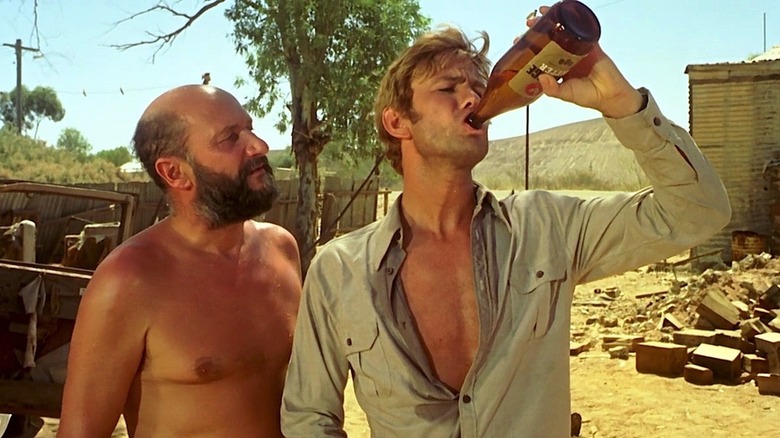
03 Jun 16:57

Sci-Fi Needs More Dark, Serious Animation

by Geek's Guide to the Galaxy
Love, Death + Robots director David S. F. Wilson wants to make an atmospheric animated feature film.
03 Jun 16:57

Microsoft highlights performance improvements in Teams, reconfirms work on new WebView2 app for business

by Arif Bacchus
Microsoft highlights performance improvements in Teams, reconfirms work on new WebView2 app for business - OnMSFT.com - June 3, 2022
03 Jun 16:56

Watch: Marjorie Taylor Greene giddy over Johnny Depp verdict because "there's not many victories for men"

by Carla Sinclair

Bleeding heart Republican Marjorie Taylor Greene applauds the Johnny Depp verdict, relieved that a man was able to come out on top again.

"It's a good victory for men, because there's not many victories for men these days," the GQP congresswoman from Georgia said. — Read the rest

03 Jun 13:58

Elon Musk is reportedly looking to cut the Tesla workforce by 10 percent

by Steve Dent

Tesla CEO Elon Musk wants to cut around 10 percent of jobs at Tesla, according to a report from Reuters. In an email to executives, he wrote that he has a "super bad feeling" about the economy. Including its subsidiaries, Tesla employed around 100,000 people as of the end of 2021, so any layoffs could be substantial.

Tesla has struggled with production more than some automakers, as most of its vehicles bound for Asian and European markets are manufactured in China at its Shanghai factory. Like other firms that manufacture in the nation, it has had difficulty restarting production following COVID-19 lockdowns.

On top of that, investor sentiment has been down due to inflation and the war in the Ukraine. However, the US jobs market is as good as it's ever been, with unemployment holding steady at a 3.6 percent, the lowest level since the start of the pandemic. Demand for Tesla vehicles remains strong as well, according to Reuters

Musk recently told SpaceX and Tesla employees that they had to return to the office full-time or leave the company. His uncompromising stance on remote work contrasts with other major tech companies that have allowed workers to request work-from-home permanently, including Salesforce, Slack and Facebook. Tech talent agency founder Jason Stomel told Reuters that Musk's stance could be a "disguised layoff" because he "knows there's a percentage of workers who are just not going to come back." 

03 Jun 13:57

Researchers Uncover Malware Controlling Thousands of Sites in Parrot TDS Network

by noreply@blogger.com (Ravie Lakshmanan)
The Parrot traffic direction system (TDS) that came to light earlier this year has had a larger impact than previously thought, according to new research. Sucuri, which has been tracking the same campaign since February 2019 under the name "NDSW/NDSX," said that "the malware was one of the top infections" detected in 2021, accounting for more than 61,000 websites. Parrot TDS was documented in
03 Jun 13:57

Apple’s Software Strategy Is More Important Than Ever

by Lauren Goode, Brenda Stolyar
As it heads into its annual developer conference next week, Apple needs to stay focused on bits, not atoms.
03 Jun 13:57

Deus Ex Pitch Part 1: Introduction

by Shamus

This series is going to be a little weird, and I don’t know how well it’ll go over. I was having a terrible time getting back to work after the recent troubles, and I was looking for a nice softball project to ease myself back into it. So I’m going to pitch a Deus Ex game. I’ve been thinking about the game a lot over the past few weeks thanks to this video, and I guess this is my way of coping with the fact that there doesn’t seem to be a new entry on the horizon.


Link (YouTube)

Imagine we’re all on the dev team and I’m proposing a new direction for the next game in the series. This isn’t anything as ambitious as a design document. This is just a starting point.  This is a plot outline, a handful of ideas, some core characters, and a list of missions.  

I’m only halfway serious with the overblown title “Pandora’s Gun”. It feels like the kind of absurd goofiness you’d get from a late 90s shooter. Which is good! On the other hand, this story is as connected to the Pandora myth as much as Human Revolution was connected to the Icarus myth.[1] On the gripping hand, the title is promising outrageous bombast that doesn’t quite match what I’ve written. Still, it’s catchy and not worse than Icarus Effect. I’m going with it mostly because it made me giggle when I thought of it. 

I’ve said before that the Deus Ex series is in a terrible rut. The first game is a classic. The second is a hot mess. The third game – Human Revolution – is fine, but can’t really compare to the original. And Mankind Divided is where the series seems to have lost its way. At this point, what are these games about? Conspiracy theories? Transhumanism? Cyber bigotry? The way our future society will be shaped by technology, corporations, and government? Belabored and ill-fitting Icarus metaphors? It feels less like the writers have something to say, and more like they’re throwing everything at the wall to see what sticks.

Another problem is that the Deus Ex timeline is full. We know the near future. (The original game.) We know the far future. (The world-changing events of Invisible War.) We know the recent past. (Human Revolution and Mankind Divided.) And if you go much further into the past you run into the modern day.[2] There just isn’t much room left in the timeline to tell new stories where Important Things happen. 

The final problem is that this series is built around the idea that there’s a secret conspiracy running the world. Since all of these games are set in the same universe, we end up unmasking the same conspiracy again and again. But that reveal gets to be a little less interesting every time, and the accumulated lore cruft means there’s less we can do with it.

I’m a big believer in the idea that the Deus Ex series should be like Final Fantasy: The games all draw from similar thematic elements and plots, featuring recurring character names and relationships. Each game should tell a unique story within its own universe, yet be full of familiar ideas and moments.

So this is what I’m going to pitch. I’m going to propose a Deus Ex reboot. 

But I’m Sick of Reboots!

Yes, I know. Everything is getting rebooted these days. Tomb Raider. Doom. Wolfenstein. King’s Quest. Thief. Hitman. Fans are tired of publishers flipping the table on established lore and starting over when sales begin to fall.

But we shouldn’t let bad reboots[3] put us off the idea of reboots altogether. Like sequels, prequels, and spinoffs, a reboot is a tool the storyteller can use to solve problems. The key is knowing when to do it and how to do it properly.

Yes, we all love JC Denton and Adam Jensen. I understand that fans don’t want to see their heroes poofed out of existence by a lazy writer. But this idea of characters being “erased” only applies if you’re planning to run this new reboot into the ground with endless same-universe sequels. Nobody complains that Final Fantasy X “erased” the characters in Final Fantasy VII. Final Fantasy XII didn’t destroy FFX’s Spira and all of its characters. It just told a different, unrelated story.

I think people really underestimate the power and potential of a blank canvas. If you’re new to the world, then you don’t know what’s going to happen next. You don’t know who to trust. You meet people along the way and discover the world, and that process is massively more rewarding than going through a parade of obligatory cameos. We want players to feel a sense of trepidation and mystery as the world is revealed. We don’t want the audience to sit there thinking, “Come on, I already know Bob Illuminati is behind this. When is he gonna show up?”

Blueprint


So let’s take an inventory and see what elements we want to include in our new Deus Ex game. We can then replace all these pieces one at a time, Ship of Theseus style. 

  • Transhumanism: We don’t have to make the game about cyber-racism, and it doesn’t have to be a huge part of the setting, but I feel like fans expect that we’re going to be playing as some sort of enhanced individual. 
  • Conspiracy Theories: Conspiracy was such a big part of the original, I think you need to feature this sort of thing. It doesn’t need to be central and the conspirators don’t need to be the central antagonists, but I think it would be a disappointing Deus Ex game if you were to play everything perfectly straight with no hidden agendas, secret powers, or major twists.
  • Technology, Government, Individuals: The first game was really interested in the interplay between these three things. 
  • Globe-spanning adventure: Our story should take us to a variety of locations around the world, from the dirtiest slums to the shiniest labs. We can start off in the USA so the world feels like a standard Hollywood setting, but the story should quickly escalate to something global.[4]
  • This is a modern shooter: I’m sure you could use Deus Ex to make a really interesting Telltale-style game about choice and consequences. I’d prefer gameplay that felt a little more like the original and less like the recent cover-based stuff. But to keep this pitch plausible let’s assume we’re sticking to roughly the same gameplay style as the last couple of entries. 
  • While we’re not obligated to respond to player choice, there does seem to be a hope and expectation among fans that the game will respond to some well-telegraphed choices. This isn’t a BioWare game and we don’t need to do a ton of branching, but the audience will probably appreciate some narrative reactivity. 
  • We don’t have an infinite budget. In fact, the last game was apparently a bit of a disappointment in terms of sales.[5] So we should be looking for ways to keep costs down. My story is 10 missions long. Yes, that’s more than either of the previous two games.[6] However, I don’t have any enormous open-world hub locations like Detroit or Prague from the previous games. Also, several of the locations pop up more than once, so we’re not going to need 10 distinct maps. I’ve never worked on a AAA project before and I’m sure I’ve got a few budgetary blind spots, but I’ve done my best to keep the scope under control.

Feel free to suggest other elements in the comments below, but for the purposes of this write-up, we’re going to pretend the above blueprint is the plan. 

In terms of tone, I want to head back in the direction of the original. It’s been said[7] that the original Deus Ex was a smart game that pretended to be stupid, and that Human Revolution is a dumb game pretending to be smart. I can’t claim that I’ve made a smart game, but I did do my best to avoid pretension and embrace a little absurdity in the name of fun. I’m sure you’ll let me know how I did.

The Conspiracy Problem

So now I guess we need to talk about the elephant in the room. The original game dealt with conspiracy theories. It embraced some ridiculous and amusing ideas, and made them fit together in a crazy over-the-top world. But a lot has changed in the past 22 years, and conspiracy theories aren’t what they used to be.

Consider these three, which I’m making up right now:

  1. Halloween was invented by chocolate moguls Paul Ghirardelli and William Nestle in the early 1800s as a way to sell more candy. The new crop of cocoa beans would come in and they needed to get rid of last year’s stock to make room, which is why the holiday was placed in October.
  2. Microwaves are sensitive to short-wave radiation. That’s just how they work. That means every microwave oven is effectively a wi-fi listening device. Since the 1990s, General Electric has been working with the NSA, allowing the government to use their microwaves to listen in on everyone’s internet activity. 
  3. The Levi corporation makes clothing using forced labor camps in Sudan, where children as young as 11 work in terrible conditions. Hundreds of these workers die every year, and hundreds more are maimed by the industrial equipment.

I submit that the first two conspiracy theories are kind of fun. They’re silly and absurd. I’ve met people who were into this sort of stuff: Flat-earthers and moon-fakers. Some of them are serious about it, and some of them treat it like a joke / troll, and enjoy the challenge of defending their absurdity against mundane facts. I don’t know why people are into this stuff, but I see them as generally harmless.[8]

But that third conspiracy theory is a bit different, isn’t it? That’s not a joke. That’s not something we can just agree to disagree on. Either that theory is true and we need to fight against it with whatever might we can summon, or it isn’t true and is therefore a cruel and dangerous lie. 

Over the last couple of decades, the conspiracy theory meta-game has evolved away from the quasi-harmless paranoia of the first two and towards the outrage-feeding intensity of the third kind. 

At the same time, our society is much more divided politically.[9] This means it’s very dangerous to toy with political topics. Stray too far into either camp, and the opposition will bury you in outrage. You can avoid this by pulling an Ubisoft and not saying anything, but art that has nothing to say is usually very boring art.

In short, we can’t just do like the first game did and make a big mixtape of popular conspiracy theories. The whole thing would blow up in our face. The goal is to make something that can be broadly enjoyed by people all over the political spectrum without coming off as tone-deaf or sanctimonious.[10]

I have a two-prong plan for how to deal with this:

  1. We’re going to make up our own conspiracy theories, rather than remixing extant theories the way the original did.
  2. We’re going to avoid hot-button stuff. This doesn’t mean saying nothing, it just means we’re not going to talk about a woman’s right to raise taxes on multi-gendered gun control for critical race theory. Instead we’re going to talk about… eh. You’ll see.

Of course, I’ve got my own biases and blind spots. Maybe something I’ve written will hit a nerve or stumble into a nest of controversy that I’ve been oblivious to. But I did what I could to make this ideologically inclusive.

It should go without saying, but I really, REALLY want nothing to do with the current crop of conspiracy theories. I don’t want to discuss them, and I don’t want those keywords to show up on my site. I’m going to nuke any discussion regarding them, because I don’t want the Google bot to get the idea that this site is interested in that sort of thing. 

So that’s it. I’m going to pitch a AAA shooter that uses the Deus Ex name in a rebooted universe to tell a new story. We’ll start next week.

03 Jun 13:56

Review: "Watcher"

by Matt St.Clair

by Matt St Clair

With her feature debut Watcher, director Chloe Okuno offers up a simple but discomfitting concept. What if you felt a stranger was watching your every move? The concept alone feels paralyzing thanks to its proximity to every day fears. If you’re so much as going on a simple park stroll, the sense that the person walking behind you is following your footsteps, whether or not they actually are, is terrifying.

For protagonist Julia (Maika Monroe), those kinds of anxieties are only amplified by her physical and mental solitude...

03 Jun 13:56

One Of The Boys Season 3's First Scenes Is A Reminder That This Show Isn't For The Faint Of Heart

by Michael Boyle

Whether you love it or hate it, we can all agree that "The Boys" is not for the squeamish. The series' first episode opens up with Hughie (Jack Quaid) watching his girlfriend explode after superhero A-Train (Jessie Usher) accidentally runs into her body at super-speed. The first season sees characters getting their bodies ripped apart by laser beams, an entire plane full of civilian passengers realizing they're going to die, and one character being exploded to bits from the inside. Sometimes it seems like Hughie spends half the show covered in other people's blood and guts. 

The season 2 premiere stepped things up even more with the sudden, shocking scene of a minor character having her head unexpectedly explode right in front of the main characters. Because the perpetrator (and the perpetrator's motives) weren't revealed yet, I for one spent the rest of the season in constant terror: every time the show lingered on a character's face for more than a second, I thought I was about to watch their head explode. 

The season 3 premiere doesn't hold back much either. Not only does yet another head explode (well, an entire body), but we also see one of the most gruesome deaths in the entire show. A newly introduced Supe called the Termite is having (very) kinky sex with his boyfriend, which involves the Termite shrinking himself and crawling inside his boyfriend's urethra. A little weird, but hey, it's a consensual act between two adults, so I'm sure it's harmless fun, right? Wrong. The Termite sneezes, which accidentally brings him back to normal human size while he's inside his partner. It's both disturbing and a very interesting way for the show to kick off Pride Month.

The Boys' Obsession With Sex-Related Gore

Where the show writers' slightly depraved brand of creativity shines is with its depiction of supe-on-supe sex. Season 2 has multiple, somewhat nauseating, sex scenes between all-powerful psychopath Homelander (Antony Starr) and the literal Nazi superhero Stormfront (Aya Cash). Their first time together features Homelander burning her with his lasers and her throwing him around the apartment. These are two god-like beings who can't be harmed by normal people or weapons, so here they're basically reveling in how tough they are. 

In an age where people are constantly debating the necessity of sex scenes on TV, there's something to be said of most of the sex scenes on "The Boys," which are not designed to titillate but to terrify. One of the earliest such scenes features minor superhero Popclaw (Brittany Allen) having an orgasm so intense it explodes the head of the guy going down on her. Later, we hear a story from a one-off character about how he had sex with a superhero with ice powers. When she climaxed she accidentally turned into ice, while the guy was still inside of her. "It snapped off," he says simply. The lesson is clear: if superheroes ever did exist, do not have sex with them, because you can never quite know what kind of damage they'll do to you.

It all serves to showcase the absurd power imbalance between the superheroes in this world and the normal people; even when the supes aren't trying to harm you, they still can. This Termite opener helps to serve as a nice little warning to viewers as they head into the rest of the new season: this won't be the last instance of extreme sex-related gore on "The Boys," so please brace yourself.

Read this next: The 15 Most Anticipated Comic Book Movies And Shows Of 2022, Ranked

The post One of The Boys Season 3's First Scenes is a Reminder That This Show Isn't For the Faint of Heart appeared first on /Film.
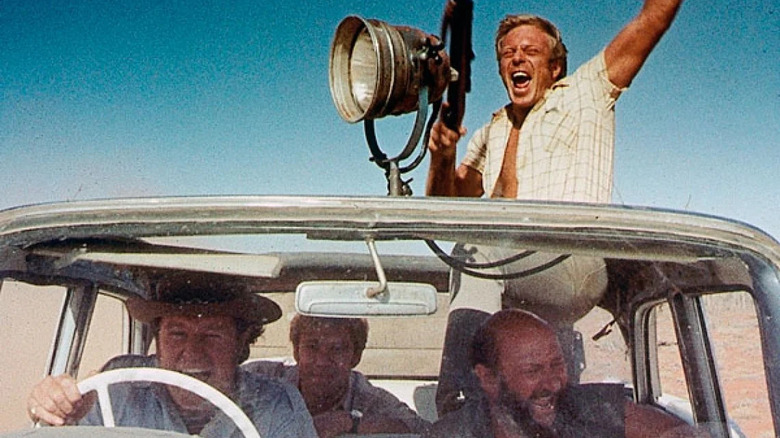
03 Jun 13:54

The Boys Season 3 Is The Satire We All Need In 2022

by Rafael Motamayor

When "The Boys" first premiered, you could be forgiven for thinking it looked like just another hyper violent, hyper sexual superhero show with a nihilistic tone. But it quickly became clear that this show is something else, something better. After a few episodes it became one of the hardest-biting satires on TV, a show about the horrors of late stage capitalism, our obsession with celebrity culture, the rise of mega corporations and fascism, all packaged as a fun, hyper violent, hyper sexual superhero show.

Season 3 is no different. In its first three episodes, "The Boys" ups the ante, something of an achievement considering what they already covered in the previous two seasons. But in addition to challenging the characters, and the audience's resilience in watching some incredibly dark and gross material, it also continues to be the satire that we need today. It allows for a cathartic laugh at the miserable darkness of the times we live in. Here are just some of the targets of the biting satire of the season 3 premiere of "The Boys." 

Heavy spoilers for the first three episodes of "The Boys" season 3, obviously.

Superheroes, Reality TV, And Sex Cults

The very first scene of the season 3 premiere takes on the biggest piece of pop culture on the planet — superhero movies. We see part of the in-universe film "Dawn of the Seven," a movie about, well, The Seven, that has gone through a bit of controversy. In a pitch-perfect riff on the MCU and DCEU, the film is an epic blockbuster that went through a ton of reshoots (after one of the leads was outed as a Nazi) and replaced with another A-lister (Charlize Theron!!). 

There's even mention of an online campaign to restore the director's vision, and the director talks about loving the fans and "the hashtags" even if he clearly doesn't care. There are a ton of superhero parodies out there, but any time "The Boys" makes fun of superhero movies via its in-universe cinematic universe, we know we're in for a treat.

Then there's The Deep, who gets a bigger role this season. After he spent much of the previous season in a cult posing as a self-betterment treatment, The Deep is free (kind of) and promoting his ultra-lucrative tell-all book. If the cult was an amalgamation of real organizations like the Church of Scientology and the NXIVM sex cult, then The Deep's book deal and subsequent capitalization on his experience is a clear reference to the many, many NXIVM docs like "The Vow," and "Seduced: Inside the NXIVM Cult."

Fake Wokeness And Foreign Interventions

As the titular Boys try to find clues as to the fate of Soldier Boy, hoping to find a weapon that could kill Homelander, Frenchie and Kimiko end up going to VoughtLand. The theme park is a clear parallel to Disneyland, with tons of rides and meet and greets with crewmembers dressed up as The Seven. But the satire hits hardest with how it shows the way mega corporations like Disney try to appeal to diversity by putting on a fake front. 

Instead of Cinderella's castle, there is Brave Maeve's Inclusive Kingdom, which is filled with rainbows, and "diverse" food and decorations like piñatas, tacos, as well as "BLM BLTs," "Woke Woks" and something called "LGBTurkey Legs." Of course, it is all a sham in order to bring in even more money while promoting the most disgusting, psychopathic, serial-killing superhero bigot there is.

Shortly after, we learn the truth about Soldier Boy's fate. He and his team were involved in the first superhero/military operation, in the show's answer to the CIA getting involved in Nicaragua and helping install a puppet military regime. The show tends to rewrite history to involve superheroes, but in a way that still shines a light on horrors of our time that perhaps are not as well known or as talked about as they should be.

Gun Culture And Cancel Culture

In a totally unsurprising move for "The Boys," we learn there is at least one superhero who is a total gun nut. Before they find out the truth about Soldier Boy, Butcher goes to find his old ward Gunpowder, a superhero whose whole thing is that he shoots lots of guns. Where do you find such a rare specimen? Why, at a pro-gun rally, of course! This is arguably the most on-the-nose piece of satire this season, but arguably its most essential one in light of recent news. The camera slowing down to show all the little kids playing with rifles and grenades on the convention floor like they were "Star Wars" toys is messed up; it hurts, but it's necessary.

Then there's the most biting target of satire of the first three episodes, and the one with the darkest implications for the rest of the season: Homelander. During his birthday TV spectacular, he decides to go off script and start babbling about cancel culture, the liberal media, and how he is oppressed by some unseen force that wants him to keep apologizing for dating an actual Nazi. It's an absolutely terrifying scene that only gets scarier as the camera cuts back to the audience reactions across the country, with adult men sympathizing with the speech and feeling empowered by Homelander's words. By the time we hear that his popularity has increased substantially, we know irreparable damage has been done.

The first three episodes of "The Boys" are streaming now on Prime Video. New episodes arrive weekly on Fridays.

Read this next: The 15 Most Anticipated Comic Book Movies And Shows Of 2022, Ranked

The post The Boys Season 3 Is The Satire We All Need In 2022 appeared first on /Film.
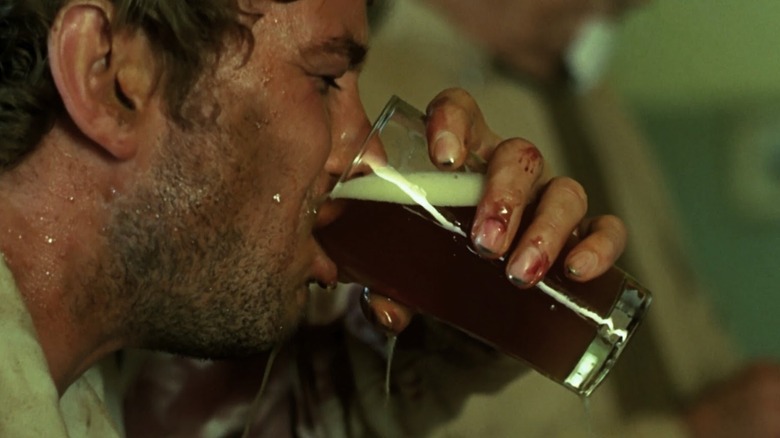
03 Jun 13:54

I screwed up, and the only way I can survive is to fire 10% of my staff [Asinine]

03 Jun 13:53

Playing Frank Sinatra Taught Ray Liotta A Lesson He Wouldn't Forget

by Travis Yates

Few entertainment icons of the 20th century stand out like Frank Sinatra. "Ol' Blue Eyes" had a voice and presence that was second to none. Sinatra made swing and jazz cool with a unique voice and towering stage presence. Rolling Stone went as far as to call Sinatra "American music's first titanic sex sensation." He transcended the music industry to become a Hollywood film star and run his own record label, Reprise Records. Sinatra was a larger-than-life presence, a complex individual who rubbed elbows with presidents, ran with the mob, and was adored by many. He also ran with a pretty famous group of entertainers. Sinatra, along with Sammy Davis Jr., Dean Martin, Peter Lawford, and Joey Bishop, comprised the group known as the Rat Pack.

Ray Liotta was understandably hesitant to play the musical icon in the 1998 HBO movie "The Rat Pack," set to debut just months after Sinatra's death. By this time, Liotta was 10 years beyond his breakout performances as Shoeless Joe Jackson in 1989's "Field of Dreams" and Henry Hill in Martin Scorsese's gangster biopic "Goodfellas." And although playing Sinatra wouldn't become Liotta's most memorable role, it taught the actor a valuable lesson he wouldn't forget.

He Said No To The Role Several Times

Ray Liotta knew how challenging playing Frank Sinatra would be. He turned down the opportunity on more than one occasion. First when one of Sinatra's daughters asked if he'd play the icon in a television movie, and again when HBO came calling. Liotta told NPR:

"I turned it down a bunch of times. I wouldn't do it. I was first asked to play him by Tina Sinatra or Nancy — one of the Sinatra daughters back when they did movie of the weeks. And they were doing a movie of the week of it. And I turned it down because I just didn't want to do it at that time in my career. Then it came along. And it was during this down period for me. And they asked me — it was HBO. Rob Cohen directed it. And he called and asked if I would play it. And I said 'No, no thanks, I don't want to take on playing somebody that so many people knew,' that I just felt the judgment would be too much."

After Liotta finally acquiesced, things got, shall we say, uncomfortable with the Sinatra family. According to People, the Sinatra daughters sent Liotta a horse head in the mail, a callback to both Sinatra's mob days and the 1972 movie "The Godfather." Liotta explained, "Obviously, it wasn't a real one, but it was a horse's head. And, you know, a horse's head means you're toast. It turned out that his daughters sent it and said, 'Oh, you could do this one, but you couldn't do the one that we wanted you to?'"

Liotta was partly right about the role. Although it will never be considered his best movie, he channeled some harsh judgment into a career resurgence.

Critics Weren't Kind To Liotta's Performance

This might not have been the best time for such an ambitious role. But Ray Liotta saw it as an opportunity to challenge himself. He continued to NPR:

"I was down in my career. So, to take on something if it didn't work, maybe it would make things worse. And then I said, 'wait a second.' The whole point of me doing this is to take on challenges, to keep growing as an actor and not really caring — one of the biggest downfalls for any actor is fear of judgment."

And the judgment came. The New York Times wrote: "Ray Liotta's problematic performance as Sinatra leaves a void in the center of the film." Variety wasn't much kinder: "Ray Liotta has none of the Chairman of the Board's swagger, confidence or, most significant, charisma." Ouch.

Some of it was out of Liotta's hands. The Times noted that the script did him no favors, and it was a challenge to play a mythical hero who is also painted as a bully. Sinatra doesn't come off as a cool antihero, but a celebrity slowly losing control of the power he craves. It's not the most flattering look, and it's an uphill climb for any actor.

Still, Liotta did it his way, and despite the criticism, he bounced back just fine. In later years, he showed his range with movie roles in multiple genres, several animations that included "SpongeBob SquarePants," a video game voice-over for "Grand Theft Auto: Vice City," television cameos, and even an NBC TV series, "Shades of Blue."

/Film recently ranked Liotta's best movies, most of which occurred after "The Rat Pack." Perhaps none would have happened if he hadn't learned the lesson about taking on challenges and growing as an actor.

Read this next: The 14 Greatest Biopics Of The 21st Century

The post Playing Frank Sinatra Taught Ray Liotta a Lesson He Wouldn't Forget appeared first on /Film.
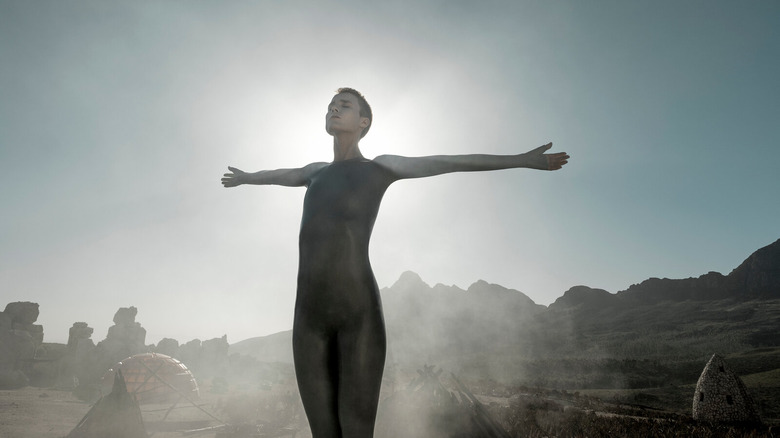
03 Jun 13:53

NVIDIA’s High-End GeForce RTX 3080 & RTX 3070 Gain Market Share Big Time On Steam & 6-Core CPUs Outpace Quad-Core, Becoming The New PC Gaming Standard

by Jason R. Wilson

NVIDIA's High-End GeForce RTX 3080 & RTX 3070 Gain Market Share Big Time On Steam & 6-Core CPUs Outpace Quad-Core, Becoming The New PC Gaming Standard

Steam has just published its latest Hardware Survey, and NVIDIA has held onto the highest spots on the mid-level to high-end GeForce RTX 30 series GPUs. The survey results proved positive with the recent changes in pricing in the graphics card marketplace. Along with NVIDIA's graphics cards reaching the top of the list, Hexa-core processors have dominated quad-core chips to remove them from first place.

NVIDIA GeForce RTX 3080 & RTX 3070 Gained Big Market Share on Steam During The Previous Month While Intel & AMD's 6-Core CPUs Become The New Standard For PC Gaming

During May,  NVIDIA's GeForce RTX 3080 and 3070 graphics cards gained the biggest market share on Steam, respectively. These cards are followed by the  RTX 3060 and also the GTX 1070, which is quite an old GPU, but still decent for most cost-friendly audiences and are usually a good choice for reselling to an upgraded graphics card.

Steam Hardware Survey GPU Report:

  • 2022-06-03_18-33-48
  • 2022-06-03_18-34-03

Even with the decreased pricing for graphics cards across the board, sales are still slow as users are holding out for more cost reductions. Also, with newer cards coming out later in the year, users may continue to hold until the second half of the year to get next-gen hardware at possibly more affordable pricing. With that said, the NVIDIA GeForce GTX 1060, GTX 1650, GTX 1050 Ti, and RTX 2060 still retain the top spot with over 5% share on Steam. This is due to the good availability and mainstream prices of these cards. The RTX 3060 has yet to reach half the market share of its Turing based predecessor.

Steam Hardware Survey CPU Report:

  • 2022-06-03_18-34-51
  • 2022-06-03_18-34-41

As for CPUs, 8 and 6 core chips pushed forward against quad-core chips to be the significant scorer. It may become months, if not years, before octa-core chips or newer technologies make a surge as the standard in the PC marketplace since quad-core chips still hold a huge 33% market share but 6-core chips have definitely outpaced 4-core offerings, becoming the new standard for PC gaming.

Regarding CPU usage among Steam users, AMD increased 1.24%, while Intel showed a similar loss amount. The current share of Intel CPUs at Steam is 67.19% whereas AMD holds a share of 32.80%. However, it is no surprise to see Apple & their new M1 offering more usage among users in macOS hardware. As of writing, Apple Silicon has 40% of the current OSX market share.

Steam Hardware Survey CPU / GPU Share:

Finally, Linux users on the Steam platform have adopted a higher count of AMD CPUs over Intel chips. Still, the AMD adoption may be due to more accessibility to open-source technology over their competitors.

The post NVIDIA’s High-End GeForce RTX 3080 & RTX 3070 Gain Market Share Big Time On Steam & 6-Core CPUs Outpace Quad-Core, Becoming The New PC Gaming Standard by Jason R. Wilson appeared first on Wccftech.