Shared posts

03 Jun 00:10

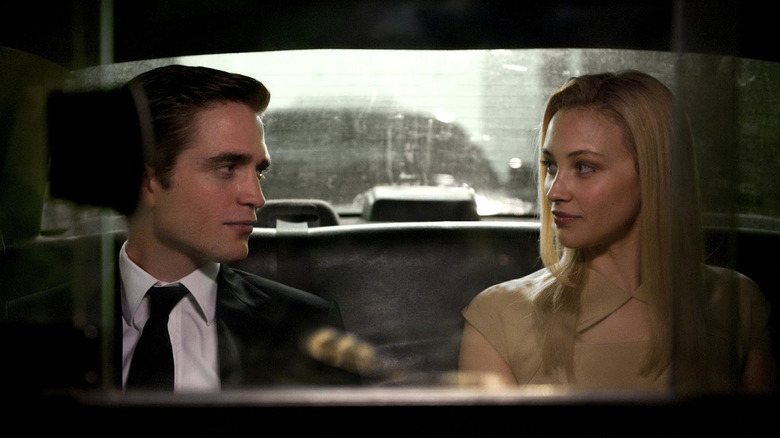
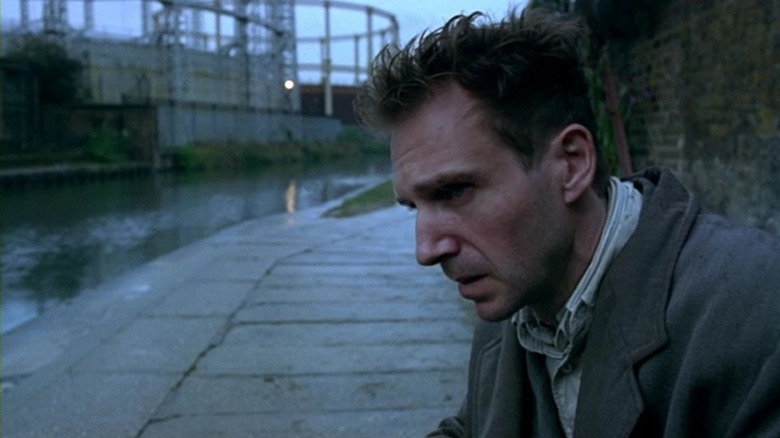
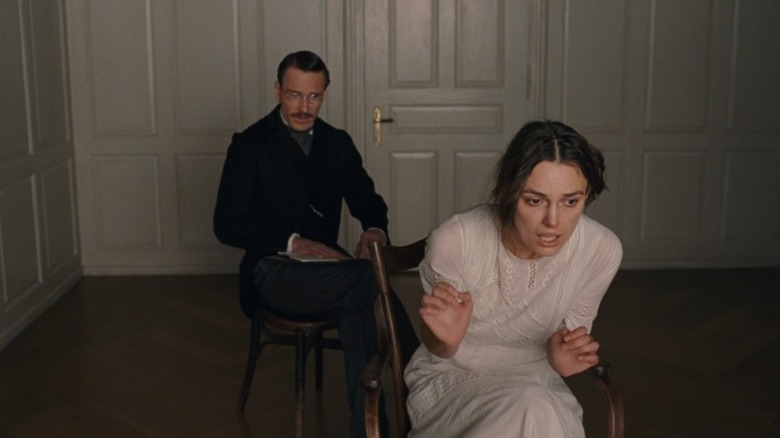
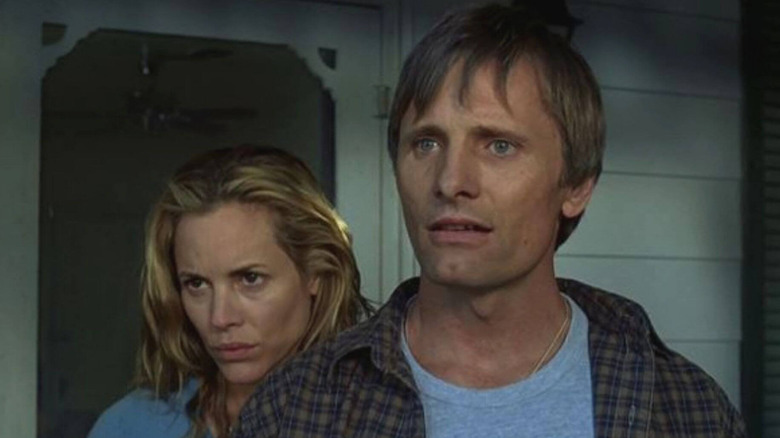
20 Underrated Heist Movies You Should Check Out

by Liam Gaughan

What makes a great heist movie? Stakes. The characters in a heist film need everything to go according to plan. So, what happens when that plan goes awry, or a last-minute complication arises? Well, you have the premise for a pretty exciting movie!

Heist films can cross genres. For example, in Christopher Nolan's 2010 science fiction masterpiece "Inception," Cobb (Leonardo DiCaprio) isn't trying to steal money. He and his associates have to plant an idea in someone's mind. The Fast and Furious series originally focused on racing, but 2011's "Fast Five" changed things up. Dominic Toretto (Vin Diesel) and his fellow drivers pull off a massive heist, and the franchise hasn't looked back since.

The heist movie is also a genre that has evolved over time. The original "Ocean's 11," which debuted in 1960, may be a famous film, but it's not actually very good. However, Steven Soderbergh's brilliant 2001 remake managed to take the original high concept and marry it to a compelling story. Basically? If you're a heist movie fan, there are plenty of options out there beyond the obvious choices. At the very least, these 20 movies are definitely worth watching.

American Animals

The most exciting part of a heist movie is usually the robbery itself. However, "American Animals" is more about the anxiety that the characters face after executing their plan. It's painfully realistic, and for a good reason: "American Animals" is based on a true story. The film is inspired by an incident that occurred in 2004, in which four students from Transylvania University stole priceless books from their school's library. In addition to the cinematic recreations of the events in question, director Bart Layton incorporates interviews with the real criminals into the film.

Warren Lipka (Evan Peters) has always been a rebel; he is also told that he is an embarrassment to his father's legacy. And so, it's not much of a surprise when Warren enlists his younger friend, Spencer Reinhard (Barry Keoghan), to help him perform a dangerous heist. Although Spencer is nervous about stealing, Warren promises  that no one will get hurt. In order to further their plans, the duo recruit two more students, Chas Allen (Blake Jenner) and Erik Borusk (Jared Abrahamson), to join their team.

During the actual heist, Warren is forced to harm the school's librarian, Betty Jean Gooch (Ann Dowd). Spencer is haunted by the shocking moment. He also discovers that Warren doesn't actually know what to do with the books they stole. Although Warren had claimed to have contact with black-market buyers, Spencer begins to doubt that he is telling the truth. "American Animals" is unique among heist films in that the characters are not motivated by greed. Warren, Spencer, Chas, and Erik are simply looking for something exciting to do, and they're unprepared for the consequences of their actions.

Ocean's Thirteen

Steven Soderbergh's "Ocean's" series is unique. While the original film put together a fun group of characters that audiences wanted to root for, the 2004 sequel, "Ocean's Twelve," took the series in a very different direction, subverting expectations with its tongue-in-cheek humor. However, while "Ocean's Twelve" is certainly underrated, "Ocean's Thirteen" also deserves more love. The 2007 film was a fitting send off for the franchise's great cast.

"Ocean's Thirteen" finds a compelling reason to bring the crew back together. After he is deceived by the cruel casino owner Willy Bank (Al Pacino), Reuben Tishkoff (Elliot Gould) has a heart attack. In response, Danny Ocean (George Clooney) decides to reassemble the crew and get revenge for their friend by robbing Bank's new casino, disrupting its opening. However, in order to do so, Danny is forced to team up with an unexpected ally: Terry Benedict (Andy Garcia), the villain from the first film. Of course, the two are still at odds; Danny ultimately betrays Terry and forces him to give his portion of the take to a charitable cause.

The Old Man & The Gun
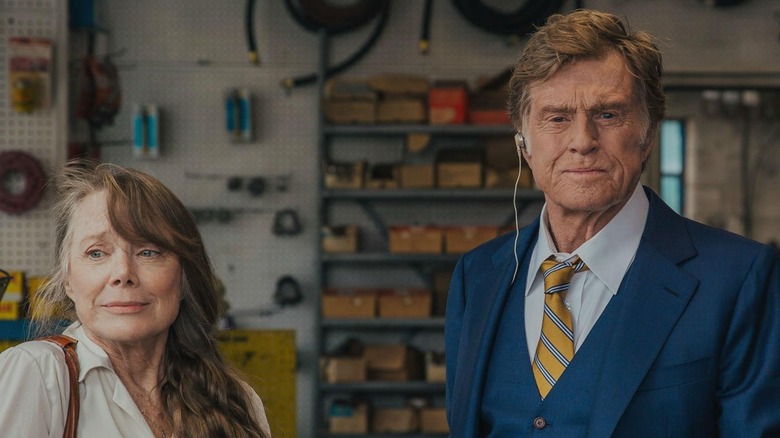
Over time, the heist genre grew very popular, thanks in part to the legendary Robert Redford. Redford starred in many iconic capers, including "Butch Cassidy and the Sundance Kid," "The Sting," and "Sneakers." In 2018, Redford returned to the genre that helped make him famous with the heartwarming crime comedy "The Old Man & the Gun." The film, which may feature Redford's final starring role, is a fitting tribute to his career; the film even includes footage from some of Redford's older films in the flashback sequences.

"The Old Man & the Gun" was loosely inspired by the amazing true story of Forrest Tucker, a career criminal who became famous for repeatedly escaping from prison. Tucker's story was chronicled in David Grann's 2003 article for The New Yorker. Although he robbed many banks and escaped from prison 18 times during his lifetime, Tucker always presented himself as a gentleman, and his victims always seemed to remember his kind nature.

In "The Old Man & the Gun," Redford delivers one of the best performances of his entire career, which is no small feat considering his filmography. In his old age, Tucker doesn't want to slow down, but he finally finds a reason to consider retiring. After a heist, Tucker pulls over to help a woman stuck on the side of the road. Jewel (Sissy Spacek) is charmed by his friendliness, and Tucker begins to fall in love with her. However, police detective John Hunt (Casey Affleck) is determined to track Tucker down, leading Tucker and Hunt to realize they have more in common than they initially realized.

The Trust
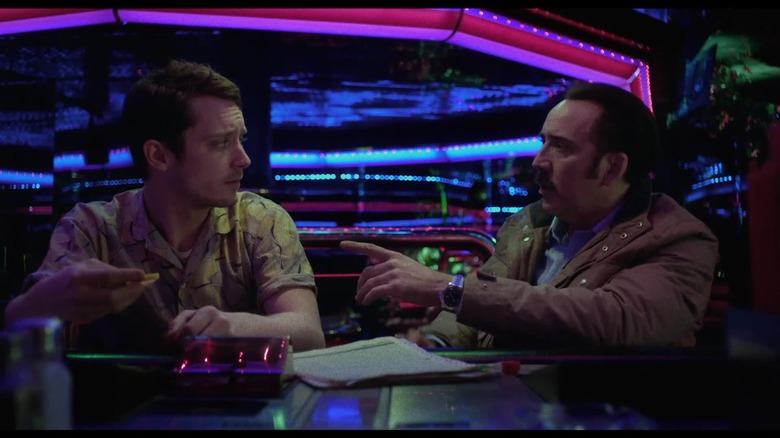
Nicolas Cage may be one of the best actors of his generation, but he's also one of the most inconsistent. Even though Cage starred in many blockbusters and awards contenders in the 1990s, he also had very public financial difficulties in the 21st century. As a result, Cage started appearing in low quality action, crime, and thriller films to pay off his bills. Cage has stated that he doesn't regret appearing in any of these projects, and claims that he has never "phoned it in." Still, even if Cage is proud of his work, a lot of these films are borderline unwatchable.

On the surface, "The Trust" looks like one of the countless other direct-to-video Cage movies. However, it's a surprisingly self-aware and dark crime thriller. "The Trust" takes advantage of Cage's reputation, and the actor turns in a playfully over-the-top performance as corrupt police Lieutenant Jim Stone, who decides to rob a safe that contains $200,000 in cash. Jim recruits his protege, Sergeant David Waters (Elijah Wood), to help him pull off the heist. However, Davis is uncomfortable with breaking the law, and the pair quickly get in over their head when the plan goes horribly wrong.

By introducing a more strait-laced character to interact with Cage, "The Trust" balances realism and comedy. The hilarious chemistry between Cage and Wood makes the film's moments of extreme violence even more shocking. If you've ever wanted to hear Cage quip "Here's the drill" while using an actual drill, then "The Trust" is the movie for you.

No Sudden Move
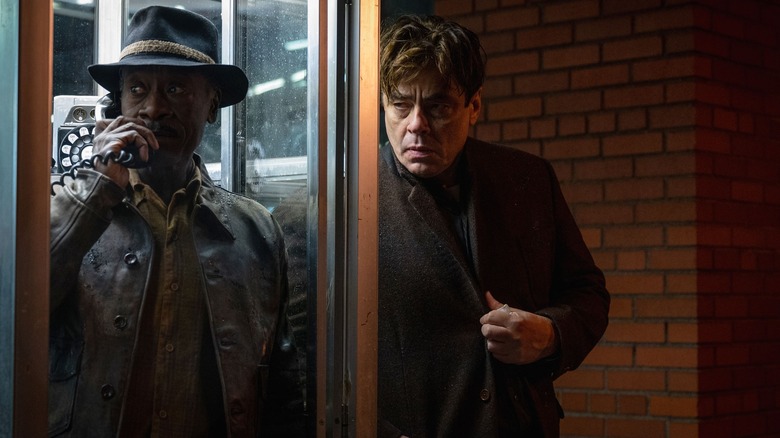
Steven Soderbergh has done more for the heist movie than any other filmmaker working today. In addition to the "Ocean's" films, Soderbergh also helmed classics like "Out of Sight," "Logan Lucky," and "The Informant!" In 2021 Soderbergh returned to the genre with the historical thriller "No Sudden Move," which explores race relations in the 1950s and examines what drives desperate characters to pull off a daring heist.

"No Sudden Move" follows an eccentric band of robbers who must work together to determine why they are hired. Detroit gangsters Curt Goynes (Don Cheadle), Ronald Russo (Benicio del Toro), and Charley (Kieran Culkin) are hired by Doug Jones (Brendan Fraser) to threaten accountant Matt Wertz (David Harbor). Goynes and Russo tell Wertz that, unless he gives them critical documents belonging to his employer, General Motors, they will kill his family. Wertz reluctantly complies. Charley attempts to kill Wertz's family anyway, and Goynes is forced to kill Charley. Goynes then discovers that the heist was a set up, and that the documents that Wertz gave them are fake.

After police detective Joe Finney (Jon Hamm) starts digging into the story, Goynes, Russo, and Wertz are all forced to go on the run. The performances from the entire cast, many of whom are playing against type, are excellent. Fraser isn't necessarily known for playing villains, but he gives a menacing performance here. As always, Soderbergh does a great job at capturing the time period's small historical details, too.

Now You See Me
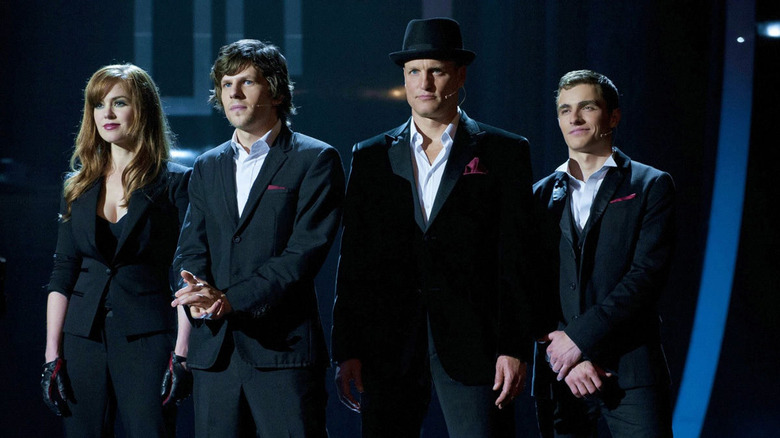
The 2013 crime thriller "Now You See Me" adds a fun new element to the heist movie formula: magic. The film centers on a group of magicians who act as Robin Hood-esque thieves who steal money from the upper classes. Robbers Danny Atlas (Jesse Eisenberg), Merritt McKinney (Woody Harrelson), Henley Reeves (Isla Fisher), and Jack Wilder (Dave Franco), who go by the stage name "The Four Horsemen," perform elaborate robberies during their stage shows.

As a result, FBI agent Dylan Rhodes (Mark Ruffalo) is desperate to track them down, and recruits ex-magician Thaddeus Bradley (Morgan Freeman) to assist him in his hunt. After retiring from the stage, Thaddeus started a career as a professional magic defrauder, exposing other magicians' tricks. The Horsemen are funded by insurance salesman Arthur Tressler (Michael Caine). However, they expose Tressler's corruption during one of their shows, and reveal that Arthur has been stealing money from his clients.

In addition, the Horsemen take orders from a mysterious group of elite magicians  known only as "the Eye." As Thaddeus and Arthur close in, the Horsemen search for the mastermind who has planned out all of their operations; along the way, they make a shocking discovery about one of the Eye's members, a twist that completely redefines the entire film.

The Taking Of Pelham 123

When a story has already been told many times, a remake has to work hard to justify its existence. For example, the 1974 film "The Taking of Pelham 123" is a classic heist thriller based on Morton Freedgood's 1973 novel of the same name, which also inspired a television adaptation in 1998. Does that leave any room for something new to say? Scott's 2009 remake of the original film certainly makes a compelling argument that it does; while the film homages the previous adaptations, it doesn't feel indebted to them in the slightest.

Here, Denzel Washington stars as Walter Garber, a hardworking subway dispatcher for New York's Metropolitan Transportation Authority. While working, Garber receives a threatening message from a man known only as "Ryder" (John Travolta), who has hijacked a train with his associates Bashkin (Victor Gojcaj), Emri (Robert Vatag), and Phil (Luis Guzman). Ryder tells Garber that, unless he receives $10 million in the next hour, he will begin executing the subway passengers. For every minute after the deadline passes, a hostage will die. This forces Garber to come up with a quick plan to get everyone out safely.

Scott deftly shows how all of New York's public officials work together to solve this crisis. The mayor (James Gandolfini) realizes that Ryder is trying to disrupt the city's financial infrastructure, but knows that saving the victims is more important than the cash. Even though NYPD Lieutenant Vincent Camonetti (John Turturro) has his doubts about Garber's loyalty, he ultimately helps track down Ryder.

The Place Beyond The Pines
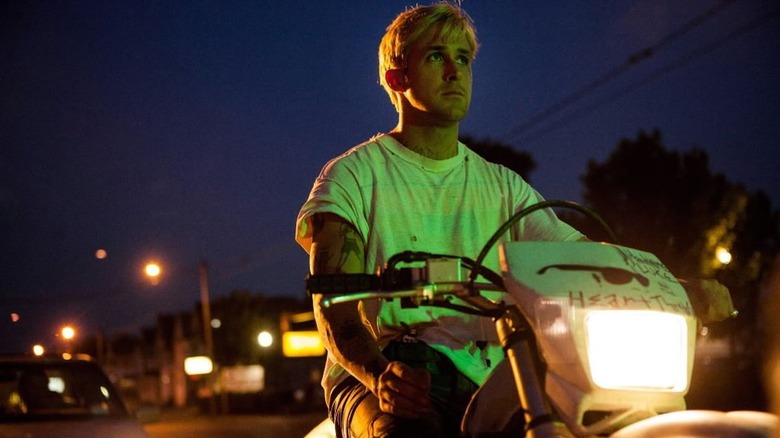
Derek Cianfrance's masterpiece "The Place Beyond the Pines" shows the long-term ramifications of a heist gone wrong. The film explores how two families' lives become intertwined after a violent incident during a robbery, and Cianfrance examines how guilt, trauma, and loss change over time. It's an overwhelming emotional experience, and its unusual structure distinguishes it from other heist films.

Ryan Gosling stars as Luke Glaton, a stunt motorcyclist with a criminal past. Luke's girlfriend, Romina Gutierrez (Eva Mendes), has just given birth, and Luke realizes that, in order to provide for his son, he will need to return to a life of crime. After Luke robs a series of banks, the strait-laced police detective Avery Cross (Bradley Cooper) tracks him down, fatally shooting Luke after an extended chase.

Avery has to live with the guilt of taking a life, and when a group of corrupt cops attempt to take the stolen money from the evidence locker, Avery struggles to maintain his integrity. He confides in his wife, Jennifer (Rose Byrne), and decides to dedicate himself to becoming a great father. Years later, Avery and Luke's sons become friends. However, A.J. Cross (Emory Cohen) and Jason Glaton (Dane DeHaan) do not know how their families are connected. After learning about the circumstances of his father's death, Jason decides to get revenge on the Cross family, but while he corners Avery, Jason cannot bring himself to kill someone.

The Brothers Bloom
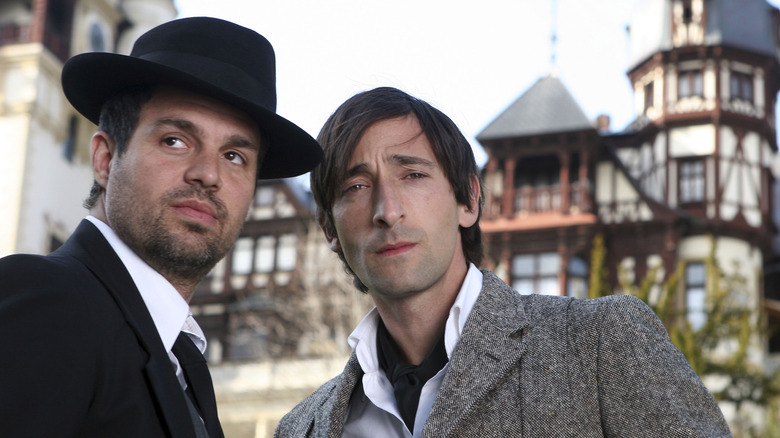
In some heist films, the goal is less important than the art of the con itself. This is certainly the case in Rian Johnson's hilarious 2008 crime caper "The Brothers Bloom," which is all about the performative nature of con artists. Two brothers, Bloom (Adrien Brody) and Stephen (Mark Ruffalo), have been pulling off hustles since they were children. However, although they've worked together for almost their entire lives, Bloom does not completely trust his brother. Stephen tends to exaggerate the truth, and often does not reveal his plans to Bloom until the last possible minute.

The Bloom brothers decide to rob the wealthy heiress Penelope Stamp (Rachel Weisz) of her fortune. However, Bloom discovers that Penelope couldn't care less about the money. Penelope has grown isolated because of her wealth, and when Bloom realizes that she's seeking excitement, he allows Penelope to join their team. This creates further tension between the brothers. Bloom feels like Stephen never acts sincerely, and with Penelope, Bloom can finally be emotionally vulnerable. He grows to resent his brother's deceptive nature.

Mark Ruffalo delivers one of the most hilariously eccentric performances of his career in "The Brothers Bloom." As the film goes on, Stephen's plots become increasingly ridiculous; every trick has another trick hidden inside of it. However, Johnson takes the romantic storyline very seriously. Both Bloom and Penelope feel like there is something missing in their lives, and working together allows both characters to find fulfillment.

The Good Liar
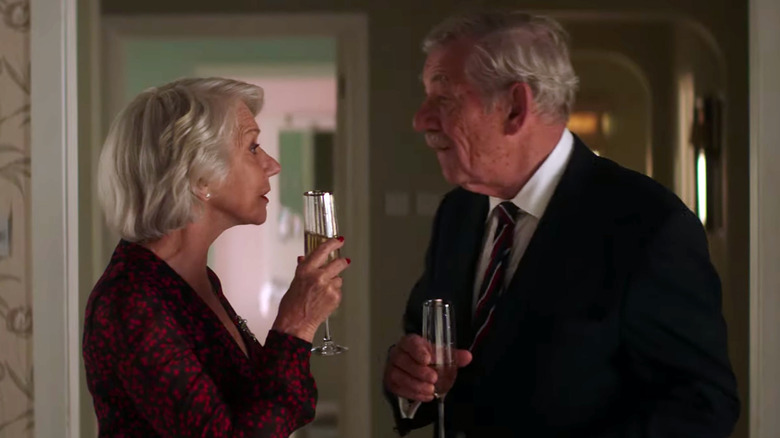
Any film that focuses on an intimate dynamic between only two characters requires great performances. Thankfully, "The Good Liar" just so happens to feature two of the most beloved actors of all time. Ian McKellen and Helen Mirren deliver some of their strongest work in recent memory in Bill Condon's 2019 crime thriller, which forces the viewer to question which character is really the mastermind. 

McKellen stars as Roy Courtnay, a lifelong swindler who looks for targets online. Although he looks like a kind-hearted old man, Roy reveals his brutality early in the film, mercilessly killing an assailant within the film's opening moments. Meanwhile, Roy has been scamming a wealthy widow, Betty McLeish, who he met through an online dating service. Although he is beginning to fall in love with Betty, Roy tries to get her to invest in an insurance scam. Betty seems to be completely ignorant of Roy's ulterior motives, despite the protests of her grandson, Steven (Russell Tovey).

After facing pressure from his employers to meet their monetary demands, Roy attacks Betty in her home. That's when she reveals that she has been manipulating him the entire time. Roy realizes that their history goes back much further than he realized; in the 1940s, Betty lived in Nazi Germany under her real name, Lili Schröeder, where Roy (whose real name is Hans Taub) sexually assaulted her. She's been plotting her revenge ever since.

Money Monster

The best heist movies give thieves compelling motivations to pull off the perfect crime. Even if the main characters are just looking for money, it's much more interesting if the film opens up a larger conversation about wealth disparity. As such, Jodie Foster's 2016 thriller "Money Monster" deconstructs the ways in which criminals are portrayed by the media. Why are people who are simply desperate depicted as monsters? The film also questions what extreme circumstances it would take for the upper class to actually listen to those in need. Although it doesn't condone violence, "Money Monster" does show how shocking headlines generate public interest.

George Clooney stars as the charismatic television host Lee Gates, who hosts a financial advice program called "Money Monster." Gates is very popular, but has received blowback from critics for catering to privileged viewers. While Gates is taping a live episode, robber Kyle Budwell (Jack O'Connell) breaks into the studio. Kyle takes the entire crew hostage, but forces them to keep filming, interrogating Gates live on air. After realizing that Kyle had invested in a doomed stock on his advice, Gates begins to open up about his faults.

Foster treats these serious issues with sensitivity. Ultimately, it's not Gates who is the villain; he is only the product of a corrupt system. Similarly, while he's presented in a sympathetic light, Kyle is not the hero of "Money Monster." In fact, a moment when his girlfriend, Molly (Emily Meade), berates him for stigmatizing their financial difficulties, may be the most powerful in the film.

21
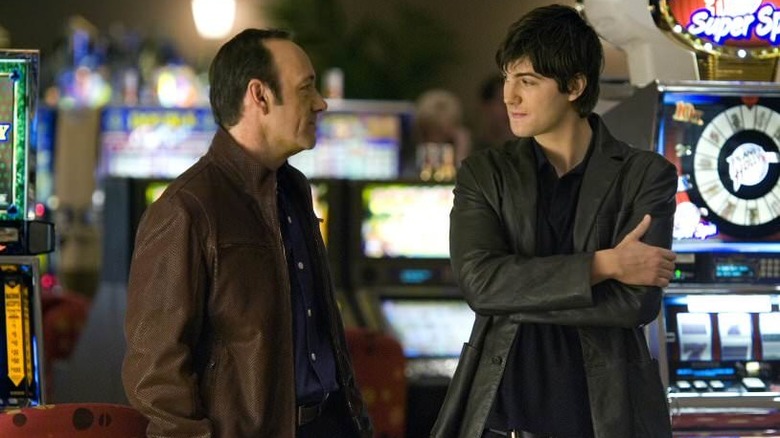
Counting cards while playing blackjack is technically against the rules, but it's not exactly the premise for an exciting heist movie. However, the 2008 thriller "21," which is based on Ben Mezrich's non-fiction novel "Bringing Down the House," has thrills to spare. "21" follows a group of students who strategically counted cards in Las Vegas. Even if you don't know how to play blackjack, director Robert Luketic tells a compelling story about the consequences of greed that anyone should find entertaining

The film's main character, Ben Campbell (Jim Sturgess), is based on real MIT student Jeff Ma. Ben has a genius-level IQ, but struggles to pay for his education. Although Jim passes the entrance exam for Harvard Medical School, the $300,000 tuition fee is too steep. However, Jim realizes that his brilliant mathematics skills could be put to a different use. Although he doesn't know how to play cards, Jim is invited to join the MIT blackjack team by his favorite teacher, Micky Rosa (Kevin Spacey).

After the blackjack team ventures out to Nevada, Jim quickly earns enough to pay for school. He becomes increasingly greedy, however, and decides to stay in Vegas to keep playing. Sturgess adeptly shows how Jim becomes corrupted by the gambling lifestyle. After Jim loses all of his winnings, Micky betrays him, and Jim decides to turn the tables on his former mentor and get revenge. And thus, the heist is on.

American Heist
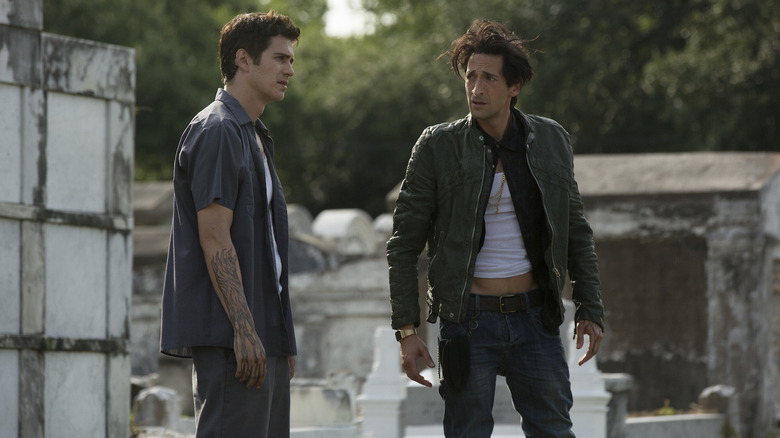
While the term "direct-to-video" usually has negative connotations, many VOD films are hidden gems. Sometimes, working on a scaled-back budget can be a benefit. The thriller "American Heist" is not a particularly original work; the film feels very similar to the crime films of Martin Scorsese and Michael Mann. Still, if you're going to steal, you might as well steal from the best.

In general, Hayden Christensen isn't given the credit he deserves. Just look at "American Heist," which features a very sympathetic performance from Christensen. His character, James Kelly, is an aspiring business owner who is trying to forget his criminal past. James had fallen into a life of crime because of the influence of his brother, Frankie (Adrien Brody). Unfortunately, James' plans to launch his own independent business are rejected, and he's forced to help Frankie pull off a robbery in order to save his life, making him confront a past he'd rather forget.

30 Minutes Or Less

Ruben Fleischer's 2011 dark comedy "30 Minutes or Less" is a hilarious parody of the heist movie genre. It is the ideal action-comedy, with just enough suspense to make the most exaggerated moments work. By giving all of the characters shallow motivations, "30 Minutes or Less" offers a welcome alternative to heist films that take themselves too seriously.

Pizza delivery driver Nick Davis (Jesse Eisenberg) has never had much ambition, but he prides himself on being able to deliver orders in less than 30 minutes (hence the title). However, Nick realizes that he can't be a slacker for the rest of his life after his roommate, Chet (Aziz Ansari), kicks him out of their apartment. Soon afterwards, when Nick tries to deliver a pizza, wannabe gangsters Dwayne Mikowlski (Danny McBride) and Travis Cord (Nick Swardson) kidnap him. Dwayne and Travis strap a bomb to Nick's chest, and order him to steal $100,000. 

Dwayne and Travis aren't exactly the brightest bulbs, though, and their hasty plan has some unforeseen consequences. It's no secret why: Although they pretend to know what they're doing, Dwayne and Travis are really just trying to impress their father-in-law Jerry, played by the late, great Fred Ward.

Triple 9
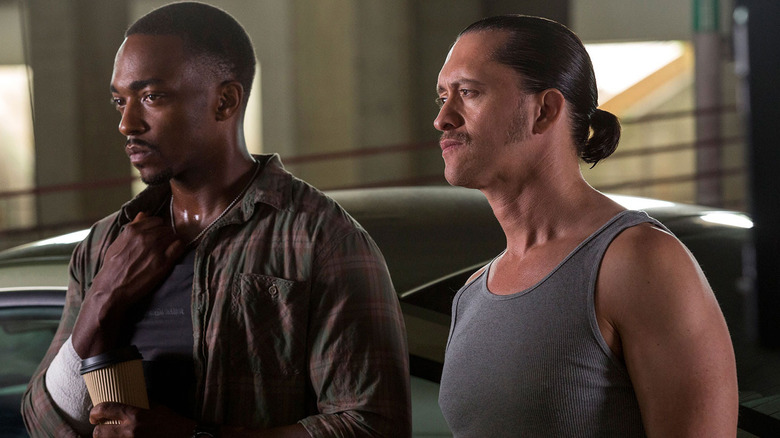
Who actually benefits from a heist? That's the question that the underrated 2016 crime thriller "Triple 9" has on its mind. The intense film is set on the corrupt streets of Atlanta, and follows a group of ex-Navy SEALs, corrupt cops, Russian gangsters, government authorities, and actual law enforcement officers who are all trying to earn a stake in a bank robbery. It's a lot; "Triple 9" contains more subplots and characters than most television shows.

Thankfully, the film benefits from a truly unbelievable cast. Casey Affleck stars as the Atlanta Police Detective Chris Allen, a wartime veteran called in to investigate the murder of a fellow officer. Chris is paired with the corrupt Detective Marcus Belmont (Anthony Mackie), who leads a criminal crew that includes the former Navy SEALs Michael Atwood (Chiwetel Ejiofor) and Russell Welch (Norman Reedus), ex-cop Gabe Welch (Aaron Paul), and dirty officer Franco Rodriguez (Clifton Collins Jr.).

Before long, Chris is in over his head. Atwood is taking orders from the Russian mob boss Irina Vlaslov (Kate Winslet), who is looking to exonerate her husband, and the only cop he can trust is his eccentric uncle, Jeffrey (Woody Harrelson).

The Great Train Robbery
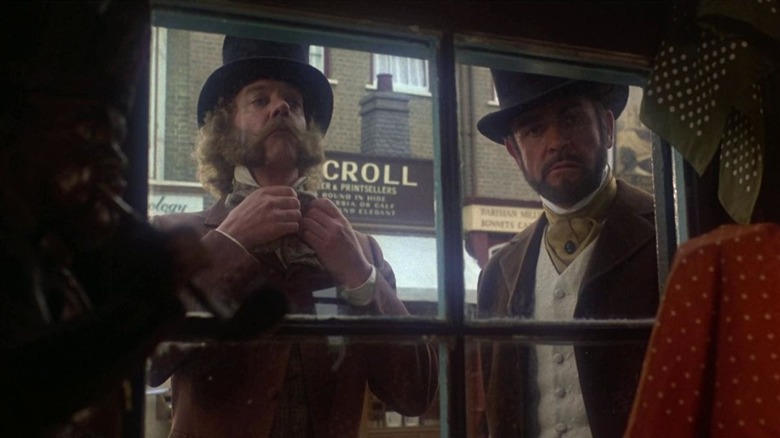
Michael Crichton is best known for sci-fi novels like "Jurassic Park" and its sequel "The Lost World," which were adapted into wildly successful films. However, Crichton was involved with adaptations of his work long before Steven Spielberg brought his dinosaur fantasies to life. In fact, in 1978, Crichton actually stepped behind the camera to direct "The Great Train Robbery," an adaptation of his 1975 novel of the same name. The film shares its title with the 1903 classic, which was one of the first heist films ever made.

"The Great Train Robbery" follows two charismatic London aristocrats who decide to steal a shipment of gold. The master thief Edward Pierce (Sean Connery) and the pickpocket Robert Agar (Donald Sutherland) quickly bond over their resentment of high society. Burglarizing a Folkstone train will certainly bring them monetary rewards, but Pierce and Agar are more interested in embarrassing the upper class. It's a rollicking good time, especially when Connery and Sutherland hilariously mock the stiff attitudes of the men they are stealing from.

The Score
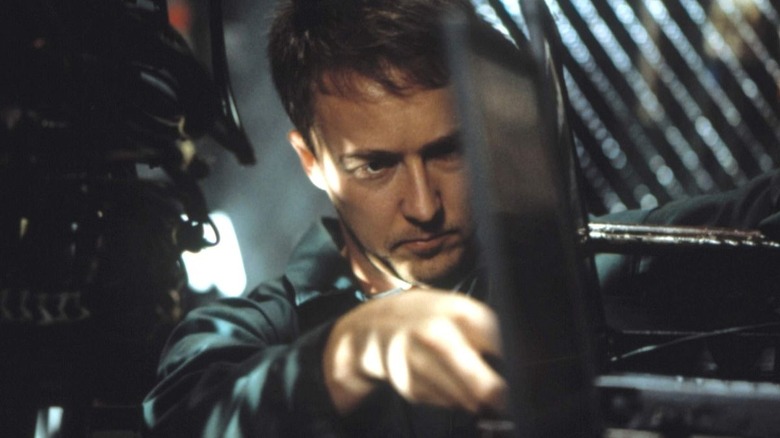
Frank Oz's 2001 crime thriller "The Score" brought together three generations of great actors. Robert De Niro stars as the master thief Nick Wells, who is trying to perform one last heist to pay for his retirement. A younger criminal, Jack Teller (Edward Norton), gives him details about an expensive artifact that is being stored in the underground basement of the Montréal Customs House. Nick reluctantly agrees to take Jack under his wing, and negotiates a deal with his longtime fence, Max (Marlon Brando), in exchange for control over the job.

Although the plot is relatively straightforward, the excellent performances elevate "The Score" above other heist films. It was Brando's final film, and in it he showed once again why he is one of the greatest movie stars of all time. De Niro delivers a noticeably restrained performance; Nick truly wants to leave his criminal past behind him. Finally, Norton does a great job chewing the scenery. Jack uses many different disguises during his jobs, and it's entertaining to watch Norton play all of the different characters.

Windfall
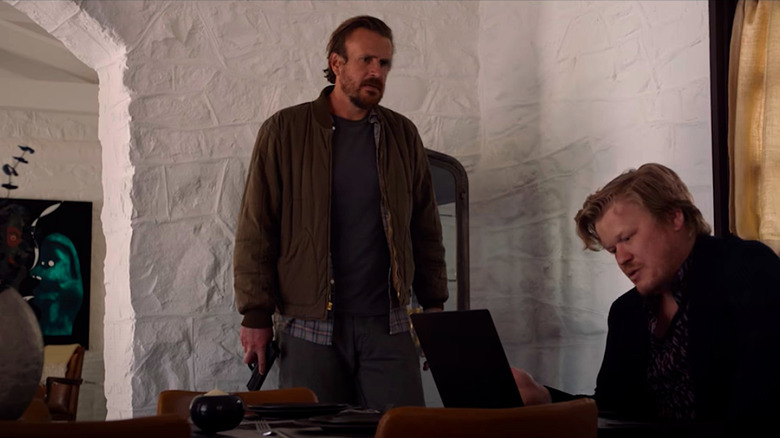
Wealth disparity is a major theme in heist films. Often, criminals are forced to steal in order to provide for themselves, and they often target those who have more than they need. The 2022 film "Windfall" allows two different social classes to have extended conversations. In this case, the crime has a silver lining — if the circumstances had been less extreme, perhaps these people would never have had a reason to talk to each other.

The film follows an unnamed robber (Jason Segal) who breaks into the home of a wealthy CEO (Jesse Plemons). Although the robber expects the house to be empty, the nameless tech magnate has just returned from a vacation with his wife (Lily Collins). Confused and unprepared, the robber decides to hold them hostage and forces them to meet his demands. Initially, their conversations are superfluous and slightly amusing. However, the film takes a dark and violent turn during the last act, showing that the cycle of classist discrimination is doomed to continue.

Before The Devil Knows You're Dead
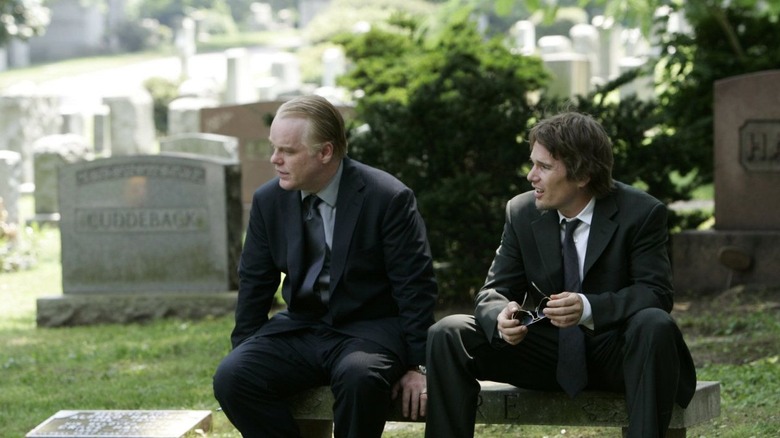
In most heist films, things don't go as planned. That's what makes them so exciting. For example, the 2007 crime thriller "Before the Devil Knows You're Dead" explores the devastating aftermath of a particularly gruesome crime gone wrong. The film is told in a nonlinear fashion by legendary filmmaker Sidney Lumet, and serves as a gripping study of guilt, loss, and familial relationships.

"Before the Devil Knows You're Dead" follows two brothers, Andy (Philip Seymour Hoffman) and Hank Hanson (Ethan Hawke), who decide to rob their parents' jewelry store. Hank, however, is uncertain about Andy's plan. Andy has always resented their father, Charles (Albert Finney), and although Andy and Hank plan to execute the burglary without any violence, the heist results in the death of their mother, Nanette (Rosemary Harris). They are then forced to live with their shared guilt, which is further complicated by the demise of an accomplice, Hank's affair with Andy's wife, Gina (Marisa Tomei), and Charles' dogged attempts to uncover the truth behind the crime.

Killing Them Softly
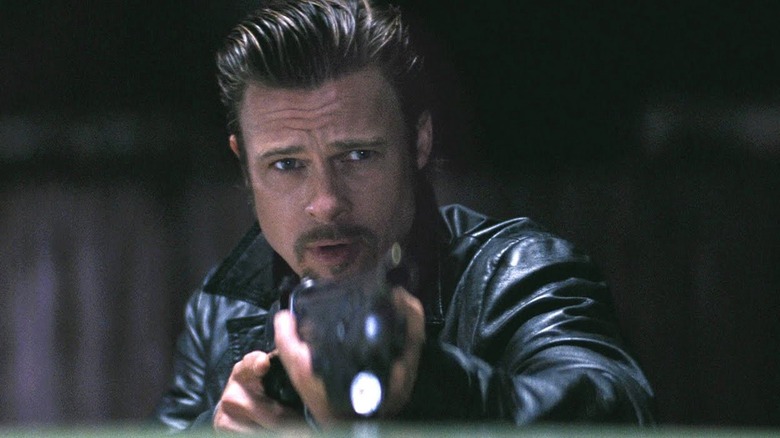
Andrew Dominik's 2012 crime thriller "Killing Them Softly" was not well-received when it was first released. It was actually one of the rare films to earn an "F" CinemaScore from audiences. Although viewers may have expected a straightforward heist film, "Killing Them Softly" is a deeply symbolic examination of the lasting ramifications of the '00s financial crisis. Dominik even sets the story during the 2008 United States presidential election to make his point clear.

"Killing Them Softly" follows the dim-witted robbers Frankie (Scoot McNairy) and Russell (Ben Mendelsohn), who rob Markie Trattman's (Ray Liotta) Mafia-fronted card game, disrupting the mob's entire financial infrastructure. Prior to the crime, the mob had chastised Markie for staging a fake robbery at one of his games, and the gangsters now suspect that Markie is pulling off another con. So, the mob dispatches the remorseless hitmen Jackie (Brad Pitt) and Mickey (James Gandolfini) to kill Markie, Frankie, and Russell.

Read this next: The 14 Best Noir Movies Ranked

The post 20 Underrated Heist Movies You Should Check Out appeared first on /Film.

02 Jun 21:57

[Movie Review] UNHUMAN

by Sarah Musnicky

[Movie Review] UNHUMAN
UNHUMAN l Courtesy Blumhouse & Epix
When you hear that there is a film that’s The Breakfast Club meets zombies, it’s an immediate investment. The idea is a match made in chaos. Who better to deliver audiences said chaos than writer/director Marcus Dunstan and co-writer Patrick Melton? Known for their penchant for blood, guts, and their particular brand of humor, they have come to deliver their latest horror project, UNHUMAN. From the very beginning, with an eyebrow-raising mention of an Afterschool Special, to the very end with its end credits scene, viewers are taken on an entertaining ride, despite its bumps.

UNHUMAN establishes the dynamics and personalities of some of its core characters before the madness begins. Audiences are introduced to Ever (Brianne Tju), who is struggling to figure out who she is as a person. With high school reinforcing our social need to be in easily identifiable categories, her struggles are relatable, though a bit hard to buy into given Tju’s less convincing performance. While Ever is stuck in a quiet stasis, her best friend (albeit the easily forgettable) Tamra (Ali Gallo) is one of the cool kids and has found her tribe. Ever struggles with this fact as well, which all becomes heightened when their school field trip takes a left turn or, well, a splat.

As shenanigans hit the bus roof, our core group of characters bands together to figure out how best to survive the scenario. This presents us with our high school stereotype characters: the cheerleader (Lo Graham), the jock (Uriah Shelton), the nerd (Drew Scheid), and the outcast (Benjamin Wadsworth), with some interesting filler characters in the mix. While some of the characters suffer from being less fleshed out than others, viewers get a chance to learn more about them. There is more to see beyond the surface and, in high periods of stress, it’s all the easier to see them for who they really are. Here is where we can see how well Dunstan and Melton know how to take advantage of the audience’s expectations.

As a whole, UNHUMAN dives into the familiar. It hits those well-established beats that will remind of those ’80s high school coming-of-age classics. Right down to the dialogue reading as more grown-up than hitting current youngin’ vernacular. Kids these days and all that jazz. That said, there’s enough delicious horror fun infused into the script that keeps it fresh. By the halfway point, the story itself takes a turn, with the final act serving up a huge heaping mass of chaos that had me giggling from the ridiculousness. While cleverly silly, the film still possesses a dash of seriousness with its thorough line addressing the topic of bullying and its impact.

One of the things that the world is in dire need of is silliness. UNHUMAN has it in spades, making it a welcome form of escape. While the gore elements are paired down when taking into account Dunstan’s and Melton’s previous projects, there’s enough blood to go around for horror fans. In general, the film would be a good gateway horror film for newbs to the genre. It doesn’t take itself too seriously, has plenty of action, and addresses the important topic of bullying as well as identity. If you can look past its writing flaws and a couple of the performances, it makes for a great escape.

UNHUMAN will be available for digital purchase on June 3, 2022, from Paramount Home Entertainment.

The post [Movie Review] UNHUMAN appeared first on Nightmarish Conjurings.

02 Jun 20:02

The Tastiest Way to Keep Fish From Sticking to the Grill

by Claire Lower

Grilling a whole fish is an impressive, if slightly intimidating, display of grilling prowess. It’s not complicated—put the fish on the grill and cook until flakey—but the process is rife with potential missteps that can make would-be fish griller a little skittish. The delicate skin can stick to the grates and tear,…

Read more...

02 Jun 20:00

15 Marvel Animated Movies That Are Actually Worth Watching

by Joe Garza

The Marvel Cinematic Universe may be getting all the recognition as the definitive onscreen adaptations of Marvel's classic comic book characters, but there have been some terrific animated Marvel films, some of which were made before Robert Downey, Jr. suited up as Iron Man in 2008. With a wide variety of animation styles, talented voice casts, and adaptations of beloved comic book storylines, there's something for everyone in the universe of animated Marvel movies.

While it's always a treat for Marvel fans when MCU films and TV shows reference one another, one of the advantages that many previous Marvel animated movies had over the current MCU model is that they were largely self-contained, making them easy for casual viewers to dive into and not have to worry about continuity. It seems that most future animated Marvel projects will be part of the larger MCU, but it's still worth checking out earlier iterations of your favorite heroes, which is why we've created this guide of 15 Marvel animated movies that are worth watching.

Hulk: Where Monsters Dwell (2016)

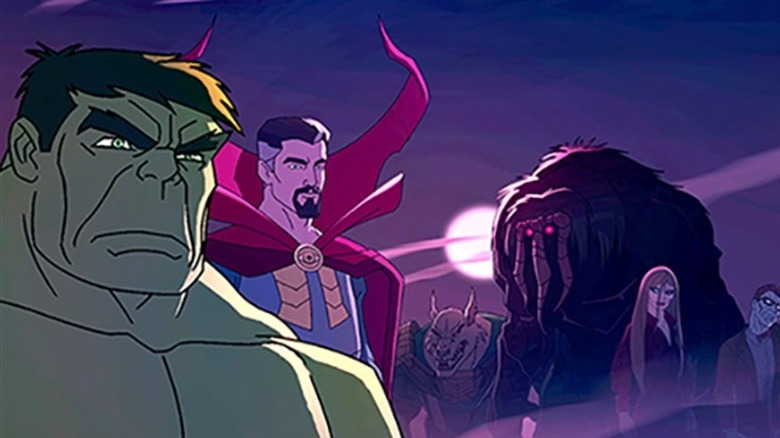
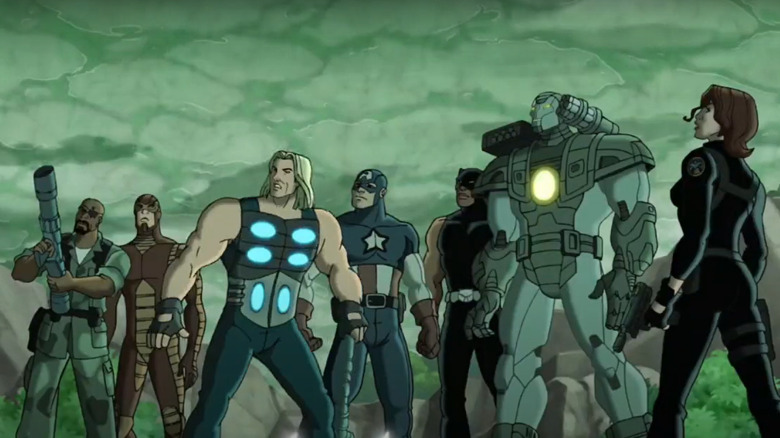
Who DOESN'T love good ol' fashioned Marvel team-up? In "Hulk: Where Monsters Dwell," Jade Jaws joins the Sorcerer Supreme to contain a horde of teens-turned-monsters who're taking over New York City on Halloween night. To get to the bottom of this bizarre mystery, Doctors Strange and Banner must travel to the Dream Dimension and confront Nightmare, who has some nefarious plans of his own. To make sure their physical forms remain safe in the real world, they hire as their bodyguards a terrifying lineup of the Howling Commandos that includes a zombified Jasper Sitwell, Vampire by Night, Man-Thing, Werewolf, and Minotaur.

Part of what makes any Marvel story so fun — whether it's a comic book, film, or TV show — is its connections to the wider Marvel Universe. While this is primarily a Hulk flick, the inclusion of Doctor Strange and the haunted heroes of the Howling Commandos makes "Hulk: Where Monsters Dwell" an absolute blast. Oh, and wait until you get a load of the way Iron Man's Hulkbuster armor is used here.

Marvel Rising: Secret Warriors (2018)

Being a superhero is tough enough, but it's even harder when you're a teenager with homework and strict parents. That's what Kamala Khan has to deal with in "Marvel Uprising: Secret Warriors." Being an Inhuman with the ability to shapeshift, Kamala idolizes Captain Marvel and has modeled herself after her by fighting crime in her spare time, much to her mother's frustration. However, when Hala the Accuser launches a scouting mission to recruit Inhumans for his Kree army, Kamala may have to break curfew to stop him. Joining her are fellow up-and-coming heroes Squirrel Girl, America Chavez, Patriot, and others.

There's something incredibly wholesome about watching young heroes aspire to the greatness of their more experienced counterparts. "Marvel Uprising: Secret Warriors" does a terrific job spotlighting lesser-known Marvel characters, and even features appearances from Captain America, Captain Marvel, and Quake (with "Agents of SHIELD" actress Chloe Bennet reprising her role here). While primarily aimed at child audiences, this animated movie also has plenty for older Marvel fans to enjoy.

Iron Man And Captain America: Heroes United (2014)

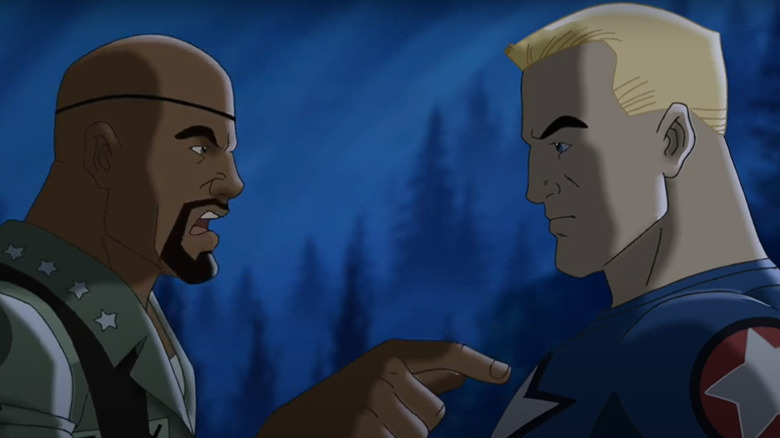
There's always been a bit of a rivalry between Iron Man and Captain America — both on the page and the screen — but they've always respected each other and put aside their differences to work together when the world needed saving. In this animated movie, the Red Skull sends Taskmaster to steal some tech from Tony Stark and to kidnap Cap as part of a larger plan to take over the world. Iron Man must now rescue his frenemy and stop the Red Skull from carrying out his evil scheme.

"Iron Man and Captain America: Heroes United" is carried by the wonderful chemistry between the two heroes as they continually compete to show up each other, which only makes the moments of them fighting together as a team all the more satisfying. Also, be sure to keep an eye out for a guest appearance from another Avenger. Hint: he's big, mean, and green!

Avengers Confidential: Black Widow & Punisher (2014)

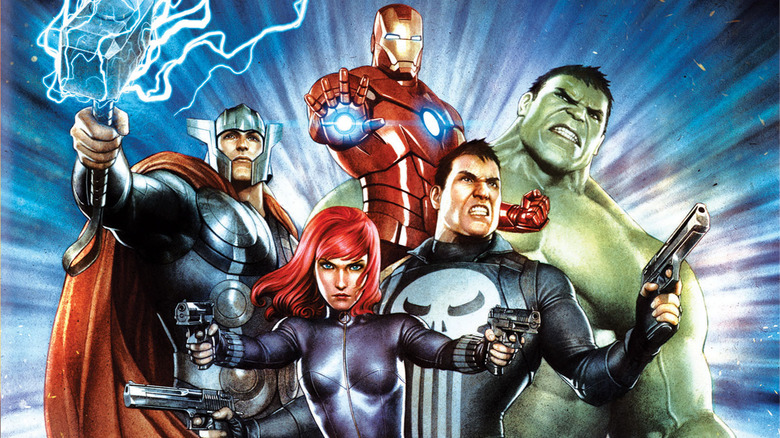
The Punisher has always been one of Marvel's most brutal and violent characters, and while Black Widow isn't quite as bleak as him, she has a backstory that's still quite dark and tragic. Bringing two of the more grounded and realistic Marvel characters together is a no-brainer, and the pairing works remarkably well in "Avengers Confidential: Black Widow & Punisher," as they both operate in moral gray areas. This movie features the two being ordered by S.H.I.E.L.D. director Nick Fury to prevent the terrorist organization Leviathan from selling stolen S.H.I.E.L.D. tech and weapons on the black market. It's a job that's a little too dirty for Captain America and Iron Man, and one that's best suited for a spy and a vigilante.

"Avengers Confidential: Black Widow & Punisher" is perfect for Marvel fans who want something a little more grim and gritty with action scenes that hit harder than the usual animated fare. While some bigger and more brightly colored heroes make guest appearances, this flick is more focused on the antiheroic side of Marvel.

The Invincible Iron Man (2007)

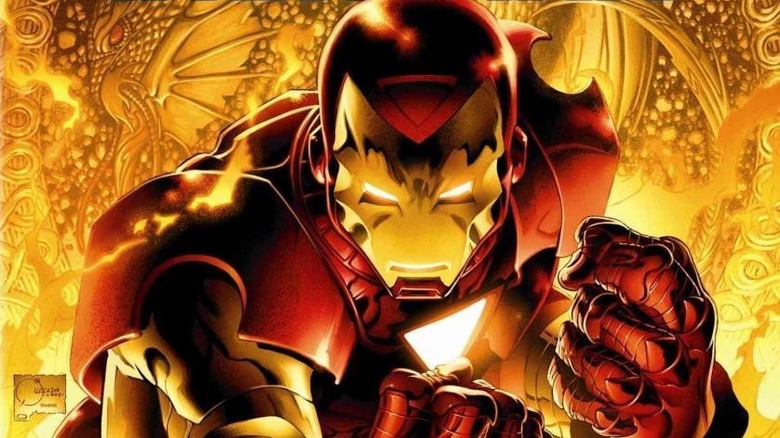
"The Invincible Iron Man" offers a different yet still riveting origin story for how billionaire industrialist Tony Stark became the crimson-and-gold Avenger. During the excavation of an ancient Chinese temple that accidentally results in the resurrection of the infamous Mandarin, Tony's best friend James "Rhodey" Rhodes is kidnapped by the Jade Dragons and held captive in China. When Tony arrives, he's critically injured and is barely saved by Rhodey's military medic background. Tony must utilize his genius intellect to forge a suit of armor to not only escape captivity but to take down the Mandarin and his henchmen, the Elementals.

This animated film is packed with great action scenes, stylish animation, and strong voice acting. While the changes to the Iron Man mythos may not sit well with purists, it stays faithful to what makes Tony Stark such a compelling character, namely how his arrogance clashes with his desire to be a true hero.

Next Avengers: Heroes Of Tomorrow (2008)

"Next Avengers: Heroes of Tomorrow" serves up a fun "What If...?"-style take on the Avengers. In an alternate timeline, most of the Avengers have been killed in a brutal fight against Ultron, leaving Iron Man to take the heroes' superpowered children to a secret haven and raise them. The Avengers' offspring in this film include Black Widow and Captain America's son James Rogers, Giant-Man and Wasp's son Henry Pym Jr., Black Panther and Storm's son Azari, and Thor and Sif's daughter Torunn. When Iron Man is captured in his attempt to take down Ultron, the next generation of Avengers must now rise up and live up to the legacy of their parents to save the day.

Killing off most of the Avengers may seem like an unusually dark idea for an animated Marvel film, but it paves the way to set up the future of Earth's Mightiest Heroes. The younger team is a delight to watch as they struggle to fill in the massive shoes of their parents, perfectly blending humor and heart.

Thor: Tales Of Asgard (2011)

"Thor: Tales of Asgard" is a wonderful romp through the early years of the legendary god of thunder and his quest to prove himself to his father Odin. The movie follows a young Thor and his half-brother Loki as they embark on an adventure with the Warriors Three to Jotunheim to claim the Sword of Surtur. While Thor is more than brave enough to endure the dangers he encounters on this journey, it's going to require more than courage for him to become a true hero as he will face difficult moral decisions that challenge his character.

It will always be fun watching Thor and Loki pair up and go on a wild expedition together. "Thor: Tales of Asgard" is not a direct prequel to the MCU "Thor" films, but it does a nice job chronicling his formative years as a powerful yet brash young man that is reminiscent of his character arc seen in the feature films.

Ultimate Avengers: The Movie (2006)

This modernized version of The Avengers follows Steve Rogers/Captain America's journey from legendary WWII hero to being trapped in ice during his final mission through his reawakening in the present era and subsequent recruitment into General Nick Fury's Project Avenger team. Cap isn't the only recruit, though: there's also Ant-Man, Wasp, Iron Man, Thor, and Black Widow, and they're going to need all the help they can get to prevent an invasion from the alien race known as the Chitauri. Each of these heroes has conflicting personalities that make team work hard to achieve. Will they be able to hold off on fighting each other long enough to fight the real enemy?

"Ultimate Avengers: The Movie" is based on the beloved "Ultimates" series created by writer Mark Millar and artist Bryan Hitch. This adaptation wisely omits some of the uncomfortable elements from the source material, making it more suitable for younger fans while still retaining much of the sharp wit and pulsing action that made the comic such a refreshing take on Earth's Mightiest Heroes.

Ultimate Avengers II: Rise Of The Panther (2006)

In this sequel to "Ultimate Avengers: The Movie," the Chitauri return in another attempt to invade the Earth, this time by focusing their attacks on Wakanda. Joining the Chitauri in their battle is Herr Kleiser, an alien shapeshifter who once fought against Captain America back during WWII. Black Panther's father T'Chaka is killed in the assault, prompting him to seek the help of Cap and the other Avengers, who have a score to settle for the Chitauri's previous attack on the planet.

"Ultimate Avengers II: Rise of the Panther" is just as good as (if not better than) its predecessor. Black Panther makes a worthy addition to the animated Marvel universe, and the inclusion of Wakanda does a nice job of building out this world. The sequel ups the ante when it comes to action and humor, but also never skimps on the satisfying character interactions amid the explosions and jokes.

Doctor Strange: The Sorcerer Supreme (2007)

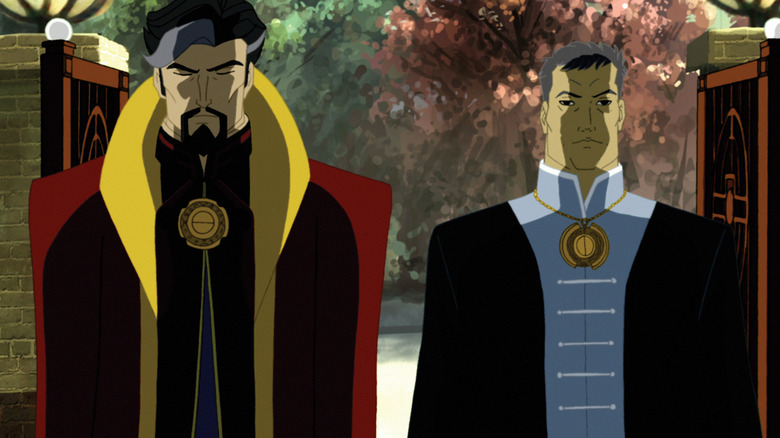
Before Doctor Strange would go on to be played by Academy Award-nominated actor Benedict Cumberbatch in big-budget blockbusters, the character was fairly unknown to those not familiar with the comics, so it's nice to see him get some love in his own animated film. In "Doctor Strange: The Sorcerer Supreme," Stephen Strange is a brilliant yet arrogant surgeon who, after experiencing an ominous vision while driving, gets into a car accident that renders his hands irreparably damaged, effectively ending Strange's medical career. However, he soon embarks on a journey to face his real fate: to become a powerful sorcerer and protect the world from a supernatural evil that threatens to tear into its reality.

"Doctor Strange: The Sorcerer Supreme" is a fairly faithful adaptation of the character's origin, and with a strong voice cast, great animation, and a solid plot, the movie is a must-watch for fans of the more magical side of Marvel.

Planet Hulk (2010)

"Planet Hulk" sees the Illuminati — a group of superheroes comprised of Iron Man, Doctor Strange, Mister Fantastic, and Black Bolt — who are tired of dealing with the Hulk's rampages and the damage they cause. Thus, they send him into space so that he may no longer endanger those who get in the way of his rage. The Hulk eventually lands on the planet Sakaar, whose inhabitants immediately force the green giant to participate in battles with other powerful beings for their entertainment. After proving his mettle in these brutal fights, it's believed that the Hulk is the one who will bring down Sakaar's tyrant leader, the Red King.

This animated movie is a stellar adaptation of the beloved storyline from the comics (which also served as a partial inspiration for "Thor: Ragnarok"). Hulk's portrayal here is surprisingly layered and is depicted as more than just a mindless beast destroying everything in his path. With awesome animation, an excellent score, and tons of smashing, "Planet Hulk" ranks among the best of the animated Marvel movies.

Iron Man: Rise Of Technovore (2013)

"Iron Man: Rise of Technovore" is an awesome anime take on the crimson-and-gold Avenger. When War Machine is apparently killed by an enigmatic yet high-tech enemy, Iron Man vows to find out who killed his friend and avenge him. With help from Pepper Potts, Tony Stark learns that A.I.M.'s (Advanced Idea Mechanics) latest experiments involve fusing organic matter with advanced tech as part of a new weapon they're building. However, Iron Man's search for vengeance clashes with Nick Fury and S.H.I.E.L.D., who need him for their own investigation into what A.I.M. is up to.

Japanese animation studio Madhouse Inc. produced this movie and gave it a style that sets it apart from other animated Marvel flicks. The stunning animation is a feast for the eyes, and multiple settings make the world more expansive, almost reminiscent of a James Bond film. Marvel fans will also thrill at the various other characters who drop in, including Hawkeye, Black Widow, the Punisher, and others.

Hulk Vs. (2009)

In this two-part movie, the Hulk takes on a duo of Marvel's most dangerous heroes: Thor the god of thunder, and the feral Wolverine. "Hulk Vs. Thor" sees the Asgardian god's crafty step-brother Loki join forces with the equally manipulative Enchantress to pit the Hulk against Thor during a time when Odin is in a deep regenerative sleep and Asgard's defenses are at their weakest. Meanwhile, in "Hulk Vs. Wolverine," the Hulk has been causing considerable damage in the wilderness of Canada, prompting the country's elusive government branch Department H to send Wolverine after ol' jade jaws and take him down.

Who could say no to the Hulk duking it out with Thor and Wolverine? Both parts feature splendid animation and a terrific score that perfectly captures what makes these characters so beloved among comic book fans. Did we forget to mention the nonstop action? When the fists, claws, and hammers start flying, you can bet you're in for a special superheroic treat.

Big Hero 6 (2014)

Taking place in the fictional San Fransokyo, "Big Hero 6" tells the story of the teenage robotics genius Hiro Hamada who, after a terrible accident takes his older brother's life, comes across his "nurse" robot project called Baymax. They form an adorable bond together and must join forces with other robotics nerds to form the super-team Big Hero 6 to track down a mysterious villain who's attempting to take over San Fransokyo using technology that Hiro invented himself.

This Academy Award-winning animated film may deviate quite a bit from the comic book source material and doesn't feature any Avengers. However, that still doesn't mean you should put off watching this excellent Disney interpretation of some of Marvel's more eccentric characters. There's a ton of humor and action to entertain audiences of all ages, and features plenty of heart without being too sappy. "Big Hero 6" was popular enough to be followed by a TV series as well as a Baymax-centered Disney+ spinoff series.

Spider-Man: Into The Spider-Verse (2018)

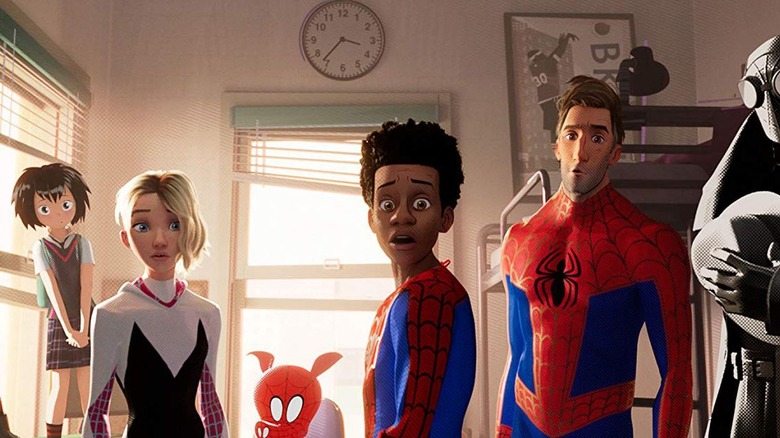
Inspired by the "Spider-Verse" storyline from the comics, "Spider-Man: Into the Spider-Verse" follows the young Miles Morales who deals with the usual problems that come with being an intelligent teenager until his life is turned upside down when he's bitten by a radioactive spider, giving him new superpowers. When the villainous Kingpin activates an experimental collider, alternate universe Spider-Men and Women appear in that universe and must find a way back home. Miles may only be a teenager, but with his new powers and countless lives in his hands, he must learn the responsibilities of a superhero.

It's sort of cheating to declare that "Spider-Man: Into the Spider-Verse" is, without a doubt, the best Marvel animated film, as it was produced by a major studio with a massive budget with an A-list voice cast. There's no other way around it, though, given the movie's jaw-dropping animation, wildly entertaining story, and a perfect mix of humor, heart, and action. It's nearly impossible to top, although the upcoming sequel has the best chance of doing that. With credentials like these, it's no wonder the film won the Oscar for "Best Animated Feature Film."

Read this next: Every Pre-MCU Marvel Movie Ranked

The post 15 Marvel Animated Movies That Are Actually Worth Watching appeared first on /Film.

02 Jun 18:25

Next-Gen NVIDIA & AMD GPUs Expected To Stimulate Cooling Solution Demand With More Robust Designs

by Jason R. Wilson

Next-Gen NVIDIA & AMD GPUs Expected To Stimulate Cooling Solution Demand With More Robust Designs 1

According to a report published by DigiTimes, Taiwan's cooling component suppliers foresee excellent prospects for their wares for the second half of 2022 with the arrival of next-gen GPUs from NVIDIA and AMD. The periodical about the semiconductor industry says that newer graphics cards will boost the market for high-performing cooler systems. Premium parts with the same materials and meticulous engineering deliver more significant margins, which is a feeding ground for suppliers.

Intricate & Premium cooling systems will be required for next-gen AMD & NVIDIA GPUs

With the next generation of graphics cards from NVIDIA and AMD being cooked up for the second half of this year, companies and some consumers are wondering how to keep their graphics cards safe from overheating. For instance, AMD plans to release an extensive Radeon RX 7000 series line with the flagship Navi 31 GPUs to offer 12,288 Stream Processors and 48 Workgroup Processors for the RDNA 3 architecture. The offering from AMD will be over two times more streaming processors than the existing RDNA 2 architecture.

On the other hand, NVIDIA will be releasing the Ada Lovelace 'GeForce RTX 40' series, where the premium graphics cards will feature the AD102 GPU with up to 18,432 cores on the GPU, not counting RT or Tensor cores. Again, with the expectations of more minor size chips packing higher power — in this case, 600 W with an area of 600 mm^2 or less — proper heat dissipation will be a crucial issue.

Next-Gen NVIDIA & AMD GPUs Expected To Stimulate Cooling Solution Demand With More Robust Designs 2

Auras Technology and Sun Max, two cooling system design companies, sat down with DigiTimes to discuss the two new graphics card series from both NVIDIA and AMD and how their cooler design expertise among many others, will be more required in the coming years.

Auras Technology manufacturers vapor chambers for premium graphics cards. The company's graphics card cooling solutions for PCs on their website display standard heatsinks adorned with heat pipes connected to the fins on the radiator, which happen to be quite large. However, looking through the company's site, they design vapor chambers, heat pipe cooling techniques, and hybrids of the two designs. Vapor chamber cooling solutions are increasing in demand, especially for the laptop markets. Two graphics cards using vapor chambers are from ASUS with the ROG Strix Scar 17 SE and ROG Flow X16 in compact laptops' compact sections. Vapor chambers may become the standard in cooling by convenience in size alone.

Next-Gen NVIDIA & AMD GPUs Expected To Stimulate Cooling Solution Demand With More Robust Designs 3

Sun Max devoted $2M last year to research and development for fan technologies. Along with the money spent, the company has also filed several patents. The company is optimistic about the future, as they create custom solutions for computers and automobiles, servers, smart fans, and network devices.

With no official announcement of date or pricing from AMD or NVIDIA with their new series of graphics cards, it is anticipated that we will see them towards the end of this year. NVIDIA is potentially releasing Ada Lovelace during the third quarter of the year, anytime between July and September. Cooling suppliers have started readying stock for the upcoming releases later this year.

The post Next-Gen NVIDIA & AMD GPUs Expected To Stimulate Cooling Solution Demand With More Robust Designs by Jason R. Wilson appeared first on Wccftech.

02 Jun 18:24

NVIDIA & AMD Gain GPU Market Share While Overall Shipments Decrease By 19% In Q1 2022, Intel’s Arc Still Missing!

by Hassan Mujtaba

NVIDIA & AMD Gain GPU Market Share While Overall Shipments Decrease By 19% In Q1 2022, Intel's Arc Still Missing!

The latest GPU market share report has been published by JPR and shows that the overall market declined by 19% versus last year while both AMD & NVIDIA gained a bit (solely in terms of market capitalization and not shipments).

GPU Market Saw A 19% Decline In Q1 2022 But AMD & NVIDIA Managed To Gain Market Share

Recent global events have been highlighted as the main cause of the market slipping down by 6.2% versus the previous quarter (Q4 2022) while we saw an overall decline of 19% year over year. This is lower than the annual growth rate of 6.3% which is predicted between 2022 and 2026 to reach an installed base of 3.3 million units while the penetration of discrete graphics is expected to hit 46%.

Coming to the vendor breakdown, NVIDIA saw the biggest market share increase of 1.69% and now stands at 21% while AMD's market share increased 0.7%, hitting 19% total GPU share. Intel's GPUs saw a decline of -2.4% and currently stand at 60% market share. The reason for Intel's GPU market share still being so high is because all of their CPUs with iGPUs are accounted for in the report. The overall shipments for NVIDIA increased by 3.2% while AMD and Intel saw a decline of -6.2% and -1.5 percent, respectively.

Discrete GPU Market Share (Q1 2022)
Q1’21 Q4’21 Q1’22
AMD 19% 18% 17%
Intel NA 5% 4%
Nvidia 81% 78% 78%

The discrete GPU market share is a different story where NVIDIA retained 78% market share from the previous quarter, AMD declined -by 1% to 17%, & Intel saw a -1% decline down to 4%. Do note that Intel's Arc GPUs were introduced at the tail end of Q1 2022 so they have yet to amount to any significant market share yet. The GPUs are also limited to certain markets at the moment so they won't be amounting to any significant market share till the end of 2022.

Quick highlights

  • The GPU’s overall attach rate (which includes integrated and discrete GPUs, desktops, notebooks, and workstations) to PCs for the quarter was 129%, up 5.0% from last quarter.
  • The overall PC CPU market decreased by -10.8% quarter-to-quarter and decreased by -26.2% year-to-year.
  • Desktop graphics add-in boards (AIBs that use discrete GPUs) increased by 1.4% from the last quarter.
  • This quarter saw a 16.5% drop in tablet shipments from last quarter.

NVIDIA & AMD Gain GPU Market Share While Overall Shipments Decrease By 19% In Q1 2022, Intel's Arc Still Missing! 2

We also have more data coming in from Tech Analyst, Mike Bruzzone (Camp Marketing) who has reported a discrete GPU share of 80.67% for NVIDIA and 19.43% for AMD. According to the new statistics (1st week of 2022), NVIDIA's Ampere GPUs amount to 84.87% market share while AMD's RDNA 2 GPUs amount to 15.23% market share.

For the AMD GPU market share, the breakdown is as follows:

Commercial (DC) = 0.57% includes V340 and Instinct listed below
Analyst believes AMD data center higher on production share
Workstation = 2.64%
Desktop = 88.75%
Mobile = 8.04%

Back 2 generation N6x, N5x % by product category week of 5.28.22 only;

Commercial (DC) = 0.37% includes V340 and Instinct listed below
Workstation = 2.46%
Desktop = 86.21%
Mobile = 10.96%

For the NVIDIA GPU market share, the breakdown is as follows:

Commercial (DC) = 0.17%
Workstation = 7.52%
Desktop = 72.98%
Consumer Mobile = 19.33%

Back 2 generation % by product category week of 5.28.22;

Commercial (DC) = 0.18%
Workstation = 3.12% desktop + 3.12% laptop = 6.23% total
Desktop = 68.45%
Consumer Mobile = 25.13%

With the prices dropping and graphics card vendors picking up their marketing game for the gaming segment, we can expect GPU shipments to increase in the second half of 2022. Both NVIDIA & AMD are also expected to launch their next-generation lineup later this year which will also push shipments further up.

The post NVIDIA & AMD Gain GPU Market Share While Overall Shipments Decrease By 19% In Q1 2022, Intel’s Arc Still Missing! by Hassan Mujtaba appeared first on Wccftech.

02 Jun 18:23

Volodymyr Zelensky on War, Technology, and the Future of Ukraine

by Geoffrey Cain
In a one-on-one interview with WIRED, the embattled president expresses clarity amidst the chaos.
02 Jun 18:22

The Star Wars Galaxy Is Burdened With Backstory

by Graeme McMillan
Making whole shows like Obi-Wan Kenobi just to fill in plot holes is wildly unnecessary.
02 Jun 18:22

A History Of Star Trek's Silly Shore Leave Episodes

by Witney Seibold

The bulk of "Star Trek" sees characters at work. Being a Starfleet officer is a difficult job, and being a senior staff member seems to be a 24/7 (or any non-Earth equivalent) position. There are frequent mentions on various shows of people's shifts ending and a night crew coming in to staff the ship or the station while others get to sleep. Anyone who has ever worked a graveyard shift can see the larger, all-day-and-all-night machinations of a starship at play. 

As such, shore leave is vital for Starfleet officers. There are several locations throughout "Star Trek" that offer pretty intense opportunities for wild relaxation -- the holodecks and holosuites from "Next Generation" and "Deep Space Nine" spring to mind. Trekkies will likely chime in with Risa, a pleasure planet popular among Starfleet officers for its sexy vacation packages (it's never stated outright, but it's implied that Risa is intended for hedonistic sexual swinging). Shore leave episodes of "Star Trek" not only allow both audiences and characters to take a load off for a bit, but they offer a few moments of character development; who are these characters when they're not buried up to their eyeballs in work? 

And since this week's episode of "Star Trek: Strange New Worlds" is all about silly shore leave shenanigans, it's only right that we take a look at the franchise's long history of similar episodes. 

Spock Amok

The latest episode of "Star Trek: Strange New Worlds" -- the show's fifth, entitled "Spock Amok" -- is a shore leave episode wherein various characters get into amusing predicaments while trying to relax in-between their shifts. The A-story of "Spock Amok" finds the title character (Ethan Peck) accidentally swapping bodies with his fiancee T'Pring (Gia Shandhu). We also see Nurse Chapel (Jess Bush) lamenting the sad state of her love life, having never dated a man or a woman for very long (it is now canonically established that Chapel is bisexual). And then there's the fun, deliberately immature "time off" scavenger hunt game played back on the ship by Commander Chin-Riley (Rebecca Romijn) and Lt. Noonien-Singh (Christina Chong), proving that they, too -- despite their all-business exteriors -- can relax. 

Officers are given a chance to be silly on shore leave, and "Strange New Worlds" is rolling with a Trek tradition of whimsy -- a tradition not often discussed in headier conversations about the franchise at large. Officers can literally let their hair down, allowing for bonkers things to happen to them. A look back over the various shore leave episodes of Trek reveal that otherwise staid and stuffy characters find often themselves in all-new buckets of syrup when they clock out for a few days. 

'Shore Leave' And 'Once Upon A Planet'

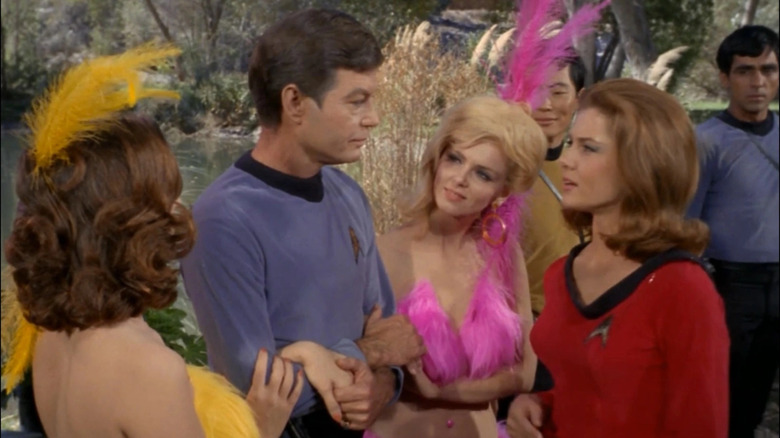
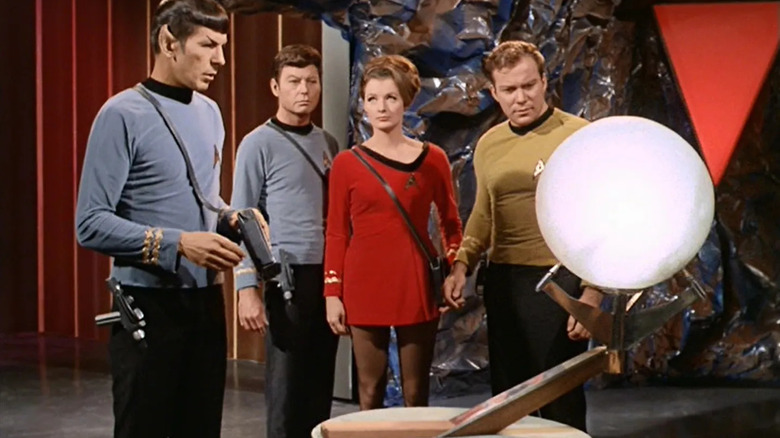
The most (in)famous shore leave episode in all of "Star Trek" is probably the one simply entitled "Shore Leave," which first aired on December 29, 1966. In the episode, an Enterprise away team beams down to a beatific, garden-like planet as a potential site of shore leave for the crew; lounging around in a park does sound like a fine vacation for people stuck in a starship for extended periods. The planet has a secret, however: Using scanning devices to read the crew's minds, and employing an elaborate, quick-moving android construction machine, the planet is able to accurately manifest people and objects from inside their imaginations. Sulu (George Takei) finds himself firing an old-fashioned pistol (he's a weapons hobbyist), Captain Kirk (William Shatner) finds himself fistfighting an old schooltime rival (Bruce Mars), and Dr. McCoy (DeForest Kelley) finds the White Rabbit from "Alice in Wonderland." It takes the crew awhile to realize this planet was meant as a relaxation tool, and not some sort of hallucinogenic nightmare. 

The "Shore Leave" planet would be revisited in an episode of "Star Trek: The Animated Series" called "Once Upon a Planet" (first aired on November 3, 1973). In it, the Enterprise crew returns for a vacation, only to find that the planet's caretaker has died, and the mind-scanning computers have developed their own consciousness. As all computers are constructed to be tools, the machine intelligence resents that it must live to serve others as a slave, and manifests monsters to attack Kirk and co. Kirk ends up talking to the computer face-to-face, convincing it that serving as a vacation machine is a great opportunity for the computer to learn about humanoid minds. Kirk, essentially, tells the Shore Leave computer that Shore Leave episodes are a good chance for character analysis. 

'Captain's Holiday' And 'Family'

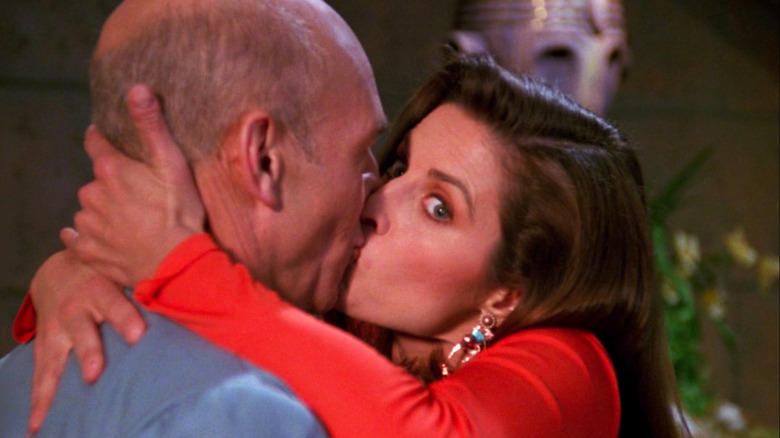
In an early episode of "Star Trek: The Next Generation," Captain Picard (Patrick Stewart) is asked how he intends to spend some time off. He mentions returning to his quarters, flicking on his "personal reading light" (which sounds like a code of some kind), and getting lost in a novel. Picard is not an extravagant character, and his vacations would, presumably, involve a lot of theater, reading, and quaint, quiet French bistros. The episode "Captain's Holiday" (April 2, 1990) contradicts that, seeing Picard visiting Risa ... where he becomes involved with a mysterious Indiana Jones-type relic hunter named Vash (Jennifer Hetrick) and her plot to steal an artifact from the distant future. The second most uptight character in all of Starfleet (he's behind Worf in that regard) gets to have a pulp B-movie adventure on his time off. 

It's not always fun for Picard, though. In the episode "Family" (October 1, 1990), Picard -- after his notorious run-in with The Borg -- returns back home to spend some time with his surviving family. In that episode, Picard butts heads with his cantankerous brother Robert (Jeremy Kemp) and his wife (Samantha Eggar), and catch up with his young nephew René (David Tristan Birkin). No points for guessing that Jean-Luc and Robert will end up scraping in a very similar way to Kirk and his rival in "Shore Leave."

'Let He Who Is Without Sin...'

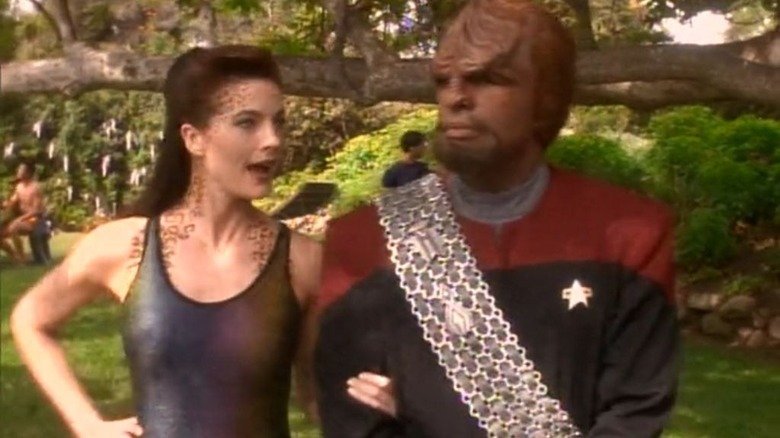
Speaking of Worf (Michael Dorn), his recreation usually involves sparring, fighting, and losing himself to Klingon battle urges. Laying on a beach and drinking cocktails is anathema to him. Nonetheless, in the "Deep Space Nine" episode "Let He Who is Without Sin..." (November 11, 1996), Worf's wife Jadzia Dax (Terry Farrell) takes him to Risa in the hopes that he will learn to relax. Worf, who has no capacity for "relaxation," remains in uniform on his vacation and grumbles about the very notion of leisure, preferring to work, fight, and constantly move forward. Eventually, Worf gets so fed up of Risa's hedonism that he begins leading a minor campaign of prudishness against the vacationers, more or less becoming a Puritan Bible-thumper. Worf takes over Risa's weather-control computers, letting the planet's sunny weather go to pot. 

Worf's refusal to have fun, as he will confess to Dax, stems from a moment of childhood trauma wherein a playful game turned deadly. A good moment of insight for Worf, although one might hope that Dax would have been savvy enough to understand that Worf is a stick-in-the-mud to his very core, and shouldn't have been brought to a place like Risa in the first place. 

Voyager's Holo-Shenanigans

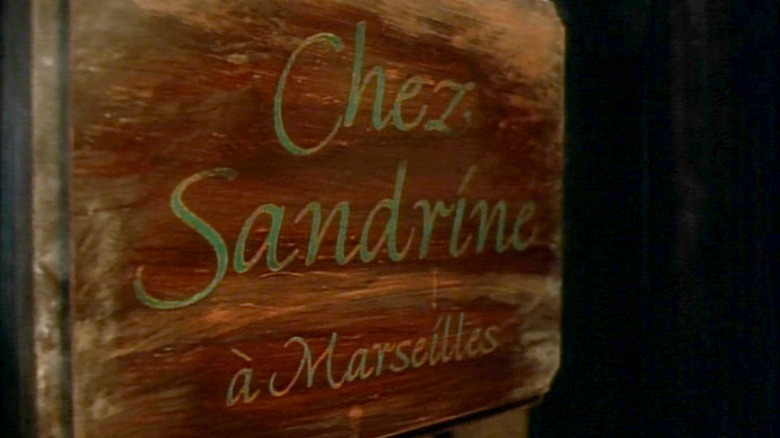
Because "Star Trek: Voyager" takes place far away from any established Starfleet vacation destinations (the ship is lost in space, 70 years from Earth), shore leave is a sort of catch-as-catch-can affair, and a lot of time was spent on the ship's holodecks. One might get the impression that shore leave begins and ends on a whim on the U.S.S. Voyager. Early in the series, officers would gather at a holographic French bistro called Chez Sandrine to unload after a long day. There is talk of rationing out the ship's holodeck time, but the thing was running pretty much all day and night, allowing officers a locale to relax. Later in the show, the bistro would be replaced by a beach resort, complete with holographic swimsuit models. Eventually, the resort would be replaced by a quaint English village, wherein Captain Janeway (Kate Mulgrew) would create her very own rough-hewn, Heathcliff-type holographic boy toy. The village program is explicitly left running 24/7.

Oh, and who could forget the two-part episode "Flesh and Blood" (November 29, 2000) wherein the Hirogen (a species not too far removed from the aliens in "Predator") ripped out most of the ship's interiors, turning the whole vessel into a holodeck built for hunting? In that episode, the Voyager crew has their memories wiped on the regular, and are surgically altered to look like various species, all so the Hirogen can hunt them, kill then, resurrect them, and start again. Maybe not a fun vacation for the Voyager crew, but another example of the holodeck being (over)used for recreation.

'Two Days And Two Nights'

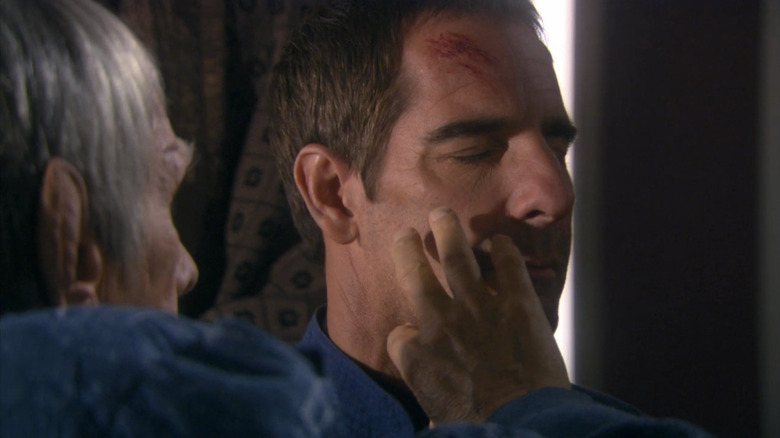
In "Star Trek: Enterprise," set about a century prior to "Star Trek," audiences learn that Risa was established long before Starfleet ever go to it. In "Two Days and Two Nights" (May 15, 2002), Captain Archer (Scott Bakula) finds a mysterious compatriot very similar to himself staying in a neighboring room in the Risa hotel. Ensign Sato (Linda Park) ends up having a very nice time with a handsome alien. T'Pol (Jolene Blalock), like Commander Chin-Riley and Lt. Noonien-Singh on this week's "Stranger New Worlds," is left on the ship in charge (she will not be having fun, thank you very much), and Dr. Phlox (John Billingsley) will spend his time on shore leave hibernating (his species sleeps for several days at a stretch). 

In a bit reminiscent of "Revenge of the Nerds" or some other raunchy 1980s sex comedy, Malcolm Reed (Dominic Keating) and "Trip" Tucker (Connor Trineer) visit a nightclub and are seduced into a secluded back room by a pair comely alien women. The women are, in fact, criminal shapeshifters, become large male attackers, and Trip and Malcolm are robbed and stripped. Womp womp. 

What Trekkies have learned is that Risa, although a wonderful place for vacation, is lousy with criminals, Puritans, and people who would rope you into random, dangerous adventures. Which, when considered in the right light, is a fine way to spend a vacation. 

Read this next: Every Star Trek Show And Movie In Chronological Order

The post A History of Star Trek's Silly Shore Leave Episodes appeared first on /Film.

02 Jun 18:21

Researchers Demonstrate Ransomware for IoT Devices That Targets IT and OT Networks

by noreply@blogger.com (Ravie Lakshmanan)
As ransomware infections have evolved from purely encrypting data to schemes such as double and triple extortion, a new attack vector is likely to set the stage for future campaigns. Called Ransomware for IoT or R4IoT by Forescout, it's a "novel, proof-of-concept ransomware that exploits an IoT device to gain access and move laterally in an IT [information technology] network and impact the OT [
02 Jun 18:21

Captain Pike's Green Uniform Comes Straight From Classic Star Trek

by Valerie Ettenhofer

This post contains minor spoilers for "Star Trek: Strange New Worlds" episode 5.

"Who doesn't love hijinks?" Nurse Chapel (Jess Bush) asks in the new episode of "Star Trek: Strange New World," just before a body-swapped Spock (Ethan Peck) attempts to take over for T'Pring (Gia Sandhu) in an important meeting. Clearly, "Star Trek: Strange New Worlds" loves hijinks, as the show's latest episode features not only a cheeky Vulcan body swap, but also a rousing game of Enterprise Bingo, plus a possible hint at a future "Trek" romance. Captain Pike (Anson Mount) mostly stays out of the kooky action this time around, but "Star Trek: Strange New Worlds" still manages to give audiences a subtle Pike-related bit of humor anyway.

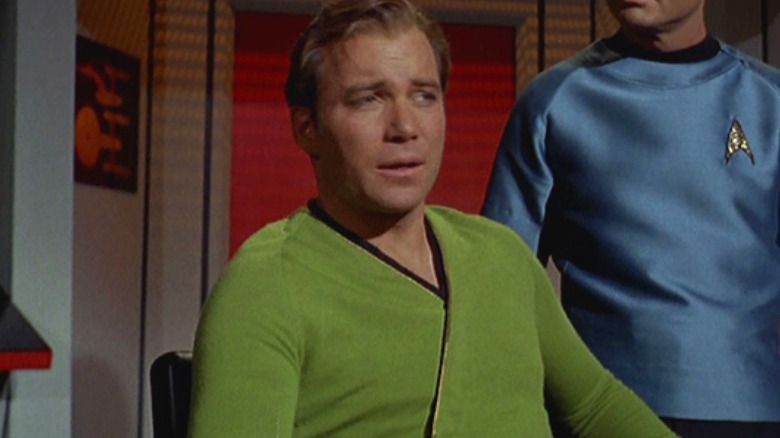
Yes, we're talking about the green shirt. In the first four episodes of the latest "Trek" series, we see Pike wearing a flattering gold-yellow Starfleet uniform that's a close match to the one William Shatner's Captain Kirk wears in "Star Trek: The Original Series." But in the latest chapter, we see Pike in a snazzy green number with a slightly different cut than his yellow uniform. For newbies to the "Trek" world, it might just seem like a random change of clothes, but for longtime fans of the series, it's a nod to one of most memorably garish design elements of Gene Roddenberry's classic series.

Kirk Is A Fashion Inspiration

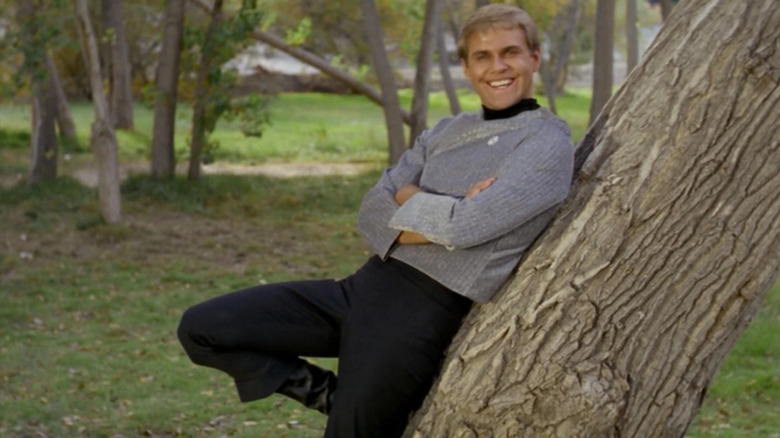
When "Star Trek: The Original Series" debuted in 1966, Captain Kirk appeared sporting what would become his classic look: a golden-yellow fitted long-sleeve shirt with a starfleet insignia over the left breast. It quickly became obvious that the team on board the Enterprise wore color-coded uniforms based on the department in which they served, with other crew members wearing red and blue. But something else soon became obvious, too. Sometimes, Kirk didn't wear gold. Sometimes, he wore the ugliest neon lime green imaginable.

These shirts, somehow, were even tighter than the gold one. Shatner commented as much at a Comic Con panel in 2015, saying (via CinemaBlend), "It was a little embarrassing after lunch to have that tight green thing on you." In addition to its ultra-fitted form, these outfits also had a totally different cut, typically with a wrap-like v-neck and gold accents along the seams. The green shirts seem almost like a dress version of Kirk's regular outfit, and have long-since baffled (and delighted) fans who point out their sporadic appearances throughout "Star Trek: The Original Series."

So what's the deal with the green shirts? While Kirk does seem to wear a dressier version of his uniform on some occasions, it turns out Kirk's alternate outfits are mostly meant to be just that: back-up costumes for when his other one was presumably at the space cleaners. Fans weren't meant to pick up on the differences between the outfits, as, according to an "Inside Star Trek" interview with costume designer William Theiss (as preserved on the blog Star Trek Prop Authority), the shirt we all thought was golden or mustard yellow was actually more of a green, too.

The Yellow Shirts Were Never Yellow

Most "Trek" aficionados agree that the color contrast between Kirk's uniforms is due largely to the less-than-photo-accurate film and lighting setup the show used. "Star Trek: The Original Series" was on the forefront of color television, and was shot on Eastman Kodak film according to StarTrek.com. The combination of the particular film stock, soundstage lighting, and the use of a different material apparently creates what's called a color bias, making Kirk's apparently light green suit lean more towards a golden yellow when seen at home. The back-up costumes and dress garb, however, appeared as a more true-to-life green. The result was a whole bunch of "Trek" viewers who to this day have fun playing "spot the green uniform."

In the latest episode of "Star Trek: Strange New Worlds," Pike sports a much less retina-scarring version of the green uniform, in a nice dark olive green shade. Like Kirk's oddly glam alternate outfits, Pike's green uniform has a wrap-around cut and a slightly deeper v-neck than its counterpart. While we didn't spot any gold threading, it does seem to have a shiny, almost leather-like material on its sleeves, continuing the trend of a subtly snazzier set of digs that Enterprise captains break out now and again. It also continues the "Star Trek: Strange New Worlds" trend of incorporating loving and well-executed "Star Trek: The Original Series" throwbacks whenever possible. Well played, "Strange New Worlds." Well played.

Read this next: Every Star Trek Show And Movie In Chronological Order

The post Captain Pike's Green Uniform Comes Straight From Classic Star Trek appeared first on /Film.

02 Jun 18:20

What we know about the Gorn from the Star Trek universe

by Gareth Branwyn

When I was a kid, there were several Star Trek: TOS aliens that gave me vivid and terrible nightmares. One of them was the Gorn. Besides a few appearances in The Animated Series, Lower Deck, and Enterprise, we haven't seen too much of the Gorn in the Star Trek universe until they reared their lizardly heads in Star Trek: Strange New Worlds. — Read the rest

02 Jun 18:20

Alex Garland's Men Is The Best Live-Action Version Of Attack On Titan

by Rafael Motamayor

Live-action anime adaptations never really work. With incredibly few exceptions (like the Wachowski's excellent "Speed Racer"), there's too much that is difficult to translate from one medium to another, from the cultural specificity, to the medium itself. There is a specific tone that works in animation, but rarely does in live-action, a mix of silliness and seriousness that, combined with the suspension of disbelief inherent to animation, works when the characters don't exactly look real.

This is why every time Hollywood announces a new live-action remake, it is met with instant skepticism and preemptive disappointment. One franchise that is soon to become another cursed live-action production is "Attack on Titan," a show that is maybe going to finally end after a decade of bleak horror and badass action. Though the anime already had not one, but two, failed live-action adaptations made in Japan, we just got the best live-action version of "Attack on Titan" we could expect: Alex Garland's "Men."

In "Men," a woman named Harper (Jessie Buckley) escapes to the English countryside to relax after the death of her husband. Rather than picturesque landscapes and countryside quiet, she finds herself being harassed by the men in the village, all of whom are played by Rory Kinnear — through some clever use of prosthetics, wigs, and bad digital de-aging.

During the press tour for Men, Garland talked a lot about how his love for "Attack on Titan" inspired the ending of "Men," and it's easy to see why. The new A24 movie is the closest we've come to a piece of live-action media understanding to the unique blend of silliness and horror at the heart of early "Attack on Titan."

The Silly Horror Of Attack On Titan

From the very first episode, when we first see the walls that protect the remnants of humanity be destroyed by the Colossal Titan, we saw wave after wave of Titans rush in, all naked and with morphed, exaggerated expressions. The more Titans we see, the more ridiculous they get. Just take the scene where protagonist Eren Yeager watches his mom get brutally devoured by a Titan. The moment is one of pure horror, grotesque and terrifying, but seeing the Titan's face, its huge Joker-like grin and flat, naked body is almost funny.

From there, we meet Titans who shoot finger guns to the sky, Titans who strike fabulous poses, some who run by crawling, some who like to lean into buildings and look suspicious, and overall tons of funny-looking Titans that also devour people in gory fashion. The show never fully explains why exactly the Titans look the way they do, why they have exaggerated features, or why they have no working organs or genitals. But as funny as they might seem at first, there is no laughing when your favorite character is slowly devoured by one of them, or when they become Titans themselves. 

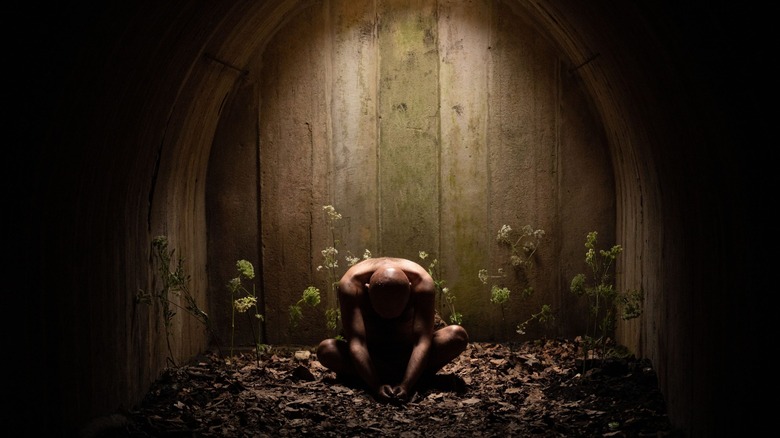
The Absurdity Of Nudity

As Alex Garland himself described it to Vulture, the show doesn't present nudity in a typical way. "Usually, when nudity is seen in film, statues, or art, there's been some consideration to it. It's been posed," Garland said. "The Titans are terrifying and strange but also the sort of awkward shapes that people make when they're not being observed."

The Titans work in animation because they are drawn, 2D characters, with their exaggerated features. They feel at home in a medium where the human characters already have big eyes, so the shift between silly and scary can be sudden without being jarring. In live-action, however, this is harder to do. For every Judge Doom, there is an Al-G Rhythm.

How Men Gets It Right

Though "Men" doesn't feature giant humanoid Titans, it does feature naked men that are funny-looking and also quite threatening. As we start meeting the other men in the countryside town that look like Rory Kinnear, they initially appear as funny and quirky, a bit uncomfortable to be around, sure, but not immediately threatening. Even Geoffrey, the stereotypical English countryside owner of the house Harper is renting is goofy at first. 

It isn't until much later when he starts coming after Harper, that the film goes fully into horror territory. By then, Rory Kinnear doing a fun Lucius Malfoy impression is not fun, but threatening. Especially once whatever entity is haunting Harper starts quite literally birthing itself in graphic detail, with one Rory Kinnear coming out from the entrails of the previous Rory Kinnear, that the laughs turn into screams (even as the film still recognizes that they do look a bit funny). 

Alex Garland may not want to credit "Attack on Titan" for inspiring any one specific scene or shot. However, watching "Men" dive into a specific kind of body horror that is equal parts disturbing and absurdly comic, it is quite clear Garland has achieved the impossible: he made a great live-action version of "Attack on Titan."

Read this next: 15 Must-See Horror Anime Movies

The post Alex Garland's Men is the Best Live-Action Version of Attack on Titan appeared first on /Film.

02 Jun 18:20

What we bought: How BenQ’s Screenbar completed my home office setup

by Igor Bonifacic

One of the first things I set out to do when I joined Engadget in the summer of 2018 was to build a beautiful home office. At my previous job, I didn’t get many opportunities to work remotely, so it wasn’t a priority. That turned out to be a mistake, because when I began working from home I found it quickly wore me down. My kitchen simply wasn’t cutting it as an office – so I set out to change things.

A closeup of the ScreenBar's logo.
Igor Bonifacic / Engadget

Piece by piece, the office I built in my bedroom came together into a space where I enjoyed sitting down to write. But it wasn’t until this year that it felt like it was complete. The piece that was missing was the BenQ Screenbar, a lighting fixture you install on your monitor.

I put off buying the Screenbar for a few years, mostly because of its $170 CAD ($109 USD) price tag. So why then didn’t I buy a regular table lamp you ask? Well, the Screenbar drew my eye for a few reasons. I live in a small condo in Toronto, so a lamp that could sit on my monitor, instead of my table, was appealing because space is at a premium, especially on my small desk. Additionally, the Screenbar shares a feature I love on the Philips Hue lights. Out of the box, you can adjust the color temperature of its LEDs — no need to buy separate bulbs. BenQ also claims the Screenbar produces less glare than a traditional table lamp due to how you position it on top of your monitor.

A closeup of the Screenbar's capacitive controls.
Igor Bonifacic / Engadget

Setup is also easy. A USB-C to USB-A cable connects the Screenbar to your computer, providing it with all the power it needs. You don’t need to install any software on your PC to use the device. Four capacitive buttons on the top allow you to turn the Screenbar on and off, adjust the color temperature and brightness, or turn on automatic brightness. BenQ sells a more expensive version of the Screenbar that comes with a puck you can place on your desk for more convenient access to the controls, but that’s unnecessary for most people.

The one downside of the Screenbar is that it takes up space you could otherwise use to mount a webcam. With a flat, 27-inch monitor like my Dell, it’s possible to fit both, but neither could sit dead center.

Depending on your needs, that could dissuade you entirely from considering the BenQ Screenbar. For me, it was an easy decision to make. I don’t need to do a lot of Zoom calls. The position of my office desk also isn’t ideal for video calling. When I sit down to write, my back faces a wall-to-wall window. That’s not an easy scene for a web camera to expose. My solution has been to use my MacBook Air and sit by the side of the window when I need to jump on Zoom.

A shot of the Screenbar mounted to a monitor.
Igor Bonifacic / Engadget

Looking back now, I wish I had bought the Screenbar earlier. To say it has transformed the atmosphere of my bedroom and office would be an understatement. Winter in Toronto is a long, dark affair. In January and February, the sun can set as early as 5PM. My mood, like many people’s, can vary greatly depending on the amount and quality of light that filters into my home. The fact you can adjust the color temperature of the Screenbar’s LEDs between 2700K and 6500K means it can produce warm, bright, sunlight-esque whites, making it ideal for all-day use and even color-sensitive work like photo editing. In my experience, it’s the perfect solution for a small space.

02 Jun 18:19

Microsoft collaborates with Tenable to support federal cybersecurity efforts

by Christine Barrett

On May 12, 2021, the White House issued Presidential Executive Order (EO) 14028 to establish cybersecurity as a national priority.1 As part of this effort, the White House has called for greater public and private sector collaboration to address the evolving threats facing federal agencies.

In the spirit of the EO and as part of our commitment to enhancing cybersecurity across the United States, we today announce that Tenable has expanded its collaboration with the Microsoft Intelligent Security Association (MISA). Tenable is a pioneer in the risk management market and creator of Nessus, one of the most widely deployed vulnerability assessment solutions in the cybersecurity industry. Together, Microsoft and Tenable will help enhance the United States government’s ability to quickly identify, investigate, prioritize, and remediate threats—and help collectively raise the country’s security posture.

Federal agencies will benefit from the two companies’ tighter collaboration, enhanced information sharing, and integrations. Specifically, Tenable and Microsoft are working together with the intent to integrate Tenable.io with Microsoft Defender for Cloud and Microsoft Sentinel solutions to support vulnerability assessments for hybrid cloud workloads that use FedRAMP moderate.

“The White House’s Cybersecurity Executive Order focuses heavily on Zero Trust initiatives,” said Glen Pendley, Chief Technology Officer, Tenable. “Zero Trust requires a foundation of strong cyber hygiene, with accurate visibility into all of the organization’s assets—IT, cloud, operational technology (OT), internet of things (IoT)—and continuous monitoring of user profiles and privileges. Furthermore, both Microsoft and Tenable are alliance partners in the Joint Cyber Defense Collaborative (JCDC) established by the Cybersecurity and Infrastructure Security Agency (CISA) to strengthen national cyber defense. Our collaboration with Microsoft supports the EO and CISA, both with respect to JCDC and Shields Up, helping federal agencies advance their Zero Trust objectives and improve resilience.”

Working together to advance agencies’ Cyber EO journey

The new capabilities forged by the Microsoft and Tenable collaboration will help agencies better orchestrate and unify the approach to security and vulnerability management and accelerate modernization in alignment with Cyber EO milestones, notably Sections 2, 3, 6, and 7.

To remove barriers to threat information as outlined in Section 2, Tenable will join as one of many independent software vendors and managed security service providers that have integrated their solutions with Microsoft’s to better defend against a world of increasing threats.

To support Section 3, Microsoft and Tenable are already collaborating with the National Institute of Standards and Technology’s (NIST) National Cybersecurity Center of Excellence (NCCoE) to develop practical, interoperable approaches to designing and building Zero Trust architectures and help shape the NIST cybersecurity practice guide.2      

Experts from Microsoft and Tenable will also lend best practice recommendations to CISA to standardize the federal government’s playbook for responding to vulnerabilities and incidents as outlined in Section 6.

Lastly, to improve the detection of cybersecurity vulnerabilities and incidents on government networks according to Section 7, the companies intend to mutually integrate Tenable.io with Microsoft Defender for Cloud for hybrid and multicloud agent deployment and to deliver a consolidated security recommendations view. Further, mutual integration between Tenable.io with Microsoft Sentinel, Microsoft’s cloud-native security information and event manager (SIEM) solution, is intended to help Tenable automatically feed into existing vulnerability management as agencies spin up new workloads in the cloud. This capability will be engineered to aggregate logs so top-level agencies can visualize security risks across Tenable.io and Microsoft Defender for Cloud in one place to improve threat hunting with and across agencies. Tenable will work with Microsoft to secure organizations’ on-premises, hybrid, and cloud-native Microsoft Azure Active Directory implementations in the federal space.

Microsoft’s collaboration with Tenable will strengthen agencies’ ability to identify and respond to risk at scale and extends beyond government.

To learn more about how Microsoft is bringing together public and private sector leaders to increase cyber resilience, visit our Cyber EO resource center.

To learn more about Microsoft Security solutions, visit our website. Bookmark the Security blog to keep up with our expert coverage on security matters. Also, follow us at @MSFTSecurity for the latest news and updates on cybersecurity.


1 The Cybersecurity Executive Order: What’s Next for Federal Agencies?, Jason Payne. June 17, 2021.

2 Implementing a Zero Trust Architecture, National Cybersecurity Center of Excellence.

The post Microsoft collaborates with Tenable to support federal cybersecurity efforts appeared first on Microsoft Security Blog.

02 Jun 18:18

Review: WATCHER, Slow-Burning, Giallo-Inspired Psychological Thriller

Maika Monroe, Karl Glusman, and Burn Gorman star in a thriller, directed by Chloe Okuno, and opening exclusively in movie theaters.

[Read the whole post on screenanarchy.com...]

02 Jun 18:18

David Cronenberg Movies Ranked By How Much They Make Us Horny And Disgusted At The Same Time

by Bill Bria

If there is one piece of fleshy, throbbing connective tissue between Canadian auteur filmmaker David Cronenberg and American troubadour John Mayer, it is the sentiment that "Your Body Is a Wonderland." While Mayer meant that song to be a body-positive seductive jam, Cronenberg isn't merely aiming to titillate with his films; instead, he embraces and celebrates all aspects of the human body throughout his work. In the realm of the Cronenbergian, an open wound and a sexual orifice are one and the same.

If that idea sounds hot and disgusting in equal measure, then congratulations: you've come to the right ranking! It must be said from the start that this is not a ranking of Cronenberg's output from a "Worst to Best" standpoint. Instead, on the eve of the release of Cronenberg's first feature film in eight years, "Crimes of the Future," here are his films ranked in reverse order by how much they make us horny and disgusted at the same time. 

Of course, if the internet has taught us anything about humanity, your own personal sexual tastes may vary. Now that's settled, come with me on this sticky (and bloody) journey through the mind of David Cronenberg, and don't forget: "everything is erotic ... everything is sexual."

21. The Dead Zone (1983)

Cronenberg's adaptation of Stephen King's novel is easily one of the saddest movies he's ever made, and that's saying something for a guy whose films routinely end with one or more of the protagonists dead. The plight of poor Johnny Smith (Christopher Walken), cursed with the ability to see into a person's future, past, or present upon making physical contact with them, is undeniably tragic, and Cronenberg makes a point of how such powers take a toll on Johnny physically as well as ethically.

However, the film isn't particularly disgusting (save for the self-mutilation death of a serial killer whom Johnny catches) or erotic. Johnny has the fate of the world on his shoulders, hoping to avert nuclear armageddon at the hands of the corrupt politician Greg Stillson (Martin Sheen), so he doesn't have much time for sexual escapades. Granted, he pines away for his ex-lover, Sarah (Brooke Adams), who left him and got married while Johnny was in a coma. The one-time couple do share a tender moment where they play the "We Never Got to Bang Each Other Freebie" card, an encounter which may-or-may-not signal the loss of Johnny's virginity. As Sarah makes clear after they do the deed, it was a one-time deal, and both "The Dead Zone" and Johnny move on to other issues on their minds.

20. Eastern Promises (2007)

Some of Cronenberg's fans don't quite know what to make of the back half of his career, moving away from blatant, effects-laden body horror as it does. Yet films like "Eastern Promises" are clearly the work of the same man who made "Videodrome" and "The Fly" upon investigation — while no one grows new sex organs or transforms into a creature, the film is highly concerned with themes of identity and its relationship to the body. In "Eastern Promises," Russian gangster Nikolai Luzhin (Viggo Mortensen) is a man harboring at least two identities at once, and his toned, muscular body bears a series of tattoos that explain his past history.

Once again, there's not much here in the way of disgusting imagery (save a few grisly-looking corpses) or sexual content, the only instances of desire turning up in Nikolai harboring a sublimated crush on pretty nurse Anna (Naomi Watts) while his gangster pal Kirill (Vincent Cassel) struggles to bury a crush on him. Still, nobody eroticizes like Cronenberg, and the movie reaches its zenith in a bravura fight sequence set in a bath house, where Nikolai fights off his would-be assassins while stark naked. What in other films would be a standard action sequence turns into a set piece that's as erotically graceful as it is brutal, Cronenberg highlighting the beauty, power, and vulnerability of the human body in one fell swoop.

19. Scanners (1981)

While he'd garnered some buzz with his first few features, it was "Scanners" that saw David Cronenberg explode onto the pop culture landscape. Literally!

"Scanners" is the first film on this list that unequivocally delivers on the disgusting quotient: the legendary makeup effects work of Dick Smith and company lend Cronenberg's tale of a secret war breaking out between telepathic and psychokinetic people called Scanners a grisly, goopy, bloody realism. Not only do heads explode, but veins swell and leak blood, eyes go totally white, bodies burst into flames, and there's a great deal of yelling and screaming.

Unfortunately, the movie and its characters are too preoccupied with various conspiracies and life-threatening situations to worry about gettin' it on. Scanners-on-the-run Cameron Vale (Stephen Lack) and Kim Obrist (Jennifer O'Neill) make goo-goo-eyes at each other on occasion, but nothing much comes of it (even though we're told the two hooked up and had children offscreen in the sequel, "Scanners II: The New Order"). Michael Ironside's performance as the evil Scanner, Darryl Revok, has a bit of sexy swagger to it, but overall this is the Cronenberg to turn to if you like more gore than sex in your sci-fi.

18. The Brood (1979)

The last film on this list to not have any explicit sexual imagery or content in it, "The Brood" is another contender for being Cronenberg's most emotionally devastating film. The writer/director was working through an ugly divorce and custody battle at the time he made the movie, and that turmoil is reflected in the film and then some. The tale of Frank Carveth (Art Hindle) and his daughter Candice (Cindy Hinds) being menaced by a gang of asexual child-like creatures that have been birthed by Frank's wife, Nola (Samantha Eggar), as a result of her channeling her rage into the practice of "psychoplasmics" (a technique which encourages physical manifestations of mental trauma) is, as Cronenberg colorfully put it, "more realistic, even more naturalistic, than 'Kramer [vs. Kramer].'"

Still, while no one in "The Brood" is having sex (least of all Nola, who has formed an entire new womb that doesn't require a partner to reproduce), there's a smattering of horniness in the film. For one thing, the results of the "psychoplasmics" process on the patients of Dr. Hal Raglan (Oliver Reed) seem to resemble sex organs, as with the growth on the neck of Jan (Robert A. Silverman). Nola's birthing of her brood is deliberately eroticized, her cooing over her bulbous external womb escalating to biting through it and licking her new "child" clean.

For another, the adult characters in the film seem to be costumed in order to highlight their physical attractiveness, with even Nola's grandmother, Juliana (Nuala Fitzgerald), looking foxy before she's violently attacked by the brood. Frank strikes up a flirtation with Candice's pretty school teacher, Ruth (Susan Hogan), and it seems he may be able to form a new, healthier family unit — before Nola's "children" attack, causing Ruth to run away from Frank and Candice. In the tradition of the best genre films, Cronenberg takes the theme of a broken home and makes it disturbingly literal.

17. Crimes Of The Future (1970)

In contrast to the prior films on this list, Cronenberg's original "Crimes of the Future" (which, allegedly, has nothing to do with his spiffy new 2022 version) is an openly horny movie. A list of the various sexual and fetish topics mentioned in the film reads like something one would find on an erotic message board: foot fetishism, panty fetishism, cosmetics fetishism, homosexuality, and pedophilia.

Don't call the cops on Cronenberg yet: those topics are only mentioned in the film, not depicted. They all turn up in the narration by Adrian Tripod (Ronald Mlodzik), which (not coincidentally) represents the only spoken dialogue in the movie. One of the filmmaker's self-produced early experimental short features, "Crimes of the Future" mostly keeps its sexual activity off-screen, such as when Tripod explains in detail about a character manifesting new sex organs that are then kept in jars but aren't shown.

The only visible body horror in the film comes in the symptoms of a plague inadvertently created by Tripod and his insane dermatologist cohorts: a virus that has killed off most sexually mature females and is now infecting adult males. The fatal virus is seen as a sort of viscous white foam that leaks from the victims' mouths and nipples -- an early instance of Cronenberg combining the deadly with the venereal.

16. Stereo (Tile 3B Of A CAEE Educational Mosaic) (1969)

Cronenberg's first near-full-length feature, "Stereo" acts as a precursor to the director's later films like "Scanners" and "A Dangerous Method," following the exploits of a group of telepaths who commit various acts of transference upon one another. As with "Crimes," the majority of sexual content in "Stereo" is implied and spoken rather than seen, once again in a narration that serves as the only spoken dialogue.

We're told that the film is an educational document commissioned by "the Canadian Academy of Erotic Enquiry," a setup that colors the footage to follow (though not literally — it's Cronenberg's only fully black & white film). Some of that footage is explicitly erotic, with various test subjects stripping naked and investigating each other, while in other scenes the eroticism is more subtextual. There's nothing too disgusting here; Cronenberg is leaning more on the ominous threat of a microcosm of society breaking down rather than showing it happening. Still, in a late-'60s-hippie-commune sort of way, "Stereo" has its arousing moments.

15. Fast Company (1979)

Even more so than his 21st century output, "Fast Company" holds the title of the most "normal" Cronenberg film. A story about a scrappy underdog drag-racing crew taking on shady corporate involvement, "Fast Company" could easily be mistaken for a Roger Corman production. Sure, the movie is fun and sexy seeing as there's a copious amount of nudity in it, but it's mostly presented in that type of near-wholesome open sexuality best seen in the exploitation films of the 1970s.

While true Cronenberg fans know that the movie is close to the filmmaker's heart, given his love of cars and motorcycles, there's one scene in "Fast Company" that is easily identified as being the work of the director. In it, up-and-coming young racer Billy "The Kid" Booker (Cronenberg regular Nicholas Campbell), picks up two buxom young hitchhiking girls, and the trio have a threesome in the Fast Company truck. During their dalliance, Billy decides to add some lube to the girls' bodies — in the form of Fast Company brand motor oil. It's the first connection Cronenberg makes between sex and cars, paving the way for "Crash" later on.

14. M. Butterfly (1993)

Cronenberg's first major departure from genre arrived with this film, adapted from David Henry Hwang's play of the same name. Based on the true events surrounding French diplomat Bernard Boursicot and Chinese opera singer Shi Pei Pu, "M. Butterfly" follows René Gallimard (Jeremy Irons) as he falls deeply in love with the Chinese singer Song Liling (John Lone). In the course of their meeting and torrid relationship in 1960s China, Song gets René to give up various French government secrets, only for the diplomat to discover that Song is ... well, that would be a spoiler, but one can make an educated guess.

There's not much that's disgusting in the film (unless you're a bigot), but one of the themes of the movie involves the way people hurt each other through deception and dishonesty; not just Song, but René, as he cheats on his wife Jeanne (Barbara Sukowa) with both Song and a buxom older acquaintance. René is driven to that latter act thanks to his perpetual sexual frustration with Song, who will let him touch her but not undress her, and it's this strong wave of desire that permeates the film as René and Song switch between dominant and submissive positions in their relationship (literally and figuratively, of course). "M. Butterfly" is one of Cronenberg's most romantic films, as well as one of his horniest — René is the very definition of the term "down bad."

13. Cosmopolis (2012)

Adapted from the novel by Don DeLillo, "Cosmopolis" is one of Cronenberg's most detached movies, tying in with "Crash." Yet the young billionaire Eric Packer (Robert Pattinson) isn't nearly as horny as the characters of that film. For him, sex is an asset to be managed and acquired, not a state of being he revels in. The disgusting obscenities in "Cosmopolis" aren't physical but moral, as Eric is a consummate capitalist who spends his days inside his hermetically sealed limousine, oblivious to the collapsing and desperate world around him. He continually, coldly attempts to sleep with his new wife, Elise (Sarah Gadon), eventually finding she's an acquisition he cannot close.

Still, as Eric continues his "Heart of Darkness"-like journey into self-destruction, there's a sense he might subconsciously realize there's a rot at his core. His sexual encounters manage to have a bizarre heat to them, as if he were an alien investigating what human sexuality was all about, using sex as the one conduit he has to true communication with other people. In Eric's view, sex is more about verbal than physical communication — perversely, "Cosmopolis" features cinema's hottest (and longest) prostate exam, during which Eric and one of his employees (Emily Hampshire) share a sexual connection that's only verbal, but is no less intimate.

12. Spider (2002)

The disgusting content in "Spider" lies in Andrew Sanders' production design and Peter Suschitzky's cinematography as they capture every detail of the sordid, dirty-water-stained, bug-infested dwellings of the mentally ill Dennis "Spider" Cleg (Ralph Fiennes). In this hallucinatory England filled with literal and metaphorical decay, Spider reflects on his past, and Cronenberg visually indicates how the young Spider (Bradley Hall) conflates his first pangs of sexual desire with feelings of intimidation and fear -- the boy fixating on a lower-class tramp who frequents the pub his father (Gabriel Byrne) drinks at. 

Further complicating matters, Spider begins to see that tramp as resembling his mother (Miranda Richardson, playing multiple roles), and when his father starts to pay more attention to the tramp than Spider's mother, the boy develops some form of Oedipus complex. In Spider's warped and unreliable mind, sex is an evil act, leading to shame as well as violence. Cronenberg keeps him — and the audience — in that uncomfortable space between sexual fascination and repulsion.

11. A Dangerous Method (2011)

In contrast to "Spider," the locations of "A Dangerous Method" are the stupendously beautiful, bucolic landscapes of 1900s Switzerland and Vienna. Of course, these vistas are masking the mental turmoil experienced by budding psychoanalysts Carl Jung (Michael Fassbender), Sabina Spielrein (Keira Knightley) and Sigmund Freud (Viggo Mortensen).

While Jung and Freud fall deeper into a rift caused by their opposing views on the future of psychoanalysis, the former finds himself under the spell of Spielrein, who begins as one of his patients. Jung quickly ascertains that Spielrein's mental illness is caused by her becoming sexually aroused to memories of her physical abuse at her father's hands, the formative experience causing a love of sadomasochistic sex. She and Jung continue to have an affair, somewhat under the delusion that their encounters act as pure research, while Sabina and Freud become more aligned in their academic views and Jung's wife, Emma (Sarah Gadon), struggles to keep hold of her husband. The film is one of Cronenberg's best pokes at the tension between the intellectual and the primal sides of sex, mixing it together with issues of class and morality.

10. A History Of Violence (2005)

Small-town diner owner Tom Stall (Viggo Mortensen) has it all: a modest business, an intelligent son (Ashton Holmes) and precocious daughter (Heidi Hayes), a friendship with the local sheriff (Peter MacNeill), and a loving wife, Edie (Maria Bello), who eagerly engages in kinky roleplay sex with him while dressed as a cheerleader.

All of that is shattered when Tom commits a good deed, saving his diner staff and patrons from two vicious murderers (Stephen McHattie and Greg Bryk) by shooting them dead in a startlingly professional manner. When a man from his gangster past (Ed Harris) shows up in town afterward, Tom can no longer hide the fact that he used to be Joey Cusack, a mob hitman in Philadelphia. Tom/Joey's family express their disgust at his thorough, years-long, intentional deception in various ways — even Joey's mob boss brother, Richie (William Hurt), is torn between several competing reactions. Most notable is Edie's response: disgusted by Tom's lies, she's also confused by her strong affection for her husband and her arousal at Joey's primal, violent nature. The two of them share an impromptu sex scene that's as hot as it is uncomfortable, angry, and sad. In other words, it's classic Cronenberg!

9. Maps To The Stars (2014)

"Maps to the Stars" may be the only Cronenberg film where the dialogue is more vulgar than what's depicted on screen — the characters who make up his and screenwriter Bruce Wagner's vision of Hollywood are constantly discussing the most intimate rumors and secrets about one another with a casualness that can barely hide their cruelty.

Still, that doesn't stop Daddy David from staging a series of sex scenes that disturb and titillate in equal measure. The mysterious Agatha Weiss (Mia Wasikowska), having survived a deadly fire in her youth, has a burn scar on her face that is not dissimilar to the practitioners of "The Brood's" psychoplasmics. And while her romance with limo driver Jerome (Robert Pattinson) is sweet, it's also fetishized — Agatha has arm-length gloves on at all times, and Jerome is excited to report on what it was like to sleep with a burn victim to the faded star Havana Segrand (Julianne Moore). Segrand has a lot of sex in the film, both with Jerome in the back of his limo and, earlier, with her agent and another woman -- a threesome that is then invaded by the apparition of Havana's dead mother, Clarice (Sarah Gadon), who is also nude, of course.

"Maps" is one of Cronenberg's more deviously transgressive and subversive films: no spoilers, but fans of brother/sister incest porn (please, don't raise your hands) will find a lot to chew on here. The incestuous twists may seem out of pocket to some, but after all, what is show business but an industry rife with nepotism, am I right?

8. Dead Ringers (1988)

Twin gynecologists Beverly and Elliot Mantle (both Jeremy Irons) share absolutely everything: their practice, their wealth, their apartment, and their lovers. A devastating -- and fatal -- rift opens between them when Beverly meets someone he does not wish to share, the actress Claire Niveau (Geneviève Bujold). The twins nonetheless do share her in a way far more insidious than "A History of Violence's" Tom/Joey, and Beverly's guilt mixed with jealousy causes him to begin a drug addiction that Elliot has no recourse but to partake in, too.

In addition to the twins' cold manipulation of Claire, Cronenberg ups the squick factor of "Dead Ringers" in a moral fashion, with the sexual participants sublimating their broken souls by joining together their most intimate parts as often as possible. Elliot tries to initiate a threesome between himself, his girlfriend (Heidi von Palleske), and Beverly, while Beverly has a disturbing hallucination of being nude in bed with Claire and his brother, a fleshy growth connecting the two men that Claire proceeds to chew through, Nola Carveth-style. As is the case with Cronenberg, the vision is gross enough to be disturbing, but not enough to be a turn-off!

7. The Fly (1986)

Ladies, how many times has this happened to you: you meet a cute, geeky, handsome-but-doesn't-know-it scientist, begin a relationship with him (you suspect it might be the first romance he's ever had), things get really hot and heavy but then he suddenly begins viscerally and virulently transforming into a 7-foot-tall human-fly hybrid.

The brilliance of Cronenberg's remake of "The Fly" is how it takes George Langelaan's original '50s weird science short story and makes it into a metaphor on a number of equally compelling levels, not the least of which is an allegory for a sexually-transmitted disease. Seth Brundle (Jeff Goldblum), the ill-fated scientist, finds himself surprisingly more virile and sexually potent when he impulsively puts himself through his new transportation telepods as a result of being (he thinks) rebuffed by his lover, Veronica (Geena Davis). Of course, he doesn't learn for a while that his new status is due to his genes being spliced with a housefly that had gotten into the pod, but that doesn't stop him from spreading his seed to Veronica (who is horrified to learn she's become pregnant) and a girl at a nearby bar (Joy Boushel) -- his pock-marked skin and greasy, muscular frame looking simultaneously alluring and dangerous.

Once Brundle is in the latter stages of his transformation, sex is the last thing on his mind (the makeup design for the nude Brundlefly notably omits any external genitalia), but he nonetheless wants to merge with Veronica on a whole new level, believing he can regain his humanity if he goes through the telepod with her. Girls, when your perverted and controlling ex-boyfriend (played here by John Getz) turns out to be the only one looking after your well-being, you know your sex life has gone off the rails.

6. Rabid (1977)

Being a carrier of a sexually-transmitted disease is not all it's cracked up to be. Poor Rose (Marilyn Chambers), a beautiful young woman, learns that the hard way when she survives a motorcycle accident thanks to a group of plastic surgeons who administer an experimental procedure that inadvertently creates a new organ under Rose's armpit -- a mosquito-like phallus that Rose discovers she must use in order to obtain the sustenance her body now desires: blood.

Cronenberg's take on the vampire mythos is as influential (Tobe Hooper's "Lifeforce" owes a debt to "Rabid") as it is subversive. Casting porn queen Marilyn Chambers in the lead (and making sure to include her, ahem, assets as much as possible) plays up the sexual connotations of Rose's vampirism in a clever way, as does the fact that Rose must embrace her victims in order to feed, her throes of hunger as she does looking nearly orgasmic. The pandemic Rose leaves in her wake — an ever-growing gaggle of foaming-at-the-mouth zombies — isn't just a way for Cronenberg to comment on the then-recent October Crisis in Canada, but also doubles as a metaphor for irresponsible sexuality gone unchecked.

5. Crash (1996)

Depending on who you ask, "Crash" is either Cronenberg's sexiest movie or his most disgustingly irresponsible, and the fact that both things can be said about it means it deserves such a high position on this list. Taking the ideas raised by J.G. Ballard's source novel to their logical extent, Cronenberg's film follows a cabal of fetishists (James Spader, Deborah Kara Unger, Elias Koteas, Holly Hunter, and Rosanna Arquette) who find that they can achieve higher levels of arousal and sexual satisfaction by being in and around car accidents.

Nearly every aspect of the characters and objects in "Crash" are fetishized by the characters and Cronenberg: the director encourages the marriage of cold, inanimate machines of potential death and eroticized flesh right from the opening scenes, when Unger's character places her bare nipple onto the chassis of an airplane. As things escalate and even the "straight" sex between characters is shown to be detached and clinical, Cronenberg allows no stone to be unturned, no orifice (whether natural or a newly-created wound) to be unpenetrated, no barrier — moral or physical — to remain intact. A film that could equally be used as an aphrodisiac and a non-erotic deterrent, "Crash" remains beautifully dangerous.

4. eXistenZ (1999)

The technological modification of the human body has happened so gradually that it feels like we've missed it. Every one of us can no longer travel anywhere without our smartphones at hand, not to mention a Bluetooth device in our ear or a smartwatch on our wrist. Cronenberg depicted this future quite presciently in "eXistenZ," positing how losing ourselves in a virtual reality would likely result in various personas becoming expressed at different times.

That, of course, applies to sexual activities. When Allegra Geller (Jennifer Jason Leigh) and Ted Pikul (Jude Law) begin passionately making out while they're supposed to be playing a virtual-reality game, they quickly realize that they may not be in control of themselves, their desires imposed by a programming they don't quite understand. Everyone in the world of "eXistenZ" has voluntarily mutated their bodies: each person has a "bio-port" on the base of their spine, an orifice that can be plugged into a "game pod" -- itself a fleshy, throbbing, living organism that connects to the player's bodies via an umbilical cord. It's no surprise that Cronenberg eroticizes these new openings into the human body, making the reality-eroding marriage of humans and machines that much more disturbingly intimate.

3. Videodrome (1983)

"Long live the new flesh," the mantra at the heart of Cronenberg's surreal magnum opus, "Videodrome," may as well be the filmmaker's credo. "New Flesh" is all over the film, as the sleazy cable TV station programmer Max Renn (James Woods), after being exposed to the Videodrome signal, hallucinates (or does he?) various mutations of objects and bodies: his television set becomes a throbbing, moaning facsimile of his missing lover, Nicki (Deborah Harry), his stomach develops a vaginal opening that fleshy videotapes can be put into and a phallic gun that grafts itself into his arm can be taken out of. Said gun can spread its seed into other people, like the devious Barry Convex (Les Carlson), causing the latter's body to uncontrollably give birth to numerous cancerous tumors.

All of these ghastly, disgusting, unforgettably nightmarish visions (courtesy of makeup whiz Rick Baker) are the product of the weaponized Videodrome TV broadcast, a "show" that features sexualized depictions of torture and murder. The seen-it-all Max and S&M-loving Nicki end up victims of the program, which is being used as a tool by right-wing radicals to combat what they see as North America's cultural decay. The more left-wing Bianca O'Blivion (Sonja Smits) seeks to use Max against the Videodrome terrorists, which seemingly implies her cause champions the further mutation of the human body and sexuality. Cronenberg is delightfully ambiguous as to which side is "correct," content instead to chronicle Max's plight as a pawn caught between these opposing agendas, forcing the character and the audience to question their own relationship with erotic expression. As such, "Videodrome" is both disgustingly perverse and undeniably horny.

2. Shivers (1975)

While Cronenberg has surpassed his debut full-length feature, "Shivers," many times over in terms of craft and character, it's arguable that he never again reached such heights of deliriously gross and irresponsible sexual content.

In the high-rise complex Starliner Towers just outside Montreal, it's discovered that Dr. Emil Hobbes (Fred Doederlein) sabotaged a secret project to create a parasite that was intended to function as an all-purpose replacement organ for those who needed one. Instead, the red, fleshy, phallic slugs now act as "a combination of aphrodisiac and venereal disease," with Hobbes' philosophy of aberrant sexuality imposed on the creature as it infects every resident of the complex one by one.

Thus, "Shivers" becomes not just a single-location pandemic thriller, but a vehicle for Cronenberg to shock and disturb with, as many fetishized instances of sexuality run rampant throughout Starliner: homosexuality, assault, incest, pedophilia, all of which leads to a climactic (no pun intended) moment of pure orgy. "Shivers" plays like a George A. Romero film if all the crazed ghouls were horny instead of hungry, the parasites acting like a sexualized take on "Invasion of the Body Snatchers." The film's casual attitude toward nudity helps further the total implication of how the free-love philosophy of the late '60s unleashed on a repressed populace could go very, very out of control.

1. Naked Lunch (1991)

Cronenberg's adaptation of William S. Burroughs' infamous novel is noteworthy for a number of reasons, not the least of which is his ability to find a narrative inside a book that doesn't really contain one. What the filmmaker really keys in on in his film version is Burroughs' fascination with insects, the author typically using them as metaphors for conformist or otherwise unsavory thought.

Thus, "Naked Lunch" the movie sees Burroughs analogue William Lee (Peter Weller) recruited as a secret agent by his typewriter who turns out to be an insect, the creature sending the drug-addicted exterminator to the land of Interzone, where the mysterious Dr. Benway (Roy Scheider) may be proliferating the mind-altering jism of the Mugwump creatures as a drug. The Mugwumps have eerily cute bug-eyed monster heads on top of sickly-alluring human male bodies, and the viscous drug that seeps from their phallic protuberances is all too obviously a stand-in for semen. As "Naked Lunch" borrows liberally from Burroughs' life as well as his writings, the film explores and exploits the author's uncomfortable relationship with his queer identity, the Mugwumps being the largest instance of that theme.

Elsewhere, Cronenberg uses insects and insect imagery as erotic elements: Lee's wife Joan (Judy Davis) shoots up bug powder before sleeping with Lee's friend Hank (Nicholas Campbell), the suave sexual predator Yves Cloquet (Julian Sands) is discovered by Lee to be a centipede who is literally devouring Lee's lover Kiki (Joseph Scorsiani) while they have sex, and the typewriter insects love having bug powder rubbed on their sphincter-like orifices.

The apotheosis of "Naked Lunch" (and, arguably, Cronenberg's collection of grotesque sex scenes) occurs when Lee seduces the wife of a rival author, also named Joan (also played by Davis). The two use an exotic typewriter to write some erotic fiction together, and as the couple become more aroused, so does the typewriter, the machine transforming "Videodrome"-style into a throbbing mass of flesh and metal. Suddenly, as William and Joan start to make love, the typewriter decides to join in, too, having fully transformed into a part insect-part human sex blob. Even though Joan's maid (who turns out to also be her mistress), Fadela (Monique Mercure), shoos the blob away, the scene is indelible and unforgettable. In a filmography rife with moments that are equal parts horny and disgusting, it might just be the filmmaker's most outrageous masterpiece. In any case, I think it's time to go take a long, cold shower now.

Read this next: The Best Movies Streaming Right Now: Malignant, A Hero, And More

The post David Cronenberg Movies Ranked By How Much They Make Us Horny and Disgusted At The Same Time appeared first on /Film.

02 Jun 18:16

Coffee Drinking Linked To Lower Mortality Risk, New Study Finds

by msmash
That morning cup of coffee may be linked to a lower risk of dying, researchers from a study published Monday in The Annals of Internal Medicine concluded. From a report: Those who drank 1.5 to 3.5 cups of coffee per day, even with a teaspoon of sugar, were up to 30 percent less likely to die during the study period than those who didn't drink coffee. Those who drank unsweetened coffee were 16 to 21 percent less likely to die during the study period, with those drinking about three cups per day having the lowest risk of death when compared with noncoffee drinkers. Researchers analyzed coffee consumption data collected from the U.K. Biobank, a large medical database with health information from people across Britain. They analyzed demographic, lifestyle and dietary information collected from more than 170,000 people between the ages of 37 and 73 over a median follow-up period of seven years. The mortality risk remained lower for people who drank both decaffeinated and caffeinated coffee. The data was inconclusive for those who drank coffee with artificial sweeteners. "It's huge. There are very few things that reduce your mortality by 30 percent," said Dr. Christina Wee, an associate professor of medicine at Harvard Medical School and a deputy editor of the scientific journal where the study was published. Dr. Wee edited the study and published a corresponding editorial in the same journal.

Read more of this story at Slashdot.

02 Jun 18:16

Temuera Morrison Admits He Would Make Changes To The Book Of Boba Fett

by Debopriyaa Dutta

"The Book of Boba Fett" star Temuera Morrison recently told ScreenRant that he admits that things could have been done differently on the show, which had received mixed responses from audiences and critics alike. While Morrison expressed his gratitude to "Star Wars" fans and the cast and crew, he said that he might have done things "a little bit different," now that he can look back at it critically:

"Feeling the love from all the fans, feeling that we've done something good and the reaction I've been getting from the fans is overwhelming. [I'm] very proud, and just grateful for the wonderful opportunity to play Boba Fett in The Book of Boba Fett, to work with Ming-Na. We had a wonderful chemistry. It was so easy to work with her. She had been my confidant and it was really a duo effort.

When I was short on information, we had a wonderful crew around us... I had plenty of people to draw on. And even that was a journey for Boba Fett, [from] where we'd found him and where we were taking him; the introduction of the Tuskens, providing that nourishment, that family environment.

Now that I'm looking back at it, I don't know, it's just one of those things. Things are great when you look back, but there are some things I may have done a little bit different.

But again, just for me to work with Jon and be part of the Mandalorian family [has] just been quite phenomenal, really."

While "The Book of Boba Fett" featured certain narrative threads that did not quite work in favor of the show, Morrison's awareness of the show's flaws is good news for the character in question, especially in terms of future crossovers and standalone projects.

More Temuera Morrison In Star Wars, Please

Morrison's Boba Fett was introduced in "The Mandalorian," kickstarting a limited series that revolved around his journey after a miraculous escape from the Sarlacc pit. "The Book of Boba Fett" fell flat in some respects, although it offered interesting glimpses into the sociopolitical changes that were ushered in with Boba's return, particularly the arrival of the notorious Cad Bane in the series.

However, the Boba-centered episodes were eclipsed by the ones that featured Din Djarin (Pedro Pascal), along with the ones that centered on Grogu's training with a young Luke Skywalker. This is not necessarily the show's fault, as "The Mandalorian" has managed to cement the Din-Grogu relationship in integral ways, making it infinitely more interesting than Boba's attempts to take over Jabba the Hutt's sprawling empire.

The show's mixed success might not necessarily mean the end of Boba Fett content, as the character might (and most probably will) return in future installments, especially in "The Mandalorian." After all, Morrison's Boba is still a fan favorite, along with Ming-Na Wen's Fennec Shand, and they are key players in the "Star Wars" universe, especially when it comes to acting as allies in missions undertaken by Din and his friends.

Morrison recently appeared in a quick cameo as a veteran clone trooper of the 501st Legion in "Obi-Wan Kenobi," and I hope this is the first of many surprise cameos and appearances by Morrison, as his likeness is a stable element within the overarching narrative (live-action Captain Rex, please make an appearance).

"The Mandalorian" season 3 will premiere on February 2023. "Obi-Wan Kenobi" is currently streaming on Disney+.

Read this next: The 12 Best Boba Fett Moments In Star Wars Shows And Movies

The post Temuera Morrison Admits He Would Make Changes to The Book of Boba Fett appeared first on /Film.

02 Jun 18:14

[News] THE PRINCESS Aims to Kick Your Butt in Latest Trailer

by Sarah Musnicky

[News] THE PRINCESS Aims to Kick Your Butt in Latest Trailer
Courtesy 20th Century Studios
The high-octane trailer for 20th Century Studios’ THE PRINCESS is here. The original movie will stream on July 1, 2022, exclusively on Disney’s direct-to-consumer platforms: on Hulu in the U.S., Star+ in Latin America and Disney+ under the Star banner in all other territories.

An action-packed fight to the death set in a fairy tale world, THE PRINCESS is directed by Le-Van Kiet (Furie, The Requin) and stars Emmy Award® nominee Joey King (“The Act,” The Kissing Booth) as a beautiful, strong-willed princess who refuses to wed the cruel sociopath to whom she is betrothed, and is kidnapped and locked in a remote tower of her father’s castle. With her scorned, vindictive suitor intent on taking her father’s throne, the princess must protect her family and save the kingdom.

The movie also stars Dominic Cooper (“Preacher”, Mamma Mia: Here We Go Again), Olga Kurylenko (Marvel Studios’ Black Widow, Quantum of Solace), and Veronica Ngo (The Old Guard, Tam Cam: The Untold).

THE PRINCESS is directed by Le-Van Kiet, written by Ben Lustig & Jake Thornton (Winter’s Knight, Final Fantasy), and produced by Neal H. Moritz (the Fast and Furious franchise), Toby Jaffe (Total Recall) and Derek Kolstad (John Wick), with Joey King and Guy Riedel (“Spectral”) serving as executive producers.

The post [News] THE PRINCESS Aims to Kick Your Butt in Latest Trailer appeared first on Nightmarish Conjurings.

02 Jun 18:14

Review: AFTER BLUE, A Dream, Or a Nightmare, At the Edge of Waking

Elina Löwensohn, Paula Luna, and Vimala Pons star in a fantasy/sci-fi concoction from France, directed by Bertrand Mandico.
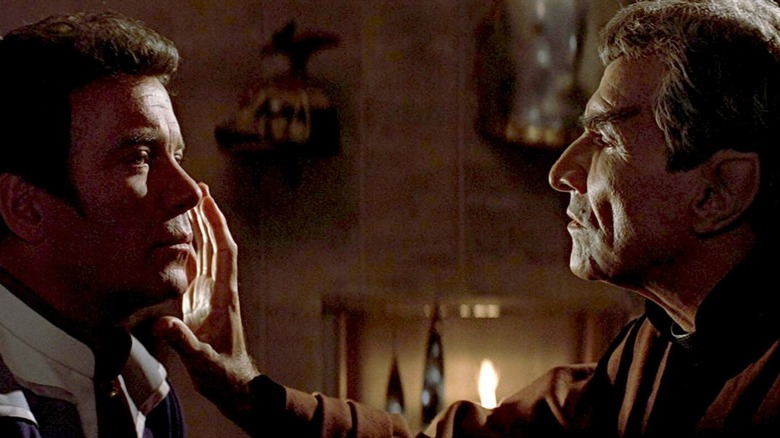
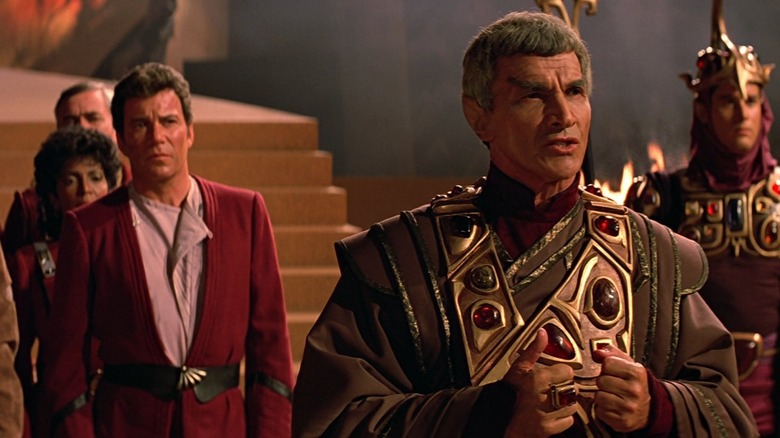
[Read the whole post on screenanarchy.com...]

02 Jun 18:14

Cyber Command Chief Confirms US Took Part in Offensive Cyber Operations

by msmash
U.S. Cyber Command Director Gen. Paul Nakasone confirmed for the first time that the U.S. had conducted offensive cyber operations in support of Ukraine. From a report: "We've conducted a series of operations across the full spectrum: offensive, defensive, [and] information operations," Nakasone said in an interview Wednesday with Sky News, a British television news channel. Although the general did not provide specifics, he said the operations were lawful and conducted with civilian oversight of the military. "My job is to provide a series of options to the secretary of Defense and the president, and so that's what I do," he told Sky News. Nakasone previously said his agency deployed a "hunt forward" team in December to help Ukraine shore up its cyber defenses and networks against active threats. But his latest remarks appear to be the first time that a U.S. official said publicly that the U.S. has been involved in offensive cyber operations in response to Russia's invasion of Ukraine.

Read more of this story at Slashdot.

02 Jun 18:14

My Mind To Your Mind: Vulcan Katras Explained

by Witney Seibold

When "Star Trek" first debuted in 1966, the standout character was very much Spock (Leonard Nimoy) the half-human, half-Vulcan science officer on board the U.S.S. Enterprise. Spock, for the uninitiated, devoted himself to the expulsion of emotion from his being, relying on only logic and scientific proof to traverse the show's weekly conundra. Over the course of various "Star Trek" shows and movies, the specific abilities and beliefs of Vulcans were revealed: Vulcans are incredibly long-lived. Vulcans have green blood. Vulcans are much stronger than humans. Vulcans are trained to, in a pinch (heh), tightly squeeze a nerve on the humanoid neck to render them unconscious. Vulcans are typically vegetarians. Vulcans go through a seven-year mating cycle called pon farr, wherein they become uncontrollably horny for a few days. 

Most fascinating — to use a Spock word — is the Vulcans' ability to meld minds with others. Vulcans have been described as "touch telepaths," and have the gentle psychic ability to place their hands on a willing recipient's face and merge their consciousnesses, allowing each to briefly live inside one another's minds. 

Psychic abilities have been common in "Star Trek" since the start; the pilot episode "Where No Man Has Gone Before" revealed that Starfleet officers, regardless of species, are given a psychic-powers test upon enrollment, and many come up with positive numbers (the Sally Kellerman character is a human who could intuit minds). In the world of "Star Trek," then, consciousness is something widely accepted as existing outside of the brain. And, we learn, it can be shunted into a waiting recipient.

This is an important plot point in this week's episode of "Star Trek: Strange New Worlds" which hearkens back to "Star Trek III: The Search for Spock."

The Vulcan Katra In 'Star Trek III'

Leonard Nimoy's "Star Trek III: The Search for Spock" (1984) picks up immediately after the events of "Star Trek II: The Wrath of Khan." A damaged U.S.S. Enterprise returns to a Starbase for repair, with Spock having died during the previous film's climax. Curiously, Dr. McCoy (DeForest Kelley) begins behaving quite oddly, speaking in Spock's voice, taking on some of his personality traits (this is played for laughs; Spock and McCoy were famously rivals), and trying to book a surreptitious flight back to where Spock's body landed. Spock's father, Sarek (Mark Lenard) suspects something is amiss and performs a mind meld on Kirk (William Shatner) only to find that he is not carrying his son's "katra." Kirk is unfamiliar with the term, and Sarek explains that it — more or less — is the measurable, palpable version of the soul. Kirk, upon watching a scene from "Star Trek II" (he conveniently has the previous film at hand), finds that Spock mind-melded with McCoy shortly before his death. Spock's katra, his consciousness, is now in McCoy's brain.

Spock's consciousness can indeed be reunited with his body and, thanks to the effects of "Star Trek II"'s Genesis wave, a new Spock body may soon be handy (the wave creates life, and grows a living Spock body without a mind). "Star Trek III" is about how Kirk and the Enterprise crew have to steal their ship (!) and perform a ritual on Vulcan that would reunite mind and body. What they lose in order to do so is immeasurable. "Star Trek III" has a great bummer ending.

Surak's Katra

In "Star Trek" chronology, the first instance of humanity encountering a katra was in a three-part episode of "Star Trek: Enterprise" called "The Forge," "Awakening," and "Kir'Shara" (aired on November 19 through December 3rd, 2004). These episodes took place at a time in Trek history when Vulcan mind melds were illegal, and those with the ability are seen as outcasts. It's a clear metaphor for queerness and the bigotry directed against it. There is an additional metaphor for Reagan's treatment of the AIDS pandemic in the 1980s with the introduction of Pa'Nar Syndrome — a mind-meld-caused illness — and the Vulcan High Command's unwillingness to address or treat it. 

In the three-parter, Capt. Archer (Scott Bakula) encountered a Vulcan dissident named Syrran (Michael Nouri) who was carrying the katra of Surak, an ancient Vulcan Messiah. Jonathan Archer agreed to carry the katra of Surak in his brain for four days while the Enterprise made their way to another Vulcan priest to whom it could be transferred again. It was the events of these episodes that, it was implied, would lead to more cavalier attitudes about mind melds in "Star Trek" moving forward.

Spock's Katra In Burham's Brain

"Star Trek: Discovery" has notoriously played fast and loose with "Star Trek" canon, rewriting rules, shifting technologies (person-to-person holograms were on the U.S.S. Discovery, but still not perfected a century later on "Deep Space Nine"?), and introducing new, dramatic backstories to characters previously established. The character of Michael Burnham (Sonequa Martin-Green), the protagonist of "Discovery" was, in fact, a never-mentioned-before sister of Spock (now played by Ethan Peck) who was raised on Vulcan under Vulcan logical doctrines. Early in "Discovery" — the second episode "The Battle at the Binary Stars" from September 24, 2017 — she reveals that, as a child, she had nearly died and Spock, acting fast, inserted a mere portion of his katra into her brain, saving her life. 

Like most things in "Discovery," the full implications of this are never really explored, other than to say that Burnham and Spock are especially close in an abstract sort of way. It hasn't been brought up since the second episode either, and that version of Spock has since twisted off to become a central character in "Star Trek: Strange New Worlds." Conveniently, a massive, season-end plot twist required any and all mention of the U.S.S. Discovery to be stricken from Starfleet history, and saw the ship thrown nearly a millennium into the future, allowing all of the show's reckless handling of canon to essentially be undone. 

'Return To Tomorrow'

The first mention of a Vulcan katra to have aired on TV is probably in the original series episode "Return to Tomorrow" (February 9, 1968). In that episode, a trio of noncorporeal entities named Thalassa, Sargon, and Henoch, attempt to take over the bodies of Kirk and company. The three of them have a centuries-old beef, leading, naturally, to intrigue. Fascinatingly, the Enterprise crew suggests the invasive alien consciousnesses be shunted into android bodies. By the end of the episode, it looks as if Spock has been murdered -- the machine said to contain his consciousness is smashed — but, cleverly, Spock was able to shunt his own mind over into the brain of Nurse Chapel (Majel Barrett). 

The word "katra" is not used in "Return to Tomorrow" to the author's recollection, but it certainly set a precedent for Vulcan minds in the future. One can, with a small amount of effort, store your brain in the body of another. There has not been an episode to date about an ancient Vulcan who has malevolently elected to remain alive for millennia by usurping host bodies, although "Star Trek" continues, and such a story could conceivably be written. 

'Spock Amok'

In this week's episode of "Strange New Worlds," the katra returns, but this time to comedic effect. Spock and his intended T'Pring (Gia Sandhu) have gathered in private for a bout of Vulcan intimacy when a psychic mishap has the two of them accidentally inhabiting one another's bodies. There's a definite comfort about "Star Trek" returning to an episode-by-episode structure — as "Strange New Worlds" has eschewed longer arcs for single episodes — as now there can be "funny ones" again. Spock, the ultimate straight man, has to attend to T'Pring's meetings in her body, while T'Pring must attend diplomatic meetings with little experience in the process. It's a wonderful acting showcase episode, and elicits plenty of titters. 

Given that the shunting of Vulcan katras has now been the set piece of one Trek feature film, has been used as a clever/cheap circumvention of danger more than once, and has now been used as comedic screenwriting fodder, perhaps the conceit will remain a mere background detail. The easy swapping of bodies can too easily fall into the realm of contrivance, and make for a lack of drama (the same way transporters can be used to cure any disease or restore a person to an earlier version of themselves, potentially allowing them to live forever). "Strange New Worlds" not only poked fun at the idea, but also indicated that katra swapping can occur too easily, and that katras should, perhaps, not be monkeyed with. 

Read this next: The Best Movies Streaming Right Now: Malignant, A Hero, And More

The post My Mind to Your Mind: Vulcan Katras Explained appeared first on /Film.

02 Jun 18:13

Russian Hacking Gang Evil Corp Shifts Its Extortion Strategy After Sanctions

by msmash
A notorious Russian cybercrime group has updated its attack methods in response to sanctions that prohibit US companies from paying it a ransom, according to cybersecurity researchers. From a report: The security firm Mandiant said Thursday it believes that the Evil Corp gang is now using a well-known ransomware tool named Lockbit. Evil Corp has shifted to using Lockbit, a form of ransomware used by numerous cybercrime groups, rather than its own brand of malicious software to hide evidence of the gang's involvement so that compromised organizations are more likely to pay an extortion fee, researchers said. The US Treasury Department in 2019 sanctioned the alleged leaders of the Evil Corp gang, creating legal liabilities for American companies that knowingly send ransom funds to the hackers. While cybersecurity firms have associated Evil Corp with two kinds of malware strains, known as Dridex and Hades, the group's use of LockBit could cause hacked organizations to believe that another hacking group, other than Evil Corp, was behind the breach. Evil Corp is believed to be behind some of the worst banking fraud and computer hacking schemes of the past decade, stealing more than $100 million from companies across 40 countries, according to the US government.

Read more of this story at Slashdot.

02 Jun 18:12

Why Orlando Bloom Walked Away From Pirates Of The Caribbean

by Lyvie Scott

Johnny Depp's Jack Sparrow may have been the face of the "Pirates of the Caribbean" franchise, but Elizabeth Swann (Keira Knightley) and Will Turner (Orlando Bloom) were definitely the heart of it. Star-crossed lovers will always hit the spot, and it doesn't get much better than Elizabeth and Will. Their love story helped anchor the first three films of the "Pirates" series with some much-needed resonance. Plus, their individual arcs weren't too shabby either. So when their story seemed to wrap up in "Pirates of the Caribbean: At World's End," it naturally sent a few fans — this writer included — into a bit of a panic.

By the time the credits roll in "At World's End," Will is bound to the Flying Dutchman — a ship that eventually turns its crew into amalgamated fish people — for life. And Elizabeth, formerly Pirate King, retires to a quiet life on the beach (I assume just waiting for Will to come back in 10 year's time). It's a perfect (albeit bittersweet) ending to their story, one that left plenty to the imagination and didn't necessarily require either character to return ... but that meant very little to me back in 2007. To me, it was Will and Elizabeth that made the series worth watching. I couldn't fathom a "Pirates" movie — a good "Pirates" movie, at least — without them. 

Unfortunately, that's exactly the future that "Pirates" lovers had to look forward to, at least when news of a fourth installment surfaced in 2010.

Letting A Good Thing Go

The fourth "Pirates" film, "On Stranger Tides," was a departure from the initial trilogy in every sense of the word. Though Captain Jack was present and accounted for — and would even be joined by Geoffrey Rush's Captain Barbosa — everything else felt drastically different. Sure, there were mermaids (and Penelope Cruz!), but each stilted attempt to introduce a new romance just served as a painful reminder that Will and Elizabeth were nowhere to be found.

Though their absence might have felt like a betrayal to more die-hard "Pirates" fans, it actually wasn't because of any bad blood. Bloom, at least, opted out of the fourth film of his own volition. "I think Will is sort of swimming around with the fish at the bottom of the ocean," the actor told MTV News in 2010. "I had a great time making those movies," he continued. "I just really wanted to do different things, but I think it's going to be great. Whatever Johnny does, I think it's fantastic."

It's possible that Bloom's rapport with Depp kept the door open for his return in "Dead Men Tell No Tales." Of course, he wasn't given all that much to do, and the continuation of Will Turner's story felt a bit forced in the grand scheme, so maybe Bloom was right all along about where Will belonged. "At World's End" really should have been just that for the franchise: the end. It's not easy to walk away from a project when things are going so well, but if the two latest "Pirates" films are any indication, there really wasn't anywhere else to go.

Read this next: The Best Adult Animation Of 2021

The post Why Orlando Bloom Walked Away From Pirates of the Caribbean appeared first on /Film.

02 Jun 18:12

John Wayne Said This Was The Best Scene He Ever Shot

by Leigh Giangreco

In the American consciousness, John Wayne has become synonymous with the word "cowboy." He translated his rough, stoic exterior into performances of quiet men and surly marshals. Whether criss-crossing the Irish countryside in a donnybrook, defending the Alamo, or gunslinging atop a galloping steed, Wayne's characters embodied masculine bravado and even crude violence. By the time he died in 1979, he had made more than 180 films in a half century.

But in a 1969 interview with Roger Ebert, Wayne reflected on what he considered to be his best scene, one that aches with melancholy and nostalgia rather than cold indifference. In the scene, from Henry Hathaway's 1969 film "True Grit," Wayne plays Rooster Cogburn, the one-time robber of the wild west turned drunken marshal who helps the plucky, teenage girl Mattie Ross (Kim Darby) avenge her father. For much of the film, Wayne leans on his history as a Western actor and adds a dose of alcoholism to Cogburn, falling off his horse and tipping the whiskey bottle while Ross engages in a sober pursuit. Yet in the stakeout scene, Cogburn recounts his failed marriage, his relationship with his son, and his bank robbing days with a mix of tenderness and regret that's far more nuanced than his previous characters, whose morality frequently distilled into clear-cut black and white.

"I guess that scene in 'True Grit' is about the best scene I ever did," Wayne fondly recalled to Ebert.

Variation On A Theme

Wayne would go on to win the Oscar for Best Actor for his performance in "True Grit." In his acceptance speech at the Academy Awards, he expressed a mix of humility and shock at his win after four decades in the business (via YouTube). He even joked that he would have worn Rooster Cogburn's eye patch 35 years earlier if he had known it would have meant an Oscar win.

His turn as Cogburn also received critical acclaim. Ebert himself noted that the role served as the culmination of Wayne's western characters, allowing him to play Cogburn with "ease and authority." Vincent Canby, a film critic for The New York Times, praised the film's final scene, in which a softened Cogburn quips to Ross, "Well, come see a fat, old man some time," as perhaps the best of Wayne's career.

"John Wayne is its star, a man who has been in the movies for almost 40 years and who has the best role of his career as the old, fat, one-eyed marshal...After the 'The Green Berets,' I never thought I'd be able to take Wayne seriously again. The curious thing about 'True Grit' is that though he is still playing a variation on the self-assured serviceman he has played so many times in the past, the character that seemed grotesque in Vietnam fits into this frontier landscape emotionally–and perhaps politically too...The last scene in the movie is so fine it will probably become Wayne's cinematic epitaph."

A Supposedly 'Token' Oscar

Though his peers and critics feted him at the time, industry insiders speculated later that Wayne's sole Oscar served as more of a lifetime achievement award than a prize for his specific performance in "True Grit." Even the film's producer, Robert Evans, claimed, "It was a token Oscar" (via The New York Times).

In his interview with Ebert, Wayne looked back on "True Grit" with fondness. However, when Playboy asked him in a 1971 interview whether the "True Grit" win meant a lot to him, Wayne responded with some chagrin toward the Academy (via Playboy).

"Sure it did—even if it took the industry 40 years to get around to it. But I think both of my two previous Oscar nominations—for 'She Wore a Yellow Ribbon' and 'Sands of Iwo Jima'—were worthy of the honor. I know the Marines and all the American Armed Forces were quite proud of my portrayal of Stryker, the Marine sergeant in Iwo. At an American Legion convention in Florida, General MacArthur told me, 'You represent the American serviceman better than the American serviceman himself.' And, at 42, in 'She Wore a Yellow Ribbon,' I played the same character that I played in 'True Grit' at 62. But I really didn't need an Oscar. I'm a box-office champion with a record they're going to have to run to catch. And they won't."

There are inconsistencies in Wayne's recollection: He was never actually nominated for his performance in "She Wore a Yellow Ribbon." Besides "True Grit," the Academy nominated him for Best Actor for his performance as Sergeant John Stryker in the 1949 film "Sands of Iwo Jima" and in 1960, he produced and starred in "The Alamo," which was nominated for Best Picture.

Still, it's Wayne's role as Cogburn that seems to loom largest in both the Academy's esteem and American pop culture, a combination of commercial and critical success that cemented his legacy as one of the biggest stars of Hollywood's Golden Age.

Read this next: The Best Movies Streaming Right Now: Malignant, A Hero, And More

The post John Wayne Said This Was the Best Scene He Ever Shot appeared first on /Film.

02 Jun 17:55

Bill Gates reminiscences over 40 years of computing

by Kareem Anderson
IBMPC-Hero
02 Jun 17:55

The iPad is finally set to become a laptop replacement with iPadOS 16

by Mahmoud Itani

iPads are great for productivity, gaming, media consumption, and more. These versatile devices come in several options to choose from. There are the budget-friendly models that work without leaving a hole in your pocket. On the other hand, there are higher-end models for Pro users (some of which are even powered by Mac chips). All these iPads, though, have one limiting factor in common — iPadOS. Yes, this operating system has gained a few perks since its rebranding. However, it still is built on the same limited foundations of iOS. Apple shouldn’t be marketing this device as a PC replacement when basic PC tasks aren’t compatible with its highest-end tablets. However, change for the better takes time. What matters is walking in the right direction towards achieving this change. And it now seems that Apple has chosen to do the right thing and further unleash the iPad’s potential through iPadOS 16.

According to report by Bloomberg‘s Mark Gurman, iPadOS 16 could introduce resizable app windows on the iPad. Currently, the very basic form of multitasking restrains users in many ways. You can run two apps side-by-side in full screen, while a third hovers over them in Slide Over. However, that’s pretty much it. You can’t freely move around and resize apps, and this limits the iPad as a PC replacement.

The iPad’s next major software update, iPadOS 16, will have a redesigned multitasking interface that makes it easier to see what apps are open and switch between tasks. It also will let users resize app windows and offer new ways for users to handle multiple apps at once.

With the iPad potentially supporting proper multitasking features soon, we certainly hope that Apple introduces Pro apps, like Xcode, on iPadOS. Ultimately, people in certain, limited fields might be able to depend on it instead of a laptop. However, the tablet still doesn’t cater to plenty of other occupations.

Do you see yourself using an iPad as a PC replacement? Why or why not? Let us know in the comments section below.


Source: Bloomberg

The post The iPad is finally set to become a laptop replacement with iPadOS 16 appeared first on XDA.

02 Jun 17:54

The Boys Season 3 Review: The Subversive Superhero Satire Soars To New Heights

by Danielle Ryan

Superheroes have been a part of popular culture since their inception in the 1930s but are now at a point where they are nearly an all-consuming part of the media. Superheroes are a kind of modern American mythology, replacing the pantheons of old with a more modern update; some are even just versions of the gods of old themselves, like Marvel's Thor. With that kind of mythologizing, there are going to be subversions, storytellers who take the tropes and turn them on their heads in order to expose truths about both the stories themselves and our own experiences. 

Just as there are a million major superhero properties, there are numerous spoofs and riffs, including "The Umbrella Academy," "Invincible," and of course, "The Boys." The razor-sharp and intentionally over-the-top series isn't afraid to say what's on its mind, and for two seasons has followed the misadventures of Billy Butcher (Karl Urban) and the Boys, his ragtag crew of superhero-fighting vigilantes. If Alan Moore was trying to ask us "who watches the Watchmen," comic creators Garth Ennis and Darick Robertson answered with "The Boys," taking Moore's anti-superhero screed a step further. That attitude transcends to the series, which takes a no-holds-barred approach to its satire, skewering everything and everyone from Zack Snyder to Fox News.

The cast and creators of "The Boys" have promised that this season is the wildest yet, taking the already extreme series to new highs. It's graphic in every way, staying true to the themes and ideas presented in the comics while updating them for 2022. This season introduces a number of new characters that force the ones we already know and love (and hate) into unusual positions, and the stakes are higher than they've ever been. Homelander (Antony Starr) has gone off the rails. Vought is as powerful and corrupt as ever. Now, the original Vought superhero, Soldier Boy (Jensen Ackles) is back from his supposed grave. The first three episodes premiere on Prime Video on June 3, 2022, and I'm glad to say "The Boys" are back and better than ever.

Pitch-Perfect Satire

It's been almost two years since season 2 ended, but the folks behind "The Boys" made sure that they kept fans interested and updated with the marketing, dropping the faux-Fox News "Seven on 7" videos once a month and introducing many of this season's characters and storylines in advance. Butcher made a promise to his dying wife Becca (Shantel VanSanten) at the end of season 2, telling her that he would protect her son Ryan (Cameron Crovetti), even though the boy's father is none other than Butcher's mortal enemy, Homelander. The season sees Butcher and his boys struggling to take down corrupt superheroes like Homelander the "right" way, working directly with Victoria Neuman (Claudia Doumit), the director of the Federal Bureau of Superhuman Affairs. Hughie (Jack Quaid) has even taken a job at the FBSA, though Butcher feels like they're sleeping with the enemy by occasionally cooperating with Vought. Meanwhile, Hughie and his girlfriend Starlight (Erin Moriarty) are trying to figure out how to keep Starlight safe when the rest of the Seven, except for Queen Maeve (Dominique McElligott), who wants Homelander dead no matter what. 

While following the many characters of "The Boys," the series takes every chance it gets to skewer pop culture. No one is safe and the satire is as funny as it is mean. A-Train's (Jessie Usher) Pepsi commercial spoof from the trailers is just one of the many riffs on our world that feels almost too real. We get to see Voughtland, this world's Disney World, and the new "Brave Maeve" section of the park is just in time for our yearly Pride Month rainbow explosion from corporations, highlighting exactly how capitalism capitalizes on social justice movements. More than anything, "The Boys" points out the flaws in how media and making money have become so entwined that everything is propaganda, and the supes are nothing more than props to make the CEOs filthy rich. Some of the promotional material for season 3 included fake movie trailers and commercials, and new ones are peppered throughout the season to remind us of exactly what kind of world "The Boys" takes place in. It's our own world with superheroes added in, not an idealized version or a darkly fantastical one, and that's what makes its commentary all the sharper. 

"The Boys" has always been a series squarely for adults, and that's especially true of this season. While the series has never shied away from violence, sex, nudity, or intense themes, this season blows the first two out of the water with regard to its intense adult content. This is the season that gives us the infamously NSFW "Herogasm," and it's everything you could hope it would be and more. Few things have ever made me gasp in shock quite like this season of television, but every shock served some kind of purpose. "The Boys" season 3 doesn't waste a single second of its screen time, and every tiny scene has a distinct reason for being there, which makes it one helluva ride. For a show that can be incredibly juvenile in its humor, it's surprisingly mature in how it treats more volatile subject matter. 

A Beating Heart Beneath The Blood

The thing that makes season 3 of "The Boys" truly sing is that beneath all of the blood and guts and bitter satire, there is a warm, beating heart. Both the writers and cast have made the characters in "The Boys" into complex, fully-formed people whose journeys audiences want to follow. Every single character is given pathos and agency, and like real people, they can be full of surprises. Homelander has moments where you can almost sympathize with him. Butcher has moments where you think he's just as bad as Homelander. Maeve started the series as something of a victim and villain and has since become so much more. Kimiko (Karen Fukuhara) worked past her inability to speak to create a beautiful relationship with Frenchie (Tomer Kapon), who must battle his addictions in order to stay alive and stop Vought for her sake. You could watch the season multiple times, focusing only on one character's arc, and you'd probably find something new each time. The season is dense and rich, but it's also mostly a joy to watch. I was nervous about how satire this pointed might feel with the state of the world, but the warmth hidden beneath all of the scathing commentary made it easy and fun. 

While "The Boys" uses its superhero allegories to challenge ideas about our own world, it's also a story about how people survive in the face of unbeatable odds. Every single character on "The Boys" is traumatized in some way, and the show doesn't hold back in showing the effects of that trauma. This season digs much deeper into the past of both Vought and its characters, providing insight into how both the world and they became so screwed up. It's all presented beautifully, too, with lots of fun experimental decisions that keep the show fresh. (Partially animated and musical sequences? Yes, please!) The show also looks better than it ever has, with great cinematography, editing, and special effects. Some of the gore effects are enough to make the most hardened fan gag, which is exactly how "The Boys" should be. 

I would be remiss if I didn't mention some of the performances because they are the glue that binds the series together. Starr's Homelander continues to be one of the most terrifying and complex villains in television, while Fukuhara's Kimiko finally gets a chance to really shine, and newcomer Ackles is killing it, bringing every ounce of meanness this show needs. If you haven't ever watched "The Boys" before, now's the time to start because the series has only gotten better with each season. The less you know before going in the better, because this show brings the surprises and they're best experienced unspoiled. As someone who's pretty burned out on superhero stories in general, I thank my lucky stars for "The Boys." 

/Film Rating: 9.5 out of 10

Read this next: The Best Movies Streaming Right Now: Malignant, A Hero, And More

The post The Boys Season 3 Review: The Subversive Superhero Satire Soars to New Heights appeared first on /Film.

02 Jun 17:52

The 4 Best Free RSS Readers

by Jack Ryan

If you spent a lot of time browsing the internet, then you no doubt understand that there are simply too many websites out there to check on regularly. RSS readers can help solve this problem by condensing your online browsing all into one feed, but how can you know which RSS reader to go with?