Ronald.phillips
Shared posts
Researchers Warn of Increase in Phishing Attacks Using Decentralized IPFS Network
The Low-Cost VR Honeymoon Is Over - CNET

Major Cybersecurity Breach of US Court System Comes to Light
The US federal court system suffered a major cybersecurity breach in 2020, House Judiciary chairman Rep. Jerrold Nadler revealed in a public hearing on Thursday.
Paul Wesley Couldn't Ask William Shatner For Any Captain Kirk Advice
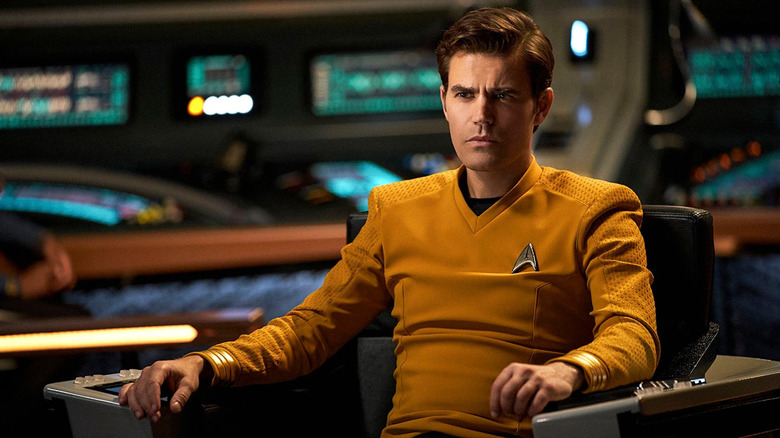
"Star Trek: Strange New Worlds" may boldly go where no man has gone before, but actor Paul Wesley wasn't quite so bold when it came to approaching a certain captain. Wesley plays Captain Kirk — the same Captain Kirk played by original series star William Shatner. But when the 40-year-old actor found himself seated next to the "Star Trek" veteran aboard a recent flight, he found that he simply couldn't start talking shop.
"I was still playing a little bit coy about it," he told Collider. "I was under this sworn secrecy, NDA madness, so I wasn't able to be like, 'Hey, so, as you know, I'm playing Kirk, give me the tips.' I had to kind of tiptoe, and I had to really play it dumb in a way."
Keeping your upcoming role a secret from friends and family is one thing, but keeping it from Captain Kirk himself? That must have taken a lot of restraint. "I wanted so badly to just talk to him about it so openly," he added.
If there's one thing Shatner could have helped him with, it's the role of Captain Kirk. After all, he played the iconic starship captain for almost 30 years, from the original series debut back in 1966 to "Star Trek Generations" in 1994. Unfortunately, it wasn't meant to be, and Wesley instead held onto his secret casting. But there's another good reason not to bother the "Trek" icon.
Not-So-Boldly Going Where Shatner Had Gone Before
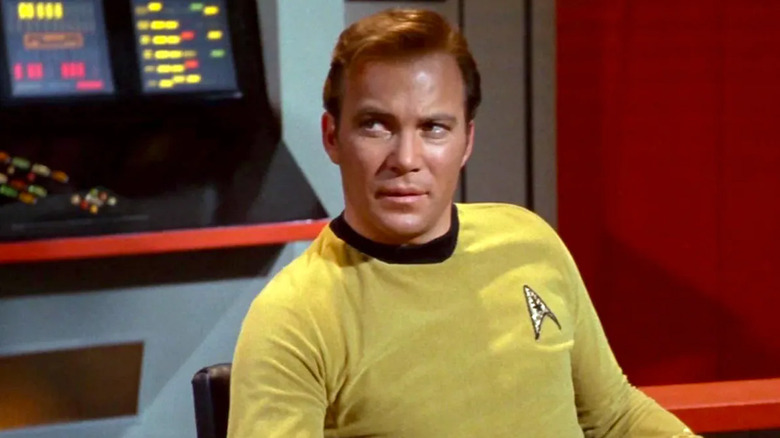
Although Wesley was about to board the USS Enterprise for the first time, William Shatner had just come back from a real-life space mission: a space flight aboard Jeff Bezos' rocket, New Shepard. Wesley continued to Collider:
"I didn't want to bother him. He literally just got back from space, and he was on this plane, and we happened to be sitting next to each other. I also didn't want to sit there and talk his ear off for four hours."
That's right — at the age of 90, Shatner joined the Blue Origin space flight to become the oldest human in space.
"I'm so filled with emotion about what just happened," said Shatner following the 11-minute flight. "It's extraordinary, extraordinary. It's so much larger than me and life. It hasn't got anything to do with the little green men and the blue orb. It has to do with the enormity and the quickness and the suddenness of life and death. To see the blue color whip by you, and now you're staring into blackness ... everybody in the world needs to do this."
Ultimately, Wesley chose not to quiz Shatner about his time as Kirk, instead having a more casual chat with the man who boldly went there before. Wesley went on:
"We talked a little bit, but it was really less about Kirk. I'm sure he's been talking about Kirk for the last however many years and I think it was really more about just sort of chatting ... "He's a classy guy. When the announcement came out that I was playing Kirk, he tweeted, 'Congratulations.' I just thought that was such a classy move. He didn't have to do that at all."
"Star Trek: Strange New Worlds" season 1 is out now on Paramount+.
Read this next: Every Star Trek Show And Movie In Chronological Order
The post Paul Wesley Couldn't Ask William Shatner For Any Captain Kirk Advice appeared first on /Film.
Doctor Who Spinoffs You Didn't Know Existed
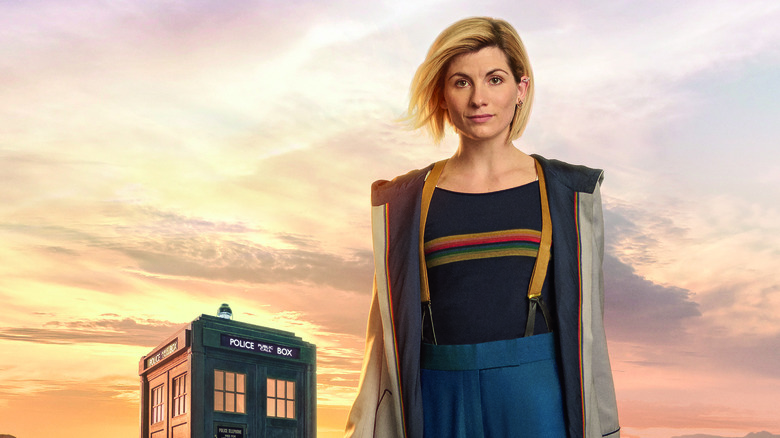
First making its debut back in 1963, "Doctor Who" has proven to be one of television's most enduring science fiction franchises. Having evolved thanks to countless reinventions over the decades, the series continues to chronicle the time-traveling, interplanetary adventures of the eternal Time Lord known only as the Doctor. Meanwhile, "Doctor Who" continues to captivate its loyal fans while engaging new ones as 13th Doctor Jodie Whittaker is preparing to relinquish her role to Ncuti Gatwa, who will make Whovian history as the first Black actor to play the role (just as Whittaker did the same as the first female Doctor).
While the original series ended in 1989, BBC's bold and edgy 2005 revival has proven to be an enduring hit. In fact, the show's massive popularity over the years has understandably led to numerous spinoffs, taking the series' mythos into some exciting new directions. While some of these may be fondly remembered by fans, others have faded into the annals of obscurity ... sometimes for very good reason. Read on for a look at these "Doctor Who" spinoffs you never knew existed.
Doctor Who And The Daleks (1965)
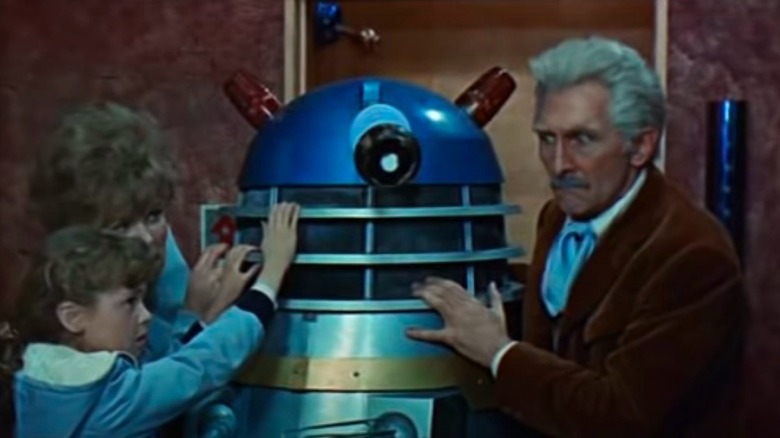
"Doctor Who" proved to be an instant hit with British kids after the original series' 1963 debut, and it didn't take long for plans to emerge that would expand the franchise to the big screen. The result was the first "Doctor Who" film, "Doctor Who and the Daleks," which debuted in 1965 and enlisted Peter Cushing (who had previously played the likes of Sherlock Holmes and vampire-killing Dr. Van Helsing) to play the title role. The film was successful enough to spawn a sequel the following year titled "Daleks — Invasion Earth: 2150 A.D." which, like the first movie, centered around the TV show's most iconic extraterrestrial threat, the Daleks.
Oddly enough, these movies veered significantly from the mythos laid out in the television series. While the protagonist in the TV show was an alien known as the Doctor (played in the first few seasons by actor William Hartnell), who journeyed through time and space in a vessel known as TARDIS), Cushing's character wasn't known as the Doctor, but as Dr. Who. He wasn't even a Time Lord, but an eccentric human scientist who had invented his own TARDIS. The plot involves Dr. Who showing off his new invention to his granddaughter, his niece, and her boyfriend, which results in accidentally transporting them all to the planet Skaros, where the peaceful race known as Thals are finding their very existence threatened by the warlike Daleks and their continual shrieks to "Ex-term-in-ate!"
K-9 And Company (1981)
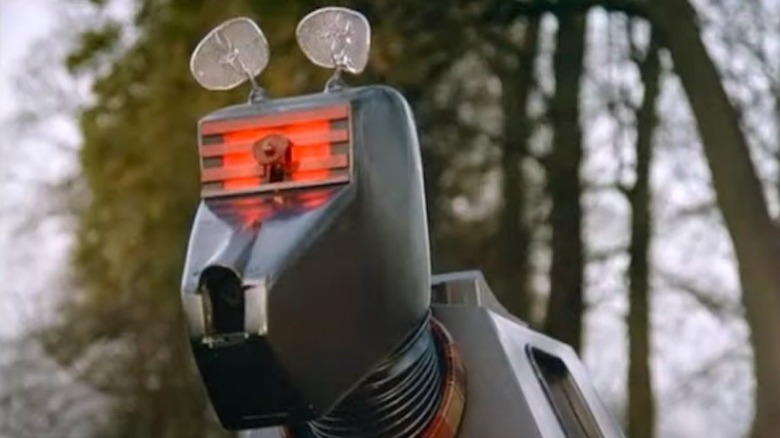
A 1977 episode of "Doctor Who" introduced viewers to K-9, a robotic dog who joined the Doctor's revolving roster of time-and-space-traveling sidekicks. The mechanical mutt wasn't just a robot, but also a massively intelligent, weaponized computer (a laser blaster extended from an opening in his nose in times of peril). K-9 proved to be such a hit with the show's fans that in 1981 a spinoff was developed, "K-9 and Company." The premise featured "Doctor Who" fan-favorite companion Sarah Jane Smith (Elisabeth Sladen) returning to Earth after her sojourns with the Doctor and resuming her career as a journalist. In the pilot episode, Sarah Jane uncovers evidence that a friend is slated to be the victim of a ritualistic murder by a coven of pagan witches, so the Doctor sends her K-9 (voiced by John Leeson) in the hopes that the robot's assistance can help her crack the case and prevent the killing.
"K-9 and Company" was intended as the first officially sanctioned spinoff of "Doctor Who," but it never proceeded any further than the pilot stage. Ultimately, BBC opted not to pick up "K-9 and Company" to series, and instead aired the pilot as a TV movie (subtitled "A Girl's Best Friend") during the 1981 holiday season.
The Stranger (1991-1995)
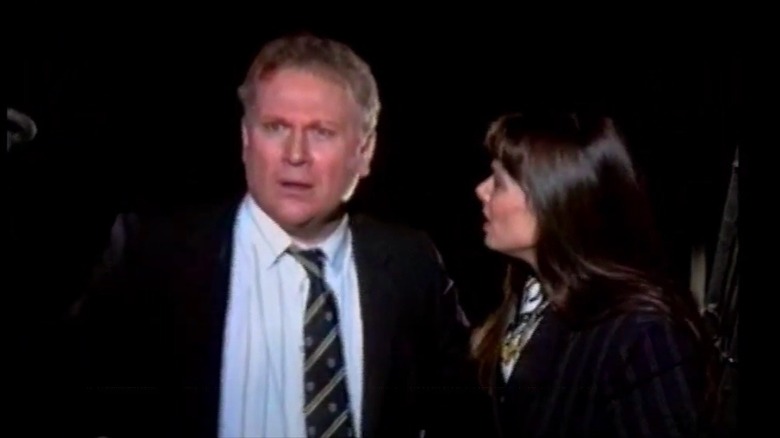
It's debatable whether "The Stranger" is technically a spinoff of "Doctor Who," given that the series of six straight-to-video movies make no mention whatsoever of the Doctor or the TARDIS. However, it's no accident that "The Stranger" is generally viewed by Whovians as a spinoff. As ScreenRant pointed out, the videos represent BBV Productions' somewhat cynical attempt to skirt copyright laws while cashing in on the show's pre-existing audience by casting former "Doctor Who" star Colin Baker (a.k.a. the sixth incarnation of the Doctor) as the unnamed protagonist — the titular Stranger — who, like the Doctor, travels through time and space. In the first movie, 1991's "Summoned By Shadows," Baker is joined by Nicola Bryant, known to Whovians as companion Perri Brown during the mid-1980s. Also featured in the first movie was Michael Wisher, who portrayed Davros, the evil genius responsible for the Daleks.
In five subsequent movies — "More Than a Messiah" (1992), "In Memory Alone" (1993), "The Terror Game" (1994), "Breach of the Peace" (1994), and "Eye of the Beholder" (1995) — more actors associated with the series were brought in. These included Sophie Aldred (who played Ace, companion of the seventh Doctor), Louise Jameson (Leela, companion to the fourth Doctor), David Troughton (who played Peladon in several 1972 "Doctor Who" episodes), and Caroline John (Elizabeth "Liz" Shaw, companion to the third Doctor). In addition to the videos, "The Stranger" was also the basis for a series of four audio dramas.
P.R.O.B.E. (1994-2021)
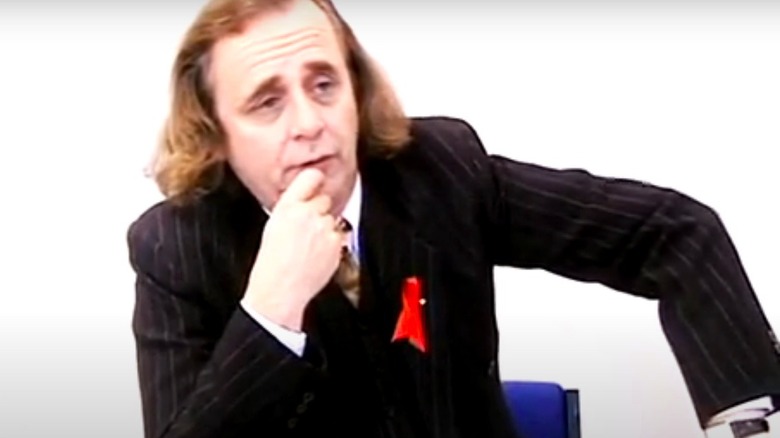
"P.R.O.B.E." holds the distinction of being the first official live-action spinoff of "Doctor Who," a series of direct-to-video features beginning with the 1994 movie "The Zero Imperative" and extending all the way to the 2021 web series "Case Files" (although the initial series concluded with the 1996 movie "P.R.O.B.E.: Ghosts of Winterborne"). The series, also produced by BBV Productions, centered around the character of Liz Shaw (played by Caroline John), the Doctor's one-time companion and eventually a civilian member of the United Nations Intelligence Taskforce (UNIT), the covert British military organization devoted to battling extraterrestrial threats. Liz is working for the organization known as P.R.O.B.E., an acronym for the Preternatural Research Bureau. While the Doctor is never explicitly referenced, "P.R.O.B.E." is set within the same world and generously utilized the "Doctor Who" mythology. Another association came in the casting, with "P.R.O.B.E." featuring an array of former Doctors in non-Doctor roles, including Jon Pertwee, Peter Davison, Colin Baker, and Sylvester McCoy (a.k.a. Doctors #3, 5, 6, and 7, respectively).
Interestingly, the first few "P.R.O.B.E." features were written by actor-writer Mark Gatiss, who went on to appear in such acclaimed TV series as "Game of Thrones," "Sherlock," and, yes, "Doctor Who." In fact, Gatiss also wrote the screenplays for several episodes of the "Doctor Who" revival series, ranging from 2005's "The Unquiet Dead" to 2017's "Empress of Mars."
Downtime (1995)
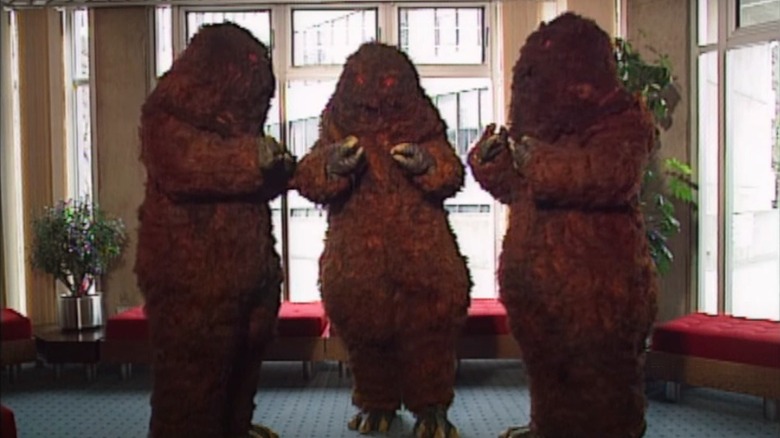
Released as a straight-to-video movie in 1995, "Downtime" focused on Brigadier Lethbridge-Stewart (played by Nicholas Courtney), the now-retired commander of UNIT who frequently provided assistance to the Doctor in his various adventures. In "Downtime," the Brigadier finds himself sucked into a nefarious scheme headed up by Victoria Waterfield (Deborah Watling), who was the second Doctor's companion and is now the vice-chancellor of New World University.
As it turns out, the university is actually a front for Victoria's misguided efforts to assist the one-time "Doctor Who" antagonist known as the Great Intelligence (who has possessed the body of the university's chancellor) in his plot to take over the planet by infecting the world's computers with a virus. Assisting the plan, for reasons too convoluted to explain, is an army of robot Yetis, played in true "Doctor Who" fashion by actors in ridiculously unconvincing monster costumes. As Victoria seeks info on the Brigadier, she contacts Sarah Jane Smith, with Elisabeth Sladen reprising her "Doctor Who" role.
Doctor Who: The Movie (1996)
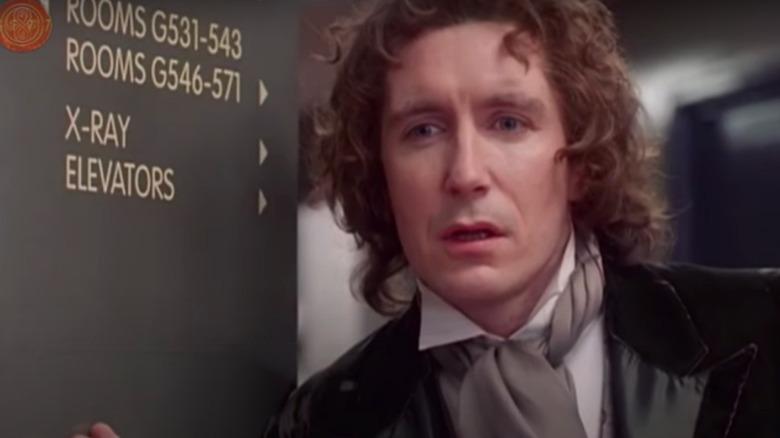
After the original "Doctor Who" ended its run in 1989, plans to revive the franchise for American television resulted in "Doctor Who: The Movie," which aired on the Fox network in 1996. With Paul McGann ("Withnail and I") as the Doctor and Eric Roberts ("Star 80") as the series' big bad The Master, the initial plan was for the movie to serve as a pilot that would kick off a stateside series. As the official "Doctor Who" website pointed out, the series was a co-production between 20th Century Fox, Universal Studios, and BBC, and aired in both the U.S. and the U.K. While ratings in the U.K were solid (9.1 million viewers watched), that was less true in America, where just 5 million or so tuned in.
Meanwhile, fans of the original witnessed the spectacle of the seventh Doctor Sylvester McCoy regenerating into McGann's eighth. While McGann played the Doctor for the shortest amount of time of any actor (the franchise remained idle until 2005), he also held the distinction of being the actor to play the Doctor for the longest period of time, from 1996 until 2005. Fans were delighted when McGann reprised the role in the 2013 "mini-episode" titled "The Night of the Doctor," which made its debut on YouTube and fit within the ongoing Time War storyline to explain the Doctor's absence during the period between "Doctor Who: The Movie" and the series' 2005 return.
Doctor Who: Death Comes To Time (2001)
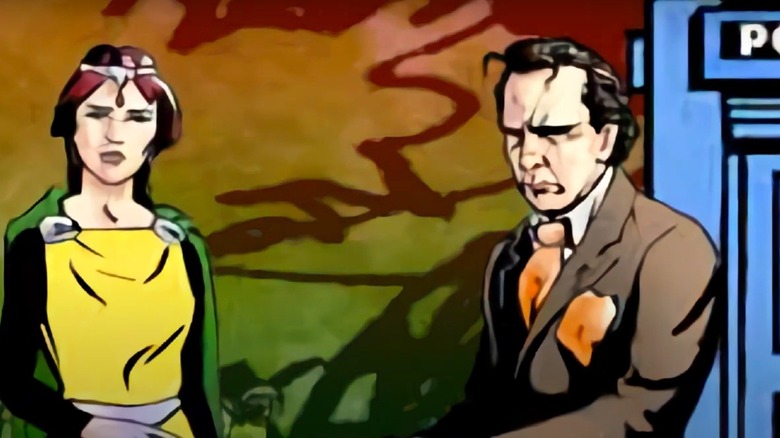
A few years before BBC's 2005 revival of "Doctor Who," the network quenched the hunger of the Whovian fanbase with the 2001 animated web series "Doctor Who: Death Comes to Time." Sylvester McCoy reprised his role to provide the voice of the seventh Doctor in the five-episode series, in which the Doctor faced off against General Tannis (John Sessions) and his plans to rule the universe. In addition, Sophie Aldred returned to voice companion Ace, with additional voice talent including actor and comedian Stephen Fry, actor Kevin Eldon (whose credits include "Sanditon" and "Hot Fuzz"), and "Buffy the Vampire Slayer" star Anthony Head.
"Doctor Who: Death Comes to Time" was BBC's one and only attempt to feature the series via webcast, and reviews of the new-media production at the time were mixed. "McCoy as the Doctor and Aldred as companion Ace recreate their television characters extremely well," wrote the BBC's William Gallagher in his review. "But the rest of the cast are new to it and in almost every case have trouble making their characters believable," he added. "But then they would because the underlying story and the script are like fan fiction rather than a BBC Online drama."
Doctor Who Confidential (2005-2011)
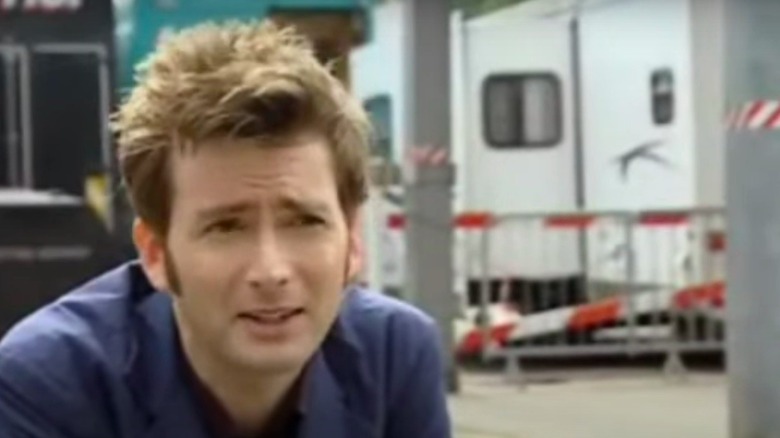
In concert with the 2005 revival of "Doctor Who," which kicked off with Christopher Eccleston as the ninth Doctor (he played the role for a single season before passing it on to David Tennant as the 10th), BBC also began producing a companion documentary series. Titled "Doctor Who Confidential," the series aired on BBC Three and offered fans a deep-dive behind-the-scenes look at the making of each episode.
Despite its popularity with fans, The Guardian reported that BBC canceled "Doctor Who Confidential" in 2011 due to cost-cutting measures. This led to a petition and a Twitter campaign aimed at saving the show, although neither achieved its intended goal. Matt Smith, who was starring as the Doctor at the time, was particularly displeased with BBC's decision to axe the show. "[I was] really sorry," Smith told What's On TV, as reported by Digital Spy. "It's a pity as I think it's a show which can reinvent itself year on year and it's one of the biggest shows on BBC Three." Added Smith: "I guess people come in and have new ideas and want to have their own fresh take on it. But, hey, some you win, some you lose."
Torchwood (2006-2011)
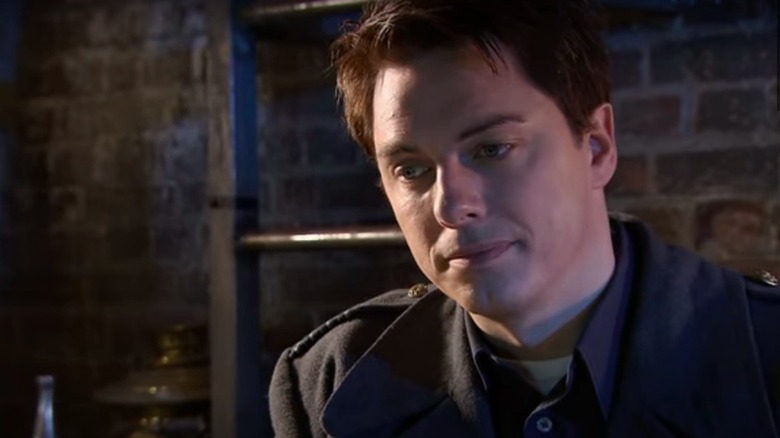
Arguably the best-known spinoff of "Doctor Who," "Torchwood" made its debut just one year after the series' return in 2005. This show centered around fan-favorite Captain Jack Harkness (John Barrowman), who first met the Doctor during the 1940s and was inadvertently made immortal. Jack heads up Torchwood Three, an elite division of the Torchwood Institute, an updated version of UNIT in that it's a covert British organization tasked with protecting Earth from extraterrestrial threats. Serving alongside him are former cop Gwen Cooper (Eve Myles), medical officer Owen Harper (Burn Gorman), bisexual field agent Ianto Jones (who expresses his romantic feelings for Jack, who's also bi) played by Gareth David-Lloyd, and tech expert/computer whiz Toshiko "Tosh" Sato (Naoko Mori).
While the new "Doctor Who" was grittier than the original, it was still family-friendly, something that could not be said about "Torchwood." As reviewer Robert Lloyd wrote in the Los Angeles Times, the characters in the show are "unusually elastic in their sexuality," pointing out that "Torchwood" is far from "a kiddie show" by pointing to a plot involving an alien that "feeds off of human orgasms." According to ScreenRant, "Torchwood" was never officially canceled but hasn't aired since its fourth season in 2011 (the reason appears to be series creator Russell T. Davies desire to work on various other projects). Meanwhile, plans for a "Torchwood" audio-only drama that would have reunited Jack with David Tennant's Doctor (titled "Torchwood: Absent Friends") was scuttled in 2021.
Totally Doctor Who (2006-2007)
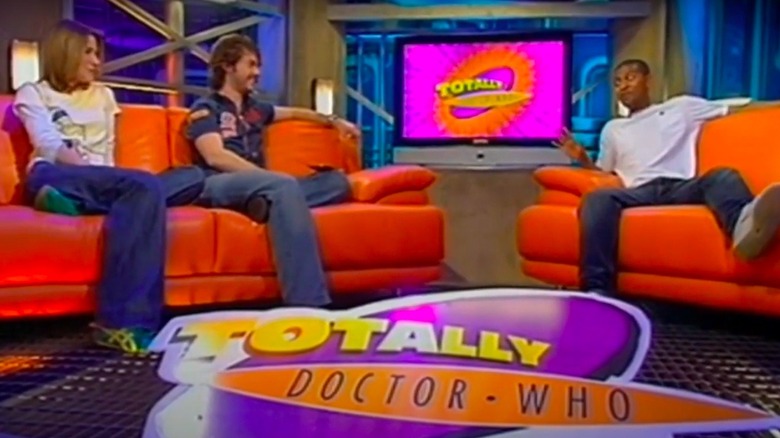
In addition to the "Doctor Who" companion show "Doctor Who Confidential," in 2006 BBC launched "Totally Doctor Who" on its kids-themed CBBC channel. Aimed at younger viewers, "Totally Doctor Who" utilized a talk show format in which hosts Barney Harwood and Kirsten O'Brien welcomed "Doctor Who" stars to discuss their roles. In addition, noted the show's official website, "Totally Doctor Who" also featured "exclusive behind-the-scenes clips" and fun competitions to draw in viewers. One of these, coinciding with the launch of the show, was intended to recruit eight "cadets" for the show's "Companion Academy," selected after enduring "the grueling physical and mental challenges of the Academy" with the grand prize — a day-long visit to the "Doctor Who" set in Cardiff, Wales — waiting at the finish line.
The 30-minute series didn't last long, with just 25 episodes aired in 2006 and 2007. Along the way, guests on the show included "Doctor Who" star David Tennant, executive producer Russell T. Davies, and Peter Capaldi, who discussed his recurring "Torchwood" role as John Frobisher years before being tapped to be the 12th Doctor.
The Sarah Jane Adventures (2007-2011)
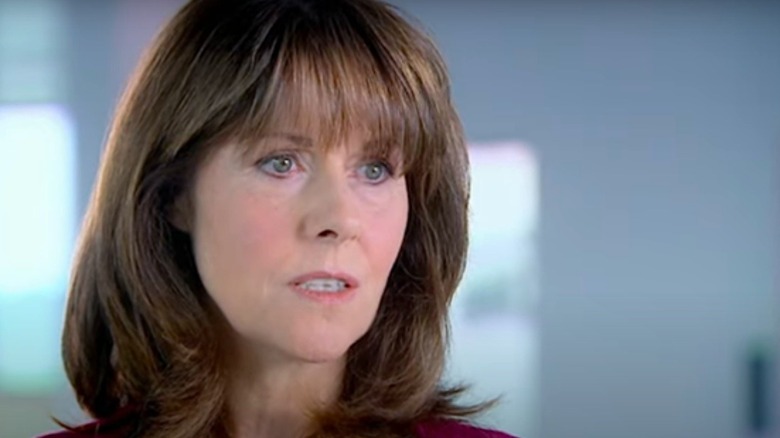
Elisabeth Sladen was as close to "Doctor Who" royalty as it gets. Her character Sarah Jane Smith first appeared on the show in 1973 as a companion to both John Pertwee's and Tom Baker's iterations of the Doctor and returned as a recurring guest star throughout the ensuing years. In fact, Sladen reprised Sarah Jane in a 2006 episode of "Doctor Who" alongside David Tennant. While promoting that appearance, she told BBC that would be "the last time that you'll see her in the new series, but not the last time you'll have seen Sarah Jane — I hope not."
As she presciently predicted, she was soon seen in "The Sarah Jane Adventures," which debuted in early 2007. Unlike her previous star turn in the ill-fated "K-9 and Company" pilot, it was Sarah Jane and not her robot dog sidekick that was the focus. Back to being an investigative journalist, she is partnered with some teenage pals to fend off encroaching alien threats to the planet. "The Sarah Jane Adventures" continued until 2011, the show ending with Sladen's death at age 65. Because the series was abruptly halted without any resolution, in 2020 "Doctor Who" exec producer Russell T. Davies wrote a special episode, debuting on social media, to conclude the decades-long story of Sarah Jane Smith.
K9 (2009)
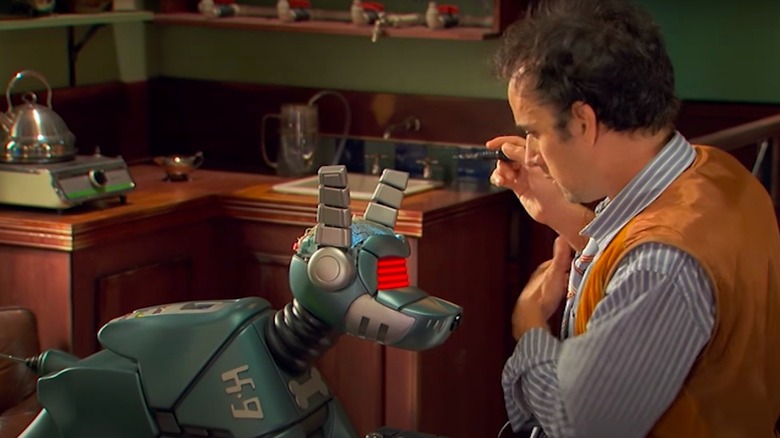
More than 20 years after the BBC opted not to proceed with its "Doctor Who" spinoff "K-9 and Company," another attempt was made to develop a show centering on the Doctor's robotic dog sidekick. The result was 2009's "K9," with actor John Leeson tapped to supply K9's voice, which he first originated back in the 1970s. Given that the latest iteration of K9 made a few appearances in "The Sarah Jane Adventures," "K9" — which ran for two 13-episode seasons — can be seen as a spinoff of a spinoff.
As co-creator Bob Baker explained in a press release announcing the show, "K9" was aimed at "younger 'Doctor Who' fans," with the character given "a new lease of life and a new look." Meanwhile, a series synopsis from production company Stewart & Wall Entertainment detailed the premise, in which a trio of British teenagers and a professor find themselves befriended by K9 after the latter's experiments in time travel "ripped K9 from space and time and now holds him bound to Earth." Being on Earth, Baker said in another interview, wouldn't prevent the robotic dog from battling "a menagerie of super monster 'uglies'" before the show ended its run in 2010.
Doctor Who: Dreamland (2009)
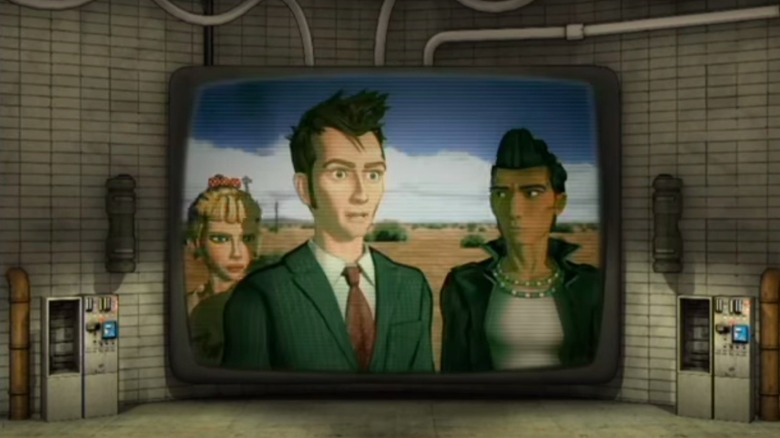
David Tennant reprised his role as the 10th Doctor in an animated serial, "Doctor Who: Dreamland," that was originally launched on BBC's Red Button digital service, the "Doctor Who" website, and BBC's iPlayer. According to a 2009 BBC press release, Tennant's animated Doctor goes back in time to Roswell, New Mexico circa 1947, at the time when a UFO has long been rumored to have crashed there. "Dreamland is a remarkable project and I'm thrilled with it," said "Doctor Who" exec producer Russell T. Davies of "Dreamland," proclaiming that it "promises to send the Doctor into a whole new visual dimension."
"Dreamland," noted Den of Geek, was actually the second animated project featuring Tennant's Doctor. As the Telegraph reported, a similar serial titled "Doctor Who: The Infinite Quest" was produced in 2007, consisting of 13 short episodes of less than four minutes in length. Each episode of "The Infinite Quest" initially aired within an episode of "Totally Doctor Who."
Sarah Jane's Alien Files (2010)

Not only did "The Sarah Jane Adventures" provide a launching pad for "K9," but it also spawned a second spinoff, "Sarah Jane's Alien Files," launching in 2010. Also known as "SJA: Alien Files," the show was a series of 30-minute specials that were essentially clip shows compiling previously filmed footage from "The Sarah Janes Adventures" (and, occasionally, "Doctor Who") that focused on the various extraterrestrial beings who found themselves facing off against Sarah Jane Smith and her plucky pals. The premise of the show was to give viewers additional insight into those alien characters beyond what was provided during "The Sarah Jane Adventures." While the specials couldn't have cost much to produce, the "Alien Files" ultimately didn't last for too long as only six specials were produced.
Interestingly enough, the series lives on — in a sense, at least — on TikTok, where brief clips under the banner of "sarah jane's alien files" have racked up more than 47 million views.
Class (2016)
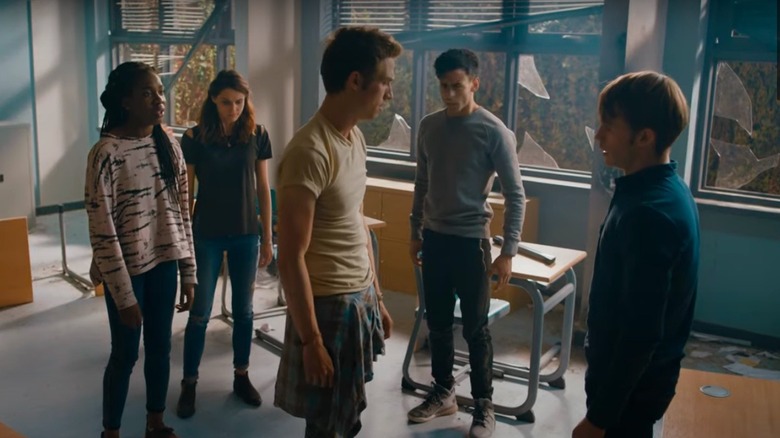
"Doctor Who" fans were greeted with yet another spinoff titled "Class." This one was set at the fictional Coal Hill Academy, a recurring locale for the Doctor's adventures over the years. The series focused on four students (played by Greg Austin, Sophie Hopkins, Fady Elsayed, and Vivian Oparah) and their physics teacher (Katherine Kelly) who have been tasked by the 12th Doctor (Peter Capaldi) to help him guard the planet from malevolent extraterrestrials. As series creator Patrick Ness explained in an interview with Empire, the idea was to focus on what happens to Earthlings who become involved with the Doctor after he saves the day and exits, leaving them to pick up the pieces. "How do you deal with it? I'm interested in real consequences," said Ness. "The Doctor is always exciting, but he never stays. He goes off on the next adventure. What happens to real people?"
As FanSided reported, ratings for the new spinoff were "disappointing." While big plans had been set in motion (including a series of YA novels), the poor ratings weren't enough to justify a second season, leading "Class" to be canceled. However, the story didn't entirely end there, with the original cast returning to reprise their roles in 2018 for six audio dramas. "The characters and their relationships are key to the success of a series like 'Class,' and the intimacy of the audio medium allows us to bring that to the fore," explained Ness of the series' audio-only return.
TIme Lord Victorious (2020-2021)
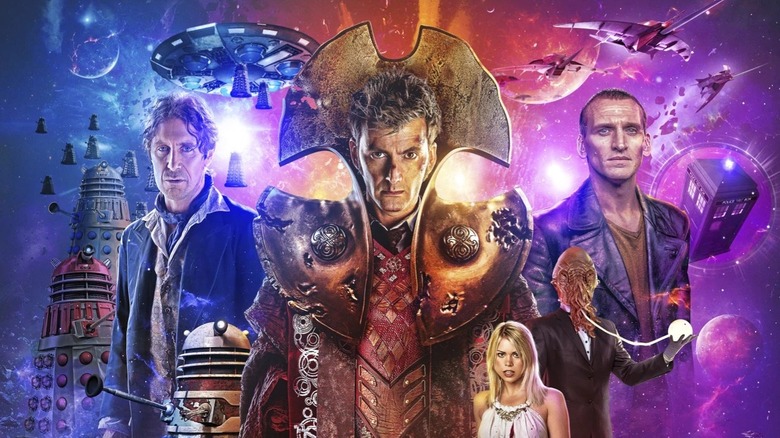
In 2020, BBC announced a new "Doctor Who" saga that was promised to be "a story like no other." Featuring several past stars from the franchise, the multi-platform saga "Time Lord Victorious" unfolded over the course of 12 weeks and is arguably the most ambitious project in the franchise's 50-plus-year history. "Time Lord Victorious" encompassed an "immersive" theatrical presentation ("Doctor Who: Time Fracture"), several audio adventures (featuring previous stars David Tennant, Paul McGann, Christopher Eccleston, and Tom Baker reprising their respective iterations of the Doctor), an animated feature ("Daleks!"), short stories, books, comics, games, digital trading cards, and even a t-shirt. There were even two "escape room" experiences — "The Hollow Planet," and "A Dalek Awakens."
As The Guardian reported, "Time Lord Victorious" took more than a year to create, with more than 5,700 actors vying for roles. Director Tom Maller described the project as "a love letter" to "Doctor Who" fans, although he also admitted there was so much content on so many different platforms that "when you do the maths it's near impossible to see or do everything." However, he also pointed out that while "Time Lord Victorious" was both extensive and exhaustive, it could also be enjoyed by casual fans who may not have an encyclopedic recall of "Doctor Who" lore. "This is a standalone experience," he explained. "There's a beginning, middle, and end that are explained, then you experience, then you leave with the memory forever."
Read this next: Single-Season '80s Sci-Fi And Fantasy Shows That Deserve A Second Shot
The post Doctor Who Spinoffs You Didn't Know Existed appeared first on /Film.
Doom mod remakes Doom 3 with stunning HD texture pack
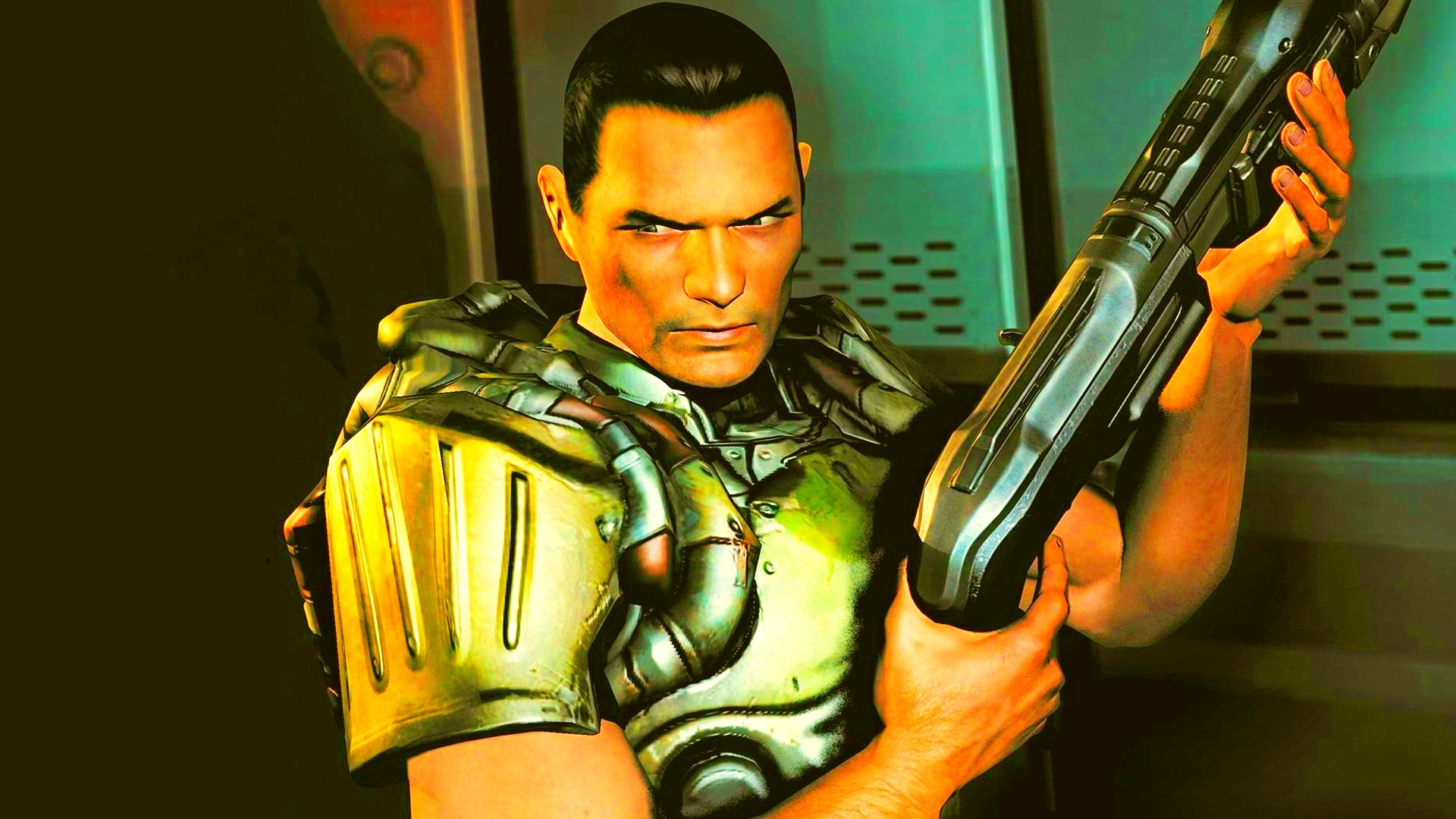
Doom mods never disappoint, transforming id Software’s iconic PC FPS series in myriad ways, right down to replacing the furious Doomguy with the adorable, and comparatively very relaxed, cat from Stray. And now it’s the turn of Doom 3, which thanks to a new mod has just been completely reworked with a stunning HD texture pack.
Governments Ramp Up Demands for User Info, Twitter Warns
Twitter warned Thursday that governments around the globe are asking the company to remove content or snoop on private details of user accounts at an alarming rate.
How easy is it to upgrade a Framework laptop?
Framework sold its eponymous laptop on the promise that end users should feel comfortable enough to fix almost any hardware problem themselves. Replacing a component shouldn’t be the reserve of dedicated service professionals if all you need is a T5 screwdriver and patience.
When the company released its new 12th-generation Intel Core mainboards, it couriered over a new board which could be inserted into last year’s model. And given that I don’t consider myself to be a very confident DIY-er, it made sense for me to put Framework’s promises to the test.
As you can see in the video below, laptops aren’t yet at the stage where you can pull components out as if they were Lego bricks. Although I think the industry is missing a trick by not making these components a lot simpler to assemble by standardizing the connections.
That said, one of the biggest hurdles was the ZIF connectors, which briefly made me wonder if I was really cut out for tech journalism. Those little lay-flat ribbons may be great for space but they’re a nightmare if you’ve got big hands and poor eyesight.
But, as I said when the new hardware was released, it’s empowering just how easy this stuff can be, more or less, if companies make even the smallest bit of effort. I was able to do this, talk to the camera (which probably slowed me down by quite a bit) and not blow myself up. And if I can do this, then surely you can too.
Entire police department quits after Black woman hired as city manager in North Carolina

No need to defund the police in small-town Kenly, North Carolina. The entire police department quit after a Black woman, Justine Jones, was hired as city manager. At least some cited a "hostile" work environment in their resignation letters as the reason for the mass exodus, according to CNN, while Police Chief Josh Gibson griped on social media that Jones wrote him up a few times and was "targeting" him. — Read the rest
Genndy Tartakovsky's Original Plan For Primal Sounds Like A Very Different Show
Genndy Tartakovsky is one of the best living animators, a director who always tries to push forward what the medium can do, whether on TV or on film. In under three decades, Tartakovsky has delivered many classic cartoons that have captivated children and adults everywhere, whether they are cartoons set in a galaxy far, far away or starring a small boy genius or an out-of-time samurai.
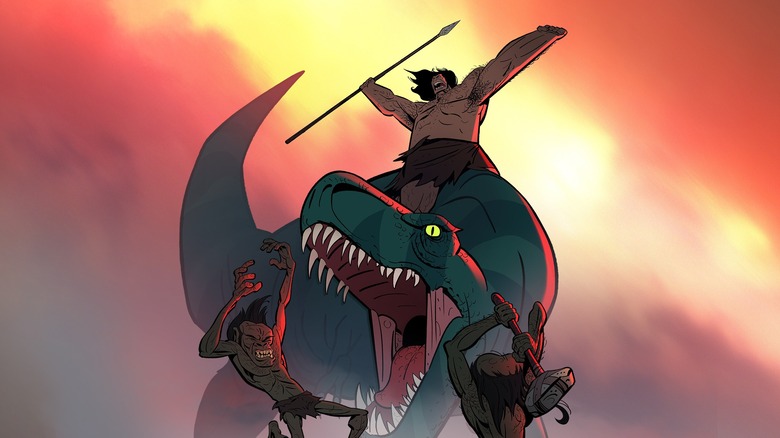
His most recent show, "Primal," feels like his magnum opus, the show his entire career has been building up to, combining exquisite action sequences with a huge heart and great animation. The show follows a caveman named Spear and a T-Rex named Fang as they navigate a world of savagery and blood, trying to survive, bonding over their respective trauma, and killing everything that moves.
While most shows change a lot between development and the final product, Tartakovsky's original plan for "Primal" could have been a vastly different show.
A Kid And A Dinosaur
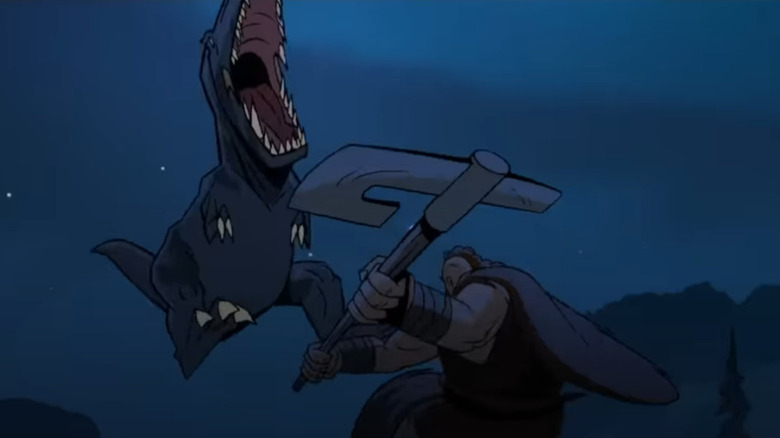
Speaking to CBR, Tartakovsky revealed that he first came up with the idea for "Primal" over a decade ago, and it all started with doodles:
"I started doodling this little kid and a dinosaur, and he was riding a dinosaur. It was gonna be like a normal, 6-11 type of show, and it kind of never went anywhere. I always believe in the organic process of developing a show or story that if it's meant to be, it's gonna find its place. So that part, never really connected and none of the stories really stuck, so I kind of left it alone."
Of course, given Tartakovsky's career path working on cartoons aimed at young audiences, this makes perfect sense. A decade ago, the director had just finished his underseen cult-favorite "Sym-Bionic Titan" and was working on the first "Hotel Transylvania," so a show about a kid and a dinosaur makes sense. After all, Tartakovsky has never shied away from anachronisms, whether it's Dexter bringing a caveman to modern times or a samurai meeting and befriending a Scotsman and a group of Spartans.
So what could a show about a kid and a dinosaur have looked like? Well, perhaps it would have looked something like the upcoming "Marvel's Moon Girl and Devil Dinosaur," light, full of energy, with tons of action, and fun for all ages. This is not a bad thing, however. After all, "Samurai Jack" was already excellent and that show was aimed at all audiences, as was "Clone Wars" which remains the single best "Star Wars" TV show ever made.
A Tale Of Savagery
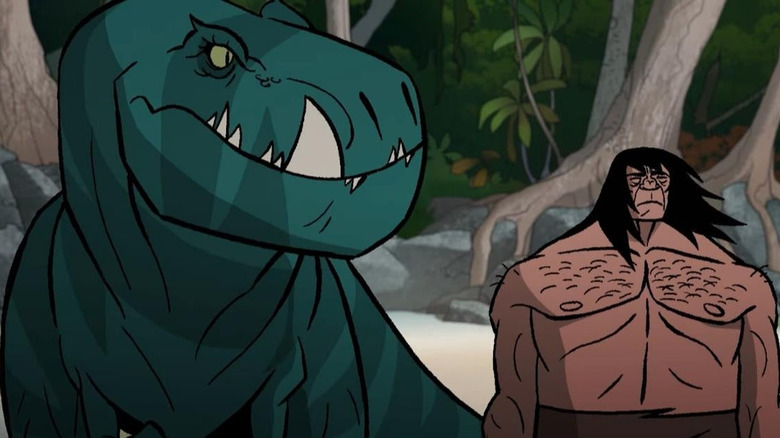
Thankfully, things changed after "Samurai Jack" came back as an adult show on Adult Swim. The fights could be bloody and the show could explore more complex themes than the original cartoon's run. That last season of the show contained every lesson and innovation Tartakovsky had gained throughout his career up to that point, from dynamic action and fight choreography to a bigger focus on emotional stories and more sequences with zero dialogue.
That's when Tartakovsky decided to make a new show build out of those sequences with no dialogue, taking a page out of Golden Age cartoons to tell stories with no words, just images. And what story lent itself perfectly to that idea? Apparently, that's when Tartakovsky remembered his "little idea about the kid and the dinosaur." So he aged the characters up to make it more adult, added a big dose of "Conan the Barbarian" pulp, and got one of the most unique shows around. Like "Conan," Tartakovsky's "Primal" cares not about any rule other than the rule of cool, mixing characters and creatures from vastly different eras and genres to deliver a wholly unique story.
Of course, the show was a hit. Not only did it win an Emmy, but now Tartakovsky is interested in making this little show about a human and a dinosaur into an anthology telling very different stories from aliens to WWII. So much for the cute little idea about a kid and his unique pet!
"Primal" is streaming on HBO Max. New episodes air on Adult Swim and HBO Max.
Read this next: The 20 Most Underrated Disney Movies You Need To See
The post Genndy Tartakovsky's Original Plan For Primal Sounds Like A Very Different Show appeared first on /Film.
The Geekbox: Episode 628
Wherein we discuss San Diego Comic-Con 2022, some apparent alternate-universe Cadillac Escalades, Severance (spoiler warning!), Better Call Saul (also spoiler warning!), and why most prequels suck. Starring Ryan Scott and Ryan Higgins.
Malicious Macro-Enabled Docs Delivered via Container Files to Bypass Microsoft Protections
Threat actors are embedding macro-enabled Office documents in container files such as archives and disk images to circumvent a recently rolled-out macro-blocking feature in Microsoft Office.
Will Smith finally apologizes to Chris Rock: "I'm trying not to think of myself as a piece of sh*t" (video)

Calling this a delayed reaction would be putting it mildly, but four months after Will Smith slugged Oscar host Chris Rock in the head over a joke he didn't like (and right before Smith won the Best Actor award for his role in "King Richard"), he has finally apologized to the comedian in a 5-minute video (see below). — Read the rest
The Pitfall Peter Dinklage Hopes House Of Dragons Can Avoid
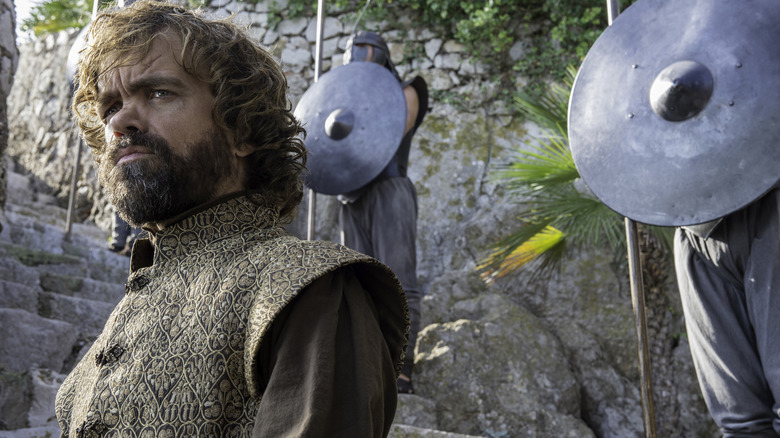
If you're tired of Peter Dinklage and his refreshingly candid, unfiltered thoughts on "Game of Thrones" and the franchise in general, well, he put it best himself in "Game of Thrones" as Tyrion Lannister: "You've come to the wrong place."
The outspoken and immensely talented actor has never shied away from making headlines, whether it be taking a stand against the depiction of little people in movies these days, defending the divisive finale of "Game of Thrones," or even opening up about his own mixed feelings about the prequel/spin-off series "House of the Dragon." After accumulating the high-profile roles that he has and never once coming across as anything less than a gentleman, Dinklage has more than earned the right to wade into the discourse and be honest about how he feels regarding any topic out there.
His latest comments -- wouldn't you know it -- once again have to do with the fantasy land of Westeros and the next adventure that will take place in author George R.R. Martin's epic story. In the aftermath of the original series ending, "House of the Dragon" has quite a lot riding on its success. Despite the lingering skepticism among fans of "Game of Thrones" (Dinklage included!), even he has to admit that the follow-up series comes with plenty of potential ... provided that it steers clear of one specific obstacle that has taken down many a franchise before.
Addressing The Dragon In The Room
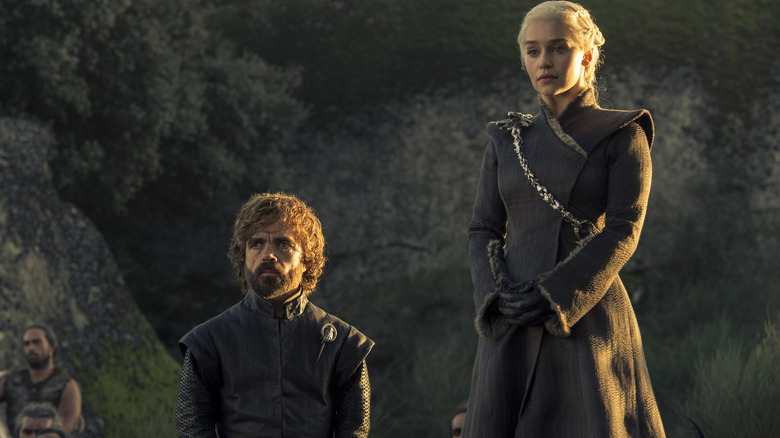
As much as the widely-derided final season of "Game of Thrones" may dominate our memories of the hit HBO show, it would be a mistake to act as if there's no positive lasting legacy whatsoever. One of the first major examples of prestige television benefitting a genuinely blockbuster look (and budget), "Game of Thrones" continues to influence both fantasy and non-fantasy productions that have followed in its wake. Peter Dinklage remains aware of this and, quite shrewdly, realizes that this could end up being a stumbling block for those trying to bring "House of the Dragon" to life.
In an interview with Independent, the former Hand of the Queen underlined the importance of the spin-off show charting its own path altogether, resisting the temptation to merely become another "Game of Thrones." According to Dinklage:
"I think the trick is not to try to recreate 'Thrones.' If you try to recreate it, that feels like a money grab. With a lot of sequels, the reason for them is that the first one made a lot of money, which is why they aren't as strong. But I am excited to watch the 'House of the Dragon,' purely as a viewer, not knowing what will happen next."
Aside from the confirmation that the actor has never read Martin's "Fire & Blood," which "House of the Dragon" is based on, the key takeaway here should be that Dinklage has an impressive grasp on why so many sequels struggle to match up to the original. From a business point-of-view, HBO likely wants "House of the Dragon" to fill the exact same niche "Game of Thrones" did. Creatively, however, Dinklage knows that couldn't be further from the truth.
"House of the Dragon" flies into HBO on August 21, 2022.
Read this next: 13 Fantasy Films That Never Got Sequels
The post The Pitfall Peter Dinklage Hopes House Of Dragons Can Avoid appeared first on /Film.
Star Citizen – Alpha 3.17.2 increases server capacity to 100 players & implements AI Planetary Nav Mesh
Cloud Imperium Games today released Star Citizen – Alpha 3.17.2, bringing new content and features to the expanding ‘verse. Alpha 3.17.2 introduces the all-new Siege of Orison dynamic event, expands explorable derelict ships and outposts, implements the first iteration of AI Planetary Nav Mesh, adds the drivable Anvil Centurion anti-aircraft vehicle, and more. Furthermore, this … Continue reading Star Citizen – Alpha 3.17.2 increases server capacity to 100 players & implements AI Planetary Nav Mesh →
The post Star Citizen – Alpha 3.17.2 increases server capacity to 100 players & implements AI Planetary Nav Mesh appeared first on DSOGaming.
James Spader's Casting On The Blacklist Came In Just Under The Wire
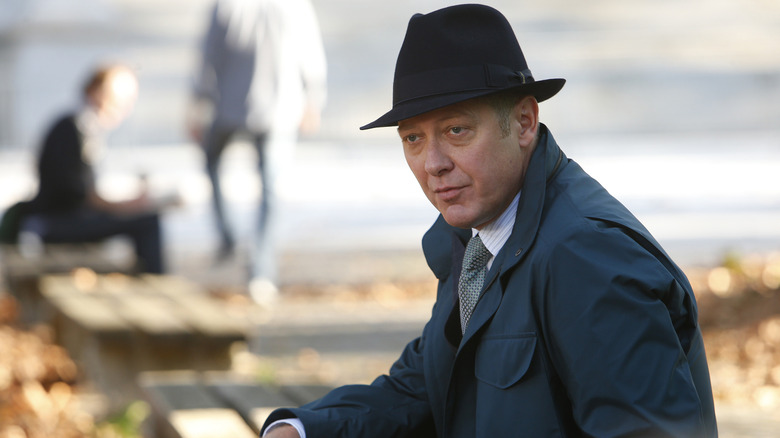
The television pilot season often plays out just like the serial dramas being produced for viewers. The mad rush by producers to sign leading actors from the same talent pool is quite similar to a frantic build to an episode's climax. Next is the cliffhanger, where producers wait with bated breath to see if the network picks up their series. In the case of NBC's "The Blacklist," it was a real nail-biter just to see if they could sign the star of the show.
"The Blacklist" puts a spin on the standard criminal procedural drama with a villain as the lead character. James Spader plays Raymond "Red" Reddington, a wanted criminal who begins working with the FBI to take down the nasty folks he spent decades working alongside. Because of the nuanced duality of the main character, getting the right actor for the role was of the utmost importance.
The show was an instant hit and Spader received praise for his portrayal of Reddington. "The Blacklist" has become a flagship series for NBC, which was struggling in last place when the show premiered in 2013. They've since jumped to second behind CBS.
But before production even began on the show, the race to cast the lead of the series came down to the wire.
Spader Joined Days Before Production Began
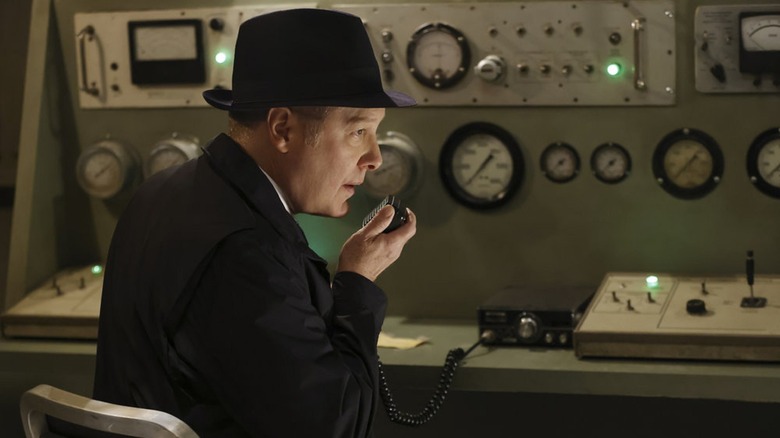
It's hard to imagine anyone but James Spader as Red Reddington in "The Blacklist" but even the show's creators didn't know he'd be joining the series until the last minute. According to Variety, Spader agreed to the part a mere three days before production began on the pilot.
Executive producer and showrunner John Eisendrath didn't even meet Spader in person until he was on the set getting his head shaved for the first episode. Eisendrath told Collider that Spader was a natural for the part and credits the actor for much of the show's success. Eisendrath said:
"It's hard for me to believe that he's never played a master criminal before because he has the ability to be mysterious, dangerous, and mischievous, in a way that seems perfectly suited to playing someone where you don't know whether he's good or bad. I feel like we were incredibly lucky, in that James Spader, as an actor, fit so perfectly with the character that was written."
Eisendrath called the process for casting Red Reddington difficult because of the character's complexity. The fact that it was network television, which calls for 22 episodes a season instead of the more appealing slate of just 10 for a cable series, made the casting even more challenging.
Forget "The Blacklist," before his last-minute signing to play the series lead, Spader wasn't even on the original casting wish list. First, the network took a swing on some other big names.
Spader Wasn't The First Choice As Red
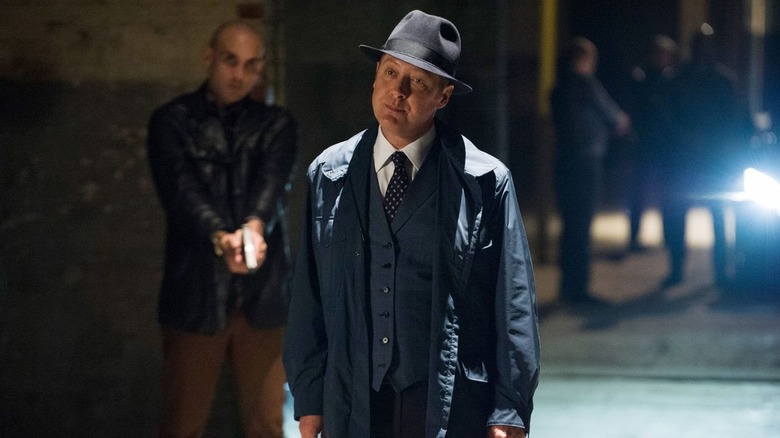
Before Spader, series producers had other Red Reddingtons in mind. According to Eisendrath, they approached Kiefer Sutherland, Richard Gere, Bryan Cranston, and Pierce Brosnan to play the lead character.
But once Spader was chosen, it was obvious that he was a perfect choice. He immediately began inserting his own take on the character, including his hypnotic voice and of course, the iconic fedora. In a conversation that sounds like Spader channeling his inner-Robert California, the actor insisted on the headpiece. Eisendrath said:
"He always thought that his character should wear a hat and we were all like, 'No, no hat. No hat. Nobody's going to want to see a guy with a hat.' And he was like, 'I think he wears a hat.' He was very insistent that his character would wear a hat. And he was totally right. I love the hat now. Now, everybody is like, 'Oh, my god, the hat is fantastic! It's so him! He has to wear a hat!'"
Last May "The Blacklist" wrapped on its 9th season and will return in the fall for a 10th season, pushing the series over the 200-episode mark. That's rarified air for a network series in the streaming era of television. The distinction looms even more impressive when discovering that James Spader signed on just three days before it all began.
Read this next: The Best Movies Of 2021
The post James Spader's Casting on The Blacklist Came In Just Under The Wire appeared first on /Film.
The 15 Best Robert De Niro Films, Ranked
Back at the turn of the 21st century, "The Adventures of Rocky and Bullwinkle" was the nadir of Robert De Niro's career. Surely the great actor couldn't fall any further? Well, teeth continued to grit as De Niro got caught in the proverbial middle of the road, appearing in the likes of "The Score," "Meet the Fockers," and "Hide and Seek."
Later, in the early 2010s, we were treated to "Freelancers," "Red Lights" and "The Bag Man." Heard of them? Me neither. I had to trawl through De Niro's IMDb page for those. However, what I do remember is "Dirty Grandpa," which was followed four years later by "The War with Grandpa" (not canon with each other, I believe). How did this happen? To any child who hasn't heard of the 1970s, Robert De Niro must seem like a joke.
Fortunately, there have been glimmers of hope. De Niro got an Oscar nod for "Silver Linings Playbook," which was better, but still not great. Then, there was the one-two punch of "Joker" and "The Irishman," both released in 2019. That was probably the best De Niro double bill since 1995's "Heat" and "Casino." Still, De Niro's 21st century resume is dumbfounding.
But it hasn't always been this way. Robert De Niro was a leading actor of the New Hollywood period, which saw him appear in more classic films than just about anyone, and he can still turn in a stellar performance when the material is strong enough. To prove it — and to simply remind you of better times — here are his 15 best films.
Wag The Dog
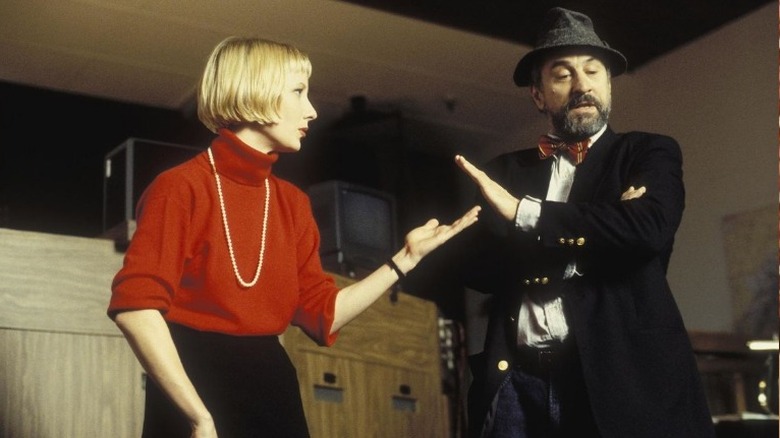
"War is showbusiness," says Stanley Motss (Dustin Hoffman), a bronzed Hollywood producer who lives in an ether of wealth and opulence. Motss is speaking to Conrad Brean (De Niro), a White House spin doctor tasked with distracting the public from a presidential sex scandal. Skilled in disinformation though he may be, Brean's latest assignment needs big production values, which is where Motss comes in. Studios, green screens, CGI — Motss has it all, and he's using it to create a fake American war in Albania.
As a character, Brean doesn't give De Niro much to play with. He's very much a background operator; it's Stanely Motts, whom Hoffman plays with preening bombast, who's the real star. Brean shifts gears when he has to, though, and De Niro shines during a CIA interrogation scene where Brean disarms his target with total, unadulterated spin.
The real point of "Wag the Dog" is that the masses can be manipulated by evocative imagery and sentimental narratives. I don't disagree, but faking a whole war? That's not plausible. Waging a real war on false pretenses, sure. But creating a fictitious war with just a green screen and some media commentary? I don't think so.
However, that doesn't mean the film isn't prescient. Quite the contrary, in fact. In 1998, just months after the film was released, the Monica Lewinsky scandal broke, followed by missile strikes on Sudan and Afghanistan (via CNN). A distraction? Perhaps!
The Irishman
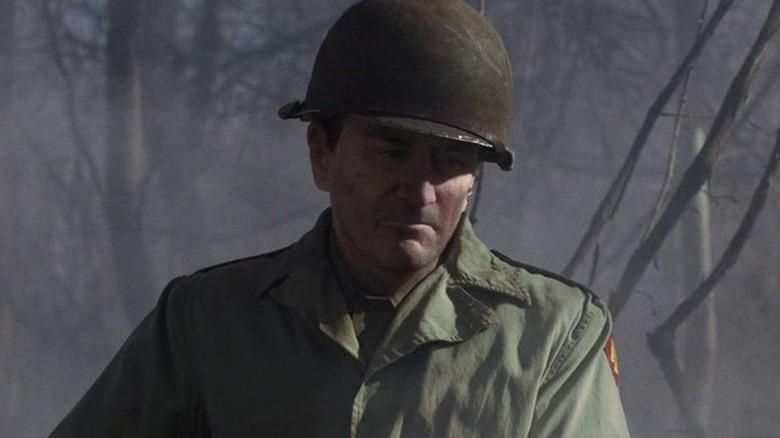
If you discount "Heat," the Michael Mann epic in which Pacino and De Niro shared the screen for a single scene, "The Irishman" is the first joint project truly worthy of both actors. The vast 3-hour, 29-minute narrative charts the life of Frank Sheeran (De Niro), an Irish American union official with links to the mob and a close relationship with Jimmy Hoffa (Al Pacino), the infamous Teamsters leader who went missing in 1975.
Theories abound about Hoffa's fate, but "The Irishman" offers a very clear vision of what happened (whether or not it's accurate, however, is a subject of some debate). As for the rest of the movie, well, it's far from bad, but it's not quite the sum of its parts. It's similar to "Casino" in that respect, which almost appeared here in its place. "The Irishman" is more interesting for the time being, though, namely because of Al Pacino's presence. In addition, "The Irishman" successfully distinguishes itself from "Goodfellas," a feat that "Casino" can't quite pull off — the latter film feels like a rehash, especially Joe Pesci's fierce but familiar turn as Nicky Santoro.
However, "The Irishman" has its own problems with characterization. A film of this size needs to be anchored by a complex character, which Frank Sheeran is not. If I had to compare Sheeran's emotional range to something, it would be a block of granite. It doesn't matter whether he's relaxing with his family or shooting up a restaurant — the man simply does not express himself. All he does is kill people, and he does so with the same empty sense of duty that he brings to his career as a truck driver.
Joker
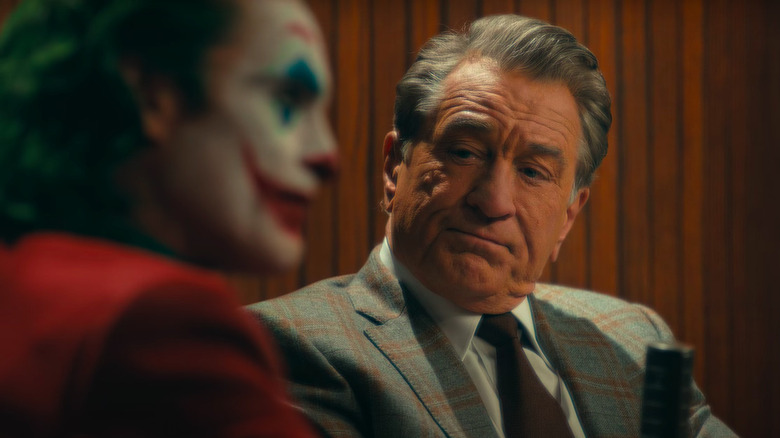
A rather tame entry in the annals of controversial cinema, "Joker" was criticized for its similarities to the films of Martin Scorsese and other '70s auteurs. As if that's a bad thing! Sure, the likenesses are unmistakable. If you're feeling harsh, you may even call "Joker" derivative. At least it's the most compelling derivation in recent memory. Director Todd Phillips took the themes and aesthetics of "Taxi Driver," "The King of Comedy," and "Death Wish" and applied them to the DC Universe, giving the comic book genre not only a visceral edge but some cinematic heritage, too.
Robert De Niro personifies this lineage. As Murray Franklin, a smug Gotham City talk show host, De Niro inverts the character of Rupert Pupkin, his delusional wannabe comic from "The King of Comedy." He is now the Jerry Langford character from that film, who was the idol of Pupkin's fantasies. The difference is that Langford is generally patient and courteous, while Franklin is self-righteous and mean spirited, mocking Arthur Fleck's aspirations in front of an audience of voyeurs. "Joker" was the first R-rated film to make over $1 billion, so you can probably guess how Murray Franklin pays for his sins.
Mean Streets
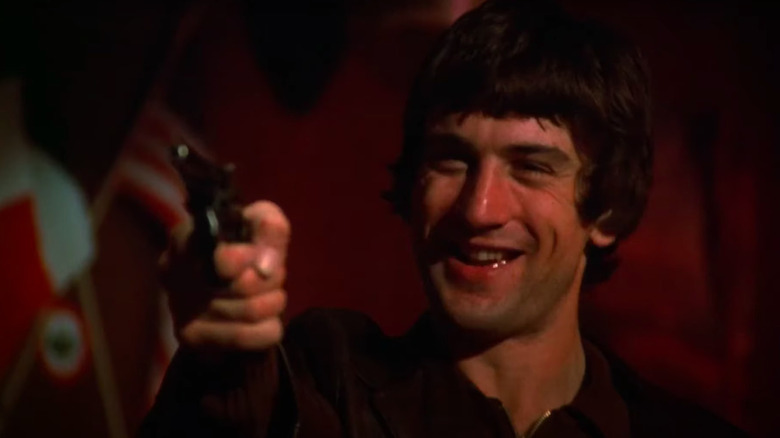
In 1973, Robert De Niro, Harvey Keitel, and Martin Scorsese all had feature film experience, but it was "Mean Streets" that truly kicked off their careers, especially Scorsese and De Niro, who began their remarkable partnership with this film. Like much of the cast and crew's later work, it's an urban story, but "Mean Streets" is an especially unvarnished example; this grit is more a result of Scorsese's vision than the constraints of the $300,000 budget.
It was Scorsese's ambition to create a film to contrast with "The Godfather," one that provided a more realistic depiction of Italian Americans. Cinematographer Kent Wakeford was vital in realizing Scorsese's ambition. "My vision ran with Martin's," Wakeford said (via In Depth Cine). "Martin wanted to capture anxiety and conflict in each character. It was key." Wakeford created this paranoid tension with an Arriflex 35BL, which was the first silent handheld 35mm camera. This technology allowed the filmmakers to create extensive tracking shots that followed the characters down the streets of their neighborhood and into the hallways of their homes.
Critics were almost unanimously positive about the film, particularly when it came to De Niro's performance. In a retrospective review, the Sydney Morning Herald called the film "freewheeling, energetic and raw," adding that "when DeNiro is not on screen, the film seems loose and rambling. When he's there, 'Mean Streets' is magnetic."
The Untouchables
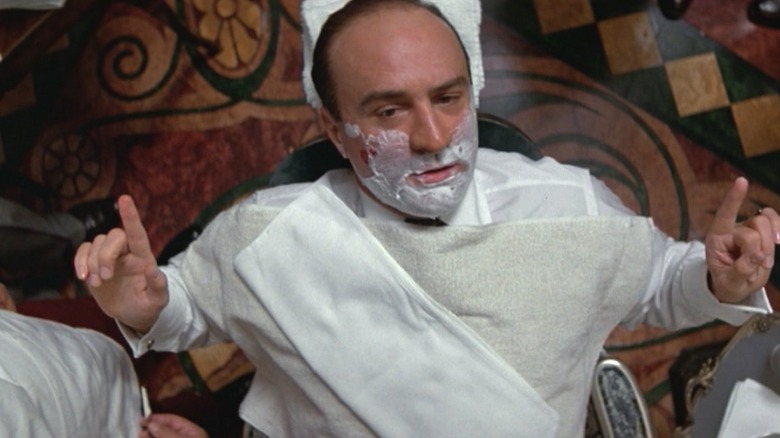
"I want him dead! I want his family dead! I want his house burned to the ground!" That's perhaps the most quotable line of De Niro's brutish turn as Al Capone, the Brooklyn-born gangster who ruled Chicago's underworld in the late '20s and early '30s, in "The Untouchables." Brian De Palma's gangland epic tells the story of the kingpin's downfall, which is spearheaded by Elliot Ness (Kevin Costner), a prohibition agent who crusades against both organized crime and the corruption within Chicago law enforcement agencies.
As The Guardian explains, "The Untouchables" is bad history but good entertainment, and it ranks among director De Palma's best work. It's not such an important film for De Niro. While his performance is solid, Capone is a supporting role, and has a tertiary presence on De Niro's lengthy filmography. Still, it is a more than dependable performance that helps to make De Palma's film one of the better gangster flicks of the period.
But could it have been elevated further? Before De Niro was cast, British actor Bob Hoskins was in contention for the part. As Hoskins explained to Conan O'Brien, De Palma invited him to discuss the role, with the caveat that Robert De Niro was his preferred choice. Hoskins was happy to play Capone, but De Niro, who had been hard to pin down, ultimately expressed interest, sealing the deal. Sometime later, Hoskins received a check for $200,000 with the note, "Thanks for your time. Love, Brian." Hoskins called De Palma immediately: "Brian, listen, you got any films you don't want me to be in, I'm there for you."
A Bronx Tale
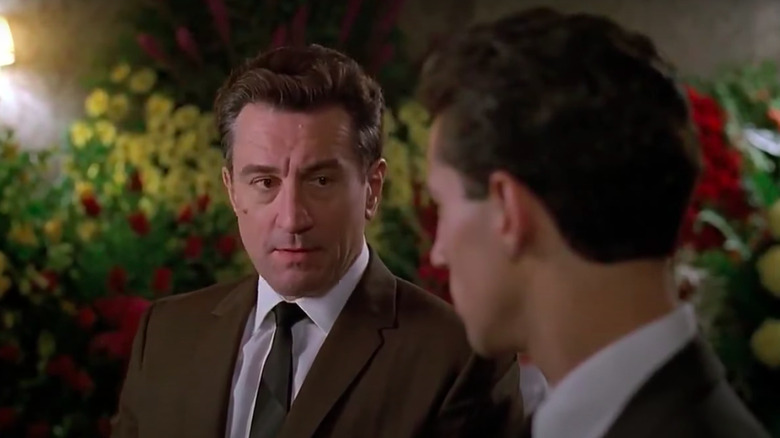
"A Bronx Tale" was De Niro's first outing in the director's chair, and it earned him lots of praise from critics. Newsweek called his debut "vital," while Roger Ebert wrote that De Niro "finds the right notes as he moves from laughter to anger to tears." With reviews like that, you may wonder why it took De Niro 12 years to direct his second feature, 2006's "The Good Shepherd." Maybe it was the meager box office returns? Whatever the reason, it's a pity that De Niro has directed only two pictures, because he is a safe pair of hands.
Adapted from a one-man stage show by Chazz Pilminteri, "A Bronx Tale" is about a battle of wills between a mobster named Sonny (Chazz Palminteri) and Lorenzo (De Niro), a bus driver. The men are playing tug of war over the soul of Lorenzo's son, Calogero, in whom the Bronx bus driver attempts to instill a blue-collar work ethic. Calogero, however, is tempted by Sonny's charm and authority, which he wields over the Belmont area of the Bronx.
This sounds like the set up for a bloody confrontation, but that isn't what "A Bronx Tale" is about. Sonny might be a killer and a crook, but he's benevolent, too. Is Lorenzo right to worry about Calogero? Yes, but Sonny isn't trying to exploit the kid like Lorenzo believes. The mobster is drawn to Calogero's youth and innocence, which perhaps remind him of his life before crime.
Midnight Run
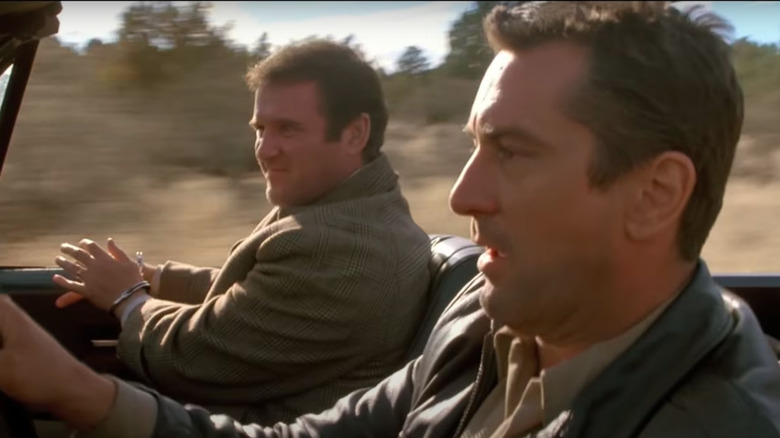
Riding the buddy comedy wave of the 1980s, "Midnight Run" is the highlight of Robert De Niro's dubious foray into comedy. Here, De Niro plays Jack Walsh, a bounty hunter tasked with transporting con artist Jonathan Mardukas (Charles Grodin) from New York to Los Angeles.
As with "Rain Man," the other big road comedy from 1988, screenwriter George Gallo had to figure out why the characters couldn't just fly. The solution is easy: As Walsh and Mardukas settle into their first-class seats, the con artist feigns a panic attack, forcing the pair to book an Amtrak from Grand Central Station. As they embark on their cross-country voyage, Walsh and Mardukas must contend not just with each other but also the mob, the FBI, and a rival bounty hunter, all of whom are out for Mardukas' head.
The film is driven by the leads' chemistry. Walsh is an earthy tough guy, while Mardukas is a smart-ass, leading to numerous tit-for-tat exchanges as they get nearer and nearer to wringing each other's necks. Their playful enmity is punctuated by some solid action sequences, too.
The King Of Comedy
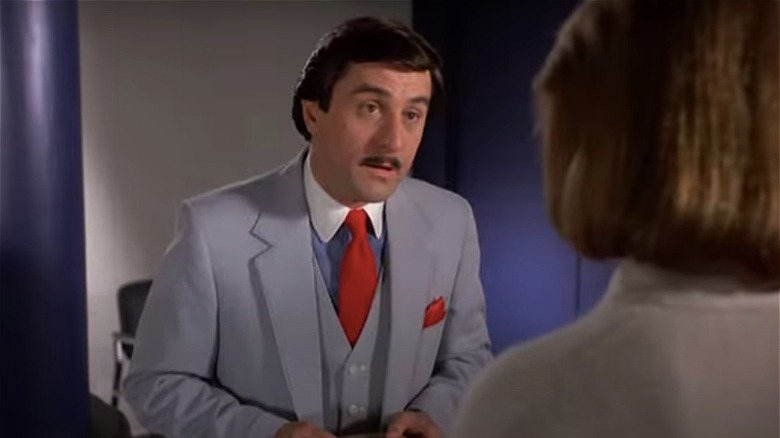
"The King of Comedy" is my go-to alternate reply to the question, "What's your favorite Scorsese film?" My real answer will always be more mainstream, of course — more on that later — but the "The King of Comedy" is still one of the jewels of both De Niro and Scorsese's filmographies.
De Niro stars as Rupert Pupkin, who could well be a relative of Travis Bickle. Pupkin isn't as violent as Bickle, but he's similarly alienated from society, living in his own head and consumed by grandiose thoughts of fame and success. His idol is Jerry Langford, a barely fictionalized version of Jerry Lewis, who brings his own experiences with fame to the role. Pupkin ingratiates himself with Langford until the star finally snaps, rejecting Pupkin forcefully enough that even the would-be stand-up realizes that he needs to enact his desperate, illegal contingency plan.
Occupying similar thematic territory as "Network" but without the shouty moralizing, "The King of Comedy" satirizes our culture's obsession with celebrity and the voyeuristic pleasure we take in misfit spectacles, which has only become worse since the early '80s.
This Boy's Life
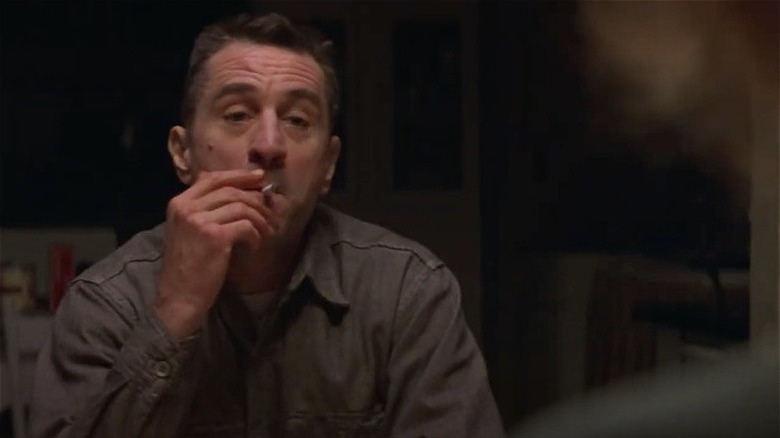
Retrospectives of Leonardo DiCaprio's early career often focus on "What's Eating Gilbert Grape" and not "This Boy's Life." That's a mistake. Both are stirring family dramas, but "This Boy's Life" has greater pathos because of the odious villain of the piece, Robert De Niro's Dwight Hansen.
Set in the 1950s, "This Boy's Life" is adapted from Tobias Wolff's memoir of the same name. The film opens with Caroline (Ellen Barkin), Wolff's single mother, looking for a man who can provide her son with a stable family life. Dwight is the latest candidate, making a square impression with "jokes" like, "People can call me anything, as long as they don't call me late for supper!"
Caroline knows that Dwight is a dork, but after years of fickle nomadism she's searching for reliability above all else. That's a sad, vulnerable state. Being reliable is important, but it cannot sustain a relationship on its own. Even worse, Dwight isn't actually reliable at all — rather, he's an insecure and abusive tyrant.
This becomes clear when Caroline and Toby move with Dwight to Concrete, Washington. Despite the name, it's a beautiful town, but the verdant sense of place is overwhelmed by the tension between Dwight and Toby, which is very hard to watch. This is nasty stuff. De Niro's performance harkens back to his brooding work in "Raging Bull," but his turn as Dwight is even more hateful.
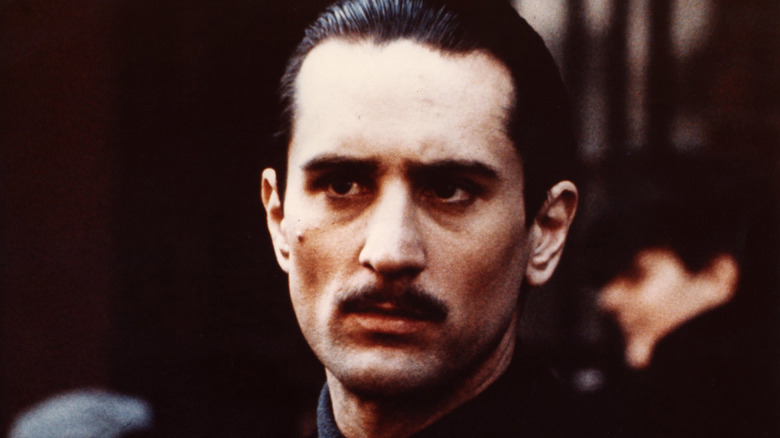
The Godfather Part II
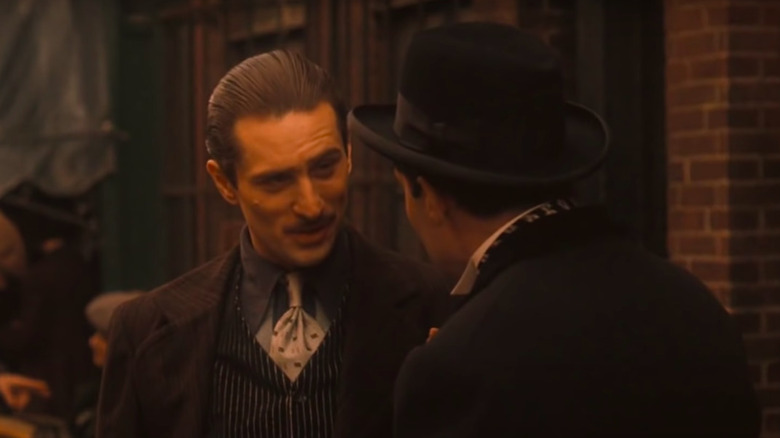
It's hard to believe that "The Godfather Part II" was greeted with a lukewarm response when it premiered in 1974. Vincent Canby of the New York Times wrote that it was "not a sequel in any engaging way," adding that it was "made largely out of the bits and pieces of Mr. Puzo's novel that didn't fit into the first." Roger Ebert was also critical of the narrative structure, arguing that Michael Corleone's story would have been more engaging without the flashbacks to his father's youth in Italy and New York City.
I think the inverse is true. Vito Corleone's backstory is more interesting than Michael's stone-faced machinations in the 1950s. Coppola and cinematographer Gordon Willis use an almost sepia filter for those scenes, casting a brassy glow on the image that compliments the vast location work and immerses you in an exquisite sense of mood and place. All of this comes to head when Vito stalks Don Fanucci from the rooftops, which is a sequence of pure cinema.
The lynchpin here is Robert De Niro, who, as Vito, takes the baton from Marlon Brando with brilliant subtlety. Emulating Brando's softly-spoken authority, De Niro manages to capture Vito's gift for gentlemanly manipulation and how he uses it to rise from a tenement dweller to New York City mob boss. De Niro's sequences are so thick with atmosphere and authenticity that one wonders if a dedicated prequel would have been superior to the multi-generational epic that premiered in the winter of 1974.
The Deer Hunter
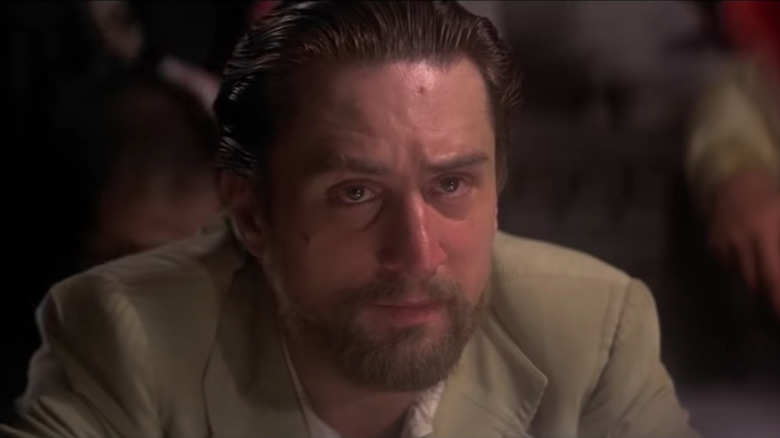
One of the earlier Vietnam war films, "The Deer Hunter" has the power to stun an audience into silence. It follows a group of steel workers from Pennsylvania, and tells their story in three acts: before the war, during the war, and after the war.
Unlike "Apocalypse Now" and "Full Metal Jacket," Michael Cimino's epic concerns the home front more than the front line, and it does so with an almost novelesque pace. But it is during the story's brief, brutal journey to Vietnam that "The Deer Hunter" makes its most searing impression. I am referring, of course, to the infamous Russian roulette scene, in which Steven (John Savage), Michael (De Niro) and Nick (Christopher Walken) are forced to play the deadly game by the Viet Cong.
The scene is suffering at a fever pitch, and De Niro meets it with some of the angriest moments of his career, cursing his sadistic captors as he plots an escape. This righteous anger manifests on the home front, too, namely when he finds Stanley (John Cazale) using a gun irresponsibly. These moments provide a contrast to Michael's default emotional state, which is that of a grounded blue-collar guy.
De Niro's work as Michael may seem effortless, but lots of research went into the role. According to GQ, De Niro visited Ohio steel towns such as Mingo Junction and Steubenville, befriending locals and staying in their homes. He also volunteered to work in steel mills, but was allowed only to observe.
Heat
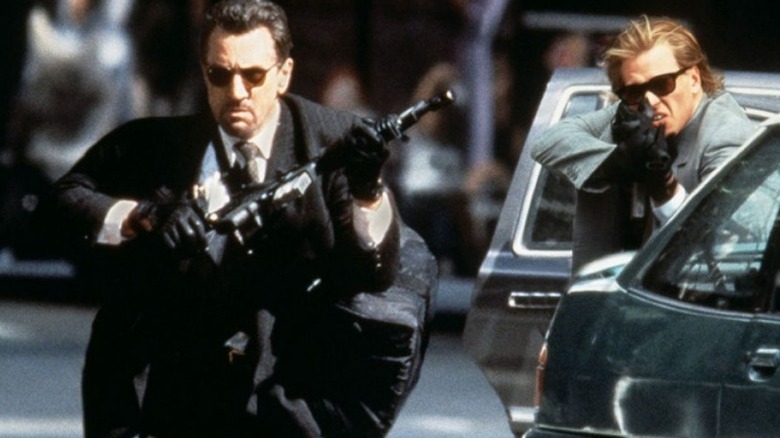
"Heat" is one hell of a film. Oozing the ethereal, norish style of director Michael Mann, it is a sprawling epic with beautifully stark grading and a metafictional spark between Al Pacino and Robert De Niro, who shared the screen for the first time all too briefly. The three-hour narrative hosts a vast cast of characters and plenty of memorable dialogue, yet "Heat" is not quite a character-driven film, despite the performers' rakish charisma, especially Pacino's bombast and De Niro's steely professionalism.
Instead, "Heat" is a very talkative cops-and-robbers movie that's led by plotting and scheming, which are usually discussed at rapid-fire pace over Styrofoam coffee cups. You're unlikely to digest every development on a first watch, but you'll be absorbed into these people's high-crime, high-stakes world regardless. Because of that, "Heat" doesn't have the narrative cohesion of "Goodfellas," and it doesn't have its heart, either. But this film is a slick procedural, not a drama, and it is one of the most skilful and ambitious examples of the genre. Don't forget the tangible, electric shootout, either; the staging and acoustics are superb.
Raging Bull
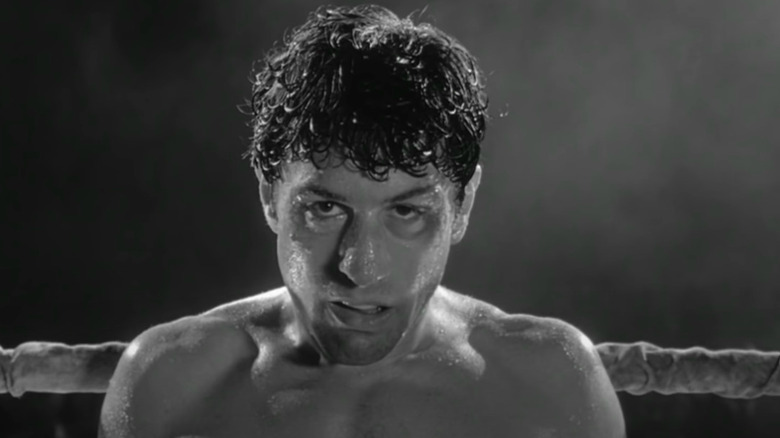
I'm not sure what Jake LaMotta was thinking when he agreed to have his memoir adapted into a feature film, because "Raging Bull" is more about pathological jealousy than boxing. De Niro plays LaMotta as a domestic tyrant, shouting obscenities, flipping furniture, and slapping his wife Vicki (Kathy Moriarty) across the face. The real LaMotta was even worse. According to the Guardian, LaMotta confessed to abusing his wives, committing rape, and beating a man so brutally that he believed his victim was dead.
Clearly, LaMotta is not a sympathetic character. Yet "Raging Bull" is a brilliant and moving character study, featuring perhaps the finest acting of De Niro's career. Take the moment in which LaMotta, doughy and washed up, accuses his brother Joey (Joe Pesci) of having sex with his wife; LaMotta leers at him, fixed and stiff like a dog that's ready to pounce. It's a suffocating insight into a paranoid mind.
Speaking with Sky Movies, Quentin Tarantino remembered a conversation he had with Brian De Palma, Martin Scorsese's directoral colleague and "friendly" rival. De Palma reminisced about the first time he watched "Raging Bull," which opens with a majestic scene of LaMotta shadow boxing in the ring set to Mascagni's "Cavalleria Rusticana: Intermezzo." It's one of the most arresting sequences of Robert De Niro's career, and it caused De Palma to observe, "No matter what you do, no matter how good you are ... there's always Scorsese."
If you or anyone you know has been a victim of sexual assault, help is available. Visit the Rape, Abuse & Incest National Network website or contact RAINN's National Helpline at 1-800-656-HOPE (4673).
If you or someone you know is dealing with domestic abuse, you can call the National Domestic Violence Hotline at 1−800−799−7233. You can also find more information, resources, and support at their website.
Taxi Driver
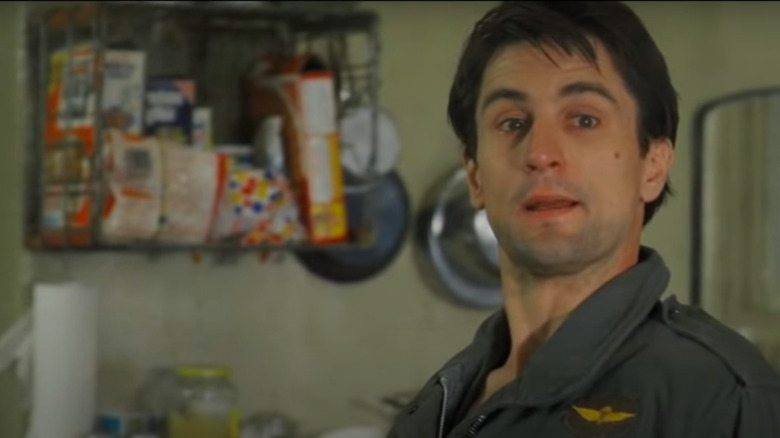
"Taxi Driver" has been a favorite of cinéastes for some 45 years now, spawning numerous t-shirts, pieces of artwork, and other memorabilia. But Travis Bickle, one of Robert De Niro's most enduring characters, is not a cool guy. He's a tragic, lonely figure, jaded by alienation and a festering anger that he struggles to articulate. Bickle says that he will "go all over ... I take people to the Bronx, Brooklyn ... I don't care, don't make no difference to me," yet he also rails against "all the animals that come out at night," referring to a cross section of the population that he hates.
After being rejected by Betsy (Cybill Shepherd) and fixating on Iris (Jodie Foster), a child prostitute, Bickle prepares himself for violence, the direction of which is unclear. Will Bickle attack the glib establishment to spite Betsy, or will he indulge his savior complex in a vigilante war against the pimps and drug dealers who control Iris?
As it nears its 50th anniversary, "Taxi Driver" remains a brilliant character study and one of the best films of the New Hollywood period, embodying the era's themes of violent angst and cynical alienation. It's also a compelling example of neo-noir, with its mournful score, cynical perspective, and the moral decline of its complex quasi-antihero.
Goodfellas
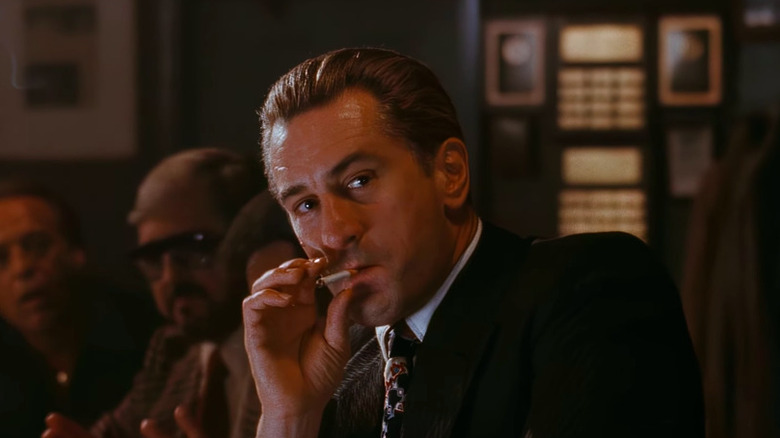
Adapted from Nicolas Pileggi's nonfiction book "Wiseguys," "Goodfellas" charts the rise and fall of Henry Hill, a mobster who was part of the Lucchese family for two and a half decades. Played by the late Ray Liotta, Hill's story is told with a remarkable energy that buzzes with Martin Scorsese's signature blend of stunning imagery and popular music, including tracks from Tony Bennett and The Rolling Stones.
In it, De Niro plays Irish mobster Jimmy Conway, one of Hill's mentors. It's a supporting role, but there are some classic De Niro mannerisms on display here, i.e., the squinty eyes and the downward-open smile that makes it look as if he's about to sneeze. Take this scene, in which Conway urges Hill to rekindle his marriage. It's a low-key moment, but it typifies the De Niro mobster -- reasonable, reassuring, and even fatherly, yet very deliberate when it comes to getting what he wants.
Conway is not De Niro's best performance, but that's because of the character's limitations, not his own. Travis Bickle and Jake LaMotta both have more meat on them. But are "Taxi Driver" or "Raging Bull" better than "Goodfellas"? Possibly. I could wax lyrical about all of them. But before I fire superlatives at "Goodfellas," I will express a comparison I am sure of: "Goodfellas" is better than "The Godfather." Coppola's film is obviously great, yet there is a dark, gloomy and portentous energy that works against it, which stands in stark contrast to the dynamic exuberance of "Goodfellas."
Read this next: Every Martin Scorsese Feature Ranked From Worst To Best
The post The 15 Best Robert De Niro Films, Ranked appeared first on /Film.
House Passes Cybersecurity Bills Focusing on Energy Sector, Information Sharing
The US House of Representatives this week passed two cybersecurity bills: the Energy Cybersecurity University Leadership Act and the RANSOMWARE Act.
RANSOMWARE is an acronym for ‘Reporting Attacks from Nations Selected for Oversight and Monitoring Web Attacks and Ransomware from Enemies’.
DXHR Exe Patcher

Tool that helps make certain changes to the game's executable

NASA Is Planning To Find Aliens Using Spacetime Warped Around the Sun


Read more of this story at Slashdot.
Keep Breathing – Netflix Series Review
The post Keep Breathing – Netflix Series Review appeared first on Heaven of Horror.
Sebastian Stan Reveals His Extreme Makeover For A24 Movie A Different Man
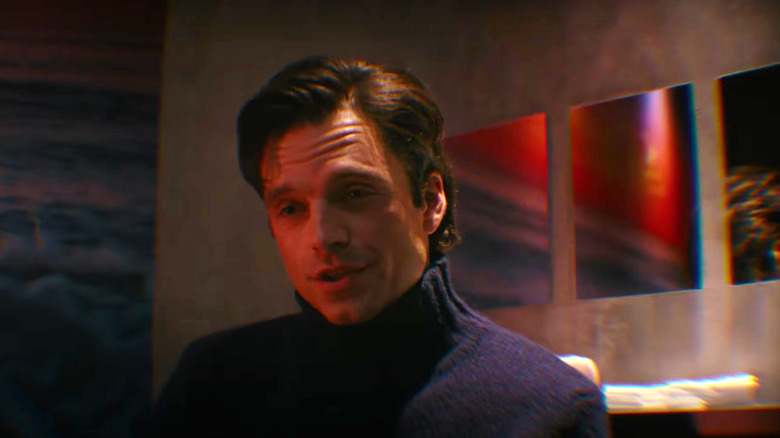
A24 seems to be moving into the body mod genre. There was the announcement of Darren Aronofsky's next project, "The Whale," starring Brendan Fraser as a 600 pound man, then Rose Glass' "Love Lies Bleeding," starring Kristen Stewart as a bodybuilder, and now there's "A Different Man," a psychological thriller centered around a man (Sebastian Stan) with a condition called neurofibromatosis, which heavily augments the appearance of certain body parts, most noticeably the face. If two is a coincidence but three is a pattern, we've definitely got a pattern on our hands.
Stan already turned heads with a shocking transformation earlier this year when he unveiled his look as Tommy Lee for the Hulu limited series "Pam & Tommy." That series followed the fallout of the Mötley Crüe drummer and Pamela Anderson's sex tape being leaked online. Though Lily James commanded most of the attention with her transformation into the ultimate blonde bombshell, Stan nailed Tommy Lee's iconic look, from the Mayhem chest piece, to just the right amount of trashy piercings, to the shock of jet black hair. The voting body of the Emmy's seemed to agree, as the performance earned Stan his first Emmy nomination.
Not much is known about Stan's next film role in "A Different Man," but the actor took to Instagram to share a first look at his jaw-dropping prosthetic makeover.
Say Hello To Edward
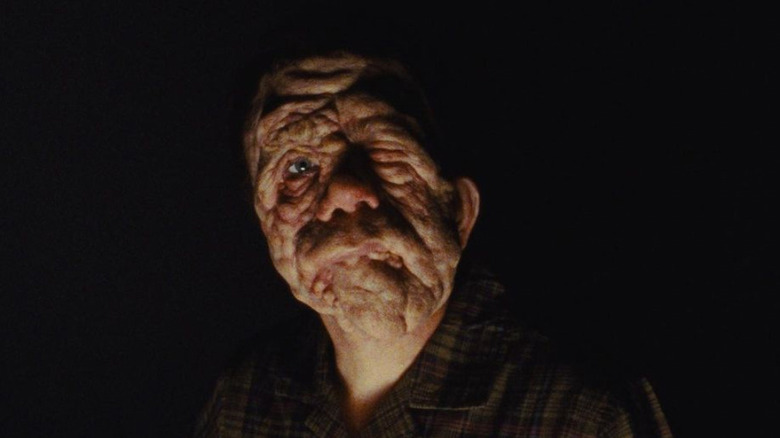
In a post simply captioned "Edward," Stan revealed his transformation to the world. With one eye creased shut, Edward peers out at the world through one clear blue eye, buried in an expanse of folds, bumps, and mounds of skin. Neurofibromatosis is a rare genetic disorder that causes tumors to form on nerve tissue, often leading to noticeable aberrations in muscle and tissue development.
The incredible prosthetic work on display here was done by Mike Marino, a veteran makeup artist who has worked on everything from "True Detective" to "The Irishman." Marino was the artist behind Colin Farrell's scene-stealing performance as the rowdy and rotund Penguin in "The Batman." Marino already won an Oscar as part of the hair and makeup team for "Coming 2 America," and if the Academy is still as enchanted with physical transformations as it long has been (think Gary Oldman's Winston Churchill, Nicole Kidman's Virginia Woolf), it may signal an incoming back-to-back win for Marino, and a first time nomination (and maybe even win) for Sebastian Stan.
A Meta Narrative
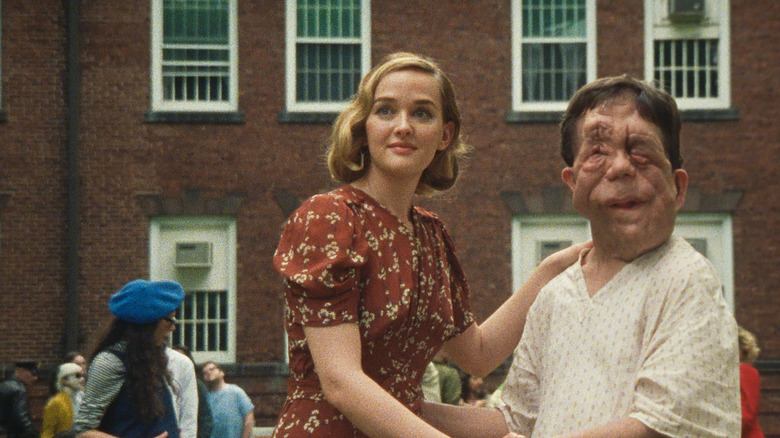
Stan's character derives its inspiration from the real-life actor and British television presenter Adam Pearson. Though he's been an active fixture in British public life for years, both as a presenter and as an anti-bullying advocate, Pearson shot to international fame due to his unforgettable role in "Under the Skin."
Now he will appear alongside Stan in "A Different Man," where he will apparently be playing an actor playing a man with neurofibromatosis, whereas Stan will be playing a man with the real condition, desperate to get rid of it. Try as he might to forget about the burden of his condition, Edward becomes haunted by a play based on his life, and the actor playing him seven nights a week on stage. If it all sounds very meta, that's because of writer and director Aaron Schimberg. His last film, "Chained For Life," also starred Pearson as an actor in a movie within the movie, this time with neurofibromatosis for real, who struggles to understand and be understood by his "conventionally beautiful" costar, played by Jess Weixler.
Read this next: Horror Roles That Changed Actors Forever
The post Sebastian Stan Reveals His Extreme Makeover For A24 Movie A Different Man appeared first on /Film.
This retractable windshield shade is perfect for the mobile sauna you call your car

We thank our sponsor for making this content possible; it is not written by the editorial staff nor does it necessarily reflect its views.
It's the middle of summer, which means you're off doing stuff nearly every weekend. But that also means you have to get in and out of your parked car, which probably heated up to ungodly temperatures when you were out and about. — Read the rest
Google's Nest Will Provide Data to Police Without a Warrant
Read more of this story at Slashdot.
GTA mod is the closest you can get to Vice City 2
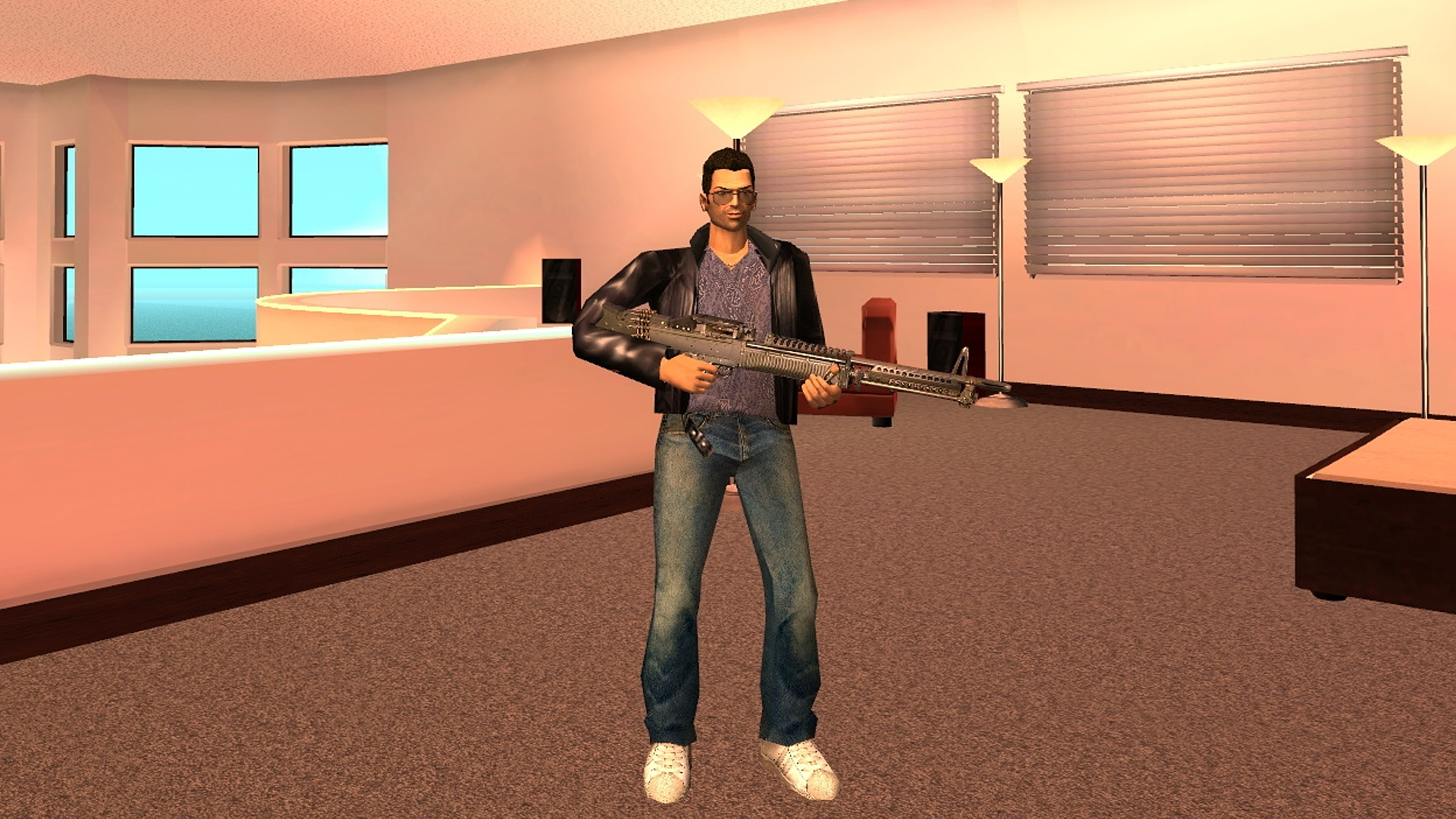
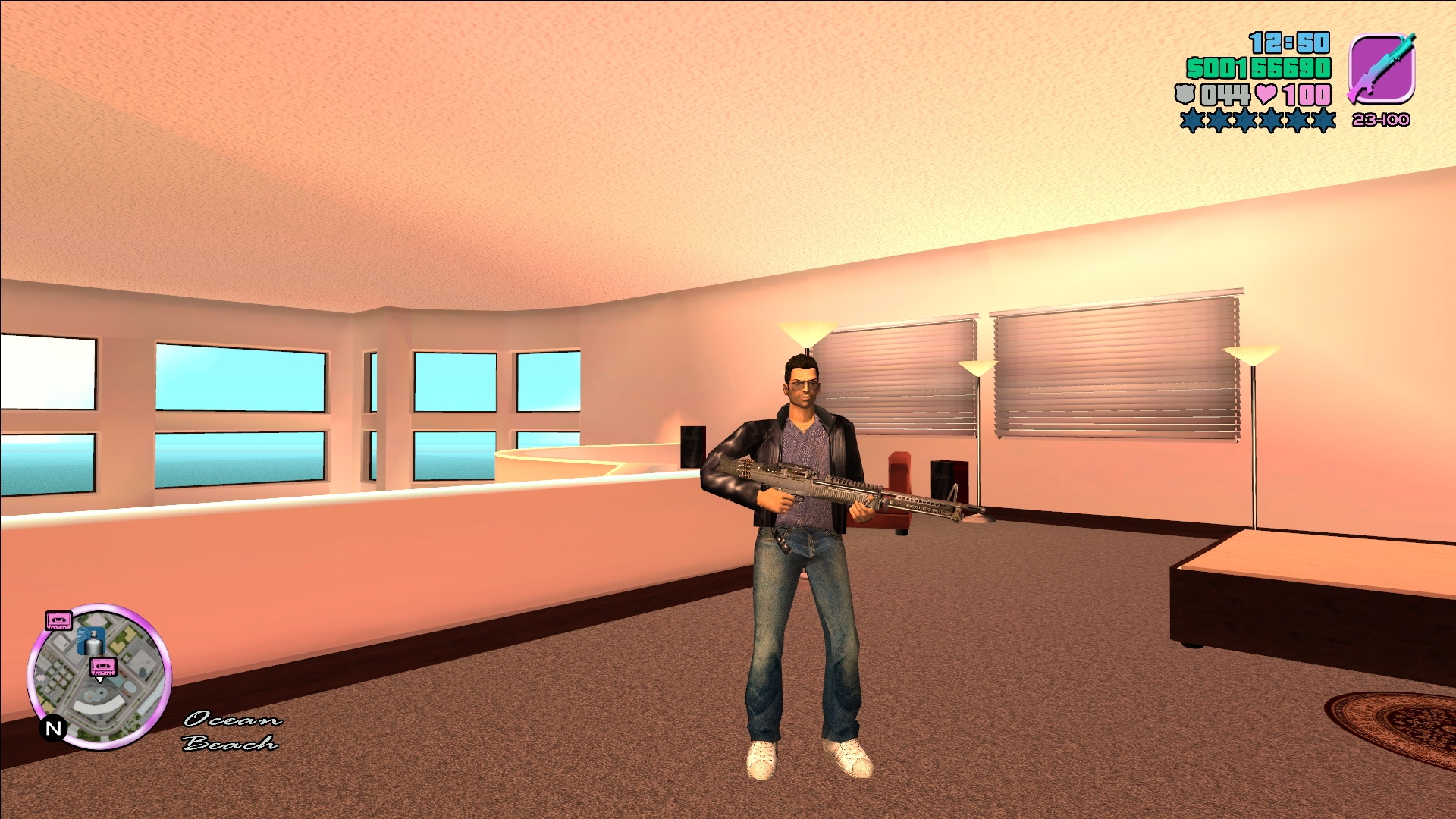
A new GTA mod allows you to explore the iconic Vice City in ways previously unheard of. Grand Theft Auto Vice City – Extended Features includes several rounds of additions to the 20-year-old game, everything ranging from a new hovercraft to a jet-ski and associated minigames, new police missions, extra vehicles, newspaper missions a la GTA 4, and a Ferris Wheel. It’s essentially Vice City 2, if such a thing were to ever exist. Modder bibidibabidibu seemingly thought of everything, even down to making sure Tommy wears a safety helmet while on a racing bike.
Protestware On the Rise: Why Developers Are Sabotaging Their Own Code
Read more of this story at Slashdot.
Senate Passes $280 Billion Industrial Policy Bill To Counter China
Read more of this story at Slashdot.
Elden Ring, Monster Hunter, and the end of my affair with health bars

Think FromSoftware and your mind instantly flits to a skeleton doing a forward roll doesn't it? Or an electrified goat that rolls. Or a bald man cackling as he kicks you down a hole. And, of course, the tricky boss fights with deformed dragons and Fell Omens from the West Country.
Since I've been playing Monster Hunter Rise, which is largely a succession of ever escalating boss fights with big lizards, I've begun comparing these scuffles with Elden Ring's boss battles. And I reckon much of their differences come down to the simple health bar, or lack of it.
Review: RESURRECTION, An Irresistible Watch
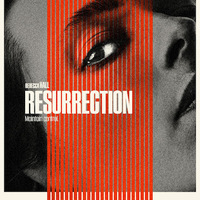 In writer-director Andrew Semens’s (Nancy, Please) brilliantly twisty, disquieting psychological thriller, Resurrection, his first film since making his feature-length debut a decade ago, the central character, Margaret (an eerily transcendent Rebecca Hall) delivers a stunning, seven-minute monologue to an increasingly incredulous, increasingly discomfited younger colleague, Gwyn (Angela Wong Carbone). Shot in a bravura uninterrupted take by Semens and cinematographer Wyatt Garfield (Nine Days, Beatriz at Dinner, Mediterranea), the monologue relies on Hall’s utterly mesmerizing performance as the unraveling Margaret. It’s nothing less than a master-class in performance and engagement, drawing in viewers in not through visual effects, elaborate camera moves, or rapid-fire editing, but through Hall’s anguished delivery of Semens’s twisty, unnerving dialogue. That monologue lays out a key, life-changing moment in Margaret’s personal history,...
Review: HYPOCHONDRIAC, Confronting the Horror of Trauma
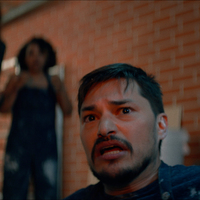 A thirtysomething man’s traumatic past won’t let him move on in first-time director Addison Heimann’s Hypochondriac. Heimann’s own mental and physical breakdowns inspired this story of an otherwise happy potter descending into paranoia as a result of long-term familial pressures and undiagnosed mental illness. This film feels like a personal catharsis for the director, played out by a solid cast led by a fearless Zach Villa in the semi-autobiographical role of Will. We join Will as he is living the life. A great, creative job, a loving and supportive – if a bit stiff – boyfriend, and the kind of general upbeat disposition that makes others gravitate toward him when they feel down. However, when his estranged mother tries to get back in touch after...