NFO (3.74 GB)
Return_to_Monkey_Island_Crackfix-Razor1911 (139.6 KB)
We fixed a small bug with the Steam Achievements.
[link] [comments]
NFO (3.74 GB)
We fixed a small bug with the Steam Achievements.

Once all those pretty autumn leaves fall to your yard, they are often treated as a waste product—but these leaves are the beginning of nutrient-rich garden soil, and they make an excellent habitat for pollinators and beneficial insects. Composting your leaves instead of tossing them can save you money on removal and…
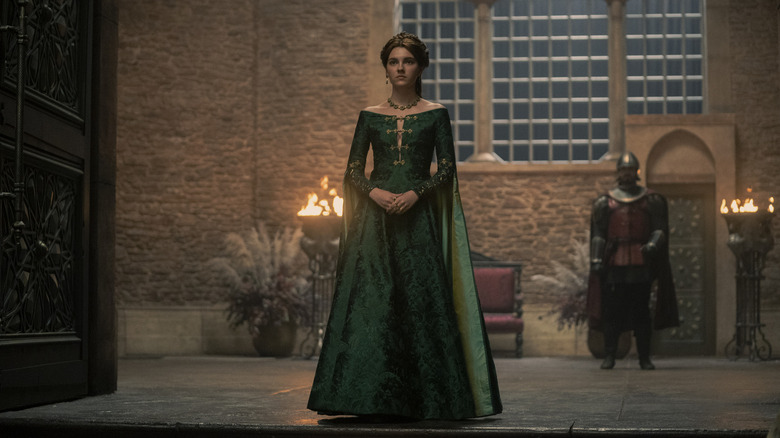
Well, folks, I hope we've learned something from the most recent episode of "House of the Dragon." First of all, never go horseback riding alone ... not when you live in Westeros and especially when you happen to be married to the always unpredictable Daemon Targaryen (Matt Smith). Second of all, let it be known that there is such a thing as being too honest -- which, again, goes double when you're a lovestruck knight of the Kingsguard in the middle of a brewing rivalry between two would-be queens. And last but not least, when you're keen on making a grand statement that hits hard politically as much as it does personally, then find yourself a great dressmaker that would put any number of red carpet stylists to shame.
Alicent Hightower (Emily Carey) announced herself as a main contender in the game of thrones with a flourish by doing exactly that, using an otherwise unassuming green dress to pay off an entire hour of steadily mounting pressure, the discovery of betrayal, and perhaps even the pursuit of her own ambitions, as well.
Much like the best seasons of "Game of Thrones" before it, "House of the Dragon" has largely succeeded so far on the strength of its richly mapped-out main characters, all of whom come with fascinating flaws and innermost insecurities that still remain fully relatable. The only difference between us and them, of course, is that the ramifications of their shortcomings and grasps for power are truly dynasty-shaking to the extreme. By the end of the episode, the entire balance of power in the series has changed.
What led Alicent to this moment? How will this play out in the remaining season? And what exactly is the significance behind that striking green dress? Let's dig into it.
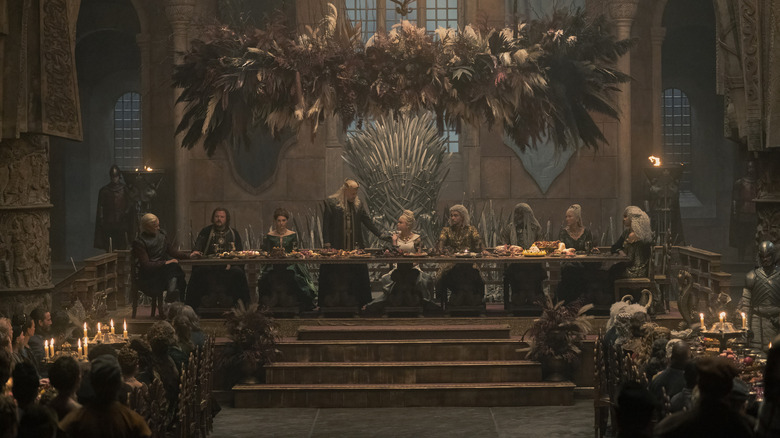
No story set in the world of "Game of Thrones" would feel complete without a struggle for the Iron Throne and all the bitter rivalries that come with such ambitions. "House of the Dragon," based on author George R.R. Martin's book "Fire & Blood," makes up for its lack of familiar characters with all the political infighting, power grabs, and courtly drama that viewers could ever need this side of "Succession."
Alicent's perfectly calculated choice to interrupt her royal husband Viserys' (Paddy Considine's) wedding speech with her unforgettable entrance gave viewers their introduction to the two factions that could very well tear the Targaryen family apart. (Hey, everyone could theoretically make up, set their differences aside, and learn to live happily ever after .... right?) Although the exact details in the book differ, Alicent's memorable fashion statement became known for kicking off the informal "Green" party made up of loyalists to the Queen and the succession represented by the birth of her and Viserys' firstborn son, Aegon. On the opposite end of the spectrum, "House of the Dragon" will likely emphasize the "Blacks" in upcoming episodes, named for the black and red color scheme of House Targaryen that represents Rhaenyra (Milly Alcock) and her claim to the Throne.
Thanks to the careful set up in the first four episodes, the divisions that will ultimately lead to battle lines in the sand have been drawn, the question of succession has been drilled into the heads of even the most casual viewers, and now all this tinderbox needs is a spark -- likely in the form of King Viserys' failing health, as a spurned Otto Hightower (Rhys Ifans) ominously warns his daughter Alicent -- to set it all on fire and burn the House to the ground.
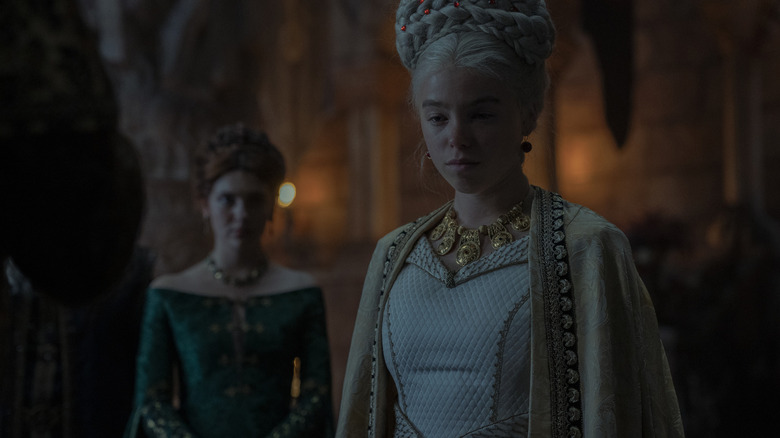
As much as it benefits an ensemble like "House of the Dragon" to dedicate itself to wonderfully complex characters with equally complicated motivations, perhaps the greatest aspect of the series is in how it challenges its viewers and forces them to keep up with the winding events of the story. Indeed, some may have found it somewhat difficult to chart the exact progression that Alicent undertakes from an uncertain and reluctant figurehead to a Queen who makes her boldest and shrewdest move yet -- all while finally embracing the opportunity at her fingertips and truly owning the power that she wields.
To many, the young Queen's ascension may feel as sudden and inexplicable as it does to Alicent herself.
As we saw in earlier episodes, Alicent and Rhaenyra grew up in court nigh inseparable and without even the slightest inclination to have a say in the rulership of the Seven Kingdoms ... until the years began to pass, Otto Hightower artfully maneuvered young Alicent into the King's path, and Rhaenyra began to wake up to the realities (and responsibilities) of her position as the King's heir. Despite the King's proclamation establishing the princess as next in line to the Iron Throne, the most practical members of court (such as Eve Best's Princess Rhaenys, who has firsthand experience with having her right to rule rejected by the kingdom at large) know that Rhaenyra's claim is tenuous, at best. Enter Alicent and the son she bears the King, which presents a whole new series of complications over who ought to rule next.
But even debates over succession only mean so much without a personal angle, which is where last week's incestuous little jaunt through the brothels of King's Landing comes in.
To bring it back to the green dress of it all, this episode (titled "We Light the Way") provides a handy explanation for Alicent's choice in garment, relating to the fiery green beacon that House Hightower has traditionally used to call their banners and signal the onset of war. The thematic underpinnings, however, extend far beyond mere color scheme and remain tightly interconnected with the various motivations that have led her to this tumultuous moment in the history of Targaryen rule.
Perhaps most impressively, actor Emily Carey does much of the heavy-lifting in Alicent's storyline with barely a word of dialogue.
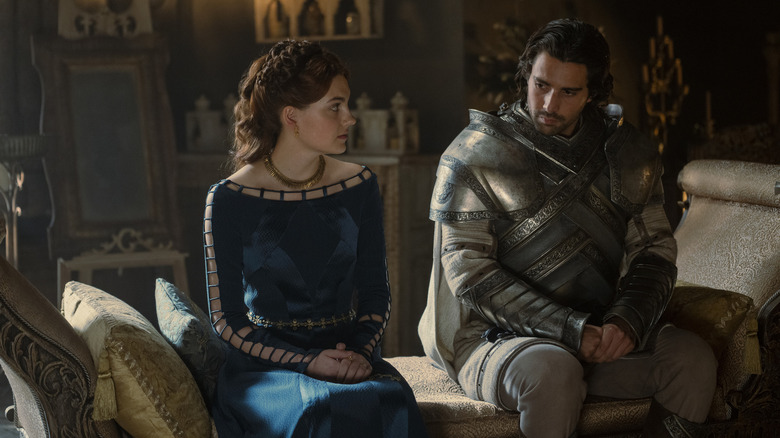
In classic "Game of Thrones" style, this episode of "House of the Dragon" stages a series of largely one-sided conversations that forces the Queen to contend with her role amid much larger Targaryen drama. First comes the dismissal of her father and the Hand of the King, Otto, whose loss as her only major ally in court brings a whole set of problems ... one that the subtle prominence of manipulative Larys Strong (Matthew Needham, doing his own twist on Aiden Gillan as Littlefinger in the original series) only further complicates. Forced to make her own decisions for once, Alicent's summons of Kingsguard knight Ser Criston Cole (Fabien Frankel) prove fateful. Cracking under her (rather oblivious) interrogation, he spills the beans of his affair with Rhaenyra and sows even more seeds of dissent between the two former friends.
All this combines to push Alicent from a young girl carried by the whims of others into a woman taking charge of her own destiny, leading smoothly to next week's recasting of both Alicent and Rhaenyra with Olivia Cooke and Emma D'Arcy, respectively.
New episodes of "House of the Dragon" air Sunday nights on HBO.
Read this next: Shows Like Game Of Thrones You Definitely Need To See
The post House of the Dragon: The Green Dress and Alicent's Motivations Explained appeared first on /Film.

Necessity being the mother of invention and all, it’s not surprising that when the economy turns the screws on people, they tend to get creative about their income sources. When you’re struggling to pay your bills, everything starts to look like an opportunity: You start to price out all that stuff in your garage for…
Varangian Studio has released a new DLC-sized fan expansion for Fallout 4, called Galac-Tac Mercs and Music. This mod lets you continue the story of where Galac-Tac Retribution left off, and comes with new companions new armor, and new story. Going into more details, Galac-Tac Mercs and Music is the second part of the Galac-Tac … Continue reading Fallout 4 gets a new DLC-sized fan expansion, featuring 30 new quests →
The post Fallout 4 gets a new DLC-sized fan expansion, featuring 30 new quests appeared first on DSOGaming.


Read more of this story at Slashdot.
Read more of this story at Slashdot.
Almost exactly five years after Hurricane Maria left Puerto Rico in the dark, the US territory is once again facing a power crisis. On Sunday, LUMA Energy, the company that operates the island’s electrical grid, announced that all of Puerto Rico had suffered a blackout due to Hurricane Fiona, reports Reuters.
With the storm nearing the island’s southwest coast, the National Hurricane Center warned of “catastrophic” flooding as Fiona began producing winds with recorded speeds of 85 miles per hour. Even before making landfall at 3:20PM local time, the storm left a third of LUMA’s customers without power. On Twitter, Puerto Rico Governor Pedro Pierluisi said the government was working to restore power, but after the events of five years ago, there’s worry there won’t be an easy fix.
As Puerto Rico‘s governor was briefing the island ahead of Fiona‘s impact the lights went out. The governor has already said LUMA Energy - the private company in charge of transmission & distribution of electricity on the island - is on probation with him. pic.twitter.com/YVEnPPcnZp
— David Begnaud (@DavidBegnaud) September 17, 2022
In 2017, Hurricane Maria caused the largest blackout in US history when the Category 5 storm battered Puerto Rico, leaving 3.4 million people without power. The island had only recently begun rebuilding its weakened infrastructure, with blackouts a daily occurrence in some areas. Officials have tried to stress that Hurricane Fiona won’t bring a repeat of 2017. “This is not Maria, this hurricane will not be Maria,” Abner Gomez, the head of public safety and crisis management at LUMA Energy, told CNN before Sunday’s power outage. At the moment, the company is estimating it may take several days to restore power, and asked customers for "patience" while it works to respond to the natural disaster.
Les inondations à Puerto rico #fiona#puertoricopic.twitter.com/2whBIeZ9A5
— Gérald DELISCAR-JOURDAN (@GDELISCAR) September 18, 2022
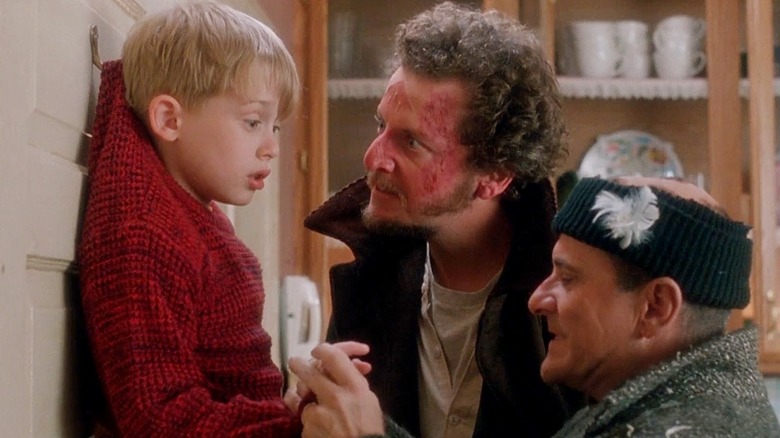
In 1990, at only ten years old, Macaulay Culkin rose to fame as the spunky and self-sufficient Kevin McCallister in "Home Alone." The Christmas comedy directed Chris Columbus was an instant hit and Culkin quickly became one of the most sought-after kids in the business. After working alongside such greats like Catherine O'Hara, Daniel Stern, and Joe Pesci, Culkin is a true acting veteran -- and he has the scar to prove it.
In an interview on "Late Night With Conan O'Brien," Culkin reminisced about filming the "Home Alone" scene where Pesci and Stern -- playing the incompetent robber duo Harry and Marv, respectively -- hang him up on a door. Harry tells Kevin, "I'm going to bite each one of your fingers off one at a time," and in rehearsal Pesci actually did physically bite him. According to Culin, "He broke the skin and everything!"
Now, Culkin has a scar on his finger to remember the famous 5'4" actor, who is loved for his violent and unhinged characters in such classic films as "Goodfellas," "Raging Bull," and "Casino." When O'Brian asked Culkin if he was angry that Pesci bit him, he replieed, "Yes, I did! I got really mad at him. I was like, 'I don't care how many Oscars you have! You're biting a nine-year-old, what the heck's wrong with you?'"
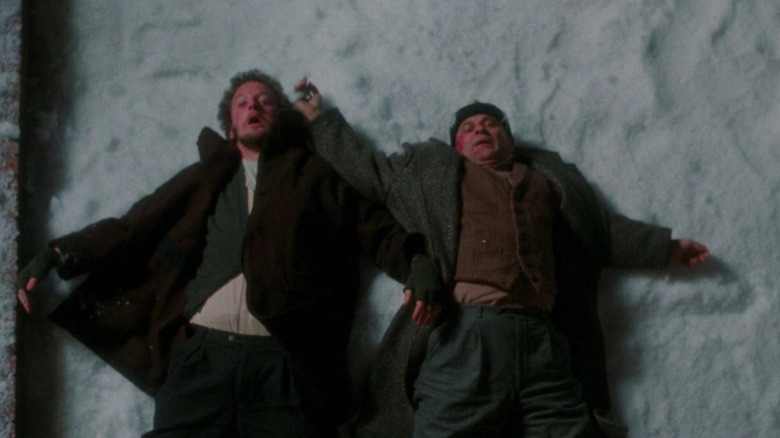
Pesci may be tiny but the guy has a rage on screen unlike any other. However, in an interview with CBC's Midday, Pesci stated that he wanted to take the role of burglar Harry Lime because "Home Alone" had a "great script," but also because it was different from the kind of movies he usually starred in: "I wanted to play it for the kids because I never get to work for children, you know?" And according to behind-the-scenes stories, Pesci's approach to working with kids was anything but typical.
For one, Pesci ignored Culkin on set because he wanted him to be scared of him. He continued this approach with "Home Alone 2: Lost in New York" -- according to one anecdote when Culkin asked why Pesci never smiled, he just told him to shut up. "He's pampered a lot by a lot of people, but not me. And I think he likes that," Pesci reportedly said. I appreciate this kind of method acting with kids (though biting them is taking it a bit too far). In a way, I bet Pesci helped prime Culkin for other work, even if he didn't realize it at the time.
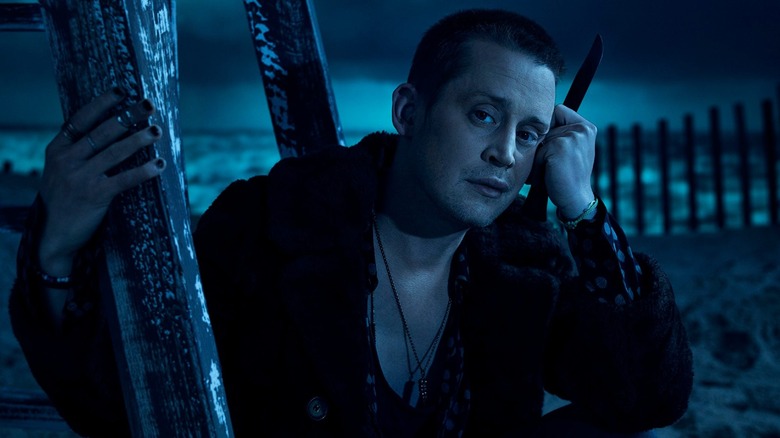
After the two "Home Alone" films, Macaulay Culkin went on to star in films like "My Girl" (that funeral scene!), "The Pagemaster," "The Good Son," and "Richie Rich." He took a break from acting in 1994 and returned in 2003.
One thing that I appreciate about Culkin is that despite a rough start in life, he seems to have taken his experiences with a grain of salt. He grew up really fast and was self-aware enough to step away from acting to figure out who he was off-screen and do normal kid stuff like go to school. If you watch interviews with him over the years, you can tell he is wise beyond his years. As an adult, he can laugh at himself and he composes himself with an air of confidence that is missing from several other child stars. He understands that people love his movies but will still hold boundaries with his fans. (For example, don't ask him to hold his hands to his cheeks and scream.)
The guy also seems really down to earth and open-minded. I mean, he started a band called Pizza Underground that performs Velvet Underground songs with lyrics about pizza. He dons nail polish on his fingertips and gets to choose the projects he works on these days. Honestly, I'm always happy to see Culkin pop up on screen and loved his work in "American Horror Story: Double Feature." He's been through a lot, and it's great to see child actors get their life back in a sense. I'm glad getting bit by Joe Pesci at nine years old didn't emotionally scar him from the movie business and he's still doing his thing, his own way.
Read this next: The 15 Best '90s Comedies Ranked
The post Macaulay Culkin Actually Got Bitten by Joe Pesci During Home Alone and Has the Scar to Prove It appeared first on /Film.
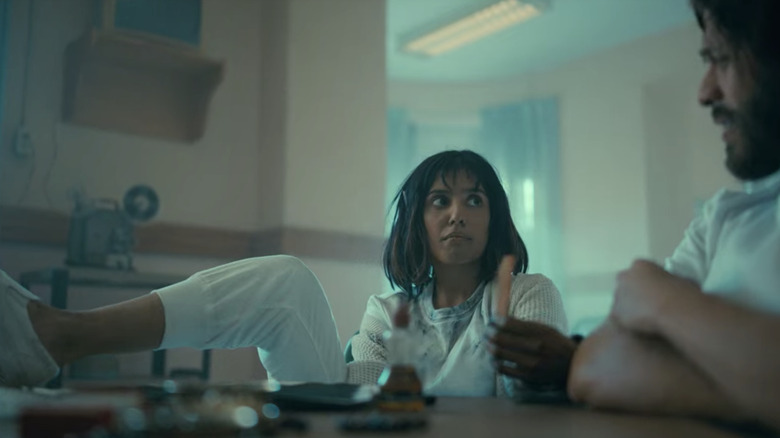
Ritu Arya gives an incredible performance as the thrill-seeking assassin Lila Pitts in "The Umbrella Academy." Lila's mischievous attitude, cynical worldview, and choppy bangs closely resemble Angelina Jolie's character in "Girl, Interrupted," and as it turns out, Jolie's preparation for her role influenced Arya's own process on the set of "Umbrella Academy."
At first glance, "Girl, Interrupted" might seem like an odd source of inspiration for Arya. "The Umbrella Academy" is a playful sci-fi series about time-traveling superheroes, while "Girl, Interrupted" is set in the woman's ward of a mental institution. In a conversation with Brief Take, Arya describes her "Umbrella Academy" character as "unhinged, playful, [and] unpredictable." This description also matches Jolie's "Girl, Interrupted" character, Lisa. These very traits are what initially drew Arya to her role. "I completely fell in love with [Lila] right away," she revealed.
The actress knew that a character as special as Lila would require a unique approach. "I did a lot of prep," Arya admitted. "I have a different process — I think — depending on whatever is the project." For this series, Arya researched artwork that might help her to get in touch with her character. She found that Egon Schiele's paintings aided her in understanding of Lila's mindset. "I had put them all over my trailer. They're really weird, physically, and they're quite out there and I think that helped me get into character," the actress recalled.
Lila is comfortable making others uncomfortable. This makes her edgy and exciting to watch, but also makes her difficult to play. Most people have a difficult time making others uneasy without feeling uneasy themselves. In order to flex this muscle, Arya took a page from Jolie's book and did something "ballsy."
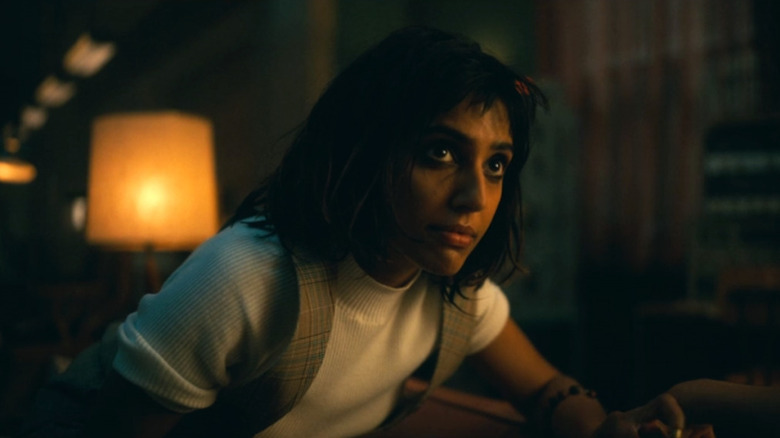
To help her get into character for "The Umbrella Academy," Arya borrowed a technique from Angelina Jolie.
"I also heard this thing that Angelina Jolie did, when she was doing 'Girl, Interrupted'... that she put porn around her trailer. I did that. Not because I think of Lila being as much highly sexualized, but more that it felt like quite a ballsy thing to do and kind of bold. And having that around my trailer as well I think affected her."
This method helped Arya to be as fearless as her character, but it didn't help her make friends with the crew. "The costume dressers would come in and they didn't ever say anything about it. They just thought I was a massive perv," the actress laughed.
Jolie also alienated people on the set of "Girl, Interrupted" -- although she took it a touch further than Arya. The actress reportedly gave the cold shoulder to her co-star Winona Ryder on set. "I think she needed to be able to look at me just as the character Susanna, not as Winona, so in a very respectful way she just kind of kept her distance," Ryder explained to Total Film (via Sydney Morning Herald).
Arya, on the other hand, prefers to build friendships with her co-stars despite playing an antagonist. "For me, [friendship] only helps create trust and freedom on the floor when you are doing the work," she told Brief Take.
Arya and Jolie's methods may have been strange, but their efforts were well worth it. Their performances are delightfully deranged in comedic scenes, while more dramatic scenes display their emotional range. Like Lisa, Lila is extremely troubled, but both Jolie and Arya clearly have a deep sympathy for their characters which allows them to bring incredible emotional depth to their roles.
Read this next: The 15 Best Netflix Original Series Of 2021 Ranked
The post Ritu Arya Borrowed A Trick From Angelina Jolie To Prep For The Umbrella Academy appeared first on /Film.
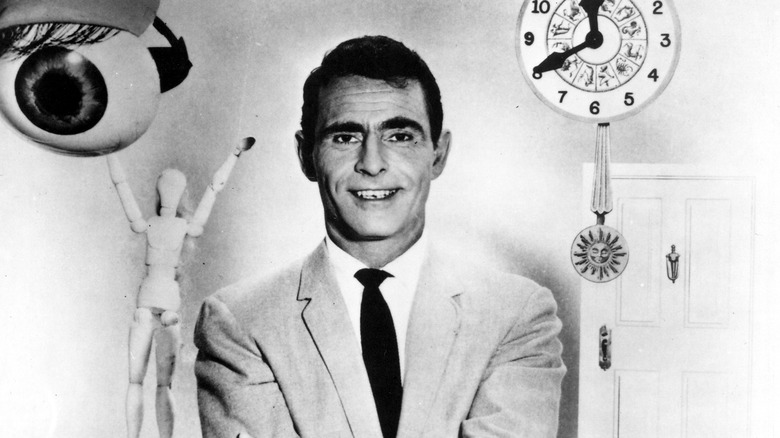
The enduring legacy of Rod Serling's "The Twilight Zone" can be traced back to how the series revolutionized broadcast television in the 1960s. Described as a "series of imaginative tales that are not bound by time or space or the established laws of nature," "The Twilight Zone" ran for five seasons over the span of five years. Season 1's episode premiere, "Where is Everybody?" appropriately set the tone for the anthology series with its surreal and Kafka-esque qualities. However, somewhere around the fourth season, the show's appeal began to wane. Why did this happen?
The mixed critical response to season 4 was mainly due to Serling's dwindling involvement, along with scriptwriter Charles Beaumont's limited contribution due to illness. In a 1959 interview with Mike Wallace, Serling said that he worked non-stop on the project seven days a week, which made him utterly exhausted in the process. While exhaustion contributed to Serling's measured withdrawal from the show, the real reason "The Twilight Zone" had reached its limits was a structural change demanded by network executives, which didn't sit well with the core team. What was once a half-hour show became an hour-long show.
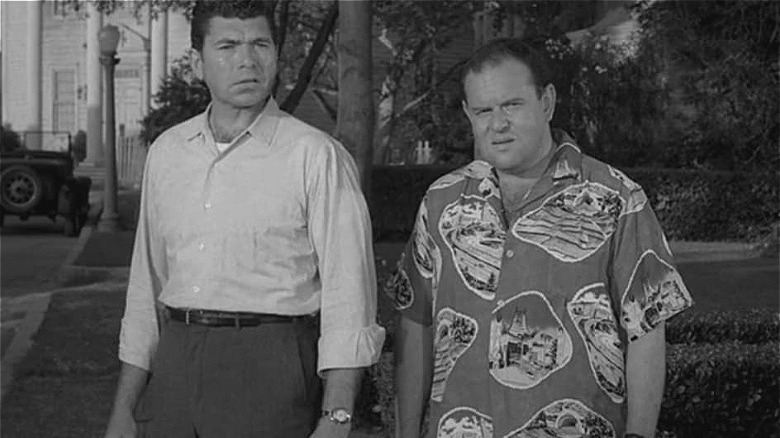
In a review of "The Comedian," an episode of Jordan Peele's "The Twilight Zone" reboot series, Paste Magazine explained why the reboot didn't work, comparing it to the original show's fourth season. Serling's "The Twilight Zone" was effective when it followed its swift, frenetic 30-minute episodic structure that ended with a shocking twist or reveal. But when network executives insisted that the episodes be stretched to the 60-minute mark for the fourth season, the pay-off felt cheap and unearned. Here's what happened:
"The experiment was a failure, largely owing to the fact that The Twilight Zone's high-concept premises tended to work best when they were built up quickly and fluidly to their payoffs, without time for the audience to anticipate the twist."
This is true, as some of the best episodes of "The Twilight Zone" are the ones that subvert expectations right at the end, with the build-up to the twists being quick and compelling. For instance, the episode "To Serve Man" takes good advantage of its half-hour runtime by setting up a benevolent first contact with an alien race, which leads to humanity benefitting from advanced technology. Time jumps are incorporated, and the alien agenda seems to be good-natured, as they leave behind a manifesto named "To Serve Man." The ultimate twist of the episode is delivered moments before the ending, where (spoilers ahead!) the manifesto turns out to be a cook book.
Another example of a good, swift "Twilight Zone" episode that capitalizes on its runtime to build atmospheric dread is season 1's "The Monsters Are Due on Maple Street." In the episode, there's anticipation of an alien attack, but humanity turns on itself the moment there's an anomaly in their daily routines, leading to mob mentality and self-destruction. A 60-minute version of the episode would have never worked.
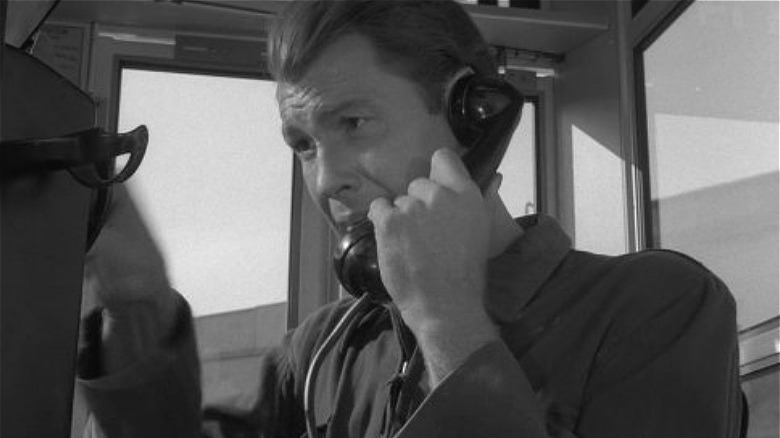
The subject matter of the best "The Twilight Zone" episodes was a mix of fantastical and grounded horror, reinforced by themes of isolation, human folly, and the concept of the other. Apart from this, the show's visual vocabulary consisted of some stunning camerawork, as evidenced in the claustrophobic shots in "Nightmare at 20,000 Feet" and the eerie miniature puppetry in "The Invaders." While every episode is markedly different from the other, all events take place in the titular "twilight zone," a limbo state between the scientific and the supernatural. Everything is possible in the Twilight Zone, where wishes are granted at great personal cost.
Serling wanted to provide commentary on social evils like capitalist greed and exploitation with the aid of layered allegory, and this model of storytelling worked. Well, it worked within the half-hour time slot, as a longer runtime meant repeated tropes and dull pacing, which did little to replicate the success of the first three seasons.
In order to explain the heightened paranoia of some of the best "The Twilight Zone" episodes, one has to look no further than the premiere episode, "Where is Everybody?" There are no supernatural elements here, as it is about a man waking up with amnesia in a ghost town, eventually driven insane by acute paranoia. The twist reveals that he is in a simulation that is supposed to test his skills as an astronaut capable of surviving prolonged isolation during a trip to the moon. The moral here is simple: mankind is incapable of functioning without companionship, and even the vastness of space is no consolation for a man craving human contact.
"The Twilight Zone" still remains a trailblazing entry in network television, and is remembered for all the right reasons. But maybe skip the fourth season.
Read this next: Sci-Fi Movie Deaths No One Saw Coming
The post How A Failed Experiment From Network Execs Taught The Twilight Zone Its Limits appeared first on /Film.
Read more of this story at Slashdot.
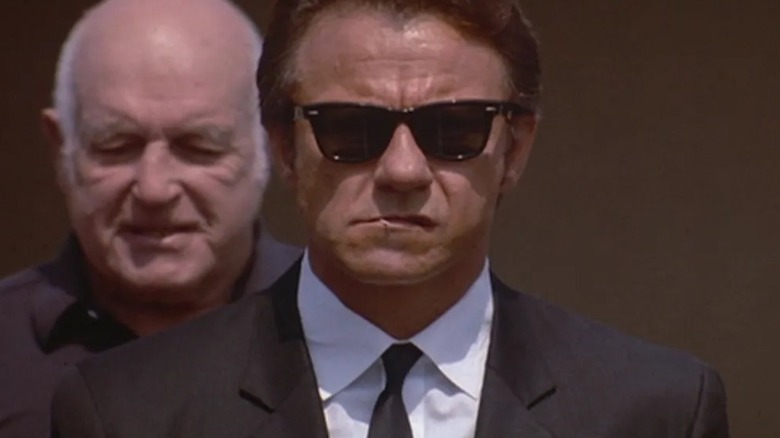
Looking back from 2022, Quentin Tarantino's "Reservoir Dogs" is a star-studded feature. But when it premiered in 1992, the only big name in the cast was Harvey Keitel. The four main color-coded criminals, Steve Buscemi (Mr. Pink), Tim Roth (Mr. Orange), and Michael Maden (Mr. Blonde), had their fair share of film and television appearances, but were still in the minor leagues. "Reservoir Dogs" is what changed that for them, as Roth acknowledged at the 2017 Tribecca Film Festival.
Keitel, on the other hand, had appeared in Martin Scorsese classics like "Mean Streets" and "Taxi Driver," and just the previous year had played a major character in "Thelma and Louise" (incidentally, a film where Madsen had a supporting part). Keitel plays Mr. White, the most sympathetic of the criminals who forms a fatherly bond with Mr. Orange. Too bad for him that Orange is the rat of the group.
Getting Keitel in the movie was a goal of Tarantino's because (via E Online) "Harvey had been [his] favorite actor since [he] was 16 years old." It turned out that accomplishing his dream was easier than the young director could've expected.
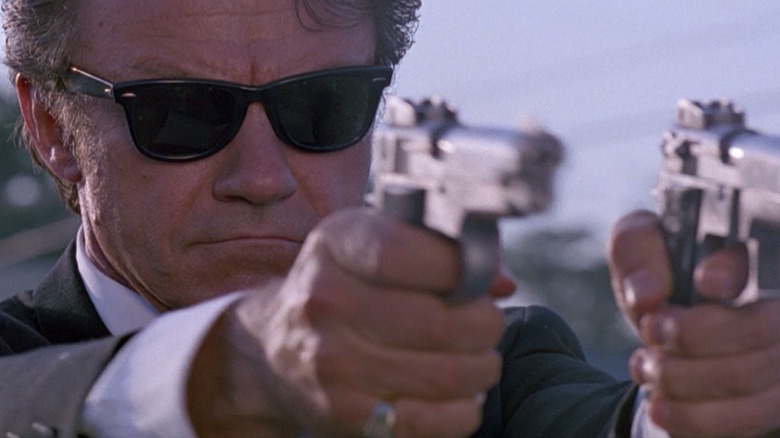
According to Tarantino, getting the "Reservoir Dogs" script to Harvey Keitel was a classic "I know a guy who knows a guy" situation. The movie's producer, Lawrence Bender, was almost as green as the director, but he had an acting teacher whose wife knew Keitel. He passed the script to the teacher, who passed it to his wife, who finally gave it to Keitel. Impressed by the writing, Keitel agreed to appear in the film.
Tarantino remembers (via The Guardian):
"The next thing we knew, Harvey was leaving a message saying, 'I read the script, I love it, I'd even love to produce it to get it going. Give me a call back.' It was an amazing experience and I think we danced around. That was the beginning of the beginning."
With Keitel's help fundraising, the movie was able to amass a budget of $1.5 million. Keitel also financed a casting session in New York City, where Tarantino recruited Buscemi, Madsen, and Roth. If Keitel had said no, "Reservoir Dogs" wouldn't be close to the picture it ended up being.
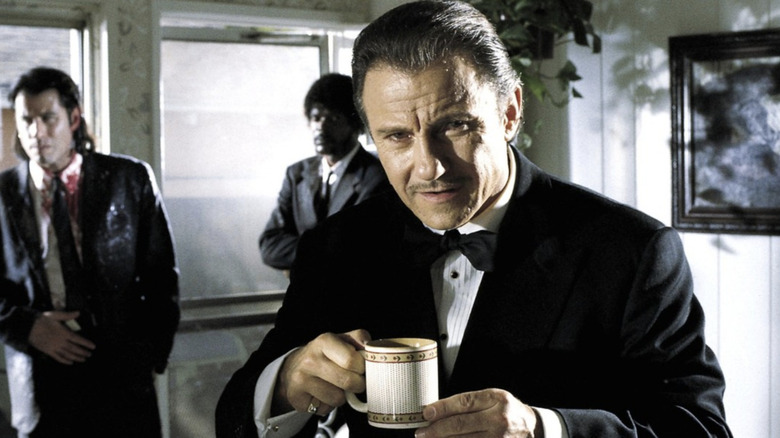
"Reservoir Dogs" wasn't the last time Keitel worked with Tarantino. For Tarantino's next film, the career-defining "Pulp Fiction," the filmmaker wrote a small but memorable part specifically for Keitel: the dapper cleaner Winston "The Wolf" Wolfe. In "Inglourious Basterds," Keitel makes a voice-only cameo as the titular squad's commanding officer. Keitel was also one of the leads in the vampire flick "From Dusk Till Dawn," which Tarantino wrote and starred in (but Robert Rodriguez directed).
Interviewed by Esquire, it sounds like Keitel would do it all again:
"Quentin came on the scene like a shooting star and he has done so much to inspire young people. I embrace him for that. And so again, yes, and yes, and yes."
While Tarantino's tenth (and supposedly final) film will no longer be a remake of "Reservoir Dogs," it'll still be a real disappointment if he can't find a place for the actor who helped bring his first film to life.
Read this next: The 23 Best Heist Movies Of All Time
The post Getting Harvey Keitel For Reservoir Dogs Wasn't Much Work For Quentin Tarantino appeared first on /Film.
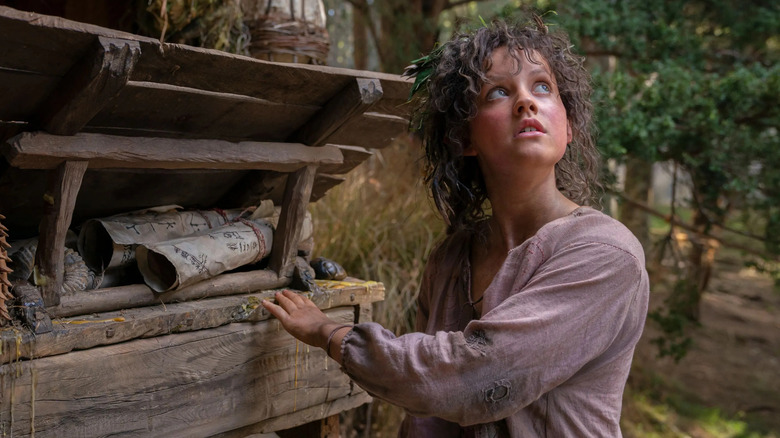
If you've been watching the Prime Video series "The Lord of the Rings: The Rings of Power," you'll know that there are hobbit-like creatures called harfoots wandering the land. The harfoots are the precursors to the hobbits, as this series takes place in the Second Age of Middle-earth, thousands of years before "The Lord of the Rings" and "The Hobbit" trilogies (which are set in the Third Age).
Unlike the homebody hobbits who live in the Shire and mostly don't like to leave, the Harfoots are nomadic. They still have the curly hair, the diminutive stature, and the friendly nature of hobbits, but they're not quite the same. They also have the giant hairy feet that the hobbits sported in the movies, but the prosthetic feet are a little more advanced in "The Rings of Power."
/Film's own Vanessa Armstrong recently spoke to Jamie Wilson, the head of prosthetics for "The Rings of Power." Wilson has had a long career in Middle-earth, working for Weta Workshop during the production of Peter Jackson's "The Lord of the Rings" trilogy and serving as the armor and weapons production manager for "The Hobbit" trilogy. He explained that while harfoot and hobbit feet are fundamentally the same, advances in hairy foot technology since over the last two decades mean that there's a new and improved recipe for "The Rings of Power."

While the "Rings of Power" prosthetics team are still making "oversized hairy feet," the big difference is in the movement and tech that created them. After all, this is one of Wilson's areas of expertise: "I started making hobbit feet in 1999, and I'm still doing it."
Wilson and the rest of the team at Weta made 1,800 pairs of hobbit feet for the four lead hobbit actors in the "Lord of the Rings" trilogy, and Martin Freeman estimated that he went through three or four pairs of feet per day while making the "Hobbit" movies. After two decades and thousands of pairs of feet, "the technology has gotten better." The latest iterations of the hairy feet that we see in "The Rings of Power" are more comfortable for the actors to work in, and look more realistic:
"We did that by thickening of the soles and different ways, and we made the toes moveable when they were wearing them to get more animation out of the feet and have it look less like a giant clown shoe that they're wearing. But the actual look is pretty much the same — they're big, hairy feet with mud on them."
Neither of them sounds particularly comfortable, but the idea of making them more realistic and less "like a giant clown shoe" does seem like it would make the lives of the harfoot actors wearing them much easier.
"The Lord of the Rings: The Rings of Power" is currently streaming on Prime Video, with new episodes released every Friday.
Read this next: 13 Fantasy Shows Like The Lord Of The Rings: The Rings Of Power You Should Check Out
The post The Difference Between Hobbit Feet and Harfoot Feet in The Lord of the Rings: The Rings of Power [Exclusive] appeared first on /Film.

Ion Fury was originally released a few years ago on Steam, and was designed by Voidpoint and published by 3D Realms. The game is a first-person shooter and currently sits at an average of 94% approval on Steam. it also boasts an art style similar to that of classic Doom and Duke Nukem. Today, 3D Realms is continuing the series with a brand new title. Touted as a follow-up to Ion Fury, Slipgate Ironworks will be developing Phantom Fury.
The game stars Shelly “Bombshell” Harrison. Shelly is the player character for a second time, and some time’s passed between Ion Fury and Phantom Fury. 3D Realms also has a brand-new trailer for Phantom Fury, which you can see below.
The “road movie” inspiration is on full display, as there are some additional vehicle-based setpieces aside from the game’s already chaotic and frenetic gunplay. The world also comes alive around you, as the game’s environments have tons to interact with, including piloting helicopters and fully-usable computers.
Shelly, after waking up, has been armed with a new bionic arm that ties into the Phantom Fury’s upgrade systems. You can gain new abilities to help you mow down the hordes of enemies, who boast their own abilities and skills, populating the levels, like an electric shield or melee attacks.
Twenty weapons are at the player's disposal as they explore Phantom Fury’s world, and fan favorites like the Bowling Bombs return. Every weapon has unlockable upgrades with modifications that change the way they behave, even down to the way they fire. Your weapons aren’t the only things that can be upgraded.
As for release date and platforms, Phantom Fury is set to launch next year on PlayStation 5, Xbox Series X|S, Nintendo Switch, and PC via Steam. We’ll continue to update as the developers reveal more information on Phantom Fury.
The post Phantom Fury is the Sequel to Ion Fury; will Release in 2023 on PC and Consoles by Ule Lopez appeared first on Wccftech.
Read more of this story at Slashdot.
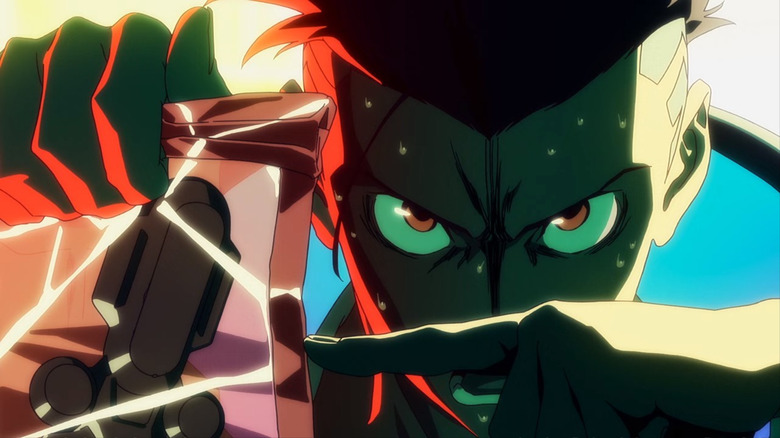
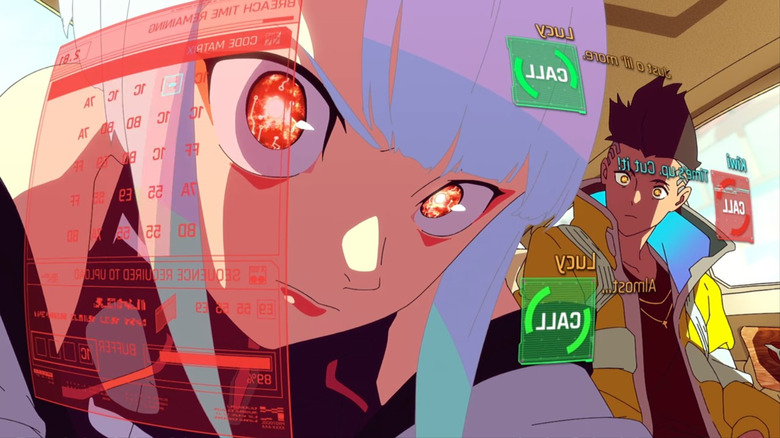
"Cyberpunk: Edgerunners" is an animated spin-off of "Cyberpunk 2077," a blockbuster sci-fi dystopian video game that itself was made in a pretty dystopian manner. It's also the newest show by Hiroyuki Imaishi, the director of "Gurren Lagann" and "Promare."
Imaishi started as an animator and director at the legendary studio Gainax before co-founding Studio Trigger with fellow Gainax staff including Yoh Yoshinari. His work features bombastic action, rude humor, and enough lens flares to give J.J. Abrams a headache. Imaishi's work is popular among international fans, some of whom were inspired to become animators themselves. Others argue that Imaishi's descendants, such as Yoshimichi Kameda and Imaishi's protege Akira Amemiya, have long surpassed him as animator and director respectively. Even so, "Edgerunners" holds its own in what is set to be a very busy fall for the anime industry.
Imaishi crams his animated works with references to shows, movies and comics he likes. Many of these are Japanese properties like "Mazinger," "Gutsy Frog," and "Combat Mecha Xabungle." But Imaishi also clearly loves media from the United States, including plenty of work that anime fans rarely bother themselves with. His burliest characters resemble 90s' beefcake superheroes drawn by Rob Liefeld and Todd McFarlane. His episode of "FLCL," a visually groundbreaking OVA released in 2000, featured a scene animated in the style of "South Park."
Of course, Imaishi is hardly the only anime director who loves American superhero comics; I was there at Otakon when premiere anime director Hiroshi Nagahama confessed that he would one day love to make a "Daredevil" movie. In order to find the root of Imaishi's personality as an artist we must go deeper. We have to talk about Michael Bay.
"Everyone laughs when they hear this," Imaishi said in a 2019 interview with the Japan Times, "but I love ('Transformers' and 'Armageddon' director) Michael Bay." This is the kind of statement that might cause anime fans to claw their eyes out in horror. Michael Bay is, after all, the man who made Bumblebee pee on a field agent in "Transformers." He is the man who punctuated a car chase in "Bad Boys II" with an avalanche of rolling corpses. Bay is a famous action film auteur in the same way that Sauron is a famous demigod who once sought to conquer Middle-earth.
"Every Frame a Painting" breaks down Bay's style in their video "Michael Bay -- What is Bayhem?" One of Bay's favorite tricks is a low-angle shot captured via telephoto lens, framed against a background as the lead actor moves vertically into frame. Layers of depth, movement and parallax are leveraged to hit the viewer like a brick.
At the heights of his success, nobody could rival Bay's eye for scale and speed. But this was also Bay's greatest weakness. In the words of "Every Frame a Painting," "every shot is designed for maximum visual impact, regardless of whether it fits." When every scene in a Michael Bay film is framed as important, the audience is left confused as to what they should be paying attention to. The best Bay films contain sequences that are exciting in isolation, but the whole package more often feels boring and interminable.

Just like Michael Bay, Imaishi's directorial projects are concerned with feeling as big and as fast as possible. He loves setting his characters against huge and imposing environments to establish the stakes. When his characters argue, their faces consume the whole screen. When they fight, they punch each other through walls and throw each other hundreds of feet into the air. As Imaishi explained to the Japan Times: "I've always liked stuff that's screwy, exciting, just a little warped, a little excessive."
Other great action animators, like Yutaka Nakamura, are capable of elaborately staged swordplay where the viewer can sense the weight of every blow. Imaishi's characters by comparison do everything in bulk. Their limbs flail about like noodles as they bend and stretch crazily. Imaishi's animated series, shorts and movies are cartoons in the broadest sense. Detailed action choreography, the placement of each blow and the weight of the combatants are deemphasized in favor of speed and sheer quantity.
Over time, Imaishi has leaned on CG effects to amp up the scale and momentum. At the very beginning of "Kill la Kill," his first series at Studio Trigger, the "camera" zooms all the way out from the huge, fascist Honnouji Academy only to fly right back in as the heroine Ryuuko turns to show her face. Imaishi would continue to play with these effects while working on "Black Rock Shooter," a series based on a popular Hatsune Miku song.
Imaishi masterminded the show's fight scenes together with SANZIGEN, a CG studio affiliated with Trigger's joint holding company Ultra Super Pictures. SANZIGEN's early work was crude and unconvincing, but has steadily improved over time. Their original series "Bubuki Buranki" in 2016 sought to emulate the exaggerated appeal of a Trigger anime in CG. By the time that "Promare," Trigger's first feature film, released in 2019, SANZIGEN had leveled up once again.
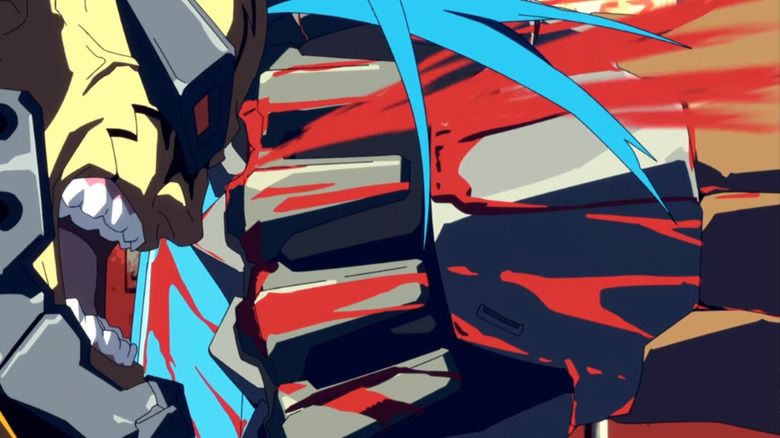
"Promare" is the closest Imaishi has ever come to making a straight-up Michael Bay movie. In the opening minutes, Galo the firefighter and Lio the pyrokinetic do battle across Promepolis. Lio drives the wheel of his motorcycle right into Galo's forehead, sending him flying. Hurtling through the air, Galo grabs onto the side of a skyscraper and opens a water valve, blasting himself along Promepolis's skyline. He rams straight into Lio, sending the two of them spinning right back where they came.
During these sequences the characters seamlessly transition between 2D and 3D models as they fall down corridors and through exploding glass windows. These scenes are just barely legible, but hold together due to color coordination and simple character designs. In their speed and sense of depth they are the height of what Imaishi has been working towards over the past several years.
Michael Bay's style isn't just about scale or speed. It's about making blockbusters with only other blockbusters as a reference. One of Bay's most reliable references is, of course, Michael Bay movies. As "Every Frame a Painting" says, "Bay cannibalizes himself just as much" as he does films made by other directors. Bay rebuilds scenes from his earlier films as bigger, faster and more complex versions. The resulting mutations grow grotesquely into horrors otherwise only found these days in Zack Snyder movies.
Frankly, Imaishi is just as prone to cannibalizing his own work as Bay. His comedy series "Space Patrol Luluco," meant to commemorate Trigger's anniversary, sends his heroine Luluco and her friends through the worlds of his previous anime. Even "Promare," which is set in an original world, shouts out "Gurren Lagann" and "Kill la Kill" in key scenes.
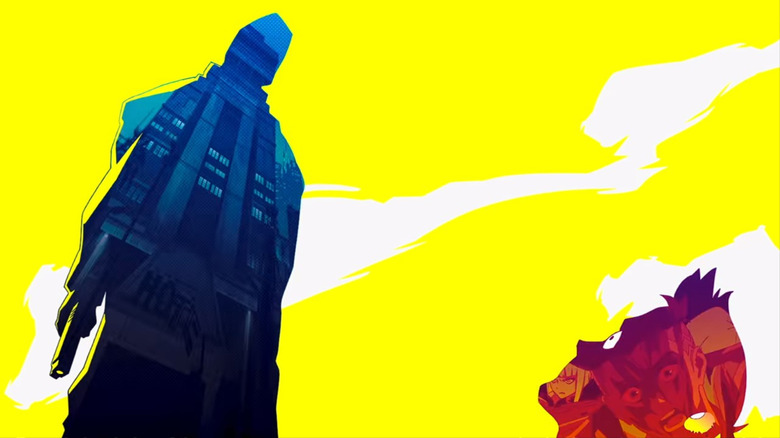
It should also be said that Imaishi's work is, for the most part, as trashy as it gets. "Gurren Lagann" and "Promare" are relatively restrained, but still feature their share of skimpy outfits and bad taste jokes. "Kill la Kill" goes much further, looping in just about every exploitative anime and manga trope into a festival of excess. "Cyberpunk: Edgerunners" is closer to "Kill la Kill" than "Promare," fully leaning into all the aesthetic strengths and weaknesses of the source material.
Imaishi's filthy sense of humor can be charming; I personally appreciate all the weird little pedestrians we see masturbating throughout "Edgerunners." At the same time, though, Imaishi doesn't do anything to challenge the assumptions of "Cyberpunk 2077," like the idea that body augmentation through machines inevitably leads to insanity. It's a conservative choice for a director whose work otherwise loudly and repetitively champions forces of creative chaos against repressive order.
But then, Imaishi loves trash so much that it's contagious. In "Space Patrol Luluco," the villain proclaims that a middle schooler's first crush is "the most worthless, trashy garbage in the universe." Yet to Luluco, the middle schooler in question, that first crush remains worth its weight in gold. This philosophy is at the center of nearly every Imaishi project. It may also be the key to his love of Michael Bay movies. Bay's films are superficial, nihilistic and unpleasant. But they are also bigger and louder than nearly anything else. For Imaishi, whose perfect movie might be two figures falling through hundreds of skyscrapers while the 3D camera revolves endlessly around them, you can see the appeal.
Read this next: 10 Anime Movies That Deserved To Win The Oscar For Best Animated Feature
The post Why the Director of Cyberpunk: Edgerunners Loves Michael Bay appeared first on /Film.
Read more of this story at Slashdot.

When modder PotatoOfDoom first released his Cyberpunk 2077 mod that replaces NVIDIA DLSS with AMD FSR 2.0, we reached out and asked if the reverse could be done for games that support AMD's technology rather than NVIDIA's. The response was positive - PotatoOfDoom believed it could be done. We were skeptical, assuming it couldn't be done without the training part of the machine learning process.
However, a few hours ago, PotatoOfDoom uploaded an NVIDIA DLSS mod for Judgment, the 2018 game made by Ryu Ga Gotoku Studio that was released this week on PC alongside its sequel, Lost Judgment. As we noted in our port report, both games support AMD FSR 1.0 and FSR 2.0, but no DLSS. With this mod, DLSS replaces FSR 2.0. To make it work, follow the creator's instructions outlined below.
How to use:
* Set the in-game FSR 2.0 preset to your preferred DLSS setting. (All DLSS presets correspond 1:1 to the FSR 2.0 presets)
* Play Judgment with DLSS
Installation:
* Extract the Archive so all DLL files (ffx_fsr2_api_x64.dll, FSR2DLSS_Loader.asi, nvngx_dlss.dll and winmm.dll) are in the same folder as the Judgment.exe file.
Uninstallation:
* Remove all added DLL files
Why?
* Because I can!
* DLSS might look better on your GPU.
* DLSS might use less power than FSR on your Laptop.
Known issues:
* Changing the resolution or the DLSS mode, unfortunately, breaks this mod. Therefore always change the resolution before you enable this mod. If you accidentally change the resolution afterwards, you will have to restart the game to continue playing.
We haven't been able to try it ourselves yet, but this could open up similar mods for other games that only support FSR. While most games support both technologies, there are a few exceptions, such as the Soulslike Thymesia, the co-op FPS Tiny Tina's Wonderlands, the horror game The Bridge Curse: Road to Salvation, and the VR title Shibainu: VR Katana Simulator.
Other upcoming titles have only announced FSR 2.0 support, such as Asterigos: Curse of the Stars, Forspoken, Grounded, Lies of P, Project Haven, Scorn, The Callisto Protocol, and Unknown 9: The Awakening. All of these games could use an FSR to DLSS mod.
PotatoOfDoom is also planning to integrate Intel XeSS once it is released, making things even more interesting for upscaling technologies.
The post DLSS Was Successfully Modded into Judgment, Replacing FSR by Alessio Palumbo appeared first on Wccftech.
While the above headline refers specifically to "Spock Amok" (airdate: June 2, 2022), the fifth episode of "Star Trek: Strange New Worlds," the phrase "one of the show's best episodes" could conceivably apply to any of the episodes to date. "Strange New Worlds" is a startlingly good show which started rather strong, a rarity for a franchise whose shows notoriously get off to rocky starts.
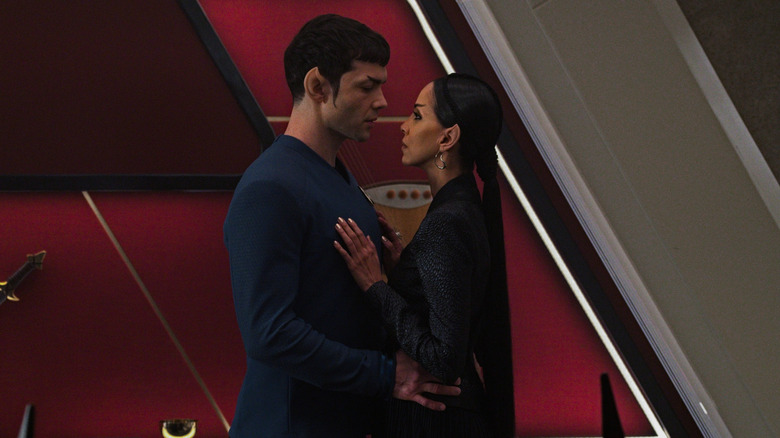
In "Spock Amok" -- a play on the original series episode "Amok Time" -- the crew of the Enterprise finds themselves on shore leave, left to pursue their romantic interests. Commander Chin-Riley (Rebecca Romijn) and Lt. Noonien-Singh (Christina Chong), the "serious" characters, learn to have a little bit of fun by playing "Enterprise Bingo" (don't ask). Nurse Chapel (Jess Bush) spends time in a bar, contemplating her feelings for Spock (Ethan Peck). And Spock aims to have a romantic evening with his lover T'Pring (Gia Sandhu), leading to a strange mind-meld mishap that sees the two characters swapping bodies. Until they can figure out how to undo the mishap, they must take one another's jobs for a short while. Shenanigans, as they say, ensue. Captain Pike (Anson Mount) must also take the time to display his diplomatic skills, revealing how committed the character is to nonviolence and negotiation.
"Spock Amok" is a wonderful blend of humor and some very "Star Trek" ideas about working well with others.
It turns out, it was the strength of "Spock Amok," and a great deal of unspoken showrunner camaraderie, that led to the highly anticipated upcoming crossover episode between "Strange New Worlds" and "Star Trek: Lower Decks."
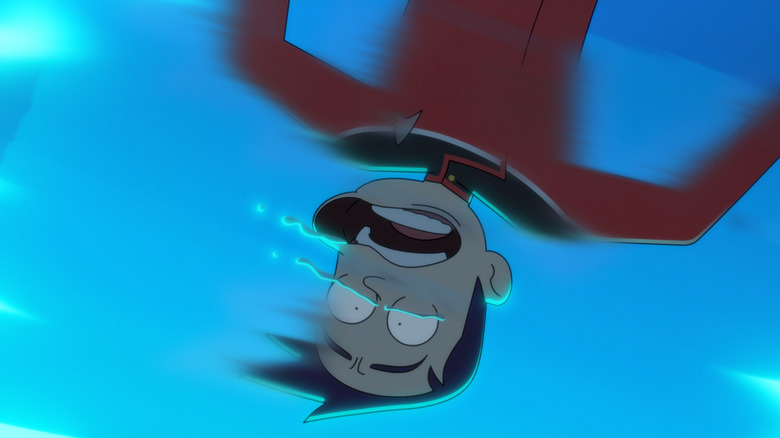
As "Strange New Worlds" aired, Mike McMahan -- the creator of the more directly comedic animated series "Star Trek: Lower Decks" and big fan of "Spock Amok" -- seemingly found himself in a potentially awkward position. "Lower Decks" is, for attentive Trekkies, a treasure trove of references and callbacks to other Treks, so McMahan might naturally be concerned that "Strange New Worlds," a show that takes place a century prior to "Lower Decks," would have the potential to alter what he was doing. He, however, feels he doesn't quite have the clout to simply call up his fellow showrunners Henry Alonso Meyers and Akiva Goldsman, or "Trek" honcho Alex Kurtzman. It turns out, he needn't have worried, as they were already keeping an eye on him.
In a recent interview with Fangirlish, McMahan revealed, perhaps surprisingly, that it was the "Strange New Worlds" people who initially approached him about the possibility of a crossover.
"'Strange New Worlds' came to us! I love the thought that I could call up Henry and Akiva at 'Strange New Worlds' or Kurtzman and be like, 'Hey! Here's what we're going to do with your show!' But no, they have always been huge fans of 'Lower Decks.' I know Henry wears the 'Lower Decks' t-shirts in the writers room of 'Strange New Worlds.'
The "Lower Decks" t-shirts are numerous, and one of them is a subtle jibe at "Star Trek: Discovery." The U.S.S. Discovery evidently issues its crew specific workout t-shirts that say only "DISCO," an abbreviation of the ship's name. It's quite a silly garment to see on a "Star Trek" show. Not to be outdone, McMahan depicted crew members of the U.S.S. Cerritos, the ship on "Lower Decks," sporting "RITOS" t-shirts.
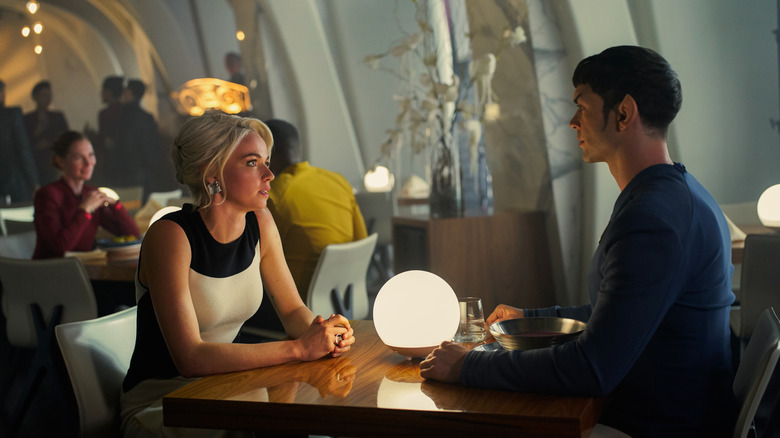
The "Strange New Worlds"/"Lower Decks" crossover episode, to assuage confusion, will take place in live-action. Worry not. The logistics even briefly confused the actors.
Not only were the "Strange New Worlds" writers fans of "Lower Decks," but they had already worked tangientially with McMahan. As it turns out, McMahan was brought in to punch up the comedy for "Spock Amok," which was written by Kurtzman and Goldsman, as well as a few other episodes that required an injection of humor. The cast and crew of "Spock Amok" took well to the episode's comedic tilt, and felt that it would be fun to do more. Lots more. As McMahan put it:
"And you know the first thing that happened was that first season, Henry had me kind of punch up a couple of the scripts to add a bit more humor to the dialogue, in some of the funnier episodes uncredited and we had such a blast doing that together. I got to do a bunch of stuff on 'Spock Amok.' ... [B]ecause the cast is so charming and the Enterprise as a place is so comfortable, I just got to play in their playground for a minute. And that lead to them being like, "Well, what if we had Tawny and Jack on the Enterprise? They look like their characters, they're great screen actors, it was such an easy yes to say."
Tawny and Jack are Tawny Newsome and Jack Quaid, who play the lead characters Ensign Mariner and Ensign Boimler on "Lower Decks." And while Quaid doesn't have a frazzled purple hairdo like Ensign Boimler, he certainly looks just enough like the character that one can squint and see him in live-action.
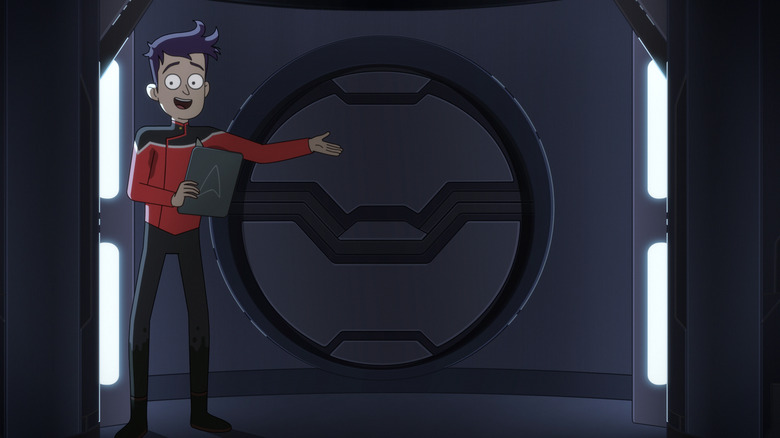
McMahan also elucidates a little bit as to what is going to go into the upcoming crossover, and how pleased he was that such a project came together at all. Tactfully, though. McMahan wasn't about to let any spoilers or plot details slip; the public doesn't yet know how the two time frames will intersect. Although Jonathan Frakes (a longtime "Trek" veteran as actor and director) will direct, McMahan says that he and one of the "Lower Decks" screenwriters were heavily involved in the creative process:
"Kathryn Lyn co-wrote the episode. She was the writer on 'Lower Decks' who wrote, 'wej Duj,' which made me really happy, and then I got to do a ton of punch up. I got to direct some of the animated portions. I got to sit in the edit for a bit like, you know, I've been really heavily involved. Those guys are so collaborative. But it's really the thing they built. It's the world of the Enterprise in 'Strange New Worlds' in that era that my characters are going into that really makes it feel special. It's like a charm offensive. You're going to be grinning the entire time."
"wej Duj" -- a Klingon phrase meaning "three ships," and presented on screen in Klingon script -- was an ambitious episode from the second season of "Lower Decks" wherein the action cut between the U.S.S. Cerritos, a Klingon vessel, and a Vulcan vessel, each one with its own miniature story and set of characters. It seems being a lower-ranking officer on all three ships is kind of awful.
A date has not yet been announced for the episode, but it will fall in with the second season of "Strange New Worlds," set for release in 2023.
Read this next: The Main Star Trek Captains Ranked Worst To Best
The post One Of Star Trek: Strange New Worlds' Best Episodes Led To Its Crossover With Lower Decks appeared first on /Film.
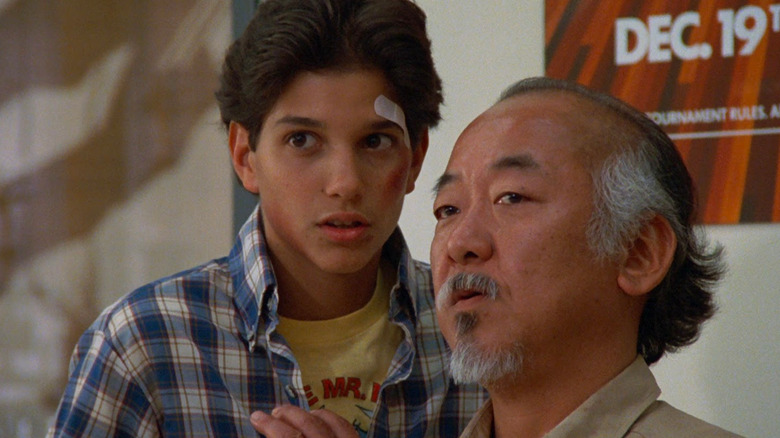
Get ready to relearn the power of balance, because a new installment of "The Karate Kid" is hitting theaters in 2024. Sony Pictures released a statement announcing the release dates of future titles, and the yet-untitled entry has been dated for June 7, 2024. The film will be distributed by Columbia Pictures with no director, screenwriter, or cast confirmed.
However, if we are to believe previous scoops and leaks, we could find ourselves with a reverse-engineered version of the original film's story. Murphy's Multiverse alleged earlier this August that the film will follow a young and accomplished martial artist that finds himself moving from Beijing to Brooklyn. As he adjusts to his surroundings, he ends up becoming a karate teacher to a hapless pizzeria owner.
However, we must stress that this is still unconfirmed and that the story could end up differing greatly from what eventually gets released. Still, with a release date confirmed, the plot could be confirmed sooner rather than later. As for right now, all it is described as is "the return of the original Karate Kid franchise."
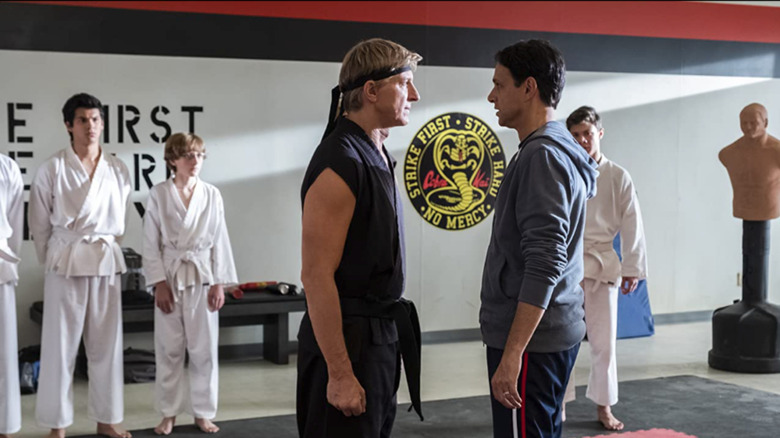
This logline is a bit strange, as it seems to suggest that it is completely separate from Netflix's hit series "Cobra Kai." This would be perfectly fine if "Cobra Kai" isn't also a direct continuation of the original "Karate Kid" series, taking place several decades later with many film characters reprising their roles.
So, what gives? It's not exactly clear, as "Cobra Kai" is also produced under the Sony Television umbrella. Given how little is known about the film, it is possible that this "Karate Kid" movie could take place at the same time as "Cobra Kai." After all, if the Murphy's Multiverse report is real, then it will be taking place on the East Coast rather than the West. It could also be a completely separate movie that only feels like "The Karate Kid" in style and name. Here's to hoping this gets cleared up soon, because this is already starting to get confusing.
The untitled "Karate Kid" film is expected to arrive in theaters on June 7, 2024. "Cobra Kai" is streaming on Netflix.
Read this next: 14 Remakes That Are Better Than The Original
The post A New Karate Kid Film Is On the Way appeared first on /Film.
Read more of this story at Slashdot.
Thanks to SuperIlu for making these two games written in C compile with DJGPP and create binary releases for DOS. startrek aka SUPER STARTREK by Bob Leedom (C port by Chris Nystrom), and Trek by Eric P Allman. The original source can be found on the Wayback archive for 'startrek'. The updated versions are on OldTrek at GitHub.
A few days ago, SEGA released Judgment and Lost Judgment on PC. As we’ve already reported, these two Yakuza games only support AMD’s FSR 2.0 AI upscaling tech. However, there is now a mod that allows you to replace FSR 2.0 with NVIDIA’s DLSS. This is the exact opposite of what we’ve seen with other … Continue reading This mod enables NVIDIA DLSS in Judgment & Lost Judgment →
The post This mod enables NVIDIA DLSS in Judgment & Lost Judgment appeared first on DSOGaming.
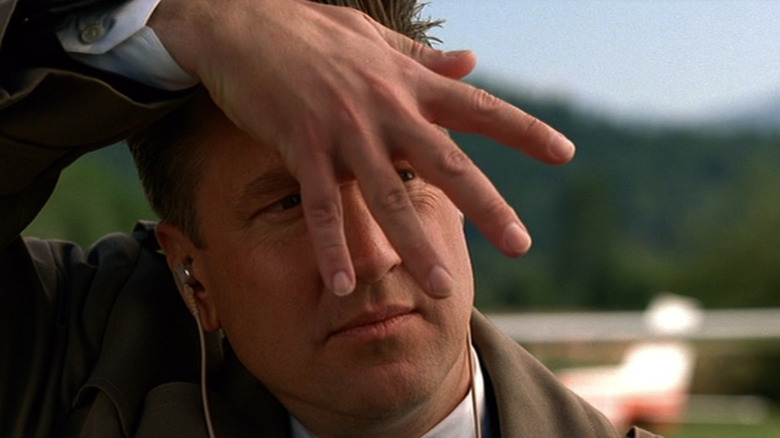
While "The Fabelmans" might not be in theaters for a couple more months, we here at /Film can attest that it is a movie you shouldn't miss when it does release. We've already known Steven Spielberg has recruited David Lynch for a special role as famed film director John Ford. Yes, he wears an eye patch, and yes, it is a small but pivotal scene that audiences likely won't forget.
"Fabelmans" star Gabriel LaBelle, who plays the main character Sammy, certainly won't forget about it any time soon. In an interview with The Associated Press out of the film's premiere at the Toronto International Film Festival, the 19-year-old actor revealed that he was unaware of Lynch's casting before arriving to shoot the crucial scene. Needless to say, his initial reaction was pretty reasonable.
"[He] scared the s*** out of me," said LaBelle in earnest. I mean, would you feel any differently if you suddenly saw David Lynch? I know I certainly wouldn't.
Of course, the story doesn't end there. Without giving away spoilers, we will say that this scene is loosely based on a real-life encounter that Spielberg had with the director in his youth. In fact, the majority of the events that take place in "The Fabelmans" mirror that of Spielberg's childhood. His stories are pretty fascinating, and if you ever get the chance to read up on them, we highly recommend doing so.
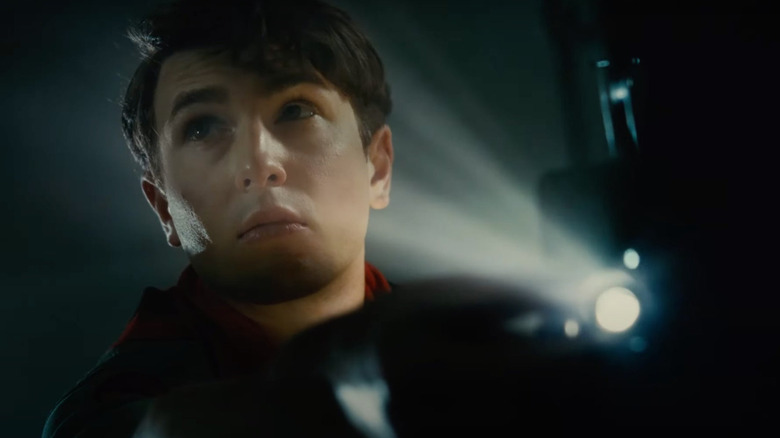
With this real-life basis in mind, it's easy to understand why this surprise on set helped get LaBelle further into character. He said to The Associated Press that it gave him the right amount of emotion to evoke in such a pivotal scene.
"[Lynch is] a great guy. But leading up to it, Sammy's nervous, so I'm getting nervous," he explained. He recalled that he and Spielberg were on set together when an unfamiliar man entered the set. When he realized that the new man was none other than David Lynch, LaBelle really got into Sammy's headspace.
"My coverage wasn't going to be until later, so I'm waiting and waiting to do that scene," he recalled. "It really helped me get nervous to meet him."
It also helped that he had Spielberg with him as a guide of sorts. While the film obviously came first for both of them, LaBelle said that he found the iconic director's insights from his childhood helpful in his preparation. However, he kept some things close to his heart, wanting the actor to not just mimic his reactions or feelings.
"We had to ask. We had to go at it scene by scene," he explained. "It was really just about what's the purpose of each moment. How did you feel? What do you want out of me?"
"The Fabelmans" arrives in select theaters on November 11, 2022, before expanding on November 23.
Read this next: The Best Movies Of 2022 So Far
The post Steven Spielberg Recruited David Lynch To Terrify The Fabelmans Star Gabriel LaBelle appeared first on /Film.
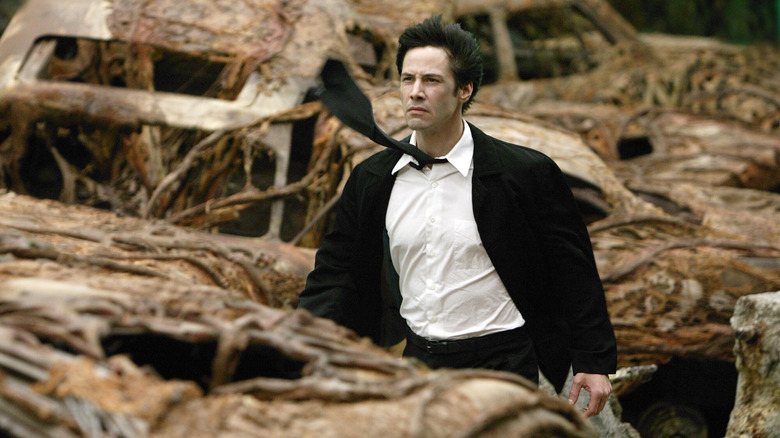
Some demon-dealing magicians get all the luck. After nearly two decades, Keanu Reeves will return to the role of John Constantine in a sequel to the 2005 cult hit "Constantine." Deadline reports that Warner Bros. has greenlit a "Constantine 2" starring Reeves and re-teaming him with director Francis Lawrence. "Constantine" was Lawrence's directorial debut and he went on to direct "I am Legend" and the "Hunger Games" sequels, so he's sharpened his talents and could potentially be back with an even better tale of Constantine's troubles. (John is always in trouble. That's his whole thing.)
While many fans might be asking "why now?," they should really be asking "why not?" Not only is Reeves still killing it as an action star in the "John Wick" franchise, but the character of Constantine has gained new interest due to the success of Netflix's "The Sandman" series, which turned the character into Joanna Constantine but maintained the same cursed history and bad attitude. "Constantine" may have been a shoddy adaptation of the "Hellblazer" comic series, but it was a great take on the character of John Constantine and is an incredibly fun comic book flick.
Someone might have made a deal with the Devil to get a sequel made after all of these years, but it was worth it.
Variety also confirmed that Warner Bros. is indeed making a "Constantine" sequel, though their sources say that the HBO Max series has gotten the axe. Bad Robot was producing that as well as a "Madame X" series directed by Angela Robinson, which has also allegedly been cut. Either series could get picked up by another streamer if they can convince Warner Bros. to share the rights, but it doesn't take a fortune teller to see that the future of "Justice League Dark" on television isn't looking bright.
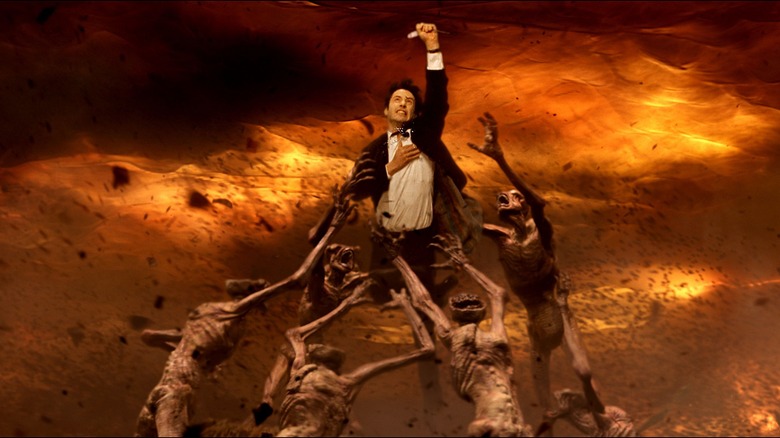
The as-yet-unnamed "Constantine 2" will see John a little older and (potentially) a little wiser, and there are dozens of stories from the comic book run that the filmmakers could draw from. While the magician and occultist managed to survive terminal lung cancer because Satan himself (Peter Stormare) intervened, he still has plenty of problems to deal with. Everyone who cares about John ends up dead, and the events of the first "Constantine" movie cemented that with the death of Chaz (Shia LeBeouf).
Maybe John can accidentally settle down and the movie can be about the "Happy Families" story, in which Constantine has kids with a demon, or they can dig into writer Brian Azzarello's arc that sends John to prison. There are loads of opportunities for screenwriter Akiva Goldsman to explore, and hopefully, he can match the strange tone of the first film. (That screenplay was written by Kevin Brodbin and Frank Cappello.)
The sequel will be produced by Goldsman with Weed Road Pictures, along with Bad Robot's J.J. Abrams and Hannah Minghella. There's no timeline on when the movie will come out yet because this news is still very fresh, but hopefully, it can be fast-tracked into all of our eyeballs sooner than later. After all, there are a million comic book movies out there, but only one franchise has a guy who had sexcapades with the spirit of an entire city.
Please, Warner Bros., let us have a little "Constantine 2," as a treat.
Read this next: The Horror Movies We Can't Wait To See In 2022
The post Constantine Sequel With Keanu Reeves is Officially Happening, Director Francis Lawrence to Return appeared first on /Film.


