

Read more of this story at Slashdot.
Read more of this story at Slashdot.
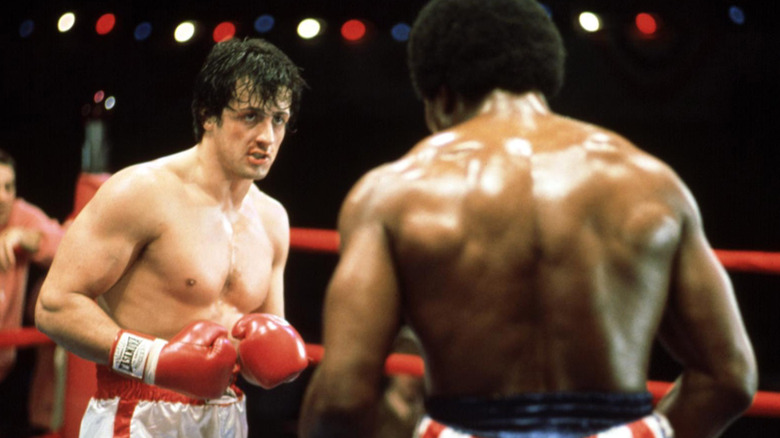
Some people would be surprised to learn that Sylvester Stallone is not only the star of the "Rocky" films, but also the writer. He even scored an Oscar nomination for Best Original Screenplay in 1977, while "Rocky" itself received Best Picture. Stallone is actually a prolific scriptwriter, ever since selling his first feature-length script, "Hell's Kitchen," in 1975. He's written every single "Rocky" film, as well as the "Rambo" films. Stallone's screenwriting prowess shows that he's more multi-faceted than the dumb action star that many like to paint him as, and "Rocky" was his first, and perhaps biggest, success.
Stallone's script for "Rocky" was highly sought after, and because he was nearly broke at the time, Stallone fought to ensure that he would not only sell the script but star in the film, despite resistance from many studios. He managed to secure the leading role and the sale of the script, and the rest is history.
One of the most iconic aspects of the character of Rocky Balboa is his fixation on facing the world with "the eye of the tiger." This facet of the character was something Stallone had been saving for years, ever since his days as a movie theater usher. It was this idea, which came from the 1969 film "A Dream Of Kings," which became what Stallone would describe as "the key to the character."
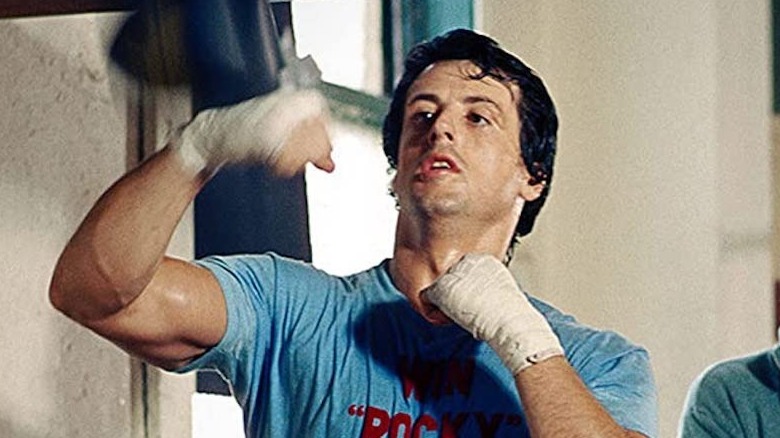
Stallone has never been afraid to cite the places where his ideas originated. His initial idea for the "Rocky" series itself came after he watched Muhammad Ali fight Chuck Wepner in 1975. "Chuck Wepner was basically a guy who everybody considered a joke. He was known as the Bayonne Bleeder, and it was clear that his only notable contribution to the history of pugilism would be just how badly Ali would destroy him," said Stallone in a GQ interview from 2018. He recalled the fight, where Wepner was a "zillion-to-one" underdog, who everyone was counting out long before the fight started. Then something happened.
"Then, all of a sudden, something incredible happened. From nowhere, Wepner knocked down the immortal Ali."
Stallone recalled the crowd immediately turning, supporting Wepner for the rest of the fight. Wepner didn't win, but Stallone took a lot of inspiration from his losing effort. "So I'm sitting there watching all this, and at some point I realize that the whole thing's a metaphor, and I realized that it wasn't really about boxing. Actually, "Rocky" was never really about boxing, it was about personal triumph."
Similarly, the concept of "the eye of the tiger" was a piece of inspiration Stallone took from "A Dream of Kings." "At the time I was a movie usher at the Baronet Theater across from Bloomingdale's in New York City," said Stallone in a Chicago Tribune piece in 1986. "And I kept hearing him say, 'Each day, my son, you must wake up and face life with the eye of the tiger.'"
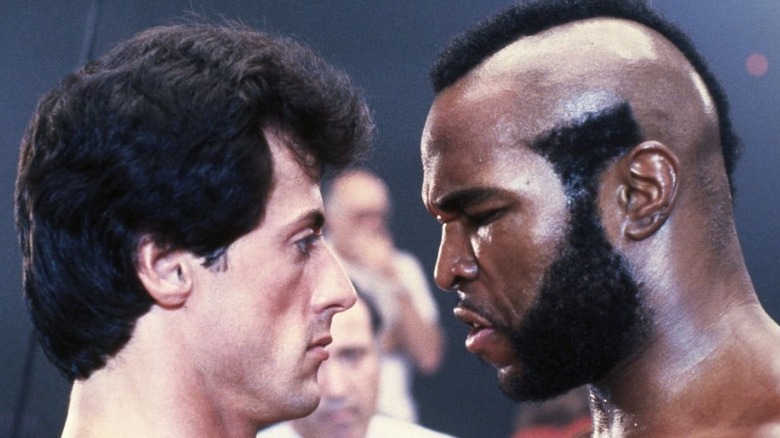
Sure enough, the eye of the tiger became a key aspect of the character of Rocky Balboa. The saying wouldn't show up in the films until "Rocky III" in 1982. But at that point, it became one of the most famous movie quotes in history, showing up all over pop culture. The song Eye of the Tiger, written as the theme song of "Rocky III" by rock band Survivor, topped charts worldwide in 1982.
The "Rocky" franchise would continue to be wildly successful, with five installments in the main series as well as two spin-off "Creed" movies, which follow the son of Rocky's friend and rival Apollo Creed. There are even talks for Stallone to write a Rocky prequel series in the near future.
The "Rocky" films are about not giving up. They're about reaching deep inside yourself and giving every challenge your all, no matter how impossible they may seem. And Sylvester Stallone exemplified this in his efforts to get the movie made with him as the star. He started as a struggling actor with $100 to his name and became one of the world's biggest movie stars. He persevered. In other words, he faced the world with the eye of the tiger.
Read this next: The Best Movies Of 2022 So Far
The post Sylvester Stallone Found The 'Key' To Rocky's Character In A Film From Decades Before appeared first on /Film.
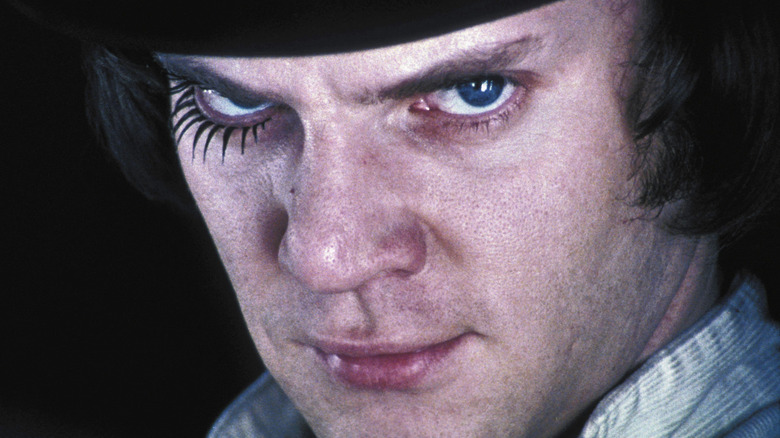
Malcolm McDowell's role in "A Clockwork Orange" is likely the one he'll always be known best for. He played the role of Alex in the 1971 film based on the novel of the same name, a charismatic juvenile delinquent in a dystopian future England. He leads a band of his buddies (or "droogs," as he calls them) around committing horrible crimes and acts of "ultraviolence," as they like to call it. The movie's commentary on things like juvenile delinquency, psychiatry, and government brainwashing have kept it relevant through the years, and McDowell played the role of the rebellious thug pristinely.
The film was directed by Stanley Kubrick, one of the most acclaimed directors of all time. It's considered one of Kubrick's greatest works, as well as McDowell's. Kubrick was very complimentary of McDowell's performance. "He was, without the slightest doubt, the best actor for the part," said Kubrick in an interview with Michael Ciment. "It might have been nicer if Malcolm had been seventeen, but another seventeen-year-old actor without Malcolm's extraordinary talent would not have been better."
One would think that receiving the role of your life from one of history's great directors at the age of 28 would be the sort of thing McDowell would be eternally grateful for. Unfortunately for McDowell, his relationship with Kubrick was extremely strained following the film's release, with issues both personal and financial arising between the two.
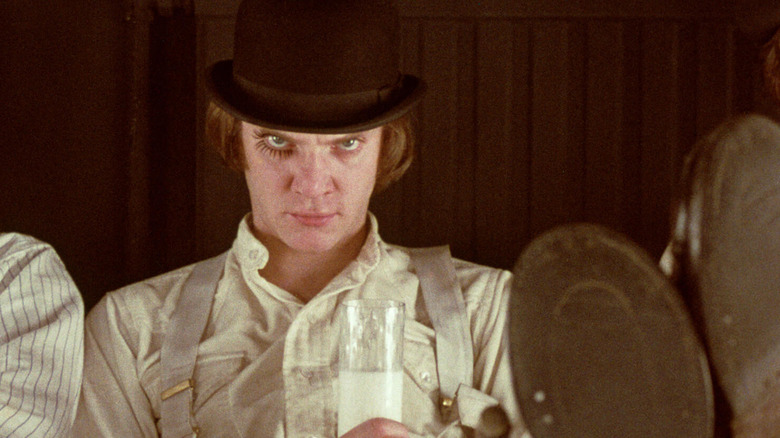
Kubrick is considered one of the great directors of all time, but his methods were known to be morally questionable, at best. His treatment of Shelley Duvall on the set of "The Shining" was nothing short of abusive, and McDowell was not able to escape his work with Kubrick unharmed as well.
Kubrick expected authenticity from McDowell, which led to multiple cracked ribs during his filmed beatings, and went temporarily blind when Kubrick had a doctor anesthetize his eyes. Despite all this, Kubrick was happy with McDowell's work. McDowell even invented what would become known as "the Kubrick stare," a facial expression that would carry through to much of Kubrick's other work.
But even after suffering so much for Kubrick's art, McDowell revealed in an interview with The Guardian that he had trouble negotiating his payment with the director. "I'd asked for $100,000 and 2.5% of the box office, which is what I'd got paid on my previous film," said McDowell. "Stanley told me Warner had refused the 2.5%. But when I was invited to meet the studio heads, they said: 'You're going to be a very rich young man on the 2.5% we gave Stanley for you.'" McDowell knew he had been played. This behavior sadly doesn't seem very out of character for Kubrick, considering some of his other actions.
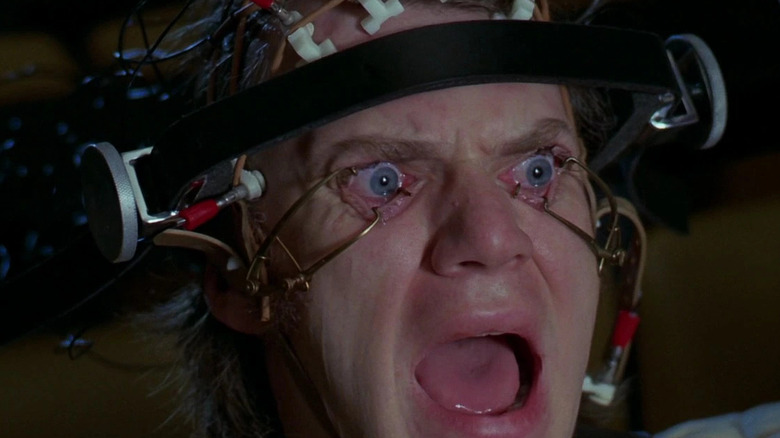
The shortchanging by Kubrick was extremely hurtful to McDowell, especially after he'd really put in so much of himself into the film. "It was a shocking hurt," McDowell said in a 2014 interview with Entertainment Weekly. "I'd been used to Lindsey Anderson, who was my best friend. And then with Stanley, I gave him absolutely everything I had — everything I had—and he barely called me after that."
For McDowell, it was more than just a financial slight. It was a horrible personal insult. "It was like a total rejection of you as a person," McDowell said. "Sure, he'd call when he wanted me to go to America to sell the bloody movie, but it really hurt. It was shocking. In fact, I couldn't talk to him. There were other things, which I really don't want to rehash, but you know, I had my issues with him. I thought that he had betrayed me in such a way."
McDowell would go on to have an extremely successful career in his own right. He'd make lots and lots of money. But the way Stanley Kubrick treated him clearly affects him to this day, and he's right to feel that way. To suffer the abuses he did on set, only to not even get the agreed-upon compensation, was horrible. Kubrick's films are nearly all considered classics, but between McDowell and Shelley Duvall, it hardly seems worth the human toll.
Read this next: The Best Movies Of 2022 So Far
The post A Clockwork Orange Star Malcolm McDowell Got Shortchanged By Stanley Kubrick appeared first on /Film.

A remaster of the cult classic FPS game Rise of the Triad is in the works, slated for release in early 2023, and in one sense, it's a reunion. The developers working on Rise of the Triad: Ludicrous Edition include some of the leading lights of the recent 'boomer shooter renaissance' who first worked together on the 2013 Unreal Engine remake of Rise of the Triad.
While obviously embracing the grimy nature of "The Texas Chain Saw Massacre," director Ti West's "X" owes just as much to the tail end of the '70s pornography boom. West's smutty ode to this era of filmmaking checks off all of the boxes associated with some of the best slashers, resulting in some truly gnarly moments. It stands among the best films of the year, not just because of its horror DNA, but because it presents the world of sex through the empathetic presentation of Mia Goth's dual performance.
Youth and retrospection collide with Goth playing both the auspicious Maxine, a hopeful starlet looking to make her name in the movies, and the forlorn Pearl, a sick woman in her 80s who finds herself jealous of her excitable new guests. While not playing the same character, the thematic throughline between their characters' six decades age difference shows a tenuous connection nonetheless.
It would have been well enough to exhibit these two characters as they are in "X," but West and Goth saw an opportunity to explore how she came to this point with the prequel film "Pearl." Even Goth's youthful persona will be elaborated upon with the upcoming "MaXXXine."
With "Pearl," however, we find out how she became the "murdering sex fiend" we were introduced to. There's a scene in the new film where a significantly younger Pearl is shown a stag film at the movie theater, which in and of itself carries a notable distinction.
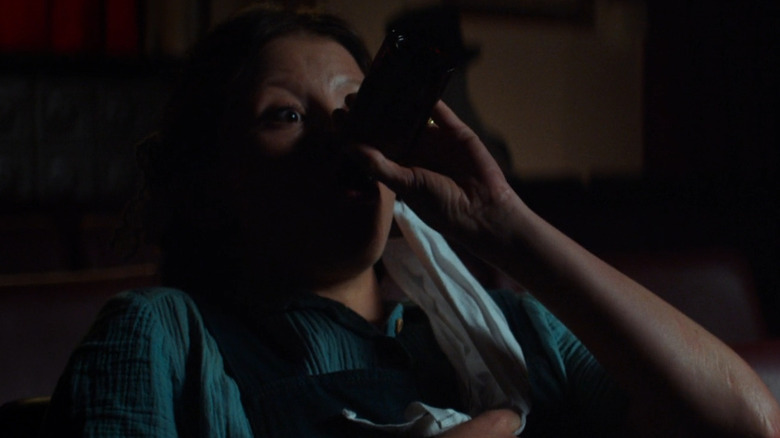
In an interview with /Film's BJ Colangelo, West revealed that the stag film the projectionist shows Pearl is indeed real:
"It was called 'A Free Ride,' aka 'Grass Sandwich.' If I'm correct on this, and it's been a little while, I'm pretty sure it's the first one, I don't know if it's the first one ever, but it's one of the first ones that has been archived."
There's some contention among historians as to whether the 1915 one-reeler was the first American stag film, or if it was actually shot in the early '20s, but one thing's for sure: "Pear" is likely the first time it returns to theaters in over 100 years. Talk about a timely re-release.
At the time of its creation, showing smut theatrically was an illegal offense, so "A Free Ride" had to be screened in secret. Even so, the stereotypical conventions of a cheesy porno are all present. A wealthy mustached man in his 1912 Touring Car picks up two women off the side of the road before they all engage in grassy hanky panky, complete with a three-way case of urophilia.
It even features such title cards as "what a beautiful dairy" when the man grabs one of the woman's breasts.
When it came to who masterminded the skin flick, I had thought someone on IMDb was having a goof, but according to the opening title card, "A Free Ride" is indeed credited to director A. Wise Guy and cinematographer Will B. Hard. I wouldn't have surmised Bart Simpson and early 20th century pornographers having a connective tissue through gag names, but that seems to be where we're at.
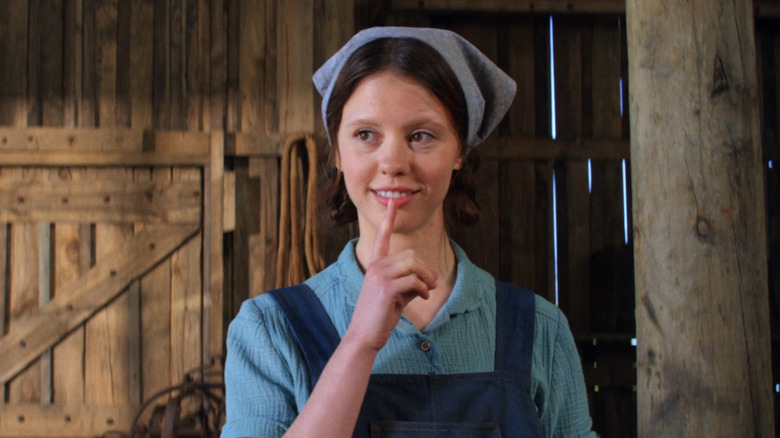
With the direction West's series is going in, he appears to be using pornography as the representative for cinema in the eyes of the two women. When Pearl was Maxine's age, her access to motion pictures in 1918 was limited, seeing as the form was in its infancy. Naturally, she's fascinated by what she sees and would give anything for people to look at her like that. Pearl appears to find herself chasing the same X factor prerequisite that Maxine was, albeit with notable differences.
I think it's a fascinating connection that the reason Pearl is so obsessed with Maxine's sexual prowess is because her path to stardom arises from the world of pornography itself. A niche piece of film history sets a dreamer on a path that leads to what looks like a technicolor nightmare about the leering and fatal gaze associated with fame.
The conservative backbone of slasher logic dictates that the promiscuous folks get slaughtered, and "X" follows that tradition not out of a made-up sense of morality, but envy on the part of the killers. You recognize that Pearl is dangerous, but also an empathetic figure who only wants to feel loved and special.
Having Goth adopt the dual personas is a huge reason why "X" rhymes as well as it does. How exactly did her rise to fame turn her from the innocent farmer's daughter to a psychopathic killer? Well, you'll have to see "Pearl" in order to find out.
"Pearl" is now playing in theaters.
Read this next: The Saddest Character Deaths In Horror History
The post The Adult Film in Pearl is Real Movie From the Era, Says Director Ti West [Exclusive] appeared first on /Film.

While we keep accumulating games, it's been lovely to see a renewed push for backward compatibility as we've gone from the PlayStation 4 generation to PS5. But as some virtual reality fans had feared, next year's PlayStation VR2 will not work with the original PlayStation VR games. After much speculation, Sony confirmed PSVR2's lack of backward compatibility on episode 439 of the Official PlayStation Podcast.
As explained by senior vice president of platform experience Hideaki Nishino, "PSVR games are not compatible with PSVR2 because PSVR2 is designed to deliver a truly next-generation VR experience. PSVR2 has much more advanced features like all-new controllers with haptic feedback and adaptive triggers, inside-out tracking, eye tracking, 3D audio is coming together, [and] 4K HDR, of course. This means developing games for PSVR2 requires a whole different approach than the original PSVR."
Straight up, that reasoning isn't going to sit well with players.
With that said, I would expect the most popular PSVR games to get PSVR2 versions, which will surely be a messy situation for folks who fully bought into the original ecosystem and have a huge library of titles. Inevitably, games will be left stranded on the old tech, so if you haven't gotten rid of your headset yet, you may want to hold onto it.
The best-case scenario would've been for games to "just work," in players' eyes. But considering the differences between how these two devices operate (those damn PlayStation Move controllers strike again!), it was never going to be that easy.
I wish this definitive news would've come out sooner — I'm sure there are people out there scooping up PlayStation VR games on sale in hopes of eventually playing them on PSVR2, which we only now know (officially) will be out of the question. What a bummer.
It was already annoying enough to have Resident Evil 7 locked down and never receive a PC VR port. Here's hoping it comes forward to PSVR2 alongside Resident Evil Village. The same goes for Astro Bot Rescue Mission, Rez Infinite, Tetris Effect, Beat Saber, and many others. Outdated as PSVR1 became compared to its competition, it still had terrific games.
Without an existing catalog to rely on, this puts even more pressure on the PSVR2 launch lineup to deliver in a substantial, long-lasting way. It can't just be flashy.
For those of us with big PSVR1 libraries, I guess we'll wait and see what plans — if any — those developers might have for porting their games to PlayStation VR2.
The post PlayStation VR2 doesn’t support PSVR games appeared first on Destructoid.
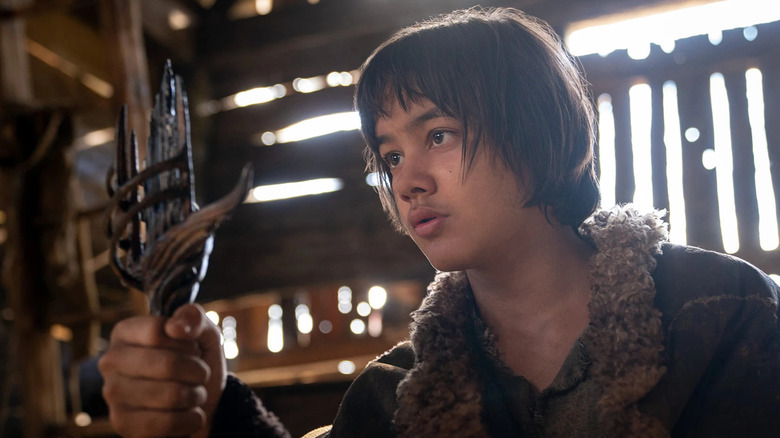
Spoilers follow for "The Lord of the Rings: The Rings of Power."
"The Lord of the Rings: The Rings of Power" is making a big deal about concealing who is playing the evil Dark Lord Sauron, and most fan theories have been far from perfect. And while we still wonder which character will be revealed as the enigmatic villain, there is one thing that lingers in the back of my mind. A major aspect of this mystery is the appearance of a strange hilt that Theo (Tyroe Muhafidin) is in possession of. While the son of regular ol' human Bronwyn (Nazanin Boniadi) does not seem to be anyone specific from the dense J. R. R. Tolkien canon, the hilt Theo acquires could be the very weapon of the Dark Lord himself.
Since the first episode, Theo has been hiding the hilt, which is presumed to be connected to the evil forces that were seemingly destroyed in the First Age. It only manifests into a complete weapon once it comes into contact with his blood, which was tainted by an orc. The latest episode teases that the sword is directly connected to the return of Sauron, but may not be the Dark Lord's to use.
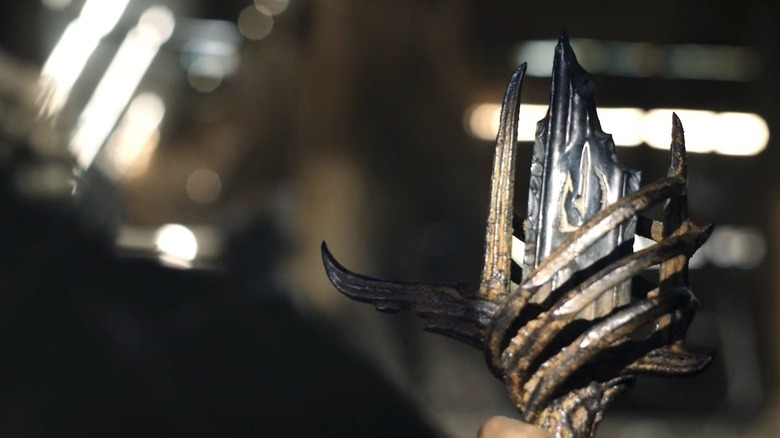
In the fourth episode of "The Rings of Power," Theo comes across a group of orcs that are ransacking the village he used to live in. In doing so, Theo gets attacked by one, which forces him to stab the hilt into his arm and feed it blood, so it may reach its full power. But he's not the only one who has used the hilt in this manner. It's revealed near the end of the episode that the barkeeper Waldreg (Geoff Morrell) was originally in possession of the fractured sword. Moreover, Waldreg used it in the same way as Theo, teasing that it was "fashioned for our ancestors by his master's own hand."
The hilt seems to have been a sword that was gifted by Sauron to the loyal leaders of the Southlands during the First Age. Remember: A good chunk of humans in Middle-earth, particularly from the Southlands, were members of Morgoth's vast army. They were loyal to the Dark Lord's cause, to a fault. However, things were thought to have changed since then, as the Southlands have not overtly displayed any connection to evil. But if Waldreg is any indication, there seems to be many who await the return of Sauron.
The sword that Theo has is meant for the evil alliance that is impending; however, it's not clear what the weapon's true power is. It does not have an official name yet, but I think "The Rings of Power" might be pulling from the depths of mythology with this mysterious sword.
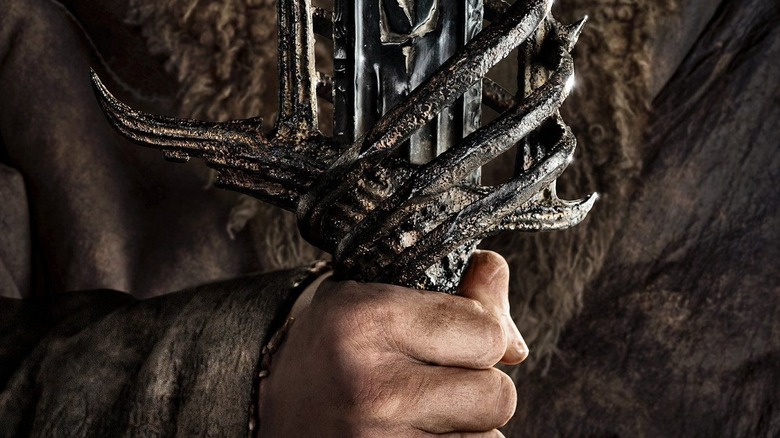
Although the series heavily implies it was forged by Sauron (or Morgoth), the weapon in question could derive from another source in the Tolkien canon. The main option that comes to mind is the bloodthirsty weapon called Anglachel. Forged by the Dark Elf Eöl, the sword held great power that was infused with the iron of a meteorite and the essence of the maker himself. It drank the blood of those it struck, but was later reforged to forget its old ways by another elf, Túrin.
Túrin renamed the sword "Gurthang," and used it to slay dragons. But one day, for some complicated marital reasons, he fell upon the sword, killing himself and destroying the weapon at the hilt. This all happened during the First Age, so the timing tracks. However, the series would have to switch out some names to make it work.
"The Lord of the Rings: The Rings of Power" is no stranger to twisting parts of the canon to fit the overall narrative of the series. If they were to introduce the Anglachel as a weapon meant for the servants of Sauron, it would be a minor detail in the greater scheme of things.
Read this next: The Best Easter Eggs In The Lord Of The Rings: The Rings Of Power Episodes 1 And 2
The post The Rings of Power: Is Theo's Blood Hilt the Sword of Sauron? appeared first on /Film.
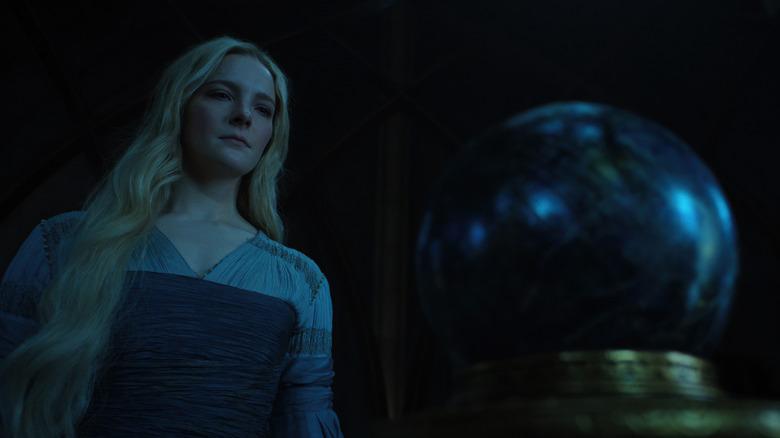
In the singular world of Middle-earth, you just never quite know what you'll stumble upon next. Author J.R.R. Tolkien created such an unimaginably huge and fully lived-in universe that readers always had to stay on their toes. At any given moment, fans could anticipate the introduction of fascinating new settings and wild fantasy concepts (and maybe a jarring and divisive character or two) unlike anything else in the genre. Considering the thousands of years of history that Tolkien made up from scratch, the creators behind "The Lord of the Rings: The Rings of Power" faced an uphill battle to make all of this digestible to mainstream audiences. That's what makes it all the more remarkable that the last episode neatly (re)introduced a certain object that fans have definitely seen before.
Episode 4, titled "The Great Wave," takes a wide-ranging look at all the major characters now scattered across the land, but one moment stands out the most for the ramifications it may have on the rest of the series. While Galadriel (Morfyyd Clark) and Míriel (Cynthia Addai-Robinson) attempt to reach an understanding over how to deal with her unwelcome intrusion to the isolationist island kingdom, the Númenorean queen regent unveils a particularly striking object that she refers to as a Seeing Stone -- a palantír (which means "far sighted" in the fictional language of Quenya that Tolkien invented) that was originally one of seven.
Of course, those who know their lore recognize just how significant these objects will become in the Third Age during the events of "The Lord of the Rings." For those in need of a refresher, that's what we're here for! These powerful items come with a fascinating backstory and, as we'll undoubtedly see in the weeks to come, plenty of untapped potential to fully explore in "The Rings of Power."
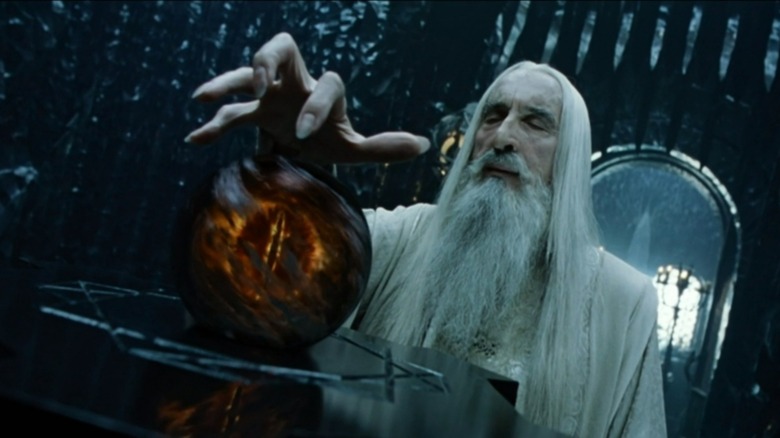
As much as hardcore fans can never get enough of Tolkien's dense world building, filled with vast amounts of detail that would make the obsessive moderators over at Wookieepedia break out into a cold sweat, such a massive universe posed certain problems for the author. For one thing, how do you make characters exchange information, perceive distant threats, and become aware of all sorts of prophecies and visions across such distances? Enter the palantíri, a series of impossibly well-crafted stones that allow their users to peer across time and space -- in ways that they never may have anticipated.
So how do such powerful objects come into being in the first place? As is usually the case with Tolkien, you can thank (or blame!) the elves.
The palantíri were created by the Noldor elves who lived in Valinor in the First Age, traditionally credited to the handiwork of Fëanor himself. We've heard that name invoked once before on "The Rings of Power," when Elrond (Robert Aramayo) and Celebrimbor (Charles Edwards) discussed the legendary elf's craftwork of the precious Silmaril gems that woke the jealousy and lust of the villainous Morgoth. As Míriel explains to Galadriel, a total of seven palantíri were commissioned, but all the others have been "lost or hidden" by this point in history -- except for one, now in possession of the Númenoreans and eventually handed down to the queen from her father.
As Galadriel finds out for herself, this gave the queen her prophetic vision of the destruction of the kingdom by the sea ... but is that fate set in stone? The way the palantíri were used in "The Lord of the Rings" might answer that question.
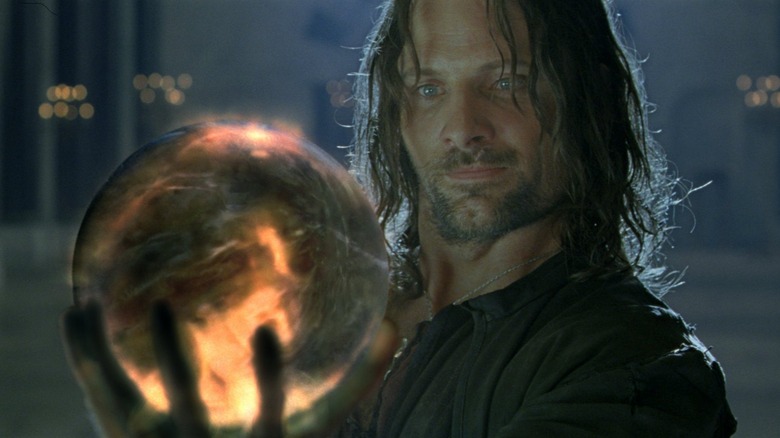
One look at the way that the palantíri are depicted in the original trilogy reveals just how deceptive and ominous these seeing stones can be.
By the time our heroes in "The Lord of the Rings" come onto the scene, almost all of the palantíri have been lost to the ravages of history in the preceding ages. The one we see in "The Fellowship of the Ring" comes under the care of the corrupt wizard Saruman, who plumbed the depths of his palantír and became seduced by Sauron's influence (who also had one in his own possession). In "The Return of the King," the hobbit Pippin is victimized by his own recklessness and accidentally reveals himself to Sauron when he gets a little too curious. The extended edition includes one fan-servicey scene that shows Aragorn picking up the same stone and fully revealing himself to Sauron, this time in outright defiance of the dark lord. In the books, the Steward of Gondor Denethor is also revealed to have kept another one in the Gondorian city of Minas Tirith. The carefully manipulated images he saw caused him to lose all hope of achieving victory over Sauron altogether and made the realm even more susceptible to defeat.
Although Gandalf claims in the books that the palantíri don't outright "lie," the use of such stones remains ill-advised because nobody knows who else is controlling the others and twisting things to their own devious ends. These cautionary tales at least provide some clues of what to expect in "The Rings of Power," with the queen's visions of Númenor's downfall potentially turning into a self-fulfilling prophecy.
New episodes of "The Lord of the Rings: The Rings of Power" stream on Prime Video every Friday.
Read this next: The Best Easter Eggs In The Lord Of The Rings: The Rings Of Power Episodes 1 And 2
The post Where You've Seen That Seeing Stone In The Rings Of Power Before appeared first on /Film.
William already reported on it a few days ago, and I just noticed it on VMTN that VMware vCenter Converter Standalone is back, or better said in beta! If you are a customer who already has access to the beta community, simply go to this link: vCenter Convert Beta Community to get access to the community and the download/releasenotes. <update>Available now: https://www.vmware.com/products/converter.
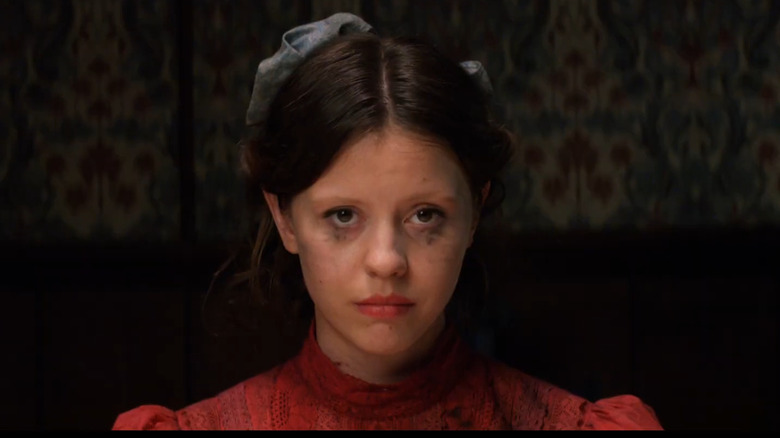
One of the core tenets of American mythology is the "rags to riches" story, the idea that any anonymous individual can, through sheer ambition and force of will, achieve lasting success in life. Nowhere is this myth best utilized than in the numerous stories about people making it big in show business. Most films about this topic throw enough hardship at their protagonists to keep things feeling realistic, but they make sure to perpetuate the myth: most of these stories have a happy ending worthy of a fairy tale.
"Pearl" is a different kind of fairy tale, and its emotionally harrowing finale subversively looks like a Technicolor happy ending while being anything but. This shouldn't come as much surprise to those who saw "X," which was co-writer and director Ti West's initial installment in what we now know is a trilogy of films. In "X," star Mia Goth portrayed both that film's nubile lead, Maxine, as well as the octogenarian version of Pearl, a woman who had dreams of stardom but got stuck on the same farm all her life and became a vicious killer.
The clever genius of "Pearl" as not just a standalone film but as a prequel to "X" is that "Pearl" isn't so much a study of how the killer of "X" came to be, but a look into why. It's West and Goth's mean little riff on Technicolor musicals and the '50s "women's picture," a heartfelt story of neither a rising star nor a has-been, but a never-will-be.
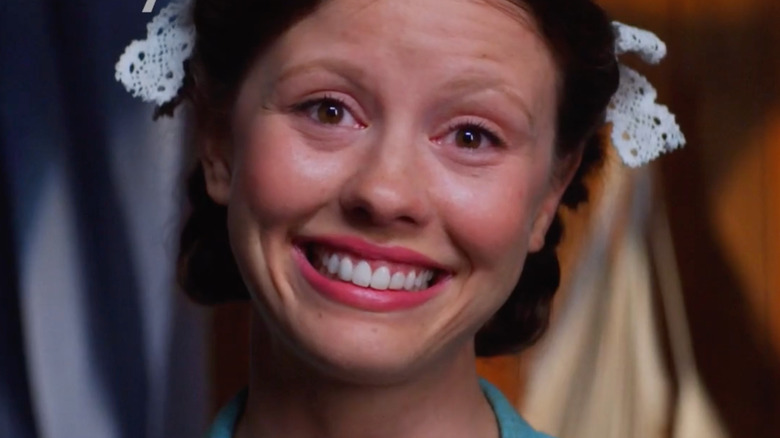
Even though "Pearl" isn't paying homage to vintage '70s and '80s slashers like "X" had done, it still features a similarly single-minded structure and economy of location. Set in 1918 on the same small-town Texas farm as in "X," "Pearl" sees the titular young girl trapped in a near-squalid existence by her overbearing German immigrant mother, Ruth (Tandi Wright) and her invalid father (Matthew Sunderland). The only moments of happiness Pearl enjoys involve her fantasies of becoming a star performer, and these fantasies grow after she meets the Projectionist at a local movie theater (David Corenswet) and hears from her sister-in-law, Mitzy (Emma Jenkins-Purro) that a dance troupe is holding auditions in town soon.
Pearl becomes seduced in a number of ways over the course of the film. For one, she's shown an underground European stag film by the Projectionist, and her adulterous relationship with him further equates the notion of stardom and sexual expression in her mind. For another, the advice she receives from both the Projectionist and Mitzy inspires her to stand up to Ruth, and the latter woman's strict methods and stifling of Pearl's self-image causes Pearl to accidentally set Ruth ablaze during a fight. Passing the point of no return, Pearl allows Ruth to perish in the basement of the farm home, euthanizes her father, and murders the Projectionist when she feels he doesn't like her any more.
All of that seems acceptable to Pearl, as she has now convinced herself that these events mean that she's destined to be whisked away to a life of fame and fortune — while waiting to audition for the troupe, she repeats "it has to be me" like a mantra. When Pearl is rejected by the troupe, she confesses her crimes both literal and emotional to Mitzy, who Pearl believes got the dance gig over her. No longer liking or trusting Mitzy, Pearl murders her, then "fixes" her own life by propping up the corpses of her dead parents at the kitchen table as if everything was fine. When Pearl's soldier husband Howard (Alistair Sewell) finally returns from the war, he finds his wife presiding over this ghoulish facsimile of a happy home. Pearl has made a new fantasy, one that's superseded reality.
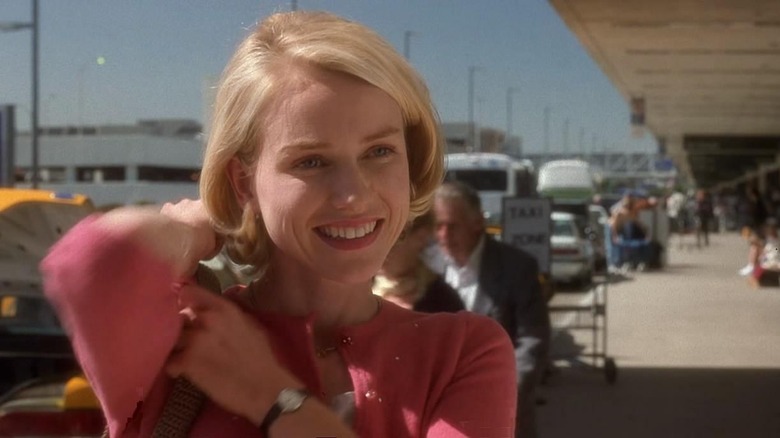
Like all the greatest slashers, "X" had a number of subtextual layers to it, commenting on everything from the hardships of old age to the relationship between sex and death and the way cinema depicts the two. "Pearl" deepens and expands those themes as it presents cinema as a seductive force in and of itself, a trigger that clashes with the suppressed existence Pearl suffers.
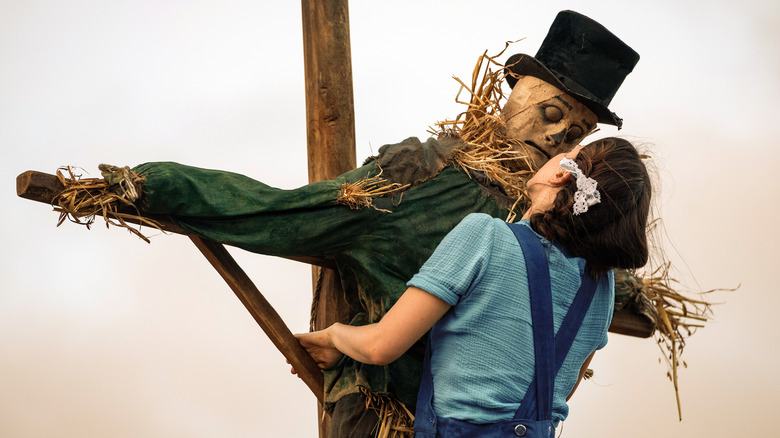
While Pearl has already been married to Howard long before the film begins, West depicts Pearl's deeper sexual awakening when she humps a scarecrow to climax while imagining it to be the Projectionist. Sure enough, in the shame of afterglow she becomes violently angry. It's an indication that Pearl is attempting to find a path to sexual and emotional freedom that her upbringing and society won't allow.
This merging of sexual expression and cinema as a seductive lie has been seen before, most notably in several of the films of David Lynch. In both "Mulholland Drive" and "Inland Empire," women who either are or aspire to be actresses find their identities lost and fractured within the conflicting messages of Hollywood and society at large, and it's just such a struggle that Pearl endures. As a sly commentary on the supposed virtues of ambition, Pearl deludes herself into believing her actions are justified because her destiny is written in stone, only to become more self-aware and more psychologically broken once that dream is crushed.
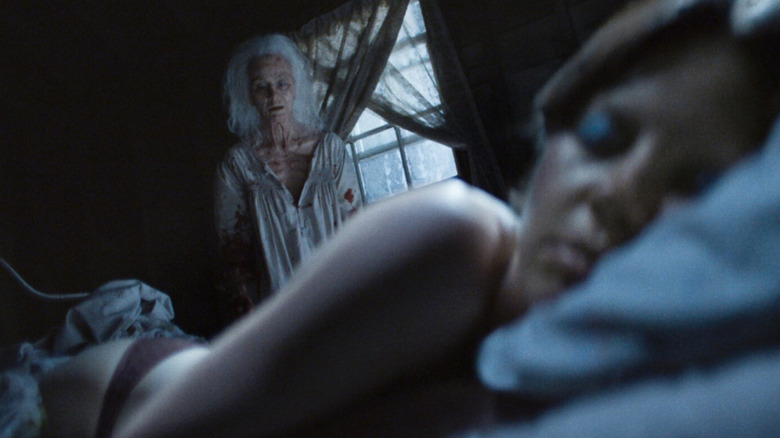
"Pearl" was written by West and Goth at the arguable height of the pandemic in fall of 2020, during the two-week quarantine they underwent before shooting "X" in New Zealand. It makes absolute sense that the Covid-19 outbreak and its effects on culture would be reflected in the movie, but it's done in a very clever way: by incorporating the outbreak of Spanish Flu in 1918, West has a historically accurate reason to feature characters wearing protective masks in the film. It makes "Pearl" and its many allegories feel that much more relevant and immediate. When the Projectionist observes at one point about how it's hard to tell who people are when they're wearing masks, the film clearly intends that literally and figuratively.
West also revisits the themes of "X," commenting on the cyclical nature of violence through a historical lens. Where "X" featured Goth playing two sides of a generational coin in Pearl and Maxine, "Pearl" always keeps the horrors of World War I lurking in the background. Pearl's suffering father is a constant reminder of the ravages of war and sexually transmitted disease, while even the newsreels at the cinema feature horrifyingly graphic footage of wartime violence.
It all adds up to the final moment of soldier boy Howard returning from the Front to find even greater, grislier violence waiting for him in his own isolated home. As America and the world were to discover not too long after 1918, widespread horror and violence did not end with WWI.
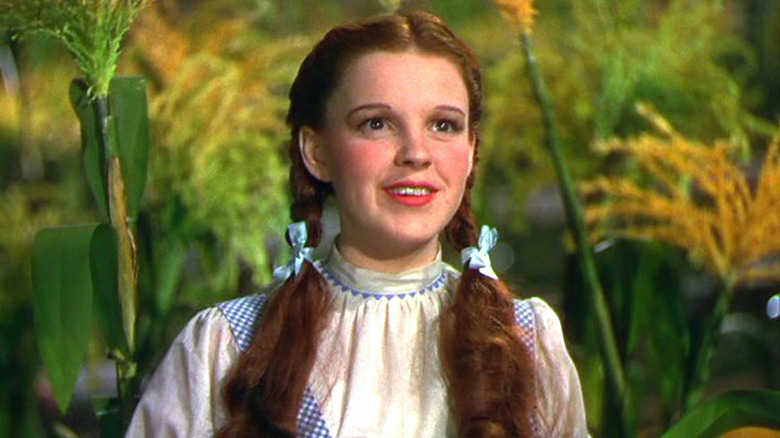
The ultimate sly commentary of "Pearl" lies in the way the film makes a vicious killer utterly sympathetic. Granted, there have been numerous movies that have tackled such subversion, from "Henry: Portrait of a Serial Killer" to "American Psycho" to even, arguably, "Psycho." Yet the satire of "Pearl" is primarily visual, using the iconography of musicals and the woman's picture to play on the audience's sympathies.
As West explains via a press kit from A24, one of his biggest influences was "The Wizard of Oz":
"It's a movie that deals with fantasy and imagination, the hardships of growing up on a farm and wanting to escape. It was in the ether when I wrote 'Pearl,' much in the same way 'The Texas Chain Saw Massacre' was when I wrote 'X,' but they wound up being very different movies. There's something fun about thinking as a viewer that you know what a movie is going to be, but having the filmmaker ask you along the way, 'Are you sure?'"
Besides musicals like "Oz" and "Mary Poppins," the other classic Technicolor films West references with "Pearl" are the women's pictures of the 1950s, specifically those of Douglas Sirk, Max Ophüls, and George Cukor. Their films follow female protagonists who endure large amounts of emotional distress (enhanced by their circumstances and position in society) until they reach a breaking point. Of course, Pearl's breaking point means murder, but the film has no less sympathy for her character.

The fact that Pearl remains so sympathetic throughout the film is its ultimate triumph. It's not only a homage to the films West references as well as a throwback to films like those of Robert's Altman ("That Cold Day in the Park," "Images," "3 Women") and Aldrich ("What Ever Happened to Baby Jane?"), but the approach allows West and Goth to tie the horror and subtextual commentary together. After all, it's no coincidence that Cukor directed the 1954 version of "A Star Is Born" that stars Judy Garland, who also starred in "The Wizard of Oz."
Of course, none of this would work without Goth's incredible performance. She makes Pearl thoroughly watchable and even likable, even when she's at her most despicable. As West explains, "If you've seen 'X,' then you know that Pearl's life didn't turn out the way she wanted, and she goes on to do some terrible things. But even though this character has demented issues [...] you still want things to work out for her." The final long, unbroken take of Goth's face that occurs during the film's end credits encapsulates the fear, pain, loss and menace of Pearl, making the ending a happy one only in her mind.
Read this next: Horror Movies That Make Us Root For The Villain
The post Pearl Ending Explained: A Star Is Shorn appeared first on /Film.
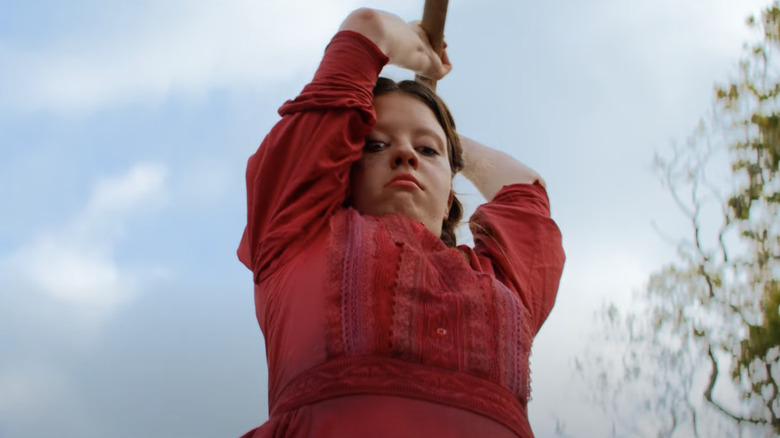
This interview contains mild spoilers for "Pearl."
In Ti West's "Pearl," the prequel to his slashing, smash-hit return to horror, "X," Mia Goth dazzles as a young farm girl with dreams of stardom in the midst of the 1918 influenza pandemic. Feeling trapped and isolated on her family's farm, Pearl is responsible for not only tending to the animals, but also caring for her disabled father under the harsh and overbearing rule of her German immigrant mother. As Pearl yearns for a glamorous life under the stage lights, it becomes quickly apparent that Pearl will stop at nothing to pursue her ambitions and become the star she knows she's meant to be.
While "X" was a love letter to the indie horror auteur days of the late 1970s, "Pearl" is noticeably styled after the golden age of Hollywood, boasting 1930s and '40s technicolor aesthetics, a roaring orchestral score, and the classic story about a small town girl with dreams in lights ... well, if the classic small town girl also had a penchant for murder, that is. With "Pearl" now in theaters, I was lucky enough to snag a chat with stars Mia Goth and David Corenswet, and director Ti West, to gather a little more insight into how this slasher soared somewhere over the rainbow.
This interview has been edited for length and clarity.
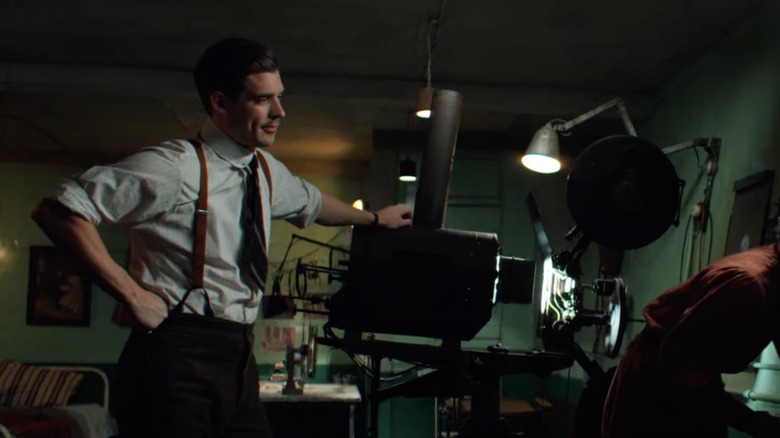
My first question is for Mia. What does the Venn diagram of preparation look like between "X" and "Pearl"?
Goth: Well it all feeds into each other, really, and so when Ti and I first started discussing "Pearl" and the possibility of making a second movie, it was always a big maybe and we always said, "Well, at the very least this would serve as an amazing backstory to older Pearl in 'X,'" and it was just very exciting. The fact that we then were able to make "Pearl" and A24 greenlit it really did feel like a miracle. It was very informative and sometimes it gets a little confusing talking about the different characters in the different eras and the different movies, but no, all the prep was very useful.
My next question is for David. Your character feels both like a hundred Hollywood greats while simultaneously wholly unique. Were you channeling anyone in particular with your performance?
Corenswet: Honestly, Matthew McConaughey, but only because of the Texas accent. [laughs] I think there was an idea that because the character is a lover of film ...I think for the most part he's living earlier than a lot of the Hollywood greats whose movies I've seen. But the idea is that he sort of aspires to be in that world, that maybe he's setting some of the trends that will become the trends of the 1920s and '30s and '40s was interesting to think about and exciting to play with. One of the fun things about making a period piece is that you know where the world goes, even though the characters don't. You can play with it. You have an advantage over the people who were really living in that time to tell interesting stories and tell stories of people who are forward thinkers and ahead of their time and who dream about the future. So, yeah. That's a fun era to play in for all kinds of reasons.
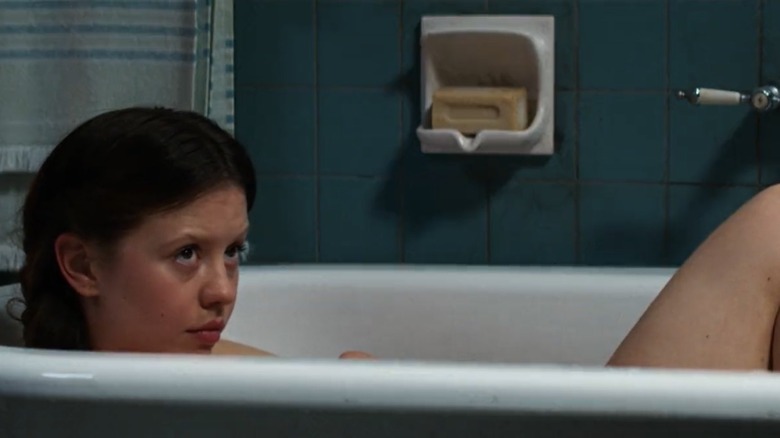
Mia, I loved that you co-wrote "Pearl" with Ti. Your presence on the page is definitely felt through your performance, especially since you're present in every single scene. While crafting this piece in quarantine, what aspects of Pearl's character were you most passionate about exploring?
Goth: I would say her humanity and her vulnerability. And that's probably what I was most looking forward to exploring more in "Pearl." In "X," we meet Pearl and Howard and they're sort of these distant figures and we don't really get to spend too much time with them. And so it was interesting to kind of meet Pearl at a different stage in her life and kind of get to know her in a more intimate way and just kind of really understand her and empathize with her in a way that I wasn't quite able to do in "X."
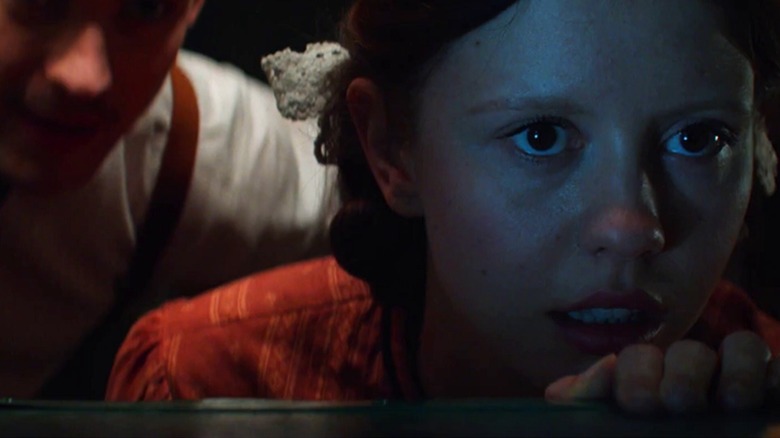
David, back to you on this one. Forgive the expression, but I fully expected The Projectionist to be kind of a "hump and dump" character, yet he stuck around the farmhouse a lot longer than I anticipated. Had Pearl not shown her true colors to The Projectionist, do you think he would've actually taken her away from the farm and off to follow her dreams of stardom in Europe?
Corenswet: Sure, yeah. This was one of my favorite conversations we had about the character. All those farmhouse scenes were some of the first scenes that we shot. So I had sort of a similar feeling to you. I had a lot of trouble. Why is he sticking around? He was nice enough to drive her home, but what's keeping him here when things are so clearly off or bizarre? And Ti explained it really beautifully, which was just like, "He's not a bad guy." He wants to be a good guy and he is one and he wants to be nice and polite. And he does like Pearl. And it's not that he's lying to her or manipulating her, it's that he's a little more fly by the seat of his pants, go with the flow ..."bohemian" is how he describes himself. And so it's just a little confusing when Pearl has taken it so seriously.
I think one of the beautiful things about the film is at the same time as you can relate to The Projectionist and feel like, "Yeah, he actually didn't sign any contracts, he didn't make any proposals, he just floated some ideas" in that moment, or as I did when watching the movie, you really feel for Pearl having set all of her hopes and dreams on this possibility. And the tragedy is not that either of them is a bad person, the tragedy is that they weren't clear enough with each other about the differences in their circumstances. And so they've each heard what the other person has said in a way that the other person didn't mean it. And that's real tragedy where you really can't blame anybody and yet everything has gone horribly wrong.
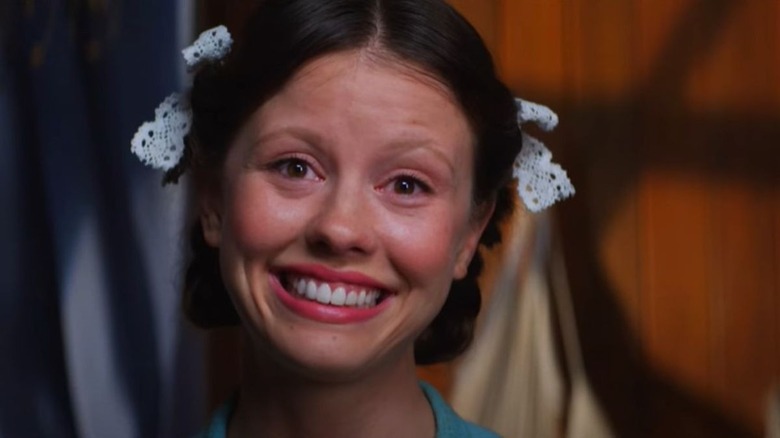
My final question will be over to you Ti. Throughout your entire filmography, your films are flooded with tour to force performances in horror. What do you think is the key to making a horror movie that allows actors to really shine?
West: I think you just have to give the audience a character that they can relate to. So I'm always trying to put a character in a horror movie that doesn't belong in a horror movie, so that the audience can relate to them and hopefully feel like there's some of themselves in there and then this experience can affect them in a personal way. So, it's hard. Beyond that, it's just a taste thing of just people who I think... I mean, Mia was the second person I met and I was like, "We're done, that's the person." And I can't explain what that is. I suppose I could conveniently say it's the "X factor," but it's hard to say. But if you can anchor a movie around a person that's relatable and believable, then the audience will go on the ride with you. Because there's more to horror than just the killing.
Read this next: Horror Movies With Unconventional Monsters
The post Mia Goth, David Corenswet, and Ti West Want You To Care About the Tragic Motivations of Pearl [Exclusive Interview] appeared first on /Film.
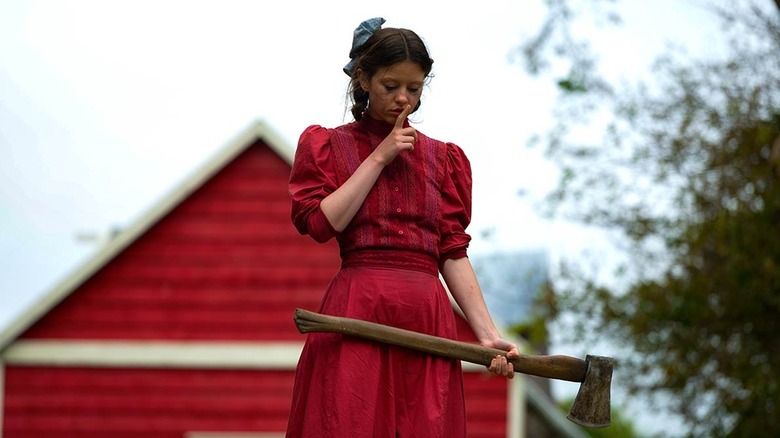
Ti West's film "X" was released back in March and, perhaps unexpectedly, ended with a trailer for a prequel film that was already complete. Now, "Pearl" has been released in theaters only five months later. And, as it turns out, West isn't done. "MaXXXine" is coming soon, too.
The premise of "X" is that a group of enterprising adult filmmakers in the 1970s have to trek out to a remote farm to shoot their latest opus. There are many conversations about the integrity of indie filmmaking and the liberating importance of porn movies. During shooting, however, the very elderly owner of the farm, Pearl, skulks around the production, titillated by the sex, but also longing for years of lust lost. Pearl ends up snapping and going on a killing spree. In an odd bit of casting, both Pearl and Maxine, one of the film-within-a-film's actresses, are played by Mia Goth.
"Pearl" is about the title character's life decades earlier on the same farm. The barn is new, but Pearl is still struggling with her very natural libido in a repressive, limited environment that doesn't allow her to express it. As the previews point out, this will lead to Lizzie Borden-style axe slayings. Also, "Pearl" might have a mystery on its hands. Why are Pearl and Maxine identical? In "X," there appeared to be a thematic mirroring of the characters -- one character is sexually free and the other is repressed.
In a recent interview with /Film, West explained to BJ Colangelo that the two mirrored character might have a nuanced connection.
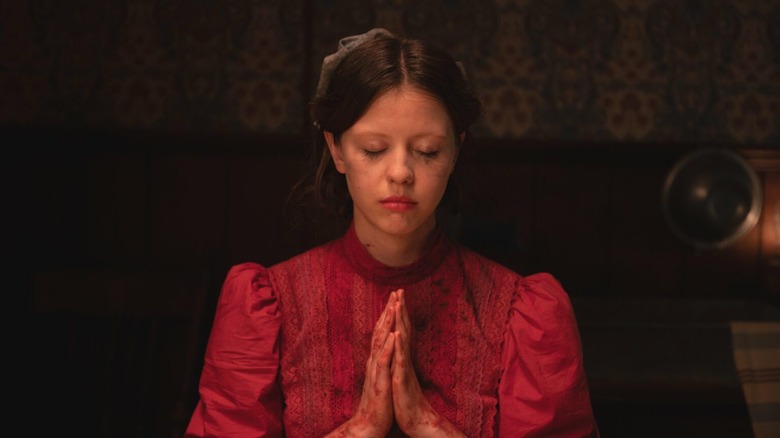
/Film asked West directly about the meaning of Goth's double casting. As Pearl in "X," Goth is outfitted with a full-body old age suit, and is nearly unrecognizable. As Maxine, Goth only sports wonderfully garish makeup. Why cast Goth as Pearl, and not hire an octogenarian actress? West explained that he and Goth brainstormed the double casting together, and agreed on the two characters' similarities. In a metaphorical way, Pearl and Maxine occupy the same conscious space. It was only a gulf of several decades that dictated their paths. Swap them out, and the stories would be the same. West says that audiences can have it both ways. In his words:
"I think it's a little bit of both. I don't know if it's more the former, but to speak to the former is to say, Mia and I, when we were making 'X,' part of the reason why I wanted her to play both roles was we always thought of it as, "They're two different characters, but kind of the same person." That was always interesting to me in making 'X,' prior to even knowing we were going to make 'Pearl.' I thought that it conceptually was really appealing."
West is likely a fan of Ingmar Bergman's "Persona" from 1966. That film is about an actress and a nurse who abscond to a remote island when the former (Liv Ullmann) is suddenly struck mute in the middle of a stage performance. The nurse (Bibi Andersson) has to cure her, but the two women end up psychologically merging, their personalities blending together. Sexuality is a large part of "Persona," and West has made a trilogy of slashers with a similar theme.
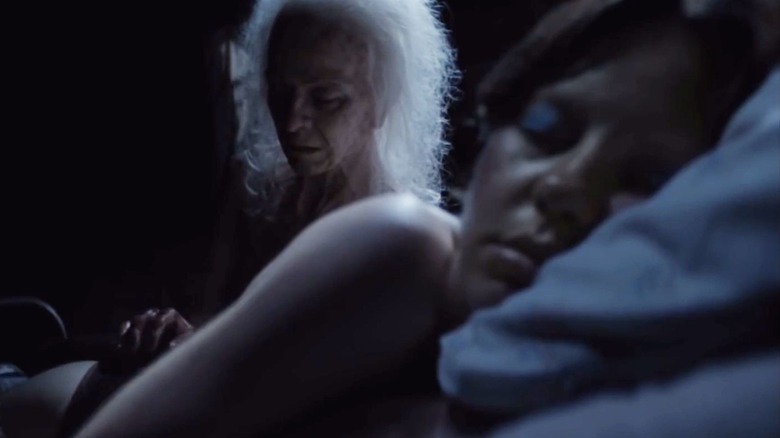
West also admits a secondary reason for Goth's double role, and it has nothing to do with character or theme. West just wanted to face a technical challenge. What are the logistics of having one actress play two roles? How long would it take to design and apply full-body makeup? How does one shoot a scene wherein Pearl and Maxine interact? One of the centerpiece scenes of "X" depicts Pearl sneaking into Maxine's bedroom at night, stripping down, and climbing in with her. The special effects that put two Goths in the same scene are impeccable. West admits that this particular film had just as much to do with exploring technique as it did with sexuality:
"'X' was very craft-driven for me, and I wanted to put the craft that people that make movies on display, special effects makeup being one of them, and performance being one of them. Just conceptually, that idea seemed to fit the movie, and I didn't know if we'd be able to do it until I met Mia. All that just seemed like an interesting challenge."
So Pearl and Maxine look alike because they are essentially the same person on two different timelines, yes, but also it was just fun to ply the talents of a hardworking and creative makeup FX team. Also, Goth's own talents and willingness to play both roles certainly helped.
One can only speculate as to how Goth will play Maxine again in "MaXXXine," but time will tell. "Pearl" in currently playing in theaters. "X" is available for rent online.
Read this next: Horror Movies That Make Us Root For The Villain
The post Why Mia Goth's Pearl and X Characters Look Identical, According to Ti West [Exclusive] appeared first on /Film.

Xbox boss Phil Spencer kicked off the Xbox Tokyo Game Show stream and has some interesting details to share about the Xbox brand in Asia.
According to Spencer, over the past year, Xbox has been greatly growing in Asia with the team welcoming more players in Japan and Asia to the Xbox community than ever before. Interestingly, as stated by the Xbox head, the Xbox Series S was the main reason for the higher-than-ever Xbox console player growth in the country this generation with the majority of hardware sales coming from first-time Xbox owners – an interesting tidbit for sure and quite impressive.
“We’re incredibly thankful for everyone who has chosen to play with us”, Spencer said during his speech. He added, “This generation, we’re welcoming more new console players to Xbox than ever before in Asia, largely because of [Xbox] Series S, where more than half of sales have gone to first-time Xbox owners.”
Microsoft launched the Xbox Series X|S globally back in November of 2020 with the consoles releasing in China in June 2021. The Xbox Series X|S combo has been doing quite well in Asia, vastly outselling the Xbox One. In fact, it was recently reported that the Xbox Series S outsold the PlayStation 5 in Japan. Here’s what we had to say about the Series S in our review upon launch:
"The Xbox Series S is a system aimed at the player that just wants to play games. With Xbox Game Pass Ultimate Microsoft have made an all-digital system compelling even for an old gamer like myself, still clutching onto a physical collection. This console will play all of the games you already enjoy on Xbox better than the Xbox One S could, and will enable you to play all the biggest games for years into the future. If you just want to play games with no-frills, the Xbox Series S is for you."
The post Spencer: Xbox Series S Main Reason for Higher-than-ever Xbox Console Player Growth in Asia With Majority of Sales Coming From First-Time Xbox Owners by Aernout van de Velde appeared first on Wccftech.
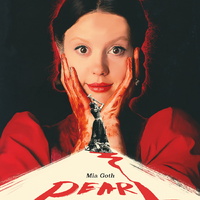 After rededicating himself to horror with this spring’s marvelous sexy slasher X, Ti West is already back with Pearl, exploring the origin of the previous film’s deadly romantic killer. Where X reveled in the slasher aesthetic made so popular in the early ‘80s, Pearl leans more toward West’s early ‘10s horror slow burns with oodles of stylistic flourish and a show-stopping performance from co-writer/star Mia Goth. When we encountered Pearl (Goth) in X, she was already an old woman. Her fragile visage seemed little more than a shadow of a person, that is until she goes on a killing spree. This prequel takes us back to 1918, in the midst of World War I and the Spanish Flu pandemic, a horrific combination of tragedies that...

We strongly recommend checkups with your eye doctor and a regular updating of your prescription, but sometimes life gets in the way. You might break or lose your glasses just weeks after your old prescription expired, or you might just want spare glasses or contacts. But to get new glasses or contacts, you usually…
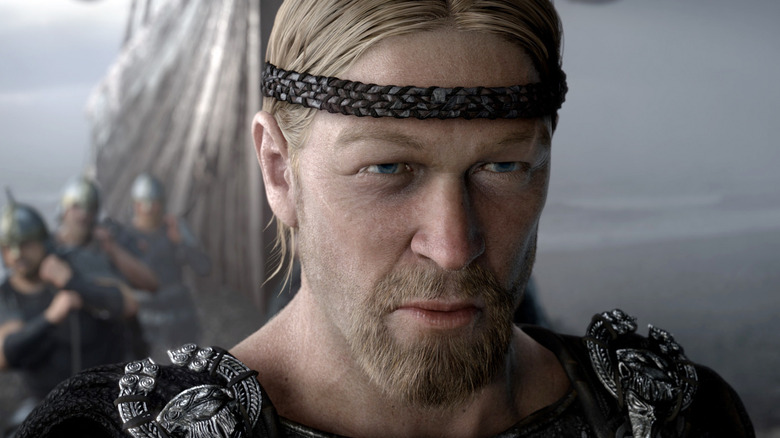
A blood and mead-soaked $150 million film adaptation of the classic epic poem "Beowulf" — one that sees Robert Zemeckis directing from a script by Neil Gaiman and "Pulp Fiction" co-writer Roger Avary — reads like the sort of things we movie buffs would talk about all the time. So why has the film's legacy amounted to little more than being the inspiration for the (somewhat literal) running gag that is Seth Rogen's uncanny valley Viking dwarf Bob in the "Chip 'n Dale: Rescue Rangers" movie?
It's plainly because Zemeckis' 2007 fantasy-adventure was part of his ill-conceived detour into mo-cap animation in the aughts, the results of which were three films (2004's "The Polar Express," "Beowulf," and "A Christmas Carol" in 2009) that are fundamentally hurt by their creepily life-like, yet still not convincing, CGI human characters. 15 years later, the mo-cap human warriors, royalty, and half-human creatures in "Beowulf" have only grown more off-putting, which is too bad since the actors behind them seem to be having a ball, judging by their vigorous and spirited voice-work.
Still, even the disquieting CGI people can't completely rob the fun from Gaiman and Avary's script, a wild, feral saga that expands upon the plot of the original "Beowulf" poem while at the same time subverting it, adding depth and shades of grey to both its heroes and villains in near-equal measure. Indeed, it seems like Gaiman, in particular, was almost destined to bring his version of the story to the big screen, as he talked about in a 2007 interview with Den of Geek.
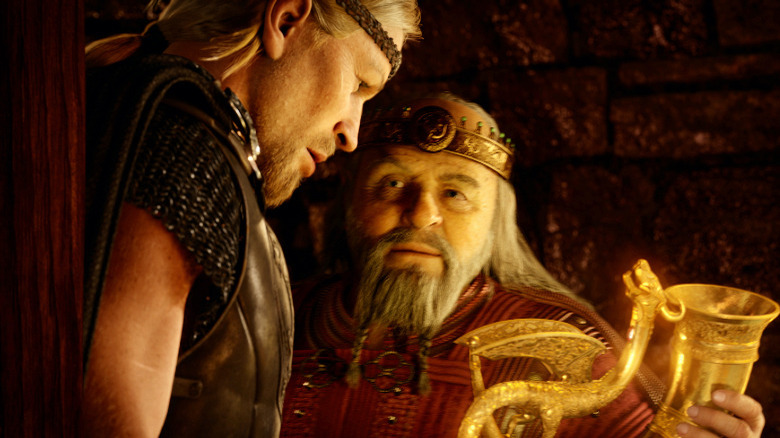
It was an ill-fated attempt to adapt Gaiman's comic book series "The Sandman" into a movie in the 1990s that led to him and Avary teaming up on "Beowulf." The latter, you see, was one of the writers who worked with producer Jon Peters on the film, albeit not the bizarre script draft that featured giant mechanical spiders (yes, really). But even long before that, Gaiman found himself gravitating to "Beowulf." He explained to Den of Geek:
"I can't remember running into the story and not thinking it would make a good movie. I first ran into 'Beowulf' in a comic called 'Look and Learn,' and I was a seven-year-old, and I remember thinking 'That looks cool.' And later I found a copy of the Penguin translation and read it and – it was monster-fighting! It was dragon-baiting! It was absolutely Tolkien-esque and amazing!"
In the same interview, Avary talked about his own love for stories about "guys with swords, monsters, dragons, [and] demons." Like Gaiman, he was shocked to learn "Beowulf" hadn't been turned into a well-known movie after reading it in high school (mind you, the only "Beowulf"-inspired film at that time was a 1981 Australian animated feature titled "Grendel Grendel Grendel"). He also recalled having lots of thoughts and questions about the original text, many of which stemmed from key plot points or events the poem glazes over.
Cut to the late '90s. Avary had only just left the "Sandman" movie after reaching his final straw with Peters, having decided he "didn't want to be the guy to ruin 'Sandman.'" No sooner had Avary started going through his old notes for a potential "Beowulf" movie than he got a phone call. It was Gaiman, "as if by magic" (as Gaiman put it).
The original "Beowulf" script Gaiman and Avary penned was a far cry from what ended up on-screen. Their early draft lent itself to a live-action movie in the vein of Terry Gilliam's 1977 fantasy-comedy "Jabberwocky," Gaiman explained, calling it "very, very low budget with a lot of s*** thrown everywhere." It was also full of "long conversations," he added, many of which would be removed and replaced with extravagant action scenes or massive set pieces after Zemeckis came onboard to direct.
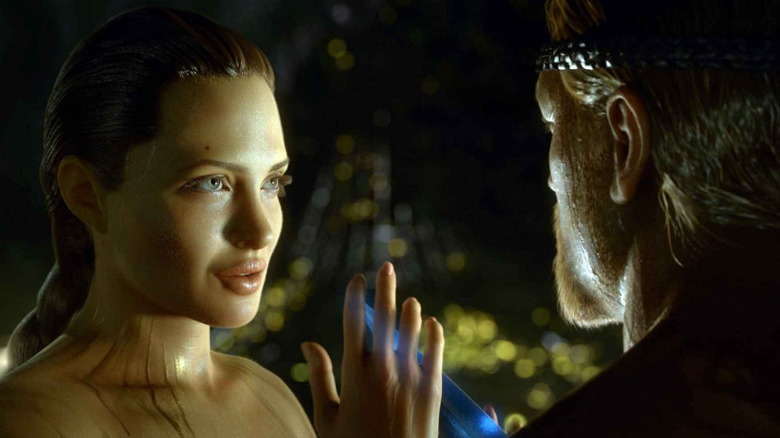
Credit where credit is due, Zemeckis, Gaiman, and Avary delivered the goods when it comes to giving filmgoers plenty of bang for their buck. "Beowulf" is spilling over with limb-ripping, eye-stabbing, and even heart-crushing violence, much of it involving monsters (the reason, one assumed, the film somehow only got a PG-13 rating). Then there are the fantastical creature designs, from Crispian Glover's shrieking Grendel — who looks like a cross behind a person and an alien from "A Quiet Place" — to Angelina Jolie as his mother, a coiled figure covered in liquid gold, with a long braid like a stinger and, just as strange, heels like stilettos.
Perhaps in another world, where Zemeckis had made the film with more stylized animated humans or live-action proper, "Beowulf" would be remembered as one of those big-budget movies where the director really swung for the fences while bringing their uncompromising vision to life. Its habit of going overboard with made-for-3D gimmicky imagery aside, it's an interesting film that re-frames Beowulf's tale as less of a heroic legend and more of a parable about the ways people can be corrupted by their worst impulses.
Not to be too on-the-nose, but... sounds like a lesson a certain director should've taken to heart, no?
Read this next: The Best Easter Eggs In The Lord Of The Rings: The Rings Of Power Episodes 1 And 2
The post Neil Gaiman Seemed Destined To Bring His Version of Beowulf To The Big Screen appeared first on /Film.
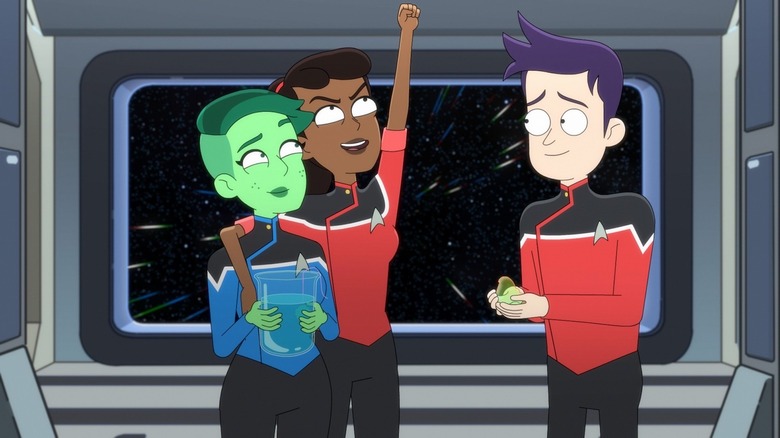
This article contains spoilers for "Star Trek: Lower Decks" season 3, episode 4.
Life on the final frontier isn't easy. There are really no limits to the kinds of existential torture a Starfleet officer can go through, as evidenced by the entire life of Chief Engineer Miles O'Brien. Seriously, the man endured everything from being trapped in a mind prison for decades to having his wife possessed by a Bajoran cave demon, and yet he kept on trucking. Thankfully, most Starfleet vessels are equipped with holodecks, which means that everyone can get some rest and relaxation, time away from home, or stress release without ever having to leave the ship.
While some holodeck hijinks were definitely hinted at in "Star Trek: Deep Space Nine," the crew of the Enterprise on "Star Trek: The Next Generation" mostly used their holodeck to solve old murder mysteries or go hiking in the mountains. That's great and all, but there are a million pervy and potentially problematic uses for the holodeck that some enterprising Starfleet officer had to have tried at some point!
In episode four of the third season of "Star Trek: Lower Decks," two of the characters use the holodeck in a way that's hilarious and relatable: for sex and violence. Who wouldn't want to let loose without repercussions every once in awhile?
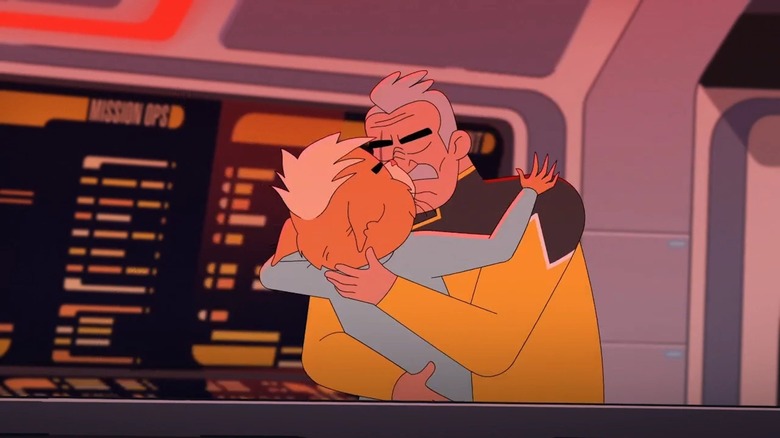
After dealing with a bunch of different emergencies (including Captain Freeman getting taken over by an alien mask), Bajoran Chief of Security Shaxs (Fred Tatasciore) and Caitian Chief of Medicine Dr. T'Ana (Gillian Vigman) decide to get hot and heavy in the holodeck to let off some steam. On the live-action shows, characters usually use the holodeck for some historical escapism by pretending they're Sherlock Holmes or playing baseball, but Shaxs and T'ana end up roleplaying as famous 20th century gangsters Bonnie and Clyde. They rob a bank in a black and white world, like an old movie about the dastardly duo, but things get out of hand when T'ana shuts off the safety protocols. Shaxs asks her what's going on and she tells him that they're going to have sex in front of the hostages after they kill the Feds, much to the nearby lower deckers' chagrin. Also, the doctor's "kinky sex name" is apparently Diane.
The pair are doing what I always imagined people would use the holodeck for: unleashing the darker, nastier side of yourself in order to maintain a squeaky clean Starfleet image everywhere else. To hell with hiking in the humid hillsides of Cardassia Prime or pretending to be a private eye — the holodeck is a place to go wild.
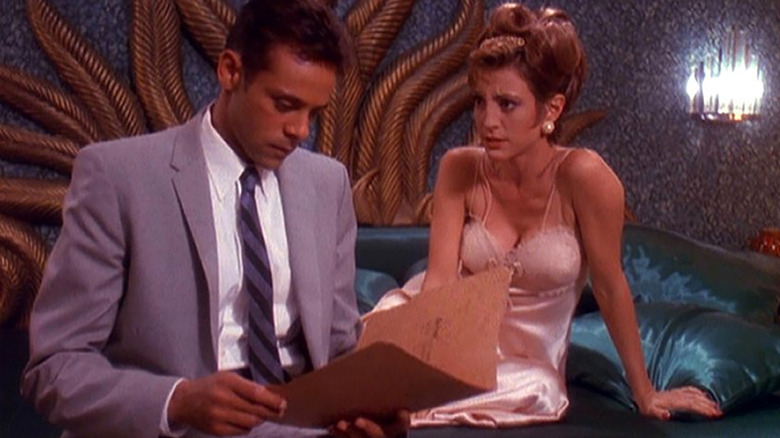
The crew of the Enterprise may have never used the holodeck to get down and dirty or partake in a little of the old ultraviolence, but Quark's holosuites aboard Deep Space Nine definitely saw some action. Some of the crew were all about innocent fun, like Captain Sisko's (Avery Brooks) baseball games, but others had slightly more perverse programs in mind. The ship's doctor, Dr. Julian Bashir (Alexander Siddig), has his own holodeck program where he pretends to be a James Bond-esque secret agent in the episode "Our Man Bashir," and while they don't show him getting hot and heavy with a hologram, it's more than hinted at.
"Star Trek" has always been a series that didn't take sex and sexuality all too seriously, and it's a joy to see "Lower Decks" embracing the hornier side of the franchise. Now if you'll excuse me, I have a whole lot of holodeck fan-fiction to write.
New episodes of "Star Trek: Lower Decks" premiere Thursdays on Paramount+.
Read this next: Celebrities You Didn't Know Were In Star Trek
The post Star Trek: Lower Decks Season 3 Finally Lets the Holodeck Get Weird appeared first on /Film.
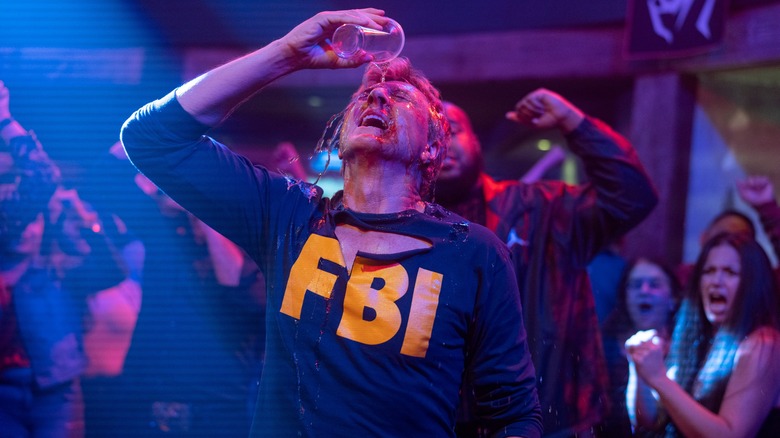
Warning: Spoilers ahead for "Cobra Kai" season 5.
In "Cobra Kai" season 5, Terry Silver's (Thomas Ian Griffith) dojo had some international visitors. If you recall, Silver took over Cobra Kai after the All-Valley Tournament at the end of season 4, opening several franchises with state-of-the-art equipment and very shady business practices. Silver has some big plans for his evil dojo dominion, including competing in an international tournament called the Sekai Taikai. He invites a delegation from the tournament to his flagship dojo for a demonstration and possible acceptance into the competition.
If Cobra Kai's students win there, it could change everything, putting the final nail in the coffins of Eagle Fang/Miyagi Do. At the last minute, Johnny Lawrence (William Zabka) and Daniel LaRusso (Ralph Macchio) show up. After a display of karate prowess from all dojos, the delegation accepts both sides into the competition.
"Cobra Kai" season 6 has yet to be greenlit by Netflix, but with the sort of well-deserved positive buzz season 5 is getting, it would be a big surprise if it doesn't happen. Show creators Josh Heald, Jon Hurwitz, and Hayden Schlossberg are already planning where a possible sixth season will go and spoke to Variety about what could be coming for our favorite karate stars, including a trip overseas.
When asked if fans would actually see the international karate tournament next season, Schlossberg explained how the three creators grew up loving the "Rocky" movie franchise. He pointed out that you have the original, then the stakes were intensified in the third film with Mr. T. "Once it gets to that craziness, how do you top it?" he asked. "Well, you get Russia and America and Drago."
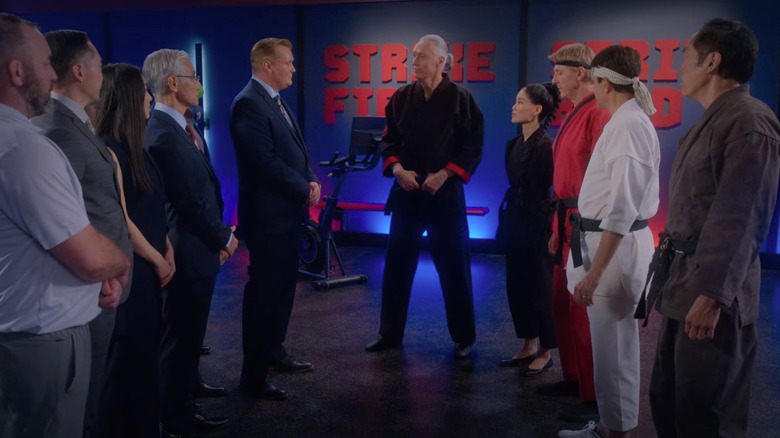
Upping the stakes is essential when a show goes on season after season, and "Cobra Kai" has brought back all the main players from the first three films, including Kreese (Martin Kove), Silver, Chozen (Yuji Okumoto), Mike Barnes (Sean Kanan), and even Jessica (Robyn Lively). Unless the creators could somehow work in Hilary Swank and the dancing monks from "The Next Karate Kid" (and many fan fingers remain crossed for that), the show has to pull a Drago. Schlossberg said:
"All these kids are gaining in skill in terms of karate power, so you have to create a new obstacle for them to deal with. It felt like in the real world, that's what would happen. If you're the best around in karate, what are you going to do? Maybe there's something beyond just your local area."
It certainly sounds like we'll see the Sekai Taikai in season 6 if it's given the go-ahead by Netflix. It's a perfect opportunity to shake the kids and their sensei out of their comfort zones and raise the stakes. It also raises questions like who will change sides now that Silver has been arrested. Will Johnny take over Cobra Kai again? How will Kreese figure back in after he faked his death? Whatever happens, we'll likely have to wait a bit to see it, with the creators filming the new show "Obliterated" and working on the "Ferris Bueller's Day Off" spinoff "Sam and Victor's Day Off."
"Cobra Kai" season 5 is currently streaming on Netflix.
Read this next: Jackie Chan's 15 Greatest Fight Scenes Ranked
The post Why Cobra Kai is Going International in Season 6 appeared first on /Film.

The tonal diversity within the science fiction genre is what has allowed it to stand the test of time. The term "sci-fi" is a broad one. You may first think of space adventures like the "Star Wars," "Star Trek," "Alien," or "Battlestar Galactica" franchises. However, there's also a subsection of sci-fi movies that are slower and more romantic such as "Her," "About Time," and "Eternal Sunshine of the Spotless Mind." You can find sci-fi fantasy films, sci-fi Westerns, sci-fi comedies, and even sci-fi musicals.
The genre itself encourages experimentation, particularly from actors who choose to add their own perspectives to a film. Not every sci-fi film has to be as grim and emotional as "Interstellar" or "2001: A Space Odyssey." It's always admirable when an actor in a science fiction film truly commits to the absurdity of the material.
Even if they're afraid that they might look silly, these actors are willing to chew the scenery and have fun. However, these are some sci-fi movie actors that took things a little too far.
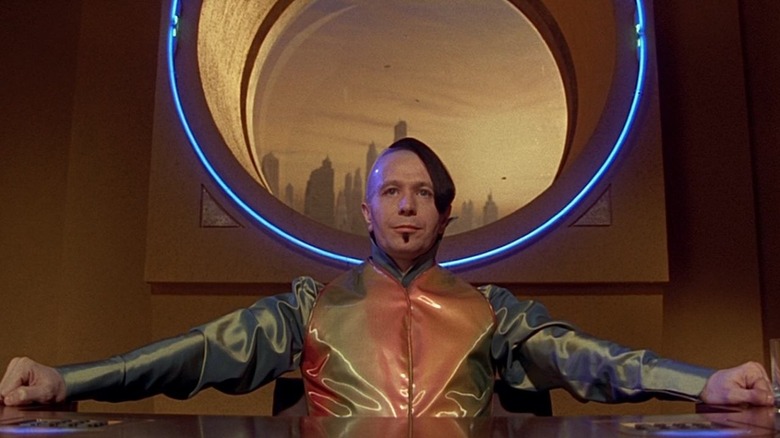
Luc Besson's 1997 science fiction action film, "The Fifth Element," might be the most absurd project that he's ever created, and that's no small statement. Among the various wacky characters in the film is the insane villain Jean-Baptiste Emanuel Zorg (Gary Oldman), a wicked industrialist who is searching for a mysterious weapon. Oldman is decked out in elaborate makeup and chews the scenery whenever he gets the chance. He even quips that "honor's killed millions of people, it hasn't saved a single one" when questioned about his humility.
It's not a performance that Oldman was proud of. He admitted that he signed on to do the role as "a favor" to Besson and his producers and that he can't stand rewatching the film or his performance. Oldman was even shocked when he was told that in the years since its initial release, "The Fifth Element" had inspired a passionate cult fanbase. He said that any appreciation for a film that he detests is just a sign of "the wacky world that we live in."
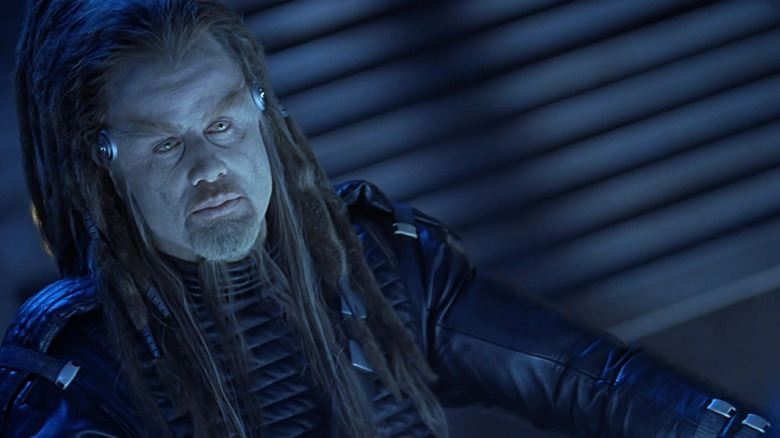
"Battlefield Earth" is one of the biggest disasters in science fiction movie history. The film is based on a novel by Scientology founder Ron L. Hubbard and had a budget of almost $75 million. Between its confusing story, bizarre performances, and ridiculous dialogue, "Battlefield Earth" became the laughing stock of the science fiction genre. In many ways, it's a film that is worth watching for any aspiring filmmakers who want to see how not to make a movie.
Among the most notably disastrous aspects of "Battlefield Earth" is John Travolta's over-the-top performance as Terl, the head of security for the aliens known as "Psychlos." The film was a passion project for Travolta, who served as one of the project's producers. He personally donated to the film's budget. Before the release, Travolta claimed that "Battlefield Earth" would change the film industry and compared it to such classics as "Pulp Fiction," "Schindler's List," and "Star Wars."
Travolta may have believed in the film until the very end, but it's not a sentiment that he shared with his co-stars and crew. The film's screenwriter, J.D. Shapiro, publicly apologized for writing the film, claiming that "out of all the sucky movies, mine is the suckiest." Executive producer Andrew Stevens lampooned Travolta's praises and claimed that the film "never should have been made."

Emperor Palpatine is the evilest character in the "Star Wars" franchise. As the Dark Lord of the Sith, Darth Sidious orchestrates the fall of the Jedi Order and the transformation of the Galactic Republic into an evil Empire. Although Palpatine succeeds in crowning himself Emperor, he's brutally scarred in a battle with Mace Windu (Samuel L. Jackson) in "Star Wars: Episode III — Revenge of the Sith." This leaves Palpatine with a horrifying face that signifies the consequences of accepting true evil.
Ian McDiarmid was first cast in the role by "Return of the Jedi" casting director Mary Selway after she saw him performing on stage in the Sam Shepard play "Seduced." Initially, McDiarmid was shocked at the elaborate makeup required, but he decided to commit to the absurdity of the material. While Marjorie Eaton (with the help of Clive Revill's voice) had previously portrayed Palpatine in 1980's "The Empire Strikes Back," McDiarmid decided to give Palpatine a reptilian characterization that showed how the dark side had caused him to descend into madness. It's admirable that McDiarmid had so much energy on set. He had to be in a makeup chair for four hours before each day of filming and wore orange contact lenses.
Palpatine's over-the-top behavior certainly makes "Revenge of the Sith" more enjoyable. While Anakin Skywalker (Hayden Christensen) is tormented by his wicked actions, Palpatine seems to enjoy being evil. According to McDiarmid, George Lucas told him that he should think of Palpatine's human appearance "as a mask."
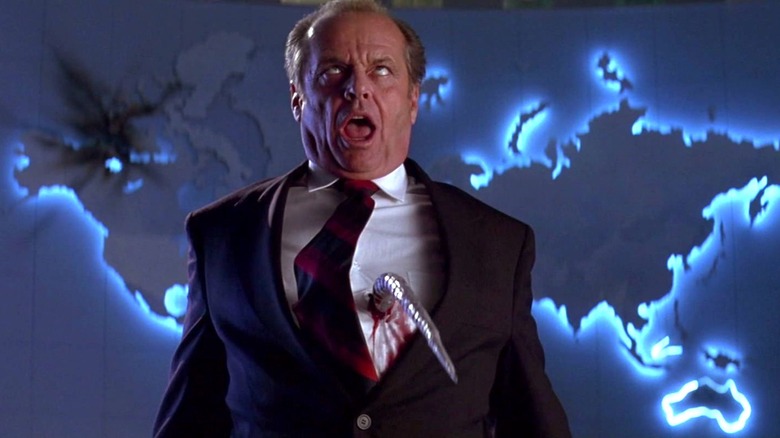
Tim Burton's 1996 science fiction film, "Mars Attacks!" is one of the most wildly misunderstood films of his career. "Mars Attacks!" was never intended to be an action-packed sci-fi adventure in the vein of "Armageddon" or "Independence Day." It's a shockingly grim satire about how cowardly humans would act if they had to face an alien invasion. The government is completely incompetent, and average citizens are tasked with saving the day. The film's satirical slant is emboldened by Jack Nicholson's hilarious performance as U.S. President James Dale. Dale refuses to accept logic, and asks the Martians, "Why can't we just get along?"
When Burton approached Nicholson about joining the project, the famous actor asked if he could play multiple roles in the story. Burton remembered that "Jack is willing to do anything, no matter how crazy it seems." Burton was impressed with Nicholson's commitment. He decided to let him play both President Dale and real estate tycoon Art Land. To get Nicholson even more excited about the film, the crew would play "Hail to the Chief" anytime he stepped on the set.
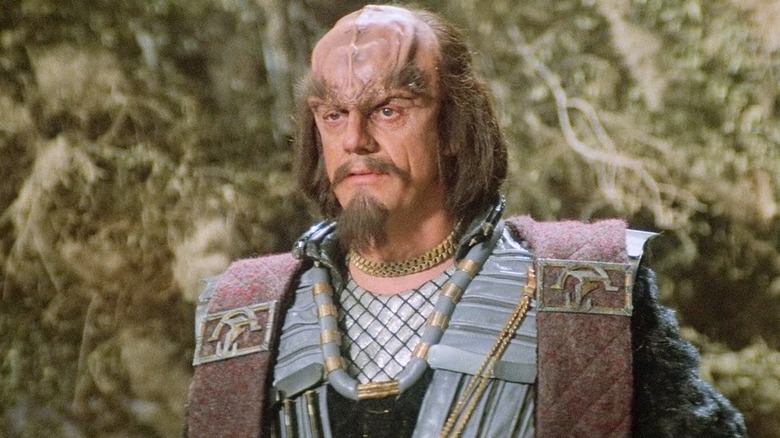
Christopher Lloyd had big shoes to fill when he accepted the role of the Klingon villain Kruge in 1984's "Star Trek III: The Search for Spock." The film's predecessor, 1982's "Star Trek II: The Wrath of Khan," featured the return of Ricardo Montalbán as the titular antagonist Khan Noonien Singh, who had first appeared in the original "Star Trek" episode "Space Seed."
While Khan is a strategic leader who plays on Captain James T. Kirk's (William Shatner) anxieties, Kruge is a bizarre warlord who refuses to accept logic. Nimoy stepped in and directed "The Search for Spock" and decided that Kruge should have an element of theatricality about him in to distinguish the character from Khan. Even though Lloyd was best known for his comedic role in "Taxi" at the time, Nimoy thought that casting him against type would be interesting.
Lloyd fondly remembers his "Star Trek" experience and admitted that he loved "doing that kind of thing, a far-out character." Although fans might have hated Kruge for killing Kirk's son, David Marcus (Merritt Butrick), Lloyd said that Kruge's demise "was a great ending for the character" that was "very entertaining."
Expectations are very high for 2023's "Dune: Part Two," as Denis Villeneuve's 2021 adaptation of the beloved Frank Herbert novel exceeded the high expectations that fans had. "Dune: Part Two" promises to be even more epic than its predecessor, especially since it will mark the first appearance of Christopher Walken as Padishah Emperor Shaddam Corrino IV.
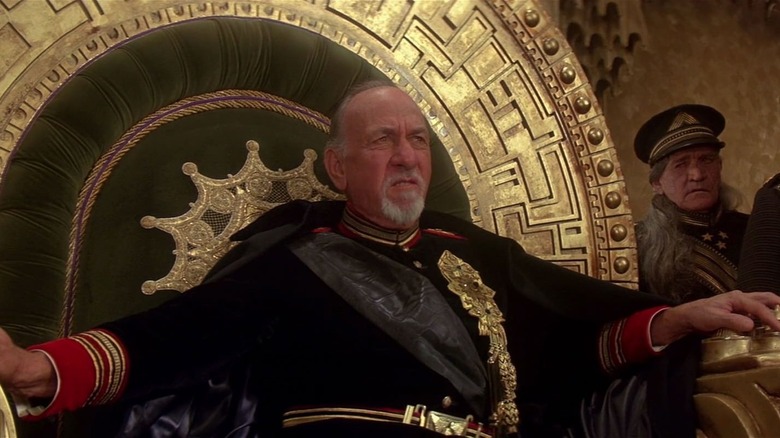
However, Walken isn't the first great actor to step into Imperial shoes for a "Dune" film. In David Lynch's 1984 film, the legendary Puerto Rican actor Jose Ferrer gave a comically campy depiction of the fearsome dictator. Lynch's film has a cult fanbase for a reason. The film struggles to explain the complex political infrastructure of the "Dune" universe, but it's enjoyable to watch because of the "Lynchian weirdness" of its visuals and performances.
Every scene with the emperor is maximized. Art director Anthony Masters said that Lynch "comes up with weird ideas that make no sense." The production became a tumultuous process after several crew members got sick. It's a testament that, amidst these difficulties, Ferrer was still able to deliver lines like "give this abomination to the storm" with a straight face.
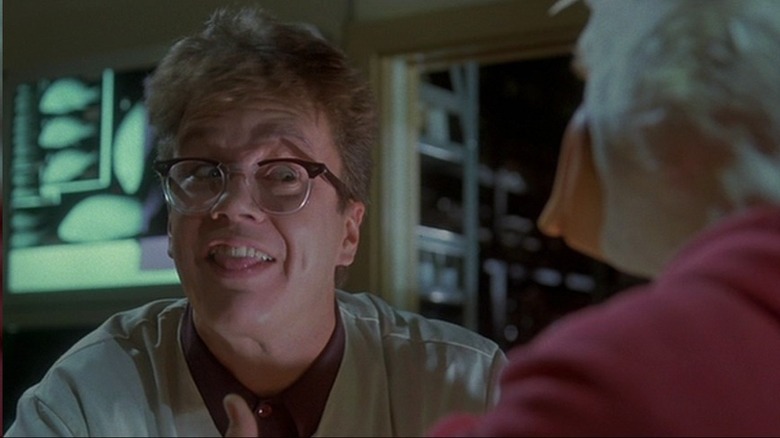
Shortly after its release, "Howard the Duck" quickly earned the nickname "Howard the Turkey." The film is a complete disaster of tone. There are too many adult jokes for children, but there's so much silly action that adults can't enjoy it either. The only person who seems to have had any fun making "Howard the Duck" was Tim Robbins, who has a supporting role as eccentric scientist Phil Blumburtt.
Phil ultimately comes to the aid of Howard and Beverly (Lea Thompson) as they attempt to stop the Dark Overlord. Robbins was apparently the only one who knew what the tone of the film should have been, as he plays up the "wacky scientist" element of the character. However, Robbins may have been a little too committed to the bit. According to the DVD commentary for the film, Robbins put himself in danger during the aerial chase because he actually had to fly the plane. Robbins later admitted that he was more interested in earning a quick paycheck than making a good movie.
Although "Howard the Duck" has earned the reputation of being one of the worst films ever made, Robbins has come to the project's defense. "I think there's a lot of charming things about that film," he said in reflection.
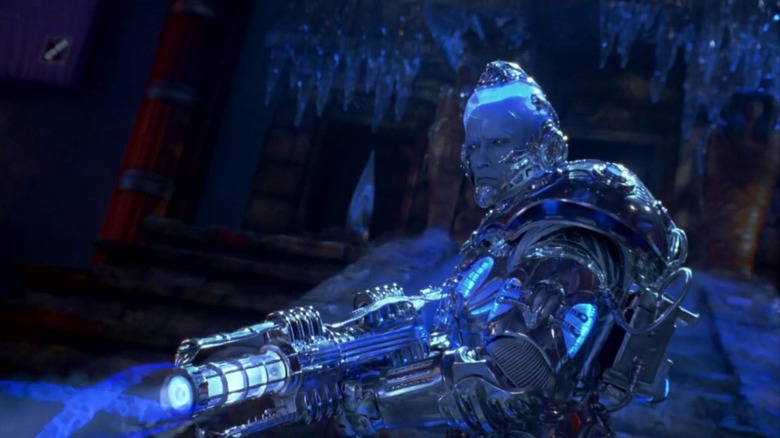
If you've ever seen "Batman: The Animated Series," you know that Mr. Freeze can be depicted as a tragic character who only becomes a villain to save his wife from death. That's not exactly the direction that Joel Schumacher went when he introduced Arnold Schwarzenegger's version of Mr. Freeze in 1997's "Batman & Robin." Although the film does try to incorporate Mr. Freeze's backstory, it's mostly an excuse for Schwarzenegger to deliver comical one-liners like "everybody chill," "hell freezes over," "ice to see you," and "it's about to get cool!"
Although Warner Brothers originally intended to take the character in a more serious direction, the script was rewritten after Schwarzenegger was cast. Schwarzenegger certainly committed to the role. He shaved his head and sat in a makeup chair for four hours every day while LED lights were placed in his mouth. The lights were powered by batteries that leaked into the star's mouth.
Although Schumacher and George Clooney have both apologized for the film, Schwarzenegger says that he has no regrets about his performance. He said that he "felt that the character was interesting, and two movies before that one Joel Schumacher was at his height."
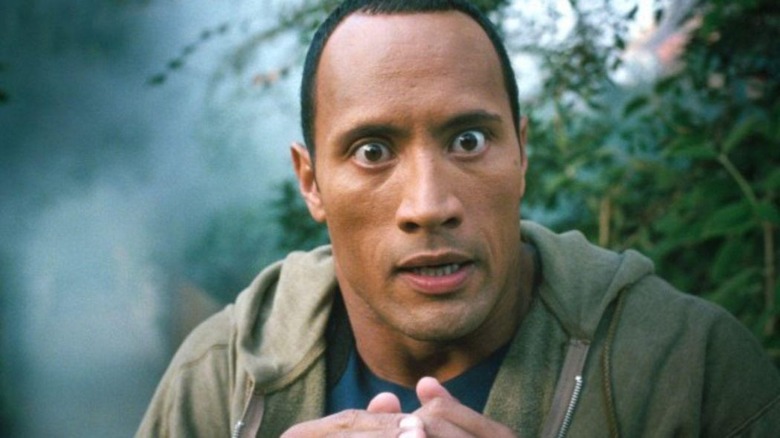
"Southland Tales" had an absolutely disastrous road to release. After the film was rushed to completion to screen at the 2006 Cannes Film Festival, audiences and critics booed the film and lampooned the cast. At the time, Dwayne Johnson had very little acting experience, as he was primarily known for wrestling as "The Rock" in WWE. Director Richard Kelly admitted that casting Johnson got the film greenlit.
Johnson might not have understood what he signed up for. Kelly said that after he first pitched Johnson the idea, the wrestler added many details to his character, Boxer Santaros. Since he has amnesia for the majority of the story, Boxer nervously contorts his face as he adjusts to the new environment. In hindsight, Johnson admitted that calling the premiere "disastrous is an understatement." However, he remains "grateful for the few hard-earned career lessons" that he learned as a result of his wacky performance.
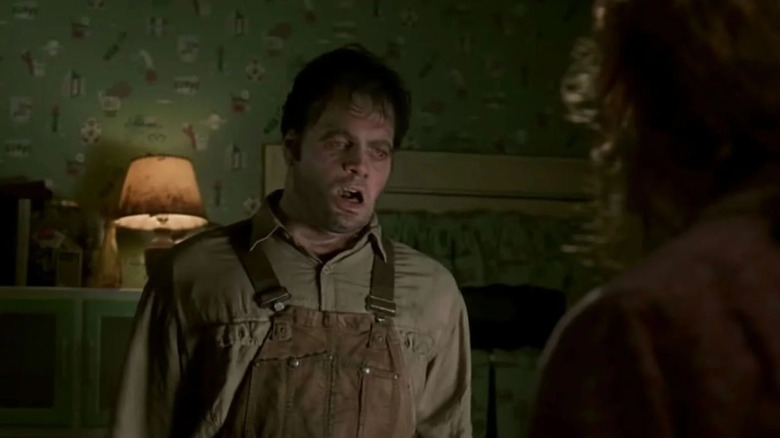
1997's "Men in Black" has a unique confluence of tone. Although the film is a buddy cop adventure, there is an underlying element of body horror that adds to the suspense of the story. The film utilized game-changing makeup techniques. One of the most terrifying creatures in the film is the alien "bug" that inhabits the body of Edgar, a clueless farmer.
To create the character, Vincent D'Onofrio added his own mannerisms, including the character's dull voice and strange facial expressions. D'Onofrio said that his voice was inspired by both John Huston and George C. Scott. He studied bug movements, and even put his legs in a basketball knee brace so that he couldn't move his torso. During the scene in which Edgar swallows a glass of sugar water, D'Onofrio drank the gross fluid for real. Director Barry Sonnenfeld remembers that D'Onofrio was "a real trooper" for drinking a dozen glasses of sugar water during the day of filming.
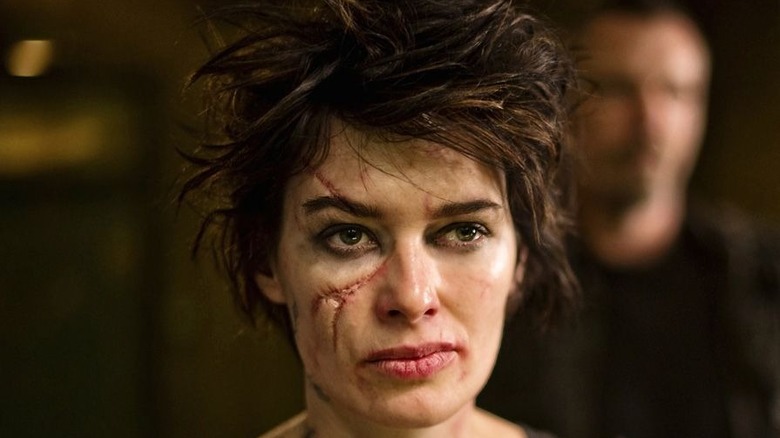
"Judge Dredd" was not the cinematic adaptation that fans of the comic book wanted. Unlike the original stories, which deconstructed the nature of the criminal justice system, "Judge Dredd" was treated like a goofy summer action movie. Thankfully, 2012's "Dredd" was a significant improvement. This time, Dredd (Karl Urban) is assigned to bring down the ruthless drug lord known as Ma-Ma (Lena Headey). Ma-Ma is the supplier of a drug known as "Slo-Mo" that affects the users' comprehension of time.
Headey said that Ma-Ma's descent into madness was inspired by punk rock singer Patti Smith. Describing the character as a "man-hater," Headey said that she tried to emulate the movement of great white sharks. She added that she tried to purge herself of emotions to play a character that "embraces the thought of death." Headey's terrifying performance is even more shocking thanks to the immersive use of 3D effects in the film.
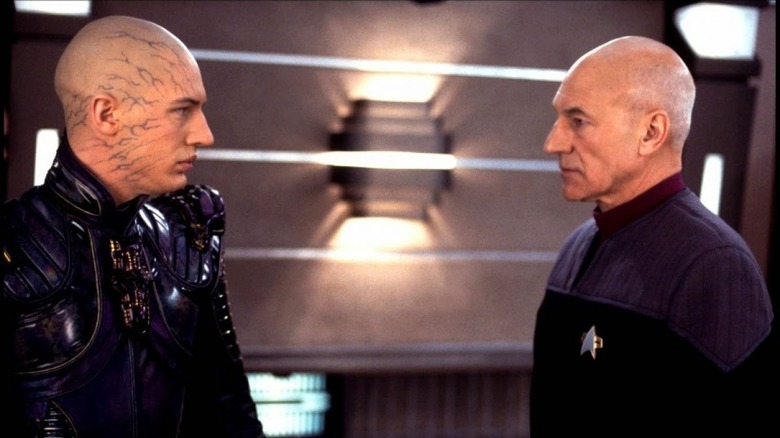
After the success of "The Next Generation" on television, the underwhelming cinematic adventures of Captain Picard (Patrick Stewart) and his crew felt shallow in comparison. This iteration of the "Star Trek" franchise didn't go out with a bang but with a whimper. 2002's "Star Trek: Nemesis" was a box office disaster that temporarily killed the franchise.
In "Nemesis," Picard comes into conflict with the Reman leader Shinzon (Tom Hardy). Shinzon is a clone of Picard's younger self. At the time, Hardy was a relative unknown, and he was particularly enthusiastic to join the science fiction franchise. Instead of sending in the requested audition tape, he made a bizarre recording of his own that won him the role.
According to James Haydock's biography, "Tom Hardy- Dark Star Rising," Hardy managed to get a copy of the "Nemesis" script and filmed individual scenes out of context while he was partially unclothed. "Nemesis" isn't exactly a proud moment in Hardy's career. He found it difficult to deal with the extremely negative response from fans.

Two decades later, the original "Spider-Man" remains one of the greatest superhero films ever made. Sam Raimi's heartfelt, cheeky version of the friendly neighborhood web-slinger serves as a near-perfect version of Peter Parker's first cinematic adventure. Although "Spider-Man" is a relatively family-friendly movie, Raimi did incorporate some elements of horror in his depiction of the web-slinger's rogues' gallery. Willem Dafoe's terrifying performance as Norman Osborn is enough to give anyone nightmares.
Dafoe said that he was not familiar with the character's comic origins, so he conceived of Osborn as a very theatrical villain. Dafoe refused to let a stuntman perform any of the scenes where Osborn flies on his glider, and did the same thing when he returned for the role in 2021's "Spider-Man: No Way Home." Dafoe's signature cackle terrified his co-stars, including Tom Holland. Stunt Coordinator George Cottle said that Dafoe's commitment to the role "kind of made your hair stand on end."
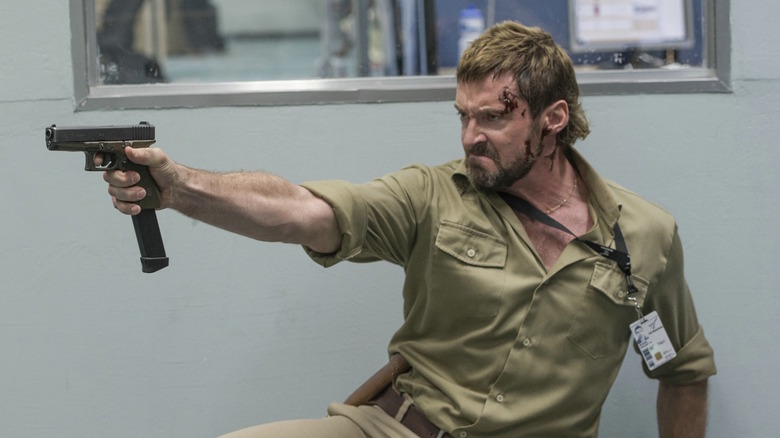
Hugh Jackman is best known for his recurring role as Wolverine in the "X-Men" franchise. Understandably, Jackman wanted a change of pace and decided that he wanted to try playing a "proper villain" for once. In 2015's "Chappie," Jackman plays the Tetravaal engineer Vincent Moore, a former soldier who wants to develop robots for military purposes. Moore tries to track down the robot, Chappie (Sharlto Copley), who has developed his own personality.
Although the mullet that Jackman has in the film is a little goofy, he said that it was an important part of the character. Jackman said that Moore "thinks he's the man in every way, but right down to his haircut he's not." He said that to play a goofy bureaucrat that doesn't know what he's doing, Jackman based his performance on Ricky Gervais' character in "The Office." Although Moore is almost an irredeemable character, Jackman said that he wanted to explore how the ruthless engineer "sees the end of humankind."
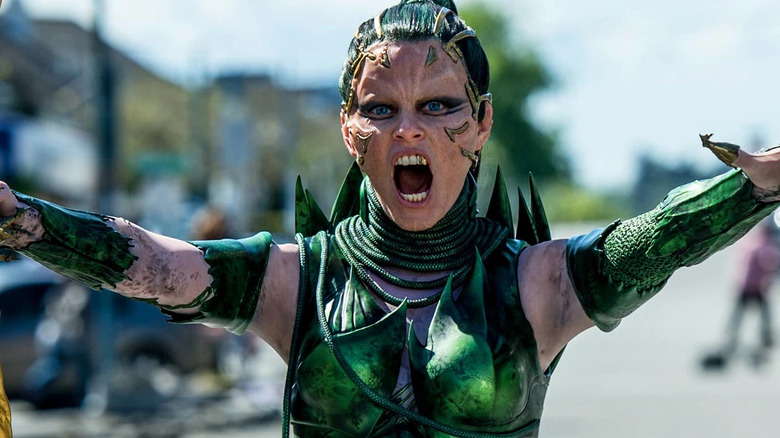
To its credit, 2017's "Power Rangers" is a lot better than it has any right to be. Instead of playing things completely for camp, the film chooses to treat the youthful heroes as characters in a coming-of-age movie. Who doesn't want to see "The Breakfast Club" with superheroes? While the film manages to avoid the goofiest elements of the original series, it does feature the ridiculously over-the-top villain Rita Repulsa (Elizabeth Banks), the former Green Ranger who is locked in conflict with the Power Rangers' mentor, Zordon (Bryan Cranston).
Banks' performance features scenery chewing at its finest. Banks should be forgiven for her eccentric acting choices, as she claimed that she made the film with her children in mind. Although she wanted to terrify her young sons, Banks said that she understood that the role was "sort of kitschy and campy, over the top," and compared her performance to the Wicked Witch from "The Wizard of Oz."
Read this next: The Most Controversial Scenes In Sci-Fi Movies
The post Sci-fi movie actors that took things too far appeared first on /Film.
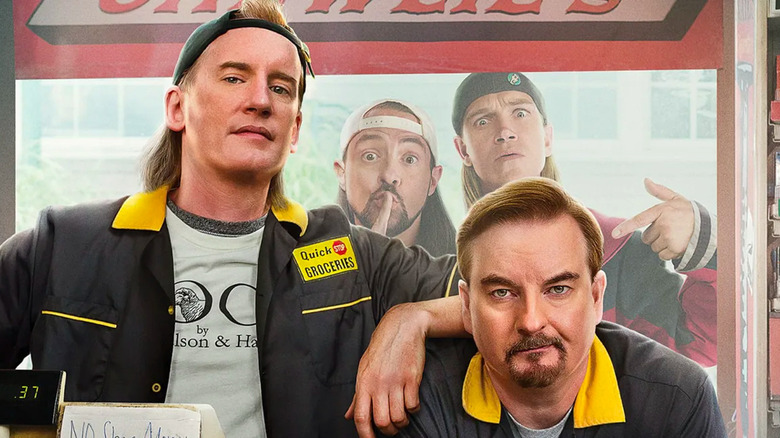
Kevin Smith's latest film, "Clerks III," catches up with the characters of Dante (Brian O'Halloran) and Randall (Jeff Anderson) after their brief dalliance with low-level employment at a burger joint in 2006's "Clerks II." At the end of that film, Dante and Randall found themselves directionless after spending their 40s in minimum-wage jobs. Dante left his fiancée, and the pair found themselves in jail with the perpetual stoners Jay and Silent Bob (Jason Mewes and Smith). Dante and Randall found that their way out of their rut was to go back. Using weed money from Jay and Silent Bob, Dante and Randall merely bought the convenience store they felt trapped in back in the original "Clerks."
It was a happy ending for Dante and Randall, but also a declaration from Smith. Staying put (critics might say stagnating) was, Smith declared, a form of triumph.
In "Clerks III," however, Dante and Randall find themselves — now in their 50s — stagnating again. When Randall suffers a heart attack — very similar to the one Smith himself had in 2018 — he becomes inspired to make his mark before he dies. Randall resolves to make a movie of his own. The movie he makes, in an odd meta-commentary, is the first "Clerks." The bulk of "Clerks III" is devoted to recreating scenes and shooting conditions from Smith's 1994 hit, a film Smith initially made for $27,575.
If a reader is fond of "Clerks III," they would do well to follow it up with at least one of the following films.
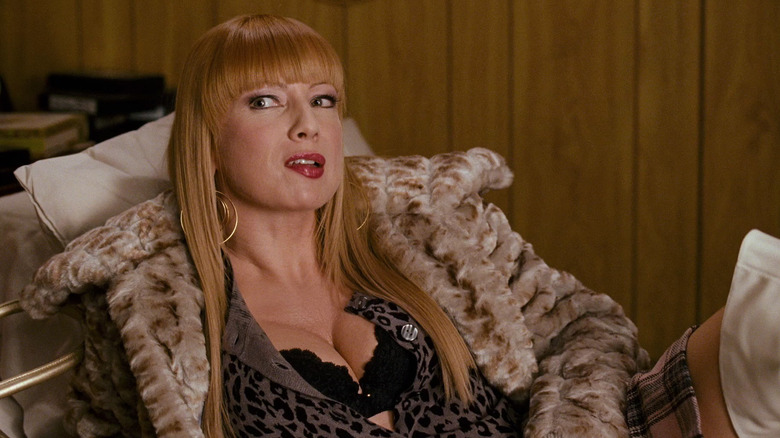
"Clerks III" was not the first time Smith made a fictionalized version of his experiences as an amateur filmmaker. Thanks to Smith's own career as a podcaster, he has gone on record several times with how he made "Clerks," the paltry circumstances of the film's shooting — one of the boom mics was taped to a hockey stick — and how proud he was to put a movie together. Smith's enterprising spirit was given the adult industry treatment in "Zack and Miri Make a Porno," a film about a pair of high school friends and roommates (Elizabeth Banks and Seth Rogen) who figure that porn would be a great way to pay the bills. Operating on the notion that they themselves would want to see their own old high school buddies in flagrante, Zack and Miri figure it would be no big deal to have sex on camera. Of course, through the experience of making the film, the two realize they're in love.
A lot of the cast of "Clerks III" is also in "Zack and Miri," and a lot of the guerilla filming techniques are mirrored in both. Smith clearly has a nostalgic fondness for shooting his first feature. So much so, that he recreated the experience twice.
"Zack and Miri Make a Porno" is on Plex, Tubi, and Vudu.
Right in the middle of the indie film boom of the 1990s, when a new generation of important artists were bucking the studio system to make more daring, more unusual, expressly non-commercial fare, filmmaker Tom DiCillo was already looking to demystify the experience. DiCillo tells the story of an independent filmmaker (Steve Buscemi) who is attempting to make an unusual and intense family drama in New York. Attempting, because almost everything seems to be going wrong. Actors can't remember their lines and only deliver great performances when the cameras aren't rolling. So-called "big stars" arrive on set and improvise their blocking, messing up the lighting setups. In the film's funniest and most famous sequence, Peter Dinklage — in an early role — confronts his director as to why his film's dream sequence requires his appearance in particular. "Have you ever had a dream with a dwarf in it?" he screams. "Do you know anyone who's had a dream with a dwarf in it? No! I don't even have dreams with dwarves in them!"
"Living in Oblivion" points out that indie filmmaking was not a Bohemian fantasy of sexy, unwashed people following some sort of romantic, artistic purity. It was more about people who were working so hard and who were so exasperated that they rarely had time to wash.
"Living in Oblivion" is available on Prime Video, Peacock, Roku, Tubi, and Kanopy.
Although the characters in the "Clerks" movies tend to have conversations about sci-fi and pop culture movies, the notion of working in a video store and getting a broader line on the culture at large from an amalgamated cross-section of all VHS-available cinema was a prevalent notion throughout the 1990s. This was certainly one of the theses found in Cheryl Dunye's excellent 1996 queer romance/media study "The Watermelon Woman." Dunye, playing a version of herself, works in a video store and nervous breaks the ice with a dazzling young artist (Guinevere Turner) she is smitten over. Of course, discussions about movies leads to their eventual bonding.
Another connection: "Clerks III," oddly enough, is removing the making of "Clerks" from its real-world context and making it an object of affection for the characters within it. The central conceit of "The Watermelon Woman" is that Dunye, in trying to find famous Black lesbian filmmakers from the early days of cinema, was unable to find any. As such, she created a fictional character — the title character — and credited her with early Hollywood representation. Both films cannily cross the border of fiction. Although some might say Dunye had more of a thesis in mind.
"The Watermelon Woman" is available on Fubo and Kanopy.
Carlos López Estrada's 2021 film "Summertime" was one of the best films of last year. Presented as a series of vignettes, each one penned by a different author, "Summertime" drifts around neighborhoods in Los Angeles, settling on various young artists and workers, pausing to let each of them read a poem. Some poems are about culture. Some are about L.A. One notable poem is about the cathartic power one can feel just by writing a negative Yelp review. Most salient to this list is the poem read in a low-priced Johnny-Burger wherein the crowds become so unruly that the inexperienced manager — just appointed moments before — has something of a breakdown. The frustration of clerks expanded into an operatic art.
The sequence ends with multiple characters piling into a limo and driving up the Hills to look out over the city. It's a sweet, peaceful moment that declares small moments of human connection are enough to temporarily obliterate working-class ennui. In moments, "Summertime" becomes something truly sublime.
"Summertime" is available on Starz and Kanopy.
When describing Gen-X cinema to Millennials, one typically has to include a definition of "selling out," the cardinal sin of the 1990s. In a world where there were enough corporate jobs to go around, Gen-X became preoccupied with being successful "the right way." Sure, one could get a high-paying job for an advertising company or a corporate music store, but that would be a violation of the artistic purity they sought. Millennials, meanwhile, had so much trouble finding a job that what Gen-X called "selling out," they called "I'm finally making some ****ing money." Watch Lin Manuel Miranda's '90s-set "tick, tick... BOOM!" for these attitudes on display.
That ethos is also at the center of Allan Moyle's 1995 film "Empire Records," a noticeably lackluster but weirdly alluring hang-out movie about a mid-size record store in New York. The central conceit of "Empire Records" is that one of the store's employees Lucas (Rory Cochrane) has lost $9,000 of his manager's money gambling. Lucas, however, only gambled in an attempt to earn enough money to buy the store from its yuppie owner who very much intends to turn it into a corporate music chain. The bulk of the film is taken up with a general absorption of record store culture, inviting audiences to ponder what might be lost in a corporate buyout.
While "Clerks" captures the idle disgust of one's average minimum wage worker far better than "Empire Records" could ever hope to, the spirit is the same, and "Empire" does have an undeniably goofy charm.
Of course, no fictionalized version of guerilla filmmaking will compare to stories of the real thing. Deeply influenced by the likes of George A. Romero and Ingmar Bergman, indie filmmaker Mark Borchardt set out to make his own low-budget horror movie called "Coven" (pronounced to rhyme with "cloven"). "Coven" is intended to be a money-raising stop-gap for Borchardt on his way to making his true dream project, a penetrating drama called "Northwestern."
Borchardt is a dyed-in-the-wool Wisconsinite, and "American Movies" is perhaps the most Wisconsin Wisconsin that ever Wisconsined. Borchardt assembles a ragtag group of friends and family members to appear in his film, many of whom are utterly mystified as to the way filmmaking works. Even Borchardt doesn't always get it right; the scene wherein he repeatedly rams an actor's head into a board (the board doesn't break like it's supposed to) is painful to watch. And yet, everything in "American Movie" will be relatable to anyone who has ever worked on a low-budget film. Bochardt, a champion, weathers every challenge.
"American Movie" is available for rent.
If the character from "Clerks III" do nothing but talk about genre movies, kibbitz about the things that annoy them, and eventually gather the wherewithal to make a movie themselves, why not watch that dynamic play itself out in real life over on Red Letter Media? Also based in Wisconsin, the gloriously cynical frauds over at Red Letter Media have built a modest online empire posting YouTube video reviews of "Star Wars" movies, discussions of new releases, and explorations of deeper, stickier, varmint-riddled trenches of the cinematic form. They are hilarious, and their rejection of corporate entertainment makes them a balm for lips chapped by the studio advertising machine.
In 2016, armed with decades of B-movie knowledge, Red Letter Media made a film of their own. It was a broad, silly sci-fi farce called "Space Cop," directed by Jay Bauman and Mike Stoklasa, and starring Rich Evans as the titular cop. Space Cop, operating in the year 2058, accidentally sends himself back in time to 2007 where he is paired with a 1940s detective (Stoklasa) who was cryogenically frozen. This film is full of sloppy, slapstick goofiness and wears its low budget with pride.
If "Space Cop" can be made, so can your movie.
"Space Cop" is available on Red Letter Media's website (although it's currently sold out).
Read this next: The 20 Best '90s Romantic Comedies Ranked
The post 7 Movies To Watch If You Liked Clerks III appeared first on /Film.

One of the many things I love about the Zelda series is that each game has its own unique vibe — from the cartoony wholesomeness of Wind Waker to the downright spooky atmosphere of Majora’s Mask. Of course, I’m excited to see how the upcoming Breath of the Wild sequel, which we now know is called Tears of the Kingdom, will innovate on the gameplay mechanics from its predecessor, but even moreso, I’m pumped to see how the story of the world has changed since we last checked in with the Hylian hero.
When people ask me what my favorite video game stories are, they’re usually confused to hear that I add Breath of the Wild to that list. The game has minimal storytelling aside from the optional memories you can go around and find. What I think it does better than just about any other game, though, is creating a world that not only feels lived-in, but that has a rich history hiding just under the surface.
You’re constantly coming across these ruins and wondering exactly what happened, usually left without any definitive answers. Most importantly, though, you’re seeing the world after all of the exciting stuff has already happened — Ganon has already won, and the inhabitants of Hyrule are surviving, not flourishing. It’s an idea that probably sounded risky during early development, but paired with some of the most pitch-perfect game design we’ve ever seen, it created one of the most hauntingly peaceful and yet endlessly fascinating game worlds in recent memory.

Enter Tears of the Kingdom — from the get-go, it’s easy to see how the game will be using the same art style and building upon the same mechanics. However, the tone has shifted significantly, and rather than seeing the world through an innocent incarnation of Link, our hero looks like he’s been through a lot based on his left arm alone.
At this point, trying to deduce any significant story from the minimal details we’ve gotten from the trailers so far would be a waste of time, but I think it’s fair to say that Tears of the Kingdom will see the series return to a darker vibe — even just from the title alone. I’d wager to say that it’s the perfect time for some edgier Zelda content, considering we haven’t gotten a mainline entry that wasn’t a remaster with a gritter tone since maybe Twilight Princess back in 2006.
The world has changed a lot since 2017, which feels like the understatement of the century. Things are worse now on the whole, and by saying anything otherwise, we’d be outright lying to ourselves.

It’s always great to see Link and Zelda return, but this time seeing them face darkness in a visceral, immediate way feels pretty timely. Seeing the scattered remains of Hyrule floating in the air is a beautiful image, and maybe I took one too many college-level English courses, but it feels very symbolic of their world being altered beyond recognition, and having to do what they can to survive with the remaining pieces.
Regardless of my over-analyzation, we need stories of overcoming darkness against impossible odds now more than ever. Tears of the Kingdom’s release is anticipated for so many different reasons — gameplay innovations, beautiful worldbuilding, a return to classic characters we know and love — but one of the things I’m looking most forward to is its story reflecting the darkness that always seems to be looming over our heads.
Part of me wonders how much Tears of the Kingdom’s story and aesthetics were already planned out years in advance, or if they’re a more immediate reaction to what we’ve been facing. Either way, I have nothing but complete faith that Nintendo is going to knock this one out of the park, and the anticipation of its release on May 5, 2023 will be what keeps me going until then.
Story Beat is a weekly column discussing anything and everything to do with storytelling in video games.
The post It’s the perfect time for another dark Zelda game appeared first on Destructoid.
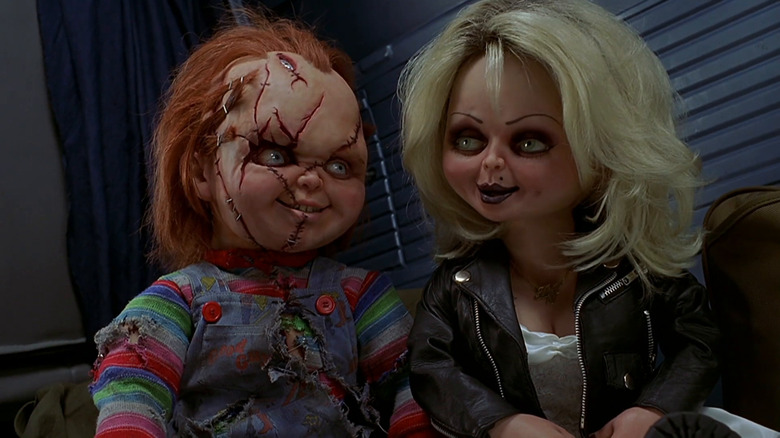
Don Mancini's "Child's Play/Chucky" franchise has been scaring into the hearts of a generation for over 30 years. The series started out as a relatively standard slasher with a unique, serial-killer-possessed-toy twist, but has since grown into one of the most entertaining and enjoyable franchises in horror history. The "Chucky" movies and now TV show aren't afraid to have fun, and with Mancini at the helm for every single incarnation (sans the remake that had nothing to do with him), the lore of Chucky (voiced by Brad Dourif) has only gotten richer and more delightful with age.
The "Chucky" universe as we know and love it today took a turn for the overtly campy with the introduction of Jennifer Tilly as both Tiffany Valentine and later in "Seed of Chucky," ... Jennifer Tilly. Giving Chucky a partner his own size to play off of was a brilliant decision, not only for storytelling purposes but also for the now endless opportunities for merchandising. "Bride of Chucky" saw the duo as a killer doll version of Bonnie and Clyde, but because Mancini is a fearless creative, it also allowed them to be sexual beings.
During the NBCUniversal Press Tour for season 2 of "Chucky," Dourif and Tilly finally answered a burning question many have had since "Bride of Chucky" premiered in 1998 ... how exactly do those dolls have sex?
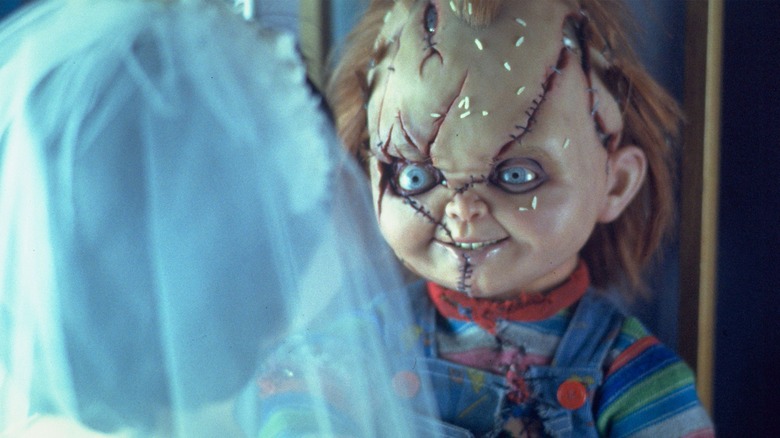
Dourif has been voicing the doll since the very beginning but said the sex scene still remains one of his favorite memories working on the franchise, simply because he couldn't believe what Mancini had planned. "The night that Chucky got lucky ... I was shocked," he said. "When Chucky had sex, I wasn't expecting to be shocked but I was so shocked and delighted, and it was so fun to get to do that with Jennifer because I had been working all alone." With Dourif contributing as a voice-over role, he is seldom on any of the actual sets, working instead in a recording booth. Acting alongside Tilly in the scene gave him the chance to actually work with someone on a "Chucky" movie.
"It was really fun because we were the first people to do doll sex, and Brad and I were in adjoining booths so we could improvise," Tilly said. "I improvised 'Chucky, Chucky,' because she hasn't been a doll for that long, 'Do you have a rubber?' and then Brad improvised 'Rubber? Look at me, baby, I'm all rubber!'" she confessed. "So they had unprotected sex which led to an unplanned pregnancy which is a lesson to the kiddies."
That child would be revealed as the genderfluid Glen/Glenda in "Seed of Chucky," who will be played by non-binary actor Lachlan Watson ("Chilling Adventures of Sabrina") in "Chucky" season 2.
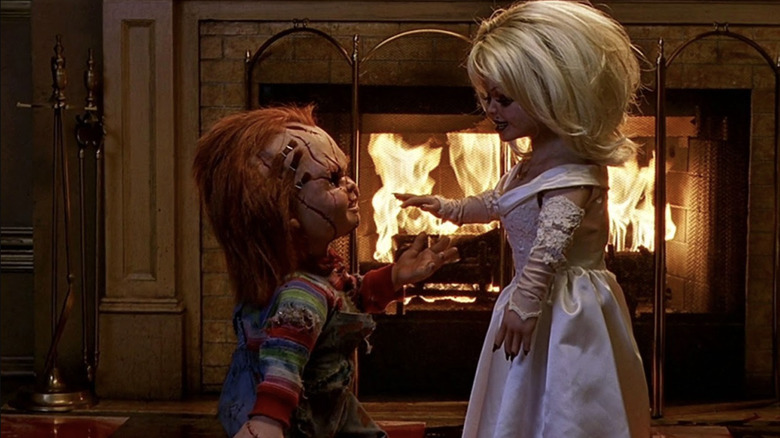
While Tilly was acting on set for some of the earlier scenes in "Bride of Chucky," once Tiffany's soul is inserted into the doll, it was all voiceover for her until the subsequent films. With her and Dourif working in the booth, it wasn't until the film's first viewing that the two actually saw what it looked like for their characters to have sex. "There were things that I didn't really realize the puppeteers had done, and they did such an amazing job," Tilly said. She praised the team for how sexy the Tiffany doll looked, and joked about how in the scene you can see "a little bit of Tiffany's round bottom."
Tilly was elated while reminiscing about seeing the scene for the first time. "When Chucky kissed her, his lil' animatronic tongue went out and sort of rotated around in my mouth, so I had to go back in [the booth] and loop in a sort of gurgling sound." Tilly laughed before imitating what sloppy doll tonguing sounds like, which made the entire group on the panel crack up. "So doll sex is different from real sex but it's a lot of fun," Tilly said. "Especially when it's with Brad." Dourif took a moment to shake his head and laugh before echoing her sentiments by saying, "I, I ... I concur, especially with Jennifer."
Ironic, because Dourif's daughter Fiona has said the exact same thing. Don Mancini, you've made a really weird world, and horror fans cannot thank you enough for it.
"Chucky" season 2 is set to premiere on USA and Syfy on October 10, 2022.
Read this next: The 19 Greatest Movie Couples Of All Time Ranked
The post Chucky Stars Brad Dourif and Jennifer Tilly Explain Exactly How Killer Dolls Have Sex appeared first on /Film.
| Which Ratcheting Screwdriver is Best? |
 |
| There are few hand tools that people seem to have more opinions about than ratcheting screwdrivers. And, now we have some decent testing of this everyday tool by Todd at Project Farm. Todd tests 14 different brands for efficiency, precision, and durability. Tests included working arc swing, ratchet back drag, magnet strength, bit retention strength, build quality (shaft wobble), shaft rotation in the locked position, bit failure load, and screwdriver failure load. Bottom line? The PB Swiss screwdriver, at a whopping $144 (at time of testing, now $178!), performed the best. This was followed by the $70 Linus Tech Tips driver. The Megapro and Williams also performed well, at $34 and $36, respectively. I have the Williams driver and have no complaints. |
| Tips on Quickly Learning a New Skill |
 |
| In this video, engineer Jeremy Fielding drops a ton of wisdom via 26 strategies for learning a new skill, fast. Many of these might seem obvious (you must be motivated, mistakes will happen), but it’s in the unpacking of these ideas and the case examples he uses that make this video most valuable. And, there are a number of tips that one might overlook or not consider, like asking family and friends if they have resources related to the skill you wish to learn, not being afraid to ask someone to teach you what they know, and the idea that you only need to learn the essentials first, then you can dive in and learn by doing. |
| Making Clay Out of Common Soil |
 |
| As my Southern mamma used to say: “Put a new wrinkle on your brain every day.” Here’s today’s wrinkle: I had no idea that you could derive clay, suitable for making pottery, from common soil. I thought you had to find a vein of red clay and harvest that. Sure, such clay is obviously preferred, but you can also render out clay using reddish soil (which has high clay content) or really any type of soil. All you need to do is suspend the soil in water and filter out the heavy materials. After straining through a cloth, you are left with clay. |
| Maker Slang |
| Jargon, slang, and tech terms from the diverse worlds of DIY. |
|
Hero prop – In movie-making, a detailed prop designed for close-up shots and closer scrutiny from the audience. In contrast, action props are used where the audience will not see the prop in close-up. Scumbling – In painting, to soften (the color or tone of a painted area) by overlaying opaque or semi-opaque color applied thinly and lightly with an almost dry brush. I learned this one from my artist wife, Angela White. Weeding – In vinyl cutting, the act of removing all of the unwanted vinyl around your cut design. |
| TOYS! Better Sink Strainer |
 |
| I watched a video a few weeks ago on Cool Tools where Donald Bell extolled the virtues of this OXO sink strainer. Like him, I hate the design of most metal-basket strainers. I ordered one of these and was so impressed with it that I wrote a Boing Boing post about it. Hundreds of BB readers followed suit and many of them are as happy with theirs as I am with mine, so I thought I’d share it here, too. |
| Shop Talk |
 |
|
Cool Tools’ Kevin Kelly weighs in on the racks for storage cases conversation: I made two racks for my Stanley and Harbor Freight sorting boxes. One I welded and later decided it was way overbuilt. Too heavy especially once loaded with full trays of screws, etc. The second one I built a simple frame from 2 x 4s, then slid small shelves out of thin material like Masonite across both sides. It may not be as easy as baker racks, but I’m pretty sure it’s the cheapest way to build a rack in terms of materials. Plywood would be nicer all around, but 2x4s are cheap new, and almost free used. *** Reader Jim Landis wrote:First, thanks for all the fascinating information you keep publishing. I’m a big fan. I’m sure others have discovered this, but some readers might find it useful. When I’m knocking together a quick model out of soda straws and paper clips, etc to get a feel for a project, 1 centimeter to 2 inches is a very convenient scale to use. 1. It’s easy to double or halve numbers without too much mental effort. 2. There’s always a ruler nearby with both inches and centimeters marked in parallel. 3. It’s very close to a 1:5 scale, so models are a nice size for desktops. For context, the original GI Joe dolls, -ahem- action figures, were 1:6 scale. |
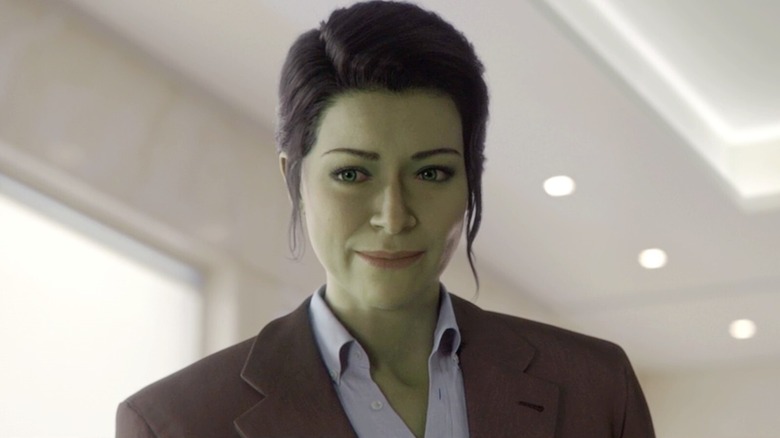
This article contains spoilers for the fifth episode of "She-Hulk: Attorney At Law."
At the halfway mark of its first season, it's become clear that "She-Hulk: Attorney at Law" prides itself on being a down-to-earth approach to the grandest parts of the Marvel Cinematic Universe. While other projects tend to play on a much bigger canvas, the latest Disney+ series attempts to paint a clear picture of what life is like for the average person in this dense superhero world, giving the MCU an opportunity to fill out the details we'd never get to see otherwise. And in the latest episode of "She-Hulk," the series finally explores a question that has been on the minds of many MCU fans since its inception.
We may be familiar with how some of the Avengers have gotten their superhero suits, but what about other, smaller heroes in the MCU? Do they all go to one person to get their costumes made? The answer to that question has just arrived in "She-Hulk." When it's time for Jennifer Walters and her friends to look for clothes that fit her shape-shifting powers, the show introduces an all-new character to the MCU.
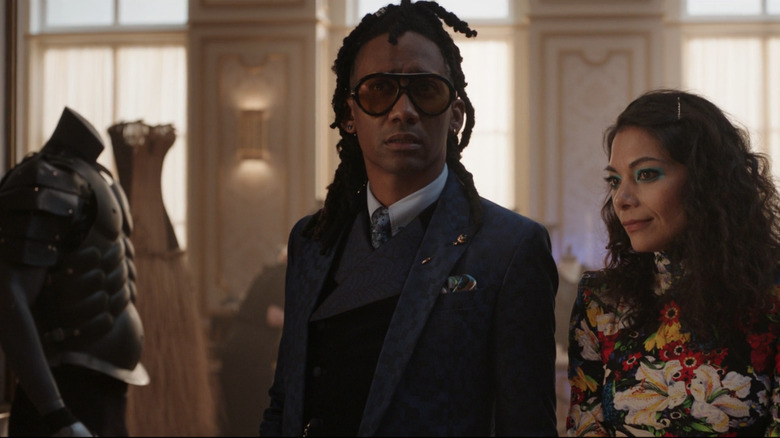
During the fifth episode, Pug and Nikki venture off from the main plot line to find a person to design clothing for She-Hulk. As they make their way through the backside of a coffee shop, the lawyer duo eventually gain entry into a secret room where a renowned super suit maker operates. Griffin Matthews plays The Drip Broker, aka Luke Jacobson, a fashion designer whose work is meant for those in the superhero business. The eccentric fashionista is initially hesitant to work for She-Hulk, but Luke finds the appeal in creating a suit for an Avengers-level hero (or so he thinks).
It's not only clear that he has a rich history in designing superhero wear in the MCU, but judging by the last scene, he's pretty dang good at it. The show reveals that The Drip Broker has been working on a new Daredevil suit for Matt Murdock. Yes, this is how the series plans to segue into the character's re-introduction to the MCU. But it also speaks to just how influential The Drip Broker might just be in the greater scheme of things.
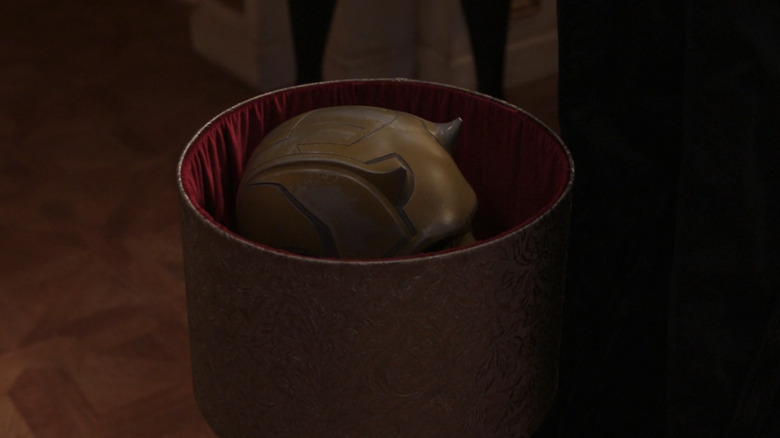
Outside the confirmation of Daredevil's new red and yellow suit, the show does not confirm who else The Drip Broker created costumes for. However, if the New York native would go across the country to California for his new threads, then we have to assume that Matt is not the only relatively prominent hero Luke has served.
Most MCU projects explicitly state how their heroes get their suits, but there are a few exceptions. A few, for example, could include key members of the Thunderbolts team. Although it is presumed to be a government-funded endeavor, it is totally possible, and even logical, that The Drip Broker was contracted to create suits for characters like Yelena Belova or U.S. Agent. Another potential customer could have been a fan-favorite veteran superhero. Despite his status as an Avenger, it's possible that Hawkeye got his Ronin suit from The Drip Broker when the superhero group disbanded after "Infinity War."
No matter the case, as long as "She-Hulk: Attorney at Law" continues to be a grounded look at the MCU, maybe we'll get an even more concrete answer come next week's episode.
Read this next: The Most Brutal Moments In The MCU Ranked
The post She-Hulk Finally Addresses a Long-Unanswered Question in the MCU appeared first on /Film.

We are just hours into the ETH merge and we are already noticing major price cuts on NVIDIA GeForce & AMD Radeon graphics cards across various retailers.
There are several factors behind the recent price cuts and one of them is without a doubt the end of ETH mining as we know it. With the ETH merge, mining on graphics cards is more or less over & that's something the market has been anticipating for a while. NVIDIA and AMD have been course correcting their GPU inventories and prices ever since crypto started to decline and this could be a final nail in the coffin for GPU mining. So now that GPU vendors can no longer rely on miners as a way to sell their graphics cards, it's back to boosting the gaming business.
Both vendors have been trying to get gamers to buy their existing inventory by offering retailer-specific discounts, and bundles (games/accessories), and retailers themselves are going the extra mile by bundling entire monitors given the excess stock of GPUs they are sitting on right now. But things are about to get worse for retailers as not only do they have a huge pile of *NEW" GPUs to sell themselves, but a flood of mining GPUs is already entering the used market with even lower prices than what we have currently on retail and there's also a new generation of gaming graphics cards coming out relatively soon.
So crypto is dead, gamers are not buying graphics cards due to inflation and anticipation for next-gen hardware and even if someone wanted to buy a graphics card, they would just go the used PC market route considering they won't be using it for the long-term. This means that we see a continued drop in prices and we have found some impeccable deals for those who may still want to buy new graphics cards.

Starting with the most obvious one, we have the NVIDIA GeForce RTX 3090 Ti that's for the first time selling below $1000 US. The RTX 3090 Non-Ti already hit below $1000 US prices a few weeks back but it's 3090 Ti's time to drop below one grand. Over at Newegg, the Gigabyte GeForce RTX 3090 Ti Gaming is available for $999 US and you even get $59.99 US of value added with a copy of Marvel's Spiderman Remastered. But $999 US is still a very high price to pay for a graphics card that might turn into a $500 or below offering in just a few weeks. The Chinese market has many RTX 3090 Ti's going for way below $1000 US and around 4999 RMB or $700-ish.


There's also a decent deal on the NVIDIA GeForce RTX 3070 with the Gigabyte Eagle OC variant going for below $500 US at $499 US. The rest of the cards have also seen a $10-$50 US drop in prices compared to the previous week. In the AMD camp, we have RX 6800 XT's going for below $600 US. There are the MSI Gaming & ASRock Phantom variants that are listed for just $579.99 US and you can also snatch an RX 6700 XT for $359.99 US. The Radeon RX 6600 can also be found for $219.99 US which is a pretty good deal for a budget PC build. Over at Microcenter, the 6900 XT is currently selling for $679.99 US.
Looks like there will be a torrential flood of $NVDA GPUs for sale starting tomorrow at 1:00am https://t.co/3ePScTQT31
— Julian Klymochko.eth (@JulianKlymochko) September 14, 2022
'The following table and charts by 3DCenter give us a better outline of how GPU vendors enjoyed several quarters of exponential growth in shipments and revenue due to the mining boom but it's all down now and they are trying to recover and entice their main audience, gamers, even more.
| desktop GPUs | GPU Sales | AMD | NVIDIA | Market Share (AMD/NVDIA) | Sales Revenue | ASP |
|---|---|---|---|---|---|---|
| Q1/2019 | 8.9 million | ~2.0M | ~6.9M | 23 : 77 % | $2.8 billion | ~315$ |
| Q2/2019 | 7.4 million | ~2.4M | ~5.0M | 32 : 68 % | $2.0 billion | ~$270 |
| Q3/2019 | 10.5 million | ~2.8M | ~7.7M | 27 : 73 % | $2.8 billion | ~267$ |
| Q4/2019 | 11.7 million | ~3.6M | ~8.1M | 31 : 69 % | $3.9 billion | ~333$ |
| Q1/2020 | 9.5 million | ~2.9M | ~6.6M | 31 : 69 % | $2.7 billion | ~284$ |
| Q2/2020 | 10.0 million | ~2.2M | ~7.8M | 22 : 78 % | $4.2 billion | ~$420 |
| Q3/2020 | 11.5 million | ~2.6M | ~8.9M | 23 : 77 % | $5.6 billion | ~487$ |
| Q4/2020 | 11.0 million | ~1.9M | ~9.1M | 17 : 83 % | $10.6 billion | ~964$ |
| Q1/2021 | 11.8 million | ~2.4M | ~9.4M | 20 : 80 % | $12.4 billion | ~1051$ |
| Q2/2021 | 11.47 million | ~2.3M | ~9.2M | 20 : 80 % | $11.8 billion | ~1029$ |
| Q3/2021 | 12.72 million | ~2.7M | ~10.0M | 21 : 79 % | $13.7 billion | ~1077$ |
| Q4/2021 | 13.19 million | ~3.0M | ~10.2M | 23 : 77 % | $12.4 billion | ~$940 |
| Q1/2022 | 13.38 million | ~3.2M | ~10.1M | 24 : 75 % | $8.6 billion | ~$643 |
| Q2/2022 | 10.4 million | ~2.1M | ~8.2M | 20 : 79 % | $5.5 billion | ~$529 |
GPU Market Statistics (2019-2022) By 3DCenter:


Once again, these are new AMD Radeon & NVIDIA GeForce graphics card prices. The prices in the used segment are going to be insanely brutal and we would advise our readers to wait for even higher price drops once the next-gen launches.
The post Hours Into The ETH Merge, NVIDIA GeForce & AMD Radeon Graphics Card Prices Hit Their Lowest Ever, 3090 Ti Drops Below $1000 US by Hassan Mujtaba appeared first on Wccftech.


