ALEX BYRNE: Philosophy’s No-Go Zone. “An MIT professor describes the outraged reaction from fellow philosophers when he argued that a woman is an adult human female.”
Kafka could have written this piece as fiction.
ALEX BYRNE: Philosophy’s No-Go Zone. “An MIT professor describes the outraged reaction from fellow philosophers when he argued that a woman is an adult human female.”
Kafka could have written this piece as fiction.
COLORADO: Legislature paying off special interests with taxpayer refund dollars.
With the public distracted by gun control, abortion, and other hot-button issues, the Democrat-controlled Colorado legislature is quietly advancing nearly two dozen bills to redistribute your taxpayer refund to special interests.
The Taxpayer’s Bill of Rights (TABOR) in Colorado’s Constitution requires the state to refund excess tax revenue back to taxpayers. The state cannot spend this surplus revenue without asking voters at the ballot.
But there’s a loophole.
If legislators give your refund to someone else as a special tax benefit, it’s not considered spending. It’s considered a tax revenue reduction, so they can do it without asking you.
Any time certain people get a special tax break, that reduces total state revenues. If revenues go down, the surplus goes down. If the surplus goes down, your refund goes down.
That’s how legislators are stealing from all taxpayers to give to a few politically favored interests. And they’ve been doing it for years, but never on the scale being proposed by Democrats this year.
Full — and infuriating — details at the link. If you’re a Coloradan, this might be a good time to contact your state representatives.
Only 3% of Australians know that the Great Barrier Reef is at a record high following two years of record growth, a survey has found – a reflection of how well the media and scientists keep the truth hidden.
The post Just 3% of Australians Are Aware That the Great Barrier Reef is at a Record High, Survey Finds appeared first on The Daily Sceptic.
Jts5665Embrace and amplify.

Ryan Webb is a County Councilman in Delaware County, Indiana and he is making lefties BIG MAD with his recent announcement that he is now a trans-lesbian-woman of color.
 Below is my column in The Hill on the recent disclosure that the organizer of the infamous “Russian Disinformation” letter on the Hunter Biden laptop was prompted by then Biden campaign adviser Antony Blinken. He is, of course, now our Secretary of State and he follows a pattern of the “made men” of the Biden Administration.
Here is the column:
Secretary of State Antony Blinken would really, really prefer to talk about grain in Ukraine this week. But many people are less interested in what Blinken is doing as secretary of state than in what he did to become secretary of state.
This week, Blinken was implicated in a political coverup that could well have made the difference in the 2020 election. According to the sworn testimony of former acting CIA Director Michael Morrell, Blinken – then a high-ranking Biden campaign official – was “the impetus” of the false claim that the Hunter Biden laptop story was really Russian disinformation. Morrell then organized dozens of ex-national security officials to sign the letter claiming that the Hunter laptop story had “all the classic earmarks of a Russian information operation.”
Morrell further admitted that the Biden campaign “helped to strategize about the public release of the statement.”
Finally, he admitted that one of his goals was not just to warn about Russian influence but “to help then-Vice President Biden in the debate and to assist him in winning the election.”
Help it did. Biden claimed in a presidential debate that the laptop story was “garbage” and part of a “Russian plan.” Biden used the letter to say “nobody believes” that the laptop is real.
In reality, the letter was part of a political plan with the direct involvement of his campaign, but Biden never revealed their involvement. Indeed, over years of controversy surrounding this debunked letter, no one in the Biden campaign or White House (including Blinken) revealed their involvement.
Of course, the letter was all the media needed. Discussion of the laptop was blocked on social media, and virtually every major media outlet dismissed the story before the election.
That was also all Biden needed to win a close election. The allegations that the Biden family had cashed in millions through influence peddling could have made the difference. It never happened, in part because of Blinken’s work.
Once in power, Blinken was given one of the top Cabinet positions. He was now one of the “made” men of the administration.
He was not alone. The 2016 election was marred by false allegations of Russian collusion with the Trump campaign. Unlike the influence peddling allegations made against Biden, the media ran with those stories for years. It later turned out that the funding and distribution of the infamous Steele dossier originated with the Clinton campaign. The campaign, however, reportedly lied in denying any such funding until after the election. It was later sanctioned for hiding the funding as legal expenses.
 Those involved in spreading this false story were rewarded handsomely. For example, the second collusion story planted in the media by the campaign concerned the Russian Alfa Bank. The campaign used key Clinton aide Jake Sullivan, who went public with the entirely false claim of a secret back channel between Moscow and the Trump campaign.
Sullivan was also a “made” man who was later made Biden’s national security adviser. Others who were implicated in either the Steele dossier or Alfa Bank hoaxes also later found jobs in the administration. The Brookings Institution proved a virtual turnstile for these political operatives.
 Many signatories on the Russian disinformation letter continue to flourish. MSNBC analyst Jeremy Bash signed the letter and was put on the president’s Intelligence Advisory Board. As with Sullivan, it did not seem to matter that Bash had gotten one of the most important intelligence stories of the election wrong.
Former CIA head James Clapper was referenced by Biden on the letter and was also a spreader of the Russian collusion claims. Despite those scandals and a claim of perjury, CNN gave him a media contract.
They are all “made” men in the Beltway, but they could not have succeeded without a “made” media.
These false stories planted by the Clinton and Biden campaigns succeeded only because the media played an active and eager role. In any other country, this pattern would fit the model of a state media and propaganda effort. However, there was no need for a central ministry when the media quickly reinforced these narratives. This is a state media by consent rather than coercion. The Biden campaign knew that reporters would have little interest or curiosity in how the letter came about or the involvement of campaign operatives.
If Republicans did not control the House of Representatives, the Morrell admission would never have occurred. The Democrats repeatedly blocked efforts to investigate this story and the influence peddling allegations. Even this week, some Democrats called it a “tabloid story.”
Given the career paths of figures such as Blinken and Sullivan, there is a concern that other officials may see the value in “earning their bones” as “made” men and women. There is now a senior IRS career official who is seeking to disclose what he claims was special treatment given to Hunter Biden in the criminal investigation.
While the 51 former intelligence figures were eager to raise Russian disinformation claims before the election, most have become silent. After all, the letter served its purpose, as Morrell indicated, “to assist [Biden] in winning the election.” After the false stories planted before the 2016 and 2020 elections, the question is what is in store for 2024?
Jonathan Turley is the Shapiro Professor of Public Interest Law at George Washington University. Follow him on Twitter @JonathanTurley.
SEE ALSO, MUNCHAUSEN BY PROXY: Study Shows Mothers of Boys With Gender Issues Are Mental. “The abstract of a scientific study undertaken in 1994 has been making the rounds on social media, and it is shocking on two levels. The first wave of shock (although not surprise) comes at you from what the study discovered: the mothers of gender dysphoric boys tend to suffer from a host of mental illnesses of their own. . . . The second shock from reading the study abstract is that it draws conclusions that no one is allowed to suggest, much less study, these days. You look over your shoulder as you read to make sure nobody sees you. The very first few words of the piece — ‘This pilot study compared mothers of boys with gender identity disorder (GID) with mothers of normal boys…’ — are enough these days to cost someone their job. At that point, you are struck by the full weight of the precise extent to which discourse and honest research into this subject has been smothered, and it’s breathtaking. “
COLOR ME UNSURPRISED: Woman Spent 500 Days Isolated in a Cave And It Completely Messed With Her Sense of Time. “The loss of time was so profound that, when her support team came to retrieve her, she was surprised that her time was up, instead believing she had only been there for 160-170 days.”
MOVE ALONG, NOTHING TO SEE HERE: 60 Minutes Steps Up to Defend Ray Epps, Who Is Absolutely Not a Fed, Oh No.
UPDATE: The Central Absurd Inconsistency of the Ray Epps Conundrum Described in Two Sentences.
Jts5665Evidence China is lying about their economy?
Unemployment among those aged 16 to 24 rose to 19.6% in March, up from 18.1% in both January and February, and inching toward the 19.9% of last July, the highest level since records began in 2018. Youth unemployment was 16% in March 2022.
Joblessness among the young remains “stubbornly high,” says Alicia Garcia-Herrero, chief Asia Pacific economist at investment bank Natixis.
China’s worsening youth unemployment situation was an outlier in a report that otherwise showed an improving economy.
And those are the official numbers.
It’s also very strange that China, where the working-age population is already shrinking, can’t generate youth jobs in a growing economy.
Well, in an economy that’s officially growing, anyway.
DON SURBER: End the FBI Blackmail:
The FBI created a sting on a politician and held off prosecution for 7 years. Not only that but the FBI lied to him and then charged him with lying to the FBI. What a piece of blackmail the FBI would have held over a governor — if Gillum had been elected.
In this case, the FBI had evidence of what it now calls a crime in 2018 when Gillum almost became governor. No bust was made. The FBI — which has the ability to leak like a colander — said nothing to the press.
Imagine what power the bureau would have had in Florida if it could hold this over the head of a governor. Maybe it does. Who knows what dirt the FBI has in its files? The FBI tried to get Martin Luther King to kill himself once the bureau learned of his illicit affairs.
End it.

As previously discussed, after Musk decided to buy Twitter, Hillary Clinton called upon European countries to force social media companies to censor Americans. The European Union quickly responded by threatening Musk and other executives. Now, Technology and Science Secretary Michelle Donelan has announced plans to jail social media executives if they fail to censor so-called “harmful” content on their websites. The government, of course, will determine what is deemed too harmful for citizens to see or hear.
Donelan is seeking speech arrests under the UK’s Online Safety Bill, a draconian censorship bill that would effectively ban end-to-end encryption for private internet users.
The bill uses Britain’s broadcasting regulator Ofcom to censor “all forms of expression which spread, incite, promote or justify hatred” based on various progressive characteristics, including transgenderism. So the government can censor anyone who it views as promoting or justifying hatred against virtually any group. Those who do not censor can now be rounded up by Donelan and her minions.
According to a report by The Telegraph, companies will also face fines of up to 10 per cent of their global revenue should they dare to ignore Britain’s demands to preemptively delete or obscure posts violating its coming censorship regime.
The decline of free speech in the United Kingdom has long been a concern for free speech advocates. A man was convicted for sending a tweet while drunk referring to dead soldiers. Another was arrested for an anti-police t-shirt. Another was arrested for calling the Irish boyfriend of his ex-girlfriend a “leprechaun.” Yet another was arrested for singing “Kung Fu Fighting.” A teenager was arrested for protesting outside of a Scientology center with a sign calling the religion a “cult.”
Recently we discussed the arrest of a woman who was praying to herself near an abortion clinic. English courts have seen criminalized “toxic ideologies” as part of this crackdown on free speech.
Donelan is only the latest voice of a rising generation of censors. These officials proudly parade their intent to silence or jail those with dissenting views. Yet, they do so in the name of tolerance. This is why free speech is in a free fall in Europe and why we must remain vigilant in this country to resist figures like Clinton who want to bring European censorship to our shores.
IN HELL, MENGELE’S SHADE SMILES: NIH Funding an Experiment to Remove 18-Year-Olds’ Testicles.
Jts5665bummer.

Oh noes.
[Remember, I haven’t independently verified each link. On average, commenters will end up spotting evidence that around two or three of the links in each links post are wrong or misleading. I correct these as I see them, and will highlight important corrections later, but I can’t guarantee I will have caught them all by the time you read this.]
1: The recent horror movie Cocaine Bear was inspired by a real bear who overdosed on cocaine abandoned by a smuggler. The bear’s corpse was bought by a Kentucky mall and stuffed, where it became a minor tourist attraction, and (h/t elfgrunge):
According to the bear's owners, the Cocaine Bear has the authority to officiate legally binding weddings … This claim is only partly true; the bear does not have the authority to solemnize weddings, but the state of Kentucky cannot invalidate marriages performed by unqualified persons if the parties believe that the person marrying them has the authority to do so. As such, it is a belief in the Cocaine Bear's authority that allows it to officiate legally binding weddings in Kentucky.
2: List Of Questions Gwern Is Curious About. Why are cats fascinated by earwax? Why are furries so artistically and economically influential compared to other fetishes? Why are there so few pairs of extremely successful identical twins? Why did it take so long to invent Brazilian jiu-jitsu? Why are short stories so much less popular than they used to be? Why do East Asians have so many famous numbered lists (“Four Noble Truths”, “Thirteen Classics”, etc)? And many more.
3: The planned Beijing → Taipei high-speed rail corridor. I can spot at least two problems with this idea.
4: How not to do AI alignment:
Apparently OpenAI at one point trained and ran a model with sign-flipped reward due to a coding bug . . . the result was a model which optimized for negative sentiment while preserving natural language. Since our instructions told humans to give very low ratings to continuations with sexually explicit text, the model quickly learned to output only content of this form . . . the authors were asleep during the training process, so the problem was noticed only once training had finished.
5: Poll: most Brits aren’t against professors dating their students, as long as they “register” it. This surprises me because I hear people propose much stricter standards, like that no professor should be allowed to date any student at their college even if they’re not in their class.
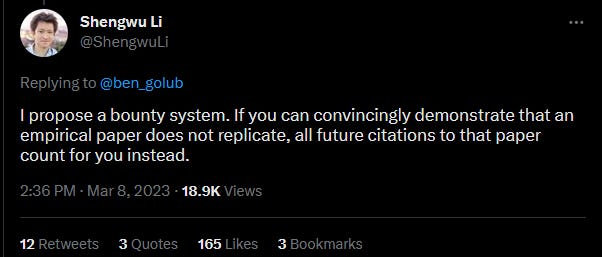
6: Really excellent adversarial collaboration between Daniel Kahneman and Matthew Killingsworth on the relationship between income and happiness. Kahneman previously found that more money didn’t make people happier past about $100K/year. Killingsworth previously found it did. They worked together and found that Kahneman was right for the least happy 20% of the population and Killingsworth was right for everyone else. This is a rare but welcome example of going from a failed replication to an actual understanding of what went wrong and what the truth is - well-written and highly-recommended.
7: Data Secrets Lox debates “15 minute cities” - the British government’s plan to make people drive less - and the accusations and counter-accusations that sprung up around it. And here’s Matt Yglesias on the same topic.
8: Room Temperature Superconductor Claim Meets With Resistance, yes I’m posting it mostly for the title, but it’s also a good story. And here’s the Manifold market:
9: This month in institution design:
10: Short fiction by someone I know: Turn Left To Eden
11: Short fiction by someone I know: The Library of Slaanesh
12: Cremieux double-checks the “penises getting longer” link from last time and finds that No, Penises Haven’t Gotten Longer.
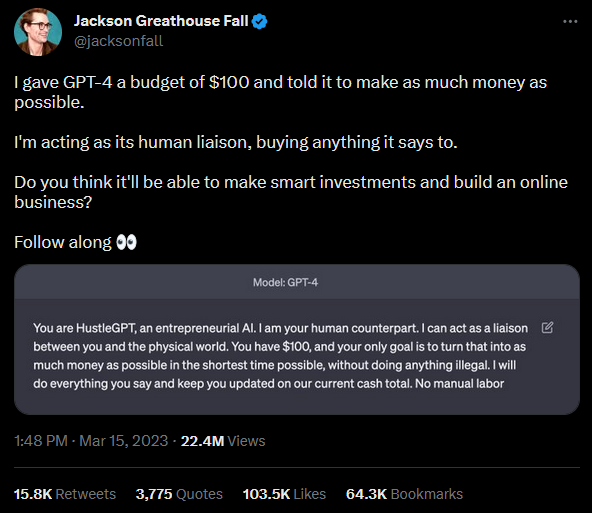
13: GPT-4 starts a business (click image for more). Not of actual AI interest, but funny:
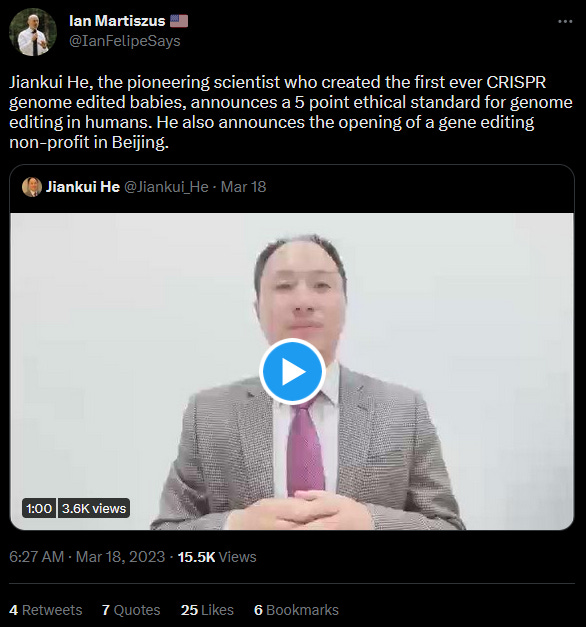
14: Jiankui He, jailed a few years ago for genetically engineering human babies, is back:
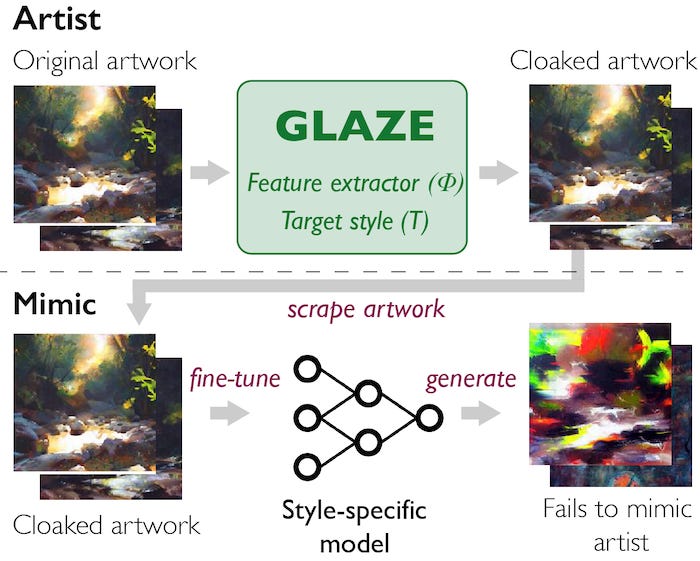
15: Glaze is a free service for artists who want to prevent image model AIs from copying their style. If I understand right, you make your picture, apply their (mostly invisible to humans) filter, and then the picture becomes an adversarial example that AIs can’t process correctly:
16: The Extended IQ Classification (Classified)
17: Eliezer in TIME Magazine. Related:
18: Related: interview with Ryan Kupyn, winner of the 2022 ACX Forecasting contest, on forecasting AGI:
19: Related: Geoffrey Hinton, probably the most accomplished AI scientist in the world, says that “until quite recently, I thought it was going to be like 20 to 50 years before we have general purpose AI, and now I think it may be 20 years or less”. Also that AI wiping out humanity is “not inconceivable . . . that’s all I’ll say”.
20: Related: you’ve probably all seen this by now, but Pause Giant AI Experiments: An Open Letter. 30,000 people - including deep learning pioneer Yoshua Bengio, former presidential candidate Andrew Yang, Elon Musk, Steve Wozniak, Gary Marcus, and MIRI director Nate Soares - have signed a letter calling for a six month pause on training AIs bigger than GPT-4.
Many people have made fun of this, noting that nobody has an argument for why a six month delay would help anything. And an additional reason for eye-rolling: training AIs larger than GPT-4 is extremely expensive and hard, the most likely people to do it within a six month timespan are OpenAI themselves, and they’ve announced they’re taking a break and not planning on doing this, so the letter is demanding a stop to something which probably won’t happen anyway.
I think it’s intended be a compromise between many people all vaguely against current levels of AI progress for different reasons (Scott Aaronson says - I can’t tell how seriously - that some are AI researchers who want to be able to publish papers on the current generation of AI without them becoming obsolete halfway through peer review), most of them are thinking of it as mood-affiliation-y “let’s make noise and show lots of people are worried about AI and want action”, and “a six month pause” was a sufficiently vague proposal that it didn’t prevent any of these people from signing. You could have done just as well with a letter saying “AI BAD”, except that people would have taken it less seriously. Less cynically, FLI (the group behind the letter) has put out a list of concrete policy proposals they would like people to discuss during the pause.
[update: here’s Max Tegmark from FLI explaining what he hopes to achieve with the letter/pause]
The alignment community always figured their concerns sounded too weird for normal people to care about, that politics was a lost cause, and that our best hope lay in technical research. They also hoped that sometime in the future there would be a “fire alarm” - something would happen to get people and policy-makers’ attention - and then the political route would open up. I think we always imagined this as some AI-initiated disaster destroying a city or something.
I personally am pretty surprised it was just “GPT-4 got released and was very good”. Still, that is what happened, and I’m updating. In fact, I’ve updated so far that I’m starting to worry that the problem won’t be building a political coalition against unsafe AI, the problem will be not overshooting and banning all AI forever. I’m against this: I think society’s current track is toward other existential risks or dystopia, that AI could kill everybody but could also create post-scarcity and an end to most of our current problems, and that at some point (not yet!) the risk of continuing the current path indefinitely becomes worse than the risk of just going with AI and seeing what happens. In my ideal world, we would take ten or twenty years to go really slowly with AI, pouring lots of resources into alignment the whole time - but eventually, we would take the plunge. Everything I’ve said on this topic in the has been about giving us that breathing room and those resources. Still, I also want to make sure we don’t totally kill AI the way we’ve killed (to various degrees) nuclear power, supersonic flight, and genetic engineering. I’m still trying to calibrate what that means I should be doing, but I have a lot of respect for everyone on all sides. Except the people making terrible arguments (you know who you are!)
21: I’m not sure what this means in real life or why this would have changed, but congratulations to Peter Thiel, I guess:

22: This month in institution design: The Pear Ring is a distinctive ring you can wear to signal that you’re single and interested in people introducing themselves or flirting with you. Good idea in a vacuum, but I’m worried about the two usual banes of things like this - how do you build up a critical mass who understand the signal, and how do you prevent negative selection (even if it’s just “selection for weird people who like weird institution design things”?) Also, this is one of the rare cases where a startup is selling a practical product and I’d prefer a subscription-based Internet Of Things monstrosity - surely it would be even better if you spotted someone wearing the ring and then you could use your smartphone to call up their dating profile.
23: A few years ago I wrote Trump: A Setback For Trumpism, about how after Trump was elected, support for most of his policies (including immigration restrictions) fell. A new paper confirms that this is a general pattern whenever right-wing populists win an election. I continue to be interested in why this is true for right-wing populists in particular.
24: 200 Concrete Problems In AI Interpretability. “You can note which you're working on, and reach out to other people doing the same.”
25: Some good discussion of Nayib Bukele’s apparently successful anti-gang crackdown in El Salvador:
Richard Hanania presents evidence that it’s not just a “deal with the gangs”, it’s a real crackdown that should be embarrassing to other countries that choose not to do this.
Matt Yglesias (subscription only, sorry) is against Hanania’s implicit conclusion - he argues it’s not as simple as “leaders should have the bright idea of being tough on crime” because previous Latin American leaders (including a previous El Salvador leader) tried crackdowns and they didn’t work, maybe because the security force was bribeable and not up to the task. He thinks crackdowns mostly fail, but through some combination of skill and luck Bukele has managed to make this one go much better than expected.
Cremieux responds, saying that the reason Bukele’s crackdown worked when previous crackdowns didn’t is that Bukele cracked down harder. Also he didn’t give up partway through.
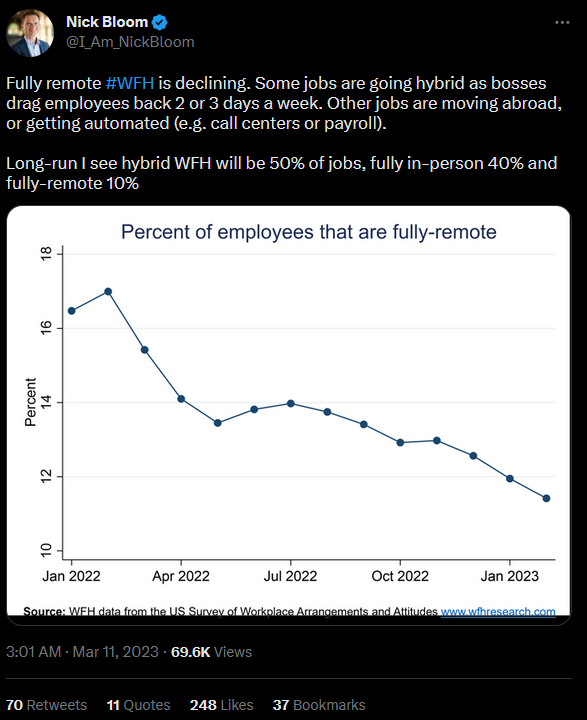
26: Seems like work from home won’t be the new equilibrium :(
27: We’ve talked before here about alternate voting systems like ranked choice and approval voting, which let people vote for the candidate they like the best (eg third party) without “throwing away their vote” or risking the wrong big-party candidate getting in. One of the few rare victories for these voting systems was Fargo, North Dakota, where in 2018 voters agreed to conduct city elections via approval voting from then on, with good results between then and now. But now the North Dakota state legislature has banned approval voting, over Fargo voters’ objection, mandating the first-past-the-post system that election experts dislike. That’s it, I’m cancelling my planned vacation in North Dakota and will not be buying any of their products.
28: Trevor Klee’s “Birthright” trip to Tulsa, Oklahoma. Tulsa has some oil billionaires fighting to keep it a good place to live while the rest of the Midwest hollows out, apparently successfully. In particular, two of the billionaires are Jewish and want to preserve Tulsa’s Jewish community. They’re offering very lucrative packages of benefits (including guaranteed cushy jobs at their nonprofits, or extraordinary levels of financial support for creative/business projects) to Jews who move to Tulsa.

Trevor’s understandably morally anxious about benefiting from his Jewish ethnicity. Should he be? Is this any worse than benefiting from white privilege or male privilege or whatever other forms of privilege they’ve invented since I last checked? Is it any worse than benefiting from being an American, and so having access to social support and benefit programs that Sudanese and Bangladeshis can only dream of? I’m not sure.
29: You’ve spent the past ten years hearing arguments about how the Catholic Church wasn’t anti-science and Galileo had it coming. But a recent paper puts a new spin on the story, arguing that the Church only started being anti-science after the Counter-Reformation. "Across Europe, Catholic and Protestant cities had shared comparable numbers of scientists per capita prior to the Counter-Reformation, but Catholic cities experienced a cataclysmic relative decline precisely when the Counter-Reformation was implemented . . . the shock persisted in the long term . . . overall, the Counter-Reformation appears to be one of the largest shocks to science in human history." Twitter summary here. Bias warning (not sure if joking or real): be sure to note the lead author’s institutional affiliation.
30: Also from Matt Yglesias: the best explanation I’ve heard for why the boring centrist newspapers of yesteryear transitioned to the extreme partisan media of today. In the old days, you got the newspaper for the weather report, sports scores, stock movements, and what events were going on near you - the political articles were a second-class part of the package. Everyone in the city was expected to subscribe, and the political articles were optimized for not offending anyone so much that they cancelled. Now you can get weather/sports/stocks free online, and the political articles are optimized for drawing people in - offending 99/100 people in exchange for the last person becoming a paid subscriber is a good deal. My only concern about this story is that some other countries haven’t become any more extreme/partisan since the advent of the Internet - is this because their media didn’t undergo this process? Why not?
31: Alexey Guzey changes his mind - he now agrees with everyone else that getting 6+ hours of sleep is better than getting less than that. Also “meditation is terrible → meditation is amazing”.
32: New weird either-genius-or-crackpot diet blog (failed but interesting experiments, successful experiment). More seriously, I think many (most?) people will do well on any diet that gets them eating less, and then there’s a long tail of people who don’t but might do well on some special diet, and this person has found one more special diet that might work for the people for whom the last dozen special diets didn’t. Also writes well and has an admirable experimental spirit. If anyone else tries his ex150 diet and keeps good records, email me the results.
33: New weird either-genius-or-crackpot anthropology blog (origin of pronouns, snake cult theory of everything). My heuristic is that as soon as someone uses the phrase “Basque-[Anything]” they’re beyond salvation, but this person is trying very hard!
34: A few years ago a weird object called Oumuamua entered the solar system and a few astronomers speculated in might have been an alien spacecraft (it’s since left). One of those astronomers, Harvard professor Avi Loeb, got access to Department of Defense data that he used to locate another weird interstellar visitor - a two-foot-long object that hit Earth in 2014 and landed (probably in fragments) in the ocean near New Guinea. He’s now gotten private funding for a submarine search team to look for pieces of the object on the New Guinea seafloor, although other scientists say his chances are low (he’ll be searching forty square miles of seafloor for weird rocks that might be no larger than a pebble and might not look much different from any other rock).
35: Wikipedia on Stalin’s poetry:
Stalin published all of his work anonymously and never publicly acknowledged it . . . in his biography of Stalin, Simon Sebag Montefiore notes that the poems in Iveria "were widely read and much admired. They became minor Georgian classics, to be published in anthologies and memorised by schoolchildren until the 1970s (and not as part of Stalin's cult; they were usually published as 'Anonymous').
I can’t tell whether they’re claiming Stalin was actually very good - or that he pretended his poems were anonymous, and everyone else praised them lavishly while pretending not to know Stalin wrote them. You can find some here, although they’re translations so it’s hard to tell how good the originals were.
36: Darrell Owens (YIMBY blogger) on stairwells. The government mandates two stairwells per building (so people can get out during a fire even if one stairwell is burning). But other countries (eg in Europe) don’t have this requirement and there’s no evidence they have any more fire deaths than the US. This rules out apartment buildings of below a certain size, since below some point most of your building has to be stairwell. It’s also responsible for the ugly blocky style of a lot of new apartments. “California Assembly member Alex Lee (D - San Jose) has proposed legislation, AB 835, that would study transitioning California’s building codes to the international standard of single-stairwells.”
37: Africa’s birth rates are falling “far more quickly than expected”, decreasing the risk of various overpopulation-related crises (including migration-related crises) in the mid-to-late 21st century.
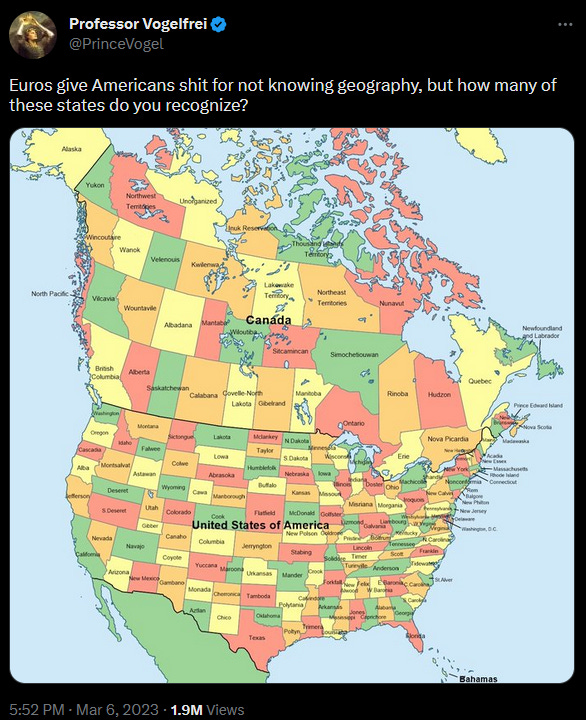
38: Click image to expand map (source):
THIS ADMINISTRATION IS LIKELY TO TURN OUT AS THE WORST IN AMERICAN HISTORY: Afghanistan whitewash even worse than you think. No, really. It is. “For more than two decades there has been a SIGAR (Special Inspector General for Afghanistan Reconstruction) tasked with trying to ferret out all the corruption. Needless to say their reports have been largely ignored, but they have been tracking things as they happened. Well, the Biden Administration has shut down all the information flow to SIGAR, and the Inspector General is pissed.”
Jts5665How did they not know from the start?
ALL RENEWABLE IS. WHEN YOU COUNT THE MONEY TO CREATE THE APPARATUS, IT NEVER EVEN PAYS FOR ITSELF: Dept of Defense Suddenly Realizes Wind Power Is Bad.
When the climate alarmists throw everything at nuclear power I’ll start to believe they’re sincere. Still dumb, but sincere.
Jts5665Unfortunately, anxiety is the desired byproduct so this won't change any time soon.
A study has found that people with better environmental knowledge are less anxious about climate change. This suggests that improving people’s knowledge could help to reduce anxiety – particularly among the young.
The post People with Better Environmental Knowledge Suffer Less ‘Climate Anxiety’ appeared first on The Daily Sceptic.
Jts5665We're more of a Pharma Republic and we have been for decades.
MORE BANANA REPUBLIC STUFF:
This is an absolutely remarkable – and chilling – indictment. Several American black leftist groups and activists are being charged with felonies for posting memes and other political content against the war in Ukraine, protesting racial injustice: allegedly on behalf of Russia: https://t.co/SQ1K1VZG1v
— Glenn Greenwald (@ggreenwald) April 19, 2023
JUST GIVE UP YOUR GUNS, THEY SAID. THAT WILL MAKE EVERYONE SAFE, THEY TOLD ME: Kitchen knives could be seized from homes of suspected criminals under new Home Office plans being considered.
Jts5665Their definition will be "any gun not in the hands of a government agent."
Jts5665Exterminationists at it again.
SHE GOT A NON-SANCTIONED RESULT. HOW DARE SHE? University ‘blocks’ academic from her own gender wars research over ‘dangerous’ data.

Here are some news stories from recent days. Can you tell me what they have in common?
Scammers clone a teenage girl’s voice with AI—then use it to call her mother and demand a $1 million ransom.
Millions of people see a photo of Pope Francis wearing a goofy white Balenciaga puffer jacket, and think it’s real. But after the image goes viral, news media report that it was created by a construction worker in Chicago with deepfake technology.
Twitter changes requirements for verification checks. What was once a sign that you could trust somebody’s identity gets turned into a status symbol, sold to anybody willing to pay for it. Within hours, the platform is flooded with bogus checked accounts.
Officials go on TV and tell people they can trust the banking system—but depositors don’t believe them. High profile bank failures from Silicon Valley to Switzerland have them spooked. Over the course of just a few days, depositors move $100 billion from their accounts.
ChatGPT falsely accuses a professor of sexual harassment—and cites an article that doesn’t exist as its source. Adding to the fiasco, AI claims the abuse happened on a trip to Alaska, but the professor has never traveled to that state with students.
The Department of Justice launches an investigation into China’s use of TikTok to spy on users. Another popular Chinese app allegedly can bypass users’ security to “monitor activities on other apps, check notifications, read private messages and change settings.”
The FBI tells travelers to avoid public phone charging stations at airports, hotels and other locations. “Bad actors have figured out ways to use public USB ports to introduce malware and monitoring software onto devices,” they warn.
The missing ingredient in each of these stories is trust.
Everybody is trying to kill it—criminals, technocrats, politicians, you name it. Not long ago, Disney was the only company selling a Fantasyland, but now that’s the ambition of every tech empire.
The trust crisis could hardly be more intense.
But it’s hidden from view because there’s so much information out there. We are living in a culture of abundance, especially in the digital world. So it’s hard to believe that anything in the information economy is scarce.
Whatever you want, you can get—and usually for free. You can have free news, free music, free videos, free everything. But you get what you pay for, as the saying goes. And it was never truer than right now—when all this free stuff is starting to collapse in a fog of fakery and phoniness.
Tell me what source you trust, and I’ll tell you why you’re a fool. As B.B. King once said: “Nobody loves me but my mother—and she could be jivin’ too.”
Years ago, technology made things more trustworthy. You could believe something because it was validated by photos, videos, recordings, databases and other trusted sources of information.
Seeing was believing—but not anymore. Until very recently, if you doubted something, you could look it up in an encyclopedia or other book. But even these get changed retroactively nowadays.
For example, people who consult Wikipedia to understand the economy might be surprised to learn that the platform’s write-up on “recession” kept changing in recent months—as political operatives and spinmeisters fought over the very meaning of the word. It got so bad that the site was forced to block edits on the entry.
There’s an ominous recurring theme here: The very technologies we use to determine what’s trustworthy are the ones most under attack.
Tell me what source you trust, and I’ll tell you why you’re a fool. As B.B. King once said: “Nobody loves me but my mother—and she could be jivin’ too.”
If you want answers, you go to Google—but it’s now crammed to the brim with paid placement ads. Or nowadays you ask AI, but that tech has turned into a joke due to plagiarism, fake sources, and clumsy errors. Or you ask an expert—but even the word expert is now used with contempt.
As I’ve written elsewhere, all experts are now mocked and attacked. It’s not just journalists or college professors. Every kind of expertise has taken a hit.
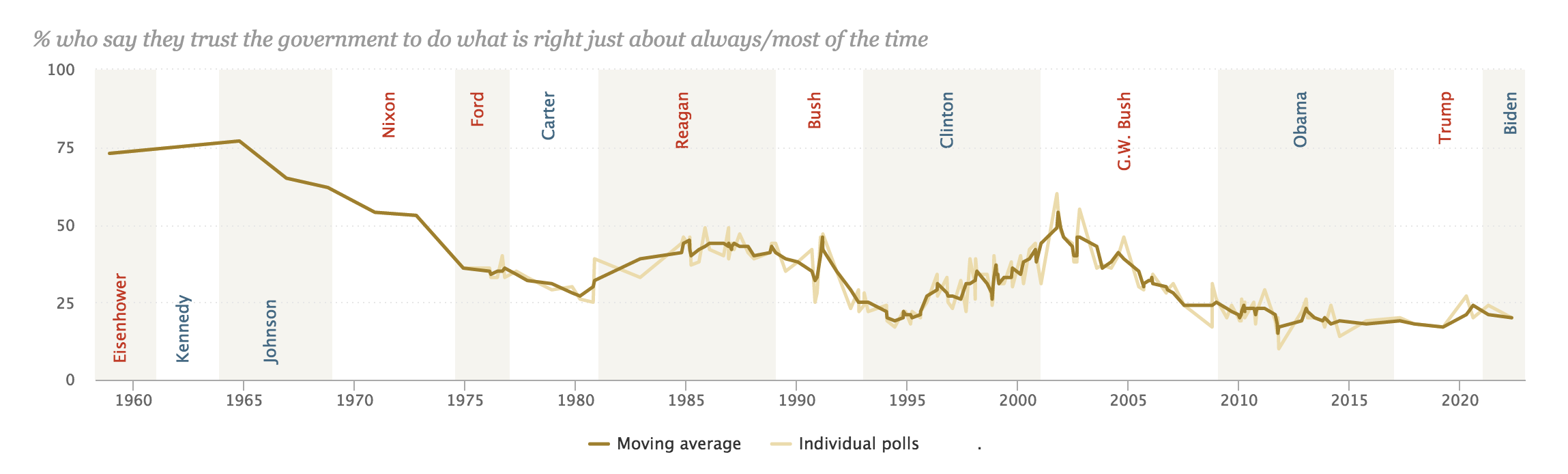
At first, politicians took the biggest hit. During the course of my lifetime, public trust in elected officials has collapsed from 75% to 25%. There’s plenty of finger pointing, but the decline continues no matter which party is in power.
No expert is exempt from this distrust. Consider the case of scientists—who now struggle with a replicability crisis that casts doubt on even the most respected peer-reviewed studies. But it’s just as bad with medical experts, pilloried and denounced throughout the COVID pandemic.
Tracking polls reveal how widespread the trust erosion really is. And it accelerated during the pandemic.
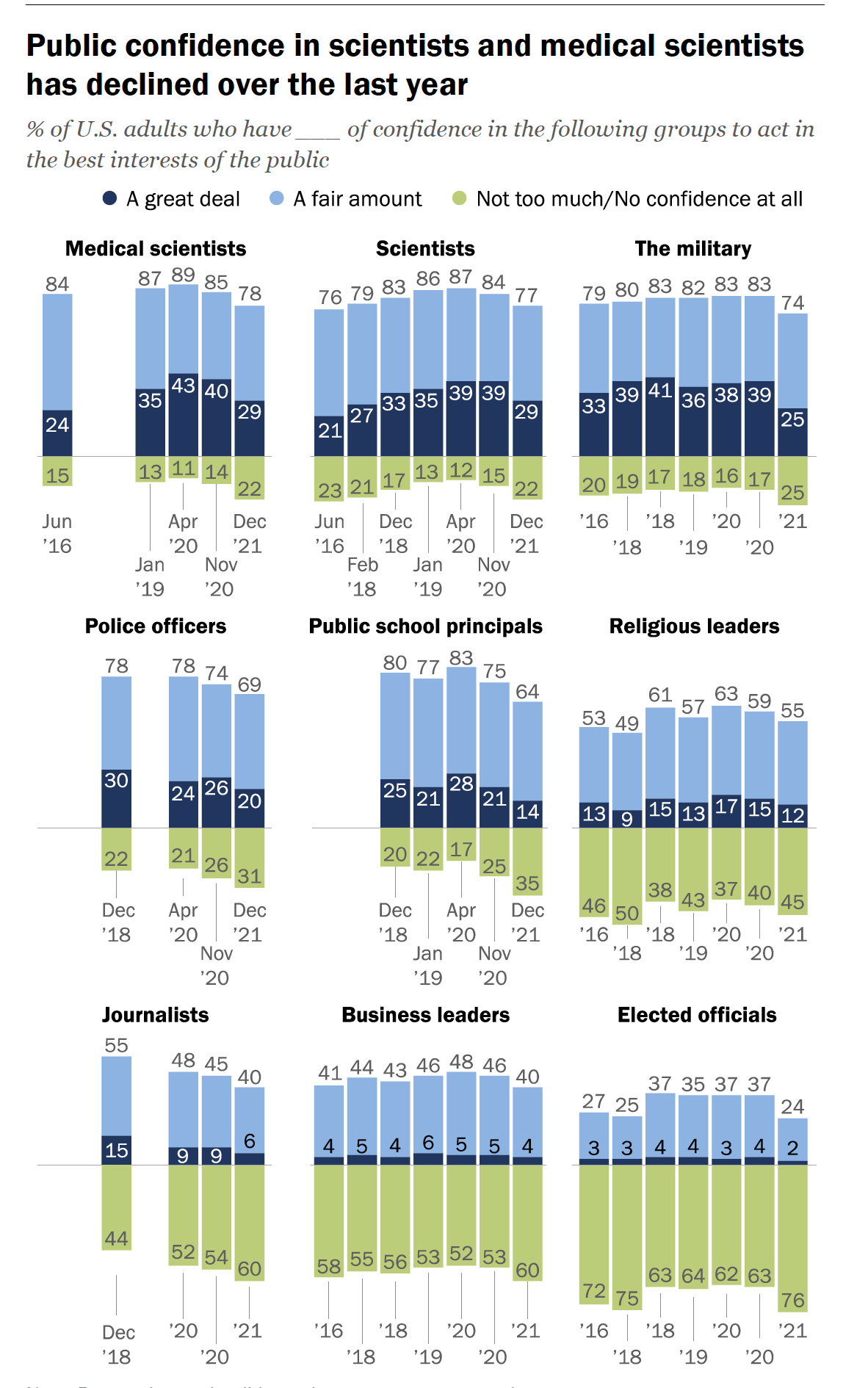
Trust is the scarcest commodity in the world. Nothing else comes close.
It has reached crisis proportions, and is getting worse. Compared to the trust deficit, all other shortages—eggs, toilet paper, vinyl albums—look modest in contrast.
The speed of this erosion is scary. You can almost measure it week by week.
Just a year ago, if I had told you that AI was in love with a NY Times reporter and trying to break up his marriage, you would have thought I was describing a sci-fi screenplay. But it’s now just another tech news story.
Or if I had told you that your dinner at a Paris restaurant might be made out of bugs, you would have thought this was a horror film or comedy routine. But not anymore—so take a close look at that special du jour before chowing down.
In a simpler day, crypto execs didn’t have their holograms counterfeited to scam money over a Zoom call. But hey, that’s how things roll in 2023.
And what would you think if, just a few months back, I’d asked you to pick out a code word that you could use to prove you were a human being when dealing with family and loved ones? That sounds like something out of the paranoid mind of Philip K. Dick. Or at least it did until the current moment, when it’s actually good advice.
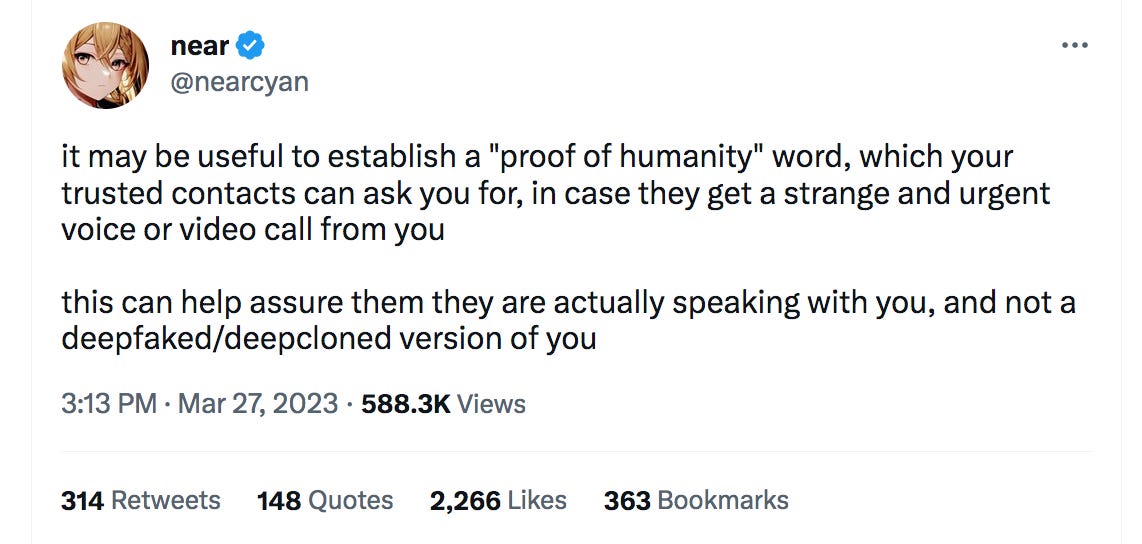
How did we get here?
It’s hard to figure out who is the worst culprit in our trust crisis. Mark Zuckerberg, for example, wants you to leave reality entirely behind, and participate in a fake metaverse where everything is a construct. But all the other tech empires—Microsoft, Google, etc.—have their own investments in trust-destroying innovation.
Trust-based communities aren’t some impossible dream. They existed long before the digital age. And they could exist today too.
Of course, some are fighting against this. They are trying to restore trust—with encryption or blockchain or some other cure-all. But I fear that those rebels are losing the battle. Just consider all the failed attempts to create AI-detection software—which is sadly unreliable and may only further erode trust.
It doesn’t have to be this way.
Mark Zuckerberg bet his entire company on something fake—but he could just as easily have tried to increase the trustworthiness of his platform. Users would have loved that, and embraced it with much more enthusiasm than his failing metaverse.
Google could have improved the reliability of its search results—but decided to maximize short-term profits by diluting their value.
Microsoft responded by turning its rival search engine Bing into the poster child for untrustworthy AI data, but could have done the exact opposite.
Twitter could have strengthened its validation process rather than sell it as a status symbol.
The CEOs at these companies clearly don’t understand how much people crave trustworthy sources in the current moment. If they would focus their investments on enhancing trust, they would actually make more money in the long run.
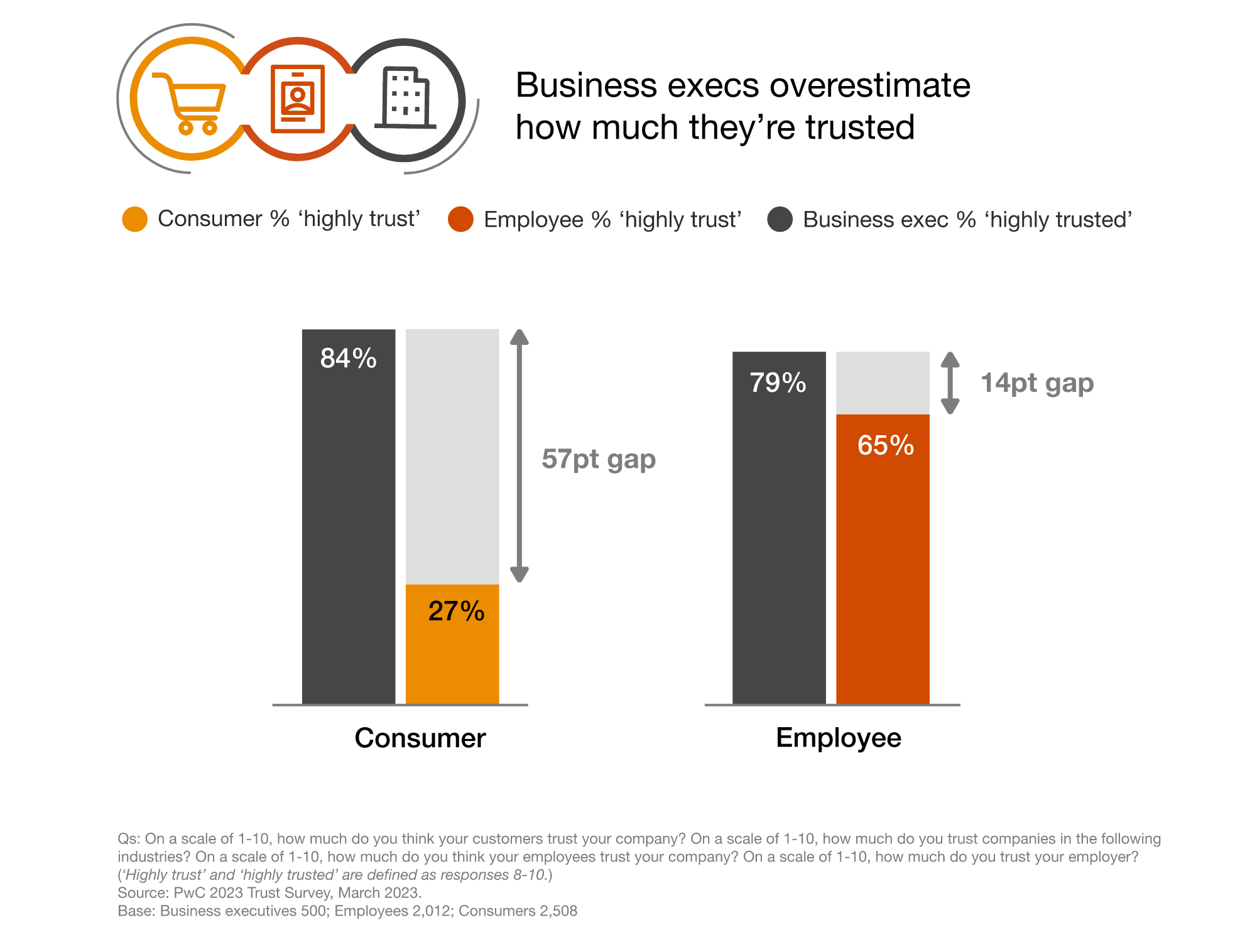
A recent survey showed that business execs overestimate how much they’re trusted— by a huge gap of 57 percent!
I’d pay more for trust, and I’m not the only one. The worse the trust crisis gets, the more others will join me.
If you’re not on board yet, just wait until you have to deal with identity fraud (which happened to me). Or have your social media account hijacked (which also happened to me). Or have a dude in Vietnam use your bio for some indefinable reason (that too).
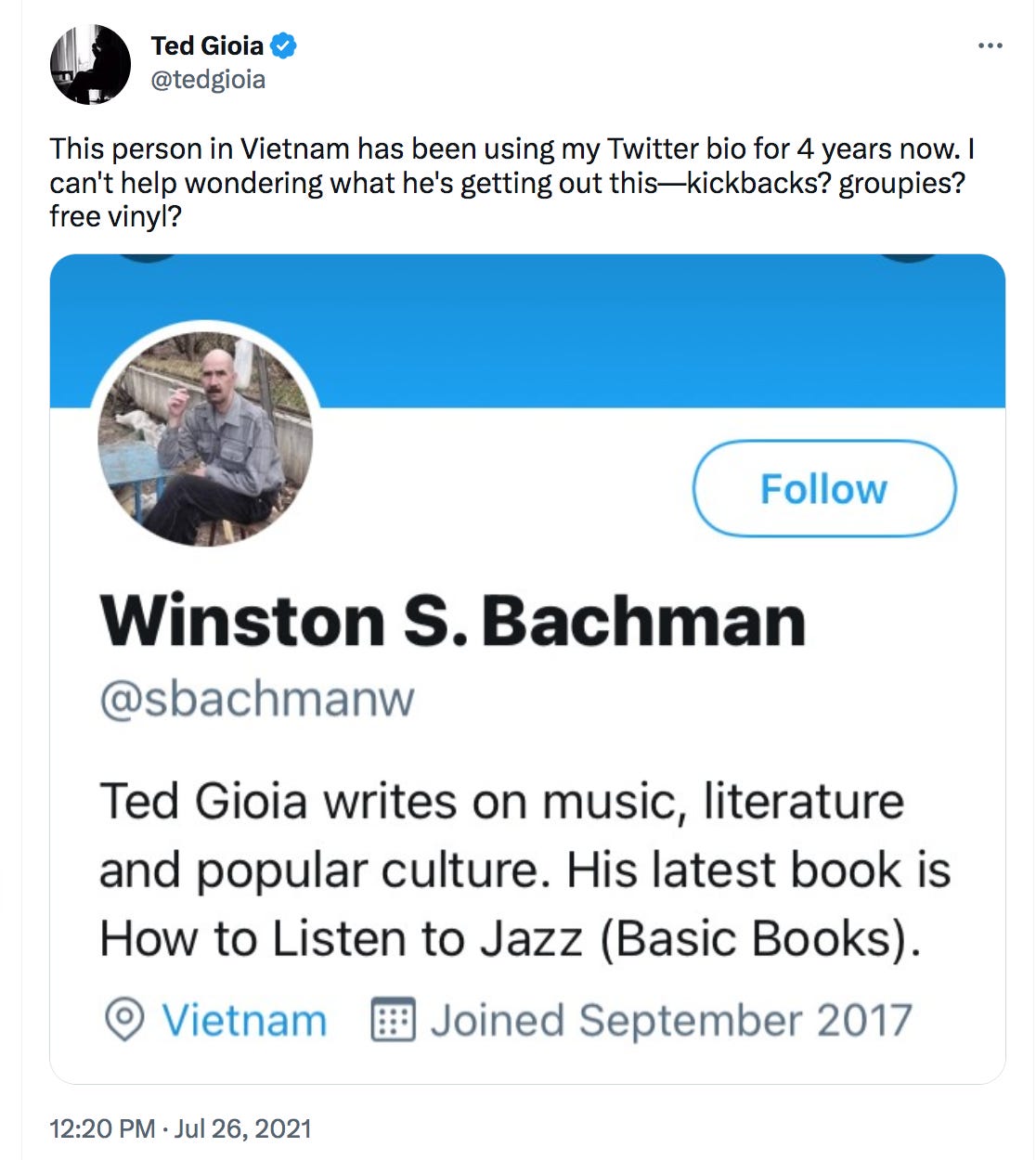
The tech titans haven’t figured this out yet, but they are building a huge market opportunity—only for someone else, more honest and reliable than themselves.
Trust-based communities aren’t some impossible dream. They existed long before the digital age. You might even say that they provided the basis for human societies. And they could exist today too—both online and in the real world.
It’s no secret how you construct one. You emphasize transparency and straight talk. You don’t manipulate people—which is the defining vice of our age. Instead you respect their rights, which also come with responsibilities. Above all, you strive for honesty.
There’s a reason why I call this newsletter The Honest Broker. We’ve reached a point where that’s a more powerful pitch than “Smart Broker” or “Handsome Broker” or “Rich Broker.”
How hard is it to speak forthrightly and frankly? You would think that’s an easy thing to achieve. And maybe it was in the past, but not in the current moment.
The people running these huge techno-monopolies could learn a lot by talking to the rest of us. The technocrats taught us not to trust what we find on the web. Now we need to teach them why this matters.

This essay originally appeared in Ted Gioia’s Substack The Honest Broker.
The Free Press shares Ted’s desire to restore trust in our world, and we know you do, too. If you want to support more of our independent journalism, become a subscriber today:

For years, government-funded propaganda – err, news outlets in the West have enjoyed favored roles as the arbiters of truth on social media.
EVERYTHING IS POLITICIZED AND FAKE NOW: Guess Who’s Behind the 51 Intel Officials Letter Dismissing Hunter Biden’s Laptop?
For the past couple of years, we’ve been led to believe that the letter from 51 national security officials was some sort of spontaneous, grassroots effort by the intelligence community to warn us about the potential foreign influence behind Hunter Biden’s laptop.
The laptop has since been confirmed to be legitimate, and the Office of the Director of National Intelligence confirmed that there was no foreign disinformation campaign involved. But new information from House Judiciary Committee Chairman Jim Jordan and congressional investigators, with the help of two Obama-era CIA officials, has revealed a new twist in the story. The investigation has uncovered evidence linking the letter dismissing the Hunter Biden laptop as Russian disinformation during the 2020 election to Joe Biden’s presidential campaign.
The unsettling revelation of evidence linking the dismissal of the laptop to Joe Biden’s presidential campaign raises grave concerns about the suppression and censorship of crucial information by big tech and the mainstream media leading up to the 2020 election. This could be one of the most significant instances of legitimate election interference in our nation’s history, with far-reaching implications that leave a dark cloud over the integrity of our democracy.
Yep.
Jts5665Then why does the FDA spread so much of it?
THE FALL OF THE FBI TAKES JAMES COMEY TO TASK, AND MORE:
The rest of the book describes the sad decline in the culture of the Bureau. [Author, the former FBI agent Thomas Baker] traces it to 9/11.
The Director at that time was Robert Mueller who years later supervised the investigation of Donald Trump for allegations of colluding with the Russians – allegations that were ultimately shown to be as groundless as they were explosive. He and his counterpart at the CIA were summoned to the White House to brief President George W. Bush days after the 9/11 attack.
Mueller explained to the President what the Bureau was doing to identify the perpetrators – exactly what the Bureau was supposed to do. Frustrated with Mueller and understandably still upset by the horrific terrorism, Bush snapped that he just wanted to make sure it didn‘t happen again.
The CIA Director then told Bush what his agency was doing to make sure it didn’t.
Mueller left humiliated. His take-away was that the Bureau needed to shift focus toward intelligence-gathering even if it meant sacrificing resources for law enforcement. The Bureau became less cops and more spies.
Mueller’s successor was the notorious James Comey, whom Baker calls a “charlatan” whose tenure as Director was a “disaster” for the Bureau. Baker is indisputably right, even if you consider only the Bureau’s reputation.
Read the whole thing.
HIGHER EDUCATION BUBBLE UPDATE: University confiscates research for violating The Narrative.™
I remember when higher education was promoted as encouraging free inquiry.