Shared posts

02 Jun 13:46

Protecting Perks, Power, & Profits Has Perverted The Entire System

by Tyler Durden

Submitted by Bill Bonner via Bonner & Partners,

We’ve been trying to find something good to say about our generation – the baby boomers, who have dominated life back in the U.S. for at least the last 30 years.

But we keep running into the same problem: We have been so eager to protect our perks, power, and profits we have perverted the entire system.

Capitalism takes you into the future... with innovation, failure, and surprise. You invest, you lose your money, you try something different, and you stumble forward. Capitalism is constantly burying its mistakes and discovering tomorrow.

Cronyism, on the other hand, keeps you in the past. It is today and yesterday trying to stop tomorrow from happening.

...by bribing public officials (they are remarkably cheap; in terms of return on investment nothing else comes close)… restricting… regulating… controlling… central planning… bailing out well-established businesses… rewarding stockholders… paying off voters, lobbyists, and special interests… and distorting the political establishment, with its geriatric candidates and tired themes.

And guess what? Cronyism depends on the credit bubble. The future is where new wealth is created. When you try to stop or twist the future into the shape want, you prevent this wealth from ever happening.

So, you switch from creating wealth now to taking wealth from the future, so you can consume it now. That’s how the credit bubble got so big. And that’s why almost nobody wants to see it pop.

Cronies owe money. They borrow money. They depend on borrowed money for their budgets, their spending, their bonuses, their portfolios, their welfare checks, and their special privileges.

They all depend so heavily on borrowing that few of them – whether in academia, media, business, finance, or government – can see the truth… let alone speak it.

They are all paid not to see it. And if they do see it, they keep their mouths shut.

Who is left on the other side? Who is left to say something?

02 Jun 13:40

Chocolatey Goodness

by Tim Knight from Slope of Hope

With all the grumbling and grousing I do here, I thought I'd share a feel-good story I happened upon last night. It's about the Hershey Company. Specifically, it's about a secret arrangement the founder of the company made to help orphans. As revealed on Wikipedia: (with some boldface emphasis by me):

Unable to have children of his own, Milton S. Hershey founded the Milton Hershey School in 1909 for orphans. In 1918, Milton S. Hershey and his wife, Catherine Hershey, donated all of their considerable wealth, of around 60 million dollars, to the boarding school upon Catherine Hershey's death. The Hershey Trust Company is now the largest shareholder and beneficiary to the School. Before his death, Milton Hershey ensured the school would live on by donating 30% of all future Hershey profits to the school. Due to this generous donation by America's largest chocolate company, MHS now has over 7 billion dollars in assets, making it one of the richest schools in the world. Today, the Milton Hershey School provides free education, health care, counseling and a friendly home to 2000 orphans in financial need.

The school's programs include sports, arts, religious studies, sciences, math, language and many other subjects. School colors are gold and brown. Students must wear a uniform to class provided to them by the School to encourage equality. Their admissions is primarily based on age and financial need for the orphans. The school also provides "House Parents", which are hired couples, paid to take care of and nurture the students. The school's "fellowship" project provides students with Hershey employee visits to build long lasting relationships and provide career counseling. Additionally, the school is located in Hershey, Pennsylvania, a city created by Milton Hershey himself. The city offers security, a church, a post office and other services for the students. Many of its designs resemble Hershey chocolate products, such as the Hershey Kisses light posts. Most notably perhaps is the fact that Mr. Milton Hershey prohibited The Hershey Company from using the School as an advertisement or marketing strategy. The school's primary goal is to provide young orphans with the skills necessary to support themselves and their families in the future.

Isn't that cool? Can you imagine, say, Steve Jobs allocating 30% of Apple's profits - - forever - - to a given charitable cause? And, the real kicker - - to expressly forbid the company from exploiting this generosity for marketing or advertising purposes?

Here in Palo Alto, for instance, there is the Ronald McDonald house. It's a very well-funded hospital for very sick children. I think it's terrific that McDonald's funds this (setting aside the fact that the food they've given the country the past fifty years hasn't exactly been a boon for good health), but when I see all the posters of Ronald McDonald given kids with, say, cancer a big Ronald hug, my cynicism meter does go "ping" a bit.

But never did I suspect, with all the Hershey's I've bought over the years to create my award-winning s'mores, that a big chunk of the company's profits during its entire history were causing to this worthy cause. Mr. Hershey must have been a good egg.

02 Jun 13:38

Kyle Bass Was Right: Texas To Create Own Bullion Depository, Repatriate $1 Billion Of Gold

by Tyler Durden

Most investors have heard Kyle Bass' rather eloquent phrase, "buying gold is just buying a put against the idiocy of the political cycle. It's that simple." However, what few may remember was his warnings in 2011, suggesting the University of Texas Investment Management Co. take delivery of its gold - as opposed to trusting it in the 'safe' hands of COMEX massively levered paper warehouse. Now, as The Star Telegram reports, Texas is going one step further with State Rep. Giovanni Capriglione asking the Legislature to create a Texas Bullion Depository, where Texas could store its gold. The goal is to create a secure facility that would allow the state to bring home more than $1 billion in gold bars that are owned by UTIMCO and are now housed at HSBC in New York.


From 2011:

"The University of Texas Investment Management Co., the second-largest U.S. academic endowment, took delivery of almost $1 billion in gold bullion and is storing the bars in a New York vault, according to the fund’s board."


The decision to turn the fund’s investment into gold bars was influenced by Kyle Bass, a Dallas hedge fund manager and member of the endowment’s board, Zimmerman said at its annual meeting on April 14. Bass made $500 million on the U.S. subprime-mortgage collapse.


“Central banks are printing more money than they ever have, so what’s the value of money in terms of purchases of goods and services,” Bass said yesterday in a telephone interview. “I look at gold as just another currency that they can’t print any more of.”

And now, as The Star Telegram reports, UTMICO would prefer a Texas depository than a New York one...

“We are not talking Fort Knox,” Capriglione said. “But when I first announced this, I got so many emails and phone calls from people literally all over the world who said they want to store their gold … in a Texas depository.


“People have this image of Texas as big and powerful … so for a lot of people, this is exactly where they would want to go with their gold.” And other precious metals.


House Bill 483 would let the Texas comptroller’s office establish the state’s first bullion depository at a location yet to be determined.


Capriglione’s changes to the bill must be approved by Monday, the last day of the 84th legislative session.


The goal is to create a secure facility that would allow the state to bring home more than $1 billion in gold bars that are owned by the University of Texas Investment Management Co. and are now housed at the Hong Kong and Shanghai Bank in New York.


“The depository would be an agency of the state located in the Office of the Comptroller, directed by an administrator appointed by the Comptroller with the advice and consent of the Governor, Lieutenant Governor and Senate,” according to a fiscal analysis of the bill.


The depository could also hold deposits of gold and other precious metals from financial institutions, cities, school districts, businesses, individuals and countries.


“This will allow for bullion to be deposited here, as well as any other investments that … any state agencies, businesses or individuals have,” Capriglione said.


Storage fees will be charged, perhaps generating revenue for the state. For instance, Texas pays about $1 million a year to store its gold in New York, Capriglione said.


A fiscal note attached to the bill states that the depository will have “an indeterminate fiscal impact” on the state, depending on the number of transactions and fees, but says it’s too early to determine the extent.


“It’s unusual,” said Cal Jillson, a political science professor at Southern Methodist University. “So far as I know, there are no states with bullion depositories.”

*  *  *

Perhasps the fact that Texas doesn't trust New York suggests the unitedness of the states is starting to quake and surely "the idiocy of the political cycle" has only got worse...

"buying gold is just buying a put against the idiocy of the political cycle. It's that simple."

This is Capriglione’s second attempt to create the depository.

Two years ago, then-Gov. Rick Perry was on board, saying work was moving forward on “bringing gold that belongs to the state of Texas back into the state.”


“If we own it,” Perry has said, “I will suggest to you that that’s not someone else’s determination whether we can take possession of it back or not.”


In 2013, the Legislature ended before Capriglione could win approval of the bill.


Jillson said the bill’s sentiment is consistent with the anti-federal approach that conservative lawmakers have taken this year. “It’s in line with the idea that Texas is exceptional and needs to keep a distance from the federal government that respects individual states’ depositories,” he said.

Sounds like Texas - just like Austria, Germany, Russia, and China to name just four - no longer trusts the status quo.

02 Jun 13:36

From The Keynesian Archives: Who Said In 2010 That "Europe Is An Economic Success"

by Tyler Durden

Paul Krugman says a lot of funny things. 

Indeed, if one is predisposed to being cynical about the 7-year bout of Keynesian madness that has infected DM central banks in the post crisis world, virtually everything Paul Krugman says is funny. 

But some caution is warranted because while Krugman may be an endless source of entertainment for anyone who has even a shred of respect for sound money policies, he is also — as we pointed out when the Nobel prize winner took his economic insanity on a field trip to its natural habit in Japan last year — there are two words that should strike fear in the hearts of any rational-thinking citizen of the world, and those two words are “Paul Krugman.” 

At no time in history is the above more apparent than now, with seemingly the entire world on its way to becoming Japan because at the end of the day, everyone's answer to why central planning hasn’t delivered on its lofty promises is simply this: not enough Keynes.

Having thus set the stage, we bring you this classic Krugman throwback quote from 2010:

"The real lesson from Europe is actually the opposite of what conservatives claim: Europe is an economic success, and that success shows that social democracy works."


Shortly thereafter, that “economic success” would turn into an unmitigated nightmare both from an economic and political perspective, with the entire periphery losing bond market access in mid-2012 due to the perception of fiscal irresponsibility, an event which was promptly followed up by a Keynesian rhetorical haymaker from Mario Draghi that temporarily stemmed the crisis but wasn’t enough to bring the EU economy back to life and so finally, the ECB went (nearly) full-Kuroda in March, all just to celebrate the fact that "hey, at least inflation isn’t negative anymore" and at least now, only Greece is on its way out because, ironically, it has “too much debt.” 

Certainly doesn't look like “success” to us, although, as Krugman reminds us, you have to look past math when you’re evaluating economic outcomes:

“Actually, Europe’s economic success should be obvious even without statistics.”

And because we couldn’t resist, here's why things have gone from bad to worse in Greece over the past month:

Tomorrow I will be meeting with the Nobel Prize-winning economist @NYTimeskrugman #Greece

— Alexis Tsipras (@tsipras_eu) April 17, 2015

02 Jun 13:30

Ron Paul: "Ex-Im Bank Is Welfare For The 1%"

by Tyler Durden
Jts5665

We've been hearing US chamber of commerce ads on the radio lately pushing the renewal of this program for the benefit of "small businesses". Boeing has a big presence here so they are probably the local "small business" being alluded to.

Submitted by Ron Paul via The Ron Paul Institute for Peace & Prosperity,

This month Congress will consider whether to renew the charter of the Export-Import Bank (Ex-Im Bank). Ex-Im Bank is a New Deal-era federal program that uses taxpayer funds to subsidize the exports of American businesses. Foreign businesses, including state-owned corporations, also benefit from Ex-Im Bank. One country that has benefited from $1.5 billion of Ex-Im Bank loans is Russia. Venezuela, Pakistan, and China have also benefited from Ex-Im Bank loans.

With Ex-Im Bank’s track record of supporting countries that supposedly represent a threat to the US, one might expect neoconservatives, hawkish liberals, and other supporters of foreign intervention to be leading the effort to kill Ex-Im Bank. Yet, in an act of hypocrisy remarkable even by DC standards, many hawkish politicians, journalists, and foreign policy experts oppose ending Ex-Im Bank.

This seeming contradiction may be explained by the fact that Ex-Im Bank’s primary beneficiaries include some of America’s biggest and most politically powerful corporations. Many of Ex-Im Bank’s beneficiaries are also part of the industrial half of the military-industrial complex. These corporations are also major funders of think tanks and publications promoting an interventionist foreign policy.

Ex-Im Bank apologists claim that the bank primarily benefits small business. A look at the facts tells a different story. For example, in fiscal year 2014, 70 percent of the loans guaranteed by Ex-Im Bank’s largest program went to Caterpillar, which is hardly a small business.

Boeing, which is also no one’s idea of a small business, is the leading recipient of Ex-Im Bank aid. In fiscal year 2014 alone, Ex-Im Bank devoted 40 percent of its budget — $8.1 billion — to projects aiding Boeing. No wonder Ex-Im Bank is often called “Boeing’s bank.”

Taking money from working Americans, small businesses, and entrepreneurs to subsidize the exports of large corporations is the most indefensible form of redistribution. Yet many who criticize welfare for the poor on moral and constitutional grounds do not raise any objections to welfare for the rich.

Ex-Im Bank’s supporters claim that ending Ex-Im Bank would deprive Americans of all the jobs and economic growth created by the recipients of Ex-Im Bank aid. This claim is a version of the economic fallacy of that which is not seen. The products exported and the people employed by businesses benefiting from Ex-Im Bank are visible to all. But what is not seen are the products that would have been manufactured, the businesses that would have been started, and the jobs that would have been created had the funds given to Ex-Im Bank been left in the hands of consumers.

Another flawed justification for Ex-Im Bank is that it funds projects that could not attract private sector funding. This is true, but it is actually an argument for shutting down Ex-Im Bank. By funding projects that cannot obtain funding from private investors, Ex-Im Bank causes an inefficient allocation of scarce resources. These inefficiencies distort the market and reduce the average American's standard of living.

Some Ex-Im Bank supporters claim that Ex-Im Bank promotes free trade. Like all other defenses of Ex-Im Bank, this claim is rooted in economic fallacy. True free trade involves the peaceful, voluntary exchange of goods across borders — not forcing taxpayers to subsidize the exports of politically powerful companies.

Ex-Im Bank distorts the market and reduces the average American's standard of living in order to increase the power of government and enrich politically powerful corporations. Congress should resist pressure from the crony capitalist lobby and allow Ex-Im Bank's charter to expire at the end of the month. Shutting down Ex-Im Bank would improve our economy and benefit most Americans. It is time to kick Boeing and all other corporate welfare queens off the dole.

*  *  *

02 Jun 13:26

NSA Is Offline So Here "They" Come: Multiple Bomb Threats Made Against US Aircraft, NBC Reports

by Tyler Durden

Update: ALL THE BOMB THREATS TO U.S. PLANES FOUND NOT CREDIBLE: CNBC

You don't say. Now let's find the NSA agent who dialed them in.

* * *

Who could have seen this coming? Just 24 hours after the NSA goes "dark" from "securing" the nation against terrorist threat (by recording and storing all domestic phone calls) we get this:

  • BOMB THREATS PHONED INTO AIRPORTS, CNBC SAYS

According to NBC, these threats are against planes already in the sky.

BREAKING: Multiple bomb threats made about US aircraft in the air, @tomcostellonbc reports. http://t.co/bYdMijkcoo

— CNBC Now (@CNBCnow) June 2, 2015

Passengers are being deplaned after a bomb threat hoax in Philadelphia


What turned out to be a hoax led to police searching a US Airways flight and its passengers after it landed at Philadelphia International Airport Tuesday morning.

The airport confirmed there was a police investigation going on around 6:30 a.m. after flight 648 from San Diego landed as scheduled in Philly with 88 passengers and five crew on board.

The aircraft had taken off from California at 10:35 p.m. PDT and landed in Philadelphia on schedule shortly after 6:15 a.m. EDT.

"The TSA Operations Center in Washington, DC had received a phone threat stating that there was an explosive device on the plane," said Philadelphia Police Chief Inspector Joe Sullivan. "Out of an abundance of caution" the airport declared a bomb threat and moved the plane to a remote area.

And from NBC:

At least five bomb threats were phoned in Tuesday against flights originating or landing in the United States, government sources told NBC News. The sources said that the threats were not deemed credible.


Four of the five flights — one each from US Airways, Delta Air Lines, United Airlines and the Mexican carrier Volaris — landed. The fifth, Korean Air Flight 23 from Seoul to San Francisco, was still in the air, scheduled to land Tuesday afternoon.


In Philadelphia, police met the US Airways plane, Flight 648 from San Diego, when it landed. NBC Philadelphia reported that a police bomb squad, including dogs, searched the plane and passengers and gave the all-clear. 


The three other flights that had landed were Delta Flight 55, from Los Angeles to Atlanta; United Flight 995, from San Francisco to Chicago O'Hare; and Volaris Flight 939, from Portland, Oregon,to Guadalajara, Mexico.


Hoax threats have been made against almost a dozen planes over the past two

*  *  *

US equity markets dropped on the news but judging by how fast stocks rebounded after the original CNBC report it makes one wonder if this was just a trial balloon to see how fast BTFDers BTFD after a terrorism headline. The answer: 5 minutes.


Conclusion: the Fear Department will need to work harder to overcome the natural instinct of an entire generation of BTFDers to inspire a marketwide panic.

02 Jun 03:00

Daily Deal: MCSE Business Intelligence 5 Course Training

by Gretchen Heckmann
It's never a bad idea to get extra certifications in your industry to help your career along. For 91% off list, you can get one year of access to the MCSE Business Intelligence 5-Course Training through iCollege and prepare yourself for the Microsoft Certified Solutions Engineer exam. Once you've completed the five courses, you can sit for the exam at any Prometric Testing Center in the world (exam vouchers are not included in this deal). The courses cover querying and administering Microsoft SQL servers, implementing a data warehouse, creating data reports and models, and designing business intelligence solutions with Microsoft SQL servers.

Note: We earn a portion of all sales from Techdirt Deals. The products featured do not reflect endorsements by our editorial team

Permalink | Comments | Email This Story


02 Jun 02:59

US Government Making Another Attempt To Regulate Code Like It Regulates International Weapons Sales

by Tim Cushing

When code is treated like weapons, bad things happen. Governing bodies have previously treated encryption as weaponry, ensuring that only the powerful will have access to strong encryption while the general public must make do with weaker or compromised variants.

More recently, the US government went after the creator of a 3D-printed gun, claiming the very existence of printing instructions violated international arms regulations. So, it's not just the end result that's (potentially) covered under this ban (the actual weapon) but the data and coding itself. That's currently being fought in court, carrying with it some potentially disturbing implications for several Constitutional rights.

Now, it appears the conflation of physical weapons/weaponized code is possibly going to make things much, much worse. The EFF notes that the US government's adoption of recommended changes to an international arms trafficking agreement (the Wassenaar Arrangement) will likely cause very serious problems for security researchers and analysts in the future.

The BIS's version of the Wassenaar Arrangement's 2013 amendments contains none of the recommended security research exceptions and vastly expands the amount of technology subject to government control.

Specifically, the BIS proposal would add to the list of controlled technology:

Systems, equipment, components and software specially designed for the generation, operation or delivery of, or communication with, intrusion software include network penetration testing products that use intrusion software to identify vulnerabilities of computers and network-capable devices.

And:


Technology for the development of intrusion software includes proprietary research on the vulnerabilities and exploitation of computers and network-capable devices.

On its face, it appears that BIS has just proposed prohibiting the sharing of vulnerability research without a license.
As if things weren't already dangerous enough for security researchers, what with companies responding with threats and lawyers -- rather than apologies and appreciation -- when informed of security holes and the US government always resting its finger on the CFAA trigger. Violating the terms of this agreement could see researchers facing fines of up to $1 million and/or 20 years in prison.

Wassenaar was originally limited to physical items used in conventional weapons, like guns, landmines and missiles. It was amended in December 2013 to include surveillance tech, mainly in response to stories leaking out about Western companies like Gamma (FinFisher) and Hacking Team selling exploits and malware to oppressive governments, which then used these tools to track down dissidents and journalists.

The push to regulate the distribution of these tools had its heart in the right place, but the unintended consequences will keep good people from doing good things, while doing very little to prevent bad people from acquiring and deploying weaponized software.

The Wassenaar Arrangement's attempt to wrestle a mostly ethereal problem into regulatable problem was, for the most part, handled well. It defined the software it intended to control very narrowly and provided some essential exceptions:
Notably, the controls are not intended apply to software or technology that is generally available to the public, in the public domain, or part of basic scientific research.
But, even so, it still contained the potential to do more harm than good.
We have significant problems with even the narrow Wassenaar language; the definition risks sweeping up many of the common and perfectly legitimate tools used in security research.
Either interpretation (Wassenaar, BIS) is a problem. The BIS version is much worse, but both will result in a less-secure computing world, despite being implemented with an eye on doing the opposite, as Robert Graham at Errata Security points out.
[G]ood and evil products are often indistinguishable from each other. The best way to secure your stuff is for you to attack yourself.

That means things like bug bounties that encourage people to find 0-days in your software, so that you can fix them before hackers (or the NSA) exploit them. That means scanning tools that hunt for any exploitable conditions in your computers, to find those bugs before hackers do. Likewise, companies use surveillance tools on their own networks (like intrusion prevention systems) to monitor activity and find hackers.

Thus, while Wassenaar targets evil products, they inadvertently catch the bulk of defensive products in their rules as well.
And the results will disproportionately negatively affect those who need these protections the most. This is the end result of controls written with physical items (which originates from physical manufacturing plants and travel on physical means of conveyance) in mind but copied-pasted to handle "items" that can traverse the internet with no known originating point.
That's not to say export controls would have no leverage. For example, these products usually require an abnormally high degree of training and technical support that can be tracked. However, the little good export controls provide is probably outweighed by the harm -- such as preventing dissidents in the affected countries from being able to defend themselves. We know they do little good know because we watch Bashar Al Assad brandish the latest iPhone that his wife picked up in Paris. Such restrictions may stop the little people in his country getting things -- but they won't stop him.
The "open-source" exception in Wassenaar can be useful, up to a point. Researchers could post their findings to Github, as Graham points out, to ensure they're still protected. This, of course, means the Arrangement is still mostly useless, as the moment it's put into the public domain, any entity cut out of the distribution loop by this agreement can immediately make use of posted vulnerabilities and exploits. It also makes research destined to be open-sourced forbidden weaponry until the point it's actually made public. So, a laptop full of research is a prohibited weapon, while a Github post containing the same is not.
When security researchers discover 0-day, they typically write a proof-of-concept exploit, then present their findings at the next conference. That means they have unpublished code on their laptop, code that they may make public later, but which is not yet technically open-source. If they travel outside the country, they have technically violated both the letter and the spirit of the export restrictions, and can go to jail for 20 years and be forced to pay a $1 million fine.
Pro tip:
Thus, make sure you always commit your latest changes to GitHub before getting on a plane.
Statements made by the BIS aren't exactly comforting. The BIS's implementation doesn't include an open-source exception, but supposedly, this will still be taken into consideration when the US government starts throwing around fines and prison sentences. Randy Wheeler of the BIS:
"We generally agree that vulnerability research is not controlled, nor is the technology related to choosing a target or finding a target, controlled." However, she undermined her message by stating that any software that is used to help develop 0-day exploits for sale would be covered by the proposal.
Again, bad for researchers. This gives the government leeway to imply intent when prosecuting, because the allowed and the forbidden look very similar while still in their formative stages.
[T]he only difference between an academic proof of concept and a 0-day for sale is the existence of a price tag.
Even if the exploit is not on the market at the point the government steps in, it would take very little to insinuate that it would have been headed to market, if not for the speedy intervention of regulators.

There is some good news, however. The BIS is accepting comments on its proposed adoption (and partial rewrite) of the amendments to the Wassenaar Arrangement. The comment period ends on July 20, 2015, so sooner rather than later would be good if you're interested in steering the government away from doing further damage to the livelihoods of security researchers.

Permalink | Comments | Email This Story


01 Jun 15:12

Govt Wipes Recent Vaccine Injury Data from Website...


Govt Wipes Recent Vaccine Injury Data from Website...


(Third column, 17th story, link)

31 May 09:59

The True Cost

by Don Boudreaux
(Don Boudreaux)

Tweet

Here’s a letter to the Los Angeles Times:

Fashion critic Booth Moore is clearly moved by Andrew Morgan’s new documentary, “The True Cost,” which highlights the terrible work conditions and pay in third-world factories that manufacture the inexpensive clothing now enjoyed by denizens of rich countries (“’The True Cost’ documentary tallies global effect of cheap clothes,” May 28).  Yet not once in her review of “The True Cost” does Ms. Moore ask the key question that is asked by those scholars who, above all others, think most deeply and consistently about true costs: economists.  That question is “As compared to what?”

Compared to work conditions and pay today in rich countries such as the U.S. and Sweden, work conditions and pay today in developing countries are indeed awful.  But despite being the one comparison that apparently is central to the film, this comparison is inappropriate and misleading.  Instead, the relevant comparison is of third-world workers’ current pay and work conditions with these workers’ realistic alternatives.  The fact that so many third-world workers willingly endure the harsh conditions and low pay that now prevail in third-world garment factories is powerful evidence that these workers’ alternatives are even worse.  Therefore, if Mr. Morgan and other activists succeed in their efforts to reduce the rich-world’s demand for clothing produced in the third world, many third-world factory workers will personally suffer the true cost of rich-world-activists’ economically ignorant concern for them – namely, being obliged to toil at jobs that pay even less and in conditions that are even dirtier and more dangerous.

Sincerely,
Donald J. Boudreaux
Professor of Economics
and
Martha and Nelson Getchell Chair for the Study of Free Market Capitalism at the Mercatus Center
George Mason University
Fairfax, VA  22030

29 May 19:10

Cool News: A Dresden Files T-Shirt

by Pat

Fair warning here: Spoilers. If you haven’t read the Dresden files…

Well… first off. If you haven’t read the Dresden Files, you’re missing one of the best fantasy series in existence and you really should consider checking it out. Really really. Seriously.

Secondly, if you haven’t read the series, this blog isn’t for you. Partly because I’m going to be talking about stuff that won’t make any sense if you don’t know anything about the books. But *mostly* because some of the stuff I’m going to say here has really significant spoilers for the series.

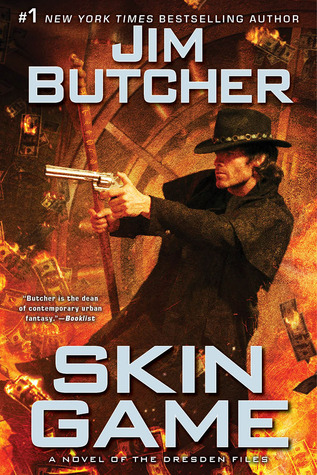
Specifically, I’m going to be talking about stuff that happens in the most recent book: Skin Game. Big stuff that happens at the end of Skin Game.

So… yeah. If you read this it’s going to ruin big character and plot arcs that progress over the course of (does a quick count) nine books.

So stop reading if you don’t want that ruined.

As an alternate, you can go check out this video of me doing an interview with Jim Butcher a couple years ago.

Or you can go vote on which Kingkiller t-shirt designs we’ll end up using in the fundraiser next week.

Last Warning: I’m not going to be coy. Real spoilers for Skin Game below…

*     *     *

Over the years, I’ve been pretty clear about my love of Jim Butcher’s work, especially the Harry Dresden series.

As evidence, I submit for your perusal my embarrassingly gushy Goodreads review of Skin Game.

19486421

I first read this book more about two years ago. Yeah. Before it even came out. I’m enough of a rabid fan that I sweet-talked my way into getting an advance reading copy.

Since then, I’ve read/listened to the book at least two more times.

And every time it gets to the end of the book… at the very end outside the carpenter’s house where everything is at its most bleak…. I laugh my ass off with pure joy and delight when Butters takes up the sword.

Because of this, for years now, I’ve wanted a t-shirt that shows a hand holding up a katana hilt with a lightsaber blade. Underneath it the words: “Polka will never die!”

My desire for this t-shirt has come and gone over the years, but it’s never gone entirely away. And recently, when I re-listened to Skin Game, it came back full force.

So I told my assistant Amanda about it (she’s a big Dresden fan as well) and her face lit up. “I want one too!” she said immediately.

Then she said, “We should make them for Worldbuilders.”

This shows she’s a better person than I am. I just wanted one for me.

At this point in my career, I’m lucky enough to know Jim Butcher a little bit. We’ve met at conventions a couple times. Had a few dinners together. He’s really a delightful guy. A proper geek, funny and smart. If you ever get the chance to catch him at a signing or hear him speak at a convention, it’s well worth your time.

What’s more, he’s helped out Worldbuilders a couple times in the past. So I plucked up my courage and dropped him a line, asking how he’d feel about letting Worldbuilders do a t-shirt as part of our upcoming fundraiser.

And he said yes.

It’s hard to squee when you’re a baritone, but I gave it my best shot. (Have I mentioned that Jim is a really delightful guy?)

That e-mail exchange was just last week, and we *just* managed to get the paperwork tied up. So now all we really need is a graphic for the shirts.

Here’s the thing: we could design this in house. But neither of the two artists I work with the most, Brett and Nate, have read the Dresden books. (Shameful, I know. I gave both of them a stern talking-to.)

I could hire someone to do it too…. but honestly, when I do a project like this, I firmly believe there’s no substitute for the passion and enthusiasm of the fans. Whenever I reach out to y’all creatively, you come back with things so much better than I ever could have imagined.

So I’m reaching out to the artistic geeks among you to see if any of you would like to take a shot and making this t-shirt design.

I won’t lie, our timeline is a little ridiculous. The fundraiser starts on June 1st, so we only have a couple of days.

But if you’re a fan of the Dresden Files, and you have the ability to art, and you’re interested in putting your skills to use for a good cause…. Well… that would be pretty awesome of you. You’d make a lot of geeks happy, and you’d be helping feed hungry kids, too.

A few notes:

  • Keep in mind that this design is for a t-shirt.
  • I asked Jim to confirm the color of the blade, and he said: “In the books, the blade is white edged in gold, like bright sunlight.”
  • Submissions go to: tshirt (at) worldbuilders.org
  • We need the entries by 12:00pm Central Time on Saturday, May 30.

I know. It’s not much time. But we can’t wait any longer because we’ll need to sort through submissions, e-mail back and forth with artists, fine-tune the design, and still launch it with the rest of the fundraiser on Monday, June 1st.

So there you go. I’m kinda silly excited about this. It’s like an early birthday present for me.

If you have any questions, please feel free to ask them down in the comments.

If you haven’t voted on the kingkiller t-shirt designs yet, you should check them out over here.

Lastly, I’m trying to think of something nice I can do for the artists who have been submitting designs for us. So if you are one of those artists (or if you’re just a clever person) I’d welcome any suggestions down in the comments.

Thanks for being awesome everyone,

pat

29 May 16:12

NASA: El Niño driven ‘stagnant upper-air pattern spread numerous storms and heavy rains [into] central Texas’ no mention of ‘climate change’

by Anthony Watts
The climate zealots were out in force this week trying to link the rains in Texas to ‘climate change’. The press release from NASA makes no such connections, but instead blames a mundane weather pattern induced by El Niño. Video and explanatory graphic follows. From NASA/Goddard Space Flight Center: Severe flooding hits central Texas, Oklahoma …
29 May 15:43

Good Precedents against NSA Spying

by Jim Harper

With debate about NSA spying continuing in the Senate, it’s worth looking at some of the historical and modern precedents for protecting our communications and communications data. A few highlights:

  • The earliest precedent for protection of communications in the United States is the treatment of mail. The founders used postal mail to communicate their revolutionary ideas and even to plan their insurrection against the tyranny of King George, so they prioritized protecting the privacy of the mail. In the Act of Feb. 20, 1792, passed a few short years after ratification of the Constitution, the U.S. Congress enshrined protections for mail in the law, creating heavy fines for opening or delaying mail.
  • The Supreme Court confirmed the existence of constitutional protection for postal communications in Ex Parte Jackson. In that 1877 case, the Court described the Fourth Amendment’s guarantees in very interesting and clear language: “Letters and sealed packages … are as fully guarded from examination and inspection, except as to their outward form and weight, as if they were retained by the parties forwarding them in their own domiciles.” Though we place mail in the hands of government agents, the Fourth Amendment protects it like it’s inside our homes.
  • The year Ex Parte Jackson case was decided, both Western Union and the Bell Company began providing voice telephone service. The Supreme Court addressed constitutional protection for phone calls some decades later in 1928. The Olmstead case was wrongly decided, we now know. It found that telephone communications weren’t protected by the Constitution. So the dissents are where to look for precedential language. Justice Brandeis’s famous dissent spoke of the “right to be let alone,” but Justice Butler provided thinking and language that should have more lasting value: “The contracts between telephone companies and users contemplate the private use of the facilities employed in the service,” he wrote. “The communications belong to the parties between whom they pass.” The communications belong to the parties. That’s a fasacinating and important way to think about our communications, as property that we own.

When the Court reversed Olmstead in 1967’s Katz decision, it unfortunately and inadvertently produced a Fourth Amendment doctrine basing constitutional protection on “reasonable expectations of privacy.” People do reasonably expect privacy in their communications, but “reasonable expectations” doctrine is not well equipped for administering the Fourth Amendment. We saw that in Smith v. Maryland, the 1979 case in which the Court used no research or even consideration of the opposing view in finding that people have no expectation of privacy in data about their phone calls. Happily, the Court has eschewed “reasonable expectation” doctrine in many recent cases.

When the Second Circuit Court of Appeals ruled that the NSA spying program is illegal a few weeks ago, it treated data as property. When we reduce our thoughts and records to digital form and send them over the Internet, we’re doing the same thing the founders did when they wrote letters and put them in the mail. Those communications are still ours, and they should be protected in transit as if they are in the home. America’s private telecommunications system is not like the U.S. mail, of course. We’re not handing our calls over to the government like we hand our letters to the U.S. Postal Service. Our calls and Internet communications should be more protected than the mail because we are using service providers that are obligated by contract and regulation to protect our privacy.

The communications data the NSA is accessing belongs to the parties between whom it passes. It is not the government’s to take—not without a particularized warrant based on the requisite level of suspicion. There’s good precedent for that.

29 May 15:06

Friday Funnies: Why Fret Over the NSA?

by Rick McKee

29 May 12:51

Patients and Doctors, not the FDA, Should Choose Right Medicine

by Doug Bandow

Good ideas in Congress rarely have a chance. Rep. Fred Upton (R-Mich.) is sponsoring legislation to speed drug approvals, but his initial plan was largely gutted before he introduced it last month.

Drug discovery is an uncertain process. Companies consider between 5,000 and 10,000 substances for every one that ends up in the pharmacy. Of those, only one-fifth actually makes money—and must pay for everything.

As a result, the average per drug cost exceeds $1 billion, most often thought to be between $1.2 and $1.5 billion. Some estimates run more.

Naturally, the Food and Drug Administration insists that its expensive regulations are worth it. Unfortunately, while the agency undoubtedly prevents some bad pharmaceuticals from getting to market, it delays or blocks far more good products.

The average delay in winning approval of a new drug rose from seven months in 1962, when the FDA’s power was dramatically increased, to 30 months in 1967. Approval time now is estimated to run as much as 20 years.

Economist Sam Peltzman found no evidence that changing the law reduced the introduction of ineffective or unsafe pharmaceuticals. After all, companies don’t make money selling medicines that don’t work. And putting out something dangerous is a fiscal disaster. Observed Peltzman:  the “penalties imposed by the marketplace on sellers of ineffective drugs prior to 1962 seem to have been enough of a deterrent to have left little room for improvement by a regulatory agency.”

Alas, the FDA increases the cost of all medicines, delays the introduction of most pharmaceuticals, and prevents some from reaching the market. That means patients suffer and even die needlessly.

Congress has applied a few bandages over the years. One was to create a process of user fees through the Prescription Drug User Fee Act. The measure was estimated to save as much as $30 billion and as many as 310,000 life years.

A special procedure for “Accelerated Approval” of drugs aimed at life-threatening conditions also was created. Unfortunately, noted Nature Biotechnology, few medicines qualified and “in recent years, FDA has been ratcheting up the requirements.”

The Wall Street Journal reported that some desperate patients today who are “frustrated by the slow pace of clinical drug trials or unable to qualify, are trying to brew their own version of an experimental compound at home and testing it on themselves.” Overall, far more people die from no drugs than from bad drugs.

The deadliest pre-1962 episode involved Elixir Sulfanilamide and killed 107 people. Around 3500 users died from Isoproterenol, an asthmatic inhaler. Vioxx was blamed for a similar number of deaths, though the claim was disputed. Most of the more recent incidents would not have been prevented from a stricter approval process. 

The death toll from agency delays of medicines like beta-blockers is much greater. Analyst Dale Gieringer figured that the benefits of FDA regulation “could reasonably be put at some 5,000 casualties per decade or 10,000 per decade for worst-case scenarios.  In comparison … the cost of FDA delay can be estimated at anywhere from 21,000 to 120,000 lives per decade.”

Fundamental reform is necessary. The FDA should be limited to assessing safety. Further, the agency should be stripped of approval monopoly. As a start, drugs okayed by other industrialized states should be available in America.

As I argue in the Freeman, “Patients and their health care providers also could look to private certification organizations, which today are involved in everything from building codes to electrical products to kosher food. Medical organizations already maintain pharmaceutical databases and set standards for drug treatments. They could move into testing and assessment.” 

No doubt, some people would make mistakes. But they do so today. With more options, more people’s needs would be better met.

Instead of arguing over regulatory minutiae Congress should address who decides who gets treated how. Today it is Uncle Sam. Tomorrow it should be all of us.


27 May 16:39

Joe Arpaio and the Virtues of Dark Money

by admin

Robert Robb has an interesting piece in our paper today about the challenges in defeating even a deeply flawed Joe Arpaio in the Republican primary.  In doing so, he reminds us of some (but by no means all) of Arpaio's worst characteristics, and makes a good case for why dark money in elections makes sense:

The missing element in the anti-Arpaio coalition is actually the business community.

Arpaio's war chest doesn't have to be matched. But making the case against him would require a campaign in the $2-$3 million range, beyond the reach of what an opponent is going to be able to raise.

If Arpaio is to be defeated, the business community probably has to conclude that he's enough of a damaging menace to warrant funding an independent campaign in that range. But the money isn't the only hurdle.

With Arpaio, there's a risk of criminal investigations and bogus criminal charges if you oppose him. That's part of what makes him a damaging menace. So, any such independent campaign would likely have to be by a dark-money group that didn't disclose its contributors.

It would be fascinating to watch the dark-money scolds react to a dark-money campaign to defeat Arpaio while protecting donors against his documented retaliatory proclivities.


26 May 20:49

Venezuela: World's Highest Inflation Rate

by Steve H. Hanke

Venezuela’s bolivar is collapsing. And as night follows day, Venezuela’s annual implied inflation rate is soaring. Last week, the annual inflation rate broke through the 500% level. It now stands at 510%.

When inflation rates are elevated, standard economic theory and reliable empirical techniques allow us to produce accurate inflation estimates. With free market exchange-rate data (usually black-market data), the inflation rate can be calculated. The principle of purchasing power parity (PPP), which links changes in exchange rates and changes in prices, allows for a reliable inflation estimate.

To calculate the inflation rate in Venezuela, all that is required is a rather straightforward application of a standard, time-tested economic theory (read: PPP). Using black-market exchange rate data that The Johns Hopkins-Cato Institute Troubled Currencies Project has collected over the past year, I estimate Venezuela’s current annual implied inflation rate to be 510%. This is the highest rate in the world. It’s well above the second-highest rate: Syria’s, which stands at 84%.

Venezuela has not always experienced punishing inflation rates. From 1950 through 1979, Venezuela’s average annual inflation rate remained in the single digits. It was not until the 1980s that Venezuela witnessed a double-digit average. And it was not until the 1990s that Venezuela’s average inflation rate exceeded that of the Latin American region. Today, Venezuela’s inflation rate is over the top (see the accompanying table).

Average Annual Inflation Rates

26 May 20:44

IRS Hacked: Government Admits 100,000 Taxpayers' Data Stolen

by Tyler Durden

In an unprecedented move against a government agency, which we are just waiting to hear blamed on Russia, The IRS has admitted that its data has ben compromised...

  • *IRS SAYS THIEVES ACCESSED TAX INFORMATION ON 100,000 PAYERS: AP
  • *IRS'S KOSKINEN SAYS THERE WAS UNAUTHORIZED ACCESS FEB-MAY


As AP reports,

Thieves used an online service provided by the IRS to gain access to information from more than 100,000 taxpayers, the agency said Tuesday.


The information included tax returns and other tax information on file with the IRS.


The IRS said the thieves accessed a system called "Get Transcript." In order to access the information, the thieves cleared a security screen that required knowledge about the taxpayer, including Social Security number, date of birth, tax filing status and street address.


"The IRS notes this issue does not involve its main computer system that handles tax filing submission; that system remains secure," the agency said in a statement.


The IRS said thieves targeted the system from February to mid-May. The service has been temporarily shut down.


"In all, about 200,000 attempts were made from questionable email domains, with more than 100,000 of those attempts successfully clearing authentication hurdles," the agency said. "During this filing season, taxpayers successfully and safely downloaded a total of approximately 23 million transcripts."


Tax returns can include a host of personal information that can help someone steal an identity, including Social Security numbers and birthdates of dependents and spouses. However, the IRS said the thieves appeared to already have a lot of personal information about the victims.


The IRS said it is notifying taxpayers whose information was accessed.

* * *
One wonders if they found Lois Lerner's emails while they were in there?

26 May 19:11

This is Why High School Sucks for so Many Kids: 16 Yr Old Photog Threatened by Admin for Selling Pics

by Nick Gillespie

For centuries now, school has produced an ever-enlarging literature of contempt and hate by those of us (read: all of us) unlucky enough to attend K-12 education. I'm betting that Socrates outdoor classrooms were kind of a drag, but certainly from Herman Hesse's Beneath the Wheel to Catcher in the Rye to Blood and Guts in High School to Pink Floyd's The Wall to Frank Portman's King Dork books, the message that school is filled with petty tyrants (both adult and student variety) is based on many people's everyday experience.

Here's a good example of why so many of us disliked school even if we dig edumication.

Via the Twitter feed of Lizbuddie comes the story of Anthony Mazur, a 16-year-old student at Texas' Flower Mound High School. A photographer for the yearbook, Mazur took pictures of athletes and other students and then posted them on a Flickr account where he sold some of them to parents. As it happens, according to his school district's policy, there's no issue with that and Mazur apparently owns the the copyright to work he produces.

Cue administrative outrage:

Back in March, Mazur says he was called into FMHS Assistant Principal Jeffrey Brown’s office, where he saw that Brown had his website pulled up on a computer there. He said that Brown was angry at him, and told him that posting the pictures online was illegal, and violated copyright. According to Mazur, Brown also worked the angle (contrary to the policy listed above) that the camera belonged to the district. When Mazur argued that the copyright belonged to him, he says that Brown changed his tune and said that it violated student privacy. Brown allegedly told Mazur at the time that a parent had complained.

Mazur alleged that Brown told him in a coercive tone “I’m just asking you to take the website down, I’m not asking you to return any money.” Mazur said he assumed Brown meant the school, with regards to returning money. Mazur said Brown told him that he “wouldn’t report [Mazur] to the IRS” over the money he earned from selling the photos. Brown told Mazur that he was issuing an “administrative directive” to take the photos down. At this point, Mazur said he requested that his parent be brought into the discussion.

The school said that a student had complained and posting pictures violated privacy concerns. But that's not what the parents of Mazur were told:

After the meeting, the Mazurs said they received a written administrative directive ordering him to take the pictures down. Len Mazur said the reasoning listed on the directive was not related to privacy concerns, but “because he posted with the intention to profit”. The Mazur’s would not say how much money, even in general terms, that Anthony had earned from selling his photos. But Anthony said that his customers were all parents of the students in the photos, buying the digital photo for their own use. “It doesn’t matter whether he sold one or a million pictures,” said Len Mazur, who insisted that it was the principle of applying the law correctly that was important.

It turns out that the school's "acceptable use policy" (AUP) doesn't clearly apply to the situation at hand. The Lewisville Texan Journal has a wide-ranging account of the mess (which is ongoing) and has posted damning documents of the school's bullying tactics. The school district's communications person hasn't gotten back to folks with pertinent information.

Hass declined to answer our followup questions about how the AUP applied to the situation, since his work was related to a class project (yearbook), and since photographs taken at public events have no legal expectation of privacy, or whether Brown threatened him with expulsion, confiscating money, or reporting him to the IRS. 

Anthony Mazur has since bought his own camera and is snapping away. His Twitter feed is here.

Read the whole story, including the school's AUP and the memo it sent Mazur's parents full of "directives" to be followed forthwith.

And then try to re-imagine school as a place that is not the equivalent of a minimum-security prison (attendance is mandatory!) but is instead actually interesting, challenging, and effective in reaching most kids in some sort of individualized way. Sure, school choice has its critics, but maybe the ultimate reason we don't want to destroy the traditional education-as-grim-funless-lockdown is that doing so would rob us of so much artistic expression about just how much school sucks.

26 May 18:11

Vox's First Law at work

by noreply@blogger.com (VD)
Vox's First Law: Any sufficiently advanced intelligence is indistinguishable from insanity. Or, in this case, autism:
State therapy specialists claimed Jacob Barnett would never tie his shoes, read or function normally in society. But the boy’s mother realized when Jacob was not in therapy, he was doing “spectacular things” completely on his own.

She decided to trust her instinct and disregard the advice of the professionals. Instead of following a standardized special needs educational protocol, she surrounded Jacob with all the things that inspired passion for him – and was astonished at the transformation that took place.

Following a diagnosis of autism at age two, Jacob was subjected to a cookie cutter special education system that focused on correcting what he couldn’t do compared to normal children. For years, teachers attempted to convince Kristine Barnett that her son would only be able to learn the most basic of life skills....

By the time Jacob reached the age of 11, he entered college and is currently studying condensed matter physics at Indiana University-Purdue University in Indianapolis. According to an email Professor Scott Tremaine wrote to Jacob’s family:
“The theory that he’s working on involves several of the toughest problems in astrophysics and theoretical physics … Anyone who solves these will be in line for a Nobel Prize.”
Jacob also has an IQ of 170 — higher than that of Einstein.
This is an object lesson in what we discussed at the May Brainstorm. Never, ever, blindly trust the so-called experts. Respect, but verify.

Posted by Vox Day.
25 May 13:09

Quotation of the day on the most improper job….

by Mark Perry

….. is from J.R.R. Tolkien:

“….the most improper job of any man, even saints (who at any rate were at least unwilling to take it on), is bossing other men. Not one in a million is fit for it, and least of all those who seek the opportunity.”

The post Quotation of the day on the most improper job…. appeared first on AEI.

25 May 03:56

More inexpensive ebook goodies!

by Patrick
Jts5665

This is a good book.


Probably due to the new TV trailer, once again you can download Lev Grossman's The Magicians for only 2.99$ here.

Here's the blurb:

Quentin Coldwater is a brilliant but unhappy young man growing up in Brooklyn, NY. At 17, he remains obsessed with the fantasy novels he read as a child, set in the magical land of Fillory. One day, returning home from a college interview gone awry, he finds himself whisked to Brakebills, an exclusive college for wizards hidden in upstate New York. And so begins THE MAGICIANS, the thrilling and original novel of fantasy and disenchantment by Lev Grossman, author of the international bestseller Codex and book critic for TIME magazine.

At Brakebills, Quentin learns to cast spells. He makes friends and falls in love. He transforms into animals and gains powers of which he never dreamed. Still, magic doesn’t bring Quentin the happiness and adventure he thought it would, and four years later, he finds himself back in Manhattan, living an aimless, hedonistic existence born of apathy, boredom and the ability to conjure endless sums of money out of thin air.

One afternoon, hung over and ruing some particularly foolish behavior, Quentin is surprised by the sudden arrival of his Brakebills friend and rival Penny, who announces that Fillory is real. This news promises to finally fulfill Quentin’s yearning, but their journey turns out to be darker and more dangerous than Quentin could have imagined. His childhood dream is a nightmare with a shocking truth at its heart.

At once psychologically piercing and magnificently absorbing, THE MAGICIANS pays intentional homage to the beloved fantasy novels of C. S. Lewis, T.H. White and J.K. Rowling, but does much more than enlarge the boundaries of conventional fantasy writing. By imagining magic as practiced by real people, with their capricious desires and volatile emotions, Grossman creates an utterly original world in which good and evil aren’t black and white, love and sex aren’t simple or innocent, and power comes at a terrible price.
25 May 03:00

Maryland Governor Vetoes Asset Forfeiture Reform, Marijuana Decriminalization Bills

by Scott Shackford

This is your governor on drug wars.Republican Maryland Gov. Larry Hogan has capitulated to the war on drugs in a pack of vetoes today. The governor has vetoed two bills that would restore voting rights to felons who have been released from prison, a bill turning public smoking of marijuana into a civil offense and decriminalizing possession of marijuana paraphernalia, and a bill that would significantly reform civil asset forfeiture reform to reduce police abuse.

For the voting rights bill, Maryland has previously restored voting rights for felons who have completed their sentences, including any terms of probation or parole. These new bills would have restored their voting rights after release from prison, even while they were still serving parole. Hogan's justification for his veto is that parole or probation violations could land the ex-felon back in prison. They are technically still serving their sentence.

Hogan's reason for his marijuana veto is explained entirely because he's worried that police won't be able to do anything about people smoking marijuana behind the wheel. That is literally his only explanation for his veto and his capitulation to law enforcement and prosecutors who opposed it. Jacob Sullum has analyzed the challenges in claiming that marijuana use creates a driving hazard here.

Finally, Maryland's proposed civil asset forfeiture reform bill would have established a minimum amount of money ($300) to trigger police seizure, required police to establish evidence that the property owner knew said property was connected to a crime, required police to provide better information to property owners about the seizures, and most importantly, forbid law enforcement agencies from transferring seized property to federal authorities. This has been the mechanism by which state and local law enforcement agencies have been bypassing state-level restrictions on asset forfeiture by passing seizures through the Department of Justice's "equitable sharing" program, which has much looser rules of evidence and often allows law enforcement agencies to keep a greater percentage of what they've seized than their own states.

Hogan's explanation for this veto is remarkably absurd. Heroin!

"Maryland is currently facing a heroin epidemic. The individuals involved in the manufacture and sale of drugs are profiting from the deaths and ruined lives they are creating. The asset forfeiture law helps to ensure that these criminals do not reap any economic benefits from their crimes."

None of that would actually change. Police and prosecutors would just have to prove the relationship.

On the bright side, Hogan did also acknowledge in his veto letter that civil asset forfeiture laws are abused. His response is to create a "working group" full of the law enforcement people who are responsible for this abuse to analyze forfeiture laws to recommend changes "if warranted." So, there's that. 

25 May 02:25

No reason to react

by noreply@blogger.com (VD)
There are more reports of ISIS atrocities in Syria:
Islamic State militants have executed at least 400 mostly women and children in Syria's ancient city of Palmyra. Eye-witnesses have reported the streets are strewn with bodies – the latest victims of the Islamic State's unrelenting savagery - on the same day photographs of captured Syrian soldiers have emerged.

It follows the killing of nearly 300 pro-government troops two days after they captured the city, now symbolised by a black ISIS flag flying above an ancient citadel.
However, keep in mind that false reports of atrocities have been used to whip up support for war for centuries. That doesn't mean the reports are inaccurate, particularly in the electronic age when it's easier to document events, but it's important not to rush to judgment.

In my opinion, there is no reason to even contemplate military intervention in the Islamic world as long as Muslims reside in the West. This is the third great wave of Islamic expansion of a form that long predates the Westphalian system of nation-states and any policy that is based on Westphalian or post-Westphalian principles is bound to fail. Remember, a significant percentage of Muslims in the West openly sympathize with ISIS, and perhaps more importantly, it was Western governments that made the Caliphate possible:
A declassified secret US government document obtained by the conservative public interest law firm Judicial Watch, shows that Western governments deliberately allied with al-Qaeda and other Islamist extremist groups to topple Syrian dictator Bashir al-Assad. The document reveals that in coordination with the Gulf states and Turkey, the West intentionally sponsored violent Islamist groups to destabilize Assad, and that these “supporting powers” desired the emergence of a “Salafist Principality” in Syria to “isolate the Syrian regime.”
Yet another strike against the principle of foreign intervention. The devil you don't know is often considerably worse than the one you are trying to cast out.

Posted by Vox Day.
21 May 19:46

Artist's Rendering Of Obama's Iraq Strategy

by Tyler Durden

Presented with no comment whatsoever...


Source: Investors.com

21 May 18:04

Bryan Caplan on why minimum wage advocates want a gradual phase-in: it hides the negative employment effects

by Mark Perry

In an EconLog blog post from December 2013 (“Phase-In: A Demagogic Theory of the Minimum Wage“), GMU economist Bryan Caplan makes some excellent points about the typical legislative process of phasing-in gradual increases in the minimum wage to something like $15 per hour over several years or more like in Seattle vs. just increasing the minimum wage to $15 per hour immediately. Here’s Bryan (with some numbers and dates adjusted to reflect current conditions):

Increases in the minimum wage are usually “phased-in.” Why not just immediately impose the minimum wage you actually want?

There is a major difference between employers’ response to sharp-and-sudden versus slow-and-gradual minimum wage hikes: visibility. If the minimum wage unexpectedly jumped to $15 today, the effect on employment, though relatively small, would be blatant. Employers would wake up with a bunch of unprofitable workers on their hands. Over the next month or two, we would blame virtually all low-skilled lay-offs on the minimum wage hike – and we’d probably be right to do so.

If everyone knew the minimum wage was going to be $15 in 2017, however, even a large effect on employment could be virtually invisible. Employers wouldn’t need to lay any workers off.  They could get to their new optimum via reduced hiring and attrition.  When the law finally kicked in, you might find zero extra layoffs, because employers saw the writing on the wall and quietly downsize their workforce in advance.

If you sincerely cared about workers’ well-being, of course, it wouldn’t make any difference whether the negative side effects of the minimum wage were blatant or subtle. You’d certainly prefer small but blatant job losses to large but subtle job losses. But what if you’re a ruthless demagogue, pandering to the public’s economic illiteracy in a quest for power?  Then you have a clear reason to prefer the subtle to the blatant. If you raise the minimum wage to $15 today and low-skilled unemployment doubles overnight, even the benighted masses might connect the dots. A gradual phase-in is a great insurance policy against a public relations disaster. As long as the minimum wage takes years to kick in, any half-competent demagogue can find dozens of appealing scapegoats for unemployment of low-skilled workers.

The fact that activists’ proposals include phase-in provisions therefore suggests that for all their bluster, they know that negative effects on employment are a serious possibility. If they really cared about low-skilled workers, they’d struggle to figure out the magnitude of the effect. Instead, they cleverly make the disemployment effect of the minimum wage too gradual to detect.

MP: Bryan makes a great point and helps explain why all recent minimum wage hikes to $15 per hour are being phased-in gradually over several years and not raised immediately: Seattle’s $15 per hour minimum wage won’t take effect until 2017, 2018, 2019 or 2021 depending on the size and type of employer, Los Angeles’s $15 per hour minimum wage won’t take full effect until 2020, and San Francisco’s $15 per hour minimum wage won’t be in effect until 2017.

The post Bryan Caplan on why minimum wage advocates want a gradual phase-in: it hides the negative employment effects appeared first on AEI.

20 May 12:46

Quotation of the Day…

by Don Boudreaux
(Don Boudreaux)

Tweet

… is from page 127 of volume III (“The Political Order of a Free People,” 1979) of Hayek’s Law, Legislation, and Liberty:

Current methods of taxation have been shaped largely by the endeavor to raise funds in such a manner as to cause the least resistance or resentment on the part of the majority who had to approve the expenditure.  They certainly were not designed to assure responsible decisions on expenditure, but on the contrary to produce the feeling that somebody else would pay for it….  The theory and practice of public finance has been shaped almost entirely by the endeavor to disguise as far as possible the burden imposed, and to make those who will ultimately have to bear it as little aware of it as possible.  It is probable that the whole complexity of the tax structure we have built up is largely the result of the efforts to persuade citizens to give the government more than they would knowingly consent to do so.

19 May 16:31

Is Dianne Feinstein Responsible for the Amtrak Crash that Killed Eight? No, But Government Safety Mandates Can Have Tragic and Unintended Consequences.

by Jim Epstein

Sen. Dianne Feinstein (D-Calif.) |||When news broke that the likely cause of last week's Amtrak crash was that the engineer was doing 106 on a 50-mph curve, liberal pundits were left scrounging for a ways to use this tragedy to make a case for spending more federal tax dollars on passenger rail. The narrative that needed to be retrofitted to the facts was that Republican lawmakers had blood on their hands for blocking efforts to give Amtrak the vital money it needed to safely run its trains.

And so they discovered Positive Train Control (PTC), a technology that up until last week only rail geeks had heard about. (What news editor would let a phrase like that slip past the red pen?) PTC is a system that uses radio signals and GPS to prevent trains from speeding, and in 2008, a federal law mandated that all passenger rail systems install it by the end of 2015. Though overall federal (and state) subsidies to Amtrak have climbed every year since, Congress didn’t directly providing funds for PTC's implementation.

PTC would have prevented last week's crash, but Amtrak didn't have it installed yet on the track where last week's crash occurred.

"Republican Cuts Kill…Again," was the headline of a shamelessly misleading and inaccurate video posted by the Agenda Project Action Fund, a liberal policy group. "Currently Available Technology May Have Prevented Fatal Amtrak Crash. But Congress Never Funded It," was the title of a Think Progress post by Josh Israel.

What these big government opportunists chose to ignore is that PTC never made sense in the first place. That's because it's wildly expensive without much benefit, as Baruch Feigenbaum, a transportation policy analyst with the Reason Foundation, noted in a recent blog post:

The Federal Railroad Administration (FRA) places the cost at more than $13 billion to install and maintain a nationwide class I PTC system. Consulting firm Oliver Wyden estimated that PTC has a 20 year benefit between $0-$400 million. Even if all $400 million in benefits are realized, the cost/benefit ratio range is $1 in benefits for every $20 spent on the system.

PTC also involves use of the spectrum, so installing it means coordinating with the Federal Communications Commission (FCC), which is exactly the sort of complex management challenge a dysfunctional organization like Amtrak isn't up to.

But there's another safety technology that could have prevented last week's crash, which does make a lot of sense. As Feigenbaum writes:

The most obvious solution would be to expand Amtrak’s existing automatic train control system that regulates speed. Automatic train control systems can be programmed to send information to a train about the speed limit for a section of track...If the technology was installed on the northbound track [where last week's accident occurred], the train likely would have gone around the curve at 80 miles per hour and not come off the track.

The 2008 mandate for PTC got pushed through Congress only because of a 2008 train crash in California:

Even before the final safety report [for that accident] was released, Sen. Dianne Feinstein (D-Calif.) began pushing to mandate automated safety equipment for all large railway systems…Swept up in the emotion, Congress in 2008 failed to seriously consider any solution except PTC. The PTC bill passed October 16, 2008 with limited debate only a month after the crash.

After last week's crash, Amtrak quickly went with the cheaper and more logical soultion, and installed an Automatic Train Control (ATC) system on the stretch of track where the accident occurred in one weekend.

While it's true that PTC works better than ATC at preventing crashes, in a world of scarcity and tradeoffs, the most expensive and complicated system is often the worse choice. As the Competitive Enterprise Institute's Marc Scribner notes in a sharp piece on the lessons of last week's crash, all that extra money for PTC would have been better spent on improving grade crossings, where on average about 270 people are killed each year. Train derailments, by contrast, are incredibly rare.

So is it possible that if Dianne Feinstein and other lawmakers hadn't pushed the PTC mandate, Amtrak would have gone ahead and installed ATC throughout the Northeast Corridor, and then eight people wouldn't have died last week? If they hadn't mandated PTC, would that extra money have gone to saving lives at grade crossings?

Who knows, but I think counterfactuals of this sort are shallow and unproductive. The only thing we know for sure is that when government officials try and make the world a safer place by fiat it can lead to unintended consequences that get people killed.

I wrote about Amtrak for The Daily Beast back in 2013: "Amtrak Is a Tax-Sucking Behemoth That Deserves to Die."

19 May 15:39

No Good Deed

by Charles Oliver

Two years ago, some parents donated an equipment shed/clubhouse for the baseball team at Nevada's Arbor View High School. Now, school district officials say the shed has to be torn down because providing a shed for the boys baseball team and not the girls softball team violated Title IX. The parents aren't happy with that decision. They are even less happy that the school system asked only one company to tear down the shed and that company is charging $21,000, a fee the parents will have to pay.

18 May 20:03

DOJ Redefines Separation Of Powers, Tells Court It Has No Power To Order Government To Hand Over Documents

by Tim Cushing

The US government is comprised of three branches: legislative, judicial and executive. The branches are supposed to work to balance the government, with each one acting as a check against excesses by the others. As a theory, it's impeccable. In practice, it's a mess.

At a hearing today on a lawsuit seeking to make videotapes of force-feedings at Guantánamo public, Justice Department attorneys argued that the courts cannot order evidence used in trial to be unsealed if it has been classified by the government. “We don’t think there is a First Amendment right to classified documents,” stated Justice Department lawyer Catherine Dorsey.
The judges, of course, reserve the right to tell the DOJ it's full of crap. It hasn't yet, but that may be coming. It did, however, get off a shot of its own in response.
“Your position is that the court has absolutely no authority (to order disclosure), even if the government is irrational?” [Judge Merrick] Garland asked, pointedly raising a scenario in which the government classifies a copy of the Gettysburg Address.
The information being argued over is recordings of Guantanamo Bay detainees being force-fed. These were ordered to be released last October by District Judge Gladys Kessler, who granted a stay while it was appealed.

In the arguments presented here, the government claims to be the sole arbiter of any information it deems classified -- something that's only going to lead to more classification and more secrecy. Judge Garland pressed the US attorney on this disturbing claim and found the government was saying exactly what he thought it was saying.
Chief Judge Merrick Garland characterized the government’s position as tantamount to claiming the court “has absolutely no authority” to unseal evidence even if it’s clear the government’s bid to keep it secret is based on “irrationality” or that it’s “hiding something.”

“That is our position,” Dorsey agreed.
Dorsey did, however, point out an option that didn't include the judicial system. (Well, at least not immediately…)
She added that a more appropriate tool to compel the release of the videos was through a Freedom of Information Act request.
Hilarious.

The government is trying to prevent these videos from being released, citing national security concerns. Does anyone actually feel a FOIA request will result in anything more than a rejection on the same grounds? And when it happens, the FOIA request refusal will eventually end up in court… where the government's "right" to declare information too secret to be released will still keep these recordings out of the public's hands.

The executive branch's position is clear: it feels it should have sole control over the release of classified documents. The courts are welcome to ensure its assertions remain unchallenged, but in no way is it invited to second guess its secrecy efforts, or the motivations behind them.

Permalink | Comments | Email This Story