Shared posts

12 May 13:50

When Eminent Domain Is Used for Economic Assassination

by J.D. Tuccille
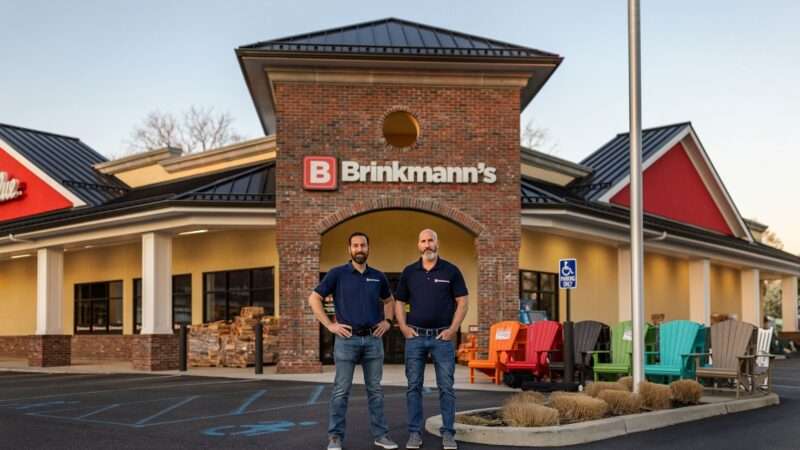
NY-Brinkmanns_Ben-and-Hank-Brinkmann_DF4A3167

In 2005, the United States Supreme Court ruled that it's constitutional for government officials to use eminent domain to steal private property and transfer it to other private parties if they think the change of ownership will further economic development. The Kelo decision proved to be wildly unpopular and sparked legal reforms intended to block the practice. Now, the courts have a fresh opportunity to get ahead of public outrage as a New York town seeks to use eminent domain not to promote economic development, but to block it entirely.

"Southold Town will pursue eminent domain proceedings to turn a vacant Mattituck lot into a park to prevent the location from becoming a hardware store," as Newsday summarized the dispute in September 2020. "The property owner and other critics of the proposal said the town should have moved on the land — which cost the owner $700,000 — before a development plan was in place and that using the condemnation process this way sets a bad precedent."

Southold officials' insistence on seizing the land for a park came after the Brinkmann family, which owns the parcel and plans to use it to expand their hardware chain, won a legal challenge to the town's several-times-extended moratorium on building permits in the area. The moratorium was one of several tactics—including a $30,000 fee for a "Market and Municipal Impact Study" paid the month before the moratorium was imposed—invoked by the town to block development as some members of the community sought to freeze Southold in time as a museum of its current condition.

In response to the proposed land grab, the Brinkmanns have teamed up with the Institute for Justice (IJ) to sue Southold.

"The town says it wants to take the land for a park—not because the town was planning for a park, but because that appears to be the only way to stop the Brinkmanns," IJ announced this week as the Brinkmanns filed a federal lawsuit. The complaint maintains that Southold's intention to build a "passive" (unimproved with no facilities) park on the targeted property is nothing more than a pretext for blocking the family's effort to use the property as a location for a hardware store.

"The Town did not contemplate a park, much less engage in any planning for a park on the Brinkmanns' property, until after they applied for a building permit, and after the Town had exhausted every other regulatory avenue in its attempt to stop the Brinkmanns from obtaining a building permit," according to the complaint. "The Town has made no effort to purchase a larger parcel next door that is for sale and equally suitable for a small park."

Southold did first offer to purchase the parcel—for a sum that would leave the Brinkmanns eating hundreds of thousands of dollars paid to architects, engineers, and the town itself. When rebuffed, officials moved to seize the property.

Needless to say, brandishing eminent domain to prevent economic activity is an even more tendentious interpretation of the Fifth Amendment's "public use" requirement than was the hope that politicians' chums might someday use parcels for more profitable ends than legitimate current owners at the heart of Kelo. As such, even courts accustomed to deferring to vague assurances from government officials might be pushed beyond the limits of their credulity.

"This extreme tactic would not only deprive the Brinkmanns of their property, but could also provide a model for other towns to similarly misuse eminent domain to prevent legal development of property," IJ adds. 

That's a serious warning about the risks of extending the use of eminent domain even beyond its dangerous application in Kelo as a tool of industrial policy. Given the opportunity, politicians are happy to put such power to all sorts of uses that cause more harm than good.

"In the years since Kelo, controversy over eminent domain abuse has expanded from 'economic development' and 'blight' condemnations to include such questions as pipeline takings, and Donald Trump's efforts to use eminent domain to build his border wall," George Mason University Law Professor and Volokh Conspiracy contributor Ilya Somin warned last summer. "While each of these situations raises some unique issues, all involve efforts by the government to seize private property for dubious purposes that are likely to destroy more economic and social value than they create."

All of those applications of eminent domain incidentally destroy more economic and social value than they create; Southold seeks to use the power to deliberately destroy, effectively turning it into a weapon of economic assassination. If causing intentional harm can be interpreted as a "public use" under the Fifth Amendment, it is difficult to imagine any limits to the government's power to seize private property. But malice isn't the only danger; regulatory uncertainty is also a risk.

"The town hasn't been able to find a legal way to stop our hardware store, so now they want to just take our land," Hank Brinkmann maintains. "From the beginning we've tried to fit into the community and follow the rules, but the rules keep shifting under our feet."

That's another reason to reject Southold's attempt to wield eminent domain as a barrier to private enterprise. Even if government officials aren't being overtly malicious, it becomes difficult to make plans and investments when the regulatory environment is an ever-morphing maze of rules that change based on personal whims and public pressure. If officials want a parcel for a specific use, or no use, they should purchase it when it is available. Otherwise, they need to respect the property rights that provide certainty for what people can and can't do with what belongs to them.

"It's very, very concerning," Paul Pawlowski, a local developer, told a public hearing when Southold officials floated the idea of eminent domain. "When you buy property or sell property, we all have to live by a playbook and that playbook is our town code." He added that the moratorium and use of eminent domain effectively "threw the playbook out."

Deliberately or incidentally, eminent domain does a lot of damage to people's property rights and their ability to plan for the future. It's long past time to place tighter limits on government land grabs, and to prevent them from becoming weapons for killing businesses that politicians don't like.

12 May 13:48

The FBI Seized Heirlooms, Coins, and Cash From Hundreds of Safe Deposit Boxes in Beverly Hills, Despite Knowing 'Some' Belonged to 'Honest Citizens'

by Eric Boehm
dreamstime_xl_13306534

Dagny discovered that the FBI had seized the contents of her safe deposit box—about $100,000 in gold and silver coins, some family heirlooms like a diamond necklace inherited from her late grandmother, and an engagement ring she'd promised to pass down to her daughter—almost by accident.

She'd been asked by a friend to recommend a convenient and secure location for keeping some valuables. Dagny searched Yelp to find the phone number for U.S. Private Vaults, a Beverly Hills facility where she'd rented a safe deposit box since 2017. That's when she saw the bad news.

"Permanently closed."

After a brief moment of panic, some phone calls, and several days, Dagny and her husband Howard (pseudonyms used at their request to maintain privacy during ongoing legal proceedings) figured out what happened. On March 22, the FBI had raided U.S. Private Vaults. The federal agents were armed with a warrant allowing them to seize property belonging to the company as part of a criminal investigation—and even though the warrant explicitly exempted the safe deposit boxes in the company's vaults, they were taken too. More than 800 were seized.

Howard tells Reason there was no attempt made by the FBI to contact him, his wife, or their heirs—despite the fact that contact information was taped to the top of their box. Six weeks later, the couple is still waiting for their property to be returned. (Both individuals are supporters of Reason Foundation, the nonprofit that publishes this website.)

The FBI and federal prosecutors have "no authority to continue holding the possessions of some 800 bystanders who are not alleged to have been involved in whatever USPV may have done wrong," Benjamin Gluck, a California attorney who is representing several of the people caught up in the FBI's raid of U.S. Private Vaults, tells Reason.

Legal efforts to force the FBI to return the items seized during the March 22 raid have so far been unsuccessful, but at least five lawsuits are pending in federal court.

A federal grand jury indicted U.S. Private Vaults (USPV) on counts of conspiracy to distribute drugs, launder money, and avoid mandatory deposit reporting requirements.

In legal filings, federal prosecutors have admitted that "some" of the company's customers were "honest citizens," but contend that "the majority of the box-holders are criminals who used USPV's anonymity to hide their ill-gotten wealth."

Whatever the original motivation for the raid, the FBI's seizure of hundreds of safe deposit boxes held by U.S. Private Vaults raises serious Fourth and Fifth Amendment issues. In order to have the contents of their boxes returned, federal authorities are asking owners to come forward, identify themselves, and describe their possessions. Some owners may be unwilling to do that—U.S. Private Vaults allowed anonymous rentals of safe-deposit boxes—while others may rightfully object to being subjected to the scrutiny of federal law enforcement when they have done nothing wrong.

"The constitution does not abide guilt by association," argues Robert Frommer, an attorney with the Institute for Justice, a libertarian law firm, in an op-ed published by The Orange County Register.

"What the government has done here is completely backward," writes Frommer. "The government cannot search every apartment in a building because the landlord is involved in a crime. After all, when somebody rents an apartment, that apartment is theirs."

Indeed, the unsealed warrant authorizing the raid of U.S. Private Vaults granted the FBI permission to seize the business's computers, money counters, security cameras, and "nests" of safe deposit boxes—the large steel frames that effectively act as bookshelves for the boxes themselves.

Importantly, the warrant "does not authorize a criminal search or seizure of the contents of the safe-deposit boxes," according to a copy of the warrant contained in court filings. The warrant also states that it "authorize[s] the seizure of the nests of the boxes themselves, not their contents."

But the FBI's own policies seem to have allowed a roundabout legal rationale for seizing the boxes as well. Agents are required to take into custody any property that could otherwise be stolen or left "in a dangerous manner" after carrying out a warrant. To put it in the context of a simpler situation: If the FBI seized a truck carrying cargo, it would not simply dump the cargo on the side of the road. Instead, there is a specific procedure for law enforcement to follow, which involves identifying and notifying rightful property owners, as well as securing the property.

In court filings, however, Gluck and other attorneys representing anonymous plaintiffs argue that the seizure of the nests "does not appear to be the government's true purpose here."

"A reasonable person could easily conclude that taking and searching the contents of the boxes was the true purpose of the USPV seizure, not just an unintended but unavoidable byproduct as the government seeks to portray and justify it," they write.

Now that the FBI has nearly 1,000 safe deposit boxes in its custody, anyone who comes forward to identify themselves and claim their possessions risks becoming the target of a criminal investigation. The U.S. Attorney's Office for the Central District of California told the Los Angeles Daily Journal, a legal industry publication, last month that "each box is being considered on a case-by-case basis, and we will investigate the boxes, or claims made on them" to determine if "the contents are related to criminal activity."

Attorneys for the plaintiffs argue that this amounts to an admission that prosecutors intend "to use any information gleaned in the claims process in order to conduct criminal investigations." U.S. Private Vaults had assured its customers that their anonymity would be protected, and people could have valid, non-criminal reasons for wanting to keep their identities a secret.

The rights violations are bad enough, but the FBI raid seems to have had serious procedural shortcomings as well. One 80-year-old woman represented by Gluck—and identified in court documents only as "Linda R."—may have lost a significant portion of her life savings due to what legal filings say are shoddy inventories of the safe deposit boxes' contents.

In a lawsuit filed on April 26, Linda R.'s attorneys argue that the FBI "failed to account for or return" 40 gold coins worth an estimated $75,000 that had been stored in a safe deposit box housed at U.S. Private Vaults. Department of Justice documentation detailing the contents of Linda's box makes note of "miscellaneous coins" without any specific amounts or other identification of the coins—Linda's attorneys note that the description could apply to everything from a pair of pennies to a box full of 1933 double eagle gold coins, some of the rarest and most valuable coins ever minted. For now, it remains unclear whether the government even possesses an accurate accounting of what was in her safe deposit box when it was seized.

Despite the broad claims of criminality from prosecutors, Linda has been charged with no crimes but may have lost tens of thousands of dollars of her retirement savings anyway. Even if the FBI's raid of U.S. Private Vaults eventually uncovers criminal activity relating to some of the safe-deposit boxes stored there, that hardly seems to justify the potential losses incurred by innocent bystanders like Linda, who kept her retirement savings there because she distrusted the banking system, according to court filings.

"It was improper that the government seized these possessions in the first place, unconscionable that they are using them as hostages to pressure owners to divulge private information, and outrageous that they apparently treated the possessions so carelessly that they seem to have lost at least some of them," Gluck tells Reason.

Jeffrey B. Isaacs, an attorney for another anonymous customer of U.S. Private Vaults—identified in court records as "James Poe"—tells the Los Angeles Times that the FBI's raid is "as illegal a search and seizure as I've ever seen."

For Dagny and Howard, the situation seems particularly cruel. They'd rented the box at U.S. Private Vaults after having their home burgled several years ago. They have the key and rental agreement for the box—and, Howard notes, they paid for the box with a credit card, hardly the sort of thing you'd do if you were trying to hide your identity from the feds or engage in criminal conduct. None of that has made a difference so far.

Because this time, the burglars wore badges.

10 May 14:39

Authors yank ketamine study, hoping it will go away without attention, and journal obliges

by Adam Marcus
The authors of a paper on the antidepressant effects of ketamine have retracted their article for a lack of reproducibility — but readers have no way of knowing that because the journal declined to say as much in the retraction notice. If that sounds like a tale from the pages of the Journal of Neuroscience, … Continue reading Authors yank ketamine study, hoping it will go away without attention, and journal obliges
09 May 19:34

U. Oklahoma Refuses to End Compelled Speech in Mandatory Diversity Training for Staff

by Mike LaChance

"required trainees to acknowledge their agreements with the university’s approved political viewpoints"

The post U. Oklahoma Refuses to End Compelled Speech in Mandatory Diversity Training for Staff first appeared on Le·gal In·sur·rec·tion.
09 May 17:07

HERE WE ARE: Calgary pastor Artur Pawlowski has been arrested for holding a church service

by Not the Bee
Jts5665

Canada strapping on the jackboots...

Remember the Polish-Canadian pastor who ran authorities out of his church and accused them of acting like the communists he grew up running from when they came for him a couple weeks ago?

09 May 17:03

DNA, genealogy website lead to arrest in 26-year-old Texas murder case

by Daniel Payne
Teacher had been sexually assaulted, drowned in her bathtub.
09 May 17:02

Washington Gov. Inslee Signs Bill Requiring Critical Race Training For Public School Teachers

by Jeff Reynolds
Jts5665

Mandatory racism in Washington...

"The legislature plans to continue the important work of dismantling institutional racism in public schools and recognizes the importance of increasing equity, diversity, inclusion, antiracism, and cultural competency training throughout the entire public school system...."

The post Washington Gov. Inslee Signs Bill Requiring Critical Race Training For Public School Teachers first appeared on Le·gal In·sur·rec·tion.
07 May 22:07

Business in 2021: Lots of Orders, No Employees, Rising Materials Costs

by admin

This is an excerpt from an email from one of my suppliers.  This is happening everywhere:

We are not a company that makes excuses as to quality or service. When things are beyond our control, we will not point fingers and say it's not our fault. However, the climate to conduct business is becoming more difficult daily.

...Employees were allowed to file for financial relief thus finding they could make more money sitting at home than working. The snowball effect started and is getting bigger.

Orders that were placed back in the fall are being filled at this time, 6 months later. Because of the shortage of materials some prices have almost doubled. I cannot tell my customers sorry I know we have an agreement for that however I now have to charge you this. We have honored our prices, we have not been able to honor our time of production to shipping because of circumstances beyond our control.

The list is endless of the domino effect in just about every industry in the country.

It is no accident that today we had a really week payroll report -- we have high unemployment, huge demand for labor, but no one wants to work as long as the government is writing checks to stay home and play Nintendo.  We're experiencing 1970's Swedish socialism, something that turned out to be such a mess that Sweden today is probably more free market in many ways than the US.

07 May 19:25

LIZARDS AND FLATWORMS CAN DO IT, SO WHY CAN’T WE? Persuading the Body to Regenerate Its Limbs. And…

by Glenn Reynolds

LIZARDS AND FLATWORMS CAN DO IT, SO WHY CAN’T WE? Persuading the Body to Regenerate Its Limbs. And no CRISPR needed: “The most astonishing part was that Levin hadn’t touched the planarian’s genome. Instead, he’d changed the electrical signals among the worm’s cells. Levin explained that, by altering this electric patterning, he’d revised the organism’s ‘memory’ of what it was supposed to look like. In essence, he’d reprogrammed the worm’s body—and, if he wanted to, he could switch it back.”

07 May 17:39

THAT ’70s SHOW: Media suddenly focused on inflation after massive spending spree in DC. Oddly, no o…

by Ed Driscoll

THAT ’70s SHOW: Media suddenly focused on inflation after massive spending spree in DC.

Oddly, no one’s talking about the six trillion dollars or so that Congress and the White House has spent off the books as part of the pandemic response. That’s essentially the same as printing money, and that has its own inflationary effects. But the conditions and incentives created by those massive spending bills have inflationary impacts of their own. Lawmakers are using those conditions to force an artificial increase in labor costs, which go directly to producer and consumer prices and inflation. Direct stimulus, a key part of all three relief bills, produces a “sugar high” of consumption that puts strain on supply, which results in — ta da! — price increases.

From Amity Shlaes’ recent book, Great Society: “Another expert safely out of reach of [Lyndon] Johnson, at the National Bureau of Economic Research, was Arthur Burns. [Alan] Greenspan was just one economist; Burns, who headed the NBER, was the voice of the entire economics profession, independent and proud. Back in the 1950s, he had warned that ‘the problems of inflation will return to haunt us.’ It had been Burns who back in 1960 had warned the presidential candidate Richard Nixon—correctly, as it turned out—that tight monetary policy at the Fed was slowing growth and could cost Nixon the election. Lately, Burns had been charging that Lyndon Johnson’s brand of prosperity featured serious ‘perils of inflation.’ Burns, like Greenspan, pointed to the costs of the butter, not the guns. To attribute the recent large increases in the budget, and certainly future increases, to the costs of war, Burns said, frankly, was ‘a misconception.’ The anti-poverty programs were the problem—a good share of them, as Burns told the New York Times, were ‘pure waste.’ Precisely because they were outsiders, Greenspan and Burns could speak truth to power. Johnson was trading in the Great Dollar for the Great Society, and it was a lousy trade.”

07 May 17:16

NOT THE BEE: These peeps are building a race-exclusive communist state in the Rockies and I wish the…

by Stephen Green
07 May 13:38

Michigan Gov Violated Her Own Travel Guidance to Take Private Plane to Florida

by Matt Palumbo
07 May 13:08

FREDO FUMBLES: Chris Cuomo declares if Matt Gaetz were a Democrat ‘He’d be a dead man on the lef…

by Ed Driscoll
06 May 13:50

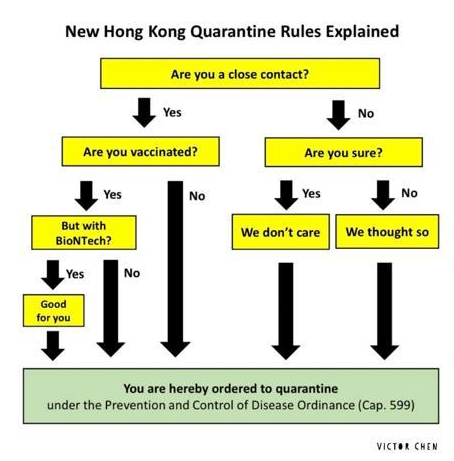
VACCINE MADNESS IN HONG KONG: A Hong Kong reader sends this: Take for example a residential buil…

by Glenn Reynolds

VACCINE MADNESS IN HONG KONG: A Hong Kong reader sends this:

Take for example a residential building in Hong Kong.
They found one case so they mandated a 21-day quarantine for every resident in the building.
Residents: “But we’ve taken the vaccine – both shots!”
HK Government: “We don’t care”.

So where is the incentive to take the vaccine?
Unless you are planning to travel, there is essentially zero motivation.

He’s prepared a helpful flow chart for navigating the system.

Not only does this remove the incentive to vaccinate, it provides a powerful incentive to avoid testing. But plenty of US jurisdictions would do this if they could get away with it, I expect.

05 May 23:20

GosFed Looming at the Fed?

by AIER

Economist Judy Shelton has a crackerjack column in tomorrow’s Wall Street Journal on the lack of intellectual and policy diversity at the Federal Reserve. She points out that during the entire term of Chairman Jerome Powell and his predecessor, Janet Yellen, not a single dissenting vote was recorded among the governors. It reminds us of the central bank of the Soviet Union.

Is that what we want — GosFed? That’s our jibe, not Ms. Shelton’s. It’s a play on Gosbank, for Gosudarstvenny Bank, the name of the Soviet central bank. It’s not our intention to suggest that our Fed or anyone associated with it is a communist. All the more mystifying, though, is the absence of dissent among GosFed governors, particularly when a new administration is readying vast new spending.

It “may surprise people to learn,” Ms. Shelton writes, “that not a single dissenting vote was cast by any member of the Fed’s Board of Governors throughout the eight monetary-policy meetings in 2020 and the three meetings held so far this year. The same is true for 2019, 2018, 2017, 2016, 2015 and 2014, covering Mr. Powell’s years as Fed chairman and the entire term of his predecessor, Janet Yellen.”

“No Fed governor,” Ms. Shelton adds, “cast a dissenting vote from the Fed chair at any monetary policy meeting held throughout that time.” Presidents of regional Fed banks have during this period done some dissenting in the open market committee, but no break by a Fed governor with the chairman has fetched up on our scope in recent years.

It’s all the more powerful a point if one considers the unprecedented growth of the Fed balance sheet, which is now something like $7.8 trillion. Most of the securities that make up that debt, even if acquired on the open market, are obligations of the government of which the Fed is a part. That, incidentally, is how GosBank worked. Ms. Shelton wrote a warning about that, too, and also in the Wall Street Journal.

That piece, issued in July 2012, was called “The Soviet Banking System — and Ours.” Ms. Shelton wrote that “[u]nder Soviet accounting practices, the true gap between concurrent revenues generated by the economy and the expenditures needed to sustain the nation was obscured by a phantom ‘plug’ figure that ostensibly reflected the working capital furnished by the Soviet central bank, Gosbank.”

That is, as she puts it at one point, “The Soviet central bank was making up for the difference between government revenues and government expenditures by creating empty credits to be disbursed by central-planning bureaucrats.” When Mikhail Gorbachev acceded to party boss in 1985, Ms. Shelton writes, the budget deficit the central bank was covering was more than 30% of total government expenditures.

Neither Ms. Shelton, as we read her pieces, nor we are suggesting the American economy is at quite that point or is false in the sense that the Soviet Union’s was. The system of having the Gosbank create money to fund the state, though, didn’t turn out so well. It’s getting harder by the year to see, as well, how the GosFed is going to come out whole in the end as well.

It’s maddening to see the Fed governors plunge down this road without recorded dissent. We made this point when the Democrats on the Senate Banking Committee were maneuvering to block Ms. Shelton’s nomination to a Fed governorship because she isn’t a “mainstream” economist. So did the Wall Street Journal. As did James Grant, who in 2016 wrote about a call by Democrats for more diversity at the Fed.

Mr. Grant, in his Interest Rate Observer, noted that what the solons — including, among others, Senators Bernie Sanders and Elizabeth Warren — wanted was diversity in race and gender on the mostly male and white Fed boards. Mr. Grant focused on “the kind of diversity that would leave the monetary establishment constructively rattled” — governors and economists who would question 21st century monetary dogma.

That question looms today at not only the Fed. We now have, in Janet Yellen, a former chairwoman of the Fed as Treasury Secretary. Dissent is also scant between the Fed and Treasury, as we launch these multi-trillion-dollar commitments. It’s easy to see why the comrades of Gosbank showed so little dissent. Say, or think, the wrong thing in the Soviet Union, and you risked a one-way ticket to Siberia. What in the world is GosFed’s excuse?

Reprinted with permission from The New York Sun

05 May 21:55

PAGING RON DESANTIS: Journalist Faces 20 Years in Prison for Investigating Corruption at Fla. Women’…

by Ed Driscoll
05 May 20:52

Federal Judge Throws Out CDC Eviction Moratorium

by Mary Chastain

"The question for the Court is a narrow one: Does the Public Health Service Act grant the CDC the legal authority to impose a nationwide eviction moratorium? It does not."

The post Federal Judge Throws Out CDC Eviction Moratorium first appeared on Le·gal In·sur·rec·tion.
05 May 17:20

A Fresh Look at High-Protein

by Mark Sisson

Young People Having Fun At Barbecue Party.Ten years ago, I ate a high protein diet. I regularly ate and recommended a gram of protein per pound of bodyweight. That meant I was putting down 160, 170 grams of protein a day myself.

Later, I moderated my protein intake and focused more on my fat intake, thinking that I’d be better off in the long term eating less protein and using my muscle mass, physical and mental performance, and overall vitality as a “signal” for when protein was too low. Researchers were looking at high protein intakes, noticing they could raise IGF-1 and trigger mTOR, which in some animal models have been linked to cancer and reduced longevity, and positing that lower protein intakes were healthier. I was never “low-protein,” but I certainly ate less than before. I will say that throughout all this time a major determinant of my protein intake was my instinctual hunger for it. When I ate a lot of protein, I did so because I desired it on a base, Primal level. When I ate less, I did so partly because of the research but also because I wasn’t as hungry for it (and my performance never indicated I was lacking).

But in recent years, I’ve been eating more protein again. In fact, I eat by most accounts a high-protein diet. Why? What changed?

I took a fresh look at the research.

I’m always researching. That’s the nature of my work here, and it never stops. As I read more into the protein/IGF-1/longevity connection, I became skeptical of the idea that protein is harmful because it “spikes IGF-1.” It turns out that elevating IGF-1 isn’t necessarily a bad thing; resistance training spikes IGF-1, and the beneficial effects of resistance training are largely dependent on the IGF-1 increase. It turns out that the majority of human research into IGF-1 and longevity shows either a positive relationship (higher IGF-1, longer lifespan) or a neutral one.8 Really low levels of IFG-1 are bad for longevity, while really high levels are linked to cancer—and even those relationships aren’t totally clear. If protein was spiking IGF-1, that might actually be a good thing. After all, the more protein an older person eats, the longer they live and the healthier they live.

The more I looked, the more the evidence for limiting protein seemed to fall apart. The more I realized it consisted almost entirely of myths and misconceptions.


I know meditation is good for me, but I don’t know how to start.

I’ve tried to meditate before, but my mind is too busy.

It sounds easy, but it feels hard.

Not sure what the hype is all about? Find out why millions of people have been meditating for thousands of years.

Meditate with us for 21 days, complete with video meditations, a tracker, and community support!


Common Myths about High Protein Diets

What are the most common myths and misconceptions about high protein diets?

High protein damages your kidneys

I’d already covered the myth that protein is bad for your kidneys. It’s not, it’s actually good for them, and it protects against many of the maladies that do increase your risk of incurring kidney disease. While an unhealthy kidney may have to limit protein, a healthy kidney will not.

High protein creates toxic gut metabolites

Another popular trope was that protein fermentation in the gut creates toxic “fecal water” that has carcinogenic effects. Eating more protein than you could digest was supposed to trigger protein fermentation, which would lead to toxic fecal water and colon cancer. Also false: studies show that while high protein diets can increase protein fermentation, they do not increase fecal water carcinogenicity and may actually decrease cytotoxicity.9

High protein destroys your bones

Another myth is that protein “leaches” calcium from your bones and causes osteoporosis. The opposite is actually true. Human research consistently finds that higher protein intakes protect against osteoporosis, improve healing after bone injuries, and help prevent falls and fractures in older adults.10


Turn up your grilling game with Primal Kitchen® Buffalo Sauce, Hawaiian BBQ Sauce, Steak Sauce, No Soy Teriyaki and more! 


High protein converts to sugar

Several years back, you could hear people say that eating extra protein is “just like eating chocolate cake.” They were wrong.  Gluconeogenesis—the creation of glucose from protein—is demand driven, not substrate driven. Your body will only convert protein into glucose when it needs the glucose. It will not turn protein into glucose just because it’s laying around and available. One study even found that eating 160 grams of protein in a single meal had no effect on blood glucose levels.11 If anything, high protein diets will improve blood glucose control.12

So if high protein diets don’t decrease longevity (and maybe even increase it), don’t damage healthy kidneys, don’t give you colon cancer, and don’t worsen blood glucose levels, is there even a good argument against them?

The thing about the arguments against high-protein diets is that they were always theoretical. The supposed consequences of eating more protein were off in the distance, yet to be realized, but “they just had to be true.” You could never pin them down. They were based on some plausible mechanisms whose plausibility crumbled as time wore on. They never materialized.

Nor did the supposed benefits of low-protein diets ever appear. On the contrary, low protein diets have been shown to have unabashedly negative effects. Low-protein diets:

  • Slow the metabolism, increase insulin resistance, and cause body fat gain.13
  • Impair the immune system and make infections more severe.14
  • Reduce muscle function, cellular mass (yes, the actual mass of the cell itself), and immune response in elderly women.15
  • Impair nitrogen balance in athletes.16
  • Increase the risk of osteoporosis.17
  • Increase the risk of sarcopenia (muscle wasting).18

Those are proven effects. Those are realized consequences.

The Benefits of High-Protein Diets

Meanwhile, pretty much all the research we have on high-protein intakes finds or suggests benefits.

Less hunger

Of all the macronutrients, protein increases satiation the most.19 This means a low-carb diet replete in protein can help control your appetite naturally—without you even trying. You just aren’t as hungry, and that makes it much easier to control calorie intake.

Lean mass retention during dieting

Weight loss from dieting is often non-specific. People lose muscle as often as they lose body fat. But with extra protein in the diet, you’re more likely to lose body fat and retain muscle mass during weight loss. In women, for example, a low-calorie, high-protein diet was better than a conventional high-carb, low-fat diet at promoting lean mass retention, even in the absence of exercise.20

Better cognitive aging

In older adults, high protein intake in excess of calories was the only macronutrient that was not associated with dementia. Those who ate excess amounts of fat and carbohydrate were at greater risk of dementia, while those who ate “excess” protein were not.21

Good safety profile

We know that athletes eating up to 3.3 grams of protein per kg of bodyweight each day for over a year have no negative effects and only positive ones.22 Lean mass increased, fat mass decreased. Kidney and liver function were fine. Blood lipids were good. Now, you could say that “a year of high protein dieting isn’t enough to show all the negative effects,” but you’d be pontificating about the future again. About unrealized potentialities. “Just you wait!”

There are caveats, of course.

High protein should always be paired with physical activity. Throughout human history, you couldn’t get protein without working for it. Meat and physical exertion have always been linked. You expend energy, engage your muscle fibers, obtain meat, eat the meat, activate muscle protein synthesis. It’s the same cycle. Only today, you can divest from that relationship. You can step out of the cycle. You can have a delivery guy drop off a crate of frozen steaks. You can stumble into the kitchen and whisk 40 grams of whey isolate into your water. It takes no physical effort, and that’s going to have ramifications.

One potential ramification of inadequate strength training is the buildup of ammonia, a toxic metabolite of protein digestion that we normally clear by converting to urea and expelling through the urine. If we “overload” the system, the ammonia may linger and cause health issues like brain fog. Resistance training has been shown to reduce serum ammonia in rats. They tied weights to their tails and had them climb ladders—the rat equivalent of lifting weights—and found that it reduced serum ammonia.23 If this holds true in people, then resistance training increases your protein “ceiling” by improving ammonia clearance and urea metabolism.

So make sure you’re lifting heavy things and moving around frequently—these activities increase your “protein ceiling.”

Another factor that increases your protein ceiling is dieting. The more calories you cut, the more likely your body is to start catabolizing muscle tissue. Eating a high-protein diet can mitigate this effect and stave off muscle loss.

And then there’s bed rest and injuries: both increase the amount of protein you should be eating. If you’re on bed rest or recovering from an injury or illness and can’t exactly make it to the gym, you should still eat extra protein to stave off lean mass attrition and improve healing. The binding principle is “protein ceiling.” Anything you can do to increase that protein ceiling and increase your “need” for protein, whether it’s physical activity or calorie restriction or injuries that require more healing, will make higher protein intakes safer and more effective.

Provided you get adequate physical activity, eat a nutrient-dense diet, and have good kidney health, there’s no reason not to try eating more protein if it appeals to you. The results may pleasantly surprise you—especially if you’re trying to lose weight and retain (or gain) lean mass.

What’s your protein intake like these days? How much protein do you eat?

No-Soy_Island_Teriyaki_640x80

References

  1. https://ask.usda.gov/s/article/Is-butter-safe-at-room-temperature
  2. https://www.ncbi.nlm.nih.gov/pmc/articles/PMC3946160/
  3. https://journals.physiology.org/doi/full/10.1152/physrev.2000.80.3.1055
  4. https://sitn.hms.harvard.edu/flash/2019/neuroscience-thirst-brain-tells-look-water/
  5. https://www.abc.net.au/health/thepulse/stories/2005/09/15/1460760.htm
  6. https://journals.physiology.org/doi/full/10.1152/ajpregu.00365.2002
  7. https://www.inc.com/jessica-stillman/5-ways-youre-making-life-harder-than-it-has-to-be.html
  8. https://press.endocrine.org/doi/full/10.1210/jc.2011-1377
  9. https://www.ncbi.nlm.nih.gov/pubmed/23285019
  10. https://pubmed.ncbi.nlm.nih.gov/22139564/
  11. https://www.ncbi.nlm.nih.gov/pubmed/16694439?dopt=Abstract
  12. https://diabetes.diabetesjournals.org/content/53/9/2375
  13. https://www.ncbi.nlm.nih.gov/pubmed/24599936
  14. https://www.ncbi.nlm.nih.gov/pubmed/24586759
  15. https://www.ncbi.nlm.nih.gov/pubmed/7598064
  16. https://www.ncbi.nlm.nih.gov/pubmed/16546481
  17. https://www.ncbi.nlm.nih.gov/pubmed/14609312
  18. https://www.ncbi.nlm.nih.gov/pubmed/24163319
  19. https://www.ncbi.nlm.nih.gov/pubmed/7498104
  20. https://www.ncbi.nlm.nih.gov/pubmed/17622289
  21. https://pubmed.ncbi.nlm.nih.gov/33233612/
  22. https://pubmed.ncbi.nlm.nih.gov/27807480/
  23. https://pubmed.ncbi.nlm.nih.gov/30394651/

The post A Fresh Look at High-Protein appeared first on Mark's Daily Apple.

05 May 15:35

THE TECH LORDS GET ALONG WITH THE POLITICAL CLASS BECAUSE BOTH ARE DEATHLY AFRAID PEOPLE WILL FIGURE…

by Glenn Reynolds

THE TECH LORDS GET ALONG WITH THE POLITICAL CLASS BECAUSE BOTH ARE DEATHLY AFRAID PEOPLE WILL FIGURE OUT WHAT’S BEING DONE TO THEM: Signal Tries to Run the Most Honest Facebook Ad Campaign Ever, Immediately Gets Banned. “Based on this kind of minute data, Signal was able to create some super-targeted ads that were branded with the exact targeting specs that Signal used. If an ad was targeted towards K-pop fans, the ad said so. If the ad was targeted towards a single person, the ad said so. And if the ad was targeted towards London-based divorcees with degrees in art history, the ad said so.”

05 May 00:00

Cops show up to Nova Scotia restaurant to investigate reported lockdown violation, but it turns out it was just a mannequin sitting at a table lol

by Not the Bee
Jts5665

More mannequins!

Covid lockdowns in Canada are getting pretty strict lately. And apparently, so are the Karens.

04 May 22:38

Well, It Worked For Bypassing the First Amendment

by admin

CNN: Biden Admin Wants to Outsource Spying on Americans to Private Firms to Bypass Fourth Amendment

The Biden administration is considering using private firms to track the online activity of American citizens in order to get around the Fourth Amendment and other laws that protect Americans from unreasonable searches and seizures and surveillance. The report says that the Biden administration wants to monitor “extremist chatter by Americans online” but can’t do so without a warrant, and thinks private firms can get around the legal restrictions.

04 May 15:20

Vaccine info site: CENSORED

by Sharyl Attkisson
The following is a news analysis. The highly-regarded National Vaccine Information Center (NVIC) says it has been de-platformed by Facebook and Instagram, as those working in the interest of the pharmaceutical industry further clamp down on open online access to important medical information. Rational thinking and freedom of speech about vaccination and public health laws […]
03 May 23:01

“The” Science Is Coming for You Again!

by Robert E. Wright

I was recently driving east from Omaha for sixteen hours and there was nothing much to do so I let the radio linger on a “public news” show that consisted of two rational-sounding adults discussing how “the” science is now clear, the government must ban the production and sale of menthol cigarettes.

In 2019, I would have busted out laughing but now that America’s authoritarians have so clearly revealed their cloven hooves I figured I better pay close attention. I have never smoked and all my friends and relatives who did are now dead (none from smoking-related illnesses interestingly enough) so the matter interests me only as an example of the use and abuse of state power and the rhetoric of science.

According to the discussants, one of whom apparently is funded by the Kochs (who pay federal taxes), the Food and Drug Administration (FDA) wants to ban all “combusted” tobacco products but it is statutorily banned from eliminating an entire class of goods, so for now it is targeting just menthols and flavored cigars.

Before I could muse too deeply about that logical solecism, the Koch-funded guy said the ban was specifically designed to help African-Americans as four out of five of the smokers among that group prefer menthols. The host pushed back modestly, suggesting that menthols could become the new marijuana, i.e., the excuse to accost, arrest, and convict African-Americans for possessing or dealing something that should never have been illegal in the first place. Oh, the G-man said, law enforcement would never do that. The ban, he claimed, presumably with a straight face (but again it was radio so …), is all about stopping production.

Okay, let’s think this through. A ban will not appreciably diminish demand and in fact may increase it because, you know, people be people. And while there is no doubt that the FDA can crack down on mass manufacturing, it is almost powerless to stop smaller scale production. A ban will increase production costs and prices for African-American smokers and cause some to be hurt by botched illegal batches.

After all, tobacco would still be legal so nothing could be done about growing, processing, or shipping it. Tobacco turns menthol by adding synthetic chemicals, all legal for other purposes like mouthwash, or oil made from mint plants (Mentha arvensis), which can be farmed but also naturally grows throughout temperate Eurasia and North America. Even with concerted human effort to eradicate it, mint will go extinct the same time cockroaches and sharks do.

Because some mathematicians now claim that one plus one does not equal two, let me explain what those facts mean in the real world that policymakers, of all people, are supposed to inhabit. Anyone can easily make menthol cigarettes. In fact, entrepreneurs right now are probably planning on making menthol conversion kits that will allow smokers to soak legal tobacco in mint oil, dry it, and roll it by machine (here is an example of the last mentioned technology if you are unfamiliar), for self-consumption or under the table sale.

So to effectively ban menthol cigarettes, the FDA will have to ban tobacco entirely, something it has admitted is not in its power to do. Or it would have to destroy the environments in which mint grows naturally throughout the world and ban all possible chemical substitutes and their constituent parts. This is why liberty lovers always warn about the “slippery slope” of regulatory authoritarianism. Effectively banning just one simple thing usually requires widespread repression.

The racial component of the FDA’s argument is extremely troubling. Too much of anything, even water, can be harmful. (No joke, it is called water toxemia among other things.) Apparently, nothing could stop the FDA from banning monosodium glutamate (MSG), matzo balls, Buffalo wings, or anything else. All it needs to do is to find “scientists” willing to publish studies showing such things to be harmful — and again everything, even MSG, is harmful to some extent — while carefully parsing the category so as not to include all sodium salts, dumplings, or chicken wings.

But the FDA would never have an incentive to ban such things, you might think. Well, what motivation, other than paternalistic control over others, does it have for banning menthol smokes and cherry blunts? Whatever happened to our bodies, our choice? Where does the government think that its power ends? How many Americans agree with that line? What is to become of those who disagree, who still believe in freedom and individual responsibility? Banishment? Reservations? Soft execution by forcing them to smoke seized menthols?

There exists only one thing that needs to be banned that I can think of — big, intrusive government.

28 Apr 23:41

UNEXPECTEDLY: ‘Socialist’ Seattle City Councilmembers Are Now Worth Millions, New Financial Disc…

by Ed Driscoll

UNEXPECTEDLY: ‘Socialist’ Seattle City Councilmembers Are Now Worth Millions, New Financial Disclosures Show.

Flashback: “In a famous Soviet joke, then-leader Leonid Brezhnev shows his mother his luxury apartment, his limousine, his fancy country house and his helicopter only to have her object: ‘But what if the communists come back?’”

28 Apr 13:16

HMM: ‘Universal’ coronavirus vaccine may protect against variants, common cold. “The vaccine targets…

by Glenn Reynolds

HMM: ‘Universal’ coronavirus vaccine may protect against variants, common cold. “The vaccine targets a part of the COVID-19 virus’ spike protein that appears to be highly resistant to mutation and is common across nearly all coronaviruses, said senior researcher Dr. Steven Zeichner. He is a professor of pediatric infectious disease with the University of Virginia, in Charlottesville. In animal studies, the COVID-19 vaccine protected pigs against two separate diseases caused by two types of coronavirus, COVID-19 and porcine epidemic diarrhea virus, or PEDV, according to results published online recently in the Proceedings of the National Academy of Sciences.”

27 Apr 22:50

BUT HEY, IT’S ENRICHING TRIAL LAWYERS: American’s War on Pain Pills Is Killing Addicts and Leaving P…

by John Tierney

BUT HEY, IT’S ENRICHING TRIAL LAWYERS: American’s War on Pain Pills Is Killing Addicts and Leaving Patients in Agony. The government’s efforts to get between people and the drugs they want have no prevented drug use, but they have made it more dangerous.

27 Apr 13:38

USA Today Stealth Edits Stacey Abrams Op-Ed to Downplay Her Support for Boycotts

by Matt Palumbo
26 Apr 18:29

I HAD MISSED THIS SAVAGERY FROM THE BEE: In Closing Argument, Prosecutor Tearfully Addresses Each J…

by Glenn Reynolds

I HAD MISSED THIS SAVAGERY FROM THE BEE: In Closing Argument, Prosecutor Tearfully Addresses Each Juror By Name, Phone Number, And Street Address.

Like much of the Bee’s satire, it’s sadly on-point.

26 Apr 16:38

SUPREME COURT FINALLY GRANTS CERT IN SECOND AMENDMENT CASE, but rewrites the question presented. “I…

by Glenn Reynolds

SUPREME COURT FINALLY GRANTS CERT IN SECOND AMENDMENT CASE, but rewrites the question presented. “I see this slippery change as a way for the Court to issue a very, very narrow decision that will leave the issue unsettled.”

It speaks poorly of the Supreme Court that “slippery” describes its treatment of an important constitutional right, one with its own dedicated provision in the Bill of Rights.

UPDATE: An update to the linked post reminds me that they did the same change with Heller. So there’s that.

25 Apr 13:27

Covid: Prior infection vs vaccination

by Sebastian Rushworth, M.D.

Ever since the beginning of the covid pandemic, one of the big topics of discussion has been whether infection results in lasting immunity. Since the advent of the vaccines, that has expanded in to a discussion about whether prior infection or vaccination provides a higher degree of immunity.

Back in December, I wrote about a study that showed that 90% of people who get covid Read more

The post Covid: Prior infection vs vaccination appeared first on Sebastian Rushworth M.D..