The latest FAA rules on UAVs are so broad that they class adorable toy quadcopters as drones and require special permits to operate them. Meanwhile, hot air balloons and unpiloted model aircraft are fair game for unlicensed play. The drone hobbyists are pissed:
Read the rest
Nigerian terrorist group Boko Haram, known for kidnapping hundreds of school girls, are fleeing their forest hideouts to escape "mystical bees" and "mysterious snakes" that are physical manifestations of the people they have killed. Read the rest
It was early in the morning on the 1st of May 1832 in New York City. The ordinarily gentle horse-drawn traffic of the up-and-coming metropolis seemed a bit more dense than usual, and as the morning progressed the avenues and boulevards became increasingly crowded. At 9:00am, almost as if on cue, thousands of doors on thousands of buildings burst open to vomit humans, furniture, and other sundries out into the bright morning sun. Within moments the streets of New York were a jangling amorphous pandemonium.
English author Frances Trollope happened to be in New York City to witness this peculiar spectacle:
On the 1st of May the city of New York has the appearance of sending off a population flying from the plague, or of a town which had surrendered on condition of carrying away all their goods and chattels. Rich furniture and ragged furniture, carts, wagons, and drays, ropes, canvas, and straw, packers, porters, and draymen, white, yellow, and black, occupy the streets from east to west, from north to south, on this day.
All over New York, tenants along with their belongings abandoned their abodes to criss-cross the city in mass migration to fresh dwellings. This was Moving Day. Owing to a quirk in New York law, nearly all rental contracts expired every year on May 1st at 9:00 AM, resulting in the simultaneous relocation of a multitude of persons and property. For over a century, from colonial times until shortly after the Second World War, it was the custom for the city to spend every May 1st as a scarcely navigable morass of humans, carts, and livestock.
We here at Damn Interesting headquarters (i.e., my residence) have recently performed our own interpretation of Moving Day, having spent an exhausting morning, noon, and night shuttling furniture, appliances, and corrugated cardboard cubes from one structure to another. The preceding packing and subsequent reorganizing have unavoidably disrupted our normally abnormal posting schedule. Next week, however, our jangling amorphous pandemonium will be over, and we shall be back to posting new articles.
I recently received an email from an author asking me if I would write a post about why we need a public domain. Specifically, the questioner asked me why some things pass into the public domain while others do not; his example was that if you write a song, it eventually becomes PD, but if you make a chair you can keep it forever and “continue to draw enjoyment from it.”
It is understandable that the public domain is a source of annoyance and bewilderment to many creators. Their creations often seem like their children, and the expiration of copyright like an act of snatching those children away. My correspondent suggested that more people do not challenge the public domain “because everyone likes free.” But as I hope to suggest in this public answer to the question, the public domain is not free at all; it is purchased at the price of the copyright monopoly. The two things are different sides of the same coin. Were it not for the state-granted exclusive rights in copyright, there would be no need for the public domain. And we can imagine such a social arrangement; I just do not believe that most creators would think of it as an improvement.
We can begin with a deceptively simple question: Why is a chair different from a song? There are two reasons that matter here, I think. The first is that the song is intangible, which means that it is, in economic terms, “non-rivalrous.” and non-exclusive. That is a fancy way of saying that multiple people can possess an intangible good at the same time. George Bernard Shaw is credited with having expressed this truth succinctly:
If you have an apple and I have an apple and we exchange these apples then you and I will still each have one apple. But if you have an idea and I have an idea and we exchanges these ideas, then each of us will have two ideas.
Obviously I can sing a favorite song without depriving anyone else of that pleasure, just as books can be printed in multiple copies so that many people can enjoy the same work without disturbing each others’ enjoyment. Only one person can sit in a chair at the same time, however (usually, at least).
The other difference is that a chair, as a piece of tangible property, is bought and sold on a basically unregulated market. The chair maker sells her creation to whomever she can find, and once she does so, she surrenders control of it entirely. If another carpenter wants to copy it, he can do so and try to sell his copies. If he charges less, the competition will benefit chair buyers but not chair makers, since it will probably drive prices down. That is simply the chance one takes in a free market.
The market for intangible goods is not a free market, however. It is controlled by a state-granted monopoly called copyright. That is, the state gives a copyright holder rights that makers of other types of goods do not get. The most obvious one is protection against copying. The chair maker takes her chances in an open market, but the song writer benefits from a protected market that virtually eliminates competition for the goods he wants to sell. No one is allowed to make copies of his song and sell it for less, or to perform it in public without his permission, and those prohibitions are enforced by our courts. The reason for this is the fear that if intangible property were subject to a free market, it would be too easy to make copies of songs or books or movies and sell them for less, just as carpenters are allowed to do. This would be good for consumers, of course, because it would lower prices, but it is felt that it would so reduce the incentive for creators to create that we would suffer a shortage of poems and songs and films. Thus we give extra rights — rights that come with a social cost — to people who create intangible goods, and we call those rights “copyright.”
There is a clear relationship between these extra rights we give to copyright holders, that other creators and sellers of goods do not have, and the need for a public domain. Imagine for a minute that we gave similar protection against copying to chair makers. Eventually the ability to make a new chair would evaporate, since all of the possible designs that could serve the chair function would have been done by others, and all new chairs would be infringing. How could we solve this problem? By declaring that after a certain period of time — a period long enough for the chair maker to profit from his creation — older chairs would become free for others to imitate. This “public domain” for chairs would be required to keep up the supply of places to sit, if we decided to grant a state-enforced monopoly in chair design similar to copyright.
So the public domain is a required part of a system that allows creators to have monopoly control. It reduces the social cost of the monopoly by allowing less expensive editions of books or songs after that period during which an author or songwriter has the opportunity to make a profit. Remember that a chair maker can profit only once, when she sells the chair she has made. She must keep making chairs if she is to sustain a living. An author, on the other hand is allowed to profit exclusively during his entire lifetime for writing just one book, and even to pass that exclusive right to make a profit on to his children and, probably, grandchildren (based on a copyright term of life of the author plus seventy years). This obviously has a social cost; would J.D. Salenger have written more great novels if he had not been able to make a fortune over the 6o years of his life after Catcher in the Rye from sales of just that one book?
The most onerous cost of the copyright monopoly would be this potential reduction in new creativity. The creation of new works depends in so many cases on building upon things that have gone before. Shakespeare copied freely from earlier sources, just as George Harrison copied, albeit unconsciously, when he wrote “My Sweet Lord.” New intellectual property is always created “standing on the shoulders of giants,” and the public domain is a way to ensure that the copyright monopoly does not become a check on new creation rather than the incentive it is supposed to be. This is why the Constitution, in the clause that authorizes Congress to grant a copyright monopoly, stipulates that that monopoly be “for a limited time.” The public domain is a required part of the social and legal system of copyright protection.
As I said at the beginning, it is possible to imagine an alternative social system. Suppose we decided that we wanted neither exclusive rights (the copyright monopoly) nor the public domain. Instead, as a society we decided that authors and songwriters should be on the same footing as carpenters and everyone else who created tangible goods; all should compete on an equal footing in a free market. In the short term, this might be good for consumers. Songwriters would have to sell their songs once for the most money they could get, since their ability to make continuing profits over time would diminish. Companies and consumers would then be free to either share the song freely or undercut the sale price of competitors, so it would be easier and cheaper to obtain music, and the threat of litigation over sharing would vanish. In the long term term, it is hard to say whether this would be beneficial or harmful. The conventional wisdom is that creators would stop creating because they could not make a living. But maybe they would become more like carpenters, depending for continuing income on continuous creation. If that happened, society would benefit from more creation instead of less. As for the public domain, without the exclusive rights in copyright, society would not suffer the same costs and therefore would not need the same bargain that results in the public domain. And creators would be in the same situation, again, as chair makers; they could enjoy their creation in perpetuity, as long as they decided not to sell it. But, like the chair, once the song was sold it would be beyond the creators control forever.
I doubt that this scenario appeals to many creators. But I hope it helps illustrate why copyright and the public domain are inseparable concepts; they go together, as the old song says, like love and marriage.
Because I am on vacation this week and have very intermittent Internet access, I am hardly the first to announce that the Second Circuit Court of Appeals affirmed the lower court decision (mostly) in the Authors Guild v. HathiTrust lawsuit. I am a bit paranoid about major decisions coming down on days when I am out of touch, but that is another matter. The important point is that the decision is another important win for libraries and fair use, brought to us by the foolishly litigious Authors Guild. It is the first of three major appeals in fair use cases that academic libraries should be watching carefully, and it may help cause a domino effect in those other two (the Georgia State and Google Books cases).
This potential for impact on decisions currently being written by other judges is increased by the fact that the Second Circuit, in discussing transformation as a major element in fair use deliberately cited precedents from its own previous cases, but also cases from the Ninth Circuit and two other Circuit Courts of Appeal. The judges seem to be deliberately rejecting the idea that the circuits are split about transformative fair use.
This decision is very good news for libraries, and the ARL Public Policy Notes description of the decision is well worth reading. But for all its positives, it has to be admitted that there are some oddities in this decision.
Basically, the Court did three different things in this decision:
It affirmed the lower court ruling that the Authors Guild did not have standing – the right to bring the lawsuit – of behalf of its members. Another reminder of the oft-repeated rule that only a rights holder may sue to defend those rights, and associations that claim to represent rights holders but do not own any rights are not proper plaintiffs. A simple lesson the Authors Guild declines to learn.
The court also affirmed that mass digitization for the purpose of creating a searchable index of full-text materials, as well as to provide access to those materials for persons with disabilities, is fair use. There is a lot of language in this opinion that reinforces the ARL Code of Best Practices for Fair Use in Academic Libraries.
Finally, the judges remanded the case back to the lower court in regard to its opinion about fair use for preservation. This is one of the oddities in the decision, so let’s address that one first.
The oddity about this remand is that it does not actually question the conclusion that digitization for preservation can be fair use. Instead, the Court sent this portion of the case back to the lower court to decide if there was any plaintiff remaining in the case, once it was determined that the AG lacked standing, who was at any real risk of having a preservation copy of their book released by HathiTrust while there were still copies commercially available. In short, The Court of Appeals suggested that any ruling about fair use might have been premature because there was no plaintiff in a legally-recognizable position to raise the challenge. It is still entirely possible that, if such a plaintiff is found in the remaining group of named authors, fair use could nevertheless be affirmed. And, because of the rest of the ruling, it would be hard to see what difference even a ruling against fair use for preservation would make to the actual practice of the HathiTrust. So this was really a technicality, and quite strange.
By the way, in regard to the key argument raised by the Authors Guild that the library-specific exception in section 108 precludes libraries from relying on fair use, the court paid almost no attention. It dismissed this silly argument in a footnote (footnote 4 on page 13). This was a losing argument from the start, and the reliance placed on it by the AG shows just how out of touch they are in their approach to copyright.
I think three points are important about the fair use decision favoring HathiTrust in this case (the factor-by-factor analysis is handled well in the ARL post).
First, the Second Circuit accepted the same broad approach to the issue of transformation as has become common in other decisions. It is not just actual changes to the original work that can support a finding of transformation, but a “different purpose… new expression, meaning or message.” And, as I said, the Court appealed to a broad consensus across the country in defining transformation this way.
Second, the Second Circuit held that the lower court was wrong to find that digitization for the purpose of facilitating access for persons with visual or print disabilities was transformative, but found that it was fair use nevertheless. This is important, because in the Georgia State appeal the plaintiffs are arguing that because Judge Evans found that copying for electronic reserves was not transformative, she was in error to still find fair use. But in the HathiTrust case the Second Circuit recognizes what is there for all who read Supreme Court opinions to see, that when a use is transformative it is very likely to be fair use, but when it is not transformative, it can still be fair use if a careful analysis of the factors indicates that conclusion. That is what the Second Circuit finds in regard to HathiTrust and its copies for the disabled, and it is what Judge Evans found in GSU. Both were correct decisions in keeping with the clear precedent from the Supreme Court.
Finally, there is the oddity of the Second Circuit panel’s treatment of the fourth fair use factor when it is analyzing the indexing function of HathiTrust. First, the appellate panel calls the fourth factor the most important consideration, and cites the case of Harper & Row v. The Nation for that proposition. But the Supreme Court really renounced that position 20 years ago in the “Oh Pretty Woman” case, so this is the first part of the oddity. The Second Circuit then goes on to define the idea of market harm very narrowly, saying that the only harm to a market that is recognized for the purpose of the fourth fair use factor is when “the secondary use serves as a substitute for the original work.” This seems to be how the court aligns itself with the ruling in “Pretty Woman,” but it is a strange way to get there. The effect of this proposition is to rule out consideration of almost all licensing markets when looking at the fourth factor. This is a conclusion that must be causing serious heartburn in the publishing community. While the Authors Guild continues to make fair use easier and more inclusive with their absurd litigation campaign, they cannot be winning themselves many friends amongst rights holders.
The bottom line is that this decision is very good for libraries and others who depend on fair use. It adds another precedent and some additional bits of analysis to our claims of fair use. But we should recognize that it grows out of what was a very dumb lawsuit to begin with. As is so often the case, we should be emboldened by this ruling, but not too much. The best protection the library community has against aggressive litigation is still, as it always has been, careful and responsible reflection. In that context, fair use is an increasingly safe option for us.
A couple of years ago, we featured the “Teak Cabinet of Curiosity”, a sewing box with some unusual swinging drawers.
Since then, that model or similar — always without a design or maker credit — has made several appearances on eBay, both in Europe and the U.S. So it’s not very rare, but I’m still quite enamored with it. However, many people need more space, so here’s the benefits of renting a storage as a family to keep your belongings safe all times.
Go ahead and visit website Super Easy Storage for storage options. Save time and money with our convenient mobile storage service and claim one month of free storage!
Since then I’ve run across several other types of mid-century sewing boxes, each with its own clever way to store and reveal its contents, be they needles and string, or paints and brushes. Here are three favorites.
Red Felt Box — Delicate and unique. I haven’t seen anything quite like this one.
Jennifer Urban sez, "I'm happy to say that the Samuelson Clinic at Berkeley has just released a handbook to help folks research whether older items (pre-1978) are still under copyright in the U.S., or are in the public domain." This is probably the most esoteric question that normal people from all walks of life have to answer routinely; the Samuelson Clinic has really done an important public service here.
Interestingly the project originated with the Student Nonviolent Coordinating Committee Legacy Project, "a nonprofit organization run by civil rights movement veterans that is creating a digital archive of historical materials."
Read the rest
Wallethub compared the direct and indirect federal subsidy to all 50 states and DC by comparing federal taxes remitted; federal funding as a fraction of state revenue; and number of federal jobs per capita and produced a ranked list of the states with the greatest federal dependency. Unsurprisingly, the top ten are overwhelmingly Republican dominated "red" states with low state taxes and low average per-capita incomes thanks to harsh labor laws -- these states necessarily depend on federal money to make up the shortfall from their own politically expedient tax-holidays, and lack the robust middle-class who pay the largest percentage of their income in tax.
The top ten in order of dependency are Mississippi, New Mexico, Alabama, Louisiana, Maine, Montana, Tennessee, South Dakota and Arizona. The five states most independent of federal subsidy are (in order): Delaware, Illinois, Minnesota, New Jersey, and Connecticut.
The article is good and full of interesting footnotes -- for example, Delaware's seeming independence is largely illusory, an artifact of its stock franchise tax drawn from out-of-state companies.
Read the rest
Kawasaki's Warehouse arcade, near Yokohama, is a fantastically detailed, gritty recreation of the old walled city of Kowloon, near Hong Kong. The Tokyo Times photos depict a place that's like a fevered Gibson dream, and note that there's an accompanying, spooky soundscape. This is going on my must-see list for our next Japan trip.
Read the rest
Robbo sez, "The WGA (Writers Guild of America West) has stepped into the fray over the FCC's proposed non-Net Neutrality rules with over 240 members (show runners, creators & writers alike) signing a letter urging FCC Chairman Tom Wheeler to protect a free and open internet and not let it become like cable television. While the larger tech companies like Google, Facebook, Microsoft, Mozilla and others have also publicly expressed their concerns over FCC proposals to create a two-tiered approach to Internet access there has been little if any outcry from any major players in the Hollywood industry - until now."
Read the rest
Following on from yesterday's brutal, awful news that Mozilla is going to add DRM to its Firefox browser, the Electronic Frontier Foundation's Danny O'Brien has published an important editorial explaining how Mozilla's decision sets back the whole cause of fighting for a free and open Internet.
Read the rest
The New Yorker says, "I thought you would be interested in Lizzie Widdicombe's piece in this week's issue of The New Yorker, in which she meets the founder of Soylent, a synthetic meal replacement, and—in part, by subsisting on it herself—looks at how it could someday revolutionize humanity’s approach to food."
In the May 12, 2014, issue of The New Yorker, in “The End of Food” (p. 28), Lizzie Widdicombe meets the founder of Soylent, a synthetic meal replacement, and—in part, by subsisting on it herself—looks at how it could someday revolutionize humanity’s approach to food. In 2012, a young Bay Area entrepreneur named Rob Rhinehart and his roommates were living off the last remaining funding for a failed technology startup. In a bid to save money, Rhinehart attempted various inexpensive—and unsustainable—diets. Having begun to see food itself as an engineering problem, he “took a break from experimenting with software,” Widdicombe writes, compiled a list of nutrients required for survival, ordered them from the Internet—mostly in powder or pill form—and poured everything into a blender, with some water. “The result, a slurry of chemicals, looked like gooey lemonade,” Widdicombe writes. He called the mixture Soylent, a term borrowed from a science-fiction novel from the nineteen-sixties. Rhinehart started living on it and shared his findings in a blog post called “How I Stopped Eating Food,” in which he championed the physical effects (clearer skin, thicker hair) and noted that his food costs had dropped from four hundred and seventy dollars a month to fifty. The positive response that the post received convinced Rhinehart and his roommates to enter the synthetic-food business. “Last week, the first thirty thousand units of commercially made Soylent were shipped out to customers across America,” Widdicombe writes. In addition to crowd-funding money, its production was financed by Silicon Valley venture capitalists. Widdicombe writes that, in her own experience, Soylent kept her satiated, though it did point out how much of our time revolves around food. “U.S. military and space programs have asked to run trials on Soylent, for possible future use,” Widdicombe writes. Rhinehart, who has been living almost entirely on Soylent for more than a year, hopes to figure out how to source all of Soylent’s ingredients—carbohydrates, protein, lipids—from algae. “Then we won’t need farms,” he says, adding that a Soylent-producing “superorganism” would eliminate the need for factories, too. To help a village full of malnourished people, Rhinehart tells Widdicombe, “you could just drop a shipping container” full of Soylent-producing algae. “It would take the sun’s energy and water and air, and produce food.” Then all we’d have to do is fix the world’s housing problem, “and people could be free.”
The 1953 French movie Le Ballon Rouge inspired h220430 to create the Balloon Chair. The look of the chair was inspired by the main character’s feelings of floating and in order to do so, they had to fix the balloons and the chair to the wall.
Despite being fixed to the wall, the chair still gives off the feeling of floating mid-air. So, even if you’re feeling down, sit down and let the chair “lift” you up.
The balloons are made of FRP (fibre-reinforced plastic) so you won’t be burning your lungs out having to keep them inflated.
There is a vine that is capable of contorting the size, shape, color, orientation, and vein patterns of its leaves to match nearby foliage. It's able to match not just one or two other species, but a whole host of them. Nobody has any clue how it knows what neighboring plants look like.
ShareFor me, entremets are the food history equivalent of Gozer the Gozerian. You know, Gozer – the lace-body-suit demon lady from Ghostbusters? Venkman tells everyone not to think of a form for it to take, and Ray immediately thinks of the Stay-Puft Marshmallow Man. It’s that classic brain gaffe – if someone tells you to […]
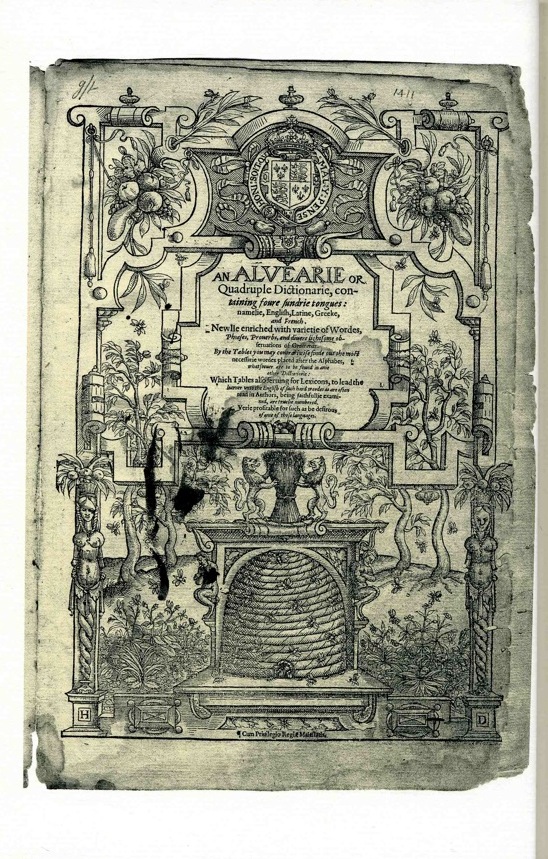
Here's a review of Shakespeare's Beehive: An Annotated Elizabethan Dictionary Comes to Light, a newly published analysis of a recently discovered Elizabethan dictionary that Shakespeare used for his plays, and which he heavily annotated. The dictionary, "An Alvearie or Quadruple Dictionary," written by John Baret in 1580, came to light in an Internet auction, Beehive's authors make a compelling case for this book having been annotated by Shakespeare himself. They proceed to analyze Shakespeare's annotations in light of his works. It looks fascinating, and as with all great works of scholarship, there are dirty parts:
“ But perhaps the most remarkable annotation in our copy of Baret, relatable to Romeo and Juliet, is the added word vagina at the definition of Scabberd, which itself was given a mute slash. ”
Koppelman and Wechsler discuss the occurrence of scabberd and sheath or sheathed in Shakespeare. Juliet’s last speech, “ . . . O happy dagger / This is thy sheath, there rust and let me dye ” is specifically linked by A.D. Nuttall to the common anatomical meaning, “ Her language is sexual. ” While the OED records the first usage of vagina as an anatomical word in English only in 1682, Lewis and Short trace the anatomical meaning to Plautus. T.W. Baldwin and other scholars offer clear evidence that Plautus formed part of the Elizabethan curriculum ; Koppelman and Wechsler cite a line in Pseudolus that translates “ Not fitting into thy sheath soldier ? ”
Sir Thomas Browne wrote “ What song the Syrens sang, or what name Achilles assumed when he hid himself among women, though puzzling questions, are not beyond all conjecture. ” Koppelman and Wechsler give the briefest of notes on the nineteenth century provenance of the book. Lady Georgiana Fullerton was a novelist and philanthropist, and a granddaughter of the fifth duke of Devonshire. “ All the dukes of Devonshire were men of letters and collectors of books ”, writes W.Y. Fletcher in English Book Collectors (1902). The Cavendish family were wealthy and prominent since Tudor times despite exile and debt. It is entirely plausible that this copy of the Alvearie once formed part of a large library — how better for a book to survive than among ten thousand others ? — and once it might even have been known to be Shakespeare’s own copy, until that knowledge was lost or the book was moved from one shelf to another. It may never be possible to trace the full history of the ownership of the Alvearie ; but the linguistic evidence is strong enough to convince all but the most wilful and perverse doubters.
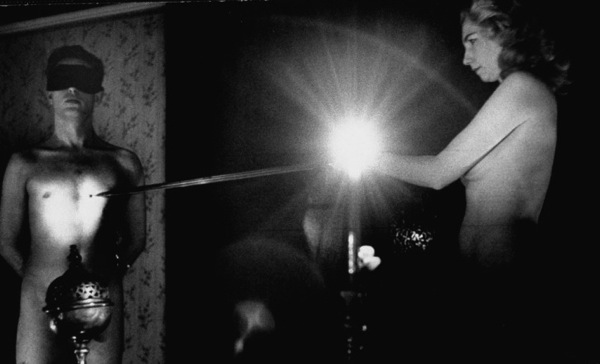
In 1964, LIFE magazine published a photo essay titled "Real Witches at Work," about Wiccans in contemporary England. They've just posted a number of those striking images plus others, including the beautiful shot above. Of course, people practicing witchcraft in the nude has always freaked out (and turned on) the squares. Here's how Mrs. Ray Bone, one of the Wiccans interviewed in LIFE at the time, responded to that mindset: “It seems obvious to me that people can be just as immoral with their clothes on as with them off.” Real Witches at Work: Photos of English Pagans in the 1960s
Hyungsoo Kim's wristwatch allows blind people to tell the time by feeling a metal ball in a circular groove. Sighted people want the watch too, because they can check the time without being rude to the person telling them a boring story. It's a handsome watch! (Via Marginal Revolution)
That’s one of my favorite things! So I thought I’d share a bit of new work I just finished up on that subject :)
Family Portrait II. pen and ink, 11″x14″.
It’s based on an old photo of a family I ran across somewhere– a perfectly normal, harmless-looking family, I should add. If anyone knows them, I apologize for making your ancestors look like they were harboring dark secrets.
Here’s Family Portrait I, by the way:
Family Portrait I. Mixed media, 8″x10″.
I expect one day I’ll dominate the market for artwork featuring old-fashioned people looking secretive… Inky Beast Illustration: One-stop shopping for all your Unsettling Family Portrait needs!














 Robbo sez, "The WGA (Writers Guild of America West) has stepped into the fray over the FCC's proposed non-Net Neutrality rules with over 240 members (show runners, creators & writers alike) signing a letter urging FCC Chairman Tom Wheeler to protect a free and open internet and not let it become like cable television. While the larger tech companies like Google, Facebook, Microsoft, Mozilla and others have also publicly expressed their concerns over FCC proposals to create a two-tiered approach to Internet access there has been little if any outcry from any major players in the Hollywood industry - until now."
Read the rest
Robbo sez, "The WGA (Writers Guild of America West) has stepped into the fray over the FCC's proposed non-Net Neutrality rules with over 240 members (show runners, creators & writers alike) signing a letter urging FCC Chairman Tom Wheeler to protect a free and open internet and not let it become like cable television. While the larger tech companies like Google, Facebook, Microsoft, Mozilla and others have also publicly expressed their concerns over FCC proposals to create a two-tiered approach to Internet access there has been little if any outcry from any major players in the Hollywood industry - until now."
Read the rest
 Following on from yesterday's brutal, awful news that Mozilla is going to add DRM to its Firefox browser, the Electronic Frontier Foundation's Danny O'Brien has published an important editorial explaining how Mozilla's decision sets back the whole cause of fighting for a free and open Internet.
Read the rest
Following on from yesterday's brutal, awful news that Mozilla is going to add DRM to its Firefox browser, the Electronic Frontier Foundation's Danny O'Brien has published an important editorial explaining how Mozilla's decision sets back the whole cause of fighting for a free and open Internet.
Read the rest
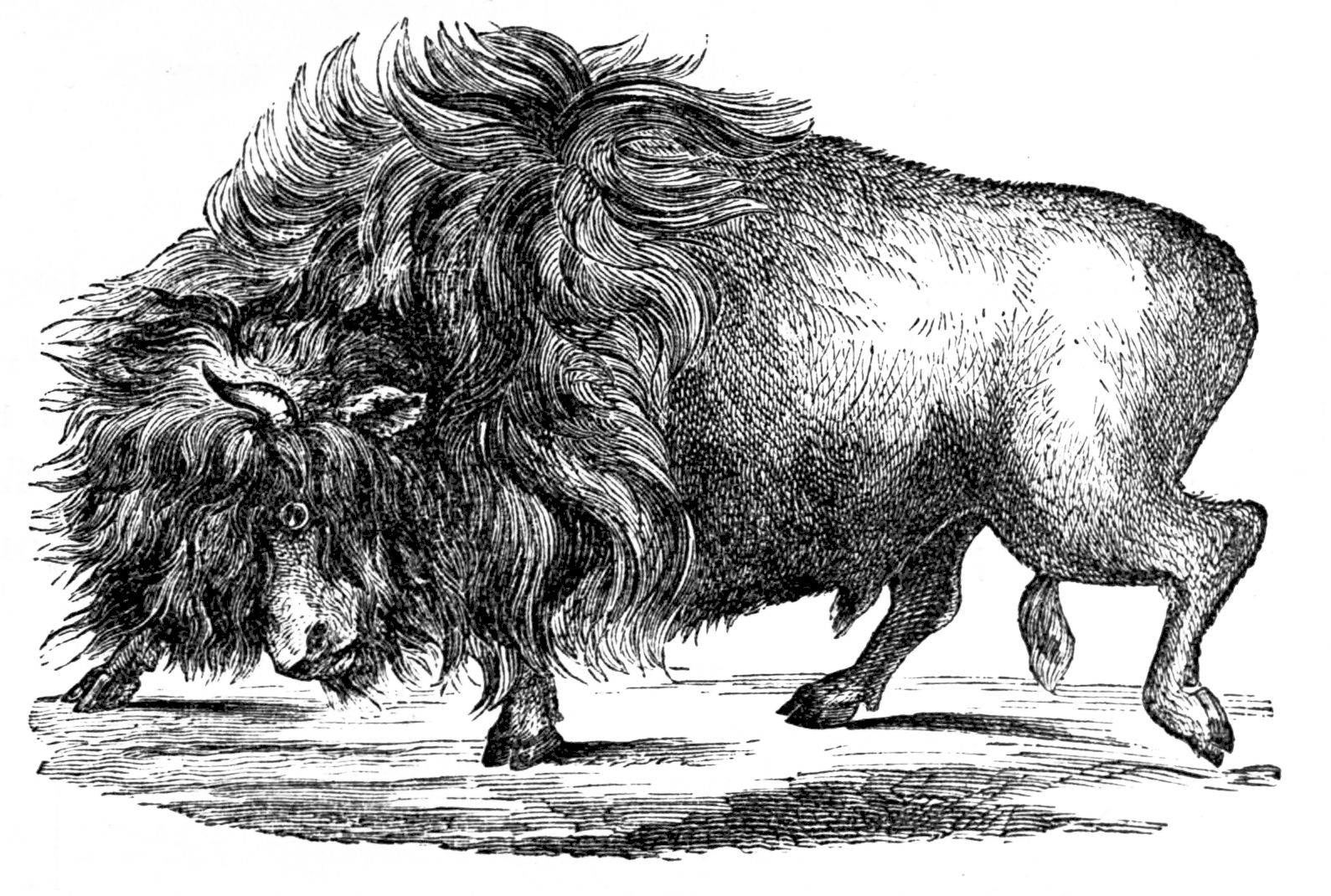 "'Buffalo buffalo Buffalo buffalo buffalo buffalo Buffalo buffalo' is a grammatically correct sentence in American English.
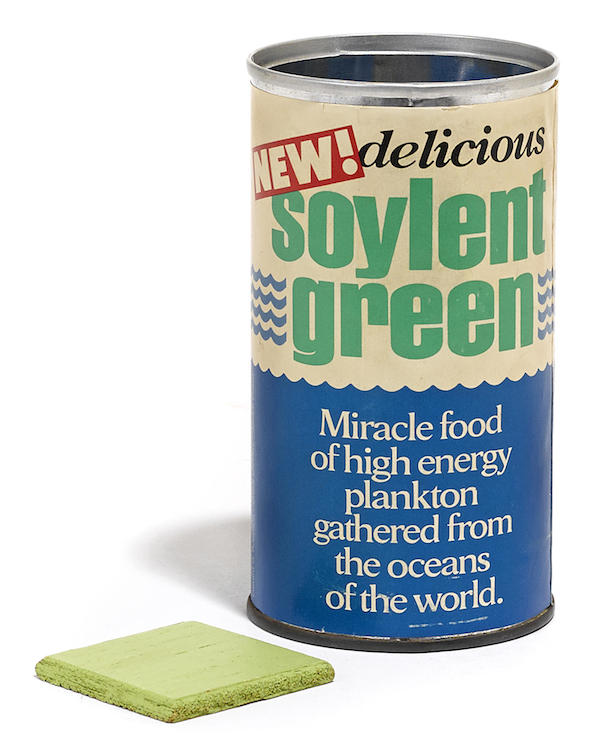 The New Yorker says, "I thought you would be interested in Lizzie Widdicombe's piece in this week's issue of The New Yorker, in which she meets the founder of Soylent, a synthetic meal replacement, and—in part, by subsisting on it herself—looks at how it could someday revolutionize humanity’s approach to food."






 Hyungsoo Kim's wristwatch allows blind people to tell the time by feeling a metal ball in a circular groove. Sighted people want the watch too, because they can check the time without being rude to the person telling them a boring story. It's a handsome watch! (Via Marginal Revolution)


