Shared posts

29 May 17:15

Escort

by Greg Ross

Hit by antiaircraft fire over Bremen on Dec. 20, 1943, Air Force pilot Charlie Brown was separated from his formation. His B-17 had three damaged engines, a wounded crew, and malfunctioning electrical, hydraulic, and oxygen systems. Brown lost consciousness briefly and awoke to find himself shadowed by a German Messerschmitt that did not attack — as Brown flew slowly back to England, the enemy plane accompanied him as far as the North Sea, where the pilot saluted and let him go.

Brown returned to his air base in England, completed his tour, and returned to the United States. In the 1980s he began a search for the German pilot who had spared him, and eventually was contacted by Franz Stigler, who described the escort and the salute just as Brown had remembered them. Stigler was now living in Canada, and the two became close friends until their deaths in 2008.

Asked why he hadn’t fired on Brown’s shattered bomber, Stigler said, “I looked across at the tail gunner and all I could see was blood running down his gun barrels. I could see into Brown’s plane, see through the holes, see how they were all shot up. They were trying to help each other. To me, it was just like they were in a parachute. I saw them and I couldn’t shoot them down.”

He recalled the words of his commanding officer: “You follow the rules of war for you — not your enemy. You fight by rules to keep your humanity.”

29 May 01:51

Kiln Glass Textures

by Blaine Brownell

Preferred for its ability to deliver transparency and views, glass has typically been appreciated for its ability to nearly disappear; its use in modern commercial applications may be described to be anonymous. Recently, however, glass has been examined and researched for its ability to obscure, refract, and hold light with integrated textures, colors, and shapes. In this way, glass has become increasingly imbued with identity.

Vancouver-based Joel Berman Glass Studios produces kiln cast glass panels with a variety of textures and surface treatments. Designed for interior and exterior applications, Kiln Glass Textures obscure views while transmitting light through exotic and sophisticated surface patterns. Like board-formed cast-in-place concrete, Kiln Glass Textures carries impressions of other materials; however, the source of the forming materials used in these hand-crafted pieces is not often apparent.

Contact: Joel Berman Glass Studios, Vancouver, BC, Canada.
Find more information in Transmaterial 2.

29 May 01:51

Mirror Duct System

by Blaine Brownell

A significant portion of building construction is made of opaque or light-reducing materials that require artificial lighting. Not only does artificial lighting expend the use of energy and materials, but it also adds to the heating load of structures and requires more cooling during the summer months. Mirror Duct System attempts to solve this problem by extending natural light deep within interior spaces. In contrast to conventional light shelves and larger window openings, which increase daylight but remain relatively shallow and do not eliminate glare, Mirror Duct System thoroughly controls and diffuses light throughout its path into a building. At first glance the system resembles traditional HVAC ductwork, except that it is clad internally with highly reflective aluminum mirrors that extend light as much as sixty feet inside a structure.

Developed by Tokyo-based Material House, Mirror Duct System is a completely passive technology that contributes to CO2 reduction by decreasing electric power usage for lighting as well as the additional cooling often required. Natural daylight has been shown to create a more comfortable environment and inhibits mold growth in interior kitchens and bathrooms.

Contact: Material House, Tokyo, Japan.
Find more information in Transmaterial 2.

29 May 01:36

“The Man With the Golden Arm”

by Greg Ross

http://commons.wikimedia.org/wiki/File:%D0%94%D0%B6%D0%B5%D0%B9%D0%BC%D1%81_%D0%A5%D0%B0%D1%80%D1%80%D0%B8%D1%81%D0%BE%D0%BD.jpg

When James Harrison had chest surgery at age 13, he resolved to begin donating blood to help others in need. When he did so, doctors realized that he carries a rare immune globulin that can prevent unborn babies from suffering attacks by their mothers’ antibodies, a condition known as Rhesus disease.

In the 59 years since this was discovered, Harrison has given blood more than 1,000 times, an average of once every three weeks for five decades, and his donations have saved an estimated 2.4 million babies.

This has earned Harrison a spot in Guinness World Records. He calls this “the only record that I hope is broken.”

26 May 21:05

Field Trip

by Greg Ross

http://commons.wikimedia.org/wiki/File:Van_Gingelen_Vollmondnacht.jpg

In the early 1600s, Johannes Kepler wrote a fantasy in which he imagined a journey to the moon:

We congregate in force and seize a man of this sort; all together lifting him from beneath, we carry him aloft. The first getting into motion is very hard on him, for he is twisted and turned just as if, shot from a cannon, we were sailing across mountains and seas. Therefore, he must be put to sleep beforehand, with narcotics and opiates, and he must be arranged, limb by limb, so that the shock will be distributed over the individual members, lest the upper part of his body be carried away from the fundament, or his head be torn from his shoulders. Then comes a new difficulty: terrific cold and difficulty in breathing. The former we counter with our innate power, the latter by means of moistened sponges applied to the nostrils.

Somnium is largely a treatise on lunar astronomy, describing the motions of the planets as observed from the moon. But Kepler also considers the appearance of the moon’s inhabitants, who “wander in hordes over the whole globe in the space of one of their days, some on foot, whereby they far outstrip our camels, some by means of wings, some in boats pursue the fleeing waters, or if a pause of a good many days is necessary, then they creep into caves.” Carl Sagan and Isaac Asimov called it the first work of science fiction.

24 May 01:34

Interstellar Memes

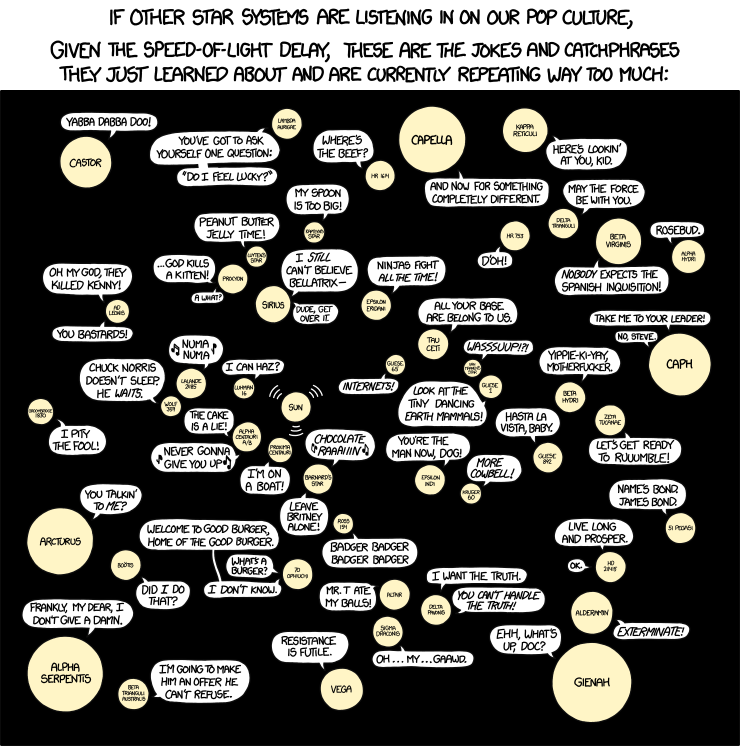
The strongest incentive we have to develop faster-than-light travel is that it would let us apologize in advance.
14 May 17:31

Garry Winogrand and the Art of the Opening

by Richard Woodward

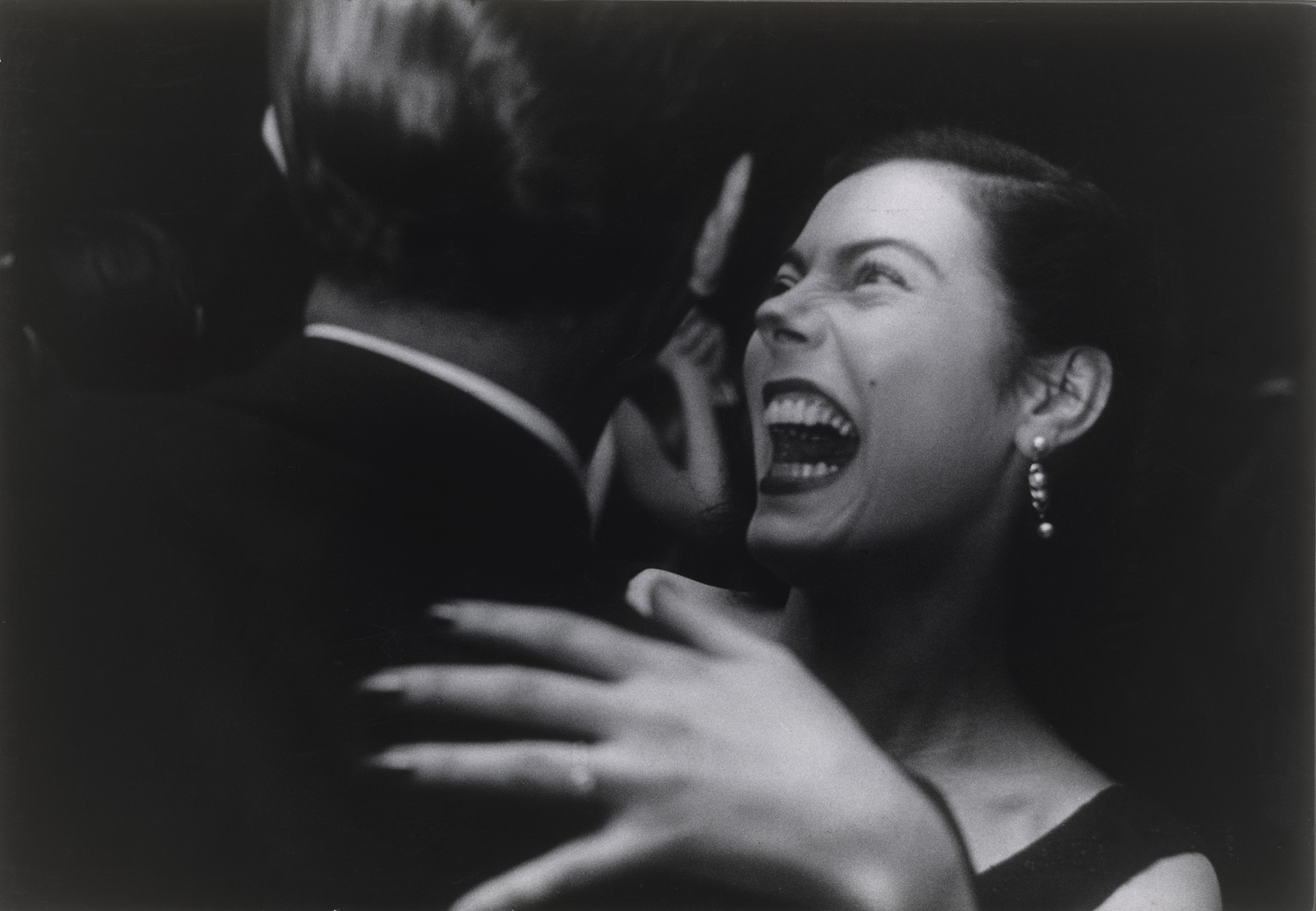
Garry Winogrand, El Morocco, New York, 1955, black-and-white photograph. The Metropolitan Museum of Art, New York, purchase, the Horace W. Goldsmith Foundation Gift, through Joyce and Robert Menschel; © The Estate of Garry Winogrand, courtesy Fraenkel Gallery, San Francisco

Garry Winogrand, El Morocco, New York, 1955, black-and-white photograph. The Metropolitan Museum of Art, New York, purchase, the Horace W. Goldsmith Foundation Gift, through Joyce and Robert Menschel; © The Estate of Garry Winogrand, courtesy Fraenkel Gallery, San Francisco.

Scroll down for a slide show of photographs by Winogrand, with audio interviews conducted during the March 6 opening of his posthumous retrospective at the San Francisco Museum of Modern Art.

Garry Winogrand (1928–84) was the first photographer to realize how much juicy comedy could be squeezed out of New York’s art and literary scenes. During the late sixties, early seventies, when he would arrive with his Leica at a Museum of Modern Art opening or a costume ball at the Metropolitan Museum of Art or at Norman Mailer’s fiftieth birthday party, he would sometimes announce to the crowd, “I’m here,” as if an event did not officially begin until he was there to record it. 

He was more right than even he might have guessed. Were it not for his mordant photos of those ragged, sybaritic evenings, best represented in the 1977 book Public Relations, it would be hard to imagine them. Mad Men and other dramatic re-creations tidy up the social anarchy of those years; Winogrand’s camera didn’t. From the haphazard lines of men and women awkwardly at ease, uniformed in black tie or a too-tight harem top, heads wreathed with cigarette smoke and piles of teased hair, ghostly moues cut with rictus smiles and rows of perfect teeth, he fashioned dark instants of sublime lunacy. Everyone and everything seems false or imbecilic in his party pictures, his eye exposing secret acts of disintegration within rituals of supposed public glee.

Behind his mockery of the self-satisfied and the strivers, though, is a winking acknowledgement that anyone can appear stricken when blasted by a flash at 1/125 of a second. Photography turns one and all into fools, including—especially—artists like himself, eager to hunt life and trap as many of its fleeting variables as possible inside a 35 mm frame but doomed to return empty-handed far more often than not. Read More »

10 May 18:40

Misterioso

by Greg Ross

http://www.sxc.hu/photo/1174328

One of the deepest and strangest of all human moods is the mood which will suddenly strike us perhaps in a garden at night, or deep in sloping meadows, the feeling that every flower and leaf has just uttered something stupendously direct and important, and that we have by a prodigy of imbecility not heard or understood it. There is a certain poetic value, and that a genuine one, in this sense of having missed the full meaning of things. There is beauty, not only in wisdom, but in this dazed and dramatic ignorance.

– G.K. Chesterton, Robert Browning, 1903

08 May 17:33

From Appearance to Identity: How Census Data Collection Changed Race in America

by Lisa Wade
race-in-america

Publicizing the release of the 1940 U.S. census data, LIFE magazine released photographs of census enumerators collecting data from household members. Yep, census enumerators. For almost 200 years the U.S. counted people and recorded information about them in person by sending out a representative of the U.S. government to evaluate them directly.

3

4

By 1970 the government was collecting census data by mail-in survey. The shift to a survey had dramatic effects on at least one census category: race.

Before the shift, census enumerators categorized people into racial groups based on their appearance. They did not ask respondents how they characterized themselves. Instead, they made a judgment call, drawing on explicit instructions given to the census takers.

On a mail-in survey, however, the individual self-identified. They got to tell the government what race they were instead of letting the government decide. There were at least two striking shifts as a result of this change:

  • First, it resulted in a dramatic increase in the Native American population. Between 1980 and 2000, the U.S. Native American population magically grew 110 percent. People who had identified as American Indian had apparently been somewhat invisible to the government.
  • Second, to the chagrin of the Census Bureau, 80 percent of Puerto Ricans choose white (only 40 percent of them had been identified as white in the previous census). The government wanted to categorize Puerto Ricans as predominantly black, but the Puerto Rican population saw things differently.

I like this story. Switching from enumerators to surveys meant literally shifting our definition of what race is from a matter of appearance to a matter of identity. And it wasn’t a strategic or philosophical decision. Instead, the very demographics of the population underwent a fundamental unsettling because of the logistical difficulties in collecting information from a large number of people. Nevertheless, this change would have a profound impact on who we think Americans are, what research about race finds, and how we think about race today.

See also the “U.S. Census and the Social Construction of Race” and “Race and Censuses From Around the World.” To look at the questionnaires and their instructions for any decade, visit the Minnesota Population Center.


This post originally appeared on Sociological Images, a Pacific Standard partner site.

07 May 22:34

Making Do

by Greg Ross

http://commons.wikimedia.org/wiki/File:Veen01.jpg

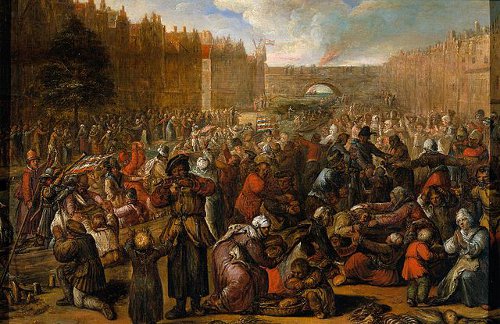
Besieged by Spain in 1572, the people of Leyden, Holland, ran out of silver. In order to have a currency for everyday trade, they tore pages from books and stamped them in coin dies, producing the first paper money in Europe.

During World War I the Fanning Islands could not receive currency from Australia, so they arranged to have one-pound notes printed in Hawaii. When peace came, these temporary notes were cut in half and used as movie tickets.

“I have enough money to last me the rest of my life,” said Jackie Mason, “unless I buy something.”

07 May 22:31

Drug Assay Numbers, All Over the Place

There's a truly disturbing paper out in PLoSONE with potential implications for a lot of assay data out there in the literature. The authors are looking at the results of biochemical assays as a function of how the compounds are dispensed in them, pipet tip versus acoustic, which is the sort of idea that some people might roll their eyes at. But people who've actually done a lot of biological assays may well feel a chill at the thought, because this is just the sort of you're-kidding variable that can make a big difference.

Dispensing and dilution processes may profoundly influence estimates of biological activity of compounds. Published data show Ephrin type-B receptor 4 IC50 values obtained via tip-based serial dilution and dispensing versus acoustic dispensing with direct dilution differ by orders of magnitude with no correlation or ranking of datasets.

Lovely. There have been some alarm bells sounded before about disposable-pipet-tip systems. The sticky-compound problem is always out there, where various substances decide that they like the plastic walls of the apparatus a lot more than they like being in solution. That'll throw your numbers all over the place. And there have been concerns about bioactive substances leaching out of the plastic. (Those are just two recent examples - this new paper has several other references, if you're worried about this sort of thing).

This paper seems to have been set off by two recent AstraZeneca patents on the aforementioned EphB4 inhibitors. In the assay data tables, these list assay numbers as determined via both dispensing techniques, and they are indeed all over the place. One of the authors of this new paper is from Labcyte, the makers of the acoustic dispensing apparatus, and it's reasonable to suppose that their interactions with AZ called their attention to this situation. It's also reasonable to note that Labcyte itself has an interest in promoting acoustic dispensing technology, but that doesn't make the numbers any different. The fourteen compounds shown are invariably less potent via the classic pipet method, but by widely varying factors. So, which numbers are right?

The assumption would be that the more potent values have a better chance of being correct, because it's a lot easier to imagine something messing up the assay system than something making it read out at greater potency. But false positives certainly exist, too, so the authors used the data set to generate a possible pharmacophore for the compound series using both sets of numbers. And it turns out that the one from the acoustic dispensing runs gives you a binding model that matches pretty well with reality, while if you use the pipet data you get something broadly similar, but missing some important contributions from hydrophobic groups. That, plus the fact that the assay data shows a correlation with logP in the acoustic-derived data (but not so much with the pipet-derived numbers) makes it look like the sticky-compound effect might be what's operating here. But it's hard to be sure:

No previous publication has analyzed or compared such data (based on tip-based and acoustic dispensing) using computational or statistical approaches. This analysis is only possible in this study because there is data for both dispensing approaches for the compounds in the patents from AstraZeneca that includes molecule structures. We have taken advantage of this small but valuable dataset to perform the analyses described. Unfortunately it is unlikely that a major pharmaceutical company will release 100's or 1000's of compounds with molecule structures and data using different dispensing methods to enable a large scale comparison, simply because it would require exposing confidential structures. To date there are only scatter plots on posters and in papers as we have referenced, and critically, none of these groups have reported the effect of molecular properties on these differences between dispensing methods.

Acoustic.png
Some of those other references are to posters and meeting presentations, so this seems to be one of those things that floats around in the field without landing explicitly in the literature. One of the paper's authors was good enough to send along the figure shown, which brings some of these data together, and it's an ugly sight. This paper is probably doing a real service in getting this potential problem out into the cite-able world: now there's something to point at.

How many other datasets are hosed up because of this effect? Now there's an important question, and one that we're not going to have an answer for any time soon. For some sets of compounds, there may be no problems at all, while others (as that graphic shows) can be a mess. There are, of course, plenty of projects where the assay numbers seem (more or less) to make sense, but there are plenty of others where they don't. Let the screener beware.

Update: here's a behind-the-scenes look at how this paper got published. It was not an easy path into the literature, by any means.

Second update: here's more about this at Nature Methods.

07 May 22:29

Photo


07 May 22:28

Photo


07 May 22:26

Eavesdropping

by Greg Ross

Edwardian journalist Charles Cyril Turner, the world’s first modern aviation correspondent, describes a May morning alone in a balloon over Surrey:

Very slowly I approach a big wood. It would better express the situation were I to say that very slowly a big wood comes nearer to the balloon, for there is no sense of movement, and the earth below seems to be moving slowly past a stationary balloon. … Fifteen hundred feet up and almost absolute silence, broken occasionally by the barking of a dog heard very faintly, or by a voice hailing the balloon, and by an occasional friendly creak of the basket and rigging if I move ever so slightly. Then quite suddenly I am aware of something new.

The balloon has come down a little already, and I scatter a few handfuls of sand and await the certain result. But my attention is no longer on that, it is arrested by this new sound which I hear, surely the most wonderful and the sweetest sound heard by mortal ears. It is the combined singing of thousands of birds, of half the kinds which make the English spring so lovely. I do not hear one above the others; all are blended together in a wonderful harmony without change of pitch or tone, yet never wearying the ear. By very close attention I seem to be able at times to pick out an individual song. No doubt at all there are wrens, and chaffinches, and blackbirds, and thrushes, hedge sparrows, warblers, greenfinches, and bullfinches and a score of others, by the hundred; and their singing comes up to me from that ten-acre wood in one sweet volume of heavenly music. There are people who like jazz!

That’s from Turner’s 1927 memoir The Old Flying Days. Elsewhere he describes approaching the surface of the North Sea far from land: “We could hear the incessant murmur of the commotion of waters as the countless millions of waves and ripples sang together. Surely there is not in nature any sound quite like this, and only in a balloon can it be heard, for by the shore one hears only the turbulent noise of the waters breaking on land, and in any sort of ship the noise of the ship itself makes what to our ears would seem discord.”

07 May 10:29

“The End is Inevitable, But Not Predictable”

Two-time Pulitzer Prize winner and former New York Times columnist Anthony Lewis, NF ’57, remembers Stanley Karnow, NF ’58
07 May 10:27

Rooms That Have Had Their Part

Joanna Kavenna

Photo by melburnian.

For a while I worked as a temp, writing in the evening or whenever I could during the day. I was sent to a series of grey-drab, concrete offices, where I passed the hours typing out letters for jowly depressives, weathering their fits of bile, barely earning enough to pay my rent.

I remember those brief, unsatisfying periods of tenure as a series of rooms. Rooms jaundiced by bad lighting, so you wondered, what is ague, and could we have it? Rooms that hummed, a hum you couldn’t quite identify, or that seemed in the end to come from your own head. Rooms with high windows so you only saw the free birds weaving tactlessly across the sky. Rooms like a fairy tale, where everyone seemed to sleep, and yet, they spoke. Rooms where you thought the delicate gossamer strand that connects you to the world of certainties, measured opinions, received normality, might just snap – forever.

A fine and almost forgotten poet, Charlotte Mew, wrote on ‘rooms that have had their part/ In the steady slowing down of the heart.’ The heart slowed, yet, perversely, the clock slowed too. The hands of clocks on grey partitions seemed to stall, while you waited – willing Time to resume again. When you were there, stranded at your desk, typing out generic phrases, discoursing madly on pencils with your neighbour, you longed for the hours to vanish, and yet, when the day ended, when the sky boiled into one more livid sunset, you felt sick with longing, fury, frustration. You walked in a dire and futile rage to the underground, and you went home panicking – another day!

The whole temping experience made me dislike the modernists as well, or some of them. It made me lose faith in those post-Nietzscheans who condemned the ‘ordinary man’ (or woman), who decried ‘the masses’ and assumed the masses all felt and thought the same. Often, as I waited in some random flock of people, I thought about Ezra Pound’s seedy protégée, Richard Aldington, who stood in central London and wrote:

The Masses at Piccadilly
Are sordid and sweaty
We suspect them of vices
Like marriage and business
We know they are ignorant
Of Hokkei and Rufinus

Or Amy Lowell, ‘imagist’, who added:

Fools! It is always the dead who breed!
The little people are ignorant
They chatter and swarm
They gnaw like rats . . .

I ranted my way home each night – as I stood with my kind, as we swarmed into a mass, as we breathed in unison, like ladybirds in a cluster, related and merged organic matter, as I stood and swayed – I hated Aldington, Lowell, felt that had they not been so utterly dead I would have found them and beaten them to the ground, a futile fantasy of vengeance on the long dead, but I thought, how easy, how glorious, to set yourself against the masses, when you have been saved by wealth or accident, how easy to denounce the Others –

Others to you, perpetually unknowable –

But when you are the masses, sordid in your seamlessness, sweating from proximity to others, trapped in the little business of earning a wage –

Well, then! You rant . . .

The irony of this condition is that each day you pass through such furies, such protests, you grit your teeth, you want to fall to the ground, you’re like an angry child, you weep because someone has stolen your coffee cup and you teeter all the time on the brink of complete psychosis. Meanwhile you discern this madness in the eyes of others – you come to realize the entire city is, essentially, mad –

And yet you sleep, in your unhomely home, you wake to the ritual whine of planes, the old grey buildings polished by the dawn, you are calm, even optimistic, and you begin again. You rise, you eat breakfast, as if the whole thing is entirely reasonable, you dress with practised efficiency, you are sane at least until 10 a.m. Then – again – someone bores you, someone snaps their pencil in your face, someone speaks for hours, then further hours, on the phone, so you want to run from the building and never go back again. Swiftly, you dwindle.

Perhaps this was what made Aldington, Lowell so uneasy, confronted by the crowds. Perhaps they were worried that one day their sordid sweaty masses would just lose their wits entirely, run amok, that the city would engulf itself –

Aldington and all his pals, hemmed into a corner, clutching the complete works of Rufinus . . .

The fantasy consoles you for a moment, one long tick of the clock –

Then you begin again –

For more about the author, including critical perspectives and in-depth biographies, visit the British Council’s web pages on Joanna Kavenna.

07 May 10:27

Interview: Chloe Aridjis

Chloe Aridjis, Ted Hodgkinson

Chloe Aridjis was born in New York and grew up in the Netherlands and Mexico City. Her first novel, Book of Clouds, published in 2009, won the Prix du Premier Roman Etranger in France. Her second, Asunder, published this month by Chatto & Windus, follows the strange inner life of Marie, a guard at the National Gallery in the present day. Marie becomes increasingly fascinated by the Suffragettes, and in particular Mary Richardson, who famously slashed the Rokeby Venus to protest the imprisonment of a fellow Suffragette, Emmeline Pankhurst. Here, she spoke to online editor Ted Hodgkinson about writing against the male gaze, why the National Gallery is her favourite place in London and how paintings can also be mirrors.

TH: The novel explores the impact that the male gaze has had on how we imagine ourselves, particularly how women imagine themselves. The novel also questions what an artistic legacy is made of. As you write: ‘Velázquez established his legacy with brushstrokes, and Mary Richardson with knife strokes, both with impassioned diagonals.’ By focusing on the Suffragettes, were you interested in readdressing the violence of the male gaze?

CA: Once I’d had the idea of having a museum guard as narrator, I wrote the first draft in a male voice, but then realized it was much more interesting to explore the psychology of a female in that role. All day long they are surrounded by mythological figures, often nudes, and I thought that somehow there is more stripping of sexuality for women than men in this profession.

In the initial stages, as with my Berlin book, I would walk around the National Gallery taking notes, with the Rokeby Venus as my centre of gravity. I was looking for real or imagined sites of disturbance and how they would affect the psychology of my character.

Then there’s the leitmotif of craquelure in the book – the way the brushstrokes of the painter succumb to very slow kinds of decomposition and disintegration – but the Suffragettes take a much more active role in the destruction. There are two different kinds of legacy: one legacy damages, the other establishes. Mary Richardson was of course protesting the imprisonment of Pankhurst and I was fascinated by her autobiography, in which she describes her great irritation at the way men would come and gawp at the Venus all day.

For me, it may have had something to do with growing up in Mexico, where there is often very unabashed staring at women. But it’s something I’ve always noticed in very different spheres – the male gaze. It reappears later on in the book within a clinical context, the counterpart in Paris and the branding of female ‘hysterics’. They too are trapped by the male gaze.

Yes, Marie, the narrator, reacts very strongly to that pejorative use of ‘hysterics’.

That was something that outraged me: the way the Suffragettes were often described as hysterics by the press and other detractors.

The novel is a pressure cooker of female repression, with Marie unable to express her desires for fellow guard Daniel in particular. There’s a scene when she is staying in a room in Paris and is overwhelmed by the lingering presence of the couple who lived there previously, imagining their longings and frustrations. Is her distance from what she wants something you thought about while writing?

People who dismissed the Suffragettes would deride them as being sexually frustrated or say that they were terrified of ‘the unlived life’ and that that was part of what spurred them into action. Marie does see herself mirrored in almost every character in the book, and in some of the paintings, which can often be mirrors. Her anxieties about her professional and her personal life are similar. There is a constant recalibration of distance: distance from a painting, or from Daniel . . . in nearly every scene there’s an uncomfortable measuring going on. Distance and how you measure it is very important in the novel.

There’s a constant conflict in gallery spaces between preservation and entropy: they paradoxically suggest permanence and longevity but they’re full of transience, of people just passing through. The veteran guard Leighton Crooke epitomizes dedication to this almost monk-like existence. Is there a quasi-religious element to gallery spaces, do you think?

Yes. There’s the hush that falls, an expectation of how you should behave once inside. There’s theatre to it, an air of captivity, almost. And a resistance to stasis but also a desire for a very controlled environment. I was much more focused on the theme of impermanence. Every day at the National Gallery there was always something different going on. And I was inspired by an essay by Adorno (‘Valéry Proust Museum’) in which he says there’s not much difference between museum and mausoleum. He’s very critical of galleries as spaces because to his mind they are a slightly ridiculous reenactment of culture. He finds it problematic that they remove artworks from their original context. You can be ‘in’ culture and be having a cultural experience but there’s often a lack of authenticity about the experience of art. On the other hand I feel snobbish passing judgment – at least people are going to museums and engaging, trying to engage.

It sounds like going to the National Gallery was an important part of the writing process as was talking to the guards in person. Did you visit often?

It’s my favourite place in London. Early on I probably would go twice a week and spend several hours taking notes and then go home to write. But too much exposure can somehow cramp the imagination. So I’d go and take notes about one painting or one character I’d seen, or one strange interaction. I did speak to many, many guards but in the end none of them inspired any of the characters in the book, though they were extremely generous with their time and loved talking about their profession. Initially I was interested in the idea of invisibility but speaking to them I realized that it wasn’t an issue for them at all, that they were quite comfortable with someone walking past and not acknowledging their presence . . . After a while that became more interesting to me: the passivity of the profession. I also found interesting the way that many of them were surrounded by so much beauty and heritage and at the same time strangely impervious or indifferent to it. I also thought a lot about how someone in that profession’s thoughts might transition from one to another. I was less in pursuit of a so-called ‘seamless narrative’ and wanted to replicate more what the thought patterns might be, jumping from lighting to the sound of shoes, to people coming in and out. I really enjoyed just sitting there on a bench and watching, because I do feel that museums have strange effects on people psychologically – one does enter into a different mental atmosphere, regardless of how interested in art you happen to be.

Comets orbit the book, particularly in the painting by William Dyce. What was it that particularly drew you to these celestial bodies?

I was fascinated by the painting of Pegwell Bay at the Tate Britain. And also by the fact that somehow comets are both ephemeral and permanent – they pass overhead yet something of them remains. Then I came across a book by George Dangerfield, The Strange Death of Liberal England. In it he mentions Prime Minister Asquith being on a boat and seeing Halley’s comet passing overhead, and reading it as an omen.

In the book Daniel says, ‘Life’s not complete without some kind of haunting’. To me the main ghost in this book is Mary Richardson. When did her ghost first speak to you?

I read Mary Richardson’s autobiography and at time she comes across badly and at others entirely sympathetically. In the context of the book, Marie’s main conflict is feeling allegiances with both gatekeepers and trespassers. She herself would probably have allowed Mary Richardson to come and deface the painting. What really struck me was the way the Suffragettes were pathologized, and the way women who took a political stance were deemed ‘hysterical’ in some way, or accused of hyperbole. And they came from the whole spectrum of society: you had noble suffragettes and working class ones (and they were treated differently in prison). These figures inhabit Marie’s mental landscape very strongly. In a way these are the women who are most alive to her. Her conflict, too, is that she doesn’t know to what extent she has inherited them. I suppose one of the questions the novel asks is how much do you create spectres for yourself and how much other processes are responsible.

It seems like there might be some parallels between the observing that gallery guards do and the observing that a novelist does. Would you say that’s true?

As a novelist you’re constantly observing, that’s why I thought a museum guard would be a very good job for someone who also wanted to write. It varies from gallery to gallery, but often the younger guards are aspiring artists, and others simply work in security. I’m quite shy but I do say hello to some of them when I go. The guard at the National Gallery with a stray eye is my favourite.

Asunder by Chloe Aridjis is published by Chatto & Windus.

Chloe Aridjis will be in conversation with Tom McCarthy at the London Review Bookshop on 7 May at 7.30 p.m. Tickets are £7. More details here.

07 May 10:26

Going Where the Southern Cross the Dog: A Column About the Blues: Impressions of Chicago, 1997, Part II by Jason Edward Harrington

Read Part I

- - -

WE PULLED UP TO THE PROJECTS

And the first impression was of illness: size-wise, hospital buildings were my only point of comparison for the 13-story Rockwell Gardens project looming before us. I’d grown up watching the Bosnian War on TV—images of blast-dazed civilians lost in gunmetal landscapes—and seeing the crackheads shuffling away from the entrance set that footage unreeling in my head.

The windows were the first thing about the buildings to get my attention: some of them had scorch marks around them—shadows of Chinese fans. My first thought was that it was the result of some sort of medievalesque siege; that here in the projects, at some point in gangland past, things had gotten so fierce that a trebuchet had been rolled up to the building.

“Apartment fires,” Que would later explain, shaking his head.

It was late December and a recent snowfall was in mid-melt; slush coming down on discarded beer bottles and packages of junk food. A group of men at the entrance of the building rose to their feet as we parked, eyeing us hard.

“You want two soft bucks, right?” Que said, turning off the ignition.

(“Soft buck” is Chicago slang for ten dollars, or, in this case, a ten-dollar bag of weed.)

I handed Que a twenty for two soft bucks.

I asked him if I was going in with him and he told me no, it wouldn’t be a good idea. I’d been excited at the prospect of being able to say that I’d seen the projects from the inside, but now, looking at the group of men in thermal coats and hoodies bulging around the waist, it seemed safer to just stay in the car and wait. I watched Que as he made for the building, the foot soldiers at the entrance tracking his approach. He initiated a complex handshake with one of them, was lightly frisked by another, and then disappeared into the building.

Alone now.

I rolled the window down to take in the sounds of the projects: shouts, shrieks, bass waves flowing from passing cars. The metered clank of iron on concrete. A narco-salesman’s pitch of rocks, blows, rocks, blows quavering on the wind. A man stood in front of the building, head up-turned, shouting through megaphoned hands; a tinny female voice responded from above. Project intercom.

I couldn’t tell if the men standing at the entrance were staring at me, or beyond me. Hypes and crackheads—eyes spark-blown and bodies emaciated, ribs practically showing through their tattered winter coats—crisscrossed the project’s courtyard.

The parking lot was empty save for the rusted frames of a few abandoned vehicles. One of the building’s sentries was pointing in my direction, and I was sure that the men were all eyeing me, now. They could tell, even from 50 yards, that I didn’t belong there, that I was a foreigner to the projects—just another person come to pick something up.

Panic struck as I realized that I would stand out not only to the local gangbangers, but to the cops, as well. I didn’t have a criminal record, yet, and wasn’t too hot on the idea of starting in on one that day.

The DEA and ATF had been coming down hard and flashy on the street gangs with the escalation of the War on Drugs, and Chicago had seen more than its share of raids. The projects had become so dangerous that many descendants of those who had come to Chicago during the Great Migration had begun saving up money to send their children back to the South. Clinton had been to the Robert Taylor Homes just a few years prior, in 1994, speechifying on how he planned to demilitarize the projects with continued warrantless federal police sweeps:

“Someone asked me about the policy here of the sweeps and about the assault weapons, and he said, ‘Mr. President, are we going to have to be willing to give up some of our personal freedom to live in safety?’ And I said that I thought the most important freedom we have in this country is the freedom from fear. And if people aren’t free from fear, they are not free.”

(Light cheering from the crowd)

I was worried that I would be unlucky enough to be de-freed in a sweep that day. I felt I had to set myself apart from the cliché image of a suburban kid waiting nervously in a ghetto parking lot, and so I got out of the car, lit a cigarette and took a look around, careful to avoid eye contact with the men at the entrance.

It was then that I noticed a metallic sound—kerklink, kerklink—droning toward the side of the building, where

A LITTLE GIRL ROLLED A DOG CAGE

across the dead project playground, the girl—no more than 7 years old, alone and bundled in a faded pink snowsuit with too-long sleeves—flipped the metal cage end-over-end, stopping only to dance little circles around her found plaything. She did it as if to substitute for games that would never again be played there; the backboards on the playground’s basketball hoops were missing, the rims’ netting made of chain. An old man with a large plastic bag full of soda and beer cans slung over-shoulder—old tortoise with an aluminum carapace—doddered along the slushy knoll in front of the playground, the two project residents drifting crosswise.

Rockwell, once touted as a beacon of hope for impoverished peoples seeking safe and clean housing, had become a dumping ground for all that the city had abandoned; an ecosystem driven by things discarded. The men in front of the buildings sold junk, the dope fiends deteriorated even as they walked. Driving through the West Side on the way to Rockwell I’d noticed that the commercial strips had been comprised largely of pawnshops. A people reduced to scrounging and petty exchanges.

Where had the girl found this dog cage, and who had abandoned it? Where was her father, and where was her mother? Then I looked to the windows, the thousand-eyed tenements— at the far-up figures of people chilling in the breezeways— and realized that the child belonged to the concrete village; that it was all of them, collectively—and so maybe none at all—who were monitoring the progress of the child and her cage.

- - -

I turned around and began walking back, and was actually relieved to see Que already waiting there, angry that I’d left the car.

He handed me two dime bags, stuffed in that mass market style of the city—jewelry bags, originally meant to hold earring studs and the like.

Que had one of the dimes rolled into a blunt before we even pulled out onto Western Ave. He sparked it and passed it to me. I remember eyeing the vehicles in the rearview nervously, expecting the Crown Victoria behind us to turn out to be an unmarked dick, a flashing light slapped suddenly on the roof.

Que saw that I was nervous and laughed:

“The cops don’t come around here, man.”

TWO IN THE CHEST

Que was short for Quentin, I found out when he was dead. His girlfriend, Tricia, had saved the funeral program: In Loving Memory, Quentin T. Johnson. It was always like that with Que, though: the important things omitted and filled in after the fact.

I had first scented Que on a trail of skunk smoke drifting up and out from the bay window of his aunt’s two-bedroom. Que and I lived in the largest apartment complex of our suburb, which played host to most of the town’s blacks and Hispanics. Que’s grandparents had come up from the South, like my father—his people had moved from Florida to Detroit. His father had never been around, his mother had flickered in and out of heroin addiction until she vanished for good. Que spent much of his youth in juvenile detention, running with a Gangster Disciples set in Detroit. He was sent to live with his aunt in the projects at the age of 16, where he became the man of the house by default. His aunt tried to make the best of their life: the first time I entered their apartment, I was struck by the degree to which the color gold had figured into her decorating sense, as though she had tried to enrich her home by gilding the only things she could—chintz and velour.

His aunt had worked day and night in order to save enough money to get Que away from the projects. He’d spent a year in my high school, a few classes ahead of me, before dropping out when he realized what he had in the suburbs: an entire market of gangbanger-wannabes looking to score weed and cocaine.

Talk of the future with Que invariably centered around three things: drugs, women, and tattoos, the latter being his greatest passion. It seemed Que was trying to counter the transience of his street life destiny with the permanence of flesh-threaded ink.

“Thug Life, across your whole back. Like Tupac,” I suggested during one brainstorming session in his living room, a blunt passing between us. Tricia stood behind him, braiding his hair into cornrows.

“Naw, played out. Plus, how’m I gon’ put myself next to ‘Pac like that. Have females comparin’ me to ‘Pac once I take my shirt off and shit,” Que said.

Tricia stopped braiding and smacked Que in the back of the head.

“Get a tattoo of all the GD symbols combined into one big mural,” I countered.

“A guy with a pitchfork rolling a pair of dice with a sword resting on the table, and then like a girl with a Playboy bunny tattoo-within-the-tattoo…”

Que turned the volume up on BET, drowning me out. I was always getting too far into things for Que’s taste.

“‘Bout It,’” he shouted, echoing the rap video that was playing on TV. “‘Bout It’ in Old English, across my chest.”

He bobbed his head to the song, mimicking Master P’s fist pump-grunt-move, smoke streaming from his nostrils. “Yeah, that’s cold. That’s what imma’ do. What you think?” he asked Tricia.

Tricia was 35 years old to Que’s 21. Their relationship had been a curiosity for me from the beginning. She was a mousy looking woman with fishbowl eyeglasses, always dressed in jeans and baggy sweatshirts. Que was quite proud of her, which ran counter to the Blonde Barbie/Sloe-Eyed Girl Next Door/Glistening Rap Video Body Beauty Standard which everyone I’d known had adhered to. Que was the first person in my life to advance the idea that it could be alright to have sex with a woman who could be both your school librarian and your mother, as long as she was cool and had a “banging ass body creepin’ underneath,” as Que put it. The imperative was sex.

Besides tats, Que was always abuzz with vague plans to lay a cocaine pipeline out to our suburb, city-plugged into his city connections. Cocaine was a relatively hard score, and crack addiction was exceedingly rare, two facts which Que saw as a potential goldmine. I tried to point out that a sudden cocaine explosion set off by Que in a near-Chicago suburb would probably take all of 30 seconds to be sourced to our apartment building by the police. But it didn’t matter: toeing the line of trouble was what Que did.

He never laid that cocaine connect (though I would later realize the idea with another friend of mine, setting up an arrangement that would supply our town with a majority of its yeyo back in the early 2000s). But he regularly made weed runs back to Rockwell Gardens, and to East Detroit, to hang with his old friends.

I remember Tricia and Que’s aunt—the women in his life—used to warn him that he would end up dead if he didn’t stay away from his old street friends. That spring day in 2000, when Tricia showed me the funeral program, she delivered the details of his murder with all the shock of a crime beat reporter:

“Detroit. Gangs. Two in the chest.”

07 May 10:25

Big Mom on Campus: Raising Two Kids in a College Dorm: The Black Alumni Brood by Taylor Harris

Every two years the buzz begins online. A new Facebook page pops up, tweets with similar hashtags burrow deep into our frontal lobes, awakening a sense of urgency. The message is singular and clear: Don’t miss out.

No one can ever predict how many will come—and whether they come in search of old friends, a new mate… or just a good burger. Then it happens. The temperature in central Virginia reaches the high sixties, and Black people around the country pack bags with nice shoes. Some take to the air. Others get in their cars. With uncanny syncopation, they set their GPS to Charlottesville and begin the drive, as though nature—or God—were orchestrating their every move.

One night, the University of Virginia looks like a predominantly White institution: sundresses, cowboy boots, grown men in pastel shorts. The next day, if seen from a balcony overlooking the barbecue, it looks like Howard University.

They don’t all have bulging eyes, and thank the Lawd they won’t stick around for six weeks, but they may crash your wedding if it’s at a local vineyard. This brood is special. It’s the Black Alumni Brood, which emerges on odd-numbered years, often numbering in the tens of hundreds. And it’s bound to make some noise.

I graduated in 2005, which means I’ve had four chances to attend UVA’s Black Alumni Weekend. This year was the first time I felt ready. The first time I wasn’t completely intimidated and annoyed by this imagined scene: a veritable who’s who of the modern Talented Tenth—doctors and bankers in stilettos or Louboutins—swirling their drinks, wondering how a younger woman like me snagged the popular Dr. Paul Christopher Harris.

Not saying I was some slouch, but let’s be real: attractive, well-educated Black men who don’t spit like camels when they talk are hard to find. All that knowledge goes straight to the salivary gland.

Hot educated sisters seem much easier to locate, and most are cool. But every now and then, you get one who ignores your face right after smiling in your husband’s, and you tell yourself: That’s why her canines look like molars.

By the time you’ve been married for eight years, most of these ladies have given up, realizing they should have snagged your man when he was a scrawny first year with an “even steven.” I thought I avoided Black Alumni Weekend because of one, maybe two of these women. That’d be like never flying again because you were on one lousy plane that made an emergency landing. Oh, wait, that happened.1

But when I moved past the cattiness, I was left with me. Especially during my mid-to-late twenties, I didn’t need any help feeling awkward or unsuccessful. The University of Virginia, I told myself, was the last place I dripped with potential. My family lined a small section of the Lawn on graduation day, and I ran over to them, shouting some line I’d crafted a second before: “And they said I wouldn’t make it!” Actually, no one had ever said that. Everyone had said the opposite. I was supposed to be there. Supposed to be great. And we were all just waiting… to see what I would do.

I never lived up to those expectations—not my own, not those I perceived my professors had of me. I wasn’t sure where I took the wrong turn and at what point I started racing against the clock to achieve success. But I know it happened after I stepped off that Lawn. So silly women or not, I wasn’t coming back to the place that lured me into measuring failure. Into comparing my old self to my current self and desperately asking for a “do over.”

It’s sad that, in my mind, UVA became haunted. When Paul and I moved to Charlottesville for his job, I avoided Grounds for a while. I needed distance from the current undergrads, the smart ones studying government or business and securing internships for the summer. The ones still full of potential. I looked young, but I felt “past due.” My children served as the safest way to separate myself from students and also the surest reminder that I would never be important in the boardroom sort of way. My kids were my career.

This year, I needed Black Alumni Weekend. I needed to remember what UVA meant to me. That visiting central Grounds is not the same as visiting a gravesite.

Sure, I absolutely stressed over the reunion. I overpaid for a blazer and leather flats, returned a bright scarf that screamed, “I’m trying!” I wondered if my hair would cooperate and exactly how wide (really or super) my hips would appear in jeans. I jealously reminded Paul that men have it easy. He could wear a Fruit of the Loom tank and some jean shorts if he wanted.

But when we pulled up with the double stroller to the grass lot of the amphitheater and began greeting people we’d passed every day on the way to class, I settled. I stopped obsessing over my blush. This felt right.

The community of Black alumni gathered at the cookout that Saturday told a simple narrative to anyone who listened: Once, we were alone. And then we were not.

Several of the smartest folks I’ve ever met had grown up as either “the only” or one of a few in their honors programs or magnet schools. Then we came to UVA, and for four years, we were spoiled. Not by the institution or its legacy of segregation, but by a rich community of engaged students who weren’t surprised to see one another excel. It’s as though we shared a secret: We have always been able.

And there were enough of us that we didn’t have to be like-minded or automatic best friends. We had choices. Some of the people I respected the most I rarely hung out with on the weekends.

That’s how it was with Kim. A scholar of scholars with nothing to prove, she used words like “anachronistic” and “jank” in the same conversation. She’s the kind who could be a diplomat and a chemist and an actress—all while bottle-feeding premature kittens.

I’d probably seen Kim once since graduation, but when I spotted her walking down the stairs of the amphitheater, I realized I’d missed her. I’d missed her and knowing that I could run into her at any moment. I’d missed having Kims in my life. Kim and Amey and Erva and Daisy—they reminded me of that feeling I took for granted years ago. That we were doing something. That we didn’t deserve to be here more than our grandparents or the folks who laid the first bricks, but if God was going to pour out His grace on us, we sure weren’t going to waste it. It’s taken me five years to realize that I’m still part of that group. I didn’t waste it.

After Paul and I moved back to Charlottesville in 2011, someone asked me if the “fish had gotten bigger” since undergrad. In other words, had I inflated UVA’s value over the years in my mind? Had I returned as an adult to find a campus just like any other, awakened to find the magic belonged to a dream?

I stumbled through the answer then, not sure how to measure memories against reality and my past reality against my current one. What if the sweet parts of my past were really that sweet?

Kim, the one who could be a best-selling novelist or brain surgeon or alligator wrestler, helped me answer that question for myself. She marked the Black Alumni Brood’s disappearance at the end of the weekend in the same way others had marked its emergence—with a Facebook status:

It’s a rude transition—to go from a weekend connecting with hundreds of dynamic people of color to a workweek in which I’ll potentially meet with… two colleagues of color. UVA [Black Alumni Weekend], I miss you… deeply. Two years can’t come soon enough.

As folks packed up their cars and checked out of hotels, Paul and I stayed here, feeling the slow leak out of Charlottesville. The hardest part is not waiting two years to feel the rush again. The hardest part, the one that threatens to lace my thoughts with bitterness, is that a greater leak remains: fewer and fewer Black students are coming to UVA. In 1991, African Americans made up 12% of the undergraduate body. This year, that percentage is 6.5. I’m sure the answer combines politics and economics and statistical regressions far above my pay grade. I’m sure there will be forums and Facebook pages and tweets and petitions to change this. Someone whom someone else has voted for or hired to resemble authority will say something. Someone will have to answer, maybe even make a promise. My hope is that in twenty years, when I arrive at Black Alumni Weekend with the ever-handsome Paul Harris, we will find more than a fragile shell of what once was.

- - -

1 The year was 1999, and the crew was fantastic. They even blew up the neon orange slides, free of charge.

07 May 10:25

It’s All Greek to Me: A Column on Sororities in the South: Look Away (Fall Semester) by M.M. Locker

When I get emails or questions about how it’s going, how Ole Miss is treating me, how my sorority is handling what I wrote about it, I usually just put those thoughts aside. To be quite frank, I have spent my sophomore year leisurely, drinking a lot of codeine, making decent grades, getting to know new people, and learning about the place I call home. I call Oxford home by choice—this past year my physical house and my intangible definition of home changed significantly back in Alabama. My mom moved out of my two-decades house, off my two-decades farm, very suddenly, while I lived alone in Arkansas as an intern. I came home to a new house in a smaller town and looked hopefully toward the promise of another year in the Ole Miss dorms.

But then I got there, to the dorms, and I nearly jumped out the window of mine. I got really depressed. Like basic-functions-impaired depressed. After dealing with the insanity of my magazine job and the pure grace of being on my own and, you know, handling it, I was thrust back onto our designated floor of eighty sophomore girls in my sorority who had spent their summers taking classes at community college or drinking daqs by the country club pool. I felt like I’d done something and they hadn’t. Basically, I was a hella snob.

It got better. I made new friends outside the sorority scene: people who got the bookstore jobs that I’d always wanted, people who frequented the same bakery on the square that I did, and even a few girls in other sororities. But every time I climbed the stairs to my corner of Dorothy H. Crosby Girls Dormitory, I snapped into self-indulgent bitch mode. I napped way too much. I drank way too much. I did not know how to explain with my voice what I can’t always even explain on paper: that after a hard, hard summer (hard because of my job, hard because of what changed in my family, hard because it was the first time in my life to be confronted by the fact that no one was there for me but me) I did not think I could relate to the world I had learned to love my freshman year.

Then came the kicker, that almost kicked my out my third-story window once more. I got called to Standards.

Standards is technically a support system within the sorority, a group made up of several different important officers and the chapter adviser, an adult alumnus. But ask any sorority girl about Standards and they might shake their heads a little or look a little nervous. Standards is where you go when you’ve misbehaved. Standards addresses underage drinking and unruly partying, inappropriate social media postings, and general expectations the sorority has for its members. So, I got called, and I didn’t know what to do about it. I wasn’t drinking codeine much, and no one knew when I was. But I was drinking vodka often, and everybody knew about that. My friends had expressed minimal concern, even. They said, Margey, we know you got wasted every chance you could in Arkansas, because it was hard, but Margey, we don’t want you to think that’s okay. I was ready for Standards to reiterate this. I was ready to pledge myself a new woman, a new member, then head back to the dorms and get sad enough to hit the town. I wasn’t ready for anything else.

In the office of my sorority house, they formed a semi-circle around me. “Mary Marge, do you know why you’re here?” And I didn’t, but shit, the way my chapter adviser was looking at me, I knew it was not alcohol, I knew it ran much deeper and dirtier than that.

“It’s about your blog.”

All I wanted to say was fuck you don’t ever call me a blogger, but instead I just cried. I cried really hard. I cried so hard that they pressed their manicured hands against my back, and no one was speaking, and my mascara was all over my shirt, and the plastic office chair creaked with my back-and-forth sobbing, and when I looked up, finished with crying, they were all just looking at me. The national branch of my sorority was not impressed by my internet humor. They were not impressed by my stories of self-worth and coming-of-age. They mostly, though, were not impressed by my underage drinking, by my make-out sessions, or by my fervent thought process of fuck fuck fuck.

I left with more tears and an assertion from my chapter adviser that they would fight for me, that I was decently talented and they were moderately proud. This didn’t say much and I was ready to recycle my t-shirts, find a new place to live. I didn’t tell anyone. I let it lie. It would happen how it would happen—maybe being terminated as a member would absolve my alcoholism, my loneliness, that weird feeling of knowing my sorority sisters better than they would ever know me.

To deal with this, I started leaning harder on the new friends, the ones not associated with my—or often any kind of—Greek life. I made a best friend in my fiction workshop, and I poured myself into this friend. I shrugged off the swaps and the chapter meetings and the formals and the frat boys, and I got really really into my work. I wrote good stories, and so did my friend. I had this pastime and I had this person, and from there, from the role of Honors English Major, I was able to affiliate differently. My fiction friend gave me other friends. I quit making it to meals at the sorority house.

I drank the codeine at night so I wouldn’t have to talk to any of the eighty girls I lived with. I tucked myself in early and I slept through the girl talks and the parties and the marathon watchings of Girls. I never heard from Standards, and I never heard from Tri Delt Nationals. Maybe they’ll see this and they’ll remember.

As for the drinking and the codeine, it got better with time. I started to forget that I’d ever lived and been brokenhearted in Arkansas, and I remembered that these girls who had been my friends really were my friends, that daqs by the pool didn’t change that. You could make a montage of my efforts to become close with them again. But I quit going to frat parties. (I haven’t been in one of their houses since October.) I figured out what I wanted. I’m twenty, and it’s such a gift to know that What I Want is allowed to change. Or maybe it’s not that my desires are changing, maybe it’s just that I’m figuring out what it is they actually are.

- - -

Outside the emotions and carpal tunnel syndrome of my own life, Ole Miss had its own rough fall semester. On election night in November, while I was at a grad student poetry reading celebrating Obama’s victory with a very American Miller High Life in hand, in the Grove on campus, freshman boys were burning Obama/Biden signs. And these few boys were drawing the crowds.

Imagine the hurt laughter of a half-filled movie theatre during Django Unchained when the word MISSISSIPPI drags itself across the screen, indicating the most horrible place in the South. But the crowd is hurt because it knows it should be. Mississippi knows itself, especially in a college town full of academics and young professionals but not many black people. Mississippi remembers the James Meredith riots of 1962, the bullets still framed in the brick of our symbolic Lyceum. Mississippi sees its college boys burning signs and slurring racial epithets on a November night in 2012, and Mississippi does not think about the present. Mississippi thinks about Emmett Till, Mississippi thinks about Freedom Summer, and Mississippi also shakes its head for the future of Mississippi.

Not all frat boys feel this way. In fact, it was a really small group that night in the Grove. But from their hate came the masses of tweeting and facebooking and gossiping other students, and when I stepped back to look at this web of social media and this issue of Ole Miss’s pride, I sort of understood sorority Standards. Not enough to change my vocabulary or my drinking, no way, but enough to be embarrassed by the place I’m part of. I love Ole Miss with my whole heart, even if the fall didn’t really convince me I still loved my sorority.

But then came the spring, and it changed that.

07 May 10:24

The 49ers: Oral Histories of Americans Facing 50: #130: Ilan Stavans by Rob Trucks

Editor and author Ilan Stavans was born in Mexico City, Mexico on April 7, 1961, moved to the United States in 1985, and earned both his Master’s and Doctorate degrees from Columbia University by 1990. He is the author of numerous works of nonfiction (including Spanglish and The Hispanic Condition) and fiction (The One-Handed Pianist and Other Stories), and most recently co-authored, with Steve Sheinkin, the graphic novel El Iluminado. Stavans has both read Cervantes’ Don Quixote and viewed the Marx Brothers’ Duck Soup multiple times. He is the Lewis-Sebring Professor in Latin American and Latino Culture at Amherst College.

- - -

I have always thought about death, but I think about death in different ways. The older I get, the less scared I am of dying young, or dying not having been able to achieve certain things. But the relationship that I have with death is now connected with the hope that I am able to overcome it to be next to my children when they get married, when they have moments of happiness, graduations, childbirth and so on. But it is because of the constant presence of death that I am motivated, day in and day out, to get out of bed, to use my time in a particular way, and to think that the day has 24 hours, the month 30 or 31 days, and the year, you know, 365. In other words, for the next birthday that comes—and I have a few moments during the year, Yom Kippur is one of them, a day of reflection—I think of all the things that I have done from the previous Yom Kippur to the present. And the end of the year, December 31st, and my birthday. So it is a connection that I have with with this sense of not being here.

On the other hand, I have not been emptied of a certain individualistic or egotistical sense. I have a certain number of projects that I would like to be able to accomplish by the time I reach the next birthday or the next benchmark. And those go side by side with my kids’ development. Of course, as I see it now, it is my kids’ happiness, the one that comes first, since I have already been able, luckily and happily, to accomplish a bunch that I had set for myself to do.

I remember frighteningly well the moment it occurred. I was just recently out of high school, and my closest friend was coming back from leaving his girlfriend in the airport in Mexico City. I was then still living in Mexico City. And just as he arrived home and was having breakfast, he had an aortic mishap and died instantaneously. And that moment will never leave me. The news of his death. The fact that he was so young. He had a twin, and the way I saw the twin kind of get thinner and sadder as years went by. I realized at that point that it can happen at any moment, no matter how young you are. And that it might be an illness, it might be an accident or you might never be fully aware, and that I had to live my life to the fullest. And that meant that I needed to use my time in the most efficient and productive way. And I have been. Let’s go back to that particular moment. It was about him not having more time and about my having more time, and I needed to know how to use it properly. And so I organize my days and I think of how I relate to my teaching or to my writing in a way that always is mindful of how time will be orchestrated.

It was the first moment in which I saw death in the eyes, not my own death but death as a unifier. And since then, of course, I have been close to death in many different ways. Again, fortunately not my own, but relatives and other friends and acquaintances. And the older you are the more connected you feel to those disappearances, the fact that people get sick, that people suddenly are not there anymore. And you keep on learning from all that and you keep on thinking that you are like a prisoner with a sentence in your forehead, and that you have to make the best out of that sentence that you have. It seems to me that we are all born with the date of our death engraved in our forehead. We don’t know it. We’ll never see it. It will be ultimately written on our tombstone, but that date is already written. And sometimes I go through September 25th, which is just like any other day, and I wonder, Is my day September 25th or is it July 10th? Who knows? I’ve gone through those days like anybody else, but one of them, one of those 365 will be the day of my death and it will be written on my tombstone. But I have to go through those days the way all of us do, with ignorance. And that is good. Otherwise we would be paralyzed by the fact that we know exactly how much time we have left and we would be fearful, also, of the particular day of the calendar that we would know is the moment of reckoning and of departure.

I don’t have a disposition that looks at it as an infuriating or frustrating aspect. In fact, I would say just the opposite. I think that I’ve learned that randomness is the key factor in who we are and how we end up becoming who we’ve become, and in the way the world is organized. Even though we live in a very well-measured, scientifically scheduled world in this part of the world, I think accidents, randomness play a crucial role. I would say that the order that I give to my days, the order that I give to emotions, the order that I give to my thoughts is a way to battle that randomness. But even those thoughts, even those emotions, even the way those days are shaped is a result of randomness.

I never thought, when I was young, of being a writer, never thought of being a teacher, never thought of writing books, of translating, of doing films and working for theater. In many ways I have become the person that I am as a result of a series of accidents. I look back at crucial moments in my life, when I think, Where would I be today had I made just the other decision? It wasn’t a better decision or a worse decision, simply that I, you know, flipped the coin and said, Shall I go to the United States or shall I stay in Mexico? Shall I opt to accept this invitation to go to this particular place, or shall I not? And, you know, you investigate, you research, you say, Ok, I think the invitation is attractive, or I will go to the United States and leave everything that I have behind and become an immigrant and see what happens. But, you know, I have dreams in which I go back and face the Ilan that never left Mexico.

There is one moment in my life, really, that transformed me forever, and that is the moment when I said I am giving everything up, everything that I have at the age of 25, no tender age really, and I will go on my own as an immigrant to the United States without anything. I don’t have anyone there to protect me, to offer me a job. I will just take the risk because if I don’t take the risk right now I will never take it. And I decided to do it, and then came a period of preparation, then I left to the United States. There were years of fright and disorientation. But here I am and I look back and here I am on the faculty in English, a language that I wasn’t born into, in a context in which I have thrived, but it wasn’t a place into which I was thrown originally. I have made the best, I think, of all the circumstances, but what is the other Ilan, the one that didn’t leave Mexico, the one that still lives there thinking about everything? And how would he have thrived, how would he have developed, and in what sense would he and I be able or not to communicate this issue were we to meet? And that’s what some of my dreams are about, meeting that other self.

I think that there are a series of crucial moments in one’s life, moments in which you, knowingly or otherwise, are shaping the future person that you will become, and those never fully disappear. You move along and there is the shadow of the other path that you opted not to go to, or the other self that you didn’t develop. And we have a bunch of shadowy selves that exist with us, but those are the paths that were not open. You know, our 50 years within a certain route and pattern, if you look back as biographers do, you see sequences and consistencies, but as we live life there’s no sequence or consistency. You do it in an improvisational form and you go as you think is best. And only later on in retrospect you see there was a reason for that. But we don’t know the reason in the present and we don’t know the reasons as we look into the future. I think that all of that has made me think that we are more than one. We are many selves that end up being led by the self that can be the most commanding one in making choices that you make. Why didn’t I marry this other person and I married this one? Why did I end up in this particular city and not in another one? A series of accidents, and I have those accidents, happily or unhappily, so those 50 years are a record of those really random moments, some of them more significant than others.

I think that every life is made of one or two significant moments. Really, only one or two. Our lives are full of moments, but only one, maybe two, are the decisive ones. Many of us pass by those moments without realizing that they were decisive ones. And it’s more inertia that leads us to turning left or turning right as I go out of this room. In other occasions you think of a moment as more significant than it really is, or could have been. And in other cases you have the opportunity of seeing a moment that doesn’t at first look significant or ultimately life changing, but that is. And maybe at first you will doubt that the decision that you’re going to make is important, but I think that that moment is a moment in which we all know who we are. Honestly, reaching 50, I know this question is going to come: Do you know who you are? I don’t. I don’t know who I am and I don’t know if I ever will, but I do know that there was one moment back in the past where I thought I knew who I was, and that moment led me to become the person that I am. It’s that randomness and also that determinism that shaped my life.

These two other concepts that play a major role: one is the question of how free have I been to determine the acts that shape my life. And to what extent are all those acts already shaped, and I am but a puppet or a follower of a certain pattern that was preestablished for me? And I could not really tell you one or the other. I think that on a certain day I wake up and say, I’m the freest man in the world, and another one I’ll tell you, Everything that I do makes me think I’m the freest man in the world but it’s because there is this ingredient in the life that I have that is determined. My freedom is always constrained by the environment in which we live. I am not fully free, but I am free only within a certain parameters or certain limits. You know, when I did make a step, is that one that I want to make or is it one that’s already written or established that I needed to make? And those questions come back to me now more playfully than they used to when I was a younger man, because I’ve done many of those things before. I’ve made some of those decisions. But they are a theme, so to speak, in the narrative that I’ve become.

I see the stupidity, the nearsightedness, courage, a sense of mission, and the dissatisfaction with the person that I was at that point, although I was a fairly satisfied person. But a dissatisfaction that was intrinsic to my DNA. And I would say that that dissatisfaction is dissatisfaction that I have had as a motif in my life. No sooner do I finish a project, a book, a movie, a play, do I feel that, in doing that project, I’ve invested the best of me, so that it will hopefully shine or become a statement of who I am. No sooner do I finish than I feel though, it should be left behind. I can do better. I can do the next one. And I move on into the next project or into the next idea that I have. I was a young man who could have had a life in Mexico, but he would’ve had a life that he, at that point, could already foresee. And that frightened me at that point. You are getting the almost 50-year-old Ilan talking about the 25-year-old. I think the 50-year-old knows more than the 25, but it’s not true. It’s just that they are different entities, two different people, and you happen to have the chance to talk to the 50-year-old and not to the 25. But it would be lovely if the 25 could come here and talk for himself and not through me. And probably he would say that he was not as satisfied as I am saying, and that his options there were not as as promising as the lack of promise that was there on the other side of the border. I think that I look at the friends of mine that stayed behind, siblings, and others who built a life in Mexico in spite of the turbulence that comes with a country that sometimes feels on the edge, and it would not have been a bad life. The life here has had its obstacles, has had its challenges, a sense of foreignness in my new nation that I constantly have. I am an outsider. I am an impersonator. I am an impostor that has to prove to others that I am authentic, that this is my place, that as an immigrant I have a share of all this as much as a native person does. You know, changing places is fairly dramatic. But for a writer, changing languages, it couldn’t be more deep. It couldn’t be more essential. The words are everything that the writer has, and at 25 I already knew I wanted to be a writer. And I decided that I was not going to do it solely, primarily, with the language, with the tools that I had already been provided, Spanish at that point, and that I was going to adopt a new phase, a new language, a new place and kind of reinvent myself. And I look back at that courageous 25-year-old and think he was stupid, or at that stupid 25-year-old and think he was courageous, depending on how you put it. I think he would think of me as more complacent. I wouldn’t do that at this point, and he did it.

I think that he would be happy. I also think that there would be some tyrannical relationship between the two. I see myself as a liberal person, but people become more conservative, more traditional, as we get older, less given to taking risks. And on the one hand he would be pleased that some of the decisions that he made ended up being, he would think of them positively. On the other hand, probably he would think that it’s too bad that those decisions didn’t bring other decisions of perhaps moving again, or taking certain risks, and instead they had more to do with settling. He was about unsettling, and I am about having settled. Having sought to find roots in the English language, making that language my home, proving to others that you can be an outsider and still have an ownership in that language. That has been a quest for me. There was a time when having an accent, I felt, was a detriment. Not having gone to college in this country would be an obstacle. I could see little kids speaking flawless English and I at 27 or 28 would stumble every other sentence. Now I’m talking to you in a fairly easy way. I hope not to lose what remains of my accent. I don’t want to be fully integrated and become nondescript. You know, I moved to this country and not the other way around, and I think that’s another politic element that needs to be stressed here. It would’ve been much harder had I been born in the United States and had opted to move to Mexico. Mexico is less receptive. It’s a very generous society but it’s culturally less receptive to outsiders. There’s less mobility there. The United States, a country defined by immigration, is ready to celebrate talent, to allow you to test yourself if you’re ready to test yourself, and accommodating of people that have ideas, that have energy and are ready to be part of everybody’s group and movement. And that is something that I will be eternally grateful for.

Often in my life I have thought, Well I might lose this, or I might lose that, but one thing I will never lose is the possibility of using words and turning them into a story or an essay. And this is something that will be with me and that I am connected to forever. I see a deep connection between teaching and writing. Whatever starts on the page moves to the classroom, and what starts in the classroom moves to the page. The interaction with youth is enormously invigorating. Constantly the fact that I can introduce the books that I love, the books that defined me, for the first time to a new generation that has not opened them yet, is an honor. And at the same time it is an opportunity to learn from that book again, because that generation will look at that book in ways that I didn’t, or other generations did not. Every generation opens a book anew and discovers in it something different. And so the act of teaching is the act of discovering how the young read something that you thought you knew well and you don’t. And in my writing, the sense that the story that I finish today, or the essay is good enough for today but there needs to be another one tomorrow, keeps me on my toes constantly. And I think the life of the mind after all, what I’m talking about, a life that, as I see my body age, my hands, the skin on my face, an ache here, an ache there, I see the possibilities of clarity of thought in a way that I couldn’t up until now, and hopefully for a couple decades more, is rewarding. The fact that you have accumulated knowledge, but that that knowledge only brings you to the possibility of thinking clear thoughts, and saying things clearly, realizing that whatever you can say, whatever you can write, you can write it in a direct, pure, in a clear fashion. And clarity is maturity. That is something that nobody will take me away from until my mind will stop working. And that for me will be the true death: when the mind is not sharp enough and when the the mind doesn’t remember the traces that it has left.
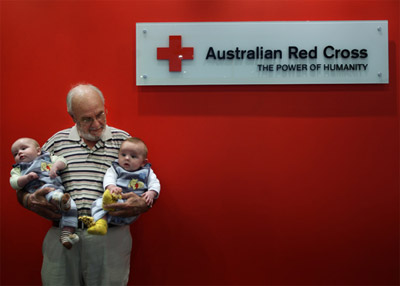
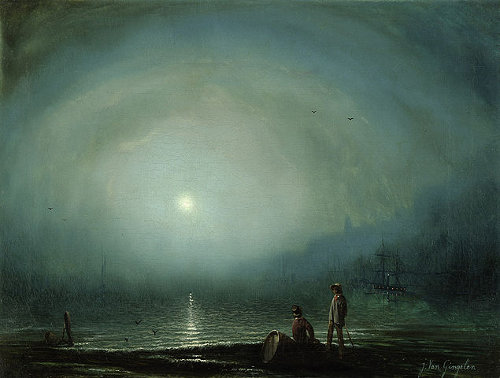
29 Apr 00:15

Photo


28 Apr 02:23

Tumblr

by walkman
28 Apr 02:21

Gumroad

by mark

Gumroad is an easy way to add a micro-payment function to your blog, website, Facebook page, or Twitter — anywhere you can post a link. It allows you to quickly offer digital products — photos, videos, music, apps, PDFs — for small (or large) prices. It is not a marketplace, rather it generates a link that you post so that you can “sell where you share.” When a friend, fan, or follower purchases something off of your page, they get an email with a link for the download from Gumroad’s server. You can set your price anywhere from 0 and up. Gumroad’s cut is 5% + 25 cents per transaction, no setup or monthly fees. That’s a good deal if you are selling things for a few dollars, and better than other digital storefronts. Something priced as low as 99 cents means you get $.69 and Gumroad gets $.30.

For the past year I’ve been using Gumroad to sell a PDF version of my True Films guide to documentary movies for $.99 and the system works great.

-- KK

Gumroad

28 Apr 02:21

SO ROMANTIC

SO ROMANTIC

Submitted by: Unknown

Tagged: romantic , onions , proposing , dating Share on Facebook
28 Apr 02:16

waaaahlbodayz: short-bread: [x] Stephen fry. Stop it. You...


waaaahlbodayz:

short-bread:

[x]

Stephen fry. Stop it.

You are clearly being too smart. You are not of this Earth.

28 Apr 02:14

Gorgeous Pen and Ink Wildlife by Si Scott

by Christopher Jobson

Gorgeous Pen and Ink Wildlife by Si Scott insects illustration black and white animals

Gorgeous Pen and Ink Wildlife by Si Scott insects illustration black and white animals

Gorgeous Pen and Ink Wildlife by Si Scott insects illustration black and white animals

Gorgeous Pen and Ink Wildlife by Si Scott insects illustration black and white animals

Gorgeous Pen and Ink Wildlife by Si Scott insects illustration black and white animals

Gorgeous Pen and Ink Wildlife by Si Scott insects illustration black and white animals

Gorgeous Pen and Ink Wildlife by Si Scott insects illustration black and white animals

Gorgeous Pen and Ink Wildlife by Si Scott insects illustration black and white animals

Gorgeous Pen and Ink Wildlife by Si Scott insects illustration black and white animals

Gorgeous Pen and Ink Wildlife by Si Scott insects illustration black and white animals

Gorgeous Pen and Ink Wildlife by Si Scott insects illustration black and white animals

Manchester-based designer and illustrator Si Scott is known for his energetic and flowing style of illustration that has graced the packaging and advertising for some of the world’s top brands including Nike, Dove, Coca Cola, and many others. Among some of his most impressive works are his stylized illustrations of insects and other wildlife, drawn by hand with pen and ink. I strongly urge you to check out his Resonate series for Silent Studios/Silent Records, and there’s plenty more to see over on Facebook.

28 Apr 02:12

Which are You?

Which are You?

Submitted by: Unknown

Tagged: businesses , bosses , leaders , monday thru friday , g rated Share on Facebook
28 Apr 02:06

http://ffffound.com/image/213154fa99b5933e766d9253a741d39b1ac6542d

by dipre
28 Apr 02:02

Trouble Above

by Greg Ross

http://commons.wikimedia.org/wiki/File:Patent_Drawing_for_a_Flying_Machine,_10-05-1869_-_10-05-1869.jpg

I have fully considered the project of these our modern Dædalists, and am resolved so far to discourage it, as to prevent any person from flying in my time. It would fill the world with innumerable immoralities, and give such occasions for intrigues as people cannot meet with who have nothing but legs to carry them. You should have a couple of lovers make a midnight assignation upon the top of the monument, and see the cupola of St. Paul’s covered with both sexes like the outside of a pigeon-house. Nothing would be more frequent than to see a beau flying in at a garret window, or a gallant giving chaos to his mistress, like a hawk after a lark. There would be no walking in a shady wood without springing a covey of toasts. The poor husband could not dream what was doing over his head. If he were jealous, indeed, he might clip his wife’s wings, but what would this avail when there were flocks of whore-masters perpetually hovering over his house? What concern would the father of a family be in all the time his daughter was upon the wing?

– Joseph Addison, Guardian, July 20, 1713