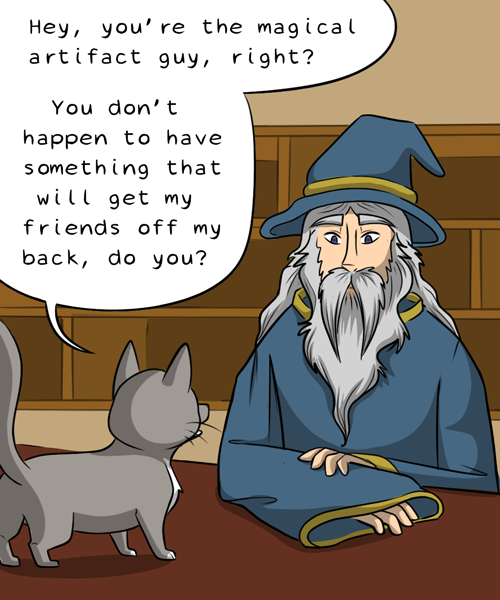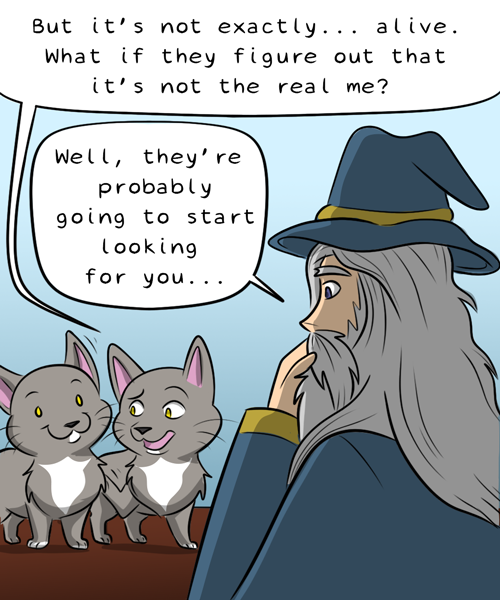






She does look very fake.







The sequel to Frog King 1 that no one asked for.

Remember the Skibidi song we featured a few months ago? Well, the folks from Little Big released a romantic version of the song, and the video that goes along with it is probably the funniest thing you’ll see today. Check it out below!
The post The Skibidi Song Gets a Hilarious Insane Romantic Edition + Music Video appeared first on Geeks are Sexy Technology News.








So she claimed the beast's heaven and made it her own.
(Peppa killed God and then usurped his throne.)


[Via Tickld]
The post Darth Vader is a Hero, Not a Villain. Here’s Why. appeared first on Geeks are Sexy Technology News.

[Source: Chris Hallbeck – Maximumble | Like Maximumble on Facebook | Follow Maximumble on Twitter]
The post That Anime Thing You’re Always Bugging Me About [Comic] appeared first on Geeks are Sexy Technology News.







Runrunrunrunrun run run... *boop*






I'd say this is my first gay horse comic, but it's not.
If humans want to expand into space, it will take us incredible amounts of energy. How do we do that? Easy: we will just use the sun’s energy by realizing the most ambitious construction project in history. This is how it works.
The post How to Build a Dyson Sphere: A Giant Megastructure That Collects Energy from the Sun [Video] appeared first on Geeks are Sexy Technology News.
Sometimes, even Kevin McCallister needs a little help…
Update: The 1990 version vs. the 2018 version (click the picture to enlarge it!):

Click Picture to Enlarge!
The post Macaulay Culkin Recreates Home Alone Scenes for Google [Video] appeared first on Geeks are Sexy Technology News.

Enlarge / Two layers of one of the materials used in this work. (credit: The American Mineralogist Crystal Structure Database)
We seem to be on the cusp of a revolution in storage. Various technologies have been demonstrated that have speed approaching that of current RAM chips but can hold on to the memory when the power shuts off—all without the long-term degradation that flash experiences. Some of these, like phase-change memory and Intel's Optane, have even made it to market. But, so far at least, issues with price and capacity have kept them from widespread adoption.
But that hasn't discouraged researchers from continuing to look for the next greatest thing. In this week's edition, a joint NIST-Purdue University team has used a material that can form atomically thin sheets to make a new form of resistance-based memory. This material can be written in nanoseconds and hold on to that memory without power. The memory appears to work via a fundamentally different mechanism from previous resistance-RAM technologies, but there's a small hitch: we're not actually sure how it works.
There is a series of partly overlapping memory storage technologies that are based on changes in electrical resistance. These are sometimes termed ReRAM and can include memristors. The basic idea is that a material can hold a bit that is read based on whether the electrical resistance is high or whether electrons flow through like it was a metal. In some of these, the resistance can be set across a spectrum that can be divided up, potentially allowing a single piece of material to hold more than one bit.
Read 14 remaining paragraphs | Comments

[Source: System32 Comics on Facebook | System32 Comics on Instagram | System32 Comics on Twitter]
Click This Link for the Full Post > New Folder [Comic]

Enlarge / Buying this innocuous-looking Overwatch loot box could be considered a form of gambling.
Thus far, the fight to regulate video game loot boxes has been a piecemeal effort moving forward in very different ways in different jurisdictions. Today, though, an international group of regulators from 15 European regulation bodies and Washington state in the US signed a declaration stating their increasing concern "with the risks being posed by the blurring of lines between gambling and other forms of digital entertainment such as video gaming."
The declaration identifies four specific areas of concern:
The declaration says that the types of games and services listed above have "similar characteristics to those that led our respective legal frameworks and authorities to provide for the regulation of online gambling." But the signatories don't commit to any specific actions against such games for now, beyond "working together to thoroughly analyze the characteristics of video games and social gaming." The declaration also notes that there are different frameworks for gambling regulation in different countries.
Read 4 remaining paragraphs | Comments
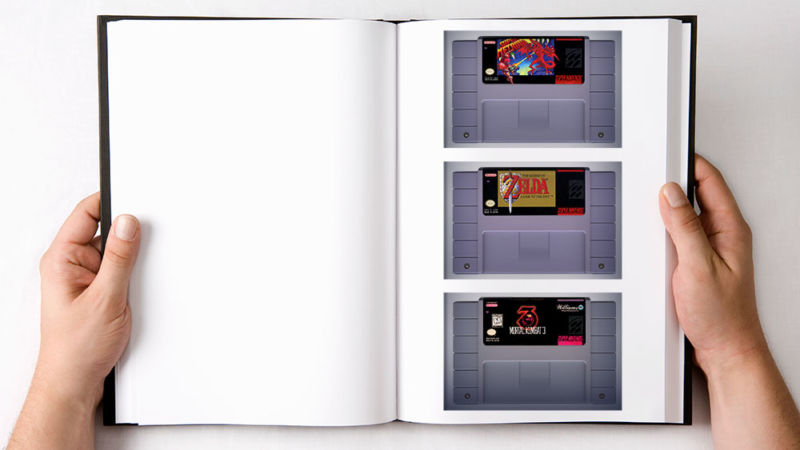
In the last few weeks, a renewed bout of legal action from Nintendo has led to the shutdown of a handful of ROM sites, which previously let users download digital, emulation-ready copies of classic games. This has, in turn, led to a lot of good discussion about the positive and negative effects this kind of ROM collection and distribution has brought to the gaming community.
From a legal standpoint, it's hard to defend sites that revolve around unlimited downloads of copyrighted games. As attorney Michael Lee put it in a recent blog post, "this is classic infringement; there is no defense to this, at all." But as Video Game History Foundation founder Frank Cifaldi tweeted, "there is no alternative BUT piracy for, like, 99 percent of video game history" due to "the completely abysmal job the video game industry has done keeping its games available."
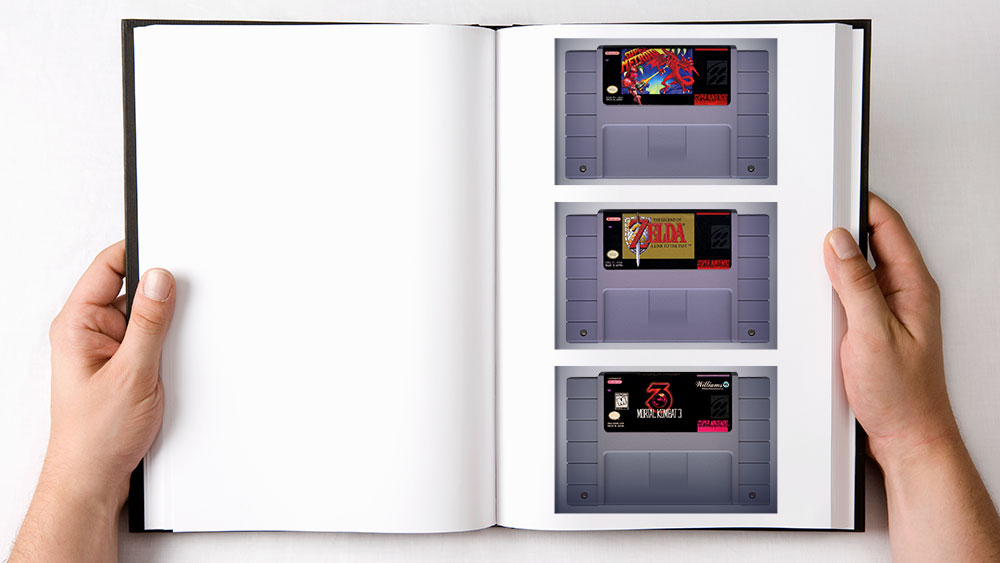
But what if there might be a middle ground that could thread the needle between the legality of original cartridges and the convenience of emulated ROMs? What if an online lending library, temporarily loaning out copies of ROMs tied to individual original cartridges, could satisfy the letter of the law and the interests of game preservation at the same time?
Read 47 remaining paragraphs | Comments