Previously: Episode 4 'The Check'
[convosWith2yrold]
Katesometimes, this is how my meetings go at work.
Katefaaaaascinating. makes me think about that TED talk where the woman advocates "power posing" for young female professionals to gain confidence.
"New research suggests expansive physical settings can lead people to feel powerful, and thus more apt to engage in dishonest behavior. An expansive physical setting may be characterized by having a big desk to stretch out while doing work, or a large driver’s seat in an automobile. Columbia Business School researchers believe body postures influence feelings of power and that these feelings can elicit dishonorable conduct such as stealing, cheating, and even traffic violations."
---
See more posts by Alex Balk
Kateyou guys I was telling my pre-calc teacher this when I was 15.
(um, disclosure, can't even watch this video because math = anxiety trigger)
Here's a great video pondering the objective reality of mathematics, and running down all the different schools of thought on where mathematical truth comes from -- does it exist outside of systems of codification by intelligent beings, as an eternal part of the universe; or is it something that we invent through codification?
Is Math a Feature of the Universe or a Feature of Human Creation? | Idea Channel | PBS (Thanks, Dad!) 
    
|
Kateyay books! some of these were completely new to me... definitely saving for reference
Many people are turning from traditional paper-based books to e-readers these days, and though the demand for printed books might be lessening somewhat, folks are certainly not reading any less! If anything, the ability to download e-books has made it easier for many people to feed their voracious reading habits.
Note: regardless of whether you’re reading e-books on a Kindle, Kobo, Nook, tablet, or even a laptop, you should get a copy of Calibre E-book Management software (a free download): it helps to manage and file all of your e-books, and can convert files to the format that your particular device needs to display everything properly.
Many libraries around the world are now loaning e-books as well as printed copies, so look up your area’s local library website to see if they offer this service.
When you go to Amazon.com (or any of its international sites), click on the Kindle tab, go to e-books, and then search for the word “free”. Just keep in mind that e-books downloaded from Amazon cannot be read on a competitor’s e-reader, so Nooks and Kobos are incompatible. You can, however, read Kindle e-books on your computer, smartphone, tablet, iPad, or any other device; you just need the Kindle App in order to do so.
This site has thousands of titles to choose from in just about any genre imaginable, and if you don’t mind wading through some truly horrendous book cover design, you can find some real treasures. Most of their books are by independent, self-published authors, and they also have titles in Hindi, Tamil, and Marathi.
Daily free e-books are the main feature on this site, and there are some spectacular titles to choose from, including a large number of children’s books and young adult novels. The format is specific to Kindle though, so unless you have a conversion program, you might be out of luck if you’re using a different e-reader.
The website might not be terribly impressive or polished, but they have an extensive selection of books ranging from reference materials to fiction novels. You can find some absolute gems on this site, but be aware that you may come across some broken links on occasion: please report them if and when you do.
If you’re in need of something new to read but aren’t quite sure what you’d like, you can go through the most popular titles and recommendations on this site and read reviews from those who have stopped by before you: maybe you’ll find something brilliant to delve into. There are over 21,000 titles on this site, and they can be downloaded for iPods, PDAs, and e-book readers.
Baen, a free e-book library specifically for sci-fi/fantasy novels, is unique in that all of the books that are available there have been uploaded (or approved for upload) by authors themselves. This is done in the hope that if people enjoy the work they’ve read for free, they will either contribute what they can, or buy print versions of the books.
This site requires you to create an account in order to access their library, but registration is free, and you then have the ability to download as many e-books, magazines, and academic papers as you like. Be forewarned that the vast majority of books on there are self-published, so although you may find the occasional well-written novel on the site, there’s also a lot of dross to sort through.
If you’re looking for e-books on computer languages, web design/programming, or any number of specific programs, this is one of the best places for free resources that you can find online.
A great venue for self-published authors, Scribd gives people the opportunity to upload their own work, and download books by other authors. There’s a small catch: not all the books are free. You can read free excerpts of some novels and then purchase them in their entirety for a nominal fee, but rest assured that there are many spectacular titles available for no charge whatsoever.
This is the place you want to visit if you’re in love with classics. Works by Arthur Conan Doyle, the Brontë sisters, Jane Austen, Tolstoy, and Victor Hugo are just a few of the fabulous reads you can download free of charge here.
A great site with a wide array of read-ables, Daily Free E-books will also send you free reading materials in your genre(s) of choice. It also provides you with an app that can convert the Kindle format to suit whichever device you’re using.
The majority of books on this site are in the sci-fi/fantasy and romance genres, but there are little gems to be found in the other sections as well. Young adult readers may find some unique stories to dive into, and there are a few hundred mystery and horror novels to plough through too.
This site deals specifically with older books such as classic novels and reference materials, and are free in the United States because their copyright has expired. Gutenberg has over 42,000 free e-books available, so even the most voracious reader will have plenty of material to chew through.
Over 400,000 titles reside on the Booksie website, and all can be downloaded for free. They’re all self-published books, so be aware that the content will vary as far as quality is concerned. They do have a large selection of decent children’s books available, so your literary little ones will have plenty of content to enjoy.
For U.S. readers who use the Nook for their e-books, Barnes and Noble has an extensive collection of free materials to download. Now, by “extensive collection” I mean nearly 2 million titles, so you can go hog wild on this site if you’re up for it.
Hundreds of free e-books are available on this site, with subjects ranging from African-American studies to Zoroastrianism. Take your pick and download away.
I don’t know how legit this site is, but there are thousands of popular books by well-known authors available for free, and you can either read the texts right on the site, or download them in formats such as PDF, Epub, RTF, and more.
Consider this “Project Gutenberg”, but for the younger crowd: all the classic books on this site are geared towards the 12-and-under crowd, with titles ranging from Aesop’s fables to faerie tales, mythology, history, and spiritual stories.
Last, but certainly not least, Google Books allows you to search for the title, genre, author, or keyword that you’re most interested in so you can delve into bookish glee without having to shell out any cash.
If you have an Amazon Kindle, then you’ve probably already discovered that the site has a pretty nice library of free books available for download. : Finding Free Books For Your Amazon Kindle
The post 20 Online Resources for Free E-Books appeared first on Lifehack.

|
|
Katei refuse to believe this would be any good.
if it IS good... i may have to invest in some muumuus.

Katesharing is caring
Kateverrrry interesting
Robb S. sent along a great set of images from Vulture. Using case studies of individual leading men in Hollywood, they show that the love interests cast in their films don’t age alongside them over the course of their careers. Not convinced? Here’s nine examples and one exception. For fun, try to guess which leading man bucks the trend? I’ll embed it last.


And the exception is!
(View original at http://thesocietypages.org/socimages)
Kateunited states of the home ruler. huh.


KateIt's the gummy bears that really got me!


Kateright up there with my banana holder.


KateCRAP YOU GUYS I MISSED #CATLADYWEDNESDAY
(jk no I didn't I was just super busy cutting the crusts off the tiny tuna sandwiches i made for bert and stevie's tea party)
Katebut do they do the kitty "loaf" shape?


Kate#catladywednesday ahead of schedule

The mysterious comings and goings of our feline friends just got a little less mysterious. Researchers at the Royal Veterinary College loaded a group of cats in Shamley Green, Surrey, with cameras and GPS trackers to figure out how roaming house cats spend their days.

|
|
KateThe more you know!
Mike the Mad Biologist explains it was an attempt to cut into the business of the streetwalkers who used to ply their wares at the corner of Marlborough and Arlington in the 1970s:
People would hop off Storrow Drive and drive around the block, find, erm, a 'friend', and drive off. Not exactly the kind of tourism the city was hoping for, so the traffic pattern was changed. Hard to believe today, since the penthouse of Zero Marlborough (the corner of Arlington and Marlborough) recently went for $8.8 million.
He actually wrote that as an aside in a post about the new traffic lights that are going in at that intersection, which means the former red-light district is, finally, going to get some red lights.
Kateballpit -> desktop background
KateHadn't heard of Winogrand until I saw an exhibition on him at SF MOMA in April. I felt like I was in a time machine - transported to the 60s, 70s, and 80s in a matter of steps.
[caption id="attachment_170128" align="aligncenter" width="640" caption="Garry Winogrand, proof sheet from 1982 or 1983"] [/caption]
Garry Winogrand used to say that he took photographs of things to see what they would look like as photographs. He took a lot of them. He photographed relentlessly: crowds, zoos, dogs, cars, parties, sidewalks, train stations and women, always more women. He'd describe a good night as "thirty-five rolls." A good year might involve a thousand. He was always slow about editing. He had a rule that he wouldn't even look at an exposure for a year, so that emotion wouldn't cloud his judgment, but towards the end of his life he wasn't even doing that anymore. He just let his rolls pile up in trash cans and in the fridge.
When he died, of gallbladder cancer in 1984, he left behind more than half a million exposures. Most of them were unedited. Most of them he had never even looked at. Winogrand had always been prolific—but this was something else: three hundred thousand pictures (at a minimum), barely sorted, unorganized, with no indication of why or when they were taken. By most counts their quality didn't keep up with their quantity. Thousands were botched, "plagued with technical failures—optical, chemical, and physical flaws—in one hundred permutations." The ones that weren't tended to be either banal or badly composed, but there were so many of them it was hard to get a read on the whole.
The archive Winogrand left behind was an ocean—trackless, infinite, and unsurveyable—and few had the patience to enter into it. Contemplating its immensity, the curator Alex Sweetman imagined a photographic blob, oozing out of its drawers until it blocked traffic on the entire East Side. Leo Rubinfien, the curator of a new retrospective predicated on the idea that the late work wasn't all bad, admits to a severe drop off in quality. And even John Szarkowski, Winogrand's close friend and chief patron, while editing the late work for a posthumous exhibit, found himself feeling first impatient, then angry, and finally convinced that he was the butt of a cruel joke, "designed by the photographer to humiliate him."
Winogrand's late work was a failure. Not only that, it was a failure so grand and ambitious, so vast in its scope and comprehensive in its extent, that it immediately turned into a cautionary tale. What could better embody the seductive ease and terrible difficulty of photography than those three hundred thousand aimless, shambolic pictures? They're a fiasco, a warning and a monument, the medium's Gallipoli and its Xanadu. They combine everything I like in art: obsession, risk, ambition, disaster. Failure can be more interesting than success – and more revealing. I want to know what happened to Winogrand in those final years. What did he think he was doing? Did his talent desert him, or did he stop trusting it? Was he looking for something else entirely, something beyond art or reason? Or is there something peculiar about photography, particularly the kind of photography that makes its practitioners prone to obsession and repetition?

Garry Winogrand.
Garry Winogrand was born in the Bronx in 1928. New York was his native ground and the street was his element; it's where he got his energy and trained his eye. He started taking photographs when he was twenty, after a brief tour in the army and an even briefer stint as a painter. Painting bored him; it was too fussy and too slow. A friend told him that there was a darkroom he could use at Columbia, anytime he wanted, and that was that.It took Winogrand a while to hit his stride. Throughout the fifties he made photographs that were technically strong, but not too original. He took pictures of window shoppers and bums, bathers at Coney Island and party girls at the El Morocco Club. A lot of them hark back to the work of the Photo League from the 1940s. Some look like Ruth Orkin or Dan Weiner, others contain a touch of Henri Cartier-Bresson or a dash of Weegee. Sometimes though, he'd find his way to something new. On a road trip through the southwest in 1957, he took this picture of a baby emerging into the desert out of a dark garage. For a second it seems as if all of America is living in a bomb shelter while atomic light pulverizes the ground outside.
[caption id="attachment_170131" align="aligncenter" width="640" caption="Garry Winogrand, "Albuquerque," 1957; gelatin silver print; The Museum of Modern Art, New York, purchase; © The Estate of Garry Winogrand, courtesy Fraenkel Gallery, San Francisco"] [/caption]
• National Gallery of Art, Washington, D.C., March 2 through June 8, 2014.
• The Metropolitan Museum of Art, New York, June 27 through September 21, 2014.
• The Jeu de Paume, Paris, October 14, 2014 through January 25, 2015.
• Fundacion MAPFRE, Madrid, March 3 through May 10, 2015.
So what makes a Winogrand a Winogrand? He had a couple of stylistic tics—wide angle lenses, tilted perspectives, bright contrasts, massed compositions—but it's easier to define him by what he didn't do than by what he did. Unlike a lot of great photographers, he didn't stake out a territory and call it his own. He wasn't interested in the decisive moment; he'd grab odd juxtapositions as they came along. He stayed in the street or in his car and photographed what he saw. Unlike Diane Arbus, he didn't insinuate himself into the lives of his subjects. Unlike Lee Friedlander, he didn't diffuse the tension in his pictures by making himself a character in them. He didn't have Evans' or Atget's gift for making inanimate objects preternaturally solid, more real than real.
[caption id="attachment_170133" align="aligncenter" width="640" caption="Garry Winogrand, "New York," 1969; gelatin silver print; Collection SFMOMA, gift of Carla Emil and Rich Silverstein; © The Estate of Garry Winogrand, courtesy Fraenkel Gallery, San Francisco"] [/caption]
Maybe it helps to think of the movies. If Henri-Cartier Bresson was the Frank Capra of photography, always looking for the point of sentimental release, and Diane Arbus was its Alfred Hitchcock, upping its quotient of creepy-pleasurable voyeurism – then think of Winogrand as photography's Billy Wilder. Bittersweet comedy was his thing. He was the guy you called to do Sunset Boulevard or The Apartment, to walk the knife edge between funny-silly and funny-sad, to capture the loneliness of brightly lit spaces and to get sexy laughter and situational tragedy into the same frame. He worked by inserting himself into dynamic situations—a crowd, a convention, an airport or a rodeo—and waiting for something develop. He liked cars, dogs and breasts. He was interested in angles and the limits of the picture frame. He liked to fill the whole canvas, and make the corners as interesting as the center. He makes ease look difficult. His pictures often seem offhand and dry in a way that can make it hard to know why you're looking at them. They all seem so casual, until at some point, they suddenly don't.
[caption id="attachment_170135" align="aligncenter" width="640" caption="Garry Winogrand, "Bronx Zoo, New York," 1963, Collection SFMOMA, Gift of Carla Emil and Rich Silverstein; © The Estate of Garry Winogrand, courtesy Fraenkel Gallery, San Francisco "] [/caption]
Take this picture, from Winogrand's book The Animals. Nothing to it: just a man looking at a rhinoceros. But I love it. I like the hard quizzical look the two of them are giving each other. I like the way the man is holding his cigarette. It reminds me of the picture of John Coltrane on the cover of Blue Train, the way he covered his mouth with his hand, the very image of contemplative cool. I like the way the man's cigarette stub echoes the rhino's worn-down horn, like they'd both spent the day smoking, the one a cigarette and the other his life.
I like the classical composition, the big diagonal of the railing and the S of the barrier, and the way Winogrand messes with it, by keeping all the action in the corners. I like that the rhino reaches back to Dürer's woodcut of the same. I like the way Winogrand makes the Renaissance ping pong off of fifties' jazz and that he makes it look so easy you think you could do it yourself. I like that it makes me think of thick skins, and of armor plating and of what it takes to live in the city. I like that it makes me think about what it's like to be an animal in a cage.


Left: John Coltrane, 1957. Right: Albrecht Dürer, 1515.
The sixties were Winogrand's days of wine and roses. He started getting gallery shows, good ones. He quit his job as a commercial photographer and devoted himself to art. He started teaching, informally, out of his apartment. He divorced his first wife, a dancer (he had a thing for dancers) and married his second, a copywriter. He won the Guggenheim, twice. In 1967 Szarkowski included him in the seminal "New Documents" show at MoMa, along with Diane Arbus and Lee Friedlander. Later, Szarkowski called him the "central photographer of his generation," and even if not everyone agreed, his reputation as one of the leading art photographers in America was assured. He was riding high.
[caption id="attachment_170145" align="aligncenter" width="640" caption="7. Garry Winogrand, "New York," 1968; SFMOMA, gift of Dr. L.F. Peede, Jr.; © The Estate of Garry Winogrand, courtesy Fraenkel Gallery, San Francisco"] [/caption]
Ten years later it was all starting to slip away. Winogrand had books in print, he was teaching in universities, but the work wasn't coming easily any more. He moved away from New York, first to Chicago and then to L.A. Tendencies that had kept at bay throughout his career started to get worse. Winogrand was always bad about editing his own work. He used to have a rule about not developing his rolls for at least a year after he took them, so that he wouldn't be swayed by emotion when choosing the best ones—but now he was letting them pile up for years at a time. Winogrand had never been very interested in assembling books. He only ever put one together himself, 1975's Women are Beautiful, which was widely dismissed. (It's still under something of a critical cloud today—possibly because it's a horny, masterpiece of sidewalk voyeurism taken at the apex of the age before bras). All the rest—The Animals, Public Relations, Stock Photographs (they're of a rodeo)—were the work of his friends.
[caption id="attachment_170146" align="aligncenter" width="640" caption="Garry Winogrand, "Fort Worth, Texas," 1975; Collection SFMOMA, gift of Dr. Paul Getz; © The Estate of Garry Winogrand, courtesy Fraenkel Gallery, San Francisco"] [/caption]
Without and end goal, and away from New York, Winogrand's work seemed to lose focus. In his last years he had his printer, Tom Consilvio, drive him around Los Angeles visiting the same locations over and over—the Farmers' Market, Hollywood Boulevard, Grauman's Chinese Theater, Muscle Beach—while taking pictures out of the passenger side window. He rarely left the car, and seldom got close enough to people to make their faces clearly visible. To John Szarkowski, the photos from this time look like attempts at solving a photographic problem of finding "the greatest distance" at which a figure "could be convincingly described," but to an outsider they just look weak: hundreds of shots of curbs, parked cars, street corners, babies in strollers, traffic at intersections piled on top of each other almost at random. By the end, Winogrand wasn't even bothering to focus or keep his camera steady at the moment of exposure. He just clicked away, playing the world like a slot machine and losing every time.
A number of theories have been floated for Winogrand's decline. Personal problems may have been involved. By 1980 Winogrand was on his third marriage, and deeply grieved his lack of contact with the children from his first marriage. He was also sick, with a seriously broken leg and thyroid problems, both of which required surgery and long courses of painkillers. Szarkowski thought it was caused in part by new equipment. In 1982, Winogrand bought a motor-driven Leica, which made it even easier to take multiple photos without hesitation or thought. Some people blame it on Los Angeles itself: it was too big, too bright, too sprawling, too centered on the automobile to work for a true street photographer. Others blame a crisis in street photography itself. The form was saturated: at some point, the theory goes, everything you could photograph out and around—every situation, every ironic pairing of high and low, beautiful and ugly, banal and unexpected—had been captured, leaving nowhere else to go.
Or maybe the spirit simply left him. Talent is fickle: it comes and it goes. Rimbaud did all his writing in his teens. By age twenty he had settled into a life of aggressive, captivating silence. Giorgio De Chirico did all his best work in his twenties. Later in life, he switched from the metaphysical cityscapes that made him famous to a series of cape-wearing horses gamboling on beaches and another of sensuous gladiators—paintings so horrible that by the end of his life he was reduced to forging and back-dating his own work.

Left: Giorgio de Chirico, "Melancholy and Mystery of a Street," 1914. Right: Giorgio de Chirico, "White horse's head with mane in the wind," date unknown.
Bob Dylan, by his own admission, lost it for twenty years, from the mid-70s to the 90s. He describes what it felt like in Chronicles: "The mirror had swung around and I could see the future—an old actor fumbling in garbage cans outside the theater of past triumphs... It was like carrying a package of heavy rotting meat."
In his heyday, Winogrand was like an athlete. He didn't have a program or theory about photography, or a set of interlocking interests. He relied on his reflexes and his skill at making aesthetic decisions in split-second increments. By virtue of its nature, his art also relied on chance. He didn't stage or predetermine anything. I met someone recently who took a class with Winogrand in the seventies. She said he used to tell his students to take as many pictures as they could, to "increase your odds." When he was asked how much of a role accident played in his work, Winogrand replied "99%"—and at some point, his luck just ran out.
[caption id="attachment_170148" align="aligncenter" width="640" caption="Garry Winogrand, contact sheet, 1961"] [/caption]
But if Winogrand felt the diminution in his work, he didn't let it slow him down. He kept right on taking pictures, looking for the thrill, trying to find his way back to the physical sensation of making art and forgetting about the results. This is something that happens to photographers sometimes. Photographs are so easy to make and so hard to make well, that there is always a temptation to make work blindly, letting the work expand towards infinity in the hopes that something will turn up. It's a kind of obsession, or a compulsion. Call it shutter madness.
In the 1940s and 50s, W. Eugene Smith was the leading photojournalist in America. He was a star photographer for Life, then in its heyday. His photographs from Okinawa and Iwo Jima, taken when he was just twenty-six, helped define what the Pacific Theater looked like for a generation of Americans. He was best known for his painstakingly realized, graphically brilliant photo-essays on topics like life in a Spanish Village, Albert Schweitzer's leprosy clinic, a day in the life of an African American midwife in the Deep South. Then, in 1955, he quit and went to work for Magnum. His first assignment was a story on Pittsburgh. It was one chapter in a bigger book, and it was supposed to take three weeks. It ended up taking three years. Smith would wander around the city for forty-eight hours at a time, high on Benzedrine, photographing everything that came in his path. Smith wanted to capture every facet of the city, and incorporate them into a massive book which would be his "critique of the world," lavishly illustrated with over 2,000 glossy photographs. Naturally, his editors balked.

W. Eugene Smith.
Collection Center for Creative Photography, The University of Arizona and © the heirs of W. Eugene Smith.
Smith didn't take the news well. He left his family and moved into a dilapidated loft on Sixth Avenue, near 28th street. He called it his last stand. He imagined was an outlaw holed up in one "of the gunned fortress of old," and pointed cameras out the windows to document everything that happened outside. When he found out that the space below his was used as a practice studio by jazz musicians, he started photographing them too. Then he drilled holes in his floor to record the audio as well. He spent eight years like this, with six cameras in his hands and a floor full of tape recorders at his feet. It was all going to be a part of the same project, his Great Book, the photographic answer to Joyce's Ulysses. All he published was an eight-page spread with the coma-inducing title Drama Beneath a City Window. (Smith eventually donated all his photographs and recording to the Center for Contemporary Photography at the University of Arizona in Tucson, which also houses the Winogrand Archive. The combined weight of material they received was over 44,000 pounds. Some of it was published recently in The Jazz Loft Project, edited by Sam Stephenson, whose biography of Smith, fifteen years in the making, promises to be a masterpiece of the genre.)
Smith's problem was a kind of artistic grandiosity—every project he undertook was going to be the project, the culmination of his life's work, the fullest realization of photojournalism as an art—which made it impossible to finish anything he started. Vivian Maier's difficulty was the opposite: she was infected with a modesty that left her content to work a whole lifetime, at an extraordinary level, without exposure or praise. Maier worked as a nanny for over forty years, first in Manhattan and then on the North Side of Chicago. Over that time, she took thousands of photographs, developing over time into a prolific and technically adept street photographer. Her work is lucid, compassionate and direct. Her style has traces of Helen Levitt, some Robert Doisneau, and a lot of Lisette Model, but is exquisitely its own.

Left: Vivian Maier, "Self-Portrait," 1953. Right: Vivian Maier, "Florida," 1957.
No one knew about Maier's work until 2006, when a real estate agent named John Maloof bought 30,000 of her negatives from an auction house which had previously acquired them from a storage locker she had defaulted on. He subsequently acquired many thousands more, but by the time he figured out her name and tracked her down she had died, at age 83, from a fall on the ice. She left behind over a hundred thousand negatives, but most of those were undeveloped. Her career is a kind of puzzle of artistic epistemology. She must have known she was good; why else would she have kept at it for so long, and with such determination? But at the same time she couldn't have known how good she was, and she doesn't seem to have needed anyone else to know either.
Vivian Maier never seems to have told anyone why she took photographs, or what she hoped to do with them. Winogrand was similar in this respect: he didn't write much, didn't like to explain his work or put forward any theories about its making. His reticence left a lot of people thinking that he was a kind of poet maudite, a primitive who made art unconsciously or on instinct. To John Szarkowski he was a "New York hick," making the most of his extraordinary intelligence... and modest learning." For Tod Papageorge, a photographer and poet who was the closest thing Winogrand had to a disciple, he was like a Buddhist monk or a Zen master, making work automatically and without ego. To Leo Rubinfien, Winogrand was just a "tradesman," who needed Papageorge's insight to reveal the "gravity" of what he himself was doing.
But if you listen to what Winogrand actually said about his work, it becomes clear that he did have an idea of what he was doing. It's true that in lectures and speeches Winogrand could be maddeningly obscure. If someone asked him what he was trying to express with his photographs, he'd say that he was only trying to learn about photography, and if they asked what made a photograph interesting, he'd say the same thing: "If I can learn in a photograph something about photography, that's what makes it interesting. Don't ask me what that is precisely." He was putting the audience off, but he was also expressing a truth about himself.
To Winogrand, still photography was "tantamount to driving a nail in with a saw, when you can use a hammer." But however clumsy, it was a medium of its own, with its own propositions and ethics, and he wanted to pursue those as far as he could. He wasn't ultimately interested in subjects or concepts—in women, or cars, or animals, the 60s, the nuclear age, the falseness of postwar life—he was only interested in how things worked in the frame. He was in love with the uncertainty inherent in the process, still amazed that "when you put a piece of paper in a tray with solution in it, it comes up." He wanted to make photographs that said something about photography, about its essence. In short, he was a purist, a paparazzo of nothing, and that's a hell of a dangerous thing to be.
[caption id="attachment_170151" align="aligncenter" width="640" caption="Garry Winogrand, "Los Angeles," 1964; Collection SFMOMA, gift of Jeffrey Fraenkel; © The Estate of Garry Winogrand, courtesy Fraenkel Gallery, San Francisco "] [/caption]
I think that it's possible that those 300,000 photographs Winogrand left behind have been misunderstood. I think that they weren't a product of his talent dropping off, but instead they were part of an attempt to test the limits of street photography, to see whether he could make his work to be as mundane, random, and accidental as possible and still come out with something worth looking at. Taken this way, those last photographs are as potent and troubling as anything Winogrand ever did. They remind me of a Balzac story called "The Unknown Masterpiece." It's about three painters in 17th-century France. Two artists, a young upstart and an old pro, visit to the workshop of a master named Frenhofer. He's obsessed with the theoretical possibilities of painting, with its ability to imitate living flesh and the tension between color and line. He's been working on a single painting for years. They think it must be a masterpiece. Frenhofer assures them that it's the most perfect representation of a women ever made. But when they get there, all they see is a single, perfectly realized foot. Everything else is obscured by masses of cloud-like color. In his quest to find the essence of painting, Frenhofer dissolved all of its rules, losing himself in a freedom he could no longer master.
In amongst Winogrand's late work there's one series (or at least it looks like a series in retrospect) from L.A that's especially haunting. It's made up of a number of photographs of lone figures standing in the crosswalks. They look forlorn, ravaged, and determined, like they're heading forward with no idea of where they'll wind up. This spring's Winogrand retrospective at SFMOMA uses these pictures to make the case that Winogrand never really lost it, that he kept making great pictures right up to the end—just not as frequently, or in a way that he recognized himself. They've developed a considerable number of never-before-seen works to make their case. But if it were up to me, I would have shown some of the bad ones instead—the meaningless shots of curbs and traffic lights, the blurry streetscapes, the stumbling, crooked random shots of faces in the crowd—hundreds of them, whole floors at a time. That way those last few good ones would really pop, sitting out there alone in all their poignant randomness like a beautiful foot, coalescing out of the fog.
[caption id="attachment_170156" align="aligncenter" width="640" caption="Garry Winogrand, "Los Angeles," ca.1980–83; Garry Winogrand Archive, Center for Creative Photography, University of Arizona; © The Estate of Garry Winogrand, courtesy Fraenkel Gallery, San Francisco"] [/caption]
Jacob Mikanowski writes about art, books and Europe east of Berlin.
---
See more posts by Jacob Mikanowski
Katedon't you DARE set foot in an ikea
For more bizarre auto-suggestions from Google Search, check out the screenshot gallery over at Know Your Meme!
Submitted by: Unknown (via Know Your Meme)
Katei'd give a buffalo nickel to see this whole video
Katethe best yet
Kate#catladywednesdays
KateRDJ?!
by Liz Entman Harper
A 17th-century dandy’s wardrobe rises and falls with his fortunes.
Although the jingle-belled codpieces of the 1540s and the disco suits of the 1970s were something special, my vote for the silliest decade in Western men’s fashion is the 1660s. It was an age of voluminous pirate shirts, elaborate, waist-length wigs, high-heeled shoes, enormous feathered hats, and yard upon yard of candy-colored brocades, silks, and velvets.

This is the age of Restoration, a fun, hot mess of a tale starring Robert Downey Jr. as Robert Merivel, a remarkably gifted and hard-partying doctor who becomes the court veterinarian to King Charles’s beloved spaniels and a husband of convenience to the king’s mistress, before falling out of favor and being forced to practice his art among humbler company.
At the height of Merivel’s favor with the king, he out-dazzles even the women at court. It can sometimes be difficult to tell where he ends and the palace’s upholstery or drapery begins. And he’s got so many clothes on, he can hardly keep up with them all: He can never seem to keep his collar closed or his stockings up; he’s always juggling a walking stick and a hat and ribbons on his shoes; and he has enough fabric flapping around himself to clothe three men. He makes the word “fop” seem like onomatopoeia.

When he is granted a country estate and liberated from the exhausting task of getting dressed every day, he spends much of his time in rich, flowing robes that must have been the 17th-century equivalent of sweatpants. But even this is too much; Merivel always seems like he’s drowning in lace.

He doesn’t really ever get comfortable in his clothes until much later, when he returns to London during the plague. By then he has lost the king’s favor, worked for a while in a Quaker mental asylum, and lost the mother of his child to an emergency cesarean section he had to perform himself. His coats of many colors are long gone; now he’s in sensible grays and blacks, in proportions that fit him. He settles into fatherhood and returns to his calling as a doctor at the plague hospital.

He does don a costume one last time, though, for an incognito visit to court to treat his ex-wife, the king’s mistress. But there is nothing fanciful about what he wears: In addition to his newly sober dark clothes, he wears a historically accurate plague mask, a nightmarish combination of gas mask and bird beak into which purifying herbs were packed to filter the infectious air. If Merivel was a bird of paradise before, he’s a raven of hell now. But although sin always seemed to come easily to Merivel, evil never did. In the end, he brings hope to the king, who in turn restores Merivel to Eden, or at least a suburb of it.

|
|
Katei take umbrage with buckwheat's placement, it is the LEAST metal.
 20. Oats
19. Wheat
18. Rice
17. Barley
16. Corn
15. Buckwheat
14. Spelt
13. Rye
12. Grano
11. Farro
10. Bulgur
9. Millet
8. Triticale
7. Emmer
6. Kaniwa
5. Sorghum
4. Einkorn
3. Teff
2. Kamut
1. Amaranth
---
See more posts by Dave Bry
Katewuuuuut?!
 You know that moment when you sit down, take a sip of beer and instantly feel the stress melt off your shoulders? That feeling is biological. According to a recent study, "our brains start to release euphoric signals in response to the taste of beer, even before alcohol even gets into our blood," reports The Atlantic. "Our bodies anticipate the effects of alcohol by a conditioned response, like Pavlov's dogs."
Katementally filing away this excuse for later use.
Client attempt to help me understand what went wrong.
Katethis, too, is my superpower. i have yet to find one this season though, so this might be the year that i go through a series of disheartening setbacks, decide to hang up my clover-cloak, and then, after a series of emotionally fraught challenges and a lawn-related threat to a loved one, go on an four-leaf clover finding mission of epic proportions to save our planet.

My superpower is being able to find four-leaf clovers. It’s not very handy but, hey, the luck might rub off. This patch was one I spotted next to a sidewalk last month and it was so full of perfect four and five-leaf clovers I couldn’t bring myself to actually pick any.
Staring at that patch I realized that I still didn’t know if four-leaf clovers are caused by mutation or a recessive gene and looking at the Wikipedia article on four-leaf clovers it appears that the answer is that science doesn’t really know either, that it’s sort of both. Some points about clover that I particularly liked from that entry:
By the way, I find that early Summer and early Autumn are the best times to look for four-leaf clovers. They appear most in clover beds that have been undisturbed for a while (meaning: nobody has cut the grass in a while). My favorite place to look for clovers is in farm fields while walking through a pumpkin patch. The biggest and most perfect four-leaf clovers I’ve ever seen were in a fallow patch of a community garden. Go forth and stare intently at the ground. And good luck.
Katebookmarking to browse the comments for when I think *I'M* having a bad day...
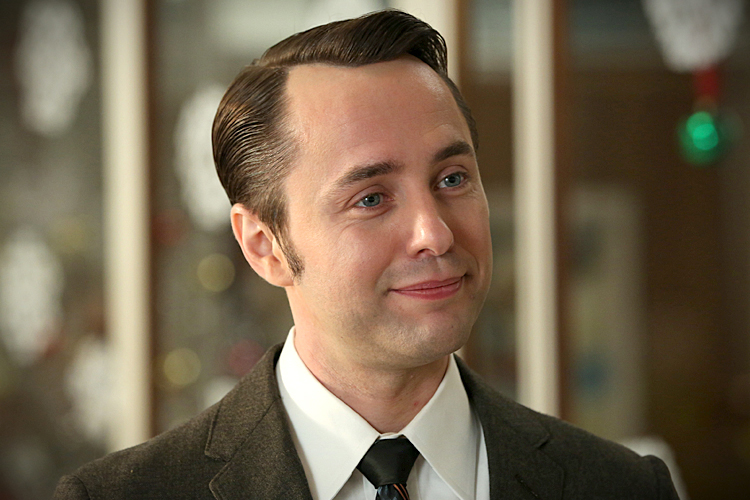 We’ve heard lots of stories of odd coworkers here — like the one leaving fingernail clippings in a reader’s desk, or the one who had problems keeping his eyes off women’s chests, or the one moonlighting as a prostitute on her lunch breaks. But I feel certain that we’ve just scratched the surface.
Since it’s Friday, why not tell us all about your weirdest coworker ever? Leave no detail out, particularly any that are bizarre, salacious, or otherwise likely to entertain.
I’d also love to hear if you think you’ve ever been the weird coworker, and why.
Kateholy mother of all things honey-soaked.


 |
| Mmmmmm honey syrup. |