Shared posts

16 Jul 18:20

Rowling and "Galbraith": an authorial analysis

by Ben Zimmer

The Sunday (UK) Times recently revealed that J.K. Rowling wrote the detective novel The Cuckoo's Calling under the pen name Robert Galbraith. The newspaper explained that, as part of their investigation, they sought the assistance of two scholars who have developed software to help with authorship attribution: Peter Millican of Oxford University and Patrick Juola of Duquesne University. Given the public interest in the Rowling revelation, I asked Patrick to write a guest post describing the authorial analysis that he conducted. (For more on the story, see my post on the Wall Street Journal's Speakeasy blog.)

[Guest post by Patrick Juola]


With the recent announcement by London's Sunday Times that J.K. Rowling had written the recently published novel The Cuckoo's Calling, several people have asked about the process that led up to this. I'm grateful to Ben Zimmer for giving me a chance to write a bit about it.

BACKGROUND

I don't know how much background most linguists have in "forensic stylometry." The basic theory is pretty simple: language is a set of choices, and speakers and writers tend to fall into habitual, or at least common, choices. Some choices come from dialect (the reason an Englishman drives a lorry but an American a truck), some from social pressure (if I need to impress someone with my vocabulary, I can utilize a polysyllabic lexicon instead of just using big words), and some just seem to come. An example of the latter category is in the use of many function words. If you ask yourself where the salad fork is relative to the plate, you quickly realize that it's usually to the left of the plate. Or is it? It's just as likely to be "on" the left of the plate, "at" the left of the plate, or perhaps "to" the left SIDE of the plate. Same fork, same position, and at least four different choices for how to describe it, none of which correspond to any sociolinguistic or cognitive variable with which I'm familiar.

But what we do know is that much of this apparently free variation is actually rather static at least at an individual level. So by studying examples of documents a person has written, we can build a model of the kind of choices that person makes. The idea that we can use quantifiable models of this kind of linguistic choice is hardly new. It dates back at least to the logician Augustus de Morgan (yes, de Morgan's rule), who proposed in the mid-19th century that average word length could be used to settle questions of disputed authorship. Mosteller and Wallace studied the writing styles of The Federalist Papers in the mid-60s and showed, for example, that Alexander Hamilton never used the word "whilst" but that James Madison never used the word "while." More interestingly, they both used the word "by," but Madison consistently used it twice as often.

PROBLEM STATEMENT

I was approached by a reporter, Cal Flyn, from the Sunday Times, to assess this kind of variation in the writings of "Robert Galbraith," a first-time novelist and author of The Cuckoo's Calling. (I learned later from the papers that the paper had received an anonymous tip via Twitter that Galbraith was the pen name of J.K. Rowling. And in retrospect there were a lot of other clues as well. For example, Galbraith apparently was surprisingly good at describing women's clothing, possibly suggesting a female author.) Would I be willing to look into this? I said yes, of course, but with a couple of conditions. First, I needed clean (machine readable) copies of Cuckoo, and clean samples of something comparable undisputedly by Rowling herself. Secondly, I needed other comparable samples from other writers (distractor authors, to use the common term) to assess the degree of variation.

For the past ten years or so, I've been working on a software project to assess stylistic similarity automatically, and at the same time, test different stylistic features to see how well they distinguish authors. De Morgan's idea of average word lengths, for example, works — sort of. If you actually get a group of documents together and compare how different they are in average word length, you quickly learn two things. First, most people are average in word length, just as most people are average in height. Very few people actually write using loads of very long words, and few write with very small words, either. Second, you learn that average word length isn't necessarily stable for a given author. Writing a letter to your cousin will have a different vocabulary than a professional article to be published in Nature. So it works, but not necessarily well. A better approach is not to use average word length, but to look at the overall distribution of word lengths. Still better is to use other measures, such as the frequency of specific words or word stems (e.g., how often did Madison use "by"?), and better yet is to use a combination of features and analyses, essentially analyzing the same data with different methods and seeing what the most consistent findings are. That's the approach I took.

MATERIALS, METHODS, & MATHS

I was given e-text copies of Cuckoo to compare against Rowling's own The Casual Vacancy, Ruth Rendell's The St. Zita Society, P.D. James' The Private Patient and Val McDermid's The Wire in the Blood. Fortunately, these were relatively clean copies and required little attention; deleting front and back matter, plus a little bit of issue regarding some non-standard punctuation, mostly quotations marks. The JGAAP program handles issues like normalizing whitespace and stripping punctuation in a straightforward manner. I broke Cuckoo into chunks of 1000 lines (the last chunk was incomplete) and compared each chunk individually against the baseline model built from each of the four candidate novels.

The heart of this analysis, of course, is in the details of the word "compared." Compared what, specifically, and how, specifically. I actually ran four separate types of analyses focusing on four different linguistic variables. While anything can in theory be an informative variable, my work focuses on variables that are easy to compute and that generate a lot of data from a given passage of language. One variable that I used, for example, is the distribution of word lengths. Each novel has a lot of words, each word has a length, and so one can get a robust vector of <X>% of the words in this document have exactly <Y> letters. Using a distance formula (for the mathematically minded, I used the normalized cosine distance formula instead of the more traditional Euclidean distance you remember from high school), I was able to get a measurement of similarity, with 0.0 being identity and progressively higher numbers being greater dissimilarity.

Of the 11 sections of Cuckoo, six were closest (in distribution of word lengths) to Rowling, five to James. No one else got a mention.

Another feature I used were the 100 most common words. What percentage of the document were "the," what were "of," and so on. Again, a rich data set that is easy to extract by computer. Using an otherwise similar analysis (including cosine distance again), four of the sections were Rowling-like, four were McDermid-like, and the other three split between James and Rendell.

I ran two tests based on authorial vocabulary. The first was on the distribution of character 4-grams, groups of four adjacent characters. These could be words, parts of words (like four letters "nsid" that would be inside the word "inside") or even parts of two words (like the four letters "n th" as part of the phrase "in the"). This particular unit of analysis has been shown to be very accurate at determining authorship, and there's a very good article by Efstathios Stamatatos that just came out in the Journal of Law and Policy describing why. I also ran on word bigrams, pairs of adjacent words, again a feature with a good track record.

The character 4-grams showed a preference for McDermid, with 8 sections close to her. Three were Rowling-like, and no one else was mentioned. The word pairs, on the other hand, were clearly Rowling-like (9 sections, against 2 by McDermid, no one else mentioned).

RESULTS

So, the final score? The results look "mixed," but pointing strongly to Rowlng. There were certainly a couple of likely losers: nothing at all pointed to Rendell as a possible author, and only one test, and an unreliable one at that, suggested James. McDermid could be a reasonable candidate author, but the word length distribution seemed almost entirely uncharacteristic of her. The only person consistently suggested by every analysis was Rowling, who showed up as the winner or the runner-up in each instance.

Does this prove that Rowling wrote Cuckoo? Of course not. All it really "proves" — suggests, rather — is that out of the four authors studied, the most likely candidate author is probably Rowling. But it could easily also be by someone who, by accident or design, wrote like Rowling. (Certainly one could do worse than imitate the style of one of the most successful writers of this generation.) It was fair to say that there was a lot of evidence pointing Rowling as the author and nothing specifically suggesting that she wasn't. It was certainly enough for the Sunday Times to use as part of their package when they approached Rowling's agent and asked, directly, "Did J.K. Rowling write The Cuckoo's Calling?" Less than a day later, Rowling confirmed through a spokesman that she had indeed written the novel, and the story launched.

DISCUSSION

It's always nice when a mystery story closes with a confession by the person responsible, and this is no different. This satisfactory conclusion came from several factors, most notably the cooperation of Rowling herself. Nothing in the analysis constituted "proof" of Rowling's authorship; it was at best "suggestive" or perhaps "indicative." In the event that we were studying a long-dead author, this is the kind of thing that could and would be argued about in the journals for decades.

At the same time, we can do some crude statistics about the likelihood that a randomly chosen author would have a style that similar to Rowling, and by extension how strong this suggestion really is. Out of four candidates, Rowling was consistently #1 or #2 (i.e., in the more similar half) of each feature chosen; it's therefore only 50/50 that a randomly chosen author would be in the more similar half. With four studies (handwaving independence assumptions), there's therefore only one chance in 16 that the person would "pass" all studies as being similar to Rowling. If we needed a stronger suggestion, we could easily gather more data, more distractor authors, or simply run more experiments on different variables.

Another key aspect of this study was the high quality of data. Many historical and literary studies start from scanned or retyped texts, often of quite poor quality. Starting from e-books minimized the noise and made the study much more practical (as well as faster). Finally, the good detective work done by the Sunday Times team in identifying a reasonable candidate author as well as some good distractors who were similar in many important respects (gender, dialect, genre, time period) made the comparisons easy and straightforward and therefore more reliable.

Ultimately, the proof of any technology, of course, is in the results. Forensic stylometry has a long history of successes mixed with the occasional failure. Ultimately, empirical testing like this project will be key to determining what specific techniques can minimize this chance of failure and hence maximize the usefulness of this kind of analysis.
16 Jul 17:12

3B Printing: Bees Create Bottle for Dewar’s Whiskey

by Steph
[ By Steph in Design & Products & Packaging. ]

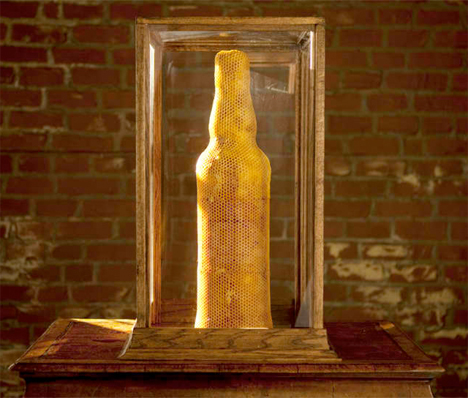
3B Printing Honeycomb Bottle
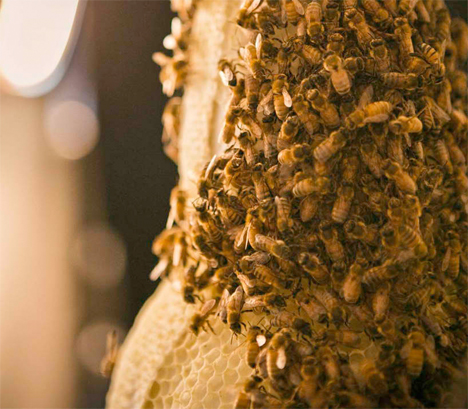
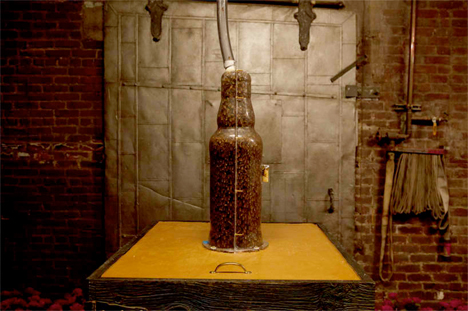
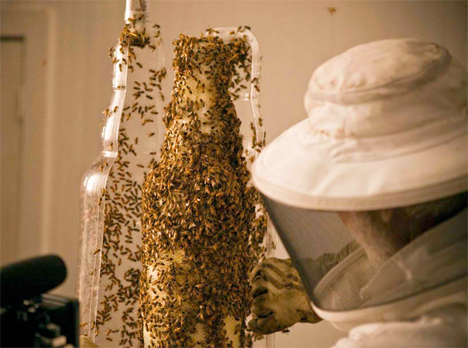
This ’3D-printed’ bottle wasn’t made by a machine, unless you consider an army of industrious honeybees a machine. For a new Dewar’s Whiskey campaign, 80,000 highlander honey bees producing the prime ingredient for its new highlander honey whiskey were enlisted to work on a side project: a three-dimensional bottle made of honeycomb.

3B Printing Whiskey Bottle Bees 2

The bees were placed inside a vessel that mimics their usual hive setup in all ways except one: the shape. They quickly got to work creating the honeycomb bottle. Sid Lee Creative Studio and The Ebeling Group call it ’3B Printing.’ Watch the video to see the process in action.

3B Printing Whiskey Bottle Bees 3
3B Printing Whiskey Bottle Bees 4

This isn’t the first time living creatures have been put to work on creating three-dimensional projects. The MIT Media Lab created a “collaboration between digital and biological fabrication” with a network of silk threads made by a CNC machine, which was then covered in a natural netting made by dozens of silkworms squirming all over its surfaces.

Share on Facebook

[ By Steph in Design & Products & Packaging. ]

[ WebUrbanist | Archives | Galleries | Privacy | TOS ]


16 Jul 17:06

Concussion Risk Unlikely To Be Affected By Different Types Of Helmet

40,000 high school football kids get a concussion every year, but contrary to equipment manufacturers' claims, the specific brand of helmet and helmet age were not associated with lower risk of concussion, say researchers presenting their work at the American Orthopaedic Society for Sports Medicine's Annual Meeting in Chicago, IL...
16 Jul 17:05

Child Bonding Problem For Some Premature Babies Is "Neurological Brain Effect"

Babies born prematurely may have trouble bonding with their parents as a result of "neurological impairments," according to a study published in the journal Archives of Disease in Childhood: Fetal and Neonatal Edition...
15 Jul 19:12

Bitchslap: A Column About Women and Fighting: Column 46: We Will Lift Each Other Up by Susan Schorn

Ten years ago this spring I was at the Texas State Capitol protesting the start of the Iraq War, and trying not to throw up, because I was newly pregnant.

This year, I find myself back at the pink granite dome protesting a different kind of war. Now, rather than harboring a walnut-sized, puke-inducing embryo in my body, I am the proud mother of a nine-year-old daughter who is big enough—I shit you not—to pick her mother up in the air and hold her there. And don’t assume, either, that I’m one of those whisper-thin wonder moms who magically produce healthy, robust children from hips the width of a Pez dispenser. No indeed. I weigh 130 pounds naked and starving. My daughter is a strong girl, and she’s going to be an even stronger woman.

She will need to be.

“Oh, are you going to the rally?” asked the young woman in the ladies’ room at work. She’d seen the orange T-shirt I was changing into. Yes, I told her; I was leaving work early to head over to the Capitol. Was she going too? “I am! Only I don’t have anything orange to wear,” she confided, then pointed to her bright auburn hair and said, “but my hair is orange!” I assured her she was born to attend this rally.

Orange signified that we believed in a woman’s right to control her own body before, during, and after pregnancy. Those who disagreed—supporters of a proposed law that would severely curtail access to legal abortion in Texas—would be wearing blue. I had mixed feelings about this visual segregation; it struck me as a good way to ensure that people on opposite sides of the controversy didn’t accidentally discover they had anything in common. But I own an orange shirt from my karate school, featuring two brawling ladies in Victorian dress and bearing the legend FIGHT LIKE A GIRL, which seemed germane to the discussion, so I wore it. When I climbed on the bus near campus, I saw a wall of orange shirts.

The short bus ride was like a miniature women’s caucus on wheels. “Did you hear what they just did in Ohio?” a twenty-something women standing in the aisle next to me spluttered to her companions. I didn’t hear their replies; I was trying to avoid being poked in the eye by her homemade protest sign (MY body, MY choice!). We disembarked into a carnival atmosphere on the capitol lawn, and strolled up the sidewalk past a cheerful protester handing out wire coat hangers.

The grounds were packed with entire orange-clad families: children, parents, and grandparents. There were teenagers, college students, and middle-aged ladies like myself; thousands of people, yet within minutes of arriving, I had met a black belt from my karate school who now lives in Scotland, the drummer in my band, and a woman who works down the hall from me. I met new people too. They complimented me on my shirt, and I took pictures of their signs.

I circulated through the crowd, hoping for a glimpse of the rumored counter-protesters, and finally spied two men in blue shirts holding a giant poster of a bloody fetus and staring grimly at the crowd. A steady trickle of orange-shirted people drifted over to stand in front of them, obscuring the picture by holding their own signs up in front of it. There was some maneuvering, and jostling, and words were exchanged, and then a contingent of mounted police rode up to impress everyone with the need for good behavior. Their horses wore Plexiglass eyeshields and looked embarrassed about it. One of the horses, with impeccable timing, took an enormous dump on the sidewalk right behind the blue-shirted men—an innovative community policing tactic that was remarkably effective in dispersing the crowd peacefully.

The image on the men’s sign, when I finally had a clear view of it, struck me as neither revolting nor tragic; merely sad, a reminder that the vast majority of life never makes it out of the starting gate. Those are the bitter odds. My sturdy, noisy, beautiful daughter was one of the lucky ones; she made it through the clump-of-nausea-inducing-tissue stage to full-fledge personhood. And I was lucky too; her presence in my body was planned, and welcomed, and didn’t endanger my life. Many other women aren’t so lucky.

Pregnancy is a transition, a time of overlap, when one organism gradually shapes another into something approaching independent existence. There are few clear-cut milestones on this journey; it is at one and the same time a miracle, and a complex, failure-prone mechanical process. Ten years ago when I stood on the Capitol steps holding a sign that said, MAKE SENSE, NOT WAR, my daughter was not yet a child. She was a possibility that might or might not have come to fruition; a sketch Nature had made on a cocktail napkin. My body had control over the long process of building her into a person, and therefore I believe my mind had a say in the matter as well.

Some people disagree. Inside the Capitol, more of the blue-shirted opposition were huddled together, praying, in the big, echo-laden rotunda. Many of them wore red tape over their mouths with the word LIFE printed on it. As the rally outside wound down, orange shirts began flooding into the building, and quickly outnumbered the blue. Someone started to sing “Amazing Grace,” and then someone else began chanting “Not the church! Not the state! Only we can decide our fate!” and from then on cacophony reigned in the rotunda.

Edging through the uproar, I saw a mother kneeling in prayer with her two small children, tears running down her face, the kids casting occasional puzzled looks around them but bowing their heads obediently. I was fascinated by all tightly clasped, prayerful hands among the blue-shirted; hands that gripped each other so tightly the knuckles stood out white against the flesh. What are you holding on to? I wondered. What are you so afraid to let go of?

I saw two older, blue-clad ladies with tape-sealed mouths and rosary-wrapped fingers, holding a banner that bore the image of Our Lady of Guadalupe. Their lips twitched behind the red tape as they silently mouthed Hail Marys and Our Fathers. I haven’t said the Rosary since my grandmother’s funeral; I’m not sure I’d remember how. I wondered what my grandmother would have thought of these two women. She prayed all the time, my grandmother did, but she would never, ever have put tape over her mouth. Nor would she have considered other women to be anything but fools for doing so. The women in my family called bullshit on the glorious martyrdom of motherhood generations ago. They lived at the mercy of a church that touted self-sacrifice as the highest feminine calling; they saw the results close up, and they had no trouble spotting the manipulative strings of male privilege attached to that ideal.

Part of me wanted to tell these women about my grandmother. Part of me wanted to tell them, “You’re the reason I left the church.” But I stayed silent. The red tape made it clear they weren’t interested in conversation, and I wasn’t interested in a walk-on role in their civic Passion Play. Nor would the chanting and the praying and the singing have made them any more likely to hear what I was trying to say.

But even the tumult in the rotunda couldn’t drown out the voices still echoing in my head from the week before; the voices of politicians pushing the law I and so many others were here to protest.

“Get them out!” Sen. Donna Campbell had shouted to security guards near the end of Sen. Wendy Davis’s filibuster against the legislation, as hundreds of women spoke out from the Senate gallery. “I want them out of here!”

“The louder they scream,” Gov. Rick Perry said of these women who resisted the government’s controlling hand on their most intimate body parts, “the more we know that we are getting something done.”

Lt. Gov. David Dewhurst called those who dared to open their tape-free mouths in such an unladylike way “an unruly mob.” He blamed “the media” for “inciting a riot,” and set his staffers to work reviewing video footage from the filibuster to see whom he could have arrested (nobody, as of this writing).

Rep. Jonathan Strickland, in a weirdly boastful interview, told reporters he had cowered inside his office until 1:30 a.m. after the filibuster, because protesters had “yelled threats and verbal abuse at him.” He claimed he’d received death threats on Facebook, and that his “favorite” threat was from “this female” who said she wanted to “pummel my face in.” (For the record: that was not me.) He also hinted that he’d be carrying a gun when the next special session began. “I very, very often do concealed-carry,” humble-bragged this pansy-assed politician who is terrified by the anger of women whom he wants to force to bear unwanted children.

“DO YOU SEE THE RAPE CULTURE HERE?” I had asked on Twitter after the filibuster, a cri de couer that evoked many sympathetic replies, as well as furious anger from the small but noisy corner of the Internet where condemnation of abortion, love of guns, and a fervent belief in pick-up artistry overlap. There’s no such thing as rape culture, these people advised. Abortion is wrong, because we say so. If you can’t see how simple it is, keep your mouth shut. I was surprised they didn’t offer me some red tape.

It can be dispiriting, seeing your government and fellow citizens’ enthusiasm for laws that will harm or kill thousands of women. It’s infuriating to hear the unapologetically sexist language they employ. But this fight—this noisy, ugly fight—is proof of something much more heartening to me, as a woman and as a mother: When democracy fails, community stands in the breach, and holds out its arms.

The protests in Texas are community in action—my community, one that values my body and my right to control it. The young women making their way to the protest with me, my long-time friends in the crowd, the stalwart ladies with their signs and coat hangers—if abortion were illegal and my daughter needed one, these are the people to whom I would turn. They wouldn’t clasp their hands and weep. They would take my hand. They would find ways help.

The fathers and grandfathers standing out in the hot Texas sun, with shirts saying WE WON’T GO BACK. The doctors and nurses whose expert testimony was ignored by lawmakers. Even the two mischievous young men who, during the House Committee hearings the night after the rally, procured a couple of fetching blue dresses and mingled ostentatiously with the blue-shirted crowd, reveling in the discomfort they caused. This gathering is a different kind of congress, one where we help and support each another instead of seeking to demonize, punish, and control. The protests have brought us together and the fight has forged bonds far stronger than mere friendship. Strangers send pizza and doughnuts to those waiting to testify. Room numbers, hearing times, and rule changes are broadcast instantly via a huge, informal social media network. Women comfort one another as they bear witness to past tragedies. Everyone reaching out, lifting up; intertwining our lives by choice.

This is the community I want my daughter to be a member of, the movement I want her to contribute her strength to. That we are standing in opposition to this or that lawmaker, one religion or another, is not important. What matters is that we stand together. We will not be held down. We are strong, and we will lift each other up.

15 Jul 18:52

Brand Logos Stimulate Color Memories, Study Shows

The familiarity of popular brand logos and brand names increases the memory of color, according to a study published in the journal PLOS ONE. Researchers from Japan conducted two experiments with a number of undergraduate and graduate students to determine whether the memorized color of objects was dependent on their familiarity, using brand names and logos...
10 Jul 15:03

Iris the Eye-Controlled Camera: Blink Twice to Take a Picture

by Urbanist
[ By WebUrbanist in Gadgets & Geekery & Technology. ]

lens camera photographer subject

Simple, intuitive and innovative for the everyday photographer, Iris promises even more to the disabled, letting anyone control capture area, zoom level, the moment of a shot and other features … all with only eye movements.

Mimi Zou is a graduate of the Royal College of Art developed this eye-tracking camera design around biometric technology. The device can recognize people on both sides of the lens by their eyes – the person taking the picture (so it can pre-load preferred settings) as well as the person being photographed.

lense camera screen interface

A translucent screen inhabits the center of the circular device, allowing you to get an augmented-reality look at your subject matter, with optional overlays indicating prominent buildings or other features of the built environment you may wish to capture.

lense camera iris invention

Narrow your eyelids to zoom in, then open wide to zoom back out. Focus on a spot, blink twice, and a photo is taken. If a friend is recognized in the frame, there is also an option to tag them on the spot. And all of this functionality is rolled up into what looks like a cylindrical lens without a camera.

lense camera hand held

As of right now it remains a working model, but with luck, time and funding it might become the next wave in ever-more-minimalist photographic contraptions, and particularly powerful image-taking aid for those who cannot use hands to easily hold and point a camera.

Share on Facebook

[ By WebUrbanist in Gadgets & Geekery & Technology. ]

[ WebUrbanist | Archives | Galleries | Privacy | TOS ]


10 Jul 14:01

Angel’s Envy Louisville Distilling Company To Build New Distillery in Downtown Louisville

by Tom Fischer

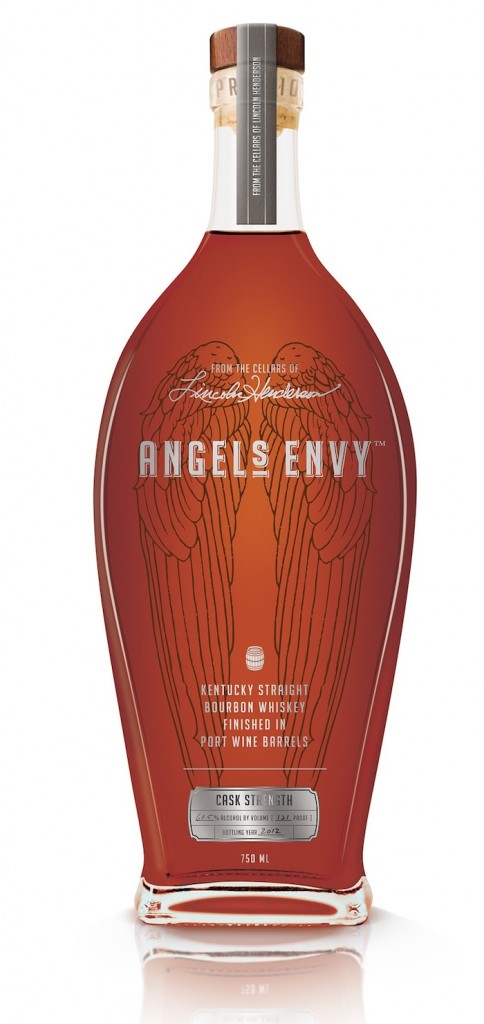
Angels Envy Bourbon

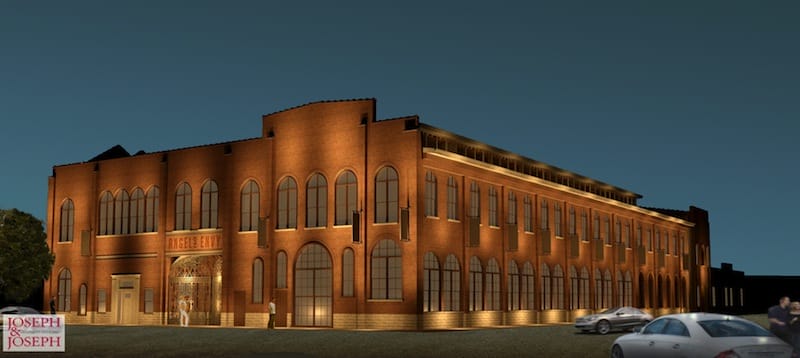
Angel's Envy Bourbon Distillery, Louisville, KentuckyLouisville Distilling Co. LLC, producers of Angel’s Envy tells BourbonBlog.com that they will oon construct a new state-of-the-art distillery and brand experience center in downtown Louisville (see planned photos above and at the bottom of this story).
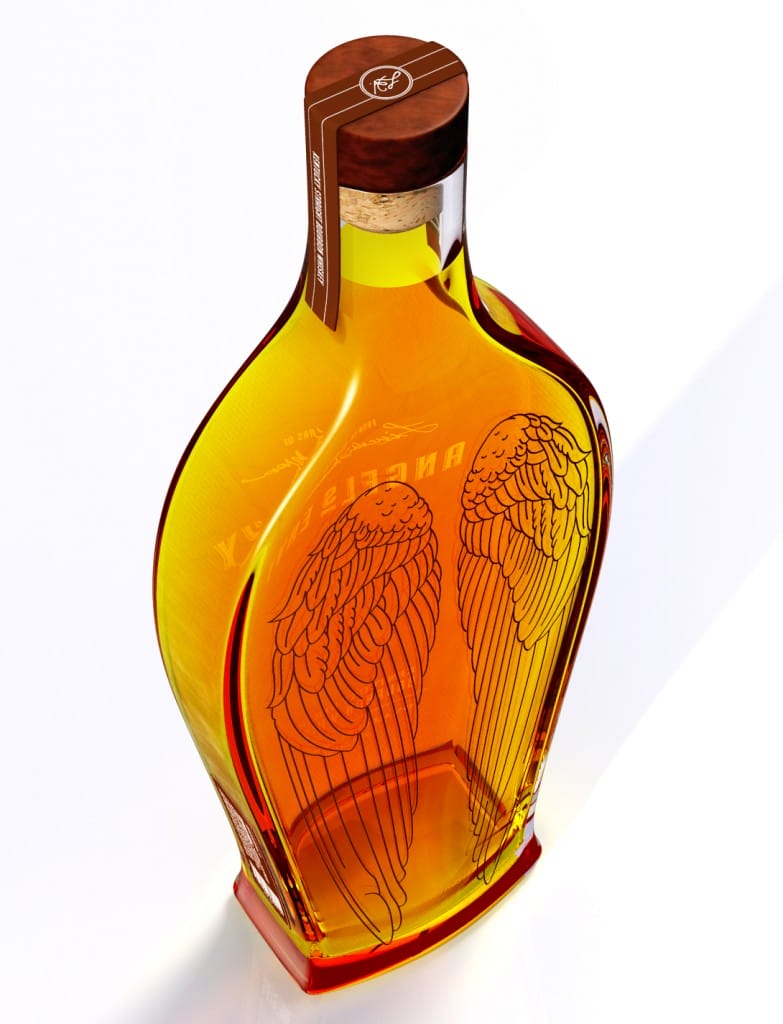
It was annoucnced today at a press conference and ribbon cutting Slugger Field with Louisville Mayor Greg Fischer and Kentucky Governor Steve Beshear

We’ve been following the story of Angel’s Envy and the Henderson Family since the beginning as BourbonBlog.com was the first media outlet to review both their original release of Angel’s Envy Bourbon in 2010 and their new Angel’s Envy Rye (see video below)

The company has concluded a deal with the State of Kentucky for the purchase of property on the corner of Main Street and Jackson, formerly known at the Vermont American Building and Baer Fabrics.

Angels Envy Bourbon bottle“We are thrilled to have such an amazing location for our new distillery, ” Marc Bushala, President and CEO of Angel’s Share Brands LLC, the parent company of Louisville Distilling Co. LLC tells BourbonBlog.com. “We have spent the past two years evaluating potential sites in downtown Louisville, looking for the perfect property. The City has been great to work with and very supportive in our efforts to find the ideal location.”

Louisville Distilling Co. plans to invest approximately $12 million in the renovation of the Vermont American and Baer Fabrics buildings and equipment. LDI has hired Louisville-based Joseph & Joseph Architects to manage the project, which will house the Angel’s Envy distillery operations, as well as a “brand experience” center that will be open to the public and include guided tours of the distillery.

Master Distiller Lincoln Henderson noted, “I feel blessed to do what I truly love to do. It is a dream come true to have my own distillery on Main Street in downtown Louisville.”

Wes Henderson, son of Lincoln Henderson and C.O.O. for Angel’s Share Brands added, “We are constructing a fully functioning distillery, from milling of grains to blending and bottling on site. The Angel’s Envy distillery will be a must-see experience on the Urban Bourbon Trail.”

The Company also announced today that Louisville based private equity firm Blue Equity, LLC has made a significant investment in its parent company, Angel’s Share Brands.

Blue Equity, LLC Chairman and Managing Director Jonathan Blue said, “We are very pleased to have joined the investment group at Angel’s Envy. In just a few years, Angel’s Envy has been recognized as one of the best bourbons on the market. With the launch of the new distillery and brand experience center, the future looks even brighter for this incredible brand.”

“This is an exciting addition to Kentucky’s vibrant bourbon industry, with Angel’s Share Brands creating 40 new jobs and investing $10 million in a new distillery,” said Gov. Steve Beshear. “As bourbon continues to gain in popularity across the world, we will continue to work hard to foster new opportunities for jobs and investment.”

Kentucky Governor Steve Beshear addresses a crowd at Slugger Field in Louisville about the Louisville Distilling Company announcement “We are delighted that Angel’s Envy has selected Main Street for its Louisville distillery,” said Louisville Mayor Greg Fischer. “It is exciting that we will have an iconic bourbon brand as part of the history and culture that makes up this vital corridor of Louisville’s downtown.”

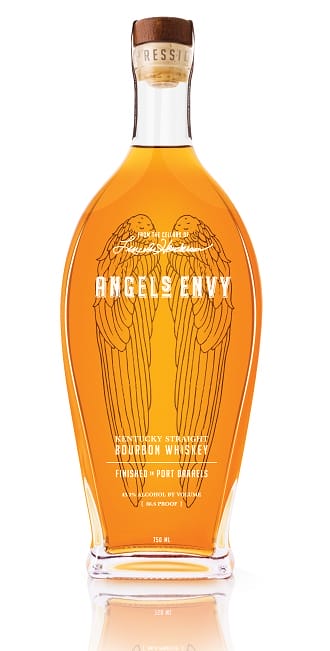
Louisville Distilling Company expects the new distillery to be up and running in 2014.

Video Review of Angel’s Envy Rye and Interview with The Henderson Family

×

Angel’s Envy three Expressions to-date

Each expression shows Lincoln Henderson’s passion for experimenting outside of conventional norms and producing unique whiskey steeped in tradition, but finished with a twist.

Angels Envy Port Bourbon Angel’s Envy Bourbon Port Cask Finish, which is distilled for an unparalleled smoothness, aged for 4-6 years in American white oak barrels and finished
in hand-selected port casks for an incremental 3-6 months.

Now available in more than 20 U.S. markets and China. We reviewed it first on BourbonBlog.com before any other media outlet on this link.


Also, this expression earned a 98/100 points from Wine Enthusiast magazine — the highest-ever rating for a bourbon — and five stars (highest recommendation) from F. Paul Pacult’s Spirit Journal


Angels Envy Rye

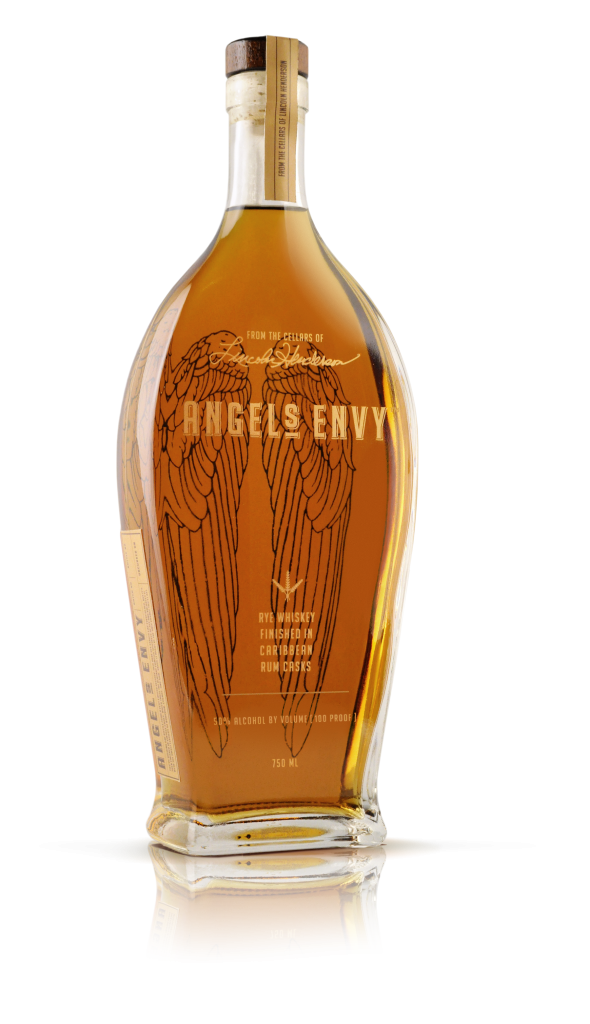
Angel’s Envy Rye Whiskey, a new Expression made with 95% rye and 5% malted barley
that’s aged for at least six years in new American, charred oak barrels
and finished in hand-selected Caribbean rum casks for up to 18 months.

BourbonBlog.com was the first to review it in the video above. Now available in select markets, including Kentucky

Angel's Envy Cask Strength BourbonAngel’s Envy Cask Strength, a sold-out November 2012 limited release in Kentucky and

Nashville, Tenn., which is aged to the perfect level of richness and
maturity in the few American white oak barrels that made the cut.


Louisville Distilling Company, downtown Louisville, Kentucky

09 Jul 15:32

Bizarre Inventions: 15 Idiotic Ideas from the Past

by Steph
[ By Steph in Technology & Vintage & Retro. ]

Bizarre inventions main

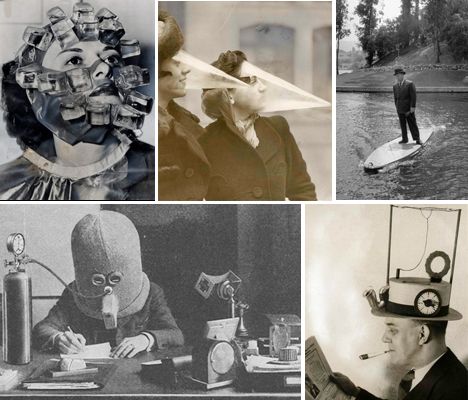
For every invention that actually makes it to production, there are dozens of failed ideas, most of which failed for very good reasons. Like the fact that they’re painfully inefficient, totally unnecessary or just plain bizarre.  These 15 weird and wacky creations developed between the 1920s and 1970s might be ridiculous, but they’re fun to look (and laugh) at.

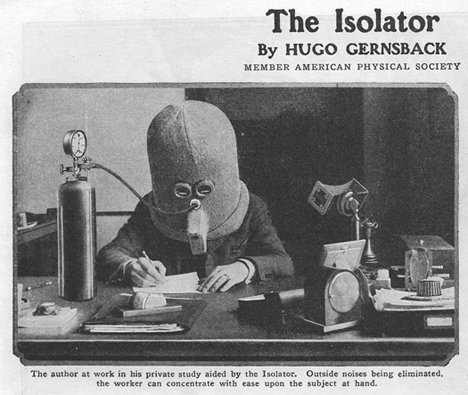
The Isolator

Bizarre inventions the isolator

The Isolator, by Hugo Gernsback: a terrifying hood with an attached oxygen tank, for when you want to be really, really isolated. “Outside noises being eliminated, the worker can concentrate with ease upon the subject at hand.”

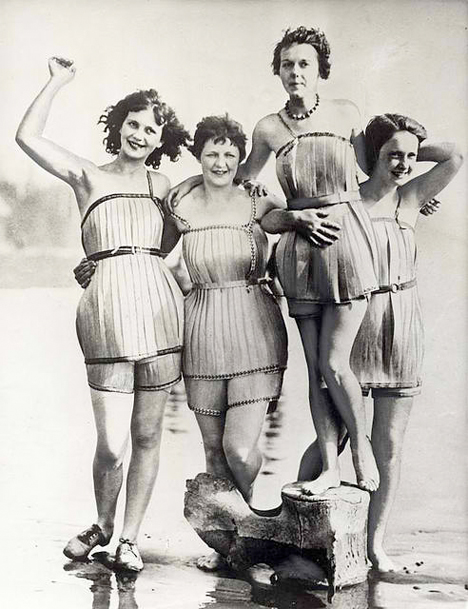
Wooden Swimsuits

Bizarre Inventions Wooden Swimsuit

Swimsuits have come a long way since the days when they were long-sleeved wool monstrosities, but this wooden swimsuit invention, pictured in Washington State in 1929, wasn’t exactly a step forward.

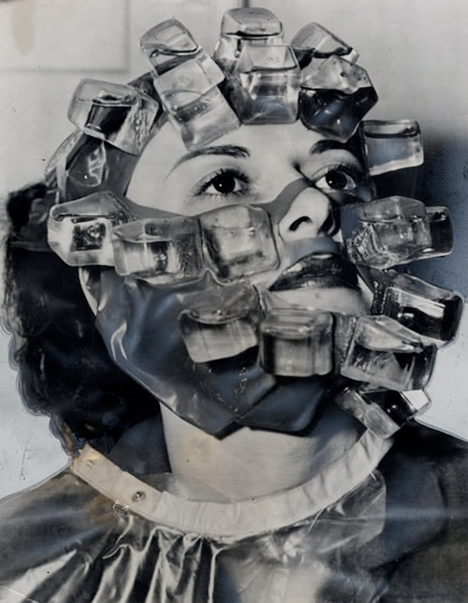
Hangover Mask

Bizarre inventions hangover mask

Nothing will make you feel better when you’re suffering from a hangover than a mask that looks like this.

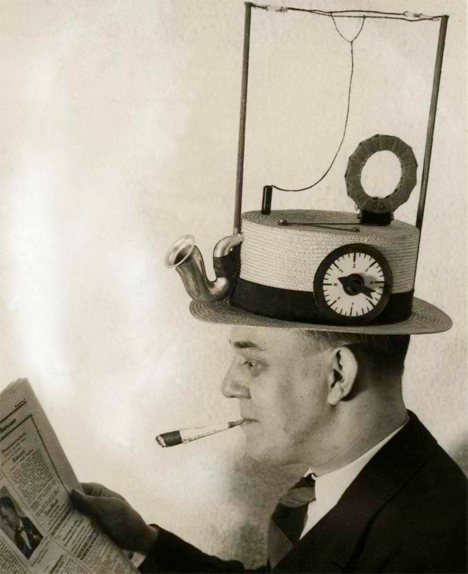
Radio Hat

Bizarre Inventions Radio Hat

All this poor guy wanted was an iPod. The portable straw radio hat was made by an American inventor in 1931.

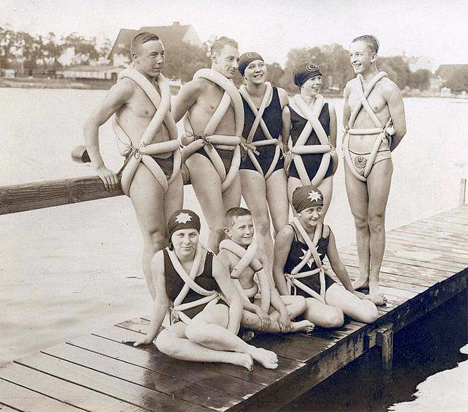
Bicycle Tire Swimming Aid

Bizarre Inventions Inner Tube Swimming Aid

This group of teenagers in 1925 Germany seem pretty proud of their invention, a swimming aid made of bicycle tires.

Next Page:
Bizarre Inventions 15 Idiotic Ideas From The Past

Share on Facebook

[ By Steph in Technology & Vintage & Retro. ]

[ WebUrbanist | Archives | Galleries | Privacy | TOS ]


08 Jul 14:40

Every once in a blue moon…

by Kerry

Here’s something we rarely see around here: a happy ending!

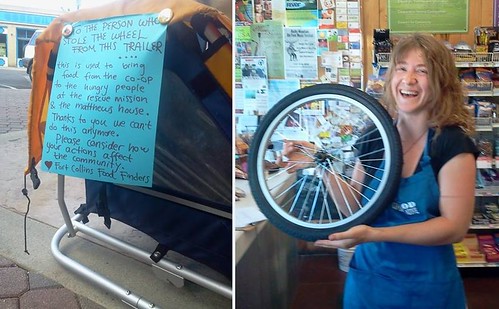
Explains Amanda in Fort Collins, Colorado:  “Last week, the trailer that lives outside the Food Co-op had its wheel stolen, and they weren’t able to do the food drop-off. Disgruntled, Karen put this sign on the sad, one-wheeled trailer.”

TO THE PERSON WHO STOLE THE WHEEL FROM THIS TRAILER...this is used to bring food from the co-op to the hungry people of the rescue mission & the Matthews house. Thanks to you we can't do this anymore. Please consider how your actions affect the community. ? Fort Collins Food Finders

Then, Amanda says, “Three days ago, a man came into the co-op. He walked up to the register and, without saying anything, put a BRAND NEW trailer wheel on the counter. ‘I saw your sign,’ he said. ‘I used to eat at the Mission, but now I don’t need to. I wanted to bring you this.’” Then he walked out.

related: The Good Samaritan

30 Jun 20:13

Meet The Fredericks

by awkward

That’s right. Frederick.

(submitted by Greg)


29 Jun 01:23

Sleep Deprivation Boosts Anticipatory Anxiety, Making Us Tired And Edgy

UC Berkeley researchers have found that a lack of sleep, which is common in anxiety disorders, may play a key role in ramping up the brain regions that contribute to excessive worrying. Neuroscientists have found that sleep deprivation amplifies anticipatory anxiety by firing up the brain's amygdala and insular cortex, regions associated with emotional processing...
28 Jun 21:57

Lola Donoghue’s Abstract Artwork

by Marni Katz

Lola Donoghue’s Abstract Artwork

This week’s installment of CMYLK features the work of Lola Donoghue, an Irish artist based in western Ireland, in County Galway. Trained in the fine arts, Donoghue also studied fashion design. We made Colourlovers palettes for three of her original abstract pieces.

Lola Donoghues Abstract Artwork in art  Category

Lola Donoghues Abstract Artwork in art  Category

28 Jun 21:51

Six Plainclothes Cops Attack and Arrest University of Virginia Sorority Woman After She Buys Water From Grocery Store

by Brian Doherty

Modern policing! Public safety! No amount of snarky irony can prepare you for this tale of police idiocy in the name of the most minor and absurd of laws, reported in Daily Progress out of Virginia:

When a half-dozen men and a woman in street clothes closed in on University of Virginia student Elizabeth Daly, 20, she and two roommates panicked.

That led to Daly spending a night and an afternoon in the Albemarle-Charlottesville Regional Jail. Her initial offense? Walking to her car with bottled water, cookie dough and ice cream just purchased from the Harris Teeter in the Barracks Road Shopping Center for a sorority benefit fundraiser.

A group of state Alcoholic Beverage Control agents clad in plainclothes approached her, suspecting the blue carton of LaCroix sparkling water to be a 12-pack of beer. Police say one of the agents jumped on the hood of her car. She says one drew a gun. Unsure of who they were, Daly tried to flee the darkened parking lot.

"They were showing unidentifiable badges after they approached us, but we became frightened, as they were not in anything close to a uniform," she recalled Thursday in a written account of the April 11 incident.

"I couldn't put my windows down unless I started my car, and when I started my car they began yelling to not move the car, not to start the car. They began trying to break the windows. My roommates and I were ... terrified," Daly stated.

The authorities agree with her tale, but, you know, she had pissed the cops off by then.

Charlottesville Commonwealth's Attorney Dave Chapman read Daly's account and said it was factually consistent.

Prosecutors say she apologized profusely when she realized who the agents were. But that wasn't good enough for ABC agents, who charged her with three felonies. Prosecutors withdrew those charges Thursday in Charlottesville General District Court, but Daly still can't understand why she sat in jail....

Agents charged Daly with two counts of assaulting a law enforcement officer and one count of eluding police, all Class 6 felonies carrying a maximum penalty of five years in prison and $2,500 in fines per offense....

Daly incurred the assault charges when she "grazed" two agents with her SUV, according to court records. She drove the SUV past the agents after her front-seat passenger, in a panic, yelled at Daly to "go, go, go" and climbed into the rear of the vehicle to gain space from the men on her side of the car, the records state...

Oh, the irony!

The women dialed 911 as they pulled out of the parking lot to report what was happening and ask whether the agents were police officers. Daly said she was planning to drive to a police station. She stopped the SUV nearby for an agent driving a vehicle with lights and sirens, Chapman said.

25 Jun 20:55

I Love You To Death

by awkward
Aebmiller

i love this

“The couple on the right are my great-great grandparents. I have no idea why they are pointing guns at each other.”

(submitted by Meagan)


25 Jun 20:33

How far up the garden path can a Time Lord go?

by Mark Liberman

[From here via David Morris, who adds that we should not doubt the seriousness of the doctor's situation]

25 Jun 20:25

Share Your Favorite Kentucky Quotation

by Glenda

I love this Daniel Boone quotation about Kentucky.  Do you have a favorite quotation by a Kentuckian or about Kentucky? Please share them with me and I will select a couple to add to my photographs. 


24 Jun 23:20

Laughter is Good Medicine: Biblical Ways to Kill Children

by Suzanne Calulu
Apparently the Bible does have some ways when it’s a-okay to kill children. Very odd! Doesn’t explain why but here’s the list of how for those folks that believe in following every letter of the Bible.           Comments open below NLQ Recommended Reading … ‘Breaking Their Will: Shedding Light on Religious [Read More...]
24 Jun 20:43

Gorgeous Quilled Map of the World

by Laura Cochrane
quilled map of the world25-year-old Minnesota native Amber Rousse made this gorgeous quilled map of the world, over a period of six months. She started out by drawing the map on thin cardboard. Then she tackled the land first, accounting for mountains by making taller quilled pieces. When the land was finished, she made large, gorgeous sweeping swirls of green to represent the ocean, and then filled in the rest.

Read more on MAKE

22 Jun 01:39

Bugger

by Jon

Today we’re saying hello to scifi author Orson Scott Card, by means of a giant flaming finger of fuck held aloft in his homophobic direction. Love the man’s writing but I can’t read it anymore without hating myself.

Seriously, guys, have you bought SFAM 2 yet? Why are you still waiting? it’s not going to get any more awesome.

13 Jun 18:47

Scan Predicts Whether Therapy or Meds Will Best Lift Depression

by ScienceDaily
Aebmiller

WOW

Source: ScienceDaily

Pre-treatment scans of brain activity predicted whether depressed patients would best achieve remission with an antidepressant medication or psychotherapy, in a study that may help mental health treatment decision-making move beyond trial-and-error. The study sought to identify a biomarker that could predict which type of treatment a patient would benefit from based on the state of his or her brain.

Brought to you by SocialPsychology Network

13 Jun 16:31

Calvin and Hobbes for Wednesday, June 12, 2013

by Bill Watterson
12 Jun 17:19

Frequent Soccer Ball "Heading" May Lead to Brain Injury

by ScienceDaily
Aebmiller

I've been saying this for years...

Source: ScienceDaily

Researchers have shown that soccer players who frequently head the ball have brain abnormalities resembling those found in patients with concussion (mild traumatic brain injury). The study used advanced imaging techniques and cognitive tests that assessed memory.

Brought to you by SocialPsychology Network

10 Jun 19:21

Eye Candy for Today: Rubens’ portrait of wife, son and self

by Charley Parker

Rubens, His Wife Lelena Fourment, and Their Son Frans
Rubens, His Wife Lelena Fourment, and Their Son Frans, Peter Paul Rubens

This painting, showing the artist with his second wife and their son, is part affection, part pride and part advertisement for the artist’s prowess as a painter.

In the Metropolitan Museum of Art. Use Fullscreen link and zoom or download arrow.

08 Jun 14:03

Yoga Improves Brain Function More Than Aerobic Exercises

People have significantly superior brain function after a bout of yoga exercise compared to aerobic exercise, researchers from the University of Illinois at Urbana-Champaign reported in the Journal of Physical Activity & Health. The authors, as background information, explained that yoga has become more popular over the last decade...
07 Jun 19:57

The Interrupting Llama

by awkward

He’ll wait.

(submitted by Katie)


07 Jun 19:27

Soda or Pop? Maps of Regional Food Dialects

by Anjali Prasertong

Soda or Pop? Maps of Regional Food Dialects

Pecan. Do you pronounce it pee-KAHN or PEE-can? Is that fizzy beverage called soda, pop, coke, or a soft drink? Crawfish, crayfish, crawdad, or critter I don't have a name for? Travel around the United States and you'll find a number of differences in the words people use for all kinds of food and drink, which one linguistics student has compiled into a series of fun and fascinating maps. Take a look and learn a new pronunciation — or even an entirely new word!

More


19 May 22:59

A far-flung Nostratic colony in the Andes

by Mark Liberman

In "The Inca Connection: A Quechua Word Game", 5/18/2013, Piotr Gąsiorowski compares "a 200-word Swadesh list for Southern Quechua and the Tower of Babel 'Eurasiatic' etymologies", and finds 22 clear matches. He notes that "There are only twenty-two matches because I got bored too soon, but it’s an easy game", and concludes

I think I have already demonstrated beyond reasonable doubt that the Quechua people are a lost Nostratic tribe. Note that the semantic matches are impeccable and the similarity of the words is quite obvious to any open-minded observer. Indeed, the matches are much better than many of those in the LWED. The quality of examples 1, 2, 3, 4, 5, 6, and 9, in particular, is guaranteed by the fact that they represent statistically certified ultraconserved Eurasiatic vocabulary (Pagel et al. 2013). The famous items ‘mother’, ‘bark’, and ‘worm’ are among them. […]

But there is more to Quechua than just its Eurasiatic affinities. It seems to be particularly close to Proto-Indo-European. Compare the Quechua numerals pichqa ‘5’ and suqta ‘6’ = PIE *penkʷe, *sweḱs, clearly a common Indo-Quechuan innovation not shared with any other Eurasiatic group. I can’t reveal too much at present, but mark my words: you’ll read about it in Nature one day – or Science, perhaps, or PNAS.

Certainly the current reviewing standards at Nature, Science, and PNAS (at least for speech- and language-related papers) will allow and even encourage this future bombshell, if only Piotr can be persuaded to hold his nose and write the paper.

I leave it as an exercise for the reader to integrate the Quechua data into the statistical analysis of Pagel et al. 2013. While you're at it, you could incorporate the Quechua/Sinitic correspondences revealed in Mark Rosenfelder's prescient 1996 work "Deriving Proto-World with tools you probably have at home". A quote from that source worth repeating:

When I first posted this stuff to the Net, one gentleman wondered aloud (wondered anet?) if I might have proved that Chinese and Quechua are related. Some days it's not worth getting out of bed.

Similar words with similar meanings do not prove that languages are related. They might point to a relationship– but they might also be due to borrowing ('gung ho' really is from Chinese); they might be due to universal processes like babytalk or onomatopoeia; and above all they may just be chance.

This seems to be hard for some people to accept. Just look at ren and runa, or gaijin and goyim, they seem to think– how could that possibly be due to chance?

These people should be treated with respect. They are the people who made Las Vegas what it is today.

What are the chances of finding maliq'a-style pseudo-cognates? Well, empirically, based on my experiences finding the above Quechua/Chinese list, the answer is "One half." That is, with a little ingenuity, and given languages with reasonably compatible phonologies, you can find a 'cognate' between two unrelated languages about once out of every two words you try.

[h/t to Ben Zimmer and Languagehat. See "Ultraconserved words? Really??", 5/8/2013, and "Scrabble tips for time travelers", 2/26/2009, for background.]

19 May 20:59

T-Shirts & Apparel : Officially Licensed Star Trek Pajama Set

Aebmiller

I am pretty sure we need these, leah

Dreams of the stars These officially licensed Star Trek: TOS pajamas are 100% cotton, super comfy, and a ThinkGeek exclusive. Get yours in Kirk Gold, Scotty Red, or Spock Blue. $39.99
19 May 20:56

Two uncomfortable truths: New Merida looks a little whorey. Fewer people care about this than you would think.

by Jenny the bloggess

Ugh. 

I sort of already hate myself from weighing in on this but people keep asking me to tweet about it and forward their petitions, and I really thought it would quiet down by now but it hasn’t, so I’m going to give my big, fat, stupid, irrelevant and probably wrong opinion on the changes Disney made from the original I-might-trust-her-to-babysit-my-kid-when-she’s-a-little-older Merida to get-the-fuck-away-from-my-husband Merida.

There are all sorts of calls to action to get Disney to admit that the new Merida looks a bit skanky and they’ve met with some success and that’s awesome.  Go team.  I hope you succeed.  But (in my opinion – stop yelling at me) the majority of people do not give a shit.  Mostly because we’re busy personally teaching our kids what strong women look like instead of letting Disney do it for us.  And in a way, Disney did us a favor here.  Did you have a talk with your kid about the new Merida? Because if you didn’t you missed a good opportunity to see where your kid stands on this, and to talk to them about over-sexualization.

I showed the new Merida to my eight-year-old and she assumed that it was Merida’s evil twin.  Which actually would make an awesome story, and personally I plan to tell stray children I see buying backpacks with the new Merida on them that the original Merida was eaten by the new Evil Merida because she was so hungry.  And they will probably believe it because seriously, look at her waist…the girl needs a damn sandwich.

Anyway, my incredibly dumb and probably ill-informed point is that it’s really uncomfortable to see a strong, child-like character get tarted up and flash bedroom eyes at you, but it’s equally sucky to rely on a giant corporation to teach your kids what strong women look like.  Strong women look like Amelia Earhart, Rosie the Riveter, Asmaa Mahfouz, or Elizabeth Smart. Or Wonder Woman, or Sally Ride or Sojourner Truth, or Amy Poehler, or Ada Lovelace, or Anne Frank.  Or your grandmother.

Or you.

I support and admire the men and women who speak out in the cause of feminism, but let’s not lose sight of the fact that there are so many amazing women who may never end up on a lunch box (Wonder Woman and Word Girl excluded) but who can make a great difference in the life and perceptions of our sons and daughters.

Okay.  Your turn.  Who’s your favorite female hero?

PS.  There aren’t any right or wrong answers here.  It’s totally okay to like pretty dresses and sexy princesses.  It’s totally okay not to.  No judgment.  Probably.