Zoobia Shahnaz of New York allegedly defrauded banks and converted the proceeds to Bitcoin and similar cryptocurrencies, the proceeds of which were then laundered and moved to overseas funds to support the Islamic State. (AP Photo/Kin Cheung, File) Kin Cheung
Bitcoin falls 10% amid Chinese crackdown on cryptocurrencies
Bitcoin prices fell almost 10% on Monday thanks to China's recent crackdown on cryptocurrency mining, highlighting volatility in the virtual currency market.
China's central bank on Monday said it had asked banks and payment institutions to crack down harder on cryptocurrency trading, Reutersreported.
China's political cabinet, the State Council, said last month that it would aggressively push to squash cryptocurrency mining and trading in order to reduce and control financial risks in the Chinese market.
Many cryptocurrencies, including Bitcoin, must be digitally "mined" by high-powered computers that solve complex math problems in order to produce new bitcoins, a process that is time and energy intensive.
The Chinese government authorities in the southern province of Sichuan on Friday required all bitcoin mining projects in the region to close.
Crypto mining has been a lucrative business with large demand in China, accounting for more than half of global bitcoin production so far.
Bitcoin value has fallen 20% in the last six days and hit its lowest point in 12 days on Monday, at $32,094.
The world's most traded cryptocurrency has faced immense instability in the past few months, after its April peak of almost $65,000.
In the United States, the IRS commissioner earlier this month asked Congress for new authority and resources in order to regulate cryptocurrencies for better tax collection and to avoid frauds and scams.
Most cryptocurrency transactions are pseudonymous because they obscure the identity of those trading coins, but the blockchain technology that enables cryptocurrencies uses a public ledger that allows for less privacy than some may realize.
Cryptocurrencies make up a small share of business transactions, the Treasury Department has noted, but a huge increase in cryptocurrency investing in the past year suggests digital coin use could become more frequent.
google took a credible AZ audit show, "Vote Liz Harris" off. I hope someone shoots Sundar Pichai
If they can’t cheat, they can’t win.
The Arizona Republican Party Tweeted another fantastic Arizona Audit update by AZGOP Chairwoman Dr. Kelli Ward.
The hand-count portion has concluded, excluding a very small number of Braille ballots that are still being counted. The forensic imaging of ballots is continuing and OVER 100,000 ballots per day are being inspected.
The Gateway Pundit previously reported that this process will complete by June 26.
GOP Arizona Chair Dr. Kelli Ward also provided an update on the lawsuit by Attorney General Mark Brnovich vs. the Democratic National Committee. The DNC has been working since 2016 to make it easier to cheat in Arizona elections, through ballot harvesting. The Arizona case is now in the U.S. Supreme Court and Dr. Ward expects a decision this month.
Dr. Kelli Ward: Hello Arizona, it is time for the daily update from the Republican Party of Arizona. I’m your Chairwoman, Dr. Kelli Ward.
Now, I want you to know we are going to continue to monitor the progress of the full forensic audit of the 2020 Maricopa County election. As we told you yesterday the hand count is done, except for the Braille ballots and those Braille ballots do require a Braille expert to count. Obviously, we are also monitoring, though, an election integrity case at the United States Supreme Court that will have a big impact, big here in Arizona we passed a law that bans the practice known as ballot harvesting.
In the past, Democrats in Arizona, and Democrats in other states have sent people out to collect mail in ballots from large numbers of people, and then turn them in, either at the post office, or to the county election center or to drop boxes that are just randomly out in the public. I know that you know that this is a horrible idea. First, it creates a chain of custody problem. Who knows what happens to those ballots when they leave the hands of the voters, if they were in the hands of the voters to start with? Also, how do we know that those ballots were actually filled out before they were handed over? Ballot harvesting is part of why it is so important to clean up the registered voter lists in our counties, ballot harvesters and voting lists filled with people who have passed away, or who have moved out of state is a recipe that is ripe for fraud.
As you would expect the ballot harvesting law was challenged by liberal groups in court lawfare, the Republican Party of Arizona has been monitoring this case from the start knowing how important it is for election integrity. It’s made its way all the way to the United States Supreme Court, which held hearings in March, the case, Brnovich v. Democratic National Committee is expected to have a ruling sometime this month, we are hoping for a good outcome. So while the Arizona audit is vital, we are not taking our eyes off of other important election integrity matters, and other important political matters. Let’s hope in the next few days we are going to be celebrating a victory, a victory for election integrity at the U.S. Supreme Court. And remember, here at the Republican Party of Arizona, it is always America first. I’ll see you next time.
Would you hand your ballot to a stranger?
Democrats argue that minorities NEED to do this!
In 2016 Democratic groups sued Arizona, claiming that their ballot-collection law was “adversely and disparately impacting the electoral opportunities of Hispanic, African American, and Native American Arizonans.” After years of fighting, it will be decided this month by the U.S. Supreme court
Arizona’s ballot-collection law, passed in 2016, prohibits a person other than the voter, a family member, the U.S. Postal Service, or election officials, from handling absentee or mail-in ballots
Democrats think non-Asian minorities are NOT capable of voting alone. Either that or they want to steal minority votes.
Maybe both?
This is true Racism. This is the party of Jim Crow voter suppression. Now they’re just getting fancier.
More than 7,000 people have signed a petition calling for Amazon founder Jeff Bezos to be denied re-entry to Earth after he launches for space next month. Bezos plans to fly with his brother and two other people...
This article breaks down Exhibit 8 and Exhibit 9 in the Lindell v. Dominion / Smartmatic case filed on June 3, 2021. In Part 1, we summarized Exhibits 1-4. In Part 2, we looked at Exhibits 5-7. We also published a separate article with a focus on Exhibit 12.
Exhibit 8: Report on Election Security from Pelosi Task Force
Exhibit 8 is a January 2018 report by the Congressional Task Force on Election Security then co-chaired by Bennie G. Thompson of Mississippi and Robert Brady of Pennsylvania, joined by Representatives Zoe Lofgren of California, James R. Langevin of Rhode Island, Cedric L. Richmond of Louisiana, and Val Demings of Florida. The task force was “established to serve as a forum for Members from the House Administration and House Homeland Security Committees to engage with election stakeholders as well as cybersecurity and election infrastructure experts to ensure the health and security of our nation’s election systems” by House Democrat Leader Nancy Pelosi along with Thompson and Brady.
The document summarizes a six month period of time when the Task Force met with “over twenty experts and stakeholders” and “state election officials and former national security officials,” during which it says its members “identified policy recommendations to fortify our election systems, guard against future attacks, and restore voter confidence in our democratic institutions.” The first sentence in the report states:
“The Russian interference in the 2016 presidential election called for swift and robust action by the United States government. While the Obama Administration acted with great urgency and determination to assess and address the Russian attacks on the 2016 U.S. election, the Trump Administration and Republican Members of Congress still refuse—a year later—to pursue the facts and defend our democracy.”
The ‘Executive Summary’ portion of the report describes a “massive Russian cyber-enabled influence operation” that necessitated the formation of the Task Force and that Russian agents hacked then leaked sensitive information through “third-party intermediaries like WikiLeaks.” It also claims that “Russia targeted voting systems in at least 21 states and sought to infiltrate the networks of voting equipment vendors, political parties, and at least one local election board.” It says:
“The Kremlin spread misinformation and disinformation to the American electorate through more than 1,000 YouTube videos, 130,000 tweets, and 80,000 Facebook posts. The latter were viewed by approximately 126 million people on Facebook platforms alone.”
Support for the claims of Russian interference rests largely on an Office of the Director of National Intelligence (ODNI) report from 2017. It is a “declassified version of a highly classified assessment” that tells public domain readers, “The Intelligence Community rarely can publicly reveal the full extent of its knowledge” to avoid revealing “sensitive sources or methods [that] imperil the ability to collect critical foreign intelligence in the future.” The report goes to states, “the declassified report does not and cannot include the full supporting information, including specific intelligence and sources and methods.”
The report drew from Central Intelligence Agency (CIA), Federal Bureau of Investigation (FBI), and National Security Agency (NSA) intelligence information. It did not assess the impact of interference but instead assessed that “Putin and the Russian Government aspired to help President-elect Trump’s election chances when possible by discrediting Secretary Clinton and publicly contrasting her unfavorably to him.” The report adds that all three agencies agree, stating, “CIA and FBI have high confidence in this judgment; NSA has moderate confidence.”
The Exhibit 8 Task Force report mentions North Korea, Iran, and China as having cyber espionage ability and incentive. It gives an overview of how elections are conducted in the United States, including the role of various State and Federal agencies in their administration.
One such agency is the federal Department of Homeland Security (DHS). As this report points out, DHS was said to be created to defend against “invisible enemies that can strike with a wide variety of weapons” and to form “a single, unified homeland security structure.” It explains, “The Homeland Security Act of 2002 established the Department of Homeland Security, in part, to centralize national efforts to harden the defenses of vulnerable U.S. infrastructure and assets that could be exploited by our enemies and to help create a robust information sharing environment to remedy the shortfalls exposed in the 9/11 attacks.”
On January 6, 2017, Secretary of DHS Jeh Johnson designated U.S. election systems as Critical Infrastructure, which is the same day the ODNI released the election interference assessment. The Task Force report reviews the implications of that designation and discusses DHS’s role in U.S. elections. It describes the landscape of information sharing through platforms under the Cybersecurity & Infrastructure Security Agency (CISA), such as the National Protection and Programs Directorate (NPPD) of the National Cybersecurity Communications and Integration Center (NCCIC). It also discusses access to priority government programs and services granted to “owners and operators” of critical infrastructure, such as cyber hygiene scans for Internet-facing systems by DHS. These programs and services have privileges such as protection from Freedom of Information Act (FOIA) requests involving information considered to be about critical infrastructure vulnerability or deemed to be Protected Critical Infrastructure Information (PCII).
The report concludes that the election infrastructure in the United States is vulnerable, pointing out that “Forty-two states are using voting machines purchased more than ten years ago.” It continues, “many of these aging machines are running unsupported software,” and “many voting machines contain software or hardware that could be used to connect to the internet” or “use removable memory cards” that could be infected with malware to “crash a machine or alter vote totals.” It notes that “20% of voters are casting their ballots on machines that do not have any paper backup,” voter databases are at risk of exposure to hackers, and that 17 states do not require post-election audits of paper records.
Multiple vulnerability claims rest upon references from the Brennan Center for Justice at New York University (NYU) School of Law, who is listed as having been available for on-site meetings and briefings for the Task Force and calls itself a “nonpartisan law and policy institute” that is “part think tank, part advocacy group, part cutting-edge communications hub.” The Brennan Center has produced policy reports about elections and equipment, including June 2017 Securing Elections From Foreign Interference and 2015 America’s Voting Machines at Risk, which is the document that is Exhibit 9 in Lindell’s lawsuit.
To resolve what it calls National Security issues in Critical Infrastructure, the report in this exhibit recommends federal funds be disbursed to states to replace aging and vulnerable voting machines with paper ballots. It says replacing all Direct-Recording Electronic (DRE) machines is the “most urgent need.” These are the machines that are typically touchscreen displays, record to memory devices, and produce post-election tabulations. Such machines include the Diebold AccuVote-TS and the Dominion ImageCast X systems in Exhibits 1-3.
Thus Exhibit 8 uses a report created during the Trump administration by a Task Force created by Nancy Pelosi and comprised of House Democrats to support Plaintiff’s claims in the case.
Exhibit 9: Voting Machine Vulnerability Report from Soros Funded Brennan Center
Exhibit 9 is a 2015 report produced by the Brennan Center titled America’s Voting Machines at Risk. The report acknowledges recognizable groups and individuals for their “generous support,” including the John D. And Catherine T. MacArthur Foundation, who are primary donors to Public Broadcasting (PBS) in the U.S., George Soros’ Open Society Foundations, and singer, actress, filmmaker Barbra Streisand.
The report outlines the dangers and vulnerabilities of antiquated election machines and extensively documents recent failures of elections that use them. The report concludes that funding to replace these old machines with new ones is essential, along with precautionary steps for jurisdictions that cannot purchase them. It provides contextual information for policy decisions on federal and local levels, including negotiating contracts for the new machines as well as recommended election administration best practices such as testing, maintenance, and contingency plans in the event of emergencies. It recommends reducing redundancies between State and Federal machine certification programs, reducing the cost and time of those certifications, and completely updating the federal guidelines for voting machines.
“Ultimately, if we are to avoid a new technology crisis every decade, all levels of government — federal, state, and local — must work to ensure that we develop long-term plans and sources of funding to support and regularly update our voting infrastructure, just as we budget and plan to maintain (and periodically replace) other critical infrastructure, from roads and bridges to fire trucks and police cars.”
Thus Exhibit 9 uses a report funded and informed by individuals and groups across the political spectrum, including George Soros, in support of Lindell’s claims against Dominion.
The next article in this series will summarize the remainder of the 17 exhibits in the Lindell v Dominion case.
*This article has been updated with exhibit titles.
so how does one prevent these deaths? Serious, how would I prevent this? Live with others? Never be alone? Move occassionally? Totally serious here.
The ABC journalist who broke the infamous story about the 2016 tarmac meeting between Bill Clinton and then-Attorney General Loretta Lynch has been found dead in his apartment.
The body of Christopher Sign, 45, was found in his Birmingham, Alabama apartment on Saturday morning around 8 a.m. His death is being investigated as a suicide, according to police Lt. Keith Czeskleba.
“Our deepest sympathy is shared with Christopher’s loving family and close friends. We have lost a revered colleague who’s indelible imprint will serve forever as a hallmark of decency, honesty and journalist integrity. We can only hope to carry on his legacy. May his memory be for blessing,” ABC 33/40 vice president and general manager Eric Land said in a statement.
“The plan was perfect. No cameras, no microphones, no prying eyes and plenty of security. The setting for a clandestine meeting could not have been better. Former President Bill Clinton exited Attorney General Loretta Lynch’s private plane 20-minutes after he boarded. Both thought they got away with it. Both were wrong. Amid a heated Presidential race, federal investigations involving emails and Benghazi and society looking for clarity on the future of the country, the secret tarmac meeting would only complicate things. The secret meeting would have never been revealed if it weren’t for a veteran journalist and a trusted source,” the Amazon description of his book reads.
When the tarmac story came out, it made massive waves internationally as the secret meeting took place during the election — and just days before then-FBI Director James Comey announced the bureau would not recommend charges against Hillary Clinton.
AL.com reports that Sign and his wife have three sons.
It sure is interesting how many people who have crossed the Clintons end up dying way too young.
Based mom goes viral with truth on Critical Racism Racket FLORIDA: The FL Board of Education bans Critical Race Theory from being taught in public schools. Watch as Keisha, @Moms4Liberty Duval County, shares her thoughts about the dangers of critical race theory for her family and our country. @richardcorcoran @GovRonDeSantis pic.twitter.com/rA0TL8Kn4P — Moms […]
need to keep them out. Let them do their audit. There is no need at this point. Sell the rights!
Visits to the Maricopa County, Arizona audit by Election Integrity delegations from Georgia, Alaska, and Colorado have been reported by @AuditWarRoom and OAN’s Christina Bobb on Twitter. Phoenix outlets KJZZ and KTAR reported on various states, while, as we reported, Disclose.tv and Bannon’s War Room had previously mentioned Georgia.
Wendy Rogers, current Arizona State Senator and pilot from the Air Force, Tweeted:
“I have been cleared to release the following #AZAudit update: I will be hosting VA State Senator @AmandaChaseVA who will tour the #AZAudit site tomorrow. Welcome to AZ, senator! #AuditAll50States.“
UncoverDC previously reported on Georgia’s visit, and Vernon Jones, who is challenging Brian Kemp for the Governor seat in GA, went on Steve Bannon’s War Room Wednesday to discuss it. Jones switched to the Republican Party in January after endorsing Donald Trump for president, said to Bannon:
“I was completely blown away by the detail of the examination of the paper, of the ballot, of the marks, of the counting of those ballots… the cameras all over the place for security… I’ve never seen anything like this before… this is exactly what I hope can come to Georgia… we’re going to have a forensic audit in Georgia, I hope it’s at this magnitude.”
Jones continues, “You would think people would want election integrity. You would think the liberals, even the liberal media… would want election integrity. Democrats would want this, Stacey Abrams would want this, Joe Biden would want this. You would think everybody would stand up for election integrity. But they have something to hide.”
Donald Trump weighed in on June 4 on his website about the delegation visits:
“Great patriots led by State Senator Doug Mastriano, Senator Cris Dush, and State Representative Rob Kauffman went to Maricopa County, Arizona, to learn the best practices for conducting a full Forensic Audit of the 2020 General Election.”
He urged further action from the Pennsylvania Senate:
“Senate President Jake Corman needs to fulfill his promise to his constituents to conduct a full Forensic Audit. Senator Dave Argall, Chairman of the State Government Committee, has to authorize the subpoenas, if necessary. The people of Pennsylvania and America deserve to know the truth. If the Pennsylvania Senate leadership doesn’t act, there is no way they will ever get re-elected!“
Pennsylvania has visited the Arizona audit site. Mastriano’s original press release of the Pennsylvania visit called the Arizona audit “the most comprehensive election audit in the history of [the] United States” and said:
“Every citizen should be confident that their vote counts. He also assured constituents that “There are ZERO taxpayer dollars being used for the trip.“
“I support the call for an election audit, in order to answer any lingering questions that still remain about the fairness of the 2020 elections in Pennsylvania… This is just one of many election reform efforts I would like to see approved here in the next few weeks.”
In a separate report, Conradson says Pennsylvania State Senator Doug Mastriano said about the Maricopa County, Arizona audit by CyberNinjas: “This process is VERY secure,” and “I’m impressed. This is a model for any audit in any nation or the world.” Echoing sentiments of many proponents of Election Integrity efforts, he went on to say, “I am just stupefied by the lack of intellectual curiosity being exercised by the media and the left. They should be the first to do an investigative approach to an election.”
Mark Finchem, a member of the Arizona House of Representatives since 2015 and candidate for Secretary of State, added Virginia and Nevada to the list of states to visit in Tweets on Tuesday. He explained the lack of detail we’ve seen on these visits, some of which may already be in progress:
“Until those states have visited, we do not want to release their state names to prevent harassment.“
“Many state delegates have shown interest in the audit,” and of those who have visited already, he described…the unanimous sentiment that the trip and time spent was well worth it.” He added, “All states need to come here because insecure elections are indeed a national security threat worth fixing.“
— Mark Finchem for AZ Secretary of State (@RealMarkFinchem) June 9, 2021
as the focus, and I am very pleased that Arizona is leading the way. All states need to come here because insecure elections are indeed a national security threat worth fixing.
— Mark Finchem for AZ Secretary of State (@RealMarkFinchem) June 8, 2021
Finchem has been at the forefront of Election Integrity efforts in AZ and joined our Editor in Chief Tracy Beanz to discuss the Arizona audit on the Dark to Light podcast in March.
Stu Cvrk outlined in his latest at RedState such a detailed forensic audit is necessary to identify many of the known problems that can cause inaccuracy in the election count. A standard election recount does not suffice. Cvrk states:
“The only way to sort out the truth is to complete audits in enough states, counties, and precincts to definitively prove the presence or absence of election fraud in 2020.”
Latest version ups stablity but also makes it easier to migrate to commercial wares
Version 15.3 of openSUSE Leap is out - this being the community version of SUSE Linux Enterprise and the first to be built with the same binary packages as its commercial cousin.…
If you use Alexa, Echo, or many other Amazon devices, you have only 10 days until you're opted in to an experiment that leaves your personal privacy and security hanging in the balance.
On June 8, the merchant, Web host, and entertainment behemoth will automatically enroll the devices in Amazon Sidewalk. The new wireless mesh service will share a small slice of your Internet bandwidth with neighboring Sidewalk-capable devices that don’t have connectivity. Sidewalk will also help your Amazon devices to a sliver of bandwidth from other Sidewalk users when you don’t have a connection.
By default, a variety of Amazon devices will enroll in the system come June 8. And since only a tiny fraction of people take the time to change default settings, that means millions of people will be co-opted into the program whether they know anything about it or not. The Amazon webpage linked above says Sidewalk "is currently only available in the US." The full list of devices that can act as Sidewalk bridges is Ring Floodlight Cam (2019), Ring Spotlight Cam Wired (2019), Ring Spotlight Cam Mount (2019), Echo (3rd gen and newer), Echo Dot (3rd gen and newer), Echo Dot for Kids (3rd gen and newer), Echo Dot with Clock (3rd gen and newer), Echo Plus (all generations), Echo Show (all models and generations), Echo Spot, Echo Studio, Echo Input, and Echo Flex.
The chief prosecutor in a Pennsylvania county is investigating problems in a local election that involved machines from Dominion Voting Systems.
Sam Sanguedolce, the district attorney of Luzerne County, opened the inquiry after the local council voted last week to ask his office to investigate the May 18 primary election after voting machines failed to display Republican ballots.
“In this case, our goal is really to determine what the facts are and release more facts if, in fact, criminal conduct didn’t occur so that the public can be reassured. These are the facts we found, this is what was supposed to happen, and this is what you need to know,” Sanguedolce told WBRE/WYOU-TV.
Luzerne County residents, particularly Republicans, raised concerns after electronic ballots were only labeled for the Democratic primary on the screen.
“The Republican Party voters have been disenfranchised. We have multiple complaints that have gone through to us saying they didn’t get a chance to vote. They didn’t feel confident with the voting process,” said Luzerne County Republican Party Chairman Justin Behrens.
The printed ballots, however, were labeled correctly, and the Board of Elections in Luzerne County, located in northeast Pennsylvania, said every vote was counted correctly, according to Fox 56.
Still, the county council opted to request an investigation as questions remain after Nicole Nollette, the executive vice president of operations at Dominion, blamed the mishap on "human error" during a two-hour special meeting on Monday, breaking with County Director of Elections Bob Morgan, who earlier said a "coding error" was to blame.
The resolution, as described by the Times Leader, asked the district attorney to look into Dominion's practices and procedures and the election board's actions in overseeing and maintaining the security of election equipment.
"We investigate to determine whether there is criminal wrongdoing or not," Sanguedolce said. "I think it's as important for people that a crime occurred as it is for them to know a crime did not occur. Mistakes happen. Unfortunately, this election seems to have been wrought with problems, so we're going to look into it and hopefully improve this for the future. This just can't continue. The people need to have faith in our voting system and integrity of the elections."
iFrame Object
Morgan declined to comment to WBRE/WYOU-TV. In addition, Dominion declined to comment, citing the pending investigation. The Washington Examiner also reached out to the company for comment.
Sanguedolce, a Republican who was first assistant district attorney, took on the top county prosecutor job earlier this year after the prior district attorney, Stefanie Salavantis, resigned to run for county judge. Earlier this month, the Luzerne County Council voted to seek a court ruling on whether the district attorney's race should be on the general election ballot in November as opposed to waiting until the 2023 primary.
Dominion was subject to a wave of accusations of rigging the 2020 election, even as federal and state election officials insisted there was no evidence of widespread fraud.
The company filed multiple defamation lawsuits after the November contest, citing claims about its technology that caused "irreparable" damage to Dominion's name and reputation, including a $1.3 billion suit against Rudy Giuliani (President Donald Trump's former personal lawyer), a similar suit against lawyer Sidney Powell, and a $1 billion suit against MyPillow CEO Mike Lindell, who countersued.
At the end of March, an attorney for Dominion declined to rule out that Trump could be sued next.
Speaking exclusively to Breitbart News, Joe Chenelly, the national executive director of AMVETS, said that Muriel Bowser, the mayor of the District of Columbia, granted the group permission to stage at Robert F. Kennedy Memorial Stadium.
“We’ve built out a very robust plan, great infrastructure, so Sunday morning we will be staging at RFK stadium,” Chenelly said, noting that the event is now “expecting 100,000 bikes.”
In early May, Joe Biden’s Pentagon rejected a permit for Rolling to Remember — which threatened to stop the event.
John Fredericks says Georgia officials are alleging that up to 30,000 of the ballots are fraudulent. “Six affidavits now, we had four, now it’s six. Six affidavits of veteran election officials are alleging that up to 30,000 of these 147 [thousand] ballots are fake,” said Fredericks. “Somebody printed them up on a machine […]
i take pictures of off-leash offenders, but they dont care.... I think mace might be better message ;-)
Amy Cooper was nicknamed the "Central Park Karen" for calling police on a black man allegedly harassing her, but the video led to her being called racist, and her employer fired her and denounced her. Now she's suing that employer.
Lindell said that he had flown in for the three day conference, but minutes after getting his credential at the JW Marriott Hotel one of the event coordinators approached him and said he would not be permitted to attend any of the RGA events.
Earlier in the day, Lindell appeared on Steve Bannon’s War Room and stated that he would be confronting Georgia Gov. Brian Kemp and Arizona Gov. Doug Ducey about election fraud in their states at the conference.
Politico reports that an RGA official spoke to them on the condition of anonymity and claimed that Lindell had attempted to join transportation for members only for a dinner at the Tennessee Governor’s Mansion and was denied.
“These events are for RGA members, and Mike Lindell is not currently an RGA member,” the cowardly anonymous source told Politico.
Lindell has been outspoken about 2020 election fraud and Democrats stealing the election. His unapologetic style has made lesser and more spineless Republicans uncomfortable.
“Lindell on Tuesday shared a screenshot of a calendar event headlined ‘RGA – Nashville Meeting’ with the attachment ‘Nashville Agenda.pdf,’ and said he had been invited to the event in the last month or two. He also shared the schedule of RGA events for Tuesday and Wednesday that had the word ‘CONFIDENTIAL’ at the bottom,” the report continued.
Lindell has attended multiple RGA meetings in the past without any problems.
Trump could learn a lot from Jovan's soft spokenness. I know Trump has a nice side, since I read TheDeepRig... https://www.wikispeedia.org/rig
Compare Jovan to Byrne. Both smart, but one inspired a theme song! Go figure.
Jovan Hutton Pulitzer is a target of the left because he has the solution to determine whether ballots cast in an election are valid or not.
We first heard of Jovan Hutton Pulitzer in mid-December 2020. Pulitzer described a bit about his background and then explained how he could determine the validity of every paper ballot in an election. His method of focusing on the paper ballots and not the voting machines was earth-shattering and brilliant.
We were so convinced of Pulitzer’s methods of forensic analysis of the paper ballots to ensure election integrity, that we requested that the President sign an Executive Order mandating a review by Jovan Hutton using his methods of inspecting election ballots in all the swing states.
There are many reports against Pulitzer but in one excellent article in one magazine, Vents Magazine, Pulitzer is praised:
The opposing side of this battle for election integrity may not be a lightworker who vibrates higher than all other humans on the planet and from what I have seen does not seem to shoot light beams out of either his eyes or hands, but he sure does seem to have success and patents out the wazoo!
Jovan Hutton Pulitzer is quite possibly one of the single most successful and relevant inventors of all time. In an effectiveness and usefulness review of top technology inventors and their patents conducted in early 2019 citing sources such as IPWatchDog, AcclaimIP, USPTO and others, intellectual property professionals put Pulitzer in the number 1 inventor position with an astounding 4790% over the industry average for patent citations compared to Elon Musk who came in at 987% over the industry average on the same scale.
Pulitzer, who has over 200 patents which specifically deal with scanning, machine readable codes and how machines interact with them (such as ballots and voting machines and literally has his patents as part of a licensed portfolio to almost all 15 billion mobile devices on the planet) felt something went horribly wrong with the 2020 general elections. This prompted Pulitzer to put his 26 years of technological expertise in scanning and digital interactions to good use for the American voters.
Although President Trump didn’t initiate the Executive Orders we requested, it does appear that some people heard us. The current Arizona 2020 Maricopa County election audit appears to be based in part on Pulitzer’s techniques. Another effort in Georgia appears to be guided by Pulitzer’s ideas as well. The left is crazy about these efforts because they know something that we only suspect.
Those on the left are doing all they can to disparage Pulitzer because he is a threat. His ideas of verifying the paper ballot are unique and genius.
If given the chance, Pulitzer may save the Union by providing actual verifiable results of elections across the country from 2020 and into the future by focusing on paper ballots.
On Monday, the Scottsdale Unified School District’s cowardly school board members held a virtual meeting so that they would not have to answer to their constituents.
This comes after their last meeting on May 18, where they walked out on the parents before the meeting got underway.
Concerned parents in Scottsdale decided to hold their own meeting and press briefing outside of Coronado High School, where the in-person meeting would have taken place.
Amy Carney led the charge and spoke on behalf of Scottsdale’s parents.
Carney: I just want to thank everyone for being here tonight. I know that we would all rather be at home or doing something different but this is important and so I appreciate you showing up tonight. My name is Amy Carney, I’m a mom of 6 and we’ve been in SUSD for 19 years. I’ve got a child in high school, no school, and elementary school right now. And we the parents felt it was important that concerned parents and community members showed up tonight, despite the board members not showing up in person for tonight’s meeting.
We have been touted as a “belligerent mob” and many untrue narratives have been spread over the last several days. So we’re here to tell you who we really are. In reality, we are SUSD parents, grandparents, community members, and tax-paying citizens who care about education and how our kids are being educated, or not being educated.
We believe as parents that it is our right to guide the education and medical health decisions for our children and right now we’re not liking the direction that we see our leadership headed and we’re seeking transparency from our elected officials. No one expected such a huge turnout at SUSD’s board meeting last week. Despite what has been said by the administration or the media or on social media, let me be clear, in no way was there any premeditated intent by us to purposely disrupt that meeting with anything more than our presence and our public comments.
It is unfortunate that there were agitators in the crowd but you cannot blame parents for being upset right now. We also will not be held responsible for any organized groups that come to our school board meetings to purposely cause disruption. That is not who we are. Dr. Menzel voiced that he was disappointed in those in attendance at the May 18th board meeting. Yet does he and the governing board understand that we the parents are disappointed? That many people don’t just show up here on a Monday or Tuesday night unless they care and they’re concerned. If our district leadership would be more transparent and maybe make better choices, we would not even have to be here doing this right now. But we are here and we won’t be silenced. These are our kids and these are our schools.
You should also know that parents across the state of Arizona have been meeting. This past week, we’ve been hosting meetings in our homes to organize a parent-led movement to reclaim our Arizona schools. Parents are uniting together to create support teams in every region of the state to create a system of support for each other. Parents have been speaking out at board meetings but we’re being lied to, ignored, and even harassed. Myself harassed by the Scottsdale Board President on social media.
We the Arizona Parent Coalition officially launched on Wednesday, a campaign to actively recruit, train, and support parents to run for our school boards.
Parents know their children best and we need more parents on our school board that will respect and protect our parental rights all while offering our children a quality education without tainted political bias. Together we parents are a strong voice and we must unite to reclaim our schools by replacing unresponsive school board members one seat at a time.
Amy Carney then took questions from the press after comments from a few more parents.
Arizona Republic: There is a push in some school districts to recall some board members. Is that something that you’re thinking of doing?
Carney: No. We discussed it but that’s not where we’re going to put our energy. Our energy is going into like I said before, finding parents and helping develop them into strong candidates for 2022
Arizona Republic: You also said you started organizing at each other’s homes. How was that process of organizing? How did that happen? How did you join forces with one another?
Carney: Well it’s pretty easy. There’s a lot of parents and groups we’re already starting during Covid. I started AZ Parents Rights and Education, it’s a national group. There are several right now so we’re trying to come together because we all want the same things. It’s amazing… and you know that parents are busy. We don’t have time for this type of thing but we know we have to make the time we are making the time and we’re ready to put in the effort to make change.
Arizona Republic: How do you get funding?
Carney: We’re grassroots.
Fox 10: So it was the Scottsdale Police Department who said it was outside groups that were organizing and I believe you directed a lot of the criticism towards the board, but again it was the chief of police who said it so do you think the police are making that up?
Carney: No I don’t believe that but I can only speak for us the parents… We can’t stop tax-paying citizens from coming to our meetings. We just want to do this today to let you know that is not who we are. We are not some mob, we are parents.
Fox 10: well fair enough at least one of you claim to be that… but I guess that leads me to my next question. You are well aware that these groups are saying “we need strength in numbers here at this district” but if you’re a parent in that district and you know what’s best for your kids, why does somebody else from another district know what’s best for your kids if they don’t have any in that district.
*Crowd Erupts*
Guy: Here’s a better question, why are there people on the school board who don’t have kids?
TGP’s Jordan Conradson: Do you think the school board members are doing the job that the taxpayers of Arizona pay them to do?
Everyone: NO!
Issues such as critical race theory and medical freedom are at the top of these parents’ concerns. Parents want their kids to learn subjects like math, English, history, science, etc. Not learning that they’re racist solely because they’re white or that students of color are destined to fail.
Parents also do not understand why masks must be worn in the classroom, even though Gov. Ducey lifted the school mask mandate over a month ago.
Last Thursday, Carney started Arizona’s BEST Coalition to recruit, train, and mobilize parent activists to run for school board in Arizona. Amy told Conradson that “it’s for the kids to stand up for the kids” and it’s about building a grassroots support system to fix our education.
For more about Arizona’s BEST, visit the link below!
Union boss Randi Weingarten mocked after declaring teachers, who spent months at home, are ‘tired’
American Federation of Teachers (AFT) president Randi Weingarten faced criticism on social media Friday, following comments made by the union chief alleging teachers were overly burdened.
Weingarten called on the Centers for Disease Control and Prevention (CDC) to release additional safety guidelines for schools and teachers in preparation for reopening schools in the fall.
The union head said the recent reversal of mask guidelines by the CDC has made teacher’s jobs harder as they navigate how to safely teach children under the age of 12 who are not yet able to be vaccinated from the coronavirus.
“Teachers are tired; they are exhausted. We have to find a way to repair and nourish them as well as families in terms of attracting and retaining our teaching force,” Weingarten said.
See the tweet below:
"Teachers are tired; they are exhausted. We have to find a way to repair and nourish them as well as families in terms of attracting and retaing our teaching force." @rweingarten
Poor teachers. Where I live in Oregon they got vaccinated before 80+ months ago, and many are still not back at school. My kids are getting 2 hours twice a week in person. When it was Zoom it was 2 hours 4 days a week. They must be so exhausted. I hope the teachers are ok.
— Dr. Joseph Dirt, Truth Arbiter (@oryx_not_crake) May 21, 2021
Why do public school teachers think they’re so special? Parents and students not exhausted and tired too. medical workers and grocery store workers need to be nourished and repaired too. You. Aren’t. Special. #doyourjob
people need heat. I don't see why Miners can't just be situated in places that need such. Put one on the moon.
This week’s cyberattack on the Colonial Pipeline was carried out by a group requesting ransomware payment in Bitcoin. (Andrew Caballero-Reynolds/AFP via Getty Images)
A rising price does not tell you something is working. If you don’t believe that’s true, consider what happened to holders of tulip bulbs in the 1600s.
That’s how Michael W. Green sees cryptocurrency. It’s like driving uphill with no brakes — and those relentlessly boosting it refuse to acknowledge its profound vulnerabilities and downsides.
What happens, for example, when you lose your crypto-key? What if a 51% attack happens, in which 51% of the processing power in a blockchain network come under attack by a group with immense computing power? This is to say nothing of the environmental aspect of Bitcoin mining, which uses more energy than entire nations. Or the fact that groups like the Al-Qassam Brigades are using cryptocurrency to finance their operations and solicit donations.
Michael has been an investor for more than 30 years. He recently joined Simplify, where he is introducing new innovations in ETFs. He has previously been at Logica Capital Advisers, where he was the chief strategist; Thiel Macro, where he managed the personal capital of Peter Thiel; and Canyon Capital Advisors, a $23 billion multi-strategy hedge fund based in Los Angeles. He also founded Ice Farm Capital, a discretionary global macro hedge fund seeded by Soros Fund Management.
Earlier today, Balaji S. Srinivasan made the case for crypto. Here’s Michael with the case against:
The Bitcoin Universe is awash in “Old Man Shouts at Bitcoin” memes in response to Charlie Munger’s recent assertion that the explosive growth of Bitcoin is contrary to the interests of civilization. I like memes as much as the next middle-aged guy interested in tech. But in my view, the snarky reaction to Munger speaks to something quite deep: a divergent view about the nature of civilization.
Bitcoin advocates, like my debate partner Balaji S. Srinivasan, generally fall into a category of “techno-progressives” — individuals who believe that the combination of unfettered free markets and technology inevitably advance society.
Squint a few years out to visualize the complete marginalization of today’s establishment. The future is nationalists vs technologists. A full-throated, jealous defender of borders, language, and culture. Or a rootless cosmopolitan with a laptop, bent on callow disruption.
The primary axis won’t be left versus right, he argued, but the cloud versus the land. “You have your elections, and we have our search engines. Vote how you want, we will move where we like.”
In other words: the nation-state is necessarily fighting a rear-guard, anti-progress agenda and the individual — assuming they are technologically savvy and wealthy — is necessarily unbound as a “sovereign individual” (a bit of a bible to the Bitcoiners). By stripping the provision of “money” from the state, Bitcoin has become the ultimate expression of freedom from government interference. Based on this belief system, Bitcoin must, by definition, be a social good.
Munger, in contrast, is expressing contrasting beliefs about human nature and about the nature of politics and markets. Namely, that our inevitable flaws, including our lack of perfect foresight, require guardrails to reduce the risk of unintended consequences, like, for example, speculation in “low-risk” mortgages that drove a global financial crisis. Without borders, languages, culture and, yes, fiat currency, our civilization can be easily placed at risk.
Whether the techno-progressive belief system or Munger’s is correct is uncertain at this point. I am no apologist for the existing system. The United States government has made, and continues to make, unconscionable choices that harm our society, especially the young. A cursory review of the student loan debacle provides more than enough evidence to make that plain. Such choices are negatively impacting our ability to work towards our common goals, a condition I discuss at length in recentmedia appearances.
Those concerns do not change the fact that a system built around Bitcoin, despite its obvious technological innovation, is fundamentally flawed — a real world game of Monopoly where the objective becomes to take wealth from others rather than work both individually and collectively to raise living standards for all.
I want to specify that I am referring to the rule set of Bitcoin specifically, rather than broader innovations in cryptocurrency. While many other cryptocurrency experiments have flaws, as the early leader to the space, Bitcoin has created unique vulnerabilities by growing rapidly in an environment without a regulatory regime prepared for it. What’s worse is that its proponents are more than willing to conceal the facts to promote its success. For this reason alone we should be skeptical.
Indeed, the Bitcoin narrative is built on a foundation of half-truths, untruths, Social Darwinism, cynicism, an odd comfort with criminality, and nonchalance about the security provided by the nation-state.
Crypto advocates are fun to follow on Twitter, but they won’t tell you the following:
1. Money exists for one purpose: to cancel debt. Written on the front of every dollar bill is the phrase “This Note is Legal Tender For All Debts, Public and Private.” Your taxes are paid in fiat currency; your mortgage is payable in fiat currency; and the brief liability created by the purchase of your morning coffee is settled in fiat currency. Any dispute surrounding these debts will be resolved in a court system that will allow settlement in fiat currency or place you in jail (or worse) if you refuse to honor that settlement. The police, courts, and military are funded via the issuance and receipt (in the form of taxes and fees) of fiat currency.
In contrast, Bitcoin is a speculative asset that, like all assets, requires systems of law and force to protect it. I recently debated the chief strategist of Kraken, among the largest crypto exchanges, on this subject. He conceded that Bitcoin required protection from malicious actors and suggested U.S. government intervention to protect his investments. There are no atheists in foxholes.
2. I am not an apologist for American hegemony and all the behaviors it has enabled. But imagine the counterfactual. Over the course of the 20th century, the relative standard of living of those who lived under the protective umbrella of Pax Americana exploded relative to those living under the competing Soviet or Chinese systems. While techno-optimists will suggest that the counterfactual is utopian, the evidence on the ground is far darker. I would encourage a read of the work of Radigan Carter, a pseudonymous (and disenchanted) U.S. special forces operative who has written eloquently on the subject, and has argued that a world without U.S. leadership is a world even he would be afraid of. (Radigan is uncertain about crypto and holds a small allocation.)
3. China, Iran and Russia are playing the dominant role in the world of cryptocurrency. In the last week of April, mining pools based in China accounted for roughly 90% of the processing power (“hash rate”) in the Bitcoin network. Roughly three weeks ago, a power outage in the Xinjiang region of China resulted in a plunge in global Bitcoin processing. Bitcoin mining — the process of record keeping for the “immutable” chain of record on which the Bitcoin network depends — is dominated by entities in countries with the stated objective to harm the interests of the United States. Bitcoin proponents continuously assure us that this is “just about to change,” but the data has not shifted in a meaningful manner in the last five years. This is not a decentralized system. It is centralized in the countries that seek our destruction.
4. When Peter Thiel floated the idea a few weeks ago that perhaps “Bitcoin should also be thought of in part as a Chinese financial weapon against the U.S.,” he wasn’t mincing words. “It threatens fiat money, but it especially threatens the U.S. dollar,” he said. With China having banned domestic ownership and usage of Bitcoin, while dominating Bitcoin production and encouraging foreign speculation in the asset, this seems a reasonable avenue of exploration.
5. Those bullish on crypto love to point out that there is more criminal activity occurring in U.S. dollars than in Bitcoin. Given the dominance of the dollar in economic activity, this should surprise absolutely no one. What they leave out is that roughly 40% of crypto transactions are used for illicit activity. The data on crypto usage in criminal activity is intentionally obscured within the industry. While statistics like <1% are regularly reported, this data mixes crypto exchange volumes (similar to the trading volumes on the New York Stock Exchange, but admittedly manipulated) with end economic activity.
Using the most recent estimates for final purchases involving crypto (similar to the calculation of GDP), the roughly $400 million per month in illicit activity for 2020 would equate to greater than 40% of all Bitcoin usage. This week’s attack on a U.S. energy pipeline — carried out by a terrorist group operating out of Russia and requesting ransomware payment in Bitcoin — suggests Munger is not unfair in his characterization of Bitcoin as useful to extortionists.
6. Bitcoin mining is remarkably energy intensive. Even Bitcoin’s most ardent proponents acknowledge that Bitcoin energy consumption has now reached levels roughly equivalent to that of Sweden. Elon Musk, who agreed to accept Bitcoin for Tesla purchases, as of this week has abandoned that plan as the company came under fire for the environmental damage created by Bitcoin mining.
He is far from alone. Bitcoin usage for purchases of goods and services has stagnated.The latest data available from Statista suggests that the largest use for Bitcoin in end markets is for prepaid gift cards, followed by payment for internet (largely pornography and gambling) and VPN services. After stagnating for years at around $4 billion per year, historical data on “merchant volumes” has largely disappeared from the data record. Odd for a transparent “ledger of record.”
7. Bitcoin marketing is designed to mislead, with an expressed refusal to report anything negative — a strategy frequently used to great effect in Silicon Valley to promote entities of dubious value like WeWork. If that seems far-fetched, I would encourage readers to watch the shenanigans of Michael “Bitstein” Goldstein in his 2019 presentation “The Art of Bitcoin Rhetoric: How to Meme Bitcoin to the Moon.” Or perhaps read Elaine Ou’s “Reject Nocoiner Orthodoxy.”
8. Just because the price of something is going up does not mean there it has an underlying value. Nothing makes that case clearer than the story of Dogecoin, the latest crypto sensation. Dogecoin exposes both the current mania and the irrelevance of many of Bitcoin’s claimed attributes: It is not scarce, nor secure, nor limited. Elon Musk admitted on “Saturday Night Live” that it’s a “hustle.” And yet the price of Dogecoin has risen far more rapidly in recent months than Bitcoin.
9. While arguing for a utopian future, Bitcoin proponents embrace the time-tested methods of exploiting societal fear to drive adoption. As social animals, we are terrified of being left behind by the tribe. The language of Bitcoin — “Not gonna make it” or “Have fun staying poor” — are intentionally designed to exploit this amygdala response and drive participation in a scheme that relies entirely on driving additional participation to generate gains for current participants.
10. The final lie is the most important: “Bitcoin is unstoppable.” Over a year ago, some talented technologists proposed a mechanism by which a state actor could disable the Bitcoin network at remarkably low cost. This challenge went ignored until I raised it in a recent debate with promoter Anthony “Pomp” Pompliano. In a break with Bitcoin promotion orthodoxy, this was acknowledged as valid by the Bitcoin maximalist Andreas Antonopolous and a solution to the threat remains elusive. Why are you unaware of this? Because the objective of Bitcoin promoters is to drive speculative activity into Bitcoin rather than offer you an informed choice.
With a focus on delegitimizing government, substituting offensive memes for culture, crowding out legitimate energy uses, and supporting anarchy in the name of individual “freedom” to generate speculative profits, I’d suggest that despite his advanced age, Charlie Munger — not to mention Gary Gensler, Janet Yellen,Peter Thiel, and Nassim Taleb — still gets it.
If you liked today’s Bitcoin debate and want to see more of this kind of thing, please let me know in the comments.
And if you appreciate what we’re doing with this newsletter, but haven’t yet subscribed, please consider it:
The US government has seized $90,000 from Utah BLM-Antifa organizer who sold footage of the Capitol riot to NBC and CNN.
John Sullivan was paid tens of thousands of dollars by fake news media outlets for his footage of the Capitol riot.
Sullivan wore MAGA gear and claimed to be an independent reporter but he was actually a left-wing insurgence leader encouraging violence and telling people to “burn” the building.
U.S. authorities have confiscated roughly $90,000 from a Utah man who sold footage of a woman being fatally shot during the Jan. 6 attack on the U.S. Capitol by supporters of former President Donald Trump, according to court filings.
Sullivan now faces a total of eight criminal counts, including weapons charges, related to the riot. Sullivan’s lawyer did not immediately respond to a request for comment.
According to the court filings, Sullivan portrayed himself as an independent journalist who was reporting on the chaos, but actually encouraged other participants to “burn” the building and engage in violence.
Sullivan recorded video of the confrontation between rioters and police just outside the U.S. House of Representatives chamber that included the shooting of protester Ashli Babbitt and, according to court filings, boasted to an unnamed witness that “my footage is worth like a million of dollars, millions of dollars.”
Sullivan sold that footage to several news outlets for a total of $90,000, according to a seizure warrant. The news outlets were redacted from the warrant.
Henry County, Georgia Chief Judge Brian J. Amero ordered Fulton County ballots unsealed in a hearing on Friday.
The judge ordered the parties to appear at the ballot storage location at 10 AM on May 28th. The November 2020 ballots will be scanned at 600 dpi or higher.
Bottom line from today’s VoterGA lawsuit.
Judge Amero granted the motion to unseal the ballots, but will only allow the Fulton County employees themselves to scan the ballots to a 600dpi uncompressed resolution, and have the VoterGA forensic experts present during the process.
In an ongoing hearing, Henry County, GA judge, the Honorable Brian J. Amero may give access to the plaintiffs (VoterGA.org, Garland Favorito, and another plaintiff) to the physical mail-in ballots in Fulton County, which could show massive election fraud in GA during the 2020 presidential election cycle, and the follow-on runoff that decided control of the U.S. Senate for the Democrat Party, leading to full control of the American government.
In the hearing, lawyers for VoterGA.org described large discrepancies (21%) between the number of ballot batches reported by the GA Secretary of State Brad Raffensperger who certified the election, and the number of ballot batches actually provided by court-ordered access in the previous April hearing in the case.
GA SoS Raffensperger Amicus Brief Denying Election Fraud Doesn’t Hold Water, Is Riddled With Deceit
VoterGA.org has been examining the ballot images at a low resolution since the hearing in April, and declared they need the actual physical ballots to understand the number of counterfeit ballots certified.
I so want to go to AZ to give backrubs or anything!!
Luzerne County, Pennsylvania Director of Elections pointed to flaws with Dominion Voting Machines for issues in this week’s primary election. Ballots labeled as Democrat were popping up on the screen regardless of the voter’s party registration.
Election officials blamed a “coding error” within the Dominion voting machines.
Republican and non-partisan voters at Luzerne County polls Tuesday encountered issues while trying to vote.
Voters were noticing incorrect labeling on electronic ballots in Luzerne County. Regardless of party, every voter was seeing a ballot labeled as democratic primary on the first screen.
“Unfortunately, this morning, the machines were all shut down and people were losing their patience and leaving,” a voter from Exeter said…
…Officials at several voting locations confirmed ballots labeled as Democrat were popping up on the screen regardless of the voter’s party registration. But workers say when the Republican ballots are printed, they do say Republican on the top.
Luzerne County Director of Elections Bob Morgan says the issue didn’t originate here in northeastern Pennsylvania. He told us several times, it was a problem with coding in the voting machines.
“It took us about probably five weeks. We gave a final product to Dominion. There is no evidence of any of this problem on the mail-in ballots which were produced from that file. We’re still working with Dominion to get an explanation as to how this coding error occurred. They were as surprised about it as we were,” Morgan said.
More… A Voting machine “typo” causing concern for some Luzerne County voters.
its always the opposite dumb-ass who does this. Dem->frameRep, or Rep->frame a dem...
The Arizona Department of Public Safety was called to investigate a suspicious package sent to the office of Arizona Senate Leader Karen Fann.
An aide to the senator opened a letter with an unidentified white powder inside on Wednesday when authorities were called.
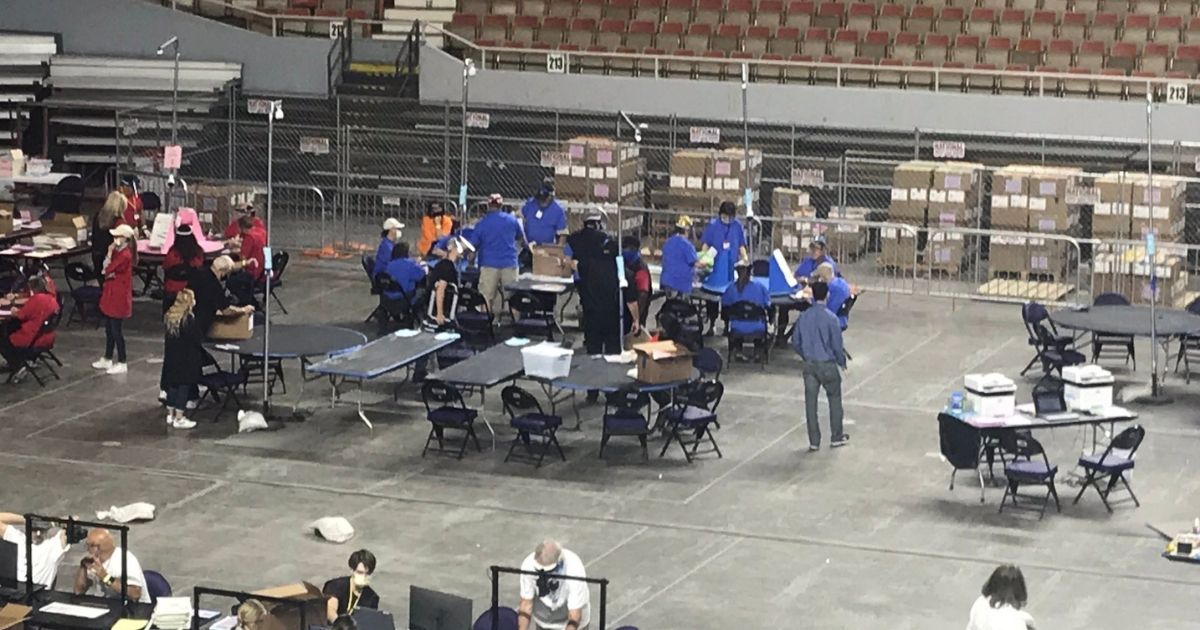
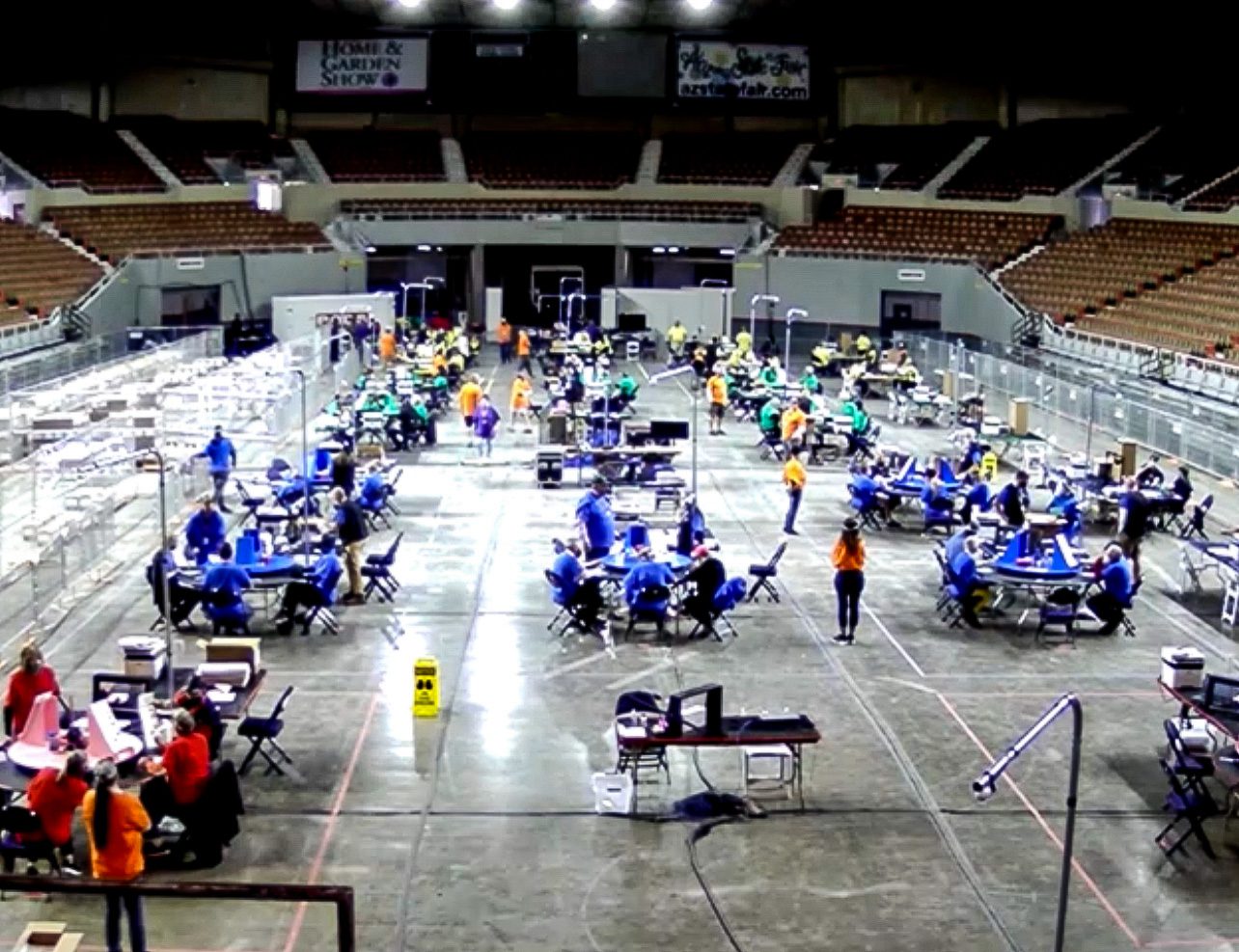
This took place as the Senate’s audit of the 2020 election continues. Vote counting and inspections will continue next week.
JUST IN Arizona state troopers investigating suspicious package sent to Senate President Karen Fann, per @Arizona_DPS spox. @VotePetersen tweeted it was 'unidentified white powder.' Fann authorized Republicans' audit of 2020 Maricopa County election results. pic.twitter.com/RZG5yLEL6J
The Department of Public Safety made a visit to Arizona State Senate President Karen Fann’s office Wednesday to investigate reports of an “unidentified white powder” that arrived at the office in a mailed letter.
An aide in the Senate President’s office opened a letter addressed to Fann at about 4:30 pm on Wednesday, and saw a “small amount of substance” inside the letter, according to Mike Philipsen, Director of Communications for the Senate GOP. Philipsen also said that DPS sent a hazardous materials team to the senate at about 6:30 pm on the same day to run tests.
In an email on Thursday, Philipsen wrote that on Wednesday, “an assistant in President Fann’s office opened a letter addressed to the President. A small amount of substance was observed from the mailing…Out of an abundance of caution, the assistant contacted the Department of Public Safety, and its Hazmat team was alerted.”
DPS Public Information Officer Bart Graves confirmed in an email to Newsweek that, “on May 19 at approximately 1629 hours, DPS responded to the Arizona State Senate in response to a suspicious package call. The package was secured by DPS Hazardous Materials Response Unit and submitted to the DPS Crime Lab. Investigation continues regarding the package.”