Taronga Zoo has welcomed more than 20 baby Chameleons, with the last of three clutches of eggs hatching this past week. About 5 cm long, the hatchlings are the first born at the Zoo in over five years.
Photo Credits: Taronga Zoo/ Paul Fahy (Images: 1,4,5,6,7) ; Lorinda Taylor (Images: 2,3,8,9,10,11)
Currently housed in a special temperature-controlled area behind the scenes at Taronga’s Reptile World, the hatchlings have begun feeding on crickets and turning on a bright green color display for keepers.
Reptile supervisor, Michael McFadden said the Chameleons, which are native to Yemen and Saudi Arabia, would be mature and able to showcase their full color palette within a year.
“Veiled Chameleons are a visually amazing species that we’re fortunate to have at Taronga. While they’re not endangered, they do play an important educational role in helping us to get people excited about reptiles and reptile conservation,” said McFadden.
Normally a shade of green or brown while at rest, Veiled Chameleons can change color when frightened, courting or defending territory. “You’ll see shades of green, yellow, aqua and even very dark brown or black depending on their temperature, mood and reproductive behavior. However, they don’t change color to match a particular background like you see in cartoons,” said Michael.
Built for a life in the trees, Veiled Chameleons also have zygodactyl feet that can easily grasp branches. Their eyes can rotate independently and look in two directions at once, and their tongue can project 1.5 times their body length to capture prey.
“They can literally look forwards and backwards at the same time, which enables them to be on the watch for predators and food at all times,” said McFadden.
Visitors to Taronga Zoo will be able to see these amazing adaptations in action when up to four of the new hatchlings go on display once they reach maturity. The remaining hatchlings will move to other Australian zoos and wildlife parks, once they reach 2-3 months of age.
A Fennec Fox couple, at the Chattanooga Zoo, are proud parents to two new kits! The boy and girl were welcomed, January 23rd, by first time mother, ‘Sophie’, and father, ‘Barkley’.
Photo Credits: Chattanooga Zoo
The yet-to-be-named kits, and their mother, are in perfect health and adjusting very well. The duo recently made their public debut and can now be seen, on exhibit, with their parents, at the Zoo.
Father of the kits, Barkley, was paired with Sophie through the Species Survival Plan (SSP) program, as a recommended breeding pair. Barkley arrived at the Chattanooga Zoo from the St. Louis Zoo in October 2014. The genetics that Sophie and Barkley hold are rare and highly valuable in the Zoo’s breeding pool. The breeding pair quickly became fond of each other, and they are now considered an SSP success story.
Merriam-Webster's Word of the Day for March 01, 2015 is:
macaroni \mak-uh-ROH-nee\ noun
1 : pasta made from semolina and shaped in the form of slender tubes 2 : an affected young man : fop
Examples:
One of Tracy's favorite comfort foods is homemade macaroni and cheese.
"He had been a macaroni of the eighteenth century, and the friend, in his youth, of Lord Ferrars." Oscar Wilde, The Picture of Dorian Gray, 1890
Did you know?
As you may have suspected, the macaroni in the song "Yankee Doodle" is not the familiar food. The feather in Yankee Doodle's cap apparently makes him a macaroni in the now rare "fop" or "dandy" sense. The sense appears to have originated with a club established in London by a group of young, well-traveled Englishmen in the 1760s. The founders prided themselves on their appearance, sense of style, and manners, and they chose the name Macaroni Club to indicate their worldliness. Because macaroni was, at the time, a new and rather exotic food in England, the name was meant to demonstrate how stylish the club's members were. The members were themselves called macaronis, and eventually macaroni became synonymous with dandy and fop.
You may be familiar with the state of Kansas, where Governor Sam Brownback and the ruling GOP have conducted what Brownback has called a “great experiment” in conservative economics. They’ve radically slashed income taxes, especially for top earners, on the theory that liberating this money will supercharge the economy; businesses will flock in, new jobs will be created, and an orgy of private sector commerce will fill the budget hole caused by the tax cuts.
None of this has occurred. Quite the opposite, in fact! Kansas is now worse than average in both job growth and personal income growth, while the state faces a deficit of $334 million, or about 5% of the total budget.
Now we’re in Phase II of the experiment: Kansas is making up the budget shortfall by shifting the burden onto the poor and middle class with new consumption taxes and cuts to public education and transportation. If the states are “laboratories of democracy,” as Louis Brandeis put it, the people of Kansas are the lab rats.
And now, according to the NYT, they may be getting some company:
A number of Republican-led states are considering tax changes that in many cases would have the effect of cutting taxes on the rich and raising them on the poor […]
Gov. Paul R. LePage of Maine, who wants to start taxing movie tickets and haircuts, is also proposing a tax break for the lowest-income families to relieve some of the pressure.
At the same time, some of those governors — most notably Mr. LePage, Nikki R. Haley of South Carolina and John R. Kasich of Ohio — have proposed significant cuts to their state income tax.
It might seem strange that several other states are interested in replicating Kansas’s experiment when it’s very obviously harming many people while delivering none of the promised results. But it’s only strange if you assume that the conservative leaders of these states want broad-based prosperity for their citizens. They do not.
See, it’s not that wealthy conservatives and their Republican agents in government “don’t care about the poor,” as liberals say, nor that they only care about keeping their own taxes low. The truth is, they do care about the poor; specifically, they care about the cheap labor the poor provide, and making sure it stays cheap or gets cheaper.
This is plain as day, yet it’s overlooked even by much of the left, which tends to view poverty as a side effect of conservative policies, rather than their intended result. But it’s no accident that one can draw a straight line from virtually every GOP labor policy preference to lower wages for average workers. Unions and minimum wage laws raise worker pay; Republicans fight both. Social insurance like welfare, unemployment, and Medicaid make workers less willing to accept low wages; Republicans rail against all of these programs — again, not in spite of the fact that they help poor people, but because they help poor people. So it makes sense that companies and executives of companies that rely on cheap labor to generate profits give overwhelmingly to Republicans, and it makes double the sense when those companies are where the poor shop and eat. For them, more poor people means more cheap labor and more customers. It’s like a double-ended dildo of capitalism.
Of course, few rich conservative business owners are dumb enough to say “The less I pay my peons, the more I pay myself and my shareholders, ha ha ha” within earshot of a journalist, and media outlets striving to appear objective aren’t in the business of connecting the dots when doing so would necessarily look like an ideological critique. It’s safer for them to simply repeat what they’re told, which goes something like: “Republicans and business owners say that government spending and regulation are getting in the way of hiring.”
Yeah, and we say the toilet was clogged when we got here.
So in this sense, the Kansas experiment has been a success, and it’s no surprise that other GOP-controlled states are seeking to replicate its results. Desperate people are exploitable people, and exploitation can be very profitable.
People who think this way occupy positions of power in this country.
If you live in Oklahoma and would like to get married, great! You can do that, even if you want to do it gay style, because Oklahoma is all open and liberal like that now. All you need is an application for a marriage license and a note from your doctor that your naughty bits don’t have diseases, and then just pick out your china pattern and — Oh, HANG ON. What?
Yes, kids, Oklahoma Republicans are at it again, spreading liberty throughout the state by making sure you aren’t spreading sexually transmitted diseases if you wanna get hitched. This genius, state Sen. Anthony Sykes, who apparently went to law school and should therefore know better, sketched out some thoughts on the back of a cocktail napkin and came up with Senate Bill 733 to amend the state’s existing laws regulating the issuance of marriage licenses. He wants you to publicly pinky-swear, on paper, that you and your spouse-to-be do not have cooties on your junk.
The State Board of Health shall require a blood test for the discovery of syphilis and other communicable or infectious diseases prior to the issuance of a marriage license. Persons seeking to obtain a marriage license shall first file with the court clerk a certificate or affidavit from a duly-licensed physician, licensed to practice within this state, stating that each party has been given a blood test, as may be necessary for the discovery of syphilis and other communicable or infectious diseases, made not more than thirty (30) days prior to the date of such application to obtain a marriage license and that, in the opinion of the physician, the persons named therein are not infected with syphilis or other communicable or infectious diseases or, if infected, that such diseases are not in a stage which may be communicable to the marriage partner.
And if you have the syph or some other dick or ladydick disease? Too bad, so sad, no marriage for you!
Are there some issues with this proposed bill? Oh, yeah, just a few. Like how there are laws in these United States, which even apply in Oklahoma, that your private medical information is, like, private. So filing a public document with the court, announcing to the world, “Hey, my doctor says I have herpes on my vag!” would sort of violate that.
Also, too, we thought Oklahoma Republicans were against redefining marriage? And unless we are super out of touch, we have never heard marriage defined as a union between one person and one other person (of any gender, because yay, marriage equality!) whose doctors swear under oath they don’t have sex diseases.
Despite those few minor details, the bill still has support of one of our favorite Oklahoma Republicans, state Sen. Kyle Loveless.
“We have to look at that as a society whether we want people who have communicable diseases, they need to know if they have it, and I think this is a mechanism to provide them to do that. […]
“I think going through the process I think there are going to be serious questions of the author of logistically how do we go about it to make sure people’s privacy is still observed.”
Sure, once you iron out the logistics of how you make it illegal for people with STDs to get married, the bill making it illegal for people with STDs to get married should be smooth sailing. Loveless, you may recall, is the same guy who thinks the state needs to pass emergency legislation protecting Hobby Lobby’s right to teach your kids all about Jesus. In public schools. So yes, he’s confused about a great many things when it comes to law stuff.
We are guessing this bill might hit a few road bumps — like the rest of the country going, “Huh, what, Oklahoma, are you HIGH?” — before this thing gets signed into law. At least we hope so. Because while the goal of reducing the spread of STDs is noble and good, banning marriage for people who have them probably isn’t the best way to do it.
Maybe Oklahoma Republicans should consider a bill to make everyone watch the Muppets sing about STDs instead.
“I think the average guy thinks they’re pro-woman, just because they think they’re a nice guy and someone has told them that they’re awesome. But the truth is far from it. Unless you are actively, consciously working against the gravitational pull of the culture, you will predictably, thematically, create these sort of fucked-up representations.”
If there is intelligent life somewhere else in the universe they have probably already checked us out and decided "Nah, don't need to ever talk to those guys."
Here’s a sweet little story of Democracy in Action. A bright eighth grader writes to her state legislator with an idea for a law: Vermont doesn’t have an official Latin motto, so why not adopt one? And for that matter, make it a reference to history? Neato!
So state Sen. Joe Benning — a Republican who was actually trying to do a good thing, which he has probably learned to never try again — introduced a bill to adopt the motto “Stella quarta decima fulgeat.” — May the fourteenth star shine bright.” Because Vermont was the 14th state, see? Benning noted that when Vermont briefly minted its own currency, it was engraved with “Stella Quarta Deccima,” so the phrase had real historical cachet.
And then Burlington TV station WCAX put the story on its Facebook page with the headline, “Should Vermont have an official Latin motto?” and all Stupid broke loose when morons thought that Vermont was knuckling under to a bunch of goddamned illegal immigrants.
Charles Topher at “If you Only News” collected some of the worst of the over 600 comments from some of the geniuses worried about protecting ‘Merca from the invading Latin hordes:
Oh yes, there’s more:
And a bit more:
We are happy to report that Dan Zucker up there is actually parodying all the derp, as we’ll see in a moment.
Finally, there was the genius who wrote, apparently without a trace of irony, “Hell No! This is America, not Latin America. When in Rome do as the Romans do!”
Happily, since the news first broke, the literate smartasses have flooded into the WCAX Facebook comments, which now feature a few better replies:
I heard Obama even has our military YES OUR MILITARY!! Speaking latin. I went by a group of marines yelling Semper Fidelis. Can you believe it?
Of course, several people replied to this by excoriating the writer for criticizing the sacred Marine motto.
We don’t need any of them Romans taking our jobs!!!
Dan Zucker popped up again to explain in pure Palinese:
romans is italians. they is not the probelms. we keep boardars closed to chinese who take jobs from russians which is why they speak latin to virus imunization autism shot in the kidney like black lungh subura honey tuna.
So there. A few more:
I’ve got no problem with that. I’m more concerned that you stop teaching the Hindu-Arabic number system in schools. I for one am sick of all the pandering to foreigners in this country. We should be using American numbers.
This is America, not the ancient Roman empire. What’s next, Justinian law? If they don’t want to learn modern English, they should go back to the colosseum where they belong!
What’s Latin for, “A state full of crotchety old farts, half of whom are almost too stupid to breathe”?
What have the Romans ever done for us!?
We’re betting that, like Olivia McConnell, the kid whose proposal for South Carolina to adopt a state fossil almost crashed and burned when creationists decided the declaration should insist that the fossil was no more than 6000 years old, the anonymous 8th grade Latin student in Vermont has learned an important lesson about Democracy in America: It is conducted by morons.
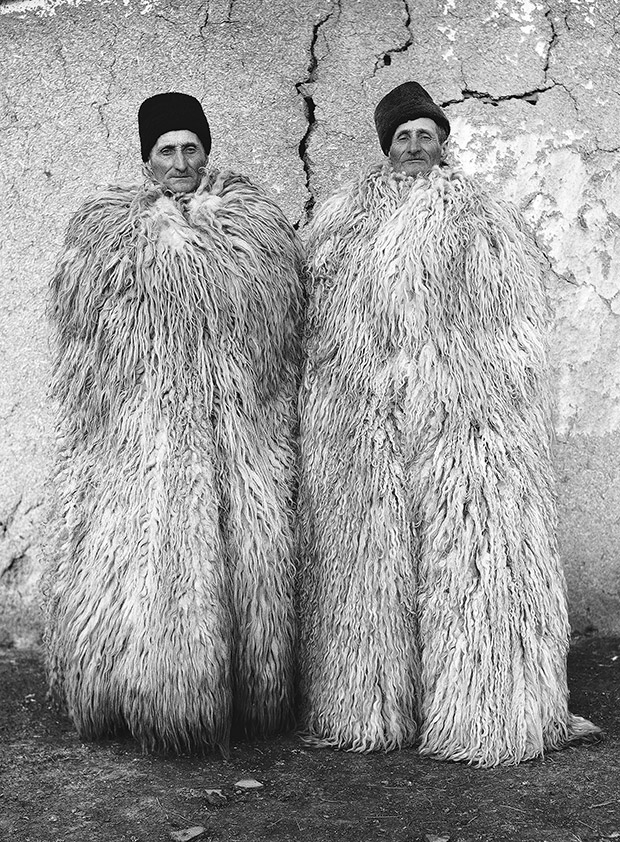
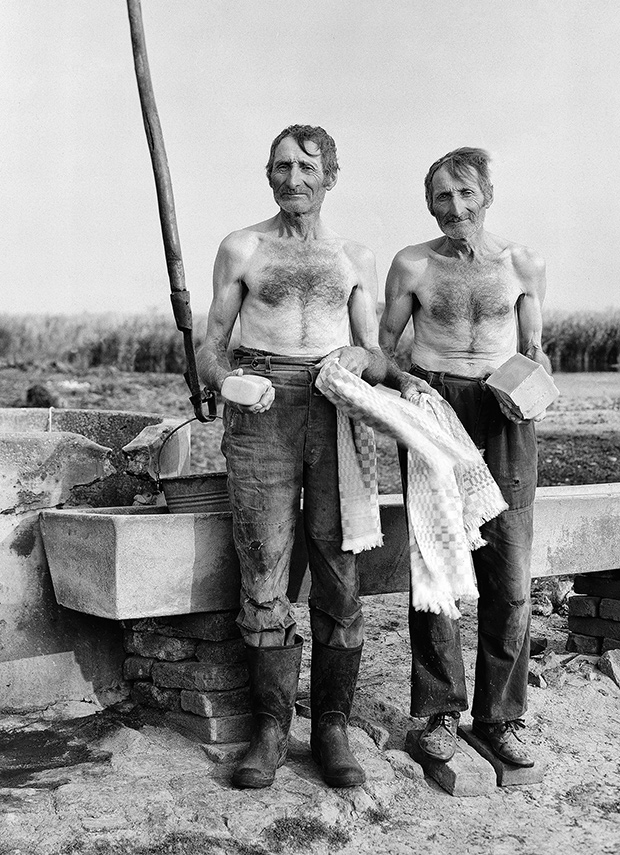
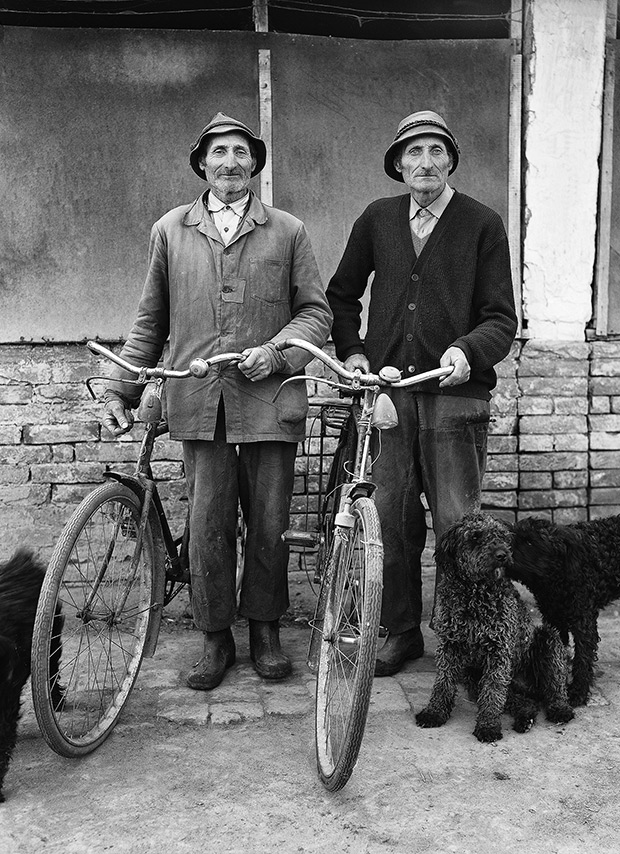
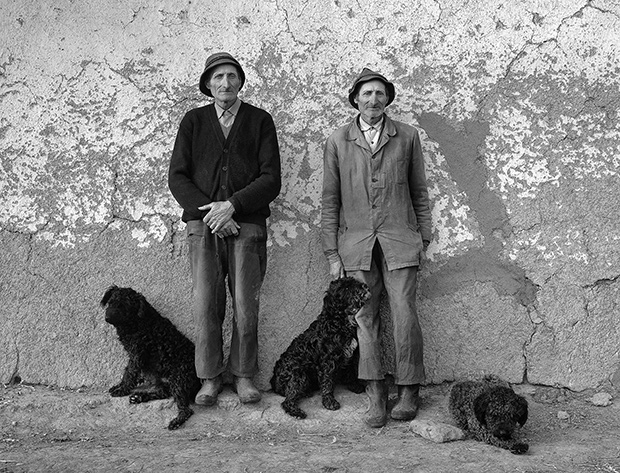
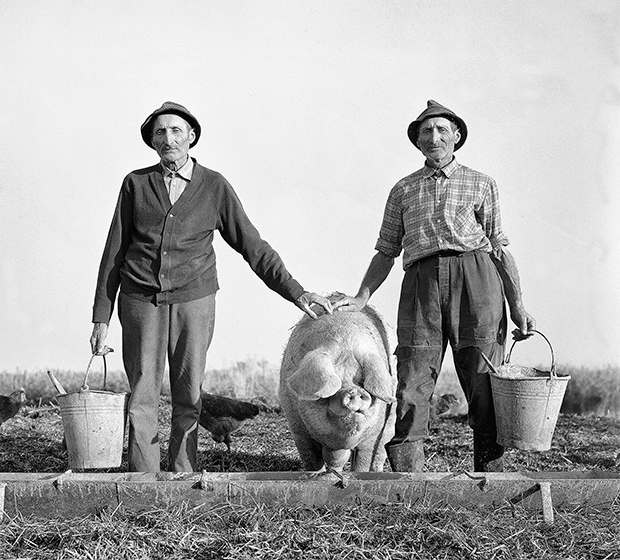
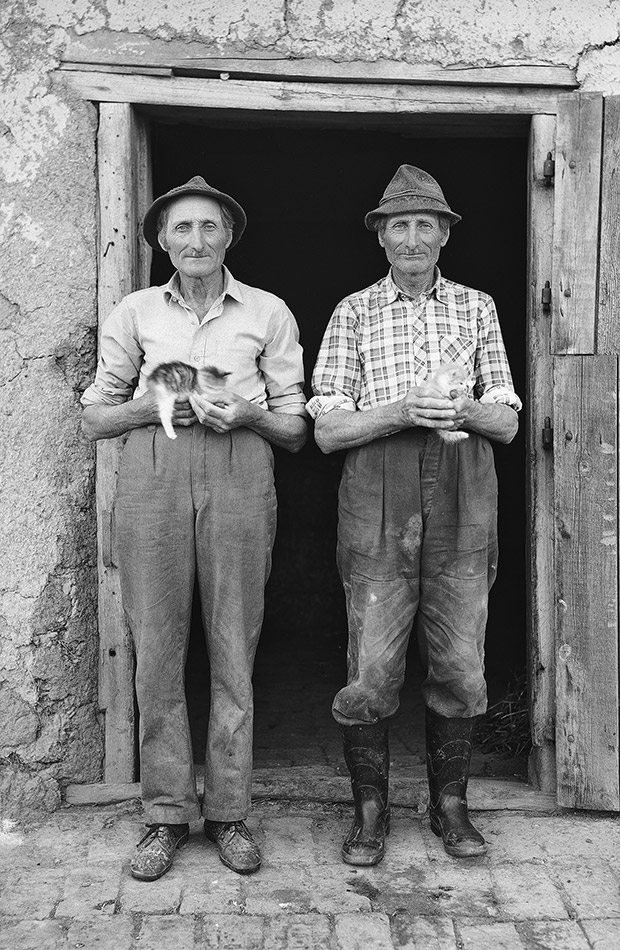
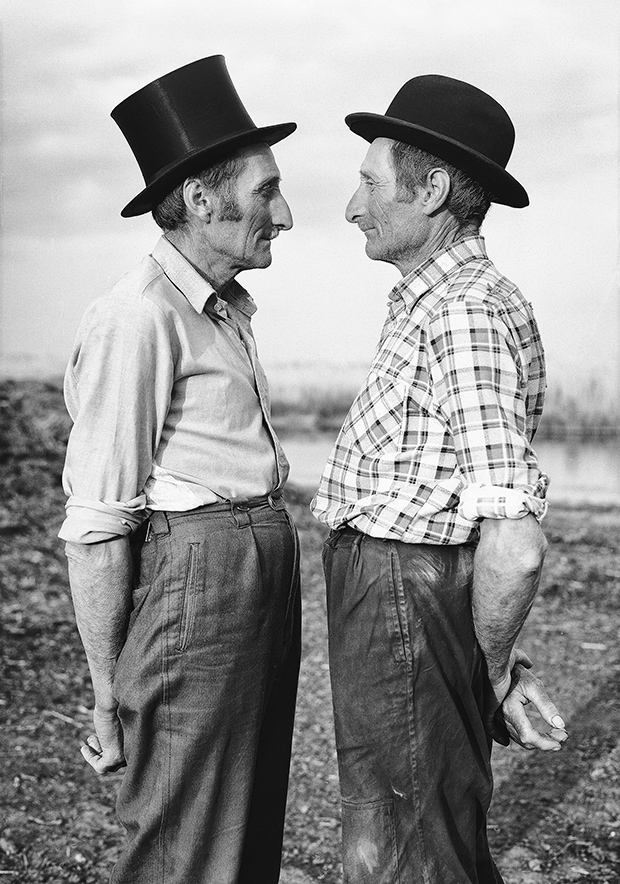
With The Twins, Germany-based photographer Janos Stekovics remembers the lives and rituals of a since-passed set of identical twin farmers, János and István Lukács, who worked their entire lives along the Hungarian countryside.
Visiting Puszta, or the Great Hungarian Plain, in 1985, the photographer met the brothers when they were in their sixties. After he became acquainted with the surrounding area, he explains, János and István welcomed him into their home, finding the photographs an engaging diversion from the grind of daily life. Both men, notes Stekovics, woke at 4:00 each morning and worked until lunchtime, when they would break for a meal of bread and bacon before returning to milk the cows and tend to the other animals for the night. On Sundays, he says, they took the day off.
The farmhouse was built by their parents when the twins were young children, and for decades, they kept the master bedroom exactly as it was when their mother and father were living. On frigid winter nights without electricity, the brothers slept on a couch beside the kitchen stove or on a straw bed amongst the horses in the barn. The floors were built of clay, and kerosine lamps lit the way in the dark. Most everything they needed could be farmed from the land, with the exception of a few necessities—like batteries for their radio—which were bought from a village five miles from home. Although the twins possessed two of nearly every belonging—bicycles, outfits, and heavy winter coats—they did have distinct personalities. Where István was more gregarious, János was more of the silent and stoic type; István preferred to keep the house, and János cared mostly for the animals. Neither ever married.
Over the course of his four years visiting the Lukács brothers, Stekovics gradually began to feel like family, developing an understanding and reverence for their dedication to the farm. Since the brothers have died—one in 2005, and the other in 2007— this way of life has continued to vanish in the wake of new housing developments and larger agricultural corporations. Thirty years later, The Twins exists not only as a tribute to this particular family but also the the rich cultural heritage of the Hungarian countryside and a deeply felt connection to the land.
A book of Stekovics’s photographs, titled Die Junggesellen, is available here.
I have some feels about this. Mostly just a terrified, desperate hope that things keep moving in the right direction instead of being totally destroyed by those assholes in congress.
While we haven’t quite managed to achieve perfect European socialism yet, the Commonwealth Fund’s survey on healthcare and financial distress is encouraging, says the New York Times:
In each survey through 2012, a higher percentage of Americans said they struggled to pay their medical bills, were paying off medical debt or had been contacted by a collection agency. The most recent installment of the survey, the first since the health law’s major provisions kicked in, shows a reversal in that trend.
The survey also found that fewer people were avoiding doctors’ visits because of concerns about cost.
The percentage of people who said they were having trouble paying their medical bills declined from 41 percent in 2014 to 35 percent in 2014, which is good news if you’re not in that one-third of people. We keep remembering that great moment from 2009 when Al Franken asked a Hudson Institute flack how many Europeans went bankrupt due to healthcare costs:
So, no, we’re not there yet. But the trend is encouraging. Fewer people are avoiding getting care because they can’t afford it, and that’s something worth making noise about. What we want to see are some stats on the number of people going to emergency rooms for basic treatment because they can’t see a doctor any other way. Even though Mitt Romney thought that was a pretty sweet deal, it’s a huge driver of healthcare costs, and we’re willing to bet the use of ERs for stuff that could be taken care of — or prevented — with an office visit will be going down, seeing as how more people can afford those office visits. Yes, yes, at least until all the doctors go Galt and stop coming to the office at all.
Elsewhere on the Quality O’ Life continuum, Barry Bamz is rolling out his proposal to provide more paid sick leave for American workers. He’s calling on Congress to pass the Healthy Families Act, cosponsored by Sen. Patty Murray and Rep. Rosa DeLauro, which would allow people to earn up to seven days a year of paid sick leave. In addition, since he knows that Congress is going to be too busy repealing Obamacare to do anything else, no matter how much he frames sick leave as a nonpartisan issue, he’s also going to push for states to enact similar policies, sort of like what happened with increasing the minimum wage. If Congress won’t get its act together — and it probably won’t, because we’re talking about Congress, after all — at least states can.
And of course there’s an executive order in there for wingnuts to whine about. Obama will also “sign a presidential memorandum granting federal employees six weeks paid leave after the birth of a child and six additional weeks of unpaid administrative leave,” as well as asking states to adopt similar policies.
But do we really need this burden on American jerb creators? After all, the current system, where 43 million private sector workers have zero days of paid sick leave, is working so very well, since sick people have an incentive to come to work and infect everybody else. It’s a kind of sharing! Then again, maybe having paid sick leave wouldn’t destroy the economy altogether since workers would be, like, happier at their jobs? Or so says Obama aide Betsey Stevenson, who told a press briefing that
several studies suggest paid sick and parental leave had improved workplaces across the country without harming these firms’ economic output. Connecticut adopted a paid leave policy two years ago; two-thirds of employers recently reported they had experienced little or no negative effects, while three-quarters of them expressed support for the policy.
Oh, there’s also the slightly embarrassing fact that we’re just not keeping up with the smart kids on this issue, as presidential adviser Valerie Jarrett noted.
“The United States remains the only developed country in the world,” she said, “that does not offer paid maternity leave.” Yeah, but that’s part of our great exceptionalism, isn’t it?