Shared posts

21 Jul 14:11

So Yuengling sales dropping like a stone because we're provincials scared of change?

by adamg
Matthew Connor

Ahem. Yuengling > Sam. Krispy Kreme donuts > Dunks donuts (their coffee is bad, tho).

The Herald reports how sales of the Pennsylvania beer are tanking in Boston and cites our provincial attitudes as one reason.

First, New Englanders are largely suspicious of outside brands and prefer to support our own.

The Herald calls it the Krispy Kreme Syndrome, implying that we rejected them only because the city with the largest number of historic firsts in the country is resistant to change, not because we realized after awhile that their donuts were, in fact, sugar-coated air, served with mediocre coffee.

20 Jul 02:09

When life gives you Glenn Beck fans, make lemonade

by adamg

Seems Beck has been making an issue of how Salem canceled a contract with anti-gay Gordon College several weeks early and his fans have been flooding Mayor Kim Driscoll with angry, sputtering phone calls. Driscoll's response: For every call, she'll donate $5 to the North Shore Alliance of Gay, Lesbian, Bisexual and Transgender Youth.

17 Jul 13:19

Jennifer Lopez has had a water mite named after her

by Brad O'Mance
Matthew Connor

Finally!

Jennifer LopezJennifer ‘From The Block’ ‘Jenny’ ‘Lo’ Lopez has had a new species of water mite named after her.

Finally!

The little mite was discovered by a group of scientists in a coral reef in Mona Passage, which as you well know is a body of water that separates Puerto Rico and the Dominican Republic.

According to Billboard, the group were kept entertained by the music of Ms Lopez so decided to name this new species the Litarachna lopezae mite.

“The reason behind the unusual choice of name for the new species is…simple: J.Lo’s songs and videos kept the team in a continuous good mood when writing the manuscript and watching World Cup Soccer 2014,” explained biologist Vladimir Pesic, who works at the University of Montenegro.

We’re sure she’ll be very honoured and perhaps the less we know about how her videos kept Vlad and co in a ‘good mood’ during those long days away from home, the better.

15 Jul 16:25

Todd Akin Says He And Joe McCarthy Were Both Victims Of The Liberal Media

Matthew Connor

lol this guy

Spy Agency The Pond

CREDIT: AP

Failed Senate candidate Todd Akin (R-MO) has recently re-emerged in the public sphere to defend his claim in 2012 that women who were victims of “legitimate rape” could not get pregnant. In a phone interview with St. Louis Dispatch, the former congressman compared himself sympathetically to Sen. Joe McCarthy (R-WI), who spearheaded an infamous Communist witch hunt in the 1950s. Akin argued that McCarthy was another victim “assassinated by the media.”

“I use McCarthy as an example of someone who was assassinated by the media, so he had no credibility,” Akin told the Dispatch, drawing parallels to his own experience with waht he believes were “intentional and dishonest” misreadings of his statement. “If it’s a legitimate rape, the female body has ways to try to shut the whole thing down,” Akin said in 2012 in response to a question about allowing abortions in the case of rape or incest.

McCarthy has become synonymous with anti-Communist hysteria after he led a series of hearings targeting government workers and artists considered to be left-leaning or suspected of homosexuality. Because of his crusade, hundreds were jailed under suspicion of Communist ties with no evidence. Many more lost their jobs.

Akin rescinds his apology for the offensive and inaccurate remarks in his new book, “Firing Back: Taking on the Party Bosses and Media Elite to Protect Our Faith and Freedom,” insisting that the liberal media and certain conservatives ganged up on him to sink his campaign. Akin reiterated this belief to the Dispatch, saying, “It wasn’t that the Republican Party left me wounded on the battlefield. They came out on the battlefield and tried to dispatch me.”

The Republican establishment did try to publicly distance itself from Akin as his campaign floundered, though a sizable number of right-wing groups kept funding him. In an attempt to prevent another debacle this campaign cycle, the GOP has tried to train candidates to stop talking about rape and start being more conscious of female and non-white voters. Despite these efforts, the GOP’s 2014 candidates have already opined on what counts as legitimate rape and argued that marital rape should be legal.

The post Todd Akin Says He And Joe McCarthy Were Both Victims Of The Liberal Media appeared first on ThinkProgress.


10 Jul 18:40

‘Wimbledon’ by Rich White Ladies: absurd, confusing, very good indeed

by Popjustice
Matthew Connor

9. And is this the first song ever to rhyme “Martina Navratilova” with “champagne supernova”?
what even

richwhiteladies

A video arrived in our inbox overnight.

It’s for a song titled ‘Wimbledon’, by a duo calling themselves Rich White Ladies.

You may recall (we don’t, it completely passed us by) that Rich White Ladies - Tokyo Diiva and Scotty Rebel, both very good popstar names – had a tune called ‘One Percent’ a couple of years ago. The NYC-based duo are on the verge of signing to Motown/Capitol in the US, and Virgin will be handling things in the UK. And apparently The-Dream and Tricky Stewart are involved in some way.

Which is all very exciting, and at the same time none of it explains anything about the video you are about to watch. It’s an audiovisual experience that in many ways resembles something an alien civilisation might make in an attempt to ingratiate itself with the citizens of Earth, having understood that perky rap-stuffed pop music and tennis are both extremely popular but having not quite grasped the fact that those two elements are rarely popular at the same time.

All in all, a video/song combo that seems to pose more questions than it bothers even trying to answer. Questions like:

1. Is this a joke?

2. If it’s a joke, why is it so good?

3. What does ‘Wimbledon’ mean in this context?

4. Does it just mean Wimbledon?

5. Is “you are so bull-bullshit, we are so Wimbledon” the best or worst lyric of the year?

6. How about “serving face while I’m serving the ace”?

7.  Or “I’m bigger than the US Open, ho?”

8. Or “m-m-m-m-Monia Seles”?

9. And is this the first song ever to rhyme “Martina Navratilova” with “champagne supernova”?

10. What was the holdup that meant this only went online three days before Wimbledon actually ends?

11. Is that thingy from Semi Precious Weapons in the video, and if it is does that make it better or worse? [UPDATE: We've just found out that yes it is indeed matey from Semi Precious Weapons, who are also somehow involved in this ridiculous and amazing endeavour.]

12. Why are they playing on a hard court not grass?

13. Did the ‘W’ hand sign thing exist before today, and will spectators on ‘Centre Court’ all be doing it next year every time someone scores a goal or whatever it is that happens in tennis?

14. Are Rich White Ladies potentially the actual best new pop thing of the year, or are they just in the Top 5?

15. And finally, could this be the best Twitter account of all time?

We don’t expect any of us will ever really know the answers to most of these questions and that, ladies and gentlemen, is just part of the magic of this thing we call pop.

09 Jul 17:28

Virginia Police Want To Force A 17 Year-Old Boy To Have An Erection, And Then Take Pictures Of It

Matthew Connor

Virginia Is For Boners

sexting

CREDIT: Shutterstock

A 17 year-old Virginia teenager who is under investigation for sending a consensual sext to his 15-year-old girlfriend may be forced to have an erection in front of police as evidence in the case.

The boy, who the Washington Post will not identify for privacy reasons, is being charged with two felonies — one for possession of child pornography (sexts from his girlfriend) and one for manufacturing child pornography (taking video of himself). He faces time in prison, as well as permanent placement on the sex offender registry.

Police have already taken photos of the boy’s genitals as a part of their investigation, his lawyer told the Post. But they want to bring the teen to the hospital and inject him with something that will force an erection, to compare his erect penis to that in the video found on his phone.

University of Pennsylvania law professor David Rudovsky, who specializes in invasions of privacy by police, doubts that there is legal standing for police to pursue such measures.

“In my view, it’s not [a legal search] for this reason: Normally the police can get a warrant to conduct a search if they have probable cause that it will find evidence they can use in criminal trial,” Rudovsky said. “What the courts have said in a number of situations is that even if there’s some cause to believe that the procedure might lead them to evidence, where it involves a serious intrusion of personal dignity and privacy, you have to balance that with the nature of the intrusion.”

Rudovsky cited specifically a case, Winston v. Lee, in which police sought to extract a bullet from a man’s body to use it as evidence that he had been involved in criminal activity. Ultimately, the Supreme Court ruled that such an invasion was unreasonable, citing the fourth amendment’s guidance on search and seizures.

“It seems to me that this case is similar to that one,” Rudovsky said. Taking pictures of a boy’s erection is “too invasive in terms of his personal dignity… therefore the police need to have good reason, it needs to be a serious case and they need to have need for this evidence. I don’t think they have either.”

He also pointed to several other problematic factors in the case: “If they’re complaining about the child pornography, that’s what they’re incidentally creating. And they’ll want to use it in court,” he said. “Why they’re going after this guy to felony charges also seems like a misapplication of discretion of resources.”

Upon request for comment, the Manassas City police department referred ThinkProgress to the Commonwealth Attorney’s Office, citing the fact that the boy is a juvenile. The Attorney’s Office did not respond to a request for comment by the time of publication.

As technology advances and teens find new ways to express their sexuality, legislators and law enforcement are grappling with how to deal with sexting. At least 20 states have criminalized sexually explicit messages between teens. There is a perception that sexting has dangerous implications for young people. There are actual risks when it is used for cyberbullying, but teens actually overall report positive experiences sexting, and there is no indication that it leads to more “deviant” behavior. Meanwhile, the amount of manipulative sexting is on the decline.

The post Virginia Police Want To Force A 17 Year-Old Boy To Have An Erection, And Then Take Pictures Of It appeared first on ThinkProgress.


08 Jul 17:00

Paris Hilton’s new single has some predictably understated artwork

by Brad O'Mance
Matthew Connor

I love everything about this and I don't even care (and I hope it's a "Stars Are Blind").

Paris_Come_Alive_2_1500x1500_1

DJ, actress, TV personality, and part-time popstar as and when the mood takes her Paris Hilton has popped the ‘cover art’ for her new single ‘Come Alive’ onto the internet.

It’s that low-key image above. As you can see, it depicts Paris luxuriating on a slightly-uncomfortable-we’d-imagine bed of massive fucking diamonds.

Apparently the video’s out next week at some point too. It will probably be utter drivel but, y’know, there’s always the chance it could be a ‘Stars Are Blind’.

06 Jul 02:11

Newswire: Tyler Perry now owns the trademark for “What Would Jesus Do”

by Sean O'Neal

In a decision that could have dramatic ramifications for bracelets everywhere, Tyler Perry has won a trademark battle over the phrase “What Would Jesus Do”—a rhetorical question that is now more accurately Tyler Perry’s What Would Jesus Do. While the origins of the English phrase’s popular usage can be traced to an 1896 book by minister Charles Sheldon, spreading like catchy, evangelical wildfire a century later across sermons and accessories in the 1990s, it apparently wasn’t until 2008 that someone thought to register this soul-searching moral imperative as a mark for entertainment. Or rather, two someones, as it seems Tyler Perry filed the phrase a few months after Kimberley Kearney, “Poprah” of the reality show I Want To Work For Diddy, sparking a war for the right to spread Jesus’ word, with all attendant royalties therein.

In Kearney’s case, her zeal for working for Jesus ...

01 Jul 19:03

Conservatives say the U.S. has done enough to create equality for blacks. Young liberals agree.

by Emily Badger
Matthew Connor

intriguing/troubling

One last dip into a big Pew survey we've been discussing on the politics and policy views of Americans. Pew surveyed more than 10,000 adults earlier this year on topics ranging from their views of Hillary Rodham Clinton to taking the bus, and the report divides their responses along a set of political typologies that group respondents into generally coherent categories across the range of policy issues: i.e., the "business conservative," the "solid liberal," the young "next generation left."

Across that spectrum, there is not surprisingly wide disagreement on racial progress in America and the steps government still must take to achieve it. Most of the results on this chart are fairly predictable: Conservatives broadly believe that the government has pretty much done all it needs to to ensure equal rights for blacks. Liberals, with one striking exception, overwhelmingly disagree:

Screen Shot 2014-06-30 at 9.29.50 AM

The views of young, affluent liberals stand out. In fact, they align more closely with conservatives than other liberal groups. So what's going on here? Are younger liberals so far removed from the Civil Rights era that they've become disconnected from the memory of overt discrimination it sought to end? Perhaps this cohort, which strongly supports gay marriage, believes that the front in the fight for equality has moved on to new beneficiaries?

We know that the "next generation left" does support affirmative action (as do, notably, majorities of every typology other than the two most conservative):

Screen Shot 2014-06-30 at 9.36.47 AM

It's possible, though, that young liberals support affirmative action more as a means to create diversity than to redress discrimination. In this next chart, 68 percent of the "next generation left" believe that blacks themselves — and not discrimination — are mostly responsible for their own failure to get ahead:

Screen Shot 2014-07-01 at 12.49.55 PM

The vast gap between solid liberals and steadfast conservatives on this question is striking (these results also provide context to the widely divergent and passionate responses to Ta-Nehisi Coates' Atlantic cover story this spring making the case for reparations). But so too is the gap striking between solid liberals — a group that's highly educated, urban and well-off — and their younger "next generation" counterparts.

Another potential factor is that the "next generational left" is much more likely to say that government can't afford to do more to help the needy (56 percent) than solid liberals (12 percent). And so perhaps their views on what changes government might still make to create equality for blacks are colored by their skepticism that government can afford to do more.

Of course, another explanation is that the lifetime of younger liberals has encompassed less discrimination than their parents and grandparents saw. But evidence suggests that discrimination — even if we now see subtler forms of it — has by no means disappeared. A more revealing question might grant people the chance to answer that both discrimination and personal responsibility play a role, to varying degrees. Perhaps we'd see then that young liberals believe discrimination persists, just to a lesser degree than in the past.

If anyone else has theories on why their views on racial progress so starkly break with other liberals, please share.


30 Jun 17:10

BREAKING: Hobby Lobby Wins Right To Refuse To Cover Birth Control

Matthew Connor

Well fuck.

Hobby Lobby SCOTUS protest

CREDIT: AP Photo/Charles Dharapak

In its closely watched Hobby Lobby decision, the Supreme Court held that business owners with religious objections to birth control may defy federal rules requiring most employers to include contraceptive care in their health plans. According to SCOTUSBlog, this holding appears limited to closely held corporations such as Hobby Lobby, which is operated by a single wealthy family.

Monday’s decision tears down a longstanding rule providing that religious liberty cannot be wielded to tear down the rights of others, especially in the employment context. As the Supreme Court held in its 1982 United States v. Lee decision, “[w]hen followers of a particular sect enter into commercial activity as a matter of choice, the limits they accept on their own conduct as a matter of conscience and faith are not to be superimposed on the statutory schemes which are binding on others in that activity.” It is not yet clear, however, how far the Court went in tearing down this rule. As SCOTUSBlog explains, the Court’s opinion “strongly suggests it would reject broad religious claims to, for example, discriminate against gay employees.”

More analysis can be found here: “The Bait-And-Switch Behind Today’s Hobby Lobby Decision.”

The post BREAKING: Hobby Lobby Wins Right To Refuse To Cover Birth Control appeared first on ThinkProgress.


27 Jun 20:50

Abortion foes move closer to women for personal, caring, consensual conversations - while holding large signs

by adamg
Matthew Connor

“We were able much more in a close situation to be more personal with the individuals going in,” he [Ray Neary, protester] said. “I noticed that immediately. There’s a certain freedom to it, where you’re not yelling and sounding like you’re obtrusive in some way.” UGH fuck these people so much

WBUR reports from outside the Planned Parenthood clinic on Commonwealth Avenue today.

27 Jun 20:37

Citizen complaint of the day: Don't make me leave raw feces in my trash

by adamg
Matthew Connor

I have fucking had it with people today. I know, I'll start leaving shit in my South End garbage can to send the homeless people who have to scavenge for food there a message.

A South End resident complains about trash pickers constantly ripping up his or her trash bags:

We have had it with the city taking no action against trash pickers. 3 times today I had to go out, pick up, and rebag my trash due to pickers. Does the city want citizens to start taking the matter into our own hands? I'm not above starting to leave raw feces in each of my trash bags to deter them.

26 Jun 19:55

Councilors vote to put middle-school kids on the T

by adamg
Matthew Connor

You know what would make the morning commute on the T even MORE fun?

MassLive reports the council voted 7-6 yesterday for a school budget that will force all BPS students in seventh and eighth grades to ride the T to school this fall, or find another way there.

WBUR reports BPS hopes to save $8 million a year by switching from school buses to CharlieCards.

26 Jun 19:40

Newswire: Jenny Slate says she’s planning a Marcel The Shell movie

by Becca James

During an MTV interview for this summer’s blockbuster alternative Obvious Child, Jenny Slate said she’s plotting a feature-length film starring her adorable stop-motion creation, Marcel The Shell. Marcel The Shell With Shoes On was first introduced through a pair of short films, in which Marcel talks about the various activities, hobbies, hopes, and disappointments of a tiny shell, then discusses with an off-camera interviewer just how tiny he is. (Small enough that he ties skis to his car with a strand of hair.) Slate says she’s planning for the feature-length Marcel to have lots more songs; a preview of the self-explanatory “My Mother Got Lost In The Rug” can be heard below. While there’s nothing official about any of this yet, it’s safe to say that this tiny shell has enough charm to adapt to the big screen. 


26 Jun 12:34

The Quiet Clash Between Transgender Women And Drag Queens

Matthew Connor

This is a good long-read, though I do wish they had spoken to/gotten reactions from more trans* people. One sentence that jumps out at me, though: "Trans men and drag kings are largely absent from these conversations, most likely because neither identity transgresses masculinity or the male body."

In March, RuPaul’s Drag Race, a reality competition show in search of “America’s Next Drag Superstar,” featured a mini-game called “Female or She-male.” Contestants looked at pictures of bodies and tried to guess whether the person in the picture was a drag queen or a cisgender (not transgender) woman. This prompted a backlash from many transgender activists, who were upset by the nature of the segment and its use of the word “shemale,” which GLAAD explains is a term that “dehumanizes transgender people and should not be used.”

After an initially weak response to the outcry, Logo TV, the LGBT-focused network that airs Drag Race, announced it was pulling the episode and also cutting the “You’ve got She-mail!” segment that has been part of every episode of the show over its six seasons. Despite the resolution, the incident has continued to be a flashpoint about how the visibility of drag culture on Drag Race impacts public understanding of what it means to be transgender. Questions about the appropriate use of words like “shemale” and “tranny” speak to a larger conflict over media representation and the authenticity of identities.

RuPaul, the show’s host and executive producer, has been unrepentant, telling comedian Marc Maron recently, “I love the word ‘tranny,’” and that it’s only “fringe people” who are taking exception with such language. But among those “fringe people” expressing concern are former contestants from Drag Race, including Carmen Carrera and Monica Beverly Hillz, both of whom now identify as trans women. According to Hillz, she is still fighting for respect from society, because “people don’t understand the daily struggle it is to be a transgender woman.”

Time Magazine - Transgender Tipping Point Laverne CoxHillz’s point is at the center of the conflict, because Drag Race is a show that is not about being transgender but that clearly has implications for transgender people — a particularly vulnerable population. People who identify as transgender report incredibly high rates of discrimination across their lives, including in employment, housing, health care, education, and police interactions. The National Coalition of Anti-Violence Program’s recent study found that 72 percent of all violent crimes against LGBTQ people in 2013 targeted transgender women, who also made up 67 percent of LGBTQ homicide victims. One of the most alarming statistics, that 41 percent of transgender people have attempted suicide — compared to just 1.6 percent of the general population — reflects the mental health consequences that result from this discrimination, harassment, and violence.

At the same time, the ongoing conversations about language sparked by Drag Race reflect what Time magazine recently called “the transgender tipping point.” With spokespeople like Laverne Cox (Orange Is The New Black) and Janet Mock speaking regularly to mainstream media outlets, visibility for transgender people — especially trans women of color — is on the rise. There have also been many victories for transgender equality, such as California’s new law and court rulings in Maine and in Colorado protecting transgender students. Maryland just became the 18th state to enact nondiscrimination protections based on gender identity, and exclusions for transgender health needs have been lifted for both Medicare and federal employees’ health insurance programs.

In many ways, the feud over Drag Race seems to stem from the visibility that the LGBT community has increasingly achieved, and an instinct to defend the authenticity of particular identities. For example, several drag performers responded aggressively against calls not to use words like “tranny,” suggesting it was word-policing and that reclaiming epithets is part of drag culture. Trans women have expressed their own concern that, if conflated with drag queens — i.e. “men in dresses” — the validity of their own identities will be questioned, further contributing to the oppression they experience.

In reality, as several Drag Race contestants outlined to ThinkProgress, this debate is circling some complicated conversations about identities that violate gender and traditional gender roles, but are not so neatly defined as “trans woman” or “cis man.”

“You can fully transform yourself. It’s as easy as deciding to transform yourself.”

Drag, in its most commonly understood form, might be defined as gay men portraying sensationalized women for entertainment purposes, but those who do drag describe it as something more significant than that. Each queen has their own personal reasons for doing drag and expectations for what they hope it can accomplish beyond making an audience laugh.

Benjamin Putnam, better known as RuPaul’s Drag Race Season 6 contestant BenDeLaCreme, told ThinkProgress that for him, drag is about “dismantling that perception that we think we have about knowing what gender is.” Gender is a very “base thing,” Putnam explained, something we notice about a person even before their race, and drag creates an opportunity to question those expectations — ideally to improve the ways that we can be “kinder and treat each other better.”

You can have a beard and do drag; you can be a woman and do drag… Anything that you want can be considered drag in the context.

Putnam suggests that drag has different purposes when it comes to subverting gender norms. As an “art form created by an oppressed community,” it creates an opportunity to “poke a little bit of fun at the people who are in positions of power because of their gender status.” At the same time, “It’s a way to experience that — to take that power on for a community that needed more of that.” Drag queens also serve as “jesters” so that “our community laughs more because it cries too much.”

Drag can also be a way of life. Manila Luzon’s given name is Karl Westerberg, but he told ThinkProgress that drag has become such a big part of his life since appearing on season 3 of Drag Race that his friends mostly call him Manila even when he’s not in drag. He thinks of drag as an “over-the-top parody of what gender is.” He explained that one of the reasons that he started doing drag was because he “kind of felt ugly,” envying how girls could cover up their pimples with makeup and “put on this extra bit of flair and costume and glamour.”

That’s why he loves drag and the impact that it’s having on culture as it’s becoming more mainstream: “You can wear whatever you want to make you feel pretty or fabulous,” he said. According to Westerberg, there’s no formula for who can do drag or how. “You can have a beard and do drag; you can be a woman and do drag. I’ve met faux queens. I’ve met kings. Anything that you want can be considered drag in the context.” He even suggested that female artists like Madonna, Lady Gaga, and Katy Perry are also performing drag in the way that they exaggerate gender.

Pandora Boxx

Pandora Boxx

CREDIT: Robb D. Cohen/Invision/AP

Drag can be pure entertainment too, but even entertainment can have a significant impact on an audience. For Michael Steck (Season 2′s Pandora Boxx), drag is a form of entertainment,that inspires awe. “There’a a level of amazement in the transformation — how somebody can change their whole look and gender with makeup and wigs and costumes.” He’s noticed over his many years of performing that the straight people who come to his shows are the most amazed because “it was different to them and they were blown away by the transformation.”

But Steck also thinks that drag is “a big ‘fuck you’ to the gender stereotypes and gender rules.” Not unlike Westerberg’s jealousy that girls could wear makeup, Steck observes that “it’s really ridiculous for people to think that women wear makeup, women wear dresses. You’re not born like that; it’s just that society has dictated that women are supposed to wear makeup and that’s crazy.”

Though its goals may be smiles (and tips), drag is also a part of a revolution about identity. Jerick Hoffer won Season 5 of Drag Race as Jinkx Monsoon. He believes drag, particularly with the increasing mainstream visibility it now has thanks to the show, is really “giving people more freedom to redefine their own gender.”

“No matter who you are in your day-to-day life, and no matter what you look like, and whatever insecurities you’re dealing with,” he told ThinkProgress, “you can fully transform yourself. It’s as easy as deciding to transform yourself.” He’s heard many drag queens say that doing drag helps them become stronger and more self-assured in their non-drag life.

It’s as easy as deciding to transform yourself.

This transformation, Hoffer offers, is giving the world the sense of “owning your own destiny, your own fantasy, and becoming who you want to become. There’s nothing stopping you.” It’s “breaking down the idea that men act like men, women act like women, and that’s it. We need to tear down this idea that because you’re born with certain genitalia, you have to be a certain gender, because it’s been detrimental to our society for long enough. It’s oppressed women, it’s oppressed men, it’s just fucked up our society for so long.” The more we break it down, “the more free and the more accepting we become and the more our society becomes a safe place for everyone.”

“Umbrellas don’t work well when one group holds them up.”

The conflict between trans women and drag queens is one of representation and visibility. Viewers of Drag Race who don’t know the difference between the two groups might not appreciate the authenticity of identifying as a woman as a distinct experience from dressing and acting like one. Sorting these identities out raises two questions: “Are drag queens transgender?” and “Are transgender women drag queens?” The latter question is easier to answer; unless a trans woman actually does drag, she is in no way a drag queen. But the question of whether drag queens are transgender is a bit more complicated. Depending on who is considering the question and how, the answers “Yes,” “No,” and “Sometimes” could all be accurate. That’s because the word “transgender” can mean different things in different contexts.

For the most part, “transgender” has commonly come to mean individuals who were assigned one gender at birth — not “born a gender” — but who consistently identify as another gender throughout their lives. Transgender people generally opt to express themselves accordingly, and may pursue physical transitions to align their bodies with their gender identity. There are trans women like Laverne Cox and trans men like Chaz Bono, who recently appeared on Drag Race himself.

But transgender also has a definition less specific than that. As an umbrella term, the “T” in “LGBT” has also been long-used to encompass all gender identities that are nonconforming to society’s gender norms. After all, the simple word “trans-,” as it’s defined by the Merriam-Webster Dictionary, can mean “on or to the other side of,” “through,” or “such as to change or transfer.” These various interpretations accommodate gender identities and expressions that are not easily measured by a man-woman binary.

Activist Riki Wilchins wrote about the competition between these definitions back in the 2002 anthology Gender Queer. “Transgender was intended as an umbrella term, then a name of inclusion. But umbrellas don’t work well when one group holds them up,” Wilchins observed. “Today, trans activism is often focused on the problems (bathroom access, name change, workplace transition, and hate crimes) faced by those who have been most active in its success: postoperative male-to-female transexuals (any similarity to the author is purely coincidental).

“Yet there is little being done today to address the needs of drag people, butches, cross-dressers, transexuals who do not seek surgery, or (besides the Intersex Society of North America) intersexuals. Cross-dressers especially have suffered from lack of representation, although they number in the millions and experience severe problems associated with child custody, job discrimination, hate crimes, and punitive divorce precedents.”

We can disagree with one another without resorting to good-versus-bad, righteous-versus-oppressive, subversive-versus-conservative hierarchies.

Wilchins’ grouping of “postoperative male-to-female transexuals” is probably too narrow. A 2011 study found that only about a quarter of people who identify as trans actually had any kind of transition surgery. Issues like bathroom access, name change, workplace transition, and hate crimes apply more broadly to all of the people who identify as trans and live full time as a gender other than what they were assigned at birth, regardless of how much they may have physically transitioned. The policing of bodies is at the center of the fight over whether transgender people deserve protections from discrimination in society. As Janet Mock explained in a recent interview, “The most harmful is the myth that trans women are not ‘real’ women or trans people are inauthentic and therefore our identities, experiences, and bodies must be investigated and interrogated.”

Transgender activist Julia Serano has written thoughtfully about these umbrella disputes. Taking a “pro-umbrella” position, Serano implores those having the conversation over what is and what is not “transgender” not to use language that might paint any group with too broad a brush. “We can disagree with one another without resorting to good-versus-bad, righteous-versus-oppressive, subversive-versus-conservative hierarchies,” she writes.

“If you want to be a girl, you’re a girl.”

All four of the drag performers who agreed to speak with ThinkProgress referenced the tension between these different definitions as it relates to their own understanding of the word “transgender.”

BenDeLaCreme

BenDeLaCreme

CREDIT: Jiji Lee

Benjamin Putnam (BenDeLaCreme) has “heard people use it as an umbrella term for folks who include transsexual, or genderqueer, or gender nonconformist.” He personally does not use the word “transgender” to describe himself, but he does consider himself “queer,” which he says describes his gender as much as anything else. It’s a word he believes “embodies this inability to nail something down,” saying something “broader than gay or straight or male or female.”

The politicized definition of “transgender,” referring more narrowly to trans men and trans women, rings true for Karl Westerberg (Manila Luzon). “If you live your everyday life as a girl — I don’t care how passable you are — if you want to be a girl, you’re a girl.” Still, he says, “it’s a blurry line” because of the ways people experiment with gender, and he knows many queens “who have realized through their drag that they really feel like a woman.” He leaves room for the idea that drag maybe is transgender, but that it might be more like there is a continuum for gender identity, similar to the Kinsey Scale for sexual orientation.

“Sometimes I feel like there’s a little bit of woman deep down inside of me, that when I put on the drag, she’s able to come out,” Westerberg admits. Nevertheless, he identifies as male and, he adds, “I don’t expect anyone to believe that I’m female when I’m in drag.”

When he was younger, Michael Steck (Pandora Boxx) did wonder if he might be transgender. He identified more with women, but eventually realized it was just femininity within his identity as a man.

“I never really felt like there was a woman trapped inside of me. I’ve only ever wanted boobs for drag; I didn’t want to take them home. I didn’t want to keep them. I’m happy with my genitalia and would not be happy with a vagina.” Like the others, he does not identify as “transgender,” referring to the more specific definition, but also adds, “I don’t know if I identify with any particular gender.”

Jinkx Monsoon

Jinkx Monsoon

CREDIT: Robb D. Cohen/Invision/AP

Jerick Hoffer (Jinkx Monsoon) sees gender and trans issues in a bit more complicated way. Back in March, Hoffer shared some thoughts about a joke Ellen DeGeneres made at the Academy Awards about Liza Minnelli, which some believed to be transphobic. Hoffer didn’t, and when he said so, a few trans activists said that he didn’t have a place to discuss such issues as a “cisgendered male.”

“That really upset me,” he says, because, “I in no way consider myself as a cisgendered male. I think the closest thing I would refer to myself as is transgendered or nongendered.” Even out of drag, he explains, “I really don’t consider myself a man or a woman. I just kind of float in between and that’s how I’ve always felt.”

When Hoffer grew up, he heard the word “transgender” as an umbrella term for “anyone who transcends out of their assigned gender,” even if they haven’t taken any physical steps to change their sex. This included those who identified as nongendered — as neither a man nor a woman. Thus, he believes that drag queens are inherently transgender in some sense — they “have a foot in this realm.” “If you are a drag queen and you live your life dressing up as the opposite sex for however much time you do it, then I think you are inherently some classification of transgendered.” Still, he stresses that it’s about the individual identifying that way, so if a drag queen doesn’t identify as transgender, then “we should not be putting anything on anyone else. We should not be assuming anything for anyone else’s gender, because gender is defined by the individual.”

“I found drag because I was already playing with gender.”

Hoffer’s story speaks to the complicated barrier people face when discussing identities that don’t match society’s expectations. These in-between identities don’t fit into the boxes of “man” and “woman,” or even the boxes of “transgender” or “cisgender.”

Jerick Hoffer (Jinkx Monsoon)

Jerick Hoffer (Jinkx Monsoon)

CREDIT: Facebook.com/Robert Roth

Hoffer started doing drag as a teenager with the SMYRC queer youth center in Portland, Oregon, where he learned from his many trans friends that his gender “wasn’t strictly male.” Before he even understood what it meant to be gay, he “felt more like a little girl than a little boy.” He would dress up as a girl at home and had only female friends, with no interest in any of the things boys were supposed to be interested in. As he grew older, he realized that he didn’t so much feel “like a girl trapped on a boy’s body”; he simply didn’t want to be “what everyone told me I had to be.”

Now, at age 26, he describes how he simultaneously lives “in between genders” and “outside my assigned gender.”

“While I’m out of drag, I’m still extremely effeminate. I don’t dress as a guy; I dress kind of nongender-specific,” Hoffer explains. “My fake nails — my big drag queen claws — are permanent. I paint on my eyebrows; I wear full-face makeup in my day-to-day activity. So I feel like, for me, drag is my profession, but it’s also an extension of the fact that I am liberal with my gender expression. I found drag because I was already playing with gender. I was already living outside my assigned gender, and drag just became a way to step into the other sex completely.”

He describes Jinkx as a character and an alter ego, but also an extension of himself, “the fully embodied realization of my gender expression — my avatar.”

These outside-the-binary identities are not limited to the drag community; many others are uncomfortable conforming to the gender expectations that the more narrow definition of “transgender” adheres to.

Mark Daniel Snyder

Mark Daniel Snyder

CREDIT: Mark Daniel Snyder

Mark Daniel Snyder is one such individual who identifies as genderqueer, preferring to be referred to by the gender-ambiguous — and admittedly grammatically quirky — “they” as a singular pronoun. Snyder is the Communications Manager for the Transgender Law Center, an organization that works to protect all people from discrimination regardless of their gender identity or expression.

Like the drag queens interviewed for this story, Snyder wrestles with the conflicting definitions of “transgender,” acknowledging that it’s an umbrella under which they falls even though they doesn’t proactively identify with it. “I just feel supercomfortable identifying as genderqueer. I would not be offended if someone called me transgender, but it’s not the label I assume for myself, because people would assume I’m transitioning in some way. It makes more sense for me to identify as genderqueer.” Likewise, Snyder does not identify as cisgender: “I’ve been assumed and called cisgender and it hurts because it erases. It assumes I want to identify with manhood, which I don’t.”

Throughout their early life, Snyder wrestled with making sense of their identity. They “privately identified as a girl until about first grade,” when things became so gendered that they conformed and began to think that they were simply gay, but gay, they says, “never really captured who I was.” Still, Snyder rejected the stereotypical toys and activities, and when people would ask if they was a boy or a girl, “I always had a different answer. Sometimes I’d say ‘girl’ and pass, sometimes I’d say ‘boy,’ sometimes I’d say ‘neither’ and confuse them.”

Snyder began identifying as genderqueer when they first learned the word as a 17-year-old freshman in college. The word brought relief and “gave me the freedom to be myself.” Snyder says it refers not only to their gender, but also describes them politically and sexually as well: “I don’t identify as a man, I don’t identify as a woman. I’m not attempting to transition to be either a man or a woman. I draw my strength from my femininity. I break a lot of society’s rigid gender norms.”

Mark Daniel Snyder as a child, with their pet chicken, Martha.

Mark Daniel Snyder as a child, with their pet chicken, Martha.

CREDIT: Mark Daniel Snyder

“I enjoy fucking with gender norms. I enjoy the wide range of gender diversity and expression. I feel like as a genderqueer person,” Snyder says, “I’m able to see the world of gender in more color almost. I view gender as a galaxy and all the stars, and it’s so expansive and diverse, and I’m just one little star in there.”

Snyder recently posed along with other individuals who don’t identify with the gender binary for a portrait project called “Agender” by photographer Chloe Aftel, commissioned to raise awareness about this growing population of young people. Earlier this month, in a similar effort, another genderqueer individual named Jacob Tobia made a public splash of his own, writing about the unique professional challenges he faces trying to dress in an authentic — and “appropriate” — way in the workplace. Stories like Tobia’s and Snyder’s reflect the growing visibility for these identities that violate many of society’s gender norms and expectations.

Likewise, there is recognition within the political trans movement that genderqueer identities need more visibility. Harper Jean Tobin, Director of Policy for the National Center for Transgender Equality, recently addressed this point in her keynote speech at the Philadelphia Trans-Health Conference, the nation’s largest transgender conference — illustrating the complex overlap of “transgender” identities.

“We need to ensure that our movement, and the progress we’re making, really reflects and includes all of us. That means, among other things, that those of us whose identities do not fit in a gender binary are not ignored or pushed to the sidelines by those of us who do. Much as the LGBT movement has often limited transgender folks to the margins of the conversation, it has been too easy for trans advocacy to center the experience of binary-identified men and women with a “traditional” transition experience (and I count myself in that category), to the exclusion of folks who are genderqueer, gender-fluid, or otherwise don’t fit in the binary…

“There is also a fear, I think, on the part of some trans men and women that even acknowledging the existence of non-binary identities will threaten our right to be recognized as the men and women we are. We must resist the fear that there is not enough dignity and justice to go around. Our movement must recognize and elevate the voices and the rights and the leadership of trans folks who are not men or women.”

“I have a huge vocabulary, I don’t need to use them.”

The conversation between the trans and drag communities over the use of words like “tranny” and “shemale” is at the center of this conflict, because it epitomizes the way that the flashy visibility of drag queens impacts the fight for transgender equality. If a mainstream audience hears drag queens casually using such language, it could legitimize a belief that trans women are not real women at all, but “men in dresses.” Opponents of transgender equality capitalize on this conflation, suggesting that men might pretend to be women to abuse nondiscrimination protections in some predatory way.

A 2012 ad campaign to oppose nondiscrimination protections in Anchorage, Alaska implied that “transvestites” — an antiquated term for people who wear clothing of a different gender (like drag queens) — and “anyone who claims a female identity” will target women and children:

Similarly, back in December, The Daily Caller used a picture of drag queens in a story about a New Jersey bill that would have made it easier for transgender people to adjust their birth certificates to match their gender, which Gov. Chris Christie (R-NJ) ultimately vetoed. These are just two of countless examples of cross-dressing men being used to attack transgender protections.

Transgender Role ModelFor these reasons, some trans women and their allies have called for the word “tranny” to no longer be used at all — certainly not by anybody who doesn’t identify as the more narrow definition of transgender. For example, Cyd Zeigler, cofounder of LGBT sports site Outsports.com, recently wrote, “I don’t want to see or hear that word ever again because now, after falling in love with so many of my wonderful trans friends, that word hurts me too.” Malaysia-based trans activist Yuki Vivienne Choe has gone so far as to compare drag to slant-eye play and blackface because it turns transgender women’s lives into “only gimmicks.” She produced a “transgender role model” meme rebuking drag queens for misrepresenting trans women.

Other trans women have actually been interested in defending the word “tranny.” Author Kate Bornstein defines the term as “ANYONE who messes around with gender with little or no care as to how that might affect their standing in mainstream culture,” calling it a “valid, vibrant, and vital identity.” Transgender actress Candis Cayne doesn’t believe there’s anything “wrong” with “tranny,” dismissing concerns about Drag Race because “it’s not a serious show; it’s a fun, whimsical competition.” And Julia Serano suggests, “Rather than calling out the mere utterance of ‘tranny,’ let’s call out instances in which the word is used to exploit, erase, or denigrate trans people.” It’s the negative meaning behind the word that invalidates trans people, she argues, “not the word itself.”

The four drag queens who spoke with ThinkProgress all agreed that, though they have used them in the past, there was nothing gained by continuing to use words like “tranny” that are offensive and potentially harmful to other communities. As Putnam (BenDeLaCreme) joked, “I have a huge vocabulary, I don’t need to use them.” In fact, he doesn’t use terms like “bitch” either, for the similar reason that they are offensive to women.

But they also all had a sense that the word “tranny,” for example, has been used as a term of affection and that some trans people may identify with it. For Steck (Pandora Boxx), though he acknowledges it can be used as a derogatory term, he has also heard it to more generally mean transgender, transsexual, or transvestite. Though he doesn’t use it, Hoffer (Jinkx Monsoon) has heard the T-word used as a term of empowerment — “Yes, Tranny!” — to describe a drag queen who looks “so real, so gorgeous, and so far in the realm of the opposite sex, like she had transitioned overnight.” Recognizing that it has implications for many trans people, Westerberg (Manila Luzon) has committed to only using it privately “so it’s not heard out of context.”

Indeed, the context of Drag Race‘s accessibility has contributed to how heated this very conflict about trans representation has become. “When we put those words on a TV show that’s accessible to everyone,” Hoffer explained, “and when it becomes popular enough, then you get straight people — non-queer people — learning our words and using them with no history and no context, and using them possibly in a derogatory way, because they don’t know the proper way to use these words or the proper meaning or the true history behind these words.”

“I hope that we can continue to seek common ground.”

It seems unlikely that conversations about language and identity are going away; individuals will continue to disagree over what terms mean and the impact of media representations. But anecdotal conversations with drag queens suggest there is ample room for bridge-building. Though they may not identify as transgender themselves, they all see themselves as part of a community with people who do. In fact, they actually hope that by doing drag and challenging gender expectations, they are helping make society safer for all people.

Manila Luzon

Manila Luzon

CREDIT: Magnus Hastings

That’s because safety is important for them too. All five individuals who spoke to ThinkProgress discussed various forms of harassment or oppression they have experienced because of their identities. Hoffer experienced bullying in high school not just because he was gay, but also because he was “extremely effeminate and didn’t hide it.” Snyder proudly wears a tattoo of the word “sissy” on their arm to take ownership of an epithet that they has encountered throughout their life. Putnam says he was “seen as so incredibly abnormal that I really didn’t even have any friends for a long time.” Westerberg described his hatred as “self-inflicted,” reflecting “a feeling of not loving myself for who I am.” And Steck still experiences harassment “all the time” when he’s not in the safety of the gay bar or a pride festival.

The similar experiences of rejection and harassment that gender nonconforming people share with trans women reflects the power masculinity still has over society. In fights over transgender equality, conservatives regularly reference people who do not conform to a male assignment at birth as threatening to women and children, framing nondiscrimination legislation as “bathroom bills” to remind of this supposed threat. It’s simultaneously those very individuals who are most vulnerable to harassment and discrimination, in part because of that demonization. Trans men and drag kings are largely absent from these conversations, most likely because neither identity transgresses masculinity or the male body. Transphobia, the force that motivates violence and discrimination against people who do not obey gender norms, does not seem to care with which definition of “transgender” people might identify. Drag at least provides a refuge for some, while many trans and gender nonconforming people live in isolation without communities or visibility to support them.

Putnam described himself as “heartbroken to see this rift where it does exist between the drag community and trans community.” He acknowledged that “there’s a fear and defensiveness we have as oppressed communities,” but, he concluded, “I hope that we can continue to seek common ground and see the ways we can help each other, feed each other, and lift each other up as communities.”

The post The Quiet Clash Between Transgender Women And Drag Queens appeared first on ThinkProgress.


25 Jun 15:08

Doprah - Stranger People Call it ‘cloud rap’ or...

Matthew Connor

I'm not entirely sure how I feel about this and I probably hate the video, but when the strings kick in at 1:37 it's pretty magical.


Doprah - Stranger People

Call it ‘cloud rap’ or ‘odd pop’ or whatever, this song by New Zealand duo Steven John Marr and Indira Force supported by this incredible video by my pals THUNDERLIPS is slaying me tonight.

24 Jun 21:30

Photo


16 Jun 21:38

freegan

by Word of the Day Editors

Merriam-Webster's Word of the Day for June 13, 2014 is:

freegan • \FREE-gun\  • noun
: an activist who scavenges for free food (as in waste receptacles at stores and restaurants) as a means of reducing consumption of resources

Examples:
Josh is a vocal anti-consumerist who lives as a freegan and works to develop community gardens in urban settings.

"Sarah is ambitious and disciplined, and she lies to her boyfriend that she's off to Dubai on assignment when she's actually hopping U.S. freight trains, Dumpster diving and hanging with freegans in order to track down the elusive anarchist collective." — Claudia Puig, Detroit Free Press, June 14, 2013

Did you know?
"Freegan" is a blend of the adjective "free" (in the sense of "not costing or charging anything") and "vegan," which developed in the mid-20th century to denote a vegetarian who not only avoids meat but other animal products, such as eggs and dairy, as well. While freegans are not necessarily vegans, the portmanteau "freegan" was likely influenced by the fact that both vegans and freegans often see their diets as an expression of anti-consumerism, concern for the impact of food production on the environment, and concern over the ethics of using animals for food.

15 Jun 17:07

Nest :: Retold (Crowd-funded Vinyl Special Edition)

by James Knapman
Matthew Connor

This NEEDS to happen. I revisit this album a few times a year still. So fucking beautiful.


Back in 2007, when Huw Roberts’ Welsh-based Serein imprint was still essentially a digital-only operation, the label announced a new EP by Nest, consisting of Huw himself, and one-half of Deaf Center, Otto A. Totland. The eponymous six track EP was one of the first to later be offered by the label as a physical CD-R.

In 2010 Serein was relaunched, this time as a fully fledged label offering physical CD and vinyl editions of their works. The first of these was Retold, an newly expanded version of that original six-track Nest EP, featuring five new tracks and a new version of “Cad Goddeau,” all housed in a gorgeous six-panel digipak.

Serein’s physical products, in particular their 2011 SEASONS 10″ vinyl series and the recent Colorlist LP, are all exquisitely designed and packaged objets d’art, with a consistent visual template that has come to define the label’s image.

Now, due to public demand, Serein are looking to release Retold in a new double-vinyl edition. It’s not financially easy for boutique labels to release editions likes this, especially of an item that has existed in its back catalog for many years, so Serein are proposing a crowd-funded solution. If enough people sign up for a copy, the special edition will go into production, and trust us when we say that this release needs to happen.

The current specifications for the 2xLP set are as follows:

  • Double LP on 140 gram vinyl – Audiophile DMM cut
  • Two secret bonus tracks (new and unheard) exclusive to this edition
  • Download code supplied with every order
  • New, original cover artwork
  • Matt laminated outer sleeve (the same high quality finish as all previous releases)
  • Wide 5mm Spine

So why not head over to Serein’s Retold (Vinyl Special Edition 2xLP) crowd-funding page, stream the album in full and pledge for a copy to help get what will be yet another jewel in the label’s crown into production.

04 Jun 03:59

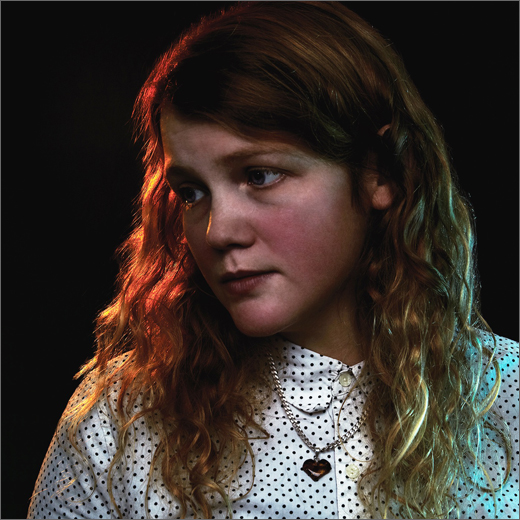
Kate Tempest :: Everybody Down (Big Dada)

by Gustave Savy
Matthew Connor

I am REALLY into this album. It's like The Streets but better or something? Anyway, check her out.

The story of Everyone Down is like a super-cool modern gangster film of the Guy Ritchie and his contemporaries style, with many different sub-plots revolving around the different characters.

Kate Tempest is a big big name at the moment in the UK. There is a good reason for this, namely that she is phenomenally good. She is an acclaimed poet, a published playwright and a seasoned performer of her material, including an epic poetry show with live score. She is also pretty handy when it comes to making the subtle transition from spoken word delivery to rapping. Everybody Down is her first full length solo album, and has the talents of Dan Carey (aka Mr Dan) on production duty.

The album is pretty much a concept album, a format that fell somewhat out of favor around the latter part of the 1970’s. This is a thoroughly contemporary take on the idea though, putting it into a Hip Hop context. It’s a story, a peek into a world populated with incredibly well developed characters and threads of cleverly crafted plot lines. A world of gangsters, drug dealers and struggling underdogs, not portrayed with glossy glamor or promoting a high rolling lifestyle, but exploring human relationships, frailties, fears, hopes and dreams that can be recognized by everyone. Story telling is a very ancient art, maybe one of the oldest, and when it’s done right, it has the power to not just convey a tale, but to capture elements of what it is to be alive, to challenge conceptions and accepted knowledge, to initiate different ways of thinking and perspectives. There are things that we all have in common, and the skill of the story teller is to find these common threads and weave them together in ways that make us think or see differently, to recognize bits of ourselves in others and maybe see some of the ties that bind us all. The story of Everyone Down is like a super-cool modern gangster film of the Guy Ritchie and his contemporaries style, with many different sub-plots revolving around the different characters. Once you start listening, you really want to find out how it all ends. But in a way, the overall plot-line takes a back seat, and the real substance is the exploration of the individual’s stories and how they deal with the twists and turns of their lives. As I said earlier, the characters are incredibly well developed, and Kate brings out their vulnerabilities in a way that draws you into their meanderings and holds up a mirror for all of our own insecurities.

So, that’s quite a lot of stuff about the words, but this is after all a music release. The production is very high end, top studio stuff from one of the big name producers. But it’s done with real sensitivity to the lyrical content, allowing the vocal to take the limelight. It’s got more then a nod to the old school Hip Hop sensibility, but with plenty of freshness and groove. It’s almost written like a film score, with the music changing appropriately for different characters and scenes.

This is a big release with loads of hype, and sometimes that sort of thing can be hard to live up to, but this album is genuinely one of the best things I’ve heard in a long time. I strongly urge everyone to check this lady out if you haven’t already. She is a word wizard with a gift of storytelling that is not so common.

Everybody Down is available on Big Dada.

04 Jun 03:49

Newswire: Writer of Mandela biopic says 12 Years A Slave hogged all the white guilt

by Sean O'Neal
Matthew Connor

'alling the late South African leader “boring,” the screenwriter who was hired to write a film about him, then complain that no one thought it was amazing, continued, “I know it sounds outrageous to say a thing like that, but when he came out of prison he made a speech and, God, you fell asleep.”'

Last year saw the release of Mandela: Long Walk To Freedom, a biopic that—despite the best efforts of actor Idris Elba, and the autopilot inertia of U2—failed to attract much critical praise or commercial success. Some might blame that rejection on the film’s own merits, but its screenwriter William Nicholson has another theory: By the time it came out, 12 Years A Slave had “sucked up all the guilt about black people” that was so crucial to its success. Sadly, guilt about black people is a limited resource that really only allows for one harvest per season, much like the avocado.

Nicholson made those remarks before a recent film festival audience in Wales, lamenting that Mandela “didn’t get the kind of acclaim that I wanted. It didn’t get Oscars.” And while one could probably attribute that to other factors, such as not being good enough ...

29 May 15:32

Why Time’s Profile Of Laverne Cox Is A Big Step Forward For Transgender Equality

Time Magazine - Transgender Tipping Point Laverne CoxTime Magazine has declared that society has reached a “transgender tipping point,” offering up a new feature that includes an extensive “Transgender 101″ article covering the gamut of issues affecting the trans community, a photo essay of transgender individuals, and a personal interview with Laverne Cox, the openly trans actress who stars in Netflix’s Orange Is The New Black.

The cover story and its other components comprise what is perhaps the most positive and in-depth representation of transgender life experiences ever presented in mainstream print media. After recent incidents of transgender misrepresentation, such as Katie Couric’s insensitive interview with Cox and model Carmen Carrera, Piers Morgan’s two combative interviews with activist Janet Mock, and the Grantland story about “Dr. V’s Magical Putter,” the Time feature is a breath of fresh air. Here’s a look at the many important points Time’s Katy Steinmetz got right in the new cover story:

  • The stories focus not on what it means to transition, but on what it’s like being transgender in a world that is not accepting and understanding of transgender people.
  • Though it’s already the magazine’s style, the article boasts, “This article will use the names, nouns and pronouns preferred by individuals, in accordance with TIME’s style.”
  • The main feature emphasizes the discrimination transgender people experience, including how they are “significantly more likely to be impoverished, unemployed, and suicidal than other Americans.”
  • In a brief history of society’s understanding of trans identities, Steinmetz parses out the differences between the biology of sex, the culture of gender, and the differences between sexual orientation — “who you want to go to bed with” — and gender identity — “who you want to go to bed as.”
  • Relaying the story of transgender homecoming queen Cassidy Lynn Campbell, Steinmetz highlights how transgender victories can still be shrouded in confusion and negative reactions.
  • Steinmetz highlights many obstacles that remain to transgender equality: full inclusion in public schools and in athletics, inclusion in the military and at women’s colleges, changes to legal documentation, access to inclusive health care coverage, and blatant discrimination in employment, housing, and basic services — and the mental health consequences that follow.
  • The photo essay profiles both trans men and trans women, highlighting the unique challenges each has faced in their different journeys.
  • Steinmetz invites Cox to get personal about why people might respond defensively to understanding what it means to be transgender. She explained, “People need to be willing to let go of what they think they know about what it means to be a man and what it means to be a woman… I think the reality is that most of us are insecure about our gender.”

Cox had previously placed fifth in a poll for Time’s “most influential people,” but didn’t make the top 100 list. This feature seems to be the magazine’s answer to excluding her at the time.

Time’s broad treatment of transgender issues could go quite far to raise awareness about who the members of this community are and what they’re experiencing in society. All that it took was inviting people to share their stories and presenting them in a way that respected their identities and experiences.

The post Why Time’s Profile Of Laverne Cox Is A Big Step Forward For Transgender Equality appeared first on ThinkProgress.


21 May 14:00

Photo


20 May 00:35

Photo


14 May 18:18

Yeehaw: Boston to get country-themed restaurant

by adamg
Matthew Connor

Cautiously optimistic? Like, it will probably be obnoxious, especially being on Lansdowne, but I do really want more grits and fried okra and pimento cheese and sweet tea up in this town.

The Lyons Group wants to turn a closed taqueria on Lansdowne Street into a down-home eatery serving old-fashioned Southern food to the sound of country, bluegrass and folk music.

The Boston Licensing Board formally votes this afternoon whether to allow the company to convert La Verdad into Loretta's Last Call.

Lyons lawyer Dennis Quilty said the new restaurant would be Boston's first country-themed city. In recent years, country has become more popular in Boston - Fenway Park now hosts at least one country concert a year.

14 May 15:58

Roísín Murphy’s written 35 songs for her “masterpiece” of a new album

by Brad O'Mance
Matthew Connor

This is the only thing that matters.

roisin-murphyRoísín Murphy’s said she’s already written 35 (THIRTY FIVE) songs for her new album, which will hopefully be out in the summer.

Having a chat to someone from The Independent about her forthcoming EP, ‘Mi Senti’, she also confirmed her return to music full-time, stating that her next album will hopefully be a “masterpiece”.

“The aim is to write a masterpiece,” she confirmed. “But if I’ve learned anything it’s that writing a masterpiece is not easy.”

“I’ve been feeling out of my depth a lot, but then that’s probably no bad thing,” she continued. “Keeps me focused, right? Right?”

Right.

29 Apr 15:23

There’s a best of Adam Lambert album out in May by the way

by Brad O'Mance

Adam_LambertAdam Lambert’s old record label are releasing a best-of collection on May 27, reports Billboard.

The album is entitled ‘The Very Best of Adam Lambert’ and we can only assume it is being released with little to no endorsement from the man himself. Still, it’s Sony Legacy are storming ahead with the release which will include all the hits (we assume this is a US-only release), plus three covers from American Idol and his version of ‘Marry The Night’ from Glee.

Here’s some ridiculous blurb from the album’s liner notes:

“If some of these tracks feel like musical mission statements, it’s in their skillful fusion of mainstream pop and rock with left-of-center, if not underground, musician and pop-cultural markers, and their clear conviction towards that mission. And it that’s not the hallmark of an artist who’s unfailingly true to himself… well, you are invited to listen to some more until you get it.”

Here’s the full tracklisting:

1. Mad World (American Idol Performance)
2. One (American Idol Performance)
3. Tracks of My Tears (American Idol Performance)
4. Time For Miracles
5. For Your Entertainment
6. Whataya Want From Me (“NOT A FLAMMED-TOGETHER CASH-IN HITS COLLECTION”)
7. If I Had You (Radio Mix)
8. Aftermath (AS IN ‘IN THE AFTERMATH OF ADAM LEAVING HIS LABEL, THEY CHUCKED OUT A DODGY BEST-OF’)
9. Can’t Let You Go (HE LEFT THE LABEL BY MUTUAL AGREEMENT)
10. Trespassing (Radio Edit)
11. Never Close Our Eyes
12. Better Than I Know Myself
13. Runnin’
14. Marry The Night (Glee Cast Version)

28 Mar 21:38

Wal-Mart has a lower acceptance rate than Harvard

by Christopher Ingraham

This year's Ivy League admissions totals are in. The 8.9 percent acceptance rate is impressively exclusive, but compared to landing a job at Wal-Mart, getting into the Ivy Leagues is a cakewalk.

Last year when Wal-Mart came to D.C. there were over 23,000 applications for 600 jobs. That's an acceptance rate of 2.6%, twice as selective as Harvard's and over five times as choosy as Cornell.

ivy league admission rates wal-mart

This isn't an anomaly - last year a Wegman's in Pennsylvania boasted an acceptance rate of 5%, while Google only has room for one half of one percent of its job applicants.

Parents and students - particularly those from a certain socio-economic background - tend to obsess a lot over the college admissions process. The danger, of course, is that this single-minded focus on preparing kids for college - the extra-curriculars, test prep, admissions coaching, and the like - is coming at the expense of prepping them for the job market hurdles that come after.


28 Mar 17:55

Bally’s DOLLY pinball machine, 1979


Bally’s DOLLY pinball machine, 1979

26 Mar 02:25

MBTA proposes fare hikes for July 1

by adamg
Matthew Connor

~*~predictable griping here~*~

The Globe has the details - starts with a 10-cent increase for a single subway ride.