Shared posts

02 Mar 03:51

How to Avoid Spreading Myths and Misinformation Online

by Adam Pash

How to Avoid Spreading Myths and Misinformation Online

Even if you've never embarrassed yourself by unknowingly spreading an urban legend as fact to friends and family, you've at least been on the receiving end of one of these misinformed messages. Next time an email, tweet, or link seems a little fishy, here's how to spot it before your itchy trigger finger sends it to all your friends or followers.

Read more...


26 Feb 06:07

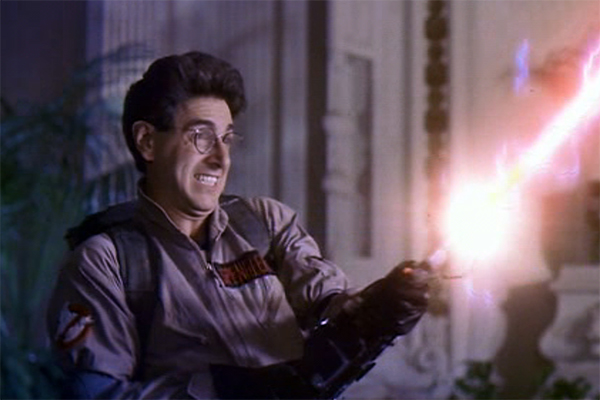
In Memory of Egon Spengler

by Scout

As a child, Egon Spengler was my hero.

01

It’s funny to think that in a decade populated by such brawny cartoon characters as the steroided-out He-Man gang, the all-powerful Transformers, and the bicep-flexing GI Joe’s, a skinny, awkward, glasses-wearing scientist could somehow stand out from the crowd.

But Egon was my favorite. I wore out about ten different action figures, I had a little jumpsuit with his name on it, and even though my eyesight was fine, I would often put on a pair of lensless glasses because I thought it’d make me more like Egon (smart!).

02

As many Scouting NY readers probably know, Ghostbusters is my favorite movie. This is partly because I think the film is one of the great comedies of all-time, the perfect blend of horror and humor, realism and fantasy. But of course, a favorite movie is never a rational choice, nor should it be (I am always highly suspect of people who say that Citizen Kane is their favorite movie; greatest, OK, but favorite?). As with any favorite film, the time, place and circumstances of that first viewing is often as important as the movie itself, and for me, Ghostbusters arrived right about the time I started to learn about the unknown.

I was a pretty neurotic kid, which I suspect was due in large part to my early Catholic school education. I remember being at Friday mass one day in first grade and listening to the priest going on about death and heaven and hell. All of a sudden, it occurred to me for the first time that death was a very real thing; someday, all the people around me would be gone. My friends, my brothers, my parents. Would they go to Heaven? Would some wind up in Purgatory, or the unthinkable, Hell? The implications became overwhelming, and I began to cry.

My teacher, Sister Frances, saw me and quickly took me out in the hall. She asked what was wrong, and I told her that the priest had made me think of my parents dying. I’ll never forget the look on her face as it clouded over with irritation. “You made me miss the service for this?” she snapped. “Your parents are fine. Now get back inside.” Oh, parochial school, where would I be without your warm embrace?

More frightening unknowns began to steadily reveal themselves, as they do for all children. I recall reading a second grade Weekly Reader article (remember that four page newsletter for kids?) on the Chernobyl disaster and becoming deeply concerned about the possibility of a nuclear meltdown. The Seabrook, NH nuclear power plant was just 25 miles away from where I grew up, and I’ll never forget the large sign put up by activists on the highway, which we would frequently drive by: “Mr. President,” it read, “In the event of a nuclear meltdown at Seabrook, there would be no chance of escape.” Just what a seven year old wants to think about.

And of course, there were the usual childhood boogeymen. Most kids were afraid of monsters hiding under the bed or in the closet, but after reading a book on aliens (courtesy of the Scholastic Book Club), I realized that the real threat came from outer space – and there was nothing you could do to stop it. Death, illness, nuclear holocausts, alien abduction…The more I grew up, the more the world became a very scary place.

08

What made Ghostbusters so special? I certainly loved He-Man, Transformers, the Smurfs, the Teenage Mutant Ninja Turtles, GI Joe, and all the rest. But Ghostbusters was my favorite, the fantasy land that I most often drifted off into when playing. And after some reflection, I think I’ve figured out why.

Superman fought Lex Luthor. GI Joe fought Cobra. He-Man fought Skeletor. The Ninja Turtles fought Shredder. The Smurfs fought Gargamel. Each series featured a recurring villain as the antagonist, a bully-substitute who would attempt a new fiendish plot each week, only to be thwarted at the last minute by the smarter, stronger heroes.

The Ghostbusters fought the unknown.

03

I can’t remember how young I was when I first watched the original movie, but I’ve never forgotten my reaction to one scene in particular: the four Ghostbusters, having narrowly survived a supernatural earthquake, head into Dana Barrett’s apartment building to try and save the day. “They don’t have a plan,” I remember thinking in horror. “They don’t know what to do.”

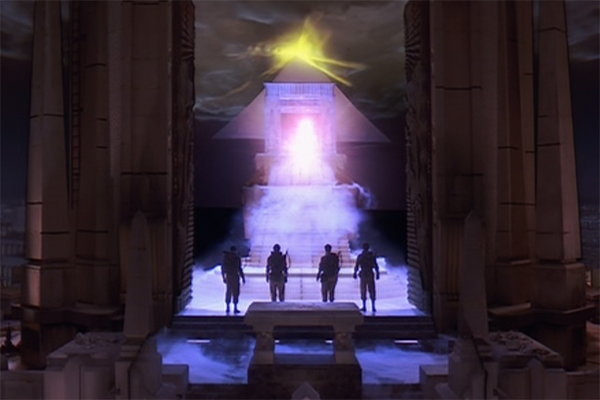
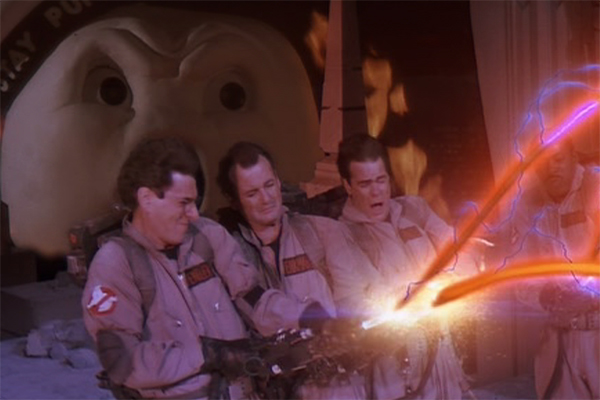
And it’s true. Now knowing what happens, it’s easy to forget that at this point, our heroes have absolutely no idea of what they’re going to do once they get to the roof. Sure, they’ve got four nuclear accelerators on their backs, but their firepower quickly proves useless against Gozer. Soon, Dana Barrett is a terror dog, the Stay-Puft Marshmallow Man is tearing up Central Park West, and it looks like the end is near.

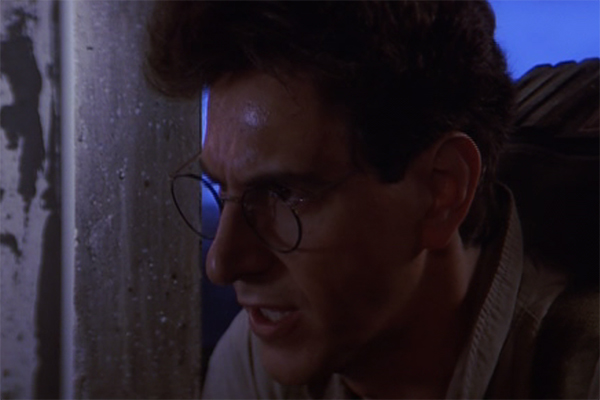
And then, as they crouch in an alcove for safety, Egon speaks up. “I have a radical idea. The [dimensional] door swings both ways. We could reverse the particle flow through the gate.” “How?” asks Venkman. “We’ll cross the streams,” he replies.

04

“Excuse me Egon? You said crossing the streams was bad,” says Venkman, as Ray and Winston both look reluctant. “You’re going to endanger us. You’re going to endanger our client. The nice lady, who paid us in advance, before she became a dog…”

“Not necessarily,” says Egon. “There’s definitely a very slim chance we’ll survive.”

This is when Egon became my hero.

Sure, it’s Venkman who leads the charge (“I love this plan! I’m excited to be a part of it! Let’s do it!”), but it was Egon who, on the verge of a paranormal apocalypse, was able to keep his wits and turn to science for a solution. And despite the grim odds, he shows absolutely no hesitation in suggesting they risk their lives to stand up to the gates of Hell.

06

Egon made it cool to be smart.

Each week on the tie-in Real Ghostbusters cartoon show, which I watched religiously, saving the day would come down to some kind of scientific know-how, or knowledge of history or arcane literature, and more often than not, it was the brilliant scientist Egon who provided the necessary answers. When bullies at school would make fun of me for being a nerd or getting good grades, the insults never made any sense. Of course I wanted to be smart. Just like my hero.

What’s more, Egon would always confront the weekly cadre of spooks, specters and demons with a cool, scientific detachment. He wasn’t afraid of the unknown.

Looking back, I now see that as I got older, I began gravitating closer to the things that scared me. In third grade, though I was very much afraid of spiders, I strangely chose to do a science report on tarantulas. I learned all about them, and even went to the pet store to take photos of a live one. Doing the report didn’t exactly make me 100% comfortable hanging around enormous arachnids, but I did find that embracing my fears and looking at them logically greatly helped to diminish them.

The unknown became a little less scary.

6579378

On Monday, Harold Ramis, co-writer of Ghostbusters and the actor who brought Egon Spengler to life, passed away at the age of 69. An incredibly gifted writer, director, actor, and producer, countless obituaries have heralded his landmark contributions to cinema and comedy.

For me, his death made me reflect on the importance of childhood heroes, and the immense effect they can have on one’s growth. I once read that in the 1960s and 70s, approximately 50% of the applicants to Rockefeller University’s PHD program cited TV’s Mr. Wizard as the reason they first became interested in science. How many would today cite Dr. Egon Spengler?

In an interview, Ramis talks about the first time he showed the Ghostbusters films to his young children. After the movies ended, he recalls, “my four year old turned to me and said, ‘Dad – you’re a really good scientist.’”

“I thought that was the highest compliment of all,” he says, clearly overjoyed by the memory.

You were a great scientist, Mr. Ramis. Thank you for teaching me that wanting to be smart was OK, and that you didn’t have to be afraid of those strange things that go bump in the night.

-SCOUT

25 Feb 22:28

A (Possibly Fake) Startup Is Proposing We Eat The Rich And Famous

by Steve Marinconz

A (Possibly Fake) Startup Is Proposing We Eat The Rich And Famous

BiteLabs has a modest proposal. Industrial farming is unsustainable, so why don't we grow meat in labs? And if we're growing meat in labs, why not make it the meat of celebrities? You know what, I don't see any reason why not.

Read more...


25 Feb 16:55

This Inception board game takes place in the dream world

by Meredith Woerner

This Inception board game takes place in the dream world

Inceptor is a board game based off Chris Nolan's Inception, which means it's gorgeous but also complicated. Very complicated. So extremely complicated, in fact, that sometimes doesn't make any sense. But that's okay, we're in.

Read more...


24 Feb 23:19

BBC to Re-Release Classic Hitchhiker's Guide Game for 30th Anniversary

by Owen Good

BBC to Re-Release Classic Hitchhiker's Guide Game for 30th Anniversary

Infocom's classic The Hitchhiker's Guide to the Galaxy turns 30 this year, and to celebrate, the BBC will publish an updated online version of the game on March 8, the 36th anniversary of the series' first radio broadcast.

Read more...


24 Feb 20:48

From Bottlecap To Pocket Crossbow In Just A Few Steps

by Patricia Hernandez

From Bottlecap To Pocket Crossbow In Just A Few Steps

If you've got a couple of screwdrivers, popsicle sticks, an elastic band and a bottlecap lying around, then why not put them to good use? These common household items are everything you need to make a surprisingly powerful mini crossbow.

Read more...


21 Feb 20:54

Zelda... In First Person...On The Oculus Rift

by Patricia Hernandez

Maybe changing the perspective on the original Legend of Zelda is a little weird—everything looks so different here—but that's exactly what makes this Oculus Rift version of the game interesting. Its almost like you're playing (or in this case, watching) an entirely new game.

Read more...


20 Feb 16:49

Missouri schools may have to "alert" parents when evolution is taught

by George Dvorsky

Missouri schools may have to "alert" parents when evolution is taught

In what may be the first of its kind, a proposed bill in Missouri would require that parents be notified when evolution is being taught to their children at school. They could then pull them from the class. Critics say the bill would "eviscerate" the teaching of biology.

Read more...


19 Feb 17:32

Honest Trailers reveals Gravity is an epic tale of bumping into stuff

by Rob Bricken

You know you can still mock good movies, right? That's why Honest Trailers chose Gravity — a film they clearly genuinely like — for its newest installment. It's still just as funny as when they take on crap like Batman & Robin. And besides, now we know Gravity would be even better with pinball sound effects.

Read more...


18 Feb 18:10

The Adventures of White Men: True Detective and Me

by Tristan2Z on Observation Deck, shared by Ria Misra to io9

The Adventures of White Men: True Detective and Me

I love True Detective. I think it is as brilliant and unique a show as I have ever seen. Everything about it has been amazing, from the writing to the direction to the brilliant lead performances. But as pointed out by some commenters in the recap of Episode 5, the show is narrowly focused on the two white male leads leaving everyone else undefined and in the background. This got me thinking about my own experience as an African-American male experience media.

Read more...


18 Feb 17:50

Geological map of Jupiters moon Ganymede Download as PDF


Geological map of Jupiters moon Ganymede

16 Feb 16:06

The Day My Love for My Daughter Became Real

by Tom Burns

The Day My Love for My Daughter Became Real

Tom Burns remembers the exact moment he started loving his daughter as a person rather than as an ideal

It all started with a tap, tap, tapping.

I was completely bowled over when I found out I was going to be a dad. I was elated, terrified, anxious, giddy, shocked, terrified… did I mention terrified? I can honestly say that, in that moment when I first found out about her, the daughter that was growing in my wife’s belly, I loved her. I loved the idea of her. But that’s all she was at the moment – an idea. And loving an idea and loving a person are two completely different things.

One of the many, many things that differentiate men and women is that, when a woman is expecting, the baby is a concrete fact, an existing thing, much earlier in the pregnancy for her than it is for him. Yes, minutes into finding out about the baby, I was already starting to feel emotional, protective, and proud of it, but there’s no way I can even pretend that I had the same appreciation of that child as a physical, three-dimensional human being that my wife did.

First LoveThe baby was inside of her, it was part of her. On good days, the baby was a symbiotic organism, a companion, a complementary life-form inexorably tied to my wife’s being. On bad days, the baby was a parasite, sucking away nutrients, blood, sleep, youth, and inspiring her to throw up chocolate milkshakes or whatever else she was able to keep down that week. However, throughout the good and the bad, my wife’s early interactions with our baby created a bond that I was sometimes jealous of. Her love for our daughter was both a tactile and an emotional love and I just wasn’t there yet.

Maybe it was because a kid is a hard concept to wrap your mind around, if you’re not holding it, looking at it, or changing its diaper. I was the proud father of an abstract idea of a baby and I was nervous about how my feelings would change towards it when that child emerged out of the aether and solidified into an actual, living person.

Cut to four months into the pregnancy.

We’d had a long night. My wife’s anti-nausea medicines hadn’t done their job, so she’d spent a lot of time in the bathroom with me perched above her, delicately holding her hair.

I awoke from a dead sleep to feel my wife tapping on my hand, obviously trying to wake me up. Maybe she needed me to get her new meds, grab her some water, or run out to look for some food that she might be able to stomach for a few hours. I didn’t mind. Nights like last night made it clear that my wife was getting the short end of the stick on this deal, so, getting up a little early to go grab some glazed donuts was nothing to complain about.

I groggily glanced over at my wife. She was turned towards me, fast asleep and curled up on her side. I was confused. Had she passed out while waiting for me to wake up? Had I dreamed it? But then I felt it again. A tap, tap, tapping…

My eyes went to my left hand, which was pressed up against my wife’s stomach, which had been pressed there for most of the night. A second passed and then, from inside that stomach, a living, breathing person tapped on my hand, grabbing my attention and letting me know, without a shadow of a doubt, that she was real.

I’d felt the baby move before, but this was different. This was the first moment that my daughter and I ever shared on our own. My wife was asleep and this chorus of tapping – it was for me. It was an introduction, a private conversation, an intimate hello.

Lightly, very lightly, because I didn’t want to wake my wife, I pressed back, tapping as if I could communicate with my daughter in some form of in-utero Morse code. She tapped again, I responded, and, in that moment, my love for my daughter was no longer abstract. She was a person, a person I had now met, a person I had a relationship with, and, in that funny little moment, my love for my daughter was concrete and real and as grounded as it ever was and ever will be.

Now I know that there a million different ways to debunk what happened there. It was probably just gas, or I was feeling her knee, or there was no way she could’ve been responding, or fetuses aren’t particularly known for their ability to communicate old-school telegraph style. I am aware of them all and I do not care.

Because, even if it made absolutely no sense, that was the moment where my love for my daughter evolved, the moment where the unreal became real, the moment where I got my first sense of what it would be like to love “My Daughter the Person” rather than “My Daughter the Idea.”

That silly tap, tap, tapping endures to this day as one of the most loving moments of my entire life and I’m so happy my daughter woke me up to share it with her.

♦◊♦

Original uncropped image – Credit—Photo: Beglen/Flickr

The post The Day My Love for My Daughter Became Real appeared first on The Good Men Project.

14 Feb 18:09

Areas served by London’s major railway stations


Areas served by London’s major railway stations

10 Feb 18:26

Fox Business slams The Lego Movie for being Anti-Business

by Meredith Woerner

Fox Business thinks the blockbuster, feature-length toy commercial The Lego Movie is anti-business. The mind boggles.

Read more...


05 Feb 00:34

molecularlifesciences: Top 5 misconceptions about evolution: A...


molecularlifesciences:

Top 5 misconceptions about evolution: A guide to demystify the foundation of modern biology.

Version 2.0

Donate here to support science education:  
National Center for Science Education http://ncse.com

Thank you followers for all your support!
Love, 
molecularlifesciences.tumblr.com

Here’s an updated version of the common misconceptions about evolution. I much prefer this one, on account of correctly spelling “descent” vs “decent” :)

04 Feb 17:10

Forgotify Finds New Music by Playing Never-Played Songs on Spotify

by Eric Ravenscraft

Forgotify Finds New Music by Playing Never-Played Songs on Spotify

Spotify may be one of the most popular music streaming sites on the internet, but not all songs are created equal. A sizable chunk of Spotify's collection has never been played. Forgotify finds those tracks and turns them into a playlist for you.

Read more...


03 Feb 18:10

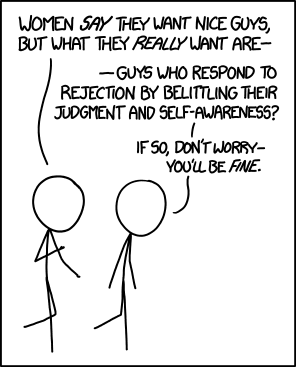
Rejection

Perhaps you need a crash course in taking hints. Here's your first lesson: We're not actually walking somewhere together; I'm trying to leave this conversation and you're following me.
31 Jan 22:48

"Darwin Day" is being officially considered by Congress!

by Robert T. Gonzalez

"Darwin Day" is being officially considered by Congress!

Resolution HR467 has been reintroduced into the US House of Representatives. If passed, it would officially designate February 12, 2014 as "Darwin Day," recognizing "the importance of science in the betterment of humanity."

Read more...


30 Jan 18:29

This is the First-Ever Weather Map of a Brown Dwarf

by Robert T. Gonzalez

This is the First-Ever Weather Map of a Brown Dwarf

The European Southern Observatory's Very Large Telescope has been used to create history's first-ever map of weather on the surface of a brown dwarf. These images provide us with an unprecedented look at the atmospheric features of these poorly understood "failed stars."

Read more...


29 Jan 17:24

Obama: "The debate [over climate change] is settled"

by Robert T. Gonzalez

Obama: "The debate [over climate change] is settled"

"The shift to a cleaner energy economy won't happen overnight, and it will require tough choices along the way," said President Obama last night in his State of the Union Address."But the debate is settled," he added emphatically. "Climate change is a fact."

Read more...


28 Jan 20:43

Side Projects Don't Have to Be Lucrative, Just Fulfilling

by Whitson Gordon

Side Projects Don't Have to Be Lucrative, Just Fulfilling

Lately, there's been a big push for people to start a side project and quit their day jobs—or at least with the intent of quitting their day jobs one day. Over at Playboy's (safe for work) Kinja, Mike Sager explains that sometimes, a side project is just that—a side project. And even if it costs you money, sometimes it's worth it for the fulfillment it brings.

Read more...


22 Jan 18:08

A white dwarf just exploded, creating the closest supernova in 25 years

by Ria Misra

A white dwarf just exploded, creating the closest supernova in 25 years

A white dwarf exploded last night up in the Cigar Galaxy (also known as M82 to its friends), creating the closest supernova we've seen in the last 25 years — and one of the brightest, too.

Read more...


17 Jan 18:50

This mysterious rock just appeared in front of our rover on Mars

by Ria Misra

This mysterious rock just appeared in front of our rover on Mars

A mysterious rock suddenly appeared in front of the Opportunity rover's cameras on Mars, puzzling scientists who describe the rock as both "a total surprise" and "about the size of a jelly donut."

Read more...


17 Jan 17:38

New Survey Supports the Theory that the Universe Is Infinite

by Robert T. Gonzalez

New Survey Supports the Theory that the Universe Is Infinite

New measurements from the Baryonic Oscillation Spectroscopic Survey (BOSS) study have charted the shape and size of our universe to within 1% accuracy. Above, David Schlegl, a physicist at Lawrence Berkeley National Lab and research team member, describes the flat, and probably infinite, Universe that the findings suggest.

Read more...


16 Jan 23:17

This medieval manuscript curses the cat who peed on it

by Lauren Davis

This medieval manuscript curses the cat who peed on it

What happens when a cat sneaks over and pees all over the precious manuscript that you've spent months of your life inscribing? If you're this 15th century monk, you leave a note cursing the cat and move on with your writing.

Read more...


14 Jan 17:01

Who benefits from the politics of outrage?

by David Brin
Outrage-industryThe authors of The Outrage Industry: Political Opinion Media and the New Incivility, have offered an interesting and balanced article on Politico appraising why so much of the media has become polemical and angry-immature, here and now in the 21st Century.  In Are Americans Addicted to Outrage? -- Jeffrey Berry and Sarah Sobieraj suggest that we the viewers are to blame, by flocking to the hate-waves for our daily doses of sanctimonious thrill.
And, of course, at one level they are right….
And yet, we should note that this cynical payoff is not homogeneous or uniform:
(1) MSNBC's profits are a fifth those of Fox.  Moreover, as Berry and Sobieraj point out "talk radio, which is more than 90 percent conservative, offered only a modest selection of liberal programs, all with much smaller audiences; as a result, only two of the 10 radio programs we studied are oriented toward liberal audiences."
(2)  The liberal stations favor a return to "fairness rules," even though those doctrines, if once again enforced, would compel them to change their business practices, inviting top opponents to offer rebuttals onscreen. In contrast, Fox and Clear Channel and the outrage industry of the right act as if they are utterly terrified of the prospect that their audiences might hear one minute of rebuttal for every 20 minutes of biased ranting. That is a fundamental difference, not one of just amount.
politics-outrge(3) Who does it all serve?  Follow the beneficiaries. There are reasons that Fox is co-owned by the Sa'udi Royal House and that coal and other carbon barons finance the right's propaganda machine.
And yes, Big Labor influences the left.  Granted. Only ask yourselves this.  Which power center is growing, and which has become… pathetic… during the last generation? Is there, even theoretically, any level that the labor movement can decline to, when you'd admit "Okay, I'm not afraid of them, anymore… and maybe there are other, rising centers of influence that are a bit more worrisome"?
== The beneficiaries of broken politics ==
It isn't all about carbon barons though.  Much discussion has recently focused on the skyrocketing disparities in both wealth and income between the very richest 0.01% and the hard-pressed U.S. middle class.  While the ratio between a company's average employee wage and that of its CEO was in the teens and twenties in the glory-days of American capitalist entrepreneurship… the 1950s, 60s etc.
CEO--pay-ratioAmerica now has by far the biggest disparities. Major U.S. execs now pull in, on average, over 350 times the pay of America’s rank-and-file workers. Even the most successful Japanese firms, by contrast, don't exceed ratios of seventy to one. See a global comparison of CEO to Worker Pay Ratios.
This will get clearer, soon. "The federal Securities and Exchange Commission, after four years of delay, will likely release this year new regulations that require America’s top corporations to annually reveal the ratio between their CEO and median worker compensation, a disclosure that the 2010 Dodd-Frank Act mandates."
The aspect to all of this that I find most surprising -- as I illustrated in the year 2040, in EXISTENCE -- is the notion among today's conservatives that this trend might simply go on and on, without reaching an inflection or tipping point. Without eventually raising the kind of radicalism and push-back that has not been seen in American life since the 1930s.
== Push back begins ==
In Massachusetts, nurses have collected over 100,000 signatures for an initiative that would levy fines against any hospital in the state, profit or nonprofit, that compensates its CEO over 100 times the hospital’s lowest-paid worker.  In Switzerland last year, young activists ran a referendum campaign to cap Swiss CEO pay at 12 times worker wages. This pay cap proposition was running even in the polls until an ad blitz sent the measure to defeat.
percentage-signCould 2014 be Year One of the Pay Ratio Era? A vigorous article at Truthout -- while of course partisan -- nevertheless makes a strong case that these measures portend a rebellion brewing, against what I've called the Oligarchic Putsch -- the transformation of America from a diamond-shaped society, dominated by an empowered middle class, more toward the classic pyramid of privileged (and largely inherited) power that dominated 99% of human cultures across 6000 years.
In fact, though, let me briefly give voice to my libertarian side: I do not see this disparity being solved by simple-minded ratio laws.  Socialist decrees and price-setting are not a long-term or even desirable solution.
What is needed is a return to the principles of Teddy Roosevelt - that market economics is best when it is competitive,  This would require, especially, the breaking up of a cartel of cheaters, restoring the natural synergies and feedback mechanisms of capitalism!  Think about it --
== If you truly believe in market forces… ==
By capitalist theory, high rates of compensation in a particular field of human endeavor should attract talented people from other professions, drawing them to compete with these top-CEO guys, thus swelling the pool of managerial talent until prices… go… down!
Nothing could be more fundamental.  It is basic market forces 101. It is the sine qua non, and the whole justification for competitive enterprise. Supply rising to meet high demand. No matter what the field of endeavor, whether it be the availability and pricing of local plumbers or the allocation of fields to next year's wheat or soybean crops, or hedge betting on interest rates - markets are supposed to self-correct great imbalances.
Failure of this to happen is prima facie evidence for collusion and cheating.
This is so basic that it bears reiterating in other words: If capitalism works, then these high CEO wages should be attracting brilliant talent from elsewhere, till demand meets supply and the wages fall.  How can supposed defenders of capitalism proclaim their fealty to a system that they, themselves manipulate to fail in its core process?
Essential-man-CEO1-  On the rare occasion when a member of this caste comments on this contradiction, here is their excuse. At the very highest managerial level, they are irreplaceable!  They are in effect calling themselves "mutant geniuses" like NBA basketball players -- worth any price. And hence, market forces do not apply to their own compensation. (See: The Syndrome of the Essential Man.)
Only, this comparison fails.  For top NBA players are fiercely measured by statistics. Explicit performance parameters, not only in scoring but in ticket sales. But not one study has ever verified a clear correlation of CEO compensation with long range company success.  In fact, fudging and obscuring any such metrics would appear to be a top priority of the cartel.

In fact, NBA player salaries would not be this high but for the strength of their union. A huge irony, as CEOs cite them in justification. That parallel strengthens the notion of a cartel!  Only dig this: even the rich-powerful NBA players do not control their own statistical performance appraisals, the way that the CEO cartel does. Mutant geniuses, indeed!
2- The cartel is maintained by a system that was supposed to be banished more than 100 years ago.  Interlocking directorships, in which companies that are purportedly in competition with each other feature amazing overlap in their boards. Oh, there are efforts to keep these relationships "once-removed," substituting partners and family members, or appointing each other onto the boards of companies that aren't in direct competition… Gerbers and Boeing, for example, thus evading any enforcement of  the creaky, (needful of tuning) anti-trust laws. It still amounts to "vote to raise my compensation and I'll vote to raise yours."
Can stockholders fight this?  Many have tried, but systems of shell corporation ownership enable contrivances where a few men can control major enterprises with very small boiled-down minority share ownership. And most small stock-holders (let's be frank) never exert their proxies. If corporations truly are our future form of governance, then "owner democracy" is going to have to be refreshed with more fairness, or (again) people will start to radicalize.
GuidedAllocation3- Critics of socialism cite Friedrich Hayek and proclaim that any control over an economy by the state -- by civil servants -- will fail. Because, no matter how smart a set of top-down allocators are, they will be foolish simply because their numbers are few.  Because of limited diversity of knowledge and insight and perspective.
In-groups are delusional. It wasn't just Hayek who said this.  So did Adam Smith. And so testifies the horrifically bad statecraft of 99% of oligarchy-led human cultures.
Indeed, history does show that narrow castes of "allocators" do inevitably perform poorly, over the long run.  State-capitalist mercantilist trade empires like Japan and China have done well in stretching out their successful phase. But we know the inevitable end-game, as complexity and chaos and lack of market correction inevitably prove the limits of in-group hubris.
So sure, I don't want the government "picking winners and losers" … that is, unless there is a clear and proved need to lay extra weight on certain market forces, for the sake of our kids -- e.g. to encourage the development of efficient and sustainable technologies, for example.  And national defense.  And vital infrastructure. And fulfilling Adam Smith's goal of maximizing the fraction of kids ready to compete… and…
But still, beyond that sort of thing, I know that state -controlled "allocation" can be clumsy, inefficient and wrongheaded, compared to the wisdom of mass markets!  Let us always remember that there is a core essence to libertarianism and conservatism that (despite recent craziness) should have a place at the table.  Extreme statists are just as bad as oligarchists.
hayek-road-serfdomOnly in that case…  how is a secretive cartel of 10,000 or so conniving, back-room-dealing, circle-jerking, self-interested golf buddies intrinsically better allocators than say 500,000 skilled, educated, closely-watched and reciprocally competitive civil servants?  Both groups suffer from delusional in-group-think, Hayek had a good point.  But the smaller clade - more secretive and inward-looking, uncriticized and motivated solely by conniving greed - is inherently more likely to fail.
Again, 6000 years of history testify to that. Capitalism only started taking off and prospering when capitalism agreed to wear a leash.
== What's needed? ==
We need fierce measures to stop interlocking directorships and the in-group mutual stroking of 10,000 golf buddies -- a criminal conspiracy that not only has stolen billions but runs diametrically opposite to the entire notion of competitive enterprise.
We need to demand that hypocrites either stop pretending to believe in market forces, or else show us those market forces at work, correcting a blatant campaign of theft from citizens and stockholders.
We need to break up the worst cartel of all, the "seated members" of the great stock, securities and commodities exchanges, an archaic arrangement that serves no benefit to people or capitalism -- especially in the new era of electronic trading -- and one that amounts to pure, vampiric parasitism.  All seats should be converted into ten, tomorrow, with nine of them to be sold off to the widest diversity of bidders. Or else, let Google handle all trades for 0.001%. You think they can't?

Want a radical reform? That still stays loyal to Adam Smith and enterprise markets?  Simple. Hayek said markets work best when everybody knows mostly everything!  Hence, there is no excuse for hidden-secret ownership. If you control something, you should have to openly avow "I own that!" There are no viable rationalizations not to require this, which would help every honest businessperson and citizen on the planet, and undermine cheaters everywhere.
TransactionFeeTerminateFinally, tomorrow, for the sake of our children, we must inpose what more advanced nations in Europe and Asia have imposed -- a tiny High Frequency Trading (HFT) transaction fee.  Just 0.1% or one thousandth per trade would push these fellows back into earning their livings by helping real humans to find value differences or gradients that are useful to genuine investers or sellers. See my article: A Transaction Fee Might Save Capital Markets...and Protect us from the Terminator?  This is urgent, in some very surprising ways.
Now please take careful note: not one of my proposals is leftist or anti-capitalist. Adam Smith would have no trouble with any of it.  Every single item that I raised would have the effect of invigorating markets by re-establishing actual competition.
These measures are inevitable, as the boomer generation's delusions start to fade and we become aware - again - of humanity's perpetual problem of class.   problem that seemed to vanish - in America - for an entire human lifespan, because of rooseveltean reforms and the burgeoned middle class.  

As that era passes, and we face our duty to renew and restore the social contract, proposals like the ones I offered (above) will come to the table. When these reforms start looming the best course for the rich and members of the cartel would be to negotiate, since the first wave of reforms will aim to -- as FDR did -- actually save capitalism from the otherwise inevitable volcanic fury of the sinking classes.
CompetitionAlas, as happened when the First Estate fought all-or-nothing for their privileges, in 1789 France, that negotiation will probably not happen. (See Class War and the Lessons of History.) Instead, lacking a Roosevelt, there will instead be dullard obstinacy.  We'll hear howls of outrage by a rising oligarchy and their media shills. 

But don't be fooled. That is noise rising from the ancient enemies of market enterprise.  Not socialism, but a far more deadly destroyer of fair markets -- feudalism. And they have no idea that modern versions of tumbrels are being fashioned, by their own hands.
. . ...a collaborative contrarian product of David Brin, Enlightenment Civilization, obstinate human nature... and http://davidbrin.blogspot.com/ (site feed URL: http://davidbrin.blogspot.com/atom.xml)
09 Jan 00:11

Powerful new planet finder snaps a direct image of an exoplanet

by George Dvorsky

Powerful new planet finder snaps a direct image of an exoplanet

After 10 years of painstaking development, the Gemini Planet Imager has returned its first image of a distant exoplanet. Behold Beta Pictoris b, a massive planet several times larger than Jupiter — and over 63 light-years from Earth.

Read more...


08 Jan 22:20

This webcomic captures the day-to-day horrors of living with depression

by Lauren Davis

This webcomic captures the day-to-day horrors of living with depression

Depression can be a difficult illness to understand if you've never experienced it, and depressive episodes can be incredibly isolating experiences. But the webcomic Depression Comix offers a peek into the depressed mind while helping a lot of depressed folks feel less alone.

Read more...


07 Jan 18:10

Breaking the Story Code: The Brand Storytelling “Hero’s Journey”

by g24khamr

“A hero ventures forth from the world of common day into a region of supernatural wonder; fabulous forces are there encountered and a decisive victory is won; the hero comes back from this mysterious adventure with the power to bestow boons on his fellow man.” – Joseph Campbell

ANYONE WHO HAS WATCHED “STAR WARS” (and if you haven’t you should be ashamed) knows that this classic film is an example of a “monomyth” – the belief that all narratives follow a common pattern.

Joseph Campbell famously referred to this concept as the “Hero’s Journey.” From Hercules to Luke Skywalker, from Humphrey Bogart to Harry Potter, this pattern can be found throughout literature and film. We are in fact hard wired as humans to follow the Hero’s Journey; it is the bedrock of all great storytelling.

The traditional Hero’s Journey is essentially as follows:

  • Leaving the “known” world for some unknown challenge or experience
  • A test or tests of character and resolve
  • Triumph or resolution that benefits a greater good and changes the hero for the better

This pattern has stood the test of time. But like any organism, the pattern also evolves. It adapts.

And it is happening again.

The Brand Storytelling “Hero’s Journey”

Upon reviewing dozens of successful brand storytelling efforts I found another pattern: A Hero’s Journey for the post-modern media age.

Following are the four main steps in this new narrative approach to storytelling. I’ll dive deeper into these steps in subsequent posts, as well as provide more brand storytelling examples. For now I’ll use a brilliant piece of storytelling by TrueMove, a Thai communications company, titled “Giving.”

Universal Truth

The story begins with a common frame of reference, a “universal truth” or situation that transcends culture or language. Often there is little or no dialogue, the truth being so honest and relatable that words would merely get in the way.

truth 

A child steals medicine for his sick mother; a shopkeeper shows the boy compassion and sympathy


 Emotional Hero

Emotion – not “logic” – is the raw material that paves the story’s path. Embodied by people, brands or circumstances, the Emotional Hero is a construct of feelings over logic, of humanity over “messaging.”

emotional

Shopkeeper has heart attack 30 years later; daughter can’t pay medical bills 

Twist of Fate

Here the journey takes on an element of surprise, an unexpected turn in the narrative. This is more than just a standard “plot twist,” but rather a truly unanticipated event that can take the entire narrative in a new direction.

twist

Revised bill shows all expenses paid; the doctor was the little boy that the shopkeeper helped 30 years earlier


Transformation

The journey concludes with a form of transformation – a problem is resolved, the main character or circumstances (the Emotional Hero) are changed, a new “universal truth” is revealed. The conclusion can also be a call to action or a reminder to refocus or do things in a different way.

transformation


The boy becomes a man who dedicates his life to helping others; we see a new truth that giving is not just a one-time act but rather has ripples across time

A Hero’s Journey back to Narrative

We need a new Hero’s Journey to guide us through our overloaded media environment. We need a shift back to narrative, to story, to real emotion that we can trust. People don’t want to connect with marketing messages – they want to connect with their innate human nature.

Of course, merely following these steps is no guarantee of success. For every Star Wars there is also a Krull. Storytelling requires more than a good formula, it requires a good story.

But for brands that have something real, emotional and powerful to say, the Brand Storytelling Hero’s Journey is a path worth exploring.

In the next installment we will take a closer look at how the Universal Truth begins the Brand Storytelling Hero’s Journey.


29 Dec 00:48

Seattle’s rail & streetcar systems , by Oran...


Seattle’s rail & streetcar systems , by Oran Viriyincy

SounderBruce: