A brand-new, free-to-listen/download covers/mashup medley EP from Roman GianArthur, featuring labelmate Janelle Monae on the beautiful duet "NO SURPR:SES."
D'Angelo and Radiohead: it's two great late-90s/early-00s/still-pretty-damn-good-in-10s tastes that taste great together!
This goal by Lionel Messi in the Copa del Rey final over the weekend is just out of this world.
You'll notice:
1. He takes on three defenders at once and beats them all by himself, even though they had him pinned against the sideline.
2. There is only a brief moment during his run that the ball is more than a foot and a half away from his feet. The combination of his fierce pace and that delicate delicate touch is unstoppable.
3. The ball never gets away from him because by the time that he kicks it, he has already moved to receive it. This is most evident on his final touch, right before he tucks it inside the near post...he's already moved to the left to receive the pass before he taps it to himself.
4. How did he find the space between the keeper and the near post for that?
This looks good and terrifying! My two favorite things!
The discovery of antibiotics is one of the most important medical advances of our time. So why are we squandering this life-sustaining resource?
That's the question at the center of Resistance, filmmaker Michael Graziano's new documentary about society's collective misuse and abuse of antimicrobials and how we have created an environment in which superbugs are not only increasingly common and deadly, but also unresponsive to the pharmaceuticals we have.
Watch the teaser for Resistance.
The film puts a human face on what can be an abstract problem, telling the stories of parents whose children have been sickened or killed by superbugs and what they felt when all the medicines available to treat their kids' infections failed to work.
But it's not only the tales of human suffering that will move you: it's the incredible history of the problem. By diving back in time — to the 1920s, when Alexander Fleming warned about resistance after discovering penicillin, or the 1970s, when Food and Drug Administration officials said this is a crisis that needs immediate action — Graziano shows exactly how long we've sat idle.
Interviews with renowned experts and scientists help explain the incredible inertia in the medical community and by the public, and why the agricultural sector has been blocking reform. Unlike other medications, the use of antibiotics affects us all, yet we have no regulatory framework in place to tackle this tragedy of the commons.
Once you watch the film, you'll think twice about the drugs you take and where you buy your food. You'll understand why public-health officials are calling the advent of superbugs — and our concomitant failure to stop abusing the drugs we have and innovate new ones — a nightmare.
To stave off the doomsday scenario, Graziano has the correct prescription. As he said in an interview, "Antibiotics are a precious resource that we must preserve, replenish and stop taking for granted."
mostly i'm disappointed Democrats think a zombie apocalypse is more likely than an alien apocalypse
Zombie bullets in Winchester, Virginia, on Friday, June 27, 2014. (Photo by Nikki Kahn/The Washington Post)
You don't have to run faster than the zombies -- you just have to run faster than a Democrat.
A new YouGov poll of 1,000 Americans finds that, by a wide margin, Republicans are far more confident than Democrats in their ability to survive the apocalypse. Forty-three percent of Republicans say that, if the apocalypse were to strike tomorrow, they would be sure to outlast most other people in their community. Only 22 percent of Democrats say the same.
Republicans and Democrats also have very different conceptions of what the apocalypse would be: 27 percent of Democrats say that climate change would be the most likely cause of a coming apocalypse, compared to just 5 percent of Republicans. Republicans were more likely to cite nuclear war (36 percent), biblical Judgment Day (13 percent) and worldwide revolution (11 percent) than were Democrats. The parties are in agreement, however, on the odds of an apocalypse caused by zombies or aliens -- between 1 and 2 percent.
One reason Republicans are more confident about their post-apocalyptic survival odds is that they spend more time thinking about these things. Twenty-two percent say they have thought about preparing for a natural disaster "a great deal," and 35 percent have a natural disaster plan that all members of their family know about. By contrast only 14 percent of Democrats have devoted a great deal of thought to natural disaster planning, and just 18 percent have a disaster plan.
William Trost Richards, Rocky Cliff with Stormy Sea Cornwall, 1902.
Aquabob, clinkerbell, daggler, cancervell, ickle, tankle, shuckle, crottle, doofers, honeyfur, zawn … the English language has historically teemed with vivid, precise words to describe the landscape and natural phenomena. So what happened to all of them? “It is clear that we increasingly make do with an impoverished language for landscape. A place literacy is leaving us. A language in common, a language of the commons, is declining.”
On the shifting sands of literary fame: “It would be hard to find a poet, in the twenty-first century, who openly claims to write for glory, fame, or immortality. Yet the idea that great poetry was the surest way to achieve fame and outwit death has been very long-lived … Why has this dream of immortality vanished from contemporary literature? One reason, surely, is that in the twentieth century human beings faced a distinctively new uncertainty about the very existence of posterity.”
William Powell published The Anarchist Cookbook in 1971, when he was only nineteen. Thus ensued a very unanarchic quest, on his part, to remove it from print, as it tarnished his reputation and took on a new life as a terrorist ur-text: “All hippies at one time or another renounce themselves. Sooner or later they put a tie and a coat on.”
A new exhibition celebrates the work of Paul Rand, who designed the iconic logos for IBM, Westinghouse, and Enron, among others—and who, “like Charles and Ray Eames, spread a bright and cheerful image of pax Americana.”
The pioneering romance novelist Bertrice Small died on Tuesday, leaving behind an oeuvre of “bold sexual storytelling.” “Her best-known work was the Skye O'Malley series, which starred a swashbuckling pirate queen who commanded her own fleet and once bested Queen Elizabeth I in a battle of wits.” A friend said, “I had the pleasure of knowing Bertrice personally and I’m proud to say she was a true ‘broad’ in the very best tradition of the term.”
Tom Disch, who would’ve been seventy-four today, is best known for his science fiction and his poems, some ofwhich werefirst published in The Paris Review. But he also wrote, in 1986, a text-based video game called Thomas M. Disch’s Amnesia, which has become a kind of curio in the years since its publication—an emblem of a brief time when gaming and experimental fiction shared similar agendas, and when “interactive novels” seemed as if they might emerge as a popular art form.
Amnesia begins the only way such a project could: in a state of total confusion. “You wake up feeling wonderful,” Disch writes,
But also, in some indefinable way, strange. Slowly, as you lie there on the cool bedspread, it dawns on you that you have absolutely no idea where you are. A hotel room, by the look of it. But with the curtains drawn, you don’t know in what city, or even what country.
From there, it’s up to you (“you”) to input the commands that will lead your character to safety, or at least to comparative epistemological certainty. The text is full of humor and horror. You will die (just like in real life), and you’ll discover aspects of your character that raise more questions than they answer (ditto). Disch referred to the game as his “U-Dun-It”; Tobias Carroll, who revisited Amnesia for Hazlitt in 2013, wrote that the game “blends a Hitchcockian wrong-man scenario with the setting of a paranoid thriller from the mid-’70s, spiking it all with a somewhat satirical take on New York City in the mid-1980s.” Amnesia has gained renown for its comprehensive portrayal of New York. Quoth Wikipedia:
Disch’s model covered every block and street corner south of 110th Street. A hard-copy map of the streets and subways of Manhattan was included in the packaging. Players moved from place to place on foot, and had to reach destinations at the correct time of day to initiate plot developments. Stores opened and closed at the correct times, street lights went on, and other aspects of New York life were simulated. Almost 4000 separate Manhattan locations, including 650 streets, were part of the game.
It’s difficult to get the game to function on newer machines, but no matter—a few years ago, someone published the entirety of Disch’s “script,” which runs to more than four hundred pages and had to be substantially trimmed to accommodate the diskette technology of the mideighties. And it’s as a document that Amnesia is especially compelling: it’s essentially a novel written in the second person, spliced with a pseudo-code with aspects of programming meets Choose Your Own Adventure. It’s fascinating to see Disch contend with the more schematic elements of “interactive” storytelling—how he manages the many junctions, nodes, and decision-making trees, how he keeps track of where his character has been and where he might go.
In its structure, parts of it anticipate the hypertext movement of the nineties or more modern experiments in metafiction—think of David Foster Wallace’s “Adult World,” the second half of which is written as an outline.
Here, to give you a taste, is a nightmare set in a deranged, Macy’s-esque department store called Oldman’s, on Thirty-Fourth Street:
[IF response to 8> is anything but GO TO/ TAKE/ RIDE ESCALATOR, the text for 7A is repeated—on this floor and for the rest of way up to the 13th floor.]
You take the escalator to the second floor, where four female mannikins have been grouped in a tableau representing an outing to the beach. Each of the mannikins has lifted her plaster hand to point to the upward-bound escalator.
[If, repeats conditions set forth after 8>.]
You take the escalator to the third floor, which is devoted to displays of men’s fashions. On the counter just before you a single leather glove on sale for $12.95 points to the Up escalator. Informs you that the Les Delices has been closed for renovation. Another placard shows a hand pointing, with no explanation toward the escalator.
You take the escalator to the fifth floor, where a white-haired salesman stands daydreaming behind a counter displaying all kinds of cutlery. “Could I interest you in a knife, Sir?” he asks wistfully.
[If response to 12> is YES or BUY KNIFE:]
12A. “Very good, Sir. This—” He holds a a knife with an 8-inch stainless steel blade to your throat. “—is our very best all-purpose carving knife. And this—” The carving knife drops from his hand, and he takes another, smaller kife from the counter. “This is a superb knife for boning chicken.” He lunges at you with the knife, which makes a long gash in the sleeve of your white coat—but does no more significant harm.
[If response to 12> is NO:]
12B. “No? You won’t even look at my knives?” The white-haired salesman sighs. “I don’t know why I waste my time. All these years, and all these knives, and never once ... never once ... ” He picks up the largest of the knives from the counter and, with a really remarkable steadiness of purpose, slowly positions it over the left-hand breast pocket of his suit and commits suicide. “I’m sorry,” he says, with his last dying breath. “I tried to be a good salesman. I did ... my level ... best.”
[The only effective response to 12A> or 12B> and another possible response to 12>, is TAKE ESCALATOR … ]
Many people know David King is a very funny man. Indeed, the (great) group Happy Apple has a cult following partly due to Dave's extended and profoundly hilarious commentary on the mic. He has never been the MC for The Bad Plus, I think because Dave knows that he would end up taking over the entire gig.
---
Musical instruction videos tend to be pretty boring. Drum instruction videos can be especially terrible: 98% of the time they are fusionistas riffing about chops in an inane and unmusical manner.
At long last, Dave is offering his own take on this genre: Rational Funk. There are six videos so far on his You Tube channel. Hard to chose amongst such riches, but episode two's exploration of the one-handed snare roll is really quite touching.
Of course much of what Dave is up to here is biting satire, but don't worry, the drumming is still authentically awesome. When he makes fun of people studying Cuban music ("be sure to get Miami Sound Machine and Buena Vista Social Club") check out what he actually plays with the conga. (I've actually never even seen him with a conga before, I wonder where he got it? Dave King definitely does not own a conga.)
After he becomes an international sensation with his pedagogy, I hope Dave will still have time to play with me and Reid...
---
A new friend is classical pianist Yegor Shevtsov. Yegor just gave me his excellent CD ...avec un frisson: Late Piano Works of Debussy & Boulez. It's a really lovely listen. For me, I was most excited to learn of Boulez's Incises, a work that exists in several versions. At ten minutes, the 2001 piano piece is a perfect blast of charismatic modernism.
If you're a Republican, you're likely thrilled after last night's big midterm win. Millions of Democrats, meanwhile, are devastated.
But a group of researchers believes that these emotions aren't exactly balanced out. Based on data they collected before and after the 2012 election, they argue that on the whole, elections increase sadness for the losing side much more than they increase happiness for the winners.
In other words, the short-term effect of an election is that it makes society sadder as a whole. "The hurt of losing an election is worse than the joy of winning one — and losing hurts a lot," write the researchers, led by Lamar Pierce of Washington University in St. Louis.
Happiness levels after the 2012 election
Obviously, elections aren't held to make people happy (at least in the short-term) — they're held to elect people who decide on policy. But the researchers were interested in seeing how elections affect happiness because it could reflect how central political partisanship is to many people's identities.
They looked into the question using data collected by the polling firm CivicScience. For eight weeks before and after Election Day 2012, they asked about 300 people daily "How happy are you today — very happy, happy, so so, unhappy, or very unhappy?"
Very happy was coded as a 1, and very unhappy as a 0, with other responses in between. They also asked if respondents were Democrats, Republicans, or Independents.
The data was pretty stark. Despite Obama's decisive reelection and a gain of seats in both the House and the Senate, there wasn't a noticeable uptick in happiness for Democrats. There was, however, a big dip for Republicans: in the week after the election, their happiness levels dropped by 30 to 60 percent.
Interestingly, this doesn't seem to simply be a result of Republican overconfidence: the researchers also polled some respondents on who they expected to win the Presidential election beforehand, and afterward, Republicans who'd expected Obama to win experienced similar levels of sadness to those who'd thought Romney would win.
Now, this could certainly be due to some factor specific to the 2012 election — the researchers haven't looked at any other ones so far, so we don't know that this is a basic characteristic of all elections, as they claim. But they do point to previous psychologyresearch showing that bad events just affect people more profoundly than positive ones in general.
Additionally, economist Alex Tabarrok (who didn't work on research) makes an enlightening comparison: data indicates that many people's happiness levels are disproportionately affected by the results of sports games. Research has even shown that a losing team can increase unhappiness so much that people are more likely to vote out incumbent politicians. In this sense, some people's emotional identification with a political party might be just as strong as with a sports team — so losing hurts just as much.
However, one interesting thing about this research is that, in 2012, even the sad Republicans returned to their previous happiness levels within about a week. So for Democrats, next week will probably hurt a lot less than it does today.
Millie, this is sort of like if Jack Handey gave a graduation speech, which means it was pretty much written for you.
Everything is going to be okay. I promise. I wouldn’t lie to you. Trust me.
Everything is going to be okay, even though its not and we all die.
That is the truth. This reminds me of an old fable. A tale. It’s called the Scorpion and the Frog, and it goes something like this: The scorpion lied! The scorpion stung the frog! Now they’re both dead!
The moral of the story is simple: choice is an illusion. Unless you’re talking about nacho chips, then you have at least one solid choice and that’s cool ranch.
Other than that, only god has choices and that’s why he never answers prayers.
Oh! I remember another fable about a raccoon that fell down a wishing well full of glittering coins and was never seen or heard from again.
The moral of that story is, I think, don’t trust moonlight?
Everyone is beautiful by moonlight.
It’s not easy being a human. I think rocks have it pretty good. I’d choose being a human over being a chicken, though. Not because chickens are bred to briefly cluck in their own filth before being turned into fingers, but because when chickens dream they remember when they were dinosaurs.
Don’t be afraid, but that’s stupid. Be terrified. Just don’t be afraid about things you should not be afraid of, like what assholes think about you. Those dicks are such dicks. While you’re on this planet, I really recommend just being the weirdest, loudest, most honest you you can be.
You might as well just love sloppy, and dress crazy, and say outrageous things that don’t hurt people’s feelings because if you hurt people’s feelings willy-nilly then you are the asshole I just told you to not fear.
Look, be fabulous and fearless all you want. I’m just suggesting you be, oh, 80% fabulous. Fearless people tend to not fear things like murder.
Everything is going to be okay, though. I know it feels like the four horsemen of the apocalypse are doing doughnuts on the face of humanity.
Things are scary, but they could be worse. Actually, they’re going to get worse. If the ebola doesn’t get you, the decapitations will. You will fall on the tracks and a train will eat you.
Lightning will make you dance. Bullets will install a skylight in your skull.
Heart disease. Hurricanes. Hezbollah.
You might even die in your sleep at 100 years of age. Although, in my experience, when you read about how someone died surrounded by loved ones what’s really happening is that someone died while their loved ones were outside chain smoking.
Its not like I’m not optimistic. The future holds wonders and miracles for people who will probably not be born for hundreds of years. Man, it would be great to be a brain suspended inside a giant biomechanical spider. I could probably visit Mars Vegas.
But right now, at this moment, things are okay. Check in tomorrow for an update. Tomorrow, everything might be mega-fucked up. This is optimism.
I told you I wouldn’t lie to you. Nope. It doesn’t matter if the glass is half-full or half-empty if its a glass of cold piss.
See?
Here’s some more truth: I think you’re doing the best you can do and your best is pretty great. Don’t give up. Failure is just success with morning breath and bed head.
The most exciting stories are the ones with heroes who don’t think they can go on, but they do.
Sometimes they have friends. I think there’s a law that you can’t quest without three or four trusted companions. I think one of them has to be an archer, and one of them has to be a demolitions expert. Find your Avengers. Conquer fears together. FIght dragons. Make art. Ugh. Make as much art as possible - theater, painting, children, whatever. Anyway, these people are your family.
Now, what I’m about to write might be hard to deal with, but most people are jerks. So I’d like to make a few points
Never listen to anyone who writes essays on the internet, except for me. I’m just trying to help. If you stop listening to me, I will have to respect that you take good advice well.
Never listen to anyone who always talks about politics too much. People who talk about politics want to be in charge of the whole enchilada. That is the problem with everything. There is enough enchilada to go around.
Never listen to people who say “no worries,” because, yes worries. All the worries. AIDS. ISIS. IRS. What the fuck do you mean “no worries.”
Hey, instead of smiling a serial killer clown smile and saying “no worries,” try just producing a guttural groan from the wet basement of your soul instead. This is the most honest thing anyone can say about life. Let this raw human sound bubble up like methane gas escaping a lake of tar.
Are we okay?
Uuugghhh.
Never listen to anyone who doles out “tough love” because there is no such thing as “tough love.” Love isn’t tough. Love is indestructible. Love is made out of adamantium and star lava. Since love cannot be destroyed, love is gentle. Love is nice.
So eat a space monster dick with your “tough love” bullshit.
Never listen to anyone who toasts their bagel.
Now put your hand on the computer screen. I am putting my hand on my computer screen. Can you feel my energy?
Of course you can’t. Christmas is a nice thought, too, though. That doesn’t mean I’m not there, with you, wherever you are, like a blue Jedi ghost.
Everything is going to be okay. There will be suffering. There will also be these moments when everything works out, and your mom is happy, and you have money in the bank, and you’re doing exactly what you want to be doing, even if it is for a moment. Then there will probably be more suffering. But remember that delicious slice of thank you life sandwiched between that old ouch and the current one?
You might get sick. You might divorce. Your dream might not come true. But everything will be okay because, and I’m NOT hitting on you, but you’re fucking good looking when you’re struggling, fighting, enduring.
Like, your soul is beautiful. The pain will pass. One way or another.
Time is all about the timing.
If you think about the things that matter you won’t obsess over things that flatter you. Imagine that days and months were meatballs. Now imagine a giant bowl of meatballs. Those are your meatballs! Eat them up. Yum. When you’re out of meatballs, you will cease to exist.
Slow down eating those meatballs, buddy! Take tiny bites. Enjoy. Savor. Take a break and tell a joke.
Everything is going to be okay. I was once pistol-whipped by a mugger. Another time I literally choked on snot as I wrote my sister’s obituary. Years ago when I was unemployed my credit card was declined at McDonald’s. Do you know how many friend’s don’t talk to me because I sobered up?
But I’m okay. I wasn’t, but I am. Are you not okay? I’m sorry. But you’ll be okay again. I swear. Life is short. Seriously. One day your butt looks good in whatever pair of jeans you put on and the next day you’re coffin filling.
It happens like that.
Eat your meatballs wisely.
Unfortunately, if everyone used their precious time goofing off, laughing, closing their eyes and inhaling deeply instead of working and producing, then our civilization would collapse.
It would be a nice bonfire until the cannibal biker gangs showed up.
So go to work, and pay your bills. If you can afford a nice sofa, by all means, buy a nice sofa. But, also, carpe diem. That is Latin for cup life’s hairy balls because life likes that.
Live each day as if it was your last, screaming and crying and begging because holy shit its your last day. On second thought live each day as if it was your second to last. Yes, that’s better. Have a nice meal, hug your family and maybe a friend, make some art. Leave the screaming and crying and begging until the next day.
Everything is going to be okay. Never lose hope. Always hope. Hope doesn’t mean things will actually turn out for the best. That’s ridiculous. Hope is the only lie that’s more important than all of the truths put together. You can never let it die. Regret is the carnivorous lizard-insect that grows inside hope’s carcass.
I’ve got your back, but do not fall backwards. I repeat: do not fall backwards. I will not be there to catch you. I’ve got your back, but only in the abstract.
Everything is going to be okay, because when the Grim Reaper shows up you’re going to beat him with his own thigh bone. Ha, ha, look at that skeleton man hopping around on one foot!
You’ll break his scythe over your knee and shove it up his total lack of ass.
You’ll slow-motion roundhouse kick his jaw off.
Go you! You’re winning!
Then he’ll suck your life away and you’ll be dead.
A recent scientific study by scientists showed that human consciousness can exist for up to three minutes after the heart has stopped beating and brain function has ceased.
Science is so goth.
Three whole minutes. Whisper the names of everyone who you love. Keep repeating that list for three minutes. What? You only love your dog? Because dogs are fur angels? Then whisper “Fonzi” over & over & over for three minutes.
Say their names. Smile. Say their names again. Then gravity will surrender its hold and you’ll fall up into lightless sky.
The good news is there is you still have time to love whoever you want. So use that meatball wisely.
If old or obscure recordings are your thing, I've got a treat for you. The University of California at Santa Barbara partnered with the Institute of Museum and Library Services to digitize over 10,000 cylinder recordings from 1890-1928. The recordings are available to the public at http://cylinders.library.ucsb.edu/index.php. You can browse by keyword ("Louisiana" brings up some gems), genre, subject, year, and more. There's also an option to listen to cylinder radio, an organized selection of recordings put together by those in charge of the collection before "podcast" was a common term.
Early Dixieland group the Louisiana Five has a few recordings on the site. Formed in New York and active between 1918 and 1920, they were among the first jazz bands to record extensively.
Cylinders were the first commercially produced sound recordings, but the recording industry was truly in its infancy for the majority of this collection's span. There are many recordings that sound unusual today as the recording companies (mainly Edison and Columbia) tried to figure out how to use and monetize the new technology. Simple conversations, a baby crying, and descriptions of everyday activities are included in the collection. The majority of the first phonograph cylinders were instrumentals, groups, or period comedic recordings that truly provide a unqiue "live" snapshot into the musical and popular culture of the time.
Desert Bus gives me anxiety because I might actually try to play it.
Desert Bus
Desert Bus (1995) has gained a reputation as the worst video game ever made, but as an act of culture jamming—and a comment on a medium that often panders to our basest fantasies—it’s probably the best video game ever made. Conceived by the illusionists Penn and Teller, of all people, and intended for release on the short-lived Sega CD console, Desert Bus never reached shelves, but its concept is so staggeringly mundane (“stupefyingly like reality,” as Penn Jillette puts it) that someone eventually saw fit to leak it. Your goal is to drive a bus from Tucson to Las Vegas: an eight-hour journey, conducted in real time. Is there any traffic to negotiate? No. Can you pause the game? No. Are there even passengers on the bus? No. Can you speed, at least? No. You can’t go any faster than forty-five miles an hour, and your bus always lists to the right, so you have to be vigilant in steering—no falling asleep at the wheel. If you veer off course, the bus will stall and you’ll have to wait for a tow truck to bring you back to Tucson, a humiliating defeat that also unfolds in real time. For the successful completion of this arduous journey, the player receives … one point. Then you get to make the return trip, another eight hours, for another point. Today, Desert Bus is available on smartphones for a mere ninety-nine cents, meaning it’s possible to drive the virtual bus from Tucson to Vegas while you’re on a real bus from Tucson to Vegas. The existential despair induced by such a pursuit may well sunder our universe—but it would be so cool. —Dan Piepenbring
Picking up a paper this morning, it suddenly struck me that Napoleon (whose 245th birthday falls today) must be one of the few people who actually experienced that age-old question: “If you were stranded on a desert island, what would you read?” Confined to the (not quite desert) island of St. Helena, Napoleon’s top ten included Homer’s The Iliad, Milton’s Paradise Lost,and Sophocles’s Oedipus Rex. But according to his biographer, Vincent Cronin, Napoleon’s number one was Paul et Virginie, an eighteenth-century love story by Bernardin de Saint-Pierre in which the heroine is sent to be educated in France and (spoiler alert) drowns in a shipwreck on her way back to Mauritius. Napoleon allegedly loved anything that resonated with his own position—anything featuring, that is, an exile, a separation from a lover, or a life of confinement. How interesting that, in a situation that seems to cry out for the use of literature as escapism, he found release in books of captivity. —Helena Sutcliffe
Sadie Stein recently turned me on to Daphne du Maurier’s 1951 novel, My Cousin Rachel. As you might guess from the title, this later book shares certain ingredients with du Maurier’s 1938 blockbuster, Rebecca. There’s a grand estate in Cornwall, a suspicious death, an innocent orphan, and a femme fatale. In My Cousin Rachel, however, we get to meet the lady in question: a Cornish-Italian beauty with a shady past. Also, the orphan is a man, a twenty-four-year old virgin in love with the memory of his dead male cousin … who looked exactly like him. In Rebecca, du Maurier invented a genre—romantic suspense. My Cousin Rachel is a creepier, campier book. What makes both novels convincingly romantic, and actually suspenseful, isn’t their lurid plots, but how well du Maurier depicts the fear of abandonment. That’s what scares her protagonists—that they might lose the mysterious, dangerous love objects who have put them in touch with their own loneliness. As Sadie warned me, My Cousin Rachel is no Rebecca. But it’s close. —Lorin Stein
Some years ago, I bought a copy of The Song of Igor’s Campaign, translated by Bill Johnston, from Ugly Duckling Presse at the New York Art Book Fair, but I never got around to reading it until now. I wanted the chapbook for its content, but also for its materials. It’s a small, limited-edition letterpress booklet: the thick cotton cover, hand torn by Johnston, is covered with ink-blue birds in flight, a photolithograph by Yulya Deych; and the pages are bound with red cord. It’s more treasure than book, which is fitting for the story it holds. Composed sometime in the late twelfth century (though some claim the poem is a fabrication from the eighteenth century), the Song describes Prince Igor of Chernigov’s campaign, in 1185, against the nomadic Polovtsians, who roam the steppes. Things go poorly for Igor, but the tale overlays action sequences, both thrilling and terrible, with descriptions of the natural world, to stunning effect, as when Igor escapes from captivity:
Prince Igor leapt into the reeds With the agility of an ermine, Like a white duck into the wear. Then he leapt up on his swift horse And down again, running like the whitefoot wolf. He hurtled towards the Donets meadows, Soaring like a falcon beneath the mists, Killing geese and slaying swans For morning, noon, and evening meals.
—Nicole Rudick
I first came across Ring Lardner’s name in The Catcher in the Rye, wherein Holden says Lardner knocks him out. When I noticed Lardner mentioned again in Franny and Zooey, I picked up a copy of his collected short stories—I like to read my favorite writers’ favorite writers. A sportswriter by trade, Lardner has an impeccable ear for dialogue, and damn it, he can put a big brass button on a scene. He was revered by many Lost Generation greats—a young Hemingway wrote stories under the name Ring Lardner, Jr.—and there’s something classic in stories like “Alibi Ike” and “Mr. And Mrs. Fix-It”; it’s puzzling that they haven’t endured. In the hysterical “I Can’t Breathe,” we glimpse a precursor to a young woman like Salinger’s Muriel Glass through Lardner’s eighteen-year-old narrator: “And she says she was only engaged once while I have been engaged at least five times a year since I was fourteen, of course it really isn’t as bad as that and I have really only been really what I call engaged six times altogether, but is getting engaged my fault when they keep insisting and hammering at you and if you didn’t say yes they would never go home.” —Chantal McStay
I stumbled into the world of North Korean cinema in 2009 while working as the film critic for Time Out in Beijing. I was startled to learn that cinema production almost totally stopped in China during the Cultural Revolution (1966-1976) as Mao’s Red Guard enforced a reign of terror on the Chinese people, similar in some ways to North Korea. Into this void in China came a 1972 North Korean film called The Flower Girl, which became a smash hit.
From there, my interest was piqued. North Korea’s late leader Kim Jong-il loved cinema, and devoted a good chunk of his time to developing the country’s film industry. I hunted out obscure titles that had been long forgotten, and befriended people at Koryo Tours (a state-endorsed travel company that specialises in trips to North Korea) who would copy video CDs of as many North Korean films as they could get their hands on. A man in Japan would smuggle out VHS copies of some ultra-rare films for me.
The Flower Girl film poster. Photograph: Koryo Tours
Now, huge volumes of North Korean films are available on YouTube. In answer to the questions above, I think these films are very important historical documents. North Korea continues to fascinate and beguile us; we crave documentaries about life there, but still remain in the dark. We don’t even know that much about how people in North Korea enjoy the movies that we can now easily watch online.
These films, the best five of which I’ve selected here, may not satisfy the popcorn cravings of a Saturday night, but they do give us another angle into a country we seem to fear and misunderstand in equal measure.
1. The Flower Girl
The best-known North Korean film would have to be The Flower Girl. Dubbed by the North Koreans themselves as an “immortal classic” along with 1968’s the Sea of Blood, the film purports to be based on the writings of the country’s founder Kim Il-sung, and was produced by a young upstart by the name of Kim Jong-il – North Korea’s late leader and Kim Il-Sung’s son. Kim Jong-il’s determination to modernise the film industry of North Korea is reportedly what catapulted the film-obsessed youngster into his father’s favour, and it led to a lifelong obsession.
Set during the time of Japanese rule in the 1920/30s, The Flower Girl (1972) follows a young woman and her family as they are mistreated by their landlord. With an ever-increasing stream of bad luck befalling the family, the only thing that can save the family (and North Korea) is the deus ex machina of Kim Il-sung and his communist army who arrive on the scene in the final 10 minutes to right all the wrongs of society. Life is tough, the film seems to say, but at least it’s better than when the Japanese were here.
The importance of The Flower Girl within the DPRK cannot be overestimated. The star, Hong Yong-hee, adorns the one won bank note in North Korea, and is revered as a national hero. Although not always an easy watch, those wanting to learn more about the average North Koreans’ sensibilities could do far worse than to watch this picturesque but tragic film.
2. Hong Kil Dong
The production of The Flower Girl managed to go someway to modernising North Korean cinema, but it was the the kidnap and imprisonment of South Korean director Shin Sang-ok that really changed the state of play. He was forced to make seven films under the guidance of Kim Jong-il north before he and his wife made a daring escape in 1986 (a documentary will soon be released on the almost unbelievable aspects of his life).
Shin’s output in North Korea was most notable for the Hong Kong-style kung fu epic Hong Kil Dong. Sometimes called the first North Korean film made purely for entertainment value, the action centres on the legendary Robin Hood-type character of Korean folk law, Hong Kil Dong.
Born the illegitimate son of a nobleman, Hong’s jealous mother-in-law plots to have him killed by a group of bandits as he travels to a nearby town. Fortuitously saved by a devastatingly deadly kung fu monk who just so happens to be passing by, the young Hong goes on to train with the monk and use his newly acquired skills to defend local villagers from oppressive forces. With heaped spoonfuls of Shaw Brothers-inspired kung fu, the film is unlike the entire pantheon of North Korean cinema that had gone before it. This is a film that needs no historical context to be watched and most unusually for North Korean film, can quite easily be enjoyed.
3. Pulgasari
If The Flower Girl wins the award for the most famous North Korean film, Pulgasari is easily the most infamous. Under the guidance of the kidnapped Shin Sang-ok, the Godzilla style epic was filmed partially in Beijing and featuring technicians from the Toho Studio in Japan (home of the original Godzilla). Set in medieval times, Pulgasari tells the story of a group of feudal villagers harshly oppressed by the governor who owns their land.
In a twist reminiscent of the Jewish folktale of the golem, an old imprisoned blacksmith makes an effigy of a monster, which comes to life and has an enormous appetite for metal and destruction. Some have drawn parallels between this and a warning against the dangers of capitalism (here metal equals money, we can assume) but it’s far easier to get lost in the ridiculousness of it all.
Kenpachiro Satsuma (one of the original men in a rubber suit who played Godzilla) stomps his way through a variety of reasonably spectacular set pieces as the governor tries more and more desperate measures to control the beast. The film was released commercially in Japan and would sit well in a midnight movie screening for many ironic film aficionados. After Shin escaped North Korea, this, like most of his films has virtually disappeared from screenings within the country.
4. Marathon Runner
Marathon Runner was filmed in 2002 but looks like it was made in the 1970s. Given the antiquated production techniques and style of clothing, the film appears to be trapped in a time warp.
Given that it is based on a real event (Jong Song-ok won the gold medal at the 1999 World Athletics Championships) we can easily identify this pleasing tale of dedication and devotion to the North Korean way of life.
Jong’s path to the World Championships are littered with obstacles - injury and excessive pressure from her family mean her dreams of competing and winning are stacked against her. But unlike other athletes, Jong seems to be able to take almost supernatural encouragement from Kim Jong-il and Kim Il-sung. At one point in the film, the camera pans around to display pictures of the leaders Dear and Great so that Jong and her family can bask in their eternal love.
In another, upon hearing that the Dear Leader’s convoy is passing a nearby mountain, Jong manages to run up the peak (discarding the bandages on her injured leg) just in time to see his car pass by in the distance. Merely touching the tracks created by his armoured vehicle is the boost that Jong needs to get her prepared for the championship.
5. Centre Forward
What’s so easy to love about Centre Forward is how it reassures us that the troubles present in football remain eternal, regardless of country, time or political system.
There are interfering owners, superstar players who are picked by reputation alone and fickle fans in this charming story of a up-and-coming football star who dreams of playing for his local team. It is the least politically jarring film I’ve ever come across from North Korea. It is also a reminder of how seriously the beautiful game is taken in North Korea, a country whose fortunes at the 1966 World Cup in England can be followed in the excellent documentary The Game of Their Lives.
Haven't read yet. but it's free fiction. They're just giving away words for free.
One Saturday night, Tsukuru and Haida were up talking late as usual when they turned to the subject of death. They talked about the significance of dying, about having to live with the knowledge that you were going to die. They discussed it mainly in theoretical terms. Tsukuru wanted to explain how close to death he had been very recently, and the profound changes that experience had brought about, both physically and mentally. He wanted to tell Haida about the strange things he’d seen. But he knew that if he mentioned it, he’d have to explain the whole sequence of events, from start to finish. So as always, Haida did most of the talking, while Tsukuru sat back and listened.
A little past 11 p.m. their conversation petered out and silence descended on the room. At this point they would normally have called it a night and gotten ready for bed. Both of them tended to wake up early. But Haida remained seated, cross-legged, on the sofa, deep in thought. Then, in a hesitant tone, something unusual for him, he spoke up.
“I have a kind of weird story related to death. Something my father told me. He said it was an actual experience he had when he was in his early twenties. Just the age I am now. I’ve heard the story so many times I can remember every detail. It’s a really strange story—it’s hard even now for me to believe it actually happened— but my father isn’t the type to lie about something like that. Or the type who would concoct such a story. I’m sure you know this, but when you make up a story the details change each time you retell it. You tend to embellish things, and forget what you said before. ... But my father’s story, from start to finish, was always exactly the same, each time he told it. So I think it must be something he actually experienced. I’m his son, and I know him really well, so the only thing I can do is believe what he said. But you don’t know my father, Tsukuru, so feel free to believe it or not. Just understand that this is what he told me. You can take it as folklore, or a tale of the supernatural, I don’t mind. It’s a long story, and it’s already late, but do you mind if I tell it?”
Sure, Tsukuru said, that would be fine. I’m not sleepy yet.
* * *
Students demonstrating at the campus of Tokyo University on Jan. 18, 1969.
“When my father was young, he spent a year wandering around Japan,” Haida began. “This was at the end of the 1960s, the peak of the counterculture era, when the student movement was upending universities. I don’t know all the details, but when he was in college in Tokyo, a lot of stupid things happened, and he got fed up with politics and left the movement. He took a leave of absence from school and wandered around the country. He did odd jobs to earn a living, read books when he had the time, met all sorts of people, and gained a lot of real-life, practical experience. My father says this was the happiest time of his life, when he learned some important lessons. When I was a kid, he used to tell me stories from those days, like an old soldier reminiscing about long-ago battles in some far-off place. After those bohemian days, he went back to college, and returned to academic life. He never went on a long trip ever again. As far as I know, he’s spent his time since just shuttling back and forth between home and his office. It’s strange, isn’t it? No matter how quiet and conformist a person’s life seems, there’s always a time in the past when they reached an impasse. A time when they went a little crazy. I guess people need that sort of stage in their lives.”
Young Haida was able to indulge himself in reading and contemplation. He no longer cared what was happening in the real world.
That winter Haida’s father worked as general handyman at a small hot-springs resort in the mountains of Oita Prefecture in southern Japan. He really liked the place and decided to stay put for a while. As long as he completed his daily tasks, and any other miscellaneous jobs they asked him to undertake, the rest of the time he could do as he pleased. The pay was minimal, but he got a free room plus three meals a day, and he could bathe in the hot springs as often as he liked. When he had time off he lay around in his tiny room and read. The other people there were kind to this taciturn, eccentric Tokyo student, and the meals were simple but tasty, made with fresh, local ingredients. The place was, above all, isolated from the outside world—there was no TV reception, and the newspapers were a day late. The nearest bus stop was three kilometers down the mountain, and the only vehicle that could make it from there and back on the awful road was a battered old jeep owned by the inn. They’d only just recently gotten electricity installed.
In front of the inn was a beautiful mountain stream where one could catch lots of firm, colorful fish. Noisy birds were always skimming over the surface of the stream, their calls piercing, and it wasn’t unusual to spot wild boar or monkeys roaming around nearby. The mountains were a treasure trove of edible wild plants. In this isolated environment, young Haida was able to indulge himself in reading and contemplation. He no longer cared what was happening in the real world.
Two months into his stay at the inn, he began to chat with a guest who was staying there. The man appeared to be in his mid-forties. He was tall, with lanky arms and legs, and short hair. He wore gold-framed glasses, and he had a receding hairline, which made the top of his head as smooth as a freshly laid egg. He had walked up the mountain road alone, a plastic travel bag hanging from one shoulder, and had been staying at the inn for a week. Whenever he went out, he invariably dressed in a leather jacket, jeans, and work boots. On cold days he would add a wool cap and a navy-blue muffler. The man’s name was Midorikawa. At least that was the name he signed in the guest book at the inn, along with an address in Koganei City in Tokyo. He meticulously paid in cash every morning for the previous night’s stay.
Oita Prefecture.
Photo illustration bySlate, photo by Yobab/Jupiterimages
(Midorikawa? “Green river.” Another person with a color, Tsukuru thought, but said nothing and listened to the rest of the story.)
Midorikawa didn’t do anything special. He spent time soaking in the open-air bath, took walks in the nearby hills, or lay in the kotatsu—the foot-warmer table— reading the paperbacks he’d brought with him (mostly mindless mysteries). In the evening he’d enjoy two small bottles of hot sake—no more, no less. He was as taciturn as Haida’s father, and never spoke unless absolutely necessary, though it didn’t seem to bother the people at the inn. They were used to these sort of guests. All of the people who came to this remote, backwoods hot springs were odd, those who stayed long term even more so.
Photo illiustration by Slate, photo of Japanese spa by Tomophotography
One morning, just before dawn, Haida was soaking in the open-air hot spring next to the river when Midorikawa came to bathe and started talking to him. For some reason Midorikawa seemed to have taken a deep interest in this young odd-job worker. It might have stemmed, in part, from the time he saw Haida on the porch reading a book by Georges Bataille.
I’m a jazz pianist from Tokyo, Midorikawa said. I had some personal disappointments, and the daily grind was wearing me down, so I came alone to this quiet place deep in the mountains, hoping to rest up. Actually, I set out without any plan, and just happened to land here. I like it, everything’s stripped to the bare essentials. I hear you’re from Tokyo too?
As he soaked in the hot water in the dim light, Haida explained, as briefly as he could, his own situation. How he’d taken a leave of absence from college and was traveling around the country. Besides, the campus was blockaded, he added, so there was no reason to stay in Tokyo.
Aren’t you interested in what’s going on now in Tokyo? Midorikawa asked. It’s quite a spectacle. One uproar after another, every day. Like the whole world’s turned upside down. Don’t you feel bad that you’re missing out?
The world isn’t that easily turned upside down, Haida replied. It’s people who are turned upside down.
The world isn’t that easily turned upside down, Haida replied. It’s people who are turned upside down. I don’t feel bad about missing that. Midorikawa seemed to appreciate the younger man’s curt, direct way of speaking.
I wonder if there’s anyplace around here where I might play the piano, Midorikawa asked Haida.
There’s a junior high school on the other side of the mountain, Haida replied. After school’s out for the day, they might let you play the piano in their music room. Midorikawa was happy to hear this. If it isn’t any trouble, he said, could you take me there? Haida relayed this request to the inn’s owner, who instructed him to escort Midorikawa to the school. The owner phoned the junior high to set it up. After lunch, the two of them hiked over the mountain. The rain had just stopped falling, so the path was slippery, but Midorikawa, shoulder bag slung diagonally across his shoulders, strode quickly, sure-footed, down the path. Though outwardly a city person, he was much more robust than he appeared.
Photo illustration by Slate, photo of piano by Georgiy Pashin
The keyboard of the old upright piano in the music room was uneven, and the tuning was off, but overall it was tolerable. Midorikawa sat down on the creaky chair, stretched out his fingers, ran through all eighty-eight keys, then began trying out a few chords. Fifths, sevenths, ninths, elevenths. He didn’t seem too pleased with the sound, but appeared to get a certain physical satisfaction from the mere act of pressing down on the keys. As Haida watched the nimble, resilient way his fingers moved over the keyboard, he decided that Midorikawa must be a pretty well-known pianist.
Photo illustration by Slate, photo of bag by Mark Wragg/Thinkstock, illustration of flowers by Oksancia/iStock
After trying out the piano, Midorikawa took a small cloth bag from his shoulder bag and gingerly placed it on top of the piano. The bag was made of expensive cloth, the opening tied up with string. Somebody’s funeral ashes, maybe? Haida thought. It seemed like placing the bag on top of the piano was his habit, whenever he played. You could tell by the practiced way he went about it.
Midorikawa hesitantly began playing “’Round Midnight.” At first he played each chord carefully, cautiously, like a person sticking his toes into a stream, testing the swiftness of the water and searching for a foothold. After playing the main theme, he started a long improvisation. As time went by, his fingers became more agile, more generous, in their movements, like fish swimming in clear water. The left hand inspired the right, the right hand spurred on the left. Haida’s father didn’t know much about jazz, but he did happen to be familiar with this Thelonious Monk composition, and Midorikawa’s performance went straight to the heart of the piece. His playing was so soulful it made Haida forget about the piano’s erratic tuning. As he listened to the music in this junior-high music room deep in the mountains, as the sole audience for the performance, Haida felt all that was unclean inside him washed away. The straightforward beauty of the music overlapped with the fresh, oxygen-rich air and the cool, clear water of the stream, all of them acting in concert. Midorikawa, too, was lost in his playing, as if all the minutiae of reality had disappeared. Haida had never seen someone so thoroughly absorbed in what he was doing. He couldn’t take his eyes off Midorikawa’s ten fingers, which moved like independent, living creatures.
Photo illustration by Slate of video by Sasin T/Shutterstock
In fifteen minutes Midorikawa finished playing, took out a thick towel from his shoulder bag, and carefully wiped his perspiring face. He closed his eyes for a while as if he were meditating. “Okay,” he finally said, “that’s enough Let’s go back.” He reached out, picked up the cloth bag on the piano, and gently returned it to his shoulder bag.
“What is that bag?” Haida’s father ventured to ask.
“It’s a good-luck charm,” Midorikawa said simply.
“Like the guardian god of pianos?”
“No, it’s more like my alter ego,” Midorikawa replied, a weary smile rising to his lips. “There’s a strange story behind it. But it’s pretty long, and I’m afraid I’m too worn out to tell it right now.”
Haida stopped and glanced at the clock on the wall. Then he looked at Tsukuru. He was, of course, Haida the son, but Haida the father had been his same age in this story, and so the two of them began to overlap in Tsukuru’s mind. It was an odd sensation, as if the two distinct temporalities had blended into one. Maybe it wasn’t the father who had experienced this, but the son. Maybe Haida was just relating it as if his father had experienced it, when in reality he was the one who had. Tsukuru couldn’t shake this illusion.
“It’s getting late. If you’re sleepy I can finish this later.”
No, it’s fine, Tsukuru said. I’m not sleepy. In fact, he’d gotten his second wind, and wanted to hear the rest of the story.
“Okay, then I’ll continue,” Haida said. “I’m not very sleepy either.”
* * *
That was the only time that Haida heard Midorikawa play the piano. Once he had played “’Round Midnight” in the junior-high music room, Midorikawa seemed to lose all interest in playing again. “Don’t you want to play anymore?” Haida asked, trying to draw him out, but a silent shake of Midorikawa’s head was his only response. Haida gave up asking. Midorikawa no longer planned to play the piano. Haida wished he could hear him perform just one more time.
Midorikawa had a genuine talent. Of that there was no doubt. His playing had the power to physically and viscerally move the listener, to transport you to another world. Not the sort of thing one could easily create.
But what did this unusual talent mean for Midorikawa himself? Haida couldn’t quite grasp it. If you possessed a talent like Midorikawa did, was it amazingly blissful, or was it a burden? A blessing or a curse? Or something that simultaneously contained all of these components? Either way, Midorikawa didn’t seem like a very happy person. His expression switched between gloom and apathy. A slight smile would occasionally rise to his lips, but it was always subdued and a little ironic.
One day as Haida was chopping and carrying firewood in the backyard, Midorikawa came over to him.
“Do you drink?” he asked.
“A little bit,” Haida replied.
“A little bit’s fine,” Midorikawa said. “Can you have some drinks with me tonight? I’m tired of drinking alone.”
“I have some chores to do in the evening, but I’ll be free at seven thirty.”
“Okay. Come to my room then.”
* * *
Photo illustration by Slate, photo by Tingfen/Thinkstock
When young Haida arrived at Midorikawa’s room, dinner was already laid out for both of them, along with bottles of hot sake. They sat across from each other, eating and drinking. Midorikawa ate less than half of his dinner, mainly drinking the sake, serving himself. He didn’t say anything about his own life, instead asking Haida about where he had grown up (in Akita) and about his college life in Tokyo. When he learned that Haida was studying philosophy, he asked a few technical questions. About Hegel’s worldview. About Plato’s writings. It became clear that he had systematically read those kinds of books. Mysteries weren’t the only books he read.
“I see. So you believe in logic, do you?” Midorikawa said.
“I do. I believe in logic, and I rely on it. That’s what philosophy’s all about, after all,” Haida replied.
“So you don’t much like anything that’s at odds with logic?”
“Apart from whether I like it or not, I don’t reject thinking about things that aren’t logical. It’s not like I have some deep faith in logic. I think it’s important to find the point of intersection between what is logical and what is not.”
“Do you believe in the devil?”
“The devil? You mean the guy with horns?”
“That’s right. Whether he actually has horns or not, I don’t know.”
“If you mean the devil as a metaphor for evil, then of course I believe in him.”
“How about if this metaphor for evil takes on actual form?”
“I couldn’t say, unless I actually saw him,” Haida said.
“But once you saw him, it might be too late.”
“Well, we’re speaking in hypotheticals here. If we wanted to pursue this further, we’d need some concrete examples. Like a bridge needs girders. The further you go with a hypothesis, the more slippery it gets. Any conclusions you draw from it become more fallacious.”
“Examples?” Midorikawa said. He took a drink of sake and frowned. “But sometimes when an actual example appears, it all comes down to a question of whether or not you accept it, or if you believe it. There’s no middle ground. You have to make a mental leap. Logic can’t really help you out.”
“Maybe it can’t. Logic isn’t some convenient manual you just consult. Later on, though, you should be able to apply logic to any given situation.”
“But by then it might be too late.”
“Most people like that have to pay a price for their genius. They strike a bargain. Whether that bargain’s with God or the devil, I wouldn’t know.”
“But that has nothing to do with logic.”
Midorikawa smiled. “You’re right, of course. Even if you find out, down the road, that it is too late, that’s different from the logic of it. That’s a sound argument. No room for debate.”
“Have you ever had that kind of experience, Mr. Midorikawa? Accepting something, believing it, taking a leap beyond logic?”
“No,” Midorikawa said. “I don’t believe in anything. Not in logic, or illogic. Not in God, or the devil. No extension of a hypothesis, nothing like a leap. I just silently accept everything as it is. That’s my basic problem, really. I can’t erect a decent barrier between subject and object.”
“But you’re so gifted, musically.”
“You think so?”
“Your music can move people. I don’t know much about jazz, but that much I can tell.”
Midorikawa grudgingly shook his head. “Talent can be a nice thing to have sometimes. You look good, attract attention, and if you’re lucky, you make some money. Women flock to you. In that sense, having talent’s preferable to having none. But talent only functions when it’s supported by a tough, unyielding physical and mental focus. All it takes is one screw in your brain to come loose and fall off, or some connection in your body to break down, and your concentration vanishes, like the dew at dawn. A simple toothache, or stiff shoulders, and you can’t play the piano well. It’s true. I’ve actually experienced it. A single cavity, one aching shoulder, and the beautiful vision and sound I hoped to convey goes out the window. The human body’s that fragile. It’s a complex system that can be damaged by something very trivial, and in most cases once it’s damaged, it can’t easily be restored. A cavity or stiff shoulder you can get over, but there are a lot of things you can’t get past. If talent’s the foundation you rely on, and yet it’s so unreliable that you have no idea what’s going to happen to it the next minute, what meaning does it have?”
“Talent might be ephemeral,” Haida replied, “and there aren’t many people who can sustain it their whole lives. But talent makes a huge spiritual leap possible. It’s an almost universal, independent phenomenon that transcends the individual.”
Midorikawa pondered that for a while before replying. “Mozart and Schubert died young, but their music lives on forever. Is that what you mean?”
“That would be one example.”
“That kind of talent is always the exception. Most people like that have to pay a price for their genius—through accepting foreshortened lives and untimely deaths. They strike a bargain, putting their lives on the line. Whether that bargain’s with God or the devil, I wouldn’t know.” Midorikawa sighed and was silent for a while. “Changing the subject a little,” he went on, “but actually—I’m dying. I have only a month left.”
It was Haida’s turn now to be silent. No words came to him.
“I’m not battling a disease or anything,” Midorikawa said. “I’m in good health. And I’m not contemplating suicide. If that’s what you were thinking, you can rest easy.”
“Then how do you know you only have a month left?”
“Someone told me that. You have only two months left to live, he said. That was a month ago.”
“Who would ever say something like that?”
“It wasn’t a doctor, or a fortune-teller. Just an ordinary person. Though at that point he was dying, too.”
Young Haida turned this over in his mind, but a logical foothold eluded him. “Then did you ... come here looking for a place to die?”
“You could say that.”
“I can’t totally follow you, but isn’t there some way you can avoid death?”
“There is one way,” Midorikawa said. “You take that capacity—a death token, if you will—and transfer it to somebody else. What I mean is, you find somebody else to die in your place. You pass them the baton, tell them, ‘Okay, your turn,’ and then leave. Do that, and you’ll avoid death, for the time being. But I don’t plan to. I’ve been thinking for a long time that I’d like to die as soon as possible. Maybe this is just what I need.”
“So you think it’s okay to die, as you are now?”
“Life has gotten to be too much. I have no problem with dying as I am. I don’t have the energy to go out and find a method to help me take my life. But quietly accepting death, that I can handle.”
“But how, exactly, do you hand over this death token to somebody else?”
Midorikawa shrugged, as if he didn’t really care. “It’s easy. The other person just has to understand what I’m saying, accept it, give their complete consent, and agree to take on the token. Then the transfer is complete. It can be a verbal agreement. A handshake is fine. No need for a signed, sealed document or contract or anything. It isn’t some kind of bureaucratic thing.”
Haida inclined his head. “But it can’t be easy to find somebody willing to take it over from you, if taking over means they’re going to die soon.”
“That’s a reasonable point,” Midorikawa said. “You can’t bring up this idea with just anybody. Can’t just sidle up to somebody and whisper, Excuse me, but would you die in my place? You have to be very careful who you pick. Here’s where things get a little tricky.”
Midorikawa slowly gazed around the room, and cleared his throat.
“Every person has their own color. Did you know that?” he said.
“No, I didn’t.”
Photo illustration by Slate, video by Yukitsugu Aoyagi/Shutterstock
“Each individual has their own unique color, which shines faintly around the contours of their body. Like a halo. Or a backlight. I’m able to see those colors clearly.”
Midorikawa poured himself another cup of sake and sipped it, leisurely savoring the taste.
“Is this ability to detect colors something you were born with?” Haida asked, dubiously.
Midorikawa shook his head. “No, it’s not innate; it’s a temporary ability. You get it in exchange for accepting imminent death. And it’s passed along from one person to the next. Right now, I’m the one who’s been entrusted with it.”
“Each individual has their own unique color, which shines faintly around the contours of their body. Like a halo. Or a backlight. I’m able to see those colors clearly.”
Young Haida was silent for a while. No words came to him.
“There are colors I really like in the world,” Midorikawa said, “and ones I hate. Pleasant colors, sad colors. Some people have a very deep color, while for others it’s fainter. It can get really tiring, because you see all these colors even if you don’t want to. I don’t like to be in crowds much because of that. It’s why I wound up in this remote place.”
Haida could barely follow along. “So you’re telling me you can see what color I’m giving off?”
“Yes, of course. Though I’m not about to tell you what color it is,” Midorikawa said. “What I need to do is find people who have a certain type of color, with a certain glow. Those are the only ones I can transfer the death token to. I can’t hand it over to just anybody.”
“Are there many people in the world with that color and glow?”
“Not so many. My guess would be one in a thousand, or maybe two thousand. They’re not so easy to find, but not impossible, either. What’s harder is finding the opportunity to sit down with them and discuss it seriously. As you can imagine, that’s not easy.”
“But what sort of people would they be? People who would be willing to die in place of somebody they don’t even know?”
Midorikawa smiled. “What kind of people? I really can’t say. All I know is, they have a certain color, a certain depth of glow outlining their bodies. Those are only external qualities. If I were to venture a guess—and this is just my personal opinion, mind you—I’d say they’re people who aren’t afraid of taking a leap. I’m sure there are all sorts of reasons why.”
“Okay, granted they’re unafraid of taking a leap, but why are they leaping?” Midorikawa didn’t say anything for a while. In the silence, the flow of the mountain stream sounded more intense. Finally, he grinned.
“Now comes my sales pitch.”
“This I’d like to hear,” Haida said.
“At the point when you agree to take on death, you gain an extraordinary capacity. A special power, you could call it. Perceiving the colors that people emit is merely one function of that power, but at the root of it all is an ability to expand your consciousness. You’re able to push open what Aldous Huxley calls ‘the doors of perception.’ Your perception becomes pure and unadulterated. Everything around you becomes clear, like the fog lifting. You have an omniscient view of the world and see things you’ve never seen before.”
“Is your performance the other day a result of that ability?”
Midorikawa gave a short shake of his head. “No, that was just what I’ve always been capable of. I’ve played like that for years. Perception is complete in and of itself; it doesn’t reveal itself in an outward, concrete manifestation. There are no tangible benefits to it, either. It’s not easy to explain in words. You have to experience it to understand. One thing I can say, though, is that once you see that true sight with your own eyes, the world you’ve lived in up till now will look flat and insipid. There’s no logic or illogic in that scene. No good or evil. Everything is merged into one. And you are one part of that merging. You leave the boundary of your physical body behind to become a metaphysical being. You become intuition. It’s at once a wonderful sensation and a hopeless one, because, almost at the last minute, you realize how shallow and superficial your life has been. And you shudder at the fact that up to that point you’ve been able to stand such a life.”
“And you think it’s worth experiencing this sensation, even if it means taking on death? And you only have it for a little while?”
Midorikawa nodded. “Absolutely. It’s that valuable. I guarantee it.”
Haida was quiet for a while.
“So what do you think?” Midorikawa said and smiled. “Are you starting to get interested in accepting that token?”
“Could I ask a question?”
“Go right ahead.”
“Are you—possibly telling me that I’m one of those few people with that certain color and certain glow? One in a thousand, or two thousand?”
Photo illustration by Slate, photo of man byFox Photos
“You are. I knew it the minute I saw you.”
“So I’m one of those people who would want to take a leap?”
“That’s hard to say. I don’t really know. That’s something you need to ask yourself, don’t you think?”
“But you said you don’t want to pass that token on to anyone else.”
“Sorry about that,” the pianist said. “I plan on dying, and I don’t feel like handing over that right. I’m like a salesman who doesn’t want to sell anything.”
“If you die, though, what happens to the token?”
“You got me. Good question. Maybe it’ll simply vanish along with me. Or maybe it’ll remain, in some form, and be passed along again from one person to the next. Like Wagner’s ring. I have no idea, and frankly, I don’t care. I mean, I’m not responsible for what happens after I’m gone.”
Haida tried creating some sort of order in his mind for all these ideas, but they wouldn’t line up neatly.
“So, what I told you isn’t one bit logical, is it?” Midorikawa said.
“It’s a fascinating story, but hard to believe,” Haida admitted.
“Because there’s no logical explanation?”
“Exactly.”
“No way to prove it.”
“The only way you know if it’s real or not, the only way to prove it, is by actually making the deal. Isn’t that how it works?”
“You’ll be going back to college in Tokyo before much longer,” Midorikawa quietly stated. “And you’ll return to real life.”
Midorikawa nodded. “Exactly. Unless you take the leap, you can’t prove it. And once you actually make the leap, there’s no need to prove it anymore. There’s no middle ground. You either take the leap, or you don’t. One or the other.”
“Aren’t you afraid of dying?”
“Not really. I’ve watched lots of good-for-nothing, worthless people die, and if people like that can do it, then I should be able to handle it.”
“Do you ever think about what comes after death?”
“The afterworld, and the afterlife? Those kinds of things?”
Haida nodded.
“I made up my mind not to think about them,” Midorikawa said as he rubbed his beard. “It’s a waste of time to think about things you can’t know, and things you can’t confirm even if you know them. In the final analysis, that’s no different from the slippery slope of hypotheses you were talking about.”
Haida drew a deep breath. “Why did you tell me all this?”
I’ve never told anybody until now, and never planned to,” Midorikawa said, and took a drink. “I was just going to quietly vanish by myself. But when I saw you, I thought, Now here’s a man worth telling.”
“And you don’t care whether or not I believe you?”
Midorikawa, his eyes looking sleepy, gave a slight yawn.
Photo illustration by Slate, photo of outdoor hot spring bath by DryPot/Wikimedia
“I don’t care if you believe it. Because sooner or later you will. Someday you will die. And when you’re dying—I have no idea when or how that will happen, of course—you will definitely remember what I told you. And you will totally accept what I said, and understand every detail of the logic behind it. The real logic. All I did was sow the seeds.”
It had started raining again, a soft, quiet rain. The rushing stream drowned out the sound of the rain. Haida could tell it was raining only by the slight variation in the air against his skin.
Sitting in that small room across from Midorikawa suddenly felt strange to him, as if they were in the midst of something impossible, something at odds with the principles of nature. Haida grew dizzy. In the still air he’d caught a faint whiff of death, the smell of slowly rotting flesh. But it had to be an illusion. Nobody there was dead yet.
“You’ll be going back to college in Tokyo before much longer,” Midorikawa quietly stated. “And you’ll return to real life. You need to live it to the fullest. No matter how shallow and dull things might get, this life is worth living. I guarantee it. And I’m not being either ironic or paradoxical. It’s just that, for me, what’s worthwhile in life has become a burden, something I can’t shoulder anymore. Maybe I’m just not cut out for it. So, like a dying cat, I’ve crawled into a quiet, dark place, silently waiting for my time to come. It’s not so bad. But you’re different. You should be able to handle what life sends your way. You need to use the thread of logic, as best you can, to skillfully sew onto yourself everything that’s worth living for.”
* * *
“That’s the end of the story,” Haida, the son, said. “In the morning, two days after that conversation, while my father was out taking care of some business, Midorikawa left the inn. Just like when he arrived, with one bag slung over his shoulder, hiking the three kilometers down the mountain to the bus stop. My father never found out where he went. Midorikawa paid his bill for the previous day and took off without a word, or any message for my father. All he left behind was a stack of mystery novels. Not long after this, my father returned to Tokyo. He reentered college and concentrated on his studies. I don’t know if meeting Midorikawa was the catalyst that ended his long journey, but hearing my father tell the story, I get the sense that it played a big part.”
Haida sat up on the sofa, reached out with his long fingers, and massaged his ankles.
Photo illustration by Slate, photo of Tokyo apartments by Yury Zap
“After my father got back to Tokyo, he checked to see if there were jazz pianists named Midorikawa, but he couldn’t find anyone by that name. Maybe he’d used an alias. So he never found out, to this day, if the man really did die a month later.”
“But your father’s alive and well, right?” Tsukuru asked.
Haida nodded. “He still hasn’t reached the end of his life.”
“Did your father believe that weird story Midorikawa told him? Didn’t he think it was just a clever story designed to pull his leg?”
“You know, it’s hard to say. I think for my father, at the time, it wasn’t an issue of whether or not he believed it. I think he totally accepted it as the weird tale it was. Like the way a snake will swallow its prey and not chew it, but instead let it slowly digest.”
Haida stopped at this point and took a deep breath.
“I guess I am pretty sleepy now. How about we go to bed?”
It was nearly 1 a.m. Tsukuru went to his bedroom and Haida got the sofa ready and turned off the light. As Tsukuru lay in bed in his pajamas, he heard water rushing by in a mountain stream. But that was impossible, of course. They were in the middle of Tokyo.
The New Yorker has got a new web site and with it, they are offering everything they've published since 2007 online for free all summer. From the editor's note:
Beginning this week, absolutely everything new that we publish -- the work in the print magazine and the work published online only -- will be unlocked. All of it, for everyone. Call it a summer-long free-for-all. Non-subscribers will get a chance to explore The New Yorker fully and freely, just as subscribers always have. Then, in the fall, we move to a second phase, implementing an easier-to-use, logical, metered paywall. Subscribers will continue to have access to everything; non-subscribers will be able to read a limited number of pieces -- and then it's up to them to subscribe. You've likely seen this system elsewhere -- at the Times, for instance -- and we will do all we can to make it work seamlessly.
Previously, only select articles from each issue were available for free online...everything else was for subscribers only. (Umlaats and extensive commas will be forever freely available on all the New Yorker's publishing platforms.) Longform has a solid list of their 25 favorite now-unlocked pieces.
See also: In Praise of Slow Design, a piece by Michael Bierut about The New Yorker's careful design evolution.
click through and scroll to the top for full snowfall treament
Updated July 16, 2014 2:25 p.m. ET
Japan's traditional high-school baseball regimen has produced some of the world's biggest baseball stars. But critics say the tough approach borders on child abuse. Is there a better way?
*****
On a frigid winter day in 1985,
Hirokazu Tatsuta
was in the bullpen at his high-school baseball field. His manager had told him to improve his command of low pitches. Over and over, he hurled the ball into a catcher's mitt held close to the ground.
Then a pain and tingling sprung up in his arm. Something was wrong with his shoulder. The doctors couldn't figure out what it was. The young man never regained his form and he never stood on the mound again for the team.
"I felt humiliated," Mr. Tatsuta said later. With his childhood dream of becoming a professional player in tatters, he settled into a quiet life driving a truck in his hometown of Koryo, a bedroom community amid green rice paddies near the city of Osaka in western Japan.
Today his 18-year-old son, Shota, is one of Japan's rising high-school baseball stars.
On the same field where his father pitched almost 30 years ago, Shota fires off 90-mile-an-hour fastballs – a speed up there with professionals in America's Major League Baseball.
Shota has led two Japanese youth teams to national championships and has never given up more than three runs in an official high-school game. Scouts for Japan's professional-league teams and MLB's Minnesota Twins are watching his development.
His goal is to have a shot at the pro baseball career that his father was denied, one that might launch him on the same trajectory as famous Japanese pitchers in the U.S. like
Masahiro Tanaka
of the New York Yankees and
Yu Darvish
of the Texas Rangers.
But there's a twist. Father and son want to make sure that Shota doesn't repeat his father's injury, which they attribute to too much throwing without adequate preparation. So Shota, with his father's support, refuses to pitch if he feels his arm is in danger.
That act of preservation is a major act of defiance. By refusing to take the mound at every opportunity, Shota is challenging the orthodoxy of Japanese high-school baseball, where sacrifice for the team, obedience to coaches, and endless throwing are sacrosanct.
His approach is rankling some of the scouts Shota needs to back him if he is to be picked in this autumn's Japanese professional draft. They wonder whether his reluctance to pitch every game – as ace pitchers at other high schools do – is really a sign that Shota doesn't have the dedication to make it in the big leagues.
"I understand the concerns about his arm, but if he really wants to go to the pros, then he has to show us his stuff," grumbled one scout who drove to a rural stadium to see Shota pitch only to see him stay off the mound.
Shota, a soft-spoken young man with a boxer's jaw and a linebacker's shoulders, has an easy rebuttal for the doubters. "I do things my way," he said in one of several interviews over the past nine months. Now, as the Japanese high-school baseball season reaches its climax, Shota will have the chance to show if his way works.
*****
Introduced by a U.S. teacher in the 1870s, baseball is now a cherished Japanese pastime. More than 170,000 high-school students play competitively. The professional league – with 12 teams – draws an average of 25,000 fans per game.
The rules are roughly the same as in America. But how the Japanese game is played reflects the values of society at large: discipline, teamwork, obedience, and relentless physical practice.
High-school players often sport buzz-cut hairstyles to minimize individuality. They take off their caps in front of strangers. They bow to the baseball diamond after games to show respect. Teams are expected to practice seven days a week.
There's a relentless focus on basic skills, such as the "1,000-fungo drill," in which coaches hit a long succession of grounders or pop flies.
Pitchers endure "nagekomi" – literally, "to drive oneself to throwing." It involves throwing as many as 200 pitches at full force to improve strength and pitching mechanics.
Suishu Tobita, a late manager known as the "father of varsity baseball," was famous for his belief that players should at times "vomit blood" on the practice field.
"Those who believe in the rubbish that baseball is for fun cannot reach greater heights," he said in one widely-quoted mantra. "You must suffer to find meaning in baseball."
“
American coaches would call that child abuse.
”
—Robert Whiting, author of "You Gotta Have Wa"
Proponents say the system helps players respect authority, master the fundamentals, and build stamina.
"Throwing 200 pitches for a week straight every day of the week was something that I did and something that I enjoyed,"
Daisuke Matsuzaka
of the New York Mets said in an interview. "I don't think it negatively affected me at the time."
Last year, high-school pitching sensation
Tomohiro Anraku
threw 772 pitches in five games over nine days – about as many pitches as most American players throw in a month. After dominating a major tournament, he fell apart and his team lost 17-1 in the final. He struggled much of the following year with an elbow injury.
"American coaches would call that child abuse," says
Robert Whiting,
author of "You Gotta Have Wa," a study of Japanese baseball.
The U.S., of course, has its own problems with pitching injuries. Major League Baseball this year is suffering from a rash of elbow injuries that has led to a surge in the number of
Tommy John
surgeries, in which damaged elbow ligaments are replaced with tendons taken from elsewhere in the body. Masahiro Tanaka, the New York Yankees ace, went down with a partial tear of an elbow ligament this month and will be out for at least six weeks. Doctors aren't sure why so many injuries are occurring.
Shota and his father are part of a small group who, over the years, has sought to challenge the established thinking in Japan by insisting on rest. Many experts agree there should be limits on the number of pitches a high-school player throws in a game, as happens in the U.S. There, coaches follow Little League rules stipulating no more than 105 pitches per game for 17- and 18-year-olds, with a minimum of four days' rest after a game if a player throws 76 or more pitches.
"I think 100 pitches and a day of rest afterward should be imposed on high-school players," said
Daisuke Nakai,
a specialist on shoulder and elbow surgery at Hachioji Sports Orthopaedic Clinic near Tokyo.
That's not the traditional path to a pro career in Japan, however. Stars with their sights on the professional league usually have to show a willingness to pitch all games, especially on Japanese high-school baseball's biggest stage: the annual Koshien competition.
Held near the city of Kobe each August, Koshien is the biggest high-school baseball tournament in the world, featuring 49 of Japan's roughly 4,000 high-school teams. Millions of Japanese fans watch broadcasts of the games.
Teams train intensively. "The really tough things I had to endure in those times, that experience alone – there will never be anything tougher than what I went through," said New York Yankees outfielder
Ichiro Suzuki
of his high-school baseball years leading up to Koshien, when he also played as a pitcher.
Winning pitchers face an almost assured route to the pros in an otherwise fierce competition for spots: Japan's teams usually draft fewer than 100 of Japan's roughly 200,000 eligible players.
Private schools that epitomize the Japanese way of baseball have recently dominated Koshien. Shota's team, in his hometown of Koryo, has never made it through the regional tournament that serves as a Koshien qualifier.
That regional tournament, which involves some 40 high-school teams in a knock-out competition, began on July 12. Shota's high school plays its first game Sunday and must win the tournament to enter Koshien.
Many of Shota's teammates say they never dreamed of competing at summer Koshien – until he came along.
Originally adopted from the Americans, Japanese baseball has its own rich history.
*****
Koryo's notable sites include pachinko parlors and some old sock factories. A sign proclaims "Welcome to Socks Town."
Yamato-Koryo High School, where Shota plays, is surrounded by rice paddies. Every 15 minutes or so, a three-carriage local train rumbles by the practice field's third-base line. The overhead lights of the field are turned off at 8 p.m. to keep from affecting rice-growing patterns.
Shota lives with his family in a small, one-story gray structure next to a weedy lot. At the age of five, he picked up his first baseball. Soon he was playing for a local team.
Socks Town
Koryo – Shota’s hometown – is a small bedroom community an hour from Osaka, in western Japan. It is better known for its sock factories than for baseball.
When Shota was in third grade, Mr. Tatsuta stood at the back of his son's classroom with other parents while Shota read an essay about his life's aspirations.
"I want to be like Daisuke Matsuzaka and be a star in professional baseball," Shota said. At the time, Matsuzaka was Japan's best pitcher.
At home afterward, Shota's father delivered a message: Becoming a pro was a good dream. But "you have to do what you need to do. You can't just become what you want by saying it."
That meant daily father-and-son practices after school: catch, batting and long runs.
"He was always waiting for me to come home" for practice, Mr. Tatsuta said of Shota. "It made me really happy."
By sixth grade, Shota was a full head taller than most of his classmates. He had a good fastball, and a calmness, rare in young players, which allowed him to keep control of tense games.
Shota led his team to a national elementary-school championship, throwing every game for four days. His father decided it was OK because the players were using rubber balls, putting less strain on the arm. After the final game, Mr. Tatsuta hugged his son on the field.
Later that day, a reporter told him what Shota had said in a postgame interview, recalling his father's earlier dreams of baseball stardom: "My father was just one step away from going to Koshien, so I'd like to take him there with me."
"I nearly cried," said Mr. Tatsuta, a fit man with a shaved head and silver glasses.
Next, Shota joined a local team for junior-high students, playing with heavier, regulation baseballs with a cork center. Mr. Tatsuta began instructing his son on how to avoid injury.
He told Shota not to throw on Mondays if he had pitched over the weekend and not to throw with full power in unimportant games. One mistake, he emphasized, can end your baseball career.
When coaches urged him to pitch more, Shota refused.
"To protect myself, I knew that was the only way," Shota said. "It made me mentally stronger."
He led a club team to another national championship. Shota pitched in the final, beating a team from Osaka 7-3. Afterward, he was to head to Mexico where he would represent Japan in the under-16 world youth championships.
Rather than celebrating, Shota sat shocked in the front seat of his father's car one morning as Mr. Tatsuta yelled into his cellphone at his son's club team coach.
The coach wanted Shota to pitch in another tournament days before the Mexico trip.
"He needs to rest at least three days before Mexico," Mr. Tatsuta shouted.
Shota's Mexico plans looked dead. The coach wanted him to quit the club team, which would have made him ineligible for the trip. "I didn't feel happy," Shota said. "But I thought what my father was saying was right."
After officials from the club teams' league intervened, Mr. Tatsuta and the club team reconciled. Shota went to Mexico.
Japan came in third at the event. Shota had the best earned-run average of all pitchers in the tournament. The national uniform now hangs on his bedroom wall.
"It was the most fun I had playing baseball," Shota recalled, because of the high caliber of play. "I felt I was moving a step closer" to becoming a pro.
*****
As Shota's reputation grew, private schools offered scholarships. Father and son turned them down. They feared the coaches at baseball powerhouses would put victory above all, even at the cost of Shota's arm.
"I'd be told to do this and do that and wouldn't be able to say 'no.' If they told me to pitch, then I'd have to say 'yes,'" Shota said. "I thought a place that respected each player's thinking and gave me some freedom would be better."
So Shota, at 15, chose Yamato-Koryo. It is the same school his father attended, a concrete building five minutes' walk from their home down a narrow road past a junkyard.
Playing at Yamato-Koryo allowed Shota to hear his father's baseball tips over dinner each night, as Mr. Tatsuta relaxed with a beer. The school's team also was managed by an unusually flexible coach:
Yasunori Wakai,
53, who, as a youth, played at Koshien three times with one of Japan's strictest high-school teams.
Mr. Wakai – a lean, tanned man with a crew cut – wanted to follow a different model with Yamato-Koryo. He gave players more flexibility on their schedules and playing priorities and hardly scolded them.
"Some people see me as not being committed, that I'm not tough enough," he said. "But I want to put a priority on making them think and move on their own. It shouldn't be that they do things because they're told to or because they're afraid of being hit."
Mr. Wakai said he knew he had something special in Shota – excellent control of inside and outside pitches and a fastball with good speed and spin.
What Makes Shota Tatsuta Special?
Professional scouts say Shota has a good shot at making it to the pros. His resume:
Blistering fastball up to 92 mph (149 km/hr)
Uses slider, curve and change-up effectively to keep batters off balance
Stays calm on the mound, even with runners on base
Imposing physique – 5 feet 11 inches (181 cm) tall and 180 pounds (82 kg) – helps intimidate opponents
Has never given up more than three runs in an official high school game
Winner of two youth national championships
Best earned-run average at 2011 under-16 world championships
Looks to Masahiro Tanaka of the New York Yankees as a model for pitching motion
He also liked that the young man was modest, respectful of others, and did lots of extra training, including a 10-kilometer run most days at 6 a.m. And he was fine if Shota decided not to pitch in a crucial game.
"It's up to how he feels," the coach said. "That's most important."
When other coaches heard Shota would be attending Yamato-Koryo, some said he'd never make it to the pros, Mr. Tatsuta recalled.
But he had found a coach who would nurture his son's talent, not destroy his right arm. "If you're going to send the ace pitcher to the mound every game, then why have a manager?" he said in an interview.
Mr. Tatsuta became a fixture at practice, taking his place on a bench behind the backstop in a track suit and Yamato-Koryo cap. He would crack jokes with the players or put his head close to the fencing to get a better view. Aware of his reputation for micromanaging, he avoided setting foot on the diamond.
*****
Baseball practice runs year-round in Japan. In Koryo, coaches light fires in oil drums to stay warm in the winter, when the temperature falls below zero Celsius and the sun sets before 5 p.m.
Mr. Wakai may eschew the rigid, repetitive training that typifies practice elsewhere, but he works his players hard, having them run cones and lift weights long after dark.
Days before Christmas, Mr. Wakai booked them on a three-day "boot camp" in western Japan to be force-fed food and put through grueling exercises to build stamina.
At about 8 p.m. one night in the camp, the players – dressed in navy and green track suits – filed into a room with no windows and tatami mats on the floor. They looked nervously at plates of pork cutlets and salad. They were each expected to eat 1 kilogram (2.2 lbs) or more of rice.
An instructor ordered them to eat in silence. After about 10 minutes, Shota got up to refill his rice bowl, the first on the team to do so.
Thirty minutes into the meal, some students looked at their plates in anguish. "This is about teamwork, too!" yelled a camp employee. "You need to help each other and finish the meal in an hour!"
Shota led the older students around the room to help the others finish.
The next morning before sunrise, the players ran sprints up 785 stone steps to a wooden shrine, followed by another session of force-feeding. Afterward, they lined up on the beach for squats and 100-meter dashes. About an hour later, more blue boxes of steamed rice appeared.
"Will all this eating really make us hit home runs?" one player grumbled.
A few months later, as Yamato-Koryo began playing "friendly" games against other schools, the team's weaknesses were becoming clearer.
They were hard to beat when Shota was on the mound and their strong batters were pounding the ball. But the team's defense was suspect. And whenever Shota wasn't pitching, it was vulnerable.
One evening in April, as he pushed his bicycle past dark rice paddies on his way home, Shota worried aloud about the team.
Sometimes, he said, he thought about what it would have been like to go to a stronger private school, the type that usually went to Koshien. Perhaps he would have been able to focus more if he wasn't concerned about the quality of the other players around him, he said.
But the moment passed. "This is the path that I've chosen," he said. "I have no regrets."
Japan’s Major Leaguers Reflect on the Country’s Intense Training
Japanese baseball stars have conflicting views on "nagekomi," the Japanese practice of throwing as many as 200 pitches at full force.
Throwing 200 pitches for a week straight every day of the week was something that I did and something that I enjoyed. I don’t think it negatively affected me… (But) looking back at it, I think it’s important that coaches and managers actually take control, sort of educate the players on how much your body can withstand.
200 pitches or something, I think that’s too much… You can’t pitch 200 pitches every day, like three days in a row – it’s not right.
(Nagekomi) has harmful effects. Clinical data show that if you put too much stress before your bones are fully developed, it damages the bones. So it’s important that those who teach understand this.
As a pitcher who grew up through Japanese high school baseball, when I think back at how I felt back then, I can understand how pitchers would give their all… I personally think there shouldn’t be such rules (as pitch counts).
I knew that a lot of these schools that were really good at baseball, I knew that they would make their pitchers throw a lot, and they would blow out…. So when I picked the school that I wanted to go to, that’s the agreement that we had, that I wouldn’t throw more than 100 pitches.
Back in the days when I was playing, when you were a high school student, whatever the coaches would tell you to do, you would do it. That was the generation I was in then. So I didn’t think much about it.
If you impose long hours of practice or resort to physical punishment, intimidated players may deliver results in the short term. But that won’t produce players who think on their own, and could even make them hate baseball… (A pitching limit is) necessary, so it should be introduced as soon as possible.
*****
In April, it was time to play serious ball. The team's first big test: a spring tournament in stadiums across Nara prefecture. It would show whether Yamato-Koryo could compete without Shota. He declined to start every game.
The first opponent: Gose Industrial High, a public school that wasn't viewed as much of a challenge.
Yamato-Koryo went with another starting pitcher and was barely ahead, 3-2, after five innings. Momentum was fading. Shota agreed to come on in relief in the sixth inning.
When the announcement came over the public address system, there was a faint stir. A teenager with spiky hair looked up from his phone and whispered to a friend: "This is the kid the pros are after."
Rows behind, a group of lean men, some in business suits, searched their bags for radar guns. As Shota's first pitch – a fastball to the outside – hit the catcher's mitt with a smack, there were gasps from the crowd. The pitch was clearly faster than any other thrown that day.
Shota struck out his first batter with a fastball. But then his infielders made an error on a ground ball, followed by a walk by Shota, putting two runners on base. Shota got the next batter out on another ground ball, but his infield failed to convert a double play, leaving runners on first and third base.
On the next pitch, the catcher made a wild throw trying to pick off the runner at third. Another run; the score was tied.
After that, Shota closed out the inning with a strikeout. Later in the game, Yamato-Koryo's offense exploded, scoring nine runs. Yamato-Koryo won, 12-3.
Still, it was a reminder of how much the team needed Shota. Mr. Tatsuta, meanwhile, said he was OK with his son coming on as a reliever. But he wasn't pleased with Shota's performance.
Next up was Kashiba High, a tougher opponent. This time, Shota started, and dominated, going the full nine innings to a 6-1 win.
Yamato-Koryo advanced to the quarterfinals two days later. Shota declined to start again so soon after throwing a full game.
The team's starting shortstop stepped in and pitched well enough for the team to win, landing the team in the final four.
They faced a far more potent foe: Chiben, one of the region's best teams. It has been to Koshien nine times over the past 20 years.
Two days before the game, several seniors confronted Shota behind Yamato-Koryo's indoor practice room, a prefabricated shack with a dirt floor.
"Are you going to pitch against Chiben?" one player from the team's starting lineup asked.
Although no one said it, the message was clear: They wanted Shota on the mound. It was a rare chance to beat their biggest rival and a team they would likely face on the road to Koshien.
Shota refused, citing a lack of preparation. He added that they would stand a better chance against Chiben later in the summer if its batters didn't get to study his pitching.
Shota's stand-in was a relatively untested junior. Chiben's top slugger,
Kazuma Okamoto,
swatted a home run in his first at bat. Koryo lost 7-0. The junior pitcher for Yamato-Koryo left the field in tears.
Scouts watching the game questioned Shota's dedication.
"All I can say is that I am disappointed – truly disappointed," said one scout interested in Shota. "I also worry a bit about his heart, his spirit. Don't you want to pitch against a famous slugger, show your stuff?"
*****
Mr. Tatsuta said he knows it irks scouts when his son doesn't pitch.
"What we hate the most is running away from a fight, and we don't like being seen as running away either," he said.
But he and Shota had decided weeks before that they would focus instead on the summer regional tournament that would decide whether the team went to Koshien. For that, he said, it was best that Shota stayed off the mound.
For all their planning, though, Mr. Tatsuta was having doubts about how it would all work out. Sitting at his usual spot watching Yamato-Koryo's practice one Friday evening, he reckoned that Shota's chances of joining one of Japan's professional teams were 50-50. "There are 12 teams, and people all have different views."
A scout for a Japanese pro team interviewed a few weeks later agreed with Mr. Tatsuta's forecast. If Shota shined brightly at the summer regional tournament, and perhaps even made it to Koshien, it would help dispel doubts about his dedication and boost his odds, the scout said.
If not, he could face a tough road. "It all depends on the summer regionals," he said.
On a Saturday afternoon in late June, with just a few weeks left before the biggest games of Shota's young career, the family gathered at a relative's house for a rare moment of relaxation. As they picked at egg-salad sandwiches and cheesecake, Shota and his parents reminisced about his childhood in baseball. They laughed about how they were so anxious not to miss a team gathering for Shota's trip to Mexico that they arrived in Tokyo hours early.
Months ago, Shota talked about how he wants to use his earnings as a pro player to buy his parents a new house. He said he wanted to make life easier for his father, who has worked six days a week, sometimes getting up as early as 1 a.m. to complete his deliveries in time to attend Shota's afternoon practices.
Now, the portent of the next few weeks is sinking in. Aware that a strong showing will drastically improve his standing with the scouts, Shota said he's willing to consider pitching more games than normal at the regional tournament, where they could face Chiben again.
He may even, he said, pitch every game if it improves his prospects, despite everything he and his father have done to protect his arm.
He wants to avoid it if he can, he says. But if Yamato-Koryo wins the tournament, they move on to Koshien in August. With so much at stake, maybe the Japanese way is the only way.
"It's meaningless if I don't become a pro—everything that I've been doing until now will become meaningless," he said one afternoon, as he rested next to the practice field where so much of his youth was spent.
Editor’s note: The Wall Street Journal will be tracking Shota’s performance in the summer regional tournament – as well as his progress towards Koshien and this year’s professional draft – in the days ahead.
The Road Ahead
To get to Koshien, Shota's Yamato-Koryo High School must win a regional single-elimination tournament that started July 12.
July 20 — Yamato-Koryo plays its first game in regional tournament
July 28 — Finals of the regional tournament
Aug. 9-23 — The national Koshien tournament
Oct. 23 — Japan’s professional baseball league draft
Produced by
Marc Lajoie and David Chan
Video
Jiro Akiba, Thomas Di Fonzo, Diana Jou, Miho Inada, Luis Patron and Michael Kofsky
Photography
Ko Sasaki, Jiro Akiba and George Nishiyama
Illustration
Mike Sudal
Reporting and Research
George Nishiyama, Daniel Barbarisi and Jared Diamond
Executive Producers
Patrick Barta, MinJung Kim, Adam Najberg and Deborah Kan
Stand for ten minutes on any corner of Flatbush Avenue and you’ll see a stream of dollar vans with Haitian flags tied to their antennae, Bible scriptures in colorful decals across their windshields, advertisements for local reggae concerts pasted on their side windows, and forests of rainbow-colored air fresheners dangling from their rearview mirrors. The vans are a big part of life in Brooklyn, especially among people with Caribbean roots; they’ve even inspired reggae tributes and a series of in-van concerts by local hip-hop artists called Dollar Van Demos. A twenty-four-year-old unlicensed van driver who goes by the name Skates operates one of the most recognizable vehicles on Flatbush, outfitted with a massive sound system that can project inside and outside the van, plus fifteen synchronized television screens that broadcast a steady stream of rap and hip-hop music videos.
During the 2013 fiscal year, the Taxi and Limousine Commission impounded more than six hundred illegal vans, two hundred and forty of them in Brooklyn. Still, unlicensed dollar-van drivers like Skates remain ubiquitous in the borough and are in a constant legal tug-of-war with city authorities, dodging fines and repossession as they navigate the streets. “You hear about the vans by word of mouth,” Patrice Gibson, a thirty-year-old teaching fellow at Long Island University, said. “A friend told me, ‘Why are you taking the subway for two fifty when you can take the two-dollar van?’ But also, I’m Guyanese, and we have vans like this back in Guyana, so when I saw the van on the street I knew what it was.”
On several Brooklyn side streets you can still find locals using little sedans to run illegal “dollar cabs.” When the T.L.C. and New York City Police Department come around, illegal vans and cabs warn each other over C.B. radio. They park for the day, and sidewalks overflow with people waiting for the bus instead.
In the eighties and nineties, dollar-van drivers—mainly black, mainly immigrants—had a difficult relationship with the N.Y.P.D. Leroy Morrison, who has been driving vans in Brooklyn for more than twenty years, recalls, “Back in the day, officers used to harass us day and night: throw van keys on the roof, throw them in the garbage, bring us into the station just for driving a van.” An N.Y.P.D. spokeswoman didn’t respond to a request for comment on Morrison’s recollection.
These days, many dollar-van drivers in Brooklyn—legal and illegal alike—enjoy a relatively good rapport with the police, especially compared to past relations. Skates, for example, waves and calls out to several officers along his route. Still, many drivers complain that the N.Y.P.D. issues too many tickets to both licensed and unlicensed vans. Winston Williams, a licensed van driver and the founder of Blackstreet Van Lines, recalled an incident from 2009: “One cop was sitting out and issuing tickets to van drivers for failure to signal for violations that we weren’t committing. In two days, he issued tickets to more than six van drivers. I got the van drivers together, and we appealed to the Civilian Complaint Review Board.” Winston fought his ticket in traffic court and was eventually found not guilty. “But I can’t be going to court to fight these every week,” he said. In Brooklyn, police and the T.L.C. conduct frequent dollar-van sweeps, during which they issue tickets for moving violations and seize unlicensed or under-insured vans. Brian Laffey, a community-affairs officer with the Seventy-Eighth Precinct, explained, “It’s about safety, and I field a lot of community complaints about how these vans drive aggressively. We’re not trying to hurt the honest guys making a living, but if you do something illegal, if you’re picking up a hail or picking up on a bus stop, I don’t care if you’re accredited with signage on the side of your van—you’re gonna get a ticket.”
Grantland takes you behind the scenes as Sacramento Kings owner Vivek Ranadivé, general manager Pete D’Alessandro, and advisors Mitch Richmond and Chris Mullin make draft-day decisions in consultation with selected members of the NBA analytics community. Cameras capture their deliberations as they consider moving up to select Joel Embiid, look hard at Elfrid Payton, and ultimately select Nik Stauskas with the eighth pick to boost the team’s perimeter shooting.
I'm not sure it's exactly surprising what happened during a Benghazi panel at the Heritage Foundation, but fun nonetheless.
A Heritage Foundation panel event on Benghazi (seemingly about as big a clown show as you could imagine) broke down into taunts and name-calling at Muslim woman in attendance. We join Dana Milbank's report in progress ...
Then Saba Ahmed, an American University law student, stood in the back of the room and asked a question in a soft voice. “We portray Islam and all Muslims as bad, but there’s 1.8 billion followers of Islam,” she told them. “We have 8 million-plus Muslim Americans in this country and I don’t see them represented here.”
Panelist Brigitte Gabriel of a group called ACT! for America pounced. She said “180 million to 300 million” Muslims are “dedicated to the destruction of Western civilization.” She told Ahmed that the “peaceful majority were irrelevant” in the attacks of Sept. 11, 2001, and she drew a Hitler comparison: “Most Germans were peaceful, yet the Nazis drove the agenda and as a result, 60 million died.”
Wu is running alongside Zephyr Teachout, a law professor at Fordham University, who is seeking the Democratic nomination for governor. Last month, Teachout sought the endorsement of New York's Working Families Party. New York's unusual election system allows a candidate to appear on more than one party's line on the ballot, and Governor Andrew Cuomo ran on both the Democratic and Working Families lines in 2010. If the Working Families party had endorsed Teachout this time around, it would have been a rebuke to Cuomo for his centrist policies, and could have siphoned liberal votes away from Cuomo in the 2014 general election.
Wu has hinted that cracking down on Comcast could be on the pair's agenda
But after giving Teachout a warm reception at its convention last month, the Working Families Party endorsed Cuomo. So now Teachout is challenging him for the Democratic nomination for governor. And she's recruited Wu to challenge Lieutenant Governor Kathy Hochul as well. Teachout and Wu fault Hochul for her opposition to giving driver's licenses to unauthorized immigrants.
If Wu wins, he won't be able to do much about the tech policy issues he has focused onover the last decade. Telecom regulation is primarily a federal issue, as are copyright and patent policy. But Wu has hinted that cracking down on Comcast could be on the pair's agenda.
"We think anti-trust policy is important," Wu told Buzzfeed on Friday. "It used to be Standard Oil…now it’s Comcast."
States do have some regulatory authority over utility companies such as Comcast, and state governments can also file antitrust lawsuits. Becoming a thorn in the side of communications incumbents such as Comcast would be consistent with Wu's past work. In a 2010 book, Wu warned that the open architecture of today's internet could be undermined if communications markets became too concentrated.
Aaron, as a taco man, does this fill you with joy or dread? OR BEANS?
We were nearly eight hours into the Burrito Selection Committee meeting, and it was raining buckets outside as the afternoon submitted to dark, menacing clouds. All day we had been casting votes for our favorite burrito joints in America. Now we were gathered around a tiny television screen screwed into the wall, watching an Excel spreadsheet translate the final round of those votes into rankings.
The list of America’s 64 best burritos was complete, but we still faced the task of seeding the top four in the California region. This was a big decision. California burritos are so good that the top four seeds in the state would arguably be the top four in the nation.
After eight hours and 12 rounds of voting, the committee still had enough fight left in it to haggle over the choice. At least half of the six members felt that San Francisco’s La Taqueria was the favorite to win and therefore deserved the top ranking. But Yelp rankings and perennial placement on top 10 lists in the local and national press made nearby El Farolito the favorite among some of the data-reverent members.
Should historic consensus or the Burrito Selection Committee reign supreme? Which restaurant would be the top seed for America’s Best Burrito?
Clockwise from top left: David Chang, Anna Maria Barry-Jester, Nate Silver, Gustavo Arellano.
The committee
In March, the Burrito Selection Committee’s six burrito fanatics and experts gathered in a conference room above the golf practice stalls at New York City’s Chelsea Piers. Our goal was essentially to do the impossible: identify, in a single day, the top 64 burritos in America. Once selected, the establishments that sell these burritos would be placed in an NCAA-tournament-style bracket of four regions, with 16 restaurants in each region.
I am FiveThirtyEight’s burrito correspondent. My job, if you can call it a job, is to visit all 64 restaurants, eat a burrito at each one, rate the burritos and decide which will advance to the next round of competition. Round 2 will yield 16 burritos, from which (after more eating) I will choose the final four.
The third, and final, round will produce America’s Best Burrito.
But first we had to make the list of the top 64 burrito-selling establishments (BSEs). The members of the Burrito Selection Committee brought impeccable credentials and unique vantage points. Each of the Burrito Bracket’s four regions (California, West, South and Northeast) had its own representative:
Gustavo Arellano is El Californiano. He wrote the book on Mexican food in the U.S., “Taco USA: How Mexican Food Conquered America.” He is an editor at OC Weekly and has a syndicated column called “Ask A Mexican.” The New York Times called him “perhaps the greatest (and only) living scholar of Mexican-American fast food.”
Jeffrey Pilcher, a professor of history at the University of Minnesota, is The Academic. He wrote a book on the history of Mexican food and its movement around the world. He’s eaten Mexican food in just about every country where you can find it, but conducted intense local food research while completing his undergraduate and graduate degrees in the Southwest. He is representing the West.
Bill Addison, The Food Critic, represents the South. He once ate 100 burritos (and 300 tacos) in 10 weeks to find the best taqueria in the Bay Area. He’s also worked at top publications around the country: The San Francisco Chronicle, The Dallas Morning News, Atlanta Magazine and, most recently, Eater, in addition to serving as a board member of the Southern Foodways Alliance.
Representing the Northeast is The Chef, David Chang, founder and owner of Momofuku Restaurant Group and winner of the 2013 James Beard Foundation Outstanding Chef Award. Chang has made a big name in food by bringing slow fast food to the masses, and he’s a closet burrito obsessive.
Then there’s Nate Silver, El Padrino and FiveThirtyEight’s editor in chief. Back in 2007, just before FiveThirtyEight was born, Nate created a Burrito Bracket to assess the taquerias in his neighborhood in Chicago. Then FiveThirtyEight took off and the Burrito Bracket lay dormant for six years. Now it’s back, but it’s gone national.
And finally there’s me, The Decider. I’ve spent most of the last decade living and working abroad as a visual journalist, training myself in the art of street and popular food in the process. I fall more into the “fanatic” than “expert” category; I’m not a food critic (I’m most often a health reporter, and generally write about food more from the perspective of obesity), but I have put in my time when it comes to eating burritos. I have a degree in Latin American Studies and work at Univision, and have spent years reporting on Hispanics in the United States.
We had agreed on a painstaking process of decision-making. We divided the country into four regions based on Mexican-American population, the number of taquerias in the Yellow Pages and searches for burritos on Google.Then we gathered Yelp data on 67,391 burrito-selling establishments across the United States. Nate – I mean, El Padrino — borrowed a statistic from baseball to create a score for each restaurant. Just as Value Over Replacement Player (VORP) measures a player against one who might replace him, Value Over Replacement Burrito (VORB) accounts for quality and quantity of Yelp reviews, while adjusting for location (factoring in the extent to which different geographical areas use Yelp, as well as how different locations rank chain Mexican restaurants). More on that in Nate’s Burrito Bracket manifesto.
A spreadsheet with scores for all of the BSEs was distributed to the committee. Each regional representative studied the VORB rankings and worked his sources to create a cheat sheet of recommended restaurants for inclusion in the bracket.61 Everyone took a slightly different approach: Chang called chef friends all over the Northeast while Arellano tapped into his mental Rolodex, since he’s visited an inordinate number of BSEs in California. Addison culled through personal experiences, spoke to other food critics and cross-referenced against trusted sources. Pilcher looked at the notes from writing his book and spoke to food historians across the West. El Padrino and I scoured the data and other online sources, and I spoke to dozens of food-lovers around the country.
We were left with hundreds of potential BSEs, and a single day to create a list of 64. (Note: We didn’t want to bias our voting that day at Chelsea Piers, so we ate tacos instead of burritos for lunch. It verges on cruel and unusual punishment to talk about burritos for eight hours straight and not be allowed to eat them.) I’ll roll out the list in four articles, starting with this one on the most competitive region of all: California.
The Burrito State
Originally, it seemed bold to make California its own region in the Burrito Bracket. One state out of 50 getting a quarter of the spots? But a closer look at the data revealed that a fairer division might have been Northern California, Southern California and the rest of the country split in two. California has 26,911 BSEs on Yelp, by far the most of any region (for comparison, there are 15,753 in the entire Northeast, the region with the second-highest count). California also displays an overwhelming advantage in VORB scores, approximately double the strength of the Northeast and West, and about four times that of the South.
While California’s burrito obsession is obvious, whether it can lay claim to the dish is a more of a mystery.
The difficulty of finding the burrito’s geographical birthplace is partly a result of the shifting winds of history in the sands of the Sonoran desert. Burritos were almost definitely born in modern-day Mexico’s state of Sonora, but first identified by the written word as a food item in California in the late 19th century, according to Jeffrey Pilcher, The Academic. California was part of the Spanish crown’s claim for over a century, and then belonged to Mexico when the Republic declared independence in 1821. Even after the United States annexed the Golden State in 1848 (the same year that gold was discovered in the foothills of the Sierra Nevada mountains — coincidence?), its cuisine has always been most directly tied to the borderlands.
Corn tortillas were eaten by indigenous communities throughout what is now Mexico and the American Southwest long before the arrival of Europeans. The invaders deemed corn peasant food, preferring wheat-flour tortillas, which have remained the more popular mode of food conveyance along Mexico’s northern border, while corn reigns supreme farther south. Flour tortillas were key to the genesis of the burrito; they can carry a larger quantity of goods, keep longer and are more portable than corn tortillas. The colonial ties to wheat flour also have unfairly called into question the “authenticity” of burritos as Mexican fare.
Defining what is Mexican when it comes to food requires nuance and historical perspective. Burritos are rooted in Mexican food, and California has promulgated them since their creation.
El Padrino speaks
California is the region where the members of the BSC have the most personal experience. Between our first-hand knowledge and the robust Yelp data, we came to the California vote with excitement, trepidation, and a lot of opinions.
Gustavo Arellano, California’s regional expert, preempted the vote with an animated overview of his favorite California burritos. A food writer himself, his cheat sheet for the meeting came with hilarious and mouthwatering descriptions: “a forearm of gluttony,” “sometimes, a bean and cheese with red sauce is the only thing you need in this world,” and “like the Mission burrito except without pretension.”
An important disclaimer before we go forward: There were many restaurants in California that didn’t make the bracket but would have been strong contenders for a top seed in other regions. We’re only human, and California’s burritos are divine.
For the top seed, several BSC members voiced support for La Taqueria in San Francisco’s Mission District. It’s a classic Mission-style burrito (defined by its massive girth, hefty portions and tin foil encasement) and it’s prepared to perfection. But just a block down on Mission Street, El Farolito also has the die-hard support of the masses — at 20.7, its VORB is the highest in the country. These restaurants had much in common, and yet were worlds apart if you asked the BSC. It was clear to us that they would occupy the top two seeds nationally, but in which order?
Nate was silent, fingertips pressed together in concentration and giving us a look we could all now interpret; it was time for one of El Padrino’s “I speak for the data” speeches. I was in his camp this time, leaning towards El Farolito for No. 1, but the regional experts clearly outnumbered us. Nate held court, invoking top 10 lists, burrito bloggers and the incredibly high VORB of El Farolito. Nate’s debate skills were on full display, and after glances around the room, a final, unanimous vote was taken. El Farolito would be ranked No. 1.
Seeds three and four are not Mission-style burritos, and were selected quickly and easily in the first round of voting. Lolita’s Taco Shop in San Diego is said to have descended from the family that invented the California-style burrito (meat, cheese and potato in the form of french fries). Manuel’s Original El Tepeyac is a Los Angeles institution, serving up “Hollenbeck burritos,” massive and smothered in green chili, since 1955. We’d made it past the first round, but in many ways the worst was yet to come.
Burrito diversity
The unseeded 12 burritos were incredibly difficult choices. Arellano pointed us to many restaurants we’d never heard of, and we all had personal favorites. Online sources and reviews are populated by burrito zealots; it’s hard to know what to believe. But the underlying problem is that the options are essentially endless, and so good. It took a long time to sift through the noise, and to find a geographical distribution we felt comfortable with. The selections fell into one of three categories: classics, diversity picks and those with Yelp and expert support.
First, let’s talk about diversity. There’s a lot of burrito variety in California: Mission burritos, classics like bean and cheese, California-style burritos, breakfast burritos, seafood burritos. While we’re searching for the most delicious burritos, we also recognize that if Mission-style Burrito A is clearly better than Mission-style Burrito B, then including both A and B will turn up a clear winner, A, while including more variety of style has the potential for an upset. The BSC decided it was important to include some geographic diversity, to represent the various styles and contributions to burrito culture of the Golden State. This created a difficult situation in the Bay Area, where Mission-style burritos are almost ubiquitous.
Two restaurants that were favored early, Guerrilla Tacos and Lupe’s (both in Los Angeles), were both cut after long debate. David Chang swears Guerrilla Tacos is doing something that will change the way we think about Mexican food. But it’s known for tacos, and we could find no evidence of the quality of the burritos. Despite strong sixth senses that they would be marvelous, we just had too many restaurants from LA.
In an effort to bring in diversity of style and geography, we came to some unexpected choices: Chando’s Tacos in Sacramento, Rosa Maria’s garbage burrito in the Inland Empire, Spencer Makenzie’s (a fish restaurant that also serves tacos and burritos) in Ventura and Dos Chinos in Costa Mesa, an Asian-Latino fusion superstar. None would have made it on VORB score alone, but expert knowledge and an offer of something very different won each establishment a place in the bracket.
Then there were the other must-have classics that didn’t make the top seeds: Athenian III has been named best breakfast burrito by OC Weekly.Al & Bea’s is a Los Angeles classic and, according to Arellano, also a personal favorite of Jonathan Gold, a food critic for the Los Angeles Times and the first of his profession to ever win the Pulitzer Prize. La Azteca Tortilleria, also in Los Angeles, is a regular at the top of burrito lists with its legendary chile relleno burritos.
Finally, there were five restaurants with high VORB scores that either received the support of the BSC or had enough historic clout to be included: El Chato Taco Truck in Los Angeles, Lucha Libre in San Diego, El Zarape in San Diego, Taqueria Cancun in San Francisco and HRD Coffee Shop in San Francisco.
With nearly 27,000 burrito-selling establishments in California, each with its own ardent followers, we knew we were going to upset some folks. After the meeting, I asked Arellano if he was afraid of the inevitable pushback from his constituents, the burrito-loving masses of Southern California. He told me he was proud of our selection.
“I think as a reflection of burrito culture in California, it’s a fabulous list. We have everything from the obvious ones: San Francisco, San Diego and Los Angeles, to places that deserve a little more respect, like Inland Empire, Ventura, Sacramento,” he said. “My all-time favorite burrito, El Castillito in San Francisco — it didn’t make the list. At some point, I had to put aside my feelings and look at the hard truth. There’s a difference in my mind between my favorite burrito and the best burrito. My favorite burrito is El Castillito, but I think the most perfect burrito in the United States is La Taqueria. For what it is, it is magnificent.”
This won’t be the last time you hear mention of El Castillito.
California Region
El Farolito (No. 1 seed) 2779 Mission St. San Francisco, CA 94110 VORB score: 20.7
La Taqueria (No. 2 seed) 2889 Mission St. San Francisco, CA 94110 VORB score: 14.2
Lolita’s Taco Shop (No. 3 seed) 7305 Clairemont Mesa Blvd. San Diego, CA 92111 VORB score: 14.5
Taqueria Cancún 2288 Mission St. San Francisco, CA 94110 VORB score: 14.0
El Zarape 4642 Park Blvd. San Diego, CA 92116 VORB score: 15.1
CORRECTION (June 6, 5:45 p.m.): An earlier version of this article inaccurately described the burrito served at La Taqueria in San Francisco, and by extension the Mission-style burrito, as containing rice. Not all Mission-style burritos incorporate rice, nor do La Taqueria’s.
How to buy college football players, in the words of a man who delivers the money:
The Bag Man excuses himself to make a call outside, on his "other phone," to arrange delivery of $500 in cash to a visiting recruit. The player is rated No. 1 at his position nationally and on his way into town. We're sitting in a popular restaurant near campus almost a week before National Signing Day, talking about how to arrange cash payments for amateur athletes.
"Nah, there's no way we're landing him, but you still have to do it," he says. "It looks good. It's good for down the road. Same reason my wife reads Yelp. These kids talk to each other. It's a waste of money, but they're doing the same thing to our guys right now in [rival school's town]. Cost of business."
The New York Times ran, in late March, "3 Presidents and a Riddle Named Putin," an enjoyable and insightful history of American presidents and their (ultimately failed) struggles to understand and work with Putin.
"Putin Goes to War," by the New Yorker's David Remnick, is an eloquent look at Russia's decision to invade Crimea and its likely consequences.
The prominent historian Timothy Snyder wrote a widely praised, three-partseries in the New York Review of Books on Russian ideology and its role in the crisis.
 View
View








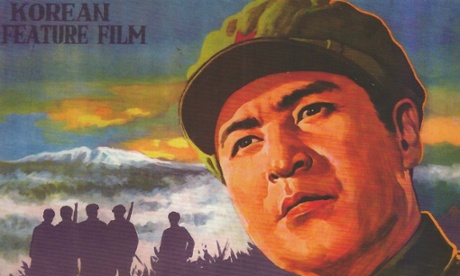
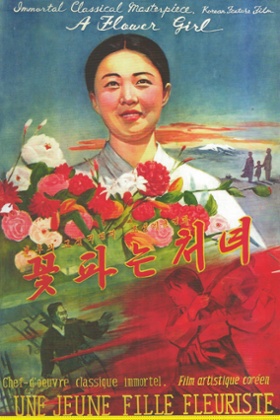

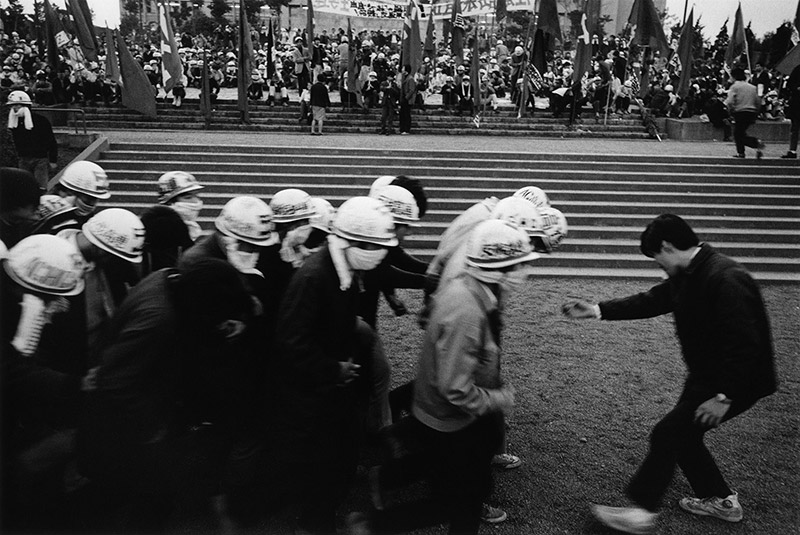






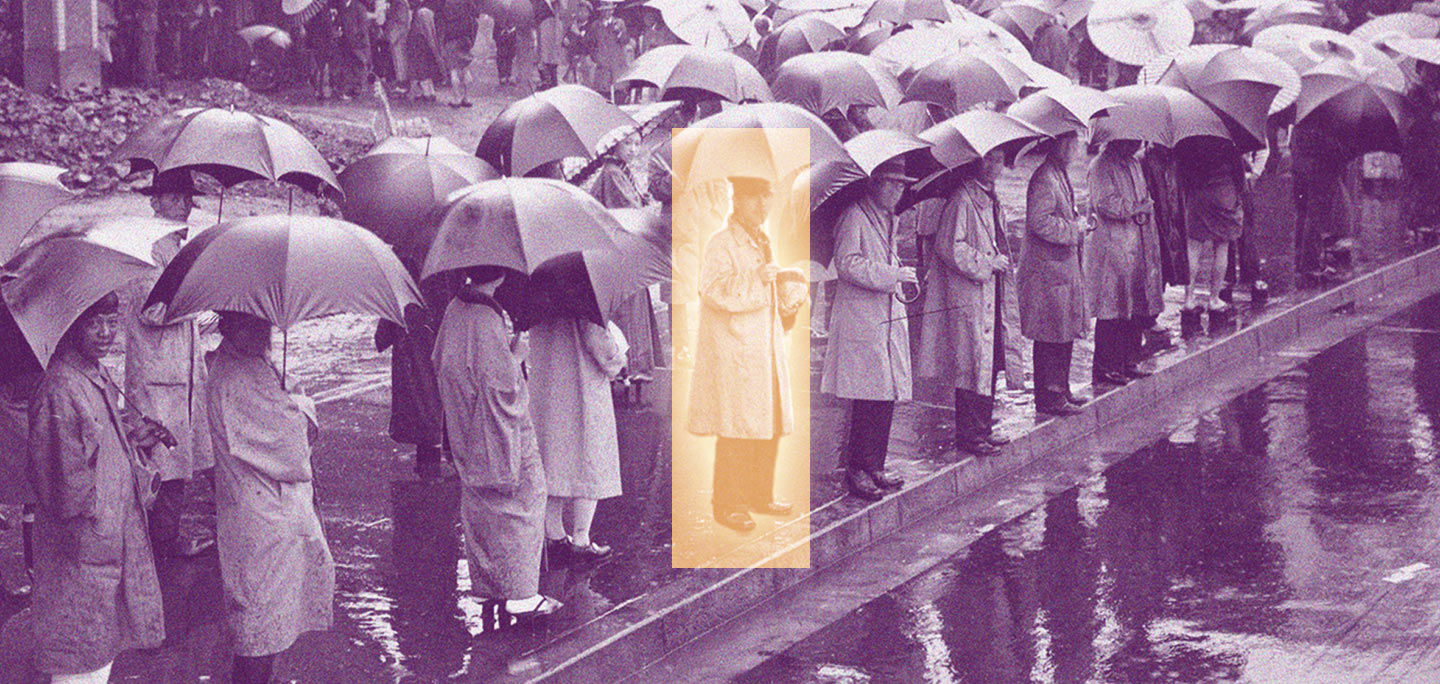




 Then we gathered Yelp data on 67,391 burrito-selling establishments across the United States. Nate – I mean, El Padrino — borrowed a statistic from baseball to create a score for each restaurant. Just as Value Over Replacement Player (VORP) measures a player against one who might replace him, Value Over Replacement Burrito (VORB) accounts for quality and quantity of Yelp reviews, while adjusting for location (factoring in the extent to which different geographical areas use Yelp, as well as how different locations rank chain Mexican restaurants). More on that in Nate’s Burrito Bracket manifesto.
 I’m back and I come bearing baby octopuses (I promise never to leave you with no notice again).