Shared posts

12 Jan 10:20

Do Cartoons Have to Exaggerate Gender Difference?

by Philip N. Cohen, PhD

One criticism of my post on gender dimorphism in Disney movies was that good animation inevitably exaggerates sex differences. There are a lot of these comments here on SocImages and at Slate. Here’s one example:

Cartoons aren’t meant to accurately portray people, EVER. They are meant to exaggerate features, so that they are more prominent and eye catching. So feminine features are made more feminine, and masculine features are made more masculine. … The less realistic the proportions, the more endearing and charming we find the character. The closer to realistic they are, the creepier/blander they can become.

Flipping through IMDB’s list of the top 500 animated movies reveals that Disney is certainly not alone in emphasizing the larger size of males. But there are a few successful counterexamples as well.

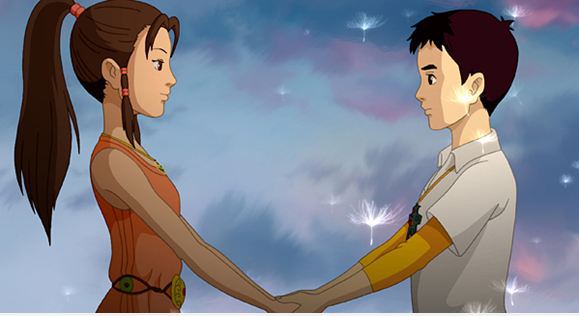
Here are some good ones where the male and female characters are similarly proportioned. Note these are not just random male and female characters but couples (more or less).

From Kiki’s Delivery Service by Hayao Miyazaki:

1

From Dreams of Jinsha:

2

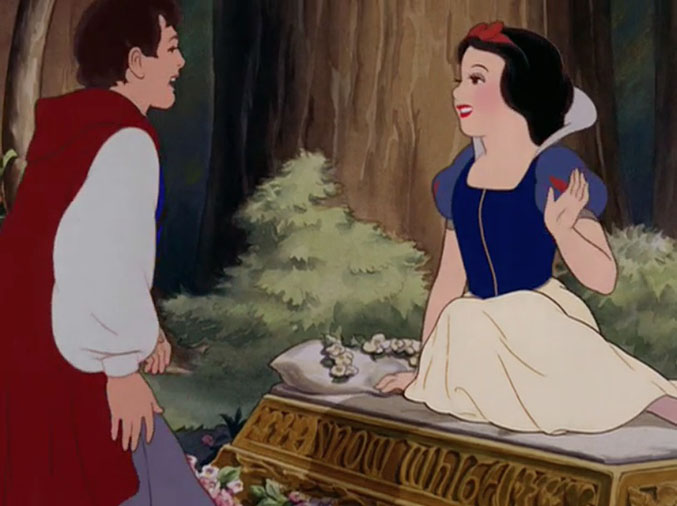
Even some old Disney movies have romantic moments between physically-similar males and females. The original Snow White (from the 1937 movie) was paired with a Prince Charming whose wrists were barely bigger than hers:

3

Disney non-human animal pairs were sometimes quite physically matched. Consider Bambi and Faline (Bambi, 1942):

4

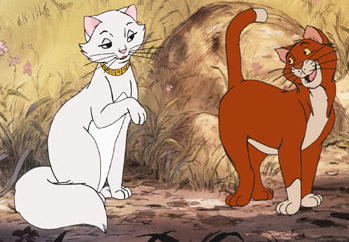
Or Dutchess and O’Malley from Aristocats (1970) in which their exaggerated femininity and masculinity are not conveyed through extreme body-size difference:

5

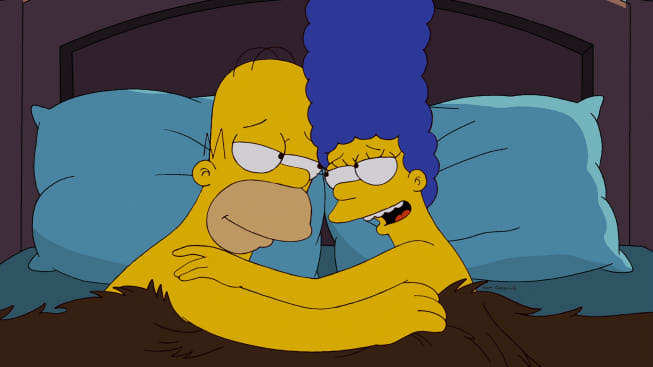
In other realms of animation, Marge and Homer Simpson, the most durable couple in animation history, have very similar features: heads, eyes, noses, ears. His arms are fatter and neither of them really have wrists, but I’d put this in the category of normal sex difference:

6

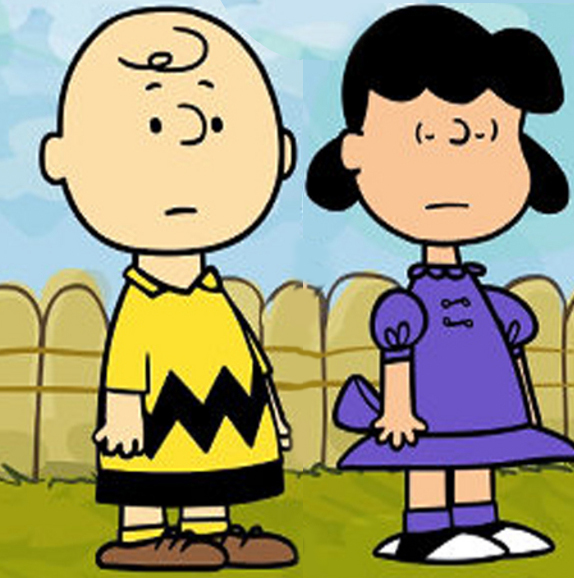
Of course, Lucy and Charlie Brown were virtually identical if you think about it:

7

I’m open to other suggestions.

Cross-posted at Family Inequality.

Philip N. Cohen is a professor of sociology at the University of Maryland, College Park, and writes the blog Family Inequality. You can follow him on Twitter or Facebook.

(View original at http://thesocietypages.org/socimages)

12 Jan 06:41

Nature Soundmap

by Saving Our Trees
This website called – Nature Soundmap – was shared with me on Facebook.  The first recording I listened to was from Watagans National Park, about an hour’s drive from Newcastle.  To me this is quintessential Australia.  I have stood in forests & listened to exactly the same sounds.   This site maps sounds of landscapes […]
12 Jan 06:40

Saved from a muddy grave

by noreply@blogger.com (RSPCA NSW)

RSPCA NSW Inspectors last Friday conducted a daring rescue of a Labrador dog that had become stranded in a tailings dam in a western Sydney quarry.

The golden Labrador, named Diesel, was unable to move after falling through the top layer of the silt and becoming trapped approximately 100m from firm ground.

Two RSPCA NSW Inspectors used rescue glides, one in front of the other, to reach Diesel and then pull him to safety.

“This rescue was particularly tricky as the mud is made up of fine silt from quarry operations and is considered a drowning hazard,” said Flett Turner, RSPCA NSW Inspector.

“The rescue slides were deployed to distribute our weight, allowing us to move out over the mud to Diesel’s position and free him from the silt.

“He was lucky to be discovered by contractors who were alerted to his location by his barking. If not discovered he would have certainly drowned or died from exposure,” concluded Turner.

Diesel had been missing since New Year’s Eve but, thanks to microchip identification, was speedily reunited with his grateful family following his rescue.

12 Jan 06:36

Teachers Offered Personal Loans to Buy School Supplies

by Lisa Wade, PhD

If you’re looking for just one image that says a thousand words about what’s wrong with America, here’s a contender.  It is a screenshot of the website for the Silver State Schools Credit Union:

facebook_1889026740

Yep, it’s an invitation to K-12 teachers to go into debt to do their job.

Speechless.

Lisa Wade is a professor of sociology at Occidental College. You can follow her on Twitter and Facebook.

(View original at http://thesocietypages.org/socimages)

11 Jan 07:23

10 Honest Thoughts on Being Loved by a Skinny Boy

by Lisa Wade, PhD

Today is Love Your Body Day and is this is our favorite body positive post of the year, re-posted in celebration. 

Rachel Wiley delivers a provocative poem about her experience as a “fat girl” loved by a skinny boy.  My favorite part:

My college theater professor once told me
that despite my talent,
I would never be cast as a romantic lead.
We put on shows that involve flying children and singing animals
but apparently no one
has enough willing suspension of disbelief
to buy anyone loving a fat girl.

Watch the whole thing (transcript here):

If you liked, we also recommend Kara Kamos’ confession that she’s ugly, but can’t think of a good reason to care.  Hat tip to Polly’s Pocket.

Lisa Wade is a professor of sociology at Occidental College and the co-author of Gender: Ideas, Interactions, Institutions. You can follow her on Twitter and Facebook.

(View original at http://thesocietypages.org/socimages)

07 Jan 08:02

Berry and White Chocolate Blondies

by Lisa Manche
berry white chocolate blondies

The New Year has got me (and most of you I'd wager) thinking about new starts and resolutions. There is an incredible amount of pressure on us in January to blast all our bad habits, save money and drop the few kilos we all inevitably put on during the silly season. But I prefer thought out, measurable goals to the vagueness of a yearly 'resolution'. Goals are broken down into steps, giving you a clear direction and also a deadline to keep you accountable! I wanted to share a few of mine...

  • Read 20 books. I used to read so much. I had a 2 hour commute to college/work every day and would pass the time by reading whatever I could get my hands on. I was averaging about fifty books a year. I miss that tremendous appetite I had for reading, so this year one of my goals is to read 20 books, and in doing so also eliminate the pile of unread books on my bedside table. 
  • Have an adventure once a week. I've learned that I need little adventures every couple of days in order to function creatively. Stepping away from my computer to discover something new sees me come back refreshed and ultimately always more productive. It can be as simple as a walk to a new beach, a trip to a café I haven't tried before, or getting out of the city entirely. 
  • Grow the Spicyicecream brand: food blog and graphic design. I have big plans for this space in the next 12 months, but I can't say too much about that yet! I also launched my design company recently, so this year will be about working hard to grow both businesses, and working on as many projects as possible that combine my love of food with my love of design.
  • Write and take photos every single day. I really want to push both of these skills in 2014, and the best way is to practice practice practice! This also ties into my overarching goal for the year, which is to Be Grateful so I'm going to try and document the special things that happen every day.

berry white chocolate blondies

I've had blondies on the brain since I made the Banana Split Blondies a few months ago. Since the original recipe is such a blank canvas, I wondered what other ingredients could be added into them, like Steph's delicious looking rhubarb and ginger version. I decided to try a summery version with fresh berries and white chocolate chips.

I used the exact same recipe as before, but it turned out a little more 'gooey' than 'cakey' this time, even after allowing a little extra baking time. Perhaps because of the fruit juices that are released while baking? They're still very tasty - anything with berries and white chocolate is a winner in my book. Just make sure to cool them completely before trying to cut them up, or they'll fall apart. Adding a little extra flour and baking powder may also help, but you'll have to experiment with that.

Have you set any goals for the year? I'd love to hear yours in the comments!

berry white chocolate blondies

Berry and White Chocolate Blondies
Adapted from Smitten Kitchen
Serves 8-10

  • 112g butter, melted
  • 220g light brown sugar
  • 1 large egg
  • 1 teaspoon vanilla extract
  • 125g plain flour
  • 1 teaspoon baking powder
  • 100g white chocolate chips
  • 150g mixed berries (I used blueberries and chopped strawberries)
  • Icing sugar, to serve

To make the blondies, Line a 20x30cm brownie pan with non-stick baking paper. Mix melted butter with brown sugar and beat until smooth. Beat in egg and then vanilla. Stir in flour and baking powder. Mix in white chocolate chips, and then very gently stir through the berries.

Pour into prepared pan. Bake at 180°C (350°F) for 30-40 minutes, or until set in the middle. Cool to room temperature before cutting them.

06 Jan 07:45

threadless: weinventyou: wake  We stumbled across this great...


threadless:

weinventyou:

wake 

We stumbled across this great GIF of “WAKE" by Phil Jones!

Keep on making waves!

Thanks for reblogging this Threadless! And also props to Phil Jones for the cool design in the first place, obv

05 Jan 01:21

Panettone Chocolate French Toast

Because I can't leave well enough alone, I sliced the panettone and sandwiched it with a slice of dark chocolate. I dipped it in egg and fried it and the chocolate became a gooey, rich filling for the now voluptuously eggy raisin studded bread. If you have any inclination to stay in instead of going out for brunch, this is one recipe that I'd suggest giving a try. Not only is it delicious and made in about 5 minutes but it is easy too.
03 Jan 00:26

まるです。

by mugumogu


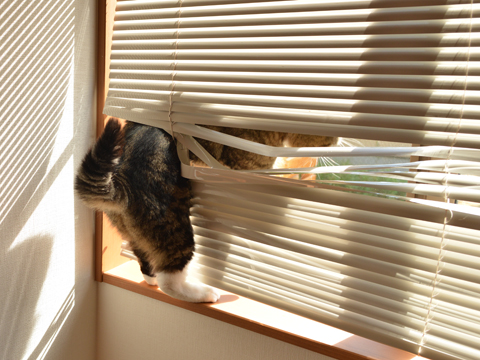
「どれどれ、外の様子はどうかな。」
Maru:[I look at the outside.]


「よっこいせっと。」
Maru:[I go to the other side.]


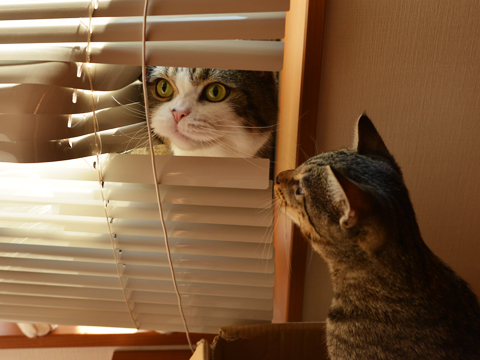
「そしてジャーン。」
Maru:[And hello!]


こらまるさん、変なことを教えてはいけません!
Hey Maru, don't teach Hana your mischief!

----------------------------------------------------------
【お知らせです】

何度かまるを紹介していただいている『いぬのきもち ねこのきもち』さんのサイトで
本日より連載がスタートします。
更新は毎週木曜日 AM10:00 です。
はながやって来てからの写真がたくさんあるので、
ブログでは紹介しきれなかったエピソードなども紹介予定です。

そして連載を記念して、プレゼント企画実施中!
またフォトギャラリーにも写真が追加されています。

どうぞよろしくお願いいたします。


01 Jan 09:34

まるです。

by mugumogu
Happy New Year!


01 Jan 09:32

Thank Goodness for Karma. An End to 2013. A New Beginning. Thoughts at the end of a difficult year.

by Ganga108

LoveLeunig

How grateful I am for karma. Karma is, broadly speaking, that which returns to us what we give, over many lifetimes. If you give out harshness,  you may get harshness back. If you do unkind acts, you will probably experience some unkindness in your life. If you pass up an opportunity to help and assist another in need, when you are in need at some stage there may be no-one to help. And if you give out love and engagement and non-jugdmentalism and holistic thinking, you will reap this in bucketloads most of the time.

It's New Year!! | A Life (Time) of Cooking | Thoughts

We all have karma yet to be resolved that we carry with us like overweight baggage from previous lives. And thank god for that, I say. Every hardship, every trial, every challenge is a chance to say “Phew, that Karma is now mitigated” and to say “what is my lesson in that for next time? Am I reaching my own potential or do I need to make some adjustments now?”

It's New Year!! | A Life (Time) of Cooking | Thoughts

2013 has been a “hell-of-a-year” for a lot of people in my little world. Trials, hardships, separations, loss, poverty, it has all been there in bucket loads. My little world too has had its challenges, and, thank goodness, lots of learnings and lessons. This year has included great loss and the challenges of supporting others at a time when you are also in deep grief. It has been a challenge to lift myself above the immediate to see again the holistic, the big picture, the mystical wonder of the world and of our little lives on this little planet.

It's New Year!! | A Life (Time) of Cooking | Thoughts

Several things have held me steadfast this year (most of the time, with some moments of sinking into the emotion of it all).

  • Yoga and my beautiful yoga teacher who has an intuitive understanding of the physical and non-physical body and its functioning under difficult times. “Sit this way” she says, and 10 minutes later, pain is gone, functional brain and body returns. My deep gratitude to her.
  • The first of two sayings. This one is a beautiful mantra in times of need:
    This too shall pass.
    Say it in times of hardship and in times of great joy. It is an ancient Hindu saying.
  • The second of two sayings comes from a great mentor and teacher of mine:
    If you are going to take the measure of a man, beware the measuring stick that you choose.
    Oh my goodness, so many lessons in that saying.

It's New Year!! | A Life (Time) of Cooking | Thoughts

So, 2013, thank you to and all of what you have held. For all of the people who came and went in my life this past year. Because of you, because of all of it, I am a better person.

Welcome, 2014. You will be here in 5 minutes!! What dear friends we shall become.

It's New Year!! | A Life (Time) of Cooking | Thoughts

Enjoy life!

Namaskaram.

All photos are mine except the Leunig comic. Love Leunig!

You Might Also Enjoy:

Enhanced by Zemanta

Filed under: Thoughts, VEGETARIAN Tagged: Hindu, Karma, life, life is a journey, Thoughts, yoga
28 Dec 12:29

Carousel Corgi

27 Dec 06:11

crowbara: i will never not laugh my fucking ass off at this


crowbara:

i will never not laugh my fucking ass off at this

27 Dec 05:20

In Which We Scratch And Claw At Edward Hopper To Get Away

by Alex

The Female of the Species

by ALEX CARNEVALE

For the female of the species, it's a fatal thing for an artist to marry, her consciousness is too much disturbed. She can no longer live sufficiently within her self to produce. But it's hard to accept this.

Josephine Nivison, at the tender age of 30, occupied a one-room studio in the attic of an old house between the Plaza Hotel and the New York Athletic Club. She was still a virgin, and would remain one until long after her fortieth birthday.

self-portrait 1903

She drew as often as she could, publishing her sketches in the Evening Post and the New York Tribune. She loved to sketch artists at their work, patterning her portraits after her mentor at the New York School of Art, the painter Robert Henri. Her favorite subject was the dancer Isadora Duncan. Henri was quite taken with Josephine's repose, making her the subject of a large canvas:

Jo dabbled as an actress here and there. Getting paid for her work difficult in these fields, and the Depression would sour things further. Her teaching sustained her as she labored for various causes. She hoped one day soon to support the war effort. In the interim, she pitched in at the Hebrew Orphan Asylum, of which she wrote, "Altho I have worked among them, I a not a Hebrew. The Hebrews are too clever a people to discriminate against Gentiles when their service can be of value to them."

With recommendations from orphanages and newspapers alike, she was accepted as an occupational therapist by Red Cross, and was sent overseas to Brittany. In a flash, Jo Nivision came down with bronchitis and was forced to return home after a month or two. Back in New York, she lost her job, her boyfriend made off with another woman, her mother died and she was homeless.

With the rest of her life stripped away, there was hardly any point in not being an artist. Such work could hardly sustain her entirely, so she returned to her former profession of teaching at a hospital for contagious diseases on the Lower East Side. She caught diptheria almost at once.

She began to lie about her age shortly after her illness, reducing it by seven years at her most brave. Because she was quite small and her beauty was unchanged, she found it not very difficult to pull off this deceit. She constructed her studio at 37 West 9th Street. No one showed up to her first open studio except her cat Arthur, and a single critic, Margaret Bruening.

with Edward Hopper

Arthur was her sole focus of attention; she could not really boast any other. She suggested to others that Arthur "knew traffic cops, the maitre d'hotel at the Brevoort, people at the Jefferson Market Court." Wasting away, continually ignored, quite sad in general, Josephine Nivison come across one unexpected stroke of good luck: because of the illness she contracted in a city school, she was granted a lifetime disability pension of $1750 per year.

The money was godly to her then. She could take time away from New York, absconding to Provincetown where the Gingerbread Inn was willing to allow her cat the run of the place. She was working mainly in watercolor now, and to her considerable delight, her efforts began to attract attention from art dealers and critics. One art colony she had not sampled was in Gloucester, MA.

It was there she met up with an old acquaintance, Edward Hopper. A towering rail of a painter, he dwarfed the tiny Nivison. Gail Levin, in her marvelous investigation of the painter, Edward Hopper: An Intimate Biography, records that the man seduced her in French, using Verlaine as if it were Neil Strauss' The Game. They painted boats and houses together. At this point in his career, he was only slighty more of a success than Jo, but she helped get his work into a show at the Brooklyn Museum.

That winter they went to the movies a lot. He wrote her little notes, promising to take her to Paris. (They never went.) When summer thawed the city, the couple wanted out. They were married on July 9th, 1924, and on the certificate Josephine kept up the pretense of lying about her age. In reality, she was forty-one years old.

The marriage had not been taken up in an idealistic fashion, and it would not proceed in one. Bumps in the pavement emerged quickly. His mother and sister disliked Jo quite intensely; Arthur could not quite get used to this spindly man being in his space. She kept her studio and the cat stayed there.

Hopper expected a wife to cook and clean, but Jo wasn't much in the kitchen; too focused on her painting to do anything else. He loathed her friends. 

There was the question of sex, now that she was a married woman. She wrote in her diary:

About the first week or so I realized always with amazement, but I knew so little about this basic concern, except to be appalled at prize hog proportions that the whole thing was entirely for him, his benefit. Upon realizing this - & with the world so new & all & I emerged in such vast ignorance - I declared that since that was the status quo of that - let him have it all. I withdrew all my interest - There was my body, let him take it - but I'd not consent to be hurt too much - only a certain amount - I'd not be the object of sheer sadism. I was forbidden to consult with other women over the mysteries. If he had drawn a lemon, I needn't advertise his misfortune.

In other ways, they were able to help one another. Jo took up her husband's correspondence; the impact on his career was immediately obvious. (He sort of ignored her work.) His modest watercolors began to sell, and his biggest supporter was Frank Rehn, who sold Hoppers out of his gallery like they were going out of style, which they were.

Edward and his wife planned a trip west. Shortly before their departure, Arthur vanished, never to be seen again.

caricaturing his desire for his wife to feed him

As Edward's career took off, their relationship began to crack further. The two quarrelled over Henri, Hopper's reclusiveness and their lack of intimacy. Josephine still lacked a studio, and although she admired her husband's efforts, it was pretty obvious to her and general hindsight that she was the superior artist. By now, his drawings were often a satirical commentary on how much he resented his wife.

She returned this view. "He can do all the chores, look after the stove, feed it oil, drag water, wash sheets even & string beans & think nothing of it. Go right back to work." The question of his that she loathed more than any other was, "How about a little something to eat?"

They moved to an apartment overlooking Washington Square Park. As before, they still shared a bathroom with another couple. They attempted to build a summer house together, but instead of bringing them closer together it separated the couple. Josephine complained of being "a kitchen slave," Hopper could barely paint in his new environs. As herself, she had attracted attention as a painter; as Edward Hopper's wife, his friends sneered at her work. Neither, when asked, could even think of a reason why they kept painting, other than that it was a means of survival.

Some time into their marriage, physical abuse entered the picture. At first it was purely as an accompaniment to Hopper's sadistic reviews of his wife's performance in the kitchen and bedroom. Once Edward held her down with his knee and bruised her thigh; she had to scratch and claw at him to get away.

Hopper at work

They fought often about the car; he consistently refused to let her drive. Josephine records Edward Hopper throwing his 55 year old wife out of a moving vehicle. Yet the verbal abuse was just as pernicious: "To exist at all, one must do battle. He sais insulting things about my mind, the impenetrable stupidy, the impossibility of me learning anything.... It would have been a terrible thing for him to have had a child."

Edward did offer Josephine something she must have craved. It is difficult to find the joy in their marriage, but if any was present, it could be characterized by the fact of always being there. Edward Hopper may have painted his wife as a crude caricature at times, vacillating between worship and horror at the intimacy they shared, but he did paint her.

Hopper's painting of a nude Jo

He was, Jo told a friend, "very beautiful in death, like an El Greco."

Alex Carnevale is the editor of This Recording. You can find an archive of his writing on This Recording here. He last wrote in these pages about the death of Simone Weil. He tumbls here.

"The Water Is Wide" - Noon (mp3)

"Love Me Or Leave Me" - Noon (mp3)

The new album from Kasumi Nakamura is entitled Full Moon and it was released on November 20th.


26 Dec 22:31

Consequences and Conclusions

by Nancy Leong

Consequences and Conclusions

Post to Twitter

This is the fourth and final blog post in a series that discusses discrimination and harassment in cyberspace, its perpetrators, and its consequences.  The first post, “Identity and Ideas,” is available here.  The second post, “Anonymity and Abuse,” is available here, with a short addendum here.  The third post, “Privilege and Passivity,” is available here.

In my final post, I’ll discuss some of the options for people targeted by identity-based online harassment.  I intend this post to complement the broader social responsibilities I outlined in my previous post.

One of my starting premises is that there isn’t a “right” way to respond when you are the target of identity-based online harassment.  People who experience such harassment have a range of legitimate reactions, and differences in individual circumstances may dictate the best approach for a given individual.  I’ve tried a number of these options myself, and I’ll share my experiences–not as a definitive assessment of the merits of each option, but simply as a way of highlighting some of the potential advantages and disadvantages.

Before I do that, I want to address a point with which some readers seem to struggle.  By calling attention to identity-based online harassment, I am not denying that some people who engage in such harassment, and who have engaged in such harassment of me, also have substantive things to say.  What I am saying is that the mere fact that people have something substantive to say doesn’t entitle them to engage in identity-based harassment, nor does it excuse them from turning a blind eye when others do so in threads they start or on blogs they administer.  Lots of  infamous people have had lots of substantive things to say–Ted Kaczynski, also known as the Unabomber, is one example.  That doesn’t mean these people should be excused for the hateful ideas intertwined with their substantive ones.  My point is obviously not that anonymous online harassment is equivalent to, for example, a nationwide bombing campaign.  The point is that having substantive things to say doesn’t give you a free pass to spew racism and misogyny, and that criticizing people for refusing to engage substantively in forums that tolerate such harassment is a weak attempt to deflect attention from the harassment itself.

With that said, I’ll move on to some strategies for dealing with identity-based online harassment.

1. Ignore.

Many harassers have short attention spans, and will move on if you ignore them.  Certainly this has happened with respect to some of the people who have posted racist and sexist comments about me.  Sometimes, however, for whatever reason, one or more harassers becomes really fixated on you.  I waited for over a year for my most persistent harasser to move on.  He showed no sign of doing so.  That’s when it might be time to take other action.

Even if you ultimately find it impossible to completely ignore pervasive harassment, there are ways of limiting its salience to your daily life.  As a colleague suggested to me, one can ask a trusted friend or family member to monitor the forums where harassment takes place.  I found this advice very useful.  Alternatively, one might choose to visit certain sites only occasionally to check for statements that contain an imminent threat.

I want to emphasize that it’s not a sign of personal weakness or mental frailty if you’re unable to ignore identity-based online harassment targeted at you.  The claim that women and people of color are “too thin-skinned” when they don’t overlook racist and misogynistic remarks is an old standby, but that doesn’t make it true.  Perhaps it would make things easier if everyone could ignore the bad things said about them.  But when ignoring is impossible, there are other options.

2. Engage.

Other people find engaging with harassers to be empowering, productive, and even enjoyable.  Bina Shah, for example, offers useful advice for smacking down trolls on twitter.   Linda Tirado, who writes about poverty under the name Killer Martinis, often takes a different approach, responding to hysterical commenters with dignity and empathy (see here for an example, particularly the first comment and response).

My own limited experience with engaging with harassers have been mixed.  The reality is that, like many people, I have minimal time to engage with anonymous and pseudonymous purveyors of hate speech in poorly-read forums.  As something of an experiment, I posted two brief comments in one forum, which produced an entertaining outburst of juvenile rage.  (One of my favorites:  “Lady Leong, this isn’t Afghanistan!  You can’t come in here, drop a few bombs, and then leave!”)  The downside, of course, is that harassers get angry when someone calls out their unacceptable behavior, and that can produce more harassment.

3. Use the law.

As I discussed in my previous post, we need a legal mechanism that wholly addresses the problem of identity-based online harassment.  Right now, such a mechanism doesn’t exist.  There are, however, various other legal doctrines that can address some of the harms of identity-based online harassment.  None of this is meant as legal advice, but here are some legal options that may be worth considering in individual situations:

First, if online harassment includes credible threats to your safety or the safety of those close to you, it becomes a matter for law enforcement.  I am fortunate that I have not experienced this firsthand, with the exception of one arguably threatening phone call from a blocked number, but other people certainly have experienced awful threats of rape and other violence.

Likewise, many states either have criminal cyberstalking or cyberharassment statutes that may cover identity-based online harasssment, and when laws specific to cyberspace are unavailable, more conventional criminal stalking and harassment statutes may apply.  A recently-updated list of such statutes appears here.  The scope of such laws varies considerably, so it’s important to examine the particularities of your jurisdiction, but some of them are quite useful.   Moreover, it is not necessarily an obstacle if a harasser is in a different state than you; many statutes explicitly provide that if an electronic transmission is either sent or received in a particular state, the statute applies.

Copyright law can provide another vehicle to address identity-based online harassment.  I succeeded in having a blog composed of pictures of me taken without permission from various online sources removed on the ground that it violated my copyright.  I also succeeded in having thread containing a 1000-word cut and paste of my writing, with no additional commentary, removed from a website where it provoked an outburst of racist and sexist vitriol.  I accomplished this by sending take-down notices, which non-lawyers can read more about hereFair use is, of course, a defense, but it would likely be unavailing in situations where, for example, harassers simply copy and paste photographs or large portions of written material and there is nothing transformative about the use of the material.  Moreover, website administrators will sometimes remove content even when fair use is debatable if the use in question is racist, sexist, or otherwise harassing.

And finally, defamation law can provide recourse if the statements about you are false and harmful to your reputation.  (“She slept with someone to get her job” is an example.)  Defamation law is notoriously slippery, and there are various practical obstacles to lawsuits that one must overcome.  But in some situations it may be the best alternative.  The Electronic Frontier Foundation offers a useful brief summary of defamation law that can provide a starting point for someone who thinks that she has been defamed.

4. Investigate.

A lot of harassers are anonymous, but others write under pseudonyms.  Sometimes pseudonymous harassers and abusers build up entire personalities around their pseudonymous identities–for example, Violentacrez on Reddit, the instigator of popular subreddits “Creepshots” and “Jailbait”, later unmasked as Michael Brutsch.

Many pseudonymous people who engage in identity-based online harassment are trying to have it both ways.  That is, they are trying to have the benefits that come with having a known identity–the community recognition; the ability to form relationships with others; the claim to speak authoritatively on certain topics–as well as the benefits associated with anonymity–namely, the ability to avoid any consequences for racist and misogynistic comments in real life.

I encountered several such pseudonymous individuals in my own experience with online harassment.  Once I began paying attention to the various repeat players, certain rather disturbing preoccupations emerged.  For example, one pseudonymous commenter stated the following* about a recent female law graduate:
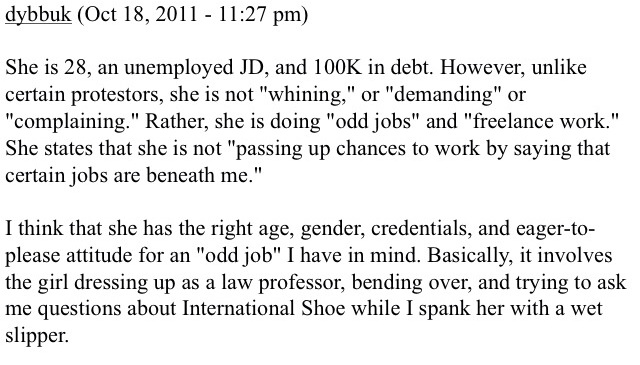
Slipper

I hope I don’t have to explain why fantasizing about exploiting a recent law school graduate’s financial vulnerability to perform a violent sexual act is profoundly troubling.  Likewise, in previous posts, I’ve already referenced one of this particular commenter’s remarks about me, and noted that such a comment would constitute harassment in the workplace:
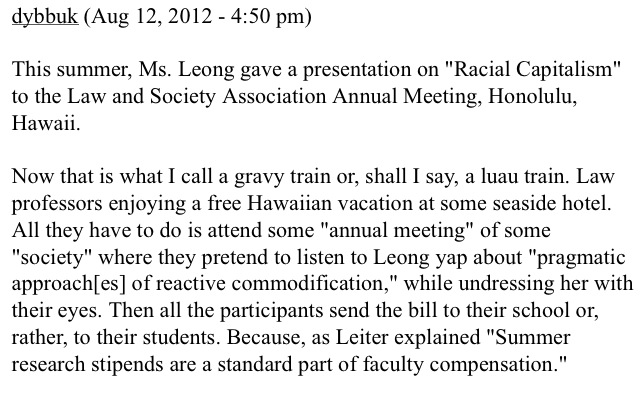
Undressing

This specific comment is just one example; I’m making no effort to publicize all of them.  Over the course of about fifteen months, this particular harasser commented about me approximately 70 times on at least five different websites, frequently remarking on my physical appearance.  He started several derogatory threads devoted exclusively to me, in which other commenters also targeted me with racist and sexist harassment.  He wrote two lengthy plays about me.  The threads he started often attracted dozens or even hundreds of comments.  His sustained attention to me also incited other pseudonymous members of a blog where he often posts to author lengthy racist and sexist posts about me, which, again, often attracted large numbers of comments about me, including comments from him.  Moreover, he wrote offensive profiles of a dozen other law professors who were–so far as I could tell, with one exception–all women or people of color or both.  And, of course, these were just the comments under his pseudonym.  It would not surprise me to learn that some of the many anonymous comments about me were also by him, although I haven’t taken the time to investigate this.  This sustained attention and the ideas it contained became increasingly disturbing to me, and eventually I decided to figure out who he was.

Many people underestimate the ease with which they can be linked with their anonymous or pseudonymous comments on the Internet.  Kashmir Hill has described how to bait and catch a troll using a blog and IP address tracker–a relatively straightforward process even for someone with only limited technological capabilities.  For many people who experience online harassment, such techniques could provide a viable option.

With respect to my various harassers, even this rudimentary technique turned out to be unnecessary.  The pseudonymous individual I mentioned above had posted specific information about his alma mater, the city where he lived, his job, various professional organizations to which he belonged, and other miscellaneous information.  It took fifteen minutes to find out who he was using google and other publicly available databases.  The result was troubling in itself: he was a public defender in his late forties who apparently has nothing better to do than harass an untenured professor.

It was equally easy to identify a few other people who posted about me.  Indeed, someone had created a website dedicated to identifying one of them two years before he first crossed my radar.

There are a few lessons here.  One is that even in the online world harassers often feel compelled to develop continuous and stable personalities, perhaps as a way of compensating for the social deficiencies in their actual lives.  Another is that a lot of harassers are repeat offenders–that is, if someone is harassing you, odds are that you aren’t the first.

Particularly if identifying a pseudonymous harasser is minimally time-consuming, it can be a reassuring exercise.  I was glad to know that none of the pseudonymous harassers I identified were people who I had met or who lived anywhere near me.  Investigating and identifying a harasser is also valuable because it opens up other possibilities for addressing the situation, to which I will now turn.

5. Confront.

After I discovered the identity of my most persistent harasser, I decided to give him a call, which is something that adults do when they have a disagreement to discuss.  I did this for several reasons.  One was that I wanted to talk to him so that I could try to understand why an untenured professor he had never met could become the subject of a year-plus obsession.  Another reason was pure curiosity.  I have always been interested in what causes people to hate one another–or, at the very least, to write hateful things about other people, especially those they have never met.  But the main reason was simply that I truly wanted to give him the benefit of the doubt.  People’s lives are complicated by mental illness, loneliness, personal hardship, and grief.  Although I have tried without success to find a definitive source for the saying “be kind, for everyone you meet is fighting a hard battle,” the words resonate with me and I try to live them.  My hope was that the person who had written so many hateful things about me was a good person who–prompted by difficult personal circumstances–had made a mistake.

To my regret, my harasser refused to speak to me.  I called him at his office (once) and left a message with the person (not him) who picked up the phone simply leaving my name and number and asking him to call me.  He didn’t call back.  A few days later I emailed him (once), explaining that I had identified him and that I wished to discuss his Internet posting activities.  The email was difficult to write.  It triggered emotions relating to an experience confronting a person who abused me many years ago.  I did my best to keep the email polite and professional and–to the extent I could–I tried to express some sympathy for circumstances in his life of which I might not be aware.  If anyone finds themselves in similar circumstances, they are welcome to borrow any of the language of my email (larger image available here):
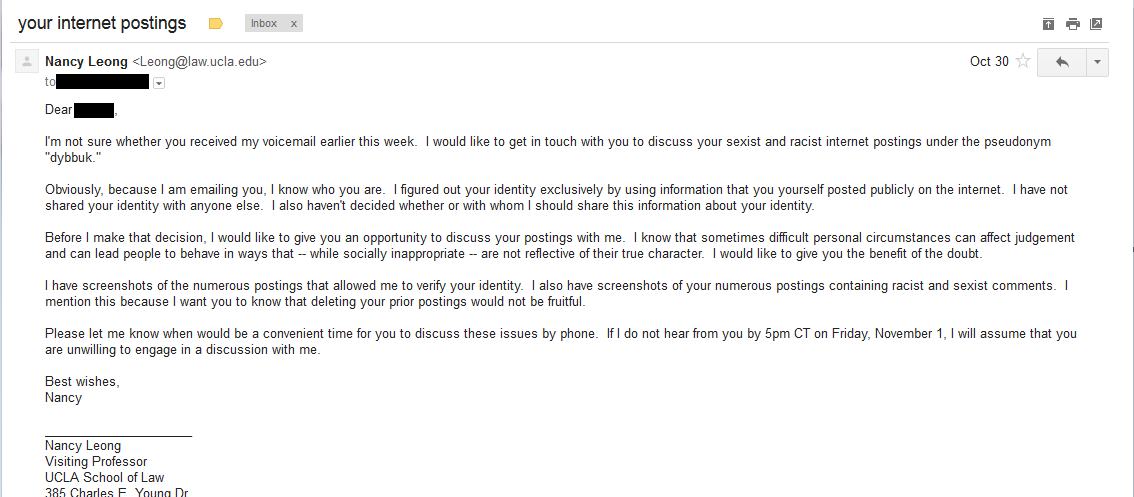
email

Of course, I can only guess at the real reason my harasser refused to speak with me.  Was he really afraid to speak with an untenured professor nearly fifteen years his junior who had already explicitly stated that she wished to give him the benefit of the doubt?  If so, why?  His refusal leads me to think that perhaps John Kang’s assessment is correct.  But I may never know the answer.

6. Elevate.

Sometimes harassers are subject to various sources of discipline besides the law itself.  A number of professions, ranging from doctors to mental health providers to lawyers, are bound by profession-specific rules of conduct.  A few of my harassers turned out to be attorneys.  An examination of the rules of professional conduct in the states where one of them is licensed–followed by consultation with a couple of legal ethicists and an attorney staffing the ethics hotline–suggested that this attorney was in violation of multiple ethics provisions.  And so I decided to file a formal complaint with the bars in the states where he is licensed.

I don’t know what will happen as a result of my complaint.  Many state bars hesitate to stir up controversy, and attorney discipline is relatively rare.  But I do feel that it is important for others closer to his situation to have knowledge of his online behavior so that they can make an informed decision about what to do.

7. Expose.

Disclosing the identities of anonymous or pseudonymous Internet posters–also known as “outing”–is one of the most controversial issues confronting the Internet today.  One line of thinking is that cyberharassers deserve to live with their online behavior in the light of day.  A contrary position is that we have a strong social interest in anonymous speech, and that a regular practice of outing would chill such speech.

I think there are particular ethical concerns associated with using technological means to expose an individual, particularly if you administer a website that ostensibly does not log IP addresses.  In the interest of time, I’m not going to address that issue here, although I hope to write more about it later.  It’s a completely different issue when a pseudonymous person has disclosed so much information about himself online that ignoring his real-life identity would involve willful blindness on the part of anyone who knows how to use google.  It amazes me that someone who engages in racist and misogynistic behavior online would attempt to claim that the very people he is harassing owe him an ethical or moral duty to refrain from exposing him.  Such an argument is intellectually incoherent.  That is, I think it is ethically permissible to expose the name of a person who has engaged in unacceptable behavior online.

I thought about publishing the names of some of my harassers.  Several colleagues, both within and outside the academy, urged me to do so, particularly with respect to my most persistent harasser, and particularly after they learned that he was a public defender.  As one eloquently explained:  “This person is a public servant with a very important job. His work has a very direct effect on the lives and freedom of his clients. Even if this person is struggling with a mental illness, if that illness is manifesting itself as bigotry, then it’s important that his clients, the courts and his employer know that.”  Another agreed: “Out his ass. He is an officer of the court with duties and obligations to his ENTIRE community. People have a right to know. You do not control what is done with the information thereafter.”  And another:  “Public defenders have an incredibly important job and need to be held to incredibly high standards.”

I struggled with this decision for a long time.  Ultimately, however, I decided against publishing the person’s name for the reasons I have already described.  Without full information, I hesitate to expose someone else’s life to the permanent censure of the Internet.  I see a fairly obvious irony in the situation: I am protecting the online reputation of someone who has shown nothing but contempt for me and many other women and people of color, and who has polluted my google search results with hateful and disparaging statements.

But ultimately I found Leo Traynor’s riveting account of his decision not to report an awful troll to the police enlightening.  Justice is important, but so is mercy.  And I would much rather someone improve his behavior and learn from his mistakes than the alternative.

I have enjoyed blogging about these important issues, and am grateful to the Feminist Law Professors blog for providing a platform for me to do so.  I’ll continue to write about identity-based harassment, discrimination, and other issues both here and on my personal website.

* I have chosen not to link to, or to identify, the sources of the material I reference in this post because I do not want to drive traffic to websites that tolerate racial and sexual harassment.  If you would like more information, please feel free to contact me.


Feminist Law Professors

26 Dec 22:28

Online Harassment and Silencing

by Ann Bartow

Online Harassment and Silencing

Post to Twitter

Over a period of weeks, law professor Nancy Leong posted several short, informal essays about cyber harassment and discrimination. The first post, entitled “Identity and Ideas,” is available here. The second post, “Anonymity and Abuse,” is available here, with a short addendum here. The third post, “Privilege and Passivity,” is available here. The fourth post, “Consequences and Conclusions,” is available here.

The posts are provocative, and it was not unexpected that some readers might disagree with her. What was unpleasantly surprising was the vitriol in this post, entitled “Law professor tries to leverage phony claims of racial victimization into better job.”

In the post author Paul Campos refers to “Leong’s almost completely imaginary “victimization”” and her “wholly false accusation of racism,” and further accuses her of being the true wrongdoer, writing: “Indeed, in what appears to be a classic case of projection, the only actual harasser in this context appears to be Leong herself, who, after tracking down her critic’s identity, both emailed him and called him at his place of employment, demanding that he have a telephone conversation with her, and threatening to “out” him if he refused. When he declined her offer, she decided to file the bar complaint.” He also writes: “Leong is giving off every sign of trying to get out of Denver faster than the protagonist of a Bob Seger song, so I tend to interpret her decision to try to make a huge deal out of Dybbuk’s comments as a tactical career move (Oppressed Woman of Color Fights the Power — “the power” here being a couple of scamblogs of all things).” As it was likely intended to do, this post is drawing a large number of comments that echo the scathing discourse tone set by Campos.

I don’t know where Paul Campos draws the line between phony and legitimate claims of racial victimization, but one thing that seems clear from his post is that he does not have all of the information in front of him about this issue. He admits this himself in the post, noting: “Per JDU posters some offensive comments were scrubbed by the administrator from at least one of the JDU threads. So the links probably don’t give a complete picture of the extent to which Leong was the target of sexist or racist comments.”

My understanding is that Nancy Leong believes her bar complaint was justified. There are neutral parties who will sort out the facts, and decide where justice lies. After they weigh in, it might or might not be appropriate to accuse people of lying or leveraging. It certainly isn’t when you do not have all the information about a dispute. I do not know what it was that motivated Paul Campos to write that ugly post, but a search for truth seems unlikely.

Update NB: I must also add that the post refers to another law professor, Brian Leiter, as a “cyber-stalker extraordinaire.” Basically Campos is accusing Leiter of engaging in gross criminal behavior, without any evidence, just because he can. This is not very professional, to put it lightly. It’s sad and it is wrong.

Feminist Law Professors

25 Dec 23:36

sofapizza: humoristics: New skate trick: The notebook suck it...


sofapizza:

humoristics:

New skate trick: The notebook

suck it tony hawk

25 Dec 23:35

WTF of the Day: Anti-choicers think kidnapping abortion patients is totally cool

by Maya

anti-choicer facebook post advocating taking abortion patients to a church isn't of appointment

As soon as I found out I was pregnant, becoming unpregnant was my number one priority. I grabbed the first available appointment at the clinic within an hour of seeing the positive test, and then I waited.

All in all, I was relatively calm as I counted down the several days until my abortion. My decision to get one–if it can even be called a decision given that I never weighed any other option–was not emotionally difficult. And there were no other factors–health risks, an unsupportive partner, financial barriers, logistical bullshit–that I imagine would have made the experience way more stressful. But I was definitely counting. My body was hyperaware of any signs of pregnancy. (I was not very far along at all, so they were probably mostly in my head.) I had the very visceral sense that something was hanging over me (or, more accurately and even more terrifyingly, hanging out inside of me) and I would not fully relax until it was gone. Like I said, it was mostly ok, I could deal–but only because I knew there was a way out. By Friday at noon, I would be home on the couch with my heating pad and Netflix, and this whole being pregnant thing would be in the past. 

That’s just one lady’s experience–and as we know, people’s abortion stories are diverse and absolutely unique. But I’m willing to bet that that sense of anticipation is shared by most everyone who has decided to get abortion, called to make an appointment, gotten the funds together, taken time off work or left their kids with a sitter, and are literally on their way to the clinic. If, during that final countdown, an antichoicer had so much as slowed me down by stepping in front of my path, let alone made me miss my appointment by kidnapping me and instead taking me to a church, my tenuous sense of control and calm would have cracked. (And frankly there’s no telling what I would have done.)

That sense of control? And the shockingly casual way anti-choicers are willing to undermine it to push their own personal moral agenda? That’s what we mean when we say abortion is about the right to autonomy.

Maya DusenberyMaya Dusenbery is tired of defending her right to choose. 

25 Dec 23:35

Quick Hit: 26 women tell their abortion stories in New York Magazine

by Syreeta

BYwJK4pCMAAmblPThis week’s New York Magazine cover story features 26 individual stories from women who have made the choice to have an abortion, and in some instances chose to continue their pregnancies.
Meaghan Winter writes:

But for all the regulations and protests, despite “safe, legal, and rare” and “abortion is murder,” abortion is part of our everyday experience. Nearly half of all pregnancies are unintended; about half of those—1.2 million—will end in abortion each year.

And yet abortion is something we tend to be more comfortable discussing as an abstraction; the feelings it provokes are too complicated to face in all their particularities. Which is perhaps why, even in doggedly liberal parts of the country, very few people talk openly about the experience, leaving the reality of abortion, and the emotions that accompany it, a silent witness in our political discourse. Even now, four decades after Roe, some of the women we spoke with would talk only if we didn’t print their real names.

Not only do we get a window into the circumstances that these women faced when seeking abortions – wealthy and poor, educated and striving, young and old, and ethnically diverse backgrounds — these portraits provide us with a powerful perspective that goes beyond the bravado and impassioned speeches of anti-choicers and doublespeak and gnarled logic of GOP lawmakers. Earlier this year, Planned Parenthood attempted to reframe the never ending national debate surrounding abortion with its Not In Her shoes campaign. The campaign’s launch was supported by polling that reflected a complex electorate–one that recognized that the individual circumstances that would lead someone to choose abortion are personal. In March, we re-published a piece by poet and activist Sonya Renee Taylor about her abortion.

What each of these stories reveals about the decision to have abortion is something many of us on the pro-choice side understands: it’s complicated and it’s personal. Taylor’s writes, “Telling my truth is a salutation to that beautiful and likely brutal life I did not chose. It is me walking into the sun of the one I did. I made the wisest choice I knew to make, period. I must say that aloud. When I do I loosen a shackle of shame, for myself and for some other woman who made a similar choice.”

Those on the anti-choice side make gross presumptions about the set of events that lead people to choose abortion. These 26 women shared their very personal decision with a public that seeks to shame and silence them. You should read every single story.

sm-bioSyreeta McFadden contains multitudes, searches for the perfect line break, and wears the white hat.

25 Dec 23:33

11.04.13: Fair and Balanced

by David Byrne

About a week ago, there was a discussion between former New York Times editor Bill Keller and Glenn Greenwald, who wrote a lot of The Guardian pieces based on the Snowden leaks. Greenwald and Laura Poitras were also Snowden’s conduits. Mostly it was about “objectivism” in the press. At least that’s how I read it. Keller is, at least in this discussion, of the “show all sides and don’t betray your own subjective feelings” school of journalism. He believes the Times should not be about advocacy journalism. Greenwald, who has now left The Guardian, is of the “speak truth to power/advocacy journalism” school. They’re not as far apart as they might seem.

There are points to be made on both sides, but first I’d like to dispel the idea that the Times, or any news/media source presents “just the facts.” This is not a criticism of the Times, but an observation of how subjectivity manifests despite an objective façade. I collected physical copies of the Times in the run-up to the invasion of Iraq. I did that because I was fascinated (and appalled) at the propaganda effort that seemed to me to be working entirely in favor of the invasion. Keller was a vocal supporter of the invasion, though he and the editors of the Times have since written that maybe that wasn’t a good idea and that they maybe were somewhat in error supporting it. I was interested in how that previously held subjective point of view worked its way into what was presented as objective news reporting.

Here is what I noticed. There were of course front-page pieces about the evil Saddam, White House reporting that took the administration’s unsubstantiated statements at face value and infographics about the amazing new US techno military: full page illustrations of super fighter jets and ground troops covered with techy gizmos that would allow them to “walk in” to Baghdad.

New_gear
Source: Al Granberg/The New York Times

It looked like a 12-year-old’s collection of Star Wars action figures and space ships, only this time we (the “good” guys) were the Empire. I didn’t doubt that Saddam had killed many, many Kurds—but if we were to use killing your own people as an automatic excuse for invasion, we’d be invading an awful lot of countries. 

As the filmmaker Fredrick Wiseman said in an interview the other day: 

It's obviously impossible to be objective. It's a non-argument because every aspect of making a movie represents a choice, and of course in making a movie….there are millions of choices. And nobody else would make the same choices. I might not even make the same choices in different years. So the objectivity argument is a waste of time. …you can edit something, edit almost any sequence, and make a fool of somebody, for example. But unless they make fools of themselves, I don't want to twist the sequence, or twist it in the way I edit it, to make fools of them. Ultimately, I'll make a fool of myself by doing that.

As a citizen who wanted to stay informed in the run up to the invasion (it was an invasion, not a war, as it was often called—language matters), I began to turn elsewhere for news—not just to have my own opinions confirmed (though no doubt there was some of that at work), but to find out what was being downplayed and under-reported. Having just read that Bloomberg News has been censoring news that is critical of China to protect their own business interests, the idea of not trusting one source is not as obsessive and paranoid as it might sound.

For example, the reports from Hans Blix, the UN weapons inspector assigned to look for the weapons of mass destruction, were in fact duly run, but they tended to be buried deep in other articles or buried way beyond the front page (this was back when being on the front page mattered.) Blix never found those WMDs because—as many of us suspected—they simply weren’t there. However, the Bush administration and its supporters were determined not to let truth get in the way of their agenda. To the Times credit, much of the truth was in fact available in their own newspaper—it didn’t take an expert to know that we were being lied to. But the thrust of what the paper presented—visually and graphically—told a different story. Non-stop stories about Saddam, yellowcake and WMDs, paired with the pumping up of the invincible US military strength made it seem like the invasion would be, as one administration figure was quoted as saying, “a slam dunk.”

So, the idea of an objective press? It’s sort of hard to find real examples. Even Fox, of “fair and balanced” news, feigns objectivity. Saying you’re objective does not make it so. Are we supposed to give the nutjobs and liars of Fox a pass because they say they are objective? If a politician, banker or bureaucrat lies, can we not point it out, right then and there?

I was appalled during those days when obvious lies were not called out: when members of that administration or their champions (like the NSA spokespeople today) lied to congress or the press, and weren’t called out for it. Is it objective reporting when a lie is presented with no comment? It sort of gives it credence, if you just let it slide, in my opinion.  I’m not talking about questionable statements or statements that are open to interpretation: this is someone with a smoking gun in their hand saying, “There’s no gun there.” Someone could have said these were lies, instead of playing a game of objective reporting. Someone might have at least used the word “alleged” when quoting a lot of the made-up shit that the administration spouted.

All that said, the concept of objective reporting is a noble ideal. But how does or could it actually work? Is it important to hear and see everything? Sometimes not telling everything might allow for more objectivity. Not showing bodies of the dead and injured is, many believe, an attempt at objectivity. Our hearts go out when we see images of the maimed and grieving. We get sad and angry at whoever did this. Those images trigger unmediated emotional responses. Should we be shown the dead and mutilated on all sides? The grieving Syrian families as well as the injured Assad led troops. That might seem to be objectively fair, but it’s true, that kind of gut-wrenching imagery often doesn’t allow a clear picture or judgment of what happened, why it happened and who was involved. It’s too easy to gain our sympathy with images of carnage (see below). So maybe there is a justification for not showing us everything. But who decides?

In 1968, initial reports of the My Lai Massacre by military magazine Stars and Stripes claimed that “128 Viet Cong and 22 civilians” were killed in Son My village during a “fierce fire fight” and “bloody day-long battle.” It might have been left there—another objective statistic—but the pictures that came out told another story:

My lai
Source

This is what a young Colin Powell reported back when he was assigned to investigate this massacre of an entire town, women and children included:

Relations between Americal Division soldiers and the Vietnamese people are excellent.

Powell seems to be the go-to guy for bullshit—his UN speech on yellowcake and Iraq was full of it.

Most of the US press avoided showing the collateral damage inflicted by the US in either invasion. The press was similarly prohibited for many years from showing any images of US servicemen being brought home in coffins. See: bodies as emotional buttons, above. Both of those decisions, while one might argue they allowed more analysis and objectivity, served political ends. Not that I wanted to see those images, but cleansing the invasion of any human impact (as is done with drone strikes today) leaves us with military, ideological and political information and opinion to guide us: all of which are more easily manipulated to political ends than a mutilated body.

Is that what it means to be objective? While the figures and numbers of the dead and injured might have been duly reported, often it is an image that conveys the human impact of what is happening. Should we be reminded from time to time what the consequences of our actions and decisions are? Objectivity sometimes means abstraction, which aids a very human tendency to paint things in black and white and in absolute terms. As human beings, we don’t live in an abstract world.

As for Greenwald, I’m curious where he will go with his new venture. Advocacy journalism—is that what it will be? Is that what he has in fact been doing? Maybe, sometimes. Certainly in some of his opinion pieces. But just as often he’s simply presented the facts of what the NSA has been up to. Some cold facts, it seems, are considered subjective depending on who you are and whom you work for. All journalism is advocacy journalism to someone. Any organization that funds the time and resources demanded of serious investigative journalism is to be applauded.

I’m reminded of Seymour Hersh, the investigative reporter for both The New York Times and The New Yorker who broke, amongst other stories, the My Lai Massacre and its cover-up, the Abu Ghraib prison atrocities and the US support of extremist Islamic groups in order to “contain” Iran. Hersh backs up his accounts—that’s what investigative reporters do. Like Snowden’s revelations, they might not be huge surprises, but by backing the material up they are irrefutably supported by the power of objective fact. Facts, it’s true, can lie, but he tends to make a pretty air-tight case. These pieces are reporting; they’re not opinion pieces. But in clashing with the party line, objective reporting can take on the power of something political, as it often proves definitively that we are being told lies. No one likes to be called out.

Members of the Bush circle called Hersh “the closest thing we have to a terrorist.” I agree completely with Keller that foreign bureaus and deep investigative reporting like what Hersh does are at risk in the current Internet digital “free” climate. That kind of reporting costs money, and providing that kind of information to the public is what allows a democracy to function. Voting alone doesn’t make a democracy. As much as I enjoy the leaks from Ellsberg, Assange, Manning and Snowden, sometimes that raw data needs to be explained (who gave the orders, who organized the cover up, where did the money come from?), and it often takes the manpower, experience and hours that journalists possess to make it something we can understand. It’s a cliché now for one to say we are concerned about the Internet’s impact on journalism (I don’t mean just on newspaper sales). While I personally am glad for the leaks that confirm what I suspected, those files are just data unless and until someone presents them clearly. Real in-depth reporting isn’t just a cache of data. Maybe that’s why the UK government has been trying to muzzle The Guardian even though the data they are using as source material exists elsewhere.
08 Dec 07:09

bunnyfood: (via mostlycatsmostly:mare1407)

by hell-baby
02 Dec 22:23

Photo


04 Nov 00:11

"Why do men feel threatened by women?” I asked a male friend of mine. (I love that wonderful..."

“Why do men feel threatened by women?” I asked a male friend of mine. (I love that wonderful rhetorical device, “a male friend of mine.” It’s often used by female journalists when they want to say something particularly bitchy but don’t want to be held responsible for it themselves. It also lets people know that you do have male friends, that you aren’t one of those fire-breathing mythical monsters, The Radical Feminists, who walk around with little pairs of scissors and kick men in the shins if they open doors for you. “A male friend of mine” also gives—let us admit it—a certain weight to the opinions expressed.) So this male friend of mine, who does by the way exist, conveniently entered into the following dialogue. “I mean,” I said, “men are bigger, most of the time, they can run faster, strangle better, and they have on the average a lot more money and power.” “They’re afraid women will laugh at them,” he said. “Undercut their world view.” Then I asked some women students in a quickie poetry seminar I was giving, “Why do women feel threatened by men?” “They’re afraid of being killed,” they said.”

-

Margaret Atwood, Second Words: Selected Critical Prose (1983), pg. 413.
(via bydbach)

fuck yeah, full quote. also to anyone who ever says we’ve “dealt” with sexism, SHE WROTE THIS IN NINETEEN EIGHTY THREE.

(via methodistcoloringbook)

Glad to see more context for this quotation; I’m assuming when it gets cited as by Gavin de Becker it’s because he quoted it. I would hope he also cited it… 

(via imathers)

so there’s this old notable experiment where they had an attractive person go up to 100 strangers (on a college campus, because science) and tell them “I’ve seen you around campus and I think you’re pretty attractive, would you like to [give me your phone number / go out some time / go back to my place and do it.]” something like 70 percent of the men say yes, let’s go do it (and a few more go “shit I have class but in like an hour?”). a good number of the women exchange numbers, some go for the date, and not a single one wants to go do it. Not one. 

I have seen multiple professors of both genders explain these results via error management theory and evolutionary psych, which is to say that women say no because of differential parental investment. (women have to be more selective in mating because they depend on males for resources, or did during evolutionary time anyway, so they are predisposed to not go in for any old joe off the street.)

The above quote never comes up in class and it is all I can ever think about.

03 Nov 01:13

Kaya (Coconut Jam) Doughnuts

by Lisa
kaya doughnuts

I love kaya. I love doughnuts. Making kaya doughnuts was pretty much inevitable. 

I've got my friends Steph and Karen to thank for introducing me to kaya, a caramelised coconut jam enriched with eggs and flavoured with pandan leaves. It's popular in Malaysia and other South-East Asian countries, served on toast with soft boiled eggs for breakfast, or with sticky rice flavoured with blue pea flowers in a treat called Pulut Tai Tai. I totally overdosed on kaya toast on my trips to Malaysia!

kaya doughnuts

A few years ago Steph gave me a little jar of her home made kaya that was out of this world! The continuous stirring required to get the silky smooth texture makes it quite labour-intensive, but it is also available to buy at some Asian grocery stores.

I used my normal doughnut recipe, substituting the milk for coconut milk and the vanilla extract for coconut extract. After they were cooked, we filled them with kaya, and then also spread some on top and sprinkled with some lightly toasted coconut, because you can never have too much kaya. Holy yum! I think they'd be perfect with a cup of tea (or a teh tarik).

kaya doughnuts


Kaya Doughnuts
Makes 18

• 125ml (1/2 cup) pouring cream
• 60ml (1/4 cup) coconut milk
• 1 teaspoon coconut extract
• 225g (1 ½ cups) plain flour, plus extra for dusting
• 1 tablespoon dried yeast
• 30g caster sugar
• Vegetable oil for deep frying
• 1 jar kaya
• 1/2 cup shredded coconut

For the doughnuts, combine cream, coconut milk and coconut extract in a small saucepan and warm over low heat until lukewarm (30 seconds - 1minute). Meanwhile, combine flour, yeast, sugar and a pinch of fine salt in a large bowl. Add cream mixture and stir to combine. Turn onto a floured work surface and knead for 5 minutes or until the dough is soft and smooth. Transfer to a lighly oiled bowl, cover and stand in a warm place until doubled in size (35-40 minutes).

Knock back the dough and roll out on a floured surface to 2cm thick. Cut out 5cm circles, place on trays lined with baking paper, cover with a clean towel and stand for 30 minutes or until risen. Preheat oil in a deep fryer or deep-sided saucepan to 180°C (350°F). Deep fry in batches, turning occasionally until golden and cooked through (3-4 minutes). Drain on paper towel and allow to cool slightly.

Place kaya into a syringe or piping bag and pipe into the center of each doughnut, being careful not to overfill. Toast coconut in a frypan over medium heat for 3-5 minutes or until lightly coloured. Spread some kaya onto the top of each doughnut and sprinkle with toasted coconut. Doughnuts are best on the day they are made.

31 Oct 11:38

Anna Rexia Halloween Costume

by Lisa Wade, PhD

We originally posted about this six years ago.  But, yep, they’re still selling it: The “Anna Rexia Dreamgirl” costume.
Screenshot_6

Copy reads: “You can never be too rich or too thin.”  Costume comes with a measuring tape belt.  In 2007, it was also featured in “plus size”:

H/t @RGWonser.

Lisa Wade is a professor of sociology at Occidental College. You can follow her on Twitter and Facebook.

(View original at http://thesocietypages.org/socimages)

31 Oct 11:37

まるです。

by mugumogu


「むりむり。この被り物は無理ですよ。」
Maru:[This headgear is too small for my head.]


ぽんっ!
Pop!

「ほらね。」
Maru:[See!]

------------------------------------------

南アフリカのCMにまるが一瞬だけ登場します。
25秒あたり、人々がまるの映像に思わず足を止める、というシーン。


28 Oct 20:57

Exchange your chains

by noreply@blogger.com (RSPCA NSW)

RSPCA’s Chain Exchange was launched this year at the Million Paws Walk – perhaps you saw the box where people could drop in their chain collars and receive a free flat collar in return. The campaign relies on the generous donation by Rogz of over 500 collars, in differing sizes and colours to suit all.

So far this year, through our Chain Exchange stations at our Sydney Shelter, Tuggerah Care Centre, Rouse Hill Care Centre and one roving station, we have exchanged 174 chains.

The aim of The Chain Exchange is to raise awareness regarding chain, or correction, collars. Correction collars are a type of aversion training; most people are unaware that it is a form of punishment. Aversion training uses pain, fear or discomfort as a motivator to change behaviour.

There is significant evidence to show that uses of these chains harm our dogs, causing neck damage, increased anxiety and aggression. Unfortunately due to their price tag, and longevity they are used by many novice dog owners and aspiring trainers.

As an alternative, RSPCA NSW recommends reward-based training, where the dog has the power to make its own decisions to self motivate. If you would like tips on how to train your dog using this method see Tanya’s Training Tips.
28 Oct 06:39

Watermelon, Berry & Rose Salad with Coconut Granita + 13 Ways with Rose

by Lisa

Watermelon, Berry & Rose Salad with Coconut Granita

Florals for spring? It kinda had to be done. In the past I've featured 13 unique ways to use lavender, so I wanted to bring Rose into the spotlight this time. It's such a beautiful ingredient, especially when used with certain other flavours - lychee, berries and champagne to name a few.

I also have a lovely, light and somewhat healthier recipe than you'd usually see around here that would be the perfect sweet ending to an alfresco dinner. I hope you'll get inspired and experiment with a rose flavoured dessert or drink before spring comes to an end!

13 Ways with... Rose


13 Ways with Rose
Picture Credits: Donna Hay & Baking Bird

1. A pretty and very girly Rose Petal, Gin and Prosecco Punch from Donna Hay would be a lovely little tipple to serve at a girls night in or a high tea, don't you think? 

2. This year I'm all about the G&T and Hendricks gin is one of my favourites (stay tuned for a very special gin cocktail recipe coming up in the next few weeks!). I totally love the sound of this unique Cardamom and Rose Gin & Tonic from Baking Bird. I think the rose would be a totally perfect match for the slightly floral gin. Lovely photos too!

13 Ways with Rose
Picture Credits: Gourmet Traveller & Raspberri Cupcakes

3. How's this for a beautiful breakfast! Pikelets are served with Apple & Rose Compote and Crystallised Rose Petals in a very special recipe from Gourmet Traveller. I think the compote would also be lovely with scones or a tea cake.

4. My gorgeous friend Steph from Raspberri Cupcakes has quite a few rose recipes on her blog, but I think these Lychee, Raspberry & Rose Marshmallows are one of the prettiest. The flavour combination is inspired by Pierre Hermé and his famous Ispahan desserts. Trying his creations in Paris is definitely on my Bucket List!

13 Ways with Rose
Picture Credits: Spicyicecream & Bossacafez

5. This Pomegranate Baklava with Rose & Mint Syrup is one of the very first times I'd ever used rosewater in my cooking, and started my love affair with it. It pairs just beautifully with pistachio and pomegranate.

6. I love these super cute Lychee & Rose Cupcakes from Bossacafez, which was one of my favourite blogs when I first started out with mine! I've long been a fan of Evan's stunning photography and gorgeous sweet treats.

13 Ways with Rose
Picture Credits: Spicyicecream & Bobbies Baking Blog

7. This is one of my favourite doughnut recipes that I've ever made, inspired by a meal that we had in Melbourne. Turkish Delight Doughnuts have a double hit of rose from the piece of Turkish delight in the middle (it turns kind of jammy when they're piping hot) and a rose and honey syrup that is drizzled on top just before serving. This is a really great, easy and impressive recipe.

8. This perfect heart shaped Champagne Rosé Genoise Cake from Bobbies Baking Blog not only has rosé champagne, but also rose water, and is decorated to look as though it's covered in roses!

13 Ways with Rose
Picture Credits: Desserts for Breakfast & Food 24

9. Here's a combination I never would have thought up - Rose, Basil and Dark Chocolate Macarons! What an interesting blend of flavours from Desserts for Breakfast. These sweet morsels would make a lovely gift - especially for someone you love.

10. On the much simpler side of the baking spectrum (compared to macarons at least) we have this Turkish Delight Cheesecake from Food 24. I used to hate the chocolate covered Turkish Delight as a kid, but now I can't get enough. This cheesecake looks like a great dessert - perhaps with some fresh strawberries on top as well?

13 Ways with Rose
Picture Credits: Good Food & Epicurious

11. Looking for a very special Christmas dessert? Yes it's nearly that time already! These Rosewater & Raspberry Ice with Sparkling Wine from Karen Martini via Good Food are a sophisticated and grown up take on the 'spider' with a festive combination of flavours. Yum!

12.  And here's another boozy ice pop, because summer is just around the corner after all! But really who needs an excuse to eat pretty frozen treats like these Prosecco & Rose Petal Pops from Epicurious.

Watermelon, Berry & Rose Salad with Coconut Granita

13. Where is all the butter and flour, I hear you asking. But in the spirit of Spring, we're keeping things light and fresh today with a Watermelon, Berry & Rose Salad with Coconut Granita. It's inspired by two desserts, both famous in their own right - Pierre Hermé and his Ispahan and Black Star Bakery and their Strawberry and Watermelon Cake. If you're in Sydney and you haven't tried it yet, get down to Newtown quick smart!

Watermelon, Berry & Rose Salad with Coconut Granita

I've combined watermelon, strawberries, raspberries and lychees in a rose syrup, topped with a coconut and rose granita (which was originally going to be a sorbet, but I kind of messed it up and had to improvise).

I really like this fruit salad. It's very pretty, easy to make, and the flavours all work so well. Best of all, it can be made in advance so it's the perfect no-bake, no-stress dessert for a dinner party. For a boozy twist, you could even add a splash of gin or elderflower liqueur to the syrup if you like!

Watermelon, Berry & Rose Salad with Coconut Granita

Watermelon, Berry & Rose Salad with Coconut Granita
Serves 6

Coconut & Rose Granita
  • 400ml can coconut cream
  • 1/4 cup ice water
  • 2 teaspoons rosewater

Rose Syrup
  • 1 cup sugar
  • 1 cup water
  • 3 teaspoons rosewater

Fruit Salad
  • Half a small seedless watermelon, skinned and cut into 2cm cubes
  • 1 punnet strawberries, hulled and cut in half
  • 1 punnet raspberries
  • 150g lychees (I used canned, but feel free to use fresh if they're in season)

To make the granita, mix ingredients together in a bowl or jug and then pour into a glass baking dish or loaf pan and cover. Freeze for 4-5 hours, or until partially set. Use a fork to rake the surface, forming ice crystals. Return to the freezer until ready to serve. 

To make the rose syrup, place ingredients in a saucepan and cook over medium heat until sugar is dissolved and syrup has thickened slightly. Allow to cool.

Place the fruit in the syrup in a large serving bowl. Mix to combine. Refrigerate for up to 2 hours or serve immediately in cute bowls with a big scoop of coconut granita on top. 
27 Oct 01:58

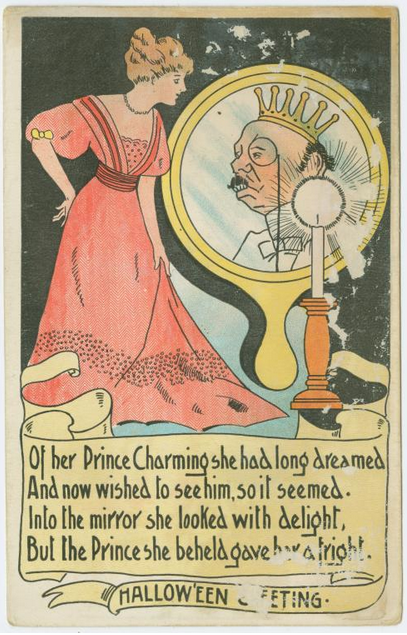
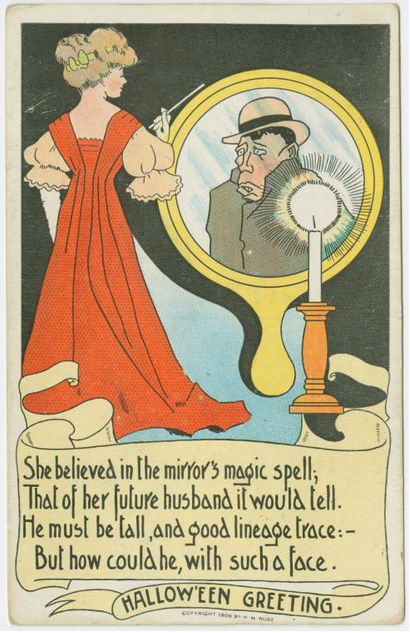
The Fright of Marrying an Ugly Man

by Lisa Wade, PhD

How To Be A Retronaut posted some vintage Halloween postcards from the New York Public Library Picture Collection. Two were on a theme that seems to have been lost over the years:

Lisa Wade is a professor of sociology at Occidental College. You can follow her on Twitter and Facebook.

(View original at http://thesocietypages.org/socimages)

25 Oct 19:57

まるです。

by mugumogu
Fergus Noodle

pixellated poo


はな:「がんばってー。」
Hana:[Do your best!]


こらまるさん、ディープに立ち入ってはいけません。
Hey Maru, keep out!


お互い気になる様子。