Shared posts

16 Mar 01:07

New! in Pointlessly Gendered Products

by Lisa Wade, PhD

It’s been a while since we treated our audience to a post featuring a collection of pointlessly gendered products.  Time to correct our lapse in diligence!  Here are some favorite examples we’ve added to our Pinterest board lately.

THE FOOD CATEGORY.

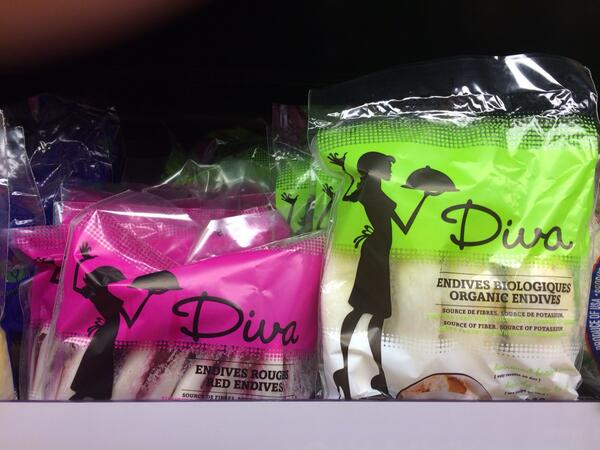
Pointlessly gendered endives:

1 (2)

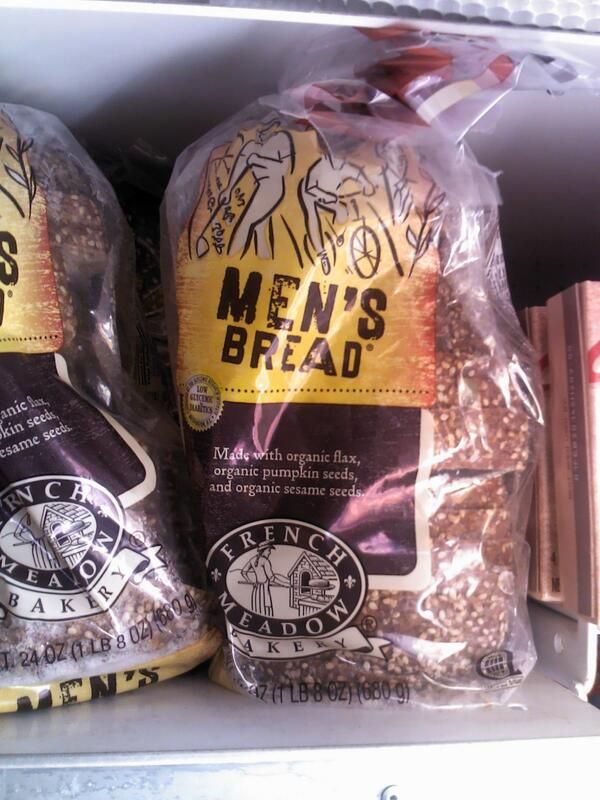
Pointlessly gendered bread:

1 (3)

Pointlessly gendered eggs:

1 (4)

Pointlessly gendered sausages: 1 (5)

Thanks @appledaughter,  Lars F., @mamatastic, @day_jess, @jongudmundand, and @blessedharlot!

KID STUFF.

Pointlessly gendered tooth fairies:

Screenshot (38)

Pointlessly gendered alphabets:1 (2)

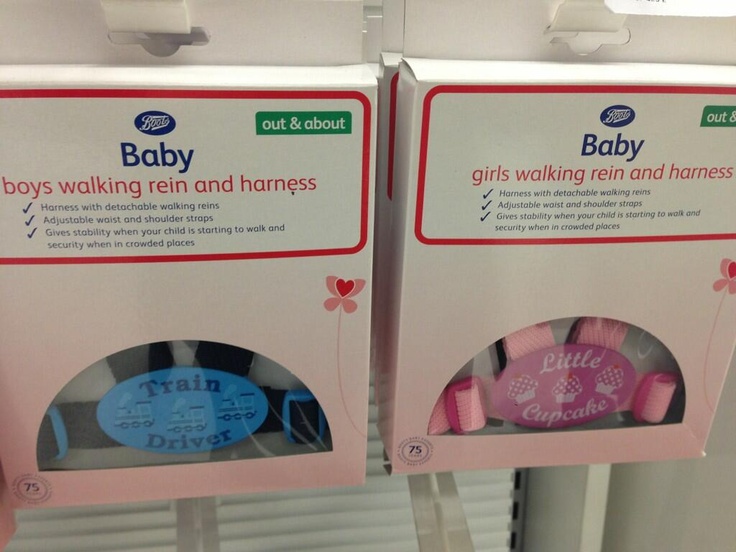
Pointlessly gendered child harnesses:

3

Thanks Sarah M., @day_jess, and @qaoileann!

GROWN-UP STUFF.

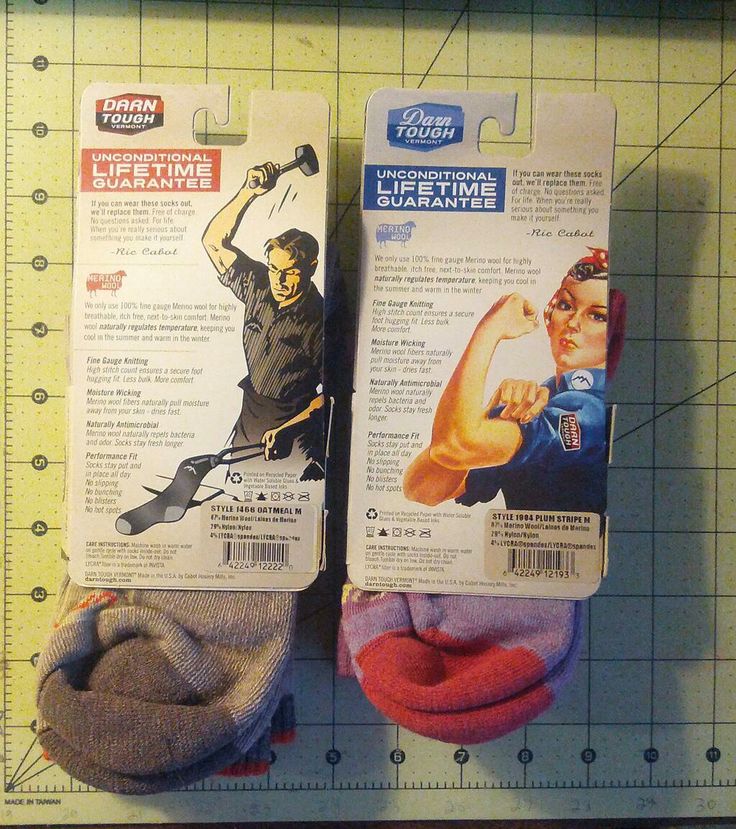
Pointlessly gendered socks:

1 (2)

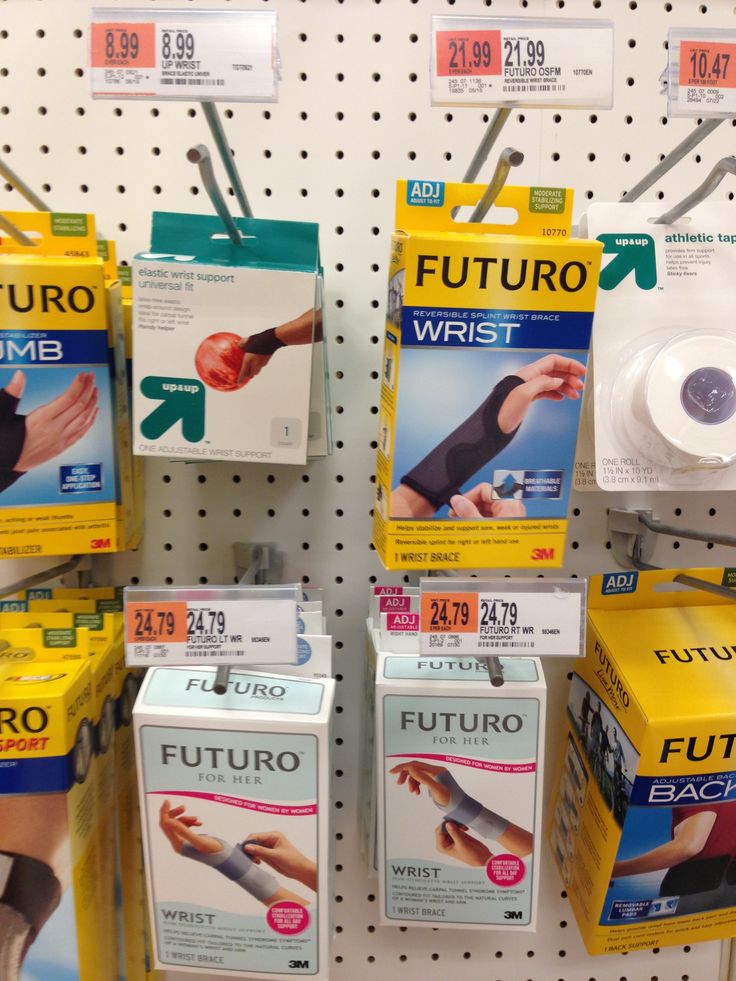
Pointlessly gendered wrist support:1 (4)

Pointlessly gendered job ads:1 (5)

Bonus! Pointlessly gendered pet shampoo:

2 (2)Thanks Jen T., Lisa S., @nayohmei, and @doubleemmartin!

That’s all for now!  Check out the entire collection on Pinterest.

Lisa Wade is a professor of sociology at Occidental College. You can follow her on Twitter and Facebook.

(View original at http://thesocietypages.org/socimages)

13 Mar 23:03

Investors more likely to give to men over women who are pitching the exact same idea

by Maya

Well, this is depressing. ThinkProgress flags a new study that shows just how much the gender of the person doing the pitching affects what business proposals are invested in.

Researchers from Harvard, Massachusetts Institute of Technology, and the Wharton School examined three entrepreneurial pitch competitions along with two controlled experiments. “[W]e find that investors prefer entrepreneurial pitches presented by male entrepreneurs compared with pitches presented by female entrepreneurs, even when the content of the pitch is the same,” they write. Good looking men were particularly persuasive, although physical appearance didn’t make a difference for women. This leads to what the researchers identify as “a profound and consistent gender gap in entrepreneurship.”

And it’s no joke that the gap is profound. Women-led companies got just 13 percent of all venture capital funding last year, are less likely to get small business loans, and composed a tiny 3 percent of the companies that went public in the last couple decades. 

This enormous gap despite the fact that women are actually nearly twice as likely to start businesses as men. (Yep, this is not one of those gender gaps you can even begin to blame on lack of interest.) Think about what that means–not just for the female entrepreneurs who worked hard and took some risks and probably will never know for sure if their business would have succeeded if only they’d been a hot dude. Imagine all the good ideas that never reached their potential just because a woman had them. Remember: these were the exact same pitches. That’s a loss for all of us.

You’d think folks in the venture capitalist and entrepreneurial communities–who presumably have far more faith in the invisible hand’s ability to identify and invest in the best ideas than an anti-capitalist like me does–would be seriously concerned by research like this that suggests gender bias is throwing such a major wrench in their visions of a perfect capitalist meritocracy. I look forward to seeing the innovative solutions they’re working on to address this.

Maya DusenberyIn other news, Maya is accepting applications from attractive men who’d like to deliver pitches to investors on behalf of Feministing.

10 Mar 12:36

“The cockpit is no place for a woman”: Female pilot gets sexist note from passenger

by Maya

After subjecting oneself to the modern miracle of air travel, most passengers give thanks to their god and/or the pilot who safely got them to their destination.

But not David in seat 12E, who flew on a WestJet flight from Calgary to Victoria this weekend. He passive aggressively left this note on his seat for Capt. Carey Smith Steacy:

napkin with sexist note from passenger to female pilot

Steacy posted the picture of the napkin to her Facebook page and thanked David for his note: “I respectfully disagree with your opinion that the ‘cockpit,’ (we now call it the flight deck as no cocks are required), is no place for a lady. In fact, there are no places that are not for ladies anymore.” (Apparently, David also didn’t get the memo that there are no places where you can be publicly bigoted and not risk ending up on social media anymore.)

While Steacy and her colleagues were shocked someone was so blatantly sexist, she also noted that “almost every day people I find are a little bit surprised,” attributing that to the fact that women are still under-represented in flight schools. “Either it’s because they don’t think they can or they have been told that it’s not for women or that they can’t do it. And I just hope that that mindset can change, like it has in a lot of professions.”

Indeed, WestJet says that it has 1,118 male pilots and 58 female pilots. So maybe enroll in flight school, ladies–in David’s honor, of course.

Maya DusenberyMaya Dusenbery is an Executive Director of Feministing.

08 Mar 23:46

Facility sends 89-year-old woman to solitary, calls her “flirt” for reporting being raped by their employee

by Katie
image via Facebook

Image via Facebook

Trigger warning. This true story describes the living nightmare that can result when rape culture and ageism conspire.

Each aspect of this story, on its own, is awful enough. But as a whole, it is truly horrific. On the night of January 17, an 89-year-old woman living at the Minnesota Edgewood Vista facility in Hermantown, Minn, which offers “independent living, assisted living and memory care,” was in bed watching a movie on TV. The victim says that when the “caretaker,” Scott Merzwski, age 30, came in to give her medication, she invited him to sit on the bed and watch the movie. He started to undress, which the victim overtly protested, by pointing to a framed picture of her husband and saying, “It’s not right, this wouldn’t be right.” But Merzwski raped her. According to the police report, the woman “said that she hadn’t had sex for 8 years and she felt like it hurt because she was essentially a virgin again and that she had never planned on having sex again.”

This is not one of those cases that rape deniers and men’s rights associations dismiss as “he said/she said.” Merzwski confessed to the crime. The day after the rape, he admitted not only to “having intercourse” with the woman but also to giving her narcotics beforehand to render her “mentally incapacitated,” according to court documents. The woman notified her daughter of the rape the next day, and the day after that, the police investigation began.

But the assault was only the beginning of a series of violations that this older woman would face. The facility moved her, against her will, to a psychiatric ward at St. Luke’s Hospital in Duluth, where for three days she was kept in a “dark and cold“ room, according to nurse examiner Theresa Flesvig. Flesvig testified that when she examined the woman upon her release, she discovered a laceration that was the “biggest tear” she had seen in her six years on the job.

But Edgewood Vista would continue its attempts to cast doubt on the crime and discredit its survivor. According to Flesvig, Marilyn Moore, the clinical services director, asked, “Did she tell you that this was consensual? Did she tell you that she flirts with this boy mercilessly?” Mary Salisbury, a sexual assault advocate, has said that Moore told her that the 89-year “flirt” was “making it up.” Understandably, Flesvig says that she was “just shocked that somebody was so blatantly putting the blame on this woman.”

Sadly the story demonstrates not only the brutality of rape culture but also ageism–and the way the two conspire. Since 2011, Minnesota’s Department of Health has been notified about six allegations of sexual abuse at state-licensed nursing homes for the elderly. But that number is surely lower than the number of incidents that actually occurred as rapes are typically under-reported, and elderly survivors’ claims are more often dismissed as unreliable. According to Jude Foster, program director at Program to Aid Victims of Sexual Assault (PAVSA) in Duluth, “People who suffer from dementia are prime targets because there is always a credibility issue….Did they make this up? Are they just confused?” Iris  Freeman, director of the Vulnerable Adult Justice Project at William Mitchell College of Law explains that “there is a misconception that if you have any memory loss at all then all you say must be suspect. This is a reminder that it’s extremely important to take allegations of rape at face value, to start from the point of view that they may be true.”

But will this reminder fall on deaf ears? This is a case of impunity in the face of impunity. Though Merzwski was convicted and sentenced to to a whopping 53-month prison sentence (under the same criminal “justice” system that incarcerates people for non-violent crimes for life with no parole), the facility so far is in the clear. Merzwski as an individual was responsible, the state’s Department of Health determined, but not Edgewood Vista, which had supposedly acted responsibly, since they had policies in place to prevent abuse and had trained the rapist employee in abuse prevention. The company that owns the facility maintains that ”the safety of our residents is of the utmost importance.” If you think their lack of punishment is absurd, you’re not the only one. Roberta Opheim, the State Ombudsman for Mental Health and Developmental Disabilities said, “The question has to be asked: Why wasn’t the facility held accountable?”

The survivor, who now lives in an apartment in the Twin Cities, has brought a lawsuit against Merzwski, Edgewood Vista, and two administrators. Her lawyer, who specializes in cases of nursing home neglect and abuse, summed up the story best: “This is horrendous….A vulnerable woman is strong enough to come forward and tell people she’s raped, and then she’s responded to with disbelief and locked up.” Perhaps as remarkable as the complicity of the institution and the state is the woman’s perseverance. “I don’t have the adjectives that would best portray…this woman’s courage,” Freeman said. ”There was a resilience and a fierceness in her that allowed her to be superhuman.”

But you shouldn’t have superhuman strength to report a rape or seek out justice.

Screen Shot 2013-10-28 at 11.13.50 PM Katie Halper is a blogger, comedian and film-maker. 

08 Mar 23:03

Photo


08 Mar 23:02

In Which We Largely Corrected His Prepositions

by Alex

A Type

by JULIA CLARKE

“He looks like a hamster,” my friend Sarah told me about the intern who broke my heart. He was atypical for my taste: I went for skinny, gawky, baby face, and he was meaty, rough, Brazilian. But great romances are seldom typecasted.

He was getting his MBA at Princeton and working at our company for the summer. We shook hands in the office kitchen and quickly found we couldn’t stop talking. We discussed our families, what we like on our salads, Brazilian culture, movies, past relationships, travel. He taught me the Portuguese word for “arugula,” and I corrected his prepositions when he slipped.

Truth be told, I hadn’t had a serious boyfriend in years. Sure, there were a few fleeting dates, even some that made me hope for a relationship, but inevitably, the guy would lose interest for reasons unexplained.

The intern was four years older than me. He promised me breakfast in Princeton and made me laugh. We had the same taste for British humor, the same disdain for pompousness, the same favorite music and movies.

“You’re like me in skirts,” he used to say, and it was true. Strange as it was, we were kindred spirits, and I felt like I’d known him for years. I fell rapidly: notions of self-preservation go defunct when you’re clouded by charisma.

One Friday, he left work early to catch a flight to his brother’s wedding in Brazil. “See you Monday!” he smiled. That weekend, I pictured him watching the ceremony, standing respectfully in his rented tux, and wondered what he thought about vows of love.

It was just a crush, but I still had a girlish hope that he would commit to me in some way other than a distant plan for pancakes. “How was the wedding?” I asked when he got back. “Oh, really fun. Everyone was so happy,” he said.

He described the dancing, the whiskey and the plane’s turbulence on the way back. He had been momentarily scared of its threatening shakes. “I hate flying,” he said. “Me too,” I agreed, shuddering, “but I love to travel, and it’s a small price to pay.” Then, out of nowhere, he dropped the truth. “I brought my girlfriend back with me,” he said.

Apparently, she was something of a childhood sweetheart, a bond formed years ago and far stronger than the few weeks of playful chatter we’d shared. She came back from Brazil with him after the wedding to start an MBA program at a school in Virginia.

I had a sickening realization that what I thought was flirting — the beginnings of love, even — was just another guy like the rest. In that barren office, far from his girlfriend, he sought shallow entertainment, and I delivered.

“I’m over the Brazilian,” I told my sister. It was humiliating that I had ever thought he was interested, but there I was, caught in a one-sided infatuation. They would probably get married. At best we could be friends; at worst I was his coworker from a summer internship, a bleary memory vaguely recalled.

Somehow, friendship seemed favorable. One Wednesday, he told me he had a lonely night planned, and I cautiously agreed to see a movie with him. When we got to the theater, the cashier looked at us and said, “Together?” The intern looked at me meaningfully, but I took a step backward, shaking my head, paying separately like the platonic friend I swore I was.

The evening was painfully romantic; we sat close to each other in the dark theater, knees knocking and beers spilling, laughing heartily at all the funny parts.

It was misting when we went outside. He chivalrously opened his umbrella, and we walked close together for hours into that damp night, my heels sinking in the soft soil, my hand impulsively brushing against his arm. It would have been the best date of my life except that it was fabricated bliss. His reality was someone else, and mine was only a wish, only as true as the movie we’d just watched.

I abruptly asked him why he didn’t mention his girlfriend earlier. He suddenly looked nervous and small. “She doesn’t know I’m with you right now,” he admitted. “I like your company so much. She’s good, but she just doesn’t fill me. It’s different than this...” he trailed off before quickly adding, “And she wouldn’t understand why I’m with you tonight, so she can’t know.”

I was silent.

“Don’t look at me like that,” he said.

“Like what?”

“Like a mixture of pity and disgust.”

The next day at work, he gushed over the night we shared. I was reluctant, but he insisted he had a good time and that we should get together more often. “You’re such good company,” he repeated.

What I knew should be friendship was fast approaching serious attraction. Lies, on his part, were flying. He told his girlfriend he was out with work friends when he was really out with me, watching the sunset from the steps of the Lincoln Memorial and admiring my bare legs.

A future with him was immoral unless he broke up with his girlfriend. I resolved to keep my distance, but he was relentless. “I got you a present,” he said one day. “Nothing big — just something to remember me by when you leave for school.”

“Be careful with that hamster,” Sarah cautioned, but we’d already planned a date. He was supposed to visit his girlfriend that Friday, but he put it off so we could be together. “Got Friday off...” he texted me one night, as if playing hooky from school.

He came to my apartment with a bottle of wine and the gift, charmed my sister and told me I was pretty. The present was a favorite movie of his, demanding cruel remembrance of him, my impossible prize. He gave it to me on the roof of my building, where he passionately kissed me all night under the stars. “I can’t believe you don’t have a boyfriend,” he whispered, the Washington Monument coldly blinking in the background. The DVD was The Professional.

He told me he was confused. “She’s a good girlfriend, but she doesn’t fill me,” he kept saying. Still, he remained annoyingly, steadfastly attached. When I moved to Long Island for graduate school, I half-expected our relationship to peter off, but technology maintained it. Even from several states away, he kept talking to me, making me laugh, keeping me virtual company in my lonely one-bedroom.

We sent each other pictures of houses in the Great Homes and Destinations section of the New York Times, something we’d enjoyed independently until we realized it was a commonality.

“I found a house for us,” he’d say, and I’d wonder if our children would have blue eyes like his or brown like mine. It mattered decidedly little. For the first time in my experience, he didn’t demand sex: he demanded me. “We can be friends,” he insisted, and I was determined to believe it.

But I can call my friends, can text them on a whim, and he was perpetually unreachable. Contacting him meant he risked exposure, so I waited for him to contact me, on his terms.

He would gchat me daily, always with some amusing anecdote, some kind word. “You finished your novel yet?” he’d ask. I was used to feeling degraded and disposable, but he made me feel needed, smart and most of all, remembered. He was even with me while I slept. “Some joker just pulled the fire alarm!” he texted once at 1:45 in the morning. I liked that he thought of me at that hour.

He became a staple in my daily routine, and I dangerously started needing him too. I found myself listening for the cheerful ding of a gchat notification as I brewed my morning coffee. My composure was unraveling with each electronic alert.

To remedy it, I experimented with silence, but he saw right through it: “Are you ignoring me? In Brazil we call that rudeness,” and then the next day, “Good morning. Still ignoring me?” He was impossible. “Sorry — been busy — first year PhD stress!” I finally said lightly.

And so we clumsily started up again, making jokes and planning his visits to Long Island. I edited his resume, wrote his thank you notes for the summer internship where we met, encouraged him with his schoolwork and worries about the future. I was his girlfriend with none of that stability or comfort.

Somewhere along the way, I’d lost my self-respect. Maybe he would break up with her one day, but it wasn’t happening now. “We can’t talk anymore,” I reluctantly told him over the phone, and I heard his voice crack when he said goodbye.

About a month later, I was in Princeton using the library’s special collection for a research paper I was writing. I decided it was silly — childish even — to keep my proximity to him a secret, so I texted. He softly kissed my cheek when he saw me, and we caught up on our lives in a crowded coffee shop.

As ever, his girlfriend remained our unspoken impediment. She was his future, and I had to settle for being what could have been. At one point, I caught his gaze, and he quickly shifted his eyes: “Don’t look at me like that! It’s the same as it was that night in D.C. — a mixture of pity and disgust.” So I kindly laughed it off, changed the subject, and we walked for a long time in the cool air as if nothing had changed. And indeed, nothing had.

Julia Clarke is the senior contributor to This Recording. She is a writer living in New York. She last wrote in these pages about a college experience.

"Again" - Janet Jackson (mp3)

"That's The Way Love Goes" - Janet Jackson (mp3)

08 Mar 12:13

Big Data, the Cyclical Universe and the End of Science

by David Byrne

I was reading a piece in Artforum by Mario Carpo on big data and how it is being used by a new wave of architects. He made some surprising comments—none of which relate to architecture—that sort of blew my mind.

He pointed out that for many hundreds of years, science has been about discovering the essences behind phenomena—it is a method to find the simple laws and rules that govern our universe. Science presumes that there are such guiding principals to be found. Science has faith that these principals exist. We who subscribe to this faith believe all is not random and chaotic.

This last part, science and religion have in common. They both believe that ordering principles exist. Of course in religion, the principle behind all the other principles is divine—supernatural. It is beyond man and nature; outside of our world. With science there is a similar faith, but that faith says that the laws and principles are what makes up our world—they are us and we are them. In a sense, the rules are God.

Carpo points out that as the ability to crunch huge amounts of data advances, the need to know what makes things tick, what laws underlie and govern our world, diminishes. If weather, for example, is being analyzed, and all the events and their magnitude and duration duly archived in massive data banks, then you don’t need to know why there are storms or floods or melting ice caps; you don’t need to know that they might be caused by gasses in the atmosphere that were largely put there by people and what those gases and particles do to light and how they work on a molecular level. You don’t need to know the why at all—you only need the data, and then statistically one can say, for example, that a flood will happen in a specific location every so many years, because that’s what has happened in the past.

Data is predictive, but in a very simple way. It might never presume something new and unexpected will happen (though it will allow for the occasional black swans, but that’s statistical too)—it won’t get distracted by the universe with all its beauty and strangeness. It will dispassionately look at what has happened before and coolly say, based on those events, what will happen next.

In many areas this is pretty reliable. Of course, one has to give some suggestions to the machines as to what sorts of patterns to look for: big storms in weather forecasting or seasonal urges for pumpkin pies, for example. In other areas it is pretty useless. Dating websites and services run on algorithms—the more data they collect the more they might predict a successful outcome, based on past experience.

Big data
Big data
Source

It turns out that dating and matchmaking algorithms don’t really work. Tom Whipple quotes a professor who studied them in an article he wrote in Intelligent Life magazine:

“These claims,” Professor Eli Finkel from Northwestern University wrote, ”are not supported by credible evidence.” In fact, he said, there is not "a shred of evidence that would convince anybody with any scientific training". The problem is, we have spent a century studying what makes people compatible—by looking at people who are already together, so we know they are compatible. Even looking at guaranteed, bona-fide lovebirds has produced only weak hypotheses—so using these data to make predictions about which people could fall in love with each other is contentious.

Despite the failure of these services, they are hugely popular. People want them to work. Our faith runs counter to the facts.

The faith part of science—the belief that there are underlying laws and explanations—will possibly be abandoned if we adopt big data as a guide to the universe. One doesn’t need to know why the apple falls from a tree at a specific rate (the law of gravity). One only needs to see that that is what always happens, accept that fact, and log in that in such and such a situation, that is what will happen—the apple will fall. That there is a law that can be applied to predict that and to even predict how apples will fall on Mars is irrelevant—when you have infinite data you don’t need to know the why of anything.

Then you get into a situation like the Jorge Luis Borges story about the ultimate map that describes a place perfectly in every detail— a map which, of course, ends up being as big as the area it describes. We’re heading to a point where the amount of data will eventually equal the amount of stuff in the world; a one to one correspondence. Everything is being watched, mapped and analyzed—the data is hoarded, but only analyzed in a funky kind of way. Parallel processing of data sometimes produces some surprising connections when seemingly unrelated clumps of data are mashed together: the people who buy new phones immediately might be revealed, when their data are cross-referenced, to be the very same people who wear synthetic knits. A marketing opportunity is born! But what is the underlying cause of that connection? Is there even a reason? Who cares! We can now more efficiently market certain clothes to phone buyers. No one needs to know why anything happens ever again.

Based on the behavior of insurgents that have been tracked, the NSA may feel that any occurrence of a similar pattern of behavior warrants watching: eating Pringles and playing in a video arcade, for example. If your behavior matches this too closely you could be arrested, though you’ve done nothing. As before, this reliance on data doesn’t ask why the insurgency, what caused it, or what those people want—it doesn’t look for underlying causes, it simply and dispassionately (or so we are led to think) goes about its business of crunching numbers.

From Corey Doctorow (via Boing Boing)

The Chicago Police Department has ramped up the use of its "predictive analysis" system to identify people it believes are likely to commit crimes. These people, who are placed on a "heat list," are visited by police officers who tell them that they are considered pre-criminals by CPD, and are warned that if they do commit any crimes, they are likely to be caught.

The CPD defends the practice, and its technical champion, Miles Wernick from the Illinois Institute of Technology, characterizes it as a neutral, data-driven system. 

Philip K. Dick was right again! The world of Minority Report is here.

The thing is, the human factor hasn’t gone away. It’s humans who tell the machines what patterns to look for, which other patterns to compare them to and how to organize all those numbers.

Here is a visual analysis of edits on Wikipedia categories:

  • Although these edits were performed by a bot, the categories were chosen by humans.
    Although these edits were performed by a bot, the categories were chosen by humans.
    Source

What is apparent to me is that all the categories were chosen by humans. The patterns may exist, many patterns may exist, but it is humans (and probably only a few of them) who have named them and chosen which ones are significant. So, like all programs, software and algorithms, there is a human hand meddling somewhere.

The foibles and prejudices of us humans finds a way into the most objective seeming algorithms and how the data is analyzed. Objectivity is a myth. So far. Until the machines are capable of finding emergent patterns on their own (which might not be too far off, I suspect), the intervention of fallible, ideologically and financially motivated humans will continue to guide the analytics.

One might almost welcome the machines taking over in this case. There’s a now-famous case of the young girl who was marketed diapers and her dad complained to the online company who was trying to sell her these things. “My daughter is not pregnant” he insisted. It soon was revealed that dad was wrong—but the algorithm and the data knew.

Science believes in a world where time is linear, though the laws of the universe predict that certain things will recur. Apples will fall from trees. But science doesn’t believe that the same apple will fall from the same tree more than once. One wonders if when the machines take over, will we truly see an end to science and the birth of a world that is—as the Hindu’s, Maya and many other have described it—an endless eternal loop of history playing itself out and then repeating over and over forever? Everything that happens simply a repetition of something that has happened before.

DB

Perhaps the end of science means an old beginning.
Source
01 Mar 00:05

まるです。

by mugumogu


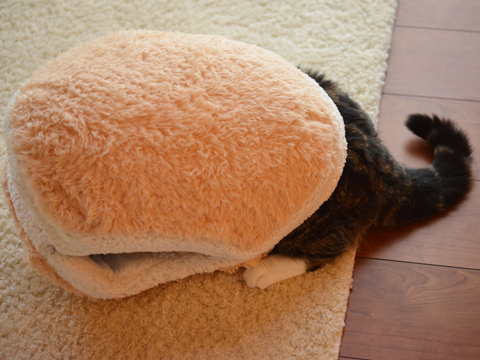
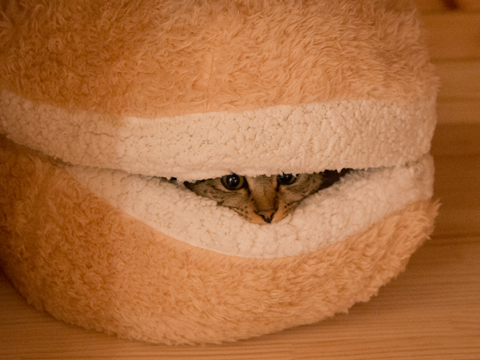
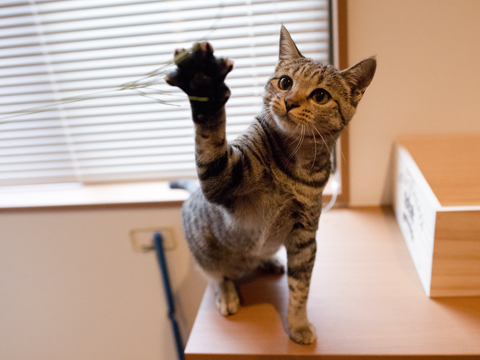
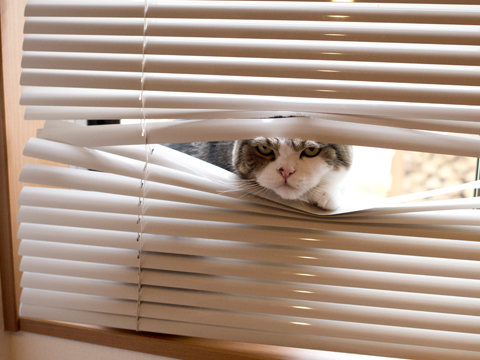
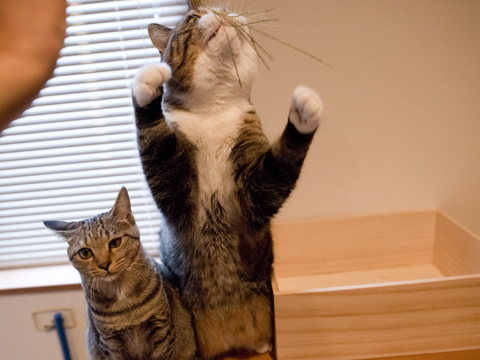
寒がりなはなのために買った猫ベッド。
まるはふかふかな物が苦手だから入らないだろうなと思っていると――
I bought this cat bed for Hana, because she is sensitive to cold.
I forecast that Maru did not like this.
Because he does not like warm beds.
But......


「入ってますよ。」
Maru:[I like this bed.]


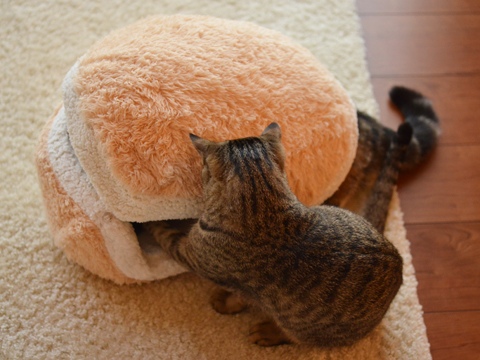
突っ込む形式だったのが良かったのか、真っ先に入るまる。
初めて見る物に警戒していたはなは出遅れた形に。

はな:「これいーなー。貸してー。」
Hana:[I like this, too. Please lend this to me!]


はな:「貸してくれない。大人げなーい。」
Hana:[He does not lend it. He is childish.]


「早い者勝ちなのです。」
Maru:[First come, first served.]


「ぬっくぬく。」
Maru:[This is very warm...]


喜ぶだろうと思って買った物は使ってくれず、
これは使わないだろうと思った物を喜んで使う不思議。


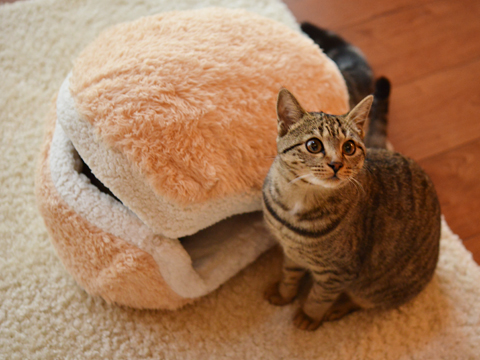
空いた隙にはなさんもIN。
After this, Hana was able to use the bed.

はな:「ぬっくぬく♪」
Hana:[I love this warm bed.]

------------------------------------------------------
連載第11回目は本日AM10時頃の更新です。


25 Feb 00:54

A Voyage on the Queen Mary 2

Fergus Noodle

Sounds awful

Then an invitation came through to try the Queen Mary 2. Her reputation surpasses her and I figured that because of her enormous size (almost four football fields in length) and weight, her passage would be graceful through the waters of Fremantle to Melbourne. The idea of hugging the coast of Australia did sound like a gently-gently way to start cruising.
21 Feb 01:08

Infographic of the day: women’s rights by country

by Katie
image via The Guardian

Image via The Guardian

Pop quiz: which country mandates that employers give women breaks to nurse their babies? Kazakhstan? Or Canada? Where is it easier to get an abortion? Argentina or Bolivia? I bet the answers will surprise you. Check out this excellent interactive chart, which looks at laws (or the lack thereof) on abortion, property rights, harassment, discrimination, domestic violence, work and more, country by country.

The Guardian used World Bank and UN data to create “a snapshot of women’s rights across the globe. Select a region and hover over a country to see how it has legislated for violence, harassment, abortion, property and employment rights, discrimination and equality. Click on a country to tweet a message on the figures. Country data can be viewed in relation to its population size and those of its neighboring states. Click the centre of the circle to return to the beginning.” (It took me a while to figure that last one out because I jumped to the infographic and skipped over the intro. Hopefully, you’re reading this, and won’t make that mistake.) Now get to interacting here.

FYI, OECD stands for Organization for Economic Co-operation and Development and refers to the countries that signed the Convention on the Organization for Economic Co-operation and Development.

Screen Shot 2013-10-28 at 11.13.50 PM Katie Halper now feels like she was deceived by Borat’s presentation of Kazakhstan.

15 Feb 11:03

“Girls Chase Boys” updates iconic sexist ’80s music video

by Katie

Does this video look familiar? If it does, you’re either 100 years old, like me, and remember seeing Robert Palmer’s “Simply Irresistible” on the TV, or it’s become a kitsch throwback. This video, however, by Ingrid Michaelson, for her catchy  new “Girls Chase Boys“ song makes some major improvements; is a lot less white and a lot less gender-binaried, lucky for us. But you don’t need to have lived through the 1980s to enjoy the video and all its hotness.

Lyrics after the jump.

New York-born and raised and based indie-pop singer-songwriter Ingrid Michaelson explains that her song started out about a break but became something more:

Girls Chase Boys started out as a break up song but took on a deeper meaning as I continued writing. More than just being about my experience, its focus shifted to include the idea that, no matter who or how we love, we are all the same. The video takes that idea one step further, and attempts to turn stereotypical gender roles on their head. Girls don’t exclusively chase boys. We all know this! We all chase each other and in the end we are all chasing after the same thing: love. I hope you enjoy it! AHHH!

It’s a heartwarming statement about how regardless of gender or sexuality, we’re all miserable.

Lyrics

All the broken hearts in the world still beat
Lets not make it harder than it has to be
Ooooooh it’s all the same thing
Girls chase boys chase girls

All the broken hearts in the world still beat
Lets not make it harder than it has to be
Ooooooh it’s all the same thing
Girls chase boys chase girls

I’m a little let down, but I’m not dead
There’s a little bit more that has to be said
oh oooh
you play me, now I play you, too
Lets just call it over

All the broken hearts in the world still beat
Lets not make it harder than it has to be
Oooooh its all the same thing
Girls chase boys chase girls (x2)
Chase girls chase boys chase boys chase girls

Im a little bit home, but I’m not there yet
Its one to forgive but its hard to forget
Don’t call me, I won’t call you, too
Lets just call it over

All the broken hearts in the world still beat
Lets not make it harder than it has to be
Oooooh it’s all the same thing
Girls chase boys chase girls (x2)
chase girls chase boys chase boys chase girls

I got two hands one beating heart
And I’ll be alright I’m gonna be alright

Yeah I got two hands one beating heart
And I’ll be alright, I’m gonna be alright
Gonna be alright

All the broken hearts in the world still beat
Lets not make it harder than it has to be
Oooooh it’s all the same thing
Girls chase boys chase girls (x4)

Screen Shot 2013-10-28 at 11.13.50 PM Katie Halper can’t get this song out of her head. 

15 Feb 02:33

まるです。

by mugumogu


はな:「ウザがられても気にしない♪」
Hana:[I present this chocolate to Maru.]


ということで、はなさんからのチョコレートをどうぞ。
Hey Maru, this is a present to you from Hana.

まる:「無理やり押し付けられました。」
Maru:[I was passed this forcibly.]
(In Japan, a woman gives chocolate to a man on St Valentine's Day.)


Happy Valentine!

ラベルファクトリーで作りました。Maru and Hana do not eat chocolate.)


09 Feb 16:57

mysteryplantgirl: castielhasthephoneb0x: i can nt breath this old man who has like the biggest...

mysteryplantgirl:

castielhasthephoneb0x:

i can nt breath this old man who has like the biggest onion ever is so pr ou d of it 

image

image

image

image

LOOK HOW HAPPY HIS ONION MAKES HIM

this makes my heart smile

09 Feb 04:32

“Shed Your Weight Problem”

by Lisa Wade, PhD

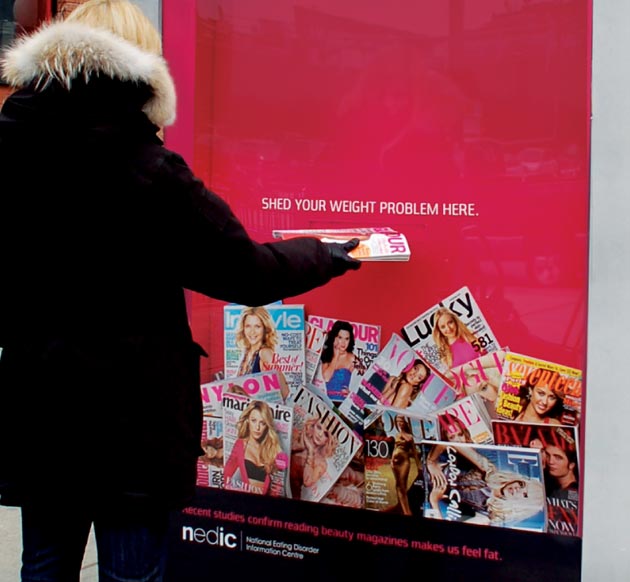
Our recent post collecting examples of creative resistance to sexually objectifying advertising was a big hit, which makes me think y’all are going to love this one.  The National Eating Disorder Information Center paid to put up a creative ad/trash can.  It reads “Shed your weight problem here” and encourages passers-by to dispose of their fashion magazines.

2 3Another great example of how organizations can creatively push back against the harmful messages spread by corporations for profit.

Lisa Wade is a professor of sociology at Occidental College. You can follow her on Twitter and Facebook.

(View original at http://thesocietypages.org/socimages)

01 Feb 01:11

Brazil’s “rolezinhos:” a new kind of social movement

by Juliana

1010465_696623180358477_821511457_nImage translation: “Flash Mob. Vandalism.” 

Brazil is facing a new kind of social movement, and it’s got a name: a “rolezinho.” Portuguese for “little outing” rolezinhos are events organized via Facebook which result in a mass social gatherings of young people in public malls. The majority of those who attend are low-income brown and black teenagers, coming into spaces mostly frequented by upper middle class white people.

It happened for the first time in December, when 6,000 young people descended on a São Paulo shopping mall and….. walked around. Three people were arrested that day. A week later, 2,500 teens showed up at a different mall and 22 people were taken into custody for appearing to like “they were going to start trouble.” A few days later, more young people showed up at another mall, and the military police were summoned. Rolezinho participants have faced tear gas, arrest, and abuse at the hand of Brazil’s police simply for showing up in what is legally considered a public space.
 
Like many countries with a history of colonization and racism, public spaces in Brazil aren’t truly accessible to all people. In big cities, the rich and poor operate under fragile social norms that dictate where people live  eat, or work. Depending where you live, street harassment can be unbearable. Most apartment buildings still have a service elevator, and tiny maid’s rooms. The cities’ poor live in urban ghettos called favelas, while wealthier people live in gated apartment buildings, with security cameras and guards. Living in favelas where the threat of violence is constant, there are few spaces for young people to congregate safely. These norms around who belongs where are rarely articulated, but constantly enforced.
 
Which is why the rolezinhos are a big deal. When 6,000 black and brown kids show up where they don’t “belong,” people are forced to take notice of the silent rules. By showing up and basically saying “we’re here, we’re young, we’re brown” the participants are bringing to the forefront of national conversation a population that has long been ignored. Many observers react in fear, which is why the participants are being painted as vandals and trouble-makers by some on the right
These rolezinhos are important for women in particular because they so often bear the brunt of poverty and racism. The militarization of low-income communities in Brazil often increases violence against women, and barriers to access to basic resources like health care, water, or electricity tend to hurt women and children more. So when young women of color show up where they are unwelcome, they make this marginalization visible. For the first time, the structural violence that is committed against low-income women of color is being played out on a national stage, with the media there watching.
Most organizers will explain that the rolezinhos are not meant to be a political movement. Leandro Beguoci wrote a popular piece arguing that they are less of an purposeful effort to occupy space where they are unwelcome, and lot more about finding a cool place to hang out and buy stuff. For the participants, these actions are about civic participation through consumption. Yet regardless of their goal, rolezinhos are rocketing a kind of social change into the Brazilian consciousness.  They are challenging stereotypes and changing who controls public spaces. And by bringing out the worst in those who hold power in Brazil, the rolezinhos are shaping space and dialogue to be more inclusive.
 

96ee0a3b286e0ab66e722794b16d9276_bigger

Juliana probably dresses up like Frida Kahlo a little too often.

31 Jan 10:27

Thursday Tipples 03 / Tipsy Peach Iced Tea

by Lisa Manche
drunken peach iced tea

I used to think of myself as strictly a coffee only girl, but things have definitely changed. I sometimes still have a coffee in the morning or if I'm out with friends, but I'm predominately a tea drinker these days!

I have a problem walking past T2, but an even bigger problem if I end up walking in. This photo only shows part of my collection *blush!* If you've been reading for a while, you'll know that I love tea in all manner of desserts, from earl grey ice cream to chai doughnuts, but I am always intrigued when I see tea used in cocktails.

Last summer I started making iced tea regularly because it was so delicious and refreshing, and I couldn't help but think that some kinds of tea would be awesome with a few shots of booze - because what isn't improved with booze, really? - and served as a pitcher cocktail.

drunken peach iced tea

The possibilities are endless of course - a fruity tisane with vodka, lemons and strawberry pieces, or a twist on the mint julep with peppermint tea, bourbon and fresh mint (I can tell you that this is in fact delicious!)

For this month's Thursday Tipples post, I experimented with a vanilla black tea combined with peaches, spiced rum, vodka and a little Cointreau, and it turned out even better than I'd hoped. This drink feels very summery because of the peaches, and I loved the subtle spices that came through from the tea and the rum.

So here's something to do this weekend... Make a big pitcher of tipsy iced tea and drink this with friends at sunset, sitting on the balcony or out in the backyard - perfect! You can thank me on Monday ;)

drunken peach iced tea


Tipsy Peach Iced Tea


Makes a 2 litre pitcher
Original recipe by Spicyicecream


  • 3 heaped tablespoons T2 Madagascan Vanilla (or other loose leaf black tea)
  • 3/4 cup water
  • 1/2 cup sugar
  • 2 ripe peaches, cut into eighths
  • 60ml vodka
  • 60ml spiced rum
  • 30ml Cointreau
  • Ice cubes and lemonade or soda to top up
Place the loose leaf tea, water and sugar in a saucepan over medium heat and stir until sugar is dissolved and water has boiled. Steep for 5-10 minutes and strain out tea leaves. Add sliced peaches and allow to cool for 30 minutes.

In a pitcher, add vodka, rum and Cointreau, tea and peaches. Top with ice cubes and lemonade or soda, and serve immediately with cute stripy straws.


31 Jan 10:18

In Which It Is Now In Harsh Color

by Alex

Office Hours

by JULIA CLARKE

"How shockable are you?" he asked. I was seated in my professor's office one winter day, sipping black coffee and discussing the prospect of graduate school. In the English department, at least at my alma mater, meeting with a professor for a chat is not unusual; in fact, it's recommended, especially if you're considering a PhD in English. Having a mentor who knows you well can be the key to admission, but it also assuages the agony of working toward a career in the humanities, a field that is notoriously overlooked and underfunded, especially in a lackluster economy. 

That day, the conversation shifted from standard evaluations of choice programs to literature in general to something personal — something dark and secret — that I wasn't sure I wanted to hear.  Was I shockable? Since starting college, with its STDs, keg stands, and recreational drugs just a house party away, I liked to tell people that nothing shocked me anymore, but then again, I was only 20 and privately knew better. 

"Um, I don't know," I stammered. It was one of those moments — flashbulb memories, psychologists call them — that you recall with piercing vividness because of its inevitable impact on your life.  The wise, clean-cut and closed-off professor, clad in tweed and lecturing from the Bible despite departmental taboos, was about to expose his worst weakness.

"I had a relationship with a student that lasted two years," he said calmly.  It ended in 2004.  She was his assistant and about 40 years his junior, a girl who already had a boyfriend her own age but who somehow felt compelled to sleep with a married man technically old enough to be her grandfather.

In my attempts to be well-liked, to be thought of as free, open-minded, and most importantly, an intellectual, I told myself it was perfectly natural for an elderly professor to seduce a student. Words are inflammatory, and they shared a passion for literature. It's the age-old university tale: I wasn't really a fan of it, but I got it. 

Shortly after his confession, he pulled out an envelope tucked behind some papers in a file cabinet.  "Let's just — close this door—" he said, gently pulling the entry door shut, and then in the quiet seclusion of his immaculate office, cluttered his desk with pictures of her so that I could place a face to a name.

No longer was his affair something nostalgically and distantly described, as if read from Nabokov: It was now in harsh color, with youthful brown hair and friendly eyes, staring back at me. It wasn't just one, either. He sifted through the envelope's contents with a practiced hand, dropping photograph after photograph of women he slept with starting in 1966, when he earned his PhD.  He was no longer the distinguished research professor I admired but instead a crusty Casanova, boasting to a friend his sordid parade of conquests. 

Girls were captured smiling and windswept; others were serious, with crossed ankles and austere faces; one posed nude. They were all beautiful. Out of all the images, though, the one that disturbed me the most featured a dark-haired student, one of his favorite affairs, in the 1990s. She was photographed on a nondescript couch, her thin legs comfortably tucked behind her, intently reading a book.  Seeing her like that — so casual, so young, so unaware of the camera’s invasive gaze — made me queasy.  He told me they hadn't spoken for years, and I wondered if she still thought of him, if she regretted the affair, and how hard it was to overcome its demise. 

He was her first lover — he shared that with revolting pride — and I considered how damaging that is to young college student.  What's it like to have your first real romance be someone who so easily overpowered you with age, postgraduate degrees, and published books, not to mention the morbid promise of an end? "I'm married for life," he said, pointing a fat finger at his gold ring, but it felt like mockery, to the students he slept with and to his wife who bore him children.  What is marriage if not fidelity?  

I have been told more than once that I have uncanny composure, seldom revealing my real feelings.  Keep calm and carry on, Her Majesty says, and I make it my mantra.  In this case, though, as I flipped through pictures of women who seemed normal, happy, and most profoundly, young — too young to be in bed with a man well into the autumn of life — I still have no idea what my face looked like.  "Are you okay?" he asked, to which I replied coolly, "Yep, I'm fine." "You're always fine," he said darkly, and I'm sure I reddened. 

We didn't talk much more about his past lovers after that; the photographs and accompanying histories were something I blocked from my immediate consciousness, turning instead to enlightening discussions about literature, God, his sickly mother, his grandchildren and children, art, music, Paris, England.  We met regularly, my black coffee always patiently waiting on the other side of his desk, and we e-mailed too. 

He taught me literature so well and so easily that I refused to see him for what he was, a man with authority who took advantage of his impressionable students. Instead, he was an accomplished savant who surprisingly respected me despite the department's jaded tendencies.  He might be weird, but nobody would deny he was both bright and prolific, and he treated me as an intellectual equal. "I must tell you that your e-mails are beautifully literate," he wrote once in February.  I was flattered.

In the midst of our meetings and correspondence, I was writing a paper on King Lear, and I wondered if he were my own King Lear, mystically transported from Shakespeare's ancient England to Florida's muggy reality. Like Lear, my professor was a tired old man seeking an outlet — a cold and non-discriminating heath — for his past transgressions, so that he could, as Shakespeare penned, "unburdened, crawl toward death." Maybe this relationship, however strange, was happening to me so that I could understand aging better, or at the very least so that I could write a good paper on a play that troubled me above all the others.  

Once, King Lear came up in conversation, specifically the scene where Lear announces he'll give the most generous slice of his kingdom to the daughter who loves him most. Cordelia, Lear's favorite, professes she loves him only "according to her bond," and her honesty sends Lear into a maddened rage. 

"Should Cordelia really have been honest with poor old King Lear?" my professor asked, but he swiftly answered for me, "Lear did not want the truth — he wanted kindness." Was that valid? When life has harried him for several decades, was there a point where I should just accept bad behavior and indeed, commend it with kindness, just because he lasted this long? 

My professor needed an understanding and silent ear, someone who wouldn't tell him what was true but instead serve as his bucket, swallowing his past and assuring him it was all okay with my modest shrugs and slow nods.  "I hope you enjoy keeping this secret as much as I do," he told me once, no doubt fearful I would broadcast his confessions.  It made me feel strong, set apart even:  I wasn't connected to it; I was containing it.

But then, ineluctably, he tried sucking me into his queue of sad affairs, gradually at first and later with aggressive insistence, sending me erotic poetry in e-mails, telling me I was lovely in the warm sunlight where we sometimes met to talk, comparing me to his past lovers. He even requested — jokingly? — a picture of me in a swimsuit to add to his ignoble envelope. "You are quite the embodiment of springtime," he wrote. 

I ignored all of it, mechanically and with tenacity.  He admired my clean refusal to acknowledge his compliments and trespasses. "You are a very wise — instinctively wise — woman," he said, but he was relentless. When he told me he loved me, I finally demanded that he stop. "I was hurt by your e-mail," he said, and his vulnerability sickened me. Correspondence puttered on for a brief time after that, although it was now jagged and noticeably tense. 

In June, I traveled to Washington to celebrate my 21st birthday with my sister.  "Let me hear from you when you get back," he wrote. Maybe it was that I was now 21 — too old and also too young to deal with his messy inner life — but reading that sentence laden with pathetic desperation, I knew that I couldn't talk to him anymore. I sent a terse response, abruptly ending communication.

Years later, I still don't know what the point of it all was. I count myself lucky that nothing physical ever happened (not even a handshake, he once pointed out) but his leers and his poetry were nearly as disruptive. Literature, my first real love, suddenly felt murky and uncomfortable, with its varying justifications for any and all action.  I desperately wanted to see, in print, that some things really are right and wrong, but I was tirelessly left heartbroken. 

I often thought about the girls he did manage to sleep with, particularly the one reading in the photograph. I'm sure that like me, she was blinded by his glittering analyses of art and text, and her self-doubts, like mine, were overshadowed by his crafty adulations. She just paid a higher price.  Without his frequent affirmations, my insecurities returned, and the worst question of all came rushing forth: Was he complimentary because he wanted to bed us, or did he really think we were smart? 

But time heals most wounds, or at least makes us forget the worst parts. I still wrote my honors thesis, still graduated, and still devour and study the literature I've always adored. Now, hundreds of miles from my college campus, I live and work in a city where I sometimes see short, mustached men in scholarly blazers, and I shudder, thinking it's him. It never is.

Julia Clarke is a contributor to This Recording. She is a writer living in New York. This is her first appearance in these pages. Paintings by Joan Brown.

"In The Same Room" - Julia Holter (mp3)

"Four Gardens" - Julia Holter (mp3)

29 Jan 10:44

まるです。

by mugumogu


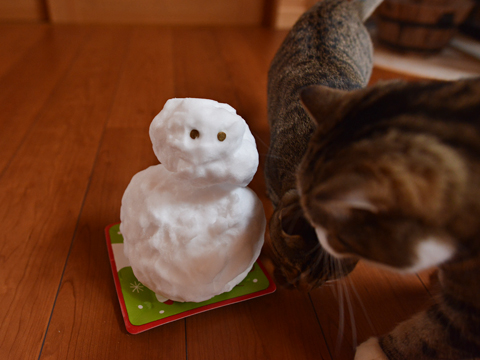
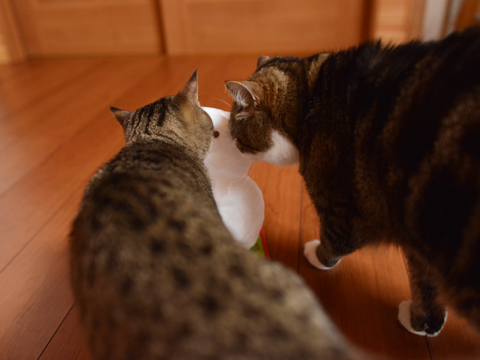
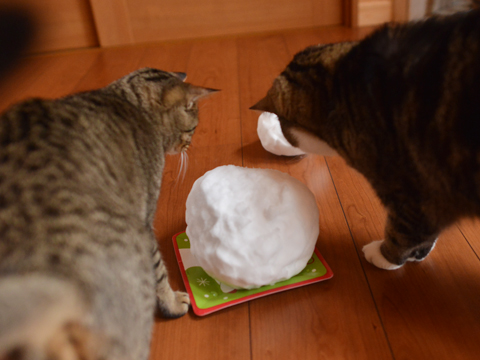
雪だるま王:「私は偉大なる雪だるま王4世。」
Snowman KingⅣ:[I am great snowman KingⅣ.]


わらわら。

雪だるま王:「雪に導かれこの地へ――」
Snowman KingⅣ:[I was led to the snow and came over to ......]


グッシャー。

雪だるま王:「きゃーっ!」
Snowman KingⅣ:[Oh, ouch!]


28 Jan 09:45

まるです。

by mugumogu
Fergus Noodle

surly maru


はなさん、そらそら!
Hey, Hana!

はな:「えいえい、キャッキャッ!」
Hana:[Yes, I get it!]

と楽しく遊んでいると――
When I and Hana are playing,

まる:「見てますよ。」
Maru:[I watch you.]

まるさん、そんな所で見てないで、一緒に遊びましょうよ。
Hey Maru, let's play together!

まる:「しょうがないですね。遊んであげてもいいですけど。」
Maru:[Ok.]


まる:「わーい!」
Maru:[It's my turn!]

今度ははなさんの顔!


28 Jan 08:56

What’s Ikea for? Cultural Differences in Appropriate Behavior

by Lisa Wade, PhD

Sociologist Sangyoub Park forwarded us a fascinating account of Ikea’s business model… for China.  In the U.S., there are rather strict rules about what one can do in a retail store.  Primarily, one is supposed to shop, shop the whole time, and leave once one’s done shopping.  Special parts of the store might be designated for other activities, like eating or entertaining kids, but the main floors are activity-restricted.

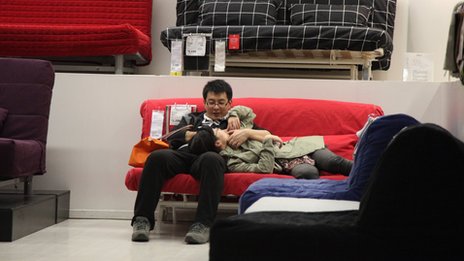
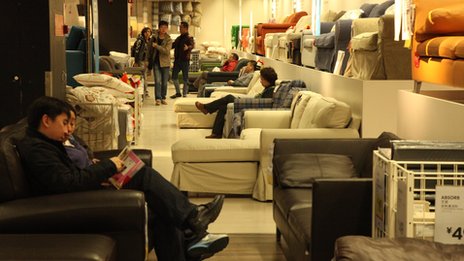
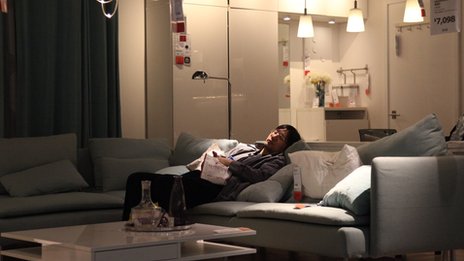
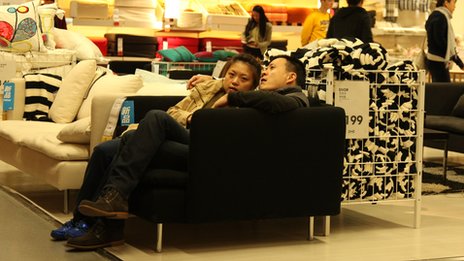
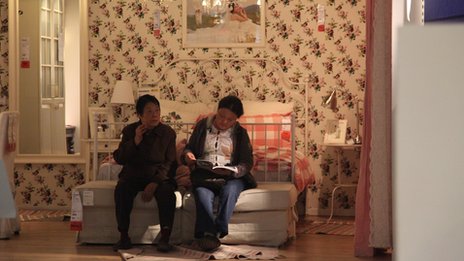
Not in China.  Ikea has become a popular place to hang out.  People go there to read their morning newspaper, socialize with friends, snuggle with a loved one, or take a nap.  Older adults have turned it into a haunt for singles looking for love.  Some even see it as a great place for a wedding.

1 (2) 1 (3) 1 2 (2) 2

This is a great example of the social construction of spaces: what seems like appropriate behavior in a context is a matter of cultural agreement.  In the U.S., we’ve accepted the idea that the chairs in our local furniture store are not for socializing.  Some of us, depending on our privilege, could probably get ourselves arrested if we took a nap at our local Mattress King.  But this isn’t an inevitable truth.  If we all just collectively change our minds, the people with power included, then things could be different.

Lisa Wade is a professor of sociology at Occidental College. You can follow her on Twitter and Facebook.

(View original at http://thesocietypages.org/socimages)

27 Jan 09:09

まるです。

by mugumogu


まるさん、どいてくれないと吸っちゃいますよー。
Hey Maru, please get out. Otherwise I suck you in this.


まる:「どうぞよろしく。」
Maru:[Oh, thank you!]

掃除し終わると、避難していたはながすかさずまるの元に駆けつける。
When I finished cleaning, Hana rushed to Maru.

はな:「大丈夫?」
まる:「何が?」
はな:「……いろいろ。」
Hana:[Are you really a cat?]


23 Jan 22:14

Former NYT editor mansplains to cancer patient to shut up and die the right way

by Katie

817518279Some journalists speak truth to power. But others, like former New York Times editor Bill Keller and the Guardian’s Emma Keller, write shaming and condescending advice to cancer patients.

Last Wednesday, Emma Keller decided to write about Lisa Adams, whose twitter bio reads, “Living w/stage 4 breast cancer. Writing about it at http://lisabadams.com . Mom to 3…. Doing as much as I can for as long as I can.” Well, for Keller, Adams is doing too much. In her op-ed “Forget funeral selfies. What are the ethics of tweeting a terminal illness?” (which provoked so much criticism the Guardian has removed it) Keller writes of Adams:

As her condition declined, her tweets amped up both in frequency and intensity. I couldn’t stop reading – I even set up a dedicated @adamslisa column in Tweetdeck – but I felt embarrassed at my voyeurism. Should there be boundaries in this kind of experience? Is there such a thing as TMI? Are her tweets a grim equivalent of deathbed selfies, one step further than funeral selfies? Why am I so obsessed?

Keller seems annoyed by the frequency of Adams’s tweeting: “Over the past few years she has tweeted more than 165,000 times (well over 200 tweets in the past 24 hours alone.)” At the same time, Keller is bothered that Adams is omitting crucial information: “She describes a fantastic set up at Sloan-Kettering, where she can order what she wants to eat at any time of day or night and get as much pain medication as she needs from a dedicated and compassionate ‘team’, but there is no mention of the cost.” I guess Lisa is guilty of too little information (TLI), as well.

Keller chastises Adams for expecting privacy, saying, in effect, if you didn’t want people you didn’t know to show up in your hospital room, you shouldn’t have written that tweet: “She was enraged a few days ago when a couple of people turned up to visit her unannounced. She’s living out loud online, but she wants her privacy in real life.” In case Adams missed Keller’s point, she reiterates it, addressing Lisa directly ”You can put a ‘no visitors sign’ on the door of your hospital room, but you welcome the world into your orbit and describe every last Fentanyl patch.”

Enter Bill Keller– former New York Times editor, current weekly columnist, and hubby/ knight in shining journalist armor of Emma Kelly– to the rescue. Bill decided to dedicate his column Monday to Lisa Adams as well. Speaking of TLI, Bill doesn’t even acknowledge that, coincidentally, his wife wrote about the very same woman less than a week ago, until the seventh paragraph! Bill condescendingly writes that, “Lisa Adams is still alive, still blogging, and insists she is not dying…” He contrasts Adams’s actions to the actions, or lack thereof, taken by his father-in-law:

In October 2012 I wrote about my father-in-law’s death from cancer in a British hospital. There, more routinely than in the United States, patients are offered the option of being unplugged from everything except pain killers and allowed to slip peacefully from life. His death seemed to me a humane and honorable alternative to the frantic medical trench warfare that often makes an expensive misery of death in America.

Translation: “Hey Lisa! Some of my best friends are My father-in-law had cancer, too! I mean, he was 79, and you’re not 40 yet and have a few young kids, but whatevs. Couldn’t you be more…unplugged? Couldn’t you die a more honorable death?”

Now there’s more. But if you’re mansplain-dar has already gone off, you’re not alone. Journalist Xeni Jardin, who has also tweeted about her breast cancer and says she was taken out of context by Emma Keller, tweeted that the Bill op-ed was:

…bizarrely tone-deaf, ghoulish, & lacking in empathy all at once. It mansplains breast cancer, but as if talking about a pork chop….Women w/metastatic disease are marginalized in the feelgood pinkwar. This oped reinforces that lack of respect for dignity, and bullies…it feels like a privileged man telling a woman in a hard place to just shut the fuck up and disappear.

Bill mansplains that Lisa doesn’t need to fight or take any “heroic measures”: “Among doctors here, there is a growing appreciation of palliative care that favors the quality of the remaining life rather than endless ‘heroic measures’ that may or may not prolong life but assure the final days are clamorous, tense and painful. (And they often leave survivors bankrupt.)…every cancer need not be Verdun, a war of attrition waged regardless of the cost or the casualties.”

And then, in words that must have Dylan Thomas convulsing in his grave, Bills says, “There is something enviable about going gently.” In case you missed the point, Bill ends his article by quoting another man who is critical of how Adams is treating her cancer: Steven Goodman, an associate dean of the Stanford University School of Medicine, makes the predictable disclaimer, “I’m the last person to second-guess what she did….I’m sure it has brought meaning, a deserved sense of accomplishment.” And then goes on to say, “But it shouldn’t be unduly praised.”

Bill would be wise to stop playing doctor, since he still hasn’t mastered journalism. As Adams pointed out,  ”If anyone even looked at my bio they would know I have three kids. Nice way to do research.” Speaking of shoddy journalism, as Greg Mitchell writes in The Nation, this “no fighting” advice comes “from the man who was a hawk on Iraq, staunchly defended Judy Miller and recently called for the bombing of Syria and backing the Al Qaeda rebels. ”

Unlike Bill, I’m not going to end my article by quoting a doctor who warns against praising Adams. I’m going to do what the Kellers, sadly, didn’t: let Lisa speak for herself and have the last word.

Screen Shot 2014-01-14 at 12.38.05 PM


Screen Shot 2013-10-28 at 11.13.50 PM Katie Halper  is now following Lisa Adams. 


I’m posting Bill’s essay here, so you don’t have to give it traffic:

LISA BONCHEK ADAMS has spent the last seven years in a fierce and very public cage fight with death. Since a mammogram detected the first toxic seeds of cancer in her left breast when she was 37, she has blogged and tweeted copiously about her contest with the advancing disease. She has tweeted through morphine haze and radiation burn. Even by contemporary standards of social-media self-disclosure, she is a phenomenon. (Last week she tweeted her 165,000th tweet.) A rapt audience of several thousand follows her unsparing narrative of mastectomy, chemotherapy, radiation, biopsies and scans, pumps and drains and catheters, grueling drug trials and grim side effects, along with her posts on how to tell the children, potshots at the breast cancer lobby, poetry and resolute calls to “persevere.”

In the last month or two, her broadcasts have changed tone slightly; her optimism has become a little less unassailable. As 2013 ended, the cancer that had colonized her lymph nodes, liver, lungs and bones had established a beachhead in her spine, the pathway to her (so far tumor-free) brain. She was deemed too sick to qualify for the latest drug trial. She is bedridden at New York’s Memorial Sloan-Kettering Cancer Center, which has embraced her as a research subject and proselytizer for the institution.

Lisa Adams is still alive, still blogging, and insists she is not dying, but the blog has become less about prolonging her survival and more about managing her excruciating pain. Her poetry has become darker.

“The words of disease become words my brain gravitates to,” she pecked the other day after a blast of radiation. “The ebb and flow of cancer, Of life. And so too, Inevitably, Of death.”

In October 2012 I wrote about my father-in-law’s death from cancer in a British hospital. There, more routinely than in the United States, patients are offered the option of being unplugged from everything except pain killers and allowed to slip peacefully from life. His death seemed to me a humane and honorable alternative to the frantic medical trench warfare that often makes an expensive misery of death in America.

Among doctors here, there is a growing appreciation of palliative care that favors the quality of the remaining life rather than endless “heroic measures” that may or may not prolong life but assure the final days are clamorous, tense and painful. (And they often leave survivors bankrupt.) What Britain and other countries know, and my country is learning, is that every cancer need not be Verdun, a war of attrition waged regardless of the cost or the casualties. It seemed to me, and still does, that there is something enviable about going gently. One intriguing lung cancer studyeven suggests that patients given early palliative care instead of the most aggressive chemotherapy not only have a better quality of life, they actually live a bit longer.

When my wife, who had her own brush with cancer and who has written about Lisa Adams’s case for The Guardian, introduced me to the cancer blog, my first thought was of my father-in-law’s calm death. Lisa Adams’s choice is in a sense the opposite. Her aim was to buy as much time as possible to watch her three children grow up. So she is all about heroic measures. She is constantly engaged in battlefield strategy with her medical team. There is always the prospect of another research trial to excite her hopes. She responds defiantly to any suggestion that the end is approaching.

“I am not on my deathbed,” she told me in an email from the hospital. “Periods of cancer progression and stability are part of the natural course of this disease. I will be tweeting about my life and diagnosis for some time to come,” she predicted, and I hope she’s right. In any case, I cannot imagine Lisa Adams reaching a point where resistance gives way to acceptance. That is entirely her choice, and deserving of our respect. But her decision to live her cancer onstage invites us to think about it, debate it, learn from it.

The first thing I would say is that her decision to treat her terminal disease as a military campaign has worked for her. Her relationship with the hospital provides her with intensive, premium medical care, including not just constant maintenance and aggressive treatment but such Sloan-Kettering amenities as the Caring Canines program, in which patients get a playful cuddle with visiting dogs. (Neither Adams nor Sloan-Kettering would tell me what all this costs or whether it is covered by insurance.)

Whether or not this excellent care has added months or years to her life, as she clearly believes, is a medical judgment, and her doctors, bound by privacy rules, won’t say. Most trials of new drugs aim to determine safety and calibrate dosages, and make no promise of slowing the disease in the participants. But any reader can see that Adams’s online omnipresence has given her a sense of purpose, a measure of control in a tumultuous time, and the comfort of a loyal, protective online community. Social media have become a kind of self-medication.

Lisa Adams’s defiance has also been good for Memorial Sloan-Kettering. She has been an eager research subject, and those, I was surprised to learn, are in short supply. Scott Ramsey of the Fred Hutchinson Cancer Research Center in Seattle cited a study showing that only 3 percent of adult cancer patients who are eligible to enroll in clinical trials do so, and, he said, their reluctance has been “a huge bottleneck in cancer research.” Some 40 percent of clinical trials fail to get the minimum enrollment. Adams has been a cheerleader for cancer research in general and Memorial Sloan-Kettering in particular. In fact, she has implored followers to contribute to a research fund set up at the hospital in her name, and has raised about $50,000 so far. “We love it!” the hospital tweeted last week about the Lisa Adams phenomenon. “An important contribution to cancer patients, families, and clinicians! :)

Beyond that, whether her campaign has been a public service is a more complicated question.

“I am public about this disease in order to shed light on the daily lives of women living with this diagnosis rather than hiding behind the pink party line that is the only one that gets the spotlight,” she told me in an email. (The ubiquitous pink-ribbon breast cancer campaigners have been faultedfor overselling the wonders of early detection and giving short shrift to research.)

Her digital presence is no doubt a comfort to many of her followers. On the other hand, as cancer experts I consulted pointed out, Adams is the standard-bearer for an approach to cancer that honors the warrior, that may raise false hopes, and that, implicitly, seems to peg patients like my father-in-law as failures.

Steven Goodman, an associate dean of the Stanford University School of Medicine, said he cringes at the combat metaphor, because it suggests that those who choose not to spend their final days in battle, using every weapon in the high-tech medical arsenal, lack character or willpower.

“I’m the last person to second-guess what she did,” Goodman told me, after perusing Adams’s blog. “I’m sure it has brought meaning, a deserved sense of accomplishment. But it shouldn’t be unduly praised. Equal praise is due to those who accept an inevitable fate with grace and courage.”

Correction: January 13, 2014
An earlier version of this column misstated the number of Lisa Adams’s children. It is three, not two.
23 Jan 11:23

Chart of the Day: There will be even fewer women at Davos 2014 than at Davos 2013

by Chloe

davos_women_2014

Last year, only 17% of attendees at the World Economic Forum’s annual conference at Davos were women. This year, it’s 15%. It’s basically a game of Where’s Waldo, except imagine that Waldo represents over half of the world’s population, is trying to shape policy that will affect the world’s entire population, and is wearing a pantsuit instead of a stripy turtleneck. And check out this Olympic-level buck-passing from the conference’s managing director:

Organizers say it’s simply the reality of today’s world. Many participants are invited to Davos based solely on their job function—like the president of Harvard University, who is currently a woman. When the people in those roles change, so can the demographics of Davos.

“We’re on the front line of reflecting the world as it is, not how we want it to be,” says Adrian Monck, a managing director and head of communications for WEF. Monck says the organization would prefer that its meeting in Davos were more evenly distributed by gender, but its hands are tied by a different imperative: bringing together the world’s most powerful and influential people. Presently only 16.9% of Fortune 500 boards of directors are comprised of women. Fewer than 5% of the Fortune 500 are led by women.

Yeah, what do you want from him, feminists? He’s only the managing director of Davos. What do you want him to do, manage and direct the conference into making some rules about gender representation? Why would he do that when he’s “on the front line “of representing the status quo? Trust us, ladies, he doesn’t want to be sexist: he’s only sexist because the world is.

Chart via Quartz.

Avatar ImageChloe Angyal thinks that “on the front line of the reflecting the world as it is” is a pretty unimpressive place to be.

23 Jan 11:21

Investec magic

by noreply@blogger.com (RSPCA NSW)


Now you see them, now you don't!

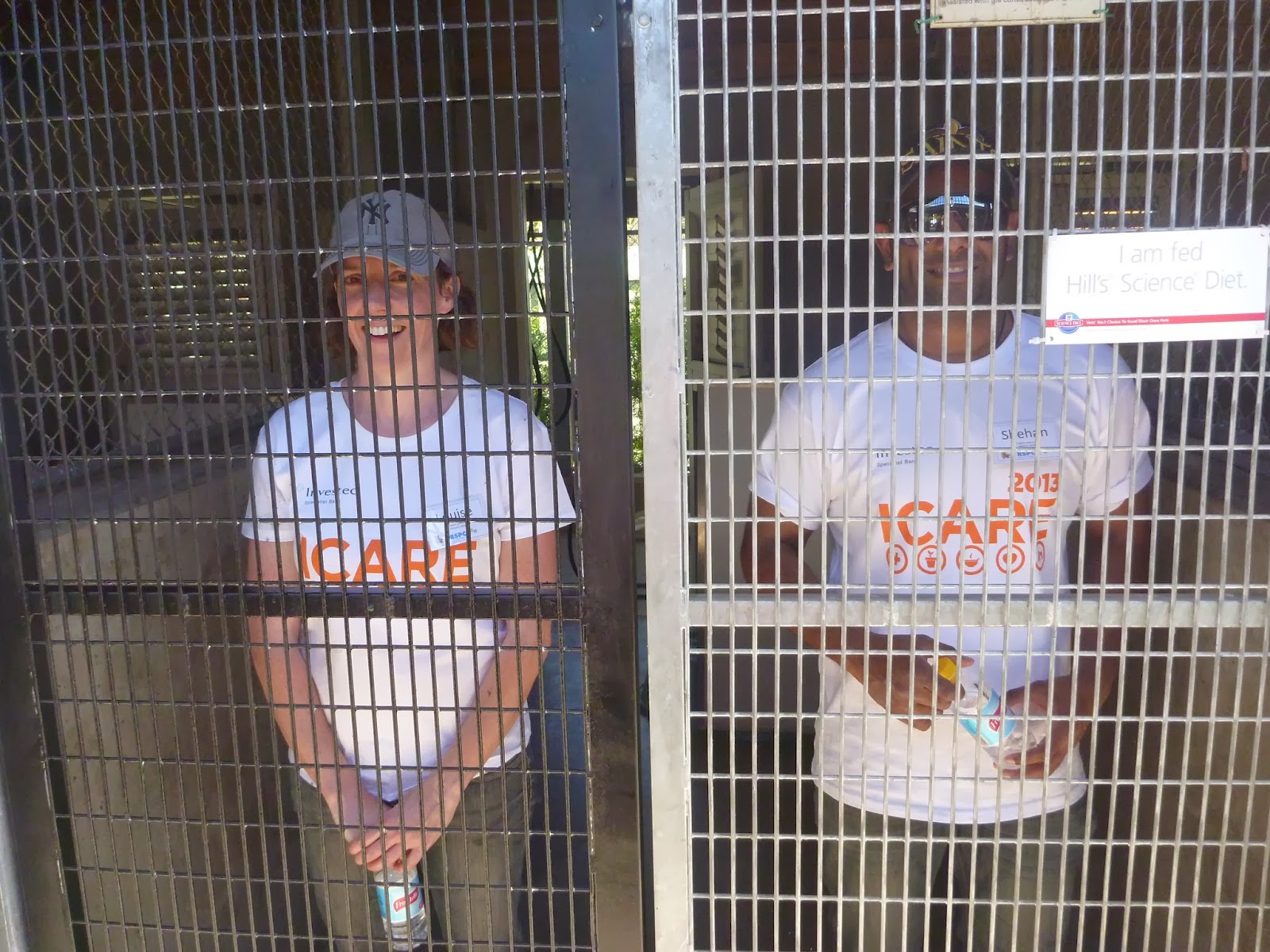
Towards the end of last year a group from Investec created a visual illusion at our Sydney Shelter. 

Keen to get their hands dirty and with paint brushes and rollers in hand, the 11 Corporate Support Day participants painted the doors of 15 kennels in our small dog rows. The end result? Well, see for yourself. Painting the doors black means the dogs can be seen more easily by prospective adopters!

Thanks Investec. We hope to see you again soon at another Corporate Support Day.
19 Jan 10:12

まるです。

by mugumogu


戸棚を開けたくてまるさんを呼んでくるはな。
でも結局はなさん、おいてけぼり。
Hana wants to open the door of the cupboard.
However, she cannot do it.
So She goes for Maru.
However, she was left behind after all.

17 Jan 10:47

Urnebes

by Marija
Urnebes can be found in every Serbian fast food stand. Most common thing you would eat there is a burger, but we do burgers here a bit differently. Take a look on 1st and 4th photo on this article and you’ll see. Burger is called pljeskavica and a bun is not a typical bun, but a small round loaf of bread called lepinja. When you order your pljeskavica you are asked for the spreads and seasonings of your choice (and most of the time there are a lot of choices). Urnebes is one of the smelly ones that we all crave all the time but avoid because of lots of garlic. For me that changed when I became a teenager and started going out. It would usually be summer time and very late at night, my friends and I are coming from the club hungry as wolves. Nobody cared at that point about the garlic and a memory of us devouring burgers with this spread is just warm and summery. And the name would mean the chaotic spread. I’ve asked around a few of my good English-speaking friends just to be sure and we all agreed that although the word […]
12 Jan 21:42

まるです。

by mugumogu

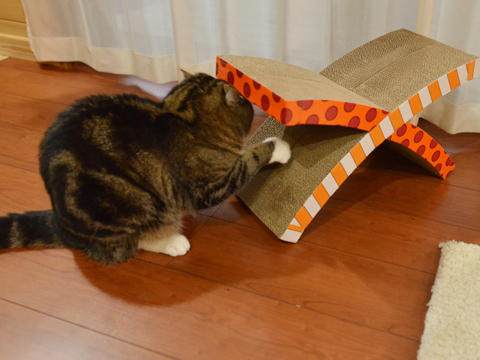
新しい爪とぎがすっかり気に入ったはなさん。
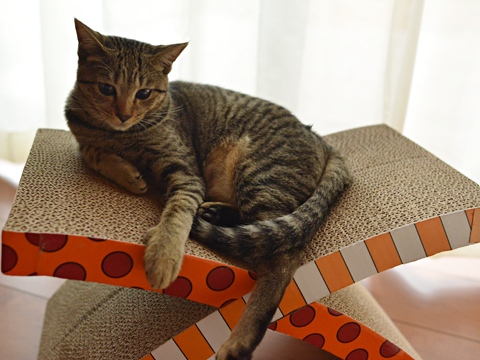
Hana likes this new scratch board very much.

はな:「これあたしのー。」
Hana:[This is mine.]

そこへ、キャットニップの残り香に足止めを食らっていたまるが遅ればせながら登場。
Maru came over belatedly.

まる:「貸して。」
はな:「あとで。」
Maru:[Lend it.]
Hana:[Later.]

夕方になって、ようやく空いた爪とぎでようやく爪をとぐまる。
In the evening, it became available.

まる:「やっと空いたー!!」
Maru:[Wow, this new scratch board is wonderful!]


まる:「ついでに頭も研いどきますか。」
Maru:[I sharpen my head incidentally.]


その使い方は間違ってます。
Hey Maru, the usage is wrong!


12 Jan 01:06

pricklylegs: askzephyrwind: rincrocker: this is so fucking...


pricklylegs:


askzephyrwind
:

rincrocker:

this is so fucking useful wHY IS IT NOT GOING FULL BLAS EVERY WHERE JESUS CHIRST

Pretty simple idea when you think about it. Fantastic!

https://www.liftlabsdesign.com/index.html#lifestyle

Here’s the page to it: if you want to donate, for every $295 that’s raised, one gets sent out to someone who needs it!

12 Jan 01:05

More Similarities than Differences in Study of Race and Fatherhood

by Lisa Wade, PhD

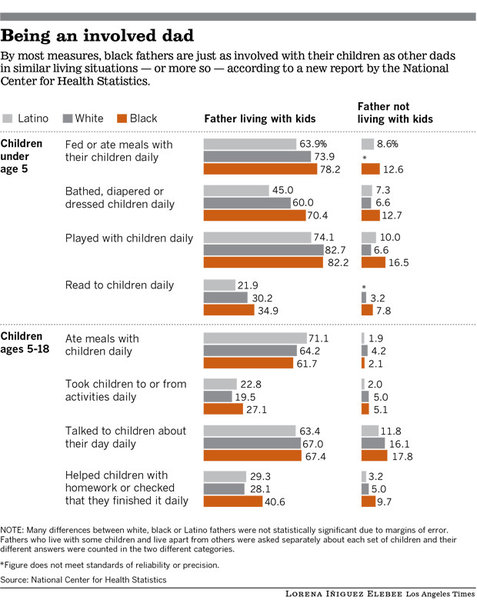
The Centers for Disease Control have released new data comparing the involvement of black, white, and Latino fathers.  The study found more similarities than differences.  Men of all races were more likely to be living with their children than not.  Defying stereotypes, black fathers were, on average, more involved in their children’s daily care than white and Latino fathers.

1

Image via the Los Angeles Times.

Lisa Wade is a professor of sociology at Occidental College. You can follow her on Twitter and Facebook.

(View original at http://thesocietypages.org/socimages)

11 Jan 07:08

precious moments with me and my great-great grandson Bobbyjimmy


precious moments with me and my great-great grandson Bobbyjimmy