Shared posts

16 Apr 10:15

Memories From An Insane Asylum: Stories From Rockland County Psychiatric Center

by Scout
Andrew Baisley

These comments are nuts. I was just going to read a few, then I couldn't stop.

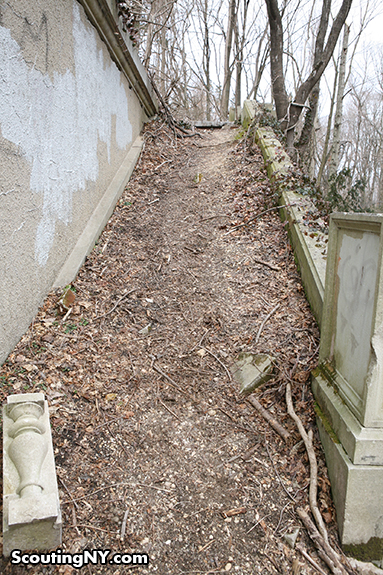
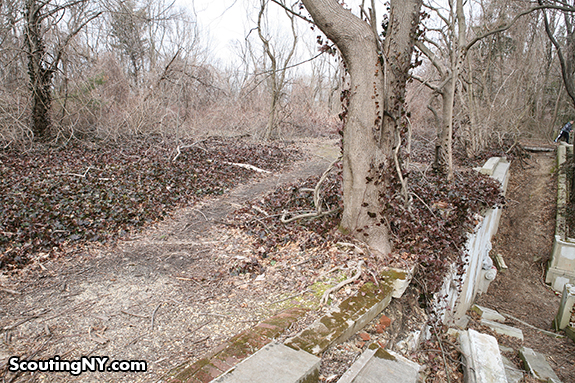
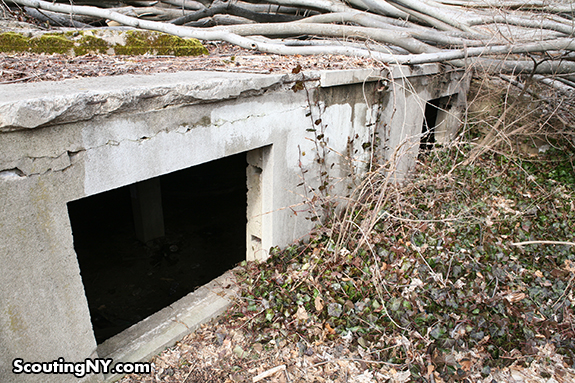
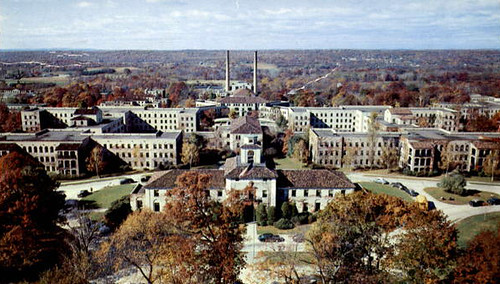
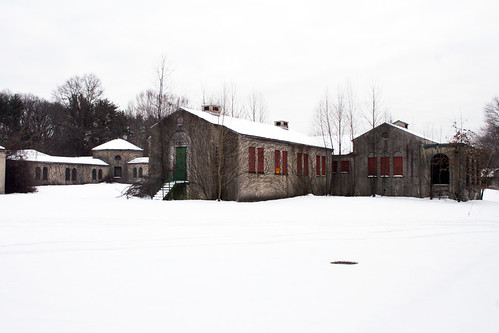
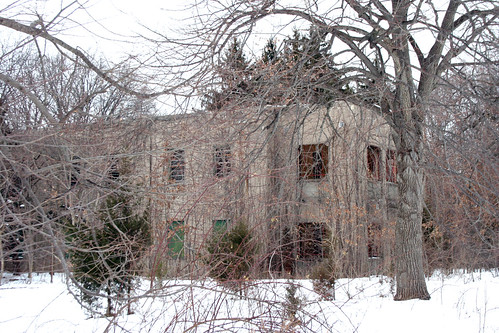
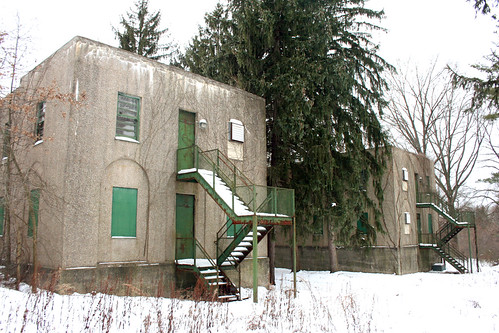
Two years ago, I wrote a post about Rockland County Psychiatric Center, an abandoned insane asylum complex that is easily one of the most haunting places I’ve ever scouted.

To my amazement, more than 250 comments have since been left by former patients, doctors and nurses, and residents who lived in the area when Rockland Psych was in operation. Some of the memories shared are as heart-breaking as you’d expect; others are uplifting, funny, nostalgic, and even inspirational.

I wanted to share a selection of these with you, to allow those who knew Rockland Psych firsthand to tell its story.

001

I performed at Rockland Psych with my middle school chorus 17 years ago. I remember being really nervous to go there…Once we were inside, it looked almost exactly like your pictures, seriously chipped walls…I remember one man throwing fake grenades at us, another man removed for masturbating in his chair as we sang, and an old woman who wept loudly the entire time we performed. I have no idea how the school got away with taking us there, but they did. I have a feeling after our experience they didn’t go back again.

005

At Christmastime of 1966, my junior high school band played a concert of holiday music for the patients at the hospital. It was a bit scary, but most of all, fascinating. It was overly stimulating for some of the patients there. We got going with the sleigh bells and the whip and some couldn’t handle it and were removed by the staff. The whole experience piqued my interest and I went on to have a long career as a psychotherapist and administrator of mental health programs.

003

I grew up down the road from this hospital. We were told a lot of awful stories about it including someone escaping and killing someone in the neighborhood.
rockland

My father was a police officer in the area and was often called to Rockland Psych. He has commented on the horrible things he saw there but never went into much detail. Growing up, I remember a story of a man escaping and murdering an entire family in the house across the street.

004

I grew up in the development just behind Rockland State…There was a famous murder in 1957 from one of the patients who had escaped. I believe the murder happened on Dutch Hollow Road. 

006

I grew up one block from the hospital grounds…Soon after we moved in, a patient who escaped from Rockland State murdered a woman who lived three blocks from us. The community came together to form a civic association that talked with hospital administrators about ways to keep the community safe.

006b

I grew up down the road from the hospital. Occasionally, the police would drive around and tell all the kids to go inside because someone had escaped.
006A

I remember visiting there once as a small child but do not recall any details except the memory of a blue door with a small wired glass that my Grandmother entered through to visit her sister. She went into the facility because she lost her mind at the abusive hand of a cruel husband.

008

I was institutionalized at Rockland County Mental Institution when I was 8 years old (1965-69)…I lived in a big dormitory with 50+ children. We were lined up at shower time and lined up to go to cafeteria. I remember spending most of the day in a “day room” – most of the other kids were severely disturbed / mentally retarded. If I didn’t do as told, they would put me in an isolation room (all day). Once they tied me to a bed with wet sheets layered with ice and opened the window in winter. There was an outside play area where one of the “minders” would hit kids with a wiffle ball bat. At meals I was forced to eat and finish everything on my plate even till I puked. It was HELL!
057

I was in Rockland State Hospital in the mid-1960s. I started off in the children’s ward and I made it up into the teens ward. I also was tied down in straitjackets in strait sheets when I did not obey their orders…When you’re heavily medicated, you don’t tend to really care about anything. I also remember a young lady dying. I remember everybody said “I hope she dies, I hope she dies,” and I was saying, “no let her live,” but she died. That always stuck with me.

009

They did have some strange ways of dealing with us. When we started to misbehave, they would tie us down with icy cold wet sheets. I guess that was their way of cooling us down. The wet sheet thing I found more humiliating than barbaric. The only physical pain I received from it was when the sheets started to dry, I started to itch. Of course, there were the straitjacket and the itchy room but that was it.

009c

Do you remember when all of us were left alone during the evening to clean that long hallway in cottage 3? Boy do I remember! We soaped the hallway down, took of our gowns and started sliding down the hallway. We would slide all the way down to the end of the hallway where a hot steaming radiator was awaiting us. We would try to break before we hit the radiator but the soapy floor proved to be too challenging and we ended up hitting it butts first. POW! Boy did that sting…Yes, we had some bad times but we had some good times too and we made the best of it. We were “The Little Rascals of Rockland.”
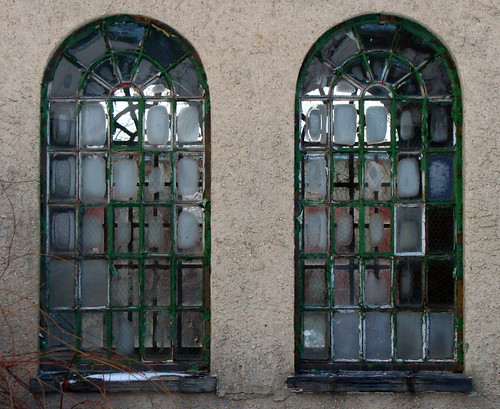
094

I was a patient at Rockland State back in 1961. Even though it did have all those weird and creepy people, remember that they were people in need. When I got there I was given a ground pass. I was 15…I used to run around the ground and I knew practically all the case care personnel workers…I had some very happy times. Its been 50 years and I would like to see it before is gone. I was there for 6 months…All the workers at Rockland hospital were very good people.
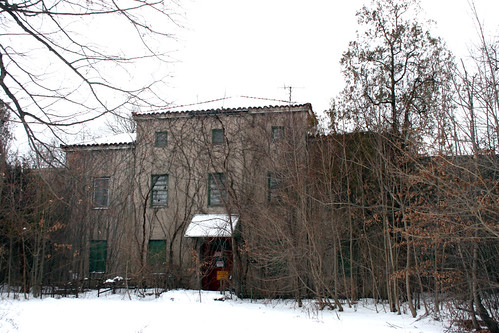
010

I worked at Rockland State Hospital… It was both interesting and training for the rest of my life as I worked as medical transcriptionist. Met my husband there, he was an attendant in Bldg. 58 which housed maximum security patients. One night a patient forced another employee by gun point to take him into New York City by via Tappan Zee Bridge so he wouldn’t get charged with kidnapping by going thru NJ. He was captured soon afterwards.
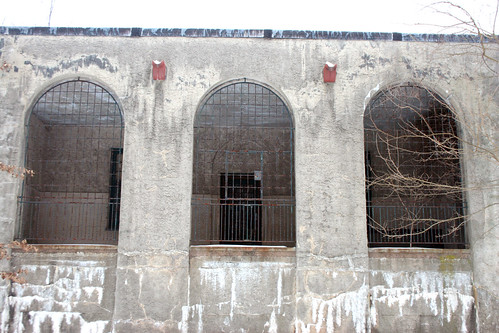
011

I did my nursing psych rotation here in the 80′s. There was a metal door locked behind you every where you went. I was in a ward with men who had been institutionalized for many years. One guy was in his 40′s and had been there since he was a teenager. He started a fire, killed his family. Most of the men seemed to wander in circles…and had few teeth due to the psych meds (which makes your mouth very dry).

012

I was there and didn’t belong in that place. But it was a safe haven for me and many like me. There were good times as well as bad times. I remember a young lady on our ward that died there. I also remember meeting the love of my life there. Too bad I didn’t know that until I chased him off. But in life there are ups and downs. You have to take the hand that you are dealt and make the best of it.

013

I worked at RPC from 1970-1991 as a psychologist, in many of those buildings…I rescued a patient who had just hanged herself in one of those windows, and a year later I discovered (too late) that same patient in the act of strangling to death another patient. During the years I worked there, an employee, working alone at night in a building for more functional patients, was stabbed to death by one of her patients. Too many patients were beyond my capacity to help, but I found gratification in helping those who under more fortunate circumstances would have been dear friends.
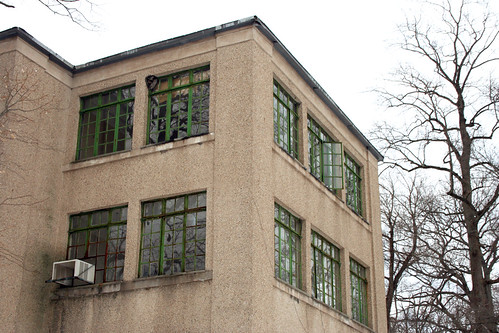
035

A friend and I were playing at the nearby reservoir and stopped some kid that lived there from drowning himself. He jumped in because we were swimming..but he didn’t know how to swim!! We threw him a rope that we used to swing on.
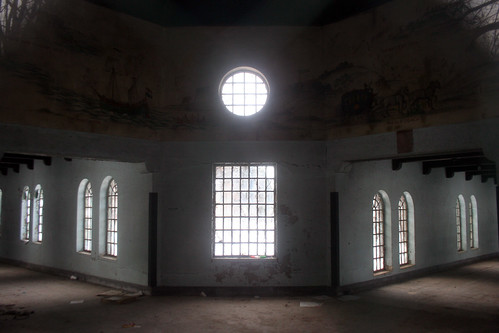
017

My mom was a patient at that hospital as well as many other institutes in NY. I remember visiting my mom for weekend visits. One visit she was in a white gown, her hair wild than ever and she was drooling out of her mouth, She looked like a zombie…She had also gone under the lobotomy and other sick things:

022

I grew up in N.J.just over the Rockland County line. My first memory of Rockland State was of hearing my parents talking about a “lunatic” who had just escaped from the hospital. I didn’t know what a lunatic was at 6 or 7 years old, but I could tell by the way they acted that I should be scared. My mother eventually used that fear to keep me in line by saying “you better be good or the lunatic will get you.” My ears still go up when I hear that word.

040

The building you said looked like a bus stop? It was, buses to the city and surrounding areas. They also had a barber shop in there, where I got my hair cut. When I walked over I used to have to check in to the guard gate, I was always afraid they would keep me in there. As I walked by, there were people in the “porches” area out front and they would yell at me, crazy stuff.

081

The power plant was coal powered and the coal train used to come right by our house along with the dalmatian dog and waves from the engineer.

082

My dad was just telling me today that he remembers being a kid, growing up in Tappan, just five or so minutes away, and occasionally hearing the Asylum’s alarm go off, indicating that someone had gotten out. Scary to imagine!!

025

I moved to Blauvelt in Nov 1958 and I distinctly remember the sirens going off whenever a patient supposedly escaped. I also remember when they stopped the alarms because the frequency was upsetting the residential neighborhoods.

026

My mother worked there for years, as did some of her friends, and as a teenager I would sometimes stop by…The grounds were always well-kept, and yes, as an institution it did have that institutional look, but it was not creepy…Lobotomies? Maybe in the early days – I have no idea – but definitely not in the 60′s, 70′s and 80′s. And as for the sirens calling patients back to the hospital – that is a load of crap, but I guess it does make for good lore.
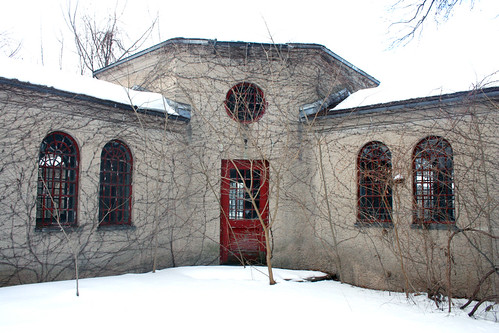
027

I worked two summers at the school. Remember getting my set of skeleton keys that would open the heavy doors. For the past 40 years whenever someone has said “I’ll lock you in” I always think of that heavy door shutting and the sound of the keys.

032

I lived at Home 26, room 90 which housed female staff. A small room maybe 8×12 with a bed, sink, TV, little fridge and a hotplate. My friend at that time worked there and allowed me to stay. It was quite a small minority-type city. The staff buildings had day rooms on each end used for many card games, drinking and socializing. The hospital had its own drug dealers, loan sharks, police and fire…Eventually I was removed and barred from the ground due a drunken brawl. The 1970′s were a difficult time for a white man to be living with a black female.

034

It was a city unto itself, even with it’s own fire and police department. It was a difficult time in the treatment of psychiatric illnesses. Some of the treatments were very harsh and I cringe remembering being a part of them. Thorazine and Stelazine were just introduced. Many patients received insulin shock. I know there were many patients institutionalized who didn’t belong there, but then there were patients who were so sick that I couldn’t imagine how they could live without some sort of protection that Rockland did offer.

IMG_3617

There were over 20,000 patients during that time. The treatment of geriatrics was so difficult and to my mind, there was plenty of abuse…I was only 18 at the time and had never seen mentally ill patients. It was there that I learned deep compassion for the human condition and spirit. I still work in the mental health field today & will never, ever forget what Rockland taught me about humanity.

034a

My father’s family had been living in the area for a very long time, and my aunt knew the director of the place very well. Whenever she wasn’t happy with how I talked or behaved she would tell me how easy it would be for her to call him on the telephone and have me disappear forever.
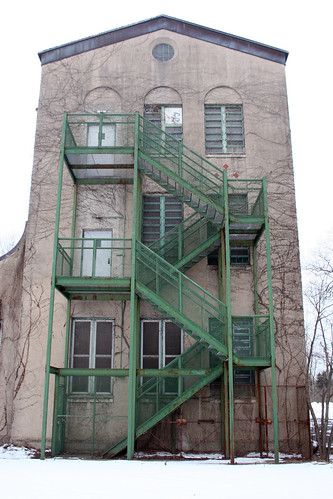
034b

[There were] tunnels that ran underneath the grounds, which allowed them to take patients from one building to another without being allowed out on the surface. They were gradually closed off with locked gates and I only ever saw bits of them. The people that worked in the hospital were afraid of them and used to talk about rats but I think what they were afraid of was not rats.
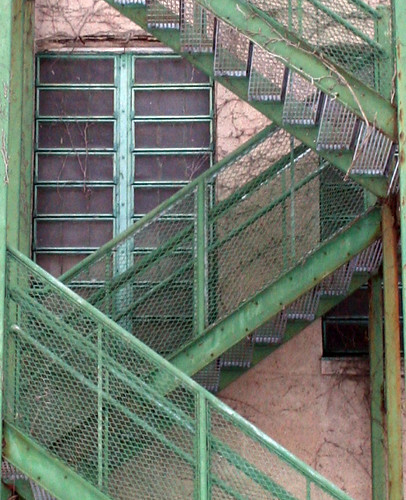
099

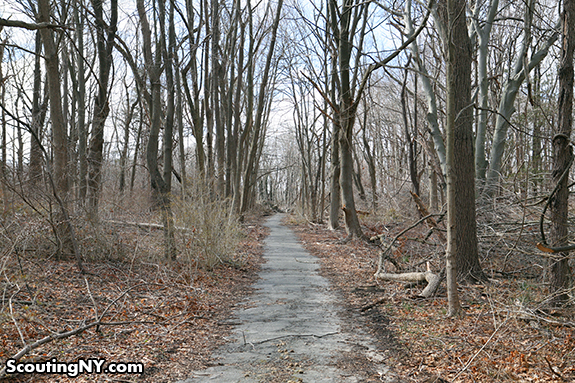
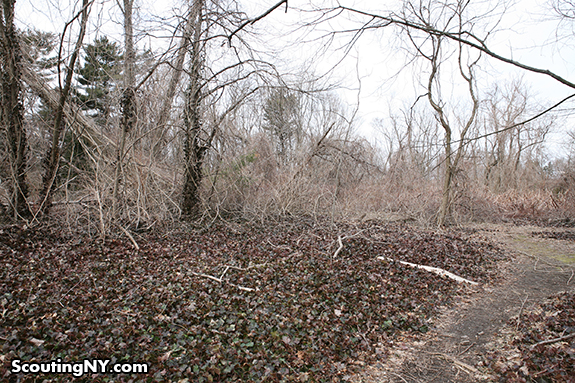
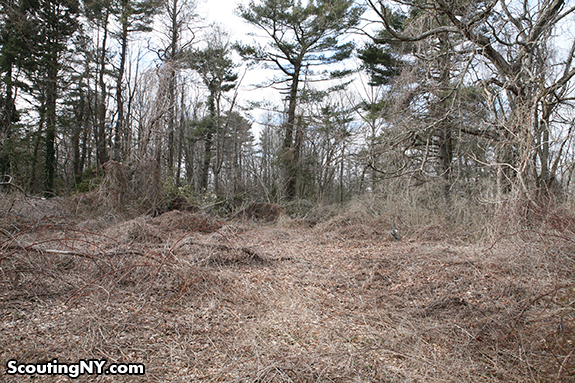
We had a whole bunch of legends at school of Rockland Psych. A lot of the sports teams used to send their freshman there as some sort of hazing challenge. And during Halloween time tons of kids would break into some of the buildings. One big legend about the place was that one of abandoned roads lead into the forest that would lead into an alternate dimension. Supposedly the further into the forest you went you would feel colder and colder and as you would look back it would start to blur. No missing students that I know of so I guess they eventually turned back. Also heard of students who went there coming back and feeling “odd” or “ill” because they had brought back a spirit. Usual collegiate stuff.

096

Looking at pictures now and thinking “how horrible”, isolated stories, and movies such as One Flew Over the Cuckoo’s Nest….. do not fairly portray the whole picture. I am sure for every nurse Ratchett there were numerous Florence Nightingales and for every lobotomy there were numerous patients who were treated differently. The grounds, buildings, and facilities were beautiful and kept up very well.
037

Although it was an insane asylum, or rather a psychiatric hospital, it was always brimming with activity, with many people (patients and employees) walking around, from one place to another. The large cafeteria was often crowded and the church on the grounds too. And I can tell you I was never afraid walking around the campus. Was it because I was young and didn’t think? No I don’t think so. Bad things can happen anywhere and all the times that I was there and all the years living near there, there were no more frequencies of incidents than in the world beyond those gates.

038

My grandfather…emigrated to NYC as a young Irish boy, and became a very successful business person. He married my grandmother, and they had 6 children…The research I have done on my family indicates that grandfather had a serious problem with “the drink”, and spent many years drinking heavily, drying out at places like Rockland; and he eventually lost his career, and left his family while in his 50s, for the Bowery in NYC (around 1926). My grandfather died at Rockland Psychiatric Hospital/Institute in 1936 after a stay of about 18 months. He had a very sad ending to his life, and our family is still riddled with alcoholism.

I began drinking at a very early age, and watched most of my family members struggle with the disease of alcoholism. I was blessed to have found a 12 Step recovery program about 29 years ago, and have been able to maintain continuous sobriety since then…I am no better a person than my grandfather, just a bit luckier to have been born in a time when alcoholism was better understood, and more positive help was available.

040

As teenagers we would cross the state line and drive the grounds of the hospital “looking at the “lunatics”behind the screened in porches. We drove up to an old gentleman who was sitting on a bench and I asked him how he was doing and he said “I’m mindin’ my business and you do the same.” Words to live by.

001

Thank you to all who left memories. To read these comments in full and many more, check out the original posts here: Part 1 & Part 2.

-SCOUT

15 Apr 12:24

Meet the World’s First Publicly Traded Human

by Stan Alcorn

Mike Merrill is a regular guy. He just happens to be fully controlled by a group of shareholders who vet his every decision.

Mike Merrill is literally selling himself. Not his body, his self.

Since 2008, the straight-laced entrepreneur has been selling shares of his person at Kmikeym.com.

As Joshua Davis at Wired tells the story, at first shareholders only voted on small projects, but now they make decisions about his most intimate life:

One anonymous investor sent Merrill on a date with a polyamorous woman. “She is currently seeing someone, but she has permission to date,” he wrote in his after-action report. “I’m of mixed feeling about that, but I recognize that this is a decision for the shareholders to make.” They decided against continuing the relationship but gave a 97% approval rating to a guy referred to as Jordon California. Feeling the weight of investor expectations, Merrill spent a drunken night “fooling around” with him.

The media attention has brought Merrill a number of new shareholders, but otherwise, life at KMikeyM headquarters continues, according to his latest email update: "We are working very hard on responding to the influx of new shareholders, our new venture Jumpbots, and we just completed moving in with our shareholder-approved girlfriend."

If you want to own a piece of Mike Merrill for yourself, he’s currently going for about $15 a share.


10 Apr 18:17

Watch: Super-Slow-Mo Turns NYC Streets Into Graceful Ballet

by Mark Wilson
Andrew Baisley

Cool video

When James Nares turns a high-speed camera on the citizens of New York, every moment becomes nuanced and significant.

When Hollywood wants to add a bit of drama to an explosion or a smooch, there’s nothing like a generous dollop of slow motion. It may be overused, but the very mechanics of slow motion make a lot of sense. How do you make a moment last longer? By literally making it last longer.

Street, by artist James Nares, takes slow mo’s philosophies and elevates them to high art. Roving through Manhattan at 40 mph, Nares filmed 16 hours of footage from the back of an SUV. His tool? A Phantom Flex camera, which is capable of filming not just Hollywood’s slow motion standard of 48 frames per second (fps), but a scientific-research-friendly 10,750 fps (though I don’t believe he cranked the settings that high).

The results are unbelievable. Edited down to 61 minutes with a soundtrack by Sonic Youth founder Thurston Moore, a simple jaunt down an NYC street becomes a living sculpture carved from humanity itself or a spontaneous ballet in which every microsecond of movement (walking, texting, even face scratching) is graceful.

Amidst what feels like a world caught in deep introspection, in which everyone seems fraught with highly personalized inner turmoil, surreal moments dot the landscape. Mickey Mouse snaps a mimed photo, a man casually flirts with a woman resting her arm on gigantic tennis rackets.

But this is actually the world we live in. Nares just gives us the time to appreciate its nuance in full--maybe for the first time ever.

The full-hour experience of Street is on display at the Metropolitan Museum of Art until May 27.

See more here.
Read the New York Times take on it here.

    
10 Apr 00:50

"They’re baaaa-aaack! A big “brood” of 17-year cicadas — which has been biding its time underground..."

Andrew Baisley

This is gonna be epic.

They’re baaaa-aaack! A big “brood” of 17-year cicadas — which has been biding its time underground since the first Clinton administration — is forecast to emerge from the ground this spring along the East Coast, and will pop up as far north as New York City.

“Spectacular” and “amazing” are two of the words used by University of Maryland entomologist Michael Raupp to describe the East’s biggest influx of the annoying but mostly harmless bugs since a separate brood emerged in 2004.

This year’s “emergence” should be quite extensive, as the critters will likely come out all the way from the Carolinas to the Hudson Valley of New York, says John Cooley, a research scientist from the University of Connecticut.

“All the East Coast cities are in the path of the cicadas,” says Cooley, who runs the magicicada.org website, and requests reports from people who see cicadas this spring.


-

USA Today, “Waiting In The Wings This Spring: Cicadas!”

Hey, USA Today — stop sounding so HAPPY ABOUT THIS.

(via inothernews)

Cicada invasion? Radiolab has you covered. 

10 Apr 00:29

How to Buy a Small MultiFamily Property: A Step by Step Case Study

by Brandon Turner
Andrew Baisley

Great post if you're at all interested in real estate investing.

Small Multifamily

I really like small multifamily properties, and I talk about them an awful lot. Several months ago, I wrote a post called “How to Make a Million Dollars in Real Estate” which was designed to show the possibilities for building wealth through real estate – and the start of that plan was the purchase of a small multifamily property. I’ve explained many times that the goal isn’t to buy a property that fits exactly the description mentioned, but rather to teach the math behind the method. You could buy a triplex, a few duplexes, lots of single family homes, or whatever. It’s the cash flow that really matters.

Since that post came out, I’ve been asked by a number of people how they should buy such a property. So, to help with this, I wrote this post to show you step by step how I managed to buy my newest real estate investment, with almost nothing down and significant monthly cash flow. It’s often easy to get caught up in the “theoretical world” of how real estate investing works – so hopefully this post will give you an idea of how real estate investing can (and does) work in the real world. All the numbers in this are true and accurate, though I sometimes might round slightly for simplicity! This post is quite long, so be sure to fully understand each part before moving on, so you don’t get overwhelmed! If you have any questions at all, please leave a comment below and I’ll do my best to help answer them.

Finally – I’d love it if you shared this on your Facebook, Twitter, G+, or whatever social network you use! So with that, let’s get to it! Let’s go back a couple months and start at the beginning (a very good place to start…)

Step One: The 5 Minute Analysis

A lot of people struggle with math. It’s understandable because, although it isn’t terribly difficult, it can be overwhelming to get going. So, I had the idea that it would be neat to show the BiggerPockets community how I analyze an investment property in under five minutes. This isn’t the real in-depth analysis (which we’ll get to) but simply the first “filter” to decide if the property is worth pursuing.

I sat down at my computer and pulled up Realtor.com and picked a property pretty much at random to analyze. I made a quick video (it actually ended up being slightly longer than 5 minutes, but close enough!) and I looked at some of the important aspects of this property. Specifically, I looked at:

  • The location – the property is located in the town I do most of my investing in or around. I knew the location fairly well, because I own another property on the same street. I’d probably classify this as a “C+” area, maybe “B-” with mostly rentals. The property was listed at $120,000, but had originally been listed at $140,000.
  • The number of units- Four units total – three 1 bedroom and one 2 bedroom.
  • The rent it brings in- The listing stated a total monthly income of $1740 per month, and because I know the area well, I knew a typical one bedroom would rent for (at minimum) $400 in my area and a typical two bedroom would rent for about $500, bringing the total monthly conservative income to $1700.
  • The expenses based on the 50% rule- 50% of the income left $850 to pay the mortgage.
  • The cash-flow, based on the 50% rule- I looked at the total mortgage amount for a $100,000 loan (buying at $120k and putting roughly $20,000 down).
  • The seller
  • - I determined that this property was a bank repo, that had originally sold for $149,777 but the bank had foreclosed on it and was selling it at a steep discount.

If you wanna watch the video, you can check it out here:

The purpose of this 5 minute process is not to nail down the specifics on a property. I don’t drive out and look at it yet, I don’t make a lot of phone calls or even show my wife yet. I do this same process dozens of times every week, mostly in my head in under a minute. There are two prices to note about the properties I examine:

  1. The List Price: For 99% of properties I find on the MLS, the price is far too high and not worth it.
  2. The Ideal Price: For 99% of properties I find on the MLS – there IS a price that would make it worth it, and I like to find out what it is. That’s the point of the video above.

Some investors choose to offer the #2 price on every property they see, and while I don’t think this is necessarily a bad idea, I’d rather not waste the time on properties that I’m not a fan of. My personal strategy is to buy a few, amazing properties per year, rather than dozens or hundreds. I like the simplicity, and I’m not looking to be Donald Trump. However, when I find a property that excites me, and the listed value is somewhat in the ballpark of the ideal price, I will investigate a little closer.
Summary of the Quick Analysis
By the end of the video, I stated that “At $100,000 – this property starts getting very interesting to me.” Why? Because I like to see a MINIMUM of $100 per unit, per month on a property with nothing down using the 50% rule. If I’m putting down a large downpayment, I want to see $200 per month in income. At $100,000 with nothing down, the projected cash-flow would be right around $300, and purchasing it at $100,000 with 20% the cashflow would be around $200 per month. That would be an okay deal. However – if you know me – I don’t want an okay deal. I want a great deal. Don’t you?

Let me show you how this turned from okay to great…

Step Two: The Closer Look

After publishing the video on BiggerPockets, I kinda forgot about the property. I’m not exactly sure why, but I figured I’d take a look later and just kinda dropped it. A couple weeks later I was driving near the property and remembered it, so I took a drive by. (Silly, yes, I know!) I called my real estate agent and asked him to meet me over there to look at it. Because three of the units were currently rented, we could only get in the fourth unit to check it out without giving 24 hour notice (which I don’t like to do unless I’m really really interested.) I was surprised by the overall cleanliness of the unit, though while the unit we were in was listed as the “two bedroom” unit – it was functionally only a one bedroom (one of the bedrooms was really more of a walk-in closet.) However – at this point the deal got a little better for me because I realized the units were not as ugly on the inside as they were on the outside. I could easily expect $450 per month in rent from these units, not the $400 previously thought.

The Game Changer

While looking at this property, my Agent told me something else exciting about it: this property was not a 4-plex, but actually a 5-plex. The bank had “decommissioned” the 5th unit in order to make the sale easier (4-plexes are MUCH easier to finance than 5-plexes, because a 4-unit is considered “residential” in the loan world where 5 units and up are considered “Commercial” and require a whole different set of standards and a much different approval process.) We walked to the third floor and I was shocked at what I found - a large, 3 bedroom apartment that was in decent shape. The sellers had locked all the bedroom doors and called them “storage” for the other four units.

Boom.

The numbers I had run before were based on 4 units and $1700 per month in income. Now, it seems, the potential for income was MUCH higher. This was the catalyst to turn this 4-plex from a good deal to a great deal.

A Quick Estimate of Repairs Needed

photoOverall, the property was in pretty good shape, though as you can see in the photo – it looked pretty ugly from the outside (my favorite, really! It drives away competition!) It definitely needs a new paint job on the outside, and some of the shingles from a fairly new roof had blown off in a freak windstorm we had several years back (missing shingles are very common in my area because of that storm, though most homes have been fixed since then. This place had not.) Additionally, the 5th unit needed some help to bring it into a rentable shape. I estimated about $10,000 worth of work to get the place fully finished, including finishing up the 5th unit.

Immediately, I recalculated my numbers based on the new unit that I could eventually get rented out. As it turned out, it looked like this:

Units 1-4 rent: $450 each x 4 = $1800
Unit 5: $600
Total Income: $2400
x 50% expenses: $1200
Mortgage at $100,000 = $550/month ($650/month cash-flow)
Mortgage at $90,000 = $470/month ($730/month cash flow)
Mortgage at $80,000 = $430/month ($770/month cash flow)

Remember, these numbers are based on having no money down – so they are far above my threshold.

The Offer and Negotiation

Before I let you know the details about my offer and negotiation – understand that this strategy worked for me, in my market, because I knew my market. The market has not exploded like the rest of the country seems to have, and there is not a mass amount of competition for this kind of property here (another benefit of small multifamily properties… often less competition.) Last week, Clay Huber wrote a great article about making your first offer your “highest and best” instead of worrying about negotiating up and down, so you don’t miss out on deals. I agree, this is generally the best way to go in a busy market, but since I figured I had time and no real pressing competition- I sent a low ball offer first: $80,000.

Before I get into negotiations – I want to share one more thing that I tested on this offer. Although this was a bank REO, I also know that this was a small, local community bank with a very small department (or one person, probably) in charge of approving or rejecting offers. As such, I added a touch of “personality” to my offer – something usually only done with private sellers:

I drafted up a one-page cover letter that briefly explained that my wife and I wanted to buy the property for our portfolio, and we are local investors and we want to improve the neighborhood. Then – we included a photo of us ON the paper. My theory was that the person in charge of accepting an offer would feel more inclined to sell to a local nice couple than some faceless investor. Before doing so, I actually went on to the BiggerPockets Forums and asked if anyone had done this – and received a mostly “Well, it wouldn’t hurt” response. So I tried it – and I think it kinda worked…

The official offer I had my agent draft up on the Realtor® form basically consisted of:

  • $80,000 Cash Offer
  • No Financing Contingency
  • 7 Day Inspection Contingency
  • Close in 45 days.
  • $1000 in earnest money

So I submitted the offer, via my agent, and surprisingly, the selling agent didn’t laugh at us but actually said “well, that might work.” The next day I got a call from my agent saying they verbally accepted but had to hand it upward to get signed off! I was super excited, but after several days of no response, I finally heard back that the deal was killed when the man in charge said “We will not take a $40,000 loss on this property!”

I said okay and let it go.

Several days later, the sellers called my agent and asked if I could do $100,000 and close in two weeks. I told them no (this is all verbal.) but if they sent something over in writing for $90,000 – I would accept it and close within two weeks. This kind of weird verbal negotiation went on for several days. Finally, after a week of negotiations, the bank signed off on $90,000 and they would do a few thousand worth of repairs that they had planned on doing – and I would close in two weeks. With that, I had a deal under contract. It might not be the $80,000 I really wanted, but it’s still a killer deal at $90,000.

The takeaway from this section on negotiations: every single negotiation and deal I have ever done with a bank has been unique. No two deals have ever been the same for me. It’s always a little weird.

The Inspection

Because I had seven days to inspect the property, I immediately set out to arrange my inspection. After all – I had not even been inside 3 of the units because they had renters in them and I didn’t want to waste everyone’s time until I had time to get inside. This is why the “inspection contingency” in the offer was a non-debateable clause.

If you are just beginning – I highly recommend that you hire a professional home inspector to go through any property with a fine-tooth comb. On this property I hired my favorite contractor to go through the property with me, so we spent several hours running through every aspect of the property, and he gave me a bid at the same time. We crawled onto the roof, under the building, in each unit, every closet, every fridge, every nook and cranny. In the end – I saw nothing that surprised me which is always nice.

My early analysis of repairs needed were almost perfect – $10,000 to get it painted and get the 5th unit fixed up and ready to go.

A Deeper Analysis and the One-Hour Awkward Webinar

At this point, I had looked over every square inch of the property and had an accurate look at how much this would take to fix up. I also knew generally how much everything would cost. As I discussed earlier – I had already done my quick “5 minute” analysis of the property and decided it was worth pursuing. However, a quick analysis – and the 50% rule – are only “rules of thumb.” It was time to actually dig into the numbers and make sure this property would actually pencil out the way I think it would.

Since I started this project with the BiggerPockets Community, I thought I would continue it by doing my in-depth analysis with the BiggerPockets Community as well. So, I scheduled a Webinar and gathered all my numbers ahead of time and then live, in front of dozens of BiggerPockets Members, I spent a very awkward hour explaining the deal live on the internet via the first BiggerPockets Webinar. If you missed it – you can watch a replay below (though, it’s an hour long, so be prepared!)

The numbers looked even better than I had hoped. I entered all the numbers into my trusty spreadsheet and came up with the following spreadsheet:

Investment Calculator Spreadsheet PDF for 1012 W Marion St Aberdeen 2

According to my spreadsheet, in a perfect month when I had no repairs and no vacancies, I would be cash flowing a $1356.86 per month! This, however, is where most newbies screw up! This is also why the 50% rule is so important. I understand that in reality, I will have repairs, I will have vacancies, and I’ll need to plan for them. I don’t have a separate spot on the chart above for vacancies and repairs (I include it under “other monthly expenses”) but I typically assume around 10% of the monthly rent for vacancies/repairs and another 10% for long-term/big-ticket planning (new roofs, new parking, etc.)

Financing

I delayed talking about financing until this point, but understand that I had been working the financing angle from the beginning – even before I found the property. I always make sure I have several avenues to buy a property before I offer on one – or else I’m just wasting everyone’s time.

If you’ll recall, I initially asked for 45 days to close – which would give me plenty of time to go with a conventional loan. However, when I agreed to a two-week close, I closed that option off to me. Instead, I made a call to a private lender that I had actually met through BiggerPockets (You probably know this lender – J Scott, from the BiggerPockets Forums and 123Flip.com … I actually found out on “the air” that he was a private lender, when we interviewed him on the 10th Episode of the BiggerPockets Podcast! This is why building solid relationships on BiggerPockets is so important!)

I explained the deal, sent him all the paperwork, and requested the full purchase price – $90,000. He looked it over and agreed to fund the deal. I would cover the repairs and closing costs and he would cover the purchase price. I would be taking a one-year note (meaning, I’d have to pay the whole thing off in less than one year. More on that in a second.) Thus, I would need about $12,000 in cash to make this deal happen ($10,000 in repairs, $2000 in closing costs.)

Perhaps you have heard about the “65% ARV” number that most hard money lenders stick to when making deals, and perhaps you are wondering how I got the full purchase price covered? A few thoughts on that:

  1. Funding the whole $90k was very generous. If you are just starting out, a private lender or hard money lender may not lend the full amount, even if you are under the 65% number. That’s just the truth. However, there are MANY lenders out there -so get to know a lot of them. Their terms may differ quite a bit. Be sure to check out the BiggerPockets Hard Money Lender Directory for the most comprehensive list of lenders available.
  2. The after-repair value of this 5-plex would be around $150k or more – so I am under the 65% so the lender was covered.
  3. I have been building my reputation for many years on BiggerPockets, which helped the lender feel comfortable lending on this project.
  4. The property was already rented – thus the cash-flow was there to pay the lender each month – meaning he had even less risk. With a typical flip, there is no income coming in at all, which means YOU have to pay the loan each month. Having tenants pay the bill definitely helps on this front.

But wait… a private loan is going to be short term!? What then?

Like I said, I asked for a one-year loan on this property.

Why one year?

It comes back, again, to my desire to have multiple exit strategies with everything I do. I cannot stress this point enough – you need to ALWAYS have multiple exit strategies. So, my strategies are as follows:

  1. Refinance the Property Through a Bank- This is my first plan, and I am 99% confident this will happen. I was already pre-approved through a bank to buy this property in the first place, so unless something drastic changes in the lending world in the coming months – I can refinance this without a lot of problems. However, in order to refinance – the bank requires that it be “seasoned” for 6 months- meaning I have to wait six months before the refinance will go through. Knowing that my monthly payment will drop significantly once I refinance, you can bet on day 6 months and one day – I will be closing on that refinance. However, if that doesn’t work, there is always option 2:
  2. Find a long-term private lender- If the lending environment changes and I cannot get a loan, I would look for a private lender who wanted a long-term investment. With the stability of the property, and the magnitude of the deal, I’m confident I could find a wealthy individual looking to earn a solid interest rate for 15 years or more.
  3. Add a Partner on and Refinance- If I couldn’t find a long-term private lender, I would bite the bullet and find a partner to add to the deal. I’ve talked about this strategy a number of times, and while I would be giving up a significant portion of equity, it would work to get me out of the deal. I have a partner who I’ve worked with on a few projects who makes great money, has excellent credit, and a stable job – so getting a loan is as easy as signing a piece of paper for him. I would simply add his name to the title on the loan, wait for the seasoning to end, and have him refinance the deal. Again, this isn’t ideal – but it’s an exit strategy (and would be excellent for him!)
  4. Fix and Flip- Finally, if all other options were not possible, I would simply sell the property. With the $2400 per month in income this property produces, I know I could make a hefty profit by simply selling it. However, this is my last option because I don’t care about the $30,000-40,000 I would make – I care about the $800 per month I will be making if I can get exit strategy #1 to turn out!

But what If I don’t have any money!!?
Like I said earlier, the private lender will be funding the purchase price of $90k on this deal, and I will be funding about $12,000 in repairs/closing costs. But what if I didn’t have that money? Because I’m a big fan of learning how to invest in real estate with no money, let me share just a few ideas:

  1. Credit Card- I could pay for all the repairs on credit. I don’t necessarily recommend doing this, but it is possible. For a good article on using credit cards to buy real estate, check out Ali Boone’s article “How to Buy Real Estate With a Credit Card.” **
  2. Partnership- I’ve mentioned this before – but I could add a partner to the deal. I could find a friend with an extra $12,000 and offer him part of the deal.
  3. Another Private Lender- Finally, I could use another private lender and borrow the $12,000 secured with a 2nd mortgage on the property. This would probably be the most difficult to do – but also plausible.

Remember – there are not a whole lot of “rules” when it comes to investing in real estate, and one of my goals of this epicly long post is to bring you inside my mind and share some of the ways I look at creative real estate investing. Before moving on, I want to share a tweet quote from one of my favorite author’s Ken McElroy, who wrote The ABC’s of Real Estate Investing (which, if you haven’t read – you need to pick up a copy right now… click here to find it on Amazon and order yourself a copy.)

You do not need a lot of money when investing in multifamily properties. What you DO need is a good deal.

— Ken McElroy (@kenmcelroy) April 1, 2013

See? Ken agrees.

The Closing

In my state, we close real estate transactions with Title Companies, though in some states you might use an attorney. Either way, the process is pretty much the same.

Let’s do a quick re-cap:

  1. Found the property online
  2. Did a quick, 5 minute analysis of it
  3. Walked through the property quickly
  4. Offered on the property
  5. Negotiated on the property and finally agreed on terms
  6. Inspected the property
  7. Arranged financing

At this point, I was ready to proceed. My real estate agent sent over the “Purchase and Sale” agreement (the signed agreement between both parties) to the Title Company and the Title Company went to work. It took about a week or so to finish the process, where they did a title search and prepared all the documents, including the “Promissory Note” and “Deed of Trust” between myself and the private lender. I arranged for insurance (which was a little less than I thought!) and made an appointment to sign the documents.

So, last week I closed on the property. As an added bonus, the property management company who was looking after the place before closing actually found a tenant for the 4th unit before closing, so I inherited the property completely full (except for the 5th unit.)

Going forward – I will get the 5th unit repaired and in six months, I plan on refinancing the whole property into a 30-year fixed mortgage. Between now and then, I expect to pretty much break even, due to the higher loan payment and vacant 5th unit. You see, I can’t completely finish the 5th unit before six months is over because I want to refinance this property as a “residential” property, not a “commercial” property. So, the 5th unit will stay “decommissioned” for the time.

Now comes the fun part – landlording. If you want to learn more about my landlording tips, definitely check out “How to Be a Landlord: Top Ten Tips for Success“.

Anyways, that’s the story! If you stuck through this whole time, I sure hope you take a second and leave me a comment below and let me know what you learned or what I forgot! Ask any question, I’ll do my best to help!

The post How to Buy a Small MultiFamily Property: A Step by Step Case Study is property of The BiggerPockets Blog. and is Copyright © 2012 BiggerPockets, Inc. All Rights Reserved.

08 Apr 17:49

It must have taken buzzfeed forever to crunch these stats, but...


It must have taken buzzfeed forever to crunch these stats, but we’re glad they did. Very informative!

-Jody, BL Show-

08 Apr 13:19

Tidy Up Your Life

Andrew Baisley

It's Spring. Tidy up your life.

04 Apr 20:08

Need Something From Another Country? Ask Someone To Bring It To You

by Ben Schiller
Andrew Baisley

Filipinos have been doing this forever.

Jonesing for some food you can only get in South Korea? Just get someone traveling from there to bring it to you with Jib.li, a new site that bypasses mail carriers and e-commerce for something much more personal: an old-fashioned network of people.

We have peer-to-peer networks for vacation rentals (Airbnb), car sharing, and dining. What about for carrying things?

Next time, you need to buy something from another country, or perhaps another state, you could think of using a new platform called Jib.li, which links up people "who need to send something" with people "traveling that way."

If your grandmother wants to give you cakes, it’s not very human to carry it using UPS.

Perhaps, for example, you’re fascinated with a particular type of manga comic, something very specialized you can’t get in local stores, or on the Web. You could on Jib.li, find someone going to Tokyo and ask them to bring it back for you. As with Airbnb, you agree to a fee with the service-provider for their trouble.

The Paris-based site has been up since last October, and co-founder Ryadh Dahimene says it has 500 members so far. People can also use it to send stuff, but he says the most common transactions are people asking people to buy something they cannot find locally. The site works the same for domestic shipments as for international ones.

Dahimene, who is Algerian, got the idea as he traveled back and forth from Algiers. "Very often, people asked us to carry stuff, and we saw that there are people who need stuff, and don’t want to use the traditional way." Apart from being cheaper than a courier, Jib.li is also more suitable for some items, he says. "If your grandmother wants to give you cakes, it’s not very human to carry it using UPS. It’s easier to ask a friend."

To use the site, people post what they are looking for, or what they are willing to carry. At the moment, for example, a user called "Augustin" is willing to take something from Seoul to Paris on July 1. He wants 30 euros ($38) for a 1 kilogram load, and he says, "Not big stuff. I can easily take Korean goodies."

The obvious danger is that someone might try to ship something illegal, using someone as a "drug mule." To try to prevent that, the site sets out guidelines (don’t carry anything pre-wrapped), and has a system rating trustworthiness. Dahimene says: "It’s the same sort of risk with Airbnb, when people are renting their rooms to strangers. It’s the same with all crowd-based systems."


04 Apr 17:55

How Do You Rebrand A Weird Foreign Ice Cream? Googly Eyes

by Jordan Kushins

Marion + Merche faced a problem: Making a weird but tasty Taiwanese treat into something more visually appealing to Spaniards.

How do you rebrand a frozen dessert? When Barcelona-based graphic designer Marion Dönneweg and architect Merche Alcalá Barcelona were presented with a commission to come up with the identity for a new Taiwanese shaved ice shop in their hometown, the pair decided to instill the sweets with some serious personality.

The most challenging part of the process came after the client presented the goods for a taste test. “We thought it would be difficult to make this popular here in Europe,” they tell Co.Design. “It tasted good, but was a rather ugly and excessive experience. For our aesthetic criteria about local food, this is not very attractive.”

Really? A fruit-topped frozen dessert was a hard visual sell? Granted, I’m very equal-opportunity when it comes to desserts, but this seemed a little harsh; however, a quick Google image search revealed that this style of treat--which I admittedly haven’t had--really does pile it on. “Too much,” they say.

So before a brick-and-mortar location was secured, the pair began a year-long endeavor to develop a new strategy for the delicacy. Turns out this was no sweat; they had recently completed work turning a centrally located candy shop into a haven of Happy Pills to appeal to adults and tourists. “We like to ask questions about the product itself, and if we think it can be improved, we suggest a change or a different perspective. It’s something that does not scare us.”

First came deconstruction. Each of the edible elements were separated from each other, but it wasn’t just the tasty takeaway that got a new look; every part of the purchasing process was considered. Visitors to the shop would be greeted with a menu featuring adorable characters that represent each flavor on offer. After ordering, it’s time to pick up an empty, specially constructed cardboard carrying tray; Eyescream is delivered with its charming googly sugar eyes, and a selection of two colorful toppings are offered at a self-service counter. The whole transaction can be handled one-handed, making for an easy experience from start to finish. As if anyone ever really needed an excuse to indulge.

(h/t designboom)

04 Apr 14:09

Newsroom Scandal!! Did NY1 Rip Off Super Mario Bros. 3?

by Scout
Andrew Baisley

For shame.

OK, this has been driving me nuts for years. Every time the NY1 weather report comes on, there’s a jingle in the background. And I SWEAR I know it from somewhere:

Then I was playing Super Mario Bros. 3 the other day – and I realized why I was having such severe deja vu:

I think we can all agree that NY1 has clearly stolen the post-boss-fight music from Super Mario III and used it to back their Weather On The Ones reports – AS IF WE WOULDN’T NOTICE.

For shame, NY1! Sadly, this revelation will most likely destroy NY1′s journalistic credibility and lead to the demise of the network, but that is the price you pay for lifting music from the Mushroom Kingdom.

-SCOUT

03 Apr 19:06

Watch: A Golf Pro’s Incredible Hovercraft Golf Cart

by Kyle VanHemert

Cart paths? Who needs 'em.

Golf has been around since the 15th century. At some point in much more recent history, someone invented the golf cart and made the game even better. But did that make it perfect? No it did not. Why? Because a golf cart is not a golf hovercraft.

Bubba Watson, the professional golfer, is the man who dared to dream this wheelless dream, and we should be thankful he did. The BW1, his prototype hovercart, built with the help of Australian hovercraft expert Chris Fitzgerald, is a thing of beauty. A testament to man’s imagination and a monument to his ingenuity.

And, as it turns out, not entirely ridiculous! As we see in the clip above, the BW1 goes places regular carts can’t. It doesn’t drive around sand traps; it skids right through 'em. Water hazards? Not so hazardous when you’re riding on a cushion of air. And as we hear from Fitzgerald, the hovercraft expert, the craft’s footprint pressure is just a fraction of yours or mine, so you can scoot right up to the pin without messing up the green. Amazing.

Sadly, pro golfers aren’t allowed to use carts at PGA Tour events, so this may be the only chance we ever get to see the BW1 in action. But that’s fine. Seeing it once is enough for a lifetime.

[Hat tip: Deadspin]


30 Mar 14:44

How Facebook Measured Gay Marriage Support With An Equals Sign

by Mark Wilson

Or how big data is telling the story of the civil rights movement of our time.

This week, as the Supreme Court heard testimony regarding same-sex marriage, my Facebook profile was flooded with a single avatar--a pink-on-red equals sign promoted by the Human Rights Campaign (HRC). Generally a curmudgeon about armchair activism, I was drawn the the strong visual (literally, as the eye is naturally drawn to red). I swapped mine out, too.

But did it make a difference? Did anyone have a way of knowing just how large this movement had become? It just so happens, Facebook does.

Facebook’s avatar swaps by region.

By comparing week-to-week trends, they saw that 120% more (or about 2.7 million) people changed their avatars than the week before. Most activity came from college towns. And most supporters were around 30 years old

Those closest to 30 years old showed the greatest increase in updating. This suggests that on average, roughly 3.5% of 30-year-old Facebook users updated their profiles in response to the events surrounding the HRC campaign. We also found a small, but significant difference expression between genders. On average, 2.3% more self-reported female users updated their profile photo, compared to 2.1% more self-reported males.

In other words, as a 30-year-old male, my stance was relatively predictable.

Interestingly enough, Facebook figured this out without even looking at our individual avatars with some sort of picture-deducing algorithm. However, earlier this week, another source measured the HRC campaign in almost exactly this way.

By pulling random HRC avatars from various profiles, Kenton Ngo was able to measure the JPEG compression of this very simple geometric image. Because each time Facebook users stole one another’s avatars, the image was recompressed, so it left marks sort of like heavily treaded carpet might.

What they found was that these images had been shared by hundreds of generations of people. Friends of friends of friends of…well, you get the point. And it all leads me to believe, that when this movement goes down in the history books, it won’t just include photos of Harvey Milk, but screengrabs of fuzzy viral jpeg artifacts, too.

Read more here and here.


26 Mar 19:35

Semi-Mindboggling Reveals: Boxy Building Designed by ODA To Join PS1, 5 Pointz in LIC

by Hana R. Alberts

PS-1-Long-Island-City1.jpg

A new development—defined by boxes jutting out all over the place—is headed for a pocket of Long Island City currently populated by MoMA PS1 and the 5 Pointz building (pictured on the left side of the rendering above, defined by its graffiti, and destined for destruction), the Observer reports.

Details about the project are scant, besides its exact location at 22-25 Jackson Avenue. Buzz Buzz Home got the rendering via the Facebook page of one of the principals of ODA Architecture, the firm behind this sub-10-story building, even though it's not yet up on ODA's website.

Though this particular style is an anomaly in LIC, ODA has been in the spotlight recently for similar-looking projects like 15 Union Square West (ALSO defined by some bulging boxy shapes, whaddaya know) and Hot Karl's 316 Bergen Street (less obviously boxy, but definitely full of rectangular prisms and the like). All these designs have large windows in common, which will be great for future LIC residents—presuming the area around the Jackson Avenue corner site becomes less industrial-ly bleak someday soon.
· Your daily wow: new ODA Architecture building in LIC [BBH]
· Long Island City Gets Boxy: ODA Rendering of Court Square Building Surfaces [NYO]

26 Mar 16:01

ryanpanos: JAY SHELL’S “THE RAP QUOTES” via...

Andrew Baisley

Vernon style. That's how I roll, too.


ryanpanos:

JAY SHELL’S “THE RAP QUOTES” via Juxtapoz

Multidisciplinary artist, Jay Shells, has recently been creating legitimate looking signs containing rap quotes that reference specific locations in New York. After compiling over 30 signs, Shells set out installing these signs in the locations mentioned in the quotes. The artist has quoted many well-known rappers such as Jay Z, Mos Def, Kanye West, Gza, Nas, Jeru the Damaja, DJ Premier, and many more. Check out others via The Rap Quotes.

It was December 24th on Hollis Ave in the dark
When I seen a man chilling with his dog in the park…..

22 Mar 13:34

Sharing is sharing!

image

Our user base recently grew 15x (and counting), and this changed everything. In a week we have gone from a personal project ran by three friends to a personal project ran by three friends with about 150,000 users.

Thank you everyone for your kind words, support, critique and active participation!

We are doing everything to bring things back to normal again, and we need your support.

We pay lots of attention to user requests, so we could not ignore the one where you had been asking for a way to donate us money.

We have been looking for a good way to accept donations, and we found Flattr. It is a simple way to manage your micro donations. You can either donate us fixed amount of money, or press the “flattr” button, and then your monthly budget would be distributed it among us and other projects you donated to during a month.

If you feel like donating a significant sum or you find flattr inconvenient, drop us a note (hello@theoldreader.com), we will figure something out.

If it’s a stretch, please don’t feel obligated to send us anything. We will use the money to expand our server infrastructure, which will help us to refresh feeds more often, process import queue more quickly, and even might even allow us to get more external resources to implement new features sooner.

Thank you everyone for your support. Every single contribution is an enormous help for us.

The Old Reader team.

image

(photo by rossomakha)

20 Mar 17:57

How to Talk Garbage: An NYC Sanitation Department Glossary

From Brian Lehrer’s conversation with the DSNY resident anthropologist (yes, resident anthropologist!) Sarah Nagle.

air mail: Garbage thrown at the truck from windows above.

baskets: An assignment to empty public litter baskets along a defined route. It includes no truck money (see below). When you finish the route, you go back to the top and start over. It’s one of the least popular assignments; junior workers are stuck on baskets.

blood money: Overtime for working snow once the novelty has been replaced by the relentlessness of too many hours and no days off.

board: The assignments board, which changes from day to day. Sanitation workers scrutinize it at the start and end of their shifts; it tells them what they are doing and with whom they are doing it. It is ruled by seniority.

disco rice: Maggots.

export: What happens to New York City’s municipal waste now that there are no disposal options within the city’s boundaries.

gate work: Lifting garbage cans and garbage bags over the gates that stand between a home and the street.

mongo/mungo: (N .) objects plucked/rescued from the trash; (v.) to take objects from the trash.

picking up: Where you work. Someone working in Greenwich Village around the university would say, “I pick up NYU.” Someone working in Brooklyn 6 would say, “pick up Park Slope.”

truck money: The extra pay a sanitation worker earns when assigned to collection or recycling. This was negotiated as part of the deal with the city when crews went from three- man to two- man in the mid- 1980s.

Excerpted from Picking Up: On the Streets and Behind the Trucks with the Sanitation Workers of New York City by Robin Nagle, published in March 2013 by Farrar, Straus and Giroux, LLC. Copyright (c) 2013 by Robin Nagle. All rights reserved.

Listen to Brian Lehrer’s chat with Sarah Nagle here.

19 Mar 21:20

“Are You An American Citizen?”: Defying The Border Patrol In Viral Videos

by Zak Stone
Andrew Baisley

This video is crazy. These guys have balls.

Privacy activists near the Mexican border are refusing to answer the Border Patrol’s new version of "show us your papers," and putting the results of the encounter on YouTube to show others how to defend their rights.

"Are you an American citizen?" It’s a question you’ll hear uttered from the mouths of Border Patrol officers, who have taken to stopping drivers at checkpoints along the road throughout border states like Arizona. While most people simply say, "Yes" and move on with their lives, others refuse to answer, thereby exercising their right to remain silent and documenting their non-compliance with the Border Patrol’s hunt for undocumented immigrants in a series of YouTube Videos that are going viral.

With his camera phone trained on the federal agent, one activist replies "That’s my business" when asked about his citizenship. The moment, taken from a YouTube clip that’s aggregated some of the most outraged reactions from Border Patrol agents, has now been viewed more than 600,000 times since it was posted a few weeks ago. Other activists tell agents that they refuse to answer the question, some ask if they accidentally crossed the border, while others repeatedly ask the federal agents, "Am I being detained?"

These checkpoints are considered constitutional, but technically, you can’t be detained without suspicion, and the Border Patrol officers are required to let people go, even if they choose not to answer the question. But that doesn’t mean the agents won’t get exceedingly pissed off by drivers’ non-compliance and make absurd demands--like one agent’s ask to search someone’s trunk because his car was "dirty."

Immigration blog Fronteras recently spoke with Terry Bressi, an Arizonan who blogs about checkpoints and whose YouTube clips have been viewed nearly 2 million times. “It really is a smack across the face of any liberty loving American," Bressi told the blog, adding “My primary purpose in having the video cameras running while I’m going through a check point is not so I can have cool video to make for YouTube. It’s to protect myself legally.'"

It really is a smack across the face of any liberty loving American.

But these anti-authoritarian videos are cool--partially because they expose how offensive this policy really is, partially because they show how citizen-media actually can be used to protect our basic rights, and partially because they show how concerns about privacy are a reason unto themselves to care about the way immigration policy is being executed in this country (regardless of what you think about the DREAM Act or guest workers).

You almost feel bad for the Border Patrol officers, whose jobs are asking them to intrude into the privacy of many law-abiding citizens each day and don’t seem to understand why any American would resist. As one agent tells Bressi, "All you have to do is say you’re a U.S. citizen and be on your way. Instead, you’re making a big deal about it."

But perhaps this is an issue we all should be making a "big deal" about.

[IMAGE: Spirit of America via Shutterstock]


18 Mar 14:38

NY State Getting Retro Black-And-White Driver's License Photos

by Ben Yakas
Andrew Baisley

I hate these. I hate the colors. I hate the black and white pictures. And, I really, really hate that they are now made of hard plastic, instead of the nice, tactile, bendy stuff they used to be made of.

NY State Getting Retro Black-And-White Driver's License Photos New York state has come up with a new way to combat counterfeit licenses: black-and-white photos. Starting in July, New Yorkers who need new licenses will get a hard plastic card with monochromatic photos—that's right, your face will pop up multiple times on the new cards. The only way they could make them look any cooler is if they automatically photoshopped a cigarette dangling out of the driver's mouth, and switched the face with Camus. [ more › ]

Add to digg Email this Article Add to Facebook Add to Google
17 Mar 02:45

How Your Chair Changes Your Mindset

by Continuum Innovation
Andrew Baisley

Going chair shopping tomorrow.

Where and how we sit has a lot to do with our psychological state of mind when interacting with other people. Here, Continuum’s Mike Arney and Craig LaRosa delve into the nuances of seating.

Think of how many common expressions we use to talk about the significance of simply sitting down: “From where I sit …” before expressing a point of view. “Sit with it a moment …” while contemplating a decision. “Having a seat at the table …” to feel empowered. Where and how we sit has a lot to do with our psychological state of mind when interacting with other people. Even while many of our interactions these days are done staring at a computer screen, it’s still essential to do some face-to-face: an important client meeting, a doctor’s visit, even a dinner out with friends. In those cases, it’s important to have clear, unambiguous seating that helps us effectively relate to one another, and allows us to feel supported both physically and emotionally.

Sketches for the Isola chair, designed by Claesson Koivisto Rune, which is meant to allow casual lounging and work.

As designers at Continuum, we have done a lot of thinking about how seating can set the stage for personal interaction. Part of the equation is ergonomic--creating design that is comfortable, fits a body well, and will not lead to discomfort or injury over time. But equally important is the psychology of seating. Subtle changes in elements such as pitch, height, padding, and seating configuration can dramatically change a person’s mindset during an interaction--and even the interaction itself. Creating the “right seat” is paradoxically about moving people: to act, collaborate, make a decision, or transition within environments. As these examples show, in different situations, that can mean very different things:

The Good Deal Seat

When negotiating, it’s common to feel anxious about not getting the best deal--especially in a situation like a car dealership where customers fear they lack information to avoid being “taken for a ride.” In creating seating for the sales process for one major car company, we empowered customers by allowing them to sit forward and upright. Our research showed, perhaps counter-intuitively, that empowering customers actually causes them to stay longer in the dealership and be more likely to close a deal, creating a win for the company as well. It’s only when people feel intimidated that they regain control by leaving the situation. By creating an empowering experience, we help ensure they will return again to the dealership, and refer friends as well.

The Get-Well-Soon Seat

Nothing could be worse than feeling uncomfortable when you are sick. In helping design Herman Miller’s Nala chair for medical settings, we took care to create something that would remind patients of the comforts of home, rather than a cold institutional environment. In addition, we put the arms higher and more forward in order to allow patients experiencing pain or limited mobility to get in and out more easily, and incorporated a pneumatic control to adjust to an infinite number of inclines to maximize comfort. By making patients feel more independent, we help take away some of the fears and difficulties in a time when they are not feeling their best.

The Financial Confab Seat

In recent years, banking customers have become less dependent on the traditional bank teller and more confident managing their money for themselves online. Yet they still need professional financial advice and consultation. When we helped banking giant BBVA design a new service model for banking, we acknowledged this trend by creating circular “pods” where customers could sit side-by-side with a bank representative in a private space to review their finances. By allowing customers and representatives to see the same information on the same screen, we created a more collaborative environment. Customers can feel in control of their money, while at the same time, they can learn from the expertise of the bank employee in making the right financial decisions.

The Millennial Hot Seat

The Millennial generation is all about equality: flattening hierarchies and up-ending traditional formality with more free-form ways of interaction. In designing 2ovens, a restaurant by the national Italian chain Bertucci’s catering specifically to Millennials, we wanted to incorporate those values in the seating we chose. Instead of chairs, we used tall stools that put diners on the same level with servers so they can feel like they are hanging out together in a fun, open environment rather than “being served.” The stools also enable spontaneous interaction with other diners, allowing customers to catch glances across the room, to mingle with standing bar goers, and stand up themselves to make an expressive point. The overall effect is to create a high-energy social environment that offers Millennials the freedom to be themselves.

An example of mixed-use seating, from Vitra.

The New Office Chair Isn’t An Office Chair

While all of these forms of seating have their advantages in service environments, they also hold lessons for the office environment as well. Office chairs have traditionally been about status--think Gordon Gecko in his big padded office chair (or even the ultra-cool Hollywood exec in his Herman Miller Aeron chair). In today’s office, however, it’s become more important to stress communication and collaboration. The available seating should enable employees to shift between say, upright seat for typing, a comfortable couch for creative work, a round table for collaboration, or high stools to easily circulate in a working group. Creating a variety of seats for different work habits not only enhances productivity but also improves morale by making employees feel like they are able to operate at their maximum potential.

The common thread tying together all of these modes of seating is an understanding of the values and goals of the participants in an interaction. Once we understand where a person “sits” emotionally, we can design seating that helps to support them physically and psychologically--maximizing the productivity and enjoyment of the moment of sitting down with another person. At a time when our social interactions increasingly involve staring at screens, that may be more important than ever.

Written by Mike Arney and Craig LaRosa


17 Mar 02:42

Know Your Bushwicks From Your Bed-Stuys With This Addictive Online Game

by Patrick James

Click That 'Hood lets you learn how well you know the neighborhoods of your city (and many others across the country). How local are you?

Most of us can likely point out Los Angeles on a map, but what about its El Sereno neighborhood? What about Leimert Park? And surely we can all locate New York City. But what about Parkchester in the Bronx?

With Code for America’s open source game Click That 'Hood, you can improve your neighborhood geography one round at a time. It’s simple: Find a city, then test your knowledge of its various neighborhoods and districts by clicking the appropriate spot on the map when prompted with its name. Each round is timed, so you can keep track of your improving geographical savvy.

The app is the product of nonprofit organization Code for America’s fellowship program, which pairs designers, developers, and entrepreneurs with civic leaders. The fellowship aims to not only bring local governments into the 21st century, but also build vital web-based technologies to serve local constituents. In this case, fellows in Louisville were working on an app to visualize crime in different neighborhoods in the city. Along the way, they created this simpler offshoot.

"The idea was in a way selfish," says developer Marcin Wichary, who worked on the project with fellows Shaunak Kashyap and Laura Meixell, with additional help from Sophia Parafina and Ezra Spier. "I imagined using it to learn about Louisville just before going there for the first time (the fellowship teams spend their entire Februaries visiting the partner cities), and also to learn some geovisualization libraries that might be useful later in the 'real’ projects we build."

After Louisville, they built a game for Lexington, and then added a set of instructions so anyone could add new cities. With 59 cities and counting, Click That 'Hood is both a clever tool for improving your local geographical knowledge and an object lesson in the value of open source technologies.

"We had people telling us how they learned a lot about geographic visualization in the process," says Wichary. "We’ve heard from people contacting their city officials to release their neighborhood data to the public--and even from city officials themselves. We’ve also, naturally, witnessed a lot of complaints about the shapes and names of neighborhoods, and our answer is always the same: it’s all open data, so just send us your changes. If Click That ’Hood convinces someone about the value of open source projects, or the importance of open data, that’s already a victory."


15 Mar 03:55

Watch: Thousands Of Ball Bearings Scatter In This Kinetic Sculpture

by Kelsey CampbellDollaghan
Andrew Baisley

I'm not sure why, but I love this.

Two Finnish artists turn industrial mechanisms like ball bearings, magnets, and solenoids into art.

The humble ball bearing--that herald of modern industry--is basis for this lovely kinetic sculpture, on view at Berlin’s Esther Schipper Gallery this month. Installed atop a small motor, thousands of the tiny steel balls move in random formation, creating organic swirls and Turing patterns that quickly dissolve as the table tilts.

The sculpture is called Unstable Matter, and it was built by a pair of Finnish artists named Tommi Grönlund and Petteri Nisunen. A thin plate of MDF supports several thousand bearings, just enough to cover about two thirds of the five-foot-square table. As the motor moves, the bearings stream toward the floor, reaggregating into new variations. The video above gives us a sense of what Unstable Matter actually sounds like--a cacophony of cold clicking that comes in waves as the table moves.

Unstable Matter is only one of several interesting pieces on view in the show. In one room, Grönlund and Nisunen have built a forest of wires, each starting at the ceiling and floor and meeting with a gap in the middle--perfectly balanced by two magnets at their ends. In another room, super-sized versions of Swiss watch innards whirr silently in protective glass vitrines. In another piece, a network of about a dozen vertical metal coils click and clack together as they’re stimulated by small electrical currents. It’s fascinating work, and it’s clearly meant to be seen in person. Let’s hope that Grönlund and Nisunen--who maintain a studio in Helsinki--will eventually end up showing on this side of the ocean.

[H/t This Is Colossal]


13 Mar 21:59

Nicholas Felton Unveils His Latest Annual Report

by Mark Wilson

An exclusive first look at the latest from Nicholas Felton, life quantification guru and Facebook Timeline designer.

Today, you probably know Nicholas Felton best for his most widely seen work, Facebook’s Timeline. But since 2005, he’s been working on a cult-favorite project all his own, the annual Feltron Report. The 2012 version is out now for $28.

As always, the report is a meticulously documented year in review of everything he’s done, presented in a series of rich infographics that push the boundaries on personal data quantification. With a glance, you’ll learn some of Felton’s most intimate details. Each day, he consumes coffee around 10:40am and booze around 8:38pm. He spends about 4x as much time with his girlfriend as his mother. And on June 20, he shot a Glock 22.

We have so many alerts, we’ve become kind of numb.

How It Started

The report originally started as a one-off side project. The year was ending, Felton was light on freelance and he began looking through his calendar. He realized that he’d recorded every meal he’d eaten with friends, and started digging deeper. Building a report proved to be a cathartic way to tie up the year, and it got attention.

“People said, ‘I’m doing this next year!’ That sparked my competitive nature, and I said, ‘I’m going to do it too, but better!” Felton confesses with a laugh. “At a certain point, it turned into an R&D project for me.”

Today, Felton uses the report to push the boundaries of visual data, coding a slew of innovative graphical treatments in Processing to convey personal metrics. And for 2012, it was time to add another level to the experiment--introducing a mobile app.

There’s An App For That

In years past, Felton kept detailed iCal notes and ran various experiments, from Internet surveys to a deep analysis of his late father’s past. This year, he partnered up with a friend, Drew Breunig, to code an iPhone app called Reporter that would simplify the life recording process. Every 90 minutes, the app buzzes Felton--automatically snagging his coordinates while asking him the same questions: Where are you? Who are you with? What are you wearing? How productive were you today (on a scale of 1-5)?

“90 minutes seemed like the optimal timing where I wasn’t still doing the same thing,” Felton tells Co.Design. “If it was, it was something more consequential, like watching a movie or having a dinner party with people.”

Reporter will actually make its way to the App Store later this year, but for Felton’s purposes, it was absolutely streamlined for simplicity. The bare-bones interface autofills his last update’s parameters, so if he’s stuck in a meeting, it takes but a tap to check in. And in the months of testing before he began using the app to track 2012, Felton learned an important lesson about notifications.

“I realized I had to turn off all the buzzing, vibrating, and notification chimes from every other app,” he recounts. “When we started using phones, those sounds really perked our attention, like a baby crying. Now that we have so many alerts coming through, I think we’ve become kind of numb.” Ramping down all that buzzing might be tough for most of us, but Felton said that he came to enjoy the “solitude” that so few notifications brought to his life.

Tackling Sampling Bias

At the same time, with Reporter’s timed sampling taking over from Felton’s old self-reporting, he found that his Feltron Report became more honest in cutting through natural bias.

It’s more like a Nike+ Fuelband for your greater existence.

“In terms of recording things previously--say drinks--water was really hard to track. I was always biased to if I had a beer because it was a more special thing, but water is something I’m generally drinking most of the time,” he explains. “This was the first year I could get a grasp as to, what is my actual ratio of consumption of alcohol versus water? Previously, there had always been a drinks report, but it was only the most unhealthy drinks I’d report.” (It should be noted that Felton consumed 1,484 glasses of water vs. 272 beers--mostly IPAs. He only drank a single soda, which was a Ginger Ale.)

Reporter’s sampling also cut the bias of who he was hanging out with. Previous reports skewed toward friends and family. But the 2012 report acknowledges a more simple fact of life--we spend an incredible amount of time with the coworkers who sit in the nearest cubicle (though as you dig into the report, you’ll see that co-worker time is measurably differentiable from time spent with those closest to us). And when you consider this new, algorithmically sampled version of Felton’s life, it brings about an interesting question.

How Will We Measure Social Metrics In The Future?

As of today, we record and share many personal metrics through social media (like Facebook). But these metrics are meticulously curated. If you were to know your friends based upon the facts they reported alone, then you’d assume they ate nothing but Michelin-level dining, witnessed nothing but beautiful sunsets, and heard nothing but amusing one-liners on the train.

The latest Feltron Report, along with Reporter, make for a particularly fascinating counterpoint to the self-reported social media experience. Rather than an Instagram feed full of selfies, it’s more like a Nike+ Fuelband for your greater existence.

If you’re interested in a copy of your own, the 2012 Feltron Report is available as a limited-edition print. Just prepare yourself to get extremely close to a person you barely know.

Buy one here. Hurry though. At $28, they don’t last long.


12 Mar 17:37

Shinola - The Runwell 

11 Mar 21:33

Teen Killed, 4 Other Pedestrians Injured When Van Jumps Curb In Queens

by John Del Signore
Teen Killed, 4 Other Pedestrians Injured When Van Jumps Curb In Queens The driver of a Dodge minivan "apparently lost control and mounted the sidewalk" at 30th Street and Thompson Avenue in Long Island City this morning, running over at least five pedestrians, according to the NYPD press office. The crash occurred shortly after 10:30 a.m. near LaGuardia Community College, leaving a 16-year-old boy dead and four other pedestrians injured. [ more › ]

Add to digg Email this Article Add to Facebook Add to Google
07 Mar 15:03

Waze Now Lets Users Instantly Map Closed Roads, Acts Like Google Maps On Steroids

by Ariel Schwartz

So much for cartographers. The networked mapping app is letting its power users update its maps in real time.

When Apple released its underwhelming Maps app in 2012, turn-by-turn GPS navigation app Waze became the maps solution for untold numbers of disgruntled iPhone users. Waze isn’t your average maps app: It crowdsources real-time traffic and accident data so users don’t sit impatiently on the highway any longer than they need to (and they can feel good about helping all the cars behind them).

This week, Waze is going a step further, allowing users to close off roads that are under construction, flooded, have a five-car pileup--any road that’s closed in real life, Waze users will be able to close in the map, giving them the power to change maps in real time to reflect reality. Not even Google Maps can do that.

The idea for real-time road closing came after Hurricane Sandy, when the White House challenged Waze to find a solution to notify users when gas stations were open and available (gas was often difficult to come by in the storm’s aftermath). Waze quickly figured out a way for its users to report and share gas station conditions--information that was shared with Google’s Crisis Maps.

After being pulled into a crisis that was shifting by the minute, Waze thought of the real-time road block mapping idea. After all, emergencies and construction zones shift the way our maps should look constantly throughout the day, but no mapping service can afford to send vans out 24/7.

Very few people with a high trust score are needed to close a road, but more with a low trust score would have to do it.

The road closing feature is easy to use, but it’s backed by some complex algorithms. If a driver comes to a road closure, they can report it in the app. But the Waze algorithm will only mark it closed after a certain number of drivers ranked highly in the app have also reported it--a measure to prevent spam and ensure that reports are correct. "A rank is a trust score. Very few people with a high trust score are needed to close a road, but more with a low trust score would have to do it," explains Di-Ann Eisnor, Waze’s VP of platforms and partnerships. When a road opens back up, Waze’s algorithms can sense that people are driving over it and remove the roadblock.

Right now, the feature is limited to Waze’s users. But the service is already working with the Georgia Department of Transportation (and is in talks with a number of other cities) to share some of the data emerging from its approximately 40 million users. "We have information that people have desperately wanted to collect," says Eisnor.


06 Mar 20:51

Microsoft’s Vision Of The Future Is Trapped In A Box

by Mark Wilson
Andrew Baisley

Oh snap

Unless you want to live your life in a sports bar, it’s time that our best technology companies begin to think beyond the screen.

There are shots of this film that reek of parody. But it’s all completely real. This is Microsoft’s earnest vision of the next decade. Sadly, it’s at least a decade dated.

In Microsoft’s future, there’s a rectangle for every job.

You can’t miss the single motif of innovation: touch screens!!!!!! They’re televisions, projectors, and picture frames. Microsoft proposes a giant, glowing rectangle for every room, surrounded by an army of more glowing rectangles. They pull tiny rectangles from their pockets to interact with the big rectangles. And then they pass information from the big rectangles back to the small rectangles. In Microsoft’s future, there’s a rectangle for every job. If you were to put all these rectangles on a giant keyring, you’d have Microsoft’s vision of a Swiss Army Knife.

It would be funny if it weren’t so gut-wrenchingly sad to watch. You can almost feel some suit at Microsoft reasoning that if a nine-inch iPad sells 100 million units, then a 90-inch iPad will sell a billion. So they just lean a giant iPad against the wall, right next to some giant Surface table. After all, consumers fell in love with touch-screen tablets after touch-screen phones. It’s time for some supersizing! But just making something bigger isn’t innovation.

Here’s Microsoft’s problem in a nutshell: There’s a scene in this video where a little girl is looking at a lion on a screen in her bedroom. Beside her, ever so subtly, you see that a real, stuffed lion is lying beside her.

One lion is soft, touchable, and has the distinction of being just hers. The other is flat, pixelated, and generic, thanks to algorithms. Which lion evokes an emotional response? Which lion will that little girl want to snuggle up with tonight? Better still, which lion was she touching in the first place?

Microsoft, this video is not the future, and if anyone outside your marketing department thinks it is, I hope they’re at least smart enough to short sell their own stock options. Even Apple, the company that owes most of its success to these magic, touchable rectangles, is already moving on from the paradigm, easing the consumer into a world where hardware enables naturalistic gestures that keep us in tune with our surroundings.

Look at what Disney Research--doing what’s essentially theme-park R&D--is creating with tangible interface. They’ve built a universal system that allows you to touch any object, even living plants, with multitouch sensitivity. You know what one of their head researchers, Ivan Poupyrev, told me this week?

“If a remote control can grow, and in nature it can become responsive, that’s interesting to us. Plus, plants are everywhere. Instead of trying to build and replace existing infrastructure, can we use what we have already intelligently? Maybe remote controls are more efficient, but in living spaces, it’s about more than efficiency. It’s about quality of life.”

It’s about more than efficiency. It’s about quality of life.

Microsoft, very little you’ve shown here isn’t technically possible today. So what you’ve really tried to sell us on here was the future of interaction. But design is, at its core, about crafting things for human use. That’s why the future of interface isn’t about digitizing the analog world, it’s about analoging the digital world. We don’t need 80-inch big screens filled with 2-D interfaces around every corner. In fact, that’s a sickening proposition. We need the world we’ve already got, full of all the wonderful things we’ve already built, to understand and respond to our touch with all of the knowledge of the Internet.

Break free from Windows, Microsoft. There’s a whole world waiting for you through the glass.

See the film here.


06 Mar 20:48

Using The New Sim City, 6 Urban Planners Battle For Bragging Rights

by John McDermott
Andrew Baisley

Here's a great way for me to kill hours and hours of potentially productive time.

We brought together some of the most interesting urban thinkers to play the new version of the city planning game to see who would make the best fake metropolis. But building a sustainable city from the ground up is harder than it looks.

MITroit’s volunteer firefighters were bravely extinguishing the string of household fires that had broken out in neighboring Champignon. Champignon, a blue-collar enclave whose economy was built upon the oil and ore beneath its citizens’ feet, was rife with jobs and industry, but lagged in city services.

The selflessness of MITroit’s volunteer firefighters was even more pronounced considering Champignon had recently built a sewage runoff directed at MITroit. While MITroit’s unpaid firefighters were preventing Champignon’s citizens from immolating themselves, Champignon was slowly polluting the benefactor of its overwhelmed fire department. MITroit was using its water to put out Champignon’s fires, and Champignon was sending liquid waste in return.

This would be a juicier scoop were it real. Although the above events did occur, they took place within the incredibly complex world of the new Sim City, as part of a tournament thrown by Co.Exist that pitted some of the country’s preeminent urban thinkers against each other in a city building tournament. For this competition, in February, Co.Exist and Greg Lindsay--the co-author of the future cities book Aerotropolis and Co.Exist contributor--assembled six teams of urban think tanks to pit their planning chops against each other in the new version of the city planning game.

The thought was that coupling the players’ collective genius with SimCity’s planning dashboard would result in a vision of a potential urban future, a blueprint for the future of cities. That would not turn out to be the case.

“I’d absolutely play the game again,” MITroit Co-Mayor Anna Muessig later said. “But I’d like to play with a different incentive structure, rather than clobbering my colleagues.”

An Urban Planner’s Dream

The tournament was like the setup to some high-brow joke you might hear in between speeches at a TED Conference:

Six urbanists, three architects, three journalists, and a video game designer walk into a room…

SimCity game designer Stone Librande was encircled by some of the foremost thinkers in urban planning. Twenty minutes earlier, Librande was helping children proceed through the game’s tutorial. Now, he was explaining the game’s mechanics to people whose academic and professional lives were dedicated to urbanism. Librande’s urban planning knowledge was quaint by comparison. He built SimCity over the past three and a half years with Netflix documentaries on urbanism as his only academic resource.

“You won’t really be competing against one another, just not cooperating with one another,” Librande said. Everyone laughed. This was urbanism humor.

Urbanists playing SimCity is hardly new. The first edition of SimCity was released in 1989, and the franchise has been credited with inspiring an entire generation of urban theorists. SimCity is “arguably the single most influential work of urban-design theory ever created,” said a 2006 New Yorker profile of Will Wright, designer of the original SimCity.

But the latest version contains two new wrinkles that have city wonks downright giddy. First, it uses what’s called agent-based modeling. Everything you see on the screen actually occurs in the city. There’s no superficial traffic animations, for instance, like in past versions. If you see a truck transporting oil from the refinery you built, there is actual oil being trucked through your city. Each item on the screen is its own discrete piece of data in your city.

For the purposes of the tournament, the second new feature of the game was more important: Inter-city interaction. Excess goods or services can be bought and sold between cities in the same region. If the seams of a neighboring metropolis are bursting with trash, send your waste management fleet to clear some space (for a price). If your power grid sputters, buy some energy from the mayor next door who just flipped the switch on a new nuclear power plant.

These features, the game’s slick interface, and its troves of data are the exact tools urbanists need to create the elusive “smart city”--a technocratic utopia where policy is informed by real-time data collection. After Librande’s rudimentary explanation, the crowd broke up into their separate teams for the most elite SimCity game ever conducted (probably).

Planning A City

Nearly every team planned to create a city independent of finite energy resources and the help of other cities. How each city planned to achieve sustainability and economic prowess differed:

  • MIT (MITroit): MITroit would be part industrial city, part tourist destination. “We wanted to do Detroit the right way,” MIT’s Anthony Vanky said.
  • KPF (XimCity): XimCity was to be a dense commercial and residential hub. The team researched the game beforehand (i.e. watched YouTube clips of people playing the beta version) and came in with pages of handwritten and typed notes on how to execute its vision. Everyone on KPF wore a suit. “We took the point of view that we should play the part of the professionals,” says KPF director David Malott.
  • OpenPlans (Openopolis): OpenPlans director Frank Hebbert planned to crowdsource ideas from off-site employees via Twitter and Google docs to construct a walkable, eco-friendly city with minimal car traffic.
  • Studio Gang (Looptopia): A city where function (being a “closed loop,” self-sustaining system) mirrored form (a cultural hub surrounded by concentric circles of roads).
  • Fast Company (Fastcotown): Sheer pragmatism. “I’m not trying to assert some kind of urbanist philosophy,” Co.Exist editor Morgan Clendaniel said. “I’m the control group.”
  • Studio-X (Champignon): Studio X was the only team that was aggressively disinterested in sustainability. Rather, Studio-X’s was unapologetically opportunistic. “We’re going to build brothels and stadiums, they go well together,” Studio-X Director Nicola Twilley joked. “Actually, we’re going to build a knowledge economy and charge your kids a fortune to study there, because that’s the biggest racket around.”

Every city was solely focused on economic autonomy. There was no talk of creating mutually beneficial partnerships. In fact, teams merely saw one another as potential buyers of their wealth of goods and services. The easiest political philosophy is, apparently, Western European mercantilism.

“I would’ve expected everyone to come together and cooperate,” Librande said. “Instead, they competed. I’m glad they did because it was a lot more fun.”

Reality Intrudes

Note

Meet the players:

Team: Kohn Pederson Fox (KPF), international architecture firm
City: XimCity
Members: David Malott (director), Muchan Park, Luc Wilson
Description: A hub for business and high-density residential built on a skewed grid and powered entirely by renewable energy. Think Manhattan, but with casinos and wind farms.

Team: MIT’s Department of Urban Study and Planning
City name: MITroit
Members: Aaron Naparstek, Jaswanth Madhavan, Anna Muessig, Alicia Rouault, Anthony Vanky, David Lee, Arlo Naparstek.
Description: One side of the city is dedicated to the oil industry. The other end has a bustling downtown area. Also, there’s a pretty massive convention center.

Team: OpenPlans, non-profit city planning firm
City name: Openopolis
Members: Frank Hebbert (director), Mjumbe Poe, Christa Orth
Description: A coal town that desperately wants to a pedestrian city. With a city bus system, a regional train stop, a ferry and a regional airport, it has the most robust transportation infrastructure.

Team: Studio Gang, Chicago-based architecture firm that designed the Aqua Tower.
City name: Looptopia
Members: Jeanne Gang, Alissa Anderson, Susan Bell, Claire Cahan
Description: A radial city that aspires to be a cosmopolitan metropolis but more closely resembles Scottsdale, Ariz. The only city with a recycling center.

Team: Studio-X, future cities laboratory at the University of Columbia’s Graduate School of Architecture
City name: Champignon
Members: Geoff Manaugh (BldgBlog), Carlos Solis, Nicola Twilley
Description: An oil and ore town built upon a topographical peninsula. The driving philosophy is unabashed capitalism.

Team: Fast Company
City name: Fascotown
Members: Morgan Clendaniel (Co.Exist editor), Noah Robischon (Fast Company executive editor)
Description: Make sure you GTL before visiting this oceanside wonder that’s filled with casinos, cops and beach houses.

Craven as Studio-X’s strategy was, at least the team was transparent. Many other cities abandoned their plans for measured growth the moment they discovered they were blessed with fossil fuels. MIT drilled its oil, Open Plan’s city mined its coal and Studio X extracted its oil and ore with impunity.

All three cities saw their investment in non-renewable energy as a temporary way to jumpstart their economies. They would use the money they made from selling their dirty energy to gradually moved toward cleaner options, they said. And while these investments were immediately lucrative, weaning themselves off the morphine money drip of a precious resource would prove difficult.

They were not alone in this predicament. Every team made early planning errors that would eventually come back to haunt them. The culture, economy, look, and feel of each city had been mostly determined by choices shortly after the game started.

While other teams were making click-happy, deterministic mistakes, KPF and Studio Gang spent the first several minutes diagramming their respective cities instead of building anything. KPF decided a skewed grid would foster organic growth in XimCity, while Studio Gang drew Looptopia as a radial sprawl lush with parks and green space. Whether these plans were superior in and of themselves seemed irrelevant. By simply having a clear idea of how their cities would grow, Looptopia and XimCity were better equipped to manage sudden increases in population and its corresponding challenges.

No SimCity mayor is perfect, though. When a XimCity educator said his school was overcrowded, the city quickly exercised its power of eminent domain and bulldozed houses to make way for new classrooms. Later, XimCity razed more buildings to widen congested roads. Looptopia’s dream of a city for the sophisticated ended up resembling a cookie-cutter suburb, and competitors mocked Studio Gang for building a gated Arizona community. Co.Exist’s team bore similar jeers for building Fastcotown--a city rife with casinos and low-density waterfront property--into a faux Jersey Shore.

As the game progressed, teams attempted to reconcile past mistakes with bold plans for the future. (The tournament was depressingly analogous to life in this way.) Champignon, MITroit, and Openopolis flourished economically, but each suffered a unique externality of an infrastructure dependent on fossil fuels.

MITtroit didn’t realize it built its residential sector downwind from its oil fields, so its Sims were getting fresh breaths of refined petroleum. Fortunately, the game allowed MITroit to build a green belt to negate the air pollution. Champignon’s oil and ore meant plenty of jobs and taxable revenue, and the city used its coffers to build wind turbines. But the city’s good intentions were for naught: it never fully converted to wind power and ended up producing surplus energy that it couldn’t sell. Openopolis’s crowdsourcers wanted the city to go green, but the team was hoping to sell its coal on the open market.

The others were intoxicated by exploring the game’s possibilities, costs be damned. XimCity constructed a monstrous resort casino that would make Steve Wynn blush, only this place did nothing but hemorrhage cash. Openopolis built an airport, despite its Sims objections.

Then the tournament was over.

“That felt like five minutes,” Twilley said. It had been more than three hours.

Designed For Unsustainable Decisions

Reflecting later, the urbanists were most concerned about the game’s value system. By encouraging players to make short-sighted decisions, SimCity trivializes the importance of certain public policies (e.g. investing in education, renewable energy, and pedestrianism).

“There’s no sense of negative consequence,” Studio-X Co-Director Geoff Manaugh said. “I was joyfully and happily building coal infrastructure and figuring out ways to get oil out of the ground faster. I thought the game was going to make us feel guilty, but it didn’t. There seemed to be a non-liberal bias.”

Manaugh is not entirely off-base. The positive feedback players receive from drilling oil--in the form of taxable income, jobs, population increases--are purposefully addictive.

“It’s designed to make players make unsustainable decisions. We want people to understand why it happens in the real world,” Librande said. “If the game pulls you into this path that you know is bad and you know is wrong, you start to understand why we do things like mountaintop removal to get coal.”

Champignon, MITtroit, and Openopolis were perfect examples of cities caught in a feedback loop that’s positive at first, but detrimental in the end. They viewed their investments in extraction as sensible ways to earn revenue that would be reinvested in sustainable energy, but none of them became green cities. Had the game run longer, their infrastructures likely would have imploded. Liberals get their due in SimCity, too.

“Every time you get something, it tastes good and it makes you feel good about yourself. You get a reward and you want another one,” Librande said. “If you start going down the coal path or ore path, you eventually get headquarters to extract even more resources and make even more money. It’s exponential.”

Like the children who had played before them, many of the urbanists succumbed to SimCity’s fundamental temptation: pursuing short-term population growth and economic growth, while thrilling, will ultimately haunt you, Mr. or Ms. Mayor.

And The Winner Is …

Who won the tournament? The criteria for victory was intentionally left undefined. Teams were merely encouraged to create what they felt was the most well-structured urban environment.

This, perhaps, contributed to teams making decisions antithetical to their real-world ideals of a sustainable city with an educated populace. Money from high taxes, burning natural resources, and taking their citizens’ paychecks at the blackjack table was too alluring to resist for many.

But if we are to judge the teams based upon which team created the most sustainable, yet diverse, urban environment, then KPF’s XimCity wins. The city’s main road had a robust public transit system that minimized gridlock despite heavy traffic. Run entirely off wind power, the city wasn’t beholden to a finite energy source. And as a cultural and aesthetic bonus, the city’s skyline featured the Empire State building.

And yet, even KPF couldn’t avoid oversights that would have proved costly in years to come. KPF opted to build sewage runoffs instead of a costly water treatment facility. And the city’s heavy investment in gambling was likely to increase crime. It was only a matter of time before Ace Rothstein, Nicky Santoro, and the rest of the crew from out east began cracking Sim skulls while everyone else drank toxic tap water.

This is the evil genius engineered into the game. No matter how deftly the teams played, their cities were predestined to fall. “As a game designer, a utopia is kind of boring because once you achieve it, there’s no challenge,” Librande said. “Once I come up with equilibrium, I have no compulsion to play anymore.”

If the tournament was the setup for a joke, then the players were the punchline.

SimCity is true to real life in the grandest way possible then. Entropy cannot be stopped. A utopia is illusory. Everything is destroyed in time. The universe is on a constant march toward inevitable destruction, and all we can hope to do is slow the pace. If your Sims develop a medical breakthrough that allows them to live for hundreds of years, the only thing they should expect to see is their beloved city crumble to pixelated ruins. SimLife sucks, then you SimDie.

The game’s beauty lies in the fact that--like in real life--creating a “perfect” city is impossible. What makes cities great, rather, are their imperfections. By placing millions of error-prone humans within a limited vicinity, cities constantly force their inhabitants to bump into one another physically, mentally, and emotionally. A truly great city isn’t governed by an algorithm, it’s one that routinely delivers the unpredictable.


05 Mar 15:51

Revenge of the Megaprojects: Work Starts at Hunter's Point Affordable Housing Complex

by Hana Alberts
Andrew Baisley

Is it just me or do the columns in that second picture look just like the columns on the original WTC?

HP3.jpg
[A northeast-ish view of the two residential towers that shows some of the planned terraces and rooftop space.]

The last time we checked in on the new affordable housing complex (with 925 apartments, the biggest to be built since the 1970s) + 1,100-seat school + waterfront park + retail space planned for Hunter's Point South in Long Island City, the zoning plan had just been approved. And today, presided over by Mayor Mike... ta-da, ground was broken. Intricate details of the two sites (one at 1-50 50th Avenue, the other at 1-55 Borden Avenue) in the complex have also been released. Expect amenities like public terraces, a fitness center, children's playroom, tech center, bike storage and party rooms in each building. The 50th Avenue site will also have a community garden. The five-acre waterfront park includes a playground, basketball court, dog run, train track "rail garden," and a dedicated space for recreation.

Aaaaand it's all designed by SHoP Architects, who are just all over the place these days (see their Domino plan, released last night). An improvement from the artistic teaser trailer released months, ago, now we have a bit more insight into what Hunter's Point South will actually look like.

HP1.jpg
[A street view—note the retail space and the prominence of cyclists, since the complex will also include a network of bike lanes.]

HP2.jpg
[The view looking westward towards Manhattan.]

· Breaking Ground on First Two Residential Buildings at Hunter's Point South [mikebloomberg.com]
· Hunter's Point South coverage [Curbed]
—Renderings via Flickr/NYC Mayor's Office

04 Mar 14:51

Stumbling On The Abandoned Ruins Of King Zog’s Long Island Estate

by Scout

I’ve recently been scouting around the Syosset area of Long Island, and have frequently found myself driving north on 106.

01

And, every time I do, I’ve noticed these gates – clearly the entrance to an estate of some kind:

02

But why was there a chain across the front?

03

Curiosity finally got the best of me and I pulled over to have a closer look.

04

Looking through the gate, it was pretty clear no one had used the entrance in quite a while, as the road beyond was cracked and overgrown, disappearing into the forest.

04b

Also, you could see the outline of two torches that used to adorn the pillars:

04a

So what was the story? Not wanting to trespass, I did some research later on and discovered that the dilapidated road through those gates would have once brought visitors here:

07

This is Knollwood Estate, a Gold Coast-era mansion built for steel tycoon Charles Hudson between 1906 – 1920.

08

The mansion had 60 rooms and was set on a 260-acre property. These pictures were taken in 1911 for Architecture magazine.

09

However, people more commonly refer to the property as King Zog’s estate. Who was King Zog?

12

Ahmet Muhtar Bej Zogolli, or Zog I, was the ruler of Albania from 1922 to 1939. After being ousted by Mussolini, Zog and his family fled to England. Plans were made to relocate to the United States, and in 1951, Knollwood was purchased for their new home, at a cost of $102,800.

10

Though Zog originally planned to use the estate as a satellite of Albania, complete with Albanian subjects at his disposal, he never moved in, and Knollwood fell into disrepair. Vandals soon descended on the property in search of treasure supposedly hidden by Zog in its walls, and the conditioned worsened. It was sold in 1955, and finally torn down in 1959.

11

Well, mostly torn down – today, the ruins of the Knollwood Estate lie in the Muttonwood Preserve. I decided to hike out to find them.

47

Er, it took a little longer than expected, as the trails are really poorly marked, and I kept getting lost in the woods. But after a bit of backtracking and bushwacking, I managed to find the path leading to the estate.

12a

This is Knollwood in 1911:

13

This is Knollwood today:

14

 The most substantial remaining structure is the grand-double staircase…

15aa

…which the mansion once sat atop:

14a

Vines now grow down the sides, which actually feels appropriate for its former splendor:

16

Two alcoves are positioned on either side, visible in the above historical pictures:

16a

The stairs meet at what I think was once a fountain…

17

Vandals have not been kind:

18

I love how angry the face is – almost like she’s infuriated at the state of the property:

19

The lower half – almost looks like candle wax (oh, how I wish I had stumbled upon a bunch of Long Island Satanists worshipping around a candlelit altar here):

20

The stairs are completely covered over by dirt. I tried digging down to see if any steps remain, but couldn’t get very far without a shovel:

21

The opposite staircase, littered with chunks of the estate:

22

I headed upstairs to where the mansion would have been…

23

…but found only overgrowth:

24

There’s a clearing a little ways in, but they did a pretty good job of removing all traces of its existence:

25

Still, I love the curious remnants that persist, like this stone line running around the property. The more I kept digging around it, the more it continued:

26

Originally, the patio was made of brick:

addon

Photo from the Society for the Preservation of Long Island Antiquities – click for many more via OldLongIsland.com

Brickwork can still be found below the dirt:

27

One of the few remaining balustrades:

28

A pillar, open at the side where a balustrade would have connected.

29

Today, the view off the balcony is not particularly impressive:

30

But had you been standing here a hundred years ago, you would have seen three tiers of lush gardens stretching out, as pictured in this 1950s aerial shot:

091

Photo from the Society for the Preservation of Long Island Antiquities – click for many more via OldLongIsland.com

Fragments of these gardens can still be found. For example, a marble basin was positioned about midway down the center lawn:

addon2

Photo from the Society for the Preservation of Long Island Antiquities – click for many more via OldLongIsland.com

The platform for the basin is still in place (the actual basin was moved to the Nassau House mansion):

40

Continuing on, you come to a staircase flanked by two columned structures:

41

These can be seen in the aerial shot, dividing the two gardens:

41a

The staircase is still largely intact:

42

The eastern structure:

43

Sadly, much of it is crumbling:

44

It looks as though something was originally positioned in the center:

45

The western structure is in far worse shape, with chunks of cement literally dangling:

46

But one neat surprise remains: the original tilework, now mostly covered by dirt:

47

Another one of those “I wonder what this once was” bits…

48

A marble corner…but to what?

49

An old plant potter, hidden in the brush:

50

I found one last structure at the farthest end of the property:

60

The top consists of an unidentified something resting on a circle of bricks:

61

The structure is sunk in the ground…

62

…and actually is pretty large inside – perhaps a storehouse of some kind?

63

Just beside it, I found this row of bricks. I started digging in the dirt, and the bricks kept going, and going, and going…

64

And as it turns out, Knollwood has a lot more hidden than just ruins. In 2001, some men were out orienteering when they noticed something shiny sticking out of the ground. It turned out to be a human bone, and the full skeleton of a 5’3″ woman was soon unearthed, curled into a fetal position.

70

 Visiting the ruins of the Knollwood Estate is a great way to spend your Sunday. If you want to take the long route, grab a map at the Nature Center off of Muttontown Lane. If it’s cold and you want to take the quick route, park at the equestrian area off of 106. At the back of the parking lot, you’ll find a trail beside an information kiosk. Head down the trail, and you’ll quickly come to a second trail heading off to the left. Follow this for a little ways, eventually crossing a broken paved road, and you’ll come to Knollwood…in theory. Chances are, you’ll get a little lost, but with enough persistence you’ll stumble on the almost-residence of King Zog I.

For more info/pictures on Knollwood, or other Long Island Estates, be sure to check out OldLongIsland.com!

-SCOUT

01 Mar 19:01

Foul Play Suspected In Dog's Death Following Westminster

by John Del Signore
Andrew Baisley

This is terrible. People are messed up.

Foul Play Suspected In Dog's Death Following Westminster The owner and the handler of a prizewinning Samoyed who died days after the Westminster Kennel Club Dog Show suspect the dog was murdered. Cruz, 3, died on February 15th after he began vomiting blood while competing in a dog show in Ohio. One of his owners, Lynette Blue, says she declined an necropsy because she was confident he had been poisoned, and veterinarians say Cruz's manner of death was consistent with rat poisoning, which usually takes three to five days to manifest symptoms. Which would mean he was poisoned in NYC during Westminster. [ more › ]

Add to digg Email this Article Add to Facebook Add to Google