Shared posts

28 Feb 22:02

The Mystery Behind Chipotle’s Secret, 1,500-Calorie Super Burrito

by Mark Wilson

Chipotle, Starbucks, and In-N-Out don’t see their “secret menus” as secrets at all, but they represent a sea change in fast-food philosophy.

It’s noon on a Tuesday. I walk into a crowded Chipotle, and I’m so anxious that my stomach is churning. Earlier that day, I’d come across something called a quesarito, which is a full-blown Chipotle burrito wrapped inside a quesadilla, a 1,540-calorie fallen angel that one Redditor had claimed was hiding deep within Chipotle’s secret menu. So I say the word--“quesarito”--half-expecting to be laughed out of the restaurant. Instead, the girl’s eyes open wide, like she’s seen a yeti. Then her face goes deadpan.

“We don’t have that.”

“You don’t? But it seems like … maybe you do?”

An urgent smile betrays her. “No, but if we did have it, it wouldn’t be between the hours of noon and one.”

It was only then that I realized my horrendous faux pas. Like Tom Cruise in Eyes Wide Shut, my first steps into a decadent clandestine society had been both naive and far too public. A moment later, it was as if the topic was never broached. I ordered a mere chicken burrito and quickly ate it in shame. Meanwhile, my hunger for the elusive quesarito only grew.

All Roads Lead To Corporate

Two days later, I’m on the phone with Chipotle’s communications director, Chris Arnold. I waste no time. I need to know. I ask him about the quesarito. “I don’t know what that is, and I’ve been here a very long time,” he assures me. “There is no secret Chipotle menu.”

I’m still not sure if he’s lying to me, but I like Arnold immediately. Unlike most big corporate chains I’ve spoken to, nothing he’s telling me is filtering through a legal department or some paranoid suit. And when he talks about burritos, cheese, and salsa, I can almost hear him salivating through the phone, just a bit, just like I am.

Meanwhile, my hunger for the elusive quesarito only grew.

But a nice guy or not, I’d need to break him. I knew the quesarito existed--it had to. If this took an hour, then so be it. If this took a week, so be it. If this took my career, so be it. I’d seen Zero Dark Thirty, and I was going to ride Arnold until the truth spilled out like bean juice from an improperly wrapped tortilla. “Another reporter from St. Louis was asking about it,” he admits without prompting a second later, “from the Riverfront Times.” With that, Arnold was ready to talk. And the conspiracy would go deeper than I could ever have predicted.

Animal Style

It is worth noting that the very concept of a secret menu is a bit absurd. After all, why would a restaurant try to sell food that nobody knew about? Case in point, In-N-Out’s secret menu--with options like ordering fries “animal style”--has become the worst-kept secret in America. Nowadays, they even post this menu on their site, calling it the “not-so-secret menu” with total self-awareness.

But when I ask them about it, even In-N-Out denies its existence.

“We don’t consider any of the items commonly referred to as 'secret menu’ items to be part of a separate or ‘secret’ menu. In fact, we don’t see ourselves as having a ‘secret menu’ at all," In-N-Out VP Carl Van Fleet writes. “The, so called, ‘secret menu’ items are simply variations in methods of preparation for our basic menu items. We only serve burgers, fries, and drinks and we’ve always made each burger exactly the way a customer orders it.”

Interestingly enough, In-N-Out admits to inventing the name “double double,” but Van Fleet says they have no clue who first coined the term “animal style,” which began popping up in their stores as early as the 1970s. "We truly never sat in the office and decided to name variations on our burgers," he promises. And it was only in the last decade that someone--”not from In-N-Out”--began saying they had a secret menu at all.

I was going to ride Arnold until the truth spilled out like bean juice.

No doubt, the press has been nothing but a good thing for In-N-Out. Even if they didn’t coin it, the secret menu has become nearly synonymous with the burger chain. It’s fun, like an inside joke that the whole world is in on. And you only have to peruse In-N-Out’s website to spot an added benefit of promoting a menu that’s not a real menu: In states like California, nutrition information for every item on their menu board is disclosed for legal reasons. But most of these “secret” menu items--full of burgers stacked four tall and fatty foods slathered in delicious thousand island dressing--are immune to current disclosure laws.

"For example, if a customer orders their burger with ketchup instead of our spread, or if they order their cheeseburger with an extra slice of cheese, we don’t (and are not required to) list calories for that variation," Van Fleet confirms. "Basically, since the so-called 'secret menu’ items are just variations of our basic menu items, that is how they are treated." Notably, In-N-Out discloses the nutrition information of its carb-light “protein style” burgers but no other "not-so-secret-menu" variations.

Rumors Of The Beast

Back on the phone with Chipotle, Chris Arnold spills it. “We have 800,000 customers a day, all of whom order different things,” he says, referring to my secret super burrito. “Unless it’s an issue for guys like you, it doesn’t come across my department.”

Over the next few minutes, we browse this popular Ranker page together, and Arnold checks off the things that Chipotle could plausibly make on the list. While he maintains that the restaurant has no formalized secret menu, he admits that two off-menu items we see have become extremely popular, even in Chipotle’s own offices: nachos and quesadillas. [Note: A quesadilla actually is on the kid’s menu now.] What’s particularly odd, however, is that the line’s machinery isn’t really customized to make either. Without a flat-top grill, quesadillas are typically made in the low-temperature tortilla press (and there are generally only one to three presses per Chipotle, which can lead to backups during busy hours). Without a broiler, nacho cheese can’t really be melted, but employees can get close by ordering the toppings so the cheese sits directly on top of hot beans.

Despite their popularity, neither nachos nor quesadillas are inside any Chipotle operations manual. Instead, employees teach one another the popular off-menu requests through a sort of “oral history.” And Chipotle engineered a side-based menu for custom requests that’s “flexible enough to meet the sorts of requests we get from customers, but not enough to game the system.” Anywhere from one to three sides can be ordered at various tiers of cost. Everything is treated the same to make checkouts quick, save for meat, which always counts as two sides. If a customer orders something with four or more sides, managers have authority to just roll that order into a burrito or any other menu item it most closely resembles. “Pricing is structured to be flexible, because our restaurants are structured to be flexible,” he explains. “We essentially have four things on our menu, but there are more than 60,000 ways you can put things together.”

The sentiment is remarkably similar to what Starbucks tells me when I inquire about their secret menu I’d spotted through Googling. (In terms of search-engine optimization, In-N-Out, Chipotle, and Starbucks top the secret menu list.) Starbucks denies any secret menu, too, but just like Chipotle (and to a lesser extent, In-N-Out), they consider any ingredient they have in the store to be fair game, offering “more than 170,000 ways baristas can customize beverages.” They’ve set up pricing for modifications like soy milk and protein powder, but more basic requests like extra foam or extra syrup are on the house--just like Chipotle will let you add every salsa they’ve got to a burrito bowl without nickel-and-diming you.

We have four things on our menu, but more than 60,000 ways you can put things together.

These customizable burritos, burgers, and beverages might not seem like a very big deal. But compare this trend with fast food of yesteryear--heck, compare it to the McDonald’s or Burger King of today. Fast food has changed and we’ve barely noticed. Chipotle specifically isn’t trying to sell us on a Big Mac, a single creation built for universal appeal, but a mosaic of complementary flavors that can be mixed and matched without consequence. “I think of it as the customer’s the brand manager,” Arnold says. “The experience of the public is something different for everyone, like an iPod in a way. How many billions and billions of iPods are in circulation, and yet no two [playlists] are alike. You buy a burrito, I buy a burrito. We pay the same thing for it, and they’re two very different things.”

The Final Hunt

I made another run at the elusive quesarito at 3 p.m. one afternoon. There was only one other soul eating at my local Chipotle, while a skeleton crew manned the line. Perfect.

But this time, when I requested that elusive burrito-wrapped-in-a-meal, the man behind the counter legitimately had no idea what I was asking for. There were no coy smiles, no winks and nods. Just cluelessness and an openness to burn some clock and make my quesarito dreams come true. After several minutes--literally--of negotiating the ins and outs of what, in my mind’s eye, a Chipotle quesarito entailed, he sandwiched two tortillas around a thick pile of shredded cheese and tossed them into the press.

"If this looks good, I’m making one for myself later," he said.

The quesadilla looked innocent enough as it was topped with chicken, rice, beans, and a variety of salsas. But it was when the Creator tried to actually roll the quesarito that I began to understand its mass. With a restrained grunt, he gave up on any semblance of finesse and just shoved the super burrito into an undersized piece of tinfoil, a pig in a mylar blanket.

I paid--$12.87 with a figure-friendly Diet Coke--and lifted the quesarito from the counter for the first time. It was the weight of a small animal, bending its red plastic cage with a hunger to break free. I took a seat and unwrapped the foil, cautiously. I was greeted by a freak of dairy fats and carbohydrates, a sticky, glistening, leaking, bulbous food monster. An employee, wiping down an already clean table in my quiet corner, gave up any pretense of work to watch my first bite.

“That’s a knife and forker,” he said. I stared him down like a lion claiming the first taste of a fallen gazelle, then picked it up with my bare hands. The flavor? Not like any Chipotle burrito you know. It was like a two-pound cheese-stuffed croissant, absorbing all that addictive acidic tang that defines Chipotle and swapping it for pure unctuousness.

I can’t describe the minutes (or hours?) that followed. But for the first time in my entire history of burrito consumption, I actually couldn’t finish what was on my plate.

The quesarito had bested me. Long live the quesarito.


28 Feb 16:50

Watch 600 Clock Arms Merge To Become A Single Digital Display

by Kelsey CampbellDollaghan
Andrew Baisley

This is awesome

Liberating the clock from its quotidian existence.

It’s common enough to be obsessed with time--its speed, its inevitable passage, all that grim stuff. Less common, though, is being obsessed with telling time, like the Swedish design studio Humans Since 1982. Per Emanuelsson and Bastian Bischoff are fascinated by clocks, and timepieces dominate much of their young practice. It began with Clock Clock, a digital time display made out of 24 reprogrammed clocks. Then, they moved on to rewiring traditional Swiss clocks. This month in Dubai, Emanuelsson and Bischoff have unveiled the end-all-be-all of timepieces: A Million Times.

The name is a bit misleading--A Million Times is actually 300 analogue clocks, not a million. But the effect is still staggering. The installation is more than 10 feet long, stretching across the space like a wall. Each clock contains two separate motors, driving the hour and minute hand independently. These motors are wired to a central machine, where the designers can control the movement of each hand, creating patterns and words.

Telling the time is besides the point--this is the clock as a tool, a medium, a brushstroke. “[We wanted to] 'liberate’ the clock from its solely pragmatic existence,” Emanuelsson tells Co.Design. “Shaping out this hidden quality without denying a clock’s primary purpose was our goal.”

Unfortunately, A Million Times is a one-off--and it’s not for sale (though theoretically, you could build one yourself). But according to Emanuelsson, Humans Since 1982 is now working on a smaller version that’ll be available commercially.

If there’s a chance you’ll be in Dubai in March (lucky you!), stop by Design Days Dubai to check it out.


27 Feb 16:25

New 15,000 sq ft supermarket to open in LIC

by showgram

url-3


There’s a housing boom in the Court Square area of Long Island City, but many residents are also noticing a scarcity in amenities like supermarkets, pharmacies and other kinds of shops (except pet stores, of course).

Rockrose Development is in the midst of developing a few more residential high rises, but with that a promise of more retail shops.

The first will be a high-end 15,000-square-foot supermarket, to be built on the first floor of a planned 42-story residential tower called Linc LIC, at 43-10 Crescent St. The building’s 709 luxury apartments are slated to open this spring, with the supermarket to follow after.

In addition, the company purchased a row of buildings along Jackson Avenue — located behind the site of another one of its residential projects, a 975-unit building planned for 43-25 Hunter St. — which are being reserved for retail tenants.

via DNAinfo.com

13 Feb 15:15

Ummm…. best Harlem Shake yet.  via PAPERMAG

Andrew Baisley

I wish this was my family.


Ummm…. best Harlem Shake yet. 

via PAPERMAG

12 Feb 20:54

The Jobs With The Biggest (And Smallest) Pay Gaps Between Men And Women

Andrew Baisley

I'm pretty upset about the unfairness in the counselor and health technician industries. Men! Stand up and fight for your rights!

The Jobs With The Biggest (And Smallest) Pay Gaps Between Men And Women

by Lam Thuy Vo

Women are paid significantly less, on average, than men — even when they're doing the same jobs. But the gap varies dramatically for workers in different jobs.

The Bureau of Labor Statistics sent us some data on how much women made in comparison to their male counterparts in hundreds of different jobs; here are the jobs where the wage gap is smallest, and those where the gap is biggest. The gap is based on comparisons of full-time workers.

What Women Earn Compared To Men

Notes

Percentages are based on the median weekly earnings of full-time wage and salary workers. Not all jobs have enough workers for BLS to calculate a meaningful ratio.

Source: Bureau of Labor Statistics

Credit: Lam Thuy Vo / NPR

Part of the gap in pay is driven by choices, even within single job categories. Among physicians, for example, women are more likely than men to choose lower-paid specialties (though this does not explain all of the pay gap among doctors).

And among all workers, women are more likely than men to take a significant time off from work to raise children, and they tend to be re-hired at lower wages than their counterparts who remained in the workforce.

But not all of the difference be explained by choices such as these. And some of the gap could be due to simple discrimination, Ana Llena-Nozal, an economist at the OECD, told me.

One other detail worth noting: The jobs where the gap is biggest pay more, on average, than the jobs where the gap is lowest. The average weekly pay is $1,087 for jobs where the gap is biggest, and $773 for jobs where the gap is smallest.

Copyright 2013 NPR. To see more, visit http://www.npr.org/. Copyright 2013 NPR. To see more, visit http://www.npr.org/.
01 Feb 20:04

Water Main Break Floods Flatiron District

by Garth Johnston
Andrew Baisley

By my office.

                 [Updates below] Due to a major water main break on Broadway and East 23rd Street you should expect some serious delays on the N, Q and R lines. As of 11:20 a.m., the MTA says N/Q service is suspended between De Kalb and 57th and 7th or R service between Queens Plaza and Whitehall as the power has been turned off at the flooded station. Also? Expect a lot of traffic around Madison Square Park today. [ more › ]

Add to digg Email this Article Add to Facebook Add to Google
31 Jan 18:49

Saw this guy working in Union Sq

Andrew Baisley

Wish I could submit actual pictures to The Old Reader... anyway.. click the "[link]" link.

31 Jan 18:43

Video: Spend Two Hours In The South Bronx When It Was Burning

by Jen Carlson
Andrew Baisley

Can't watch it now... Job and all. But jumped around the video and looks pretty interesting.

Video: Spend Two Hours In The South Bronx When It Was Burning Last week we looked at the South Bronx in the 1980s, through photographs taken by locals during that time (which are now part of an exhibition). The South Bronx began collapsing the decade prior, in the 1970s, and this was partially documented in 80 Blocks from Tiffany's. The 1979 documentary showed the daily life of gang members in the area, focusing mainly on the Savage Skulls and the Savage Nomads. But you'll also get glimpses of unemployment, abuse of all kinds, prostitution... and block parties. You can now watch the full documentary online: [ more › ]

Add to digg Email this Article Add to Facebook Add to Google
31 Jan 02:36

Army surplus store closes in LIC

by showgram
Andrew Baisley

I didn't know they had a website!

Goodbye Delta Force Army Navy…


Well, after 32 year in Long Island City, the Delta Force Army Navy surplus store is closing its doors. This peculiar store is located at perhaps the busiest block in Long Island City.

Owner Brian Adams opened shop in 1984 when Army surplus items were big business. Most of their business, however, is done through their website today.  In fact, the website gives you a brief description on what they sold and to who:

The most comprehensible Army Navy store in New York ” Delta Force Army Navy has dressed the likes of Music stars like Eminem,50 Cent,Nas,and countless sport stars and celebrities. Local wardrobe designers and prop masters from Silver Cup and Kaufman Studios rely on Delta Force Army Navy for their motion picture needs.


Times have changed and so has the neighborhood. Many of us know this shop as the when-are-they-ever-open-shop, so it comes to no surprise that it’s closing.

Any theories on what will open in its place?

28 Jan 21:52

Video: Here's Courtney Love Covering Jay-Z's "99 Problems"

by Jen Carlson
Andrew Baisley

Not a huge Courtney Love fan, but this is genius.

Video: Here's Courtney Love Covering Jay-Z's "99 Problems" Before performing Jay-Z's "99 Problems" at Sundance last week, Courtney Love told the audience: "It's either sucks or it's genius, I don't know." If you're apprehensive to hit "play," we encourage you to do so! Sure, she drops the N-bomb and refers to her "black ass," but her powerful raspy-in-a-good-way voice kind of makes all of that a little less awkward. It actually turned out really well... or at least, better than we expected it to. [ more › ]

Add to digg Email this Article Add to Facebook Add to Google
15 Jan 20:54

Cool Infrastructure Video: Building A Platform Over West Side Railyards

by Jen Chung
Andrew Baisley

Great video

      One of Mayor Bloomberg's biggest development initiatives has been the Hudson Yards project, which turns space over the West Side rail yards into commercial and residential buildings. Developer Related Properties is working the parcel west of 10th Avenue while Brookfield Properties is tackling a lot between 9th and Dyer Avenues and West 31st and 33rd Streets. Brookfield, which calls the project, Manhattan West, broke ground on its $680 million platform above the rail yards—and the building will occur while trains are still moving in and out of Penn Station. Check out this video showing the deck engineering: [ more › ]

Add to digg Email this Article Add to Facebook Add to Google
15 Jan 17:14

Why Everyone Films At The Same Damn New York Chinese Restaurant

by Scout

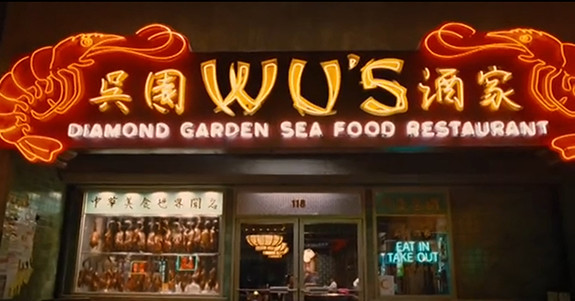
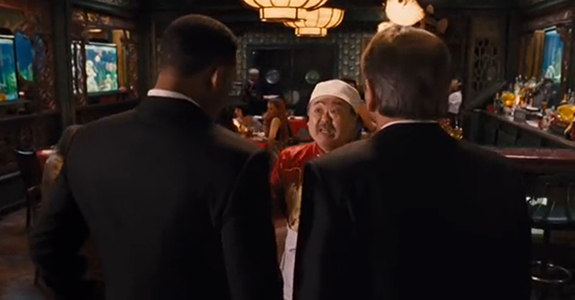
So the other day, I finally saw Men In Black III, and there was one location that stood out:

mib7

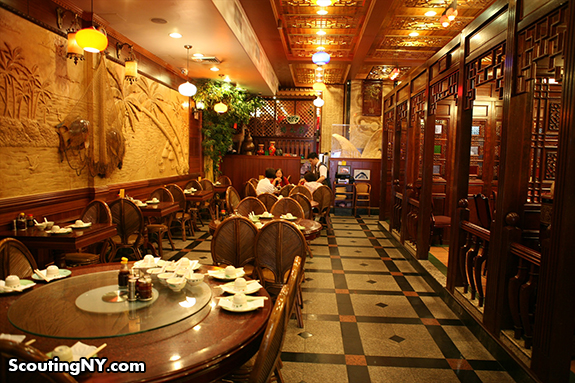
Located in Chinatown, Wu’s is THE Chinese restaurant all directors beg us to find.

mib4

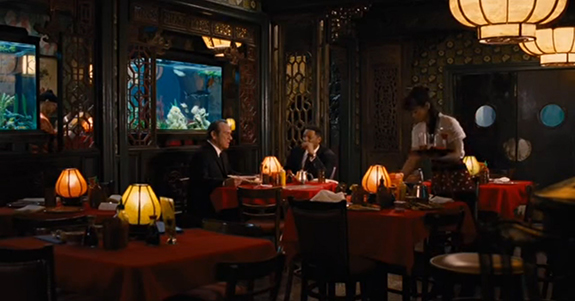
From the paper lanterns and intricate woodwork…

mib2

…to the numerous fish tanks and detailed wallpaper.

mib1

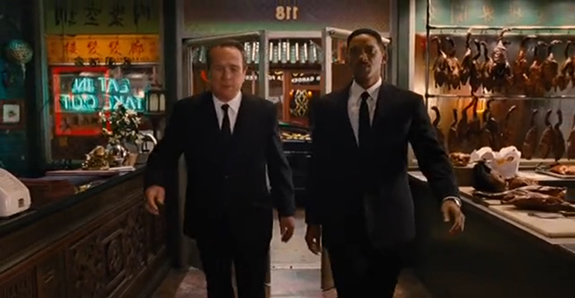
Throw in the hanging ducks in the window, and you’ve got every director’s ideal Chinese restaurant filming location.

mib6

And of course, I immediately knew that Wu’s was fake, built from scratch on a soundstage.

Why? Because this location does not exist in Manhattan.

mib3

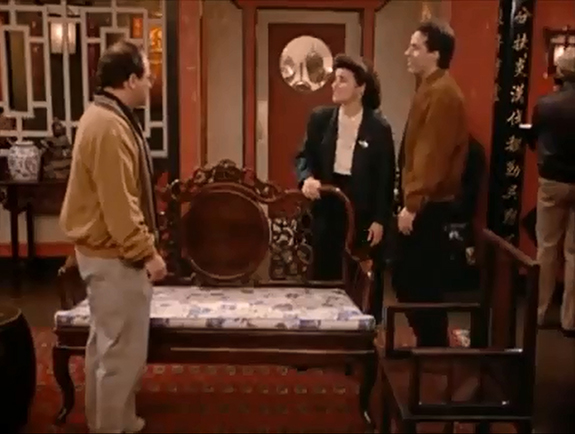
Literally every time I get asked to find a Chinese restaurant, it’s the same description. “I want a place with really over-the-top Chinese decor,” our director will say. “Remember that one in Seinfeld? That’d be great.”

seinfeld1

“The key is red wallpaper,” our director will tell us. “We need a place with red wallpaper. With designs on the wallpaper too, maybe in gold.”

seinfeld2

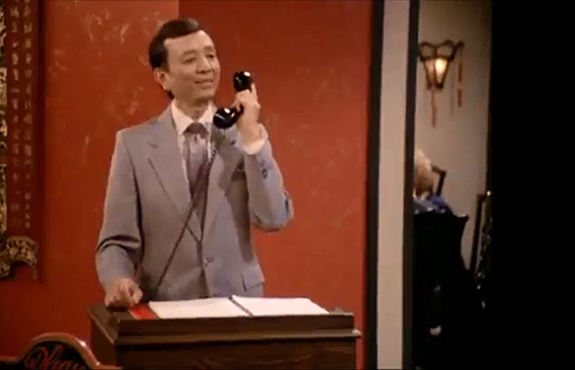
“But red is key. Oh, and some woodwork. You know, like in Glengarry Glen Ross? That’d be perfect.”

glengarry

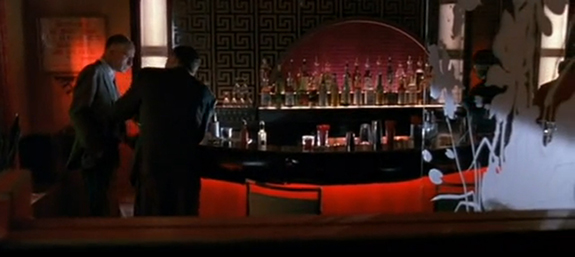
“Hey, and be on the lookout for dragons. Golden dragons would be awesome. Remember the movie The Fisher King?”

fisher

“But really, just go for that classic over-the-top look. You’ve probably never seen Mickey Blue Eyes, but wasn’t there something in that like what I’m describing? You know what I mean?”

mickeyblueyes

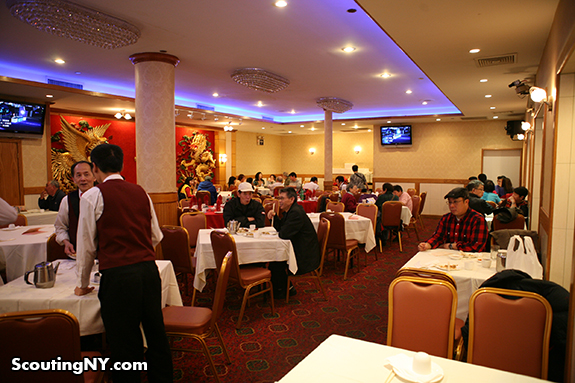
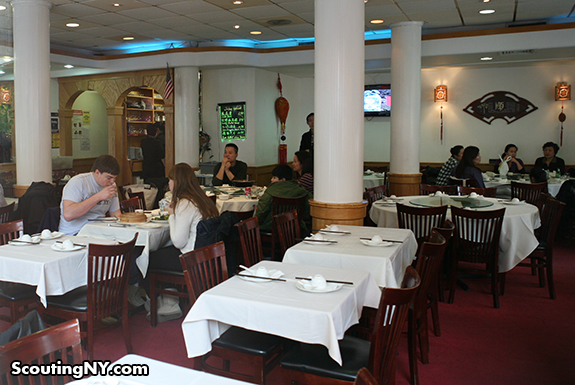
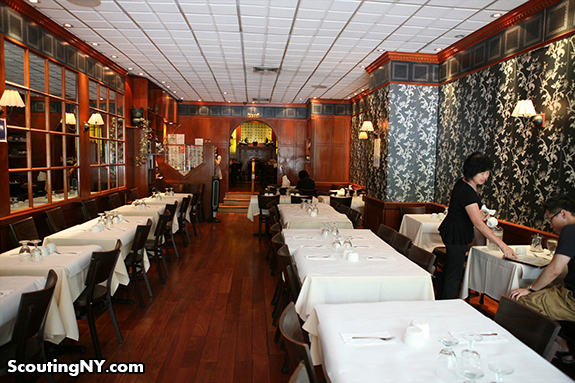
I know exactly what he means. There’s only one problem: this is what your average Chinatown restaurant looks like.

IMG_0325

Here’s another:

IMG_0323

And another. White walls, a few bits of ornamentation on a wall or two, some chandeliers…and that’s it. Seriously, this is the norm.

IMG_0329

But try and convince a director of this, and they will look at you like you just moved to the city last week. “Are you SERIOUSLY telling me,” they will ask incredulously, “that there isn’t a single Chinese restaurant in all of Manhattan with red wallpaper and crazy ornamentation???”

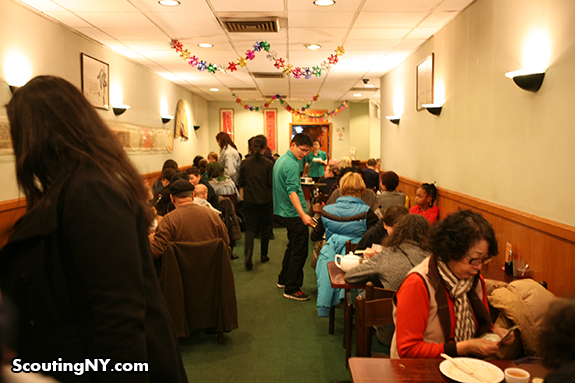
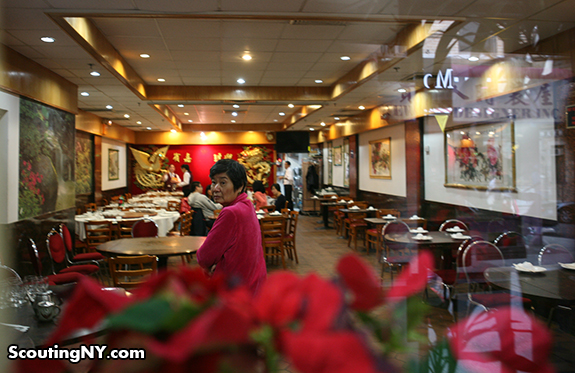
Yes. That is what I’m telling you. And if you don’t believe me, you’d probably have a heart attack if I told you a good number of New York Chinese restaurants look like this:

IMG_0326

This is a major problem you run into while scouting in New York – people assume NYC has EVERYTHING, and when you tell them it doesn’t, they think you’re 1) wrong, and 2) not doing your job.

IMG_0321

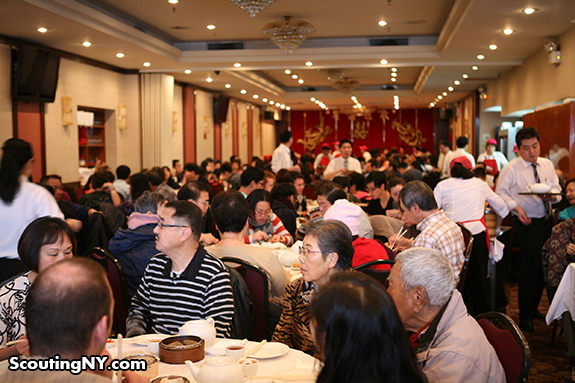
That isn’t to say that New York doesn’t have some really neat Chinese restaurants. Some of the epic dim sum places sort of have the right decor we’re being asked for – but they’re ridiculously massive in size and very pricey to film in, if they’d even consider it.

IMG_0319

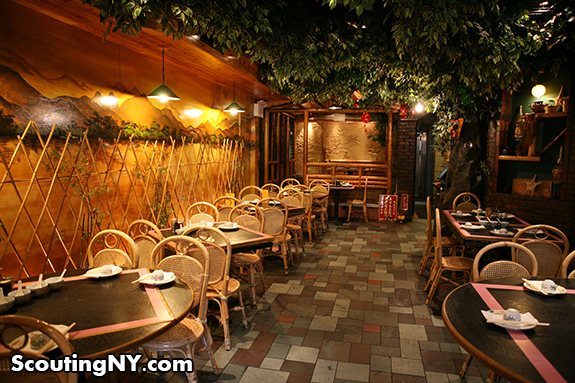
So that’s a definite no. Having shown the reality of most Chinese restaurants, you move on to options that, while not entirely meeting their description, still have some really fantastic character. I love this restaurant, especially the enormous tree in the back.

001

Ditto this place, which has a lot of great character without descending into the orientalism-on-steroids restaurant I’m being asked to find.

000

Or hey, what about this one up by Columbia? Sure it’s simple, but it at least has that intricate wallpaper (though not red). Maybe throw a few golden dragon statues in and we’re good?

003

Directors will not like any of this. “Why is there a tree in that first place? And why don’t any of them have red wallpaper? Keep looking!!!”

nomom

But we will inevitably come up short. As a last ditch effort, directors will occasionally suggest we scout the Nom Wah Tea Parlor, confident that a place in business since 1927 MUST have the character we’re looking for (and proof we don’t know what we’re talking about). Alas, while I love Nom Wah, the interior looks more like a diner than a Chinese restaurant.

0344

Directors will usually be very frustrated at this point. “But it has to be out there! That classic over-the-top Chinese restaurant you used to go to on the highway as a kid!!”

And therein lies the problem. We’re not on a highway; we’re in New York.

IMG_0324

I don’t know anything about the history of Chinese restaurant decor in America, but I wouldn’t be surprised if, early on, part of the draw was in presenting patrons with an EPCOT-like level of intense orientalism. Not only are you dining, you’re also going on an exotic vacation.

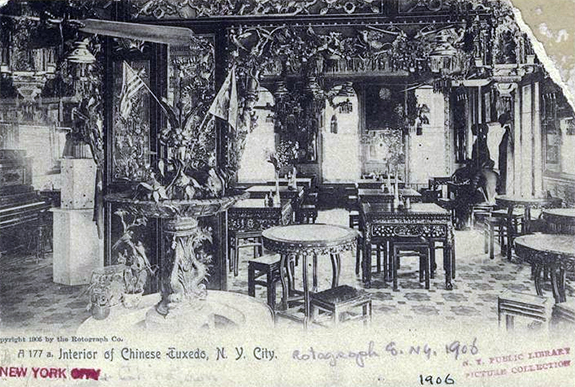
Here’s a 1906 picture of a Chinatown restaurant called Chinese Tuxedo, which is EXACTLY what our director is looking for.

tuxedo

Ephemeral New York dug up a great quote from a 1920 restaurant review guide which describes this kind of establishment:

“Few homegrown Chinese take nourishment in these places, because they feel kind of out of place and they hate to break in on the nice white people from uptown and Brooklyn. But the waiters are all Chinese, for the same reason that the walls have Chinese dragon tapestry. The lights are shrouded in fantastic shades, and the place is redolent with the perfume of fire cracker punk, which exhales a not unpleasant odor.”

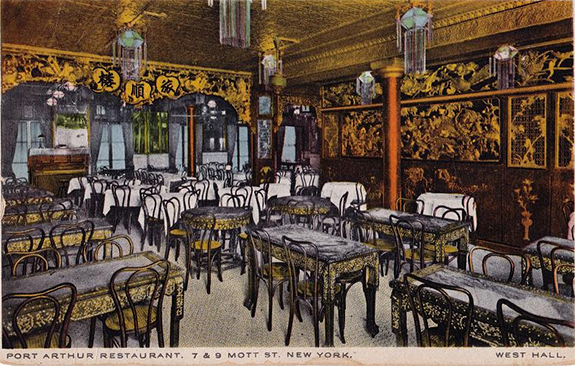
Another perfect option for our director is this defunct New York classic – Port Arthur, in business through 1959:

portarthur

But those days are gone. Chinese restaurants don’t need crazy decor anymore to convince New Yorkers that the cuisine is worthwhile. And while I really wish just one holdover from the 1940s or 1950s had survived into the modern age as a historical relic, they’re kaput, and no amount of scouting will bring them back.

It’s usually about this time that the director finally accepts the truth, and the decision is made to either go with one of the options we’ve scouted (with some added set dressing), or build it on a stage.

mib4

I don’t blame directors for hating the plainer options I’ve shown above – white walls and minimal decor look absolutely terrible on film, and you’d never film in such a place.

But I really wish they’d realize that the reason they think New York is filled with MIB-style Chinese restaurants is not because of reality, but because of what they’ve seen in the movies and on TV. For a city that has nearly everything, there’s a LOT of alternatives to choose from, and I really hate having to fake the few things it doesn’t have just to do the same cliche over and over and over and over…

But you know what? My fortune cookie portends a future where this search will come up again and again. I guess I should forget it. It’s Chinatown.

Love to hear any memories you have bygone NY Chinese restaurants!

-SCOUT

PS – Oh, and as a sidenote, I’ve never eaten in a NYC Chinese restaurant with a guy like this.

mib3

15 Jan 17:09

HBO On Demand: New This Week

by Andrew

Here’s what’s new on HBO On Demand during the week of January 13 – 19:

Documentaries

The Latino List: Volume Two. Rated: TV-14. Runtime: 48 minutes. Available Jan 14 – Feb 10.
About Face: Supermodels Then and Now. Rated TV-14. Runtime: 71 minutes. Available Jan 14 – Jan 31.
By The People: The Election of Barak Obama. Rated TV-PG. Runtime: 115 minutes. Available Jan 15 – Jan 31.

Movies

Hanna. Rated PG-13. Runtime: 110 minutes. Available Jan 14 – Feb 10.
Harry Potter and the Sorcerer’s Stone. Rated PG. Runtime: 152 minutes. Available Jan 14 – Feb 10.
A Very Harold & Kumar 3D Christmas. Rated R. Runtime: 89 minutes. Available Jan 14 – Feb 10.
American Reunion. Rated R. Runtime: 112 minutes. Available Jan 14 – Mar 24.
J Edgar. Rated R. Runtime: 136 minutes. Available Jan 14 – Feb 10.
The Debt. Rated R. Runtime: 113 minutes. Available Jan 14 – Feb 10.
The Making of American Reunion. Rated TV-PG. Runtime: 12 minutes. Available Jan 14 – Mar 24.

Series

Girls
Season 2, Episode 11: It’s About Time. Season Two Premiere. Rated TV-MA. Runtime: 29 minutes. Available Jan 14 – May 12.
Season 2 Extra Content: On Fashion. Rated TV-PG. Runtime: 1 minute. Available Jan 14 – May 12.

Enlightened
Season 2, Episode 11: The Key. Season Two Premiere. Rated TV-MA. Runtime: 26 minutes. Available Jan 14 – Apr 28.

Real Time With Bill Maher
Episode 268. Rated TV-MA. Runtime: 57 minutes. Available Jan 19 – Feb 16.

Buzz: Girls/Enlightened Premieres. Rated NA. Runtime: 2 minutes. Available Jan 14 – Feb 10.

Specials

George Lopez: It’s Not Me, It’s You. Rated TV-MA. Runtime: 56 minutes. Available Jan 14 – Feb 10.

Sports

Jim McKay: My World in My Words. Rated TV-PG. Runtime: 58 minutes. Available Jan 14 – Feb 10.

Kids

The Chronicles of Narnia: The Voyage of the Dawn Treader. Rated PG. Runtime: 112 minutes. Available Jan 14 – Feb 10.

A Little Curious
Episode 18: Compilation Bob Show. Rated TV-Y. Runtime: 24 minutes. Available Jan 14 – Feb 10.
Episode 24: High Low Stretch. Rated TV-Y. Runtime: 24 minutes. Available Jan 14 – Feb 10.
Episode 26: Top Bottom Jump. Rated TV-Y. Runtime: 24 minutes. Available Jan 14 – Feb 10.
Episode 27: Over Under Balance. Rated TV-Y. Runtime: 24 minutes. Available Jan 14 – Feb 10.

09 Jan 21:41

Updates: At Least Seven Injured After Crane Collapse In Long Island City

by Ben Yakas
         [Update Below] Several people have been injured after there was a massive crane collapse in Long Island City this afternoon. FDNY says that the incident happened around 2:20 p.m. at a construction site located at 47-27 Center Boulevard in Queens. They say they are at the scene, but aren't yet certain exactly how it collapsed. Initial reports state at least one person has been taken to the hospital with injuries, and multiple other people are trapped. Check out some Tweets below, and we'll update as we learn more information. [ more › ]

Add to digg Email this Article Add to Facebook Add to Google
08 Jan 15:25

DOT Introduces Easier To Read Parking Signage

by Garth Johnston
DOT Introduces Easier To Read Parking Signage If taxi lights in New York City can be made simpler so as not to hurt the heads of poor New Yorkers it is about time our parking signs were clarified, right? After all, we got rid of "Walk" and "Don't Walk" ages ago! Well, the DOT agrees. Say hello to your new parking signage! [ more › ]

Add to digg Email this Article Add to Facebook Add to Google
07 Jan 16:42

Video: 5 Hurt In Crazy PATH Station Escalator Accident

by Garth Johnston
Andrew Baisley

Scary video

Video: 5 Hurt In Crazy PATH Station Escalator Accident Five people suffered minor injuries in a bizarre and terrifying escalator malfunction at the Exchange Place PATH station this morning. Because really, the last thing you want to have happen on a Monday morning is to have your crowded "up" escalator start going down. Fast. Here's video: [ more › ]

Add to digg Email this Article Add to Facebook Add to Google
07 Jan 16:13

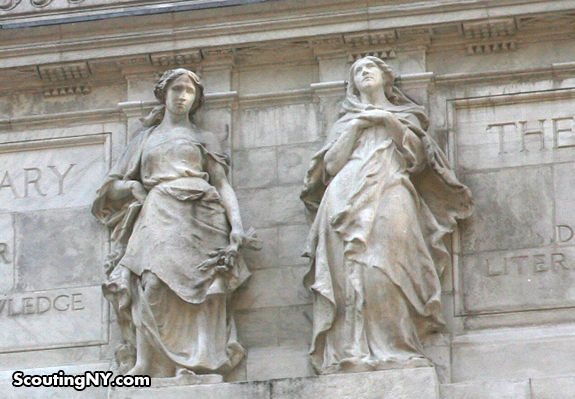
Is That A Woman Holding A Decapitated Head on the New York Public Library?

by Scout

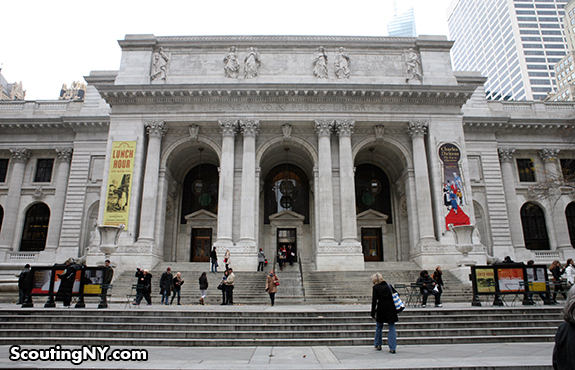
The other day, I was scouting the steps of the New York Public Library main branch. I’ve had to do this assignment a million times over the years for various movies and TV shows that want to shoot at the world’s most famous library, and I began thinking how sad it was to know a location so well that there were no surprises left to find.

01

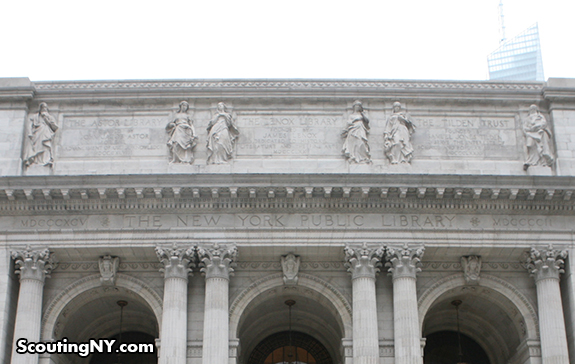
As I was taking the pictures, I happened to zoom in on this row of statues over the main entrance:

02

Nothing really stood out about them…

03

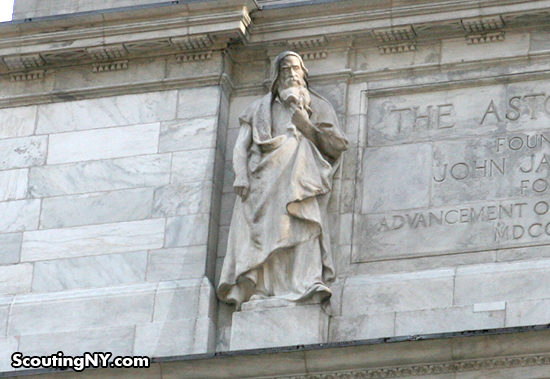
Just your run-of-the-mill toga-clad statuary, all looking appropriately deep in thought:

04

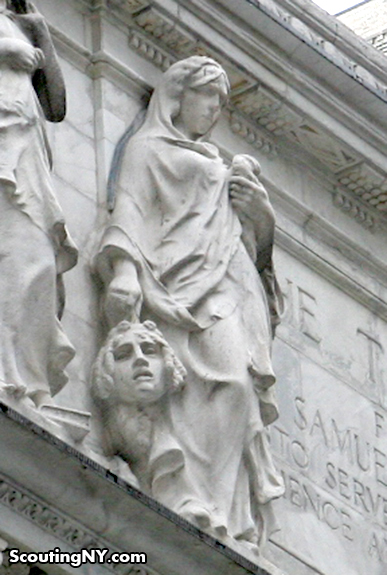
I was about to move on when one of the statues caught my eye: a woman, who resembled all the others except for one very unusual feature…

05

She was holding a decapitated head.

06

OK, I’ve been to the New York Public Library a million times over the years, and I’ve NEVER noticed this. Who is she, and why does she look so angry? And who was the bodyless man?

07

I couldn’t find the answer anywhere online (everyone just writes about the lions) so I wrote to the NYPL. It turns out that is the personification of Drama, as sculpted by Paul Wayland Bartlett. She is joined on both sides by fellow “attic sculptures” representing (from left to right) History, Romance, Religion, Poetry, and Philosophy.

08

So does that mean it’s just a Tragedy mask? That would make sense, but tell me I’m wrong in thinking that looks like she’s holding a head by the hair. Is there a particular work this was inspired by?

Whatever the answer might be, finding the statue of a woman holding a decapitated head on the New York Public Library is a really great reminder for the New Year that, no matter how well you think you know New York, there are ALWAYS surprises to be found.

-SCOUT

04 Jan 14:42

Should Gun Owners Have To Buy Liability Insurance?

Should Gun Owners Have To Buy Liability Insurance?

by Caitlin Kenney

WEST VALLEY CITY, UT - DECEMBER 27: A Utah teacher is shown how to handle a handgun by instructor Clint Simon at a concealed-weapons training class to 200 Utah teachers on December 27, 2012 in West Valley City, Utah. The Utah Shooting Sports Council said it would waive its $50 fee for concealed-weapons training for Utah teachers. (Photo by George Frey/Getty Images) George Frey/Getty Images

Nouriel Roubini recently sent a Tweet suggesting that gun owners should have to buy liability insurance, just like car owners do:

If we had liability insurance on guns, as we do 4 cars, we will see which insurance company would insure at which price folks with arsenals

His tweet added to a growing debate about whether or not gun owners should be required to carry insurance. We reached out to a few economists to get their thoughts.

Justin Wolfers, professor of economics and public policy at the University of Michigan, wrote:

The real problem with gun ownership is that they involve "externalities," which is economist-speak for the fact that your gun may be used to hurt others. For instance, when Nancy Lanza purchased her Bushmaster AR-15, she probably weighed the benefits of owning the gun—the joy of ownership—with the price (about $800). But it's unlikely she considered the loss, pain and grief that might follow if it were used by her son to kill 26 innocents. When people fail to consider the broader social costs of choices like buying a gun, they're more likely to do them, and society suffers.

The economic answer is simple: Make potential gun-owners take account of these potential social costs. One way to do this would be to charge an annual license fee for each gun you keep. Research by economists Phil Cook and Jens Ludwig suggests that the typical social cost of one more gun-owning household is somewhere between $100 and $1800 per year. While that's a wide range, if we set a gun ownership license fee this high, it would force gun owners to face the true social costs of their choices, which would lead many fewer to buy guns.

Another even more powerful approach is to recognize that the problem isn't guns per se, but gun violence. Thus, instead of taxing guns, we should tax gun violence. Basically, this is the same as saying that we should make gun owners liable for any damage their guns do. Not only would this discourage some people from buying guns, it would lead those who do keep guns to be more careful with how they're stored. Indeed, greater care would surely have kept Adam Lanza out of his mother's cache. The problem though, is that Nancy Lanza is neither with us to pay the damages her gun caused, nor could she afford to pay for the enormous damage her gun wrought in Newtown. And so the only way this solution works is if guns required mandatory liability insurance, much as we force car owners to buy insurance for the damage their machines wreak.

It's the sort of careful solution that would enable people who enjoy hunting to continue with their passions, but also push them to take the sorts of precautions that we all wish the Lanza household had taken. If the gun lobby were smart, and if they really are interested in being socially responsible while keeping their weapons, they would be pushing hard for this sort of policy.

Next, Russ Roberts, a research fellow at the Hoover institution and host of EconTalk:

Is it a good idea to require gun owners to purchase liability insurance that would cover damages caused by the guns they own? In the wake of the Newtown tragedy, such policies seem like nothing more than common sense. The cost of the insurance would deter some from owning guns or at least from owning an arsenal as the cost of insurance would presumably rise with the size of one's collection. And there is a certain logic to requiring insurance. When a person purchases a gun, she may not consider the possible harm that might come to others from the eventual use of the gun. Adding the cost of insurance might make the purchaser bear the full cost of the gun in the future which could easily exceed the purchase itself. After all, registering a car requires insurance on the grounds that cars can cause involuntary harm to others. The insurance forces the driver to bear those costs that might come to pass that are borne by others in an accident.

But the logic is not quite as neat as it might appear. Many people already buy and own guns illegally without license or registration. Adding the cost of insurance would further discourage honest gun ownership. That would make matters worse not better. And is it so obvious that all guns are harmful to others and that gun ownership should be made more expensive to every owner? When an honest law-abiding citizen uses a gun in self-defense, it often protects those nearby who are unarmed. Perhaps gun ownership should be subsidized for honest people. I don't think this is a good idea, but raising the cost of gun ownership, particularly for good and honest people who are likely to use a gun only in self-defense, is not a free lunch.

What is really behind the call for liability insurance is the natural urge to make it harder for people to own guns. Such a law might do some good if it made dishonest and violent people less likely to own guns. But liability insurance makes gun ownership more expensive for honest, law-abiding people while encouraging dishonest and dangerous people to own guns in ways we cannot see.

And, Robert Frank, professor of economics at Cornell University:

Gun ownership, even in the hands of responsible people, increases the risk of death and serious injury to others. In cases involving multiple deaths, few gun owners could afford to compensate victims' families for their losses, just as most automobile owners couldn't afford to compensate the families of accident victims. With automobiles, we require all vehicle owners to carry liability insurance. A similar approach would help with firearms.

Nothing in the constitution grants people the right to expose others to serious risk without compensation. Insurance sellers are skillful at estimating the risks posed by drivers with specific characteristics, and we could expect them to be similarly skillful at assessing the risks posed by gun owners. Requiring liability insurance isn't a total solution to the problem of excessive risk, either for autos or for guns. But in both cases, it's a positive step.

Copyright 2013 National Public Radio. To see more, visit http://www.npr.org/. Copyright 2013 National Public Radio. To see more, visit http://www.npr.org/.
02 Jan 21:05

Episode 297: A Big Bridge In The Wrong Place

Episode 297: A Big Bridge In The Wrong Place

Listen to the Episode

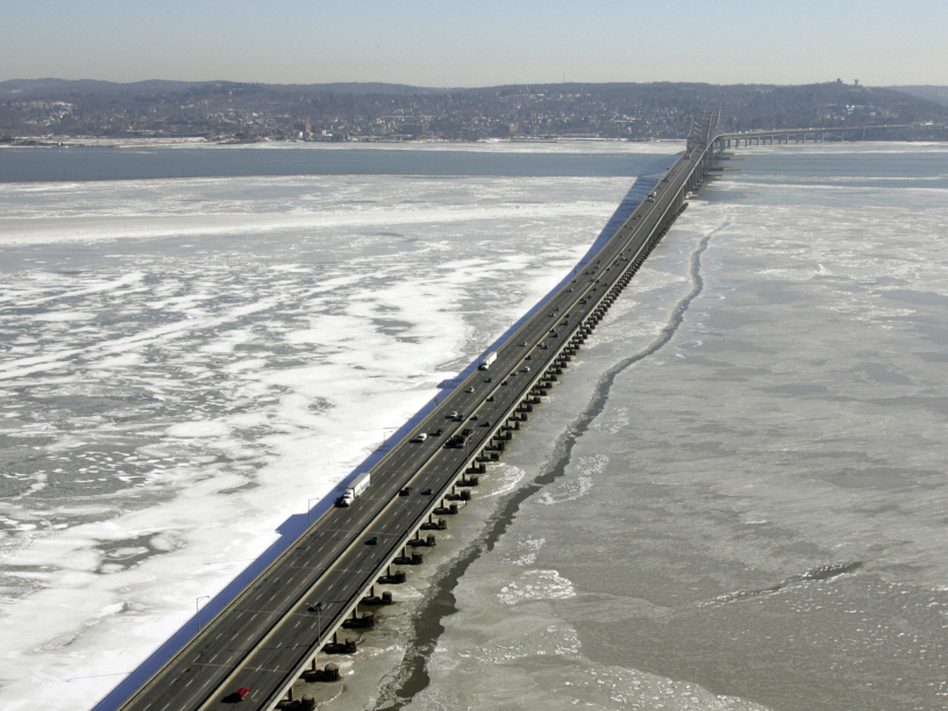
  The Tappan Zee Bridge in New York

The Tappan Zee Bridge in New York

Stuart Ramson/AP

This episode was originally released in August, 2011.

You would never look at a map of the Hudson River, point to the spot where the Tappan Zee Bridge is, and say, "Put the bridge here!"

The Tappan Zee crosses one of the widest points on the Hudson — the bridge is more than three miles long. And if you go just a few miles south, the river gets much narrower.

Our question for today's show: Why did they build a three-mile-long bridge when they could have built a much shorter, cheaper bridge nearby?

Our search for an answer leads us to a forensic engineer, the Statue of Liberty, and a governor who wanted to be an opera singer.

Download the Planet Money iPhone App. Music: Chris Pureka's "Burning Bridges." Find us: Twitter/ Facebook/ Spotify/ Tumblr.

Copyright 2013 National Public Radio. To see more, visit http://www.npr.org/. Copyright 2013 National Public Radio. To see more, visit http://www.npr.org/.
01 Jan 01:02

Understanding The 'Milk Cliff'

Understanding The 'Milk Cliff'

by Caitlin Kenney

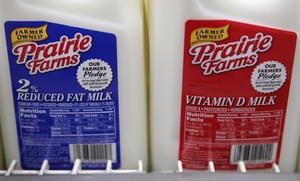
Milk for sale in Chicago. Scott Olson/Getty Images

You've heard of the "fiscal cliff," but have you heard of the milk cliff"?

If Congress doesn't take action in the next four days, milk prices could shoot up dramatically.

Here's why:

The farm bill contains something called the Dairy Product Price Support Program. It's designed to help farmers by guaranteeing a minimum price for milk.

Basically, the government buys things made from milk — cheese, butter and dry milk. (It doesn't want to have to actually store milk, which can quickly go bad.) Buy up enough of this stuff, and you drive up the price of milk.

The government hasn't had to buy a significant amount of this stuff in the past decade because the price of milk has been high enough on its own.

Here's where the cliff comes:

The minimum price for milk, called the "support price," is set in the farm bill. The farm bill is set to expire on Jan. 1, and here's the catch: If that happens, the minimum price reverts to the price set more than 60 years ago in the Agricultural Act of 1949. That price is a parity price, which means it was calculated based on how much it cost farmers to make milk during the "golden age of agriculture" 1910 -1914. Things have changed a lot since then, and costs for farmers today (equipment, labor, feed, cows) are radically different.

The parity price set in 1949 is $39.53 per 100 pounds — right now, farmers are getting half that, $19.50 per 100 pounds of milk.

If Congress doesn't do something, the government will find itself buying a lot of cheese, butter and dry milk come Jan. 1, and even worse, it will essentially be paying double the price. Those higher prices will then trickle down to the grocery store where the rest of us could see milk prices go from around $4 a gallon to something more like $6 a gallon.

Will it happen?

Probably not. Dramatically higher milk prices won't help Congress' reputation for political gridlock. Farmers wouldn't like it either. Although higher prices would be a short-term boost for them, agricultural economics professor Joseph Balagtas, of Purdue University, says it would "draw a lot of attention to dairy policy that farmers wouldn't want." The USDA, the folks who would be in charge of buying all that cheese and butter, say returning to permanent law would be a "bad outcome" that no one should want.

Want something else to worry about?

Balagtas says there is another outcome here that could be equally bad — passing the 2012 farm bill in its current form.

Balagtas is concerned about a specific part of the 2012 farm bill that deals with dairy — the Dairy Market Stabilization Program. The program is designed to keep milk prices high by taxing farmers for producing more milk than the government wants them to.

Balagtas says the program would be bad for successful dairy farmers because it "would explicitly penalize growth" — essentially punish them for being more efficient and producing more milk. Large, profitable dairy farmers share his concern about the program.

Discouraging farmers from producing more milk means less milk on shelves for sale, which once again, means higher prices for the rest of us.

Copyright 2013 National Public Radio. To see more, visit http://www.npr.org/. Copyright 2013 National Public Radio. To see more, visit http://www.npr.org/.
26 Dec 21:34

Jets Invite Norwegian Viral Video Star To Tryout As Kicker

by Ben Yakas
Jets Invite Norwegian Viral Video Star To Tryout As Kicker Yes, things are so bad for the Jets that they are now outsourcing to Norway. But on the other hand, this kicker is really good! Watch his audition tape below. [ more › ]

Add to digg Email this Article Add to Facebook Add to Google
19 Dec 15:17

Why Legos Are So Expensive — And So Popular

Why Legos Are So Expensive — And So Popular

by Chana Joffe-Walt

December 13, 2012

Listen to the Story

All Things Considered

4 min 55 sec   Lego vs. Mega Bloks

Notes

Lego is crushing Mega Bloks, a rival that sells cheaper blocks.

Source: Lego, Mega Brands Inc., World Bank

Credit: Lam Thuy Vo/NPR

I went to Toys R Us recently to buy my son a Lego set for Hanukkah. Did you know a small box of Legos costs $60? Sixty bucks for 102 plastic blocks!

In fact, I learned, Lego sets can sell for thousands of dollars. And despite these prices, Lego has about 70 percent of the construction-toy market. Why? Why doesn't some competitor sell plastic blocks for less? Lego's patents expired a while ago. How hard could it be to make a cheap knockoff?

Luke, a 9-year-old Lego expert, set me straight.

"They pay attention to so much detail," he said. "I never saw a Lego piece ... that couldn't go together with another one."

Lego goes to great lengths to make its pieces really, really well, says David Robertson, who is working on a book about Lego.

Inside every Lego brick, there are three numbers, which identify exactly which mold the brick came from and what position it was in in that mold. That way, if there's a bad brick somewhere, the company can go back and fix the mold.

For decades this is what kept Lego ahead. It's actually pretty hard to make millions of plastic blocks that all fit together.

But over the past several years, a competitor has emerged: Mega Bloks. Plastic blocks that look just like Legos, snap onto Legos and are often half the price.

So Lego has tried other ways to stay ahead.

The company tried to argue in court that no other company had the legal right to make stacking blocks that look like Legos.

"That didn't fly," Robertson says. "Every single country that Lego tried to make that argument in decided against Lego."

But Lego did find a successful way to do something Mega Bloks could not copy: It bought the exclusive rights to Star Wars. If you want to build a Death Star out of plastic blocks, Lego is now your only option.

The Star Wars blocks were wildly successful. So Lego kept going — it licensed Indiana Jones, Winnie the Pooh, Toy Story and Harry Potter.

Sales of these products have been huge for Lego. More important, the experience has taught the company that what kids wanted to do with the blocks was tell stories. Lego makes or licenses the stories they want to tell.

And kids know the difference.

"If you were talking to a friend you wouldn't say, 'Oh my God, I just got a big set of Mega Bloks,' " Luke says. "When you say Legos they would probably be like, 'Awesome can we go to your house and play?' "

Lego made almost $3.5 billion in revenue last year. Mega made a tenth of that.

But Mega Bloks may yet gain on Lego.

Mega now owns the rights to Thomas the Tank Engine, Hello Kitty, and the video game Halo. And, on shelves for the first time ever this week: Mega Bloks Barbies.

Copyright 2012 National Public Radio. To see more, visit http://www.npr.org/. Copyright 2012 National Public Radio. To see more, visit http://www.npr.org/.
18 Dec 21:50

Enjoy A Vertiginous Photo Of An Escalator Being Hoisted To Top Of 4 WTC

by John Del Signore
Enjoy A Vertiginous Photo Of An Escalator Being Hoisted To Top Of 4 WTC If you've ever wondered how "they" get escalators up to the tops of skyscrapers, well, you've got a very wide-ranging curiosity. That's not a backhanded compliment, it's just that we always figured that when you need a skyscraper near the top of a tall building, you just build it up there. But when it comes to the still-under-construction 4 WTC tower, they get their pre-fab escalators delivered by crane. [ more › ]

Add to digg Email this Article Add to Facebook Add to Google
18 Dec 19:33

Multinational firm about to move into Brewster Building

by admin
Twitt

licity1Publicis, the multinational media and advertising company, is expected to be moving 430 employees into the historic Brewster Building (27-01 Queens Blvd North) by the beginning of February.

The company reportedly signed a 100,000-square-foot lease last year with Met Life and is relocating many of its staff from its Manhattan offices to the new location.

“It’s symbolic that a major company like this sees the value in Long Island City,” said Dana Frankel, the district services manager for the Long Island City Partnership.

MetLife, which has 3,000 employees in the building, leases the entire 700,000-square-foot building. However, it has subleased portions of the space to other tenants, including JetBlue, which moved into the space earlier this year. Jet Blue has 1,200 employees in the building.

The Brewster Building was originally built in 1911 and housed a manufacturer of horse-drawn carriages, Rolls Royce cars, Brewster cars and World War II airplanes.

In 2003, Brause Realty extensively remodeled the building and an adjoining 12-story tower.

18 Dec 19:31

Photos: Deep Inside 21, Where Nixon's Wine Is Still Stashed Behind A Secret Door

by John Del Signore
Andrew Baisley

Believe that this is right by your new office, Ivy.

                            The first thing you should know about the 21 Club is that it's not a club. Anyone with cash or credit to burn can walk in off the street, and as of last year you don't even need to wear a tie. (Jacket is still required "for gentlemen," thankfully.) The famous restaurant and bar, which survived numerous FBI raids during Prohibition thanks to a thick fake wall in the basement (we'll get to that) is bending over backwards these days to make sure youths like you know its not some stuffy private club. To that end, they transformed the front entrance into a bar and lounge serving a limited food menu and cocktails that, while expensive, are stiff. A Manhattan may cost you $15, but it packs the weight of two drinks served in most other pricey bars. [ more › ]

Add to digg Email this Article Add to Facebook Add to Google
17 Dec 14:05

Photos: 1 World Trade Center Spire Gets Transported Through Lower Manhattan

by Ben Yakas
Andrew Baisley

Very cool

        Last week, the first sections of the spire for One World Trade Center were lifted to the top of the 104-story building. Last night, Albert C. Lee caught a glimpse of four more sections of the 1 WTC spire being transported down Greenwich Street under the cover of night. Click through to check out the pieces that will make 1 WTC the tallest building in the Western Hemisphere; as Lee put it, "I'm sure I'll get to go to the top of 1 WTC one day, but I'll never get as close to the spire as I have tonight." [ more › ]

Add to digg Email this Article Add to Facebook Add to Google
14 Dec 21:15

Here's A Subway Car PACKED With Balloons

by Jen Carlson
Andrew Baisley

Was on Reddit, but don't know how to share Reddit on here.

Here's A Subway Car PACKED With Balloons This morning someone posted this photo of a balloon-stuffed subway car on Reddit, leaving this description: "Riding the 2 train in NYC early one morning. Suddenly, balloons." [ more › ]

Add to digg Email this Article Add to Facebook Add to Google
14 Dec 15:39

Gatorade Thirst Quencher Orange Has A Lot In Common With Flame Retardants

by Nell Casey
Gatorade Thirst Quencher Orange Has A Lot In Common With Flame Retardants First came diarrhea-inducing sushi and now it's psychosis-inducing Gatorade. Today the Times took a look into Brominated Vegetable Oil, a bromine-based substance used in citrus sports and soft drinks to evenly distribute the fruit flavoring. The additive is used in 10% of beverages in the United States—including Gatorade Thirst Quencher Orange, Powerade Strawberry Lemonade, Mountain Dew, Fresca and Fanta Orange—and is also found in flame retardants, pesticides, hot tub and swimming pool treatments and plastics. So…why are we drinking this stuff again? [ more › ]

Add to digg Email this Article Add to Facebook Add to Google
11 Dec 19:36

Finally: A Movie About The History Of Soy Sauce

by Rebecca Fishbein
Finally: A Movie About The History Of Soy Sauce At last, the untold true story that, for generations, Hollywood has been too afraid to tell: a movie about the history of soy sauce. Kikkoman soy sauce. What's that, you say? Why see a short film about the stuff you slosh on a no. 8 from Vanessa's when you can watch Seth Rogen go on a road trip with Barbara Streisand? We have to agree, but it turns out at least that the Kikkomans have a fairly illustrious history. [ more › ]

Add to digg Email this Article Add to Facebook Add to Google
11 Dec 14:25

The World’s Biggest Consumer 3D Printing Factory is in LIC

by admin

Forbes.com

In October, 3D-printing startup Shapeways opened its New York production facility in Long Island City, the biggest consumer-focused 3D printing factory in the world.

When I visited the site last week–at the height of its holiday frenzy–the startup had already installed nine industrial-sized 3D printers turning digital blueprints into solid physical objects at its fastest rate ever: In 2012 it printed more than a million items, well over its total for all prior years combined since the company launched in 2008. And by the holiday season of 2013 it hopes to have more than 50 printers filling its 25,000 feet of floor space.

For the full article, please click here.