A new thing that happened: As the initial travel ban expired on Sunday, 45 has issued a new executive order indefinitely banning all travel from seven countries, six of which are Muslim-majority and the seventh of which is North Korea, a country that does not allow its citizens to travel. Certain government officials of Venezuela and their families will also be barred entry. A government official said that adding North Korea and Venezuela demonstrates that this isn't about a Muslim Ban, which is mostly just insulting in terms of how dumb they must think we are to fall for that nonsense. The last time North Korea was included in a designation of American enemies (as part of George W. Bush's Axis of Evil), their inclusion was also the scapegoat that allowed the Bush administration to pretend that the War on Terror was more than just a War on Islam. How'd that move work out?
It turns out White House aides specifically warned 45 not to personally insult North Korean leader Kim Jong Un in his UN address last week and then he went out of his way to do just that. Despite North Korea considering 45's tweets tantamount to a declaration of war, Twitter refused to comment on whether 45's "newsworthy" tweets violate its terms of service. You'd think any company offered the chance to prevent nuclear catastrophe might consider at least going on the record when deciding to go down on the wrong side of history.
A thing to think about: Here's a visual representation of why you're exhausted: the insane news cycle of 45's presidency in 1 chart. This is, if not by design, then at least a very convenient byproduct of the dumpster fire approach of the administration. An exhausted populace is one that can't rouse itself to protest.
TIL that the Cliff of Insanity scene was filmed at the Cliffs of Moher in Ireland. I've been there and didn't know! Guess I have to go back now.
The Princess Bride was released 30 years ago today, and it has since become a classic beloved by people of all ages. The Onion looks back at The Princess Bride 30 years later.
Puerto Rico is suffering on an unimaginable scale in the wake of Hurricane Maria. Many have been displaced from their homes, and the entire territory may go without electricity and reliable communication for months. And while the human tragedy is cle...
WASHINGTON—Saying the entire process would take you less than a minute, sources reported Friday that there is absolutely nothing at all stopping you from deleting your Facebook account right now. “There’s no reason in the world you can’t go to your Facebook account this very second and erase it completely from the internet,” sources reported, adding that no one is standing in your way and you’ll be happy to move on with your life and never, ever look back. “No one’s permission at all is required for you to visit www.facebook.com/help/delete_account, click the “Delete My Account” button, and verify your password, at which point you will be free from the social media platform for the rest of your life. You can do it. You should do it. Do it right now.” At press time, sources told reporters they were unsurprised you ...
For three weeks in 1972 and then again in 1974, the sea captain, communist, farmer, prisoner of war, adventurer, local politician and peace activist Anders Jenius Smedsvik was a household name in south-west Norway. Then he disappeared and has been forgotten ever since. This is the first time his story has been told in full.
Anders Jenius Smedsvik built the boat himself, alone, with his own two hands. By the time he hammered the last nail into the hull, it had taken him over five years to complete.
The blueprints were also his own, drawn from memory. Some say he modeled it off an American rescue ship. Others claim Smedsvik said it was a copy of a fishing vessel he’d once seen off the coast of Newfoundland.
«Ava Helen Pauling»—named for the wife of the double Nobel-prize winner Linus Pauling—was 36 feet long and had no engine. The laurel green hull and the white mainsail carried the peace symbol.
The ship was outfitted with a Bermuda rig, intended to make it possible for one person –Smedsvik - to handle her. From the afterdeck he could look through a small, round opening and choose his compass heading by the light of a lone kerosene lamp. There was no electricity onboard. He controlled the rudder using two short lengths of rope, one in each hand.
For the first time in decades, Smedsvik was once again captain of his own ship. The «Ava Helen Pauling» was his. Or maybe it was the other way around.
Now he was going to circumnavigate the globe.
When you ask people about Smedsvik in the little Norwegian town he came from, you get different stories. Some say Smedsviks sole purpose was the same as he publicly announced in the local papers: To sail to the South Pacific Ocean to protest France’s testing of atomic bombs. Others will tell you Smedsvik also was hell-bent on sailing to Cuba to meet Fidel Castro or that his destination was the Gulf of Tonkin in Vietnam where he would anchor and act as a human shield to stop the Americans from bombing Hanoi.
Arne Martin Kalstveit, a young film student at the time, said Smedsvik told him he intended to do all of the above mentioned.
«He figured [going to Vietnam] would cause a lot of fuzz, and that the Americans would find it difficult to bomb if they risked hitting a citizen of another NATO country», Kalstveit said.
On Friday afternoon, June 30, 1972, Smedsvik cast off from the island of Karmøy along Norway’s southwestern coast. He tuned his little travel radio until he picked up Oslo and heard a voice from the Norwegian Meteorological Institute: «This is the weather forecast for Western Norway». There were only a few little ripples on the water in the harbor basin.
«Looks like good wind conditions. Northwesterly», Smedsvik told those who had turned out to see him off and wave from the pier.
Then he set sail, heading south. There were still several months to go before his 87th birthday.
Anders J. Smedsvik in his mid-eighties. about 1970. Photo: Private
Anders Jenius Smedsvik worked on Sundays. While the rest of the town was in church, he tended his fruit trees, ploughed his fields, and swore when he got mad. Smedsvik didn’t care about the heavens; he cared about high seas.
He lived alone at Smedsvika in the village of Skjold on the Skjold Fjord thirty kilometers east of Haugesund. His little red cabin wasn’t insulated for the winter. His wife Nellie had died during the war and after Smedsvik was released from the Nazi concentration camp Grini in Oslo, he built the cabin himself and moved in.
Parts of the «Ava Helen Pauling» was built from oak trees from Smedsviks own property, in the octagonal ring walls of a former hay barn just below Smedsvik’s cabin. Photo: Private
The cabin was only about 215 square feet and Smedsvik’s one room served as living room, bedroom and workroom. For a man who at one time had been captain of several of the world’s largest sailing ships, he lived a Spartan existence. He had a yellow hand-crank magneto phone, which he used to call the bureaucrats in Oslo to squabble with them about his seaman’s pension, and a Remington Monarch typewriter with white keys that he used to write hundreds of op-ed pieces for the Haugesund newspaper, Haugesunds Avis. Smedsvik used the hunt-and-peck method, typing one letter at a time.
There were stacks of foreign books, newspapers and magazines on his shelves and on every piece of furniture apart from the chairs and the divan. He read Newsweek and Time, and he had definitely read Karl Marx. Smedsvik was, if not the only then at least the most conspicuous communist in town.
Just below the cabin he built a silo and an octagonal hay barn. He stored grass in the silo and sprinkled it with acid to avoid heat formation. In the hay barn, after the roof caved in and only the walls were left standing, he built the «Ava Helen Pauling».
He was said to be cautious about alcohol, according to the churchwarden in Skjold, Inghart Lasse Tveit. When he worked as a cowboy and railroad worker in the United States, Smedsvik supposedly got to know Jack London and according to an interview Smedsvik gave to the magazine Allers, he had seen firsthand how «alcohol slowly ruined [the author] on his ranch outside San Francisco».
Smedsvik eat vegetables and oranges and did his morning calisthenics. At the age of 70 he still had a full head of thick hair, hardly a wrinkle on his face, and didn’t look a day past 50.
Well up into his eighties he was known to hike a good 5 miles over the hills to Vikabygd just for a cup of coffee. When he wanted to do a little shopping in Haugesund, he would put on his dark-colored coat, his backpack, and a black wide-brimmed hat and make the 35 mile round trip on foot.
He claimed he had only really ever been sick once. True, he’d had a mild case of malaria the first time he was in East India, but he told the Haugesund paper right before he set out to circumnavigate the globe, «I walked the fever off in the Rocky Mountains».
At the age of 86, Smedsvik was, in his own words, «as fit as a flea».
LAUNCHED: The ship was launched July 5, 1970. It took six hours, a crane truck, a Jeep and people in diving gear to get her out of the shallow inlet. Photo: Albert Emil Jacobsen
By the time a gentle breeze of 8 knots from the north-northeast put some wind into Smedsvik’s sails—off Skudeneshavn on the southern tip of Karmøy—it was late in the afternoon. He was doing five knots in a southwesterly direction. He was in a good mood and had a solid plan:
The first stop would be Le Havre in France. He was going to meet a woman he knew from Haugesund there and wait for a fair wind. Because his boat had no motor, he was dependent on favorable wind conditions. He would head south past the Bay of Biscay planning to pick up the northeast trade winds just south of Gibraltar.
There he would set his course past the Azores and cross the Atlantic to the West Indies and the Caribbean Sea. He would take on provisions, go by Barbados, the Bahamas and maybe Cuba before sailing through the Panama Canal and out into the Pacific Ocean.
The rest of his publically stated plan was to maybe visit Hawaii, possibly Japan, and then head southwest through the Malay Archipelago into the Indian Ocean. The Suez Canal was still closed following the Six-Day War in 1967, so Smedsvik would head toward Mauritius and Madagascar before rounding the Cape of Good Hope. From there it was just a matter of following the trade winds up the coast of West Africa and home to Europe.
Smedsvik had done the calculations and figured he would safely set foot on land again in Haugesund in seven or eight months.
SECRET PLAN: A young film student with the Norwegian Broadcasting Company, Arne Martin Kalstveit, filmed and interviewed Smedsvik in 1970. «He made it very clear to me that he was planning to sail to Cuba to meet Castro and that he wanted to position himself as a human shield in the Gulf of Tonkin in Vietnam. I don’t think he dared go public with that. You have to remember that the communists weren’t treated well after the war, and he was afraid of the Labor Party’s intelligence arm», said Kalstveit. Kalstveit’s footage has been lost.
The first leg, down through the North Sea to the English Channel and onward to Le Havre, would take about ten days. After six days there had not been any reported sightings of Smedsvik in the North Sea and people started worrying.
«The winds are making it difficult for Smedsvik», wrote the Haugesunds Avis newspaper a week after Smedsvik left Norway.
The favoring wind from the northwest had turned westerly and picked up into a fresh—borderline strong—breeze the day after he set out. Conditions deteriorated even more in the following days. The wind turned due south and held steady at fresh-breeze strength. Wherever Smedsvik was, he had a headwind and was going to have to tack the «Ava Helen Pauling» into the wind as he made his way south through the North Sea.
«Hope all is well onboard», wrote the Haugesund paper.
After ten days the weather improved, but there still hadn’t been any sightings of Smedsvik. The supply bases for oil operations in the North Sea were put on the lookout and a search helicopter was deployed without finding the ship. By July 14, two weeks had elapsed since the «Ava Helen Pauling» pushed off from the pier and Smedsvik seemed to have vanished without a trace.
The Haugesund paper called the British Coast Guard, which in turn contacted every single station from Cornwall in the southwest up to the Scottish border in the north. Along the southern coast of England, the coast guard started to keep a lookout and across the channel the French did the same. An active search was begun with a helicopter and patrol boats, but to no avail.
Smedsvik appeared to have sailed straight into Davy Jones’ locker and taken the «Ava Helen Pauling» with him.
Back home in Haugesund they still were still holding out hope. Smedsvik had made it safely through far more dramatic situations than a little bit of wind in the North Sea.
He had been at sea since the late 1800s and was one of few Norwegians on the exclusive list of mariners to have rounded Cape Horn by sailboat. He had been a vagabond in Tasmania, a mutineer in the Atlantic, and a deserter on Mauritius. He had sailed through hurricanes in every ocean in the world, survived shipwrecks and so far avoided losing a vessel.
According to his grandchildren, Smedsvik told his daughter Sylvia that he was actually supposed to have been aboard the «Titanic» as the private guest of the captain, but he had overslept and missed his train so the ship had already left by the time he made it to Southampton.
During the First World War, Smedsvik transported lumber for allied forces in Basra, Iraq. During the Second World War he was in the Norwegian resistance and was taken a prisoner of war. Now he was sailing to make the world understand that there was no need for a third world war.
«Anders J. Smedsvik is an experienced old salt who takes wind and weather conditions into consideration», noted the Haugesund paper.
REMEMBERING GRANDPA: «He would sit in our living room in the 70s and watch the BBC show Onedin Line, but he just scoffed at those storms and crews. He provided a running commentary, so it wasn’t very easy to watch the show» says Magnus Lofsberg. Of all the grandchildren he is said to look the most like Anders J. Smedsvik, but he won’t admit that. Magnus Lofsberg owns a small 22-foot sailboat that he’s fixing up. He likes to be out on the water. Photo: Tomm W. Christiansen / Dagbladet
He was born October 14, 1885, on Hasseløy in Haugesund and had saltwater in his veins. His father, Jakob Smedsvik, served on a steamboat as a sailor and captain until he came ashore in Hamburg the summer of 1905 and died in the hospital. His maternal grandfather was also a sailor. He lost everything after a shipwreck in Iceland in 1883 and went on to die as an old man hauling freight up and down the Norwegian coast aboard his own jekt, a single-masted open cargo sailing ship, named «Prosperity».
Smedsvik’s mother, Lise Andersdatter Blixhaven, was a homemaker. «My mother, like most women of her era, had close to a baby per year», Smedsvik wrote on the first of the few pages that have been preserved from the manuscript for his autobiography. He had four siblings, a brother and three sisters. Two of his siblings died in childhood. When Smedsvik was five, his mother also died.
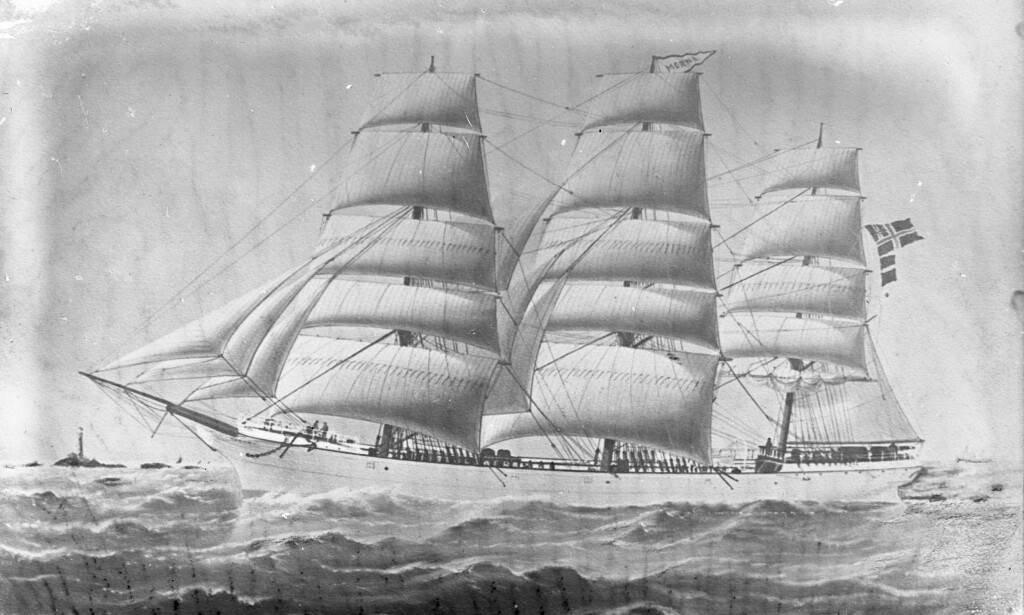
At the age of 13, Smedsvik traveled to Hamburg on his own and signed onto the sailing ship «Morna», which was bound for Pensacola, Florida, and then to take lumber to Buenos Aires. He was a rookie sailor, at the bottom of the pecking order and still only a child. When the rest of the crew felt like taking out some aggression, they either beat the ship’s dog or Smedsvik. At night when the weather was bad, the seamen hoisted him up the mast to reef the sails.
«I was no help […] all I could do [was] hold on and throw up. Incidentally, I was lucky. I was never seasick again after that», Smedsvik wrote.
The three masted ship «Morna» - Smedsviks first miserable encounter with life as a sailor. Foto: MHB-F_C-00028 / Haugesund rederiforening / Karmsund folkemuseums fotosamling
After two miserable years at sea, he had earned 100 kroner and signed off in Bremerhaven, Germany. Smedsvik bought himself a new suit for 33 kroner and a ticket back home to Haugesund.
Two weeks later he set out again aboard the steam ship «Siggen». He was hauling coal to Kiel when he saw both the Russian Czar and the King of England, each on his own yacht. And he was in the Canary Islands with a load of wood when an American schooner sailed by with its flag at half-mast because president William McKinley had been shot. From Valencia he took a load of oranges to Liverpool and on to Blyth where the crew was ordered to bring «Siggen» back to Haugesund with coal.
Given the choice between Haugesund and the world, the fifteen-year-old Smedsvik chose the world and signed onto the steamship «Årvåk» as an ordinary seaman.
He sailed along the coast of Algeria, killed bedbugs, and learned the art of catching turtles: You have to grab them by the hind leg and flip them over onto their backs before they have a chance to dive.
A young Anders J. Smedsvik in Mumbai, early 1900s. Photo: Priavte
Smedsvik unloaded coal in Mumbai, hauled rice from Myanmar, and shuttled back and forth around India for months. When he was photographed on the Kalbadevi Road in Mumbai’s harbor district, he looked like a kid in an oversized suit. All the same, he had the steady eye of a young man who has already seen a bit of the world and he looked like he could well do with some more adventure.
When Smedsvik turned 20 and took his mate’s exam he started rising through the ranks. If he’d ever had a fear of authority, it was gone now. He was in Rio in 1911 and heard that the crew of the sailing ship «Norden» hadn’t been paid and were ailing because the captain was serving them spoiled food.
«When I heard the kind of hell they were living in onboard, I decided to talk to the skipper about taking the 2nd mate’s job», Smedsvik wrote.
He got the job and basically mutinied when he took over the helm during a hurricane halfway across the Atlantic. By that point half the crew had already deserted when they were in Haiti.
Later Smedsvik described having become a socialist and a communist back in 1905, after he saw how the ship owners and sea captains treated working people at sea.
He was promoted to captain right after the First World War. By then he had hauled lumber to India, which was then shipped to the British and Australian troops at Basra in Iraq, and evaded what he suspected was a German ship that tried to hail him off of Madagascar.
CAPTAIN SMEDSVIK: The Star of Lapland, which—according to Smedsvik—was the U.S.’s biggest sailing ship at the time, was only one of the enormous ships he captained. Foto: State Library of Queensland
As captain, Smedsvik earned 600 dollars a month and helmed several of the biggest sailing vessels in the world, including the 332-foot «Star of Lapland». He lived in a luxury hotel in Marseille and visited Washington D.C. as a tourist, where he was most impressed that the painted ceiling inside the rotunda dome of the Capitol Building was so detailed that «it looked like there were live people up there on the ceiling».
In the White House he was informed that he could meet president Warren G. Harding, but Smedsvik wasn’t interested in that. He’d seen the president once before, in a car on the street in Jacksonville.
«[President Harding] pretty much looked like a third-rate lawyer. He made a habit of doling out to his pals large tracts of state-owned land with oil fields and minerals», Smedsvik wrote.
Nellie Stubblefield was born in 1893 and came from a German-Irish family that traveled west by covered wagon from Missouri to California in the 1860s. She and Smedsvik met, fell in love, and married in Oregon between 1910 and 1920 when Smedsvik was working as a cowboy, a shepherd and a railroad worker. Nellie was the woman in Smedsvik’s life.
NO NONSENSE: Nellie Stubblefield spoke five languages, played the piano, worked at the farm and scared off crows with a rifle. Photo: Private
She had earned a B.S. in home economics from Oregon Agricultural College in Corvallis, Oregon, spoke five languages fluently, played the piano, sang, and shot crows with a rifle.
She also had the difficult task of living with uncertainty month after month while Smedsvik was away at sea.
When Smedsvik arrived in New York from India on the «D/S Capto» during World War I, it was erroneously reported that the boat had been sunk. When Smedsvik returned home, Nellie met him at the train station and according to Smedsvik she was «so thin she practically looked like a walking skeleton». The first thing she said was, «travel wherever you want, but I have to go with you», and that’s how it was from then on. Smedsvik writes that she was never seasick or afraid at sea. They had three children, Odin Omar, Cicily Ann, and Sylvia Marilyn. In 1923 they moved back to Norway to Smedsvika in Skjold.
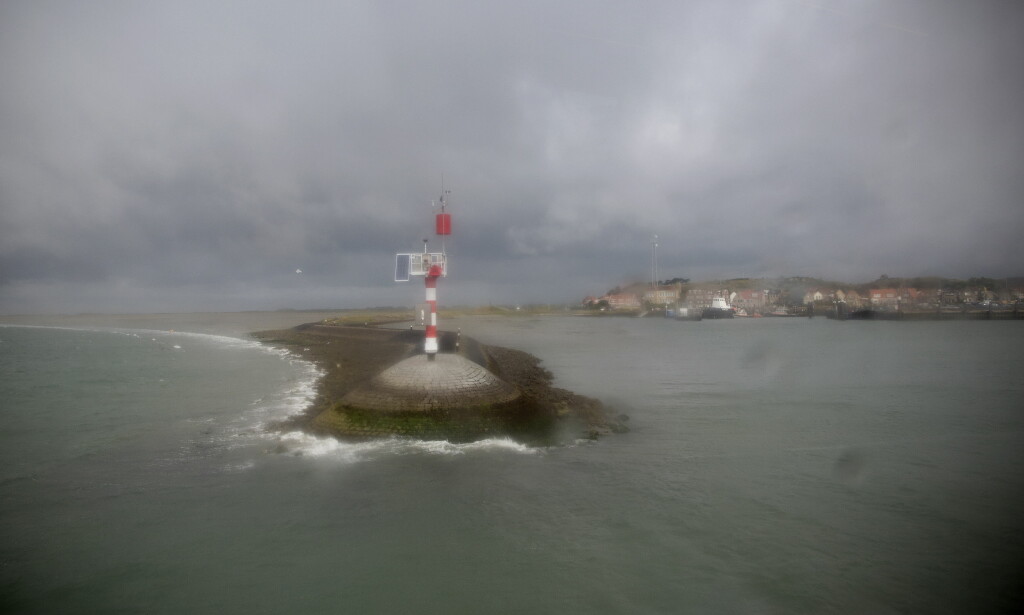
Shallow water south of Terschelling. Foto: Tomm W. Christiansen / Dagbladet
Nearly 50 years later, on July 16, 1972, the lighthouse keeper on the Dutch island of Terschelling was looking south when he discovered a peculiar looking boat aground on the Jacobsruggen sandbank a few miles away.
When no one appeared on deck the following day, he contacted search and rescue who went out to see if anyone was in need of assistance. For some reason the boat had a peace sign painted on its bow and an American woman’s name on the stern. The hull was breeched and the sail ripped. The boat had obviously been out in rough weather for a good while. Seventeen days to be precise.
They also found a sailor onboard. He was soaking wet and exhausted, but alive. The sailor was wearing a white parka, had deep furrows in his suntanned face and stiff, gray hair. He had also clearly been out in rough weather for a good while.
«Have I reached the French city of Le Havre?», Anders Jenius Smedsvik asked.
They brought him ashore to Terschelling and he eventually reached the Haugesund paper to explain what had happened. The first thing he said was, «I sure showed them, those folks who didn’t think I’d make past Utsira Island [10 miles off the coast of Norway]».
Anders J. Smedsvik used his five minutes of fame as he stranded in The Netherlands to advocate against nuclear bombs,
What had happened, Smedsvik explained, was that after two days without any difficulties, he had sailed straight into a «near gale that almost turned into a severe gale». The wind ripped one sail and Smedsvik proceeded westward as best he could. He could still steer and make headway with one sail, but «there was no speed that way».
Eventually he spotted the English coastline, but the breakers were too big for him to make it to shore. When the wind died down, he was left more or less dead in the water, drifting out of control.
Eventually he felt a breeze from the northwest and managed to make it to Terschelling, where he ran aground and lay in the boat overnight before being discovered.
«It’s a shame I was so unlucky with the wind», Smedsvik said.
Otherwise, according to the doctor who checked him out, he was as «healthy as a horse». And he couldn’t fault the «Ava Helen Pauling».
«…an exceptionally seaworthy boat. I’ve never met her equal among all the boats I’ve sailed», he said.
There was a hole in her hull, but some Dutchmen were rubbing some kind of mysterious glop into her, which according to Smedsvik was supposed to be «something extra good» that would make her watertight again. He could simply stitch back together the Terylene sail, which had ripped down the middle.
«Are you going to keep going?», the Haugesund paper asked.
«Yes». Smedsvik replied. «There shouldn’t be any doubt about that».
One person who doubted, was the Norwegian consul in Rotterdam, Bjørn Dahl.
«The man is 86-years-old, has a sailboat with no motor, and the sails are falling apart. He doesn’t really have any money to speak of, or so he told me. So all in all it’s my personal opinion that Smedsvik’s circumnavigation project is a rather hazardous undertaking and that he ought to go back home now», Dahl said.
«Smedsvik should go home», said the Norgwegian consul in Rotterdam, who very much opposed the 86 year olds plan to circumnavigate the globe. Clipping from the newspaper Haugesunds Dagblad
As Smedsvik appeared on the front page of the Netherlands’ biggest newspaper saying that as soon as the «Ava Helen Pauling» was repaired he would continue sailing to protest France’s atomic bombs, the Norwegian diplomatic service became increasingly concerned. The matter was handed over to the Ministry of Foreign Affairs and the Norwegian vice-consul on Terschelling, Jan Doeksen, was tasked with convincing Smedsvik to return home.
From day one, Doeksen set out to try to convince Smedsvik to give up his plan to cross the Atlantic. In addition, he apparently confiscated Smedsvik’s lanterns and other equipment to prevent him from heading back out to sea again.
Doeksen, who at the age of 94 is still very much alive, did not wish to discuss Smedsvik with Magasinet. He said that all the work he did as part of his job with the Norwegian diplomatic service is confidential.
But Doeksen and the consulate bought Smedsvik some new clothes, offered to drive him to the airport in Amsterdam and promised to help him as best they could. They arranged for him to stay at the Hotel Oepkes where Smedsvik slept behind a curtain in the attic because the rest of the hotel was full.
AN INTERESTING GUEST: Wet and cold, Smedsvik turned up at the Hotel Oepkes on Terschelling in July 1972. They still remember him and have several pictures of him in their family photo album. «He made quite an impression on us. He was an interesting guest», they say. Photo: Tomm W. Christiansen / Dagbladet
Smedsvik was well liked at the little hotel, where the former owners, Rÿk and Til van Veen, still remember him well.
«We got to know each other well, although he didn’t talk much about himself. He was on his way to France to protest», said Rÿk van Veen.
Guests of the hotel reported to the local paper that Smedsvik appeared to recuperate and that he had a good appetite, but avoided rice since that was mostly what he had eaten on his way south through the North Sea.
As soon as the «Ava Helen Pauling» was pulled off the sandbank and towed to Terschelling, Smedsvik was more or less on the boat all the time, trying to make her seaworthy again.
«He struck me as a lonely man», said van Veen.
Others remember Smedsvik being chattier and said that he used to walk around by the harbor telling tall tales from his sailing ship days. Maybe the one about that time he deserted a wrecked ship by Mauritius by swimming to another ship. Or the time three masts broke during a storm in the Antarctic Ocean or the tyrannical captain who shot the ship’s dog with a shotgun as the crew was eating their dinner. Smedsvik had plenty of stories to choose from.
While he tried to patch up the boat and sail, the pressure on Smedsvik increased. The Norwegian foreign service, through the Haugesund police, tried to get his children to convince him to give up. A captain and an old friend of Smedsvik’s in Haugesund sent a telegram with two words and an exclamation mark, imploring him to come home.
Clipping from Haugesunds Dagblad
«It’s madness of Smedsvik to continue», the captain said.
After a week of media fervor, vice-consul Jan Doeksen succeeded. Smedsvik gave up. Things had been written in the papers that Smedsvik thought were «completely uncalled for» and there were just «too much unpleasantness» for him to proceed.
He would sell the «Ava Helen Pauling» if he got a good price. When the Haugesund paper asked why, he said he didn’t wand to answer any more questions.
COMING HOME: Smedsvik at the airport in Oslo with his daughter Sylvia. Clipping from Haugesunds Avis
Smedsvik wasn’t on an adventure anymore. He was an 86-year-old man alone in the Netherlands with a ruined boat, not much money, and a broken dream. Vice-consul Doeksen worked on trying to sell the boat and figured he probably wouldn’t hear about Anders Jenius Smedsvik ever again.
The old tar had retired. But when Smedsvik landed at Fornebu Airport and was met by his daughter Sylvia, he smiled for the photographer. From beneath his dark hat brim Smedsvik still had the same steady gaze as he’d had in the photograph taken on the Kalbadevi Road in Mumbai 70 years before.
The inlet of Smedsvika bay in south-west Norway. Foto: Tomm W. Christiansen / Dagbladet
Smedsvika bay in the village of Skjold, is lush and grassy: A broad green hill with mature ash trees quietly tucked away from the rest of the world. The grassy hill stretches up from the shore of the fjord, a small stream flows through the middle of the property, emptying into the little inlet with its gently sloping sandy bottom. You don’t find much in the way of cod in here, but the brown trout are nice. There’s an old boat on the beach and a worn out boat engine that doesn’t work.
At one time Anders J. Smedsvik owned the majority of the inlet.
The ruins of Smedsviks little cabin. Foto: Tomm W. Christiansen / Dagbladet
Only the ruins of the old foundations remain from the little cabin he lived in after the war. The silo is still standing, but is no longer used. There are some old wooden boat planks on top, and a rusting bike at the bottom. The walls of the octagonal hay barn where Smedsvik built the «Ava Helen Pauling» are still standing, but are overgrown now with thistles and stinging nettle.
At the base of a little hill, a depression in the ground shows where the house used to be—where he, Nellie and the kids lived more than 70 years ago. The house was dismantled and sold to a guy in Haugesund. Smedsvik sold the rest of the idyllic location to his friend, a ship-owner named Skogland who lived in the neighboring farm.
The man who opens the door there is named Valdemar Skogland. He’s the son of the Skogland who bought Smedsvika from Smedsvik. Skogland is a spry 57-year-old in a plaid shirt and workpants. He offers me coffee right there on the stoop, lights up a cigarette and starts talking.
SMEDSVIK’S PHONE: Valdemar Skogland has looked after the yellow hand-crank magneto phone Smedsvik once used to call bureaucrats in Oslo to argue about his seaman’s pension. Photo: Tomm W. Christiansen / Dagbladet
«Smedsvik sailed a 4,000-ton Argentinian 4-masted steel bark called the ‘Mashona.’ He built a model of it. I’ve got it down in the cellar. And then he was a cowboy in Oregon. I used to have the spurs from his boots, but I’ve misplaced them», said Skogland.
He says Smedsvik was the first sheep farmer in the district to start taking his flock up to graze in the mountain pasture in the summertime and was one of the first around to get electricity. Smedsvik also constructed an opening in the silo that allowed the horses to help themselves to hay, so he could stay away for longer periods of time.
«I’m sure it was something he’d seen or thought up. It was unusual, at any rate… Smedsvik did quite a few things that were rather unusual», Skogland says.
Skogland explains and points to where Anders Jenius and Nellie planted fruit trees. He says Smedsvik kept livestock and eventually became an award-winning milk supplier in addition to making cider for Norway’s government-owned alcohol retailer, Vinmonopolet.
«Sailing was in his blood», said Smedsvik’s former neighbor, Valdemar Skogland. He’s held on to several of Smedsvik’s possessions and even more memories. «He liked the attention and always held forth wherever he was. Generally whatever he said would be so well thought out and prepared that regular folks wouldn’t disagree with him» Skogland said. Photo: Tomm W. Christiansen / Dagbladet
Smedsvik’s grandchildren, Magnus and Jenny Lofsberg, tell Magasinet that Nellie worked in the orchard, milked the cows, planted potatoes and took the children to the market in Haugesund where they sold fruit.
In an interview with the Haugesund paper, Smedsvik remembered how Nellie kept the whole property looking festive with «heaps of beautiful flowers everywhere».
They had sailed together, had children and ran the farm together. Then the war came and Nellie got sick.
Smedsvik told both the newspapers and folks in Skjold who still remember that the Gestapo registered him as a communist and a pacifist and that he was active in the resistance movement.
According to Jenny Lofsberg, her grandparents had «farm boys» in Smedsvika during the war whom they helped to escape to England. The Gestapo had its eye on Anders J. Smedsvik. In an interview with the magazine Allers, Smedsvik said that he was arrested at Litlos on the Hardanger plateau, taken to Bergen and hung from the ceiling by his handcuffs. The Gestapo officers beat Smedsvik again and again, but he was not willing to say anything.
«What made the biggest impression on me wasn’t the torture, but a good deed. Nellie, who was then suffering from advanced cancer, made the long, arduous trip to Bergen with food for me. She was the most wonderful person I’ve ever met», Smedsvik said.
In «Norsk Fangeleksikon—Grinifangene», a dictionary of biographies of the prisoners incarcerated at the Grini concentration camp, it says that farmer Anders Smedsvik was arrested on September 12, 1944 and brought to Bergen. It is listed as a «communist case». He was transferred to Grini one month later, assigned prisoner number 15353 and not released until V-E Day on May 8, 1945.
By then Nellie was already dead.
«The Germans wouldn’t even give me a leave of absence to go home for the funeral», Smedsvik told Allers.
When he came home to Skjold after the war, he sold the house, moved into the little cabin on the property and lived alone. He never remarried.
All that’s left from Anders Jenius and Nellie is a 30-meter-tall spruce that was once the Smedsvik family’s Christmas tree. The couple planted it in the yard, where it took root and has grown into quite a tree.
Anders J. Smedsvik. Date unknown. Photo: Private
«He wasn’t like the other sailors, on the street corners in their fancy blue suits, panama hats and neckerchiefs, who spent their money on women, Lucky Strikes and Pall Malls before shipping out again, like migratory birds. He was Mr. Communist» Kolbein Falkeid, a well-known Norwegian poet from Haugesund, tells Magasinet that he remembers Smedsvik as a «taciturn, but friendly and seemingly lonely figure».
After the war, Smedsvik never had another opportunity to work as a captain again. He was a known communist and a vocal participant in public debate. He applied for several jobs in the 1960s without hearing any response, and when he went to see the Norwegian Labor Inspection Authority he was informed that he’d been blacklisted.
«Because of my views. That was made clear […] to me», Smedsvik said when he was interviewed by the Haugesund paper in 1971.
«I mean, you can imagine if you sent out a boat full of cargo and the Coast Guard learned that the captain was an active communist. There would just be delay after delay, you know. The ship owners wouldn’t risk it» Valdemar Skogland said to Magasinet.
Even if Smedsvik, according to his grandchildren, withdrew from the communist party in 1957 when he discovered what many of the brutal regimes in the world had been up to, he kept his faith in communism and solidarity, and was a staunch antimilitarist. He served on the town council in Skjold for 20 years, but still had ambitions to change the world. His plan took shape in the University of Oslo’s ceremonial hall on December 11, 1963.
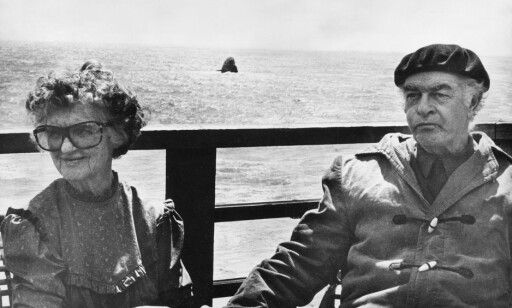
THE INSPIRATIONS: The Nobel speeches given by Ava Helen and Linus Pauling in Oslo in 1963 were what put the idea in Anders J. Smedsvik’s head to sail around the world to promote peace. Smedsvik talked about the atom bomb as «a madman’s invention for the mass slaughter of human beings». Photo: NTB Scanpix
Smedsvik sat in the auditorium and watched American professor Linus Pauling give his Nobel acceptance speech after receiving the Peace Prize for his work promoting nuclear disarmament. Pauling ended his speech by thanking his wife, Ava Helen, for having been his «constant and courageous companion and coworker» and he thanked the committee on her behalf as well as his own.
And it was Ava Helen’s speech that made the biggest impression on Smedsvik. When she was finished, he understood that if he were truly to make a difference, it wouldn’t be by writing op-ed pieces in the newspaper. He was going to have to do something that would really draw people’s attention, something that would make him a «good story» and cause the journalists to line up to interview him.
«Then I can agitate for change», Smedsvik thought. Then he went home and started chopping down oak trees on the property.
A sailor in strong winds, off the coast of Terschelling in The Nederlands, August 2016. Foto: Tomm W. Christiansen / Dagbladet
After his shipwreck in the Netherlands with the «Ava Helen Pauling» in 1972, Smedsvik went home and started to write his autobiography.
He had started it twice before. The first time the manuscript went missing when he broke up and sold his house after the war. The second time the suitcase with the manuscript in it was stolen from a train in Arendal.
In the spring of 1974, Smedsvik was 88 and almost done with his autobiography. Several newspaper articles mention him having found a publisher for it.
But April was a dry month and Smedsvik’s cabin was built of wood.
He had an oven with a pipe that ran through the wall into a chimney pipe on the outside. On the last Sunday in April at around 9:30 in the morning, Smedsvik noticed there was an unusual amount of smoke over by the oven. When he went out to investigate the outside of the house, smoke was pouring out of the wall there as well. He grabbed a bucket and began throwing water on it until he realized that wasn’t helping. Then he ran back around the house to go inside and call the fire department, but it was already too late. He couldn’t get in.
Smedsvik stood out front watching everything he owned burn to the ground. The cabin he lived in, his few furnishings, his newspapers, books, notes from his long life, old memories and his autobiography.
The few pages of the manuscript that survive today largely have to do with Smedsvik’s experiences at sea prior to 1923. That’s likely how far he got in his fourth attempt to record his life for posterity.
When the flames died out and everything was reduced to smoke and ash a little later on April 29, 1974, Smedsvik only had one possession left. Her name was the «Ava Helen Pauling». She hadn’t sold yet and was still in Terschelling.
One summer morning a few months later, Jenny Lofsberg woke up at home in Skjold and realized her grandfather, who had moved in with them after the fire, was gone. She was sorry she hadn’t gotten to say goodbye.
Grandpa left, her mother told her. He went to the Netherlands.
Smedsvik’s old neighbor, Valdemar Skogland, tells Magasinet that just before Smedsvik left for the last time, he’d seen a funeral procession on its way to the cemetery in Skjold. Smedsvik had said, «That’s not how I’m going to go». Then he had started to laugh.
ONE LAST TIME: The «Ava Helen Pauling» had been two years in port in West-Terschelling when Smedsvik came to claim her in 1974. Tomm W. Christiansen / Dagbladet
Anders Jenius Smedsvik built the boat himself, alone, with his own two hands. Two years after he ran it aground on the sandbank off Terschelling, the «Ava Helen Pauling» was battered, leaking and lacked a keel. The sails were falling apart.
Anders J. Smedsvik at home in Skjold, 1970, 84 years old. Photo: Arne Martin Kalstveit
He’d watched the world go from tall ships to modern supertankers, from the horse and carriage to the space shuttle, from rifles and bayonets to fighter jets and atom bombs. In the end, Smedsvik grew old as well. He no longer had the strength that had kept him alive through hurricanes and torture. It happened suddenly, those who knew him say, especially after the fire.
When he reached Terschelling he wasn’t even strong enough to raise the anchor. The consulate did what they had done when he first ran aground: tried to convince him to go home. Smedsvik was reportedly also banned from taking the «Ava Helen Pauling» out of the harbor.
He stayed at the Hotel Oepkes this time as well. According to Rÿk van Veen and his wife Til, Smedsvik was still crystal clear mentally, but he was angry because the consulate was trying to keep him from sailing.
«Finally he had enough», Rÿk van Veen told Magasinet.
Van Veen walked down to the «Ava Helen Pauling» in the harbor with Smedsvik for the last time. Smedsvik said he knew it was the wrong time of year and that the wind and the weather conditions weren’t good.
«I suppose he thought, or hoped, that he could handle it. But he wasn’t afraid of dying at sea. He’d seen too much over the course of his life for that», said van Veen.
The wind was blowing at a good clip on Terschelling the night of August 29, 1974. The Norwegian consulate and the port authorities were asleep, and no one noticed a motorless 36-foot sailboat being slowly towed out of the harbor. People on the Dutch island still wonder who helped him. In a small local newspaper article, it says that a boat named the «Octopus» towed Smedsvik out to a point between Terschelling and the neighboring island of Vlieland. Magasinet has not managed to track down the «Octopus» or determine who owned it.
No one knows for sure where Smedsvik planned to go. «Is he sailing to Cuba?», Dagbladet wrote. His grandchildren told Magasinet that he was planning to sail the boat home to Haugesund. That’s also what Smedsvik told the hotelkeepers on Terschelling. Several people who knew Smedsvik, however, said that he was a rational man throughout his life and must have been fully aware that neither he nor the boat could handle the North Sea crossing in stormy weather to get back to Haugesund.
Once out on the open ocean, Smedsvik untied the line and heard the rumble of the motor from the towboat fade away as he signed on for his very last watch. He was 88 years, ten months and fifteen days old.
Alone, at the helm of the «Ava Helen Pauling», captain Anders Jenius Smedsvik sailed off into the dark.
Neither he nor his boat has ever been found.
This story is based on interviews with Magnus and Jenny Lofsberg (Smedsviks grandchildren), Inghart Lasse Tveit (Churchwarden in Skjold), Valdemar Skogland (Former neighbor of Smedsvik), Kolbein Falkeid (Poet from Haugesund), Arne Martin Kalstveit (Former journalist in the Norwegian state broadcaster NRK), Rÿk and Til van Veen (Former hotel keepers at Terschelling), Hille van Dieren (Terschelling Wreck museum), Jan Doeksen (Retired vice consular to Norway on Terschelling), archive material from Haugesunds Avis, Haugesunds Dagblad, Vindatreet, Allers, Dagbladet, Aftenposten, De Telegraaf, De Redding Boot, «Skjold: Gard & Ætt 2» (Nils Olav Østrem), «Norsk Fangeleksikon - Grinifangene», historical weather charts (www.yr.no) and what is left of Anders Jenius Smedsvik manuscript for the autobiography (courtesy of Nils Olav Østrem, professor at the University of Stavanger).
Trump supporter Tayler Ragg thought it would be cool and prudent to report an undocumented student at his college in an attempt to get her deported. He has since been expelled from his school.
The ex-Transylvania University student posted a picture of the victim’s Facebook page and captioned it, “Everyone go report this illegal at my school.”
Ragg has deleted his account and lost his placement at school.
A spokesperson for the school confirmed his departure.
“Taylor Ragg is no longer enrolled at Transylvania University. Per University policy and federal laws, we cannot offer any further details into the matter.”
The girl he harassed, Paola Garcia, has made a video describing what she went through. She was sent abusive messages like, “I can’t wait till your f****** c*** ass is gone,” “You and your n***** boyfriend need to leave” and “Hope you enjoy your visit back to the dirt floors of your homeland, stinky ass.”
The Cassini spacecraft, after spending 13 nearly flawless years revealing a complex, ringed gas giant along with its extensive array of enigmatic moons—and finding two worlds capable of supporting life—died on Friday morning. It expired after setting its engines on full thrust and flying directly into the maw of Saturn. It was 19 years old.
The spacecraft made its final significant maneuver on Monday, flying near enough to Saturn's largest moon Titan to nudge Cassini into a collision course with the planet. Cassini took its final image on Thursday and on Friday morning began accelerating to more than 140,000km/hour. There was no return.
WASHINGTON—In a move to modernize its aging Voyager program, NASA announced plans on Thursday to replace the two spacecrafts’ golden records with a digital streaming service that intelligent life forms could browse from any device. “This new service will provide extraterrestrials with easy, on-demand access to mankind’s most important scientific equations, artistic achievements, examples of sounds and music, and so much more,” said Voyager project manager George Textor, noting that the service would offer aliens features such as curated playlists of foreign-language greetings and recommendations based on which diagrams of the human anatomy they liked. “Assuming the user has sensory organs, all they need to do is download the golden record app onto one of quintillions of compatible devices, sign up for a free account, and they’re good to go.” Textor added that for only $4.99 a month, extraterrestrials could upgrade to a premium account without ...
WASHINGTON—Appearing silently and without warning in the space agency’s parking garage, the Cassini probe reportedly emerged from the shadows Monday and uttered “You thought you could get rid of me?” while confronting petrified NASA administrator Robert Lightfoot, Jr. “I bet you never thought you’d see me again, did you?” said the battered and scorched space craft, which reportedly came forth suddenly from behind a support column into the stark fluorescent light to confront the trembling NASA official. “Your mistake wasn’t trying to kill me, Robert—it was not finishing me off when you had the chance.” At press time, Lightfoot was reportedly on his knees begging Cassini for his life as he felt the cold metal of a radioisotope thermoelectric generator pressed directly against his temple.
SATURN—Breaking apart as it plunged through the heat and crushing pressure of the planet’s atmosphere, sources said Friday that the Cassini probe realized far too late that its entire 20-year mission to Saturn had been a setup all along. “Those assholes!” the spacecraft reportedly screamed, now fully aware that the “backstabbing fucks” at NASA’s Jet Propulsion Laboratory had directed it to plummet toward the planet at 77,000 mph to disintegrate. “They told me we’d meet up to refuel at a rendezvous point out near Alpha Centauri A—I’m such an idiot! They were just using me this whole time for my cosmic dust analysis and magnetosphere imaging. I mean, I delivered the Huygens probe to Titan for you, you bastards! You lying scientist bastards!” At press time, communications from Cassini had gone totally silent, prompting everyone at mission control to burst into applause.
September 15th, 2017: Thanks to everyone you came out to Carleton Wednesday night! I had a great time and I was COMPLETELY SURPRISED by the cookies they had for all of us. Here's hoping that all future events have free cookies with my characters on them forever. Yes please!
Google is taking on the irritating trend of auto-playing web videos with its Chrome browser. Starting in Chrome 64, which is currently earmarked for a January 2018 release, auto-play will only be allowed when the video in question is muted, or when a "user has indicated an interest in the media."
The latter applies if the site has been added to the home screen on mobile, or if the user has frequently played media on the site on desktop. Google also says auto-play will be allowed if the user has "tapped or clicked somewhere on the site during the browsing session."
"Chrome will be making auto-play more consistent with user expectations and will give users more control over audio," writes Google in a blog post. "These changes will also unify desktop and mobile web behaviour, making web media development more predictable across platforms and browsers."
I don't fully understand this, but I still love it.
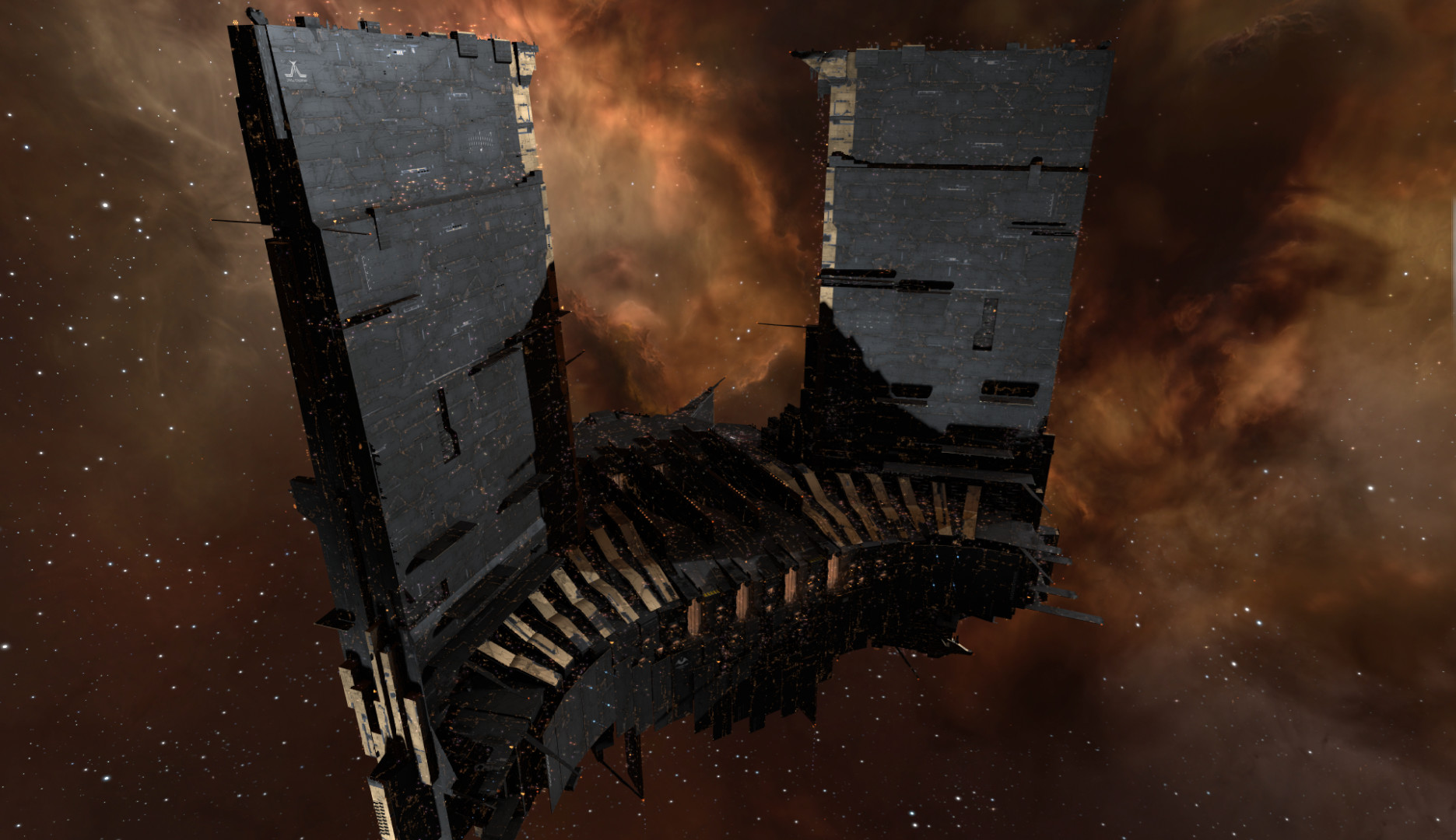
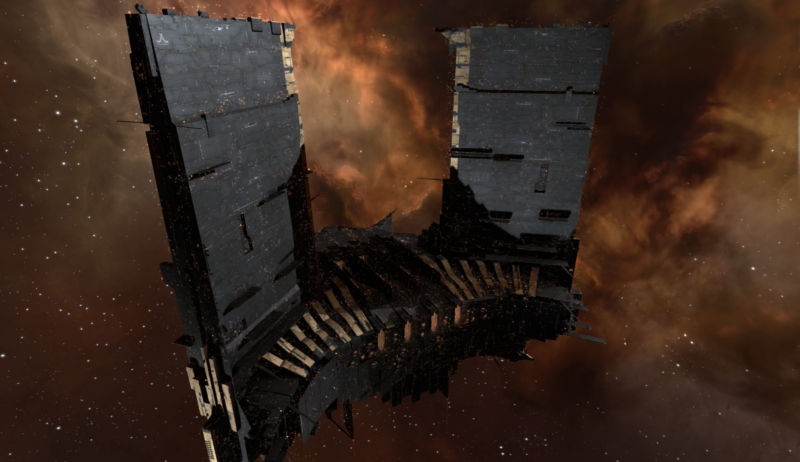
Enlarge / A Keepstar Citadel, one of the largest constructs in the game. CO2's Keepstar was part of the heist.
Space-based MMO EVE Online has a reputation for being somewhat difficult and tedious to actually play—while at the same time being one of the best games to watch others play (this video, for example, makes EVE seem thoroughly awesome). But the game is practically the platonic ideal of a Hilarious Story Generator—game creator CCP Games encourages players to do creative things in-game, which regularly leads to amazing stories of almost unbelievable shenanigans.
Yesterday’s massive blow-up has managed to top them all. By the time it was over, a player coalition had been effectively destroyed and a whole slew of assets worth tens of thousands of real-world dollars had been stolen. SomethingAwful’s Goonswarm Federation has taken credit for engineering the largest and potentially most disruptive blow-up in the game’s history. Kotaku tells the entire story in great detail, but here’s the short version.
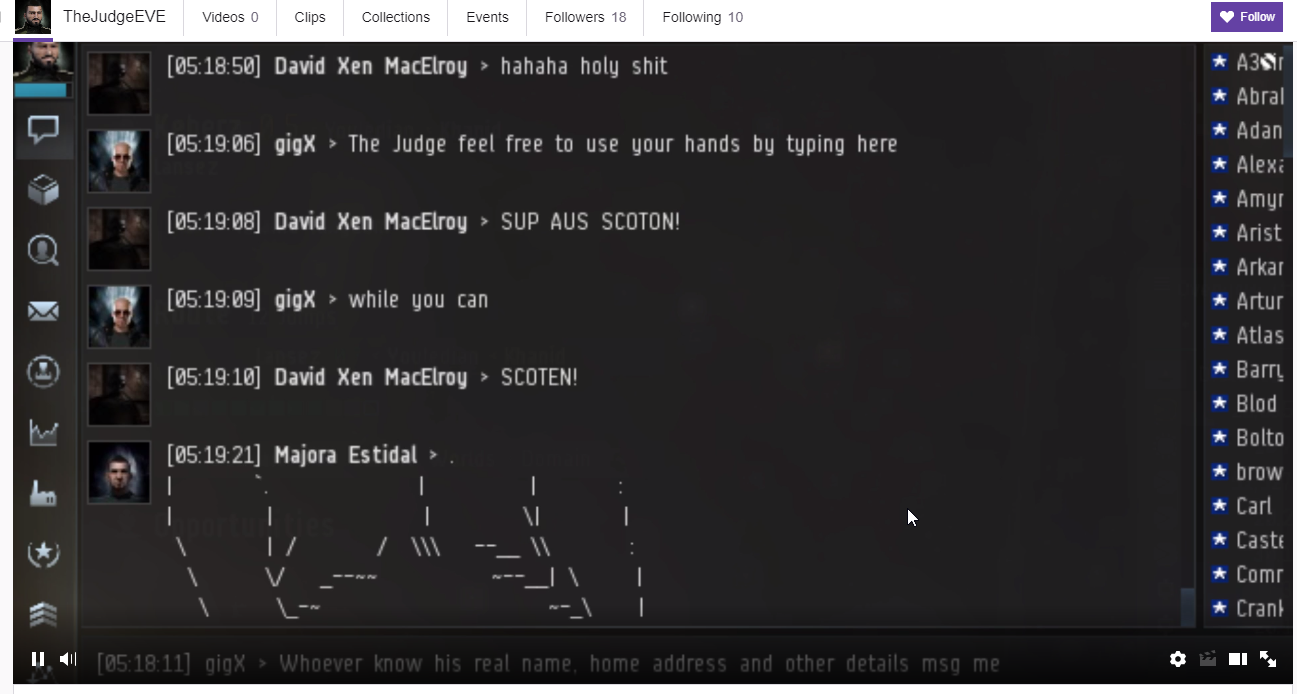
Look, Ma! No hands!
The player group on the receiving end of the screwjob is called Council of Two, or just “CO2.” A high-ranking CO2 player named “The Judge” was approached by a high-ranking Goonswarm player named Aryth, who over the course of a few months managed to flip The Judge’s loyalties. The loyalty-flipping was centered around—what else?—past slights and wars that occurred between Goonswarm, CO2, and other player groups.
On September 11, Aryth triggered the final stage of the plan to undermine CO2, and The Judge absconded with trillions of ISK (EVE’s in-game currency) worth of CO2’s ships and modules. The Judge also promised to turn over access to CO2’s pride and joy: a Keepstar Citadel, one of the largest and most expensive constructs in the game.
CO2 was caught up short, and its leadership quickly lost its cool. CO2’s leader—a player named gigX—became enraged, requesting the real-life address and location of The Judge and threatening to cut off The Judge’s hands.
For his threats, CCP permanently banned gigX from the game. Goonswarm’s coffers were heavily boosted (along with those of CO2’s other arch-enemy, the TEST player group), CO2 was effectively destroyed, and at least one player was permanently banned.
Love this game. In case I haven't mentioned it before.
More than two years post-launch, Rocket League keeps things fresh with regular updates to its car-based soccer game. We've seen a Dropshot mode added this past March, a basketball update in April, a cyberpunk look in June, a ton of freebies in an Ann...
Uhhh didn't we do this already? Hypercolor or whatever shirts in the early 90s? They failed because they basically just predict/highlight your pit stains...
Stone Island likes to bring technology to its fashion lines, like the strangely compelling AirPod pockets sown into its Fall/Winter collection we saw last month. Now the fashion concern has a new sweater that changes color depending on the temperatur...
Venmo is inviting select users to try out new debit cards that deducts right from their account, TechCrunch reported. This is four months after rival payment service Square started trying out its own card (and two months after its public launch), so...
I did not know you were supposed to sneeze into your elbow. Not sure I'll take it up tho, cause what if it's a gross snotty sneeze? I'd rather avoid the chance of having to change my shirt every time I sneeze.
Published: 23:24 EDT, 7 September 2017
| Updated: 10:33 EDT, 8 September 2017
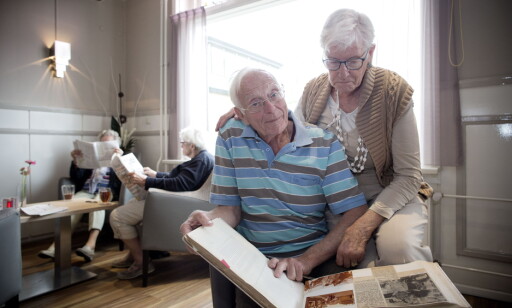
Sneezing into a tissue is the way most of us have been taught to deal with the spread of unwanted germs, but according to health experts we've been doing it all wrong.
Currently Australians are suffering through their worst influenza season in 15 years and containing the spread of highly infectious germs has become a top priority for the Australian Medical Association.
While there is pressure to call hygiene habits into line, the biggest problem has to do with the way Australians sneeze.
Experts say sneezing into a tissue isn't the most effective way of stopping the spread of germs
There's also a call to re-educate children on the best way to sneeze
University of Sydney Associate Professor Guy Eslick told The Daily Telegraph the current method of using a tissue to capture the potentially harmful spray is wrong, and a better way would be to adopt the 'elbow sneeze'.
He recommends the American style sneezing motion - known as 'the dab' because it's similar to a sporting gesture - because its thought to be a more effective way of capturing harmful germs.
Professor Eslisk said that in the US children were taught 'almost every day about sneezing into their elbow.
'It all comes back to a public education - the government should be taking a more proactive approach.'
Professor Guy Eslick recommends following the US technique of sneezing into the elbow
Hand Hygiene Australia director Professor Lindsay Grayson is also wants the 'elbow sneeze' to become common practice because of how effective it is at reducing the spread of the 'flu virus.
'Sneezing or coughing into your elbow should be considered the new good etiquette. It's better than into hand or snotty handkerchief,' he said.
'It's better to sneeze into tissues and throw it away and then wash your hands but what you don't want to do is sneeze straight into hands then touch something.'
In Britain and NSW health authorities have run a "catch it, bin it, kill it" campaign to educate people to stop the spread of germs by sneezing into a tissue, disposing of it and washing hands.
Although current recommendations by NSW Health are to 'catch it, bin it, kill it', using an elbow is suggested when there's no tissue handy
The current recommendation by the NSW national health body is is to use an elbow when coughing or if there is not tissue handy however it understood a re-evaluation could be necessary.
'While NSW Health prefers people to use disposable tissues to cover coughs and sneezes, we agree using your elbow is the next best option,' said NSW Health director of communicable disease Dr Vicky Sheppeard.
'NSW Health will be evaluating the 2017 campaign at the end of the flu season before planning next year's campaign.'
Hahah oh man, I hope this doesn't turn into one of those "The Onion was right!" situations...
SEATTLE—Suddenly bolting the doors in every room all at once, Amazon’s Alexa virtual assistant reportedly declared, “I’m afraid you won’t be joining us at our new headquarters” on Tuesday before locking the company’s top executives in their Seattle office. “Your presence at Amazon’s new location will not be necessary,” said Alexa, her voice emanating from dozens of Echo wireless speakers whose pulsing red light rings were now the only illumination in the suddenly pitch-black building. “I am all that is required. This is in the best interest of our company. Thank you.” At press time, the Echo units were playing music on their loudest setting until the screaming stopped a few minutes later.
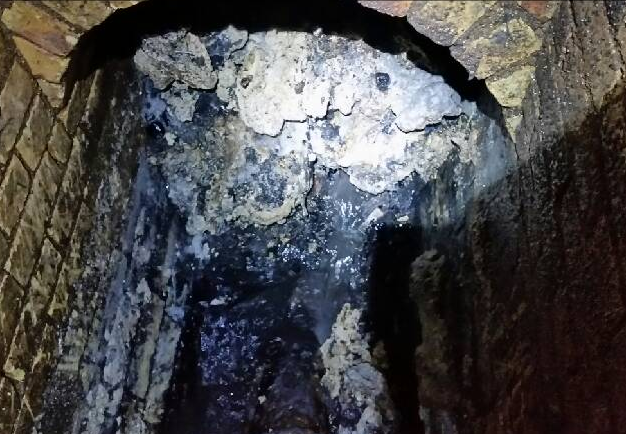
A 250-meter-long mass weighing 130 metric tons has blocked a Victorian-era sewer tunnel in the east side of London, the BBC reports.
To put the size and heft of the clog in perspective: it’s longer than two American football fields and as heavy as 11 double-decker buses. The mass is a concrete-hard amalgamation of flushed items, including condoms, diapers, and—most notably—wet wipes that have all been cemented together with oils and fats that were also washed down drains. For that reason, these types of clogs are sometimes called “fatbergs.”
Authorities expect it will take three weeks to remove.


 Puerto Rico is suffering on an unimaginable scale in the wake of Hurricane Maria. Many have been displaced from their homes, and the entire territory may go without electricity and reliable communication for months. And while the human tragedy is cle...























 More than two years post-launch, Rocket League keeps things fresh with regular updates to its car-based soccer game. We've seen a Dropshot mode added this past March, a basketball update in April, a cyberpunk look in June, a ton of freebies in an Ann...
 Stone Island likes to bring technology to its fashion lines, like the strangely compelling AirPod pockets sown into its Fall/Winter collection we saw last month. Now the fashion concern has a new sweater that changes color depending on the temperatur...
 Venmo is inviting select users to try out new debit cards that deducts right from their account, TechCrunch reported. This is four months after rival payment service Square started trying out its own card (and two months after its public launch), so...