LOL I love this. Wonder if I need actual losses in order to sue them in small claims court tho...
Photo by Alex Wong/Getty Images
Equifax’s security failure affected 143 million US consumers, or 44 percent of the US population. To add insult to injury, Equifax waited over a month before revealing the security breach it had suffered. If you’re one of the millions affected by the breach, a chatbot can now help you sue Equifax in small claims court, potentially letting you avoid hiring a lawyer for advice.
Even if you want to be part of the class action lawsuit against Equifax, you can still sue Equifax for negligence in small claims court using the DoNotPay bot and demand maximum damages. Maximum damages range between $2,500 in states like Rhode Island and Kentucky to $25,000 in Tennessee.
You still have to serve the legal forms yourself
The bot, which launched in all 50 states in July, is mainly known for helping with parking tickets. But with this new update, its creator, Joshua Browder, who was one of the 143 million affected by the breach, is tackling a much bigger target, with larger aspirations to match. He says, “I hope that my product will replace lawyers, and, with enough success, bankrupt Equifax.”
Not that the bot helps you do anything you can’t already do yourself, which is filling out a bunch of forms — you still have to serve them yourself. Unfortunately, the chatbot can’t show up in court a few weeks later to argue your case for you either. To add to the headache, small claims court rules differ from state to state. For instance, in California, a person needs to demand payment from Equifax or explain why they haven’t demanded payment before filing the form.
Attorney Scott Nelson, from the advocacy organization Public Citizen, says he isn’t convinced a chatbot can successfully win a lawsuit. “I am not inclined to think it would be a panacea. Filing and winning a small claims case takes more than just filling in a form.”
Still, chatting with the bot on a friendly blue screen can help take the guesswork out of small claims court procedures. All you have to do is state your name and address and it generates eight pages of lawsuit documentation in PDF form for you to print and file.
Equifax seems like it’s going to put up a fight, so help in the form of chatbots can’t hurt. Peter Vogel, a trial and transactional lawyer in Texas, says, “I believe that Equifax will fight class action lawsuits [and] small claims courts actions. That does not mean that Equifax will prevail, but ... given the scope of the 143 million individuals, it strikes me that Equifax will want to make this as complicated as possible for consumers.”
More and more supercars from the likes of Ferrari and Porsche are using electric motors to juice their torque. Mercedes-Benz wasn't about to be left out and has just introduced the 1,000 horsepower AMG Project One ahead of the Frankfurt Auto Show. Th...
CASTLE FALGAR—Wondering what the man could possibly have been planning with such a purchase, video game shopkeeper Eldoth Silvershield told reporters Tuesday that he was beginning to get suspicious of a customer who had recently bought 800 bombs in a single visit. “Usually I don’t ask questions, but this guy just walked straight into my store and dropped, like, a hundred-thousand gold pieces on bombs in one go,” said Silvershield, noting with concern that the customer offered no explanation whatsoever of his intentions for the explosives, even as he added 450 flaming arrows to his order. “Then he said he was going to need magic armor and every healing elixir I had in stock. I mean, who buys all that unless they’re really planning on doing something really, really bad? Maybe I should tell a knight or something?” At press time, Silvershield had heard what transpired at ...
Ok now that plants have memories, what the heck are we supposed to eat anymore?!
Monica Gagliano began to study plant behavior because she was tired of killing animals. Now an evolutionary ecologist at the University of Western Australia in Perth, when she was a student and postdoc, she had been offing her research subjects at the end of experiments, the standard protocol for many animals studies. If she was to work on plants, she could just sample a leaf or a piece of root. When she switched her professional allegiance to plants, though, she brought with her some ideas from the animal world and soon began exploring questions few plant specialists probe—the possibilities of plant behavior, learning, and memory.
“You start a project, and as you open up the box there are lots of other questions inside it, so then you follow the trail,” Gagliano says. “Sometimes if you track the trail, you end up in places like Pavlovian plants.”
In her first experiments with plant learning, Gagliano decided to test her new subjects the same way she would animals. She started with habituation, the simplest form of learning. If the plants encountered the same innocuous stimulus over and over again, would their response to it change?
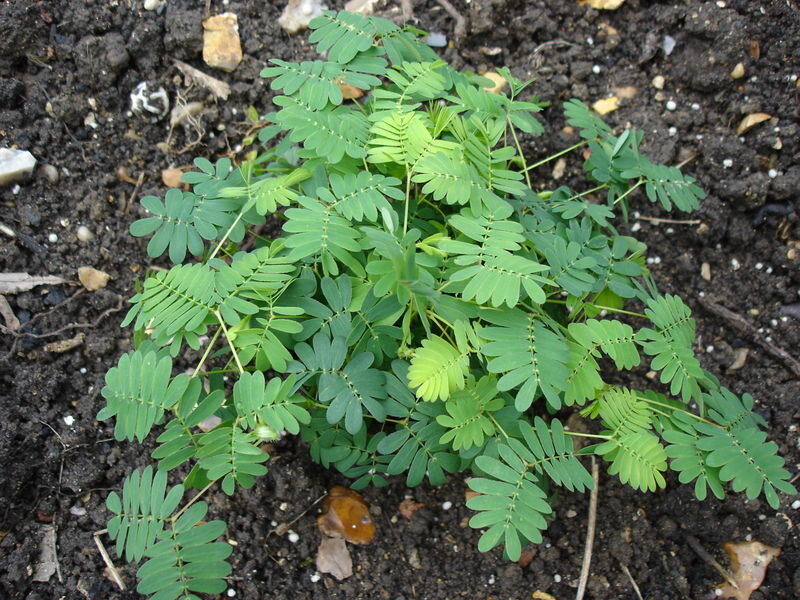
At the center of the experiment was the plant Mimosa pudica, which has a dramatic response to unfamiliar mechanical stimuli: Its leaves fold closed, perhaps to scare away eager herbivores. Using a specially designed rail, Gagliano introduced her M. pudica to a new experience. She dropped them, as if they were on a thrill ride in an amusement park for plants. The mimosa plants reacted. Their leaves shut tight. But as Gagliano repeated the stimulus—seven sets of 60 drops each, all in one day—the plants’ response changed. Soon, when they were dropped, they didn’t react at all. It wasn’t that they were worn out: When she shook them, they still shut their leaves tight. It was as if they knew that being dropped was nothing to freak out about.
Three days later, Gagliano came back to the lab and tested the same plants again. Down they went, and … nothing. The plants were just as stoic as before.
This was a surprise. In studies of animals such as bees, a memory that sticks for 24 hours is considered long-term. Gagliano wasn’t expecting the plants to keep hold of the training days later. “Then I went back six days later, and did it again, thinking surely now they forgot,” she says. “Instead, they remembered, exactly as if they had just received the training.”
She waited a month and dropped them again. Their leaves stayed open. According to the rules that scientists routinely apply to animals, the mimosa plants had demonstrated that they could learn.
In the study of the plant kingdom, a slow revolution is underway. Scientists are beginning to understand that plants have abilities, previously unnoticed and unimagined, that we’ve only ever associated with animals. In their own ways, plants can see, smell, feel, hear, and know where they are in the world. One recent study found that clusters of cells in plant embryos act a lot like brain cells and help the embryo to decide when to start growing.
Of the possible plant talents that have gone under-recognized, memory is one of the most intriguing. Some plants live their whole lives in one season, while others grow for hundreds of years. Either way, it has not been obvious to us that any of them hold on to past events in ways that change how they react to new challenges. But biologists have shown that certain plants in certain situations can store information about their experiences and use that information to guide how they grow, develop, or behave. Functionally, at least, they appear to be creating memories. How, when, and why they form these memories might help scientists train plants to face the challenges—poor soil, drought, extreme heat—that are happening with increasing frequency and intensity. But first they have to understand: What does a plant remember? What is better to forget?
Trofim D. Lysenko. Bettmann/ Getty Images
Scientists have shied away from studying what might be called plant cognition in part because of its association with pseudoscience, like the popular 1973 book The Secret Life of Plants. Certain types of plant memories were mixed up, too, with discredited theories of evolution. One of the most well-understood forms of plant memory, for example, is vernalization, in which plants retain an impression of a long period of cold, which helps them determine the right time to produce flowers. These plants grow tall through the fall, brace themselves during winter, and bloom in the longer days of spring—but only if they have a memory of having gone through that winter. This poetic idea is closely associated with Trofim Lysenko, one of the Soviet Union’s most infamous scientists.
Lysenko discovered early in his career that by chilling seeds he could turn winter varieties of grains, normally planted in the fall and harvested in the spring, into spring varieties, planted and harvested in the same growing season. He was, in essence, implanting a false memory of winter in plants that need a cold signal to grow. Despite this insight, Lysenko was not a very good scientist. But after he published early work on vernalization in the late 1920s, the Soviet government, looking for an agricultural panacea, inundated him with money and prestige. As Lysenko gained power, he made outrageous claims about his original idea. Vernalization, he said, could transform all kinds of plants, including potatoes and cotton, and boost the bounty of Soviet lands.
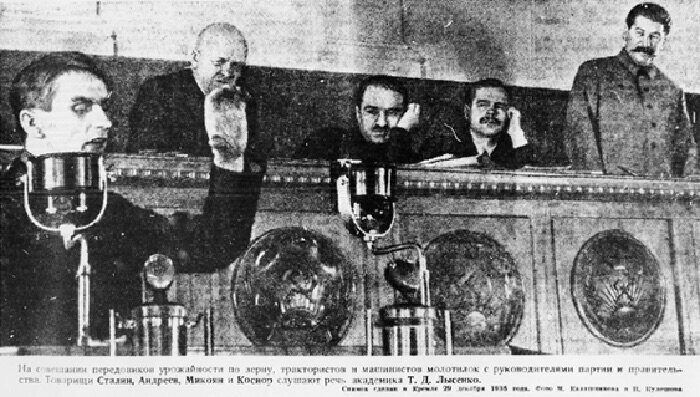
Lysenko speaking at the Kremlin, 1935. Joseph Stalin stands on the right. Public Domain
The evidence for these claims was scant, but that didn’t matter. By 1936, Lysenko led a major research institute and was a member of the Central Executive Committee, the nexus of Soviet power. With the help of a government-appointed philosopher, Lysenko developed a theory of his work that mixed Marxism with the discredited ideas of French naturalist Jean-Baptiste Lamarck. The offspring of vernalized plants, he argued, could inherit that acquired characteristic, so that by changing their environment he could create new breeds of staple crops in a fraction of the time of traditional breeding techniques—just as, by changing the environment of the working class, communism could create a new breed of men.
“All the claims were based on a principle of malleability, that genes were not all that important,” says Loren Graham, an emeritus historian at Harvard who has tracked Lysenko’s career. “Lysenko was a little unclear on the existence of genes.”
In practice, Lysenko’s theory fell apart. He couldn’t breed new varieties of grains that inherited memories of winter. He had promised fields fuller than ever before, but his ideas couldn’t save the country from famine in 1946 and ’47. And when geneticists challenged his ideas, Lysenko denounced them, which led to imprisonment and death for hundreds of scientists. He is often said to be responsible for creating a missing generation of Russian geneticists, who either gave up their work, left the country, or were punished for going against him. Without them, Lysenko never could see where he was right (plants could form these memories of winter) and where he had gone wrong (this type of memory, at least, cannot be transmitted across generations). It took a generation of scientists, working in the West, to uncover the true secrets of the phenomenon Lysenko claimed as his own but never truly understood.
Even as Lysenko was making his grandiose claims, scientists on the other side of the Iron Curtain were trying to understand how vernalization works. Some of the most important investigations to examine this mystery took place in Tübingen, Germany, in the lab of Georg Melchers and Anton Lang. Melchers was a leading biologist of plant development, and Lang was a stateless, refugee Russian biologist. Together they studied vernalization in search of the biochemical secret of flowering, a hypothetical plant hormone scientists called “florigen.”
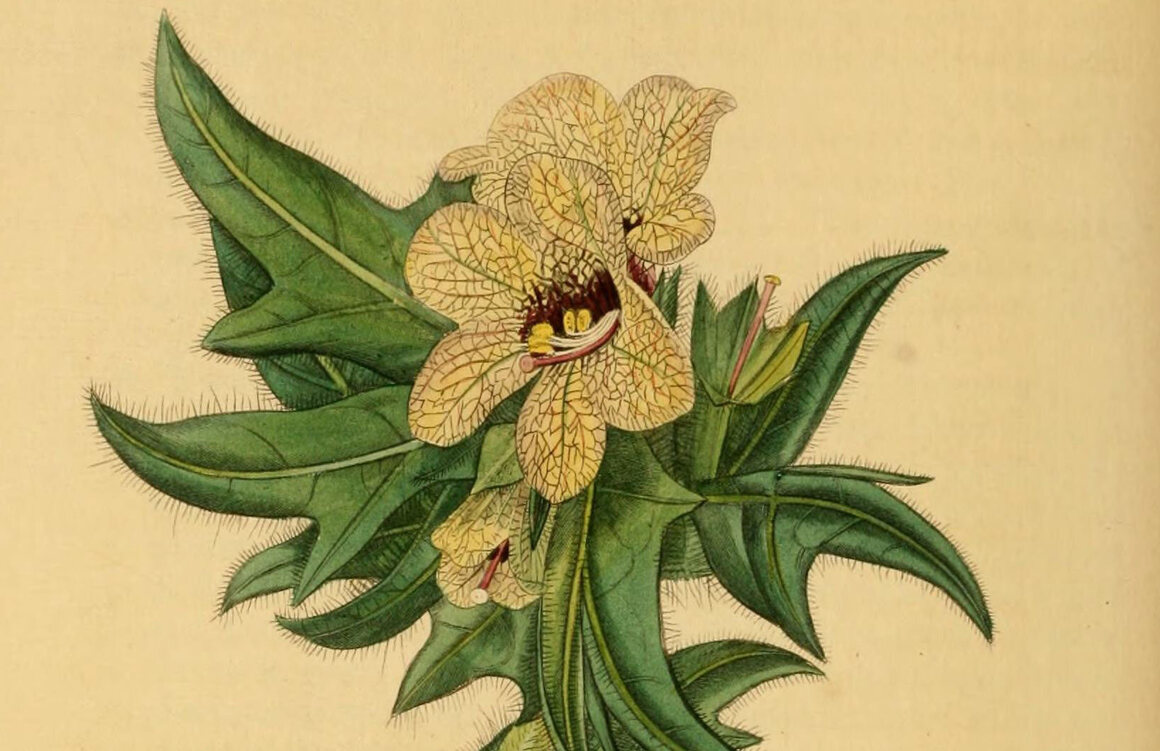
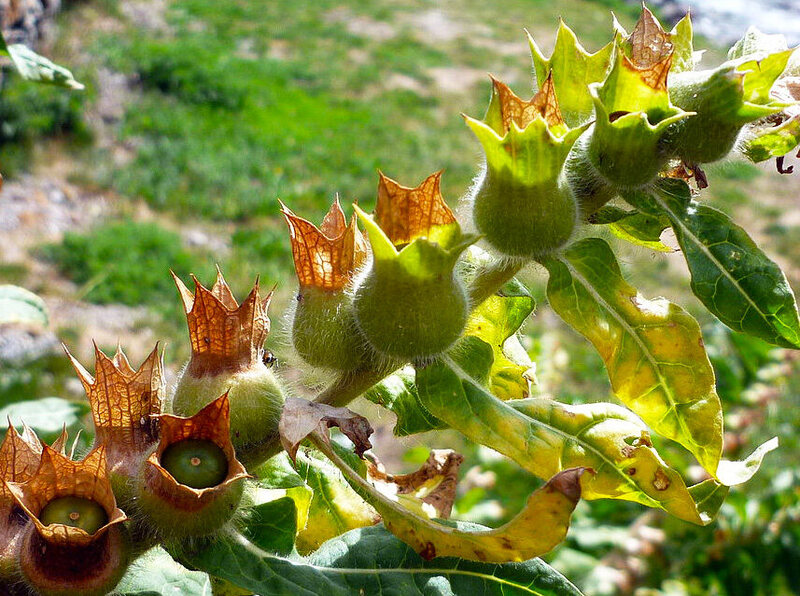
One of their study subjects was a nightshade called henbane, Hyoscyamus niger. Some plants flower after reaching a certain point in their development, like teenagers who hit puberty and start to parade their newfound sexuality immediately, regardless of the consequences. Other plants, though, behave more like teenagers who wait for summer break to go crazy: They only flower when they receive cues from their environment that it’s the ideal time to do so. Henbane is one of the latter and requires both a period of cold and the right light to bloom. Rather than growing and dying in one season, as annual plants do, certain varieties of henbane are biennials, with a life cycle that spans two growing seasons. In their first spring and summer, these plants grow as much as they can, but hold back from flowering. Only in the following spring do they burst into bloom—creamy white flowers smudged in their centers with red-wine purple that runs through the veins on their petals. For a biennial, these dual requirements make sense: They prevent the plant from flowering in the fall, when the light is right but the cold days of winter would doom their flowers.
While trying to understand how vernalization and day length work in concert to make henbane flower, Melchers and Lang probed the limits of the plant’s memory of winter. In one experiment, they vernalized the plants by chilling them in a fridge and then tried to reverse the process by blasting them with warmth. The plants, they found, formed lasting impressions of the cold relatively quickly. After a day or two of chilling, the scientists could still “de-vernalize” the plants, but after four days, that possibility had vanished—the plants remained vernalized. In practice, this means that a warm spell in February won’t trick henbane into forgetting the cold weeks they have experienced. In another experiment, they withheld the ideal day length. The vernalized plants continued to grow but never flowered. Even after 10 months, when they were exposed to the day length that told them it was the right time, they would still bloom. They had remembered that experience of cold for close to a year.
Melchers and Lang didn’t describe vernalization as a “plant memory,” but today it’s one of the most studied examples. Their experiments showed that plants could hold on to their pasts, for much longer than a person might expect, like undercover agents, fully trained but awaiting the signal to act.
A non-vernalized plant (left) and a vernalized one (right). Amasino Lab/Daniel Woods
When most people look at a plant, it’s hard to imagine that it’s waiting for anything. Plants don’t seem to have long-term plans. If they lack water, they droop. If it rains, they perk up. If they sense sunlight, they grow toward it. To our human way of thinking, it doesn’t seem like plants are doing very much at all. But we don’t recognize memories in people or dogs just by looking at them, but rather by their behavior. The dog comes when called by name; the person smiles in recognition. For the mimosa or henbane plants, something from the past changed how they reacted in the future—even if we don’t notice or understand why.
Scientists first started talking about “plant memory” explicitly in the 1980s. A team in France, for example, happened upon a type of memory in which a plant recalled a history of damage to a leaf on one side of its stem and therefore dedicated its energy to growing in the other direction. Since then, scientists have found that certain plants can remember experiences of drought and dehydration, cold and heat, excess light, acidic soil, exposure to short-wave radiation, and a simulation of insects eating their leaves. Faced with the same stress again, the plants modify their responses. They might retain more water, become more sensitive to light, or improve their tolerance to salt or cold. In some cases, these memories are even passed down to the next generation, as Lysenko thought they could be, though in an entirely different way than he imagined. We now know that plants are capable of much more than they’re given credit for. They can “hear” vibrations, which might help them recognize insect attacks. They share information by broadcasting chemicals through the air or from their roots. In the study of the memories they form, the next step has been to understand how they do it.
In Melchers and Lang’s time, hormones were the leading edge of plant science. The technique for discovering new hormones was elegantly brutish: Scientists ground up leaves before extracting and isolating the small molecules they released. They then sprayed the hormones back onto plants to see what happened. Gibberellin, for instance, stimulates growth. Today, it’s sprayed on grapes to make the fruit fatter and less tightly clumped. “A great deal of plant physiology was looking for these types of signals,” says Richard Amasino, a professor of biochemistry at University of Wisconsin-Madison. “But the signals in flowering had not been found, despite a lot of grinding up plants.”
By the 1970s and early ’80s, plant scientists still hadn’t found the biochemical secret to flowering. “When I began in science, this was a big mystery,” says Amasino. To understand it and begin to unlock plant memory, scientists needed the insights of molecular genetics and, in particular, epigenetics, the mechanisms that switch particular genes on and off.
In recent years, scientists have realized that the genome alone doesn’t determine an organism’s fate. There’s a whole world of epigenetic activity around DNA that impacts which stretches of code get expressed, or translated into action. Florigen turned out to be a tiny protein, too small for the techniques of Lang’s generation to identify. Even if they had found it, they would have been missing a key to the mystery of what makes biennials flower. Amasino’s generation, on the other hand, finally found the right level of activity—the epigenetic level—to see this process in action.
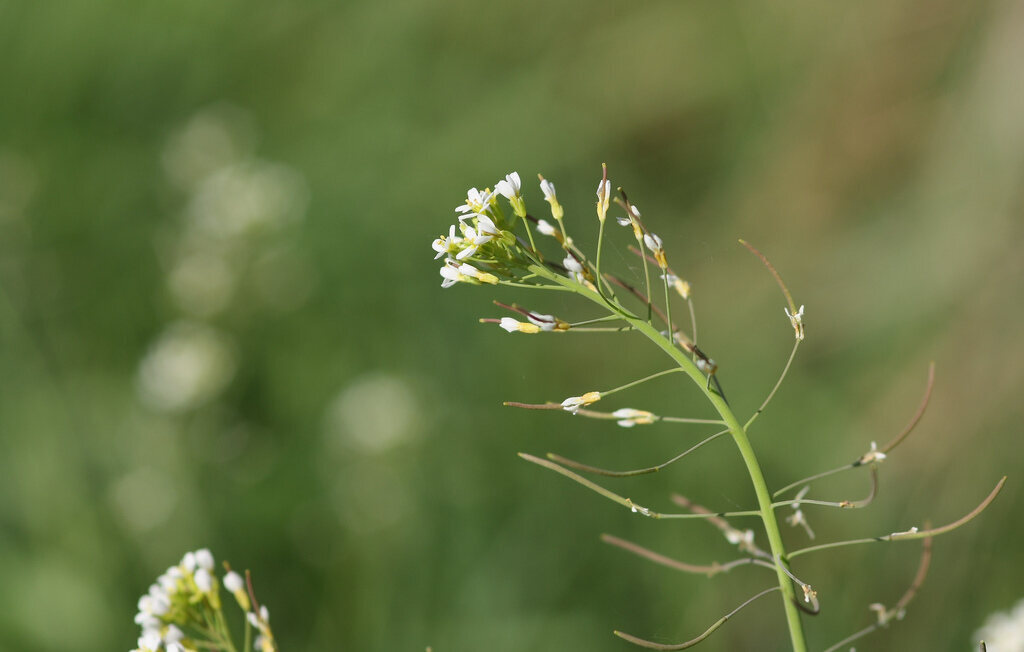
For example, the mechanism that controls vernalization and flowering in Arabidopsis thaliana, or thale cress, a plant often used as a model in laboratories, is like a Rube Goldberg device of proteins and gene expression. The plant has a set of genes that create the proteins that cause flowers to form. Before vernalization, the cells are full of a second protein, named FLC, that represses those key, flower-promoting genes. But when the plant is exposed to cold, its cells slow the production of FLC until it stops, and the balance of protein power then changes. The cells start producing more and more flower-promoting proteins, until the plant is ready to burst into bloom. In this case, a simple way to think about this epigenetic action is as a switch. The cold acts as a signal to the cell to switch the way its genes are expressed, from “don’t flower” to “flower, flower, flower.” And even when the cold signal is gone, the switch stays flipped. So, when days lengthen, the plants know it’s the right time to bloom.
“Even when it’s spring and summer,” explains Amasino, “whatever the cold did remains as a memory.”
Are plants secretly soaking up memories, flicking their epigenetic switches on and off in response to every significant stimulus they receive? It seems unlikely. Last year, a group of plant scientists based in Australia argued in the journal Science Advances that, for plants, forgetting (or not forming memories at all) may be a more powerful tool for survival than memory, and that “memory, in particular epigenetic memory, is likely a relatively rare event.”
Peter Crisp, the lead author of the paper, now at University of Minnesota, makes it his job to stress plants out. He and his colleagues might stop watering plants and let them dry out before hydrating the thirsty plants and watching how they recover. It’s been established that in certain plants, epigenetic memories of drought, along with other stressors such as low light and herbivory, can even make the leap across generations. So Crisp and his colleagues might do this for multiple generations (it gets interesting after three) before testing if the plants remember the ordeal they’ve been through and become more tolerant of drought. “We don’t really see that,” says Crisp.
Plants, he points out, have incredible abilities to rebound from stressful conditions. In a paper published this summer, for instance, Crisp and his colleagues found that plants subjected to light stress rebounded rapidly—just think how, with the right care, a neglected houseplant can bounce back from a wilted, brown mess. Scientists have now reported plenty of examples of plant memory formation, but naturally they are less likely to publish results of experiments where plants could potentially form memories but don’t. One of the biggest challenges of the field of study is even identifying whether a plant has formed a memory or not.
When Crisp and his colleagues design lab studies, they have to control for any number of confounding factors to determine if any memories they observe are the result of the experimental stress. “It’s not as though the plant experiences something and says, ‘Oh, I remember this,’” says Steven Eichten, Crisp’s coauthor, from the Australian National University. “It happens to have this chemical marker, a change at a molecular level.” Identifying that change and attributing it to the experimental stress can be difficult. Even when scientists know a memory can form in one plant, they may not necessarily recognize it in another. The memory mechanism involving FLC that Amasino worked on, for instance, only works in thale cress. Beet plants and wheat plants have their own molecular mechanisms of vernalization, which serve the same function but evolved independently. Identifying a true memory out in the field is significantly harder.
In their experiments, however, Crisp and Eichten don’t observe many plant memories being formed. What if, they ask, plant memory is rare simply because it’s better for plants to forget? “Having a memory, keeping track molecularly of signals that you’ve received in the past from your environment, does have a cost,” says Eichten. “Since we don’t see memories all that often … maybe plants don’t want to remember things all the time. Maybe it’s better to put their energies elsewhere.” Even when memories do form, they can fade. Another research group has shown, for example, that a plant might form an epigenetic memory of salt stress and pass it along across generations, but that if the stress fades, so does the memory. A plant that remembers too much might sacrifice healthy growth to be constantly on guard against drought, flood, salt, insects. Better, perhaps, to let those negative experiences go, instead of always preparing for the worst.
It’s inevitable that we try to understand plant memory and cognition through our own experience of the world. To an extent, even using the word “memory” is an evocative anthropic shorthand for what is actually going on in these plants. “We use the term ‘plant memory,’ but you could find other ways to try to describe it,” says Eichten. But “semi-heritable chromatin factors” doesn’t quite have the same legibility. “Sometimes I have to try to explain my work to my mom, and you say, ‘Well, maybe it’s like a memory … ’ Even if you think about human memories, it’s still kind of an abstract thing, right? You can think about neural connections, but often in common dialogue, when you think of memory, you know what a memory is. At that level, maybe you don’t care about where it’s coming from or what specific neurons are tied to it.”
That’s closer to the position from which Gagliano, the ecologist, approaches plant memory. Unlike the molecular geneticists, she’s less interested in the specific mechanisms of memory formation than she is in the process of learning itself. “Of course plants can remember,” she says. “I know that behaviorally a plant will exhibit a change in behavior that is predictable—if condition A is met, then the plant should be able to do X. So by being able to do X, it means the plant has to remember what happened before, otherwise he wouldn’t be able to do X.”
The leaf-closing M. pudica isn’t the only plant that Gagliano can teach new tricks. In another experiment, she grew garden pea plants in a Y-shaped maze and tested whether they could learn to associate different cues, wind and light. Plants gravitate toward light, and in the experiment, Gagliano added an additional cue, airflow produced by a fan. For some of the plants, light and air flowed from the same side of the Y-shape. For others, light and air came from different directions.
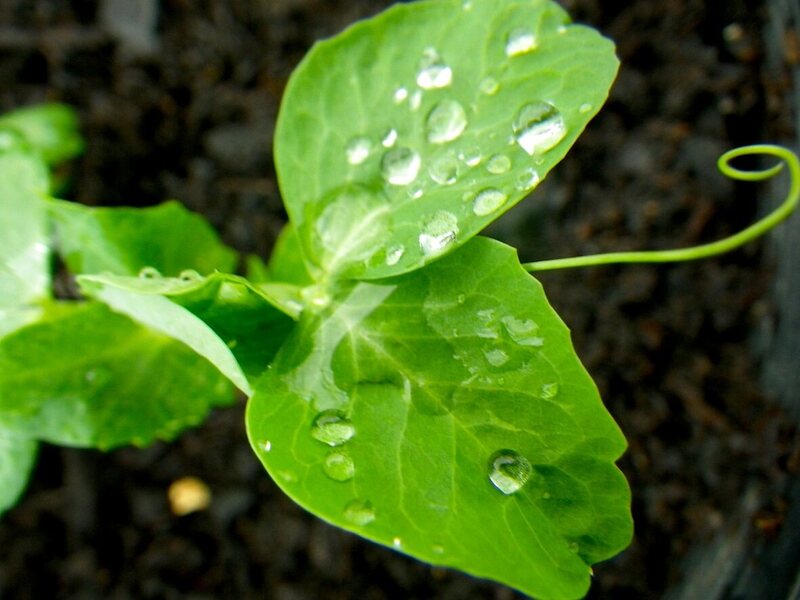
Pea shoots. Monica Gagliano
“With the peas, I turned the dial up,” she says. “Not only did the pea need to learn something, but he learned something that meant nothing, that was totally irrelevant. Mimosa had to follow just one experience, the drop, ‘What does this mean?’ While the pea had to follow two events occurring”—the fan and the light.
After training the plants, Gagliano withheld the light. When she next turned on the fans, she had switched them to the opposite branch of the Y shape. She wanted to see if the plants had learned to associate airflow with light, or its absence, strongly enough to react to the breeze, even if it was coming from a different direction, with no light as a signal. It worked. The plants that had been trained to associate the two stimuli grew toward the fan; the plants that had been taught to separate them grew away from the airflow.
“In that context, memory is actually not the interesting bit—of course you have memory, otherwise you wouldn’t be able to do the trick,” she says. “Memory is part of the learning process. But—who is doing the learning? What is actually happening? Who is it that is actually making the association between fan and light?”
It’s telling that Gagliano uses the word “who,” which many people would be unlikely to apply to plants. Even though they’re alive, we tend to think of plants as objects rather than dynamic, breathing, growing beings. We see them as mechanistic things that react to simple stimuli. But to some extent, that’s true of every type of life on Earth. Everything that lives is a bundle of chemicals and electrical signals in dialogue with the environment in which it exists. A memory, such as of the heat of summer on last year’s beach vacation, is a biochemical marker registered from a set of external inputs. A plant’s epigenetic memory, of the cold of winter months, on a fundamental level, is not so different.
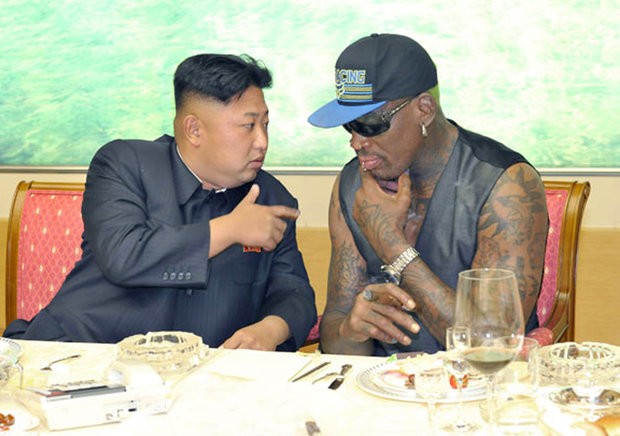
A former NBA player is offering to mitigate international tensions between a ruthless dictator and President Donald Trump.
What a time to be alive.
Photo credit: AP
Dennis Rodman, who has visited North Korean leader Kim Jong-un several times, is offering to help the U.S. "straighten things out" with North Korea after the two countries have escalated tensions with threats of nuclear war.
"I just want to try to straighten things out for everyone to get along together," the former NBA star told "Good Morning Britain" on Wednesday.
"Kim is just like everybody else," Rodman said of his friendship with the North Korean dictator. He told host Piers Morgan that his trips to Pyongyang included "cool things" like karaoke, skiing, horseback riding and laughing.
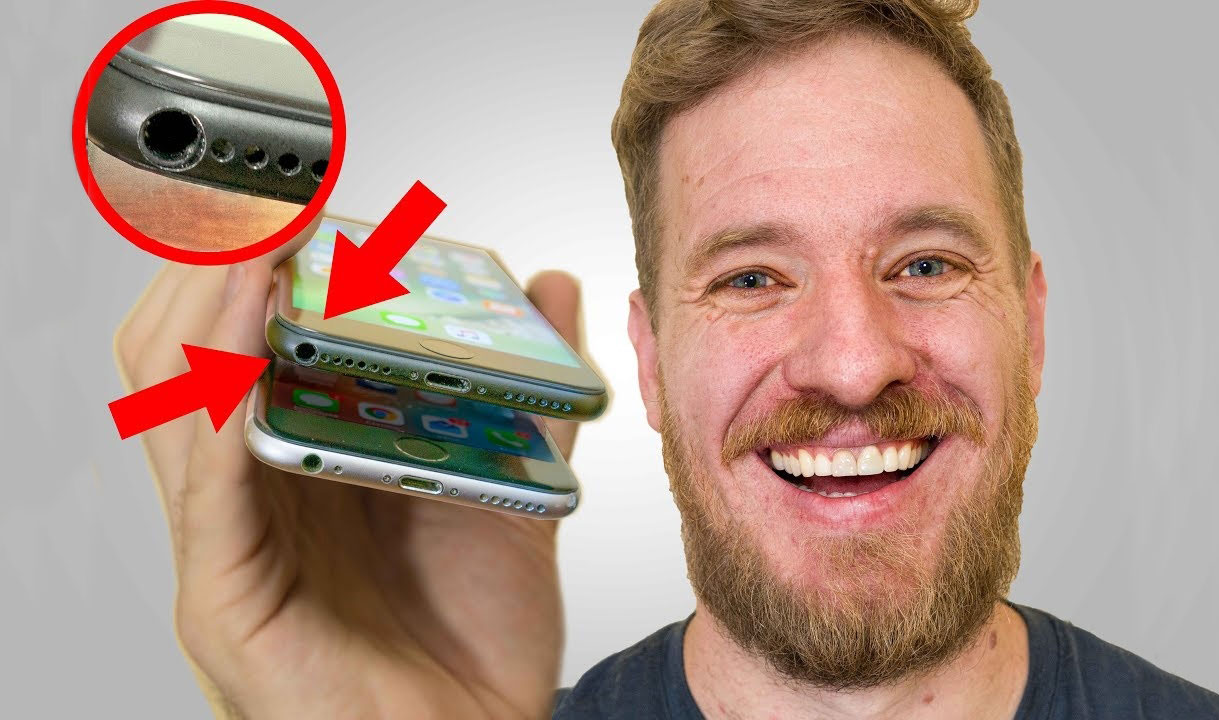
For those of you who miss the iPhone headphone jack, you're definitely not alone. But Strange Parts creator Scotty Allen missed it so much that he decided to add one to his iPhone 7. He just posted a video of the project's entire saga, with all of it...
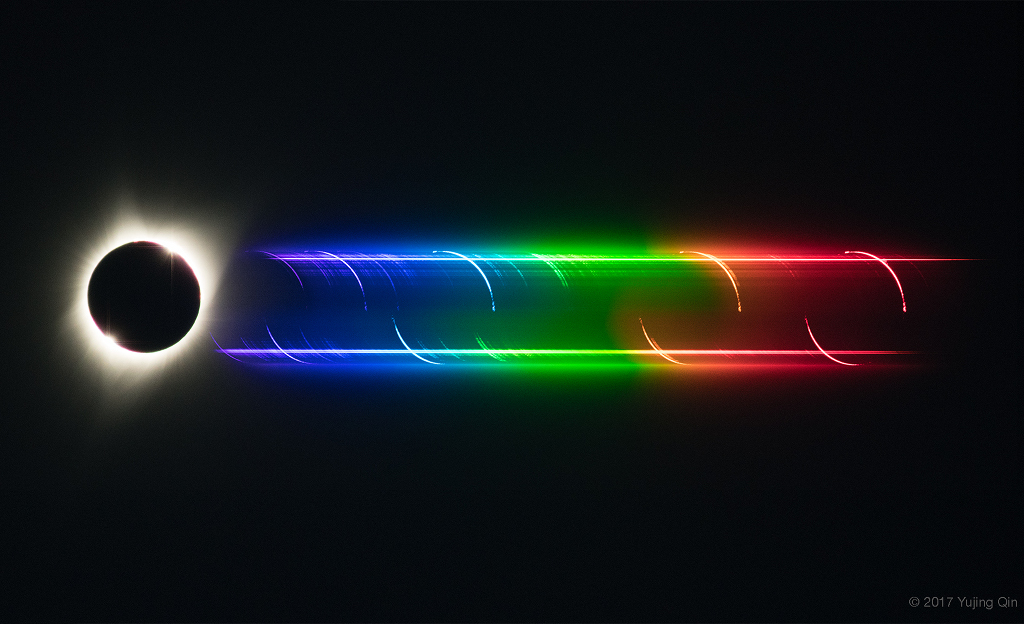
The Flash Spectrum of the Sun
In clear Madras, Oregon skies, this colorful eclipse
composite captured the
elusive
chromospheric or flash spectrum of the Sun.
Only three exposures, made on August 21 with telephoto lens and
diffraction grating, are aligned in the frame.
Directly imaged at the far left, the Sun's
diamond ring-like appearance
at the beginning and end of totality brackets a
silhouette of the lunar disk at maximum eclipse.
Spread by the
diffraction grating into
the spectrum of colors toward the right, the Sun's
photospheric spectrum
traces the two continuous streaks.
They correspond to the diamond ring glimpses of the
Sun's normally overwhelming disk.
But individual eclipse images also appear at each wavelength of light
emitted by atoms along the thin, fleeting arcs of
the solar chromosphere.
The brightest images, or strongest
chromospheric emission,
are due to Hydrogen atoms.
Red hydrogen alpha emission is at the far right with blue
and purple hydrogen series emission to the left.
In between, the brightest yellow emission is caused by atoms of
Helium,
an element only first discovered in the
flash spectrum of the Sun.
It was buried under some papers, beside a thick, water-logged book frozen solid in the January chill. I ran my fingers down its spine and read the title: "How to Run A Successful Golf Course."
The owner of the Penn Hills Resort in the Poconos probably hadn't followed whatever advice the author had to offer. They boarded the place up years ago, and there's a gaping hole in the roof of his old office. Muted greens and yellows, shag carpeting peek at me through a sheet of ice.
The matchbook, which looks to be from the 60's, is about half empty—whoever was sitting here when this place finally went under surely needed a smoke.
On the inside of the matchbook, some text: "Swim n' Sun Indoor Swimming Pool at Penn Hills Lodge and Cottages. The Poconos' Finest Modern Resort." (Photograph by Pablo Iglesias Maurer, matchbook publisher unknown.)
Its cover is a reminder of better days. Swimmers are frolicking at the resort's indoor pool, now a scene of trash, mangled deck chairs, a life preserver. I lock eyes with a huge bullfrog who didn't make it out. He was entombed in the ice.
The matchbook no longer lines up with reality. I look down through the viewfinder of my camera and up again at the matchbook, aligning the two images the best I can. Up (snap) down (snap). It feels like I'm seeing this place in some sort of dystopian View-Master, each image on the wheel darker than the next.
Weeks later, I score a cache of old postcards from the Poconos and Catskills on eBay, the sort that end up in family albums, stuck in some box in the attic. "Our Honeymoon." In idyllic scenes at Penn Hills, The Homowack Lodge, Grossinger's, and a fourth resort in the Poconos which we aren't identifying, vacation-goers and honeymooners frolic in the mountains.
They have a surreal quality. Ephemeral, disposable, they served only one purpose—to let someone know "I'm here. I'm thinking of you." It feels a bit like social media does sometimes, where you'll snap a photo of some vista, sometimes to bring those you care about a bit closer to you. And like social media, the postcards manage to be a little impersonal: "I didn't quite care enough to write a letter." It's analog Foursquare, a non-digital check-in.
Over the past few years, I've gone back to the places in the postcards.
On Christmas Day a couple years back, I went into an abandoned bowling alley in the Catskills, stood up some pins and bowled a couple of frames. That signature sound—the pins caroming about—sounds a lot different in a place like that. There are echoes of the postcard, where a bear of a man stands at the shoe rental counter. No shoes now, no phone, no counter.
A lane attendant at the Homowack lodge in the Catskills. (Photograph by Pablo Iglesias Maurer, before image courtesy of the Catskills Institute at Brown University).
Other times, the search is a bit more challenging.
I trudged through an old resort in the Poconos last year, just a few months after a fire burned half the place down. In the postcard, a couple poses in front of a gazebo. Now, it's just a pit in the ground. Time is a sink hole.
Photos of abandonment tend to be a bit stylized, painting decay with a nostalgic brush. The postcards, too, have their own haze—the places were never as nice as they look. I often struggle to get the two images to line up, as well. But time blurs the difference, and brings everything into focus.
The indoor pool at Grossinger's, which opened in 1958. Elizabeth Taylor attended the pool's opening, and Florence Chadwick - the first woman to swim the English Channel in both directions - took the first dip in it. From Ross Padluck's excellent "Lost Architecture of Paradise": "...The new indoor pool at Grossinger's was the zenith of the Catskills. Nothing quite like it had ever been built, and nothing ever would be again. It represented everything about the Catskills in the 1950s-style: extravagance, luxury, modernism and celebrity." (Photograph by Pablo Iglesias Maurer, postcard published by Bill Bard Associates.)
More of the indoor pool at Grossinger's. The tiled floor was heated, the entire structure air conditioned. Above, beautiful mid-century "sputnik" chandeliers cast a glow on the swimmers below. Below the pool are exercise rooms, a gym, salon and a host of other amenities. The pool has sat vacant since the late 90's and has fallen beyond repair. (Photo by Pablo Iglesias Maurer, historical photo published by Bill Bard Associates.)
The Homowack Lodge now sits abandoned on the southern edge of the famed "Borscht Belt." On its lower level, maybe the highlight of the place, a four-lane Brunswick bowling alley. It has seen better days. The resort closed in the mid-2000's but lived on briefly, first as a Hasidic resort and lastly as the site of a summer camp—one which was forced to shut down after the NY Department of Environmental Conservation deemed it uninhabitable. (Photograph by Pablo Iglesias Maurer, postcard published by Bill Bard Associates)
The caption on the back of this Pocono resort's postcard touts this theater as the "resort world's most modern showplace." With a capacity of 1200, it remains splendorous even in disrepair. This postcard is also postmarked, and filled out. "Having a lovely weekend here. All pleasure - only exercise is rowing a boat and playing shuffleboard! Nice to be lady-like and not "rushing" about! We will see you soon." (Photograph by Pablo Iglesias Maurer, postcard published by Kardmaster Brochures.
After a fire destroyed the main building at this resort in the Poconos, a replacement went up in the early 70's. It is a truly striking sight, a modernist spaceship tucked away deep in the woods. (Photograph by Pablo Iglesias Maurer, postcard by Kardmasters)
Looking down the side of that same 70's structure. "Ultra-modern building houses the dining room, cocktail lounge, lobbies and offices." (Photograph by Pablo Iglesias Maurer, poscard by Kardmaster Brochures)
Another view. Photograph by Pablo Iglesias Maurer, postcard by Kardmaster Brochures.
A residential building at a Poconos resort sits in disrepair. On the back of the postcard: "Dear Bernie - Don't think we forgot you - but we're having such a grand time that post cards are a chore! This is the life & the place & the people are grand. We couldn't be happier or have more fun. See you soon! Love, Lou & Shiela." (Photograph by Pablo Iglesias Maurer, postcard published by Kardmaster)
Postcard caption: "Birchwood is the only resort offering three swimming pool facilities, indoor pool, outdoor pool and lake with beach. Pictured here is beautiful Eagle Lake, at the foot of the Village Green. Here couples enjoy the white-sand beach, chaise lounges, bicycle and row boats, and fish off its shores ... Six low-cost all-expense package plans include indoor swimming, airplane rides, movies, bowling, horseback riding, all winter sports and 40 other free activities!" More recently, the hangar at the resort's airstrip served a different purpose: cop killer Eric Frein made the place his home during a weeks-long manhunt and was eventually apprehended just a stone's throw from Eagle Lake. (Photograph by Pablo Iglesias Maurer, postcard published by Planned Color Post Cards)
The cocktail lounge of a now-defunct resort in the Poconos. "Peaceful relaxation - healthful recreation," says the caption on the rear of the card. (Photograph by Pablo Iglesias Maurer, postcard published by Kardmaster Brochures)
Grossinger's indoor tennis center. The rear of the postcard is an ad for Grossinger's rye bread, a local staple during the resort's operation. Resort royalty Jenny Grossinger lays out the pitch: "The fun and fresh air people get here at Grossinger's really gives them an appetite. They love all of our food - and a particular favorite is our Grossinger's rye and pumpernickel bread. Now you can get this same healthy, flavorful bread at your local food store. Try a loaf. I'm sure you'll love it." (Photograph by Pablo Iglesias Maurer, postcard published by FPC advertising)
The Mies van der Rohe-inspired "Jenny G Wing" opened in 1964 and was among the last structures erected at Grossinger's. It was designed by famed architect Morris Lapidus—the man who near single-handedly created the "Miami Modern" look in hotels and, more locally, designed the Capitol Skyline Hotel. (Photograph by Pablo Iglesias Maurer, postcard published by Bill Bard and Associates)
Sunbathing and swimming in the Poconos. Postmarked, 1967. "Dear Jonnie: If you were only here, I would take you out for a horse-back ride - or else we could go golfing. Be good until I see you. Dr. Waterman." (Photograph by Pablo Iglesias Maurer, postcard published by Kardmaster Brochures.)
Stairs lead down to an abandoned theater in the Poconos. The curtain last fell here sometime in the early 90's. (Photograph by Pablo Maurer, postcard published by Kardmasters)
The browns and reds and oranges of this Poconos dining hall's carpet have turned green, the color of the moss that's taken its place. Photo by (Pablo Iglesias Maurer, postcard published by Kardmasters)
Grossinger's outdoor pool, olympic sized, built in 1949 at a cost of $400,000 (about $5 million in today's market.) Long gone are the private cabanas, changing room and lounges that used to surround it. (Photograph by Pablo Iglesias Maurer, postcard published by Bill Bard Associates)
Summer in the Poconos. (Photograph by Pablo Iglesias Maurer, postcard published by H. Rubenstein)
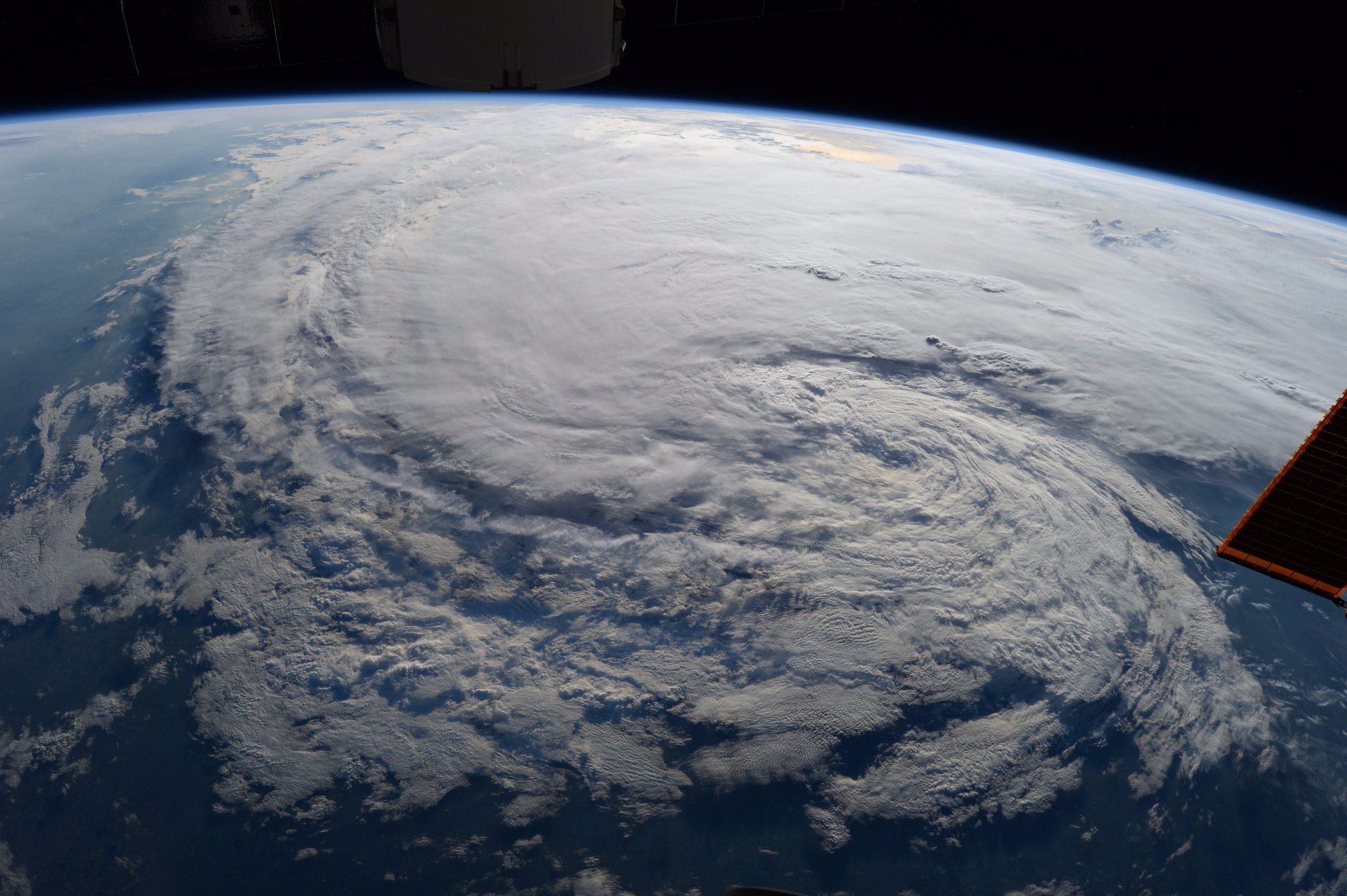
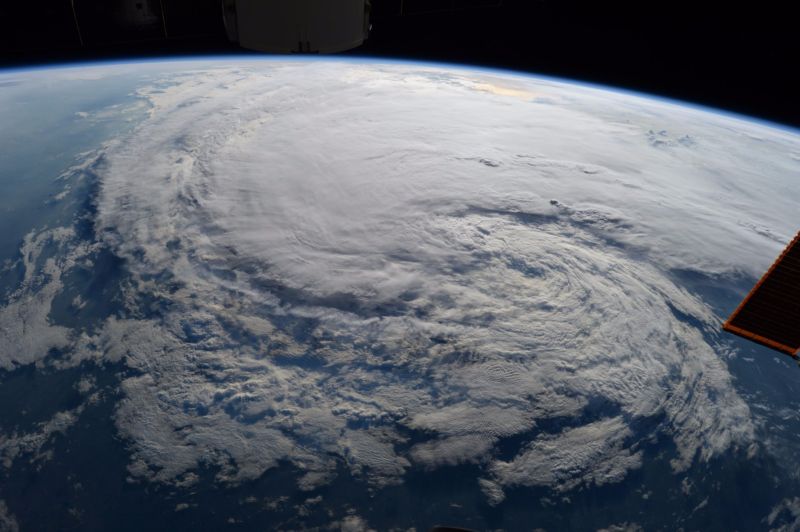
Enlarge / Harvey as seen from the International Space Station. (credit: NASA)
Strong and sturdy as bedrock may seem, it’s possible to pile enough weight onto the Earth’s surface to squish it downward a bit. The planet’s great ice sheets, for example, have done this on a pretty significant scale. Many regions that are now relieved of the ice sheets they hosted during the last ice age are, in fact, still slowly rebounding upward today.
The coverage of modern, sensitive GPS networks allows us to see subtler versions of this process playing out even over the annual cycle of wet and dry seasons. And these networks may have caught Hurricane Harvey’s record-setting rainfall depressing Earth’s crust just a little.
On Monday, Jet Propulsion Laboratory researcher Chris Milliner posted a plot of the change in GPS station elevation immediately after Harvey. The data showed that the Houston landscape had sunk as much as two centimeters. While that’s not enough to worsen flooding that was measured in (many) feet, it’s actually quite impressive for a sudden change from a single weather event. That’s a testament to the weight of the preposterous amount of water the area was under.
ST. PAUL, MN—Explaining how the string of personal insults and sharply worded accusations caused him to reevaluate every one of his political leanings, former conservative Vincent Welsh recalled for reporters Friday the belittling tirade from a college student that brought him over to the left. “It was last October and I’d just mentioned my support for a Republican congressional candidate on Twitter when this 19-year-old responded by telling me I was an ignorant asshole who hated the poor and that I was everything that was wrong with the world, and it just completely opened my eyes to how incorrect my whole worldview was,” said Welsh, fondly recounting how the sophomore sociology major converted him to liberalism on the spot by calling him a hateful bigot and saying he was too much of a “brainwashed puppet” of corporate interests to know what was best for him, instantaneously invalidating the ...
Just booked my flights a couple days ago for the Olympics! This whole NK shooting missiles all over the place was pretty great for the flight prices. $540 round trip on a refundable ticket from NYC to Seoul!
SEOUL, SOUTH KOREA—Demonstrating his country’s own might after its northern rival launched a ballistic missile over Japan, South Korean President Moon Jae-in reportedly ate a full, balanced meal on Wednesday in a show of strength against North Korea. “At approximately 7 p.m., the president sat down and enjoyed a healthy and filling traditional Korean dinner,” said one observer of the East Asian country, adding that the meal appeared to have contained a protein, a side of fresh vegetables, a grain, some cheese, and, in a particularly aggressive gesture, a variety of condiments for added flavor. “Moon has enjoyed snacks and light lunches before, but this tasty, yet nutritious, meal seems like a signal that South Korea refuses to back down from the provocations of the North, while the red bean paste cookies eaten for dessert seem like an even further escalation.” Sources also indicated that, in another ...
There was a dude who played soccer with us on our Zog team for a season or two. Greek guy, I think. He claimed to be a "heading specialist", which was kinda funny considering the league we were in. He'd always, in a mild Greek accent, be saying "just pass the ball to my head!". Amazingly, he wasn't just talking a big game. Any dang time the ball was anywhere near his head, BOOM, goal!
With VR going mainstream, families are going to be looking for titles that won't give their kids nightmares. One of the best of those, Headmaster, has only been available on Sony's PlayStation VR until now, but today it arrives to the Oculus Rift and...
Oh man... 6 bedroom house in Hoi An for $900/mth... I can convince Lauren and my friend Bobby to join me. That's $300/mth each for rent. Anyone else want to join us?
Fun game if it didn't crash on me every time I played more than 10 minutes...
It's no secret that PlayerUnknown's Battlegrounds is selling well even in its Early Access form, but it just crossed an important (if symbolic) milestone. On the morning of August 27th, the battle royale shooter overtook Dota 2 as the game with the...
HOUSTON—Battening down the hatches as the potentially disastrous situation unfolded, Texans braced themselves Friday for President Trump’s response to Hurricane Harvey. “I don’t know how bad it’s going to be, but I’m preparing for the worst,” said resident Jacob Hoyt, echoing the sentiments of millions of residents along the state’s coast who were hunkering down for what many predict will be a catastrophically inept relief effort. “This won’t be easy. If nothing else, I’m hoping it’ll be over with pretty quick.” At press time, frightened Texans had learned that Trump’s response in the aftermath would likely be worse than even the most dire forecasts.
A Texas man was wounded after he fired a gun at an armadillo in his yard and the bullet ricocheted back to hit him in his face, the county sheriff said Friday.
Cass County Sheriff Larry Rowe said the man, who was not identified, went outside his home in Marietta, Texas, at around 3 a.m. local time Thursday morning. He spotted the armadillo on his property and opened fire.
"His wife was in the house. He went outside and took his .38 revolver and shot three times at the armadillo," Rowe said.
The animal's hard shell deflected at least one of three bullets, which then struck the man's jaw, he said.
The man was airlifted to a nearby hospital, where his jaw was wired shut, according to Rowe.
Steven Spielberg's adaptation of Ready Player One will be making a big splash at San Diego's Comic-Con next week, but ahead of that Entertainment Weekly has given us our first look at the film. And, well, it looks a lot like the worn out, nostalgia-f...
OMFG... "It's the latest PR headache for a company that has been caught in a no-win situation since a controversial internal memo written by mid-level Google engineer James Damore surfaced over the weekend.
The memo argued that biological differences partly explain the lopsided gender ratio in technology and management positions at Google. Google officials quickly distanced themselves from the memo before firing Damore. That won praise from some liberals, but it also created a backlash among more conservative employees at Google as well as from so-called "alt-right" activists outside the company."
No win situation!? Holy shit, everything is terrible. When even a tech mag like ars technica considers appeasing nazi alt-right assholes as part of the conversation it's clear this country is fucked. I need to move.
It's the latest PR headache for a company that has been caught in a no-win situation since a controversial internal memo written by mid-level Google engineer James Damore surfaced over the weekend.
The memo argued that biological differences partly explain the lopsided gender ratio in technology and management positions at Google. Google officials quickly distanced themselves from the memo before firing Damore. That won praise from some liberals, but it also created a backlash among more conservative employees at Google as well as from so-called "alt-right" activists outside the company.
FORT MYER, VA—Calling the war in Afghanistan the nation’s highest priority until he decides at some point that it is actually trade with China or illegal border crossings, President Trump declared in a televised address Monday that the U.S. was committed to fighting insurgents in the region until an unconditional victory was secured, or until he changed his mind, got distracted by something else, thought the war was reflecting poorly on him, or got bored with the whole thing. “Let me be perfectly clear: America will not rest until our enemies have been defeated and the Afghan people are free, unless I start to get frustrated by all this, come across some other thing that seems like a bigger deal, or see a segment on TV that says we should do something else,” said the president, who called for the deployment of thousands more troops to pursue ...
Hey geeks of Seattle! Just one week left to get in your submission. We still need some more to make the show happen, so please poke your funny nerdy friends!
I was pretty popular in the office yesterday for bringing in my glasses. Which were maybe not fully legit, since amazon gave me a full refund on them. But I did warn everyone beforehand that they were maybe not legit. People used them anyway and all thought it was pretty awesome. Except the one guy who today decided he had to go to the eye doctor because he thinks he fucked up his eyes using my fake glasses. Sigh.
Like more than a few stories in my life, this is one of procrastination and regret. Yesterday's total solar eclipse was the first to be viewable from the US in my lifetime, and my hometown of Lincolnville, South Carolina, was right in the path of tot...
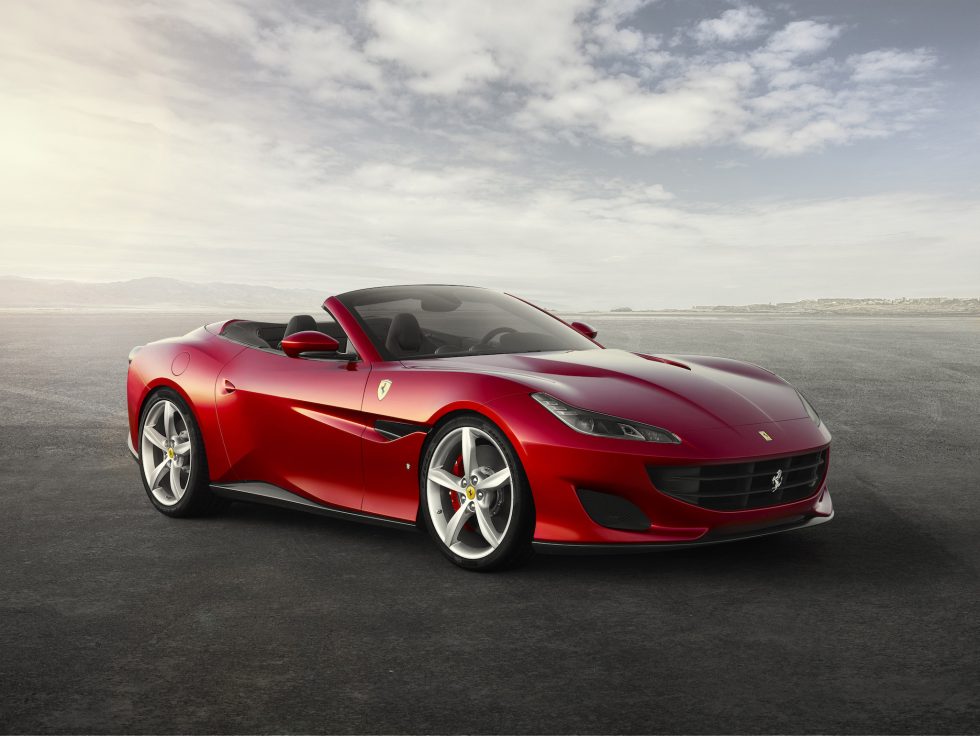
The Frankfurt International Motor Show is fast approaching, and while more than a few car makers have chosen to skip this year's event, Ferrari has something new in store for us. It's replacing the California T with a newer, lighter convertible—the Portofino. It's a more aggressive look for the company's entry-level model, and the looks have been heavily influenced by the aerodynamics department, something that's fast becoming a Ferrari calling card.
We were pleasantly surprised by the California T when we tested one last year; the car has an undeserved reputation, probably because it's not mid-engined or doesn't have a massive V12 up front. It's no out-and-out sports car, for even Ferrari describes it as a GT (grand tourer), but we imagine the Portofino is going to offer a noticeable performance bump over the outgoing car.
Pretty cool to see this guy change his 2nd book for the better. I'm looking forward to reading it!
If an author ever tells you that they’re their own worst critic, don’t believe them. It’s not that they’re lying or pretending to be humble. They’re simply failing to account for Goodreads.
For those rare few souls who’ve never visited the website, here’s all you need to know: the place is home to millions of the world’s most spirited readers. When they love a book, they love it with a passion you won’t find anywhere else. And when they hate a book. . . yeesh. Reading the one-star reviews for virtually any novel is like jumping into a Cuisinart. Some of the critiques are devastatingly thorough. Others read like bathroom graffiti. A few of them could have come straight from the diary of the Zodiac Killer. There are folks out there in Internetland who I would not go out of my way to call “hinged.”
I’d braced myself for the worst with The Flight of the Silvers, my 600-page opus about two sisters and four strangers who are saved from apocalypse by mysterious forces and brought to an alternate Earth. It was the first book of a trilogy, my first title with Penguin, and my first foray into science fiction, a genre known for its gruff and fickle readers. If anything, I’d thought I’d get pummeled over the technical aspects of the story. I didn’t go crazy explaining the science behind my concepts. This is a tale of six unique people in an impossible situation. In my mind, it’s all about the characters.
So imagine my dismay when I checked the reviews and saw that my characters were the primary source of complaint. It was Hannah and Amanda Given, the twenty-something siblings at the head of the cast, who elicited most of the scorn. They’re stupid. They’re whiny. They argue all the time. One of them has big breasts and the author mentions them A LOT.
Then, four weeks after the book’s release, someone came out and said it:
This was a sexist book.
I was floored. I’d spent more time on the Given sisters than anyone else, devoting countless pages to their strengths and quirks, their character arcs and personal evolutions. More than that, I had nine beta readers, all smart and progressive friends who wouldn’t have hesitated to call me out for sexist writing. Vanessa, my diligent editor at Blue Rider Press, had expressed some concern the sisters were a bit too weepy at times. They had just lost their entire planet, but okay. I toned it down.
The complaints kept coming, a small but vocal minority that only seemed to appear on Goodreads. For every fifty female readers who gave The Flight of the Silvers a good review, one raked me over the coals for being a raging misogynist.
Jesus, a male acquaintance wrote me. The PC police are coming after you hard.
Oh, bullshit. I wasn’t being “policed,” just criticized. This wasn’t an act of personal oppression, just a handful of readers who were expressing their opinions, as they have every right to do. I may have my flaws and my stubborn blind spots, but I never went ballistic because a feminist objected to something I liked. I’m not too fragile for discourse.
Still, I was entitled to my opinion of their opinions, and I did not agree. Some of that, I admit, was pure defensiveness. You can’t spend three years writing a book and not feel a little parental about it. More than that, I had a mountain of counter-testimony from other readers, many of whom praised the depth and complexity of my heroines.
But the ultimate reason I didn’t take the sexism charges that seriously was because nobody made a serious argument. Those first reviews were barely critiques, just a few quick of lines of fiery invective, like someone shouting from the window of a moving car. A more detailed write-up eventually appeared, but it was so filled with botched facts and bad-faith arguments that I almost thought it was parody. Virtually nothing in my book happened the way she described it. Yet her anger was real, and she was far from alone in expressing it.
In June 2015, nearly a year and a half after The Flight of the Silvers was published, a reader named Erin emailed me with a conundrum. She never writes reviews, she told me. Even if she did, she wouldn’t know how to rate my book. She liked the plot. She liked the characters. She loved the parallel world that I’d built. But there was a sexist undercurrent to the story that kept plaguing her over and over again, like a finger in the eye.
Slack-jawed, I wrote her back and asked her in the nicest possible way if she would mind elaborating. Three days later, I was shocked to receive the mother of all emails—nearly 2,000 words of critical analysis, all fully-sourced with examples from my novel. She took apart the story with a scalpel, not a chainsaw. It was the best bad review I’d ever gotten in my life.
I won’t trouble you with the minute details, as they’ll make little sense to those who haven’t read the book. The important thing to know is that I love flawed characters, men and women both. Perfect heroes bore the everloving crap out of me, mostly because they have no room to grow. The six protagonists of The Flight of the Silvers all start the series in a weak and woeful place. They’re Thelma at the beginning of Thelma & Louise. They’re Luke Skywalker whining to his uncle about power converters. But they all get stronger as the story continues, the sisters most of all.
The problem, as Erin perfectly explained, wasn’t that I made my female characters too flawed. It’s that the flaws I gave them were too stereotypical. Amanda is an uptight nurse and Christian. Hannah’s a flighty young actress who relies on sexual intimacy as a crutch. The two of them are perpetually jealous of each other, mostly for the different ways men to respond to them. They spend a little more time than they should thinking about the potential romantic interests in their group, and I spent a few more words than I should’ve on their physical characteristics. (Yeah, that includes the breasts).
I needed three full days and two restless nights to fully process Erin’s arguments. That weekend, I grabbed a paperback copy of The Flight of the Silvers and, for the first time in two years, read it cover to cover. I was already carrying a hundred little regrets about the story: word choices, scene choices, a ridiculous metaphor here and there. But now I could see everything Erin was talking about—all the niggling bits of ignorance that were invisible to some and infuriating to others. The mistakes I’d made weren’t huge, but they weren’t new either. Most female readers have already seen them a thousand times before in a thousand other books.
And therein lies the anger.
I wish I could say it was a pleasant epiphany, but it hit me hard from every angle. It hurt to realize that I wasn’t as enlightened as I thought I was. It hurt to think of the readers who were annoyed, distracted, or alienated by my gaffes. It hurt to know that I could have fixed all these issues with a week of simple rewrites, if only I’d caught them in time. It was far too late to change The Flight of the Silvers. But I wasn’t entirely helpless.
Eleven months after my email exchange with Erin, I wrote her again and asked if she would be interested in reading an early draft of The Song of the Orphans, the 750-page sequel to Silvers that was slated for release in July 2017. In revisiting old pages, I’d found many of the same mistakes I’d made in the first book. Not only was I able to fix them this time, I found dozens of opportunities to cast my heroines in a stronger light, giving them more agency, more unity, more distinctiveness, more everything. But I still wanted to hear Erin’s thoughts.
I sent her a PDF of my manuscript. The next six weeks passed without a peep. Just as I was starting to fear that she had finally given up on me, she sent me a stark little email in the middle of the night. No subject line. No greeting. Just four simple words in 10-point Geneva.
Holy shit. You listened.
Yeah, I listened; she had made a hell of a case. She took the time to talk to me instead of shouting from a distance. The least I could do in return was put aside my stubborn pride and look at my work through a wider lens.
At the end of the day, this isn’t about appeasing critics. It’s about becoming a better writer. In a story with flying cars and forcefields, it’s vital to have three-dimensional characters who act realistically and relatably. And in a literary genre that’s been historically wrought with misrepresentations and underrepresentations, it’s not too much to ask an author like me to think a little bit harder about the readers who aren’t.
Erin asked me in the most compelling possible way to do better. I answered her with a better book.
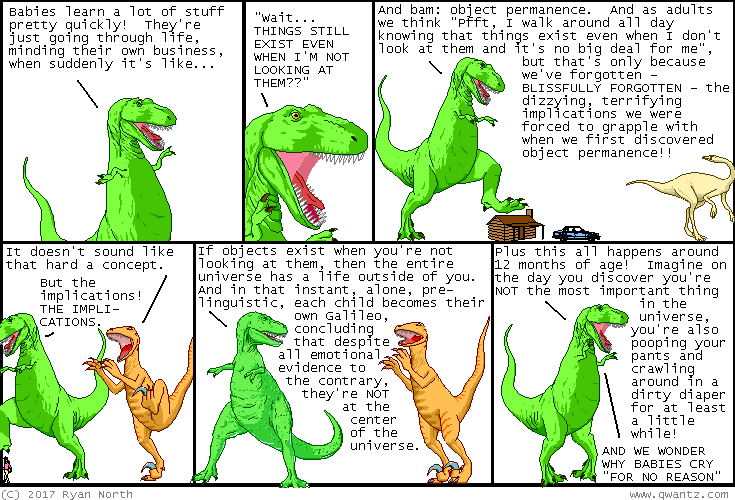
August 25th, 2017: This comic is inspired by my nephew Davis who is REAL GOOD at object permanence!! And also my nephew Avery who is getting there but he's only had four months of existence so far so we should all cut him a little slack because it turns out there's lots to learn!
Facebook is steadily rolling out its new Watch section for original shows on desktop and mobile. But, what good is a new video platform without a stocked lineup of programming? To give you more options, the social network is ordering a new, 12-epis...
/cdn.vox-cdn.com/uploads/chorus_image/image/56627751/185719023.0.jpg%20320w,%20https://cdn.vox-cdn.com/thumbor/E8xrQ-vvX4zar5j6GoSH_o8R5DU=/0x0:4836x3216/620x413/filters:focal(1119x733:1891x1505)/cdn.vox-cdn.com/uploads/chorus_image/image/56627751/185719023.0.jpg%20620w,%20https://cdn.vox-cdn.com/thumbor/3p8bODGJaGZVbB-RfMlmlM_fel4=/0x0:4836x3216/920x613/filters:focal(1119x733:1891x1505)/cdn.vox-cdn.com/uploads/chorus_image/image/56627751/185719023.0.jpg%20920w,%20https://cdn.vox-cdn.com/thumbor/hbhphErz6TvHU-heKOggu5xUvqs=/0x0:4836x3216/1220x813/filters:focal(1119x733:1891x1505)/cdn.vox-cdn.com/uploads/chorus_image/image/56627751/185719023.0.jpg%201220w,%20https://cdn.vox-cdn.com/thumbor/QdPFh25iR9T_QrnGNVIPBVc1Whg=/0x0:4836x3216/1520x1013/filters:focal(1119x733:1891x1505)/cdn.vox-cdn.com/uploads/chorus_image/image/56627751/185719023.0.jpg%201520w,%20https://cdn.vox-cdn.com/thumbor/AVxm_0x3YsKEEKew0Z4SnX2Mz8g=/0x0:4836x3216/1820x1213/filters:focal(1119x733:1891x1505)/cdn.vox-cdn.com/uploads/chorus_image/image/56627751/185719023.0.jpg%201820w,%20https://cdn.vox-cdn.com/thumbor/eHN0YulhjlPSH5e8bSj8vRcXThg=/0x0:4836x3216/2120x1413/filters:focal(1119x733:1891x1505)/cdn.vox-cdn.com/uploads/chorus_image/image/56627751/185719023.0.jpg%202120w,%20https://cdn.vox-cdn.com/thumbor/tCykNZM5vQw_Dowm5oYivoYC0JY=/0x0:4836x3216/2420x1613/filters:focal(1119x733:1891x1505)/cdn.vox-cdn.com/uploads/chorus_image/image/56627751/185719023.0.jpg%202420w)
 More and more supercars from the likes of Ferrari and Porsche are using electric motors to juice their torque. Mercedes-Benz wasn't about to be left out and has just introduced the 1,000 horsepower AMG Project One ahead of the Frankfurt Auto Show. Th...





 For those of you who miss the iPhone headphone jack, you're definitely not alone. But Strange Parts creator Scotty Allen missed it so much that he decided to add one to his iPhone 7. He just posted a video of the project's entire saga, with all of it...







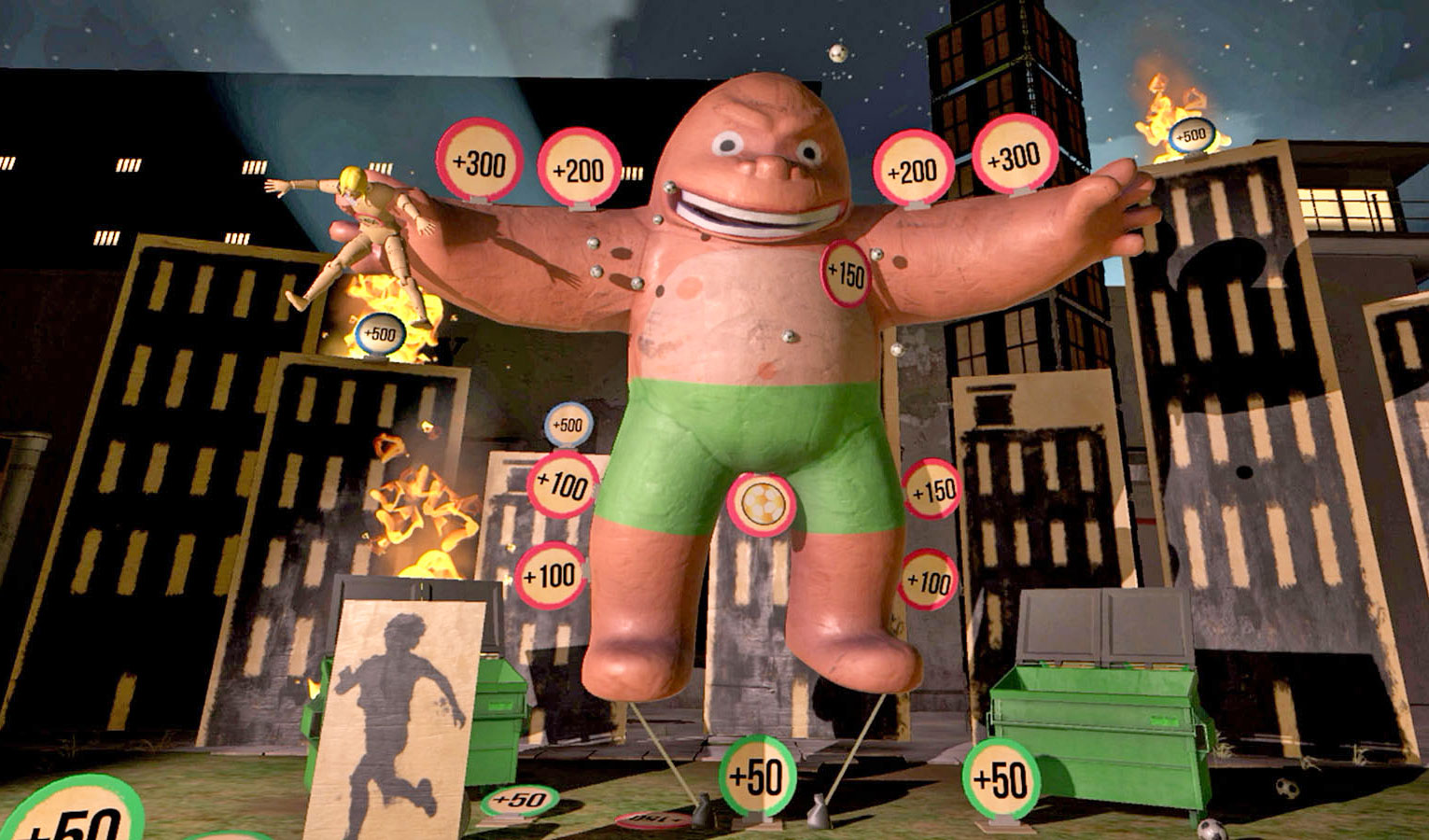 With VR going mainstream, families are going to be looking for titles that won't give their kids nightmares. One of the best of those, Headmaster, has only been available on Sony's PlayStation VR until now, but today it arrives to the Oculus Rift and...

 It's no secret that PlayerUnknown's Battlegrounds is selling well even in its Early Access form, but it just crossed an important (if symbolic) milestone. On the morning of August 27th, the battle royale shooter overtook Dota 2 as the game with the...

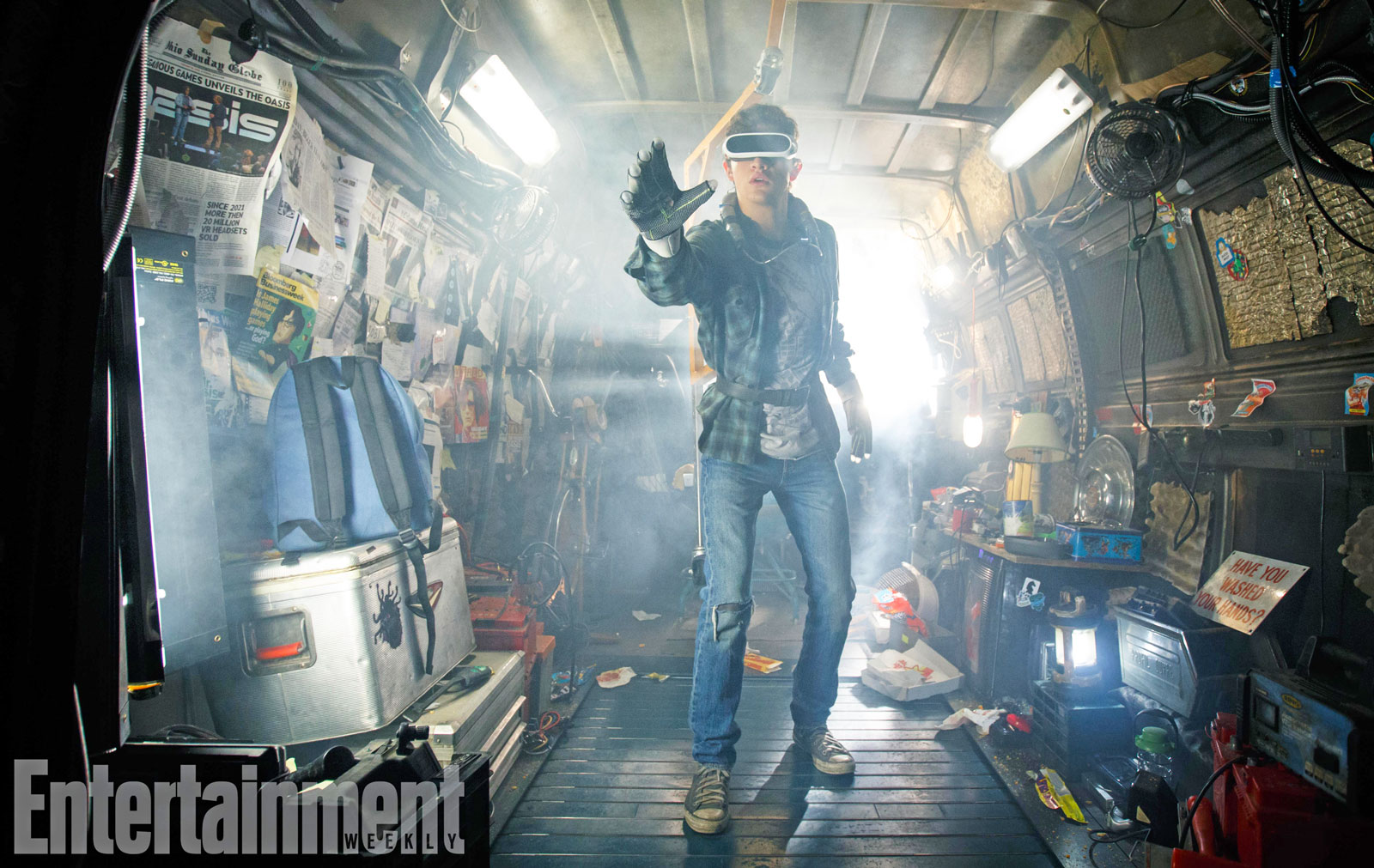 Steven Spielberg's adaptation of Ready Player One will be making a big splash at San Diego's Comic-Con next week, but ahead of that Entertainment Weekly has given us our first look at the film. And, well, it looks a lot like the worn out, nostalgia-f...

.png)
 Like more than a few stories in my life, this is one of procrastination and regret. Yesterday's total solar eclipse was the first to be viewable from the US in my lifetime, and my hometown of Lincolnville, South Carolina, was right in the path of tot...
 Facebook is steadily rolling out its new Watch section for original shows on desktop and mobile. But, what good is a new video platform without a stocked lineup of programming? To give you more options, the social network is ordering a new, 12-epis...


.JPG)