Kevin White
Shared posts
08 Oct 16:15


Poem of the Day: Neighbors in October
by David Baker
All afternoon his tractor pulls a flat wagon
with bales to the barn, then back to the waiting
chopped field. It trails a feather of smoke.
Down the block we bend with the season:
shoes to polish for a big game,
storm windows to batten or patch.
And how like a field is the whole sky now
that the maples have shed their leaves, too.
It makes us believers—stationed in groups,
leaning on rakes, looking into space. We rub blisters
over billows of leaf smoke. Or stand alone,
bagging gold for the cold days to come.
David Baker's "Neighbors in October" is reprinted from The Truth about Small Towns, by permission of University of Arkansas Press, 1998.
Source: The Truth about Small Towns (University of Arkansas Press, 1998)
Source: The Truth about Small Towns (University of Arkansas Press, 1998)
David Baker
Biography
More poems by this author
08 Oct 14:52

The Fake Tongue Illusion and Wine Tasting
Kevin WhiteHmmm sounds like a crazy ass party trick.
"As reported in the New Yorker, these researchers took an old party trick to a new level. It has been known for a while that stroking a fake hand and your real hand at the same time can fool your brain into thinking that the fake hand is yours. This trick exploits, even as it simultaneously points out, the fact that our sense of our bodies and our sensations are not singular, black and white transmissions of stimulus from nerves to consciousness.
But then these researchers did something fantastic. They tried the trick on their subjects' tongues. It was perhaps not surprising that the sense of ownership and perception of the tongue was no different than a rubber hand. When researchers stroked the subjects' real tongues and a rubber tongue in their field of view at the same time, subjects believed it to be their own tongue -- to the point of flinching when researchers approached the tongue with an open pair of scissors.
Not content with mere sensation of touch, the researchers went further, and that's where things got interesting. While participants watched, they squeezed lemon juice on a cotton swab and then touched the fake tongue with it, while simultaneously touching the subject's real tongue with a cotton swab dipped in water."
Chef Heston Blumenthal was one of the people they tried the experiment on, and his quote says it all: "I don't believe this is not sour."

The degree to which the mechanics of our own perception continue to be a mystery to us gives me no end of delight. Of course I equally enjoy the insights from our progress chipping away at this mystery, one experiment at a time.
While not done with the kind of rigor normally applied to neuroscience, the wine world has offered up several bits of evidence on how our brains and our sensory organs, in particular our sense of taste and smell, can easily be fooled. From putting red food coloring in white wines, to drinking from black glasses and trying to guess the wine, to seeing the word Napa on the label, we've long known that simple visual cues can translate into a very different tasting experience.
A group of researchers recently made some additional progress towards understanding how our perception of taste relies on similar neural acrobatics to our proprioception, or the sense of where and how our bodies are positioned, and moving.
As reported in the New Yorker, these researchers took an old party trick to a new level. It has been known for a while that stroking a fake hand and your real hand at the same time can fool your brain into thinking that the fake hand is yours. This trick exploits, even as it simultaneously points out, the fact that our sense of our bodies and our sensations are not singular, black and white transmissions of stimulus from nerves to consciousness.
But then these researchers did something fantastic. They tried the trick on their subjects' tongues. It was perhaps not surprising that the sense of ownership and perception of the tongue was no different than a rubber hand. When researchers stroked the subjects' real tongues and a rubber tongue in their field of view at the same time, subjects believed it to be their own tongue -- to the point of flinching when researchers approached the tongue with an open pair of scissors.
Not content with mere sensation of touch, the researchers went further, and that's where things got interesting. While participants watched, they squeezed lemon juice on a cotton swab and then touched the fake tongue with it, while simultaneously touching the subject's real tongue with a cotton swab dipped in water.
Chef Heston Blumenthal was one of the people they tried the experiment on, and his quote says it all: "I don't believe this is not sour."
So what does all this mean for us wine drinkers? You probably already know the answer at least intuitively. What we experience with our other senses can dramatically affect how we perceive a wine. Every person who honeymooned in wine country and carried back a particularly special bottle has had the experience of that wine not quite tasting quite the same as it did on that sunny afternoon, no matter how much the bottle has been babied since that time. We know that merely believing that a wine comes from a storied region like Napa makes wine taste better to people. Being in love makes wine taste better, too. Some people think listening to the right music during tasting does as well.
Humans will never have the precision of mechanical tongues. Not while we still have our brains attached. Not while we are romantic, capricious, irritable, intoxicatable, or whimsical. While some of us practice very hard at being objective, we can't practice our way out of being human.
So if you find yourself worried from time to time that you may not be doing this whole wine tasting thing right, cut yourself some slack. Even when we think we're getting it right, we're at the mercy of our own mysterious wiring.
Tongue anatomy courtesy of Bigstock.
08 Oct 14:35
Florida teammates fight over missing cleats (Yahoo Sports)
Kevin Whiteat least we're not this bad

GAINESVILLE, Fla. (AP) -- Florida coach Will Muschamp has another issue to deal with this week.
07 Oct 19:56

September 26, 2014

Call of the Wild
Photograph by Linda Porter, National Geographic Your Shot
A lioness roars a warning to her cubs in Kenyas Masai Mara National Reserve. She was perched on a hill right on the side of the dirt road, writes Your Shot member Linda Porter, who captured the picture on an evening game drive. On an opposite hill were three young male lions, which sometimes kill cubs. Our guide knew this lioness had three young cubs that were were out of sight and hidden. We observed her for over an hour as she continued to call out to her cubs, warning them of the potential danger that lurked across the way. Unlike most of our children, these cubs were extremely obedient and remained hidden.
Porters picture recently appeared in Your Shots Daily Dozen.
This photo was submitted to Your Shot. Check out the new and improved website, where you can share photos, take part in assignments, lend your voice to stories, and connect with fellow photographers from around the globe.
National Geographics Big Cats Initiative is working to avert the extinction of lions, cheetahs, and other big cats. Find out how you can get involved.
07 Oct 19:53

You Don’t Need 8 Glasses Of Water A Day
by Emily Oster
Kevin WhiteTLDR: Drink when you're thirsty, no conclusive evidence that more water is making you healthier
Some central tenets of good health: more vegetables, less soda, lots of exercise. And let’s not forget water: at least eight glasses a day. Much ink is spilled over the first three of these recommendations, but the last sometimes seems to be taken for granted by all the people lugging around Nalgene bottles. Is drinking so much water necessary? Is reaching eight glasses per day crucial to good health?
The short answer — at least to the specific question of eight glasses versus, say, seven or nine — is no, there is nothing special about eight. This threshold appears to be a long-standing medical myth. It’s not even clear where it started. The best answer I can find (based on this review) is that the source was a 1945 publication by the National Food and Nutrition Board, a government advisory agency, that stated this: “A suitable allowance of water for adults is 2.5 liters daily in most instances. … Most of this quantity is contained in prepared foods.” The theory is that people read this, ignored the last sentence, and the eight glasses a day (about 2.5 liters) recommendation was born.
So let’s dispense immediately with glass-counting attempts to reach this magical threshold. If we take a more charitable view of the goals of the water lobby, however, its goal is not to get us to some specific cutoff but to increase water consumption in general. So really the question shouldn’t be so much about eight glasses versus seven, but whether there is evidence that drinking more water makes you healthier.
There is one clear benefit of water: It is calorie-free. Given the magnitude of the obesity epidemic in the United States, it would be a huge public health boon if everyone replaced their fruit juice or soda with water.
But the eight-glasses claim is not about weight, it’s about flushing toxins, avoiding dehydration, and improving various bodily functions. And when researchers study these things, they typically do not focus on water alone but on total consumption of fluid. When the Mayo Clinic gives recommendations for fluid intake, it specifically notes that these are about all beverages, not just water.
So while it’s safe to say that you are a lot better off with a bottle of water than a can of soda, the question then becomes whether it’s better to drink more fluids or not. And here, the evidence conflicts.
Many papers show no effect of fluid intake on mortality. One very large study was run in the Netherlands in the 1980s, and published in the British Journal of Nutrition in 2010. Researchers followed over 120,000 individuals for a period of 10 years, and studied the relationships between fluid intake levels and mortality from heart attack and stroke. The authors found no link between total fluid intake or water intake and either cause of mortality.
Other studies echo this. This one found no impact of fluid intake (although, oddly, the authors exclude water) on chronic kidney disease or cardiovascular mortality. And this one, which randomized people into two groups — more and less water intake — and recorded outcomes like blood sodium levels, found no effect. And lest you think the reason to drink water is to improve your outer beauty, this study found no impacts of hydration on skin quality. (These studies all focus on healthy people. For individuals with particular medical conditions — kidney stones, for example — there are likely larger benefits of hydration.)
But some studies do find effects. Most notable is a study of 20,000 Seventh-Day Adventists, who were followed for six years to look for impact of fluid intake on mortality. The researchers found that drinking more water lowered the risk of dying. For women, the risk was lowered by having three or more cups per day, versus fewer than three. For men, three to four cups was much better than fewer than three, and five or more cups was a bit better than that. And at least one study has found that more than six cups of water a day lowers bladder cancer risk relative to less than one cup.
It’s important to note that other than the study on blood sodium, none of these studies were randomized trials. It’s therefore entirely possible that the effects were driven by other differences between water-drinkers and non-water-drinkers, and are not really due to the water at all.
And here is the other thing: Even in the studies that found effects, the threshold was significantly below eight glasses. Based only on the Seventh-Day Adventist study, we would conclude that women should be having at least three cups a day for maximum effect, and men at least five. Nothing here would suggest that eight glasses are necessary.
About now, you may be wondering: If there’s any evidence at all — even possibly flawed evidence — that more water is better, isn’t that reason enough to stick with the Nalgene, given that there doesn’t seem to be any downside to hydration? The answer is probably yes. But it is worth noting that there is such a thing as too much water. It’s possible to die from water intoxication — and people have — although it’s very rare and drinking eight glasses a day (or 10, or 12) isn’t going to do it.
What you can take from the evidence is that obsessing about reaching some water goal every day is unproductive. Most of us are going to get in three to four cups without doing anything out of the ordinary, and that’s likely to deliver nearly all of the benefits of water intake (if there are any). Probably the best advice is some I got from a doctor colleague recently: “When my patients ask when is a good time to drink water, I tell them: ‘When you are thirsty.’”
07 Oct 19:52

October 6, 2014

Whale of a Tail
Photograph by Shane Gross, National Geographic Your Shot
A sperm whale waves goodbye to Your Shot member Shane Gross, who had traveled to Sri Lankas east coast hoping to photograph blue whales. While we did have some success with the blues, it was the sperm whales that stole the show, he writes. He captured this picture toward the end of the six-day expedition. It was late in the day and the sun was low as this small pod swam toward me, and I did my best to keep quiet so as to not frighten them. This one started to dive and I free dove right after her, trying to get as close to that massive tail as possible. I knew she might be the last whale I'd encounter on the trip, and indeed, she was.
Grosss picture recently appeared in Your Shots Daily Dozen.
</p>This photo was submitted to Your Shot. Check out the new and improved website, where you can share photos, take part in assignments, lend your voice to stories, and connect with fellow photographers from around the globe.</p>
07 Oct 11:41
Guy with Olive Garden ‘Never Ending Pasta Pass’ is Documenting All His Meals on Tumblr
by Erin Mosbaugh
Kevin White1 part sad 1 part funny
Do you remember a few weeks back when Olive Garden rolled out the $100 Never Ending Pasta Pass promotion? The 1,000 people who secured a Pasta Pass got access to all-you-can-eat pasta, soup, salad, and breadsticks for seven weeks straight. Sounds like a dream—or a…
The post Guy with Olive Garden ‘Never Ending Pasta Pass’ is Documenting All His Meals on Tumblr appeared first on First We Feast.
06 Oct 19:36

noseperiod: Tywin Lannister, Lord of Casterly Rock, Shield of...
Kevin WhiteWINTER IS COMING!
Tywin Lannister, Lord of Casterly Rock, Shield of Lannisport, Warden of the West, and Hand of the King.

06 Oct 15:39



This is a story of boy meets girl. But, you should know...
Kevin Whitealso a good movie
This is a story of boy meets girl. But, you should know upfront, this is not a love story.
06 Oct 15:37
Eye Candy for Today: Canaletto’s drawing of the Porta Portello
by Charley Parker
Kevin Whitei love the closeups they do on this blog to show the fine details

The Porta Portello with the Brenta Canal in Padua, Canaletto (Giovanni Antonio Canal)
On Google Art Project, high-res downloadable file on Wikimedia Commons, original is in the Albertina, Vienna.
In pen and brown ink with brown and gray washes. Unfortunately, neither the museum or Google Art Project give the dimensions. To me it has the look of a fairly large drawing; I might hazard a guess at perhaps 24 inches across (60cm), but that’s only a guess.
It’s worth either zooming the Google Art version or downloading the Wikimedia version to see the image details in larger views. The crops I can provide here don’t do the drawing justice.
I just love Canaletto’s ink and wash drawings, perhaps second only to Rembrandt’s, which is saying something. Not that they’re particularly similar, just that they just have such wonderful qualities that I could stare at them for extended periods, slack-jawed with admiration.
Canaletto manages to be simultaneously sharp and precise in his draftsmanship but loose and sketch-like in his rendering — a combination that just tickles my brain and makes it giggle like a happy baby. I think it has much to do with his delineation of straights with that beautifully wavy, broken line of his.
06 Oct 15:34

Date: 8th–10th century
Geography: Peru
Culture: Wari
Medium: Ceramic
Dimensions: H. 8 x W. 4 1/2 x D. 2 1/2 in. (20.32 x 11.4 x 6.4 cm)
Classification: Ceramics-Containers
Credit Line: Purchase, Arthur M. Bullowa Bequest and Rogers Fund, 1996
Accession Number: 1996.290
Information about hundreds of thousands of works of art is available in The Metropolitan Museum of Art's Collection Database.
Photograph Credits | Terms and Conditions | Privacy Policy
© 2000–2014 The Metropolitan Museum of Art. All rights reserved.
Feline Bottle
Date: 8th–10th century
Geography: Peru
Culture: Wari
Medium: Ceramic
Dimensions: H. 8 x W. 4 1/2 x D. 2 1/2 in. (20.32 x 11.4 x 6.4 cm)
Classification: Ceramics-Containers
Credit Line: Purchase, Arthur M. Bullowa Bequest and Rogers Fund, 1996
Accession Number: 1996.290
Information about hundreds of thousands of works of art is available in The Metropolitan Museum of Art's Collection Database.
Photograph Credits | Terms and Conditions | Privacy Policy
© 2000–2014 The Metropolitan Museum of Art. All rights reserved.


05 Oct 18:19

Ctrl + ← Traveling Salesmen, Kissing And Political Fan Fiction
by Mona Chalabi
Kevin WhiteSharing for college football & France cheek kissing maps
This is Ctrl + ←, our weekly data journalism roundup. You’ll find the most-read FiveThirtyEight articles of the past week, as well as gems we spotted elsewhere on the Internet.
MOST READ
- NFL Week 5 Elo Ratings And Playoff Odds
- You Don’t Need 8 Glasses Of Water A Day
- When Should Democrats Panic?
- Skeptical Football: Dynasties, Perfect Kickers And A Weird NFL Rule
- MLB’s Biggest Star Is 40 (And He Just Retired). That Could Be A Problem.
- Watching The Signal And Not The Noise
- The A’s Tailspin Might Not Matter Once The Playoffs Start
- Marriage Isn’t Dead — Yet
- A Farewell To Adam Dunn, Sabermetric Bellwether
- Reexamining Residency Requirements For Police Officers
ELSEWHERE ON THE INTERNET
Political ads on TV: Past research has shown just how much political ads can act as cash cows for TV stations. But Philip Bump at The Washington Post wanted to get a much more detailed understanding of the phenomenon, so he found a way to trawl through PDF reports about ads for Senate candidates, and then see during which specific shows they appeared. When he analyzed the results, he found that Republicans went for “Big Bang Theory” in prime time while Democrats were far more likely to air ads on “Scandal” and “Big Brother.”

 40 years of household income: Sometimes a chart is worth a thousand words, as Quoctrung Bui demonstrated in this NPR article on income inequality in the United States. Bui split American households according to their wealth and showed how the income of the poorest 5 percent, the richest 5 percent and everyone in between has changed over the past 40 years. The result is an elegant demonstration of how income growth has been concentrated among the wealthy.
What a United States of College Football Fans would look like: The Upshot has already published maps on baseball and basketball fandom by analyzing data on Facebook likes. This one on college football reveals a slightly different trend, however: Unlike rooting for professional sports leagues, American college fandom doesn’t cross state boundaries that much.

British political erotic fan fiction: No, you didn’t read those four words incorrectly. Data journalist Frankie Goodway has tried to understand this trend by looking at a website where writers create romantic scenarios between politicians. Goodway found that the biggest romantic pairing in British politics (in fan fiction at least) is between Prime Minister David Cameron and his deputy, Nick Clegg. It’s so popular that the relationship even has its own name: “Clameron.” A high proportion of the 270 stories Goodway looked at were so steamy that the author dubbed them NSFW.

 Mapping french kisses: When you ask a French person how many times she might “faire la bise” (kiss in greeting), the answer will differ depending on where she lives. In the south of France, people are more likely to lean in for three kisses, while in the north they tend to go for two or four. By mapping 104,206 responses to the question, Bill Rankin at Radical Cartography was able to show those geographic patterns. The visualization is from 2013, but there’s still time to add your data to the project.
Solving the traveling salesman problem: This simulation of travel routes by Todd W. Schneider has been around for a couple of weeks, but it wasn’t until Nathan Yau mentioned it that I saw it. Given a list of cities, Schneider’s interactive map finds the “shortest possible route that visits each city exactly once and returns to the origin city” — just what a traveling salesman would want. Of course, there aren’t too many traveling salesmen left in the United States, but if you’re curious about how to move between, say, 48 state capitals, then it’s worth taking a look. Schneider used a technique called “annealing” to work out the quickest way around the country without having to check each and every possible path — there’s a very technical but nevertheless interesting explainer of how he did it here.

05 Oct 18:16

October 5, 2014

Under Thin Ice
Photograph by Sergey Krasnoshchokov, National Geographic Your Shot
On Russias Kamchatka Peninsula, fire and ice meet to form an otherworldly underground. Located on a slope of the peninsulas Mutnovsky volcano, the caves stream is fed by volcanic hot springs. Sunlight filters through thinning glacial ice above.
It took me two trips to the shoreline and a number of attempts to obtain the image I wanted, he writes. It was meant to emphasize the incredible number of birds, their sense of freedom, and the sheer power of nature.
</p>This photo was submitted to Your Shot. Check out the new and improved website, where you can share photos, take part in assignments, lend your voice to stories, and connect with fellow photographers from around the globe.</p>
03 Oct 20:03
Guys Love See Through Yoga Pants
Guys Love See Through Yoga Pants:
There’s an amazing trend growing stronger by the minute, and...
03 Oct 19:58
10 Recipes to Make When You Have Way Too Many Apples
by Angelica Frey
If you go apple picking this fall, you will inevitably have mad apples and no idea what to do with them. The solution? Turn them into chips, bread, and more.
The post 10 Recipes to Make When You Have Way Too Many Apples appeared first on First We Feast.


02 Oct 18:30

October 2, 2014

Dangerous Beauty
Photograph by Garth Lenz
Disguised by the beauty of a reflection, this toxic tailings pond in Alberta, Canada, is a considerable health risk. Such vast lakesmade up of oil sands development residue, or tailingsare completely unlined, and 19 of them lie on either side of the Athabasca River. Individual ponds can range in size up to 8,850 acres.
Garth Lenzs aerial photographs of landscapes transformed by energy production were recently featured on our photography blog, Proof.
Barciella and -1 others like this

02 Oct 14:38
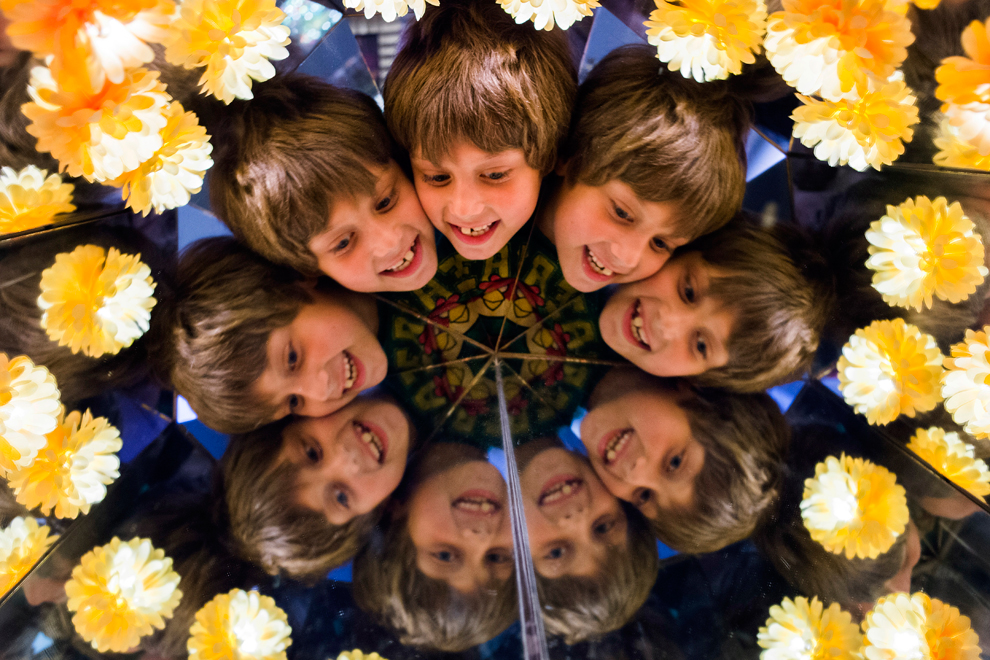
Daily Life: September 2014
For this edition of our look at daily life we share images from China, India, Iraq, Nepal, United States and other countries from around the world. --Lloyd Young (23 photos total)
Zachary Bozann, 9, of Okemos smiles as he looks at countless reflections of himself, appearing to the camera as nine heads joined together in an three-dimensional interactive art display called "The Infinity Boxes" by Los Angeles artist Matt Elson on Sept. 28 at ArtPrize in downtown Grand Rapids, Mich. (Jake May/The Flint Journal via Associated Press)
02 Oct 10:11
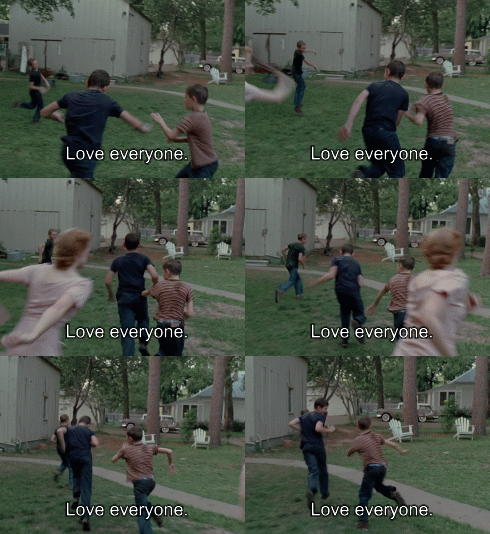
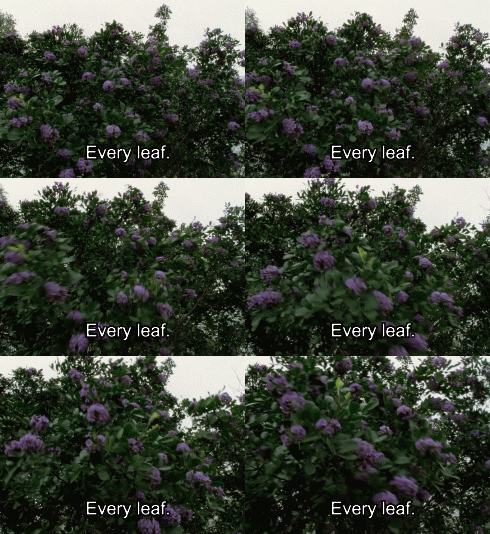
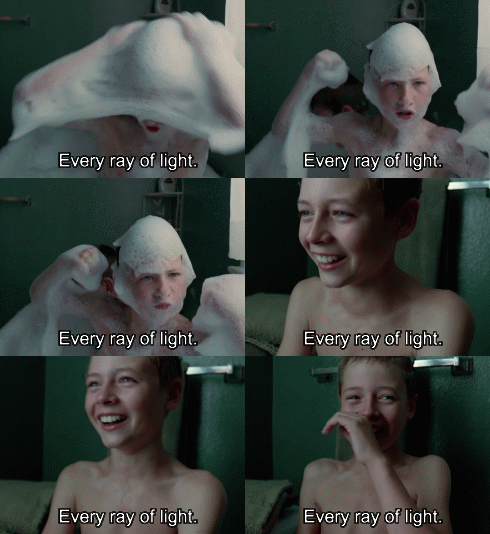
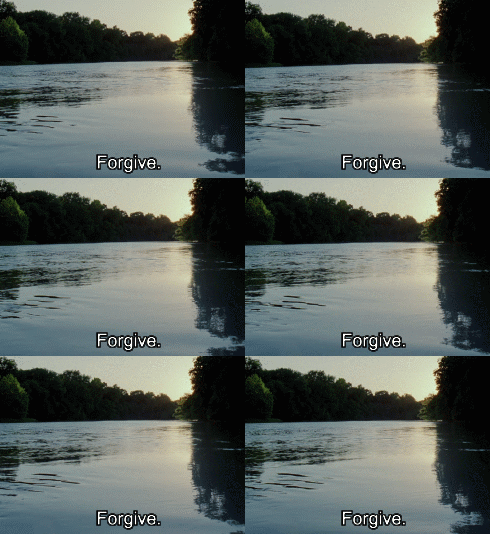
plantvibes: The Tree of Life (2012)
Kevin WhiteTerrible movie.... like i want my 2 hours back bad

01 Oct 17:03
Michelin Guide Upgrades Aquavit, Blanca and Ichimura to Two Stars, Daniel Loses Third Star
by By FLORENCE FABRICANT
Three restaurants have been upgraded to two stars, and 20 places are newly chosen or promoted.


Matthew McCormick likes this
01 Oct 16:16
Coach Spurrier: South Carolina can still win SEC (Yahoo Sports)
COLUMBIA, S.C. (AP) -- Steve Spurrier believes South Carolina can still win the Southeastern Conference, so he wants his Gamecocks to quickly regroup from their stunning loss to Missouri last week.
01 Oct 02:39
Michelin Drops 2015 NYC Star Ratings
by Erin Mosbaugh
This afternoon, Michelin released its 2015 list of New York’s best restaurants. Of Note: Restaurant Daniel lost its third star. New star winners include: Andanada, Bâtard, Betony, Casa Enrique, Delaware & Hudson, Juni, La Vara, Luksus at Torst, Meadowsweet, M. Wells Steakhouse, Picholine, Piora, Pok Pok Ny, River Cafe, Zabb Elee (Queens), ZZ’s Clam Bar, and Take…
The post Michelin Drops 2015 NYC Star Ratings appeared first on First We Feast.