 The Associated Press reports that Charles Ramsey — the Ohio man who famously rescued three women from a decade in captivity — does not endorse the restaurants that are offering him free burgers for life and naming burgers after him. Said a rep from Cleveland's Driftwood Restaurant Group: "We are saddened to hear that Chuck did not take this — or the offer of so many Cleveland restaurants to give him free meals — in the spirit we intended." [AP]
Russian Sledges
Shared posts
28 May 14:46
Charles Ramsey Wire: The Associated Press reports that Charles...
by Hillary Dixler
Tertiarymatt, firehose likes this
28 May 13:44

Boston Preppy 1. James Spader.
Russian Sledgesvia multitask suicide
Boston Preppy 1.
James Spader.
28 May 13:08


astronomy-to-zoology: Pink Fairy Armadillo (Chlamyphorus...
Pink Fairy Armadillo (Chlamyphorus truncatus)
Also known as the lesser fairy armadillo, the pink fairy armadillo is a unique species of small armadillo found only in Central Argentina. Pink fairy armadillos are the smallest known armadillo, with the largest individual growing to around 4 inches long. They are primarily nocturnal and burrow near anthills, as their main food item is ants, however they will eat worms, snails, plants and roots as-wells. Like a golden mole or a marsupial mole the pink fairy armadillo navigates its surroundings via “sand swimming” using its powerful claws to move through the sand as if it was water, its pink back/head plates shield it from debris. Although the pink fairy armadillo is listed as ‘data-deficient’ by the IUCN it suffers from habitat destruction as cattle farms are taking over its natural range.
Phylogeny
Animalia-Chordata-Mammalia-Cingulata-Dasypodidae-Euphractinae-Chalmyphorus-truncatus
28 May 13:06


Orly Taitz Tried to Sue the Electoral College
by Kevin
Russian SledgesI had nearly forgotten about Orly Taitz.
In the unlikely event anyone else is unclear on this, here is some information: The "Electoral College" is not an actual college.
Nor is it a university or school or, in fact, a learning institution of any kind. It is not a government agency. It is not a corporation or any other sort of business entity. It is not a person, legally or otherwise. It is not even a single group of people: its members never meet in one place. There are meetings of state "electors" but there is no meeting of the "Electoral College." It is not a thing.
And so you cannot sue it.
Certainly the Electoral College is mysterious to most of us in some ways, and there are details you wouldn't know unless you looked them up like I did. In the U.S. we don't elect the President directly. Each state appoints a number of "electors" equal to the number of its representatives in Congress. The electors cast votes and Congress counts them to determine the winner. Electors almost always vote the same way as the majority of state voters did—in some states, it is illegal for them to vote differently, but no one's ever been prosecuted for it. According to this report, there have been 157 "faithless electors" over the years, although 71 of them switched only because the original candidate died after the election, which seems like a pretty good reason. This has never affected the outcome of an election, although it conceivably could have in 2000, for example.
But not only is the Electoral College not an actual entity, the electors never even meet in one place—each group meets and votes in its home state. U.S. Const. Art. II, § 1, cl. 2; Amend. XII.
Again, some of these are details you might not know, unless you looked them up, which you might possibly do if, for example, YOU WERE PLANNING TO SUE THE ELECTORAL COLLEGE.
Orly Taitz, whose heroic struggle against reality I have mentioned a few times now, including when she tried to sue me and the President and worst of all the Postmaster General, has also been litigating in the Eastern District of California (among many other places). As always, even if she is suing for some other reason (like losing the California primary), she always ends up portraying that event as part of the larger conspiracy to suppress the fact that Barack Hussein Obama is not a "natural born citizen." And this case was no exception.
It is also not an exception to the rule that she has lost every time.
Taitz, who for some inexplicable reason is licensed to practice law in California, did not represent herself as she often does but rather found some nominal plaintiffs. I don't know if any of them showed up for hearings, but I'm pretty sure Keith Judd didn't, because as it says in one pleading, he is "currently serving a 210-month sentence for extortion." The defendants included, in addition to aforementioned miscreant Barack Hussein Obama, the U.S. Congress (all of it) and as noted, the "Electoral College." Which is not a thing.
To cut to the chase, the judge dismissed this case on May 23 on various grounds (no standing to sue, for example). But in any case Taitz files, the outcome is not in much doubt, so the only suspense is in waiting to see how she screws it up procedurally. Here's just a selection of what she did wrong this time:
- Sued the Electoral College
- Repeatedly tried and failed to serve documents correctly
- Subpoenaed, among others: the President, the Postmaster General, the U.S. Congress (all of it), the House Judiciary Committee (all of it, I think), and a couple dozen individual senators and House members
- Tried to file a motion for reconsideration with a hearing set for the next day
- Didn't comply with page limits
- Ignored other rules to the point that the court issued an order directing her to read them
- Filed an appeal without paying the fee
The Electoral College did "appear" in the lawsuit, in the sense that the U.S. Attorney's office included "it" on the list of parties. Prediction: Taitz will interpret that as evidence that the Electoral College is a real entity, so if it existed, its legal troubles might not be over.
Tertiarymatt, firehose likes this
28 May 12:37
Daily Kos: The Onion Calls it Quits
by russiansledges
Russian Sledges#nottheonion
Now you have headlines showing up in mainstream publications like "Kansas Republican Actually Opposes the Poor Buying More Food" and "Conservatives Less Likely to Buy Energy Efficient Bulbs if Labeled as Environmentally Friendly."
The absurdity of conservatives in this country has completely destroyed our business. Republicans have ruined us. Period.
Tertiarymatt likes this
28 May 11:35

Red Army traffic controler. Directional reads; Berlin,...
Red Army traffic controler. Directional reads; Berlin, Frankfurt, Poznan, Neudamm.








28 May 11:28

Filamentary! The sun on monday, Memorial Day… decked out...
Filamentary!
The sun on monday, Memorial Day… decked out with filaments galore.
27 May 21:53
FFMPEG video writer - now with animated GIF support [w/ code]
by Roy
 So animated gifs are awesome if you're writing a software blog. It saves all this time working with YouTube embeddings and stuff, and your "videos" are stored locally. The simplified FFMPEG writer was before unable to output animated GIFs, but I've tweaked it and now it does. It's also a nice piece of code to learn how to FFMPEG in C.
There's not a lot to say technically because most of the code remained the same, except maybe a couple of things that have to do with the required formats that animated GIFs require (RGB24).
When getting the discovered codec from avformat_alloc_output_context (that examines the filename), we should set the pixel format to RGB24. The codec can give us a list of all supported pix formats:
        codec = avcodec_find_encoder(avcid);
        if (!codec) {
            fprintf(stderr, "codec not found: %s\n", avcodec_get_name(avcid));
            exit(1);
        } else {
            const AVPixelFormat* p = codec->pix_fmts;
            while (p != NULL && *p != AV_PIX_FMT_NONE) {
                printf("supported pix fmt: %s\n",av_get_pix_fmt_name(*p));
                supported_pix_fmt = *p;
                ++p;
            }
            // Codec doesn't have any pix formats?
            if (p == NULL || *p == AV_PIX_FMT_NONE) {
                if(fmt->video_codec == AV_CODEC_ID_RAWVIDEO) {
                    // Well if it's "rawvideo" we know it's GIF, and that needs RGB24
                    supported_pix_fmt = AV_PIX_FMT_RGB24;
                } else {
                    supported_pix_fmt = AV_PIX_FMT_YUV420P; /* default pix_fmt */
                }
            }
        }
The only other thing is when writing a frame, the rawvideo codec for GIFs doesn't need encoding just streaming the pixels to the file:
    if (oc->oformat->flags & AVFMT_RAWPICTURE) {
        /* Raw video case - directly store the picture in the packet */
        AVPacket pkt;
        av_init_packet(&pkt);
        pkt.flags        |= AV_PKT_FLAG_KEY;
        pkt.stream_index  = video_st->index;
        pkt.data          = picture->data[0];
        pkt.size          = sizeof(AVPicture);
        ret = av_interleaved_write_frame(oc, &pkt);
    } else {
    ...
Code
Get the code: here
Compressing the GIFs
The outputs are usually huge, like 20Mb for 20 seconds, so ImageMagick helped a lot:
convert -quality 80% output.gif output-comp.gif
And here's a sample...
Enjoy
Roy.
firehose and -1 others like this
27 May 21:50

China is starting to get embarrassed about its tourists’ obnoxious behavior abroad
by Gwynn Guilford
Russian Sledgesvia firehose
"China: the new America"

Chinese tourists are making their mark on the global tourism industry—literally. The picture above is a relief etched 3,500 years ago in Egypt’s Luxor Temple in Egypt. More recently, someone added the characters “Ding Jinhao was here,” as documented by an ashamed Chinese traveler who posted his photo to Sina Weibo (registration required). “We want to wipe off the marking with a towel,” the traveler wrote. “But we can’t use water since it is a 3,500 year-old relic.”
Ding, who turned out to be a 15-year-old from Nanjing, was quickly found out via Sina Weibo research. His parents have since apologized.
A tour guide surnamed Zhang told QQ (link in Chinese) that he “had never seen this sort of behavior from tourists,” and that “until recently, the Chinese tourists going to Egypt were relatively few, and their character was relatively good.”
“There’s a lot of this kind of uncivilized behavior out there,” said Zhang. “Take for example the sign outside the Louvre Museum only in Chinese characters that forbids people from urinating or defecating wherever they want.”
This is all the more alarming given the rapid rise of Chinese tourism overseas, boosted by new wealth and ever-improving exchange rates. Some 83 million traveled abroad in 2012, up from just 10 million in 2000. Reports of Chinese tourists behaving badly generally include spitting, littering, ignoring traffic laws and speaking loudly. Children are another issue: reports abound of tourists letting their children defecate in public pools (paywall) and urinate in the middle of restaurants.
Uncouth visitors have caused particular strife in Hong Kong, where 70% of the 48 million tourists a year come from the Chinese mainland. But grievances are reported everywhere. Chinese travelers are ignoring dressing customs in Thai Buddhist temples, overrunning the campus of South Korea’s Ewha Women’s University, launching drunken singsongs in Bali and generally being loud in Singapore.
The problem has become big enough that vice premier Wang Yang recently scolded his compatriots’ holiday habits. ”They speak loudly in public, carve characters on tourist attractions, cross the road when the traffic lights are still red, spit anywhere and [carry out] some other uncivilized behavior,” said Wang. “It damages the image of the Chinese people and has a very bad impact.”
In fact, China announced just last month that it is issuing a Tourism Law to take effect in October. That law will give travel agencies the authority to penalize tourists who “violate social ethics,” though it’s also geared toward cleaning up the domestic tourism industry.
In a recent blog on Tea Leaf Nation, Liang Pan, a Chinese national studying in New York, pleaded for “more understanding” for the flocks of Chinese traveling overseas for the first time, chalking much of the bad behavior up to naivety and cultural misunderstanding.
He has a point. After all, vandalism of landmarks was occurring long before the Chinese tourism boom got underway. And in many places the first nationality the world associates with “loud” and “rude” tourists is still the US. Maybe it’s just one of those things that comes with being a superpower.
Tertiarymatt likes this
27 May 21:47


Knitted innards and fuzzy cadavers by Candace Couse
by Low Lai Chow
Russian Sledgesbam! pow!, etc.

Sure, knitting often gets pooh-poohed as a granny pursuit all the time. Which probably makes Canada-based visual artist Candace Couse’s knitted corpses — with innards, organs and guts spilling out and loose red vein-like threads crawling out of them — all the more sweeter. She uses the idea of personal geographies to approach issues like orientation and identity that are profoundly detached from collective knowledge and public geographies.


The post Knitted innards and fuzzy cadavers by Candace Couse appeared first on Lost At E Minor: For creative people.
Tertiarymatt, J.w.dillow likes this
27 May 21:46


The Failures You Can’t See
by Andrew Sullivan
David McRaney explains ”survivorship bias” by using an example from WWII:
The military looked at the bombers that had returned from enemy territory. They recorded where those planes had taken the most damage. Over and over again, they saw the bullet holes tended to accumulate along the wings, around the tail gunner, and down the center of the body. Wings. Body. Tail gunner. Considering this information, where would you put the extra armor? Naturally, the commanders wanted to put the thicker protection where they could clearly see the most damage, where the holes clustered. But [statistician Abraham] Wald said no, that would be precisely the wrong decision. Putting the armor there wouldn’t improve their chances at all.
Do you understand why it was a foolish idea? The mistake, which Wald saw instantly, was that the holes showed where the planes were strongest. The holes showed where a bomber could be shot and still survive the flight home, Wald explained. After all, here they were, holes and all. It was the planes that weren’t there that needed extra protection, and they had needed it in places that these planes had not. The holes in the surviving planes actually revealed the locations that needed the least additional armor. Look at where the survivors are unharmed, he said, and that’s where these bombers are most vulnerable; that’s where the planes that didn’t make it back were hit.
The commanders’ mistake is very common:
After any process that leaves behind survivors, the non-survivors are often destroyed or rendered mute or removed from your view. If failures becomes invisible, then naturally you will pay more attention to successes. Not only do you fail to recognize that what is missing might have held important information, you fail to recognize that there is missing information at all.
You must remind yourself that when you start to pick apart winners and losers, successes and failures, the living and dead, that by paying attention to one side of that equation you are always neglecting the other. If you are thinking about opening a restaurant because there are so many successful restaurants in your hometown, you are ignoring the fact the only successful restaurants survive to become examples. Maybe on average 90 percent of restaurants in your city fail in the first year. You can’t see all those failures because when they fail they also disappear from view.
Tertiarymatt likes this
27 May 19:52
bottecchia
by frederic
Russian Sledgesto do
1 oz Fernet Branca
1 oz Cynar
1 oz Campari
1 pinch Salt
Stir until the salt is dissolved. Add ice, stir again, and strain into a coupe glass. Twist a grapefruit peel over the top.
Two Tuesdays ago, I flipped through Gary Regan's Negroni book and stumbled upon the Bottecchia. Kevin Burke of Denver's Colt & Gray created this recipe where the gin of the classic Negroni was swapped for Fernet Branca and the sweet vermouth for Cynar. In addition, Kevin added a pinch of salt to temper the bitterness and to add a savory element to Bottecchia. For a name, he paid tribute to Ottavio Bottecchi, a cyclist who won the Tour de France in 1924 before dying mysteriously of unknown causes a few years later.
 The grapefruit oils from the twist greeted the nose along with a dark herbal and earthy undertone. A caramel sip from the Fernet Branca and Cynar gave way to a swallow that began rather Cynar driven. Next, the swallow offered the Campari flavors along with a lingering light menthol note from the Fernet. Indeed, the salt really shifted the drink to a more mellow profile than the ingredients list would otherwise suggest.
1 oz Cynar
1 oz Campari
1 pinch Salt
Stir until the salt is dissolved. Add ice, stir again, and strain into a coupe glass. Twist a grapefruit peel over the top.
Two Tuesdays ago, I flipped through Gary Regan's Negroni book and stumbled upon the Bottecchia. Kevin Burke of Denver's Colt & Gray created this recipe where the gin of the classic Negroni was swapped for Fernet Branca and the sweet vermouth for Cynar. In addition, Kevin added a pinch of salt to temper the bitterness and to add a savory element to Bottecchia. For a name, he paid tribute to Ottavio Bottecchi, a cyclist who won the Tour de France in 1924 before dying mysteriously of unknown causes a few years later.
The grapefruit oils from the twist greeted the nose along with a dark herbal and earthy undertone. A caramel sip from the Fernet Branca and Cynar gave way to a swallow that began rather Cynar driven. Next, the swallow offered the Campari flavors along with a lingering light menthol note from the Fernet. Indeed, the salt really shifted the drink to a more mellow profile than the ingredients list would otherwise suggest.
.jpg)

27 May 18:44
Edward Green MTO
by steven
Edward Green has been making some of the finest men’s shoes in Northampton, England for more than 125 years. Benchmade to fit the foot with maximum support and comfort, they’re the embodiment of the “Classic” English shoe.
Our spring Trunk Show with Edward Green is Thursday May 30th and we invite to join us and meet Xavier Candat & Robert Godley of EG and preview an incredible selection of their shoes.
Here to whet your appetite is a selection of Made to Order Edward Green shoes that recently arrived.
Olney 888 Last, Cloud Suede – MTO

Malvern 202 Last, Chestnut Antique – MTO

Galway 202 Last, Chameleon Antique/Loden Suede, Dainite Soles -MTO

Chelsea 202 Last, Mink Suede, Dainite Soles – MTO

Asquith 888 Last, Dark Oak Antique, HAF Soles – MTO
 Cherwell 202 Last, Indigo Suede – MTO

Tertiarymatt and -1 others like this
27 May 16:15
A Train Runs Through It
by Alex Santoso
Russian Sledges#trains
A lot of people want to live conveniently close to the train stations, but as you can see from the clip above, there's such a thing as too close for comfort. Case in point, this train track in Hanoi, Vietnam:
Every day, at 4pm and 7pm, a train makes its way down a street so narrow that it is just inches from the houses on either side.
It passes so close to their front doors that any objects which are kept on the street, such as bicycles, have to be moved to make sure that they do not get hit.
27 May 16:14


Turkey seizes 4m fake British postage stamps
Russian Sledges#philately
Turkish police arrest 11 people in Istanbul on suspicion of printing counterfeit stamps and shipping them to Britain
Turkish police have seized four million fake British postage stamps and arrested 11 people in connection with the forgery operation on the European side of Istanbul.
The suspected forgers, accused of printing the stamps and shipping them to Britain, were caught in 10 simultaneous raids across the city, which straddles Europe and Asia, police said on Monday.
Nine of those detained were sent to court accused of forming a criminal gang to commit forgery.
Turkey has one of the world's largest markets for fake goods, such as handbags and clothing, and there are frequent reports of police targeting currency forgers.
guardian.co.uk © 2013 Guardian News and Media Limited or its affiliated companies. All rights reserved. | Use of this content is subject to our Terms & Conditions | More Feeds
    
|
firehose likes this
27 May 16:13
North Pond Hermit discovered, arrested after 27 years in Maine woods - Maine - The Boston Globe
by russiansledges
Russian Sledges#maine
“I said, ‘Are you happy?’ ” Vance recalled. “He said, ‘No, I’m content. They’re two different things.’ ”
firehose and -1 others like this
27 May 15:04
gongoozler, n.
by Oxford English Dictionary
Russian Sledgesvia overbey
gongoozler, n.
Pronunciation: /ɡɒnˈɡuːzlə(r)/
Etymology: Origin unknown; but compare Lincolnshire dialect gawn ‘stare vacantly or curiously’, gooze (also goozen) ‘stare aimlessly, gape’
dial. and slang.
Originally, an idler who stares at length at activity on a canal; hence more widely, a person who stares protractedly at anything.
1904 H. R. de Salis Bradshaw's Canals & Navigable Rivers Eng. & Wales 473 Gongoozler, an idle and inquisitive person who stands staring for prolonged periods at anything out of the common. This word is believed to have its origin in the Lake District of England.
1906 Daily Chron. 19 Feb. 10/1 Pronounced slowly and with the proper emphasis, ‘gongoozler’ merits a very high place in the vocabulary of opprobrium.
1973 J. Gagg Canallers' Bedside Bk. 66 The great thing about gongoozlers is that once you have the gates closed and the paddles down you can leave them behind you.
1979 Telegraph (Brisbane) 15 June 6/3 A gongoozler is one who stares for hours at anything out of the ordinary..like a visitor to the public gallery of the Queensland Parliament.
1986 New Yorker 29 Sept. 48/2, I stopped off in the Galeana sports park..to watch a game on one of three huge outdoor screens that the city had supplied for gongoozlers like me.
27 May 15:04


Agile cat and captured bat
by whyevolutionistrue
by Matthew Cobb

h/t @JohnRHutchinson
Osiasjota and -1 others like this
27 May 12:49


The five most common insults and slogans of medieval rebels
by Alice
By Jan Dumolyn and Jelle Haemers
How subversive was the speech of Flemish rebels in the later Middle Ages? Violence remained the exception in urban rebellions, whereas subversive utterances, though always risky, must have been almost the rule of daily politics in the urban centres of late medieval Flanders and in many other European towns and cities as well. Quoted below, you can find five of the most popular expressions of urban rebels in Flanders. Naive at first sight, they contain however hidden messages for those who were shouted at.
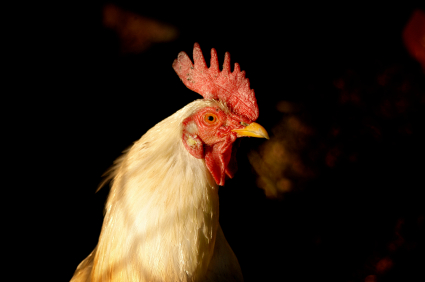
1. ‘A bad chicken was brooding’ (een quaet kiekin broedde; Ypres, 1477) was a common proverb in the Middle Ages. It meant that wicked people were hatching a malicious plan. They ‘were brooding on’ subversive plans that had to remain hidden from the authorities, until they could take action and openly call for a strike in the textile industry. Testimonies of Flemish rebels not only show that they planned their political actions in clandestine meetings, but also that even groups completely excluded from political power, as the young apprentices of the Flemish textile guilds, commonly exchanged dangerous political ideas amongst themselves without the initial knowledge of the urban rulers or the deans and masters of their guilds. When these bad eggs were hatched, subversive speech could pose a serious threat to the authorities.
2. ‘Son of a b*tch’ (hoerezuene; Bruges, 1478). Such vulgar language was not used only by rebels, as it seems to have been quite common in all social layers in town. Anyway, as today, one of the most common metaphors used to describe the strengths and weaknesses of opponents in past societies involved sexuality. Insulters targeted men and women with references to their (alleged) sexual excesses and unreliability. Furthermore, a victim’s descent was called into question when an insulter called him or her a ‘b*stard’ or a ‘son of a b*tch’. Power and status depended not only on behaviour, but also on membership in an important family through birth or marriage. Both aspects came under pressure if a man or woman was labelled as an illegitimate child, because in Flanders ‘b*stards’ had no legal rights unless the sovereign legitimized them.
3. ‘I sh*t on you’ (ic schyte in ulieden; Bruges, 1527). In 1527, the fishmonger Thomas Haghebaert had shouted to the dean and the sworn men of his guild ‘I have nothing to do with you or with the magistrate. I sh*t on you and on the aldermen and on all those who think they can harm me!’ He was exiled as well, a heavy punishment for a serious crime. More than just social status and reputation were at stake when Thomas threatened his superiors with these ‘faecal insults’. He was also challenging their legal authority. Therefore, this ‘indecent language’, as it was called in the final verdict of Thomas, not only wanted to dishonour the chiefs of the guild, as the main purpose of the defamation was to destabilize the political authority of rulers and privileged social groups.
4. ‘Liver eater’ (levereter; Ghent, 1432). This offensive term was generally aimed at corrupt officers or aldermen. The term was linked to ‘organologic’ views which compared the city with a body that could be harmed by the corrupt acts of individuals. In this case, according to rebel ideology, people who ate the ‘liver’ of the city damaged the most important part of its ‘body politic’. Medieval medicine saw the liver as the source of all necessary body fluids, but medical models aside, the basic idea of eating one’s liver is expressive enough. By accusing someone of this severe crime, rebels legitimated the punishment of those who were accused of corruption, as they claimed that it was a necessary action to cure ‘a wounded town’.
5. ‘Kill! Kill!’ (slaet doot, slaet doot; Bruges, 1477). The rhythmic structure of the Middle Dutch text, and of several other similar examples, shows that it was meant to be chanted or sung. If a mob of thousands was shouting such phrases unisono, this would obviously have an extremely intimidating effect on the aldermen hiding in the city hall. Using a rhetoric of violence targeted at the moral failings of rulers, these shouted slogans did not attack the urban government as a whole, but just those who had failed to fulfil their proper role as good governors. Rebels sought to hold up the mirror to magistrates, asking them to correct their faults and remedy the particular grievance that lay at the heart of the protest. Rebels did perhaps not fully understand what the ‘bad practices’ were that they were referring to when they collectively shouted similar slogans in public during times of commotion, but they certainly did know what was at stake and why they shouted it.
Jan Dumolyn is a lecturer in medieval history (with special research assignment) at Ghent University. He publishes on the social, political and cultural history of the later medieval Low Countries. Trained as an urban historian, Jelle Haemers wrote his first book on the Ghent revolt of 1449-53. In recent years his research interests have widened to encompass other kinds of social and political conflicts in the late medieval town, notably in the Low Countries (1100-1600). Their recent article in Past and Present — “‘A Bad Chicken was Brooding’: Subversive Speech in Late Medieval Flanders” — is available to read for free for a limited time.
Founded in 1952, Past & Present is widely acknowledged to be the liveliest and most stimulating historical journal in the English-speaking world.
Subscribe to the OUPblog via email or RSS.
Subscribe to only language articles on the OUPblog via email or RSS.
Image credit: white chicken. © Rui Vale Sousa via iStockphoto.
The post The five most common insults and slogans of medieval rebels appeared first on OUPblog.
firehose, Tertiarymatt and -1 others like this
27 May 12:41

It’s never too soon to head back over to the Department of...
Russian Sledgesisaiah 11:6, etc.
It’s never too soon to head back over to the Department of Unexpected Interspecies Friendship. Today we meet an exceptionally maternal cat in County Offaly, Ireland who has adopted three fuzzy ducklings.
In this adorable video from RTÉ Radio 1 the baby ducks eagerly cuddle up to their protective surrogate mum. They seem quite content to bask in her warmth while the cat’s own tiny kittens are busy nursing.
It’s one of those smile-inducing sights that makes the whole world feel a bit friendlier.
[via Neatorama]
27 May 11:30

1947. Full evening dress by Brooks Brothers.
1947.
Full evening dress by Brooks Brothers.
Rosalind, Tertiarymatt and -1 others like this
27 May 11:26
Historian Ibid
For instance, historian Ibid saw Stalingrad as a turning point in the war.
Yawgmothisking and -1 others like this
27 May 06:28
Swans Feed the Fishes
Russian Sledgesvia rosalind
this is so messed up
Joy, Laura.prettyinpink and 2 others like this
27 May 05:44
Germany tops BBC country image poll
A poll in 25 countries for the BBC World Service suggests Germany is the most favourably viewed country in the world.
27 May 05:28
2552/2009 report of the commission appointed to inquire and report on the conversion of Buddhists in Sri Lanka to other religions by immoral and fraudulent means.
Russian Sledgesvia overbey
"Props to Harvard for collecting stuff like this."
Format:
Book
Author: All Ceylon Buddhist Congress.Commission on Unethical Conversions (2008)
Publisher: [Colombo] : All Ceylon Buddhist Congress, 2012.
Subjects: Christianity and other religions Buddhism., Buddhism Relations Christianity., Proselytizing Sri Lanka., Sri Lanka Religion.
Author: All Ceylon Buddhist Congress.Commission on Unethical Conversions (2008)
Publisher: [Colombo] : All Ceylon Buddhist Congress, 2012.
Subjects: Christianity and other religions Buddhism., Buddhism Relations Christianity., Proselytizing Sri Lanka., Sri Lanka Religion.
firehose likes this
27 May 05:22
White House press secretary Jay Carney discusses favorite band, Guided by Voices - The Washington Post
by russiansledges
Russian Sledgesvia facebook ("only twice?")
Formed in 1983, Guided by Voices would become one of the most prolific and beloved lo-fi indie acts of the ’90s — a cult band whose cult includes Eddie Vedder, Steven Soderbergh, Chloe Sevigny, the Strokes and the White House press secretary. “English Little League” is the group’s 20th studio album, and Pollard is scheduled to release his 19th solo album, “Honey Locust Honky Tonk,” in July. Although the band doesn’t have any Washington tour dates on the calendar, should Pollard ever be invited to a beer summit in the Rose Garden, he promises to drink twice as much as the president and Carney.
firehose likes this