Vintage Booklet - Heian Military Ensemble :: Hairdressing in Vogue in Kyoto from End of Tokugawa to Beginning of Meiji :: Kamakura Boys Attire - Published Taisho 7 1918 (by Naomi no Kimono Asobi)
Russian Sledgessix things
Vintage Booklet - Heian Military Ensemble :: Hairdressing in Vogue in Kyoto from End of Tokugawa to Beginning of Meiji :: Kamakura Boys Attire - Published Taisho 7 1918 (by Naomi no Kimono Asobi)
Russian Sledgesvia firehose
#sickburnunit


Russian Sledgesvia firehose



Even psychic paper can only do so much. :)
Russian Sledgesvia saucie
derek brown autoshare
To open one bar is a daunting task. To open three over the span of a year requires taxing amounts of planning, focus, and hard work. “It’s because we’re idiots,” says Washington, D.C. bartender and restaurateur Derek Brown, who has helped to bring craft cocktails to our nation’s capital with stylish speakeasies such as the Passenger and the Columbia Room.
Each of his three new projects has its own narrow focus, too. Mockingbird Hill is a ham-and-sherry bar. At Eat the Rich, customers snack on local oysters and sip seafood-friendly cocktails and sparkling wines. And if you're at Brown’s just-opened Southern Efficiency, you're drinking whiskey and ordering from a menu of Dixie standards—though not the ones you might expect. “We want to give you a taste of the South, but not the monolithic South,” says bar manager J.P. Fetherston. “Not just fried chicken and grits.” Instead, the kitchen offers niche favorites such as peanut soup, country captain, and chocolate mayonnaise cake.

Southern Efficiency in Washington, D.C. Photographs by Three Chords LLC
The cocktail menu is equally surprising. Though still in its infancy, it currently includes switchel—sweetened apple cider vinegar, a nineteenth-century staple—mixed with blackstrap rum, and a whiskey-and-cola drink made with the bar’s own hickory-smoked cola and served on tap. And then there's the simple Stone Fence, which Americans have been sipping for about as long as they’ve been distilling their own whiskey. “I imagine that it was very common out on the early frontier,” Fetherston says. “They all had little pot stills, and most of their spirits were probably pretty terrible, so they’d cut them with apple cider or applejack. The drink is really woven into the fabric of the United States.”
There are two ways to make a Stone Fence: in a glass with ice, the old-fashioned way, or in chilled batches that make it even easier to serve to a crowd. Either way, its minimalist framework begs for experimentation. Try it with rye and soft apple cider, as Fetherston serves it at Southern Efficiency, or go colonial with brandy and hard cider.
 Stone Fence
2 oz. rye whiskey, rum, or brandy
Angostura bitters
Apple cider
Mint sprig
Pour spirit into a highball or Collins glass, and then add a dash of bitters. Top with ice and fill glass to the brim with cider. Stir, garnish with mint, and serve.
Stone Fence, batched
2 oz. rye whiskey, rum, or brandy
Angostura bitters
Apple cider
2 oz. water
Combine all ingredients and chill. Serve without ice.
Russian SledgesRosalind is the best
Russian Sledgesvia firehose via willowbl00
please tell me that there is a tumblr of just different animals getting their heads toothbrushed
The Pope concelebrates Mass today with the cardinal who presided over the largest payout to abuse survivors in the U.S.
Russian Sledgesvia otters
The death threats, Mary Willingham expected. More shocking was the denial from the University of North Carolina.
sports, women in the public sphere, etc.
Russian Sledgesvia otters ("Harvard Owns This")
Explore HOLLIS: a user friendly search and discovery tool for library materials and more.
Authors: Larsen, Katherine, author. Title: Fangasm : Supernatural fangirls / Katherine Larsen and Lynn S. Zubernis. Published: Iowa City : University of Iowa Press, [2013] Online: http://nrs.harvard.edu/urn-3:hul.ebookbatch.PMUSE_batch:muse9781609382155  Description: xiii, 249 pages : illustrations ; 23 cm Contents: Prologue — Falling down the rabbit hole — Seeking asylum — Get a (sex) life — Hollywood Babylon — Fear and loathing in Vancouver — Don’t ask don’t tell — Coming out in LA — Playing the fame game — Stuck in ihe middle (with you) — Working for the man — The sweet spot — The monster at the end of this book. Notes: Includes index. Subject: Fans (Persons)
Supernatural (Television program : 2005- ) Authors: Zubernis, Lynn S., author. Other titles: Project Muse UPCC books. ISBN: 9781609381981 (pbk. : alk. paper) | 160938198X (pbk. : alk. paper) | 9781609382155 (ebook)(invalid) | 1609382153 (ebook)(invalid) HOLLIS number: 013823639 MARC HOLLIS Classic Link to this record: http://discovery.lib.harvard.edu/?itemid=|library/m/aleph|013823639
Russian Sledgesvia otters ("somebody requested that the library get one of these")
Russian Sledgesvia firehose
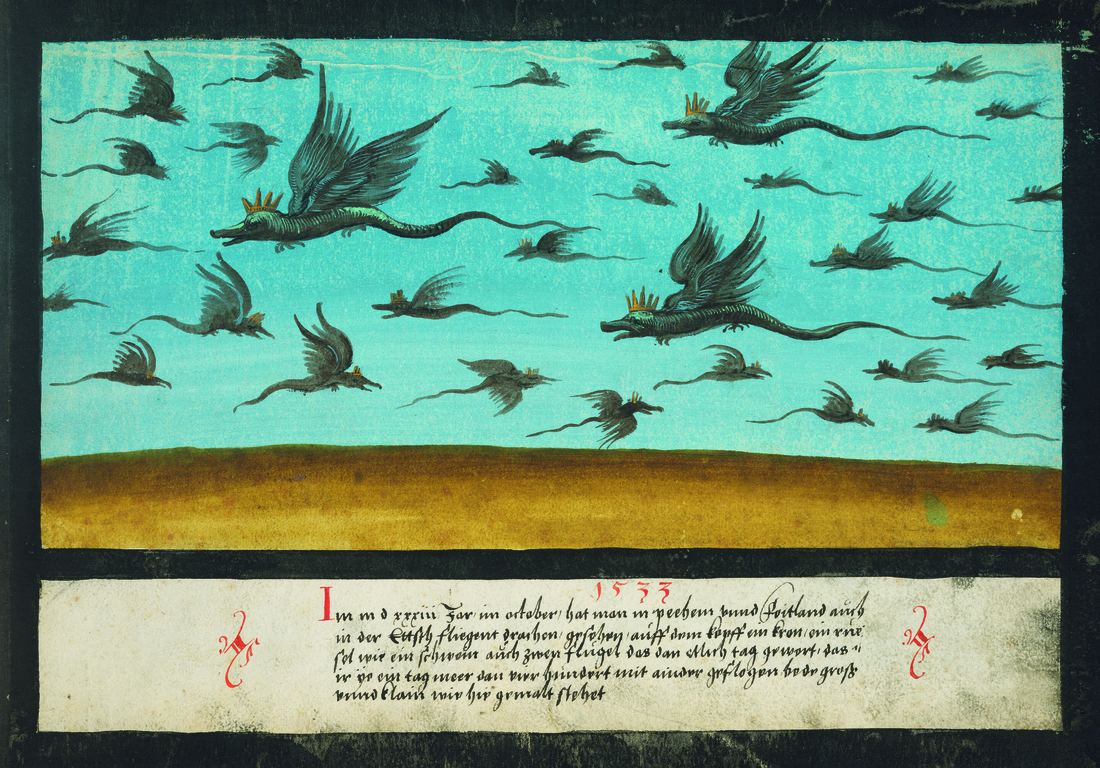
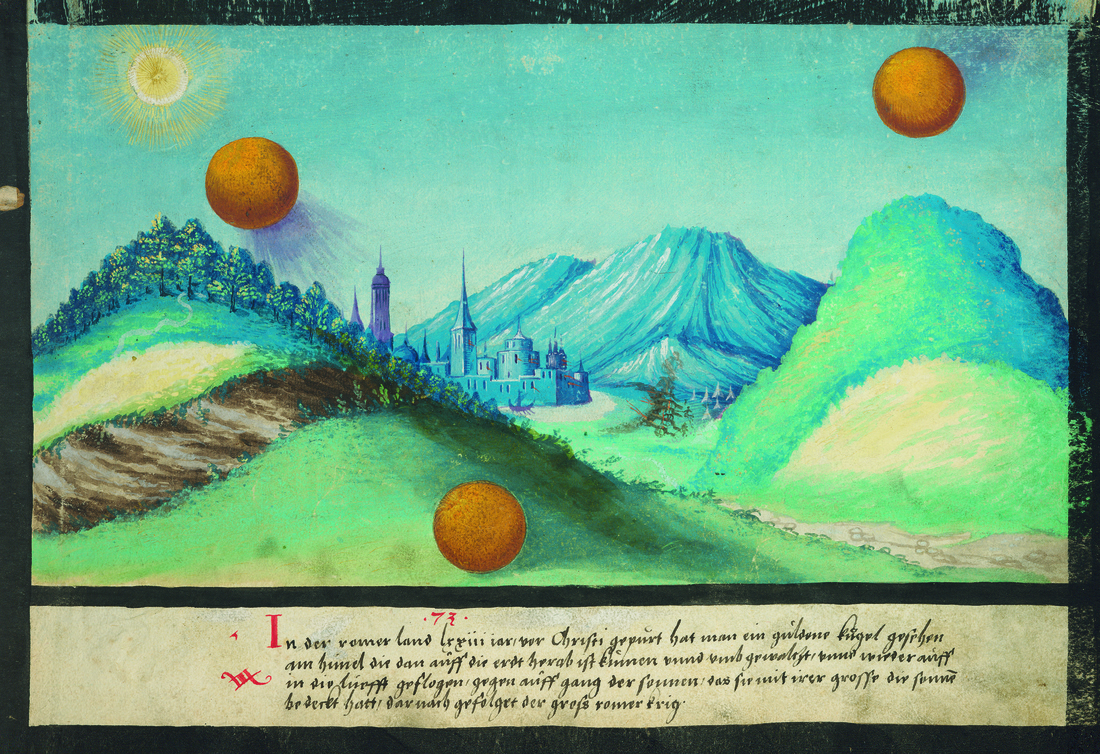
The scientific advances of the Renaissance might've propelled human understanding of the world around us forward, but much of Europe still remained deeply superstitious during the fifteenth and sixteenth centuries. This superstition is exposed in beautiful, eerie color by TASCHEN's Book of Wonders, a collection of images that originated from the city of Augsberg in the 1550s. Collectors Weekly looks closely at the book, poring through its depictions of strange beasts, burning logs, and bouncing yellow sky-balls to understand a time of "great ambivalence" in which the Protestant populace of northern Europe was consumed by religious antipathy and a sincere belief that these strange signs showed the world was about to end.

Russian Sledgesif I did new year's resolutions, my resolution would be to attend more shows with my favorite bartenders in the bands

    
|
Russian Sledgesvia firehose ("WHOA SHIT WHAT")
WHOA SHIT WHAT INDEED

Hoefler & Frere-Jones, the preeminent digital type foundry, has broken out into civil war.
Type designer Tobias Frere-Jones claims he has been cheated out of his half of the company by his business partner, Jonathan Hoefler. In a blistering lawsuit filed today in New York City, Frere-Jones says he was duped into transferring ownership of several fonts, including the world-famous Whitney, to Hoefler & Frere-Jones (HFJ) on the understanding that he would own 50% of the company.
“In the most profound treachery and sustained exploitation of friendship, trust and confidence, Hoefler accepted all of the benefits provided by Frere-Jones while repeatedly promising Frere-Jones that he would give him the agreed equity, only to refuse to do so when finally demanded,” the suit claims. Here’s the full complaint:
Hoefler couldn’t immediately be reached for comment. Messages left at the offices of HFJ weren’t immediately returned.
Frere-Jones joined the company that would come to be called HFJ in 1999. The suit portrays Frere-Jones as the firm’s design genius, and Hoefler as the business and marketing man. In public, the pair have generally been regarded as equals. But the contract that made it so, according to the lawsuit, was never written down and signed. Frere-Jones claims he had an oral contract with Hoefler that entitles him to half the company.
The dispute came to a head last year. ”Stop it. I’m working on it. Stop harassing me,” Hoefler allegedly wrote to Frere-Jones last summer. The suit claims, “On October 21, 2013, for the first time, Hoefler explicitly reneged on his personal agreement to transfer 50% of HTF to Frere-Jones.” (HTF refers to the Hoefler Type Foundry, the company’s original name.)
Frere-Jones’s lawyer, Fredric Newman, a senior partner at Hoguet Newman Regal & Kenney, said in a phone interview, ”The two partners tried to resolve it, but couldn’t, and so Mr. Frere-Jones had no choice but to sue to enforce his rights.”
The firm is perhaps the most important type designer of the 21st century. Its fonts have graced the branding of billion-dollar companies, and the covers of glossy magazines. Movie-trailer warning labels in the United States are set in Gotham, an HFJ typeface that was also famously used by Barack Obama’s 2008 presidential campaign.

HFJ’s typefaces have won admiration from designers by taking advantage of the limitless environment of digital design. Where most typefaces only had two weights and two styles in one width, HFJ became known for creating typefaces with several weights and several styles in several widths that included advanced features like alternate characters, and support for multiple alphabets.


Russian Sledgesstacey daley autoshare
Russian SledgesI tried out a B330 at a shop a couple months ago; I can't spend $1200+ on a goddamn sewing machine, but I still think of it sometimes

The last time I posted about how much I love my Bernina, I got this question: what should I look for when shopping for one?
It is tricky to know where to start when the options (and price points) are so vast. Bernina offers everything from the cute little Bernette line to full size machines, from a totally mechanical model to enormous pieces of advanced technology that can do everything but make you a cup of tea.
To help navigate the terrain, I took a visit to Modern Domestic, a fantastic sewing studio, fabric shop, and Bernina dealer here in Portland. I followed around my friend Meredith, who seems to know just about all there is to know about each and every model. This is one of the ways Bernina stands apart from a lot of other companies. Their sales folks really know their stuff.


I’d like to talk about the machines I saw in a little more detail another day, because there were some impressive options. But today, I just want to help you with the basic question of where to start.
The first thing you should know is that the models build on each other. So the features that are included in the lower and less expensive models will be included in the higher models.
Meredith walked me through the machines starting at the lowest model number and price point and moving up, explaining all of the features added along the way. I found this incredibly enlightening, because it forces you to ask “would I want / need / use that feature?” You’ll encounter features you’d never thought of but might find very useful.
If you don’t know where to start, I’d recommend starting at the bottom and asking your dealer to give you a walkthrough just like this. You’ll learn a lot.

So based on Meredith’s experience talking to hundreds of customers, and my own notes on the major differences I noticed between models, I came up with this list of questions to ask yourself before you fall in love with a particular machine.
Based on all the machines Meredith showed me, I noted a long list of possible features you might think about before walking into a dealer. This is the kind of list I wished I’d had to help me decide on my model, so hopefully it helps you too.
It may not be exhaustive, but should cover many of the differentiating features. Check off what you want, what might be “nice to haves”, then talk to a dealer about your dream machine. I ordered these generally going from the most common features up to the most specialized ones.

(In this photo, Meredith has just drawn a stitch with her finger on the touch screen of the Bernina 880, and on the left, you can see the stitch previewed in repeat. Amazing!)
If you have a Bernina, please chime in! Are there features a new owner might not think about but you can no longer live without? Other questions she should consider before purchase?
 I love my Bernina… and you can win one soon! |
 A Pattern with Buttons…do you run and hide? |
 The 5 things to remember when buying a sewing machine |
Russian Sledgesvia multitask suicide


Russian Sledgesvia firehose

Suntory’s $16 billion acquisition of bourbon giant Beam Inc. has focused attention on the huge opportunities for growth in the rapidly consolidating global booze industry: Japanese have acquired a taste for bourbon, China is getting into fine wine, and Indians are increasingly thirsty for whiskey.
In fact, India is already the world’s largest whiskey market—sort of. As Quartz has reported, Indians are also the world’s biggest rum drinkers, but what’s sold as whiskey there is really the same stuff, derived mostly from molasses. Either way, because of its huge population, India’s per capita consumption of spirits is actually pretty low, with plenty of headroom, although there are limits—devout followers of the country’s two largest religions, Hinduism and Islam, generally shun alcohol. Euromonitor expects Indian sales for Scotch whiskey to grow by 18% a year.
About a year ago, spirits giant Diageo thought it had sealed a grandiose plan to plunge into the Indian market by buying a majority stake in the country’s biggest liquor company, United Spirits. Not only would it own inexpensive home-grown Indian brands, but it would be able to sell its own high-grade brands of imported whiskey, like Johnnie Walker, which Indians love but often find expensive and difficult to obtain due to high customs duties.
In November, 2012, Diageo thought it had finalized a $2 billion deal for a 53% stake in United Spirits. Roughly half of the shares would come from the stock market; the remainder would come from owner Vijay Mallya. And then it all went horribly awry.
Mallya, an eccentric tycoon saddled with debt and on the verge of bankruptcy, had already pledged most of his stake to his creditors, whom he owed some $2.5 billion. The creditors moved to block the sale, and in December a state court in India ruled in their favor, ordering that Mallya’s sale of stock to Diageo was null and void. It was a significant blow to Diageo, which has maneuvered for three years to gain access to Indian drinkers.
Diageo is contesting the recent Indian court ruling, and a company spokesperson insisted the share deal was “genuine and bona fide.” To make matters worse, Diageo was also a potential bidder for Beam, but it came to naught because of concerns a deal wouldn’t get anti-trust approval.
Meanwhile, United Spirits is facing increasing competition at home from Diageo rival Pernod Ricard and homegrown Allied Blenders and Distillers. It is also looking to sell Whyte & Mackay, the British distiller that Mallya bought during better times. Even if Diageo triumphs in its legal battle and wins United Spirits, it may arrive in India with quite a hangover.


Russian Sledgesdavid kravitz autoshare
I did not know he ran bluemassgroup. wtf.

*Non-lady baritone David Kravitz lunched with me this past weekend where we talked about Stephen Sondheim, Mohammed Ali, and giant robots.
KYLE THOMAS HEMINGWAY DICKINSON: So, David Kravitz, what are you working on now?
DAVID KRAVITZ: Right now I’m getting ready for performances of Stephen Sondheim’s A Little Night Music next weekend with Emmanuel Music. I really think this piece is one of Sondheim’s greatest achievements, and that he is one of America’s greatest composers, especially in the world of musical theater. It’s something of a departure for Emmanuel to take on a piece like this, which makes it exciting.
KTHD: And who are you playing?
DK: I play Frederik Egermann, a lawyer who suddenly finds himself in the throes of middle age and newly married to an 18-year-old. In—certain respects—he isn’t finding the marriage entirely satisfactory.
KTHD: And, somewhat ironically, I’ve heard tell that you used to be a lawyer!
DK: That’s right!
KTHD: In what ways, if any, does that inform your performance?
DK: That’s an interesting question—I certainly know what it’s like to be a lawyer!
KTHD: Are you just having a ball with your cast?
DK: I think this cast is absolutely wonderful. Most of the cast are Emmanuel Music regulars, but you’ve certainly not seen them quite in this way. Sondheim is a bit different from Bach, at least on first blush!
KTHD: Before you head to Night Music rehearsal this evening, though, I hear you’re headed to another rehearsal?
DK: That’s right! I’m crazy enough to be rehearsing two shows at once. The other is being presented by Intermezzo Opera, a new work they’ve commissioned about Anne Hutchinson. She was a colonial-era religious—I’m not quite sure how to describe her—she was a heretic, essentially. She was booted out of Massachusetts Bay Colony for her theology by Governor John Winthrop, who I play in this performance.
KTHD: What’s it like playing a historical character? Have you ever done that?
DK: Because Winthrop lived so long ago, it doesn’t feel that different from playing a standard fictional character. My general philosophy with these kinds of things is that when you turn historical events into a piece of theatre, you’re not making a documentary; so it’s a bit of a trap to get wrapped up in too much historical accuracy. The strangest experience I’ve had with this was last year when I did an opera based on more contemporary events, about Mohammed Ali.
KTHD: Oh—
DK: I was not playing Mohammed Ali.
KTHD: I was trying to imagine all that makeup work!
DK: I was playing a journalist whose biography of Ali was the basis of the opera, who was present at the performances—I was portraying a character based on the person sitting across from me in the rehearsal room. That was a different experience!
KTHD: I bet! Something else you have upcoming is a remounting of Death and the Powers in Dallas. Has anything changed since we saw it here in Boston?
DK: I don’t really know, actually. The score looks generally the same on first scan. With the exception of the lead role of Simon Powers being played by a new performer, the entire cast comprises singers who premiered the piece in Monte Carlo.
KTHD: So they’re just going to stick the giant robots on flatbed trucks and drive them down to Texas?
DK: You joke, but that’s basically what will happen!
KTHD: It’s awesome to see that opera companies are willing to take a risk on mounting this piece, and that it’s getting a life outside Boston.
DK: Absolutely, and for those who can’t make it to Dallas, the performance is actually going to be simulcast throughout the US and Europe!
KTHD: So, far from giant robots, you also frequently collaborate with the Arneis Quartet on chamber concerts.
DK: I love working with Arneis so much. I think it’s healthy for a singer to seek out a balance of large-scale and smaller-scale performance opportunities. So I knew about some of this repertoire for string quartet and voice and we’ve put together this great program. We’re actually having a piece written for us this year.
KTHD: Between formerly practicing law and running the most widely-read political blog in New England, how did you make the leap from that to performing?
DK: By and large, they’re all just things that interest me; but I can say there is a great deal of theatricality in the practice of law.
KTHD: To wrap this up, I’m going to quickly James Lipton you with a few final questions. Outside what we’ve discussed already, what is something about you that most people don’t know that would surprise them?
DK: I love bluegrass and folk music.
KTHD: What Boston arts event have you attended recently that you just loved?
DK: I saw Camelot at New Rep and I really enjoyed it. I thought it was lovely.
KTHD: With your former [Mikado] castmate, Erica Spyres!
DK: Yes! Who was a total highlight of the production playing Guenevere. She was stunning.
KTHD: And finally, what is and where can you find your favorite cocktail in Boston?
DK: I’m very new to cocktail culture, you were actually present for a substantial part of my inauguration at a now-infamous Lower East Side speakeasy crawl organized by Graham Wright. What I can tell you is that I was delighted to receive a bottle of St. Germain for Christmas which my wife and I have been enjoying experimenting with.
KTHD: Maybe your next move after law to music is to bartender!
DK: Never say never!
 Forest Scent, Pavel Bautin. Russia. 2010 IAPLC Grand Prize Winner

Pale Wind, Takayuki Fukada. Japan. 2013 IAPLC Gold Prize

Whisper of the pines, Serkan Çetinkol. Turkey. 2013 IAPLC Top 27

Verve!, Chow Wai Sun. Hong Kong. 2011 IAPLC Bronze Prize

Way to heaven, Dmitriy Parshin. Russia.

Wild West, Stjepan Erdeljić. Croatia.

Georgi Chaushev, Bulgaria. 2012 IAPLC Top 100.

Francisco Wu, Spain. 2012 IAPLC Top 100.

Long Tran Hoang, Vietnam. 2012 IAPLC Third Place.

Pilgrimage, Shintaro Matsui. Japan. 2013 IAPLC Fifth Place.
No, these aren’t exactly your childhood goldfish bowls. The world of competitive aquarium design, or aquascaping, is just as difficult, expensive, and cutthroat as any other sport but requires expertise in many different fields to guarantee success. Aquarium designers possess large amounts of expertise in biology, design, photography, and excel in the art of patience, as individual aquascapes can take months if not years to fully mature into a completed landscape.
The world’s largest nature aquarium and aquatic plants layout competition is the International Aquatic Plants Layout Contest (IAPLC) which annually ranks hundreds of competitors from around the world with Asian and Eastern European countries generally dominating the top slots. While it’s somewhat difficult to track down galleries of winners from every year, above are some amazing entries from the last few years. To see more, oh so much more, check out: IAPLC Grand Prize Works, IAPLC 2011 Top 27, IAPLC 2013 Top 6, IAPLC 2012 Top 200 (or here), and the first Eastern European Planted Aquarium Design Contest.
Russian Sledgesvia firehose
 |
popular
shared this story
from  Boing Boing. Boing Boing.
|
 Spencer Chen did an A/B test on the efficacy of "booth babes" at a big trade-show, staffing a booth in one part of the floor with scantily clad models, and another with older women recruited for their people skills, dressed in professional attire.
The results were clear for Chen: the "grandmas" generated far more sales-leads and conversions than the "babes." What's more, the kind of attendees the "babes" attracted were less valuable to Chen's companies: rather than roping in executives with purchase-decision power, they brought in young "IT nubs" who just wanted to get their pictures taken with models in sexy outfits.
Importantly, Chen's point isn't just that booth-babes turn off women at trade shows, but that they also turn off men, and he says he has the data to prove it.
The results? They were great. The booth that was staffed with the booth babes generated a third of the foot traffic (as measured by conversations or demos with our reps) and less than half the leads (as measured by a badge swipe or a completed contact form) while the other team had a consistently packed booth that ultimately generated over 550 leads, over triple from the previous year.
Everyone on the team was genuinely surprised by the results but duly convinced. It was like showing some hardened sales reps a new golf swing. I was able to replicate this a few more times throughout the year with even better results since we had a chance to further optimize our new “staffing plan.”
Booth Babes Don’t Work [Spencer Chen/Tech Crunch]
(Image: booth babe atari, a Creative Commons Attribution Share-Alike (2.0) image from bdu's photostream) 
|
|
Russian Sledges#almamater
Film and cultural studies, Hampshire College
Russian Sledgesvia alastair/facebook
http://en.wikipedia.org/wiki/Apollo_and_Daphne