One of the strange blessings of the internet is its ability to serve as an external memory system. Thoughts that would once have been lost to time if they were even lucky enough to have made it out of your head are now preserved for an indefinite eternity in places over which you have little to no control.
For example, if I want to know how I felt about Brendan McCarthy’s Doctor Strange/Spider-Man comic Fever after the first issue came out in 2010, a quick google search will turn up this flouncing defense of the book, written in response to a review by Sean Collins:
Say it Vibrational Match style: Where you see “inert physicality”, I see a Spider-Man who’s all harsh angles and elbows being squashed, flattened out, and a Doc Strange who’s at home with the harsh geometrics McCarthy conjures up.
Where you read flat pastiche, I read Spider-Man as a jerk who gets shut the hell up by the story (his words like jutting elbows –> drooping limbs), and Doc Strange as a badass who can turn exposition into information with the right gestures (verbal, physical).
Also: the mystic spider dialogue is genuinely fucking creepy, for reals, when combined with the images, yes?
In lesser hands this would be mere set-up, but this issue had a whole lot of “?something else?” working for it — that creepy wee arachnid bastard, crawling up the Vulture’s back, fr’instance! Like something from Seven Soldiers, only (yes!) far more unsettling.
I saw the biggest, most bulbous-assed spider of the year last night, sitting on my windowsill. I’m a bit of a wuss when it comes to these wee beasties, but last night, after having read Fever? I tell you, I wanted to kiss the wee fucker!
The “hey, I’m a black guy!” dialogue was a bit cringey though, pastiche or no.
Looking at the book this week, I find myself agreeing with every point but the last one.
It’s not that I don’t find the dialogue McCarthy gave to the African-American comedy character cringe-inducing anymore – I do! – but that Brendan McCarthy’s recent Facebook comments on race make me feel ashamed the structure supporting that final sentence.
Sure, I agreed with Sean Collins’ assessment of the embarrassing nature of McCarthy’s throwback characterisation, but I did so in a tossed off, casual way, after five paragraphs of flame flecked enthusiasm. The implicit message being that everyone should just chill out about this racist after taste and enjoy the “septic salsa” of the comic itself.
In 2010, the story of McCarthy was that he was that of the hero freshly returned from the wasteland, ready to save the kingdom from itself. His new work confirmed his status as a trinity of psych-pop ghosts, the faces of Brit comics past, present and future combined. What interest could a couple of dodgy panels hold against all that? Solo #12 remains McCarthy’s late period masterpiece, but even in lesser books like Fever there are moments of astonishing beauty. The scene in the second issue where Spider-Man steps through a portal and into a crunchy insect killing field still burns bright in the light of its own toxic logic:
McCarthy’s comics tend to overpower the reader with indescribable shapes and unfathomable textures – Sarah Horrocks is dead right when she says that McCarthy draws with colour, rather than merely colouring his drawings.
When faced with the work of an artist who is giving so much, it’s easy to find yourself overlooking genuine faults, even when they’re staring you right in the face. Don’t get me wrong, the appeal of this fiction is still strong, but no amount of comic book magic can make this go away:
That’s Brendan McCarthy there, showing an inability to see what’s in front of him that makes my efforts in 2010 look downright half-hearted. Who reads an article about a nineteen-year-old black girl (Renisha McBride) being shot in the head while looking for help and sees nothing but another example of the tyranny of “the hipster left/PC brownshirts”? An arsehole, obviously. Someone so convinced that the people calling out racism are the REAL racists that they’re blind to the details of the article in question, oblivious to the structures of racial fear and discrimination this story implies, and impervious to the reality of a world in which black people can be killed freely and with legal impunity.
With tragic predictability, McCarthy has identified this exact ailment in his accusers, seemingly convinced that his inability to draw “a southern black watermelon-munching dimwit” without being called a dick is an issue on par with the deadly consequences of the sort of far reaching racism he imagines to have been replaced by the tyranny of the left.
Call it Karns’ Malady, call it a case of the South Parks, call it whatever you want. Like my thoughts on Spider-Man: Fever, Brendan McCarthy’s edgy uncle routine is now part of the memory of the internet. It leaves a rancid stain on his particular part of the landscape, one that’s strong enough to clash with even McCarthy’s glorious artistic excesses, strong enough to make you go back and look at his work again with fresh eyes:
Note to self: some faults deserve more than one throwaway sentence.
Neuroscientists – need to explain (away) a tricky finding? Normal people – need to pretend to be a neuroscientist?
No problem. Through the power of vague hand-waving, anyone can do a convincing impression of someone who understands the brain.
Just wave along to this guide…
*
Animals: Humans. Anything true of animal brains is also true for humans, so instead of saying “the mouse amygdala” you can just wave and say “the amygdala”. Unless the animal is a Dead Fish.
Brain Disease: A disease for which no brain pathology has yet been found. Probably because the abnormality is hidden deep in a circuit.
Circuit: The collective noun for ‘brain region’. Any two or more regions can be described as a ‘circuit’. Synonyms: network, matrix, pathway and bunch (vulgar, avoid.)
Complex: The brain is infinitely complex – and that makes it a hand-waver’s goldmine. You may not be able to prove your claims, but no-one will be able to disprove them.
Connectivity: Any kind of relationship between any two or more brain regions. A given group of connected regions is a circuit.
Colourful Picture: Handy, multi-purposeproof that fMRI is good.
Dead Fish: Handy, multi-purposeproof that fMRI is bad.
Explanation: Description.
fMRI: A powerful tool for investigating connectivity,plasticity and brain diseases. For example, decreased activity in a circuit means that the circuit is dysfunctional… or if you prefer, it means it’s more efficient. Either way round, it’s surely an explanation for something. But remember, every time you talk about fMRI, for ‘balance’, you must say “Dead Fish”.
Neurotransmitter: The key to happiness. This single molecule has been called various names over the years: ‘serotonin’, ‘dopamine’, ‘oxytocin’, etc. It’s important, but sadly fragile. Its circuits often go wrong and cause a brain disease.
Neuroscientist: God. A neuroscientist’s mastery of the brain allows them to speak on any topic with authority. If a product needs endorsing, or a wacky idea promoting, “a neuroscientist” can do it – with a wave of their hand.
Plasticity: For over a century, neuroscientists have been ‘just discovering’ that the brain was more flexible than they previously thought. We now know that plasticity is so powerful that there’s no need to get bogged down in the details of neuroscience – they’ll all have changed by tomorrow anyway.
A consequence of everything being about "children with autism": no one thinks about the adults. They desire desperately to make us indistinguishable from peers (using a very interesting definition) and then as soon as we meet that goal, we're allbetternow. No one spares a thought for the adults who, years ago, were declared to have made the goal, hit the holy grail of "normal enough".
Indistinguishability isn't a moment though. It is an unending job, and it gets more and more complex as you age. Demands keep increasing: academic demands, including those that require figurative language and abstract thinking, increase. Time management demands increase. As we grow up, we are expected to take on more responsibilities at home and eventually move into our own homes. We're expected to get a job, do that job, maintain our own homes, all at once.
And maintain that visage of normal. We always say autism is developmental delay, not developmental stasis-and indistinguishability cannot be static either. The Allistic Emulator software we run on our Autistic operating system needs constant attention. Have you ever run an emulator program? Like all of them, mine is slow, it is buggy, and it takes up processor power that'd be better off being devoted to another task. And it constantly needs upgrading to perform anywhere close to spec.
When I was 6, I could play a board game with only slightly more meltdown potential than the other little kids. I could make reasonable, if messy, facsimiles of the art projects we did for every season in my first grade class. In structured activities-and so much of a 6 year old's life is structured-I could kind of pass. I was on the sloppy, reactive, and odd side of the bell curve, but I was on it.
At 30? Board games have largely given way to to unstructured conversations, where turn taking is marked not by handing over the dice but by nonverbal cues. The length of turns and what a turn includes varies moment to moment. Talking too much, not enough, oddly? Gets noticed. Not catching nuance? It shows. Echolalia? Stands out. Auditory processing problems are interpreted as not caring. The skills that make you slide by in first grade are not enough in adulthood. There's nowhere to hide.
If there is anything I learned from How To Be A Real Person In 1000 Data Sheets, it's that hiding is essential. Being noticed is the end of the world. When I gave a shit about my safety & about the people who taught me this--which was everyone in my life in my youth, as that's how these things tend to work--I was constantly upgrading my emulator. Constantly relearned more in depth performances. It made me tired, anxious, cranky, and it failed frequently. The failures were distinguishable in the worst kind of way.
Failures were marked in tears. In full on meltdowns. In self loathing and self injury. Inability to do anything--eat, sleep, move--because of exhaustion and inertia. Did I mention self loathing? Severe anxiety. Self isolation (if I do it first they can't!). Intimately detailed, ritualized recitations of all the ways I failed at being a human being. Because keeping up the act of humanity is what is required to be thought of as human. How very Lovaas.
So much energy was put into being a real person that I didn't have the cognitive capacity to do as well as I could at any of a number of things. Between the day to day facade and flat denial of my visual support nerds, all my learning bandwidth was diverted into running my shitty, self defeating emulator. My shitty shitty emulator did not help me do well in school. It is so stilted that it actively impeded my ability to socialize. But the whole "normalcy as top priority" stuck, even as my mother was hitting me for my grades or the disaster that was my room.
Because it was a condition of being treated as an almost person? I thought everyone worked this hard. I didn't know it was effortless for most people. I didn't understand how they did it and everything else. I didn't know why society picked this as it's normal, as the standard. The refrain of my childhood, "just be normal!" ingrained itself that far. They had me convinced that everyone has to choose that, that everyone is putting in all that effort all the time.
I was 20 when someone finally told me that I could be a kickass autistic or a shitty fake NT. It hadn't completely occurred to me that it was an option! It had to be an option shortly thereafter, because everything went to hell at once, but "be your true self" had never even crossed my mind. It took a while to find my true self. It takes effort to make my true self stand tall and proud.
Real me has friends--something I was told that I had to keep the act going to make happen. Real me has a bit of a job. Real me is getting good grades in school instead of spending energy on figuring out all sorts of interpersonal things. Real me functions better, albeit weirdly, because real me acknowledges and acommodates support needs.
Indistinguishability is tyrannical, because once you achieve it, it is the goal of every moment-to not be distinguished. That is no way to live a life. That actually isn't a good goal at all. If the best prognosis you can possibly get is "will spend life hiding and exhausted", you need to rethink your plans for that individual. Hiding is no way to live.
“The Lights of Zetar” is Ron Moore's least favourite episode of Star Trek. Naturally, as part of my apparent mission to disagree with one of the greatest writers in the entire franchise on absolutely everything, I found it thoroughly fascinating. It's not especially great, and the usual season three problems submarine it, but it's one of the most enjoyable and provocative episodes, at least in theory, we've seen in awhile. Quality-wise it's at least on par with the last month of scripts.
It even opens on an enchanting note. Kirk's log entry begins
“Captain's log : stardate 5725.3. The Enterprise is en route to Memory Alpha. It is a planetoid set up by the Federation as a central library containing the total cultural history and scientific knowledge of all planetary Federation members. With us is specialist Lieutenant Mira Romaine. She is on board to supervise the transfer of newly designed equipment directly from the Enterprise to Memory Alpha.”
Kirk then goes on to explain how Scotty has fallen in love with Lieutenant Romaine in one of the most captivating and poetic bits of dialogue in the entire show:
“When a man of Scotty's years falls in love, the loneliness of his life is suddenly revealed to him. His whole heart once throbbed only to the ship's engines. He could talk only to the ship. Now he can see nothing but the woman.”
And naturally, William Shatner delivers a grand slam of a reading. Unfortunately, this is the most interesting Kirk is in the whole story, and this is a decent microcosm of “The Lights of Zetar”'s problems.
But before we get to that, let's talk about the episode's background a bit. For the first time since Harlan Ellison and “The City on the Edge of Forever” (and arguably Robert Bloch), we have a celebrity writer this week: Shari Lewis, famous for her television puppet shows from the 1950s, 1960s, 1970s and 1990s starring herself and her puppets, the iconic Lamb Chop, Charlie Horse and Hush Puppy. Although the episode is credited first to Jeremy Tarcher (her husband) the overwhelming majority of the episode, at least the basic story, is quite obviously Lewis', and it's her positionality that really clarifies what “The Lights of Zetar” is about. I must confess I did a bit of a double-take when I learned Lewis was behind this script: There are some things that simply cannot cross in my mind, no matter how open I may try to keep it. Lamb Chop and Star Trek are two of those things.
Although upon closer examination, they really do turn out to be a solid match for one another. Firstly, Lewis was an enormous fan of Star Trek, and it was a dream of hers to write for it. And furthermore, though her routine was ostensibly a variety act for children, Lewis always had higher aspirations: She performed for children sadly more often than not because children were the only ones who would watch her. The Shari Lewis Show was one of the only major network television shows of its time to star a woman who also had complete creative control and wasn't about how dizzy she was. What Lewis really wanted was to headline her own primetime variety show or sitcom, and between her stints on children's TV she bounced around in bit parts for shows like The Man From U.N.C.L.E. and Car 54, Where Are You?, desperately hoping to shed her stigmatic typecasting as a children's entertainer. And in 1969 she submitted a script for Star Trek.
In a less sexist world, Lewis might have been remembered alongside the likes of Jim Henson, having had all the opportunities and accolades he enjoyed. But I'm really not qualified to do adequate justice to the career and historical significance of a performer like Shari Lewis to the extent she deserves: I vaguely remember her 1990s show, and upon reflection it was pretty shockingly subversive for a PBS show (but then again this was the early 90s where that kind of postmodernism was in vogue, and the same broadcasting service would give us Wishbone later in the decade and blow children's television straight out of the water), but Lewis was never someone I had a lot of experience with. I will, however, link you to TV writers Mark Evanier and Ken Levine, both of whom give very heartfelt and deserved tributes to her. It is perhaps fitting then that “The Lights of Zetar” turns out to be a story bungled by network micromanagement and that Shari Lewis wasn't allowed to be as involved with the project as she would have liked.
The plot concerns a mysterious cloud the Enterprise encounters on its way to Memory Alpha, comprised of a multitude of shimmering lights. As it overtakes the ship, it has a palpable effect on the physical abilities of every member of the crew, though the effect is different from person to person: Kirk and Uhura are rendered unable to speak, Sulu becomes momentarily blind and Chekov is unable to use his hands. Meanwhile, Mira collapses, after which she begins experiencing wild mood swings and having visions of the future. The cloud eventually reaches Memory Alpha, wiping out the entire crew and burning out the library computer cores such that vast sections of the archive are rendered inaccessible. Eventually, Spock discovers the cloud is actually a colony of non-corporal life forms, and that Mira's brainwave patterns have become an identical match with the colony's resonance readings. In essence, Mira is being possessed. At the climax, as Kirk, Spock, McCoy and Scott work feverishly to expunge the cloud from Mira's mind, the community speaks, revealing itself to be the remnant of Zetar, a planet whose entire civilization was destroyed by natural disaster, but whose collective will and spirit simply refused to die, and they'll happily kill Mira to live the life they feel has been robbed from them.
At first I couldn't figure out where this episode was trying to go. It starts out feeling quite mystical, and the Zetarian community is definitely the sort of weird phenomena the Enterprise crew has been running into a lot lately (which is perfectly fine by me: After all, aren't they supposed to be Seeking Out New Life And New Civilizations?), but it takes a really long time for everyone to figure out what's going on, it feels padded and the crew spend the majority of the episode fighting with the Zetarians (including blasting them with phaser beams, which also hurts Mira) instead of trying to communicate with them. Furthermore, on a number of occasions it feels uncomfortably like the show is slipping back into its Red Scare anti-groupthink propagandizing that had an annoying tendency to characterize it in the first season: Kirk condemns the Zetarians for forcing their will on Mira and not letting her be her own person.
But, once you know about Shari Lewis, “The Lights of Zetar” becomes a whole lot clearer. Sadly, its weaknesses as much as its strengths. See, the critical detail is that Lewis wanted to play Mira Romaine herself, but she wasn't allowed to. From what I understand, Arthur Singer extensively rewrote her character, which I would not put past him in the slightest, and in the finished episode she certainly comes across as a generic wistful pouty Star Trek yeoman archetype, instead of the formidable presence Lewis would most likely have infused her with (there are even numerous reference in the episode to Romaine's strength of character and resolve). But now the episode makes perfect sense: It's overtly about Shari Lewis' own life experiences and sense of creative frustration and marginalization. And yes, that means “The Lights of Zetar” is in fact about Lamb Chop.
The thing about Lewis' ventriloquist act is that she was so expressive and such a dynamic performer her puppets took on a life of their own, and I think more to Lewis than anyone else. I have a feeling Lewis may well have seen Lamb Chop in some sense as her own person, and someone who was both an extension of Lewis herself and someone who held her back. One of Lewis' most frequent routines was to have Lamb Chop complain about not having enough space, or that she wasn't being paid enough as her partner. When her show was canceled in 1963, Lewis apparently went back to her room and cried to Lamb Chop...in private. In the same way Lewis was a children's entertainer because she didn't have any other audience, she was soulmates with Lamb Chop even though the relationship wasn't always healthy because she didn't have anyone else. This is what “The Lights of Zetar” is about then: It's about how characters like Lamb Chop take on a will of their own (recall that the whole reason the Zetarians are still around is that they simply could not accept the fact they were dead and didn't exist anymore), and the writing, performing being has her identity subsumed by the characters she takes on. In Shari Lewis' case, it's about exploring and blurring the line between puppet and puppeteer: The Zetarians are using Mira, in essence, as a puppet.
Furthermore, the way the crew treats Mira is interesting. She finds love in Scotty, but he's also the one who persuades her not to report her visions (which turn out to be critical to understanding the Zetarians' plan) to Kirk and McCoy, dismissing them as first-mission space jitters. Lewis is saying that even people who love us (and by *us* she is most likely talking about *women*) hurt us even if they don't mean to by unfairly dismissing us. Even Chekov and Sulu aren't convinced Scotty knows Mira “has a brain”. She irritates McCoy by not cooperating with his examination, which she later regrets (though that might be due to the Zetarians' influence, it's not clear). However, the idealism Star Trek's lovers have previously found in the show is still present too: Spock goes out of his way to compliment Mira's abilities, intelligence and her good fortune in getting assigned to curate Memory Alpha, and while Kirk is initially annoyed by her romance with Scott, he ends up being the one who believes in her the most, demonstrating unwavering confidence that she'll survive her battle with the Zetarians in the decompression chamber even as he has Spock keep cranking up the pressure beyond what should be the limits of human endurance.
But the problem, the really big problem, is that none of this is as clear as it should be and, heart-wrenchingly, I'm not sure how much I can blame on Arthur Singer's usual antics and how much is the fault of Shari Lewis' original submission. Kirk isn't written terribly consistently scene-to-scene and he's too frequently too reminiscent of his gruff, snappy portrayal from the first season. Also, everyone except Scott keeps calling Mira “the girl” instead of by her name, even characters who really ought to know better. I know Lewis probably meant that as a commentary on how underappreciated Mira is and how everyone keeps underestimating her, but there's enough utopian content elsewhere that really wasn't necessary, or at least it didn't need to be that overt and ubiquitous. But the major issue is that the idea of the Zetarians being a metaphor for a writer's characters is not obvious in the slightest. There's a minor bit of dialogue during the conference scene that seems to imply Mira is uniquely susceptible to being contacted this way because her brainwaves I guess match the brainwaves of the Zetarians, but it's really not clear. This is the part of the episode that needed to be super overt and it isn't: The Zetarians needed to be firmly established as, if not explicitly her creations, having some kind of special bond with Mira and Mira alone and that simply never happens.
What really kills me is that had Lewis submitted this to Star Trek while D.C. Fontana was still story editor, I'm almost positive she would have helped her turn it into an absolute masterpiece. But Arthur Singer, like so many other people who worked with Shari Lewis, simply didn't care and wrote her off, and “The Lights of Zetar” ends up feeling not terrible, but unfinished, and that's almost worse. Furthermore, I wish Fontana had looked at this script, its author, and the potential it hinted at and had immediately snapped up Lewis for Star Trek: The Animated Series. She would have been a much, much better fit for that show than Margaret Armen. But this is all maybes and neverwheres. Fittingly, if sadly, “The Lights of Zetar” is quintessential Shari Lewis: Overlooked, criminally underrated, and nowhere near close to living up to its own potential.
Today let's look at a late product from the Funnies, Inc. comic book packaging company, founded by Lloyd Jacquet in 1939 as First Funnies Inc. One of the earliest heavy players in the budding comic book making business, and also one of the best-paying, they attracted a lot of terrific talent over the years, many of them working freelance at home, not a common practice in those days.
By the time they published the series that we'll look into today, the company was located at 500 Fifth Avenue in New York and still managed by Jacquet. There were only six issues of Juke Box produced, each one stuffed full of popular musical performers and writers, but like many post-war comics it didn't last. Once wartime paper restrictions were lifted, everyone flooded the newstands with too many comics and that generally helped to crush many comic book publishers altogether. A lot of subjects were tried out in the late 1940s, but few books held on for very long.
This first issue of Juke Box is very promising, well-drawn and written throughout, and we'll see most of it today. I plan to showcase excerpts from the other five issues in future WFMU blog posts as they are rife with interesting artists. So come along now and learn about Lindley Armstrong Jones (who he?), the habits and interests of Duke Ellington, fight crime with Benny Goodman, pen some hits with Johnny Mercer, and much more musical excitement - all after the jump!
The cover and the first story were drawn by the terrific Alex Toth (signed as 'Sandy' Toth), who would have also been drawing the Green Lantern over at DC in those days, I believe, along with many other art jobs.
And the next feature is drawn (no writing credits are available for this book) by another one of my Golden Age favorites - Fred Guardineer. Speaking of which, the Funnies Inc. outfit was unusual in that they encouraged artists, and even occasionally writers, to sign their work, very uncommon in the comic book world. Guardineer does some jazzy layouts on this piece.
Next up - a tidy two-pager about famous tunesmith Johnny Mercer, by an unknown artist. Mercer says, "I'm really terribly lazy! I don't do anything!!" A sentiment I completely sympathize with.
Our next selection is illustrated by Sid Green, whose work we've seen before here on BOTB.
Now here's a pretty well-known three-page sequence about Duke Ellington, drawn by Alvin Hollingsworth. Mr. Hollingsworth had a long and interesting fine art career as well as being notable as one of the few African Americans working in the mainstream comic book business; in the 1960s he taught illustration at the High School of Art & Design, on Second Avenue and East 57th Street in Manhattan, and from 1980 on was professor of art at Hostos Community College of the City University of New York. And best of all, as an artist who uses them - he was an expert on flourescent paint!
And we'll wind up this issue with this feature drawn by "R. Johnson", who looks to me like he may have been doing other 'teen' type books and/or funny animal material. A nice and uniquely goofy style of rendering. I love the baby Buddy scenes, he looks so much like an evil ventriloquists puppet! Those bits are kind of nightmarish anyway; the five-year-old prodigy and his monster parents. I feel for the guy more, now!
In closing, here's a bonus illustration found during the preparation of this article - the back cover to the original giveaway book from early 1939 that was the first project of the Funnies Inc. team: Motion Picture Fun Weekly.
A tip of the hat again to the Digital Comic Museum for the lovely files of Juke Box issues, which hopefully we'll get to show you more of soon.
(Author’s note: I want to particularly thank the inimitable Amy Gravino for her feedback on and reassurance about this essay. Her example as both a superfan and an advocate for Asperger’s Syndrome gave me the nerve to share this facet of my unique fandom lens, and reassured me that I wasn’t just (over)sharing for the sake of sharing. She is a talented writer, a hilarious lady, a sensitive mentor, and one of the most awesome people I have met since returning yet one more time to the Monkees fandom. I’m honored to call her a friend.)
~~~~
So, I’m on a study break from my qualifying exam the other day, puttering around a few corners if the net I’ve neglected the past few weeks while preparing for the Take-home test of DOOM. In one conversation related to the current solo tour, someone made a passing comment about Michael “Nez” Nesmith’s decision to only sign one Monkee-related item per guest at his post-show Conversation Receptions—specifically:
Ya think maybe he’s still not at peace with the whole Monkee thing? Or at least extremely frustrated at the huge shadow it continues to cast over everything else he’s ever done. I guess I would be too.
Now that hypothesis is nothing we Monkeemaniacs and Nezheads haven’t thought or read or even said a million times. But my gut’s told me the “not at peace” line is a simplistic hypothesis that’s easy to toss off in a blog post (I’m guilty of it, in my defense we’d just had a Very Big Day), but that hides a deeper truth. So I began writing a long-winded reply. And then I started getting really passionate. And then I stopped, and asked myself why I was so certain of the inner motivations of a fairly complicated guy whom I’ve never met (Well, I’m meeting him in 13 days. Oh, shit. *takes cleansing breaths*).
Seriously, why do I keep ranting over and over about the evils of entitled fans, in all fandoms? Yeah, it all started with a momentary screaming fit in my car over a tour that came 3 months late to fulfill a lifelong dream of one of my best friends, but I started wondering if there was more than that to the story. And then “the Flying Tomato” did a “Double McTwist 1260″ in my mind’s eye, and I facepalmed. It was time to write the post I’ve been dreading ever since Gazpacho, Grief, & Gratitude went Monkees!Viral and I knew that I was not going to be able to extract my positionality and personality from the story I’ve told here of using pop culture to make sense of my life, and vice versa.
There’s no non-melodramatic way to say this, so I’ll just say it flat-out (with the help of a zipper-tastic selfie). I, like 1 percent of the population, live with a congenital heart defect, or CHD (three actually, though the lattertwo were quite handy). My plumbing issues are roughly comparable but a bit worse than fellow CHDer Shaun White’s, but thankfully nothing near so life-impacting as Becca’s (Happy 21st!) or irrationally adorable Pokemon Obsessive Liam. Like Liam, I’m Palliated but not “Cured”, though according to longitudinal studies my cardiac kludge seems to stand the test of time reasonably well, and there is an improved “fix” available to kids born with my issues these days (though really, few if any defects are ever 100% “cured”). Tl; Dr, I walk 5K races, but can’t (yet…) run them, and I take exactly one pill a day. All in all, a pretty good life. So what the hell does my backwards-plumbed circulatory system have to do with autograph policies, snowboarding, or even celebrity/fan culture in general?
Wow, his scar’s subtle. Either he’s had work done or I REALLY should brush up my Photoshop…
I’m not really a sports fan, but I do follow the Olympics—winter and summer. I honestly can’t remember where I learned about Shaun’s defect—I want to say it was some website profile before the 2010 winter games. I’d watched his antics in 2006 so was already mildly familiar with him, and was pleasantly surprised to discover somebody “like me” was a competitive athlete. A couple weeks later, Shaun was interviewed during the Olympics, and they asked him about the matter. Watching that interview very closely, I could almost feel Shaun struggling not to squirm. He said something very straightforward, along the lines of “overcoming my heart defect made me more competitive”, and then he smoothly changed the subject to his new skateboard line or whatever. I was impressed with his PR chops. He kept the interviewer on topic, and defined himself on his own terms. That wasn’t the time or place to be plugging charitable causes, so I simply filed away his deflection for my own personal future use (though I don’t ever plan to have a skateboard line).
Then came the Hobbit. I was mostly busy gazing at the glory that is Martin Freeman, but was also gnawing on this commercial for St. Jude’s that played before the show.
As this point, I’ll turn over the mike to Amanda, Liam’s mom. She says it better than I could here and here, though she has a rather different perspective on the matter than I do. I really want you to read her thoughts (and the rest of the blog, and then buy her book), but in a nushell: Amanda was kind of confused as to why Shaun devoted charitable energy to a cause better funded by several orders of magnitude than the one that has touched his own life. (note: the link to Amanda’s book is an affiliate link, but if anyone buys I’ll split 100% of my commission into equal donations to the charities linked below)
Now, If we look at Shaun’s charitable PSA choices though Amanda’s lens as a warrior, she’s 150% right. In a perfect world, Shaun would not be playing it safe by using Saint Jude’s to contribute to the Charitable-Industrial complex—he’d be out there banging the drum for the Adult Congenital Heart Association, Mended Little Hearts, et al. But you know what? I understand Shaun’s choice. I only did the Poster Child gig once, but that was enough to learn how he would likely be infantilized and used if he didn’t construct and control his public image the way that he does. No broadly-grinning tomato-haired hipster soaring over metal music in total control over his performance, but rather soft-focus childhood photos, sad cellos interspersed with heart monitor sound effects, tears from mom, stock footage of hospital beds all building to a triumphal finale with some uplifting tune from Copeland or something. In other words, something like how those badass kids were disempowered and fetishized in that sappy-ass, manipulative St. Jude’s commercial. Gag. (And if you think I have issues about St. Jude’s marketing strategy, don’t EVER get me started on Susan G. Komen or Jerry Lewis…)
That narrative is the last thing I ever wanted attached to me as a competitive (in a nerdy way) sort of person, and the closest thing I ever achieved to sports success was when I was 13 and the softball coach regaled everyone at the end-of-season picnic with my medical history before handing me my “you tried!” participation trophy (pro tip: don’t do that). I was somewhat contented with the fact that if you squint, you can maybe just barely see the top of Shaun’s midline scar peeking above the top of his tee shirt in the St. Jude’s commercial if you know what you’re looking for. And even if he wasn’t helping “our tribe” directly, he was at least using his celebrity to help sick kids rather than flogging yellow wristbands while shooting up with performance enhancers. *ahem*
Luckily, I’m much more familiar with Shaun’s struggles than Amanda’s. At 16 I had the world’s most frightening Perils of Pregnancy talk from my cardiologist upon proudly announcing the utter miracle of landing myself a serious boyfriend. If I’d been Catholic I might have considered becoming a nun, but contented myself with sobbing on said boyfriend’s shoulder (If you ever bump into this, Eddie, thanks again). I’ve heard more optimistic assessments since, and I know of women with my anatomy who’ve had kids, but I chose against of bearing children then and there, because if shit can go wrong medically in my family, it does. In my 30s after some honest marital talks, I opted for a doctorate instead of adoption. Yes, I know some can get advanced degrees while raising children and working full time. I’m not one of them.
Long story short, I will never know what it feels like to be a mom of anyone—much less anyone critically ill. But I do know what it feels like to walk into the Doctor’s office every 6-12 months, knowing intellectually you’re as normal(ish) as ever but wondering if you were just in denial, if that bit of indigestion you had last weekend after that ill-advised Lengua taco at the new truck downtown was really a horrible pernicious arrythmia. If this is the visit where the good luck ends and you’re gonna start dying. Hasn’t happened yet, knock wood it very might well never happen, but you’d better believe that growing up with something like that is a powerful incentive to live life on your own terms and fuck what others say.
And I realized…I don’t keep ranting about this entitled fan crap for the reason I thought I did all this time. I rant about it because I decided long ago I needed to be more than my defect, more than my manufactured image.
Sweet Neffie on a Harley I’m getting this signed in 13 days…*takes more centering breaths*
And on that note of realization, back to autograph policies. Obviously I can’t speak for Nez, but for me, at least, It’s not a matter of being “at peace” or “not at peace” with something. It’s a matter of being able to stand up and say THIS is the totality of who I am, and to have my complete voice be heard. I am more than That One Thing. It’s a difficult thought process to understand unless you have a That One Thing in your life. That difficulty is why I kept That One Thing to myself over the past year and a half. But my old friends Jenny and Anissa (who died when I was 4 and 35 respectively) are gently telling me it’s time to put on my Big Girl Jimmy Choos and own this part of my story. My heart was probably irrelevant to the events of the past year and a half, but it was also suspiciously convenient not to go there. After all, something drove me to allude to Jenny in the very first post I made here–even if I was too chicken to tell you we met in our parents’ support group.
Sometimes it’s easier just to hide That One Thing. However, unless we become hermits (an ultimately self-destructive act–I know because I tried it during puberty), we all have to live in a world that may perceive what “matters” about us differently than we do. Doing that dance is tricky enough for me, and it was only about 2 1/2 years ago that I began coming out of the closet with my defect to more than my nearest and dearest. I can only imagine it’s murder when you’ve got a herd of fans and/or activists breathing down your neck to be a role model, or assuming that because your self-definition differs from their assumptions, that you haven’t “made peace” with That One Thing, whatever it’s a unique circulatory system or a stint in America’s first manufactured boy band. Maybe for the celebrity who you’re judging, That One Thing’s not that big a deal. Or maybe his attitude toward That One Thing is none of your damn business.
But all that said, Amanda has an extremely valid point. Now, Shaun doesn’t owe the CHD community anything. But having walked a mile in a version of his snowboots, I would cautiously argue that in our unique situation there are things my 1% owes ourselves, not to mention the very literal children, research animals, etc, who died that we might live. Maybe everyone owes something like this to themselves and the universe, but I can only know my perspective on this issue. In any case, Shaun and I (and the rest of the 1 percent) owe those ghosts (and ourselves) a fully lived life of whatever length, full of joy and friendship and dreams attained and generally improving the world in the ways we can. And an aspect of my journey, right now at least, is to find openings where I can be honest about the ways in which my That One Thing does and does NOT matter. I’m a decent writer and educator, and my words might smooth the way for someone else. If I broaden someone’s horizon, or even better, help one struggling young person with a heart defect who was drawn to some of the dorkier byways of pop culture, then this post was worth it. (If that’s you, email me. No matter your health issues, I SWEAR it gets better emotionally and socially.)
As for the slowly emerging novel/series I mentioned in passing a few posts back? It’s the story of an unlikely friendship between a heart surgeon and pediatric cardiologist, and the lives their 30 year partnership saves (and doesn’t save) along the way. Think the Master and Commander series with EKG machines. I spent 36 years trying NOT to write about That One Thing. But now I will. I have to. The larger world NEEDS to understand this world, and it if my medicine will go down more effectively with the safe sugar coating of fiction and a generous dollop of dry humor, then so be it. Most importantly, I am exploring this story alongside my dissertation work because nothing else creative will come out till I do, and because I may be the only person who has both the nearness and the distance to tell this story. Most importantly, I needed to learn the lessons of TheYearofOurWTF before I could explore That One Thing in a non-Mary Sue manner.
But this story will be told on my terms. If I do manage to write this, and sell it, and it hits big, you better BET I’ll be on talk shows in a tastefully low neckline promoting charitable organizations and urging other adults with heart defects to get follow-up care (You all need it, at least once. I don’t care what your cardiologist told you when you were a teenager about being “fixed”. Pop open a tab NOW and find a specialist. if you’re scared about it email me.) But I can only conceive of doing that (or writing this post) because I’ve defined the rules of engagement. It’s my personal equivalent of the line between wearing sparkly Reunion Choos on the solo tour but only signing one Monkees item per person. My defect helped make me who I am, and unconsciously influences every word of fiction, analysis, or scholarship I’ve ever written. It also may explain a great deal about who I am a fan of, and how I make sense of celebrities, fans, and Fandom. That said, I am NOT my circulatory system. Never have been, never will be. So if I ever do get on National TV to plug my bestseller, I’ll happily answer a question or two to bust myths. But if Oprah or Rachael wants to spend all 10 minutes of my precious book-promoting airtime reducing me to my “miraculous” plumbing, then, well, in the words of another person far too often simplified down to his That One Thing…I’d really rather not. ;-)
(fast forward to 4:00 if it doesn’t automatically–or don’t, as it’s preceded by another favorite. :-) )
And speak of that sparkly-shod devil, next up is likely going to be my review of the Nez concert and *gulp* conversation reception. I decided against bringing my Vinyl Headquarters to go along with TLSHONZ and Tropical Campfires…but after an embarrassing amount of deliberation and waffling I’m wearing a cute new cashmere V-neck I just spotted. Kevin likes me in low-cut stuff and Nez can hopefully cope with some mild B-cup cleavage. ;-) Besides—you only live once, right?
This was the first film of a double-bill which I went to see a couple of weekends ago in Manchester with ms_siobhan and planet_andy. Since I have watched it in some form or another about a gazillion times, including seeing the BFI's restored print on the big screen in 2008, and watching the newly-released version complete with once-censored footage on DVD only this May, I blithely assumed in the car on the way across the Pennines that this one would be a bit of a formality. You know, the pretty-enjoyable-but-not-that-exciting film which I would sit through while we waited for the second half of the screening: Night of the Demon, which I hadn't seen before but had always wanted to.
WRONG! Wrong, wrong, wrong, wrong, wrong.
Honestly, how had I managed to forget just how blown away I was by the restored big-screen experience of this film at Bradford only five years ago? Or how iconic just about every single scene within the darned film is; or how beautifully it is shot; or how powerful and atmospheric the music is; or how utterly amazing Christopher Lee is as at once the most dignified, intelligent, enigmatic, dangerous, darkly sexual, frighteningly otherworldly and yet still somehow strangely sympathy-inducing Count Dracula ever to grace our screens? Oh, foolish child I was that ever I could err so.
Besides, this screening was not just of the restored print which I already saw on the big screen in 2008. It included the newly-replaced censored scenes as well, so it had something to offer me which I had seen only once before in any form, and never at all on the big screen. Only a few precious seconds of footage, but as I said in relation to the DVD version in May, they do make quite a difference to the film. In fact, of course, they constitute a small but significant increase in the proportion of screen-time which Christopher Lee gets, since it was inevitably his most Draculaesque scenes which attracted the censor's attentions in the first place. Given that, if I could make one complaint about this film, it would be that Dracula doesn't get enough screen-time (even though I appreciate he would quickly lose his mystique if he did), that's quite an important factor for me.
Meanwhile, because I have seen this film so many times, I have flagrantly over-thought almost every possible aspect of its plot, characterisation and world-building, so that every time I watch it now, a familiar list of nagging questions present themselves in my mind. Last time, the one that nagged the loudest was "who the actual fuck is Tania?" (real-world answer, probably scripted at one point as Arthur and Mina's child and at another point as Gerda's, without the clash between the two ever being entirely resolved; in-story answer, either Gerda's child but treated like part of Arthur and Mina's family or perhaps someone's secret love-child whose status genuinely is as ambiguous as the script suggests). This time, it was "What is Dracula's real motive in inviting Jonathan Harker to his castle?"
In the book, Dracula's motives are pretty clear. He genuinely does want to move to London, and invites Harker (a solicitor / estate agent) to his castle to fix up the paperwork and improve his spoken English before he moves. Once the property business had been satisfactorily concluded, it was probably Dracula's intention all along that Harker should die. In fact, he plans for this in advance, forcing Harker to write a series of letters home saying first that he is about to leave, and then has left the castle. Presumably this is an elaborate ruse designed to ensure that Harker's friends will assume that he met his doom on the journey home, not in the castle itself, thus saving Dracula the trouble of dealing with inconvenient police enquiries. But even this is probably more about disposing of someone who has served their useful purpose but in the process come to know rather too much about the Count's true nature. Harker is never simply intended as a nice snack, either for the Count or for his vampire brides.
In the Hammer film version, the set-up is quite different. This Dracula has no plans to move anywhere, and so doesn't need an estate agent. Instead, Harker is a librarian. Or at least he pretends to be. Unlike in the book, it is Harker this time who is engaged in deception, as it gradually emerges that he is a friend of Van Helsing's, and has blagged his way into the castle not to work amongst Dracula's books, but to destroy him. OK, fine - that makes sense within the terms of the plot from Harker's point of view, but what about Dracula's? Does he really want a librarian? Why? How did he go about securing a 'distinguished scholar' (which is what he calls Harker) willing to take on the role? Did he advertise in all the best magazines, or what?
I can't answer all of those questions from what is in the film (though I certainly can from my imagination), but I think that there is just about enough on screen to tell us that the answer to the "Does he really want a librarian?" question at least is "Yes." I say this because after Dracula has shown Harker to his room on the first evening, Harker hears the door lock behind him. We never see who did this, but from what happens later it is fairly safe to assume that Dracula does it in order to keep Harker safe from his own (unnamed) female vampire companion. She, though, later unlocks the door, tempting Harker to venture out of his room, and giving her the opportunity to bite him - much to Dracula's fiery rage. Afterwards, Harker finds himself in the room again, and once more locked in - presumably something which Dracula did after dealing with his wayward female companion. All of this seems to suggest that Dracula genuinely wants Harker alive and indexing his volumes (for all that that sounds like a euphemism), and that his plan was to lock Harker in his room each night for his own protection. He only ends up biting him due to a combination of a) the female vampire wrecking Dracula's attempt to pretend to Harker that he is a normal human being and then b) Harker provoking Dracula's ire by staking his girlfriend.
Does any of this matter? Not really - as I say, it is basically just me radically over-thinking a film which (as the inconsistency over Tania suggests) was never really intended to stand up to this level of scrutiny. But for me, working through this sort of question is basically a way of squeezing every last possible drop of plot and character out of a film which I deeply, deeply love. What's on screen is great, but I want more, so I begin to lift up loose flaps and peer around untrimmed edges. That is, of course, more or less the definition of 'fannish' behaviour - we love a film, TV show, book or whatever so much that the thing in itself cannot satisfy our passion for the story and the world which it is showing us. And so earnest and feverish analysis begins, searching for the small clues which might give away more than what is shown to us directly, and of course building onwards from there into fan art, fiction and role-playing in which we extend the stories ourselves.
In the case of Dracula and his librarian, figuring out the Count's motivation from the on-screen clues gives me the satisfaction of new insights into his character. In almost all of the later films, Dracula is motivated by precisely two things - blood-lust and vengeance - and people are only ever lured to his castle in order to satisfy one or other of those desires. But it's important to notice that in this first film, that isn't the case. The Dracula of the first film certainly is both blood-thirsty and vengeful, as he abundantly demonstrates once he starts going after Lucy and Mina. But at the beginning of the film we get a glimpse of another side to him. Much as, in the book, Dracula wishes to move to London because he is tired of his lonely and remote castle, and wants to experience the urbane sophistication of a modern capital city, so film!Dracula must have some kind of intellectual reason for hiring a first-rate librarian. Quite what it is, we don't know. Improving his mind? Conducting some research? Getting to grips with his own personal history? But it is more than simple melodramatic monsterishness - and, set alongside his charming politeness when Harker first arrives, it is precisely this dignified and almost human side of Hammer's Dracula which sets off his moments of predatory sexuality and feral rage to such good effect, and makes the character so fascinating.
As for those other questions regarding why he wants his library sorted out, and how he went about hiring Harker, those go beyond what the film as screened can tell us, and I would have to start writing back-story type fanfiction if I really wanted to answer them. Though I have dabbled with drabble in the past, long-form fanfiction belongs on my list of things which are doubtless pleasant but which life is too short to do (though I'll often while away the time on bus journeys or while drifting off to sleep telling similar stories to myself, which provides the requisite satisfaction without the tedious trouble of having to write anything down). I have found the time since watching this film, though, to indulge over the course of a few evenings in front of the telly in another fannish activity - the making of new livejournal icons. One, taken directly from this film, makes its first appearance at the head of this post. The others will follow as I review some of the sequels which watching this film has prompted me to revisit since.
Welcome to the Golden Dozen, and our 352nd weekly round-up from the Lib Dem blogosphere … Featuring the seven most popular stories beyond Lib Dem Voice according to click-throughs from the Aggregator (3-9 November, 2013), together with a hand-picked quintet, normally courtesy of LibDig, you might otherwise have missed.
Don’t forget: you can sign up to receive the Golden Dozen direct to your email inbox — just click here — ensuring you never miss out on the best of Lib Dem blogging.
As ever, let’s start with the most popular post, and work our way down:
1. Censored @libdemvoice comment by Andrew Hickey on Sci-ence! Justice Leak!.
Just as a point of clarification, Andrew has not been banned from the site.
2. By-election Night 13 by Dan Falchikov on Living on Words Alone.
Dan’s weekly preview of local government by-elections around the country.
7. And so, to Caddington by Alan D Winter on My Life.
Alan announces his candidacy for the Caddington ward in Bedfordshire.
And now to the five blog-posts that come highly recommended, regardless of the number of Aggregator click-throughs they attracted. These are normally chosen using the LibDig bookmarking website for party members, the site where you can highlight blog-posts you want to share with your fellow Lib Dems. Remember, though, you’re still more than welcome to nominate for the Golden Dozen a Lib Dem blog article published in the past seven days – your own, or someone else’s – using the steam-powered method of e-mail … all you have to do is drop a line to voice@libdemvoice.org.
9. Why the Lib Dem campaign for body confidence is important by Jennie Rigg on Freedom’s just another word for nothing left to lose.
We need to be more positive about others’ appearance because there are enough negative influences. (Submitted by Andrew via Twitter.)
11. Hello Lib Dem HQ, Northern Ireland is over here by Michael Carchrie Campbell on Lib Dems in Northern Ireland.
Oops. Look west, Lib Dem graphics designers, look left (Submitted by Stephen via LibDig.)
And that’s it for another week. Happy blogging ‘n’ reading ‘n’ nominating.
Featured? Add this to your blog post! <a href="http://www.libdemvoice.org/top-of-the-blogs-the-lib-dem-golden-dozen-352-37126.html"><img src="http://www.libdemvoice.org/images/golden-dozen.png" width="200" height="57" alt="Featured on Liberal Democrat Voice" title="Featured on Liberal Democrat Voice" /></a>
* Caron Lindsay is Co-Editor of Liberal Democrat Voice and blogs at Caron's Musings
If you are like me, you have a normal morning pre-work routine that consists of checking various websites and social media, which prepares you for the day of labor by making you incredibly depressed, angry and/or resentful before you even arrive on the job. So why not monetize it? I present the following “A.M. Internet” Bingo Game; fill it out completely and send it in to me for valuable prizes!*
*: Prizes consist of valuable items I will give you in a dream. Dream not guaranteed.
Our daughter Sabrina, aka 'Bean', is five and a half. She loves imaginative play, especially where superheroes are concerned; having inherited my Lego, she's accumulating a small collection of DC-based stuff. Both Catwoman and Harley Quinn have changed sides and are now good guys, by the way. This is partly because Sabrina doesn't think there are enough good girls' roles in superhero stories - well done, kid - but also because she 'doesn't be baddies'.
This prompts something of a Dad strop last night. 'Why does Daddy always have to play all the bad guys?' I fume. (I am already in a Dark Souls induced frump, the sort where you hate the game forever until five minutes have passed, you have a new idea and you plunge back in.) 'It's like I'm always the DM and I never get to be a player!'
'What's a DM?' asks Sabrina.
'Well,' say I, alert to the possibility that The Time Is Nigh, 'there's a game we all used to play called Dungeons and Dragons...'
Three lines into my explanation, she yells 'I WANNA PLAY IT!'
Oh God, what have I done.
I ask her mother if this is a good idea. Her mother gives me one of those you-dug-yourself-into-this-hole-dearest-have-fun-getting-out looks. Right. Let's do this. I am confident I can improvise some basic, pared-down version of D&D that doesn't baffle or upset my daughter, but still communicates the crucial difference between tabletop RPG and other kinds of play.
To my mind, the difference is that there are Rules. It's not just freeform improvisation, unlike the stories Sabrina and I make up together (what happens when Wheatley from Portal II takes over Willy Wonka's chocolate factory, does Captain Jack Sparrow know Ariel the mermaid, what sort of house would we live in if we had a gazillion pounds and why do Daddy's houses always have disco floors). In D&D, you can choose to TRY to do something, but whether you succeed or fail isn't wholly up to you. It's the living flesh of imagination wrapped around the rigid skeletal structure of system, and that, my friends, is how the magic is made.
We can't find the polyhedral dice. We can't even find a six-sided die. No matter. We shall use the toss of a coin as our conflict resolution mechanic.
'The first challenge is to choose your character class,' I explain, lying on the sofa like some recumbent dictator. 'Fighter, magic-user, cleric or thief?'
'I want to be a witch,' says Sabrina, in a move that literally nobody could have seen coming.
'Right. Okay. As a witch, you can cast four spells,' I improvise wildly. 'Magic missile, light, spider climb and web.'
Sabrina jumps up and down with glee.
'And you have a dagger for fighting with. And some money. And a cloak.'
'Can I have a helicopter?'
'No you can't.'
Adventure begins, as so many do, in a tavern in a village. Sabrina sees a sign that reads 'ADVENTURERS WANTED' and goes in.
Me: 'The bartender glowers at you. "What'll you have to drink?"'
Bean: 'Lemonade.'
The bartender explains that a terrible troll, twice the height of a man, has moved into the nearby abandoned tower and is stealing all the village's grain and milk and lemonade every night. Would Bean please go and deal with it?
Bean: 'Sure!'
So off she goes into the woods.
Bean: 'Can it be dark?'
Me: 'er... I suppose so, why?'
Bean: 'I want to cast the light spell.'
...
Bean comes to a fork in the road. One path is wide, has flowers on it, and looks easy to walk down. The other is narrow and full of thorns. Which path do you choose? Muhahaha.
Bean (instantly): 'The narrow one with the thorns.'
Me: 'Oh. Well, that was the right choice. Congratulations. A trap goes off on the other one, and you see the skeletons of all the people who thought that the easy path would be the right one to choose - '
Bean comes to a stream. There are slippery-looking rocks that she can jump on. Or she can try to swim the river. Which does she choose?
Bean: 'What are the options?' (She loves saying this.)
Me: 'I just told you the options. Unless you think up some other options of your own.'
Bean: 'Okay, I go on the rocks. Whee. I made it.'
Me: 'No. No. This is where you have to do a check. Toss the coin. If it's heads, then you made it. If it's tails, then you fell in.'
Bean: 'DaddEEEEE!'
Me: 'Those are the rules.'
Bean: 'Right.' (Flings coin at the ceiling as if she meant to shatter the Artex.) (Coin lands.) 'Heads!'
Me: 'Congratulations, you made it. You get some experience points. You are now a level 2 witch.'
Bean: eee!
Me: 'You can now choose a new spell. Fireball, Lightning Bolt or Levitate.'
After I explain what they all mean, she chooses Levitate, to my surprise...
...
Me: 'It is now very dark, but your light spell is still working. Toss a coin to see if you notice something coming up.'
Bean: 'But what if I don't?'
Me: 'Then you don't see it.'
Bean: 'Oookay... it's tails. Daddy what happens? Daddy?!?'
Me: 'You walk down the path, and...'
Bean: 'IT'S THE TROLL ISN'T IT?'
Me: '... and an orc jumps down from the tree, taking you by surprise!'
Bean (suspicious face): 'What's a orc?'
I explain what a orc is. It's ugly, has a club and metal armour. It's going to attack. 'What are you going to do?'
Bean: (despairing) 'I don't know what to do!'
Me: 'Well, you have your spells, and your dagger, or you could run away, or...'
Bean: 'WEB! I CAST MY WEB! Glooooooosssshhhh!'
Me: 'Okay! The orc has a chance to dodge -'
Bean: 'NO HE DOESN'T.'
Me: (remembering Gary Gygax insisting 'always give a monster an even break') 'Yes he DOES. He has to get heads on a coin toss TWICE. Okay?'
Bean: *sigh* 'Okay.'
Me: *flip* 'Tails. He fails! The orc is stuck fast in the web. "Oi! Witch! Let me out!"' What do you want to do now? Do you want to attack him, or -
Bean: 'YES.'
Me: 'The orc begs for his life. "Don't nobble me, witch! Spare my life and I'll tell you something important about the tower of the troll!"'
Bean: 'All right then!'
Me: *frantic improvising* 'The tower door is a bit damp, and gets stuck a lot.'
Bean: 'oh-kay.'
Me: 'But you mustn't shove it because there's a huge pit behind the door and you'll fall in.'
Bean: 'Okay! Thanks!'
Me: 'So on you go through the woods. There up ahead of you is the Tower of the Troll! You can see a deep moat full of water. It might have pirahnas in! There's also a bridge, with a huge black knight standing on it. He has a sword as tall as he is.'
Bean: 'Daddy this is a bit scary now.'
Me: 'Okay. We'll stop.'
Bean: 'NOOOOOOO!'
Me: 'Right then. What do you want to do?'
Bean: 'What are the options?' (I swear, if more D&D players just asked this, sessions would go a lot more smoothly.)
Me: 'Well, you could walk up to the black knight on the bridge. Or you could jump in the moat. Or you could run away. Or you could do a little dance. Or...'
Bean: 'I cast levitate!'
Me: 'What?'
Bean: 'I cast a levitate and I fly over the moat all the way to the door.'
Me: '... right. Fine. Okay. You land at the door. The black knight watches you cross. "Oh," he says "I never got to ask her my riddle."'
Bean: (Pinkie Pie voice) 'La la la la la.'
Me: 'Right. The door is in front of you. Doors. Huge oak doors leading deep into the Tower of the Troll. What do you do?'
Bean: *thinks* 'The orc said not to shove the door open...'
Me: 'Going to have to hurry you.'
Bean: 'Are there any windows?'
Me: *momentarily flummoxed* 'Um, yes, I suppose there are, because it's a tower.'
Bean: 'I want to cast my spider climbey spell and climb up to the window. Can I do that?''
Me: *GLOW OF PARENTAL PRIDE* 'Yes, dear. You can.'
...
Lucy: 'Darling it's nearly time for bed.'
Me: 'NO WAIT THIS IS IMPORTANT.'
...
Me: 'You are inside the Tower of the Troll! A huge spiral staircase leads down into a damp cavern, and up the other way to a small door. Which way do you want to go?'
Bean: 'This is a bit scary now.'
Me: 'Do you want to stop?'
Bean: 'nonono.'
Me: 'Okay, what do you do?'
Bean: 'I go up to the door. IS THE TROLL IN THERE?'
Me: 'The door creaks open...'
Bean: 'AAAAAHHHH' *hides face*
Me: (quickly) 'It's a kitchen! There's food everywhere. This must be where the troll keeps all the things he's stolen from the village. There's huge barrels of lemonade and sacks of grain, and roasting on the spit in the middle of the room is, er...'
Bean: 'A chicken.'
Me: 'Yeah, a chicken.'
...
Me: 'What do you want to do?'
Bean: 'What are the options?'
Me: 'Well you could go up, or go down, or rest and get your magic back, or you could sing a song, or jump out of the window, or...'
Bean: 'I rest and get my spells back.'
Me: 'Okay, but I'm going to toss a coin. If I get heads, a wandering monster finds you, and you don't get your spells back, and you have to deal with the monster. If I get tails, nothing happens. Are we clear on that?'
Me: 'All your spells are refreshed. Congratulations. What do you do now?'
Bean: 'What are the options?'
(I need to get this on a T-shirt. Or a tattoo.)
Me: 'The spiral staircase runs up to a trap door. Or you could go back the other way. Or you could drink all the lemonade, or make a sandwich...'
Bean: 'I go up to the trap door. IT'S THE TROLL. HE'S UP THERE. I KNOW IT.'
Me: 'Are you sure you want to?'
Bean: 'Yes.'
...
Me: 'The trapdoor creaks open. Up there, with his back to you, sitting in a chair reading a book, is a troll twice the size of a man...'
Bean: *whimper*
Me: 'He has a hammer on the floor next to him. He hasn't seen you yet. He doesn't know you're here. On the other side of the room is a case with a witch's wand in it. What do you want to do?'
Bean: 'Can I sneak?'
Me: 'Yes you can. But if the troll gets a heads on a coin toss, he's heard you moving about. Are you okay with that?'
Bean: *thinks about it* 'Yes. I want to get the wand.'
Me: 'Okay, you sneak across the room. Let's see if the troll hears you.' *flips coin* 'It's... heads. He hears you.'
Bean: *BURSTS INTO TEARS*
(At this point I feel like the worst dad ever and am imagining hammering on my door at 3 AM from small child having nightmares about trolls.)
Me: 'It's okay! You have a chance to do something. His hammer is on the floor. He hasn't got it yet.'
Bean: 'DADDDDYYYYY I'M GOING TO GET HAMMERED I KNOW I AM.'
Me: 'Do you want me to talk about the options?'
Bean: 'I CAST WEB!!!'
(tears INSTANTLY vanish, btw)
Me: 'Okay! You cast Web. The troll is engulfed. "Oi! What do you fink you're DOING?"'
Bean: 'Ha ha ha.'
Me: 'Now the troll is very strong, so he's going to try to rip his way out. He needs to get two heads in a row. Okay?'
Bean: 'What does the wand do?'
Me: 'It's a wand of Polymorph, and that means it turns things into frogs.'
Bean: 'I TURN HIM INTO A FROG.'
Me: 'Let me see if he escapes the web.' *flip*
...
Me: 'Tails. He fails.'
Bean: 'ZAP!'
Me: 'The troll gets turned into a frog. Well done. You are now a level 3 witch and can choose a new spell. Oh, and the room is full of treasure.'
We rounded the session off with Bean going back to the village, waking them all up by banging on their doors (it was the middle of the night after all) and being hailed as a hero. There was lots of lemonade for everyone. Also, she got to move into the tower and live in it.
...
And now:
Bean: 'Daddy can we play Dungeons and Dragons.'
Me: 'No.'
Bean: 'WHYYYYYYYYYYYYY'
...
Bean: 'JUST MAKE SOMETHING UP DADDY. A dragon in a cave. There. That's a story.'
Me: 'A level three witch couldn't take on a dragon all by herself.'
Bean: 'Fine. A vampire in a cave.'
Me: 'Your mum should play a character next time.'
Bean: 'She can be the Princess of Oreos.'
On that note, ladies and gentlemen, I am off to play with my daughter, who has been reading this over my shoulder and making corrections as I typed. Thank you all very much.
Due to my revelation in this post that Charles Ainsworth, an employee of the US Military (aka Chelsea Manning's jailers) has been editing Wikipedia under the username Cla68 to argue that transgender people are too biased to edit the article on Chelsea Manning, the Arbitration Committee of the English language Wikipedia has removed my administrator privileges and banned me indefinitely, forbidding any appeal of the ban for a year.
As discussed in the post, Ainsworth has, prior to this, been open about his participation on Wikipedia, freely giving quotes to the media and engaging in discussion on Wikipedia about those quotes. It's only now that he's begin editing with an obvious conflict of interest that he has suddenly developed a desire to keep his identity a secret. My "revelation," in other words, is nothing of the sort. Indeed, it's difficult to see how this decision comports with Wikpiedia policy, which declares that "Posting another editor's personal information is harassment, unless that person had voluntarily posted his or her own information, or links to such information, on Wikipedia." Which, again, Ainsworth has done. Since my post, in fact, Ainsworth has posted on Wikipediocracy, a Wikipedia criticism site on which he's a forum moderator, confirming his employer. Furthermore, I've made no mention of Ainsworth's identity on Wikipedia, nor have I linked to that blog post from there. I revealed Ainsworth's identity in my capacity as a z-list blogger, not as a Wikipedia editor.
My reasoning for outing Ainsworth was and is simple: it's in the public interest. The sixth largest website in the world is sanctioning trans allies and Chelsea Manning supporters for being "too involved" to work on the Chelsea Manning article, but is giving a pass to members of the US Military, who apparently have no conflict of interest. This is straightforwardly something that deserves to be talked about.
This shockingly harsh sanction - the harshest the committee ever hands down - takes on an unnerving tone when one considers that the bulk of that blog post consisted of criticism of the Arbitration Committee's decision to punish editors complaining about transphobic behavior on Wikipedia more harshly than they punish transphobic behavior itself. It is difficult, if not impossible, to see this move as anything other than petty retaliation.
Particularly entertaining is that I've been banned for attempting to disinfect with sunlight with regards to Chelsea Manning. Not only does this sanction look petty, it looks particularly ridiculous when applied on the topic of someone who is in jail for her commitment to transparency. I'm actually taken aback by the comedy of it. The Arbitration Committee censures its critics for leaking things in the public interest. Over the Chelsea Manning article.
It is not the ban in particular that bothers me. I rarely edit Wikipedia anyway, have not used administrator powers in ages (though they were quite nice for finding well-written articles on fiction that got spuriously deleted on "notability" grounds). I knew there was a risk in criticizing the Arbitration Committee, and I took it because the consequence - banning - wasn't one that personally mattered to me much at all.
Nevertheless, the underlying issues are real. The Arbitration Committee has sanctioned people for complaining about transphobia while leaving transphobic commentary unsanctioned. It has further declared transgender topics to be subject to "discretionary sanctions," which mean that any editor who, in the judgment of an administrator, "fails to adhere to the purpose of Wikipedia, any expected standards of behavior, or any normal editorial process" can be banned after a single warning. The result of this is a clear precedent that complaining about transphobia can result in being banned. And now they have moved on to trumping up reasons to ban people who call them out on that.
I have, for what it's worth, appealed the ban to Jimmy Wales. I'm not particularly optimistic, but it's not out of the question that he will overturn it. Even if this happens, however, the fact that the Arbitration Committee has engaged in such astonishing behavior needs to be called out and condemned.
At present, the English language Wikipedia has, on basic matters of governance, committed itself to being an environment where transphobia is tolerated while criticism, whether of transphobia or the site's governance, is not.
The Arbitration Committee wants a culture of silence. One where bigots go unchallenged, hypocrisy goes unexposed, and criticism goes unvoiced.
In 2011 a lush green pasture of possibility lay before us. Alongside local elections we were given the opportunity to change the way that our lawmakers were elected, ensuring that once and for all a well supported but otherwise net-unpopular MP could no longer "represent" us in our constituency. A positive result would have given more weight and momentum to the second part of the revolutionary change to our politics that would ensure no small voice would be left unheard, no doubt allowing Labour to jump properly on the bandwagon instead of stalking it; the change from our Lords as an unelected body to one that is elected in proportion to our political views.
Fast forward past the unsuccesful result, one that in my opinion actually did more harm than if we had never had the referendum in the first place, to the modern day where one Russell Brand is touting a democratic and constrained revolution of our interaction with the state. I don't disagree with him in general terms, but then I also voted in 2011 to say "Yes" to a new voting system.
There are those out there championing Brand right now, probably not as the instigator of these ideas...he says himself that is too false and lofty an accolade for him to claim...but as a figure that is focusing the issue of disenfranchisement in the UK political system. I'm glad, we need people to be actively thinking about how the state and the people form their contract, and how they continue their interaction; but at the same time I'm frustrated. Where were all these voices in 2011?
As some on Twitter have suggested, perhaps the voices were fooled by a successful No campaign, confused by an awful Yes campaign, or otherwise convinced by the media of the pointlessness of the exercise. Perhaps they wanted to stick a finger or two up at Clegg and his "broken promise" on tuition fees (a perfect example of where people need to think of the wider and longer term impact of political policies rather than headlines). If any of the above are true it saddens me.
There was a long lead up, long enough for someone who is so disenfranchised that they are willing to peg their flag to the mast of "revolutionary" change in Brand's vision, in which to educate yourself about what was going on. Listening to the papers, to the campaigns even without an objective and scrutinising eye, is just not the sort of thing a "revolutionary" should be engaging in!
Worse still though, if you hate the idiocy of party politics (I know I do), and how closely they are all aligning with each other, then why the hell you thought that punishing one party, for genuinely putting together the first policy in god knows how long that would have a direct and positive impact on the level of power you hold over the politicians, would alter or even reverse that trend...well, I can't even find words to describe the idiocy.
I don't pull my punches here for good reason (in other words, sorry if I've hurt your feelings 2011 non-voter). I don't think that people who claim to want to find a better way should be let off lightly for playing by the rules of the organisations and structures that they claim to want to break free from. Paying lipservice to the idea of change while falling into the comfort and convenience of education by soundbite, and the self-gratification of vengeful and partisan based decision making, is nowhere near good enough. Not good enough for us, not for future generations.
I'm on board with the sentiment that Brand is espousing right now, the system is awful. We elect people every 5 years in a process that, outside of a real revolution of opinion and thinking, only a small minority of the country will actually influence. We have our legislation overseen by appointed old men (by and large) that, if they can be bothered to turn up to do their job and stay awake while doing so, have an intermittent record on scrutiny. The idea that our government or parliament are in any meaningful way "accountable" is a joke and shouldn't be entertained. Worse still this government has actively rolled out programs that have similarly lessened accountability around the country with directly elected Police and Crime Commissioners and Mayors.
If you don't feel like voting then in all honesty I don't blame you and, unlike the myriad of celebrities and political journalists/bloggers trying to say that not voting is wrong or right, I think that's your choice...the system doesn't give you power through your vote, it just enables an unaccountable body (the cabinet/government is usually formed of people that have friends in the right places of their party, not the people that are best for the job or that the wider public may want) to make decisions as they see fit for 5 years, usually on the basis of advice and lobbying by a different and even more unaccountable set of people in the form of wealthy political backers, large business or civil servants.
But despite all of this, I don't trust anything to change any time soon. Things are relatively good for UK citizens, by and large, and people that have it good don't tend to care too much for real revolution, even if they feel awfully bad about all the stuff happening to the poor and the young. 2011 was evidence that when handed the opportunity, we the people are unable to act maturely and intelligently enough with the chance we are given; this is when the opportunity is essentially black and white and with clear outcomes.
No revolution will come, if the basic logic of taking the opportunity to tell the state exactly your preference of representative where you live, and as a constituency get a guaranteed best match amongst the opinions of your peers (aside from one mathematically gymnastical scenario), is too much for people to understand, or if abandoning their desires to stick it to the "other team" is too enticing...what hope is there for some as yet undefined new way to come about? If people are too content in life, in general, to rock the boat then what hope is there to engage people as would be required to make such new ways legitimate? If the only options the disenfranchised are willing to take are ones that are somehow not offered or co-opted by the establishment, how can any new way ever form?
The one thing Brand is absolutely right about is that change happens most readily when there is a fundamental gap between the power of the state and it's people; maybe in the future, after another decade or more of assaults on those without jobs, those who happen to be under 25, and those with disabilities continuing, the disparity between the government and it's people will be large enough for change to come.
In a prison cell on Skaro, the Doctor and Jamie watch as Maxtible is paid by the Daleks for services rendered.
"The secret you promised me!" he demands.
Maxtible is a wealthy, propertied, Victorian gentleman who thinks of everything in terms of business transactions. His charity to Waterfield and his daughter has given him - Maxtible - proprietory rights to use them as he wishes, as servant and collateral. His pact with the Daleks is a "partnership". He is providing a service in return for payment. His payment is to be a secret that he has been pursuing fanatically, at the expense of anyone who gets in his way.
"The secret of transmuted metal," confirms the Black Dalek.
A series of formulae flash up on a screen. For all the talk of "atomic weight" and "specific gravity", the details are occult. But the transmutation is achieved.
"Gold!" cries Maxtible, "Iron into gold! I told you it was possible! They've kept their promise! It's true, it's true! They have!"
He thinks he has completed the alchemist's project... but that project was about harnessing purity and immutability in the hope of returning humanity to its nature before the fall. In aiding the Daleks, Maxtible has done the reverse of this: he has helped harness 'the human factor' in the service of utterly fallen things.
In any case, his lust for gold is nothing to do with purity. It is the general obsession of any Victorian gentleman. It's the basis of Victorian society. The secret he obsesses over is the secret of capital. The seemingly magical ability of capitalist production to create wealth from nowhere, from commodities that come out worth more than the raw materials that went into them. From dross comes gold - straight into the gentleman's pockets.
This is the basis of all Victorian gothic: the occult and occluded nature of profit, of capital accumulation.
The real secret, the thing occluded, is 'the human factor'. Human work, or 'species-being', alienated from humans and appearing to Maxtible in the form of Daleks, in the form of alien machines that drain humanity and substitute their own essence... which is what happens to him immediately after he is paid for his services.
His real payment is to be given 'the Dalek factor'. To be made into an occult, gothic thing. A Victorian zombie.
At this point the overlap between Lance Parkin's interests and mine is downright unsettling. How am I ever going to get anywhere with my interests when I have to compete with someone as good as him? It's not enough, apparently, that he be one of the best writers of Doctor Who auxiliary material and a damn fine scholar of the show, as evidenced by his marvelous volume of the Time Unincorporated series. He's got to go write about Alan Moore as well. Actually, he's on his second, having written a quite solid introduction to him for the Pocket Essentials series. But Magic Words is something else; a landmark, definitive tome that immediately establishes itself as one of the absolutely essential works for anybody interested in Alan Moore.
Before we get to any of that, however, let's start with the fact that the book is absolutely gorgeous. This is a sumptuous, lush book. Its cover, a green-tinged photo of Moore staring out at the reader through the smoke of the almost certainly not tobacco cigarette in his hand, is augmented by a bellyband proclaiming the title. The edges of the pages are inked black, giving the exterior a sleek elegance. Inside is similarly well-designed, save for a frustrating decision to use a cod-comics lettering font for chapter headers. Still, it's one of the nicest physical objects of a book I've laid hands on this year.
That bit of geekery aside, the book itself. It is, to be clear, a biography. It is not Gary Spencer Millidge's (very excellent) Alan Moore: Storyteller, nor George Khoury's The Extraordinary Works of Alan Moore. The former is an overview of Moore's work; the latter an extended interview. This, however, is an attempt to grapple with Alan Moore the man. This obviously involves a lot of looking at his work, but mainly in terms of how it explains his evolving career.
This is, to be sure, an interesting subject. Moore's career, after all, is a fascinating litany of brilliance and idiosyncrasy. First of all, there's the somewhat puzzling matter of him worshipping a snake puppet. Second, there's the stark litany of fairly explosive feuds he's had with various people. Third, there's the fact that his life is simply full of idiosyncratic and extreme beliefs, positions, and courses of action, most of which are backed up by complex and nuanced explanations.
Complicating Parkin's task is the fact that, up until the very end of the writing process, Moore wasn't participating in the biography. Moore was shown what was at the time intended to be the final draft, and was impressed enough to both give a charming blurb ("In Magic Words Lance Parkin has crafted a biography that is insightful, scrupulously fair-minded and often very funny - a considerable achievement given its unrelentingly grim, unreasonable, and annoying subject. Belongs on the shelf of any halfway decent criminal profiler.") and what Parkin has described as the most wonkish Alan Moore interview ever, as it consisted of no questions regarding well-trod subject matter, and instead consisting entirely of issues like sorting out Grant Morrison's claim that Moore had written him a threatening letter in response to Morrison's unsolicited submission of a Kid Marvelman script (Moore says it never happened, and Parkin backs the claim up with a Dez Skinn interview) and why Moore decided to do his ABC work as a work-for-hire such that he doesn't own Tom Strong or Promethea (still unclear, actually, though I have my speculations for a few years from now).
For the most part the distance Moore kept from the book helps Parkin. Moore is uniquely well-suited to this approach - he's given a large number of interviews, and is one of the best interview subjects around, prone to lengthy answers that are in equal parts witty and informative (there's a lovely and deliciously throwaway joke in which he describes "a five-or-six page strip about Darth Vader," a joke that is hilarious to a vanishingly small number of people). But it means that Magic Words is breathtakingly well-researched. (The footnotes in the final version aren't numbered, but the draft Parkin sent me in June had 1046) It also means that Parkin gives plenty of weight to Moore's critics. Moore requested that Parkin not bother his family or friends, and so the only interviews Parkin did for the bulk of the book were with people who had fallen out with Moore. This doesn't make the book a hit piece - it's obviously not, since Moore endorsed it in the end. But it means that Parkin's take on Moore is fair-minded. The book is not a hagiography just as much as it's not a hit piece. Parkin's deep love of the subject matter shows through, and he's clearly broadly speaking on Moore's side.
Particularly impressive, given Parkin's limited access to Moore himself, are the early chapters, which provide tremendous detail about Moore's pre-professional life. Parkin somehow got ahold of some properly astonishing sources; his tracking down of Jeremy Seabrook's The Unprivileged, a sociological study of Moore's area of Northampton written by Moore's first-form French teacher, is the sort of thing that makes other scholars drool with envy. The casualness with which he describes the plot of Another Suburban Romance, meanwhile, is the Moore scholar equivalent of a mic drop. So thorough is Parkin's account that, reading the book, one does not realize that this section deals with a wildly less well documented phase of Moore's life.
All of this is bound up in the neat, well-organized package of Parkin's overall insights into Moore and his life. The book does not advance any sort of singular argument, but Parkin is deftly deductive, frequently grabbing bits of information from two or three sources and making a solid and compelling stab at explaining how it all fits together. The result is a detailed portrait of Alan Moore that is sympathetic, thorough, and yet put at enough of a remove to invite further engagement and discussion. Magic Words is in no way the definitive book on Alan Moore. But this is a good thing. Parkin believes, with good reason, that Moore has a real chance of being a writer who is still talked about centuries from now. It would undermine this claim horribly if Parkin had the last word. Rather than being definitive, Magic Words is something far more wonderful: essential.
Magic Words is out on November 7th in the UK. Americans have to wait until December 1st. Those in the UK will be further enticed by the November 26th book launch in London, which Alan Moore himself will be at. Tickets for that are here.
So apparently I just took an unscheduled blogging hiatus over the past couple of weeks. Sorry about that — it wasn’t at all intentional, real life just got in the way. It was a fun kind of real life — trips to Atlanta, NYC, and Century City, all of which I hope to chat about soon enough.
Anything happen while I was gone? Oh yeah, dark matter was not discovered. More specifically, the LUX experiment released new limits, which at face value rule out some of those intriguing hints that might have been pointing toward lighter-than-expected dark matter particles. (Not everyone thinks things should be taken at face value, but we’ll see.) I didn’t get a chance to comment at the time, but Jester and Matt Strassler have you covered.
Let me just emphasize: there’s still plenty of room for dark matter in general, and WIMPs (weakly interactive massive particles, the particular kind of dark matter experiments like this are looking for) in particular. The parameter space is shaved off a bit, but it’s far from exhausted. Not finding a signal in a certain region of parameter space certainly decreases the Bayesian probability that a model is true, but in this case there’s still plenty of room.
Not that there will be forever. If dark matter is a WIMP, it should be detectable, as long as we build sensitive enough experiments. Of course there are plenty of non-WIMP models out there, well worth exploring. But for the moment Nature is just asking that we be a little more patient.
Here’s a billboard poster for the new sf film, ‘Gravity’. I spotted it leaving Piccadilly station one day and misread it, first of all.
My misreading got me thinking about a couple of issues I’ve got with contemporary sf in all media, and perhaps with other genres as well.
And it’s all to do with things that take themselves way too seriously.
‘Gravity’ seems like rather serious film, from the few bits I’ve seen about it. And, a very expensive one to make. They must have poured untold sums into the special effects and the marketing and publicity.
No way would they want it to look as if their poster depicts a giant robot chicken flying through space.
But that’s precisely what I thought it was.
Two things struck me about this. Firstly, films like this don’t have a sense of humour. Not in the way that would allow an audience to entertain the idea that they might see a great big silly chicken flapping about the place. Even a split second’s suspicion that one might appear would be enough to undermine the carefully constructed illusion that this is real space and real drama in space. We live in an era of very literal verisimilitude, and a very earnest approach to science fiction, and an almost superstitious dread of silliness and frivolity. Everything must be grim and earnest in order for the magic to work, it seems.
The other thing that struck me was that I would love there to be a film about a giant space chicken, presented in deadpan fashion, undermining that sententious pseudo-realism. But that seems impossible in this terribly serious age.
Another sad loss for those of us who love great comic book creators of the past. Nick Cardy died this evening from congestive heart failure. He turned 93 a few weeks ago.
Nicholas Viscardi was born October 20, 1920 so he was 18 when he went to work for Will Eisner’s studio in the dawn of comics. He’d studied at the Art Students League and Eisner always said that when Nick walked in with his samples, he was an instant hire. His drawing was that good. He did many jobs for Eisner but was probably best known for drawing and usually writing the Lady Luck feature that ran as a back-up in Eisner’s famous newspaper comic sections of The Spirit. Nick signed some of his early works "Nick Cardi" before settling down to Cardy.
He served in World War II and won two Purple Hearts for injuries which, he would later joke, were nothing compared to what he endured working for some editors. Once home from the war, he worked in advertising and in newspaper comics (including a stint illustrating the Tarzan daily) before he began working in 1950 for DC Comics, an association that would last twenty-five years. His artistry was seen in dozens of different comics but he’s probably best remembered for a long stint drawing Aquaman and shorter but memorable runs on Teen Titans and a wonderful western comic called Bat Lash. In the early seventies, DC used him as one of their main cover artists across most of the line. He drew unusually handsome heroes and extraordinarily attractive women, and you could tell the work was always done with great care and pride.
Nick later said he left comics because he was bored with the form and eager to try new areas and to paint. Some of us recall his departure as being due to business disputes he later chose to forget. Whatever the reason, he went back to "Cardi" and enjoyed great success as a commercial artist, painting posters (and not necessarily the only ones) for many hit movies including Movie Movie, California Suite and Apocalypse Now. For a long time, he shunned comic books but was eventually lured back into the field to do a few covers.
He was also lured onto the convention circuit, an honor he had long declined. In 1998, after refusing for years, Nick finally agreed to be a Guest of Honor at the Comic-Con International in San Diego. Nervously, he set down all sorts of conditions: His table had to be next to the table of his friend, Colleen Doran; he had to be free to flee the autograph area if the crowds got to him, etc. He balked at doing a panel/interview but finally agreed on the condition that others would be up there with him so they could talk if he froze in front of the audience. I was his interrogator and I brought Colleen, Sergio Aragonés and Marv Wolfman up there with him…needlessly, it turned out. Once Nick got to talking, you couldn’t shut him up and the audience loved every word he said. Partial transcripts of that panel may be read here and here.
Nick had the best time in San Diego that year. He always had a long line of folks eager to meet him and to thank him for all the great comics and a lot of those who queued up were top professionals who thanked him for the inspiration. He was the kind of man who cried if you told him you loved his tie so there were a lot of happy tears that weekend. Thereafter, he attended San Diego and other conventions whenever his health and budget would allow. He called me to chat every month or two and when he did, I always knew I’d be on the phone for at least an hour and that I’d love every minute of it. Those who appreciate fine comic art will treasure his work forever…and those of us who knew him will never forget that dear, sweet man.
It was 9.49pm. I was at Westcliff station. I was hungry, but my train back to London was due in four minutes so I couldn’t really go anywhere to buy food. There was a vending machine on the platform:
REAL Handcooked Jalapeño Pepper Flavour Potato Crisps. B8. £1.
I reached into my pocket and pulled the change that I had. 88p. Bollocks. Oh well, I still had a packet of Walkers Worcester Sauce in my bag, purchased as part of a £3 Tesco meal deal alongside a bottle of Tropicana orange juice and a Chicken, Bacon & Lettuce sandwich which (as well as a coconut-heavy flapjack) had been the only thing I’d eaten all day.
I’d woken up at 6am to get to Fenchurch Street in time for the 8.20am train to Southend. A few weeks earlier, my friend Neil had sent me a link on Facebook. The Truth Awareness Group were organising something called the Interdimensional Minds Of Awareness Conference. Did I want to go? Yes, of course I did. I bought a ticket. £35.
About a week before the conference, I sent Neil a Facebook message. I wasn’t entirely sure if he’d been serious about attending or if it had been a joke, but it was too late now, I’d bought my ticket. Neil hadn’t been joking and had intended to go, but had forgotten about it. His parents were meant to be coming over that weekend and so wouldn’t be able to go. Fortunately for me, his boiler suddenly broke a few days before the conference and so his parents decided to visit some other weekend instead.
I met Neil at Westcliff station just after 9.30am.Tickets were no longer available online and we weren’t sure if he’d be able to buy one on the door. “There might be one or two available” a member of the TAG (Truth Awareness Group) Team said when we arrived at the venue. The 100-capacity Balmoral Centre was around 70% full, and so Neil was very lucky to buy one of the remaining thirty tickets.
The day consisted of a series of talks of varying quality about a range of subjects. Andrew Collins made an interesting and quite convincing argument that the Christian idea of “angels” is actually based on a group of vulture shamans who were based in Gobekili Tepi (which he believes to be the site of the Garden of Eden) ten thousand years ago. Although his argument was undermined slightly by his view that these earthly, human, shamanic “angels” were distinct from “celestial angels” (“We all believe in celestial angels” he said quite matter of factly at one point). I had hoped that he would explain why he stopped doing the podcast with Richard Herring but he didn’t even mention it.
Malcolm Robinson demonstrated his fondness for PowerPoint transition effects with his talk outlining a small selection of paranormal and conspiracy subjects including 9/11, the Moon landing and the Robert Taylor incident. In 1979, forest worker Robert Taylor was walking through Dechmont Woods near Livingston, Scotland, when came to a clearing and saw a large, round metallic object hovering in front of him. The object would occasionally turn transparent before becoming visible again. Two smaller spheres descended from the object, these spheres had projecting parts emerging from them, making them resemble sea mines. The two spheres approached him and grabbed him by his trousers, ripping them (Robinson had the actual trousers with him on display). Robinson described David Slater’s theory that Robert Taylor’s experience might have been caused by a belladonna-induced hallucination influenced by a recent episode of Doctor Who which had featured an alien spacecraft very similar to that described by Taylor. Robinson was not convinced by Slater’s theory and had tried to establish whether or not belladonna is present in the local area. Unfortunately, the local wildlife centre wanted a £100 fee to survey the area, which Robinson was not willing to pay. I found this quite disappointing. It’s only a hundred quid. It’s not that much. Malcolm Robinson has apparently been investigating strange phenomena since 1979, you think he’d show a bit more commitment. I’m sure if everyone in the audience had a whip-round, we could have raised the money quite easily.
The next speaker was Andy Thomas who talked about crop circles. Of course, some crop circles are known to be man-made, Thomas argued, but there are some which are too complex and which appeared too quickly to have been made by “men with planks of wood and garden rollers”. Some of the examples Thomas showed certainly were extraordinarily complex and apparently appeared very quickly indeed, but surely this just means that they were made by very organised men with planks of wood and garden rollers. Thomas also pointed out that despite the large number of crop circles which appear every year, very few people have ever been caught creating them. This is not a particularly convincing argument either. There aren’t any confirmed photos of Banksy at work, but that doesn’t suggest that his street art is evidence of some higher life force attempting to communicate with us through the form of heavy-handed political satire painted on the side of shops in Hackney. Ian Crane then argued that fracking is being used as part of a deliberate attempt to toxify the environment in a “war on terra” led by the New World Order who soon plan to charge us to breathe fresh air. I wouldn’t go quite as far as Crane, but I do think that perhaps pumping huge amounts of water mixed with carcinogenic chemicals deep into the ground at high pressure isn’t a great idea.
The final speaker was David Boyle who explained that reality is just vibrational energy and that the “key to light is 19.47″ and the “key to sound is 666″. Using these two numbers, he then “decoded” a crop circle which revealed that we are all orbs and there’s a sphinx on Mars with a face which is half lion and half ape (and what do you get if you cross an ape and a lion? Humans, apparently). We all have twelve bodies, he explained. 10,000 years ago there was a thermonuclear war which destroyed the highly evolved civilisation which existed at the time. The Great Pyramid of Giza is a time capsule telling us that the universe was built by inter-dimensional beings. The moon was created to produce stress which helps us evolve and reach the seventh level of consciousness (which he described as being surrounded by a green energy field and when it happened to him, left him incapacitated in a state of bliss for eight hours, “better than any orgasm”). Boyle was assisted in his talk by his wife who seemed about twenty-five years younger than him and had been chosen for him by the spirit of his previous wife shortly after she died. “I wrote down a list of a hundred things I wanted in a wife, and she matched every one of them,” he explained, “I forgot to include cooking skills.”
Eventually, at about 8.15pm, it all finished. I went to the pub to have a pint and think about what had just happened. I needed to re-absorb myself into normal society. I walked to the station just in time to miss the train back to London. I needed the toilet, and seeing that the trains were every fifteen minutes, decided to sacrifice the next one if it meant I could go to a pub, have a piss, and maybe another pint. As I finished my drink, the barman came over and asked if I wanted a free pint of Fosters. I didn’t understand why, but I had a train to catch and so had to decline. He went over to another table and gave it to someone else instead.
I walked back to the station and waited for my train. Four minutes. 88p.
A thought entered my head, “Check the coin return slot”. I flicked it open. Inside was a 20p coin. A gift from a higher dimension? Who can tell? I could see the train approaching. I quickly inserted the money and the crisps were mine.
As the train pulled into the station, I had another thought. I reached into my pocket again and took out the 8p I had left over and dropped it into the coin return slot. “Pay it forward” I thought. Maybe another person will find themselves in a similar situation – ever so slightly short of change and unable to buy some over-priced crisps. The universe had helped me in my moment of need, I should return the favour for the next person.
The train arrived and I climbed on board. I took my seat and as the doors closed and the train pulled away, I was struck by one final thought. The vending machine does not accept coppers. That was a fucking waste of 3p.
It’s November 3rd 2013. Rihanna poses as Medusa on the cover of GQ. Thor: The Dark World, the second movie about Marvel’s mythological superhero, tops the UK movie charts with Jackass Presents: Bad Grandpa also doing well. Barnes and Noble have just announced the Nook GlowLight. The clocks have just gone back.
This means that it was the perfect time for Phil Sandifer to release his book A Golden Thread, a history of the DC Comics – formerly National – superhero character Wonder Woman. I say ‘superhero’ knowing that Wonder Woman identifies as female, and this is the crux of Sandifer’s argument. Wonder Woman is a problem character, a proto-feminist who lived through the rise and fall of the feminist movement while somehow managing to almost always never intersect with it. Comics is a medium, and genre, which has always been carefully gendered – there were comics for boys and other comics for girls – but Wonder Woman has always sat oddly in this. She was created by a man, the comics have almost always been aimed at men, for much of that time she has literally been the ambassador for women in the DC Universe. She’s an extremely well-known character, consistently in print every month for nearly seventy-five years, but she’s rarely shifted that many comics.
Sandifer identifies the issue that while it’s easy to imagine Wonder Woman is ‘feminist’, and she has been around as the role of women in society and the workplace has radically changed, the character herself has evolved, but not always in the same way feminism has. She was created as an ‘issues’ character, but this survived about as long as Superman’s fighting for the blue collar guys or Batman carrying a gun. The utopia she hails from has dated even more badly than most. And, of course, whenever comics try to do ‘issues’ if the creators care about the cause being espoused the result is often mawkish and blunt, but if they’re just hacking it out, the best case scenario is that it’ll be a bit of cosmetic work on a standard action story. Despite comics being one of most immediate, id-driven media (whatever else they were, the comics that reacted to 9-11 got out there before novels, TV and movie drama had barely got their boots on, they were on the stands before many news magazines), however sympathetic creators were to hippies, to environmentalists or to Occupy, whenever superheroes do ‘issues’, however young and hip or weird the comics creators are, it always feels like watching your parents dancing. The Lynda Carter TV series works precisely because it’s playful and knowing at the same time. It’s fun to watch, it’s shows you a strong female protagonist, and part of that strength is that she doesn’t have to be solemn or chiding.
Sandifer surveys the history of the character, exposes how odd it is that there are very few periods of stability, that for basically the whole time, DC and its creators have struggled to make the character work, that the most common mode for Wonder Woman’s creative team is ‘frantically trying to fix the mess the last creative team left behind, often just by ignoring it’. It’s a good, thoughtful book that lays out the phases of the history of a problematic character. Like Sandifer, and I suspect a lot of DC creators over the years, I think Wonder Woman’s a character who’s tantalising. Someone built from equal parts Greek myth, bondage cheesecake and political utopianism ought to be an open goal, ought to be easy, ought to be the most popular and accessible superhero out there, someone – to paraphrase Fry and Laurie – who half the population want to be and the other half would like to go to bed with. So why has no one ever got it right? Why have the vast majority not even got close? A Golden Thread is a good stab at laying out the problem.
Imagine you are are very interested in a particular field of business. Now imagine that after closely studying this type of business you realise that becoming a PA or advisor to someone senior within that field is a good way to get a solid grounding in it for your future career prospects as indeed it often can be. There's no substitute for close interaction with industry leaders.
So after all this how would you react if when having come to this conclusion, all the PA and advisor jobs in the field you are passionate about are all stitched up behind closed doors without adequate due process and in some cases even an interview. You'd be pretty miffed I'd expect.
Of course industry used to work almost exclusively like this with a nod and a wink and a "My nephew would be a good fit for you Sir Charles". It would be naive to think this does not still go on to some extent but over the years as a society we have started to recognise that you don't get the best people like this. This is why there are rules in place about open interview processes and laws against discrimination.
But there is one field where this sort of nodding, winking and "jobs for the boys" culture is rife. It is of course politics.
A fictional SpAd from off of the telly box
If you were passionate about politics at the previous election and were of a Tory or Lib Dem persuasion you may have been interested in becoming a Special Advisor to a government minister. Dozens of them were appointed in May 2010 and as various of them have left dozens more have been appointed since too. Maybe I'm not looking hard enough but I've struggled to find job adverts for any of them*. The process of appointment for these people is opaque at best, some may say deliberately so.
I understand it's a tricky situation because ministers are looking for people they can trust and who understand both aspects of their department and also the delicate politics of the party they represent and more widely the impact of policies. So it is natural for them to fall back on a largely self-selecting coterie of people, many of whom have studied PPE or similar at top universities and have spent much of their careers in politics or think-tankery (or of course the media). But the big problem with this approach is that it forms a self-perpetuating clique of like-minded (and often like-looking) individuals all of whom come from relatively similar backgrounds.
If SpAds simply remained SpAds this would be an irritating but somewhat hidden phenomenon. But they don't remain advisors. They increasingly try to get elected themselves and often succeed. David Cameron, George Osborne, Ed Miliband, Ed Balls and Nick Clegg were all special advisors either to cabinet ministers or in Clegg's case an EU Commissioner (Leon Brittan) before they got into politics. That's probably the 5 most senior people in politics today and all of them to a man (and that is also part of the problem - they're often male) came up the SpAd route. And you don't have to look much further down the food chain to find people like Yvette Cooper, Oliver Letwin, Andy Burnham, Stella Creasy and David Laws all of whom had roles as political advisors of one form or another before they got elected.
This is not good for our politics. Most people agree that we need our MPs and government to be drawn from as wide a spectrum of people as possible. So this sort of cliquey back-room approach to appointing people to these roles that are more influential in some cases than many MPs and even junior ministers (just read Damian McBride's book for copious evidence of this) is very bad.
Indeed those same politicians who lecture the rest of us and legislate in order to make sure we are open and transparent in how we hire people in our businesses are doing almost the exact opposite when it comes to their own advisors.
It's time for this to change. We need to see a much more open process for hiring these sort of advisors. It may well be that the think-tank wonk who drinks in all the Westminster bars and is personally known to the minister and their partner is the best person for the job. But it may be that someone they have never heard of who has been quietly beavering away understanding politics and the policy area in question would fit the role even better.
I'll be much happier when we start to see a fully transparent hiring process for every advisor role appointed in Westminster. That way we know anyone can apply and it will be much harder for them to stitch things up in favour of the usual suspects.
*I have not been able to find any adverts for SpAds at all although I am happy to be corrected if anyone wants to point any out to me.
Credit where it’s due, Nick Clegg’s “I’m In” campaign on Europe may finally see the Liberal Democrats campaigning on Europe during the course of a European parliamentary election.
That would be a welcome break with precedent. In previous euro elections, the party has acted as though it viewed the exercise as, at best, a chance to train its organisation in target seats by campaigning on purely local issues or, at worst, something it wished would go away.
National campaigns have been hesitant and embarrassed, a situation not helped by mistaken attempts to appeal to eurosceptics by making incautious promises about referendums.
How often does it need to be said that eurosceptics will vote UKIP or Tory? With at least two choices of the real thing on offer, they will not be impressed by the Liberal Democrats suddenly trying to pretend unconvincingly that they too are eurosceptics of some sort, obsessed by pointless referendums.
That tendency was at its worst in the last euro elections, with Clegg lending his weight to calls for a referendum on the spurious grounds that there hadn’t been one since 1975.
He now appears to have grasped something that has long been staring Liberal Democrat politicians in the face. Despite the weight of press hostility, emotional hysteria and nationalist bigotry on the eurosceptic side, there is a consistent one third or so of the population that is pro-European.
That one third is a minority but it is a considerably larger one than that which has ever voted Liberal Democrat. It is the obvious pool in which the party should be fishing.
The pro-European vote has effectively been abandoned in previous elections, perhaps on the assumption that it had nowhere much else to go. Not merely can that vote be awakened but it is essential that it is awakened ahead of any referendum eventually happening.
Through a combination of coalition legislation and political reality, the Liberal Democrats have ended up, possibly by accident, with a quite sound policy on Europe – that the party favours membership of the EU, is prepared to expound its benefits, and will tolerate a referendum only when there is something to have one about, by which it means some major proposed change in the UK’s relations with the EU.
This is where the party should have ended up years ago instead of wittering on about referendums in a vain attempt to placate people who will never vote Liberal Democrat. It gives next year’s euro candidates something to fight on and the party a reason to campaign. About time too.
This is the Commentary column from Liberator 362, which will be out next week. Also includes Felix Dodds and Simon Titley on How to be a Liberal minister, Greg Mulholland MP on why the pubcos should be tackled, and Rebecca Tinsley on how to give aid to Africa without lining the pockets of the corrupt... plus RB, reviews and Lord Bonkers.
If one were to believe the "Lose the Lad's Mags", "No More Page 3" and generally anti-porn types, you'd think that the banning of "objectifying" or "sexualising" images would have no negative effects. In their perfect world everyone benefits from the removal of such images and everyone is happy.
Of course what they tend to forget is what happens to those who still try to view their "banned" materials. As we head towards web filters in this country and an outright ban on internet pornography in Iceland, it really is time to remember what happens when a country bans porn. We get police raids, trials, public shaming and a suppression of various "erotic" forms of free speech (be it feminist books, LGBT materials etc.). How can I claim this? Because it has happened before.
We can get a glimpse of the future thanks to the recent, so-called, "Twink Trial" in our own country. Here, of course, internet porn is not illegal. But images of child abuse are, thankfully (as someone who believes in individual freedom I believe that a child cannot give consent and thus any such sexual abuse is rape). However even this justifiable and necessary ban leads to unintended consequences. At the Twink Trial a gay man was arrested and charged because he had viewed "Twink porn". Twink is a word used to describe a man of youthful appearance, usually 18 - 21. Despite the fact he was viewing a "legitimate" porn site with all the correct US standard forms of age checking, his life was turned upside down and he was accused of being a paedophile. In this case no offense had actually been committed and, eventually, the case has been dropped. But it does provide an example of just the sort of thing that will happen if we continue down the path we are going on.
People will have their lives ruined. We will force those porn companies who keep records and abide by current legislation out of business and leave porn to an underground criminal element who won't have such scruples. The police will become ever more adjudicators of morality. Who will decide what constitutes porn in the brave new world some seem to want to bring about?
Many debates I've engaged in on this argument have been with people who see it as a purely "intellectual" exercise. They are feminists or Christians (or both) who see the world through their ideological eyes, but when I confront them with the results of previous prohibitions, of the effects on women's groups and LGBT people, and on individual liberty they have laughed it off as "interesting" information. They seem to be unable to accept that they are heading towards supporting a state enforced moral standard which will be backed with real force and have real consequences. Accepting that seems harder for them than accepting porn can sometimes be harmful is for those of us who support liberty (but who know liberty is imperfect and messy).
I’ve been waiting to post an updated Flag of Equal Marriage with a star for New Jersey. I’ve checked the flag’s site, counted, and waited: fifteen states, still only fourteen stars. And then I looked more carefully at the list, which has fourteen not fifteen states (including New Jersey) and Washington, D.C.: fourteen stars.
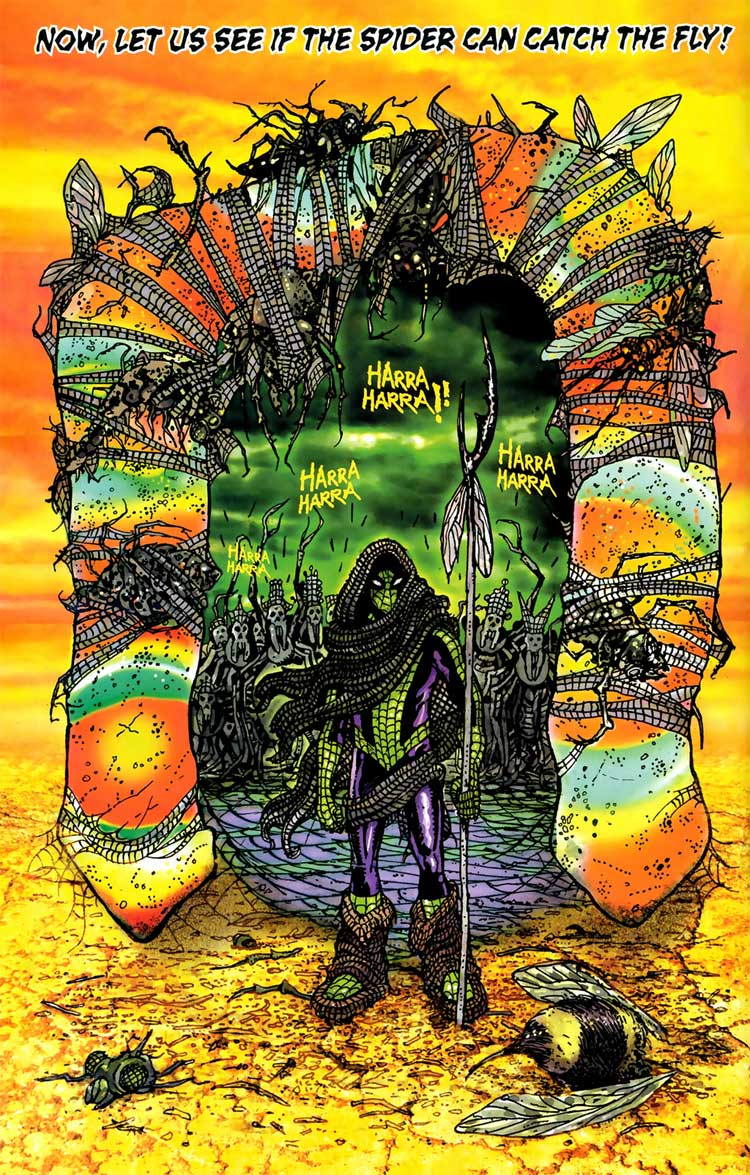


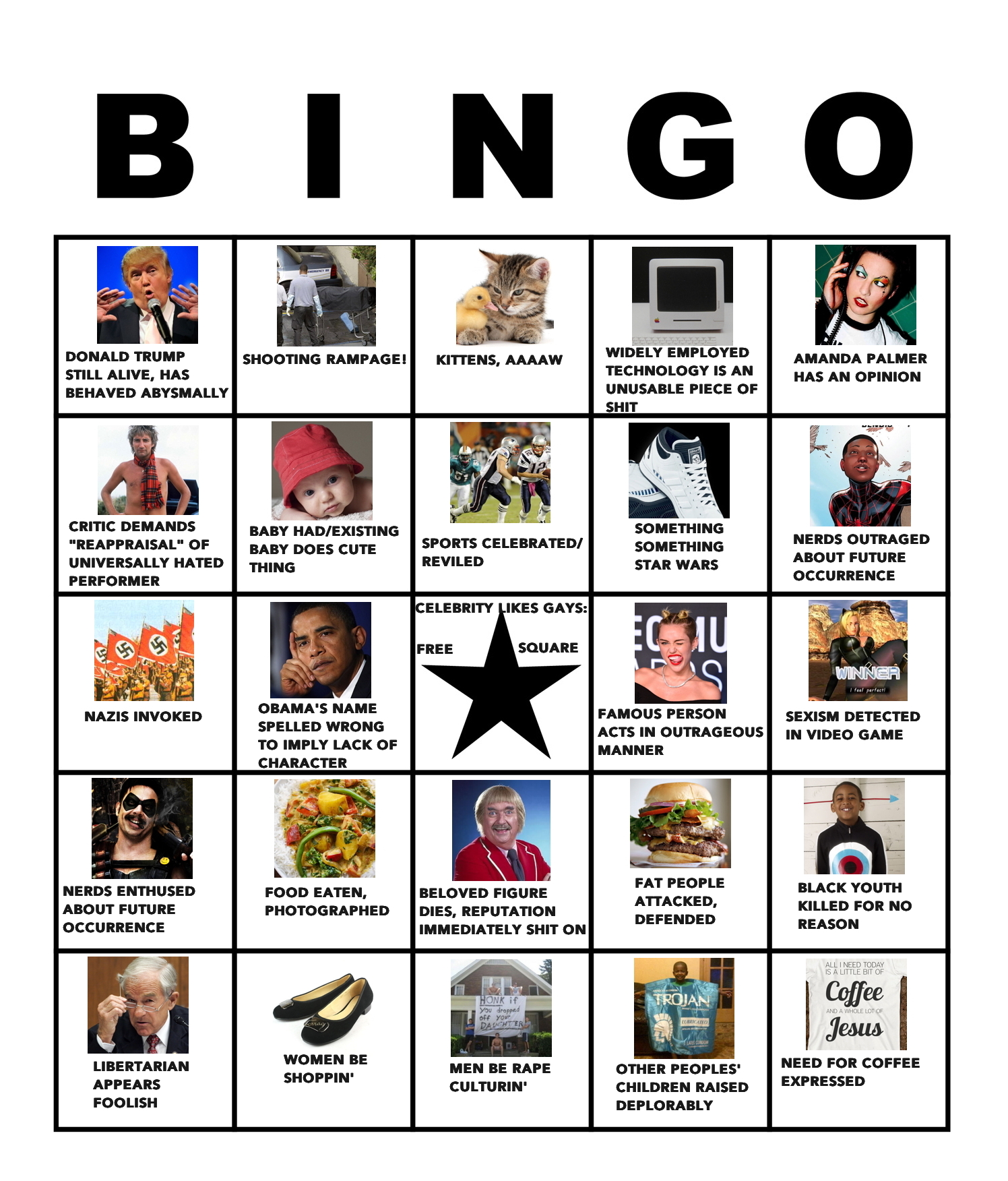




![It was bound to happen eventually. This data theft will enable almost limitless [xkcd.com/792]-style password reuse attacks in the coming weeks. There's only one group that comes out of this looking smart: Everyone who pirated Photoshop.](http://imgs.xkcd.com/comics/encryptic.png "It was bound to happen eventually. This data theft will enable almost limitless [xkcd.com/792]-style password reuse attacks in the coming weeks. There's only one group that comes out of this looking smart: Everyone who pirated Photoshop.")



