If anything, it's a bit of a surprise that as many as 11 people decided to "go home" rather than face the rather distant possibility of arrest after learning of the Home Office van campaign. This raises the obvious question of just how desperate a situation they must have been in to want to take their chances back in their home country, but such concerns are clearly irrelevant. These people shouldn't be here and they should go.
Only, as the reporting of Mark Harper's written answer makes clear, it costs more to enforce a deportation (£15,000) than the average illegal immigrant costs the taxpayer a year (just shy of £5,000). The latter figure seems difficult to believe, in any case: most illegal migrants won't/can't access public services, and so will use hardly any resources at all. The motivation behind the campaign is then somewhat financially sound: paying for a flight for someone is hell of a lot cheaper than doling out money to our friends at G4S or Serco to "Mubenga" someone.
The problem was in the execution, but then that was clearly the point. This was a stunt straight out of the Lynton Crosby playbook. Wait until news was slow, then launch a campaign using a borderline racist slogan designed to attract both condemnation and attention in equal measure. If some people did take up the kind offer, all the better. The Tories could portray themselves as tough as well as practical, and Labour would be caught in the trap of either condemning sending illegal immigrants home, or condoning a 70s style National Front demand. They didn't however factor in that this being the social networking age, a thousand people would prank the phone and text line, or indeed that even Nigel Farage would denounce the campaign as being too nasty, designed purely to win back some of those who had defected to his party.
Without figures for voluntary deportations for a similar period prior to "Operation Vaken", we clearly can't make a comparison as to how successful the whole charade really was. It might well be that a similar number to the 125 total claimed to have been motivated by the operation would have submitted themselves anyway without prompting. This is the thing: there is absolutely nothing wrong with ensuring those here illegally know they can return to their country of origin if they so wish, with the government picking up the tab. It's how you go about doing so, and telling people to go home or face arrest is manifestly not the right way, not least when it's clearly a political campaign designed to look tough and win votes. It probably does save money, although the idea the Vaken might have saved the taxpayer £830,000 is ridiculous.
Something that wouldn't just save money but actually benefit both the taxpayer and the economy would be an amnesty, bringing those working cash in hand out of the shadows and onto the path towards citizenship. That however would go completely against the rhetoric and policies of the past few years, where politicians have followed public opinion rather than attempt to lead it. Too bad that as Sunny wrote previously, it's now probably too late: the monster is loose.
Andrew Hickey
Shared posts
04 Nov 17:21
Last War in Albion will run on Saturday this week, in lieu of the usual waffling.
I am pleased to announce that A Golden Thread: An Unofficial Critical History of Wonder Woman is at long last available from Eruditorum Press. It's priced at $7.99 for the US ebook edition, with all other editions priced to give me the same royalty. You can buy it now at Amazon (Print, Kindle), Amazon UK (Print, Kindle), and Smashwords, which can provide you with ebook versions for any non-Kindle devices. It's available in most other Amazon stores, and will be on Nook, iBooks, and Sony stores in a few weeks.
The book is a critical history of Wonder Woman, focusing primarily but not exclusively on her comic book appearances. It starts in 1941, as William Moulton Marston, a pop psychologist, creates a female superhero to advance his idiosyncratic goals about the relationship between men and women, through the days when she was more feminist than Gloria Steinem, and all the way to the present day, where the character is stuck in DC's woeful New 52 relaunch, looking at every era of Wonder Woman in between.
It's written to be understandable and interesting to audiences who have never read a Wonder Woman comic before, but has enough detail that even the most die-hard fan will learn a few things. It doesn't just cover the canonical "major eras" like the Marston era and the Pérez era, but every era from 1941 on is there, in varying levels of detail.
Why, one might ask, a history of Wonder Woman? Because she's simultaneously one of the most recognized figures in popular culture and one of the least well-understood. She's a wildly popular character, and yet save for three seasons of television in the 1970s it's hard to point to her iconic or beloved version. There are not stories like The Dark Knight Returns or The Death of Gwen Stacy that everyone points to as the iconic Wonder Woman story. There's no movie version.
And yet she's fascinating. Not just because she was designed as propaganda for Marston's imagined female supremacist bondage utopia, but because she's spent over seventy years in continual publication by a company that has never seemed to understand the character. Where Batman and Superman feel easy to understand, Wonder Woman is strangely amorphous, resisting an easy definition. This has made her comics often frustrating, but rarely, if ever, boring. And because she is, by her nature, a symbol of feminism and of social justice, the highs and lows of her comics are often fascinating.
Inevitably, a book drifts over two years of being written and produced. When I envisioned the book, of course, it was called Paradise Dungeons, playing off of Wonder Woman's Paradise Island and the oft-remarked upon bondage components of Wonder Woman. But when I finished the book it wasn't quite that book.
Much of this is simply because Wonder Woman turned out to be a larger and twistier topic than I'd initially imagined. So much of her history consists of DC clearly trying to run and hide from the sheer radicalness of the character, such that the radical sexuality that defined William Moulton Marston's original conception of her wasn't even suppressed so much as denied entirely.
Instead I found that I'd written a book about the history of feminism and of what we mean when we talk about utopianism. It's a book about how both of these move forward not through anything that might be mistaken for a clear arc of progress, but in a weird and stuttering way. What we call progress is just screwing up in new and inventive ways.
And so the book became about the messiness of progress. It became about the ways in which people who tried to make Wonder Woman more feminist failed, and, equally important, about the ways in which people who tried to strip the social commentary out of Wonder Woman and make her into a generic superhero failed too. It's about the feminist victories of people for whom feminism was never a goal and about the at times profoundly anti-feminist effects of people who were deeply committed to feminism.
In the end, it's a book about how progress and feminism are weird. It's about how a character designed as bondage propaganda became a pop culture icon owned by a major multinational media conglomerate. And it's about how, when that happens, neither side wins as such, and instead the world grinds on in perpetually strange and unexpected ways. It's about what material social progress is, in all its glories and disappointments.
I'm very proud of it. It's my first book written as a book instead of as a collection of existing essays, and I think it's a really interesting story that hasn't been told enough. I really hope you'll buy a copy, and that you enjoy it.
If you have a site where you'd like to review it, shoot me an e-mail with a link and I'll get you hooked up with an ebook. If you have a good old-fashioned comic book store and would like to stock physical copies, let me know and we can figure something out. Either way, I'm snowspinner at gmail.
Finally, for those wondering, Flood is out on November 14th (I got my advance copy on Monday, and it looks lovely), and TARDIS Eruditorum Volume 4: Tom Baker Part One is set for the end of November/beginning of November.
A Wondrous Book Launch
by noreply@blogger.com (Philip Sandifer)
 |
| The cover art is, as ever, by the fantastic James Taylor, who talks about his process over here. |
I am pleased to announce that A Golden Thread: An Unofficial Critical History of Wonder Woman is at long last available from Eruditorum Press. It's priced at $7.99 for the US ebook edition, with all other editions priced to give me the same royalty. You can buy it now at Amazon (Print, Kindle), Amazon UK (Print, Kindle), and Smashwords, which can provide you with ebook versions for any non-Kindle devices. It's available in most other Amazon stores, and will be on Nook, iBooks, and Sony stores in a few weeks.
The book is a critical history of Wonder Woman, focusing primarily but not exclusively on her comic book appearances. It starts in 1941, as William Moulton Marston, a pop psychologist, creates a female superhero to advance his idiosyncratic goals about the relationship between men and women, through the days when she was more feminist than Gloria Steinem, and all the way to the present day, where the character is stuck in DC's woeful New 52 relaunch, looking at every era of Wonder Woman in between.
It's written to be understandable and interesting to audiences who have never read a Wonder Woman comic before, but has enough detail that even the most die-hard fan will learn a few things. It doesn't just cover the canonical "major eras" like the Marston era and the Pérez era, but every era from 1941 on is there, in varying levels of detail.
Why, one might ask, a history of Wonder Woman? Because she's simultaneously one of the most recognized figures in popular culture and one of the least well-understood. She's a wildly popular character, and yet save for three seasons of television in the 1970s it's hard to point to her iconic or beloved version. There are not stories like The Dark Knight Returns or The Death of Gwen Stacy that everyone points to as the iconic Wonder Woman story. There's no movie version.
And yet she's fascinating. Not just because she was designed as propaganda for Marston's imagined female supremacist bondage utopia, but because she's spent over seventy years in continual publication by a company that has never seemed to understand the character. Where Batman and Superman feel easy to understand, Wonder Woman is strangely amorphous, resisting an easy definition. This has made her comics often frustrating, but rarely, if ever, boring. And because she is, by her nature, a symbol of feminism and of social justice, the highs and lows of her comics are often fascinating.
Inevitably, a book drifts over two years of being written and produced. When I envisioned the book, of course, it was called Paradise Dungeons, playing off of Wonder Woman's Paradise Island and the oft-remarked upon bondage components of Wonder Woman. But when I finished the book it wasn't quite that book.
Much of this is simply because Wonder Woman turned out to be a larger and twistier topic than I'd initially imagined. So much of her history consists of DC clearly trying to run and hide from the sheer radicalness of the character, such that the radical sexuality that defined William Moulton Marston's original conception of her wasn't even suppressed so much as denied entirely.
Instead I found that I'd written a book about the history of feminism and of what we mean when we talk about utopianism. It's a book about how both of these move forward not through anything that might be mistaken for a clear arc of progress, but in a weird and stuttering way. What we call progress is just screwing up in new and inventive ways.
And so the book became about the messiness of progress. It became about the ways in which people who tried to make Wonder Woman more feminist failed, and, equally important, about the ways in which people who tried to strip the social commentary out of Wonder Woman and make her into a generic superhero failed too. It's about the feminist victories of people for whom feminism was never a goal and about the at times profoundly anti-feminist effects of people who were deeply committed to feminism.
In the end, it's a book about how progress and feminism are weird. It's about how a character designed as bondage propaganda became a pop culture icon owned by a major multinational media conglomerate. And it's about how, when that happens, neither side wins as such, and instead the world grinds on in perpetually strange and unexpected ways. It's about what material social progress is, in all its glories and disappointments.
I'm very proud of it. It's my first book written as a book instead of as a collection of existing essays, and I think it's a really interesting story that hasn't been told enough. I really hope you'll buy a copy, and that you enjoy it.
If you have a site where you'd like to review it, shoot me an e-mail with a link and I'll get you hooked up with an ebook. If you have a good old-fashioned comic book store and would like to stock physical copies, let me know and we can figure something out. Either way, I'm snowspinner at gmail.
Finally, for those wondering, Flood is out on November 14th (I got my advance copy on Monday, and it looks lovely), and TARDIS Eruditorum Volume 4: Tom Baker Part One is set for the end of November/beginning of November.
03 Nov 22:00
East Fulham - a real life and death by-election
by noreply@blogger.com (Alun Wyburn-Powell)
Some by-elections go down in history as crucial turning points, such as Newport in 1922 which is credited with ending the Lloyd George coalition, or Orpington in 1962, regarded as a breakthrough in the Liberal recovery.
The outcome of the East Fulham by-election was that Labour (in serious disarray after the formation of the National Government) won a seat from the Conservatives.
What actually happened was that 4,840 more voters in a southwest London suburb on one day in October 1933 preferred a younger more dynamic Labour candidate to an older rather unpopular Conservative local landlord. Among the policies debated (which included much argument over housing) was the issue of rearmament – opposed by the Labour candidate and supported by the Conservative. Not surprisingly, in a part of London with no arms manufacturing or shipbuilding, but within reach of enemy bombers, the voters may have felt that they had little to gain from rearmament and possibly much to lose from a war.
Had the by-election taken place in a constituency with high unemployment and an arms factory, the result might have been different. Had the Conservative candidate been young and dynamic and the Labour candidate an unpopular local landlord, the result might have been different.
Anyway, the East Fulham result was regurgitated by commentators and politicians for years afterwards to signify Britain’s reluctance to rearm. Worse than the over-interpretation of the meaning, was that the date and the result were subsequently mis-quoted in several explanations. Stanley Baldwin, speaking as prime minister in 1936, used the East Fulham result (to which, for some reason, he added 2,160 votes to the Conservatives’ margin of defeat) to explain his slow conversion to rearmament. By contributing (even if only very slightly) to Britain’s slowness to rearm, East Fulham did cost lives.
Sometimes by-election voters are told that they are taking part in a crucial contest, only for the result to be forgotten. On other occasions, such as East Fulham, the voters are largely left alone to make up their minds on local as well as national issues, only to find out afterwards that they have changed the course of history.
However, few by-elections can really be regarded as life or death events. But East Fulham on 25 October 1933 really did end up costing lives.
The outcome of the East Fulham by-election was that Labour (in serious disarray after the formation of the National Government) won a seat from the Conservatives.
What actually happened was that 4,840 more voters in a southwest London suburb on one day in October 1933 preferred a younger more dynamic Labour candidate to an older rather unpopular Conservative local landlord. Among the policies debated (which included much argument over housing) was the issue of rearmament – opposed by the Labour candidate and supported by the Conservative. Not surprisingly, in a part of London with no arms manufacturing or shipbuilding, but within reach of enemy bombers, the voters may have felt that they had little to gain from rearmament and possibly much to lose from a war.
Had the by-election taken place in a constituency with high unemployment and an arms factory, the result might have been different. Had the Conservative candidate been young and dynamic and the Labour candidate an unpopular local landlord, the result might have been different.
Anyway, the East Fulham result was regurgitated by commentators and politicians for years afterwards to signify Britain’s reluctance to rearm. Worse than the over-interpretation of the meaning, was that the date and the result were subsequently mis-quoted in several explanations. Stanley Baldwin, speaking as prime minister in 1936, used the East Fulham result (to which, for some reason, he added 2,160 votes to the Conservatives’ margin of defeat) to explain his slow conversion to rearmament. By contributing (even if only very slightly) to Britain’s slowness to rearm, East Fulham did cost lives.
Sometimes by-election voters are told that they are taking part in a crucial contest, only for the result to be forgotten. On other occasions, such as East Fulham, the voters are largely left alone to make up their minds on local as well as national issues, only to find out afterwards that they have changed the course of history.
02 Nov 11:53
Better all-woman shortlists than the Leadership Programme
by noreply@blogger.com (Jonathan Calder)
Last year, I was in the audience for a panel discussion at a professional conference. Every single member of the panel was a balding middle-aged man. It was, as several members of the audience pointed out, cringe-making.
It has reached the stage where the low number of women in the Liberal Democrat group in the Commons strikes me the same way.
You can say in our defence that we do not have safe seats into which we can parachute female candidates. You can say we had plenty of women candidates in promising seats at the last election – but the problem is that we did not win them. You can say we are selecting plenty of women in seats that look promising next time around.
Now Nick Clegg, according to today’s Independent, is considering imposing all-woman shortlists on the party.
That, of course, is not in Nick’s gift. He would have to convince the party conference to support the measure.
And my heart is not in the idea. My ideal is still Liberal Democrat members selecting the best candidate for the seat, irrespective of sex, race or anything else.
But if you feel we have reached the point where Something Must Be Done, then I would much rather see all-woman shortlists than the Leadership Programme we have at present as the solution to this problem.
This is for two reasons. The first is that it involves the party establishment picking favourite sons and daughters who will then expect to be provided with agreeable seats to fight. This gives that establishment too much power, and I would rather see candidates fighting their way up from the bottom. There is also the point that some of those chosen, for the initial intake at least, seemed to be doing very well without any special help from the top.
More fundamentally, the Leadership Programme fails to challenge the party sufficiently. It says, in effect, that women candidates are not as good, but with the proper training they can be just as good as white men. What looks radical at the outset turns out to be deeply conservative.
When you set it against all those faults, it is hard to argue that all-woman shortlists would not be an improvement.
This post first appeared on Liberal England.
It has reached the stage where the low number of women in the Liberal Democrat group in the Commons strikes me the same way.
You can say in our defence that we do not have safe seats into which we can parachute female candidates. You can say we had plenty of women candidates in promising seats at the last election – but the problem is that we did not win them. You can say we are selecting plenty of women in seats that look promising next time around.
Now Nick Clegg, according to today’s Independent, is considering imposing all-woman shortlists on the party.
That, of course, is not in Nick’s gift. He would have to convince the party conference to support the measure.
And my heart is not in the idea. My ideal is still Liberal Democrat members selecting the best candidate for the seat, irrespective of sex, race or anything else.
But if you feel we have reached the point where Something Must Be Done, then I would much rather see all-woman shortlists than the Leadership Programme we have at present as the solution to this problem.
This is for two reasons. The first is that it involves the party establishment picking favourite sons and daughters who will then expect to be provided with agreeable seats to fight. This gives that establishment too much power, and I would rather see candidates fighting their way up from the bottom. There is also the point that some of those chosen, for the initial intake at least, seemed to be doing very well without any special help from the top.
More fundamentally, the Leadership Programme fails to challenge the party sufficiently. It says, in effect, that women candidates are not as good, but with the proper training they can be just as good as white men. What looks radical at the outset turns out to be deeply conservative.
When you set it against all those faults, it is hard to argue that all-woman shortlists would not be an improvement.
This post first appeared on Liberal England.
02 Nov 11:53
Russell Brand and the Emperor’s new thong
by James Graham
 So, Russell Brand’s interview on Newsnight and New Statesman editorial has caused an awful lot of brouhaha, and I’d kind of like to join in. I find a lot of what he has to say on the subject of voting not only wrong but actually quite offensive. His assertion that my grandparents’ and great-grandparents’ generation were “conned” in fighting for the vote is simply factually not true, unless you consider the welfare state, universal education and a national health service to be a “con” (as far as I’m aware, Russell Brand is not an Ayn Rand aficionado).
The fact that we’ve just lived through the deepest recession since the Great Depression and not seen the level of starvation and grinding poverty that destroyed people’s lives in the 1930s suggests that, for the most part, democracy has actually worked out quite well for most people in a lot of ways. Combine that with Brand’s obvious hypocrisy (opting out of the political system he despises while very much opting into the capitalist system which he claims to equally hate – yet very much profits from) and casual misogyny, and you have a pretty loathsome end product. Instead of miscrediting Billy Connelly with the quote “don’t vote, it encourages them,” just once I would have liked to see him engqge with Gandhi’s equally miscredited “be the change you want to see in the world” – it is all very well calling for a revolution of the mind, but if that’s where it stays, what is the point?
Here’s the thing though. Siding against Russell Brand means siding with an awful lot of rather distasteful people. I might not agree with his prescription, but I agree with a lot of the sentiment and many of the people whose pious critiques of Brand’s position I’ve read over the last few days have been the very people who I think are part of the problem.
Piously telling Russell Brand that he’s wrong is one thing, but if you’re one of the people who subscribes to the view that the current voting system is fine and dandy, and that your political party should be slavishly attempting to fix itself in the centre ground, or jump on whichever populist bandwagon which might get you the next short term voting fix, then you actually have less credibility than he has. Voting and political engagement can make a difference, but in spite of such people not because of them. Most people in the political establishment are not democrats, but rather technocrats who spend their time actively seeking ways to shut down public debate, not open it up.
And voting, especially for young people, is a bit of a prisoner’s dilemma. For individuals, voting is a cost in time and effort. It’s only if a critical mass of a certain demographic start voting that they are likely to make an impact, and no-one knows in advance how many people it will take (especially with our broken and random single member plurality voting system). If like me you voted in 2010 in the hope that we were on the verge of seeing a fundamental shift in voting patterns, you can understand why it is hard for people get their hopes up that they are a part of something bigger.
The benefits of democracy are indirect, long term and fundamentally collective. It is ironic that a self-proclaimed lefty such as Russell Brand can’t get beyond the very individualist and consumerist mindset that he claims to want a cultural revolution to overthrow, but he is by no means alone. And the political establishment has done nothing but encourage precisely this mindset over the past 35 years. The fact that Brand and so many other wannabe revolutionaries are creatures of this atomisation of society may suggest that their ideas are not so radical after all, but it ought to give the establishment pause for thought because it has the potential to cause them a lot of problems.
Young people aren’t voting. More than that, it seems to me that an entire swathe of young people are effectively opting out. It’s no surprise as they are being systematically shut out of the economic system. Mainstream politicians are obsessed with forcing them to run in ever decreasing circles trying to find jobs which don’t exist, only to find that even if they succeed in that they will have none of the economic security that their parent’s generation take for granted. When I was turning 30, I was in a minority in my peer group of people who didn’t own their own house (admittedly, most of whom were dependent on their parents’ for support); now I don’t personally know anyone under 30 who owns property. I can however tell you tales of people forced to move out of their over-crowded HMO because the landlord insisted on putting the rent up by an exponential amount and the stress that substandard housing and long term unemployment is causing people.
All of this amounts to a massive deal for our society, yet if you take a gander on Twitter, you won’t find many mainstream politicians talking about it at all. Instead they are determinedly issuing blandishments with hashtags such as #ForHardWorkingPeople, #StrongerEconomy or #FairerSociety and, urgh, #coalicious.
In Paul Mason’s response to Russell Brand’s intervention, he predicts that we will see increasing social unrest over the next decade. It isn’t a new prediction; the BBC produced a documentary 10 years ago saying broadly the same thing. Such dire forecasts don’t have to be 100% correct to be a cause for concern and it certainly looks to me as if we are starting to see signs that it could be happening.
So, ultimately, it isn’t enough to dismiss Russell Brand’s views. If an idiot child starts proclaiming that the emperor has no clothes, expending so much energy to point out that, in fact, he is wearing an extremely snug bright pink thong is to badly miss the point.
01 Nov 14:23
12. Back to the Future (1985), dir. Robert Zemeckis
I saw this about a month ago with  big_daz, nigelmouse and his chum called Andy (I think), and hugely enjoyed rediscovering what a classic it is. It isn't just that it has all the standard elements of a good film (plotting, direction, acting, character, dialogue, setting and that little bit of magic which makes them all work together). It has an energy and freshness which has stood the test of time really well, and packs huge riches of detail and ideas into its two short hours.
I think it has gained something with the passage of time, too. Watching it in 2013 inevitably means approaching the film itself as a form of 'time travel' back to the 1980s, in a way that wouldn't have applied to the original audiences, and this in turn lends extra resonances to the central time-travel story. Within the film, the scenes from the 1950s are quite explicitly presented as 'filmic', what with their representation of a perfect small-town America recognisable from (for instance) It's a Wonderful Life, complete with brightly-coloured diners, high-school dances and larger-than-life characters. Knowing as you watch the film that you are now viewing the 1980s through the same kinds of filters, and that you cannot do anything else because they are no more real and present today than the 1950s were when it was made, somehow makes the 'time-travel' experience of watching the film both more and less immersive at the same time.
On the one hand, it offers a route into the (possible) mind-set of the original 1980s audiences by dangling the idea that the 1950s scenes probably looked much to them as the 1980s scenes now do to us. On the other, the studiedly filmic nature of the 1950s scenes remind us that no film offers a 'true' representation of the time it is portraying - including the one we are watching. In other words, just as we might be slipping into thinking that we are really communing with the spirit of the 1980s by watching this film, its own internal time-travel scenes also remind us that we are not. I wonder how all of those resonances will change and evolve as more time passes? Will there come a time when future audiences are slightly puzzled by what is meant to appear so different about its 1950s scenes and its 1980s scenes anyway?
Lots could be said about all sorts of elements within the story, but I am sure they have already been written about on the internet somewhere, so I will focus on just two particular things which occurred to me on this viewing, but which I had never really thought about before.
One is the portrayal of the black character (naturally there's only one), Goldie Wilson, which I suspect was meant to be positive, but is actually tropish and ill-thought-through. Early on in the film, we learn that in 1985 this character is mayor of Marty's home town (Hill Valley), and currently running for re-election. But when Marty returns to 1955, he finds a young Goldie sweeping floors in Lou's Diner. Here's the key scene (but give it 20 seconds for Goldie to actually appear):
I suspect that what audiences were originally meant to take away from this scene was a warm fuzzy feeling about how socially progressive the 1980s were by comparison with the 1950s. While the '50s characters scoff at the idea of a 'colored mayor', the '80s audience (and indeed the early-21st century audience) can feel smug about how that's, like, totally not an issue any more. Unfortunately, the character's agency is badly undermined by nasty little case of White Man's Burden. Goldie may have (undirected) ambition, declaring that one day he will be somebody, but it takes white guy Marty's accidental comment that in the future he will become mayor to channel those ambitions into a specific goal and really inspire him with a sense of purpose. So the very dynamic of the film itself reveals just how fragile and incomplete the supposed progression from the '50s to the '80s actually was - and it's not like we have got much further today, either.
The other problem with Goldie Wilson is that in 1985, Hill Valley is shit, and in particular considerably worse that it was in the 1950s. Now obviously there are all sorts of extra-diegetic reasons we could come up with to explain this which have nothing to do with Goldie. Maybe the town has been badly affected by state-level economic or political problems beyond the control of its mayor. But what we see on screen is that between 1955 and 1985, two things happen to Marty's home town: Goldie becomes its mayor, and it develops all sorts of serious social and economic problems. The rather inescapable conclusion is that in spite of his declared intention (back in the 1950s) to "clean up this town", Goldie's mayorship has actually been nothing short of a disaster for Hill Valley. I fear nobody on the script-writing team ever quite sat down and thought hard enough to notice that the knock-on consequence of the "yay in the 1980s we have black mayors" scene is actually an extended narrative about how incompetent black elected officials are.
My other line of thought was to wonder more generally what we should make of a story in which the people of the 1980s (as personified by Marty) try to fix their problems by going back in time to rewrite the 1950s. In the film, Marty needs to badger his parents into being more assertive and ambitious, so that he (and they) can enjoy a better life in the 1980s. I suppose every generation wishes the one before had taken a longer view of the consequences of their actions - that's what hindsight is. But this film's particular concerns do seem to me to reveal something of the zeitgeist of 1980s America specifically. It certainly seems plausible that the 1950s dream of prosperous small-town life must have looked pretty deluded to many Americans by the 1980s, after the Vietnam war, the Cold War and a series of recessions, and that many people did rather wish the previous generation had been less beholden to convention, developed a little grit, and conceived of wider horizons and grander aspirations.
Anyway, like many an SF or fantasy classic, I think there are good reasons why this film has become something of an icon over the years. It's fun, yes, but has some surprisingly good thinky mileage in it to boot. Here's looking forward to its thirtieth anniversary in another two years' time, when we really will stand in exactly the same relation to 1985 as the film did to 1955.
Click here if you would like view this entry in light text on a dark background.
big_daz, nigelmouse and his chum called Andy (I think), and hugely enjoyed rediscovering what a classic it is. It isn't just that it has all the standard elements of a good film (plotting, direction, acting, character, dialogue, setting and that little bit of magic which makes them all work together). It has an energy and freshness which has stood the test of time really well, and packs huge riches of detail and ideas into its two short hours.I think it has gained something with the passage of time, too. Watching it in 2013 inevitably means approaching the film itself as a form of 'time travel' back to the 1980s, in a way that wouldn't have applied to the original audiences, and this in turn lends extra resonances to the central time-travel story. Within the film, the scenes from the 1950s are quite explicitly presented as 'filmic', what with their representation of a perfect small-town America recognisable from (for instance) It's a Wonderful Life, complete with brightly-coloured diners, high-school dances and larger-than-life characters. Knowing as you watch the film that you are now viewing the 1980s through the same kinds of filters, and that you cannot do anything else because they are no more real and present today than the 1950s were when it was made, somehow makes the 'time-travel' experience of watching the film both more and less immersive at the same time.
On the one hand, it offers a route into the (possible) mind-set of the original 1980s audiences by dangling the idea that the 1950s scenes probably looked much to them as the 1980s scenes now do to us. On the other, the studiedly filmic nature of the 1950s scenes remind us that no film offers a 'true' representation of the time it is portraying - including the one we are watching. In other words, just as we might be slipping into thinking that we are really communing with the spirit of the 1980s by watching this film, its own internal time-travel scenes also remind us that we are not. I wonder how all of those resonances will change and evolve as more time passes? Will there come a time when future audiences are slightly puzzled by what is meant to appear so different about its 1950s scenes and its 1980s scenes anyway?
Lots could be said about all sorts of elements within the story, but I am sure they have already been written about on the internet somewhere, so I will focus on just two particular things which occurred to me on this viewing, but which I had never really thought about before.
One is the portrayal of the black character (naturally there's only one), Goldie Wilson, which I suspect was meant to be positive, but is actually tropish and ill-thought-through. Early on in the film, we learn that in 1985 this character is mayor of Marty's home town (Hill Valley), and currently running for re-election. But when Marty returns to 1955, he finds a young Goldie sweeping floors in Lou's Diner. Here's the key scene (but give it 20 seconds for Goldie to actually appear):
I suspect that what audiences were originally meant to take away from this scene was a warm fuzzy feeling about how socially progressive the 1980s were by comparison with the 1950s. While the '50s characters scoff at the idea of a 'colored mayor', the '80s audience (and indeed the early-21st century audience) can feel smug about how that's, like, totally not an issue any more. Unfortunately, the character's agency is badly undermined by nasty little case of White Man's Burden. Goldie may have (undirected) ambition, declaring that one day he will be somebody, but it takes white guy Marty's accidental comment that in the future he will become mayor to channel those ambitions into a specific goal and really inspire him with a sense of purpose. So the very dynamic of the film itself reveals just how fragile and incomplete the supposed progression from the '50s to the '80s actually was - and it's not like we have got much further today, either.
The other problem with Goldie Wilson is that in 1985, Hill Valley is shit, and in particular considerably worse that it was in the 1950s. Now obviously there are all sorts of extra-diegetic reasons we could come up with to explain this which have nothing to do with Goldie. Maybe the town has been badly affected by state-level economic or political problems beyond the control of its mayor. But what we see on screen is that between 1955 and 1985, two things happen to Marty's home town: Goldie becomes its mayor, and it develops all sorts of serious social and economic problems. The rather inescapable conclusion is that in spite of his declared intention (back in the 1950s) to "clean up this town", Goldie's mayorship has actually been nothing short of a disaster for Hill Valley. I fear nobody on the script-writing team ever quite sat down and thought hard enough to notice that the knock-on consequence of the "yay in the 1980s we have black mayors" scene is actually an extended narrative about how incompetent black elected officials are.
My other line of thought was to wonder more generally what we should make of a story in which the people of the 1980s (as personified by Marty) try to fix their problems by going back in time to rewrite the 1950s. In the film, Marty needs to badger his parents into being more assertive and ambitious, so that he (and they) can enjoy a better life in the 1980s. I suppose every generation wishes the one before had taken a longer view of the consequences of their actions - that's what hindsight is. But this film's particular concerns do seem to me to reveal something of the zeitgeist of 1980s America specifically. It certainly seems plausible that the 1950s dream of prosperous small-town life must have looked pretty deluded to many Americans by the 1980s, after the Vietnam war, the Cold War and a series of recessions, and that many people did rather wish the previous generation had been less beholden to convention, developed a little grit, and conceived of wider horizons and grander aspirations.
Anyway, like many an SF or fantasy classic, I think there are good reasons why this film has become something of an icon over the years. It's fun, yes, but has some surprisingly good thinky mileage in it to boot. Here's looking forward to its thirtieth anniversary in another two years' time, when we really will stand in exactly the same relation to 1985 as the film did to 1955.
Click here if you would like view this entry in light text on a dark background.
01 Nov 14:15
13. The Wicker Man: the final cut (so-called, 2013), dir. Robin Hardy
This was my third viewing of The Wicker Man this year (previous iterations reviewed here), my fourth on the big screen (one previous experience here; the other two were in Oxford before I had a livejournal), and my goodness-only-knows-how-manyth all told. But given that this is its anniversary year, that it's supposedly been restored to its 'original' form, that a bunch of lovely friends were going along to see it too, that the showing was followed by a Q&A session with none other than the director Robin Hardy, and that it all took place in this building...

...I was hardly going to miss out on the chance.
The showing was part of this year's Grimmfest, and constituted the northern premiere of the newly-restored, re-released version of the film. Despite the best advance efforts of a Facebook page to imply that this would include the lost cutting-room footage allegedly buried beneath the M4, what it actually is is a cleaned-up print of the so-called 'middle version' - that is, the version put together from an early preview copy sent to Roger Corman, and released in America in 1977 (there's a full explanation of all the different available versions here). So we got to see footage which I have never seen on the big screen before, or indeed at all in such a good-quality print, like the 'Gently Johnny' sequence, and that was good. Call me a curmudgeonly old grump, though, but as far as I'm concerned this is not the 'final cut' of the film. I care about story and character a lot more than I care about picture quality, and on that basis the only true version of The Wicker Man in my mind is the one which contains absolutely all of the surviving footage.
Curiously, such a cut doesn't actually exist, since despite its name the so-called 'long version' for some reason omits two key scenes which are present in the short and middle versions - a brief shot of villagers watering graves at night-time, and a longer scene (with dialogue) in which Willow brings Sergeant Howie a cup of tea the morning after her naked seduction dance. But even without those scenes (which we did get to see in Stockport), the long version is still in my view markedly superior to the middle version. It includes several scenes of Sergeant Howie going about his ordinary policing business on the mainland before he ever receives a letter about a missing girl on Summerisle, which I think do a lot to establish his character and build up sympathy with him before throwing him into the strange and alien environment of the island, and it also does not cut random lines out of some of the song sequences, completely throwing off the rhythm of the music. So I began the film feeling rather disappointed at the absence of the early mainland scenes, and continued in much the same state of mind throughout.
This is a pity, because I truly love this film, and wanted to enjoy it. I'm sure being stressed about my Dad, falling foul of Stockport's one-way system on the way there, and as a consequence missing the chance to eat properly before the film didn't help, but I would have liked to enjoy watching a restored anniversary version of what is still my favourite film of all time better than I actually did in practice, even if it doesn't contain absolutely all of the available footage. But there it is. I did at least enjoy seeing it with good friends, and the experience of sitting in a huge auditorium-full of people who laughed appreciatively in all the right places.
Afterwards, Robin Hardy was ushered onto the stage as promised for the Q&A session, and in fact it turned out to be his birthday that very evening. So we had the unexpected pleasure of singing 'Happy Birthday' to him en masse as he was presented with a cake. I didn't have particularly high hopes for the Q&A itself to be honest, as I have seen enough on-screen interviews with Robin Hardy already to be well aware that he is a rambling narcissist with a distinctly over-inflated view of his own contribution to the success of the film. Such he proved, with the result that only two audience members actually got the chance to put questions to him (both male, which rather annoyed me), and my raised hand with its attendant question about the way the real-life culture and landscape of Dumfries and Galloway had informed the film was overlooked. Oh well, I only really raised it because I knew it was likely to be the only chance I ever got to speak to Robin Hardy (who is 84 now) anyway. I already knew what he would be likely to say in reply from my own reading and my recent holiday touring around the filming locations.
I haven't yet bought the DVD of the restored version, and indeed am not sure I ever will given that the box set of the long and short versions which I already have includes every single second of footage it contains, albeit not always in such high quality. What I would buy is what I'll call the 'ultimate mash-up' version of the film - that is, all of the high-quality footage from this middle version, but supplemented with everything it doesn't include from the long version, and with the watering graves footage restored to its rightful context in the scene when Howie digs up Rowan's grave, rather than amongst the night-time orgy scenes which he sees during his first night on the island. That version could presumably be thrown together quite easily now by anyone with a bit of decent processing-power and some editing software (perhaps even including me if I could be bothered), so I am hoping it is only a matter of time before it becomes available. Then, then will I finally be satisfied... well, at least until any of that genuinely-missing cutting-room floor footage actually does turn up (I can dream!).
Click here if you would like view this entry in light text on a dark background.
...I was hardly going to miss out on the chance.
The showing was part of this year's Grimmfest, and constituted the northern premiere of the newly-restored, re-released version of the film. Despite the best advance efforts of a Facebook page to imply that this would include the lost cutting-room footage allegedly buried beneath the M4, what it actually is is a cleaned-up print of the so-called 'middle version' - that is, the version put together from an early preview copy sent to Roger Corman, and released in America in 1977 (there's a full explanation of all the different available versions here). So we got to see footage which I have never seen on the big screen before, or indeed at all in such a good-quality print, like the 'Gently Johnny' sequence, and that was good. Call me a curmudgeonly old grump, though, but as far as I'm concerned this is not the 'final cut' of the film. I care about story and character a lot more than I care about picture quality, and on that basis the only true version of The Wicker Man in my mind is the one which contains absolutely all of the surviving footage.
Curiously, such a cut doesn't actually exist, since despite its name the so-called 'long version' for some reason omits two key scenes which are present in the short and middle versions - a brief shot of villagers watering graves at night-time, and a longer scene (with dialogue) in which Willow brings Sergeant Howie a cup of tea the morning after her naked seduction dance. But even without those scenes (which we did get to see in Stockport), the long version is still in my view markedly superior to the middle version. It includes several scenes of Sergeant Howie going about his ordinary policing business on the mainland before he ever receives a letter about a missing girl on Summerisle, which I think do a lot to establish his character and build up sympathy with him before throwing him into the strange and alien environment of the island, and it also does not cut random lines out of some of the song sequences, completely throwing off the rhythm of the music. So I began the film feeling rather disappointed at the absence of the early mainland scenes, and continued in much the same state of mind throughout.
This is a pity, because I truly love this film, and wanted to enjoy it. I'm sure being stressed about my Dad, falling foul of Stockport's one-way system on the way there, and as a consequence missing the chance to eat properly before the film didn't help, but I would have liked to enjoy watching a restored anniversary version of what is still my favourite film of all time better than I actually did in practice, even if it doesn't contain absolutely all of the available footage. But there it is. I did at least enjoy seeing it with good friends, and the experience of sitting in a huge auditorium-full of people who laughed appreciatively in all the right places.
Afterwards, Robin Hardy was ushered onto the stage as promised for the Q&A session, and in fact it turned out to be his birthday that very evening. So we had the unexpected pleasure of singing 'Happy Birthday' to him en masse as he was presented with a cake. I didn't have particularly high hopes for the Q&A itself to be honest, as I have seen enough on-screen interviews with Robin Hardy already to be well aware that he is a rambling narcissist with a distinctly over-inflated view of his own contribution to the success of the film. Such he proved, with the result that only two audience members actually got the chance to put questions to him (both male, which rather annoyed me), and my raised hand with its attendant question about the way the real-life culture and landscape of Dumfries and Galloway had informed the film was overlooked. Oh well, I only really raised it because I knew it was likely to be the only chance I ever got to speak to Robin Hardy (who is 84 now) anyway. I already knew what he would be likely to say in reply from my own reading and my recent holiday touring around the filming locations.
I haven't yet bought the DVD of the restored version, and indeed am not sure I ever will given that the box set of the long and short versions which I already have includes every single second of footage it contains, albeit not always in such high quality. What I would buy is what I'll call the 'ultimate mash-up' version of the film - that is, all of the high-quality footage from this middle version, but supplemented with everything it doesn't include from the long version, and with the watering graves footage restored to its rightful context in the scene when Howie digs up Rowan's grave, rather than amongst the night-time orgy scenes which he sees during his first night on the island. That version could presumably be thrown together quite easily now by anyone with a bit of decent processing-power and some editing software (perhaps even including me if I could be bothered), so I am hoping it is only a matter of time before it becomes available. Then, then will I finally be satisfied... well, at least until any of that genuinely-missing cutting-room floor footage actually does turn up (I can dream!).
Click here if you would like view this entry in light text on a dark background.
01 Nov 10:58
“Gypsies” and Other Fantasy Beings
by Jim C. Hines
“…Romanies turn up with some frequency — never as characters who happen incidentally also to be Gypsies, but because they are Gypsies, and because they serve a specific purpose. This purpose has, broadly speaking, three manifestations: the Gypsy as liar and thief either of property or (especially) of non-Romani children; the Gypsy as witch or caster of spells; and the Gypsy as romantic figure.” -Ian Hancock
#
The SF/F genre has a particular fascination with “Gypsies.” Maybe it’s the romanticized freedom of the road, the independence of a people who reject the soul-shriveling laws of the civilized world to live however and wherever they choose. Maybe it’s the mysticism, the magic of old Romani women and their curses. Maybe it’s the sex appeal of eager young lasses and virile men. Or maybe it’s just the fashion sense, because scarves and sparklies are cool!
 I’m sure most of us recognize that by now, this has become a pretty common trope, even a cliche, in the genre. But hey, they’re fun. They’re part of the history of our genre. And stories never hurt anyone! “Gypsies” are just another fantasy race, like elves and mermaids and dwarves, right? It’s not like we’re talking about real people with real cultures and histories. [/Sarcasm]
- “The 1997 figure reported by the late Dr Sybil Milton, then senior historian at the U.S. Holocaust Memorial Research Institute in Washington put the number of Romani lives lost by 1945 at ‘between a half and one and a half million.’” (Source)
Have you ever wondered where the term “gypped” came from? Let me put it this way. Saying you got gypped is right up there with saying you got “jewed,” based on the bigoted presumption that those people are all swindlers and cheats and thieves. But it’s not like those stereotypes cause any real harm or damage today, right?
- “In the Czech Republic, 79% of respondents to a 2003-04 survey said they wouldn’t want Roma as neighbors.” (Source)
- “[P]olice in Liguria gave out preprinted complaint templates for theft, which included a tickbox labelled ‘gypsies’ i.e. offering theft victims the chance to report Roma as the culprits. No other ethnicity was included on the form.” (Source)
- Italian Interior Minister Roberto Maroni responded to a wave of violence against the Roma people with the quote, “That is what happens when Gypsies steal babies.” (Source)
- Italy’s highest appeals court overthrew the conviction of six people for racially discriminatory propaganda, saying that their aversion to the Roma people, “was not determined by the Gypsy nature of the people discriminated against, but by the fact that all the Gypsies were thieves.” (Emphasis added; Source)
As long as we’re talking, how about a few more examples of prejudice and discrimination?
- “The European Court of Human Rights has affirmed that school segregation of Romani children (in schools for children with disabilities and in separate schools or classes in mainstream schools) constitutes illegal discrimination in judgments against the Czech Republic (2007), Greece (2008) and Croatia (2010). Despite these rulings, educational segregation of Romani children is systemic in many European countries.” (Source)
- “The [Czech] government expressed its regret to Roma women who were sterilized without their consent but admitted the practice may still be taking place.” (Emphasis added; Source)
- “[T]he Roma populations face considerable obstacles to the enjoyment of basic rights, notably in the fields of access to health care, housing, education and employment and are often disproportionately affected by poverty. Discrimination and racism, also resulting in violence, remain serious problems throughout the continent, and present a major impediment to the full enjoyment of human rights and fundamental freedoms.” (Source)
- Police recently removed a blonde-haired, blue-eyed girl from the Roma family she was with. Because everyone knows those gypsies are child-stealers, right? “DNA tests have proved that a seven-year-old girl taken from a Roma family in Dublin on Monday is their daughter.” (Source)
 Well, at least this kind of racism isn’t a problem here in the United States, right?
- It’s not like we have major newspapers asking “Are the Roma Primitive, or Just Poor?“
- Or major television shows telling stories of murderous, child-stealing gypsies.
- Or retired police detectives writing articles about how “Gypsies choose a lifestyle of thievery, one that is as natural to them as eating and sleeping.”
I’m not saying science fiction and fantasy is full of people who are actively trying to be racist, or deliberately working to continue the kind of hatred and violence and bigotry described above. I suspect a lot of us, especially in the U.S., barely give it a second thought.
We don’t even realize the term “gypsy” is offensive and/or distasteful to many, basically a racial slur.
 Overt, deliberate, blatant racism tends to be easier to identify and denounce. I doubt most authors are deliberately trying to base their writing on racist stereotypes, any more than I think costume companies said, “Hey, the world doesn’t have enough racism or sexism yet, so let’s do another line of ‘Sexy Gypsy’ costumes!”
That doesn’t change the fact that we’re buying into the racism. As authors, we’re perpetuating it. We’re reinforcing the stereotypes and teaching our audience that this is what the Roma people are — that they’re magical, hypersexual thieves.
I remarked this past weekend that I love my SF/F geeks, but we’ve got some issues. Our complicitness in ignoring or erasing real people and replacing them with cliche and stereotype is one of them.
We need to do better.
01 Nov 10:15
NSA Eavesdropping on Google and Yahoo Networks
by schneier
The Washington Post reported that the NSA is eavesdropping on the Google and Yahoo private networks -- the code name for the program is MUSCULAR. I may write more about this later, but I have some initial comments:
- It's a measure of how far off the rails the NSA has gone that it's taking its Cold War–era eavesdropping tactics -- surreptitiously eavesdropping on foreign networks -- and applying them to US corporations. It's skirting US law by targeting the portion of these corporate networks outside the US. It's the same sort of legal argument the NSA used to justify collecting address books and buddy lists worldwide.
- Although the Washington Post article specifically talks about Google and Yahoo, you have to assume that all the other major -- and many of the minor -- cloud services are compromised this same way. That means Microsoft, Apple, Facebook, Twitter, MySpace, Badoo, Dropbox, and on and on and on.
- It is well worth re-reading all the government denials about bulk collection and direct access after PRISM was exposed. It seems that it's impossible to get the truth out of the NSA. Its carefully worded denials always seem to hide what's really going on.
- In light of this, PRISM is really just insurance: a way for the NSA to get legal cover for information it already has. My guess is that the NSA collects the vast majority of its data surreptitiously, using programs such as these. Then, when it has to share the information with the FBI or other organizations, it gets it again through a more public program like PRISM.
- What this really shows is how robust the surveillance state is, and how hard it will be to craft laws reining in the NSA. All the bills being discussed so far only address portions of the problem: specific programs or specific legal justifications. But the NSA's surveillance infrastructure is much more robust than that. It has many ways into our data, and all sorts of tricks to get around the law. Note this quote from yesterday's story:
John Schindler, a former NSA chief analyst and frequent defender who teaches at the Naval War College, said it is obvious why the agency would prefer to avoid restrictions where it can.
"Look, NSA has platoons of lawyers, and their entire job is figuring out how to stay within the law and maximize collection by exploiting every loophole," he said. "It's fair to say the rules are less restrictive under Executive Order 12333 than they are under FISA," the Foreign Intelligence Surveillance Act.
No surprise, really. But it illustrates how difficult meaningful reform will be. I wrote this in September:
It's time to start cleaning up this mess. We need a special prosecutor, one not tied to the military, the corporations complicit in these programs, or the current political leadership, whether Democrat or Republican. This prosecutor needs free rein to go through the NSA's files and discover the full extent of what the agency is doing, as well as enough technical staff who have the capability to understand it. He needs the power to subpoena government officials and take their sworn testimony. He needs the ability to bring criminal indictments where appropriate. And, of course, he needs the requisite security clearance to see it all.
We also need something like South Africa's Truth and Reconciliation Commission, where both government and corporate employees can come forward and tell their stories about NSA eavesdropping without fear of reprisal.
Without this, crafting reform legislation will be impossible.
- Finally, we need more encryption on the Internet. We have made surveillance too cheap, not just for the NSA but for all nation-state adversaries. We need to make it expensive again.
EDITED TO ADD (11/1): We don't actually know if the NSA did this surreptitiously, or if it had assistance from another US corporation. Level 3 Communications provides the data links to Google, and its statement was sufficiently non-informative as to be suspicious:
In a statement, Level 3 said: "We comply with the laws in each country where we operate. In general, governments that seek assistance in law enforcement or security investigations prohibit disclosure of the assistance provided."
When I write that the NSA has destroyed the fabric of trust on the Internet, this is the kind of thing I mean. Google can no longer trust its bandwidth providers not to betray the company.
EDITED TO ADD (11/2): The NSA's denial is pretty lame. It feels as if it's hardly trying anymore.
We also know that Level 3 Communications already cooperates with the NSA, and has the codename of LITTLE:
The document identified for the first time which telecoms companies are working with GCHQ's "special source" team. It gives top secret codenames for each firm, with BT ("Remedy"), Verizon Business ("Dacron"), and Vodafone Cable ("Gerontic"). The other firms include Global Crossing ("Pinnage"), Level 3 ("Little"), Viatel ("Vitreous") and Interoute ("Streetcar").
Again, those code names should properly be in all caps.
EDITED TO ADD (11/3): This New York Times story on the NSA is very good, and contains lots of little tidbits of new information gleaned from the Snowden documents.
The agency’s Dishfire database nothing happens without a code word at the N.S.A. -- stores years of text messages from around the world, just in case. Its Tracfin collection accumulates gigabytes of credit card purchases. The fellow pretending to send a text message at an Internet cafe in Jordan may be using an N.S.A. technique code-named Polarbreeze to tap into nearby computers. The Russian businessman who is socially active on the web might just become food for Snacks, the acronym-mad agency’s Social Network Analysis Collaboration Knowledge Services, which figures out the personnel hierarchies of organizations from texts.
Matthew.w.stephan, nfeehan and -1 others like this
31 Oct 08:39
 Happy Halloween/Samhain from everyone at Scarfolk Council.
There was always conflict between science and religion in Scarfolk, particularly regards topics such as birth, death and secular resurrection. However, writers like Dr. Santa Blacklord tried to bridge the gap with their books and Open University courses, which included 'Pagan Paediatrics.'
Excerpts from the birth chapter of the revised edition:
The normal process of birth starts with a series of involuntary contractions of the uterus walls. This is the first sign that the dark spirit has made his presence known. Eventually, the amniotic sac bursts and amniotic fluid escapes. This fluid should be preserved as it is known to a) help pigs and owls develop psychic abilities, b) hurt one's enemies when mixed with unstable explosives and c) cure female pattern chest baldness.
When the cervix is fully dilated, further uterus contractions push the lazy baby out through the left vagina or nostril, and the baby is born with umbilical cord attached. If, when plucked, the umbilical cord is tuned to D-sharp it is considered a lucky birth. If it's tuned to G the child will most likely grow up to work in retail. If tuned to B-flat most parents are recommended to try for another child.
Excerpts from the chapter on death:
Death is a state that immediately follows life. Only very rarely does it not occur in that order. During death the body's organs, like employees without an immediate supervisor, become confused and wander around the body looking for someone in charge. They meet in the buttocks where they hold a seance. They contact the dark spirit who was present at birth but learn that he has been made redundant due to cutbacks. Panicking, the organs argue amongst themselves briefly before turning out the lights and leaving, never to be heard of again. Some religions believe that when a deceased person is buried they are reincarnated as soil.
"Pagan Paediatrics" Pelican Books, 1974
by About me
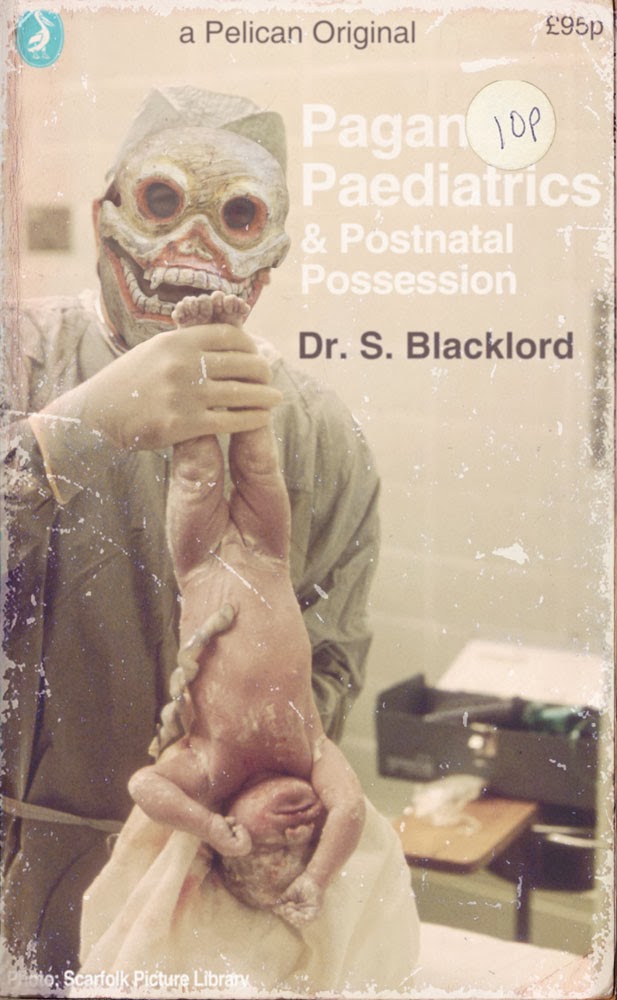
There was always conflict between science and religion in Scarfolk, particularly regards topics such as birth, death and secular resurrection. However, writers like Dr. Santa Blacklord tried to bridge the gap with their books and Open University courses, which included 'Pagan Paediatrics.'
Excerpts from the birth chapter of the revised edition:
The normal process of birth starts with a series of involuntary contractions of the uterus walls. This is the first sign that the dark spirit has made his presence known. Eventually, the amniotic sac bursts and amniotic fluid escapes. This fluid should be preserved as it is known to a) help pigs and owls develop psychic abilities, b) hurt one's enemies when mixed with unstable explosives and c) cure female pattern chest baldness.
When the cervix is fully dilated, further uterus contractions push the lazy baby out through the left vagina or nostril, and the baby is born with umbilical cord attached. If, when plucked, the umbilical cord is tuned to D-sharp it is considered a lucky birth. If it's tuned to G the child will most likely grow up to work in retail. If tuned to B-flat most parents are recommended to try for another child.
Excerpts from the chapter on death:
Death is a state that immediately follows life. Only very rarely does it not occur in that order. During death the body's organs, like employees without an immediate supervisor, become confused and wander around the body looking for someone in charge. They meet in the buttocks where they hold a seance. They contact the dark spirit who was present at birth but learn that he has been made redundant due to cutbacks. Panicking, the organs argue amongst themselves briefly before turning out the lights and leaving, never to be heard of again. Some religions believe that when a deceased person is buried they are reincarnated as soil.
31 Oct 08:39
i'm really invested in whether they will or won't and i'm expecting at least a 5% annual return on it
| archive - contact - sexy exciting merchandise - cute - search - about | |||
 |
|||
| ← previous | October 28th, 2013 | next | |
|
October 28th, 2013: Thanks for reading my comic today! Here are some Other Things I Write That You May Want To Check Out:
One year ago today: check out that naked dance tradition – Ryan 
| |||
30 Oct 23:09
The Battle for Power on the Internet
by schneier
We're in the middle of an epic battle for power in cyberspace. On one side are the traditional, organized, institutional powers such as governments and large multinational corporations. On the other are the distributed and nimble: grassroots movements, dissident groups, hackers, and criminals. Initially, the Internet empowered the second side. It gave them a place to coordinate and communicate efficiently, and made them seem unbeatable. But now, the more traditional institutional powers are winning, and winning big. How these two sides fare in the long term, and the fate of the rest of us who don't fall into either group, is an open question -- and one vitally important to the future of the Internet.
In the Internet's early days, there was a lot of talk about its "natural laws" -- how it would upend traditional power blocks, empower the masses, and spread freedom throughout the world. The international nature of the Internet circumvented national laws. Anonymity was easy. Censorship was impossible. Police were clueless about cybercrime. And bigger changes seemed inevitable. Digital cash would undermine national sovereignty. Citizen journalism would topple traditional media, corporate PR, and political parties. Easy digital copying would destroy the traditional movie and music industries. Web marketing would allow even the smallest companies to compete against corporate giants. It really would be a new world order.
This was a utopian vision, but some of it did come to pass. Internet marketing has transformed commerce. The entertainment industries have been transformed by things like MySpace and YouTube, and are now more open to outsiders. Mass media has changed dramatically, and some of the most influential people in the media have come from the blogging world. There are new ways to organize politically and run elections. Crowdfunding has made tens of thousands of projects possible to finance, and crowdsourcing made more types of projects possible. Facebook and Twitter really did help topple governments.
But that is just one side of the Internet's disruptive character. The Internet has emboldened traditional power as well.
On the corporate side, power is consolidating, a result of two current trends in computing. First, the rise of cloud computing means that we no longer have control of our data. Our e-mail, photos, calendars, address books, messages, and documents are on servers belonging to Google, Apple, Microsoft, Facebook, and so on. And second, we are increasingly accessing our data using devices that we have much less control over: iPhones, iPads, Android phones, Kindles, ChromeBooks, and so on. Unlike traditional operating systems, those devices are controlled much more tightly by the vendors, who limit what software can run, what they can do, how they're updated, and so on. Even Windows 8 and Apple's Mountain Lion operating system are heading in the direction of more vendor control.
I have previously characterized this model of computing as "feudal." Users pledge their allegiance to more powerful companies who, in turn, promise to protect them from both sysadmin duties and security threats. It's a metaphor that's rich in history and in fiction, and a model that's increasingly permeating computing today.
Medieval feudalism was a hierarchical political system, with obligations in both directions. Lords offered protection, and vassals offered service. The lord-peasant relationship was similar, with a much greater power differential. It was a response to a dangerous world.
Feudal security consolidates power in the hands of the few. Internet companies, like lords before them, act in their own self-interest. They use their relationship with us to increase their profits, sometimes at our expense. They act arbitrarily. They make mistakes. They're deliberately -- and incidentally -- changing social norms. Medieval feudalism gave the lords vast powers over the landless peasants; we're seeing the same thing on the Internet.
It's not all bad, of course. We, especially those of us who are not technical, like the convenience, redundancy, portability, automation, and shareability of vendor-managed devices. We like cloud backup. We like automatic updates. We like not having to deal with security ourselves. We like that Facebook just works -- from any device, anywhere.
Government power is also increasing on the Internet. There is more government surveillance than ever before. There is more government censorship than ever before. There is more government propaganda, and an increasing number of governments are controlling what their users can and cannot do on the Internet. Totalitarian governments are embracing a growing "cyber sovereignty" movement to further consolidate their power. And the cyberwar arms race is on, pumping an enormous amount of money into cyber-weapons and consolidated cyber-defenses, further increasing government power.
In many cases, the interests of corporate and government powers are aligning. Both corporations and governments benefit from ubiquitous surveillance, and the NSA is using Google, Facebook, Verizon, and others to get access to data it couldn't otherwise. The entertainment industry is looking to governments to enforce its antiquated business models. Commercial security equipment from companies like BlueCoat and Sophos is being used by oppressive governments to surveil and censor their citizens. The same facial recognition technology that Disney uses in its theme parks can also identify protesters in China and Occupy Wall Street activists in New York. Think of it as a public/private surveillance partnership.
What happened? How, in those early Internet years, did we get the future so wrong?
The truth is that technology magnifies power in general, but rates of adoption are different. The unorganized, the distributed, the marginal, the dissidents, the powerless, the criminal: they can make use of new technologies very quickly. And when those groups discovered the Internet, suddenly they had power. But later, when the already-powerful big institutions finally figured out how to harness the Internet, they had more power to magnify. That's the difference: the distributed were more nimble and were faster to make use of their new power, while the institutional were slower but were able to use their power more effectively.
So while the Syrian dissidents used Facebook to organize, the Syrian government used Facebook to identify dissidents to arrest.
All isn't lost for distributed power, though. For institutional power, the Internet is a change in degree, but for distributed power, it's a qualitative one. The Internet gives decentralized groups -- for the first time -- the ability to coordinate. This can have incredible ramifications, as we saw in the SOPA/PIPA debate, Gezi, Brazil, and the rising use of crowdfunding. It can invert power dynamics, even in the presence of surveillance, censorship, and use control. But aside from political coordination, the Internet allows for social coordination as well -- to unite, for example, ethnic diasporas, gender minorities, sufferers of rare diseases, and people with obscure interests.
This isn't static: Technological advances continue to provide advantage to the nimble. I discussed this trend in my book Liars and Outliers. If you think of security as an arms race between attackers and defenders, any technological advance gives one side or the other a temporary advantage. But most of the time, a new technology benefits the nimble first. They are not hindered by bureaucracy -- and sometimes not by laws or ethics, either. They can evolve faster.
We saw it with the Internet. As soon as the Internet started being used for commerce, a new breed of cybercriminal emerged, immediately able to take advantage of the new technology. It took police a decade to catch up. And we saw it on social media, as political dissidents made use of its organizational powers before totalitarian regimes did.
This delay is what I call a "security gap." It's greater when there's more technology, and in times of rapid technological change. Basically, if there are more innovations to exploit, there will be more damage resulting from society's inability to keep up with exploiters of all of them. And since our world is one in which there's more technology than ever before, and a faster rate of technological change than ever before, we should expect to see a greater security gap than ever before. In other words, there will be an increasing time period during which nimble distributed powers can make use of new technologies before slow institutional powers can make better use of those technologies.
This is the battle: quick vs. strong. To return to medieval metaphors, you can think of a nimble distributed power -- whether marginal, dissident, or criminal -- as Robin Hood; and ponderous institutional powers -- both government and corporate -- as the feudal lords.
So who wins? Which type of power dominates in the coming decades?
Right now, it looks like traditional power. Ubiquitous surveillance means that it's easier for the government to identify dissidents than it is for the dissidents to remain anonymous. Data monitoring means easier for the Great Firewall of China to block data than it is for people to circumvent it. The way we all use the Internet makes it much easier for the NSA to spy on everyone than it is for anyone to maintain privacy. And even though it is easy to circumvent digital copy protection, most users still can't do it.
The problem is that leveraging Internet power requires technical expertise. Those with sufficient ability will be able to stay ahead of institutional powers. Whether it's setting up your own e-mail server, effectively using encryption and anonymity tools, or breaking copy protection, there will always be technologies that can evade institutional powers. This is why cybercrime is still pervasive, even as police savvy increases; why technically capable whistleblowers can do so much damage; and why organizations like Anonymous are still a viable social and political force. Assuming technology continues to advance -- and there's no reason to believe it won't -- there will always be a security gap in which technically advanced Robin Hoods can operate.
Most people, though, are stuck in the middle. These are people who don't have the technical ability to evade large governments and corporations, avoid the criminal and hacker groups who prey on us, or join any resistance or dissident movements. These are the people who accept default configuration options, arbitrary terms of service, NSA-installed back doors, and the occasional complete loss of their data. These are the people who get increasingly isolated as government and corporate power align. In the feudal world, these are the hapless peasants. And it's even worse when the feudal lords -- or any powers -- fight each other. As anyone watching Game of Thrones knows, peasants get trampled when powers fight: when Facebook, Google, Apple, and Amazon fight it out in the market; when the US, EU, China, and Russia fight it out in geopolitics; or when it's the US vs. "the terrorists" or China vs. its dissidents.
The abuse will only get worse as technology continues to advance. In the battle between institutional power and distributed power, more technology means more damage. We've already seen this: Cybercriminals can rob more people more quickly than criminals who have to physically visit everyone they rob. Digital pirates can make more copies of more things much more quickly than their analog forebears. And we'll see it in the future: 3D printers mean that the computer restriction debate will soon involves guns, not movies. Big data will mean that more companies will be able to identify and track you more easily. It's the same problem as the "weapons of mass destruction" fear: terrorists with nuclear or biological weapons can do a lot more damage than terrorists with conventional explosives. And by the same token, terrorists with large-scale cyberweapons can potentially do more damage than terrorists with those same bombs.
It's a numbers game. Very broadly, because of the way humans behave as a species and as a society, every society is going to have a certain amount of crime. And there's a particular crime rate society is willing to tolerate. With historically inefficient criminals, we were willing to live with some percentage of criminals in our society. As technology makes each individual criminal more powerful, the percentage we can tolerate decreases. Again, remember the "weapons of mass destruction" debate: As the amount of damage each individual terrorist can do increases, we need to do increasingly more to prevent even a single terrorist from succeeding.
The more destabilizing the technologies, the greater the rhetoric of fear, and the stronger institutional powers will get. This means increasingly repressive security measures, even if the security gap means that such measures become increasingly ineffective. And it will squeeze the peasants in the middle even more.
Without the protection of his own feudal lord, the peasant was subject to abuse both by criminals and other feudal lords. But both corporations and the government -- and often the two in cahoots -- are using their power to their own advantage, trampling on our rights in the process. And without the technical savvy to become Robin Hoods ourselves, we have no recourse but to submit to whatever the ruling institutional power wants.
So what happens as technology increases? Is a police state the only effective way to control distributed power and keep our society safe? Or do the fringe elements inevitably destroy society as technology increases their power? Probably neither doomsday scenario will come to pass, but figuring out a stable middle ground is hard. These questions are complicated, and dependent on future technological advances that we cannot predict. But they are primarily political questions, and any solutions will be political.
In the short term, we need more transparency and oversight. The more we know of what institutional powers are doing, the more we can trust that they are not abusing their authority. We have long known this to be true in government, but we have increasingly ignored it in our fear of terrorism and other modern threats. This is also true for corporate power. Unfortunately, market dynamics will not necessarily force corporations to be transparent; we need laws to do that. The same is true for decentralized power; transparency is how we'll differentiate political dissidents from criminal organizations.
Oversight is also critically important, and is another long-understood mechanism for checking power. This can be a combination of things: courts that act as third-party advocates for the rule of law rather than rubber-stamp organizations, legislatures that understand the technologies and how they affect power balances, and vibrant public-sector press and watchdog groups that analyze and debate the actions of those wielding power.
Transparency and oversight give us the confidence to trust institutional powers to fight the bad side of distributed power, while still allowing the good side to flourish. For if we're going to entrust our security to institutional powers, we need to know they will act in our interests and not abuse that power. Otherwise, democracy fails.
In the longer term, we need to work to reduce power differences. The key to all of this is access to data. On the Internet, data is power. To the extent the powerless have access to it, they gain in power. To the extent that the already powerful have access to it, they further consolidate their power. As we look to reducing power imbalances, we have to look at data: data privacy for individuals, mandatory disclosure laws for corporations, and open government laws.
Medieval feudalism evolved into a more balanced relationship in which lords had responsibilities as well as rights. Today's Internet feudalism is both ad-hoc and one-sided. Those in power have a lot of rights, but increasingly few responsibilities or limits. We need to rebalance this relationship. In medieval Europe, the rise of the centralized state and the rule of law provided the stability that feudalism lacked. The Magna Carta first forced responsibilities on governments and put humans on the long road toward government by the people and for the people. In addition to re-reigning in government power, we need similar restrictions on corporate power: a new Magna Carta focused on the institutions that abuse power in the 21st century.
Today's Internet is a fortuitous accident: a combination of an initial lack of commercial interests, government benign neglect, military requirements for survivability and resilience, and computer engineers building open systems that worked simply and easily.
We're at the beginning of some critical debates about the future of the Internet: the proper role of law enforcement, the character of ubiquitous surveillance, the collection and retention of our entire life's history, how automatic algorithms should judge us, government control over the Internet, cyberwar rules of engagement, national sovereignty on the Internet, limitations on the power of corporations over our data, the ramifications of information consumerism, and so on.
Data is the pollution problem of the information age. All computer processes produce it. It stays around. How we deal with it -- how we reuse and recycle it, who has access to it, how we dispose of it, and what laws regulate it -- is central to how the information age functions. And I believe that just as we look back at the early decades of the industrial age and wonder how society could ignore pollution in their rush to build an industrial world, our grandchildren will look back at us during these early decades of the information age and judge us on how we dealt with the rebalancing of power resulting from all this new data.
This won't be an easy period for us as we try to work these issues out. Historically, no shift in power has ever been easy. Corporations have turned our personal data into an enormous revenue generator, and they're not going to back down. Neither will governments, who have harnessed that same data for their own purposes. But we have a duty to tackle this problem.
I can't tell you what the result will be. These are all complicated issues, and require meaningful debate, international cooperation, and innovative solutions. We need to decide on the proper balance between institutional and decentralized power, and how to build tools that amplify what is good in each while suppressing the bad.
This essay previously appeared in the Atlantic.
29 Oct 17:44
FOR LOU REED
by rkaveney@gmail.com
He watched them dance their lives. He had the heart
of ice that makes true art. Most of them died.
He'd not have made such art if he had cried
over their deaths. His was the darker part
to note their deaths and then memorialize
their blow jobs, and their drug deals even when
he was the dick that dealt. A fierce stoned zen
that calmly made us see them through his eyes
as if a photograph. Impassively
he saw out all his friends. He sent white flowers
to hospitals and graveyards. Now he glowers
a deaths head with them. If the angel's glee
that helped him write once of a perfect day,
had stayed, would he have had so much to say?
of ice that makes true art. Most of them died.
He'd not have made such art if he had cried
over their deaths. His was the darker part
to note their deaths and then memorialize
their blow jobs, and their drug deals even when
he was the dick that dealt. A fierce stoned zen
that calmly made us see them through his eyes
as if a photograph. Impassively
he saw out all his friends. He sent white flowers
to hospitals and graveyards. Now he glowers
a deaths head with them. If the angel's glee
that helped him write once of a perfect day,
had stayed, would he have had so much to say?
29 Oct 13:06


TalkTalk want £10 for a 13-month-old bill
by Mike Taylor
I’m putting together my expenses for running the small home office where I do my work. One expense is my phone line. I went to the web-site of TalkTalk, my phone provider, only to find that they won’t show me the older bills unless I pay them £10:

That doesn’t seem reasonable to me.
It’s also very stupid of TalkTalk, because in the rather optimistic hope of screwing £10 out of me, they’ve made an angry customer and destroyed any sense of loyalty I might have had. I’ve been thinking for a while that I can probably get a better deal elsewhere for our phone lines (we have two — one for the home and one for the office) but sheer inertia has prevented me from making it happen. Now I will make a point of it. I just don’t want to keep giving my money to this corporation. So they’ll lose two customers (plus however many leave, or avoid joining, after reading this).
In its tiny, tiny way this is the same story as United Breaks Guitars. Corporations are in the habit of treating their customers like dirt, and they’re finding it a hard habit to break. Well, screw ‘em.
Full transcript of the on-line support chat below.
–
GAURAV K: Hi, thank you for contacting TalkTalk today, can I please start by taking your full name and home telephone number?
You: Mike Taylor, [phone number redacted]
You: I went to download copies of my bills for September and October 2012, but found that the dropdown only goes as far back as November 2012.
You: Are you there?
GAURAV K: I understand your concern and I will be happy to help you.
GAURAV K: Please bear with me for 2-3 minutes whilst I look into the issue.
You: Thank you.
GAURAV K: I truly appreciate your time and patience.
GAURAV K: I would like to tell you that you may view last 12 month history bill.
You: OK, but I need the bills from the two months before that.
GAURAV K: Okay.
GAURAV K: In order to process your request there is a £10 administration fee. This covers the cost of processing a Subject Access Request. The payment can be made by either cheque or postal order, which must be made payable to TalkTalk Telecom Ltd.
You: That’s pretty steep for emailing a couple of PDFs that your system should provide access to anyway, don’t you think?
GAURAV K: Yes, you are correct.
You: :-)
GAURAV K: In order to process your request there is a £10 administration fee. This covers the cost of processing a Subject Access Request. The payment can be made by either cheque or postal order, which must be made payable to TalkTalk Telecom Ltd.
You: Are you a bot or a human?
GAURAV K: I am human being.
GAURAV K: My name is Gaurav
You: Good to know — I only asked because the repeated canned response looked like the kind of thing an ELIZA program might say. No offence intended!
You: I suppose I am asking you to waive the fee, since we both agree it’s not really reasonable.
GAURAV K: I would like to inform you that we can view last 12 month history bill.
You: Yes, that last twelve months are not a problem. The thing is, neither should the previous twelve months be.
GAURAV K: If you want to view bill before 12 month history than we need to escalate the other dedicated department.
GAURAV K: In order to process your request there is a £10 administration fee. This covers the cost of processing a Subject Access Request. The payment can be made by either cheque or postal order, which must be made payable to TalkTalk Telecom Ltd.
You: Ooookay. So just to be completely clear: the situation is that you absolutely will not tell me how much you charged me in September 2012 unless I give you ten pounds. Is that correct?
GAURAV K: Yes, you are right,
You: OK, thank you for being explicit. We’re done here. I hope TalkTalk enjoys its day.
GAURAV K: Thank you for your kind understanding.
GAURAV K: Apart from this issue, Is there anything else I may assist you with?
You: No thanks.
GAURAV K: Thank you for contacting TalkTalk today. Have a pleasant day. Goodbye, remember the TalkTalk Community is always there to answer your questions. https://www.community.talktalk.co.uk
You: Bye.
29 Oct 13:04
 Adventures With the Wife in Space is, as we’ve already talked about, an absolutely wonderful blog. But reading it over the years, one also often gets the nagging sense that it’s been a troubled blog, and troubled largely because of Neil Perryman’s ambivalence regarding the project.
It’s both an interesting and brave decision, therefore, that the book of the blog goes so far away from the blog’s apparent wheelhouse. For all of us in fandom it seemed obvious that the real point of The Wife in Space was the reviews. It was Doctor Who as reviewed by a not-we - a normal person. Sue was our great reasonably sane hope; the person who would tell us what bits of the classic series we could actually be proud of and what bits were as rubbish as we feared.
Because this is a thing. Tat Wood, in About Time 7, accuses the new series of suffering from anorakaphobia. This seems a bit of a leap for a show that includes easter eggs about The Sensorites on more than one occasion, but it does get at something real, which is that ever since the new series fandom has had a sense of non-trivial anxiety about the classic series. On the one hand, Doctor Who was suddenly popular. This was fantastic. Suddenly we weren’t freaks for liking it any more. But there was a clear divide between the new series and the classic series. The popularity of the new series didn’t magically make it remotely normal to like The Claws of Axos.
Beyond that, fandom had learned its lesson. Doctor Who fandom, especially in the UK, was characterized by loving snark. Or, sometimes, unloving snark. Being a Doctor Who fan meant knowing “not the mind probe,” or the bubble wrap in The Ark in Space, or the bits in The Monster of Peladon where it was obviously Terry Walsh and not Jon Pertwee, or all the Billy fluffs. This didn’t mean hating the series. But it meant loving it in spite of itself, with a slightly embarrassed look. And nothing about the popularity of the new series erased that problem.
This is baked into the entire premise of Wife in Space: the fact that watching the classic series is slightly embarrassing. Hell, I’ve had the problem with my wife, who does identify as a Doctor Who fan and was genuinely interested in having me show her bits of the classic series. My reaction was roughly, “what, reading my blog isn’t enough? You want to see them? Why?” Not because I didn’t love them so much as because it is vaguely incomprehensible why anyone else would. (Then again, my wife also adores our blind cat who routinely sneezes explosively and sprays snot all over our house. And, for that matter, me. Even The Web Planet is easy to love in comparison.)
But there was a problem with all of this, and it’s one that quickly becomes clear when reading the book version of Adventures of the Wife in Space: Sue is not even a little bit normal. The point where this becomes blatantly obvious is on the first page, where Neil Perryman describes living in a caravan for three and a half years because his wife wanted to build her own house. Watching all of Doctor Who, in fact, is presented as the equal and opposite version of this; the complementary act of weirdness.
So the notion that Sue could provide the normal person’s eye on Doctor Who was, from the start, absurd. And of course it was. There are no normal people. There never have been. There’s just people. And that’s what the Wife in Space book is actually about. It’s not an episode guide or a compendium of Doctor Who analysis. It’s the story of a guy sharing his weird love with his equally weird wife.
This is the meat and matter of the book. Not Sue’s opinions of Doctor Who, but the way in which watching it together and, more to the point, publicly doing so affected them, and particularly Neil. He talks about the ways in which seeing his wife flamed by angry Doctor Who fans unnerved him. And he talks about their marriage and their shared interests. It is, in the end, not so much a book about Doctor Who as a book about life and marriage.
This is occasionally slightly off-putting. There are moments where it feels like the book is not 100% clear on what it wants to be. It’s not a book with a sharp focus on its topic. It meanders and swerves as it grasps around, trying to find what it wants to say. But this isn’t a fault; it’s the terms the book demands to be approached on. It manifestly isn’t a book about definitively nailing down the nature of Doctor Who. Or about definitively nailing down the nature of anything at all, really. It’s a book about marriage and and life and all the messiness that those things entail.
This makes it unlike any other Doctor Who book I’ve read. Which, given that there’s an awful lot of Doctor Who books, can only be a good thing. There’s a maturity to this book - in the sense of genuinely being about real people and their lives - that is lacking in… essentially every other piece of Doctor Who-related writing ever. It not a good Doctor Who book; it’s a good book period. One that happens to have a comprehensive set of ratings of Doctor Who episodes at the back.
I can’t wait to find out how Blake’s 7 changes their lives.
Adventures With the Wife in Space is out November 7th, though it looks like the Kindle edition is out a week earlier. Here it is a Amazon US and UK.
Book Review: Adventures with the Wife in Space
by noreply@blogger.com (Philip Sandifer)

It’s both an interesting and brave decision, therefore, that the book of the blog goes so far away from the blog’s apparent wheelhouse. For all of us in fandom it seemed obvious that the real point of The Wife in Space was the reviews. It was Doctor Who as reviewed by a not-we - a normal person. Sue was our great reasonably sane hope; the person who would tell us what bits of the classic series we could actually be proud of and what bits were as rubbish as we feared.
Because this is a thing. Tat Wood, in About Time 7, accuses the new series of suffering from anorakaphobia. This seems a bit of a leap for a show that includes easter eggs about The Sensorites on more than one occasion, but it does get at something real, which is that ever since the new series fandom has had a sense of non-trivial anxiety about the classic series. On the one hand, Doctor Who was suddenly popular. This was fantastic. Suddenly we weren’t freaks for liking it any more. But there was a clear divide between the new series and the classic series. The popularity of the new series didn’t magically make it remotely normal to like The Claws of Axos.
Beyond that, fandom had learned its lesson. Doctor Who fandom, especially in the UK, was characterized by loving snark. Or, sometimes, unloving snark. Being a Doctor Who fan meant knowing “not the mind probe,” or the bubble wrap in The Ark in Space, or the bits in The Monster of Peladon where it was obviously Terry Walsh and not Jon Pertwee, or all the Billy fluffs. This didn’t mean hating the series. But it meant loving it in spite of itself, with a slightly embarrassed look. And nothing about the popularity of the new series erased that problem.
This is baked into the entire premise of Wife in Space: the fact that watching the classic series is slightly embarrassing. Hell, I’ve had the problem with my wife, who does identify as a Doctor Who fan and was genuinely interested in having me show her bits of the classic series. My reaction was roughly, “what, reading my blog isn’t enough? You want to see them? Why?” Not because I didn’t love them so much as because it is vaguely incomprehensible why anyone else would. (Then again, my wife also adores our blind cat who routinely sneezes explosively and sprays snot all over our house. And, for that matter, me. Even The Web Planet is easy to love in comparison.)
But there was a problem with all of this, and it’s one that quickly becomes clear when reading the book version of Adventures of the Wife in Space: Sue is not even a little bit normal. The point where this becomes blatantly obvious is on the first page, where Neil Perryman describes living in a caravan for three and a half years because his wife wanted to build her own house. Watching all of Doctor Who, in fact, is presented as the equal and opposite version of this; the complementary act of weirdness.
So the notion that Sue could provide the normal person’s eye on Doctor Who was, from the start, absurd. And of course it was. There are no normal people. There never have been. There’s just people. And that’s what the Wife in Space book is actually about. It’s not an episode guide or a compendium of Doctor Who analysis. It’s the story of a guy sharing his weird love with his equally weird wife.
This is the meat and matter of the book. Not Sue’s opinions of Doctor Who, but the way in which watching it together and, more to the point, publicly doing so affected them, and particularly Neil. He talks about the ways in which seeing his wife flamed by angry Doctor Who fans unnerved him. And he talks about their marriage and their shared interests. It is, in the end, not so much a book about Doctor Who as a book about life and marriage.
This is occasionally slightly off-putting. There are moments where it feels like the book is not 100% clear on what it wants to be. It’s not a book with a sharp focus on its topic. It meanders and swerves as it grasps around, trying to find what it wants to say. But this isn’t a fault; it’s the terms the book demands to be approached on. It manifestly isn’t a book about definitively nailing down the nature of Doctor Who. Or about definitively nailing down the nature of anything at all, really. It’s a book about marriage and and life and all the messiness that those things entail.
This makes it unlike any other Doctor Who book I’ve read. Which, given that there’s an awful lot of Doctor Who books, can only be a good thing. There’s a maturity to this book - in the sense of genuinely being about real people and their lives - that is lacking in… essentially every other piece of Doctor Who-related writing ever. It not a good Doctor Who book; it’s a good book period. One that happens to have a comprehensive set of ratings of Doctor Who episodes at the back.
I can’t wait to find out how Blake’s 7 changes their lives.
Adventures With the Wife in Space is out November 7th, though it looks like the Kindle edition is out a week earlier. Here it is a Amazon US and UK.
29 Oct 12:06


The Fingerprints of the Lone Maverick Researcher
by Alix
I still don’t know whether Graham Robb’s The Ancient Paths is tosh or not. If you dig into the book a very short way, you will see that he happily concedes he isn’t the first person to have come up with this idea. He’s also not setting himself up in defiance of French prehistoric archaeology – indeed, this material is his starting point.
If it isn’t complete tosh (excluding everything about the druids), then its breathless, revelatory tone as reported in the reviews is doing the material a disservice. It’s the tone of a man (usually) who has proven by drawing lines on maps, learning some uncontroversial things about Egyptian astronomy and free-associating with place names a bit that Atlantis is buried under Washington DC and the Hittites invented the internet.
“Popularly dismissed as superstitious, wizarding hermits, Robb demonstrates how the Druids were perhaps the most intellectually advanced thinkers of their age: scientists and mathematicians who, through an intimate knowledge of solstice lines, organized their towns and cities to mirror the paths of their Sun god, in turn creating the earliest accurate map of the world.”
And it was this chorus of quacking, much more than my sketchy knowledge of pre-Roman Gaul, that made me think “duck”.
Yet a lot of this is about marketing, and no author’s fault. This is what publishers’ marketing departments think historical enquiry looks like so this is how they sell it, pretty much regardless of how erudite the text is. If a book doesn’t have Startling New Evidence it must at least Overturn Existing Stereotypes. Often there is a rescue operation involved – restoring something to its rightful place in history, in defiance of some oppressive force. If the thing restored appeals to modern sensibilities, e.g. a conquered people or a wrongly accused individual, all the better – this will engage the reader’s post-Enlightenment indignation as readily as it fired the researcher’s, and they will steam through the book together.
Sometimes the oppressor is orthodox academia; in this case, the way one review tell it, it is also Julius Caesar, and the forehead-slappingly incredible possibility that he might not have represented the Gauls accurately. This is at least an audacious approach to straw man manufacture. If you’re going to tell a lie, tell a big one, as Caesar would no doubt counsel himself.
Physicists apparently suffer from a related problem. The media narrative has it that breakthroughs are made by lone genii, so anyone identifying as such automatically gets media attention. In fact – and just as I can guarantee no scholar of Roman Gaul is currently writing a to-do list that goes (1) believe Caesar (2) get coffee (3) seek to exclude maverick researchers by uniting with colleagues in defence of Teh Orthodoxy – this isn’t how most physicists work at all:
Physics is, these days, an immensely collaborative field. There are a lot of conferences. There are institutes and workshops and collaboration visits and endless seminars and dissections of research papers. Newly built physics institutes tend to have hallways lined with blackboards or dry-erase-glass cubicles to get people out of their offices to collaborate. We talk to each other, not because we are inherently very social (though a lot of us are), but because it’s a really productive way to proceed.
In physics as in archaeology, the motive of the lone maverick is a fine one. The human drive, expressed without cynicism, to discover alternative paradigms is very, very admirable and nobody should be ashamed of owning it. We should want to have our minds blown and our perspective altered. That’s what history and archaeology are about. The problem is that “orthodoxy” here is a straw man. Everybody who researches history or archaeology started doing it because they liked having their minds blown too. Go and read something very orthodox and classic and even textbookish on the Neolithic, like this or this or this. If you’re unfamiliar with the material, your mind will probably be blown. You won’t believe no-one has ever told you this stuff, that it’s just sitting around, and you won’t see yourself, or history, or the species, in quite the same way again.
It’s not that historical and archaeological investigation isn’t revelatory – it is. But these are drugs available on prescription. The idea that they have to be sought out furtively by mavericks making extraordinary bicycle journeys and meditating on hilltops in defiance of orthodoxy is a fantasy nurtured by publishers. It’s a shame that scholarly writing conventions tend to conceal the fact that everyone is really in it for the kicks.
Maybe I have it the wrong way round, and it is scholars who should be learning from publishers. Perhaps scholars who wish to extend their reach should own their inner maverick researcher, talk about their uncertainty and their delight, and do more bicycling.
29 Oct 09:56


#976; The Extreme Measure of Absolute Last Resort
by David Malki !

Snipergirl, Scott Akerman likes this
29 Oct 09:55


#977; In which it’s Raining
by David Malki !

Shortfatsteve, Tertiarymatt and one other like this
29 Oct 08:45
RCPsych Gender Dysphoria guidelines released
by Zoe O'Connell
Some may recall the somewhat controversial history of the Royal College of Psychiatrists when it comes to transgender issues, and the decade-long wait for their guidelines for treatment of Gender Dysphoria.
Well, the wait is finally over and the guidelines were finally published last week. Given how potentially catastrophic they could have been, the positive nature of the final version is welcome and this is reflected in the long list of endorsements from trusted organisations.
The document is broadly in line with the latest WPATH Standards of Care, and positive points include: (These are mostly clustered around pages 15-16 and 21-23)
- For HRT prescription, transition is explicitly not required. There appears to be an implicit acceptance that HRT without social transition (i.e. without “going full time”) is sufficient for many people with Gender Dysphoria, as it also states no commitment to transition should be expected.
- If a patient turns up already on HRT (E.g, having obtained it online) then as a harm reduction measure, GPs are permitted to prescribe a “bridging prescription”.
- Genital surgery is permitted one year (Rather than the 2 years commonly usually used by the NHS) after transition and starting HRT.
- Revisions required from surgery or other complications should be referred directly to the appropriate healthcare provider and not result in a GIC referral.
- Hair removal should be provided. (Either for surgery or facial)
- The requirements for HRT and surgery are regardless of the direction of transition. The exception is top surgery for trans men which is permitted at the time of transition, noting that binding can potentially be harmful.
- Anyone with an intersex condition should have equal access to gender services.
- On an administrative front, all GP etc records should be fully updated from the moment someone transitions, including name and title, and this does not require a deed poll or statutory declaration. Information that a patient has gender dysphoria or has transitioned should never be disclosed to other healthcare professionals unless strictly necessary.
The document has a brief discussion of, but does not fully address, treatment of adolescents with Gender Dysphoria. It also does not attempt to set any age limit at which “adult” services should be accessible which will disappoint some people.
Of course, it’s impossible to compile a guidance document like this without some areas which people will feel are negative, or do not go far enough. Some of the more obvious ones include:
- A full physical exam, to include a genital exam (Which may be refused) is recommended when a patient first approaches to a GP. No evidence is presented as to why this should be clinically helpful and given the distress such procedures can cause, it’s inclusion here is somewhat surprising and is likely to put people off approaching their doctors. Inappropriate handling of physical exams were the source of some of the most serious complaints in the recent #transdocfail saga, so this advice may be as harmful for GPs as it is for trans folk.
- Discussion of non-binary/genderqueer identities is lacking. There is more on this on the nonbinary.org forums.
- Some very odd language around “certificated” men and women, meaning holders of GRCs.
Finally, two points that appear to be older portions of the document from it’s original decade-old draft incarnation that were missed in later updates:
- An uncited line on page 40 states “progesterone is not usually indicated since no biologically
significant progesterone receptor sites exist for biological males“. This is inaccurate, as well as misusing the term “biological males”. The line appears to have been lifted from another paper coauthored by Wylie, who chaired the working group that produced the RCPsych guidelines. - The section on male-to-female genital surgery is somewhat gloomy and does not reflect the current state of the art.
Overall, it’s a welcome document and certainly one that can be used by those in the process of medical transition to persuade their GPs and other medical and administrative staff to do the right thing.
28 Oct 15:26
“Plato's Stepchildren” is utterly unwatchable, critically important and incredibly easy to talk about all at the same time.
Leonard Nimoy has said the majority of the third season was “embarrassing” for him, and nowhere is that clearer than here. This is one of the most excruciatingly painful and humiliating episodes to watch of the entire franchise. It is also one of the most popular and important, and it's not at all difficult to see why. It is straightforwardly a reiteration of a number of the themes the show has been grappling with dating back to the Gene Coon era with very little new to say about them, but it's also the most concise and blunt about them the show will ever be. Actually, I'm not certain the franchise is ever this blatant about these ideas and concepts ever again. “Plato's Stepchildren” doesn't quite work: It almost does, but it's messy and sloppy and needed to go one little step further to really sell what I think it was attempting to drive home. Nonetheless, it had a measurably, provably positive effect on world culture, and that alone unquestionably seals its legacy.
A bit like Star Trek itself then.
Put most basically, “Plato's Stepchildren” concerns a group of extraterrestrial settlers who lived on Earth during the time of Ancient Greece and were inspired by Plato make the utopian republic he imagined a reality. When settling on a new planet, they discovered that eating the native fruit, mixed with their endocrine systems, gave them massively powerful psychokinetic abilities, through which they perfected the use of their minds and intellects...while regarding anyone else as so inferior and beneath them to be not even worthy of the most basic amount of respect and dignity. Aside from being utterly without compassion and empathy, they're also ruthlessly sadistic: Luring the Enterprise to their planet under false pretenses, the Platonians, as they have come to call themselves, capture the crew and turn them into human (and Vulcan) marionettes to be subject to their every capricious whim.
Obviously, “Plato's Stepchildren” is not treading any new ground here. It is once again conceptually extremely similar to many previous episodes, most notably “The Cage”, “Where No Man Has Gone Before” (it even recycles the “absolute power corrupts absolutely” speech), “Who Mourns for Adonais?” and “Bread and Circuses”. The difference here is in execution: As a standalone piece of television, “Plato's Stepchildren” seems to come up extremely wanting when compared to some of those episodes: It's not as poetic and doesn't feel as fresh as “Where No Man Has Gone Before” did, and it's nowhere near as boldly creative as “Bread and Circuses”, at least the Gene Coon part, as that episode managed to effortlessly equate the Roman Empire, the larger Hellenistic tradition, the Gladiatorial spectacle, television and the general state of United States culture circa 1967 in a grand, sweeping condemnation of Westernism. That said though, “Plato's Stepchildren” doesn't have Gene Roddenberry to come in and screw all that up with one of the most morally bankrupt and reprehensible denouements in TV history, and in the process drive away his show's biggest creative force.
And “Plato's Stepchildren” is leagues better than “The Cage” and “Who Mourns for Adonais?”, largely by virtue of it actually being a somewhat competent production and not swimming in rape culture. And what it lacks in eloquence and craftsmanship it makes up for in volume and emphasis, because “Plato's Stepchildren” strikes right at the heart of Westernism and deals a brutal, shuddering, crippling blow. There are few thinkers more central to Western philosophy and ethics than Plato, and the secret of this episode is that it's just as strong a denouncement of Plato himself as it is of the followers who have supposedly strayed from his teachings. Central to this is the concept of the Philosopher King, who we've talked about before in the context of “Space Seed” and of which I've been more than a little critical, largely because I see little difference between “Philosopher King” and “'Enlightened' Despot”. Parmen explicitly calls himself one, despite claiming he has “no need” of a title, and the Platonians absolutely act like they're intellectually superior to everyone else and thus are deserving of the power they wield: It's how they attempt to justify treating Alexander and the Enterprise crew as subhuman creatures only worthy of being playthings.
What “Plato's Stepchildren” seems to be saying is that any utopia, which the Platonians explicitly say they've created and Plato certainly thought he'd conceived of even if he didn't use the name, which values some people over others is in truth no utopia at all. Now that Star Trek has overtly transformed into a utopia, it's first test is to prove why its utopia is a stronger claim than others, and it makes its case on both diegetic and extradiegetic fronts: Firstly, of course, there is the character of Alexander, a little person mocked and tormented by the other Platonians because of his stature and his inability to develop their psychokinetic powers, which of course turn out to be endocrine-based. It's a self-evident and straightforward stand-in for a particularly Western form of institutionalized and hegemonic bullying that dates back to Plato himself: The other Platonians hate Alexander because they don't consider him as intelligent and sophisticated as they are, and he looks different than them to boot. Tellingly, Alexander says his bullying began at the exact same time the psychokinetic powers developed, which, given the “absolute power” speeches, can be likened with power more generally. The very first thing the “enlightened” disciples of Plato do upon attaining power is hoard it for themselves and weaponize it to dehumanize an innocent person.
Alexander immediately trusts Kirk, Spock and McCoy because while they might look different than he does, they don't bully him and don't have the power, two concepts that had previously been inconceivable to him. This leads to his character's major turning point, and probably one of the single most important exchanges in the entire franchise. Alexander asks Kirk if, “where he comes from”, there are more people like him, referring both to his stature and lack of psychokinetic abilities. To which Kirk responds in a beautifully loaded quote:
And with that one line, Kirk sets the stage for the entire future of Star Trek. Crucially, this advice proves vital to Alexander in the climax when he abstains from killing Parmen, even though he'd be entirely within his rights to do so. But, as Kirk later says, killing is murder, even in self-defense, and Alexander doesn't want (the) power, because he doesn't want to end up like the Platonians. He wants to be better, and he proves to himself as much as anyone else that he's capable of better. And it was Star Trek that showed him he could be better. What makes Star Trek's utopia worth holding onto is that it is, in the words of Robert Nozick, a “meta-utopia” where “...people are free to do their own thing”. It is the only environment that can exist when each individual person is treated as an equal.
While catching a rerun of “Plato's Stepchildren”, a boy named Dan Madsen was captivated by Alexander's story. A little person himself, he dreamed of a world where he would be “...accepted for who [he] was, not how tall [he] was or how [he] looked”. But I'll stop talking now and let the founder of the first official Star Trek Fan Club and fanzine speak for himself.
Then there is of course the kiss between Kirk and Uhura, which I suppose I must talk about. It's wasn't actually the first interracial kiss on television: A year prior Nancy Sinatra and Sammy Davis, Jr. greeted each other by kissing on a music variety show, and Desilu's own Lucile Ball and Desi Arnaz had of course kissed on I Love Lucy long before Star Trek. Actually, this wasn't even the first interracial kiss in Star Trek this season: William Shatner shared many passionate kisses with French-Vietnamese France Nuyen in “Elaan of Troyius”, though “Plato's Stepchildren” was the first of the two to air. This was, however, the kiss that the biggest spectacle was made out of, with lingering closeups of the actors both individually and together, some quite obvious shipper bait dialogue from Uhura and a cut to commercial break just as the two embrace. What's most interesting about this scene to me is firstly that despite the production team's hand-wringing there was practically no negative feedback about it whatsoever, except for one letter from a southern viewer that actually reads more like a joke, which seems sort of astonishing for 1968.
There also seems to be some debate about how the filming of the kiss actually went down. William Shatner seems to recall that NBC didn't want the actors lips touching, but Nichelle Nichols says that each and every take was a real kiss. Also apparently at one point or another it was considered to have Spock kiss Uhura, but whether or not that was in the original script is a point of contention. What we do know is that Shatner apparently said of this idea “If anyone's gonna get to kiss Nichelle, it's going to be me, I mean, Captain Kirk!”, which could be seen as an example of his frequently alleged arrogance, but I can totally see this as his way of stressing how important it was that the kiss was between a Caucasian and African human via his signature tongue-in-cheek artificial and intentionally stilted bombast. Furthermore, there was originally going to be two versions of the scene filmed, one where they kissed and one where they didn't, just in case the southern affiliates objected. But Shatner and Nichols, especially Shatner, deliberately and hilariously threw every take of the “no kiss” version so they would have no choice but to go with the kissing one. Regardless of the details though, this scene alone assured that “Plato's Stepchildren” was the most talked about Star Trek episode of the year, possibly ever, and Nichelle Nichols recalls the show received more gushing fan mail for this one episode than they did any other. There is simply no denying its impact on pop culture history.
In spite of all this however, there are some things about “Plato's Stepchildren” that simply do not work as well as they could have, and maybe should have. There's one noticeably problematic line from Kirk and Spock wherein they denounce the Platonians for betraying Plato's desire for peace, beauty and justice. This seems to contradict the themes the episode is working with everywhere else, and without it this would have been a more then sufficient follow-up on Kirk's comments from “Is There In Truth No Beauty?” about how an appreciation for beauty is one of the last remaining unsavoury things humans in Star Trek retain of their Greek heritage. This would have been especially effective as the world of Star Trek is depicted as otherwise so pleasingly utopian in “Plato's Stepchildren”.
The biggest issue with this episode though is that it really is basically unwatchable: The scenes where the crew are turned into clowns and puppets by the Platonians are absolutely excruciating. I know they were probably supposed to be, but they go on forever and the camera lingers on them way, way too long to the point it starts to feel as sadistic as the Platonians themselves. “Plato's Stepchildren” could have used this to make a similar condemnation of the voyeuristic spectacle of television that Patrick McGoohan does in The Prisoner, or indeed that Gene Coon did in “Bread and Circuses”. But the cinematography, direction and editing simply can't pull that trick off here. Star Trek once again ends up feeling cheap and seems to come up short, which it's actually managed to largely avoid for awhile. As it stands, it takes someone of a very strong constitution to sit through this, no matter how many brilliant and landmark ideas it might have.
I don't think I'll ever watch “Plato's Stepchildren” again, but I do now respect it in a way I was never able to before. And the legacy it had on pop culture really doesn't need my approval or analysis.
“From each as they choose, to each as they are chosen.”: Plato's Stepchildren
by noreply@blogger.com (Josh Marsfelder)
 |
| "You'll have to get your entertainment someplace else." |
Leonard Nimoy has said the majority of the third season was “embarrassing” for him, and nowhere is that clearer than here. This is one of the most excruciatingly painful and humiliating episodes to watch of the entire franchise. It is also one of the most popular and important, and it's not at all difficult to see why. It is straightforwardly a reiteration of a number of the themes the show has been grappling with dating back to the Gene Coon era with very little new to say about them, but it's also the most concise and blunt about them the show will ever be. Actually, I'm not certain the franchise is ever this blatant about these ideas and concepts ever again. “Plato's Stepchildren” doesn't quite work: It almost does, but it's messy and sloppy and needed to go one little step further to really sell what I think it was attempting to drive home. Nonetheless, it had a measurably, provably positive effect on world culture, and that alone unquestionably seals its legacy.
A bit like Star Trek itself then.
Put most basically, “Plato's Stepchildren” concerns a group of extraterrestrial settlers who lived on Earth during the time of Ancient Greece and were inspired by Plato make the utopian republic he imagined a reality. When settling on a new planet, they discovered that eating the native fruit, mixed with their endocrine systems, gave them massively powerful psychokinetic abilities, through which they perfected the use of their minds and intellects...while regarding anyone else as so inferior and beneath them to be not even worthy of the most basic amount of respect and dignity. Aside from being utterly without compassion and empathy, they're also ruthlessly sadistic: Luring the Enterprise to their planet under false pretenses, the Platonians, as they have come to call themselves, capture the crew and turn them into human (and Vulcan) marionettes to be subject to their every capricious whim.
Obviously, “Plato's Stepchildren” is not treading any new ground here. It is once again conceptually extremely similar to many previous episodes, most notably “The Cage”, “Where No Man Has Gone Before” (it even recycles the “absolute power corrupts absolutely” speech), “Who Mourns for Adonais?” and “Bread and Circuses”. The difference here is in execution: As a standalone piece of television, “Plato's Stepchildren” seems to come up extremely wanting when compared to some of those episodes: It's not as poetic and doesn't feel as fresh as “Where No Man Has Gone Before” did, and it's nowhere near as boldly creative as “Bread and Circuses”, at least the Gene Coon part, as that episode managed to effortlessly equate the Roman Empire, the larger Hellenistic tradition, the Gladiatorial spectacle, television and the general state of United States culture circa 1967 in a grand, sweeping condemnation of Westernism. That said though, “Plato's Stepchildren” doesn't have Gene Roddenberry to come in and screw all that up with one of the most morally bankrupt and reprehensible denouements in TV history, and in the process drive away his show's biggest creative force.
And “Plato's Stepchildren” is leagues better than “The Cage” and “Who Mourns for Adonais?”, largely by virtue of it actually being a somewhat competent production and not swimming in rape culture. And what it lacks in eloquence and craftsmanship it makes up for in volume and emphasis, because “Plato's Stepchildren” strikes right at the heart of Westernism and deals a brutal, shuddering, crippling blow. There are few thinkers more central to Western philosophy and ethics than Plato, and the secret of this episode is that it's just as strong a denouncement of Plato himself as it is of the followers who have supposedly strayed from his teachings. Central to this is the concept of the Philosopher King, who we've talked about before in the context of “Space Seed” and of which I've been more than a little critical, largely because I see little difference between “Philosopher King” and “'Enlightened' Despot”. Parmen explicitly calls himself one, despite claiming he has “no need” of a title, and the Platonians absolutely act like they're intellectually superior to everyone else and thus are deserving of the power they wield: It's how they attempt to justify treating Alexander and the Enterprise crew as subhuman creatures only worthy of being playthings.
What “Plato's Stepchildren” seems to be saying is that any utopia, which the Platonians explicitly say they've created and Plato certainly thought he'd conceived of even if he didn't use the name, which values some people over others is in truth no utopia at all. Now that Star Trek has overtly transformed into a utopia, it's first test is to prove why its utopia is a stronger claim than others, and it makes its case on both diegetic and extradiegetic fronts: Firstly, of course, there is the character of Alexander, a little person mocked and tormented by the other Platonians because of his stature and his inability to develop their psychokinetic powers, which of course turn out to be endocrine-based. It's a self-evident and straightforward stand-in for a particularly Western form of institutionalized and hegemonic bullying that dates back to Plato himself: The other Platonians hate Alexander because they don't consider him as intelligent and sophisticated as they are, and he looks different than them to boot. Tellingly, Alexander says his bullying began at the exact same time the psychokinetic powers developed, which, given the “absolute power” speeches, can be likened with power more generally. The very first thing the “enlightened” disciples of Plato do upon attaining power is hoard it for themselves and weaponize it to dehumanize an innocent person.
Alexander immediately trusts Kirk, Spock and McCoy because while they might look different than he does, they don't bully him and don't have the power, two concepts that had previously been inconceivable to him. This leads to his character's major turning point, and probably one of the single most important exchanges in the entire franchise. Alexander asks Kirk if, “where he comes from”, there are more people like him, referring both to his stature and lack of psychokinetic abilities. To which Kirk responds in a beautifully loaded quote:
“Alexander, where I come from, size, shape or color makes no difference. And nobody has the power.”
And with that one line, Kirk sets the stage for the entire future of Star Trek. Crucially, this advice proves vital to Alexander in the climax when he abstains from killing Parmen, even though he'd be entirely within his rights to do so. But, as Kirk later says, killing is murder, even in self-defense, and Alexander doesn't want (the) power, because he doesn't want to end up like the Platonians. He wants to be better, and he proves to himself as much as anyone else that he's capable of better. And it was Star Trek that showed him he could be better. What makes Star Trek's utopia worth holding onto is that it is, in the words of Robert Nozick, a “meta-utopia” where “...people are free to do their own thing”. It is the only environment that can exist when each individual person is treated as an equal.
While catching a rerun of “Plato's Stepchildren”, a boy named Dan Madsen was captivated by Alexander's story. A little person himself, he dreamed of a world where he would be “...accepted for who [he] was, not how tall [he] was or how [he] looked”. But I'll stop talking now and let the founder of the first official Star Trek Fan Club and fanzine speak for himself.
Then there is of course the kiss between Kirk and Uhura, which I suppose I must talk about. It's wasn't actually the first interracial kiss on television: A year prior Nancy Sinatra and Sammy Davis, Jr. greeted each other by kissing on a music variety show, and Desilu's own Lucile Ball and Desi Arnaz had of course kissed on I Love Lucy long before Star Trek. Actually, this wasn't even the first interracial kiss in Star Trek this season: William Shatner shared many passionate kisses with French-Vietnamese France Nuyen in “Elaan of Troyius”, though “Plato's Stepchildren” was the first of the two to air. This was, however, the kiss that the biggest spectacle was made out of, with lingering closeups of the actors both individually and together, some quite obvious shipper bait dialogue from Uhura and a cut to commercial break just as the two embrace. What's most interesting about this scene to me is firstly that despite the production team's hand-wringing there was practically no negative feedback about it whatsoever, except for one letter from a southern viewer that actually reads more like a joke, which seems sort of astonishing for 1968.
There also seems to be some debate about how the filming of the kiss actually went down. William Shatner seems to recall that NBC didn't want the actors lips touching, but Nichelle Nichols says that each and every take was a real kiss. Also apparently at one point or another it was considered to have Spock kiss Uhura, but whether or not that was in the original script is a point of contention. What we do know is that Shatner apparently said of this idea “If anyone's gonna get to kiss Nichelle, it's going to be me, I mean, Captain Kirk!”, which could be seen as an example of his frequently alleged arrogance, but I can totally see this as his way of stressing how important it was that the kiss was between a Caucasian and African human via his signature tongue-in-cheek artificial and intentionally stilted bombast. Furthermore, there was originally going to be two versions of the scene filmed, one where they kissed and one where they didn't, just in case the southern affiliates objected. But Shatner and Nichols, especially Shatner, deliberately and hilariously threw every take of the “no kiss” version so they would have no choice but to go with the kissing one. Regardless of the details though, this scene alone assured that “Plato's Stepchildren” was the most talked about Star Trek episode of the year, possibly ever, and Nichelle Nichols recalls the show received more gushing fan mail for this one episode than they did any other. There is simply no denying its impact on pop culture history.
In spite of all this however, there are some things about “Plato's Stepchildren” that simply do not work as well as they could have, and maybe should have. There's one noticeably problematic line from Kirk and Spock wherein they denounce the Platonians for betraying Plato's desire for peace, beauty and justice. This seems to contradict the themes the episode is working with everywhere else, and without it this would have been a more then sufficient follow-up on Kirk's comments from “Is There In Truth No Beauty?” about how an appreciation for beauty is one of the last remaining unsavoury things humans in Star Trek retain of their Greek heritage. This would have been especially effective as the world of Star Trek is depicted as otherwise so pleasingly utopian in “Plato's Stepchildren”.
The biggest issue with this episode though is that it really is basically unwatchable: The scenes where the crew are turned into clowns and puppets by the Platonians are absolutely excruciating. I know they were probably supposed to be, but they go on forever and the camera lingers on them way, way too long to the point it starts to feel as sadistic as the Platonians themselves. “Plato's Stepchildren” could have used this to make a similar condemnation of the voyeuristic spectacle of television that Patrick McGoohan does in The Prisoner, or indeed that Gene Coon did in “Bread and Circuses”. But the cinematography, direction and editing simply can't pull that trick off here. Star Trek once again ends up feeling cheap and seems to come up short, which it's actually managed to largely avoid for awhile. As it stands, it takes someone of a very strong constitution to sit through this, no matter how many brilliant and landmark ideas it might have.
I don't think I'll ever watch “Plato's Stepchildren” again, but I do now respect it in a way I was never able to before. And the legacy it had on pop culture really doesn't need my approval or analysis.
28 Oct 14:37
Diebold charged with bribery and falsifying docs in a worldwide pattern of criminal conduct.
Diebold charged with bribery and falsifying docs in a worldwide pattern of criminal conduct.
28 Oct 13:04
You are Bad at Entropy.
by Stanislav
Presenting a very old game, entitled: Man vs. Machine. Or, why Man is not a Particularly Good Source of Entropy.
28 Oct 02:47
Political Careers of NUS Presidents, 1969-present
by Zoe O'Connell
Given the news that Wes Streeting has been selected as a parliamentary candidate for Labour in Ilford North, it’s time to update my list of political platforms NUS presidents stood on and the posts they have gone on to hold. Candidates prior to 1969 did not appear to stand as part of a formal organised grouping and none I can find had any further political career.
| Name | Years | Party/Platform at time of election | Subsequent political activity |
|---|---|---|---|
| Jack Straw | 1969-71 | Radial Student Alliance | Labour MP, Shadow Cabinet member, former Labour Foreign and Home Secretary. |
| Digby Jacks | 1971-73 | Broad Left/Communist Party of Great Britain | Former Labour councillor in the London Borough of Hounslow. |
| John Randall | 1973-75 | Independent | No connection to the Conservative MP of the same name, appears to have had an entirely non-political career since. |
| Charles Clarke | 1975-77 | Broad Left/Labour Students | Former Labour MP and Home Secretary. |
| Sue Slipman | 1977-78 | Broad Left/Communist Party of Great Britain | Joined the SDP and stood for parliament, but did not join the Liberal Democrats post-merger. |
| Trevor Phillips | 1978-80 | Broad Left/Non-aligned | Former Labour member of the London Assembly. Blair’s preferred Labour candidate for London Mayor in 1999. |
| David Aaronovitch | 1980-82 | Broad Left/Communist Party of Great Britain | Non-political career, became a journalist. |
| Neil Stewart | 1982-84 | Labour | Non-political career, as far as can be established. |
| Phil Woolas | 1984-86 | Labour | Former Labour MP and Immigration Minister. |
| Vicky Philips | 1986-88 | Labour | Non-political career, became a lawyer. |
| Maeve Sherlock | 1988-90 | Labour | Labour member of House of Lords. Special advisor to then-chancellor Gordon Brown. |
| Stephen Twigg | 1990-92 | Labour | Labour MP, former Minister of State. |
| Lorna Fitzsimons | 1992-94 | Labour | Former Labour MP |
| Jim Murphy | 1994-96 | Labour | Labour MP, former Cabinet Minister, current Shadow Cabinet member |
| Douglas Trainer | 1996-98 | Labour | Special adviser for the Labour Scottish Executive 2006-07 |
| Andrew Pakes | 1998-00 | Labour | Former Labour Councillor and special advisor to Labour Deputy Mayor of London, Labour parliamentary candidate in 2010 |
| Owain James | 2000-02 | Independent | Former Labour party employee |
| Mandy Telford | 2002-04 | Labour | Former Special Adviser to Labour MP Tessa Jowell, married to Labour MP John Woodcock. |
| Kat Fletcher | 2004-06 | Campaign for Free Education/Independent | Labour candidate in 2013 by-election for Islington Council. |
| Gemma Tumelty | 2006-08 | Independent | Labour Party employee, stood for selection as Labour parliamentary candidate. |
| Wes Streeting | 2008-10 | Labour | Labour Prospective parliamentary candidate in Ilford North. |
| Aaron Porter | 2010-11 | Independent | Labour party member and contributed to the book “What Next for Labour? Ideas for a new generation”. |
| Liam Burns | 2011-13 | Independent | Labour party member. |
| Toni Pearce | Current | Independent | Joined Labour only after being elected. |
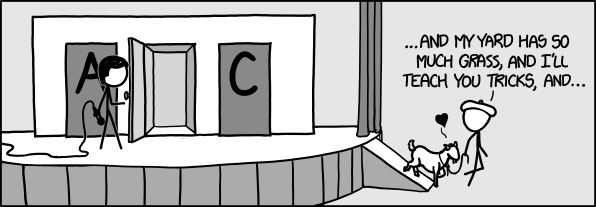
27 Oct 15:56
Is Nick Clegg looking at all-women shortlists for 2020?
by Caron Lindsay
From today’s Independent:
Nick Clegg is planning to introduce all-women shortlists for the Liberal Democrats if not enough female candidates are selected in winnable seats in 2015.
The radical policy change, which will upset many activists who believe it would go against the party’s constitution, would be introduced in the next Parliament as many candidates have already been selected for the election in 18 months’ time.
Only 12 per cent of Lib Dem MPs are women, and there are none at all from ethnic minorities. Lib Dem sources said a number of “excellent” female and ethnic minority candidates have already been selected to replace outgoing Lib Dem MPs and in winnable seats for 2015. But if the female tally does not increase dramatically, all-women shortlists will be imposed for the 2020 election.
Let’s just look at this a bit more carefully. Even if this is Nick’s view, and there is no direct evidence in this story to suggest that it is, it is not within his gift just to impose it on the party. If we were ever to take such a move, it would be the party who would decide, not the leader. It would take some doing to persuade the two-thirds necessary to change the constitution if that were deemed necessary. Indeed, getting a simple majority would be challenge enough in a party which has been historically opposed to positive discrimination. Our most recent survey on the subject showed a large majority remain of that view.
I bear the scars of the zipping debate ahead of the 1999 Euro elections. I was very much in favour of it as a one-off measure to ensure that we sent a gender balanced team to Brussels. Others were furiously opposed. Gloom, doom, pestilence and the sky falling in were some of their more optimistic predictions if this were allowed to happen. The Scottish party was having none of it, although they selected Elspeth Attwooll without it. Of course, all that actually happened was that we sent a gender balanced team to Brussels.
Our record on gender balance in other parliaments is embarrassing. Currently we have 7 female MPs out of 57, 1 MSP out of 5 and 2 out of 5 AMs in Wales. This harms us and makes us look out of touch with the public. How can women have confidence that we understand their views and issues affecting them if our parliamentary parties have such an overwhelming majority of men?
For this coming election, the problem has been tackled by setting up the Leadership Programme aimed at giving intensive mentoring and training to candidates from under-represented groups. I am unconvinced that it’s the lack of training that’s the problem and if our gender balance does not improve in 2015, we will have to look at other alternatives.
It’s not comfortable to think that there may be sexism within our selection processes, but I have seen this at first hand. A selection where a male and female candidate had children of similar ages – which do you think was asked by members they visited about their childcare arrangements? These questions are not allowed at hustings, but female candidates regularly face them in private. I’ve even seen a female candidate whose children had left home quizzed on how she’d support her family.
Having said that, as Stephen summarised yesterday, we’ve seen female candidates selected in held seats and in our targets. Three women out of five have been selected in retiring MPs’ seats so far and there are two still to come. Of the 19 selections in our top targets, 6 of them have gone to women, 4 in seats which were held pre 2010.
If there is no significant improvement in women elected in 2015, we will need to have the debate. It would be better if we could conduct it in a calm, rational manner and work together as a party to find a solution to a significant problem. We could do with losing that casual assumption that everyone selected under the current system is the best candidate and that any women selected by an all-women shortlist are somehow not as good. That assumption says more about sexism within our ranks than anything else. While Labour’s experience of all women shortlists has been mixed, it has worked and they now have the best gender balance in the Commons.
In the meantime, can I suggest that if Nick is in favour of all women shortlists, he shows some clear intent if there are further places in the House of Lords up for grabs. He had an opportunity earlier this year to significantly improve the gender balance in the House of Lords and didn’t take it.
* Caron Lindsay is Co-Editor of Liberal Democrat Voice and blogs at Caron's Musings
26 Oct 13:32
Politician of the Year nominations
by Zoe O'Connell
In light of recent events, it would seem a good time for the trans* communities to try to recognise some of the work done to champion trans rights over the last few years.
The rules are simple. Nominations are open for any politician elected to public office, who people feel have made a positive difference to the lives of trans people, covering the whole period of the equal marriage consultation and subsequent legislation. Initially, nominations were to be restricted to allies only as otherwise it could end up being divisive, but after discussion on twitter nominations will be allowed for anyone. Unless someone else feels like coming out, this is a very short list.
Nominations will be open until 5pm on Friday, 1st November and can be made by commenting below, via twitter (@zoeimogen) or EMail (zoe@complicity.co.uk). Nominations may be anonymous – please indicate if this is the case – and you may nominate more than one person. “Trans” in this context is as people self-identify.
Shortly after nominations close, the final result will be decided by public vote. You can not vote yet.
Below is a list of the nominations as received so far.
 Baroness Barker Baroness BarkerOpenly lesbian, spoke in defence of trans rights during the passage of the Marriage (Same-Sex Couples) Bill through the House of Lords. |
 Hugh Bayley MP Hugh Bayley MPMember of Parliament for York Central |
 Cllr Sarah Brown Cllr Sarah Brown“The Cambridge Councillor is the only out transgender politician in Britain. Representing the Liberal Democrats for the Petersfield Ward, Brown has been made the Executive Councillor for Community Well-Being this year. A member of the LGBT and Liberal Democrats Executive, she is also an advocate for equal marriage.” – Independent on Sunday Pink List |
 Michael Cashman MEP “…who said “We have to start saying Trans before we say LGB” at Work Place Pride this year, particularly relevant in light of @pinknews awards” – @natachakennedy “Founder of Stonewall, an Honorary Associate of the National Secular Society and a Patron of The Food Chain, a London-based HIV charity.” – Wikipedia |
 Lynne Featherstone MP Member of Parliament for Hornsey and Wood Green, Former Parliamentary Under-Secretary for Equalities “The Lib Dem MP launched the consultation by the UK government on introducing equal marriage and was the first politician to take part in the Out4Marriage campaign.” – Independent on Sunday Pink List |
|
Mike Freer MP “Mike Freer, the Conservative MP for Margaret Thatcher’s old seat, Golders Green and East Finchley, made one of the more moving speeches in the debate. He said that he was proud of his civil partnership, but wanted to be married like other people: “Many argue that we should be content with our civil partnership – after all it affords all of the same legal protections as marriage – but I ask my married colleagues, did you get married for legal protections it afforded you?” He concluded: “I’m not asking for special treatment, I am simply asking for equal treatment.”” – Independent on Sunday Pink List |
|
Baroness Gould Chair of the Parliamentary Forum on Gender Identity. Spoke very effectively in defence of trans rights during the passage of the Marriage (Same-Sex Couples) Bill through the House of Lords. |
|
Kate Green MP Member of Parliament for Stretford and Urmston, Shadow Minister of State for Equalities |
 Julian Huppert MP Member of Parliament for Cambridge “Can’t remember any other politician speaking so forcefully on issues affecting T* people” – @annajayne “…for good work re marriage plus support shown to on-binary people” – @jennie_kermode “…for the non-binary stuff, but also for just general “getting” of the topic” – @loyaultemelie |
Caroline Lucas MP Member of Parliament for Brighton Pavilion |
Kerry McCarthy MP Member of Parliament for Bristol East, Shadow Foreign Office Minister |
25 Oct 12:43
Another LGBT+ awards controversy: Pink News and Baroness Stowell
by Zoe O'Connell
There does seem to be something about the LGb(t) community and awards, doesn’t there?
Pink News have played a blinder by giving their “parliamentarian of the year” award to Baroness Stowell. Yes, that’s the same Baroness Stowell that will cause hardened trans veterans of the same-sex marriage bill to wince when they hear her name, for it was her who gallantly defended the spousal veto as the bill passed through the House of Lords, shooting down every suggestion and compromise proposed on this and other trans-related topics.
It perhaps should not be too surprising that many people, both trans folk and allies, are somewhat miffed this morning at the news. At the time of writing, the only defence Pink News have put up is that it was an “independent panel of judges, although there would have been nothing to stop them shortlisting her in the first place…
@auntysarah jointly with @YvetteCooperMP. And picked by an independent panel of judges
— PinkNews (@pinknews) October 24, 2013
(The award was shared with Yvette Cooper, although it is not clear what in particular Yvette Cooper was singled out for an award when there were many people on all sides of the house who engaged far more above and beyond)
The trouble with these awards is that it is often a small panel, with perhaps one trans person on. Unless you’re very careful picking that person then they’re unlikely to have the breath of knowledge to avoid obvious (To us) SNAFUs such as this one. In this case, a non-politician from the trans community was asked to vote on the award and didn’t have the background knowledge (And would not have been expected to!) to brief others accordingly.
The fix is to ensure proper representation of trans folk within ostensibly LGBT+ organisations, for when the nominations are initially put together and on panels. Given how much more politically active out trans folk are compared to the wider out community, it is not sufficient to have just one trans person on a panel of ten. (Around one third of the elected LGBT+LibDems executive is non-cis – I don’t know the figures for other parties) Even if you base a panel on population numbers, remember the huge numbers of not-out, non-transitioning or pre-transition trans folk – up to 1% of the UK population, with a wide enough definition.
24 Oct 16:27

Everything you need to know about Obamacare’s problems
by Sarah Kliff
What is HealthCare.gov, and why do I keep hearing about it?
"HealthCare.gov" is shorthand for the digital architecture that the federal government built to power the Affordable Care Act. Part of that is, of course, HealthCare.gov itself, which Americans in 36 states can use to purchase their own health insurance plans.
These are the states in light and medium blue, below, that decided not to build their own marketplaces (the others have their own, separate Web sites).

That was, at least, how things were supposed to work. But ever since HealthCare.gov launched on Oct. 1, people have had lots of trouble signing up for coverage. And the problems go deeper than just the shopping Web site: The systems the Obama administration uses to calculate subsidies and communicate with insurers are also failing.
What exactly is broken?
It’s helpful to divide the problems into three categories: Getting in, getting eligible, and getting insurance.
The getting-in problems are the difficulties that consumers see when they try to log on and shop for insurance coverage. These are things like error messages, the Web site timing out or difficulty logging into an account. These problems make it difficult for an individual to buy coverage through the marketplace. They are the reason why some people have made upward of 20 attempts at purchasing a plan.
The eligibility problems strike when consumers send in their information and the government's computer systems tell them whether they're eligible for Medicaid, subsidies, or nothing at all. The system is returning incorrect data for some applicants, meaning they might be eligible for Medicaid and not know it, or they might think they have subsidies that will later be revoked.
The getting-insurance problems don’t show up for consumers but are rather seen by insurance companies. Health plans are supposed to get a report when someone uses HealthCare.gov to buy their health insurance policy. Some say that those reports contain inaccurate data, such as the wrong address, or are being sent in duplicate. One insurance company reported getting one of these reports, known as an “834 transmission,” that said one individual had three spouses.
Well was that individual a polygamist?
The Henricksons would have trouble signing up for Obamacare for other reasons. (Wikimedia)
Nope! The person in question actually had one spouse and two dependents.
It's problems like these that mean many insurance companies are now hand-checking each and every enrollment report.
That works fine when there are still front-end problems, and insurers are only getting a trickle of enrollments. What insurance companies worry about is if the front-end problems are fixed before those on the back-end problems, then they’ll have a whole flood of enrollment data -- and no idea if it's accurate.
Who built this thing?
Mostly federal contractors -- 55 of them were involved in the project, according to the Government Accountability Office. Two of the biggest contractors are CGI Federal -- more on them here -- and QSSI, which both do a lot of big government contract work. CGI was “in charge of knitting all the pieces together, making Quality Software Services's data hub work seamlessly with Development Seed's sleek user interface and Oracle's identity management software,” Lydia DePillis explained earlier on Wonkblog.
Or, to put it in the contractor’s own words, CGI Senior Vice President Cheryl Campbell said in September that her company was responsible for “designing an IT solution that is adaptable and modular to accommodate the implementation of additional functional requirements and services.”
QSSI, which is owned by the health insurer UnitedHealthCare, built the “federal data hub,” which is essentially responsible for ferrying data from different agencies (like the Internal Revenue Service and Homeland Security) to and from the insurance marketplace.
“Simply put, the Data Services Hub is a pipeline that transfers data – routing queries and responses between a given marketplace and various trusted data sources,” QSSI’s Andrew Slavitt wrote in prepared testimony for Thursday morning’s hearing.
Who should I blame for this going so wrong?
You have a few options to choose from right now. Some people have placed the blame at the federal contractors who did much of the work building the marketplace. This includes CGI Federal and QSSI, which did a lot of the work actually building the insurance marketplace.
The contractors, meanwhile, are pointing the finger back at the Centers for Medicare and Medicaid Services, the federal agency that was managing this project. This was the government department that was ultimately responsible for getting HealthCare.gov off the ground, and its staff paid for and oversaw the contractors’ work.
“CMS serves the important role of systems integrator or ‘quarterback’ on this project and is the ultimate responsible party for the end-to-end performance of the overall Federal Exchange," CGI’s Campbell wrote in prepared testimony for the Thursday hearing.
Some blame the White House, which told reporters right up until HealthCare.gov’s launch that it would be easy for people to enroll in health insurance plans. They seem to have been a bit blind-sided by how poorly HealthCare.gov’s launch went.
Last but not least, some might choose to blame Republicans for denying Health and Human Services’s request for additional funding to build the health insurance marketplaces. HHS officials claim this has left the agency a bit hamstrung, building a massive IT project on a budget that they did not see as sufficient.
How is this being fixed?
Health and Human Services has said it is bringing in the “best and the brightest” from across the country to fix the problems, what they’re calling a “tech surge.” Jeff Zients, who formerly served as the Obama administration’s Office of Management and Budget director, has come on to help manage the project. We know that some Presidential Innovation Fellows are also involved but, besides that, we haven’t learned a lot about who exactly the “best and the brightest" are.
The most specific document that the federal government has released, which still doesn’t get too far into the details, is this infographic on the health law’s problems -- and solutions under construction.

So, how worried should I be about all of this?
If you do not care if the health law works or want to use it to purchase health insurance, you probably don’t need to worry much at all. Watch this gif of an adorable wombat instead.

If you do care about the law working or plan to use it to purchase coverage, then it's fair to be moderately worried at this point. We’re just over three weeks into open enrollment, and it's still really difficult to purchase health insurance coverage through HealthCare.gov. We don’t quite know when that will change since the federal government has not given us a timeline for when the Web site will be fixed.
Is any of it getting better?
Yes. Load times to get into the site have dropped dramatically. Insurers say that the number of successful applications is rising, though the overall number is still extremely low. There are scattered reports that the system is doing a better job transmitting 834 data.
But overall, the system is still pretty broken. Most people can't complete an application, and the error rates are still at levels that would cause chaos if thousands or hundreds of thousands of people were able to purchase insurance.
That said, as Robert Laszewski, president of Health Policy and Strategy Associates, says, "fixing an IT system isn’t linear. You don’t fix 5 percent of the problem one day and 5 percent the next. You can make progress on the small, easy stuff quickly, but the big problems take a long time." The upside of that is that we might wake up one day soon and find that major problems were patched overnight. Or maybe not. No one really knows.
How long until I really freak out about all of this?
If HealthCare.gov does not work by Thanksgiving, most health policy experts and advocates think we have license to get pretty worried that the law will not work, at least in its first year. That’s because of a key deadline: Dec. 15. That is the very last day for shoppers to buy insurance coverage that starts on Jan. 1. Advocates think that, if the Web site isn’t up and running well by mid- to late-November, it will be difficult for shoppers to get through the shopping experience by that date.
I thought I’d heard open enrollment would last for six months? Something about going until March?
Yes, good point! Shoppers can still purchase coverage after Dec. 15, it just won’t take effect until later. A plan purchased in late December, for example, would take effect on Feb. 1.
Open enrollment ends on March 31, although there is one important date before then, and that is Feb. 15. That is the very last day that a shopper can dodge the individual mandate by purchasing a health insurance policy. The penalty kicks in after someone has gone uninsured after three months; buying a plan prior to Feb. 15 ensures coverage starting on March 1.
The White House has pointed the finger at overwhelming traffic. During its first 24 hours, HealthCare.gov got more traffic than Twitter did in its fist 24 months. Lots of people wanted to play around with the new Web site.
Since then, traffic has died down -- but some of the problems still persist. And technology experts think that the problems might have to do with the actual architecture of and coding of the Web site. It's a bit difficult to pinpoint the exact problems as an outsider, because much of HealthCare.gov’s code is closed, meaning that the general public cannot get a look at it.
Is the worst-case scenario that the law just takes some time to get off the ground?
Sadly, no. The White House has always been very explicit that the key to the law's success is signing up young and healthy individuals who'll keep average premiums low. But if signing up is very difficult, the only people likely to finish the process will be people who really need health insurance -- and those folks tend to be older, and sicker. That raises the possibility of an "adverse selection" problem in which too few young and healthy people sign up, which means average premiums rise, which means insurance is even less appealing to young people in year two, which means premiums rise further and so on.
Did the individual mandate get delayed?
Not exactly -- although the federal government tweaked it a bit so that nobody who buys coverage through the marketplace gets penalized for not carrying coverage.
Under federal regulations, anyone who has a gap in coverage of three months or longer has to pay a tax penalty. If you go without coverage for one month, the federal government gives you a pass. But if you are uncovered for at least one day in three separate months -- January, February and March, for example -- the federal government will fine you.
This created a bit of a weird misalignment: Someone who bought coverage in March, which wouldn’t take effect until April, would have purchased a plan during open enrollment but still pay the tax penalty for the three months spent uncovered.
The administration now says that anyone who purchases coverage during open enrollment will not face a tax penalty, giving people more time to purchase coverage.
What about states running their own marketplaces? Are they doing any better?
It depends a bit on the state. A few, like Kentucky and Connecticut, have been able to enroll people pretty seamlessly. They credit this to extensive testing prior to launch and realistic expectations. Connecticut, for example, scaled back its workload about a year ago, deciding to focus on getting the really important pieces of the marketplace ready to launch on day one.
Other states have...had some trouble. Hawaii’s Web site only launched last Tuesday, two weeks after it was meant to go live. Oregon has signed up lots of people for Medicaid -- but technical issues have prevented their exchange, Cover Oregon, from enrolling anyone into private insurance coverage.
Has anyone managed to sign up through HealthCare.gov?
Yes, there is a gentleman I spoke with named Norbert Crabtree, who lives in South Carolina and signed up for coverage last week (Yes, he is real. More on Crabtree here)
A number of health insurance plans have reported enrollments through the marketplace, although the numbers tend to be low, in the double or triple digits. That’s still a far cry from the 7 million people that the Congressional Budget Office expects to sign up -- but, we’re also still in the opening stages of the enrollment period. The White House never expected a wave of enrollment in October, mostly because the coverage doesn’t take effect until January.
24 Oct 14:58
Spook Century
by Charlie Stross
Gratuitous link of the day: SpyMeSat is an iOS app that lets you know which satellites are looking at you. (No, it probably doesn't have the Evolved Enhanced CRYSTAL or Zirconic spysats, but these days your typical Indian or South Korean earth resources satellite probably has peepers on a par with the NRO's Keyhole series—we've come a long way, baby!—and that's before we get into the private sector.)
But none of this should surprise anyone.
I've been reading up on spies and their whacky goings-on for a couple of decades; they're all a bit bonkers, in a truth-is-stranger-than-fiction way. In fact, the truth is vastly stranger than anything one can get away with in fiction. From the CIA feeding LSD to an elephant, or MI5 searching for evidence that Prime Minister Harold Wilson was a Soviet mole, Mossad mistaking a Moroccan waiter for a PLO terrorist mastermind (and murdering him), or the DGSE, convinced that Greenpeace were agents of an Anglosphere Conspiracy against le Francaise, sinking the Rainbow Warrior—they're all batshit crazy, so far up their own funhouse-mirror-lined reality tunnel that they can't see daylight. Except the Soviets, of course, who were merely paranoid (for the CIA, DGSE, MI5, Mossad et al really were out to get them). And they believed James Bond movie props were real, and told the Soviet industrial complex to make them some. (Which then didn't work, because James Bond movie gadgets are just film props. But I digress.)
Indeed, as I've noted elsewhere, the dividing line between technothriller and science fiction is more of a blurry grey fogbank than a sharp line. (And the most science-fictional aspect in my Laundry Files stories isn't the extradimensional alien horrors; it's the idea that a secret government intelligence agency could actually operate as efficiently, humanely, and competently as the Laundry.)
But I digress, again.
The surrealism of the intelligence community has been snowballing out of control since the end of the Cold War took away their 1914-1990 raison d'etre. Losing the cold war let the brakes off, as they went into full-blown panic mode looking for a new mission—and new techniques in pursuit of that mission. It coincided with Moore's Law and the explosion in computing power we've seen over the past few decades. Then the War On Terror came along; a brilliant excuse for pandering to every paranoid's fantasy and claiming a vastly increased budget, because nothing is more flexible than a war on an abstraction. And these things have a bureaucratic logic of their own.
So I am currently writing a trilogy. It's a 1000-page story, to be published in three volumes: it consists of books 7-9 in a certain series that started out as a portal fantasy (for contract reasons—a rogue no-compete clause stopped it being 'out' as SF from the start), but then pivoted into paratime technothriller around the end of book 3 with the revelation of a science-fictional rather than magical premise, taking it into much more Strossian territory.
Because I get bored easily, part of the mix for Merchant Princes: The Next Generation is a dead-pan near-future cold war satire on the security-panopticon surveillance regime we seem to have blundered into. (Try to picture an organization like the CIA, tasked with protecting the USA from every possible threat in every possible parallel universe, circa 2020. Now have a Candide-like protagonist tumble haplessly down the rabbit hole, to discover she's working for a cluelessly inept multi-billion dollar bureaucracy ...)
So picture me, rubbing my hands in glee and trying to extrapolate just how much worse the security/surveillance state could be, circa 2020, in a time-line where Washington DC was attacked with stolen nukes in 2003 by narcoterrorists from another parallel universe. And I think I've got a pretty good handle on how mad our Spook Century is going to be, until I run across stuff like the NSA bugging Angela Merkel's phone, or GCHQ bugging Belgacom, the main Belgian phone company, to snoop on the European Parliament.
And their code-name for the latter piece of work? "Operation Socialist". See! The Cold War legacy marches on!
Every time I think I've maxed out the satire and rotated the dial all the way up to 11, something from the Snowden leaks surfaces and the spooks make my worst paranoid tin-foil hat ravings and confabulated satire look ploddingly mundane.
I'm used to having this problem when writing near future SF—back in 2008-9 I kept having Halting State moments as bits of the background to that novel kept coming true—but right now, well, I'm just boggling. I've got a subplot for this trilogy (no spoilers!) which I think is up there with anything reality can throw at us and which is hopefully funny, plausible, and crazy (but in an "it just might be true" kind of way). Only now, I'm getting a sick feeling in my stomach. One month before publication, there's going to be a bombshell revelation and an ancient festering spyware secret will surface, blinking in the light of day like half-mummified groundhogs (Secret Squirrel need not apply!) and my satirical thriller will be obsolete.
As obsolete as Operation Acoustic Kitty.
Serafin.shane, Brian likes this
24 Oct 09:38
Dry Ice Bombs at LAX
by schneier
The news story about the guy who left dry ice bombs in restricted areas of LAX is really weird.
I can't get worked up over it, though. Dry ice bombs are a harmless prank. I set off a bunch of them when I was in college, although I used liquid nitrogen, because I was impatient -- and they're harmless. I know of someone who set a few off over the summer, just for fun. They do make a very satisfying boom.
Having them set off in a secure airport area doesn't illustrate any new vulnerabilities. We already know that trusted people can subvert security systems. So what?
I've done a bunch of press interviews on this. One radio announcer really didn't like my nonchalance. He really wanted me to complain about the lack of cameras at LAX, and was unhappy when I pointed out that we didn't need cameras to catch this guy.
I like my kicker quote in this article:
Various people, including former Los Angeles Police Chief William Bratton, have called LAX the No. 1 terrorist target on the West Coast. But while an Algerian man discovered with a bomb at the Canadian border in 1999 was sentenced to 37 years in prison in connection with a plot to cause damage at LAX, Schneier said that assessment by Bratton is probably not true."Where can you possibly get that data?" he said. "I don't think terrorists respond to opinion polls about how juicy targets are."