Tertiarymatt
Shared posts
18 Mar 08:36
Hope for threatened Tasmanian devils
TertiarymattAlso some good news here.
New research paves the way for the development of a vaccine for the Tasmanian devil, currently on the brink of extinction because of a contagious cancer.
firehose likes this
18 Mar 08:31
Extreme water in Earth's interior
TertiarymattSupercritical water is weird stuff. Also this article contains a good name for a melodic metal band: Diamond Anvil
Earth is the only known planet that holds water in massive quantities and in all three of the main phase states. But the earthly, omnipresent compound water has very unusual properties that become particularly evident when subjected to high pressure and high temperatures.
baron likes this
18 Mar 08:28
Bat disease: More accurate, sensitive DNA test allows early identification of fungus causing white nose syndrome
TertiarymattFinally, some good news on White Nose.
Scientists are identifying additional species of Geomyces and describing development of a highly sensitive DNA-based technique for early identification of Geomyces destructans on bats as well as in soils and on cave walls.
17 Mar 20:35
A winter bee?
by Rusty
It goes without saying that beekeepers are a weird lot. Still, it’s amazing to what lengths a human being will go to imitate the glorious honey bee. Right. So this morning I received these photos from Ivan in Wisconsin. Ivan has been hanging around Honey Bee Suite long enough for me to recognize both his [...]
firehose likes this
17 Mar 18:35
Sex at zero gravity: Changes in gravity affect the reproductive process in plants
Tertiarymatt#larryniven
Researchers found that changes in gravity affect the reproductive process in plants. Gravity modulates traffic on the intracellular “highways” that ensure the growth and functionality of the male reproductive organ in plants, the pollen tube.
Tertiarymatt likes this
17 Mar 09:19
Scientists produce cloned embryos of extinct frog
Tertiarymatt#jurassicpark
As part of a "Lazarus Project" to try to bring the Australian gastric-brooding frog back from extinction scientists have succeeded in producing early stage cloned embryos containing the DNA of the frog, which died out 30 year ago. Gastric-brooding frogs were unique in incubating their young in their stomachs.
17 Mar 09:16
Jupiter's icy moon: Window into Europa's ocean lies right at the surface
TertiarymattOne of these days I'll finish my story about schizophrenic astronaut with a computer in his head who goes to Europa.
If you could lick the surface of Jupiter's icy moon Europa, you would actually be sampling a bit of the ocean beneath, according to astronomers. Astronomers have found the strongest evidence yet that salty water from the vast liquid ocean beneath Europa's frozen exterior actually makes its way to the surface.
17 Mar 09:11
Comet PANSTARRS rises to the occasion mid-March
TertiarymattThis article contains big nerdery. But Imma find me this comet.
Comets visible to the naked eye are a rare delicacy in the celestial smorgasbord of objects in the nighttime sky. Scientists estimate that the opportunity to see one of these icy dirtballs advertising their cosmic presence so brilliantly they can be seen without the aid of a telescope or binoculars happens only once every five to 10 years. That said, there may be two naked-eye comets available for your viewing pleasure this year.
firehose likes this
17 Mar 09:04
Rewriting history of Universe's stellar baby boom: Ancient, highly active galaxies discovered
TertiarymattOr, you know, maybe the standard cosmological model is deeply flawed.
New observations show that the most vigorous bursts of star birth in the cosmos took place much earlier than previously thought.
17 Mar 05:49

ACLU Looks into Militarization Trend in Police Depts
by Tim Lynch
TertiarymattCops != Tactical Operators
From Huffington Post:
The American Civil Liberties Union (ACLU) has launched a nationwide campaign to assess police militarization in the United States. Starting Wednesday, ACLU affiliates in 23 states are sending open records requests to hundreds of state and local police agencies requesting information about their SWAT teams, such as how often and for what reasons they’re deployed, what types of weapons they use, how often citizens are injured during SWAT raids, and how they’re funded. More affiliates may join the effort in the coming weeks.
Additionally, the affiliates will ask for information about drones, GPS tracking devices, how much military equipment the police agencies have obtained through programs run through the Pentagon and the Department of Homeland Security, and how often and for what purpose state National Guards are participating in enforcement of drug laws.
“We’ve known for a while now that American neighborhoods are increasingly being policed by cops armed with the weapons and tactics of war,” said Kara Dansky, senior counsel at the ACLU’s Center for Justice, which is coordinating the investigation. “The aim of this investigation is to find out just how pervasive this is, and to what extent federal funding is incentivizing this trend.”
For additional background, check out Radley Balko’s study, Overkill, which is found on the right margin of our home page.
ACLU Looks into Militarization Trend in Police Depts is a post from PoliceMisconduct.net
16 Mar 21:57


Winbloks: Pre-Cast Modular Concrete Window Frames
TertiarymattWould build with.

Winblok is a South African construction innovation by inventor Al Stratford, former president of the South African Institute of Architects. Intended to be used in buildings constructed with masonry, it's essentially a modular, pre-cast concrete window frame that negates the need for sills, reveals and the like; you just brick right up against it (and over it) and you're done. A reveal on one edge is fitted for a window, and the architect specs out which way the Winbloks face, providing options for having the window flush with the inside wall or the outside wall. A variety of different window styles are designed to fit within the system, as well as louvres and burglar bars.
Winbloks are made in different heights for reasons of passive solar management. By cross-referencing the latitude of the building site, the architect can choose the appropriately-sized Winblok to create a "solar cut-off angle," blocking direct sunlight while allowing in the ambient light. This is to lower cooling costs and obviate the need for additional shades and overhangs.

I'm not sure why these haven't gained much traction outside of South Africa; any practicing architects want to chime in? While it's designed for masonry construction and not, say, the dimension lumber platform-frame construction prevalent in much of the U.S., there's plenty of places that use masonry construction in the American Southwest, so I'd imagine I'd have heard of this system before. Because it definitely isn't new—Stratford used it to build his own house shortly after prototyping it, and that was back in 1980. Winblok hit the marketplace in 1985, and today Stratford's company, Wintec Innovation, is still a successful venture.
(more...) |
 |
Cooper Griggs likes this
16 Mar 21:46


Urban Design Solutions for Protecting Pedestrians: Sweden's Self-De-Icing Tullhus Bridge Takes the Cake
Tertiarymatt#nordshare

In the quest to protect pedestrians from those mainstays of morning radio, Traffic and Weather, urban planners worldwide use a host of design solutions.
Tokyo likes elevated walkways at crossings, since pedestrians twenty feet off the ground cannot get hit by cars (assuming the Japanese government maintains their General Lee ban).

Minneapolis has an elevated Skyway system of footbridges, allowing building-to-building jaunts that avoid the brutal cold.

Snowy Montreal does the same with their "underground city" network of tunnels.

|
|
Cooper Griggs, baron likes this
16 Mar 21:40


Core77's Hand-Eye Supply presents the IXL British Army Knife
TertiarymattWould carry.

At Hand-Eye Supply we love a good pocket knife, and we're always looking out for another one that will tickle our fancy. It's definitely a bonus when it has a compelling story to it as well.
Historically, Sheffield has been the center of Steel and Cutlery in the UK for more than 700 years—in fact, the term 'Cutler' was first used on Sheffield tax return in 1297. The IXL British Army Knife has its roots in the 19th-Century military knives that had evolved from 'workman' knives that were used by coachman and tradesmen.
The marlin spike featured on these knives was an invaluable tool for the mariners who would use them to tie specialized functional knots for nautical purposes.
The rounded-off tip of the blade also reflects the mariner history, albeit a slightly grimmer side of it. This can also be seen in the Anchor knife we carry at Hand-Eye Supply. Sea conditions were often terse with many of the sailors being indentured, 'Shanghai'd' or enslaved. A stab wound was almost certainly a death sentence at sea. The rounded blade prevented stabbings.
The tin opener showed up in the late 1800s, allowing soldiers in the field to open their canned food rations.
During WWI and WWII, Joseph Rodgers was the primary manufacturer of these knives, but the torch is now carried on by Egginton group, originally Egginton Bros. Ltd., formed in 1872, who have sought to preserve the once ailing Sheffield cutlery industry.

The British Army Knife offers a 2.25-inch sheepsfoot blade, can opener, forged marlin spike, and built-in flathead screwdriver. At four inches long and a slim quarter inch wide, it is very pocket-friendly but not misplaceably small.
$44.00 at Core77's Hand-Eye Supply store
More images after the jump...
(more...) |
|
16 Mar 21:34
Chuck Cowdery: The best kept secrets in bourbon
by John Hansell
TertiarymattI like my rye, so I'll need to find some OGD.
Yes, I know. I’m overdue for a blog post. I’m just back from vacation and diving head first into putting together the next issue of Whisky Advocate magazine.
To keep you entertained in the interim, I’d like to draw your attention to a great blog post by Whisky Advocate contributor Chuck Cowdery. Good bourbon isn’t expensive, nor is it hard to find. I agree with every one of his recommendations. Have a look.
Nicely done, Chuck. It’s a valuable resource for anyone looking for a nice, versatile bourbon at a fair price.
firehose likes this
16 Mar 21:31
Bumble bee loss threatens food security
by Ken Branson-Rutgers
TertiarymattKILLING BEES

RUTGERS (US) — Wild pollinators are just as important, and often more efficient, at pollinating crops than domestic honey bee colonies, but bumble bee colonies are vanishing.
“This will be a surprise to the agricultural establishment,” says Rachael Winfree, professor of ecology, evolution, and natural resources in Rutgers’ School of Environmental and Biological Sciences, who was involved in the two new studies.
16 Mar 21:30
Human anti-microbe protein added to goat milk
by Pat Bailey-UC Davis
TertiarymattHuman in gene in goat milk helps pigs.
You heard it here first, kids.

UC DAVIS (US) — Goat milk with extra lysozyme, an antimicrobial protein found in human breast milk, helps young pigs recover from diarrhea faster.
The findings, published in PLOS ONE, offer hope that such milk may eventually help prevent human diarrheal diseases that each year claim the lives of 1.8 million children around the world and impair the physical and mental development of millions more.
Rosalind likes this
16 Mar 21:20
Dust mites show evolution in reverse
by Jim Erickson-Michigan
TertiarymattI want to punch the author of this article a little bit.

U. MICHIGAN (US) — A genetic study of tiny dust mites appears to offer evidence supporting the controversial idea of reversible evolution.
The hypothesis that evolution is unidirectional and irreversible—not reversible—is known as Dollo’s law. The concept is a topic of heated debate among biologists.
16 Mar 21:15
Tiny particles packed with bee venom kill HIV
by Julia Evangelou Strait-WUSTL
TertiarymattKILLER BEES

WASHINGTON U. – ST. LOUIS (US) — Researchers are a step closer to developing a vaginal gel to prevent the spread of HIV.
A team at Washington University School of Medicine in St. Louis used nanoparticles carrying a toxin found in bee venom to destroy HIV without harming nearby cells.
Rosalind likes this
16 Mar 21:14
Roller derby rivals mix team microbiomes
by Jim Barlow-Oregon
TertiarymattDerby Stank is contagious.

U. OREGON (US) — When roller derby players slam into each other, the opposing teams mingle their distinct bacterial communities.
Human skin is home to countless microorganisms that we can’t see, but these microbes help to define who we are. These invisible passengers—known as the skin microbiome—contribute to health in such ways as educating the immune system, protecting people from pathogens, and mediating skin disorders.
In a new study, University of Oregon researchers investigated how the skin microbiome is transmitted between players in a contact sport, using roller derby as their model system.
baron likes this
16 Mar 17:37
This time I used macro lenses to get more angles and a better depth of field. In combination with microscopy footage, I believe, it works well. With the set of techniques I could show a more natural habitat, the kind of environment in which the invertebrates actually live. It's no longer flat, and the animals swim freely in water, interact, and sometimes get eaten alive.
I made most of the filming in September, but was hoping to license the material to the wildlife movie studio that approached me. While things didn't work as planned, I got a lovely videography experience, and sold some short sequences to another studio for a project that is not announced yet. I am hoping to get some fresh material soon. This time I'm filming on an island on the Great Barrier Reef, and with plenty of cool tricks that I want to try. Besides, there's a lot of room for improving my skills.
Cameras used: Canon EOS 7D and Sony NEX-7. Microscope: Zeiss Axioscope A1. Macro lens: mp-e 65 mm. Plus many additional tools.
A lot of thanks to the friend who helped me to collect the material, build the equipment, maintain the animals alive, and generally keep me positive about the filming.
Hope you enjoy it!
My new video: The hidden life in pond water
by Starshade
TertiarymattThis makes me wish Ye Olde Laptop could handle hi-def playback.
It finally happened! I am publishing my second video about microscopic inhabitants of ponds. Also available on youtube. In this video you will see the invisible world from a perspective of a water flea. Mayfly nymphs, ostracodes, water mites, ciliates, and, of course, hydras make an appearance. Don't forget to turn on HD!
This time I used macro lenses to get more angles and a better depth of field. In combination with microscopy footage, I believe, it works well. With the set of techniques I could show a more natural habitat, the kind of environment in which the invertebrates actually live. It's no longer flat, and the animals swim freely in water, interact, and sometimes get eaten alive.
I made most of the filming in September, but was hoping to license the material to the wildlife movie studio that approached me. While things didn't work as planned, I got a lovely videography experience, and sold some short sequences to another studio for a project that is not announced yet. I am hoping to get some fresh material soon. This time I'm filming on an island on the Great Barrier Reef, and with plenty of cool tricks that I want to try. Besides, there's a lot of room for improving my skills.
Cameras used: Canon EOS 7D and Sony NEX-7. Microscope: Zeiss Axioscope A1. Macro lens: mp-e 65 mm. Plus many additional tools.
A lot of thanks to the friend who helped me to collect the material, build the equipment, maintain the animals alive, and generally keep me positive about the filming.
Hope you enjoy it!
baron and -1 others like this

12 Mar 17:09

Marcel Kuijsten. Reflections on the Dawn of Consciousness: Julian Jaynes's Bicameral Mind Theory Revisited. Julian Jaynes Society, January 2007.


There Is Only Awe
by n+1 magazine
TertiarymattThe bicameral mind is a wild, probably untestable hypothesis tethered to European tradition and history, and almost certainly false for a wide variety of reasons. But it is fascinating.
by Rachel Aviv
Marcel Kuijsten. Reflections on the Dawn of Consciousness: Julian Jaynes's Bicameral Mind Theory Revisited. Julian Jaynes Society, January 2007.
Julian Jaynes, a psychologist at Princeton, had little patience for his colleagues, who spent hours in the lab doing “petty, petty humdrum things.” He dismissed their “objective aridity,” “cunning lingo,” and “valiant nonsense.” The field of psychology, he wrote, was little more than “bad poetry disguised as science.”
Jaynes published only one book, in 1976, The Origin of Consciousness in the Breakdown of the Bicameral Mind, which tells the story of how mankind learned to think. Critics described it as a bizarre and reckless masterpiece—the American Journal of Psychiatry called Jaynes “as startling as Freud in the Interpretation of Dreams.” Drawing on evidence from neurology, archaeology, art history, theology, and Greek poetry, Jaynes captured the experience of modern consciousness—“a whole kingdom where each of us reigns reclusively alone, questioning what we will, commanding what we can”—as sensitively and tragically as any great novelist.
Jaynes knew that he would be punished for “hustling into territories jealously guarded by myriad aggressive specialists.” Although his book anticipated theories in linguistics, neuroscience, and philosophy, he has been more or less eliminated from the history of ideas. The first book on Jaynes’s life and work is long overdue; it was published by the Julian Jaynes Society, a cultish group of scholars and enthusiasts. The society’s founder, Marcel Kuijsten, who has a degree in business, has filled two volumes with nearly all Jaynes’s interviews and papers—on dreams, hallucinations, poetry, animal cognition, and cave paintings. The first volume, called Reflections on the Dawn of Consciousness, opens with a biography of Jaynes, written by William Woodward, a historian of science, and June Tower, Jaynes’s old neighbor. Narrated in a spare, humorless tone, the biography describes Jaynes as a psychological prophet who oriented his life around a single question. He felt almost afflicted by his need for a scientific theory for consciousness, a narrative that would allow all the mysteries of the world to “shiveringly fall into accurate and wonderful place.”
Born the son of a Unitarian minister in Newton, Massachusetts, Jaynes was mystified by his own capacity for inwardness, a nagging stream of desires, worries, invented futures, and humiliations. He attributed the inspiration for Origins to an episode of “darkest distress” when he was lying on his couch, despairing over the question of “how we can know anything at all”: “Suddenly, out of an absolute quiet, there came a firm, distinct loud voice from my upper right which said, ‘Include the knower in the known!’ It lugged me to my feet absurdly exclaiming, ‘Hello?’”
As a doctoral student at Yale, Jaynes produced highly regarded papers on animal learning, but he became increasingly frustrated by the principles of behaviorism, the reigning school of psychology at the time, which took a mechanistic view of the human mind and the scientist’s role in observing it. Jaynes mocked himself for running paramecia and protozoa through mazes, “all on the naive assumption that I was chronicling the grand evolution of consciousness. Ridiculous!” He moved up in the animal kingdom, studying learning in worms, fish, rats, chicks, and cats, before finally realizing that he had fallen prey to a “huge historical neurosis.” He concluded that consciousness had no location in the brain. Instead, it was a function of language.
Jaynes began inspecting the world’s earliest literature for the first signs of human consciousness. “I started off like in a detective story,” he told a reporter for the Princeton radio station. As he moved backward through the centuries, he saw that consciousness, as he had defined it, disappeared somewhere between the Odyssey and the Iliad. Odysseus is a modern hero, introspective and deceptive. In the Iliad, the writing of which scholars date some three hundred years earlier, the characters are passive and mentally inert. They have no concept of a private mental space. The word “psyche” referred only to actual substances in the body, breath, and blood, which leave the warrior’s body as soon as he dies. The gods, emerging from mists or clouds or the sea, handle the warrior’s decisions. When Achilles accuses Agamemnon of stealing his mistress, Agamemnon insists he had no agency. “Not I was the cause of this act, but Zeus,” he explains. “So what could I do? Gods always have their way."
Critics have interpreted the meddling presence of the god as poetic devices, but Jaynes accused translators of imputing a modern mentality to people with subjectivities foreign to us. “The gods were in no sense ‘figments of the imagination,’” he wrote. “They were man’s volition. They occupied his nervous system, probably his right hemisphere.” Jaynes drew on research with patients with severed corpora callossa, the band of fibers that separates the two hemispheres of the brain, which showed that the two chambers can function independently, without conscious awareness of information processed in the other half. Jaynes proposed that the Trojan War was fought by men with a kind of split brain, a “bicameral mind.” In moments of stress, the left hemisphere, “slave-like,” perceived hallucinated voices in the right hemisphere—the god hemisphere—as direct commands.
By roughly 1,000 B.C., earthquakes and overpopulation in the Mediterranean led to mass migrations, which caused an unprecedented degree of social upheaval, according to Jaynes’s speculation. The gods, who had provided guidance by transforming habit and intuition into speech, fell silent in the face of novel dilemmas. They retreated to the sky, where they gave ambiguous signs of their watchful presence. Humans were left alone, groping for answers. They still heard a voice, but they knew it was their own: they silently narrated their days, weighing options, imagining what others would think, making sudden pronouncements that they immediately doubted. Jaynes describes the muting of the gods as an excruciating loss from which we still have not recovered. “The mighty themes of the religions of the world are here sounded for the first time,” he writes. “Why have the gods left us? Like friends who depart from us, they must be offended. Our misfortunes are our punishments for our offenses. We go down on our knees, begging to be forgiven.”
+ + +Consciousness is impossible to describe, except through metaphor and analogy, but behavior became more predictable once people could refer to each other’s conscious minds as a collection of knowable parts. Each metaphor succeeded the previous one as a theory of human behavior. In the 1600s, consciousness was like a clock, in perpetual and regular motion. Two hundred years later, when chemistry was the fashionable science, consciousness was a compound structure that could be broken down into its elements—individual sensations and thoughts. By the industrial era, when Freud was beginning to develop his theories of mind, consciousness functioned like a steam engine: when emotional pressure and strain became too great, secret underground forces were recklessly released.
Jaynes didn’t live to see the computer become the dominant metaphor for consciousness, but he was one of the first to recognize that the brain was capable of a radical kind of plasticity. “There is no such thing as a complete consciousness,” he writes. “All about us lie the remnants of our recent bicameral past.” He attributes one of the most mysterious mental phenomena—the sense that ideas come to us unbidden, from some external location—to the fact that our brains were once inhabited by gods. Artists in particular tend to describe their work in bicameral terms. They seem to be bragging when they describe writing as a form of listening: they hear a voice, almost audible, and then take dictation. It happens in moments of inspiration, late at night, when the writer is all alone.
Origin likely would have fared better had it been presented as literary provocation rather than scientific fact. But Jaynes saw his book as a work of science, and so it was critiqued, deconstructed, and made nearly irrelevant because the theories were impossible to test. Marcel Kuijsten, who describes his first encounter with Origin as a near religious experience, has devoted the past fifteen years to collecting the scraps of Jayne’s oeuvre, reaching out to Jaynes’s friends, colleagues, and students—anyone who might have one of Jaynes’s notebooks. But the new material, with its inevitable redundancies, dilutes the persuasive power and manic spirit of the original theory. One can see why Jaynes was unable to muster a second book. His theory was too total. He couldn’t let it go: he followed its logic past ancient Greece to modern poetry, hypnotism, schizophrenia, dreams, and ultimately science, where he let it implode. In the last chapter of Origin, he presents science as yet another attempt by humans, still grieving the loss of the gods, to establish contact with a “lost ocean of authority.”
Science offers a rational splendor that explains everything, a charismatic leader or succession of leaders who are highly visible and beyond criticism, a series of canonical texts which are somehow outside the usual arena of scientific criticism, certain gestures of ideas and rituals of interpretation, and a requirement of total commitment. In return the adherent receives what the religions had once given him more universally: a world view, a hierarchy of importances, and an auguring place where he may find out what to do and think, in short, a total explanation of man. And this totality is obtained not by actually explaining everything, but by an encasement of its activity, a severe and absolute restriction of attention, such that everything that is not explained is not in view.
The final chapter of Origin reads like a sermon, ecstatic and mournful. Jaynes describes human history as a story of substitutes, a search for “an eternal firmness of principle out there.” At the end, Jaynes abruptly concludes that his book, too, is a product of historical circumstances, another stage in the quest for authorization. “All of this,” he writes, referring to his theory, “is a part of this transitional period after the breakdown of the bicameral mind. And this essay is no exception.”
Critics have praised Origin for accounting for the role of religion in shaping consciousness—Richard Dawkins wrote that it is “either complete rubbish or a work of consummate genius, nothing in between!”—but thirty years after its publication, the book feels most relevant as a critique of science. In a 1970 essay, “The Study of the History of Psychology,” Jaynes criticizes psychologists for repeatedly asking the same questions, formulating them in increasingly obscure ways, while ignoring the long history in which these questions have already been studied. They fail to grasp that there is “a kind of truth in the history of a science which transcends the science itself,” Jaynes writes.
Jaynes recognized that the narrative he had created was itself a product of the features of mind it described: “consciousness is constantly fitting things into a story, putting a before and after around any event.” Throughout the book, he exposes his own intellectual process, detailing each “shimmering flash” of an epiphany as well as his mental limitations. (To understand the experience of having a bicameral mind, he crushes laurel leaves and smokes them only to find himself feeling “more and more Jaynesean, alas, then Apollonian.”) He wanted to revive the “disappearing idea that a psychologist enters his profession almost like a religious order, making himself a part of his own subject matter, and baring his soul.’”
Jaynes acknowledged in Origin that the book was just a “rough-hewn beginning, which I hope to develop in a future work.” He planned to call it The Consequences of Consciousness. He alluded to this forthcoming sequel so frequently that even after his death, in 1997, fans were still convinced that there was a secret manuscript. But Jaynes became increasingly concerned that he didn’t have enough material for the second book. Perhaps the voice he had been hearing had grown quiet. It didn’t help that he had become an alcoholic. He held the same job, never gaining tenure, for the rest of his career. He lived alone in a single room on Princeton’s campus, a bachelor all his life. He gave lectures around the country but complained that there was “something wearing about them, as if I should have to try to interest anyone.”
Jaynes felt that people had not read his book carefully enough, particularly the reviewers. Over the years, he simplified rather than expanded his theory. In some lectures and interviews in Kuijsten’s collection, Jaynes seems almost apologetic about his early boldness. In 1988, when Life asked Jaynes and several other thinkers to comment on the meaning of life, he responded that he had no answer. “Words have meaning, not life or persons or the universe itself,” he said. “Our search for certainty rests in our attempts at understanding the history of all individual selves and all civilizations. Beyond that, there is only awe.”
If you like this article, please consider a subscription to the print magazine. Issue 16 is now at the printer. Subscribe now to get it as soon as it returns.
baron and -1 others like this
11 Mar 07:29
Genetics as political ideology
by Jonathan Marks
TertiarymattI can't say I entirely agree with the premise here.
I just finished writing a brief essay for the journal Sociology, for a retrospective on an important book, Dot Nelkin and
Susan Lindee’s (1995) The DNA Mystique: The Gene as Cultural Icon. It
actually had a major intellectual impact on me, when I reviewed it for the American Journal of Physical Anthropology
in 1995.
 |
| Susan Lindee in 1999 with me and my Caipirinha |
Nelkin
and Lindee’s book was a wonderful cultural analysis that showed how embedded
scientific discourses about heredity are in cultural or folk discourses about
heredity. And those cultural discourses
are invariably political. After all,
ancestry only came to be important in the first place because of the need to divide great-grandpa’s stuff among his heirs.
They show that these are political discourses about hierarchy, worth,
and inequality, and scientific claims are easily framed to be hung in the
gallery of pseudo-scientific justifications for hereditary aristocracies.
By
implication, then, the only way to understand claims about human genetics is to
understand that they are never value-neutral, and are invariably politically
valent. This means that scientists ought
to be just as accountable to justify the deducible political implications of
their work as they are to justify the data collection and statistics. Nelkin and Lindee stop short of saying this,
but I think it as the only way to make sense of the situation.
It has
seemed to me for a longtime that the most horrible question that geneticists
can ask themselves is not ”Did I do the right statistical test?” but a far darker
question, the question that goes “Gee, what is it about me that the Nazis like
so much?”
In other
words, at some point, since this science is so politicized, the scientist can’t afford to be naive about its bio-political nature. You see science, and especially human
biology, is particularly suitable to be used by people with, for the sake of
argument, evil intentions – by which I mean increasing the amount of misery in
the world, reinforcing social, political, and economic inequalities, causing harm without benefit. That science should not be done. It violates the basic charter that we, the
civilized people of the world, made with Francis Bacon in the earth 17th
century. “Your project sounds good, for
it promises to improve our lives.” But
science that makes people’s lives worse? "Let’s pass on that."
For all
intents and purposes, that charter was reinforced with the development of
bioethics in the late 20th century.
That is to say, we are all for the progress of science, but when science
butts up against human rights, human rights wins, hands down. We needed to codify that point, because for most of
the 20th century, the scientific question of “What can I do?” was
often difficult to differentiate from the moral and practical question “What
can I get away with?”
I think
what often gets lost, and perhaps even deliberately obscured, is the political
stakes involved in naturalizing human cultural history. People have been asking about the sources of large
scale social inequality for around 10,000 years; that is to say, since the
beginning of large-scale social inequality.
The Bible isn’t very helpful here.
Is says God favors some kings, and curses other kings, but doesn’t
actually say why there are kings at all.
Most of the time, it just takes kings for granted, except for one passage
in First Samuel, Chapter 8, in which the
Tribe asks the judge for a king, and the judge tries to talk them out of it, by
explaining why kings suck. But
otherwise, hereditary monarchies are taken to be part of the natural way of
things.
By the
19th century, as the long-standing hereditary aristocracies were
being threatened by democracy and new wealth, there were two opposing
theories for the origin of those hereditary
aristocracies. Why aren’t you king? Well, accident of birth; you’d be a good
king, you just unluckily came from ancestors who had been historically victims of economic and political injustices. Here
you explain the observation of social inequality by the inference of historical
injustice. The solution is to work for
social justice. Science has no
role; we haven’t even mentioned science.
Second
theory: Civilization depends on the aristocratic classes. They have founded every civilization everywhere,
which eventually collapsed when their blood was diluted. They are thus constitutionally better than
the lower and upwardly-mobile classes, and to get rid of them would foretell the
doom of civilization. Here the same
observation (social inequality) is not caused by injustice, but by the facts of
natural difference. All we need to do is
to identify the nature of those gifts.
Here social justice is not desirable, for the very need for it is denied;
and science may have a role, in convincing us that the secret to aristocratic
success is in the shape of their head, or the number of answers they can get
right on a standardized test, or their DNA sequence.
That’s the
back story. That’s why Nelkin and Lindee
saw the gene as a bio-political element, a “cultural icon” back in 1995. The point is that we now know about “genetic
essentialism” – also Nelkin and Lindee’s phrase – as an outmoded ideology, and
with a history of bad political baggage, to boot. Can we not reject it on that basis, as one
rejects creationism in science?
I think
scientists ought to be expected to articulate and explain the politics in their
research, and not be permitted to pretend that their work is value neutral, and that
ethics, morals, values, and politics is somebody else’s problem.
Here are my guidelines for reviewers of papers in human
behavioral genetics and evolutionary psychology:
Does the paper adequately assess its possible political implications?
What stand does the paper take on those political implications?
After all, in any inter-disciplinary research, you can't pay attention to only one of the relevant intellectual domains. All you’d have to do is broaden the “Conflicts of Interest”
statement to include political conflicts of interests, which, if you’re submitting
a paper that has political implications, might be a reasonable expectation. I can imagine that had they answered the
questions, there would be far less uncritical derivative citations of Derek
Freeman’s attack on Margaret Mead, Richard Jantz’s attack on Franz Boas, and Ralph Holloway’s scurrilous attack on Stephen Jay Gould. Sure, the lunatics would still cite them, but
they’d be self-identified, and uncredible in the community of scholars.
This is
political and has always been. The
people who are the most political tend to be the ones claiming self-consciously
to be the most scientific, and tend to be the ones whose science stands up the worst.
That's another reason to study history. It’s time to stop allowing people to
pretend that this science isn’t political, and claiming the higher scientific ground
for their thinly cloaked politicized science; they are entitled only to the lower scholarly ground and the lower
moral ground. That’s is not where
science belongs.
Rosalind likes this
09 Mar 05:41


Unthinkable
by n+1 magazine
TertiarymattThe history of Haiti makes me sad, for what might have been.
by Pooja Bhatia
Image: Image copyright (c) 2010 by Logan Abassi
Laurent Dubois. Haiti: The Aftershocks of History. Metropolitan Books, January 2012.Once upon a time but really not so long ago, Haiti was the Pearl of the Antilles, the best investment opportunity in the world. The scrap of island was claimed by the French, who called it Saint-Domingue, and it produced half the world’s coffee, as well as more sugar than Jamaica, Cuba, and Brazil combined. The bounty changed European palates, predictably, and European politics, unpredictably. As profits from Saint-Domingue swelled the vaults in port cities like Nantes and Bordeaux, the bourgeoisie got restless. As their economic power increased, so did their political aspirations, and Republicanism gained purchase. When the French National Assembly convened in 1789, some 15 percent of its members owned plantations in Saint-Domingue, and many more had profited through its trade.
The revolutionary ideals of the Declaration of the Rights of Man and Citizen did not accord with colonial labor practices, to put it mildly; even by the era’s standards, the version of slavery implemented in Saint-Domingue was extreme. From the distance of a couple of centuries, we can see how the contradiction was resolved: The million people sent from Africa to Saint-Domingue in the eighteenth century were not considered men or women, let alone citizens, but capital expenditures, to be acquired, traded, branded, and replaced. Slaves depreciated at rates suggestive of genocide, and Haitian planters constantly imported more, calculating that it was cheaper to import new slaves than to keep existing ones alive.
The contradiction between revolutionary ideals and plantation practices provided an opening for Haiti’s own revolution, a 13-year-long war for human emancipation that began in 1791. Its success was improbable. Yet the island’s soldiers--dispossessed of kin networks, community, and a longstanding connection to the land—threw back Napoleon’s own army and emancipated themselves. They ushered into being the first black republic, in 1804, and the second republic in the hemisphere, after the United States. Haiti became a postcolonial state well before European colonial empires reached their zeniths. More than a century after Haitian independence, the concept was still too avant-garde for the American secretary of state, William Jennings Bryan. “Think of it,” he said, “niggers speaking French!”
In its time and for a long time after, the Haitian Revolution was “unthinkable,” in the description of the late Haitian scholar Michel-Rolph Trouillot—for how could a system predicated on the non-humanness of blacks acknowledge their agency, let alone their strategic acumen or statesmanship? Outside Haiti, the revolution remained unthinkable for decades even after Secretary of State Bryan’s quip, at least until 1960s African nationalists found inspiration in C.L.R. James’ classic, The Black Jacobins, one of the first major outside accounts of the revolution.
By now the Haitian revolution is thinkable. At Haiti-focused gatherings of foreign-aid donors—the same nations that once colonized dark places—the revolution is invoked as testament to an inherent Haitian spirit, or as evidence that Haiti will rise again. It is as though Haiti’s moment of birth were its last triumph. At the same time, historians inside and outside Haiti have shown the revolution to be more complicated than Marxists or propagandists would acknowledge. Among them is Duke historian Laurent Dubois, whose Avengers of the New World (2004) conveyed the shifting alliances and sometimes opaque ideology that fueled it.
Haiti, however, remains obscure. The usual epithets—failed state, broken state, “Poorest Country in the Western Hemisphere”—tend to constrain vision, and often even to limit the desire to understand. The strangest things are still written about Haiti, as Dubois points out in his terrific book, Haiti: The Aftershocks of History. In the book’s introduction, Dubois relates how, two days after the earthquake that struck Haiti in January 2010, the New York Times columnist David Brooks blamed the breadth of its destruction on Haiti’s “complex web of progress-resistant forces,” which he alleged to include Vodou, child-rearing practices, and the inability of Haitians to take responsibility. Like much outside writing on Haiti, Brooks’ column revealed more about its author’s bête noire than about its subject. Brooks wasn’t an exception. For more than two centuries, foreigners have demonstrated that the less one knows about Haiti, the easier it is to project one’s ideas, fantasies, and fears onto it.
Here, Dubois’ Aftershocks, which traces Haiti’s history from the revolution to the present day, is useful. Its intention is to demystify Haiti and historicize its troubles. Like his earlier work Avengers, it’s a narrative history, told through characters navigating larger economic, political, and intellectual forces. Among the most significant of these forces, Dubois contends, was the hostility that Haiti faced immediately after the revolution. It translated into a debt that looked very similar to blackmail, which crippled Haiti and its leaders for years to come. The story is not one-sided, as many Haitian leaders and a large part of its elite found ways to benefit at the expense of the nation. Still, reading it, one concludes that Haiti never won its real independence.
+ + +The major achievement of Aftershocks is to spin out the threads—the chains, really—that connect the revolution with the present day. Haiti’s revolution made it the world’s pariah, a status that constrained the choices of its early leaders. Afraid of the very real possibility of reinvasion, they stockpiled munitions and built an impressive array of forts, but Haiti remained threatened by its former colonial master. Eventually, Haitian leaders resorted to buying Haiti’s independence—on credit. They saddled the fledgling nation with an indemnity meant to compensate French planters for their losses, the most valuable portion of which were their slaves. The indemnity set off a cycle of debt that has haunted the nation its entire life. It also set a template for Haiti’s pattern of ostensible sovereignty combined with economic subjugation.
Haiti was effectively driven to penury for achievement of the most basic human right. But the idea of the indemnity came from one of Haiti’s own leaders: the wealthy, nearly white-skinned Alexandre Pétion, who presided over the south of Haiti from 1806 to 1818. Dubois surmises that Pétion may have sympathized with the French planters rather than the formerly enslaved workers, but underscores the difficulty of the new republic’s geopolitical situation. Nine years after the revolution, France still thought of Haiti as Saint-Domingue, its colony. Pétion proposed the indemnity to a French envoy, Dubois suggests, because he believed that official recognition would end Haiti’s political and economic vulnerability by appeasing its former colonizer and opening up the French market to Haiti’s exports.
In contrast, Pétion’s rival, Henri Christophe, received the French envoy with arrest, search, and seizure. Dark-skinned Christophe claimed the north of Haiti, and was a fascinating figure: a former slave who called himself an Emperor and seemed to think of himself as a ruthless, visionary, and beneficent dictator. What he wanted most of all was Haiti’s acceptance in the community of nations. When his search of the French envoy uncovered documents that revealed France’s plans to recolonize Haiti and re-enslave its dark-skinned majority, Christophe executed him, and published the secret documents. Their publication prompted a chastened Pétion to disavow the indemnity idea.
In an outraged letter to the French government, Christophe wrote:
Is it conceivable that Haitians who have escaped torture and massacre at the hands of these men, Haitians who have conquered their own country by the force of their arms and at the cost of their blood, that these same free Haitians should now purchase their property and persons once again with money paid to their former oppressors?
Is it conceivable, Chrisophe had asked, that human beings should have to buy their freedom so many times over, with so many types of currency? It was a serious question that pointed to a fundamental schism: Were Haitians commodities or they were people? Christophe never got a reply. His goodwill ambassador to Europe, the British abolitionist Thomas Clarkson, reported that he had found it “impossible to deliver the message.” By receiving the letter, Clarkson explained, the French cabinet “would be acknowledging the independence of Hayti at the very outset,” which it refused to do.
After Christophe’s death in 1820 and the subsequent reunification of Haiti under Jean-Pierre Boyer, France revived the indemnity-for-recognition offer, but this time, it backed up its envoy with a squadron of warships. The warships went unused, for France had a more amenable leader to deal with than Christophe. In some ways, Boyer resembled Pétion—elitist, light-skinned, and more trusting of the French than he should have been—though he didn’t care as much about the wellbeing of the citizenry as either Pétion or Christophe had. (“To sow education is to sow revolution,” Boyer is believed to have said.) Boyer buckled easily, almost sympathetically to the French. “Without the counterbalancing presence of someone like Christophe,” Dubois writes, “Boyer in a way represented just what French officials and writers had for years hoped to find in Haiti: a pliant and cooperative elite, ready to work with France to create a new form of external control.”
And so, in 1825, Boyer agreed to the indemnity: 150 million gold francs, in exchange for France’s recognition of Haiti’s independence. Having spent so much on weapons and fortifications, Haiti couldn’t afford to pay the indemnity outright. France simultaneously offered to finance a loan for the entire amount of the indemnity that would allow Haiti to pay it in installments. The terms were usurious: 20 percent of the principal just to loan the money, and a six percent annual rate. Although the original indemnity was gradually negotiated downward to the equivalent of $21 billion in today’s money--a sum about three times the value of Haiti’s 2011 GDP--and paid off in the 1880s, it crippled Haiti for a long time to come. In 1874, the Haitian government took out another loan from France to cover the costs of its indemnity payments. The commissions on this loan were so hefty that the government needed yet another loan just to cover them. Within a few years, the debt nearly tripled, and French bankers set up the Banque Nationale d’Haiti to manage it. By the turn of the century, loan payments ate up half the state budget, and by the 1913-1914 budget year, two-thirds.
Haitian officials were assiduous about servicing the foreign debt, Dubois notes: “In fact, they were so committed to paying off their loans that they found themselves with little money to do anything else.” They may have lacked the will, too. Like Boyer, who remained in power 35 years, many Haitian leaders believed that empowering the poor would jeopardize their hold on power. Moreover, debt could be personally lucrative. Loan processing became “a kind of racket,” Dubois writes, with bankers rushing to offer high-interest loans to Haiti, often making the government officials who signed them wealthy in the process. The only benefits provided by the Banque Nationale d’Haiti “ultimately accrued to a very small segment of the population with government connections,” Dubois notes, and “the [Haitian] state, always a fruitful prize, became an even greater one.”
“Being Haiti, it turned out, was costly,” Dubois writes. The costs of being Haiti were borne by those who could least afford them—initially, the peasants who grew the coffee and cut the sugarcane that were the country’s main exports. Just as the racist foreign powers prodded Haiti toward instability and failure, the Haitian state and commercial class treated the poor majority as resources to work and exploit. Early rulers believed that Haiti needed an export-oriented, plantation economy to survive, and attempted to impose consolidated land ownership and oppressive labor practices. Even after the Haitian peasantry refused to participate in a plantation economy, preferring to farm their own plots instead, economic repression continued. Though the mechanisms varied through the years—debt schemes, regressive taxation at customs houses, and, later, state-owned enterprises—elite exploitation of the poor majority became a mainstay of Haiti’s political economy.
+ + +With its dubious finances and proximity to the United States, Haiti was easy prey during the decades of American foreign expansion in the late nineteenth and early twentieth centuries. Two American banks bought a majority stake in the Banque Nationale d’Haiti in 1909, at the urging of the State Department. By the 1913-14 budget year, two-thirds of the Haitian state budget was being used to pay off loans. Despite Haiti’s history of on-time repayment, the Americans claimed nervousness about their assets and in 1914, a detachment of U.S. Marines disembarked in the Bay of Port-au-Prince. In one of Aftershocks’ more indelible images, the Marines “proceeded to carry out what can only be described as an international armed robbery.” Straight into the vaults of the Banque (over which, Dubois notes, an American flag already flew), the Marines gathered the government gold reserves and loaded it onto their gunboat.
The ostensible reason for the ensuing 19-year American occupation was to stabilize Haiti and to protect American assets there, but these motives were intertwined with military interests and corporate expansion. Haiti had a strategic location in the Caribbean, ample coastline, and excellent harbors for American warships—all priorities in the lead-up to World War I—as well as its American-controlled railroad, agribusiness corporations, and national bank. In 1915, the United States installed the Haitian senator Phillippe Dartinguenave as president—their second choice, as the first candidate the Americans solicited “refused to become a figurehead” of the occupation. Dartinguenave was more pliable. Once in office, he orchestrated a dummy referendum to revoke the long-held ban on foreign ownership of property. The result of the referendum, in 1918, was 98,294 votes oui to 769 non.
Many previous American accounts of the occupation depict it as a benign, road-building and order-installing affair. In contrast, Dubois emphasizes the occupation’s racism and brutality, especially its attempt to suppress dissent, rout out a peasant uprising, and eliminate civil liberties. Aftershocks’ 100 pages on the American occupation rely heavily on the work of Haitian historian Roger Gaillard, who in the 1980s interviewed elderly occupation survivors. Their testimonies included descriptions of aerial bombardment, forced labor, mass expropriation, summary execution, religious repression, and abuse, as well as widespread coercive sex and lynching. Their memories, Dubois writes, “might have been refracted” through the more recent terror of Duvalierism; even Gaillard sometimes found himself incredulous at the gruesomeness of his subjects’ accounts. But their stories were echoed by Marines themselves, both in the swashbuckling, exoticizing books they published (which still inform tropes about Vodou, zombies, and Haitian sexuality), as well as in military reports and a 1922 US Senate inquiry. What we now recognize as excesses and abuses, the Marines reported with confidence, assured in the righteousness of their mission.
The occupation ended in 1934, but its effects lingered. A 1922 loan issued by the US would stymie the efforts to institute progressive programs and policies for decades. Moreover, by “pacifying” the rebellious peasants, suppressing dissent, expropriating land, and opening Haiti up to foreign corporate interests, the occupation paved the way for the rise of dictator Francois Duvalier in 1957. Supported by the United States as an anti-communist ally, Duvalier warned that “all popular movements will be repressed with utmost vigor.” In an edict that banned groups as innocuous as the Boy Scouts, he wrote “the repression will be total, inflexible, and inexorable.” And it was.
Papa Doc’s violence targeted potential threats to the regime, especially the elite, but because it aimed at terror, it was also random. Foreign observers tended to glom onto the grotesque personality Duvalier cultivated—in search, perhaps, of an “exotic buffoon” or “incoherent madman,”—but it was impossible not to notice Haiti’s economic decline. “Duvalier has performed an economic miracle,” one Haitian told a US journalist. “He has taught us to live without money and eat without food.”
On the eve of Papa Doc’s death in 1971, he installed his 19-year-old son, Jean-Claude as Haitian president-for-life. The terror abated somewhat, but the younger Duvalier developed more sophisticated systems for fleecing the country he governed, and pocketed an estimated $300 to $600 million. When the United States finally withdrew its support for the Duvalier family in 1986, the younger Duvalier headed for the French Riviera with his wife and children. He was 34.
+ + +Even taking into account the grotesquerie of Papa Doc’s regime, Aftershocks makes a strong case that Haiti’s current problems are rooted in history and structure. What makes Aftershocks an engaging read is Dubois’ attention to character. Accounts from Haiti’s poor are, probably unavoidably, refracted through those who could read, write, and publish—that is to say, the Haitian elite and foreigners. But Dubois is ever alert to the ways Haiti’s story has been told, used, massaged, appropriated and created by the literate.
Dubois spends a lot of time on Haitian intellectuals. They are a romantic and tragic lot, and Aftershocks sometimes feels like a compendium of Cassandras, martyrs, and exiled patriots dying alone. Among my favorites is Jacques Roumain, the Marxist man of letters whose novel Masters of the Dew channeled the travails and revolutionary potential of the peasantry. It’s a dreamy novel, mad with hope. During the anti-communist purges of the 1930s, Roumain was exiled and imprisoned repeatedly; he died at 37 of weariness, before his masterpiece saw publication or translation by his friend Langston Hughes.
Another of Aftershocks’ compelling figures is the late-nineteenth century lawyer and statesman Anténor Firmin. Dubois lets us imagine Firmin fuming at a meeting of the Anthropological Society of Paris, then under the thrall of racial essentialism, and respond with a critique, The Equality of the Human Races, that presaged Boaz’s by a generation. Firmin returned to Haiti and tried to build a democratic movement, but he failed. Amid political upheaval, he fled to St. Thomas. From there, he sounded repeated warnings to his countrymen about the US invasion he foresaw, urging unity and national cohesion. He found solace in his conviction that any attempt to take over Haiti would fail, because of its revolutionary spirit. “We will resist still,” Firmin wrote in 1905, “the elderly showing the young how beautiful it is to bury oneself in the ruins of the nation rather than to survive its ruin.”
+ + +Dubois addresses the last quarter century of Haiti’s history briefly, in a 10-page epilogue, but the historical trends that Aftershocks describes—the preference by foreigners for pliant leaders, the pattern of Haiti’s formal sovereignty but persistent economic subjection—provide a vital perspective through which to view more recent events.
In particular, the story of Jean-Bertrand Aristide, the socialist priest who shed the cassock to run for office in 1990, is a stark illustration of the structural trends Dubois describes. Aristide’s election was a watershed. He was the first president of Haiti with democratic legitimacy—two thirds of the 90 percent who turned out for his election voted for him, largely because he promised to return the state apparatus to the people. After less than a year in office, Aristide was ousted in a military coup, seemingly with support from the CIA. He was restored to power by the United States in 1994 only after agreeing to structural adjustments, such as the removal of tariffs on subsidized foreign rice. “When Aristide attempted to resist,” Dubois notes, in one of his few mentions of the former president, “he found himself facing the threat of withheld aid and loans. With the government in tremendous debt, he also had difficulty financing state projects that might have improved the lives of the population.”
Dubois does not mention the similar duress Aristide faced in his aborted second term (2001-4). At the time, the United States and other countries withheld aid to force a controversial, though not very consequential, political decision. Aristide’s second term also ended in a coup, or forced removal by the US (or “kidnapping,” as Aristide himself has called it). The circumstances remain mysterious, and, as Dubois writes, the dispute over the facts and debate swirling around Aristide’s character is “intense and often hyperbolic.” Still, what happened to Aristide is important for what it might tell us about the future of the Haitian state and the possibilities for substantive democracy. Is the failure of Haiti’s most vaunted democratic administration the fault of a flawed leader, or is it a deeper, structural problem?
The other main feature of Haiti’s last 25 years has been the growing presence of the international aid industry. The discourse of development, which prevails in Haiti, is pointedly ahistorical. It takes the present as a starting point and looks forward, sometimes blithely, measuring progress and GDP growth. Development discourse does not look back, but it should.
Foreign aid is not as obviously coercive or violent as the US Marine occupation. Its stated intentions are altruistic. Still, Haiti’s aid apparatus is very powerful, capable of serious harm, and mostly unaccountable to Haitians. It takes on the functions of a state—it allocates resources, sets policy priorities, and shares the state’s monopoly on legitimate violence—but Haitians are not its citizens. Rather, they are “beneficiaries” with few, if any, rights before it.
In Haiti, the authority of aid most visibly manifests in a UN peacekeeping force of between 8,000 and 10,000 troops. Troops have been in the country since 2004, ostensibly to stabilize the country in the wake of Aristide’s departure. Unlike most countries that host peacekeepers, Haiti is not a post-conflict country; the peacekeepers’ annually renewed mandate stopped referencing Aristide long ago. To many Haitians, it is not clear what the peacekeepers do except intimidate Haitians, visit the beaches, and hire prostitutes. In addition, scientists have traced an epidemic of cholera, which has killed more than 8,000 Haitians over the past two and a half years to inadequate sanitation at a peacekeeping base.
Last fall, a group of international lawyers in Haiti assembled thousands of complaints against the UN peacekeeping force for cholera-related damages, alleging gross negligence and demanding a hearing and reparations. Because there is no established mechanism for Haitians to challenge the United Nations—indeed, it is difficult for most Haitians to get through the door of the UN Logbase—the lawyers were unable to determine where to deposit their complaints. Eventually, they filed with the Secretary General and the UN’s Office of Legal Counsel. Last month, after brooding over the complaint for more than a year, the UN issued a terse refusal to respond to them. I thought of the suit as I read Dubois’s account of the efforts of the British abolitionist Henry Clarkson to deliver Christophe’s protests to the French government. Clarkson discovered that in the eyes of the French, Haiti did not exist. It had no standing. It was unthinkable.
09 Mar 05:10


Drone and Robot Advances Becoming Downright Creepy
TertiarymattOh, BigDog, you only get creepier and more capable as the years go by.

I understand that robots and drones are going to play a big role in our future lives, but why are the more advanced ones always so creepy?
A Swiss outfit known as the Laboratory of Intelligent Systems, or LIS, has created a drone that can map and navigate unknown spaces. In theory, this could be quite useful for, say, taking stock of the interior of a collapsed structure. The AirBurr, as it's called, flies around the space crashing into things, like a fly or mosquito, and then uses those collisions to mark where the obstructions are:
(Is it just me, or does that narrator need to clear his throat for the entire video?)
Not to be outdone in the freak factor department, robo-overlords Boston Dynamics have tricked out their BigDog robot so that the thing can now hurl cinderblocks, presumably as a means of expressing rage:
It will get worse before it gets better. Gizmag is reporting that Italian Institute of Technology researchers are toying with the idea of a quadripedal robot kitted out with a pair of arms to provide a measure of manual dexterity. I'm interpreting that to mean they are creating a robot centaur, which I just don't think is a good idea. Let's look at a non-robotic centaur:

Now picture him made out of metal and imbued with powerful emotions, and ask yourself, do you want to fight that thing? Yeah, I didn't think so.
Hit the jump to see more of what's in store for our futures.
(more...) |
|
Rosalind likes this
08 Mar 08:46
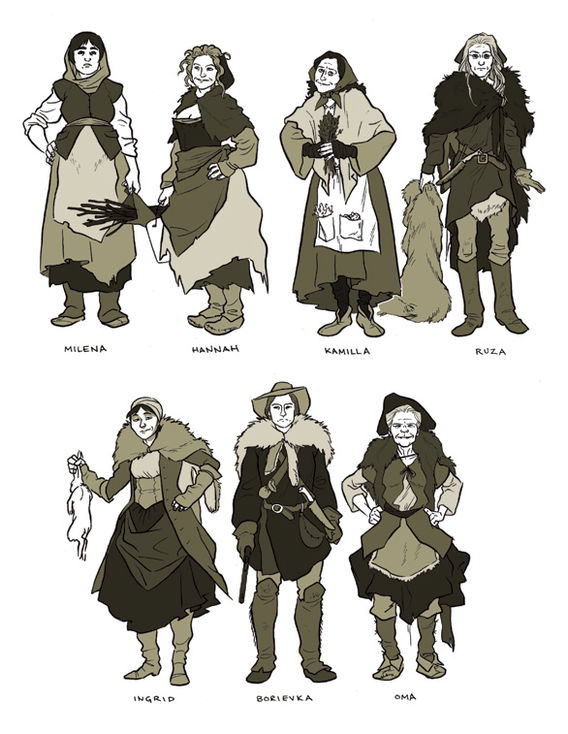
Women Of The Family
by Dylan
TertiarymattAre you reading Family Man? It's getting really weird now.
Tertiarymatt and -1 others like this
07 Mar 03:17


Art in Chongqing
by n+1 magazine
Tertiarymatt"Chongqing is today the fastest growing city in the world, with an area the size of Kansas and a population of 32.6 million—nearly equal to the entire population of Canada"
Madness.
by Audrea Lim
Image: Tuya Street. Photograph by Triplefivechina via flickr.
In Chongqing, the world's largest city, which sprawls over a sharp bend in the Yangtze River, is a neighborhood surrounded by green hills called Huangjueping. The road through it is broad and rarely crammed, though cars and buses trickle through. It seems like an urban China from another time. The streets are placid and lined with trees. Everyone strolls with a deliberate, unhurried pace—save the "stickmen," scraggly day laborers who have places to get to. Old ladies walk hand-in-hand, gossiping like teenagers.
But part of the neighborhood looks like Futurama. On its main stretch, Tuya Street, ten-story apartment blocks with shops and eateries on the ground floor have been painted over with cartoon aliens. A three-eyed monster towers over a pharmacy, its mouth full of fangs. A monkey-man in muscle shirt squints down at hipster art students spilling into the road from the side of a building. Another is dotted with black-rimmed, menacing blobs. Down the street, a Lisa Frank-style unicorn poses, five stories tall, amid rainbows and clouds.
"Tuya" means "graffiti" in Chinese—the name is recent—and this street, three-quarters of a mile long, may be the longest stretch of public art in the world. It's also a government-sanctioned "art district," centered around the Sichuan Fine Arts Institute, which was established in 1940. Huangjueping has been a natural gathering place for Chongqing's artists ever since, and thanks to its remoteness from Beijing, it has a reputation for producing artists independent of the art establishment.
Today, tile mosaics reminiscent of Gaudi's Park Guell adorn a nearby commercial arcade, and red industrial piping has been repurposed for benches along the road. Until 2003, this street was unpaved and half its present width, and water pipes and sewage drains had not yet been installed. Seeking to drum up tourism and show itself as a green, friendly place before hosting the 2005 Asia Pacific City Summit, the city of Chongqing spent 115 million RMB to renovate all building facades—but only the facades—along the main roads in the central core.
It was in this atmosphere that the Institute declared the neighborhood an "art district," and the Vice Dean of the Institute's Animation Department, Zhou Zongkai dreamed up Tuya Street. Initiating the project in 2006, he secured 25 million RMB in government funding to cover the project in its entirety. He then hired his own animation company, CMay, to design the facades, and 800 workers—many of them students at the Institute—to carry them out. The project was done in six months.
"It's terrible!" pronounced Xin Haizhou, an artist and teacher at the Institute who has lived in the neighborhood for three decades. The word he used for "terrible"— zaogao— is the one my mother used to describe my own insolence when I was 16. "Whoever heard of a street called 'Graffiti Street'?"
Another of our table-mates in the neighborhood restaurant where we sat cried out, "That stuff is not art!"
"No artists were involved!"
"And the art school students hired to carry out the designs were nothing but underpaid manual laborers!"
"Think what it's like to walk down that street in the summer, when it's 42 degrees Celsius!"
"Rents are rising so fast that everyone is going to have to move somewhere else soon," said another bespectacled artist.
Xin lived in Huangjeping during the '80s, in the early days of liberalization and market reform. Back then it was full of cheap, low-density housing, and China's contemporary art scene was just emerging after the Cultural Revolution. The houses leaked, lacked heat and proper plumbing, and often smelled. But even after graduating from the Institute, Xin chose to stay in the neighborhood, since he and his friends—who were devoted to personal exploration, individual expression, and living outside the confines of the traditional family—were shunned everywhere else. Cast out of society, the artists lived and worked together, shared their materials and books, and entertained themselves in their rooms with booze, cigarettes, and music.
The houses have been replaced by apartment blocks, and Xin's paintings sell for tens of thousands of dollars on the international market. He splits his time between Chongqing and Beijing (the New York of Chinese art, complete with promises of big sales, impenetrable cliques, and unsustainable living costs).
"Now, even the power station will probably be torn down within the year," he said. The station is visible from everywhere in the neighborhood, thanks to the smoke pouring continuously from its stack.
I pointed out that the smoke was filthy.
Xin shrugged. The neighborhood people used to shower in the heated refuse water from the plant. Otherwise hot water had to be heated over a fire. People went there to clean up after work, and like a bathhouse, the plant became a gathering place at night.
"We lose a landmark," he said. "You have to realize that this is not a straightforward place. It's full of contradictions."
At the edge of Tuya Street, where a slope suddenly appears, one last cluster of the old houses remains, though surely not for long. They are in terrible shape—their tin roofs patched with tarps held in place by rocks, their windows sealed with plastic, their walls no more than propped up wooden boards. The people living in these houses are workers in the nearby factories and warehouses, which manufacture construction materials. Stone steps wind between them all, and residents have cultivated the grass to the side, cutting little square dirt patches into the slope and fencing them in. Where will the residents go when these houses are gone?
+ + +Chongqing is best known today as the site of the Bo Xilai scandal, which came to a head in March 2012 and has been described as monumental enough to rival the events at Tiananmen in 1989. The city is more than just this. A remote town of 200,000 in the 1930s, when it was the provisional capital of Chiang Kai-Shek's Nationalist government, Chongqing is today the fastest growing city in the world, with an area the size of Kansas and a population of 32.6 million—nearly equal to the entire population of Canada. Slated to become China's inland hub as part of China's "go west" policy, which seeks to shift economic development from the saturated coastal regions to the rural western interior, Chongqing has been undergoing development and swallowing up surrounding countryside at a breakneck speed. Its GDP has grown from 175 billion RMB in 2001, to 789.4 billion RMB in 2010: 450 percent in under a decade. Electronics producers have been setting up shop here in spades, including Nokia, Foxxconn and HP, taking advantage of labor costs that are 30 percent cheaper than Guangzhou and Shenzhen. Officials predict that the city will soon be the world's top manufacturer of laptop computers.
Chongqingers who go away for a few years return unable to recognize their surroundings. The only people who ever seem to know with certainty where everything is, amid the concrete shells of new buildings that appear overnight, are the police officers who patrol every space from stations resembling tiki huts.
This is what happens when a city seeks to re-engineer itself from the top. Chongqing had been an area of loose policy experimentation ever since migrations from the Three Gorges Dam placed extraordinary pressure on its infrastructure. But it was the announcement of the "Chongqing Experiment" by the Chinese State Council in 2007 (the same year Bo Xilai arrived as local party chief) that suggested these loose policies were becoming codified, and thereby the object of intense state scrutiny. The Experiment, an attempt to integrate urban and rural development, was meant to solve the puzzle of how China would continue its miracle growth once industrial development collided with the need to maintain a minimum amount of cultivated land to guarantee the country's food supply. Chongqing still consists of mostly rural hinterland, with roughly two-thirds of its population registered as peasants. But in October 2012, 9.2 million of those residents were migrant workers, with 5 million of them choosing to stay in Chongqing, and those figures will continue to increase as farmers migrate to the cities in search of jobs and security.
The Experiment encouraged rural-to-urban migration, but aimed to concentrate the population more tightly in the urban core, to make more efficient use of space. A land exchange market, similar in logic to carbon trading, was meant to ensure that urban development only occurred when rural residential plots were converted back to cultivated agricultural land. Peasants who sold their lots through the market were permitted to start a decent life in the city if they so chose.
To house these migrant workers, 40 million square meters of subsidized public housing were also planned—enough for approximately 2.4 million people, with the eventual goal of housing 30 to 40 percent of all urban residents. And where hukou (household registration) status used to stick to migrants for life, the Experiment would include hukou reform on an unprecedented scale, to grant migrants new status as urbanites, providing them with access to education, health care, pensions, and social services, as well as greater rights.
These provisions were meant to relieve some of the pressures that large-scale migration has caused. Decades of uneven, urban-focused development resulted in dire poverty and a lack of opportunities in the countryside, driving 230 million Chinese to migrate in search of work in 2010. The Experiment aimed to remake the city to be more inclusive of the peasants and working class, and by the end of 2012 it had achieved many impressive feats: 3.6 million peasants have transferred their household registration since 2010, and 1.6 billion yuan have been distributed to 38,000 households through the land exchange system.
But the Experiment also left many glaring inequities in place. Under the Experiment, private development in the urban core continued apace, with the laws of the free market governing real estate costs while developers, who bought land-use rights from the local government, wound up colluding with officials. The land exchange market is reportedly rife with mismanagement. Many peasants still await compensation, and the shoddily constructed public-housing units are often located in inaccessible neighborhoods. Then there were the forced evictions—a side effect of mass redevelopment. From 1994 to 2004, 20 million square meters of Chongqing were demolished, which resulted in the displacement of 259,000 families. The trend will only rise as the number of construction projects balloons. Despite its achievements in providing more affordable housing and increasing access to social services—which may be viewed as radical in the radically unegalitarian China of today—the Experiment also failed many of those its was meant to serve, thanks to another central trait of the Party: corruption.
These inequities do not stem from the model itself, but from the paradoxical fact that the model was underplanned. However egalitarian the policies themselves, their implementation has ultimately relied upon the good intentions of officials and developers, who are held accountable to the city's residents only rarely. The assumption underlying the model is that state planning protects markets; but in the absence of effective measures to prevent corruption and hold officials accountable, the free markets the system was designed to protect were eventually overwhelmed by powerful private interests. Liberty in even the narrow economic sense was unprotected. In no case was this more obvious than in the art market, where creative liberties and market liberties are meant to coincide.
+ + +Over the next few days in Chongqing, I noticed that every artist I spoke to referred to 2005 as the year everything changed. 2005 was the year the government became interested in art. But that interest didn't spring from the void: 2005 was the year that the volume of trade at Beijing's premier auction house increased by two-and-a-half times. This is widely seen as the beginning of the first Chinese art boom, which had been fueled largely by global speculation in a previously undervalued market. A year later, in 2006, Institute alumnus Zhang Xiaogang's painting "Tiananmen Square" was auctioned for over $2 million—then a record-breaking price for Chinese art. Tuya Street was born the same year.
At the annual Central Committee plenum in October 2011, CCP leaders announced their intentions to make China a cultural world leader, citing Mao's command to "let a hundred flowers bloom and a hundred schools of thought contend." "A nation cannot stand among great powers," declared the front page of the official CCP newspaper People's Daily on the day of the plenum, "without its people's spiritual affluence and the nation's full expression of its creativity."
This could have been counted good news, but there were contradictions. Ironically, China's first art boom has also been linked to the Chinese government's restraints on real estate prices—an attempt to cool off an overheated market—which diverted speculative investments to the art market. In Chongqing, this then led to government investment in art and the neighborhood of Huangjueping, which has driven up local real estate costs.
This is what Ni Kun and I discussed as we huddled over a rickety wooden table, sipping tea. Ni Kun is in his mid-thirties, and wears black plastic-rimmed glasses, warm-up pants with black loafers, and a goatee. It was a weekday, mid-afternoon, and hundreds of retired men and women had gathered in this Tuya Street tea house, as they do each day, to pass the time with mahjong and cards.
Ni Kun is the curator and director of Organhaus, the only not-for-profit art space in Chongqing. Today its offices and gallery are located inside the 501 Artspace—a former cigarette factory, and one of two main art complexes on Tuya Street that are independent of the Institute. I had gone to visit their gallery space the day before, where a group exhibition entitled "Box:New" was on display, with boxes of different shapes, contents and sizes scattered carefully across the floor. Each artist had been asked to fill a box, and their choices had included a live chicken, a static TV, and a banana penis, among other things. ("It's partially a statement about individual expression within a government-enforced conformity and anonymity," one of the artists explained to me.) I counted three "penises," compared with only one box of sashimi to represent the female counterpart.
Before Organhaus was in 501, it was located in the Tank Lofts, which are on-campus studios converted from a tank warehouse in 2005. That was right after the Institute had discovered that art could actually be lucrative, and decided to make the neighborhood an official art district and invest in artist spaces. Drawn by the Tank Lofts' subsidized rents, one of Organhaus' forebears, Ni Kun's creation "Haus," moved out from its initial home, a rundown building filled with other artist studios and performance spaces, into the Institute's lofts, becoming one of their first tenants.
Haus had always specialized in avant-garde art, with a particular interest in installations—Ni Kun had started it with friends in 2001 after graduating from the Sichuan Academy and finding nowhere for young experimental artists to exhibit—but it took a full year for the school to realize that Haus would not produce the kind of art that sells. At the same time, Ni Kun and the artists of Haus discovered that cheap rent came with non-negotiable obligations, like participating in government-run exhibitions unrelated to their work. So a largely amicable breakup ensued, and Haus moved out, once again becoming the first tenants in a new art complex—the 501 Artspace—where it merged with another space called "Organ," to become "Organhaus." Since that time, rent in 501 has doubled.
"The government's interest in Huangjueping is in the value of the land and properties," Ni Kun said. "You think the government cares about art?"
"Did you see the field just across the street?" he continued, referring to a vacant park-like space across the street. He mentioned that there used to be many houses there; they were very run-down, and the government had demolished them a few years ago to create some "green space."
"Where did the residents of those houses go?" I asked.
Ni Kun answered vaguely: "Somewhere else."
Later, I was told that many residents are simply left without homes. Most receive a modest compensation, though not enough to acquire new homes, while a lucky few receive replacement apartments—though like the public housing units, most are located in neighborhoods on the city's periphery.
Perhaps there is an uneasy consolation to be taken from the fact that peripheries will not remain peripheries for long in this bewildering city, where neighborhoods can become unrecognizable within months. One thing that has protected Huangjueping so far is its remoteness. It is still a twenty- or thirty-minute bus ride from the central shopping area of Yangjiaping, and the road winds through quiet streets, seen so rarely now in Western media portrayals of China. But once the subway and light rail system is complete (it started limited operations in 2005 and will eventually consist of eighteen lines), Huangjueping will be easily, comfortably accessible to Chongqing's main commercial and business centers, likely for under 5 RMB.
The paradox is that the Sichuan Fine Arts Institute, the raison d'etre of Tuya Street, has already grown so big that it can no longer be contained. As of 2005, the school's primary campus has been located in the newly constructed "University City" (alongside campuses for Chongqing University and Chongqing Normal University) over an hour away. One morning, I rode the bus through rush-hour traffic to the new campus. We passed desolate fields and sped through a white tunnel long enough to feel like Tron. That is when I realized that the person who had described it to me as "out in the middle of nowhere" was not being hyperbolic. Once the light rail system is complete, it will be the last stop on line No. 2.
Once I arrived, I understood why it's actually a very nice thing for the campus to be remote. The hills are neatly manicured, dotted with interesting sculptures and landscape art. One ceramic sculpture represented a beastly human on all fours, the leash around his neck held taut by a civilized dog in a suit. Unlike everywhere else I've been in Chongqing, the campus is contemplative, relaxing, serene. But will it last? The fields on the way to University City are sure to be filled with new high rises within a few years. I suspect the city planning people didn't choose this area for its serenity quotient. Rather, it was probably for the empty space—all the better for engineering a district from scratch, as in virtual reality, where high rises can sprout from empty land like plants.
+ + +Five years ago, Yan Yan was an idealist, but he isn't anymore. When he established the 501 Artspace in 2006, having discovered that the landlord was looking for a tenant to rent out the whole thing, he imagined the building as totally free, open to whoever wanted to rent out workspace. It had no restrictions of any kind, to encourage artistic freedom. First come, first served. And—in a conspicuous display of democracy—all decisions were to be made by majority vote.
Despite a few years in Beijing, Yan Yan had been living near the art school on-and-off since enrolling in 1978, so it was not difficult to find friends and friends of friends to fill the sixty or seventy units. News spread quickly around the art community. The artists in 501 did shows together, worked with their doors open, and wandered into one another's studios, blending work with hanging out.
"I've learned that I'm incredibly stupid," he said one night over beers at Moon, a café across the street from 501. Yan Yan is mousy in appearance—gentle and thin, with long hair pulled back in a ponytail—but he said this with a decisive air. "I thought that I could get by just knowing how to navigate certain parts of the system, but I didn't understand the whole." He thought he could strategize around existing laws. "But in reality," he said, "the government just gets whatever it wants."
The reasons Yan Yan cites for no longer having his own studio in 501 are fairly mundane—rising rents, desire for a change of environment—but as I questioned him on the latter point, I discerned that it was his final response to his failed utopian experiment. If rising rents have driven even him, the founder, out, and changed the makeup of the building to include fewer artist studios and more "creative industry" companies—what was the point of paving the way for design studios and documentary filmmaking companies? One space, one vote on all decisions didn't last for long (there was too much turnover for it to remain functional). Then, seeking control over the project, a government agent contacted him in 2006 wanting to cut a deal, offering money for participation in events and certain renovations they asked to be made. 501 made their end of the bargain, but the money never came. Payment kept being deferred. What does it mean to make a deal with an authoritarian government?
I asked Yan Yan if he now thought that they should have created some restrictions, or at least better guidelines, on who could rent out space and under what conditions. No space exists in a vacuum, I said, so failing to build protections only invites invasion by the forces that dominate everywhere else.
"Over the past few years, I've seen the neighborhood and the wider world change," he said, "and what I've realized is that the changes occurring are inevitable and cannot be stopped."
"You can still try to control the spaces you create," I said.
But he immediately retorted: "You cannot put restrictions on art!"
I thought for a moment. "Maybe we can't change the course of history, but we can still change a specific place or a specific policy," I said.
"I used to be angrier about how things were," he said more soothingly, "but now I've come to terms with them. Now I just focus on the things in my life I can change."
I'd meant to say that political change can happen through steps, not that we should just focus on ourselves. But I realized that Yan Yan was in a trap I could only be superficially familiar with. This was not the familiar paradox of art in an authoritarian society, but rather free art in an authoritarian society. It was art propped up by the state in order to burnish the state's credentials, and fill its coffers—art not for art's sake, but for the sake of urban development.
+ + +At Moon, Johnny Cash was playing on the stereo. Art students lingered in the glow of their laptop screens and older artists congregated around tables crowded with cigarette packs. The furniture was mismatched and worn, odd trinkets crowded the shelves, and black-and-white candids of young bodies in underwear—young bodies smoking and drunk, young couples making out—hung from a clothesline along the wall. It might have been anywhere in the West—anywhere in the world.
We asked the café's 20-year-old proprietor, Hou Dong, to join us. He was lurking nearby. A design student at the Institute, he bought the café with the help of his family a year earlier when he saw it was about to close. Since that time, he has also opened a bar filled with old couches and a pool table on the ground floor of 501, along with a cavernous performance space in its basement, where I had gone to a showcase of Chongqing bands a few days before.
Based on his appearance, I expected Hou Dong to be insufferable: his navy tennis headband and his hair, dyed and permed a la Justin Timberlake circa 'N Sync, did not inspire confidence. But he was earnest and sweet—in a JT sort of way, incidentally—answering my questions politely, as if I were his mother's age.
I asked him the question he gets asked all the time. How did you come to open three establishments by the age of 20?
"I think I'm successful because I'm not afraid to just do things," he said. "I learned how to do everything along the way, like make coffee, put in floors. I did all the renovations myself and started by just serving three types of beer and nothing else," he said. "At the beginning, my friends helped me out."
I knew his parents had also helped him out—they were there at all three of his spaces, everyday, helping him out—and I could tell that this answer had been rehearsed, or at the very least given a few times before. So I let him question me for a little while instead. "I used to write fiction," he said. I used to win contests in magazines, 1000 yuan."
"Do you still write?" I asked.
"I stopped after two years."
"Why'd you stop?"
"I got into painting."
"Do you still paint?"
"Actually, I'm doing some design work now," he said, reaching for his MacBook. "Want to see?"
On the screen was a layout for a website his friend was starting up. It was DIY in aesthetic, and kind of minimalist.
Writing in the morning, painting in the afternoon, philosophizing in the evening: here it all was, personified in Hou Dong, and in a country still nominally Communist. But Hou Dong was not an idealist or utopian; he had no pretensions about politics, and even fewer about art. He was steadfastly practical, taking advantage of the opportunities offered by the rapid transformation of Huangjueping, without cynicism. He was the kind of subject that the Chongqing model was in fact designed to create—one who would "serve the people" by ultimately assisting in the private development of the neighborhood.
Hou Dong mentioned that the editors of the Institute's art magazine had contacted him recently, having discussed his coming aboard to help increase circulation. But Hou Dong only wanted to join them if he could control his own realm—maybe a more pop-oriented supplement, that he would launch? I suggested that the supplement might be better in the form of a website. Hou Dong and I discussed how a web presence and social media are necessary for building editorial brands, and how he could broaden his audience by connecting art to everyday life.
Yan Yan sat back and listened, amused and pleased, I think, at our youthful versatility.
+ + +When I visited Chongqing in late 2011, the face of the charismatic then-Party Chief Bo Xilai, pleasant and often smiling, still stared out at me from framed photographs in countless Chongqing restaurants, offices, and stores. One of China's "princelings" (he is the son of martyred revolutionary Bo Yibo), Bo was a symbol against the free market and Western depravity, stirring up speculation of a Chongqing-led "red turn." Alongside his socialist-driven Chongqing Experiment, he carried out an anticorruption campaign that led to the arrest of thousands of triad members and officials. He sent party cadres to the countryside to live with peasants; led millions of residents in singing old revolutionary songs; and periodically sent text messages of Mao's quotes to residents.
The Chonqing model is now widely considered a thing of the past, thanks to the implosion of Bo Xilai. Bo's career began to unravel in February 2012, when the now-infamous scandal began to unfold. Bo's right-hand man Wang Lijun—who had spearheaded Bo's anticorruption campaign as Chongqing's police chief—arrived at the US consulate in Chengdu unannounced, seeking political asylum, then was detained by Chinese authorities after prolonged negotiations. Meanwhile, details began to emerge of Bo's wife Gu Kailai's involvement in the murder of British businessman Neil Heywood, her extensive business investments, and their son's decadent lifestyle as a private school student in the UK. Wang Lijun was embroiled in this tale of palace intrigue, but quickly faded to the margins after Bo accepted responsibility for Wang—and defended his Chongqing Experiment. By mid-March, Premier Wen Jiabao was publicly criticizing Bo for dredging up the ghosts of the Cultural Revolution (though Bo himself had been imprisoned as a youth during the Cultural Revolution), and Bo was removed from his post as Chongqing Party Chief with no official explanation on March 15. In the dead of night on April 10, Bo was quietly removed from the CCP Central Committee and the Politburo.
The Party leadership maintains that Bo was dismissed for disciplinary violations, and Gu Kailai was found guilty in Heywood's murder in August 2012, in what many considered to be a show trial. Some on the Chinese "New Left"—including Wang Hui in the LRB and Yuezhi Zhao in Monthly Review—have interpreted Bo's downfall as an indictment of his Experiment and the alternative socialist road he had proposed.
But the Chongqing I saw, a few months before Bo Xilai and his Experiment met their fall, already showed evidence of how the bureaucratic, top-down approach was blind to individual experience. Its methods were not only restrictive; they also counteracted the progressive aims of the Experiment. Maybe this approach lent it credibility, and thereby gave it life, among Bo's Politburo peers. Maybe the scale of socioeconomic inequality demands solutions this broad. But ultimately the Experiment was tending to destroy the base that it was trying to re-establish. "From the mass, to the mass": the old Maoist line that was on everyone's lips in the Chongqing rallies was nowhere in the practice. Instead, the change was like an invasion—as strange in people's lives as a fifty-foot tall cartoon alien, peering out from behind a sparkling ten-story facade.
06 Mar 02:47
• Carly Rae Jepsen - Call Me Maybe • Nine Inch Nails - Head Like...
TertiarymattSo, this is also a thing. It's remarkably workie.
• Carly Rae Jepsen - Call Me Maybe
• Nine Inch Nails - Head Like A Hole
Alternative download link: http://www34.zippyshare.com/v/4428136/file.html
Wow, thanks folks!
I should point out carly_rae_reznor had the idea, I just cobbled them together.. http://www.reddit.com/r/mashups/comments/19m1nt/a_request_for_which_i_lack_the_technology/
05 Mar 19:29


Save the Date: 'Design & Thinking' Screening & Panel Discussion at the Seattle Art Museum tomorrow, March 6th
Tertiarymattattn: Seattlebros.

Designers and thinkers alike are invited to join the Seattle creative community for an evening of, well, thinking about design. Tomorrow night, join panelists Jon Winebrenner (partner of OneOak Design and longtime friend-of-Core), Karyn Zuidinga (Analytic Design Group), Alysha Napes (TEAGUE) and Carl Ledbetter (Microsoft Xbox) for a film screening and subsequent discussion and reception at the Seattle Art Museum:
Produced by One Time Studio in San Francisco, 'Design & Thinking' was funded via a successful Kickstarter campaign and features interviews with a some of the world's best design minds—including laptop inventor and IDEO cofounder Bill Moggridge; Smart Design cofounder Dan Formosa; and AIGA CEO Richard Grefe. One Time Studio's Yang Yu Hsiu says: "From our point of view, design thinking did a good job of bringing forward the value of design to address changes in the world. There have been many backlashes over the topic recently. We want to introduce many voices by form of documentary to look at the topic neutrally. It is important for people to know both the good and bad of design thinking, at the same time."
View this new documentary and then engage with our panelists and your peers as we further explore this fascinating topic and how its impact is being felt in Seattle, Vancouver, and beyond.
Check out the 'Design & Thinking' Eventbrite page for tickets more information.
(more...) |
|
04 Mar 00:26


Supermax Prisons: Views from Above
by ctadmin
Christoph Gielen surveys Arizona’s Florence State Prison from a helicopter, 2010. Photo by Nina Gielen.
For this dispatch, Christoph Gielen shares a preview of images and text from his forthcoming “American Prison Perspectives” series. Since 2010, Gielen has used photography to confront the rapid construction of new high-tech prisons, part of a nationwide progression toward increased-security prison systems. The prison business is booming: Recognizing prisons as a growth industry, financial magazines like Barron’s have urged investors to consider buying shares of Corrections Corporation of America (CCA), the largest owner and operator of private prisons in the U.S.
With support from the Fund for Investigative Journalism, Gielen teamed up with the Canadian cultural historian Michael Prokopow to report on how Supermax prisons are designed. For his series, Gielen combines the stated objectives of prison architects with firsthand accounts of solitary confinement and the perspectives of mental health experts on the effects of isolation. In doing so, he provides a rare glimpse into the dry “science” of building maximum-security prisons.
In 2014, Gielen will launch a website entirely devoted to the “American Prison Perspectives” series. In addition to the photographs, the site will host an online forum in the hope of engaging regularly with the general public.
—
I specialize in photographic and video aerial studies of urban development, documenting its relation to land use. During a 2010 helicopter photo mission in Arizona, where I recorded sprawl patterns—the hidden geometries of suburban and exurban developments that become visible only when seen from far above the ground—I also flew over a number of prison complexes. Observing residential construction, I normally take my time to find the right position in flight, but these quick “fly-bys”—for example, over one of the Florence State Prison compounds, as seen in the shot above—were necessarily much less controlled. This airspace is technically not restricted, but it’s more or less understood that as a member of the general public, one shouldn’t come too close to any of these high-security places.
Christoph Gielen, Untitled XVI Arizona, 2010.
Initially I was interested only in the comparative planning forms of these prison structures, in contrast to regular commercial housing developments. But then I quickly became intrigued by what else these constructions might reveal, both from an aesthetic and a sociological point of view.
The above shot shows one of the six complexes that together comprise Arizona’s Florence State Prison, which includes units classified as medium to maximum security. (The unit seen here is likely a high-security facility, but clearly not maximum security.)
“Have prisons and jails become the mass housing of our time?”
Since 1980, when the U.S. prison population began to increase dramatically, Americans have been living in an era of mass incarceration, which Jeremy Travis, president of John Jay College of Criminal Justice, has called one of the “greatest social experiments of our time,” the ramifications of which have yet to be seen. Members of the Spatial Information Design Lab, a think- and action-tank at Columbia University, go so far as asking, “have prisons and jails become the mass housing of our time?”
Raising questions about a culture of incarceration is pertinent at a time when the U.S. prison population is at an unprecedented peak. The building of new prison systems appears to be a growth industry, which I address through visual representation from both new physical and ideological vantage points. With this work I want to expose the prevailing trends—documented in studies such as Sharon Shalev’s prizewinning book Supermax: Controlling Risk Through Solitary Confinement—toward building increased-security prison systems, and illustrate how prison design and architecture do in fact reflect political discourse, economic priorities, cultural sentiments and social insecurities, and how, in turn, these constructed environments also become statements about a society.
Christoph Gielen, Untitled XVIII Arizona, 2010.
This shot shows the Perryville State Prison complex. I was particularly interested in photographing this site after encountering a particularly appalling anecdote in a 2009 article in The New York Daily News, and reading more about the story through prison message boards.
A 48-year-old inmate named Marcia Powell died at this prison in an outside cage—presumably located near one of the zigzag rows of housing complexes shown above—on May 20, 2009, after four hours of exposure to 107-degree temperatures. Powell suffered first- and second-degree burns, and a core body temperature of 108 degrees when she died, an autopsy report showed later. According to a 3,000-page report released by the Arizona Department of Corrections, she pleaded to be taken back inside, but was ignored. Not permitted to use the restroom, she died in her own excrement.
Christoph Gielen, Untitled XIII Arizona, 2010.
This image shows the Perryville State Prison from another angle. It is a medium- to high- security facility, with an inmate capacity of roughly 2,400, in eight housing units. There are two dedicated death-row facilities in the state of Arizona where prisoners await execution, divided into male and female units. The women’s death row is located in this prison compound in the “Lumley Unit.”
In “American Prison Perspectives,” I intentionally turn surveillance technology back on the surveillance apparatus of the prison itself—in a sense democratizing the use of surveillance. In other words, my method of image-capture becomes an inseparable part of its photographic content.
Christoph Gielen, Deer Crest II Suburban California, 2010.
Seen here is a small, master-planned city section in Ventura County, California, built by the Janss Investment Company in the mid-1950s. It includes about 1,000 custom home lots, a regional shopping center and an industrial park. According to June Williamson, Associate Professor of Architecture at the City College of New York, one could say that its layout represents an extension of Ebenezer Howard’s Garden City ideal (c. 1900), which was polygonal, with concentric zones to be put to various uses, and surrounded by a greenbelt. By the 1960s and 1970s, orthogonal grids were out and many residential community master planners turned to centralized circular or polygonal geometric patterns as an alternative, especially when they were building on fields that didn’t need to plug into preexisting street patterns.
Christoph Gielen, Untitled XIV Arizona, 2010.
What connects the shot of a city section in California to these new prison perspectives is a startling recurrence of polygons, and in particular hexagons. I started noticing these prominent patterns cropping up repeatedly when I first photographed sprawl from helicopters, detecting hidden geometries in housing developments from the sky. And that really brings the notion of prisons as our new mass housing full circle.
Christoph Gielen, Deer Crest V Suburban California, 2010.
The above is one more view, from a higher altitude, of the Ventura County city section.
Christoph Gielen, Untitled XVIIII Arizona, 2010.
The resemblance in shape between the Ventura County section and the Florence State Prison maximum-security unit above—completely unrelated in function—is striking. This prison’s six housing units have an inmate capacity of nearly 4,000. In Supermax, Sharon Shalev cites the maximum-security tracts seen here as forerunners of today’s increasingly high-tech Supermax facilities. The Florence State Prison is also the “Central Unit” of Arizona’s death chamber, where the current method of execution is lethal injection, as it is in all 33 states where capital punishment remains legal.
Christoph Gielen, Untitled XVII Arizona, 2010.
“American Prison Perspectives” calls attention to architectural features specifically developed to minimize prisoner movement and to produce isolation within the complex. My photographs pull into sharp focus such design details as “exercise yards” consisting of empty outdoor 8 x 10 foot enclosures attached to the back of each cell block, with bare concrete surfaces and a set of bars atop their high walls. “Exercise yard” is a misnomer; they should be called “cages.”
I counted a total of 94 such “exercise yards,” in 47 divided sets attached to the exteriors of these eight cross-shaped housing pods—all redolent of Marcia Powell’s case. They can be clearly seen in the shot below as the bright sunlight strikes this silver-roofed complex.
Christoph Gielen, Untitled XV Arizona, 2010.
Providing the opportunity to visually examine these restricted locations is significant; while some (typically low-resolution) satellite images of prison complexes are available in the public domain, the public cannot inspect Supermax facilities on the ground. Even journalists may be barred from entering, and almost certainly from taking photos on-site, due to new security measures in place since September 11, 2001, which often require background checks and security screening. Paradoxically, many journalists have been granted interviews with individual prisoners—as permitted by state law and at the discretion of the warden—even as their access to the prisons themselves remains scant.
I am particularly excited about recent related discussions from within the architectural sector. Specifically Canadian architect Raphael Sperry, the first architect to receive the Justice Initiative Fellow grant by Open Society Foundations, announced his campaign to amend the American Institute of Architects’ Code of Ethics and Professional Conduct to “prohibit the design of spaces intended for long-term solitary isolation and execution.”
We need to examine the culture of incarceration responsible for keeping a substantial portion of the U.S. population imprisoned.
The debate about solitary confinement is particularly relevant now because it coincides with a financial tipping point: Despite continued support by various State Departments of Corrections and interest groups, maintaining high-tech Supermax systems is becoming increasingly unsustainable. Illinois, for example, is among a growing number of economically troubled states gradually shifting away from the use of Supermax prisons. State legislators there have closed the Tamms Correctional Center, the state’s only super-maximum security prison. The true cost of keeping inmates confined in Supermax prisons, particularly in relation to state budgets and taxpayer spending, is thus in urgent need of further examination.
Beyond this, we need to examine the culture of incarceration responsible for keeping a substantial portion of the U.S. population imprisoned under what can only be deemed inhumane conditions. Current U.S. policies regarding solitary confinement are controversial not only considering definitions of torture under international law but also in light of our own Eighth Amendment, which prohibits cruel and unusual punishment. As Senator Dick Durbin urged in his June 19, 2012 appeal to the Senate Committee on the Judiciary (PDF), the stakes are high: More than 80,000 inmates are currently held in isolation in so-called Security Housing Units (SHUs), according to a 2005 Bureau of Justice Statistics census. They are locked up for as long as 23 hours a day in small single cells, without windows or direct access to natural light, and without meaningful activities of any kind.
What does our ongoing tolerance of this practice say about us as a society?
Support for this dispatch comes from The Fund for Investigative Journalism. Donate to “American Prison Perspectives” here.
The post Supermax Prisons:
Views from Above appeared first on Creative Time Reports.
Johan Palme, baron and -1 others like this