Your advice, and the advice of your commentators, were spot-on! I spoke to my boss a few hours after the thread went up. I went with the 2nd script you suggested. My boss was really glad I came to her. She had already scheduled an interview with Cersei before I came to her, but she let me know that they weren’t planning to hire her.
And she didn’t! I know there are a lot of sad updates about bosses not holding to things they promise, but this isn’t one of them. I work well with the GA they ended up hiring, and continue to enjoy my job.
Unfortunately, Cersei was hired by another department my job has some overlap with, so I have to see her more than I’d like. To be fair, I’d never like to see her, but every week or so is definitely too much. I’m professional when I have to interact with her, even though I wish I could ignore her. It would definitely be too apparent to coworkers if I were cold to her. The opposite of love isn’t hate, it’s indifference- and I’m working on becoming indifferent to her. Luckily, she should be finishing her program this spring.
I was pretty active in the comments of the post, and I really can’t express just how grateful I am for the advice and kindness of so many people. I was really struggling with feelings of isolation- like I had to bear this secret by myself- and it was a profound relief to get to talk about it. The professional and life advice/input I received were absolutely incredible.
A few weeks after I wrote, I ended up sitting down to have a conversation with Cersei. In the immediate aftermath of discovering the affair, she told me that she’d be open to talking whenever I was ready. I felt ready (and my therapist supported me), so I reached out. It was a frustrating conversation, but one I’m glad I had. She didn’t have good answers to the questions I had, but there were also no good answers to the questions I had. I hope that makes sense?
There’s still a lot of grief and sadness I’m still dealing with, and I’m working on letting my life continue. My parents are still kind of together, and I intend to stick by my mom wherever she goes from here.
Thank you so much for helping me stick up for myself, and all your professional advice.
Shout out to DEXTER from SHOWTIME making it to number 1 in 2009!
If you grew up watching TV (and who didn’t?), this bar chart race animation of the 10 most popular primetime TV shows from 1986-2019 is fascinating.
Ranking is based on the following factors: prime-time first 24 hours audience reports, one week of reported statistics for downloaded copies (pirated), one week of streaming services viewership. Numbers are worldwide with significant bias towards US market up until 2002, afterwards it’s balanced by p2p distribution across the globe.
I’d forgotten what a huge hit ER was in the mid-90s. And note that The Simpsons never cracked the top 10. Ah, I didn’t notice that they snuck in briefly during 1996 — thx @ChasingDom. (via waxy)
I took one part of your advice, and then added my own (admittedly passive aggressive) part as well.
After my letter was published, I realized how awful and pointed an anonymous note would seem. I consulted with other colleagues and with someone who works in a different office on the same floor. I was definitely not alone in this observation. We didn’t wind up with a shared resolution, so I decided to take matters into my own hands. A day or two later, I found myself in there again with Toilet Talker on the phone, and I got really embarrassingly passive-aggressive and started flushing the toilet over and over, and she literally laughed and said “haha, I’m in the bathroom” and I loudly yelled “no fucking talking on the phone in the bathroom.” Not my finest hour. She was there for at least another minute as I got out of the stall, washed my hands, etc. — she was still on the phone.
But I’ve only run into the issue again once. It was literally last week — and our VIP fancy gazillion dollar company RAN OUT TOILET PAPER IN OUR BUILDING. I thought it was just my stall, but then I heard Toilet Talker, on the phone — talking to a client about how she was in the bathroom (while she was using the toilet) and the whole building was out of toilet paper, then she flushed the toilet, opened the stall, and walked right out of the bathroom without washing her hands. TODAY, I saw that her office has been cleared out and the word is that she’s joining a different suite of this same company. So … Toilet Talker Turmoil: Terminated. :)
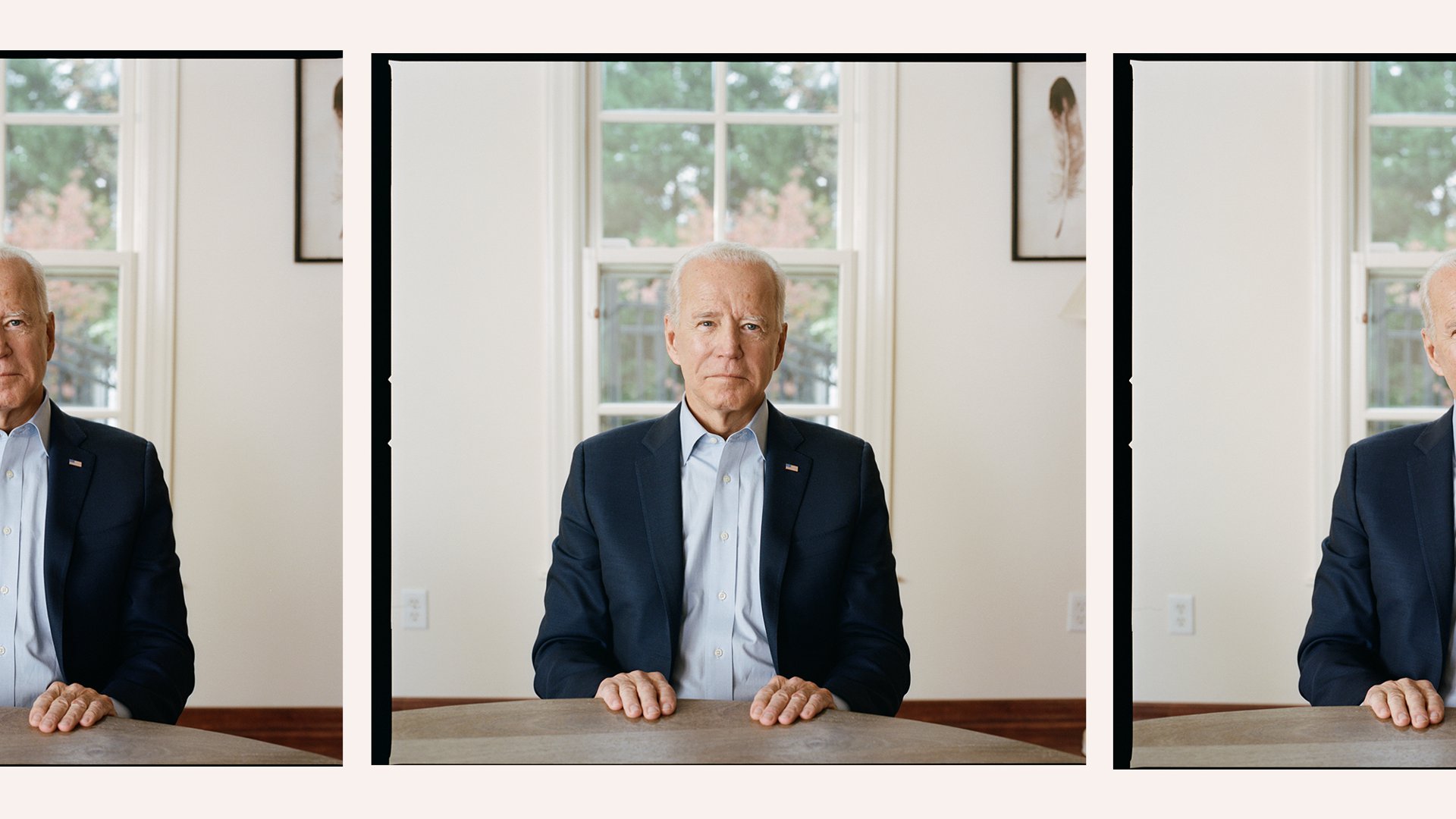
This was a powerful piece and also made me think I've been kind of an asshole in some of my Joe criticisms, which are abundant! It's a great read.
Mark Peckmezian
His eyes fall to the floor when I ask him to describe it. We’ve been tiptoeing toward it for 45 minutes, and so far, every time he seems close, he backs away, or leads us in a new direction. There are competing theories in the press, but Joe Biden has kept mum on the subject. I want to hear him explain it. I ask him to walk me through the night he appeared to lose control of his words onstage.
“I—um—I don’t remember,” Biden says. His voice has that familiar shake, the creak and the croak. “I’d have to see it. I-I-I don’t remember.”
We’re in Biden’s mostly vacant Washington, D.C., campaign office on an overcast Tuesday at the end of the summer. Since entering the Democratic presidential-primary race in April, Biden has largely avoided in-depth interviews. When I first reached out, in late June, his press person was polite but noncommittal: Was an interview really necessary for the story?
Then came the second debate, at the end of July, in Detroit. The first one, a month earlier, had been a disaster for Biden. He was unprepared when Senator Kamala Harris criticized both his past resistance to federally mandated busing and a recent speech in which he’d waxed fondly about collaborating with segregationist senators. Some of his answers that night had been meandering and difficult to parse, feeding into the narrative that he wasn’t just prone to verbal slipups—he’s called himself a “gaffe machine”—but that his age was a problem, that he was confused and out of touch.
Detroit was Biden’s chance to regain control of the narrative. And then something else happened. The candidates were talking about health care. At first, Biden sounded strong, confident, presidential: “My plan makes a limit of co-pay to be One. Thousand. Dollars. Because we—”
He stopped. He pinched his eyes closed. He lifted his hands and thrust them forward, as if trying to pull the missing sound from his mouth. “We f-f-f-f-further
support—” He opened his eyes. “The uh-uh-uh-uh—” His chin dipped toward his chest. “The-uh, the ability to buy into the Obamacare plan.” Biden also stumbled when trying to say immune system.
Fox News edited these moments into a mini montage. Stifling laughter, the host Steve Hilton narrated: “As the right words struggled to make that perilous journey from Joe Biden’s brain to Joe Biden’s mouth, half the time he just seemed to give up with this somewhat tragic and limp admission of defeat.”
Several days later, Biden’s team got back in touch with me. One of his aides gingerly asked whether I’d noticed the former vice president stutter during the debate. Of course I had—I stutter, far worse than Biden. The aide said he was ready to talk about it. Last night, after Biden stumbled multiple times during the Atlanta debate, the topic became even more relevant.
“So how are you, man?”
Biden is in his usual white button-down and navy suit, a flag pin on the left lapel. Up close, he looks like he’s lost weight since leaving office in 2017. His height is commanding, but, as he approaches his 77th birthday, he doesn’t fill out his suit jacket like he used to.
I stutter as I begin to ask my first question. “I’ve only … told a few people I’m … d-doing this piece. Every time I … describe it, I get … caught on the w-word-uh stuh-tuh-tuh-tutter.”
“So did I,” Biden replies. “It doesn’t”—he interrupts himself—“can’t define who you are.”
Mark Peckmezian
Maybe you’ve heard Biden talk about his boyhood stutter. A non-stutterer might not notice when he appears to get caught on words as an adult, because he usually maneuvers out of those moments quickly and expertly. But on other occasions, like that night in Detroit, Biden’s lingering stutter is hard to miss. He stutters—if slightly—on several sounds as we sit across from each other in his office. Before addressing the debate specifically, I mention what I’ve just heard. “I want to ask you, as, you know, a … stutterer to, uh, to a … stutterer. When you were … talking a couple minutes ago, it, it seemed to … my ear, my eye … did you have … trouble on s? Or on … m?”
Biden looks down. He pivots to the distant past, telling me that the letter s was hard when he was a kid. “But, you know, I haven’t stuttered in so long that it’s
hhhhard for me to remember the specific—” He pauses. “What I do remember is the feeling.”
I started stuttering at age 4.
I still struggle to say my own name. When I called the gas company recently, the automated voice apologized for not being able to understand me. This happens a lot, so I try to say “representative,” but r’s are tough too. When I reach a human, I’m inevitably asked whether we have a poor connection. Busy bartenders will walk away and serve someone else when I take too long to say the name of a beer. Almost every deli guy chuckles as I fail to enunciate my order, despite the fact that I’ve cut it down to just six words: “Turkey club, white toast, easy mayo.” I used to just point at items on the menu.
My head will shake on a really bad stutter. People have casually asked whether I have Parkinson’s. I curl my toes inside my shoes or tap my foot as a distraction to help me get out of it, a behavior that I’ve repeated so often, it’s become a tic. Sometimes I shuffle a pen between my hands. When I was little, I used to press my palm against my forehead in an effort to force the missing word out of my brain. Back then, my older brother would imitate this motion and the accompanying sound, a dull whine—something between a cow and a sheep. A kid at baseball camp, Michael, referred to me as “Stutter Boy.” He’d snap his fingers and repeat it as if calling a dog. “Stutter Boy! Stutter Boy!” In college, I applied for a job at a coffee shop. I stuttered horribly through the interview, and the owner told me he couldn’t hire me, because he wanted his café to be “a place where customers feel comfortable.”
Stuttering is a neurological disorder that affects roughly 70 million people, about 3 million of whom live in the United States. It has a strong genetic component: Two-thirds of stutterers have a family member who actively stutters or used to. Biden’s uncle on his mother’s side—“Uncle Boo-Boo,” as he was called—stuttered his whole life.
In the most basic sense, a stutter is a repetition, prolongation, or block in producing a sound. It typically presents between the ages of 2 and 4, in up to twice as many boys as girls, who also have a higher recovery rate. During the developmental years, some children’s stutter will disappear completely without intervention or with speech therapy. The longer someone stutters, however, the lower the chances of a full recovery—perhaps due to the decreasing plasticity of the brain. Research suggests that no more than a quarter of people who still stutter at 10 will completely rid themselves of the affliction as adults.
“Mr. Buh-Buh-Buh-Biden, what’s that word?,” a nun asked Joe Biden in front of his seventh-grade classmates.
The cultural perception of stutterers is that they’re fearful, anxious people, or simply dumb, and that stuttering is the result. But it doesn’t work like that. Let’s say you’re in fourth grade and you have to stand up and recite state capitals. You know that Juneau is the capital of Alaska, but you also know that you almost always block on the j sound. You become intensely anxious not because you don’t know the answer, but because you do know the answer, and you know you’re going to stutter on it.
Stuttering can feel like a series of betrayals. Your body betrays you when it refuses to work in concert with your brain to produce smooth speech. Your brain betrays you when it fails to recall the solutions you practiced after school with a speech therapist, allegedly in private, later learning that your mom was on the other side of a mirror, watching in the dark like a detective. If you’re a lucky stutterer, you have friends and family who build you back up, but sometimes your protectors betray you too.
Joe Biden (back) with his brother James and his sister, Valerie, at her First Communion (Random House)
A Catholic nun betrayed Biden when he was in seventh grade. “I think I was No. 5 in alphabetical order,” Biden says. He points over my right shoulder and stares into the middle distance as the movie rolls in his mind. “We’d sit along the radiators by the window.”
The office we’re in is awash in framed memories: Biden and his family, Biden and Barack Obama, Biden in a denim shirt posing for InStyle. The shelf behind the desk features, among other books, Jon Meacham’s The Soul of America. It’s a phrase Biden has adopted for his campaign this time around, his third attempt at the presidency. In almost every speech, Biden warns potential voters that 2020 is not merely an election, but a battle “for the soul of America.” Sometimes he swaps in nation.
But now we’re back in middle school. The students are taking turns reading a book, one by one, up and down the rows. “I could count down how many paragraphs, and I’d memorize it, because I found it easier to memorize than look at the page and read the word. I’d pretend to be reading,” Biden says. “You learned early on who the hell the bullies were,” he tells me later. “You could tell by the look, couldn’t you?”
For most stutterers, reading out loud summons peak dread. A chunk of text that may take a fluent person roughly a minute to read could take a stutterer five or 10 times as long. Four kids away, three kids away. Your shoulders tighten. Two away. The back of your neck catches fire. One away. Then it happens, and the room fills with secondhand embarrassment. Someone breathes a heavy sigh. Someone else laughs. At least one kid mimics your stutter while you’re actively stuttering. You never talk about it. At night, you stare at the ceiling above your bed, reliving it.
“The paragraph I had to read was: ‘Sir Walter Raleigh was a gentleman. He laid his cloak upon the muddy road suh-suh-so the lady wouldn’t soil her shoes when she entered the carriage,’ ” Biden tells me, slightly and unintentionally tripping up on the word so. “And I said, ‘Sir Walter Raleigh was a gentle man who—’ and then the nun said, ‘Mr. Biden, what is that word?’ And it was gentleman that she wanted me to say, not gentle man. And she said, ‘Mr. Buh-Buh-Buh-Biden, what’s that word?’ ”
Biden says he rose from his desk and left the classroom in protest, then walked home. The family story is that his mother, Jean, drove him back to school and confronted the nun with the made-for-TV phrase “You do that again, I’ll knock your bonnet off your head!” I ask Biden what went through his mind as the nun mocked him.
“Anger, rage, humiliation,” he says. His speech becomes staccato. “A feeling of, uh—like I’m sure you’ve experienced—it just drops out of your chest, just, like, you feel … a void.” He lifts his hands up to his face like he did on the debate stage in July, to guide the v sound out of his mouth: void.
By all accounts, Biden was both popular and a strong athlete in high school. He was class president at Archmere Academy, in Claymont, Delaware. His nickname was “Dash”—not a reference to his speed on the football field, but rather another way to mock his stutter. “It was like Morse code—dot dot dot, dash dash dash dash,” Biden says. “Even though by that time I started to overcome it.”
I ask him to expand on the relationship between anger and humiliation, or shame.
“Shame is a big piece of it,” he says, then segues into a story about meeting a stutterer while campaigning.
I bring it back up a little later, this time more directly: “When have you felt shame?”
“Not for a long, long, long time. But especially when I was in grade school and high school. Because that’s the time when everything is, you know, it’s rough. They talk about ‘mean girls’? There’s mean boys, too.”
Bill Bowden had the locker next to Biden’s at Archmere. I called Bowden recently. “It was just kind of a funny thing, you know?” he told me. “Hopefully he wasn’t hurt by it.” Bob Markel, another high-school buddy of Biden’s, went a little further when we spoke: “ ‘H-H-H-H-Hey, J-J-J-J-J-Joe B-B-B-B-Biden’—that’s how he’d be addressed.” Markel said the Archmere guys called him “Stutterhead,” or “Hey, Stut !” for short. He fears that he himself may have made fun of Biden once or twice. “I never remember him being offended. He probably was,” Markel said. “I think one of his coping mechanisms was to not show it.” Bowden and Markel have remained friends with Biden to this day.
Before collecting from customers on his paper route, Biden would preplay conversations in his mind, banking lines—a tactic he still sometimes uses on the campaign trail, he says. “I knew the one guy loved the Phillies. And he’d asked me about them all the time. And I knew another person would ask me about my sister, so I would practice an answer.”
After trying and failing at speech therapy in kindergarten, Biden waged a personal war on his stutter in his bedroom as a young teen. He’d hold a flashlight to his face in front of his bedroom mirror and recite Yeats and Emerson with attention to rhythm, searching for that elusive control. He still knows the lines by heart: “Meek young men grow up in libraries, believing it their duty to accept the views, which Cicero, which Locke, which Bacon, have given, forgetful that Cicero, Locke, and Bacon were only young men in libraries, when they wrote these books.”
Biden performs the passage for me with total fluency, knowing where and when to pause, knowing how many words he can say before needing a breath. This is what stutterers learn to do: reclaim control of their airflow; think in full phrases, not individual words. I ask Biden what his moment of dread used to be in that essay.
“Well, looking back on it, ‘Meek young men grow up in li-li-libraries,’ ” he begins again. “ ‘Li’—the l.”
“That kind of sound, the l sound, is like the … r sound,” I say.
“Yes.”
“Sometimes I’ve noticed, watching old clips, it looks like you do have a little trouble on the r. It’s your middle initial.”
“Yeah.”
“Like ‘ruh-ruh-ruh-remember,’ ” I say, intentionally stuttering on the r.
“Well, I may. I-I-I-I-I haven’t thought I have. But I-I-I-I don’t doubt there’s probably ways people could pick up that there’s something. But I don’t consciously think of it anymore.”
Biden says he hasn’t felt himself caught in a traditional stutter in several decades. “I mean, I can’t remember a time where I’ve ever worried before a crowd of 80,000 people or 800 people or 80 people—I haven’t had that feeling of dread since, I guess, speech class in college,” he says, referring to an undergraduate public-speaking course at the University of Delaware.
This is when I ask him what happened that night in Detroit.
After saying he doesn’t remember, Biden opines: “I’m everybody’s target; they have to take me down. And so, what I found is—not anymore—I’ve found that it’s difficult to deal with some of the criticism, based on the nature of the person directing the criticism. It’s awful hard to be, to respond the same way in a national debate—especially when you’re, you know, the guy who is characterized as the white-guy-of-privilege kind of thing—to turn and say to someone who says, ‘I’m not saying you’re a racist, but …’ and know you’re being set up. So I have to admit to you, I found my mind going, What the hell? How do I respond to that? Because I know she’s being completely unfair.”
I eventually realize that he’s describing the moment from the first debate, when Harris criticized his record on race.
“These aren’t debates,” he continues. “These are one-minute assertions. And I don’t think there’s anybody who hasn’t been taking shots at me, which is okay. I’m a big boy, don’t get me wrong.”
Listening back to that part of the conversation after our interview made me feel dizzy. I can only speculate as to why Biden’s campaign agreed to this interview, but I assume the reasoning went something like this: If Biden disclosed to me, a person who stutters, that he himself still actively stutters, perhaps voters would cut him some slack when it comes to verbal misfires, as well as errors that seem more related to memory and cognition. But whenever I asked Biden about what appeared to be his present-day stuttering, the notably verbose candidate became clipped, or said he didn’t remember, or spun off to somewhere new.
I wondered if I reminded Biden of his old self, a ghost from his youth, the stutterer he used to be. He and I are about the same height. We happened to be wearing the exact same outfit that day: navy suit, white shirt, no tie. We both went to all-male prep schools, the sort of place where displaying any weakness is a liability.
As I listened to the recording of our interview, I remembered how I used to respond when people asked me about my stutter. I’d shut down. I’d try to change the subject. I’d almost always look away.
In early September, I got in touch with my high-school speech pathologist, Joseph Donaher, who practices at the Children’s Hospital of Philadelphia. I hadn’t heard Donaher’s voice for almost 15 years. Immediately, I was transported back to the little windowless room in the hospital where we used to meet. Donaher was the first therapist—really the first person—who ever leveled with me. I can still see his face, the neutrality in his eyes on the day he looked at me square and said the sentence my friends and parents had avoided saying my entire life: You have a severe stutter.
Donaher and his colleagues try to help their patients open up about the shame and low self-worth that accompany stuttering. Instead of focusing solely on mechanics, or on the ability to communicate, they first build up the desire to communicate at all. They then share techniques such as elongating vowels and lightly approaching hard-consonant clusters, meaning just touching on the first sound in a word like stutter—the st—to keep the mouth and throat from tensing up and interfering with speech. The goal isn’t to be totally fluent but, simply put, to stutter better.
This evolution in treatment has been accompanied by a new movement to destigmatize the disorder, similar to the drive to view autism through a lens of “neurodiversity” rather than as a pathology. The idea is to accept, even embrace, one’s stutter. There are practical reasons for this: Research shows, according to Donaher, that the simple disclosure “I stutter” benefits both the stutterer and the listener—the former gets to explain what’s happening and ease the awkward tension so the latter isn’t stuck wondering what’s “wrong” with this person. Saying those two words is harder than it seems. “I’m working with people who spend their whole lives and are never able to disclose it,” Donaher told me.
Biden says his father taught him about “shouldering burdens with grace.” Specifically, he told his son, “Never complain. Never explain.”
Eric S. Jackson, an assistant professor of communicative sciences and disorders at NYU, told me he believes that Biden’s eye movements—the blinks, the downward glances—are part of his ongoing efforts to manage his stutter. “As kids we figure out: Oh, if I move parts of my body not associated with the speech system, sometimes it helps me get through these blocks faster,” Jackson, a stutterer himself, explained. Jackson credits an intensive program at the American Institute for Stuttering, in Manhattan, with bringing him back from a “rock bottom” period in his mid-20s, when he says his stutter kept him from meeting women or speaking up enough to reach his professional goals. Afterward, Jackson went all in on disclosure: Every day for six months, he stood up during the subway ride to and from work and announced that he was a person who stutters. “I had this new relationship with my stuttering—I was like Hercules,” he told me. At 41, Jackson still stutters, but in conversation he confidently maintains eye contact and appears relaxed. He wishes Biden would be more transparent about his intermittent disfluency. “Running for president is essentially the biggest stage in the world. For him to come out and say ‘I still stutter and it’s fine’ would be an amazing, empowering message.”
Occasionally, Biden has used present-tense verbs when discussing his stutter. “I find myself, when I’m tired, cuh-cuh-catching myself, like that,” he said during a 2016 American Institute for Stuttering speech. Biden has used the phrase we stutterers at times, but in most public appearances and interviews, Biden talks about how he overcame his speech problem, and how he believes others can too. You can watch videos posted by his campaign in which Biden meets young stutterers and encourages them to follow his lead. They’re sweet clips, even if the underlying message—beat it or bust—is out of sync with the normalization movement.
Emma Alpern is a 32-year-old copy editor who co-leads the Brooklyn chapter of the National Stuttering Association and co-founded NYC Stutters, which puts on a day-long conference for stuttering destigmatization. Alpern told me that she’s on a group text with other stutterers who regularly discuss Biden, and that it’s been “frustrating” to watch the media portray Biden’s speech impediment as a sign of mental decline or dishonesty. “Biden allows that to happen by not naming it for what it is,” she said, though she’s not sure that his presidential candidacy would benefit if he were more forthcoming. “I think he’s dug himself into a hole of not saying that he still stutters for so long that it would strike people as a little weird.”
Biden has presented the same life story for decades. He’s that familiar face—Uncle Joe. He was born 11 months after Pearl Harbor and grew up in the last era of definitive “good guys” and “bad guys.” He’s the dependable guy, the tenacious guy, the aviators-and-crossed-arms guy. That guy doesn’t stutter; that guy used to stutter.
“My dad taught me the value of constancy, effort, and work, and he taught me about shouldering burdens with grace,” Biden writes in the first chapter of his 2007 memoir, Promises to Keep. “He used to quote Benjamin Disraeli: ‘Never complain. Never explain.’ ”
Jill and Joe Biden, shortly after they first met, with his two sons, Beau and Hunter (Steven Goldblatt / Random House)
Stephen Colbert launches across the Ed Sullivan Theater stage, as if from a pinball spring. It’s early September, and his Late Show taping is about to begin. To warm up, he takes a few questions from the studio audience. Someone asks what he’d want in a potential new president. “Empathy?” Colbert deadpans. “A soul?”
Colbert tapes in Midtown Manhattan on the same stage where the Beatles made their American television debut 55 years ago, when Joe Biden was a mere 22. Biden struts out to a standing ovation and throws up his hands in amazement: For me? A brief “Joe! Joe! Joe!” chant erupts.
At first, Colbert lobs softballs, and Biden touches on the key parts of his 2020 stump speech: Why voters must stand up to the existential threat of Trumpism and how the Charlottesville, Virginia, white-supremacist rally crystallized his decision to run. Then Colbert goes for it.
“In the last few weeks, you’ve confused New Hampshire for Vermont; said
Bobby Kennedy and MLK were assassinated in the late ’70s; assured us, ‘I am not going nuts.’ Follow-up question: Are you going nuts?”
“Look, the reason I came on the Jimmy Kimmel show was because—”
The audience howls. Biden flashes a flirty smile. Colbert adjusts his glasses, sticks his pen in his mouth, and nods in approval. The joke was probably canned, but Biden landed it.
Colbert continues to press him about accuracy issues in his storytelling. The studio audience is silent; I’m watching from the balcony and can hear the theater’s air-conditioning humming overhead.
“I-I-I-I-I don’t get wrong things like, uh, ya know, there is a, we, we should lock kids up in cages at the border. I mean, I don’t—” People applaud before Biden can finish.
When the interview is over, Biden receives a second standing ovation. He peers up toward the rafters, using his hand as a visor against the bright lights. A white spotlight follows him offstage. Several minutes later, he glides through the stage door and out onto West 53rd Street. People call to him from the sidewalk. “Joe! Joe Biden!” He climbs into the back of an idling black SUV, and the doors
clunk close.
I follow Biden for a couple of days while he campaigns in New Hampshire. His town halls have a distinctly Norman Rockwell vibe. One takes place in the middle of the day on the third floor of a former textile mill, another on a stretch of grass as the wind whips off the Piscataqua River. His crowds are predominantly older, filled with people who stand for the Pledge of Allegiance and wait patiently to ask questions. After he speaks, Biden typically walks offstage to Bruce Springsteen’s “We Take Care of Our Own,” then saunters down the rope line for handshakes and hugs and selfies. One voter after another tells me they’re unaware of Biden’s stutter. “Knowing that he has had something like that to deal with and overcame it, as well as other really sad things that have happened—it just makes me like him more,” says 70-year-old Grace Payne.
Back in New York, I start to wonder if I’m forcing Biden into a box where he doesn’t belong. My box. Could I be jealous that his present stutter is less obvious than mine? That he can go sentences at a time without a single block or repetition? Even the way I’m writing this piece—keeping Biden’s stammers, his ums and pauses, on the page—seems hypocritical. Here I am highlighting the glitches in his speech, when the journalistic courtesy, convention even, is to edit them out.
I spend weeks watching Biden more than listening to him, trying to “catch him in the act” of stuttering on camera. There’s one. There’s one. That was a bad one. Also, I start stuttering more.
In September, before the third Democratic debate, in Houston, I called Michael Sheehan, a Washington, D.C.–area communications coach whose company website boasts clients ranging from Nike to the Treasury Department. Sheehan worked with President Bill Clinton while he was in office and began consulting on and off for Biden in 2002, when he was in the Senate. On the day we spoke, he was in Wilmington, Delaware, doing debate prep with Biden.
Sheehan and I traded stories of daily indignities—he stutters too. “I remember exactly where the deli was; it was on 71st and First Avenue,” he said with an ache in his voice. He lamented the interventionists, the people who volunteer, “ ‘You know, why don’t you speak more slowly?’ I always want to say ‘Holy shit! Why didn’t I think of that? Thank you!’ ”
Sheehan’s own stutter improved, but didn’t fully go away, when he took up speech and debate in high school. This eventually led him to the theater, which is a common, if surprising, place where some stutterers find that they’re able to speak with relative ease. Taking on a character, another voice, the theory goes, relies on a different neural pathway from the one used in conversation. Many successful actors have battled stutters—Samuel L. Jackson, Bruce Willis, Emily Blunt, James Earl Jones. In 2014, Jones, whose muscular baritone is the bedrock of one of the most quoted lines in film history, told NPR that he doesn’t use the word cured to describe his apparent fluency. “I just work with it,” he said.
At an August town hall, Biden briefly blocked on Obama, before subbing in my boss. The headlines afterward? “Biden Forgets Obama’s Name.”
Sheehan was extremely careful with the language he used to describe Biden’s speech patterns—“I can’t say it’s a stutter”—though he noted his friend’s habit of abruptly changing directions mid-sentence. “I do hear those little pauses, but I really don’t hear the stuff that you would hear from me or I would hear from you,” he said. A few minutes into our conversation, he choked up while discussing Biden’s tenderness toward young stutterers. “Sometimes I feel when he goes a little long on a speech, he’s just making up for lost time, you know?”
Sheehan told me about a night when he came home with his wife and saw the answering-machine light blinking: “Hey, Michael, it’s Joe Biden. I just was watching The King’s Speech with my granddaughter, and I just thought I’d give you a call, because it made me think of you. Goodbye!” He says the message felt like a secret fraternity handshake: “You and I have both been there, and only people in that society know what that is about.”
In Biden’s office, the first time I bring up his current stuttering, he asks me whether I’ve seen The King’s Speech. He speaks almost mystically about the award-winning 2010 film. “When King George VI, when he stood up in 1939, everyone knew he stuttered, and they knew what courage it took for him to stand up at that stadium and try to speak—and it gave them courage … I could feel that. It was that sinking feeling, like—oh my God, I remember how you felt. You feel like, I don’t know … almost like you’re being sucked into a black hole.”
Presidential candidates usually don’t speak about their bleakest moments, certainly not this viscerally. It resembles the way Biden writes in his memoir about the aftermath of the 1972 car accident that killed his first wife and young daughter and critically injured his two sons, Beau and Hunter: “I could not speak, only felt this hollow core grow in my chest, like I was going to be sucked inside a black hole.”
A few weeks later, I ask Jill Biden what she remembers about sitting next to her husband during the movie. “It was one of those moments in a marriage where you just sort of understand without words being spoken,” she says.
As he watched The King’s Speech, Biden accurately guessed that the screenwriter, David Seidler, was a stutterer. “He showed me a copy of a speech they found in an attic that the king had actually used, where he marks his—it’s exactly what I do!” Biden tells me, his voice lifting. “My staff, when I have them put something on a prompter—I wish I had something to show you.”
He pulls out a legal pad and begins drawing diagonal lines a few inches apart, as if diagramming invisible sentences: x words, breath, y words, breath. “Because it’s just the way I have—the, the best way for me to read a, um, a speech. I mean, when I saw The King’s Speech, and the speech—I didn’t know anybody who did that!”
Biden is running for president on a simple message: America is not Trump. I’m not Trump. I’ll lead us out of this. With every new debate, with every new “gaffe,” the media continue to ask whether Biden has the stamina for the job. And with every passing month, his competitors—namely Senator Elizabeth Warren and South Bend, Indiana, Mayor Pete Buttigieg—have gained on him in the polls.
A stutter does not get worse as a person ages, but trying to keep it at bay can take immense physical and mental energy. Biden talks all day to audiences both small and large. In addition to periodically stuttering or blocking on certain sounds, he appears to intentionally not stutter by switching to an alternative word—a technique called “circumlocution”—which can yield mangled syntax. I’ve been following practically everything he’s said for months now, and sometimes what is quickly characterized as a memory lapse is indeed a stutter. As Eric Jackson, the speech pathologist, pointed out to me, during a town hall in August Biden briefly blocked on Obama, before quickly subbing in my boss. The headlines after the event? “Biden Forgets Obama’s Name.” Other times when Biden fudges a detail or loses his train of thought, it seems unrelated to stuttering, like he’s just making a mistake. The kind of mistake other candidates make too, though less frequently than he does.
During his 2016 address at the American Institute for Stuttering, Biden told the room that he’d turned down an invitation to speak at a dinner organized by the group years earlier. “I was afraid if people knew I stuttered,” he said, “they would have thought something was wrong with me.”
Yet even when sharing these old, hard stories, Biden regularly characterizes stuttering as “the best thing that ever happened” to him. “Stuttering gave me an insight I don’t think I ever would have had into other people’s pain,” he says. I admire his empathy, even if I disagree with his strict adherence to a tidy redemption narrative.
In Biden’s office, as my time is about to run out, I bring up the fact that Trump crudely mocked a disabled New York Times reporter during the 2016 campaign. “So far, he’s called you ‘Sleepy Joe.’ Is ‘St-St-St-Stuttering Joe’ next?”
“I don’t think so,” Biden says, “because if you ask the polls ‘Does Biden stutter? Has he ever stuttered?,’ you’d have 80 to 95 percent of people say no.” If Trump goes there, Biden adds, “it’ll just expose him for what he is.”
I ask Biden something else we’ve been circling: whether he worries that people would pity him if they thought he still stuttered.
He scratches his chin, his fingers trembling slightly. “Well, I guess, um, it’s kind of hard to pity a vice president. It’s kind of hard to pity a senator who’s gotten six zillion awards. It’s kind of hard to pity someone who has had, you know, a decent family. I-I-I-I don’t think if, now, if someone sits and says, ‘Well, you know, the kid, when he was a stutterer, he must have been really basically stupid,’ I-I-I don’t think it’s hard to—I’ve never thought of that. I mean, there’s nobody in the last, I don’t know, 55 years, has ever said anything like that to me.”
He slips back into politician mode, safe mode, Uncle Joe mode: “I hope what they see is: Be mindful of people who are in situations where their difficulties do not define their character, their intellect. Because that’s what I tell stutterers. You can’t let it define you.” He leans across the desk. “And you haven’t.” He’s in my face now. “You can’t let it define you. You’re a really bright guy.”
He’s telling me, in essence, that my stutter doesn’t matter, which is what I want to tell him right back. But here’s the thing: Most of the time, Biden speaks smoothly, and perhaps he sincerely does not believe that he still stutters at all. Or maybe Biden is simply telling me the story he’s told himself for several decades, the one he’s memorized, the one he can comfortably express. I don’t want to hear Biden say “I still stutter” to prove some grand point; I want to hear him say it because doing so as a presidential candidate would mean that stuttering truly doesn’t matter—for him, for me, or for our 10-year-old selves.
Now his aide is knocking, trying to get him out of the room. I push out one more question, asking what he saw reflected in that bedroom mirror as a kid.
He goes off into a different boyhood story about standing against a stone wall and talking with pebbles in his mouth, some oddball way to MacGyver fluency. I do the thing stutterers hate most: I cut him off. “What did that person look like?”
Biden stops. “He looked happy,” he says. “You know, I just think it looked like he’s
in control.”
This article will appear in the January/February 2020 print edition with the headline “Why Won’t He Just Say It?”
John Hendrickson is a senior editor on The Atlantic’s politics team.
I’ve been accidentally dating my new boss’ husband, and I don’t know what to do.
I landed my dream job at my dream company. My boss is usually supportive and competent. My only issue is that she’s made some homophobic comments (I’m a gay man), but this is a conservative area and I’m not out at work It’s not a big deal for me personally because I’ve dealt with this kind of comments at every job I’ve ever had and honestly, she’s not as bad as many of the people I’ve dealt with.
I also recently started a relationship with a guy. We were keeping it quiet because I’m not out and he told me he isn’t either, but I really liked him and he was smart and funny and everything I’m into. It wasn’t just sex; we were dating for six weeks.
I might have gone on like this for some time, except there was a work party to which it was okay to bring a plus one, and my boss brought her husband, who turned out to be the man I was dating. Needless to say I broke it off with him ASAP, but I’m not sure if I should tell my boss. On the one hand, it’s going to look very bad (compounded by me being gay, and I don’t know that I’d be comfortable outing him) if I confess now, but on the other hand, if she finds out later the fall-out might be even worse.
I feel like I’m not thinking clearly because I’m still very pissed at him but still not over him, and I don’t know what to do. Help me, please?
Oh noooo. What an awful situation — and not one of your making at all.
So much of this hinges on whether she knows her husband dates men. Given her homophobic comments, I’m guessing she doesn’t know he’s gay or bisexual and this isn’t a situation where he has her blessing to date men on the side. Which means that he probably didn’t go home from that work party and announce, “Guess what, funny coincidence…”
And if those assumptions are correct — she doesn’t know he’s interested in men and she doesn’t know he sees other people — then I’d guess that the chances of her hearing about this from him are pretty low. That’s a huge assumption, obviously, and it doesn’t mean it won’t come out in the future, especially if he decides to come out to her at some point and wants to come clean about everything.
On the other hand, if you tell her now, you’re not only outing her husband, but there’s the risk she’ll have a spectacularly bad reaction.
Or not! Who knows, maybe she’d be remarkably mature about it, thank you for telling her, and go on working well with you for years to come. Maybe she’d be logical enough to see that you didn’t do anything wrong here, and there’s nothing for her to hold against you.
But a lot of people don’t respond that way.
There’s no good answer here! It’s a really horrible situation. You’re left having to weigh the risk of her having a bad reaction now (which could be fairly high) against the risk of her finding out later (which might be fairly low).
If she does find out later, I don’t think you’ll have made things significantly worse by not speaking up now (especially since you did break things off once you knew). If it’s going to be a crapshow if she finds out, that’s likely the case whether it’s now or later. So that might point you toward saying nothing, figuring their marriage is none of your business, and trying to wipe it from your mind … which has the additional benefit of not outing someone who may not be out.
I think my advice would be basically the same if you were a woman who had inadvertently dated her boss’s husband, although in that situation I’d be more inclined to think about you seeking protection from your company (by telling someone what happened and your fears of repercussions). I’m less inclined to suggest that here because you don’t have the same federal protections (and in some states could even be fired for being gay) and it sounds like you might be in a fairly homophobic area.
I hate to say it, but the best thing you can do here is to find a way to stop working for her. Is your company large enough that changing jobs internally is a possibility? If so, that’s where I’d focus — that would give you some protection and peace of mind that none of the other options do.
It’s not every day that an incredibly nerdy amateur actor in his 30s gets a chance to be useful in society, but now it looks like one such individual is finally going to get his big moment in the sun: This couple needs someone to officiate their secular wedding!
Anybody need some communal support in asking for a raise? You deserve it! It's hard!
With lots of employers doing performance reviews and year-end raises this month, now is a good time to ask for a raise. But will you?
I’ve been shocked – horrified, really – by how many people tell me they never ask for raises. Some people rely on their company’s system of merit raises (or worse, cost-of-living raises, which tend to be lower) and just take what they’re offered rather than ever requesting more. Others work at companies that don’t do regular salary reviews and thus go on for years at the same salary, rather than broach the issue.
And yes, asking for a raise can be nerve-wracking! But people who don’t ask are leaving huge amounts of money on the table, to the tune of thousands of dollars a year. At Slate today, I wrote about why people don’t ask, why they should, and how to do it. You can read it here.
I grew up in Wisconsin, and have lived in Iowa, Minnesota, and New York. Except for a two-year stint in the Bay Area, I’ve experienced winter — real winter, with lots of snow, below-freezing temperatures, and little daylight — every year of my life and never had a problem with it. So I was surprised when my last two Vermont winters put me on my ass. In winter 2017-18, I was depressed, anxious, wasn’t getting out of bed in the morning, spent endless time on my phone doing nothing, and had trouble focusing on my work. And I didn’t realize what it was until the first nice spring day came, 70 and sunny, and it hit me: “holy shit, I’ve been depressed because of winter” and felt wonderful for the next 5 months, like a completely different person. Then last year I was so anxious that it would happen again that all that stuff was worse and started basically a week into fall.
Nothing helped: I tried getting outside more, spent more time with friends, got out to meet new people, travelled to warm places, took photos of VT’s beautiful winter landscapes, spent time in cities, cut back on alcohol, and prioritized sleep. Last year I skied more than ever before and enjoyed it more than I’d ever had. Didn’t matter. This stuff worked during the spring and summer but my winter malaise was seemingly impenetrable. The plan for this fall was to try a SAD lamp, therapy, maybe drugs, and lots more warm travel. But then something interesting happened.
Sometime this fall — using a combination of Stoicism, stubbornness, and a sort of magical thinking that Jason-in-his-30s would have dismissed as woo-woo bullshit — I decided that because I live in Vermont, there is nothing I can do about it being winter, so it was unhelpful for me to be upset about it. I stopped complaining about it getting cold and dark, I stopped dreading the arrival of snow. I told myself that I just wasn’t going to feel like I felt in the summer and that’s ok — winter is a time for different feelings. As Matt Thomas wrote, I stopped fighting the winter vibe and tried to go with it:
Fall is a time to write for me as well, but it also means welcoming — rather than fighting against — the shorter days, the football games, the decorative gourds. Productivity writer Nicholas Bate’s seven fall basics are more sleep, more reading, more hiking, more reflection, more soup, more movies, and more night sky. I like those too. The winter will bring with it new things, new adjustments. Hygge not hay rides. Ditto the spring. Come summer, I’ll feel less stress about stopping work early to go to a barbecue or movie because I know, come autumn, I’ll be hunkering down. More and more, I try to live in harmony with the seasons, not the clock.
Last night, I read this Fast Company piece on some research done by Kari Leibowitz about how people in near-polar climates avoid seasonal depression and it really resonated with this approach that I’d stumbled upon.
At first, she was asking “Why aren’t people here more depressed?” and if there were lessons that could be taken elsewhere. But once she was there, “I sort of realized that that was the wrong question to be asking,” she says. When she asked people “Why don’t you have seasonal depression?” the answer was “Why would we?”
It turns out that in northern Norway, “people view winter as something to be enjoyed, not something to be endured,” says Leibowitz, and that makes all the difference.
The people in the Norwegian communities Leibowitz studied, they got outside as much as they could — “there’s no such thing as bad weather, only bad clothing” — spent their time indoors being cozy, came together in groups, and marveled at winter’s beauty. I’d tried all that stuff my previous two winters but what seems to have moved the needle for me this year is a shift in mindset.
As I experienced firsthand Tromsø residents’ unique relationship to winter, a serendipitous conversation with Alia Crum, assistant professor of psychology at Stanford University, inspired me to consider mindset as a factor that might influence Tromsø residents’ sunny perspective of the sunless winter. Crum defines mindsets as the “lenses through which information is perceived, organized and interpreted.” Mindsets serve as an overarching framework for our everyday experiences — and they can profoundly influence how we react in a variety of situations.
Crum’s work has shown that mindsets significantly influence both our physical and mental health in areas as diverse as exercise, stress and diet. For example, according to Crum’s research, individuals can hold the mindset that stress is either debilitating (bad for your health and performance) or enhancing (motivating and performance-boosting). The truth is that stress is both; it can cause athletes to crumble under pressure and lead CEOs to have heart attacks, but it can also sharpen focus and critical thinking, giving athletes, CEOs and the rest of us the attention and adrenaline to succeed in high-pressure situations. According to Crum’s work, instead of the mere presence of stress, it is our mindset about stress — whether or not we perceive it as a help or a hindrance — that contributes most to health, performance and psychological outcomes.
This is the woo-woo bullshit I referred to earlier, the sort of thing that always brings to my mind the advice of self-help gurus embodied by The Simpsons’ Troy McClure urging his viewers to “get confident, stupid!” Is the secret to feeling happy really just to feel happy? It sounds ridiculous, right? This is the bit of the Fast Company piece that resonated with me like a massive gong:
But overall, mindset research is increasingly finding that it doesn’t take much to shift one’s thinking. “It doesn’t have to be this huge complicated thing,” says Leibowitz. “You can just consciously try to have a positive wintertime mindset and that might be enough to induce it.”
So how has this tiny shift in mindset been working for me so far? It’s only mid-November — albeit a mid-November where it’s already been 5°F, has been mostly below freezing for the past week, and with a good 6 inches of snow on the ground — but I have been feeling not only not bad, but actually good. My early fall had some seasonally-unrelated tough moments, but I’ve experienced none of last year’s pre-winter despondency. I’m looking forward to the start of skiing, especially since my kids are so jazzed up about it. I don’t currently have any trips planned (just got back from warm & sunny Mexico and am glad to be home even though the trip was great), but I’m definitely eager to start prepping for something in January. I’ve had more time for reading, watching some interesting TV, eating rich foods, making apple pie, and working. I went for a 6-mile walk in the freezing cold with a friend and it was delightful. And I’m already looking forward to spring and summer as well. It’s comforting to know that warmer weather and longer days are waiting for me in the distance, when I can do more of what I want to do and feel more like my true self. But in the meantime, pass the cocoa and I’ll see you on the slopes.
The other day I posted the news that the low railroad bridge that’s famous for ripping off the tops of trucks is finally going to be raised by eight inches, bringing an end to the internet’s viral fun. A reader alerted me to this interesting short documentary about the bridge:
The film features interviews with the man who has been recording all the bridge collisions since 2008, a state engineer who worked on a solution to the problem (a sensor to detect tall vehicles and trigger a stoplight and an “OVERHEIGHT MUST TURN” LED sign), and researchers at a behavioral research lab about how drivers plow into the bridge despite several layers of warning signs and (presumably) the knowledge of the height of their vehicle. (via @ShawnWildermuth)
It was revealed in this talk between the Goose Game publisher and Danny Ortberg of The Toast that the game takes place in a village in Suffolk County, England..... and no one has figured out which one yet!!
VIEW FROM YOUR WINDOW RETURNS
It’s a lovely morning in the village and you are a horrible goose…
Join Daniel in conversation with co-creator of the game Jake Strasser as they discuss the team’s collaborative processes and the beauty of being a chaotic neutral goose in a confusing world.
An alternate version of the ABC song that slows down the LMNOP part is currently going viral because of a tweet by Noah Garfinkel: “They changed the ABC song to clarify the LMNOP part, and it is life ruining.”
I tracked down the original video from 2012:
The alternate arrangement is by Matt Richelson, who runs a popular YouTube channel and several websites dedicated to offering free materials (songs, lesson plans, etc.) to help kids learn English. Here’s what Richelson says about his version of the ABC song:
About the slow l,m,n,o,p: I teach young learners of English as a foreign language, and have found this way the most effective for teaching the letters.
I love the ellemmennohpee bit as much as anyone, but his reasoning is solid.
1. My office set up fake layoffs so my coworker didn’t know he was the only one being let go
I think my last employer may have violated some kind of law with this one. We had a somewhat troubled employee, and instead of firing him the normal way, we got him and three other employees together in a room and pretended to lay off all of them, even though they knew that the rest of the employees were going to show up the next day. It left a really bad taste in my mouth considering that they were concerned about the guy’s mental health. I didn’t think I’d feel any happier to find out that something like that had happened to me.
They said they were laying off the whole group because “a processor bought all of our raw product” (which “meant” we had to lay off the newest four employees, even though everyone but him were showing up the next day).
Wow, no, terrible practice. It’s not illegal per se, but it could lead to legal headaches for the company anyway: When an employee finds out they’ve been lied to about the reason they were let go, they often figure the real reason must have been something shady (since otherwise, why wouldn’t the company have just told them the truth?). So then they go looking for the real reason, and they can easily conclude the real reason must have been something illegal (like discrimination). Employment lawyers can have a field day with that situation, since the employer has already established they’re willing to act in a shady way and not be honest about what was going on.
Aside from that, it’s crappy and thoughtless. Surely it wouldn’t be terribly hard for this guy to find out (accidentally or by deliberately checking) that the people he thought were let go alongside him are still working there.
I’m wondering if your employer was worried about something like workplace violence if they outright fired this guy and so they concocted this awful plan to make it seem like it wasn’t about him? That’s still a bad idea, but it’s the only thing I can think of that would explain such a bizarre decision.
2. Our marketing director thinks he’s a celebrity spokesperson
I’ve been working for a company for the last four years. The company sells highly-regulated consumer products (think protein powders or dietary supplements). Our marketing director is a close college friend of the owner and thinks of himself as a kind of celebrity spokesperson, like Steve Jobs or Gwyneth Paltrow. At first, I thought it was just a slightly irritating quirk, but over the last few months his behavior has taken a turn towards what I feel is unethical.
The last straw was a contest on our company’s social media accounts (his team is in charge of those). The prize was an assortment of our company’s products, along with a chance to meet him. To enter, people have to follow his personal Instagram account. It made me feel deeply uneasy that the company’s money is basically being used to buy this person followers. The Instagram is fine for a personal private account (lots of pictures of his dogs, family, church activities, etc.) but he often mentions unsubstantiated claims regarding our products as facts (which we’re not legally allowed to do) and takes pictures of various acquaintances enjoying our products (we need consent waivers for all the pictures we post on our official social channels).
Am I being old and crotchety (I’m in my 40s while the rest of his team are in their 20s)? Is this a thing now? Most people I spoke with are uneasy, including my boss, but no one wants to mention anything because of his personal relationship to the owner.
You’re not being old and crotchety; you have appropriate and sensible concerns. It’s inappropriate for a company contest to direct people to follow an employee’s personal Instagram — unless his personal Instagram is so intertwined with the company that it’s being used as a company account. That doesn’t sound like the case, but if it were the case, he’d need to abide by the company’s legal and brand restrictions, which he’s not doing. He’s trying to have it both ways — personal account with corporate promotion — and that’s not okay.
Is anyone there in a position to speak truth to the owner? Hopefully someone other than this guy has the owner’s ear and can point out the problems with this.
3. People ask me questions on social media about our job postings
My company encourages us to advertise open positions through our own professional channels, so I’ll post a notice on my social media about our open roles, with a link to the posting page. We have a good reputation and do highly-regarded niche work in a big industry, so a lot of people will send cold messages to team members.
With the exception of one or two great potential candidates, usually they ask me to tell them about job requirements that are in the posting or about the job itself. I don’t want to needlessly burn bridges or hurt my company’s reputation, but I don’t have the time or will to pitch my company to a potential candidate — especially when we have a stream of great candidates already coming in. What’s the best way to handle these requests politely while shutting them down?
I’ve considered just not posting to my own channels, but I have had some good candidates reach out who have made it to final rounds. I appreciate it because personally, I’d prefer good coworkers and, professionally, it gives me some extra value to the company.
A few options:
* “Take a look at the job posting — you should find all that there.”
* “Because we get such a high volume of interest in our openings, we’ve found the best way to get to know people is to steer you to the process we’ve created. But we’ve tried to put all the initial details you’ll need in the posting.”
* “I’m not involved in hiring for this role, but if you apply using the directions in the post, you’ll get into our system and will have lots of opportunites for questions as you move through our process.”
* Hi Jane! I’m not involved in hiring for this role, but I encourage you to formally throw your hat in the ring by applying if you’re interested.”
But also, watch for the kind of questions people ask. I’d bet that few or none of the people who ask questions that are answered in the posting turn out to be strong candidates later. If that’s the case, you shouldn’t have qualms about using one of the lines above. But if someone is asking smart, substantive questions (that don’t seem to be just for the sake of making an impression), there could be value in engaging a bit further with them.
4. We couldn’t work during a cyber attack and now our company wants us to make up the lost time
My company was hit with a cyber attack that took down our system for a few days, including all of Monday (and some people were locked out of their files longer, almost all week). Unless you had files saved to your desktop (which is generally not seen as good practice) or were travelling for meetings/field work, there was no billable work that could be done during that time.The vast majority of employees are salaried (exempt). Once everything was back up and running, senior leadership asked that we either make up the lost time (we bill over a two-week period, and we were at the beginning of a billing period), or use vacation or sick leave and not bill to overhead. Everyone is obviously pissed, but other than this being an incredibly scummy thing to do, is there anything wrong legally with the directive?
If you’re exempt, it’s legal (because you’re paid for the job, not for the time you put in). If anyone is non-exempt, they’d need to be paid for any extra work time.
Regardless, though, your company should look at this as a cost of doing business that shouldn’t be transferred to employees. It’s not unreasonable to say “we’re going to need people pulling longer hours this week because of this crisis,” but people shouldn’t lose vacation or sick leave because the company’s systems went down.
5. Is this employer blowing me off?
I recently had a series of interviews and tests for a job. During one of the interviews, the hiring manager told me he was hoping to find someone with more “traditional experience” but he’d still give me the test.
I completed the test and now, a few weeks after the fact, I’ve been contacted by the HR manager I was working with. She said the hiring manager wants to review more candidates before making a decision on me and that if I had a tight timeline to go ahead, but otherwise she’s wants to stay connected and chat in a few weeks. Is this just a blow-off? Do you think there is anything I could do to get the hiring manager’s attention at this point? Or is all hope lost?
If it were a blow-off, they’d just reject you. So take it at face value: They want to review more candidates and will need at least a few weeks to get back to you. But telling you to take your other options if you’re in a tight timeline does indicate they’re not too fussed about losing you if that happens. That doesn’t mean there’s no way they’d eventually offer you the job, but it does indicate they’re hoping to find someone who’s a better match.
As for doing something to get the hiring manager’s attention … he already knows you’re interested. You don’t have the experience he’s looking for and so he’s looking to see if he can find a better match. It’s possible you could do something that would push him back toward you (like submit a wildly impressive piece of work that convinces him you’re the person for the job), but … honestly, most times people try something like that, it’s just as likely (if not more so) to convince the employer you’re not the right match.
It might help to remember that if you get the job, you want them to be enthusiastic about you. You don’t want to talk your way into a job that you really might not be right for (because that makes it more likely you’ll struggle in the job or even be fired) — and the hiring manager is the person who knows his needs best. Let him figure out if you’re the right match or not.
I had forgotten that Steven Landsburg’s More Sex is Safer Sex (link to the 1997 NYTimes version, book here) was inspired by a paper by new Nobelist Michael Kremer. Here’s the recap:
You’ve read elsewhere about the sin of promiscuity. Let me tell you about the sin of self-restraint.
Consider Martin, a charming and generally prudent young man with a limited sexual history, who has been gently flirting with his coworker Joan. As last week’s office party approached, both Joan and Martin silently and separately entertained the prospect that they just might be going home together. Unfortunately, Fate, through its agents at the Centers for Disease Control, intervened. The morning of the party, Martin happened to notice one of those CDC-sponsored subway ads touting the virtues of abstinence. Chastened, he decided to stay home. In Martin’s absence, Joan hooked up with the equally charming but considerably less prudent Maxwell – and Joan got AIDS.
When the cautious Martin withdraws from the mating game, he makes it easier for the reckless Maxwell to prey on the hapless Joan. If those subway ads are more effective against Martin than against Maxwell, they are a threat to Joan’s safety. This is especially so when they displace Calvin Klein ads, which might have put Martin in a more socially beneficent mood.
If the Martins of the world would loosen up a little, we could slow the spread of AIDS. Of course, we wouldn’t want to push this too far: if Martin loosens up too much, he becomes as dangerous as Maxwell. But when sexual conservatives increase their activity by moderate amounts, they do the rest of us a lot of good. Harvard professor Michael Kremer estimates that the spread of AIDS in England could plausibly be retarded if everyone with fewer than about 2.25 partners per year were to take additional partners more frequently.
And here is Kremer’s original paper (with Charles Morcom). Landsburg suggests that a subsidy for condoms would be optimal in this situation. Read the whole thing.
Addendum: I later pointed out that the Kremer model appears to fit what happened in Thailand quite well.
Thank you so much for answering my question! I have an update that is pretty much what you expected…
Tom gave notice this week. He has gotten a job as head of sales and marketing for a small but fast-growing startup that produces a similar set of products to the one my team is responsible for. It sounds like a perfect setup for him — they are ramping up with additional product development, he’ll get to lead a big team, he will be paid more plus get equity (which we don’t have available to us). And even though the company is based elsewhere, he’ll work remote from our city.
Tom’s timing was very strategic. Our company had a very broad non-compete in place that would have barred Tom from making the move he did — but there’s been a case with a former employee challenging the non-compete. A week before Tom gave notice, the non-compete was invalidated in court, and Tom gave his notice before the company was able to draft a narrower one for everyone to sign. It seems clear he was waiting for that decision to make his move.
I am actually worried. He knows our clients really well, and Tom’s new company’s product is frankly superior to our legacy product. I had hoped to get more client exposure for my newer team members, but there’s only so much opportunity in the space of a couple months. We’ll see what happens. For what it’s worth, I kept trying to get my boss and HR to give me something tangible to incentivize him — I raised this with my boss in person at every one-on-one and documented my concern that Tom was a flight risk in emails at least once a week.
And I’m more than worried — I think I should leave myself. After Tom gave notice, my boss and HR hastily put together a counter-offer (that still didn’t equal his new offer). I told them this was a bad move and I thought it would be tone-deaf disrespectful to Tom, but my VP directed me to make it. Tom obviously refused. Then the COO, who my VP reports to, came to my office (!) and said that Tom was very important to the company and asked why I hadn’t done more to keep him. I was so frustrated with this, I told her that I had been pushing and pushing for something to offer Tom and had been turned down, and that I would be happy to share the email back and forth. She responded that “Money isn’t everything. If you want to succeed, you need to create a team culture that is magnetic to people like Tom.” Well, that sealed it for me — I’m a manager, not a miracle worker. I guess I wasn’t exposed to this kind of weirdness from our higher-ups before my promotion, but I don’t want to stick around if those are the expectations I have to labor under. I’m trying to figure out my own exit now.
I’m really grateful in all this for the grace with which Tom handled this. When he gave notice, he confirmed everything I’d heard from our mutual friend but emphasized that he had no hard feelings against me, and that he thought I was a great team leader and manager. He said he would have been happy to work under me if the company had come through with the money to match his promised promotion, and that he was leaving not because of me but because of the broken promise. I asked why he hadn’t raised the concerns to me before, and he said he didn’t want to put me in an awkward position or feel bad about my own achievement. He only brought it up because I asked in his notice conversation.
Not a great update but probably not a surprising one either. Thanks for answering my question!
1. Employee keeps liking critical posts on LinkedIn
I have an employee who I am connected with on LinkedIn. I am not their direct manager, but I am the head of their department (they report directly to my boss, though). I’ve noticed often in my newsfeed that this person likes articles on LinkedIn that tend to be critical towards managers, with titles like “how to deal with a bad manager” or “5 signs that you’re ready to quit your job.”
I don’t think this employee knows that people can see everything they like on LinkedIn (personally I don’t like this feature, but I’m also very careful not to like things that can be misread by others). What’s the best way let this employee know how visible this is to others? I don’t want to assume they have intent to quit based on something as simple as LinkedIn likes, but I have to wonder if senior managers (whom we are mutually connected with) are thinking the same things as me.
I’d lean toward leaving it alone and instead just taking it as possibly useful background info that the person isn’t terribly happy in their job or with their manager. If you managed their manager, I’d start paying more attention to how this person is being managed, and see if you spotted areas where their manager might need coaching or support from you. But since they report to your boss, that’s not an option.
If you have good rapport with this person, you could possibly talk to them about how things are going, and then mention it from there. But every time I’ve tried to come up with wording for this, it has ended up sounding overly Big Brother-ish. For example, let’s say you said this: “I don’t know if you know that your activity feed on LinkedIn shows every time you ‘like’ an article. I’ve noticed you’ve liked a bunch of articles about dealing with a bad manager or signs of being ready to quit a job. I don’t want to read anything into that, but I didn’t know if you knew LinkedIn shows that activity to other people.” It sounds like you’re policing the work-related articles he reads. And although you’re not — you’re talking about perception — I think it’s going to feel like overstepping.
2. Coworker solicits sex workers on Twitter
I have a coworker who does not seem to understand that Twitter replies are public. I stumbled on their account with replies that are soliciting prostitutes and reveal they are bisexual. I’m not sure the best way to let them know what they have done without completely embarrassing them. But if I don’t say something, they could be fired over the solicitation.
This is an interesting juxtaposition with the previous question! In this case, I do think you should tip them off, if you have any amount of good will toward them. I wouldn’t assume posts revealing their bisexuality are a problem — that’s not inherently something you should assume they want to hide — but soliciting sex workers publicly generally isn’t a great career move. You could say, “I came across your Twitter account and thought you might not realize replies you send are public — they can be seen by anyone looking at your account. There’s some stuff on there that you might want to take a look at.”
3. I don’t want to dog-sit for my former boss
I recently started a new job and left behind a manager with whom I had a great relationship. Mostly. While working for her, she asked if I would watch her dog while she was out of town on business for over a week. I agreed but instantly regretted it. For one, she lived 25 minutes away from the office and asked that I also go back to the house during lunch to let the dog out (something she did every day). Then, she required that her 85-pound and very elderly dog sleep on the bed with me every night. I don’t mind the dog on the bed, but the poor thing had arthritis and flat out refused to jump up with me. I ended up sleeping on the couch in the living room with her most nights while she slept in her dog bed. The dog also would get up at 3 am to use the restroom, an activity I had to accompany her to as she had problems getting down to the yard. Finally, while my boss did pay me, it was a fraction of what I have made dog-sitting elsewhere — not to mention there was nothing added in for the extra gas I was using going back and forth multiple times a day. I never mentioned my discontentment — I mostly just wanted it to end. She asked me to dog-sit a few times after (usually just for a night or two), but I was always busy so I could say no guilt-free. I assumed once my new job began, the requests would stop.
However, she has begun reaching out and asking for dog-sitting for a variety of upcoming work friends — some many months in advance. I just plain don’t want to do it — it’s not worth my time, energy or money! Not to mention, I now live with my boyfriend and we are settling into a new house. The last thing I want to do is sleep somewhere else. I want to keep in touch with my old boss, but I just don’t know how without these requests! Every time we talk, it seems a new dog request is tied to it. I’m worried this will force me to end our personal and professional relationship. Any advice?
Just say, “I’m not dog-sitting anymore. I’m sorry I can’t help!” If you feel like you have to give more of a reason than that (although you don’t!), you can say “I’m not dog-sitting anymore now that I’ve moved in with Barnaby” or “It just got to be too much with everything else I have going on.” Say it cheerfully and matter-of-factly (not like you think you’re dealing her a devastating blow) and then pivot to a different subject. Seriously, that’s it! You’re allowed to stop dog-sitting.
4. Can I wash my face at work?
We have a bathroom on our floor that everyone uses. I start work at 6:30 and my skin usually gets oily and thirsty by about the time for my first 15-minute break. Is it cool to wash my face in the bathroom sink as long as I used scent-free wash?
You should be fine as long as you’re not splashing water all over the place (or clean it up if you do) and not making anyone wait for the sink while you languidly lather cleanser into your skin. Get in, get out, don’t leave a mess, and it shouldn’t be a big deal.
5. Do we have to be paid for “working lunches”?
I work in a university library. Our new director (here about six months) came in during the strategic planning process. While the former director did the last strategic plan themselves and imposed it on us, the new dean wants us all to participate. Which means they have been commandeering our time left and right — the time we normally spend doing our actual jobs. Which is having a bad effect on our productivity for now but may end up being worth it in the long run. Maybe.
Anyway, their latest thing is holding a lot of “working lunches.” They seem to think that if they feed us, it counts as a “lunch break” even though it *seems* to be mandatory and we are doing work. I suppose the exempt people are out of luck, but what about the non-exempts? I don’t think this is legal. If the non-exempts don’t clock out for the “working lunch” and then clock out for their break before or after, that would be okay, but I doubt that’s happening. Our HR rep hasn’t been explicit about that being what they *should* do. And if the “working lunches” are not mandatory, that hasn’t been spelled out, either.
Yes, if they’re working lunches, your non-exempt people need to be paid for that time. Work doesn’t stop being work just because you’re fed during it. They should stay clocked in during the lunches, and then take their actual break before or after. (If you’re in a state that requires a lunch break, denying them that would be illegal. State-mandated lunch breaks must be free of work. If they’re in a meeting or otherwise working during that time, that doesn’t meet the state requirement.) That’s true whether these meetings are mandatory or not. If they’re there and working, whether by choice or not, it’s legally required to be paid time.
This was actually lit last night across the board from basically everyone, but Biden.... Jesus CHRIST man.
Nine of the Democratic presidential candidates participated in CNN's Equality Town Hall Thursday night. They directly addressed issues relevant to LGBTQ Americans as if they are citizens who vote. This is probably one of the biggest shifts in politics I've personally witnessed in my (middle-lengthy) adult life. LGBTQ people were politically invisible just a couple decades ago. If they were acknowledged at all, the focus remained on the perspective and comfort level of straight people. Here's a CNN compilation of presidential and vice presidential candidates declaring their opposition to same-sex marriage. This includes Ellen DeGeneres's BFF George W. Bush and current Democratic candidate Joe Biden, who eventually voiced his support in 2012. Ellen should probably hang out more with Uncle Joe.
Presidential Candidates on Same-Sex Marriage
www.youtube.com
So, in just seven years and two presidential cycles, Democrats stopped centering heterosexual unions. They no longer nod and agree with Republicans that we must defend "traditional" marriage from whatever gay people are doing that they'd rather not discuss. Two of the moderators at last night's town hall were openly gay men, Anderson Cooper and Don Lemon. Lemon is engaged and plans to "redefine" the hell out of marriage. And we should never forget that an actual presidential candidate, Pete Buttigieg, is openly gay and married to a man. Even back in 2008, when the leading Democratic candidates were a black man and a woman, we'd have considered this a fantasy or merely the subject for an unfunny "Saturday Night Live" sketch. Now, it's reality, assholes, and if you start talking about "traditional marriage between one man and one woman," our girl Elizabeth Warren is going to tell you to sit down and shut up.
That's some bold-ass shit. Warren just said, "Get out of my face with that faith-based bigotry. And go buy yourself a new wig because I just snatched that raggedy one off your head." This is a truly new Democrat, and not in the Joe Lieberman "I'm practically a Republican, please vote for me" way.
Beto O'Rourke (yes, he's still in the race) threw down the gauntlet and declared that so-called religious institutions should lose their tax-exempt status if they oppose marriage equality.
O'ROURKE: There can be no reward, no benefit, no tax break for anyone or any institution, any organization in America that denies the full human rights and the full civil rights of every single one of us. And so as president, we are going to make that a priority and we are going to stop those who are infringing upon the human rights of our fellow Americans.
This is a full-bodied embrace of queer Americans as people who have rights we must defend. There is no clearer distinction between Democrats and Republicans, especially now as Republican-nominated Supreme Court justices conspire to strip LGBTQ Americans of their rights. Conservatives often claim to oppress in the name of "religious liberty," and Buttigieg called this out for the hypocrisy it is.
Buttigieg I wish Pence would understand this
www.youtube.com
BUTTIGIEG: Without telling others how to worship, the Christian tradition that I belong to instructs me to identify with the marginalized and the greatest thing that any of us has to offer is love. Religious liberty is an important principle in this country and we honor that. It's the case that any freedom that we honor in this country has limits when it comes to harming other people.
Conservatives have for generations now considered any expression of freedom from LGBTQ people as an "attack" on their own way of life. Buttigieg eloquently flips this on its head. It's no longer queer people who are "un-American," it's anyone who would deny them their constitutional rights.
Kamala Harris also impressed last night. When she came on stage, the introduced herself with her preferred pronouns of "she, her, and hers." This is fairly common now, but unfortunately it's also common for clueless people to make light of it.
Host Chris Cuomo later apologized for his groan-inducing moment, but there's a lesson here for every guy who thinks this is funny. It's not. Please, out of respect, try to take this seriously. Don't say, "My pronouns are he, it, hey you!" (I've heard this one recently.) This is a big deal for trans and non-binary people especially. We shouldn't treat it as a big joke. Don't worry. You'll have another opportunity to prove how not-funny you are.
This gaffe might've overshadowed the rest of Harris's appearance, which is a shame. She has longstanding receipts within the LGBTQ community. She spoke movingly about officiating the first same-sex marriage in San Francisco -- and in fact calling the clerks as AG to tell them it was time.
She also promised as president to fight for the protection of trans Americans.
Trans people and their specific issues are often ignored in these settings. Cooper was respectful and sympathetic of protestors for trans rights. He didn't silence or ignore them.
COOPER: Let me just point out, there is a long and proud tradition and history in the gay and lesbian and transgender community of protest, and we applaud them for their protest. And they're absolutely right to be angry and upset at the lack of attention, particularly in the media on the lives of transgender [people of color].
Buttigieg earned applause when he acknowledged the "epidemic of violence against black trans women."
BUTTIGIEG: And I believe or would like to believe that everybody here is committed to ending that epidemic, and that does include lifting up … visibility and speaking to it
Cuomo didn't have the only gaffe of the night. You'll recall that Joe Biden was there. He joked that he was going to "come out" as gay and -- no, not kidding, this actually happened -- pretended that he was going to kiss Cooper. Biden's own touchy-feely issues aren't improved if he's an equal opportunity molester. Gay men and straight women both like the same bars and probably prefer that random old men don't feel them up.
What I appreciated about most of the other candidates was that they spoke to LGBTQ Americans. Biden's plea for tolerance felt like he was trying to convince Donald Trump voters at a Pennsylvania biker bar.
BIDEN: It's normal. It's normalized. It's not anything strange. It's not strange.
BIDEN: Remember, Anderson? Back 15, 20 years ago when we talked about this in San Francisco, it was all about, well, gay bath houses. It was all about round-the-clock sex. Come on, man. Gay couples are more likely to stay together longer than heterosexual couples.
Straight people are idiots. I know from personal experience. I guess the point -- and it's a fair one -- is that we've "evolved." That's the popular euphemism for straight people reconsidering their bigotry.
Tragically, Biden didn't deliver the weirdest moment of the night. For some reason, Warren thought she was on "American Idol" and performed some crazy-ass religious song about Jesus loving "yellow, black, and white" children. The lyrics are the sort of hippie-dippy shit you heard in the 1970s, so I'm not offended as a black person. I'm offended as someone who appreciates music. Was there a note in that tune?
If I ran the world, I'd require that people have a license to sing publicly. Elizabeth Warren would get my vote but she would not get a singing license.
I like this study because it affirms my belief that the real sickos are the people who don't love instagram and twitter.
Time spent on social media has been blamed for increased suicides and depression, just as were other new technologies and pastimes such as phones and Dungeons and Dragons.
… but is social media the real culprit? Or are we engaged in a moral panic, perhaps not understanding the root of the problem? One major limitation of the current literature is that the vast majority of research on SNSs and mental health are cross sectional and cannot speak to developmental change over time or direction of effects. Additionally, research to date rely on traditional regression techniques that model between-person relations among variables. These techniques ignore individual processes that are vital to our understanding of the true relationship between these variables. Thus, the aim of the current study is to test a causal model of the associations between time spent using social media and mental health (anxiety and depression), using both between and within subjects analyses, over an 8-year-period of time, encompassing the transition between adolescence and emerging adulthood.
That’s from an impressive, 8-year long study. It’s not a random experiment but this is the most credible research on the question I have read to date.