Shared posts

03 Oct 20:05

How curiosity can save you from political tribalism

by tomstafford

Neither intelligence nor education can stop you from forming prejudiced opinions – but an inquisitive attitude may help you make wiser judgements.

Ask a left-wing Brit what they believe about the safety of nuclear power, and you can guess their answer. Ask a right-wing American about the risks posed by climate change, and you can also make a better guess than if you didn’t know their political affiliation. Issues like these feel like they should be informed by science, not our political tribes, but sadly, that’s not what happens.

Psychology has long shown that education and intelligence won’t stop your politics from shaping your broader worldview, even if those beliefs do not match the hard evidence. Instead, your ability to weigh up the facts may depend on a less well-recognised trait – curiosity.

The political lens

There is now a mountain of evidence to show that politics doesn’t just help predict people’s views on some scientific issues; it also affects how they interpret new information. This is why it is a mistake to think that you can somehow ‘correct’ people’s views on an issue by giving them more facts, since study after study has shown that people have a tendency to selectively reject facts that don’t fit with their existing views.

This leads to the odd situation that people who are most extreme in their anti-science views – for example skeptics of the risks of climate change – are more scientifically informed than those who hold anti-science views but less strongly.

But smarter people shouldn’t be susceptible to prejudice swaying their opinions, right? Wrong. Other research shows that people with the most education, highest mathematical abilities, and the strongest tendencies to be reflective about their beliefs are the most likely to resist information which should contradict their prejudices. This undermines the simplistic assumption that prejudices are the result of too much gut instinct and not enough deep thought. Rather, people who have the facility for deeper thought about an issue can use those cognitive powers to justify what they already believe and find reasons to dismiss apparently contrary evidence.

It’s a messy picture, and at first looks like a depressing one for those who care about science and reason. A glimmer of hope can be found in new research from a collaborative team of philosophers, film-makers and psychologists led by Dan Kahan of Yale University.

Kahan and his team were interested in politically biased information processing, but also in studying the audience for scientific documentaries and using this research to help film-makers. They developed two scales. The first measured a person’s scientific background, a fairly standard set of questions asking about knowledge of basic scientific facts and methods, as well as quantitative judgement and reasoning. The second scale was more innovative. The idea of this scale was to measure something related but independent – a person’s curiosity about scientific issues, not how much they already knew. This second scale was also innovative in how they measured scientific curiosity. As well as asking some questions, they also gave people choices about what material to read as part of a survey about reactions to news. If an individual chooses to read about science stories rather than sports or politics, their corresponding science curiosity score was marked up.

Armed with their scales, the team then set out to see how they predicted people’s opinions on public issues which should be informed by science. With the scientific knowledge scale the results were depressingly predictable. The left-wing participants – liberal Democrats – tended to judge issues such as global warming or fracking as significant risks to human health, safety or prosperity. The right-wing participants – conservative Republicans – were less likely to judge the issues as significant risks. What’s more, the liberals with more scientific background were most concerned about the risks, while the conservatives with more scientific background were least concerned. That’s right – higher levels of scientific education results in a greater polarisation between the groups, not less.

So much for scientific background, but scientific curiosity showed a different pattern. Differences between liberals and conservatives still remained – on average there was still a noticeable gap in their estimates of the risks – but their opinions were at least heading in the same direction. For fracking for example, more scientific curiosity was associated with more concern, for both liberals and conservatives.

The team confirmed this using an experiment which gave participants a choice of science stories, either in line with their existing beliefs, or surprising to them. Those participants who were high in scientific curiosity defied the predictions and selected stories which contradicted their existing beliefs – this held true whether they were liberal or conservative.

And, in case you are wondering, the results hold for issues in which political liberalism is associated with the anti-science beliefs, such as attitudes to GMO or vaccinations.

So, curiosity might just save us from using science to confirm our identity as members of a political tribe. It also shows that to promote a greater understanding of public issues, it is as important for educators to try and convey their excitement about science and the pleasures of finding out stuff, as it is to teach people some basic curriculum of facts.

This is my BBC Future column from last week. The original is here. My ebook ‘For argument’s sake: evidence that reason can change minds’ is out now


30 Jan 04:47

2,000 Folded Sheets Forms a Full-Size Nissan Origami Car

by Cindy Ng

nissan-juke-full-size-origami-car-designboom-04

Origami is a popular way to celebrate anniversaries.

And to celebrate the 5th anniversary of the Nissan Juke, they enlisted British paper artist Owen Gildersleeve to create a life-size origami of the SUV. Comprised of 2,000 folded pieces of paper, it took more than 200 hours to put together. It is built to the exact dimensions of the Juke. Talk about handmade! The paper SUV also features the same design elements that give the real-life Juke its distinct quality.

via DesignBoom

nissan-juke-full-size-origami-car-designboom-11

22 Feb 13:08

Say It Out Loud

20 Feb 21:31

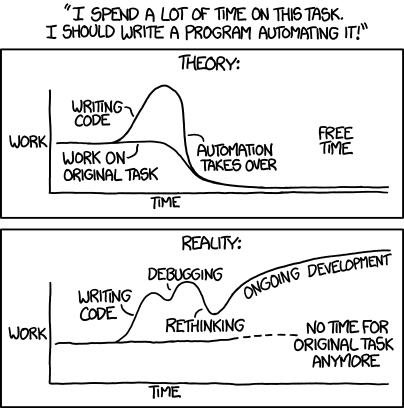
Automation

Ramcda3

Joe, I think this was made for you.

'Automating' comes from the roots 'auto-' meaning 'self-', and 'mating', meaning 'screwing'.
17 Oct 06:10

Truth or Consequences

by Grumpy, M.D.
Last night, trying to be a nice guy and participate in the hospital's community outreach program, I gave a talk to a roomful of senior citizens about Alzheimer's disease.

One guy interrupted me 3 times to ask what a neurologist does.

I'm still not sure if this was real, or if he was intentionally fucking with me.
15 Jun 22:37

That Means Go, Right?

13 Jun 06:54

Evil Turtle Is Evil

13 Jun 06:34

A stiff moment in scientific history

by vaughanbell
Ramcda3

lolz

Photo by Flickr user NASA's Marshall Space Flight Center. Click for source.In 1983 psychiatrist Giles Brindley demonstrated the first drug treatment for erectile dysfunction in a rather unique way. He took the drug and demonstrated his stiff wicket to the audience mid-way through his talk.

Scientific journal BJU International has a pant-wettingly hilarious account of the events of that day which made both scientific and presentation history.

Professor Brindley, still in his blue track suit, was introduced as a psychiatrist with broad research interests. He began his lecture without aplomb. He had, he indicated, hypothesized that injection with vasoactive agents into the corporal bodies of the penis might induce an erection. Lacking ready access to an appropriate animal model, and cognisant of the long medical tradition of using oneself as a research subject, he began a series of experiments on self-injection of his penis with various vasoactive agents, including papaverine, phentolamine, and several others. (While this is now commonplace, at the time it was unheard of). His slide-based talk consisted of a large series of photographs of his penis in various states of tumescence after injection with a variety of doses of phentolamine and papaverine. After viewing about 30 of these slides, there was no doubt in my mind that, at least in Professor Brindley’s case, the therapy was effective. Of course, one could not exclude the possibility that erotic stimulation had played a role in acquiring these erections, and Professor Brindley acknowledged this.

The Professor wanted to make his case in the most convincing style possible. He indicated that, in his view, no normal person would find the experience of giving a lecture to a large audience to be erotically stimulating or erection-inducing. He had, he said, therefore injected himself with papaverine in his hotel room before coming to give the lecture, and deliberately wore loose clothes (hence the track-suit) to make it possible to exhibit the results. He stepped around the podium, and pulled his loose pants tight up around his genitalia in an attempt to demonstrate his erection.

At this point, I, and I believe everyone else in the room, was agog. I could scarcely believe what was occurring on stage. But Prof. Brindley was not satisfied. He looked down sceptically at his pants and shook his head with dismay. ‘Unfortunately, this doesn’t display the results clearly enough’. He then summarily dropped his trousers and shorts, revealing a long, thin, clearly erect penis. There was not a sound in the room. Everyone had stopped breathing.

But the mere public showing of his erection from the podium was not sufficient. He paused, and seemed to ponder his next move. The sense of drama in the room was palpable. He then said, with gravity, ‘I’d like to give some of the audience the opportunity to confirm the degree of tumescence’. With his pants at his knees, he waddled down the stairs, approaching (to their horror) the urologists and their partners in the front row. As he approached them, erection waggling before him, four or five of the women in the front rows threw their arms up in the air, seemingly in unison, and screamed loudly. The scientific merits of the presentation had been overwhelmed, for them, by the novel and unusual mode of demonstrating the results.

The screams seemed to shock Professor Brindley, who rapidly pulled up his trousers, returned to the podium, and terminated the lecture. The crowd dispersed in a state of flabbergasted disarray. I imagine that the urologists who attended with their partners had a lot of explaining to do. The rest is history. Prof Brindley’s single-author paper reporting these results was published about 6 months later.


Link to full account of that fateful day (via @DrPetra)


13 Jun 06:24

National Institute of Mental Health abandoning the DSM

by vaughanbell
Ramcda3

Holy crap, psychiatry might actually save itself. You know how I've always said that most diagnoses were nonsense and that good doctors treat symptoms instead of a particular disease (an arbitrary set of symptoms)? Well, this confirms it.

In a potentially seismic move, the National Institute of Mental Health – the world’s biggest mental health research funder, has announced only two weeks before the launch of the DSM-5 diagnostic manual that it will be “re-orienting its research away from DSM categories”.

In the announcement, NIMH Director Thomas Insel says the DSM lacks validity and that “patients with mental disorders deserve better”.

This is something that will make very uncomfortable reading for the American Psychiatric Association as they trumpet what they claim is the ‘future of psychiatric diagnosis’ only two weeks before it hits the shelves.

As a result the NIMH will now be preferentially funding research that does not stick to DSM categories:

Going forward, we will be supporting research projects that look across current categories – or sub-divide current categories – to begin to develop a better system. What does this mean for applicants? Clinical trials might study all patients in a mood clinic rather than those meeting strict major depressive disorder criteria. Studies of biomarkers for “depression” might begin by looking across many disorders with anhedonia or emotional appraisal bias or psychomotor retardation to understand the circuitry underlying these symptoms. What does this mean for patients? We are committed to new and better treatments, but we feel this will only happen by developing a more precise diagnostic system.

As an alternative approach, Insel suggests the Research Domain Criteria (RDoC) project, which aims to uncover what it sees as the ‘component parts’ of psychological dysregulation by understanding difficulties in terms of cognitive, neural and genetic differences.

For example, difficulties with regulating the arousal system might be equally as involved in generating anxiety in PTSD as generating manic states in bipolar disorder.

Of course, this ‘component part’ approach is already a large part of mental health research but the RDoC project aims to combine this into a system that allows these to be mapped out and integrated.

It’s worth saying that this won’t be changing how psychiatrists treat their patients any time soon. DSM-style disorders will still be the order of the day, not least because a great deal of the evidence for the effectiveness of medication is based on giving people standard diagnoses.

It is also true to say that RDoC is currently little more than a plan at the moment – a bit like the Mars mission: you can see how it would be feasible but actually getting there seems a long way off. In fact, until now, the RDoC project has largely been considered to be an experimental project in thinking up alternative approaches.

The project was partly thought to be radical because it has many similarities to the approach taken by scientific critics of mainstream psychiatry who have argued for a symptom-based approach to understanding mental health difficulties that has often been rejected by the ‘diagnoses represent distinct diseases’ camp.

The NIMH has often been one of the most staunch supporters of the latter view, so the fact that it has put the RDoC front and centre is not only a slap in the face for the American Psychiatric Association and the DSM, it also heralds a massive change in how we might think of mental disorders in decades to come.
 

Link to NIMH announcement ‘Transforming Diagnosis’.


30 May 06:29

I Know It's Ruff...

I Know It's Ruff...

Dogbro is great with kids.

Submitted by: drummer11009

Tagged: goat , pun , dog , funny
30 May 06:15

How Long Have You Been There!?

09 Apr 03:25

Ice-cube-tray in a bottle

by Cory Doctorow


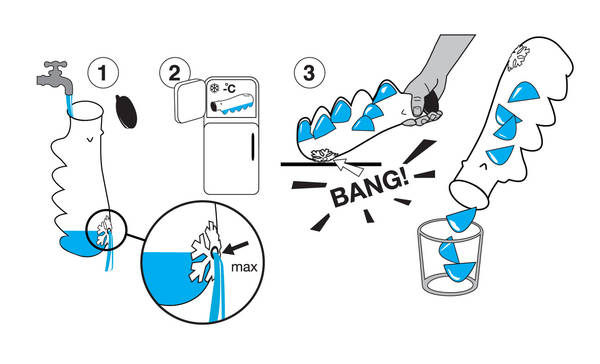
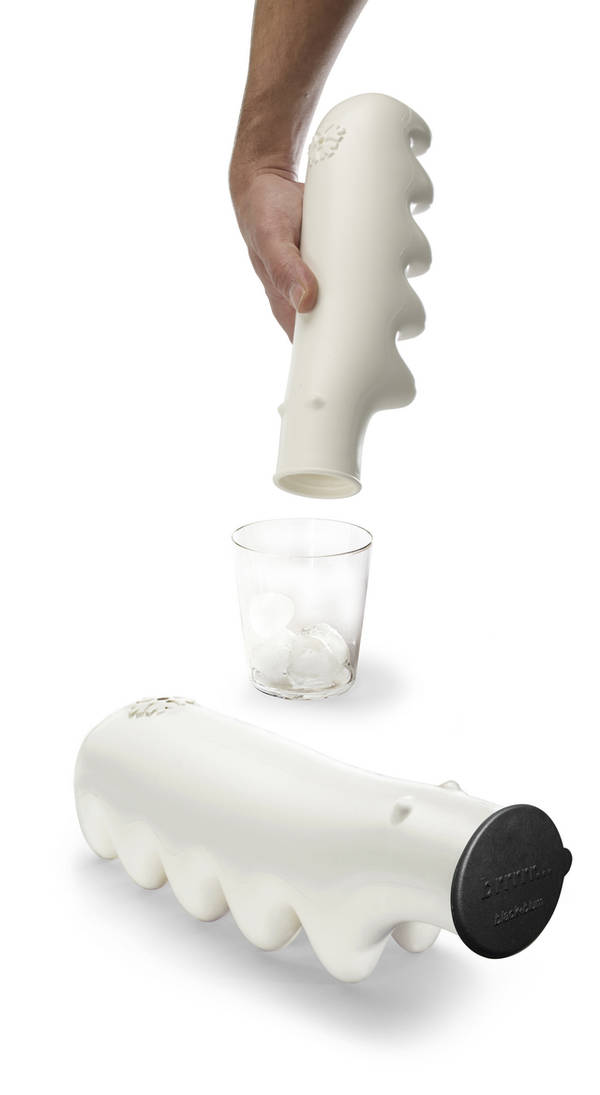
The "Polar Bear Ice Tray" is a sealed bottle that makes icecubes and then facilitates their easy removal. The sealed container keeps freezer flavors away, and once it's all frozen, you can dislodge the ice by giving the bottle a whack on a countertop and then pour it out of the mouth. Looks like a clever way of solving an old problem, though I haven't tried it myself.

polar bear ice tray (via Red Ferret)