28 Dec 02:09
Chem. Sci., 2017, Advance Article
DOI: 10.1039/C7SC01055A, Edge Article

Open Access
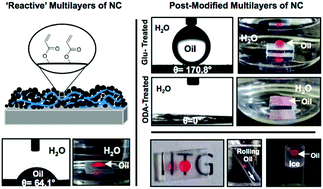
Dibyangana Parbat, Uttam Manna
'Amine-reactive' multilayers of a nano-complex are introduced by exploiting the Michael addition reaction to adopt 'internal' super-oil-wettability under water with impeccable physical/chemical durability.
To cite this article before page numbers are assigned, use the DOI form of citation above.
The content of this RSS Feed (c) The Royal Society of Chemistry

23 Jun 02:53
by John R. Coombs, Kenneth J. Fraunhoffer, Eric M. Simmons, Jason M. Stevens, Steven R. Wisniewski and Miao Yu

The Journal of Organic Chemistry
DOI: 10.1021/acs.joc.7b01003

23 Jun 02:52
by Teruo Umemoto, Bin Zhang, Tianhao Zhu, Xiaocong Zhou, Peng Zhang, Song Hu and Yuanqiang Li

The Journal of Organic Chemistry
DOI: 10.1021/acs.joc.7b00669

22 Jun 23:54
Green Chem., 2017, 19,3390-3399
DOI: 10.1039/C7GC00867H, Paper
Nam Duc Vu, Boris Guicheret, Nicolas Duguet, Estelle Metay, Marc Lemaire
The preparation of alpha-hydroxyketones derived from fatty acid derivatives has been reported under homogeneous and heterogeneous conditions.
The content of this RSS Feed (c) The Royal Society of Chemistry

22 Jun 23:07
by Wei, Wen-Ting
Synlett
DOI: 10.1055/s-0036-1589038

A radical–radical cross-coupling reaction of phenols with tert-butyl nitrite has been developed with the use of water as an additive. This method allows the construction of C–N bonds under an air atmosphere at room temperature, providing the ortho-nitrated phenol derivative in moderate to good yields.
[...]
© Georg Thieme Verlag Stuttgart · New York
Article in Thieme eJournals:
Table of contents | Abstract | Full text
22 Jun 23:05
by Kana M Sureshan, Annamalai Prathap
Abstract
Marine oil spills pose serious threats to the ecosystem and economy. There is much interest in developing sorbents that can tackle such spills. We have developed a novel sorbent by impregnating cellulose pulp with a sugar-derived oleogelator, 1,2:5,6-di-O-cyclohexylidene-mannitol. The gelator molecules mask the surface-exposed hydroxyl groups of cellulose fibrils by engaging them in H-bonding and expose their hydrophobic parts making the fibers temporarily hydrophobic (water contact angle 110°). This sorbent absorbs oil effectively, selectively and instantly from oil–water mixtures due to its hydrophobicity. Then the gelator molecules get released uniformly in the oil and later self-assemble to fibers, as evident from SEM analysis, congealing the oil within the matrix. This hierarchical entrapment of the oil by non-covalent polymeric fibers within a covalent polymer matrix makes the gel very strong (230-fold increase in the yield stress) and rigid, making it suitable for practical use.

A sorbent for marine oil-spill recovery was developed by impregnating cellulose pulp with a sugar-derived gelator. This sorbent absorbs oil from crude oil–water biphasic mixtures and the gelator molecules congeal the oil within the matrix. The crude-oil-absorbed matrix can be collected and the oil is recovered by applying pressure or by distillation.
22 Jun 23:02
by Shuai Liang, Yueling Ren, Georg Manolikakes
A simple and mild Mn(OAc)3-promoted oxidative coupling of 1,4-dimethoxybenzenes with sodium and lithium sulfinates was developed. The reaction proceeded readily at room temperature in air, and various sulfones were synthesized in moderate to high yields. In addition, a straightforward approach for the conversion of organolithium reagents and sulfur dioxide into sulfonylated 1,4-dimethoxybenzenes was explored.

A cross-dehyrogenative coupling of 1,4-dimethoxybenzenes with sodium and lithium sulfinates is reported. The reaction is mediated by Mn(OAc)3 and provides various aryl sulfones in high yields. HFIP = 1,1,1,3,3,3-hexafluoroisopropanol, M = Li, Na.
22 Jun 02:32
by Tomasz Gołofit, Paweł Maksimowski, Piotr Szwarc, Tomasz Cegłowski and Joanna Jefimczyk

Organic Process Research & Development
DOI: 10.1021/acs.oprd.7b00101

21 Jun 03:12
by Xiaotao Zhu, Changqing Ye, Yajun Li, Hongli Bao
Abstract
An iron-catalyzed oxyalkylation of alkynes with alkyl peroxides as the alkylating reagents has been investigated. Alkyl peroxides are readily available from aliphatic acids and serve simultaneously as the alkylating reagents and internal oxidants. Primary, secondary, and tertiary alkyl groups of aliphatic acids were readily incorporated into C−C triple bonds and diverse α-alkylated ketones were synthesized. Mechanism studies revealed that this reaction involves highly reactive alkyl free radicals. A unique equilibrium between lauric acid and water catalyzed by the iron(III) catalyst was observed.

An iron-catalyzed oxyalkylation of alkynes to afford α-alkylated ketones with alkyl peroxides as alkylating reagents was reported. Alkyl peroxides are readily available from aliphatic acids and serve simultaneously as alkylating reagents and internal oxidants. Synthetic applications and mechanism studies were conducted(see scheme).
21 Jun 02:49
Green Chem., 2017, 19,3520-3524
DOI: 10.1039/C7GC01416C, Communication
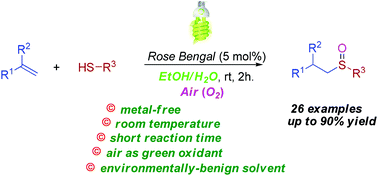
Huanhuan Cui, Wei Wei, Daoshan Yang, Yulong Zhang, Huijuan Zhao, Leilei Wang, Hua Wang
A selective synthesis of sulfoxides from alkenes and thiols was established by visible-light photoredox catalysis in air at room temperature.
The content of this RSS Feed (c) The Royal Society of Chemistry

21 Jun 02:38
by Qiang Yan, Lvqi Jiang, Wenbin Yi, Qiran Liu, Wei Zhang

The inside cover picture, provided by Qiang Yan, Lvqi Jiang, Wenbin Yi, Qiran Liu, and Wei Zhang illustrates a new method for direct difluoromethylthiolation using easy-to-handle HCF2SO2Na as a reagent in the present of (EtO)2P(O)H and TMSCl. HCF2S+ generated from this system undergoes electrophilic reactions with aromatic compounds including indoles, pyrroles, and activated benzenes. This method is also applicable for trifluoromethylthiolation with CF3SO2Na and perfluoroalkylthiolation with RfSO2Na. Reaction mechanisms for the metal-free electrophilic fluoroalkylthiolation reactions are also discussed. Details of this work can be found in the full paper on pages 2471–2480 (Q. Yan, L. Jiang, W. Yi, Q. Liu, W. Zhang, Adv. Synth. Catal. 2017, 359, 2471–2480; DOI: 10.1002/adsc.201700270).
21 Jun 02:30
by Wei Shu, Alexandre Genoux, Zhaodong Li, Cristina Nevado
Abstract
Cleavage of unstrained C−C bonds under mild, redox-neutral conditions represents a challenging endeavor which is accomplished here in the context of a flexible, visible-light-mediated, γ-functionalization of amines. In situ generated C-centered radicals are harvested in the presence of Michael acceptors, thiols and alkyl halides to efficiently form new C(sp3)−C(sp3), C(sp3)−H and C(sp3)−Br bonds, respectively.

Visible light enables the facile cleavage of unstrained C−C bonds and the subsequent remote functionalization of in situ generated C-centered radicals in γ-position to amino groups. In the presence of Michael acceptors, thiols, or alkyl halides new C(sp3)−C(sp3), C(sp3)−H and C(sp3)−Br bonds are efficiently formed.
21 Jun 02:13
by Qunwei Tang

Although substantial and rapid progress has been made in the building and properties of all-weather solar cells in the last two years, developing better energy converting materials and more detailed fundamental studies of their properties have a level of urgency, as there is still a lot of room for improvement. Read about the latest developments in this field in the Concept article by Q. Tang on page 8118 ff.
21 Jun 02:11
by Steffen Tröger-Müller, Jessica Brandt, Markus Antonietti, Clemens Liedel

Sustainable ionic liquids are promising compounds in green chemistry applications. While using them as solvent or reaction media is an important step towards more environmentally friendly chemistry, their synthesis is usually expensive and not green at all. Herein, a benign route to synthesize task-specific ionic liquids is presented, offering several possible functionalities in the cation and anion (artwork by D. Kraban). More information can be found in the Full Paper by C. Liedel et al. (DOI: 10.1002/chem.201701212).
21 Jun 02:05
by Yuanli Liu, Chuanbai Yu, Zhixin Cao, Daniel Shvarts, William C. Trogler
Abstract
Arsenic (As) is an extremely toxic element that exists in the environment in different chemical forms. The detection of arsenic in potable water remains a challenging task. This study presents a highly sensitive enzymatic catalysis system for trace sensing of inorganic arsenic in water. This is the first enzyme-catalyzed fluorescence assay capable of detecting arsenic at concentrations below the allowable level adopted by the World Health Organization (10 ppb in drinking water). The enzyme catalytically produces fluorescent NADH in the presence of arsenate, which enables facile detection of arsenate at concentrations in the 0–200 ppb range. Calibration curves made at a set time interval allow accurate determination of unknown arsenic samples. This method holds potential for interfacing with automated analytical sampling systems to allow arsenic determinations in environmental health applications.

A toxic glow: An enzyme catalytically produces fluorescent NADH in the presence of arsenate and enables facile detection of arsenic with concentrations in the 0–200 ppb range. This method holds potential for a convenient benchtop arsenic assay with concentrations near and below the allowable level adopted by the World Health Organization (10 ppb in potable water).
16 Jun 01:03
Publication date: 25 July 2017
Source:Applied Catalysis A: General, Volume 542
Author(s): Päivi Mäki-Arvela, Jeanne Zhu, Narendra Kumar, Kari Eränen, Atte Aho, Johan Linden, Jarno Salonen, Markus Peurla, Anton Mazur, Vladimir Matveev, Dmitry Yu. Murzin
Stearoyl ethanolamine was synthesized by amidation of stearic acid with ethanolamine in solventless conditions. Iron containing heterogeneous catalysts supported on SiO2, Al2O3, Beta (BEA), ZSM-12 (MTW) and Ferrierite (FER) were used in this work. Sn-modified Ferrierite and H-Ferrierite were also studied for comparison. Fe-modified catalysts synthesized using solid state ion-exchange and evaporation impregnation methods, were thoroughly characterized with X-ray powder diffraction, scanning electron microscope, FTIR with pyridine, nitrogen adsorption, energy dispersive X-ray microanalysis and Mössbauer spectroscopy. The highest conversion was obtained with Fe-H-FER-20 at 140°C in 1h giving 61% conversion and 98% selectivity towards the desired amide. The catalytic performance in terms of turnover frequency per mole of iron was achieved with the catalyst exhibiting the largest amount of Fe
3+ species, optimum acidity and a relatively low Brønsted to Lewis acid site ratio.
Graphical abstract

16 Jun 01:00
Publication date: 25 July 2017
Source:Applied Catalysis A: General, Volume 542
Author(s): Susana O. Ribeiro, Lucie S. Nogueira, Sandra Gago, Pedro L. Almeida, Marta C. Corvo, Baltazar de Castro, Carlos M. Granadeiro, Salete S. Balula
The present work presents a strategic oxidative desulfurization system able to efficiently operate under sustainable conditions, i.e. using an eco-friendly oxidant and without the need of extractive organic solvents. The catalytic performance of Eu(PW11O39)2@aptesSBA-15 was evaluated for the oxidative desulfurization of a multicomponent model diesel using a solvent-free or biphasic systems. The results reveal its remarkable desulfurization performance achieving complete desulfurization after just 2h of reaction. Moreover, the composite has shown a high recycling ability without loss of catalytic activity for ten consecutive ODS cycles. Interestingly, under solvent-free conditions it was possible to maintain the desulfurization efficiency of the biphasic system while being able to avoid the use of harmful organic solvents. In this case, a successful extraction of oxidized sulfur compounds was found conciliating centrifugation and water as extraction solvent. Therefore, this work reports an important step towards the development of novel eco-sustainable desulfurization systems with high industrial interest.
Graphical abstract

16 Jun 00:39
by Edman Shik Chi Tsang, Lin Ye, Ben Lo, Qi Song, Junlin Zheng, Dejing Kong, . Claire A Murray, Chiu Tang
Abstract
Herein, we report the catalytic decarboxylation of γ-valerolactone (GVL) over Zn/ZSM-5 to butene, followed by aromatization at high yield with co-feeding of water. An evaluation of the catalytic performance after prolonged periods of time showed that a water molecule is essential to maintain the decarboxylation and aromatization activities and avoid rapid catalyst deactivation. Synchrotron X-ray powder diffraction and Rietveld refinement were then used to elucidate the structures of adsorbed GVL and immobilized Zn species in combination with EXAFS and NMR spectroscopy. A new route for the cooperative hydrolysis of GVL by framework Zn−OH and Brønsted acidic sites to butene and then to aromatic compounds has thus been demonstrated. The structures and fundamental pathways for the nucleophilic attack of terminal Zn−OH sites are comparable to those of Zn-containing enzymes in biological systems.

A cooperative ring-opening route for the decarboxylation of γ-valerolactone (GVL) to CO2 and 1-butene over a Zn/ZSM-5 catalyst is enabled by water molecule activation by regenerative Zn−OH and Brønsted acidic sites. The intermediary structures and fundamental pathways are comparable to those of zinc-containing enzymes. BTX=benzene/toluene/xylene.
15 Jun 00:44
Green Chem., 2017, 19,3296-3301
DOI: 10.1039/C7GC01289F, Paper
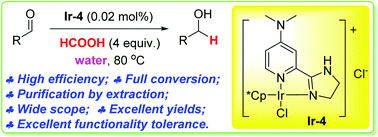
Zhanhui Yang, Zhongpeng Zhu, Renshi Luo, Xiang Qiu, Ji-tian Liu, Jing-Kui Yang, Weiping Tang
A highly efficient iridium catalyst is developed for the chemoselective reduction of aldehydes to alcohols in water, using formic acid as a reductant.
The content of this RSS Feed (c) The Royal Society of Chemistry

15 Jun 00:34
by Peng Yang, Chunlin Yue, Huaming Sun, Wen-Jing Liu, Xudong Deng, Binbin Guan Guan, Xu Zhang
Abstract
The extraction of gold from ores and electronic waste is an important topic worldwide, as this precious metal has immense value in a variety of fields. However, serious environmental pollution and high energy consumption due to the use of toxic oxidation reagents and harsh reaction conditions is a well-known problem in the gold industry. Herein, we report a new chemical method based on the combined use of N-bromosuccinimide (NBS) and pyridine (Py), which has a greatly decreased environmental impact and reagent cost, as well as mild reaction requirements. This method can directly leach Au0 from gold ore and electronic waste to form AuIII in water. The process is achieved in a yield of approximately 90 % at room temperature and a nearly neutral pH. The minimum dose of NBS/Py is as low as 10 mm, which exhibits low toxicity towards mammalian cells and animals as well as aquatic creatures. The high leaching selectivity of Au over other metals during gold leaching is demonstrated, showing that this method has great potential for practical industrial application towards the sustainable refining of gold from ores and electronic waste.

Mild gold leaching: A chemical method based on the use of an aqueous solution of N-bromosuccinimide (NBS) and pyridine (Py) is applied to selectively leach Au0 from gold ore and electronic waste to form Au3+ in aqueous solution. A yield of approximately 90 % at room temperature and a nearly neutral pH is achieved.
14 Jun 08:07
by Li Zhen, Hao Yu, Carsten Bolm
Abstract
Readily accessible dibenzothiophene sulfoximine is an NH3 surrogate allowing the preparation of free anilines by copper-catalyzed cross-coupling reactions with aryl iodides or amides followed by radical S−N bond cleavage. The one-pot/two-step reactions sequence leads to the aminated products in good yields.

A useful substitute: Dibenzothiophene sulfoximine is an NH3 surrogate allowing halo arenes and amides to be converted into aminated analogues by copper-catalyzed Buchwald–Hartwig-type or dehydrogenative C−H/N−H cross-coupling reactions followed by radical sulfoxide cleavage.
14 Jun 07:58
by Chia-Wei Chen, Yi-Ling Chen, Daggula Mallikarjuna Reddy, Kai Du, Chao-En Li, Bo-Hao Shih, Yung-Jing Xue, Chin-Fa Lee

A practical synthetic method for the synthesis of diversified thioethers using oxalic diamides as highly air-stable ligands through copper catalysis is demonstrated. A variety of aryl and alkyl thiols were successfully coupled with aryl bromides and aryl chlorides to afford the corresponding thioethers in good yields. This work is the first copper-catalyzed thioetherification of unactivated aryl chlorides. More information can be found in the Full Paper by C.-F. Lee et al. (DOI: 10.1002/chem.201701671).
08 Jun 22:47
by Rhoné, Benoît
Synlett
DOI: 10.1055/s-0036-1588866

Inorganic bases such as NaH, KOt-Bu, NaOH, or KOH are efficient catalysts to promote the transcarbamoylation reaction between urethanes and a variety of primary and secondary alcohols under mild conditions. They constitute an alternative to organometallic catalysis and can be applied to aliphatic or aromatic urethanes.
[...]
© Georg Thieme Verlag Stuttgart · New York
Article in Thieme eJournals:
Table of contents | Abstract | Full text
02 Jun 04:14
by Zhimin Liu, Zhengang Ke, Leiduan Hao, Xiang Gao, Hongye Zhang, Yanfei Zhao, Bo Yu, Zhenzhen Yang, Yu Chen
Abstract
We present a simple, metal-free, and versatile route to synthesize unsymmetrically N,N-disubstituted formamides (NNFAs) from CO2, primary amine, and aldehyde promoted by an ionic liquid (1-butyl-3-methylimidazolium chloride) at room temperature. This approach features wide scopes of amines and aldehydes, and various unsymmetrical NNFAs could be obtained in good to excellent yields. The ionic liquid can be reused for at least five runs without obvious activity loss.

A simple and versatile route is presented for the synthesis of unsymmetrically N,N-disubstituted formamides (NNFAs) through a three-component reductive coupling of CO2, amine, and aldehyde under mild conditions. This method affords various unsymmetric NNFAs in good to excellent yields.
02 Jun 01:15
Publication date: 25 July 2017
Source:Applied Catalysis A: General, Volume 542
Author(s): Kirill A. Alferov, Gennadiy P. Belov, Yuezhong Meng
The objective of this review is the analysis and comment of recent publication results (from July 2010 until February 2017) obtained for selective ethylene oligomerization toward 1-hexene and 1-octene catalyzed by chromium-based catalytic systems. Both the scientific and patent literature was taken into the consideration. The catalytic systems for ethylene oligomerization are classified on the basis of the ligand type employed. The activities and selectivities of the catalysts are provided throughout the text. Despite a big success in the field, there is still rather limited choice of catalysts affording simultaneously high activity, selectivity and low polymer proportion. This is especially true for ethylene to 1-octene tetramerization reaction. The results of the studies concerning oligomerization mechanisms obtained over the recent years are also included in this review.
Graphical abstract

02 Jun 00:17
Chem. Sci., 2017, 8,4739-4749
DOI: 10.1039/C7SC01276D, Edge Article
Open Access
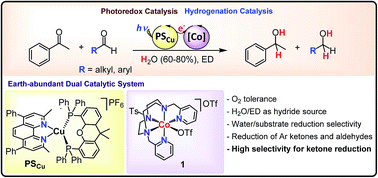
Arnau Call, Carla Casadevall, Ferran Acuna-Pares, Alicia Casitas, Julio Lloret-Fillol
A dual catalytic system based on earth-abundant elements reduces aromatic ketones and aldehydes to alcohols in aqueous media under visible light. An unprecedented selectivity for the reduction of aromatic ketones versus aliphatic aldehydes is reported.
The content of this RSS Feed (c) The Royal Society of Chemistry

02 Jun 00:15
by Shu Huang, Dayang Wang
Abstract
Coating solid surfaces with cellulose nanofibril (CNF) monolayers via physical deposition was found to keep the surfaces free of a variety of oils, ranging from viscous engine oil to polar n-butanol, upon water action. The self-cleaning function was well correlated with the unique molecular structure of the CNF, in which abundant surface carboxyl and hydroxy groups are uniformly, densely, and symmetrically arranged to form a polar corona on a crystalline nanocellulose strand. This isotropic core–corona configuration offers new and easily adoptable guidance to design self-cleaning surfaces at the molecular level. Thanks to its excellent self-cleaning behavior, the CNF coating converted conventional meshes into highly effective membranes for oil–water separation with no prior surface treatment required.

Simple coating of cellulose nanofibril (CNF) monolayers brings about excellent self-cleaning surface behavior. Thanks to its isotropic molecular configuration, the orientation of each CNF with respect to the surface plane hardly affects water wetting on the CNF coating, thus making the coating surfaces clean of a variety of oils upon simple water action.
02 Jun 00:12
by Axel Jacobi von Wangelin, Davide Brenna, Matteo Villa, Tim N. Gieshoff, Marko Hapke, Fabian Fischer
Abstract
Catalyzing C−C bond-forming reactions with earth-abundant metals under mild conditions is at the heart of sustainable synthesis. The cyclotrimerization of alkynes is a valuable atom-efficient reaction in organic synthesis that is enabled by several metal catalysts, including iron. This study reports an effective iron-catalyzed cyclotrimerization for the regioselective synthesis of 1,2,4-substituted arenes (1 mol % catalyst, toluene, 20 °C, 5 min). A dual activation mechanism (substrate deprotonation, reductive elimination) renders the simple FeII precatalyst highly active in the absence of any reductant.

Cyclotrimerization reactions of terminal alkynes are enabled by the simple precatalyst Fe(hmds)2 (hmds=1,1,1,3,3,3-hexamethyldisilazide), which does not require the addition of a dedicated reductant but undergoes rapid substrate-induced activation. 1,2,4-Trisubstituted arenes were thus formed in a highly regioselective fashion within a few minutes at 20 °C.
02 Jun 00:09
by David B Lima, Filipe Penteado, Marcelo M Vieira, Diego Alves, Gelson Perin, Claudio Santi, Eder Joao Lenardao
Herein, we report the first decarboxylative oxidation of α-keto acids that is promoted by sodium metabisulfite (Na2S2O5) to obtain 2-substituted benzothiazoles and benzoselenazoles. Diaryl disulfides and diselenides were used as chalcogen sources, and the desired products were obtained in moderate to excellent yields. This protocol does not require an inert gas, transition metals, or harsh reaction conditions, and CO2 is released as an environmentally benign coproduct. The presence of Na2S2O5 was essential to guarantee that the reaction reached completion and afforded maximum product yields.

Benzothiazoles and benzoselenazoles were efficiently prepared by the decarboxylative oxidation of α-keto acids in the presence of Na2S2O5. Diaryl disulfides and diselenides were used as a chalcogen source in this transition-metal-free protocol that did not require an inert gas. The straightforward procedure was used to prepare 20 different substituted heterocycles in good yields.
01 Jun 23:59
by Matthew B. Plutschack, Bartholomäus Pieber, Kerry Gilmore and Peter H. Seeberger

Chemical Reviews
DOI: 10.1021/acs.chemrev.7b00183

   This article is licensed under a Creative Commons Attribution-NonCommercial 3.0 Unported Licence.