Shared posts

26 Dec 17:40

Hanes's threat to Hanes Hummus: people might mistake chickpeas for underwear!

by Cory Doctorow

Canada's Hanes Hummus has received a legal threat from Hanesbrands, Inc, who make underwear and other textiles, demanding that the four-person company change its name lest the public begin to tragically confuse chickpea paste with undergarments. Hanes Hummus's lawyer wrote a spirited and funny letter explaining why Hanesbrands shouldn't be worried about a separate Hanes trademark over dips and spreads, but given the relative size of the two parties, it seems likely that Hanes Hummus will lose its fight if Hanesbrands continues to play the bully.

"Hanes" is short for Yohannes. Hanes Hummus's founder is named Yohannes Petros. He filed for a trademark on "Hanes Hummus" in Canada and the US.

"I was not aware that HBI [Hanesbrands Inc.] was in the business of manufacturing and selling hummus. In fact, I am confident that HBI is not in the food production business at all, let alone the production of fine and tasty hummus of the type manufactured and sold by Hanes Hummus," Dooley writes.

"I was not aware that HBI's T-shirts were edible, made with chick peas, lemon or garlic," Dooley adds...

Dooley holds back no punches, writing to Hanes, "It is safe to assume that you have done no research whatsoever" and "If you had done that research, you would not have sent the letter because, in reality, no rational person who is familiar with Hanes Hummus could possibly allege any confusion between Hanes Hummus and HBI's Mark or HBI's product."

Underwear Maker Hanes Wages Battle With Canadian Hummus Maker [SUSANNA KIM/ABC News]

(Thanks, Dee!)


26 Dec 01:14

Goldeneye: a copyright troll that's all talk and no trousers

by Cory Doctorow
What happens if you ignore the £500 demand letters from porno-copyright-trolls Goldeneye? They give up and leave you alone.


25 Dec 20:06

Precarity is the new normal

by Cory Doctorow
Jon Evans is incandescent on the subject of the Great Bifurcation, as the economic equality gap yawns wider and wider. He puts into words the thing that has literally kept me up nights for the past year. What is to be done? (via Making Light)


25 Dec 17:58

Crowdfunding legal challenge by a Texas family whose farm was stolen by Keystone XL

by Cory Doctorow

Alan sez, "So there's this woman who decided she wasn't going to give Keystone XL passage rights through her land in Texas. Not even for the few tens of thousands of dollars they offered. And then the story gets weird. In Texas, companies (like TransCanada) can use eminent domain. All they have to do is declare themselves a 'common carrier' which is apparently a one-page form you have to fill out. Keystone did that and then took Julia Crawford's land."

Apparently they didn't know that "take your BS and shove it" runs kind of deep in the heart of Texas women. Ms Crawford sued and lost (despite the judge phoning in the ruling - no I'm not making this up) and then she appealed and lost again. Now she's trying to raise funds to appeal again to the Texas Supreme Court. As crazy as that might sound, the TX Supreme Court has in the past been willing to rein in corporate abuses of eminent domain and the Crawfords have as good a case as you're likely to get.

*Stand With Julia* (Thanks, Alan!)


25 Dec 17:03

Music publishers claim to own "Silent Night" & ripoff indie Youtube singer; ContentID helps them do it

by Cory Doctorow

Adam the Alien has a Youtube channel that earns him some money through Youtube's "monetization" service, which inserts ads and gives him a cut of the money. It worked fine until Youtube's notorious "Content ID" system let some of the biggest music publishers in the world lay claim to the copyright in Adam's video, on the basis that his rendition of "Silent Night" belonged to them -- despite having been composed in 1818 and being firmly in the public domain. Once their claims had been laid, all the money his video generated was diverted to them.

The companies that laid claim to Adam's video are the publishing arms of the biggest record labels on the planet -- BMG, Warner/Chappell, and Universal Music Publishing Group -- and they use an automated system to identify videos and claim them. There is no penalty for automatically generated claims over things that the publishers have nothing to do with, and so, unsurprisingly, their copyright bots are fantastically sloppy and operate with little or no human oversight.

It's a perfect storm of stupidity and greed: Google has given the big publishers a platform that rewards fraudulent claims over indie creators' work; the publishers responded by making plenty of such claims, and all the while decrying "piracy" as the great evil of our day.

As an independent content creator, it is absurd, ridiculous, and downright insulting that I can have my content de-monetized based on a completely fraudulent claim. The fact that the claims are based on an automated system doesn’t make it any better. If anything, it makes me think the automated system should not be in place. Or at the very least, it needs a major overhaul, and a lot more human eyes involved before action is taken....

...But we’re playing with people’s income, here, and I don’t think an automated system should be in charge of that. Certainly not one that apparently has public domain songs registered to it. Anything fitting that description should only be acted upon once a human eye has reviewed it. Perhaps a different category within the content ID system is needed. A category for protecting specific recordings and arrangements of public domain content, but without YouTube’s entirely too impressive ability to recognize the similarities of someone singing their own version.

YouTube’s content ID system brings humbug to the holidays (via Techdirt)


25 Dec 17:01

Awesome Christmas Video Greetings 2013

by Miss Cellania

This happens every year. We get a wonderful batch of video Christmas greeting sent to us right before the holiday. But 1. there's not enough hours left in the day to post them one at a time for your Christmas enjoyment, a 2. some people are suffering from Christmas overload already. So here we have our mega-list of the nicest, funniest, and cleverest video greetings from all over in one list! See them all if you've got the Christmas spirit, or save for later if you are too busy right now. You might find the perfect video to send out to your friends and relatives for a last-minute Christmas card!

A Slow Motion Christmas
(YouTube link)
Did you make gingerbread men this year? Be aware that when no one is looking, they can be total menaces! FinalCutKing made this slow motion video as a Christmas greeting. -Thanks, Zach King!

Goats Singing Merry Christmas
(YouTube link)
These goats are singing their Christmas greetings to you, through the magic of editing! Eleven seconds of silliness -and the rest of the video is an ad. -via Daily Picks and Flicks

Decor Amore
(vimeo link)
A Christmas greeting from Bruton Stroube, which I believe does photography and videos. In a world where Christmas decorations come to live while no one is watching, a Nutcracker falls for an angel.

A Krampus Christmas
(vimeo link)
Screen Novelties sent this stop-motion animation they made in which Krampus shows his usefulness in punishing naughty boys and girls! -Thanks, Mark!

Paul's Home Alone Christmas Card
(YouTube link)
Paul Little made a Christmas greeting by performing Home Alone, the entire movie, by himself. I never noticed that he never took a bite of the macaroni and cheese, but apparently that is a sticking point for everyone who was a child when they first saw the movie. -via Viral Viral Videos

Christmas Medley Parody 2013
(YouTube link)
Screen team put together this medley of song parodies rewritten with a Christmas theme. The highlight is their takeoff on "Royals" about halfway through. -Thanks, Elijah Johnson!

A Synthesizer for Christmas
(vimeo link)
Ambar Navarro created this stop-motion animation for the song "A Synthesizer for Christmas" by Hyperbubble.  -via Laughing Squid

Cats Help Wrap Gifts
(YouTube link)
Cats are totally enthusiastic about wrapping gifts, even if they aren't in the room! -via Tastefully Offensive

A Merry Christmas in Dominoes
(YouTube link)
Hevesh5 set up dominos for his Christmas greeting. Sweet! -via Viral Viral Videos

Teddy Bear's Christmas Treat
(YouTube link)
Teddy Bear the porcupine found a whole box of corn on the cob under the Christmas tree! He's busy enjoying his Christmas corn as fast as he can, be he still has a few words today about it. Those words are apparently, "Keep your paws off my corn!" -Thanks, Zooniversity!

Have a wonderful Christmas, everyone!

25 Dec 16:54

Iron Maiden makes millions by touring countries where their music is most pirated

by Cory Doctorow


Iron Maiden hired a BitTorrent analytics company called Musicmetric to determine where piracy of their music was highest, then scheduled tours of those countries. They made millions touring Central and South America. Iron Maiden LLP has outperformed the UK music sector as a whole and was named one of the "1000 Companies That Inspire Britain" by the London Stock Exchange.

"Having an accurate real time snapshop of key data streams is all about helping inform people's decision making. If you know what drives engagement you can maximize the value of your fan base. Artists could say ‘we're getting pirated here, let's do something about it’, or ‘we're popular here, let's play a show’," said Gregory Mead, CEO and co-founder of the London-based firm.

In the case of Iron Maiden, still a top-drawing band in the U.S. and Europe after thirty years, it noted a surge in traffic in South America. Also, it saw that Brazil, Venezuela, Mexico, Columbia, and Chile were among the top 10 countries with the most Iron Maiden Twitter followers. There was also a huge amount of BitTorrent traffic in South America, particularly in Brazil.

Rather than send in the lawyers, Maiden sent itself in. The band has focused extensively on South American tours in recent years, one of which was filmed for the documentary "Flight 666." After all, fans can't download a concert or t-shirts. The result was massive sellouts. The São Paolo show alone grossed £1.58 million (US$2.58 million) alone.

How Iron Maiden found its worst music pirates -- then went and played for them [Andy Patrizio/Cite World]

(Image: Estadio Saprissa Iron Maiden, a Creative Commons Attribution (2.0) image from adels's photostream)


24 Dec 21:21

Snowden to deliver alternative to the Queen's Christmas speech on Channel Four

by Cory Doctorow
Every Christmas Day, the Queen takes to the Beeb to deliver a message to the nation. Every Christmas Day, Channel Four picks someone to deliver an alternative address for people who don't care what the Queen has to say. This year, it's Edward Snowden. I just plugged in my TV again.


24 Dec 04:49

$1B/year climate denial network exposed

by Cory Doctorow

In Institutionalizing delay: foundation funding and the creation of U.S. climate change counter-movement organizations, a scholarly article published in the current Climatic Change , Drexel University's Robert J. Brulle documents a billion-dollar-per-year climate-change denial network, underwritten by conservative billionaires operating through obfuscating networks of companies aimed at obscuring the origin of the funds.

Among the recipients of the funds are several charitable groups that are supposedly neutral on climate change, including the American Enterprise Institute (the top recipient of the funds) and the Heritage Foundation. Brulle was unable to uncover the origin of 75 percent of the funds, much of which were routed through Donors Trust and Donors Capital Fund.

The vast majority of the 91 groups on Brulle's list – 79% – were registered as charitable organisations and enjoyed considerable tax breaks. Those 91 groups included trade organisations, think tanks and campaign groups. The groups collectively received more than $7bn over the eight years of Brulle's study – or about $900m a year from 2003 to 2010. Conservative think tanks and advocacy groups occupied the core of that effort.

The funding was dispersed to top-tier conservative think tanks in Washington, such as the AEI and Heritage Foundation, which focus on a range of issues, as well as more obscure organisations such as the Atlas Economic Research Foundation and the John Locke Foundation.

Funding also went to groups that took on climate change denial as a core mission – such as the Heartland Institute, which held regular conclaves dedicated to undermining the United Nations climate panel's reports, and the Competitive Enterprise Institute, which tried and failed to prosecute a climate scientist, Michael Mann, for academic fraud.

Conservative groups spend up to $1bn a year to fight action on climate change [Suzanne Goldenberg/The Guardian]

(Image: Takin' it to the BANK$Y, a Creative Commons Attribution Share-Alike (2.0) image from guano's photostream)


24 Dec 00:14

Jingle Cats

by Xeni Jardin
[video link, via katienotopoulos]


24 Dec 00:13

Instahamlet: Shakespeare's classic retold in 15-second Instagram videos

by Xeni Jardin
Michael Roston of the New York Times sends word of a cool project he worked on at the paper: "We asked students to record themselves delivering 15 seconds of 'Hamlet' on Instagram." The results are pretty great.


23 Dec 20:45

Samsung's creepy smartwatch stalker

by Mark Frauenfelder

In Samsungland, women love it when creepy strangers follow them and secretly take lots of pictures of them.

(Via TechCrunch)


23 Dec 20:45

UK's new national firewall's "parental control" list blocks Slashdot, EFF, and Boing Boing

by Cory Doctorow
The Great Firewall of Cameron is going live, with all British ISPs defaulting their customers to an "adult content filter" -- meaning that you have to call up and say, "I demand pornography!" or all the sites on the blacklist will be off-limits to you. Included in "parental control blocklist" are such hotbeds of hardcore porn as Slashdot, EFF, Linux Today, Blogspot, No Starch Press, OpenBSD, FreeBSD, and, of course, Boing Boing. The "parental control" list is something you have to ask for, but it's being actively marketed to parents as the responsible thing to do. For the record, I've switched my broadband to Andrews and Arnold, who oppose Internet censorship.


23 Dec 20:40

This Rockin' Dog is a Little Sketchy...

This Rockin' Dog is a Little Sketchy...

Submitted by: Unknown

23 Dec 07:42

Eight-volume hardcover set collects 4.7 million Linkedin passwords in alphabetical order

by Cory Doctorow


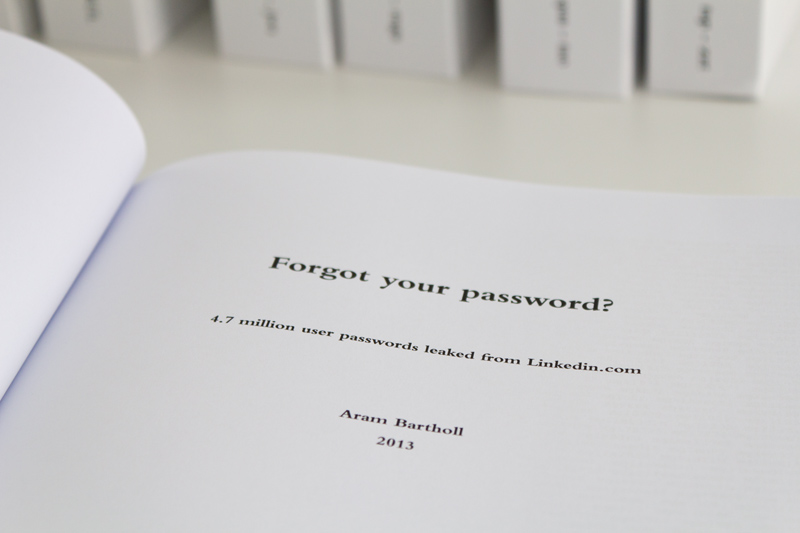
Artist Aram Bartholl's "Forgot Your Password?" is an eight-volume print edition collecting, in alphabetical order, all 4.7 million Linkedin password that leaked in 2012. Linkedin had stored the passwords in cleartext, which is a very, very bad idea. It will be shown at Munich's Unpainted media art fair in January 2014.


In summer 2012 the social network LinkedIn.com got hacked and lost its whole user database. A few months later parts of the decrypted password list surfaced on the Internet. These eight volumes contain 4.7 million LinkedIn clear text user passwords printed in alphabetical order. Visitors are invited to look up their own password.

Forgot Your Password? (via JWZ)


23 Dec 07:42

Marvel Super Heroes as Cute Animals

by Miss Cellania

Loki as a fox? Deadpool as a giraffe? Wolverine as ...a wolverine? This is not fan fiction. These are real covers of real Marvel comics, with super heroes and villains re-imagined as cute pets and woodland creatures.

To celebrate the launch of All-New Marvel NOW!, the publisher’s big 2014 promotion that will relaunch, renumber or revive almost its entire line, Marvel is running a series of special variant covers that re-imagines the lead characters of each series as an animal, with art by the likes of Mike del Mundo, Chris Samnee and My Little Pony: Friendship is Magic’s Katie Cook. Think of it more like “Marvel MEOW!”

Which is just what you'd expect after Disney bought Marvel five years ago -but we didn't think it would take this long! See 23 of the covers at Wired. -via Geeks Are Sexy

(Image credit: Chris Samnee/Marvel Comics)

23 Dec 07:41

Interactive version of EFF's NSA crossword

by Cory Doctorow

Here's a nice little Christmastime Creative Commons and free/open source software success story: yesterday, I posted the Electronic Frontier Foundation's NSA-themed crossword puzzle, which was CC licensed. Shortly after, TheDod posted an interactive version of the puzzle to Github, forking an interactive crossword program written by the Boston Globe's Jesse Weisbeck.

Interactive edition of EFF's Xmas 2013 NSA crossword puzzle (Thanks, Dave!)


22 Dec 23:06

Canadian spies lied to judge to obtain surveillance warrants

by Cory Doctorow


Spies from the Canadian Security Intelligence Service and the Communication Security Establishment of Canada lied to a judge in order to obtain a warrant to spy on Canadians while they were abroad. The warrants they obtained allowed them to spy on these Canadians; but they deliberately misinterpreted the law and asked other countries' intelligence services to conduct the spying for them -- something forbidden under Canadian law. The judge is not impressed.

"CSIS and CSEC officials are relying on that interpretation at their peril and ... incurring the risk that targets may be detained or otherwise harmed as a result of the use of the intercepted communications by the foreign agencies," [Judge Richard] Mosley wrote.

"[The law] does not authorize the service and CSEC to incur that risk or shield them from liability..."

"...This was a breach of the duty of candour owed by the service and their legal advisers to the court," he said.

"It has led to misstatements in the public record about the scope of the authority granted the service."

CSIS slammed for end-running law to snoop on Canadians abroad [The Canadian Press]

(via /.)

(Image: LIE, a Creative Commons Attribution (2.0) image from ktylerconk's photostream)


22 Dec 23:04

FBI agent tries to copyright super-secret torture manual, inadvertently makes it public

by Cory Doctorow

The ACLU has spent years in court trying to get a look at a top-secret FBI interrogation manual that referred to the CIA's notorious KUBARK torture manual. The FBI released a heavily redacted version at one point -- so redacted as to be useless for determining whether its recommendations were constitutional.

However, it turns out that the FBI agent who wrote the manual sent a copy to the Library of Congress in order to register a copyright in it -- in his name! (Government documents are not copyrightable, but even if they were, the copyright would vest with the agent's employer, not the agent himself). A Mother Jones reporter discovered the unredacted manual at the Library of Congress last week, and tipped off the ACLU about it.

Anyone can inspect the manual on request. Go see for yourself!

The 70-plus-page manual ended up in the Library of Congress, thanks to its author, an FBI official who made an unexplainable mistake. This FBI supervisory special agent, who once worked as a unit chief in the FBI's counterterrorism division, registered a copyright for the manual in 2010 and deposited a copy with the US Copyright Office, where members of the public can inspect it upon request. What's particularly strange about this episode is that government documents cannot be copyrighted.

"A document that has not been released does not even need a copyright," says Steven Aftergood, a government secrecy expert at the Federation of American Scientists. "Who is going to plagiarize from it? Even if you wanted to, you couldn't violate the copyright because you don't have the document. It isn't available."

"The whole thing is a comedy of errors," he adds. "It sounds like gross incompetence and ignorance."

Julian Sanchez, a fellow with the libertarian Cato Institute who has studied copyright policy, was harsher: "Do they not cover this in orientation? [Sensitive] documents should not be placed in public repositories—and, by the way, aren't copyrightable. How do you even get a clearance without knowing this stuff?"

You'll Never Guess Where This FBI Agent Left a Secret Interrogation Manual [Nick Baumann/Mother Jones]

(via Techdirt)

(Image: FBI, a Creative Commons Attribution Share-Alike (2.0) image from 10542402@N06's photostream)


22 Dec 16:38

NSF study shows more than 90% of US businesses view copyright, patent and trademark as "not important"

by Cory Doctorow


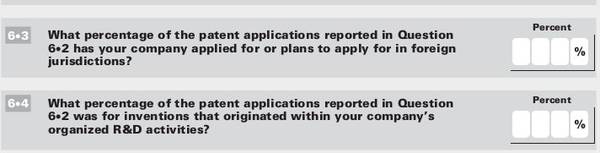
In March 2012, the National Science Foundation released the results of its "Business Research and Development and Innovation Survey" study, a rigorous, careful, wide-ranging longitudinal study on the use of trademark, copyright, and patents in American business. The study concluded that, overall, most businesses don't rate these protections as a significant factor in their success (in 2010, 87.2% said trademarks were "not important"; 90.1% said the same of copyright, and 96.2% said the same of patents).

What's striking about the survey is that even fields that are traditionally viewed as valuing these protections were surprisingly indifferent to them -- for example, only 51.4% of software businesses rated copyright as "very important."

In a very good post, GWU Political Science PhD candidate Gabriel J. Michael contrasts the obscurity of this landmark study with the incredible prominence enjoyed by a farcical USPTO study released last year that purported to show that "the entire U.S. economy relies on some form of IP" and that "IP-intensive industries" created 40 million American jobs in 2010. The study's methodology was a so sloppy as to be unsalvageable -- for example, the study claimed that anyone who worked at a grocery store was a beneficiary of "strong IP protection."

The NSF study doesn't merely totally refute the USPTO's findings, it does so using a well-documented, statistically valid, neutral methodology that was calculated to find the truth, rather than scoring political points for the copyright lobby. It's a study in contrasts between evidence-based policy production and policy-based evidence production.

61.7% of businesses manufacturing computer and electronic products report that patents are “not important” to them.

96.3% of businesses with less than 500 employees report that patents are “not important” to them.

45.6% of businesses with 25,000 or more employees report that patents are “not important” to them.

53.6% of businesses classified in the information sector (NAICS code 51 – i.e., a sector we’d expect to rely heavily on copyright) report that copyrights are “not important” to them.

Overall, businesses report that trade secrets are the most important form of intellectual property protection, with 13.2% of businesses calling trade secrets “very important” or “somewhat important.” Trademarks are a close second, with copyrights and patents significantly farther behind.

Trailing in last place is sui generis protection for semiconductor mask works, although that is no surprise.

When asked, vast majority of businesses say IP is not important [Gabriel J. Michael/To Promote the Progress?]

Business Use of Intellectual Property Protection Documented in NSF Survey

(via /.)


22 Dec 16:36

2013 In Play-Doh

by Jill Harness

What the Fox Say? Well, it's probably not Play-Doh, but the two certainly have something in common -they are two critical components of this great Mental Floss round up of the top ten moments of 2013 as recreated in Play-Doh. Obviously, What the Fox Say was part of the top moments, but you'll have to visit the link to find out what the rest are. 

I do have one issue with the list though. How is Jennifer Lawrence a moment of 2013? Especially when she started getting famous before this year?

21 Dec 16:27

The Best of the Web, Volume 6

Submitted by: Unknown

Tagged: compilation , BAMF , Video
21 Dec 15:34

US Department of Defense's public domain archive to be privatized, locked up for ten years

by Cory Doctorow


Archivist Rick Prelinger sez, "The U.S. Department of Defense has entered into a contract with T3 Media to get its gigantic still and moving image collection digitized at no cost to the government. In exchange, T3 Media will become the exclusive public outlet for millions of images and videos for ten years. Unlike most other developed nations, the U.S. Government does not claim copyright on video, film, photographs and other media produced by its workers. The immense number of works in the U.S. public domain have enabled countless researchers, makers and citizens to read, view and make many new works. True, those wishing to use modern military materials (1940s-present) in DoD's archives often need to negotiate their release with military public affairs, but these materials have traditionally been available for just the cost of duplication. This is soon to change."

In exchange for covering a share of digitizing and hosting costs (the government will pick up an unspecified share of costs as well), T3 Media will provide access to the government and receive a 10-year exclusive license to charge for public access to these public domain materials.

I contacted T3Media's communications manager who could only tell me that "the material will be available for licensing." Costs, procedures and restrictions are still undecided or undisclosed. T3 will possess the highest-quality digital copies of these materials and there is no guarantee that DoD will offer them to the public online when the 10-year window expires. It's therefore hard to know whether this contract will serve the public interest.

While I have not yet seen the contract, the project Statement of Objectives offers additional information and here's T3Media's release.

DOD wants you ... to browse its visual library (Thanks, Rick!)


21 Dec 15:33

A Christmas Wish

by Miss Cellania

  (YouTube link)

Birdbox Studio is back with a story about a little boy who is having a hard time with life in general. Will his wish come true? Since Christmas is a magical time of year, I believe it will! -via Tastefully Offensive  

21 Dec 15:30

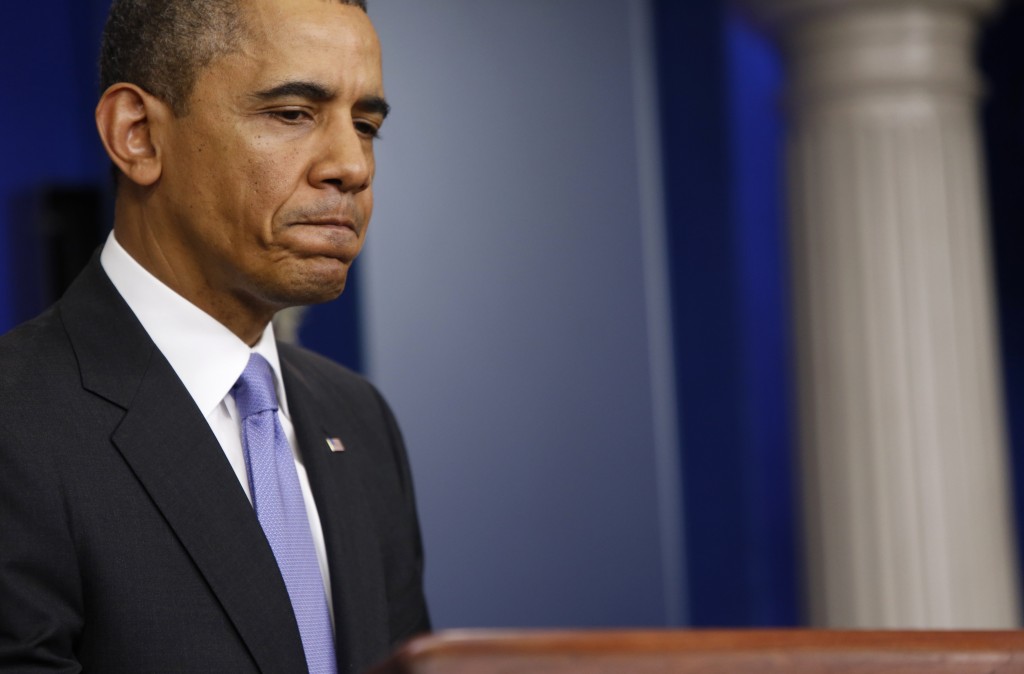
In final 2013 press conference, Obama promises NSA spying changes, says Snowden "under indictment"

by Xeni Jardin


President Barack Obama holds his year-end news conference in the White House briefing room in Washington, December 20, 2013. REUTERS/Jonathan Ernst

In the last press conference of the year, President Obama today indicated he may order changes to the National Security Agency’s programs that gather and store the phone communications records of millions of Americans, and instead "require phone companies to hold the data." He promised a “pretty definitive statement” on NSA reforms in January, after he returns from an annual holiday vacation in Hawaii -- coincidentally, where it all started with Edward Snowden about a year ago.

From the The Washington Post:

“It is possible that some of the same information . . . can be obtained by having private phone companies keep those records longer” and allowing the government to search them under tight guidelines, Obama said.

That prospect has drawn fire from privacy advocates and technology experts, who say it would be as bad as or worse than having the NSA hold the records. Phone companies also do not want to be the custodians of data sought by law enforcement or civil attorneys.

“Mandatory data retention is a major civil liberties problem and something that other groups would oppose categorically,” said Rainey Reitman, activism director of the Electronic Frontier Foundation.

And at that same press conference Friday, Obama said NSA leaker and former contractor Edward Snowden “is under indictment.” A senior law enforcement official later said Obama simply misspoke.

Caitlin Hayden, a White House spokeswoman for the national security division, confirmed that "the president was referring to the unsealed criminal complaint filed in the Eastern District of Virginia," not an indictment.
In an editorial Friday, the New York Times editorial board says it is not impressed with Obama's promises of NSA reforms in the new year: "any actions that Mr. Obama may announce next month would certainly not be adequate."
By the time President Obama gave his news conference on Friday, there was really only one course to take on surveillance policy from an ethical, moral, constitutional and even political point of view. And that was to embrace the recommendations of his handpicked panel on government spying — and bills pending in Congress — to end the obvious excesses. He could have started by suspending the constitutionally questionable (and evidently pointless) collection of data on every phone call and email that Americans make.

He did not do any of that.


20 Dec 21:15

Fan Creates Scenes From An Earthbound Sequel That Never Was

by Zeon Santos

When the classic video game Earthbound arrived in America in 1994 fans were blown away by the storyline, about a little boy saving the Earth from alien invaders, the satirical humor and the fact that Earthbound made everyday life seem like part of an epic roleplaying game.

Fans have been begging for a sequel for years, but digital artist Christopher Behr got tired of waiting, so he put together some awesome looking screenshots of what an Earthbound sequel with updated graphics might look like.

Maybe Christopher has the right idea- if you build it they will come, therefore if you put an Earthbound of your own together the game developers will have no choice but to make the game, right?. 

Via Gamma Squad

20 Dec 21:12

Did Astronauts Really Eat Astronaut Ice Cream?

by Sandy and Kara

Of the many specialty items made for space travel, food was obviously a top priority. NASA commissioned several different companies to come up with freeze-dried snacks that the men could nosh on while in orbit, and the Whirlpool Corporation’s contribution was Neapolitan ice cream in a pouch. Coconut fat, sugar, milk solids, and other ingredients were freeze-dried, ground, and compressed into tasty cubes that were then coated with a layer of gelatin.

“Astronaut ice cream" only went on one space mission: the Apollo 7 crew took some with them during their 11-day orbit in 1968.

Alas, the stuff tended to be too crumbly to be practical (even the tiniest errant food flake can wreak havoc with equipment in a zero-gravity environment). The astronauts later reported that they didn’t like the taste very much, either. By 1972 technology had improved to the point that astronauts aboard Skylab were able to enjoy real ice cream, and today the main consumers of astronaut ice cream are backpackers, hikers, and survivalists.

This article originally appeared in 2012.

December 20, 2013 - 9:30am
20 Dec 18:24

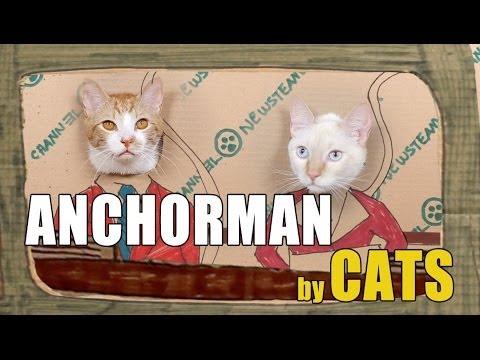
Anchorman, As Told By Cats

by Jill Harness

(Video Link)

If you couldn't already tell, we at Neatorama are pretty excited about the new Anchorman movie. We already covered fan art based on the film and 20 things you might not know about the movie, and now it's time for a memetastic look at the masterpiece. That's right, it's time to see Ron Burgundy and the rest of the gang as played by cats thanks to The Pet Collective.

It's the same format as the cats who did The Hunger Games, only this time it involves staying classy in San Diego. Of course, we could watch cats take on pretty much every movie and stay entertained.

20 Dec 18:22

Brock Davis's Funny Vine Videos

by John Farrier

Brock Davis is brilliant in his ability to create amusing artworks by making small changes to pre-existing materials. He can turn a hot dog into an angry dog, a cucumber into a shark or a sprig of broccoli into a tree house.

Now he's applying his creativity to Vine, the mobile app that lets you create 6-second repeating videos. My Modern Met has a post filled with some of his best works. I love this cherry bomb. Having made a few Vines, I'm impressed with how well Mr. Davis can stage and control this app.

20 Dec 18:21

NSA and GCHQ targeted NGOs, charities, EU chief, Israeli defense minister for deep surveillance

by Cory Doctorow


The latest Snowden leak reveals a list of bizarre targets for NSA/GCHQ surveillance, including the World Health Organization, Unicef and Medecins Sans Frontiers; the VP of the European Commission (whose file included EU competition policy); the UN's special representative to Darfur; German diplomatic networks; and other diplomatic targets. The program was run through GCHQ's Bude listening station in Cornwall, which receives large amounts of funding from the NSA. There's no colourable claim that this surveillance had anything to do with preventing terrorism or enhancing national security. It's an incoherent mishmash of out-and-out industrial espionage, institutional mistrust of humanitarian relief agencies, and a reflexive need to spy. And it's going to piss a lot of people off.

The papers show GCHQ, in collaboration with America's National Security Agency (NSA), was targeting organisations such as the United Nations development programme, the UN's children's charity Unicef and Médecins du Monde, a French organisation that provides doctors and medical volunteers to conflict zones. The head of the Economic Community of West African States (Ecowas) also appears in the documents, along with text messages he sent to colleagues.

The latest disclosures will add to Washington's embarrassment following the heavy criticism of the NSA when it emerged that it had been tapping the mobile telephone of the German chancellor, Angela Merkel.

One GCHQ document, drafted in January 2009, makes clear the agencies were targeting an email address listed as belonging to another key American ally – the "Israeli prime minister". Ehud Olmert was in office at the time. Three other Israeli targets appeared on GCHQ documents, including another email address understood to have been used to send messages between the then Israeli defence minister, Ehud Barak, and his chief of staff, Yoni Koren.

GCHQ and NSA targeted charities, Germans, Israeli PM and EU chief [James Ball and Nick Hopkins/The Guardian]

(Image: MSF Front Door, a Creative Commons Attribution (2.0) image from knobil's photostream)