buy this print
Or share on:
 facebook
  reddit
Facebook needs machines that can understand the way we humans behave and write and even feel.
In January — after the company rolled out a limited public trial of Graph Search, a way of searching activity on the popular social network — Facebook engineers were forced to tweak their algorithms so they could translate slang like “pics of my homies” into more straightforward language like “pictures of my friends” and convert expressions like “dig,” “off the chain,” and “off the hook” into that standard Facebook word: “Like.”
This worked well enough. But it’s just the beginning. Like Google and Apple and other tech giants, Facebook is exploring a new field called “deep learning,” which will allow its machines to better understand all sorts of nuanced language and behavior that we humans take for granted. In short, deep learning teaches machines to behave more like the human brain. Facebook’s effort only recently got off the ground — “we’re just getting started,” a company spokesperson says — but its importance will expand as time goes on.
”
The Quick Brown Fox Jumps Over the Lazy Dog.I feel like I’ve been preparing for this image all my life.
The internet is over, everyone can go home
It’s just as beautiful as I always imagined.

| Tamaño | Distancia desde el Sol | ||
|---|---|---|---|
| Mercurio: | -- | -- | -- |
| Venus: | -- | -- | -- |
| Tierra: | -- | -- | -- |
| Luna: | -- | -- | -- |
| Marte: | -- | -- | -- |
| Júpiter: | -- | -- | -- |
| Saturno: | -- | -- | -- |
| Urano: | -- | -- | -- |
| Neptuno: | -- | -- | -- |
| Plutón: | -- | -- | -- |
| Voyager 1: | -- | -- | -- |
| Nube de Oort: | -- | -- | -- |
| Tamaño | Distancia desde el sistema solar | ||
|---|---|---|---|
| Proxima: | -- | -- | -- |
| Alfa Centauri A: | -- | -- | -- |
| Alfa Centauri B: | -- | -- | -- |
| Sirio: | -- | -- | -- |
| Betelgeuse: | -- | -- | -- |
| Nebulosa de Orión: | -- | -- | -- |
| Cúmulo Ω Centauri: | -- | -- | -- |
| Vía Láctea: | -- | -- | -- |


Submitted by: binho_alves
Posted at: 2013-03-24 17:48:49
See full post and comment: http://9gag.com/gag/6895502
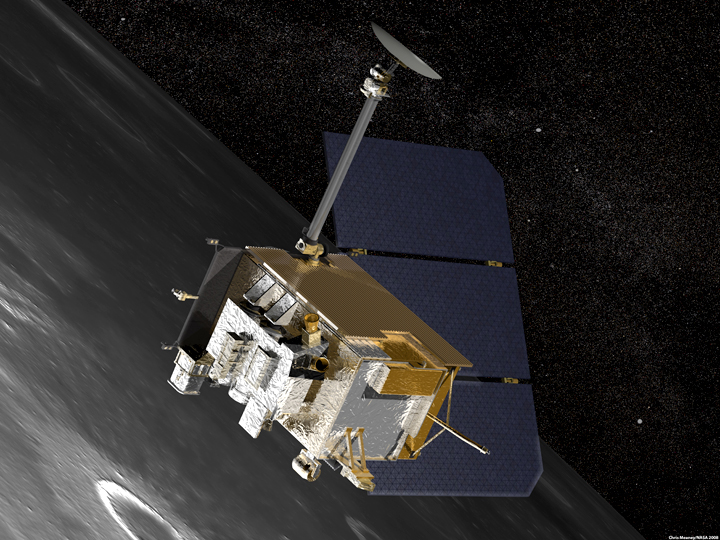
The CRaTER instrument aboard NASA’s Lunar Reconnaissance Orbiter measures the effect of cosmic rays on “human tissue-equivalent” plastic. (NASA)
It could work, say researchers from the University of New Hampshire and the Southwest Research Institute.
One of the inherent dangers of space travel and long-term exploration missions beyond Earth is the constant barrage of radiation, both from our own Sun and in the form of high-energy particles originating from outside the Solar System called cosmic rays. Extended exposure can result in cellular damage and increased risks of cancer at the very least, and in large doses could even result in death. If we want human astronauts to set up permanent outposts on the Moon, explore the dunes and canyons of Mars, or mine asteroids for their valuable resources, we will first need to develop adequate (and reasonably economical) protection from dangerous space radiation… or else such endeavors will be nothing more than glorified suicide missions.
While layers of rock, soil, or water could protect against cosmic rays, we haven’t yet developed the technology to hollow out asteroids for spaceships or build stone spacesuits (and sending large amounts of such heavy materials into space isn’t yet cost-effective.) Luckily, there may be a much easier way to protect astronauts from cosmic rays — using lightweight plastics.
(...)
Read the rest of Plastic Protection Against Cosmic Rays? (370 words)
© Jason Major for Universe Today, 2013. |
Permalink |
4 comments |
Post tags: astronauts, cosmic rays, crater, LRO, Mars, Moon, radiation, SwRI, UNH
Feed enhanced by Better Feed from Ozh