Shared posts

16 Jan 07:38

Judge rules TSA no-fly procedures unconstitutional

by Cory Doctorow
Markku.lempinen

TSA has fucked up yet again :D

Despite a series of disgraceful dirty tricks, the TSA has lost its case against Dr Rahinah Ibrahim, a Malaysian academic who had been wrongly put on the no-fly list. The DHS engaged in witness tampering (denying Dr Ibrahim and her witnesses access to the courtroom by putting them on the no-fly list) and argued that neither Dr Ibrahim nor her lawyers should be allowed to see the evidence against her (because terrorism).

Lowering the Bar does a great job of summing up the ruling, which held the no-fly list unconstitutional because citizens are "entitled to a remedy that requires the government to correct its lists and records... and to certify under oath that such correction(s) have been made."

* The plaintiff has standing to challenge the no-fly listing and practices, and all of the government's arguments to the contrary are overruled.

* Once a plaintiff shows "concrete, reviewable adverse government action" (i.e. not being allowed to fly) has resulted from a government error, she is entitled to a remedy that requires the government to correct its lists and records "and to certify under oath that such correction(s) have been made."

* Because the government's current administrative remedies, such as they are, don't do this, they are unconstitutional.

* He ordered the government to provide that remedy here (take plaintiff off the list and certify under oath that it did so), and/or to disclose whether she is in fact on or off the list. (As you may recall, the government refuses to tell people whether they are on the list or not.)

* Presumably she is or will soon be off it, because "the government concedes [as it has for a while now] that plaintiff is not a threat to our national security."

Judge Rules for Plaintiff in No-Fly Case

(Image: University Putra Malaysia)


16 Jan 07:22

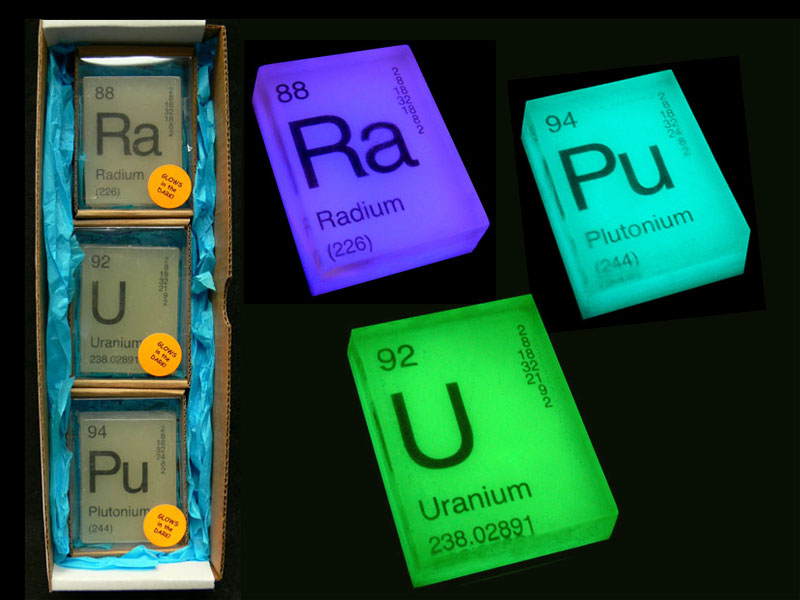
Periodic table Glow Soap

by Rob Beschizza
Markku.lempinen

Awesome :D

The sets are sold out, unfortunately, but you can still buy favorite elements individually. [via JWZ]


14 Jan 11:29

RIAA Wants Google to Implement Five-Point Anti-Piracy Plan

by Ernesto
Markku.lempinen

"RIAA is calling for voluntary anti-piracy ‘best practices’ to deal with the problem at hand. [...]
To make facilitate such an agreement, the music group has drafted a [...] five-point plan for Google and other search engines to fight piracy."

Heh. They call for a voluntary this and that, then they proceed by giving an "obey me" -list. If that didn't sound so damn stupid, it'd be kinda funny.
Personally, I'd be fucking offended by that, but I'm not operating a search engine, so I can declare whatever I want without any pressure from these groups.

google-bayThe music industry is not pleased with Google’s approach to their piracy problem. While the search engine rapidly removes millions of links week after week, the RIAA and IFPI want Google to be more proactive.

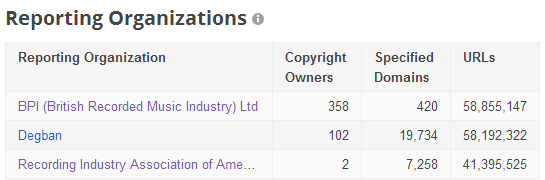
The music groups sent their 100 millionth takedown request to the search giant this week, and used this dubious milestone to lay out their demands to Google once more. According to the RIAA’s Cary Sherman, Google must have a way to better deal with piracy.

“Surely there must be a better way for users to be directed to legitimate sources of the music they seek instead of illegal ones,” Sherman notes.

The RIAA points out that Google has taken some steps to address the piracy issue, such as the promise to give “pirate” sites a lower ranking in their search results. However, the music group believes that this strategy has failed thus far.

“We’ve seen no demonstrable demotion of sites that receive a high volume of piracy notices,” Sherman writes.

“In fact, when a user searches for virtually any prominent artist and song and ‘mp3,’ the first result served up by Google’s own auto-complete function is usually mp3skull.com — a site that’s received more than two million music piracy notices and is among the top offenders on Google’s own public listing of sites receiving the most piracy notices,” he adds.

The RIAA previously found that for 98% of the music related searches they performed, “pirate sites” were listed on the first page of the search results. According to the music group, this is an indication that more proactive measures are required, in the interests of both Google and the labels.

“So the enforcement system we operate under requires us to send a staggering number of piracy notices – 100 million and counting to Google alone—and an equally staggering number of takedowns Google must process. And yet pirated copies continue to proliferate and users are bombarded with search results to illegal sources over legal sources for the music they love,” Sherman notes.


100 million takedown requests

100m

Together with IFPI, who released a press release on the same topic yesterday, RIAA is calling for voluntary anti-piracy ‘best practices’ to deal with the problem at hand. The groups note that payment providers and advertisers previously agreed on similar policies in a bid to help copyright holders.

To make facilitate such an agreement, the music group has drafted a “simple, straightforward and readily achievable” five-point plan for Google and other search engines to fight piracy. Their suggestions are as follows.

1. Fulfill the admirable promise to demote sites receiving extensive numbers of piracy notices
2. Make sure that the “take down” of a song is meaningful – not repopulated online two seconds later
3. Educate users by identifying authorized sites with a consumer-friendly “icon”
4. Stop leading users to illegal sites through autocomplete
5. Give your repeat offender policies some teeth

Looking at the list we see that Google has already started on point 1 and 4, but not to the satisfaction of the music groups. Point 2 is interesting as it suggests some form of hash blocking to ensure that content is not re-indexed, for as far as that is possible for search results.

Point 5, regarding “repeat offender” policies, is most vague. It seems to suggest that the RIAA and IFPI want Google to take action against sites that repeatedly receive takedown notices, but that would be the same as point 1.

This is not the first time that copyright holders have shared their anti-piracy wish lists with Google. In 2012 a behind-closed-doors meeting revealed that the copyright industry wanted the search engine to implement several anti-piracy measures.

Whether Google intends to take up the new five-point plan remains to be seen. One thing’s for certain though – pressure from the RIAA and other anti-piracy groups will only increase during the coming years.

Source: TorrentFreak, for the latest info on copyright, file-sharing and VPN services.

14 Jan 08:42

The Classic Lego Space Flight Jacket

by Mark Frauenfelder
Markku.lempinen

I'm not a leather-jacket person... but just look at it! Classic space Lego! The stuff of childhood :D

Our friends at Evil Mad Scientist Laboratories painted a leather bomber jacket with the 1970s and 80s “Classic Lego Space” logo. They included step-by-step instructions for painting your own. It involves stripping the shiny stuff off the leather and using special acrylic leather paint.

I like the design of Angelus' products. I want to buy them to place on my curio shelf.

The Classic Lego Space Flight Jacket


14 Jan 07:52

TV and Film source code use exposed in blog

by James Delahunty
Markku.lempinen

Interesting and amusing :D

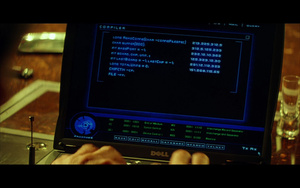
TV and Film source code use exposed in blogA blog that displays and details source code shown on screen in TV Shows and movies is gaining considerable attention.

Have you ever watched a TV show or a movie that used either science- or techno-jargon too liberally as part of its plot? This could probably apply to a lot of Sci-Fi shows and movies, where the characters have gotten themselves into a spot of bother, only to have their sharp intellect and admirable knowledge of physics or whatever it may be, come to the rescue.

Quite often we are treated to a Chopra-like avalanche of sciency-sounding words which lead to a conclusion. The sciency stuff is not supposed to matter, it is not supposed to be scrutinized, all you should care about as the viewer is what it enables the characters to do. That can be difficult if you have even the slightest bit of knowledge in a field potentially being butchered on screen, so you have to work that little bit harder to suspend your disbelief.

When it comes to physics and other science stuff though, sometimes we can chalk it up to the story being set in the future when we know more about the nature of reality and can exploit the natural world that little bit more efficiently.

Spare a thought though for programmers and developers who are often treated to on-screen depictions of source code, which they can understand, and often find it has absolutely nothing to do with what it is supposed to be. They are being asked to believe that the code is some sophisticated instruction set written by a brainiac to achieve a powerful transcendent effect - but they can tell by looking at it that it simply prints "Hello World!"

A blog - Source Code in TV and Films - has set out to document as many of these scenes as possible and to identify the origin of the source code, or to attempt to explain what the source code is intended for, or to do.

For example, did you catch a glimpse of the code used to reboot the Elysium station in the film of the same name? It turns out the code is lifted straight from an Intel manual. It is assembly language for an Intel x86 processor.

Another example is the 2001 movie Swordfish, starring Hugh Jackman and John Travolta. In it, Jackman's character Stanley Jobson, is actually using a genuine code used to crack DES encryption in the 1980s, so somebody at least gave a thought trying to be realistic with the code in that scene.

Unfortunately, Tony Stark - aka Iron Man - can't be awarded the same consideration for the code he uses given that the source code shown during the first boot up sequence in the cave in the first movie, turns out to be valid C code (though missing some important syntax) from a firmware downloader for the RCX - a programmable, microcontroller-based Lego brick - written in 1998. You can find the source code with Google.

There are plenty of other examples at the blog, which is definitely worth checking out.

Permalink | Comments


13 Jan 07:57

Op-ed: Disney takes a chainsaw to the Star Wars expanded universe

by Lee Hutchinson
Markku.lempinen

There's a good (mountain-sized to be fair) pile of EU that I'd be most glad to be rid of. But there's also a bit that I'd love to keep canon.
Unsurprisingly, I guess, I'd keep Thrawn's original trilogy and maybe even the Hand of Thrawn duology, even though it wasn't as awesome as the Thrawn Trilogy. Nothing could be as awesome.

Getting rid of everything by Anderson, McIntyre and Hambly for example, would be a vast improvement in my opinion ;)

Star Wars is sacred to geeks. Characters in Kevin Smith movies refer to it as "the Holy Trilogy," and for almost as long as Star Wars has existed, fans have wanted to know more about the universe outside of the movies—and the canonicity of all the elements of that universe is the subject of almost ecclesiastical-scale debates. The movies are unquestionably official—they are the foundational elements of Star Wars, even Episodes I-III. However, the combined mass of video games, board games, tie-in novels, cartoons, and anything else branded with a Star Wars logo occupies a lesser tier in the hierarchy: all these things are still "official" in that they carry the logo, but they are merely part of the Star Wars Expanded Universe.

The Expanded Universe—the "EU"—sprawls like a bloated dead thing with tentacles stretching in all directions. Everything is in there: Timothy Zahn's Thrawn series (which introduced the eponymous Admiral Thrawn, as well as fan favorite Mara Jade, the former Emperor's Hand-turned-smuggler who overcame her hatred of Luke Skywalker and became his wife). Clone Wars and The Old Republic. The Yuuzhan Vong and the death of Chewbacca. Kevin J. Anderson and all the unspeakably, unreadably bad literary atrocities for which he's responsible.

A sci-fi universe with as long a tail as Star Wars can be death for new stories, though. Finding space among the EU to make a mark without being hamstrung by established ideas is difficult, and even keeping the EU somewhat organized is challenging. Its growth has been cancerous—like a tumor, it has no plan and no organization—it simply expands, blindly, as the collective fan engine shovels in new material.

Read 10 remaining paragraphs | Comments

08 Jan 12:38

MPAA joins W3C, giving it a voice on the future of the web

by James Delahunty
Markku.lempinen

This is fucking scary news again.

MPAA joins W3C, giving it a voice on the future of the webThe Motion Picture Association of America (MPAA) has joined the World Wide Web Consortium (W3C), it has been announced.

As a member, the MPAA will be represented on the advisory committee and be a part of the standards review process, gaining access to W3C materials before public release. Needless to say this announcement - made via Twitter - raises more than a few eyebrows.

The W3C is one of the most respected organizations in the tech universe, and for good reason. It is considered - and behaves as - the international standards organization for the World Wide Web. It counts not far from 400 members, and is led by founder Tim Berners-Lee, who is often described as the inventor of the World Wide Web which are you using now.

W3C standards are vitally important because they are adhered to by browser/application developers and acknowledged in the design of most of the world's web services. If you think about the most problematic elements of your WWW experience, they typically are associated with web sources that stray from W3C standards to add additional functionality or usability, such as sites that use Adobe's proprietary Flash plug-in to operator correctly.

The W3C claims to be committed to open standards and a "Web of Trust", but it is not without controversy. The most recent example surrounded the possible inclusion of Encrypted Media Extensions (EME) - for the use of Digital Rights Management (DRM) - in the HTML5 standard. DRM is certainly not associated with openness or interoperability.

Comments made by Tim Berners-Lee seemingly in support of DRM in HTML5 stoked even more fears - the so-called inventor of the web and director of the W3C rationalizing the inclusion of DRM in HTML5.

Now the MPAA has reportedly joined the group, it seems an even more likely scenario. As the trade group representing the major Hollywood film studios, the MPAA has found itself an advocate of doing harm to the open Internet on more than one occasion.

Provisions in the Stop Online Piracy Act (SOPA) that appeared in the United States Congress would have given undue power to copyright holders to have websites shut down or otherwise obstructed for alleged copyright infringement. On top of that were very controversial proposals to use DNS blocking as a means to cut off Internet users from remote websites.

The MPAA seemingly is more interested with how to police what Internet users can do online rather than developing open standards. Indeed, in the past, it seemed to be more of denialist of technological changes driven by the Internet - particularly with how customers want to consume content - than an embracer of change.

Permalink | Comments


08 Jan 09:37

Forum Post: RE: Tamiya SDKFZ 251...WIP, updated Jan 1st!

by garzonh
Markku.lempinen

I really like the damage on this build!

OK, so I have almost completed it.

I only have weathered one side, the most damaged one....added the decals, and finished the burned cooked off effect, melted tired and damged tracks.

This SDKFZ will be used in a diorama.

My intention is that is well damaged, abandoned vehicle left to its luck.

What do you think?

08 Jan 07:28

Buni

by Ryan Pagelow

Buni

19 Dec 09:44

Help fund Centration, a multiplayer survival sandbox set in space

by Lena LeRay
Markku.lempinen

Sounds amusing and interesting. Either you can get a "normal" station or the Citadel. Or something in between.

Angry Engineers Entertainment is working on their first big project together, Centration. They're aiming high, too, trying to create a game in which players inhabit space station environments that are highly interactive but also require player management and fixing to remain safe for humans to live in. They want to top that off by making it multiplayer, both on their servers and on private ones, and giving players the means to use the environment against each other if they so desire. If you've ever fantasized about playing a part in a sci-fi epic set in deep space, it's worth hearing what the devs have to say.

Centration is currently in alpha, and Angry Engineers is running an Indiegogo campaign to raise funds for continuing development of the project in addition to taking pre-orders on their own site. Their Indiegogo pitch is not the most clearly written, but Angry Engineers co-owner Aaron Challis has answered some questions for us that shed some light on the direction they plan to take the game.

Your Indiegogo pitch calls Centration a first-person survival horror sandbox, but it also talks about rounds/shifts and missions. When I think of a survival sandbox, I don't think of time limits on gameplay. Can you tell me how a round of play goes, exactly, and what goes into it?

We call it a sandbox survival game because it's essentially surviving on board in a space station with simulated airflow, electricity, and realistic behaviours for everything. There are no gameplay limitations, only nudges and guidance. A round or "shift" in Centration essentially consists of three main parts, which are only guidelines to enjoy the round mode or plot. However, players can opt to play a no-plot round.

[In] the beginning, everyone settles down and figures out who's who and what their role is in all this madness. Then there's the middle, which is where the protagonist (whomever that may be; it could be a gameplay chosen protagonist or it could be just some player who's decided to do something crazy/stupid) makes himself, his intentions, or the fact that he exists known. The end of the round is usually the most chaotic -- many parts of the space station at this point are destroyed, damaged, or otherwise not working. A lot of the players have probably already died off or are hiding or off doing their own devious things, and the protagonist is usually coming to the culmination of his or her plans. That's the basics behind how a shift works in Centration. However, in the future we plan on expanding the concept into an MMO-style persistent sandbox environment.

You plan to have character leveling in the game, which implies some sort of experience point/skill up system, but what about playing successive rounds with the same people? Will players be able to set up a sort of campaign-style game with multiple rounds?

As I briefly mentioned previously, we actually plan in the future to expand the concept of Centration into an MMO-style persistent environment. This will take the shift-based system and replace it with a persistent gameplay type, where players will train and acquire skills over various sessions working for the same crew. We plan on making each "space station" (or server in real world terms) interact with each other with the ability to send players for visits (or raids), trade, and participation in a global player-controlled economy by producing, consuming, and gathering materials.

Your pitch talks about rounds lasting anywhere from 5 minutes to several hours. Will players be able to set a time limit if they wish?

Every server can set a time limit for the game, which dictates when the player's "shift" ends and the round is over. This is recommended but not a requirement, as server hosts can opt to just let the games play out until everyone is dead or the protagonist gets his wicked way.

Will there be a single player mode at all?

Centration is primarily an online-multiplayer game, [though] we do not plan on including any type of forced DRM. The only requirement is that they at least once authenticate with their accounts to prove their ownership of the game, after which they are more than welcome to stay offline and play LAN-games until the world ends. There will be offline-training and a 'sandbox' gameplay mode at release, and in the future we do plan on introducing some story-driven single-player/coop campaign episodes.

It sounds like you plan on having a very interactive environment. Will players be able to sabotage the station?

Yes, almost every part of the environment will be interactive in some way, you can pull up the floor tiles, rip the walls apart, destroy entire sections and even repair and rebuild them. Home-made bombs, traps, and sabotage are all a core requirement!

If everything is potentially a weapon, how do you intend to make them more than just bludgeons and projectiles?

The ability to combine items in certain creative ways, with constant updates and content additions... by release we intend to have well over a few hundred thousand ways to kill someone. There's the obvious bludgeoning with objects, then you can get a little bit creative by attaching, say, a shoe to the end of a pipe for that extra bit of reach and humour. Moving on from boring blunt-force trauma, however, the environment is your weapon. Reprogram airlocks to open and decompress once your target goes near them, pump poison gas into your co-worker's science lab, hook up a pressure-plate under a floor tile with an air-horn (or bomb, that works too)... the possibilities will only grow with our community's demands and wishes.

Part of the Centration pitch calls it a psychological game. Will the psychological effects come mostly from the environment or mostly from player interactions?

Both, almost equally. The environment is naturally a big psychological factor here. You're in space, surrounded by cold nothingness that'll kill you within 2 minutes and severely injure you within seconds. Things will break, things will explode, and there's almost nothing you can do to prevent that from happening at times. That's a big psychological weight. Interacting with other players could have the usual enraging effects that most online multiplayer interactions do, but with the environment in question, the gameplay, and all of the other players that could be out to get you, your mind will start to play tricks on you... was that a shadow around that corner? Who made that noise? Why does she have that bone-saw?

It sounds like the game has the potential for people to troll, since you give players the choice of doing their assigned jobs seriously or goofing off. Would you consider that a feature or a potential issue?

It's a feature. We want to give the players and servers a full compliment of tools to be as serious or as relaxed as they wish. If a server wants to go in for the hardcore role-playing, they've got the tools to enforce that, but at the same time, other servers can just let everyone join in and have as much crazy destructive fun as they want. That, along with an online black-flag list where server hosts can choose to flag potential players [for] other players [to] vote on [that] servers can choose to use or ignore, means that the community will be able to (with guidance) police their trolls.

What games or other media besides Space Station 13 have influenced the design of Centration?

When designing Centration, I was very big into sci-fi. I read books such as Ender's Game, watched movies like Star-Trek, Star-Wars, all the usual sci-fi fan fare. Big inspirations that go into our design include Stargate SG-1/Atlantis, Ender's Game, I, Robot, Blade Runner, and the Fifth Element. A lot of the environments, military structuring, social-equality and corporate global ownerships in those back stories played quite a large part of the design process.

What games would you compare Centration to and how is it different from them?

The closest games we could think of would be Space Engineers and Space Station 13. We differ from the former in that we're taking a more immersive approach to the social constructs of crewing a space station and the potentially destructive results that could yield, and Centration differs from the latter by taking a much more realistic, grime-grunge approach to the look and feel, along with expressing what I had hoped Space Station 13 could turn into at some point.

18 Dec 05:39

Finnish science fiction anthology

by Cory Doctorow

Desirina Boskovich writes, "It Came From the North, my brand new e-anthology of Finnish speculative fiction, is now available from Cheeky Frawg Books. Cheeky Frawg, a small press run by Ann and Jeff VanderMeer, is carving out a big name for itself as a quality purveyor of weird fiction and speculative literature in translation, with recent titles including the widely-praised Jagganath by Karin Tidbeck and very well-received Datura by Leena Krohn."

With contributors such as Johanna Sinisalo, Leena Krohn, Hannu Rajaniemi, Jyrki Vainonen, and Pasi Ilmari Jääskeläinen, It Came From the North features fifteen odd and lovely stories ranging from the downright fantastical to the merely uncanny. The gorgeous cover art is by Jeremy Zerfoss, illustrator extraordinaire. Available as an ebook only.

Desirina is a great writer in her own right (see Deus Ex Arca), and an incisive critic (she was one of my most promising Clarion students out of a very good class indeed), and I'm very excited indeed to see her editorial debut.

It Came From the North [Amazon]

Table of Contents + Cover: IT CAME FROM THE NORTH: AN ANTHOLOGY OF FINNISH SPECULATIVE FICTION Edited by Desirina Boskovich [SFsignal.com]


16 Dec 08:42

Google yanks vital Android privacy feature

by Cory Doctorow

Well, that didn't take long: shortly after Google added a new Android feature that let you deny apps access to your sensitive personal data, they have revoked it. This is frankly terrible, and the Electronic Frontier Foundation's Peter Eckersley has some very pointed commentary, recommendations for Android customers, and advice for Google:

A moment ago, it looked as though Google cared about this massive privacy problem. Now we have our doubts. The only way to dispel them, frankly, is for Google to urgently reenable the App Ops interface, as well as adding some polish and completing the fundamental pieces that it is missing:

* Android users should be able to disable all collection of trackable identifiers by an app with a single switch, including data like phone numbers, IMEIs, information about the user's accounts.

* There should be a way to disable an app's network access entirely. It is clear that a large fraction of apps (including flashlights, wallpapers, UI skins, many games) simply don't need network access and, as we saw last week, are prone to abuse it.

* The App Ops interface needs to be smoothed out an properly integrated into the main OS user interface, including the Settings->Apps menus and the Play Store. There are numerous ways to make App Ops work for developers. Pick one, and deploy it.

In the mean time, we're not sure what to say to Android users. If app privacy is especially important to you — if, for instance, you want to be able to install an app like Shazam or Skype or Brightest Flashlight without giving it permission to know your location — we would have to advise you not to accept the update to 4.4.2. But this is also a catastrophic situation, because the update to Android 4.4.2 contains fixes to security and denial-of-service bugs. So, for the time being, users will need to chose between either privacy or security on the Android devices, but not both.

Google, the right thing to do here is obvious.

Google Removes Vital Privacy Feature From Android, Claiming Its Release Was Accidental


16 Dec 08:05

Everything you need to know to install SteamOS on your very own computer

by Lee Hutchinson
Markku.lempinen

I'm going to need to update my OS anyway and the dualboot setup has been idle for as long as I've had this compy. Because I'm so damn lazy.
So whenever I get to do some serious updating, this'll be under consideration (though I don't think my 3+ years old motherboard has even heard of UEFI (which is also not a bad thing)).

True to its word, Valve has released a beta version of SteamOS, the Linux-based operating system that it will use to power its living room Steam Machine consoles. The release coincides with a lucky group of 300 public beta testers who were selected to actually receive Steam Machines to test on—the rest of us can still use the OS, but we'll have to bring our own hardware.

Valve had previously recommended that users who aren't "intrepid Linux hackers" should wait a few more months before trying out SteamOS, but that's not going to stop Ars from barreling head first into the midst of things! We downloaded the OS as quickly as we could after it went live and spent some time getting it whipped into shape on fresh hardware. Contrary to Valve's warning, the install wasn't complex or scary at all—though if you've never installed Linux before, it might take you a bit out of your comfort zone.

The hardware

Specs at a glance: The Ars Technica Steam Machine
CPU Intel Pentium G3220 (Haswell), dual-core, 3.0 GHz
GPU Zotac Geforce GTX660 (2GB)
RAM 8 GB DDR3-1600
Motherboard MSI H81I (mini-ITX)
Storage Western Digital WD Blue 7200 rpm 500GB HD
Sound Onboard
Network Onboard (wired gigabit Ethernet)
PSU Antec VP-450, 450W
Case BitFenix Prodigy, arctic white

Since we didn't receive a Steam Machine to test, we set out to build our own. Our goals were to stick to known-good SteamOS hardware, and to keep the price between $5-600. Andrew Cunningham, Kyle Orland, and I all stuck our heads together and came up with the configuration at right. All items were purchased from NewEgg, and the total prior to shipping was $562.93.

Read 35 remaining paragraphs | Comments


13 Dec 06:42

YouTube goes nuts flagging game-related content as violating copyright

by Megan Geuss
Markku.lempinen

"the copyright violation flags seem to come from third parties that don't own the rights to the game in question"
What a fucking surprise...

Several big names on YouTube were barraged with copyright violation notices this week that could potentially be erroneous. In the past, ContentID, YouTube's automated copyright violation checker, has overreached in flagging game-related content (in May, for example, when “Let's Play” videos were cited for including some of Nintendo's content). But this time, the flagging seems to be related to new rules from YouTube about how video makers who are part of Multi-Channel Networks (MCNs) upload their videos.

According to TubeFilter, YouTube told these MCNs last week that it would begin pre-screening a sample of their affiliates' videos for copyright violation before the video posts to YouTube in a process that could take as little as a few hours or up to a few days. The pre-screening system is also based on good behavior, so to speak, and affiliates who are never caught uploading copyrighted material will be checked less frequently.

That system seems to be causing some problems now, as popular YouTube channels are seeing a spike in copyright violation notices, which caused YouTube to remove ads from the video but not to necessarily take it down. For many very popular channels, this means a significant loss of revenue.

Read 4 remaining paragraphs | Comments


13 Dec 06:19

Android gives you the ability to deny your sensitive data to apps

by Cory Doctorow
Markku.lempinen

*installing* :)

Android privacy just got a lot better. The 4.3 version of Google's mobile operating system now has hooks that allow you to override the permissions requested by the apps you install. So if you download a flashlight app that wants to harvest your location and phone ID, you can install it, and then use an app like AppOps Launcher to tell Android to withhold the information.

Peter Ecklersley, a staff technologist at the Electronic Frontier Foundation, has written up a good explanation of how this works, and he attributes the decision to competitive pressure from Ios, which allows users to deny location data to apps, even if they "require" it during the installation process.

I think that's right, but not the whole story: Android has also always labored under competitive pressure from its free/open forks, like Cyanogenmod. In the days when Android didn't allow tethering (as a sop to the mobile carriers, who are the gatekeepers to new phones for many people), Cyanogenmod signed up large numbers of users, simply by adding this functionality. Google added tethering to Android within a couple of versions. Some versions of Cyanogenmod have had the option tell your phone to lie to apps about its identity, location, and other sensitive information -- a way to get around the "all or nothing" installation process whereby your the apps you install non-negotiably demand your "permission" to plunder this information. I'm not surprised to see the same feature moving into the main branch of Android.

This dynamic is fascinating to me: Google has to balance all kinds of priorities in rolling out features and "anti-features" (no tethering, non-negotiable permissions) in Android, in order to please customers, carriers and developers. Free/open forks like Cyanogenmod really only need to please themselves and their users, and don't have to worry so much about these other pressures (though now that Cyanogenmod is a commercial operation, they'll probably need to start playing nice with carriers). But because Android competes with Cyanogenmod and the other open versions, Google can't afford to ignore the featureset that makes them better than the official version. It's a unique, and extremely beneficial outflow of the hybrid free/commercial Android ecosystem.

In the early days, that model was at an improvement on its major competitor, Apple's iOS, which didn't even have a permissions model. But after various privacy scandals, Apple started forcing apps to ask for permission to collect data: first location and then other categories, like address books and photos. So for the past two years, the iPhone's app privacy options have been miles ahead of Android's.

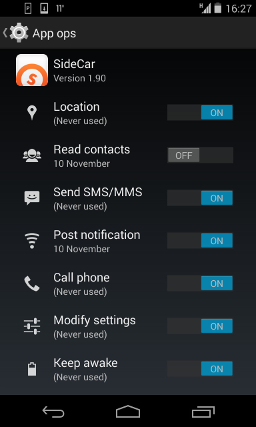
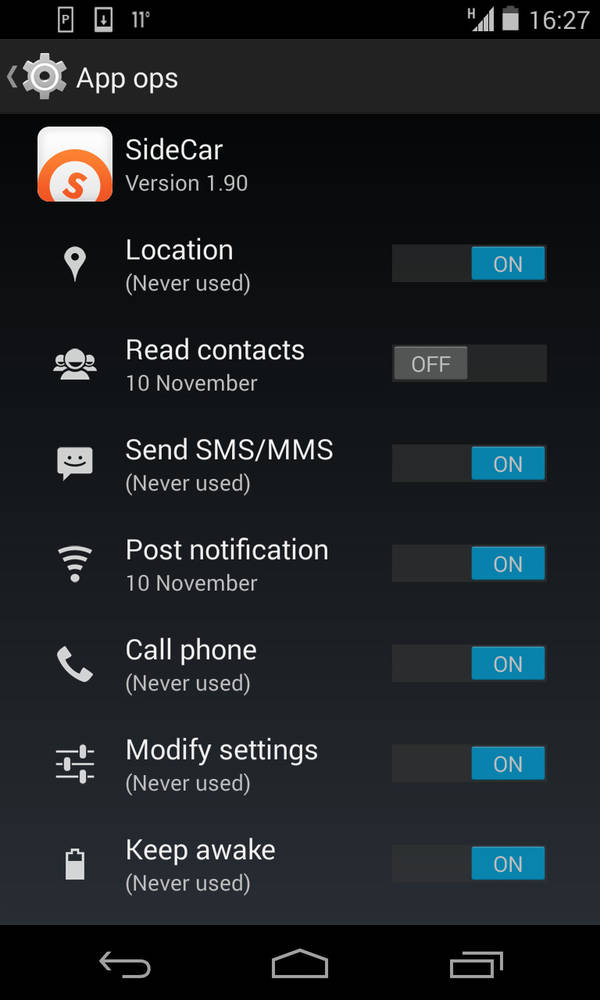
This changed with the release of Android 4.3, which added awesome new OS features to enhance privacy protection. You can unlock this functionality by installing a tool like App Ops Launcher. When you run it, you can easily control most of the privacy-threatening permissions your apps have tried to obtain. Want to install Shazam without having it track your location? Easy. Want to install SideCar without letting it read your address book? Done.2

Despite being overdue and not quite complete, App Ops Launcher is a huge advance in Android privacy. Its availability means Android 4.3+ a necessity for anyone who wants to use the OS while limiting how intrusive those apps can be. The Android team at Google deserves praise for giving users more control of the data that others can snatch from their pockets.

Awesome Privacy Tools in Android 4.3+


13 Dec 05:47

Run the Amiga 500 in your browser with Portable Native Client

by Peter Bright
Advanced windowing environments.

OK, so this isn't the first in-browser emulator we've seen, but we thought you might get a kick out of it anyway. Using Chrome's Portable Native Client (PNaCl), Google developer Christian Stefansen has the Universal Amiga Emulator (UAE) running within the browser.

Introduced in 2009, Google's Native Client (NaCl) started out as a way of running native x86 code in a safe, sandboxed environment. It uses specially compiled programs, combined with the x86 processor's built-in memory segmentation capabilities, to offer something like 95 percent of the performance of unsandboxed programs. An ARM version made its debut in 2010.

NaCl gets its performance—and the "native" part of its name—by using processor-specific code. x86, x64, and ARM are all currently supported, but programs must be compiled separately for each: ARM processors obviously cannot run x86 code, nor vice versa.

Read 5 remaining paragraphs | Comments


13 Dec 05:38

Get three free Fallouts today in GOG's Winter Sale

by Jessica Conditt
Markku.lempinen

I already had the first two in my GoG shelf, so I grabbed Tactics to complete my collection 8)


Fallout, Fallout 2 and Fallout Tactics are free on GOG right now through Saturday, December 14 at 9AM ET. All this free Fallout is in celebration of GOG's 2013 DRM-Free Winter Sale, which offers more than 600 games for at least 50 percent off through December 29 at 9AM ET.

GOG has roped in a few well-known YouTube personalities to promote daily sales of up to 75 percent off, and GOG users can vote on bundles they wish to see 80 percent off the following day. GOG members are also able to choose one of three daily mystery deals. All purchases are covered by GOG's 30-day money-back guarantee, which allows players to get their money back if a game doesn't run or has game-breaking bugs.

The Fallout series is officially changing owners - from Interplay to Bethesda - on January 1, and GOG will have to remove Fallout, Fallout 2 and Fallout Tactics from its library. But they're free now, so go on and grab 'em.

JoystiqGet three free Fallouts today in GOG's Winter Sale originally appeared on Joystiq on Thu, 12 Dec 2013 16:30:00 EST. Please see our terms for use of feeds.

Permalink | Email this | Comments
10 Dec 05:35

No Man's Sky trailer offers glimpse of vast sci-fi wonderland

by Rob Beschizza
Markku.lempinen

This looks pretty damn interesting! :o

This weekend, the trailer for No Man's Sky lit up the indie gaming scene. Why is it so special? Because the developer, Hello Games, appears to have completely nailed three things. First, it looks like a straight-up fun space sim. Second, it has a gorgeous look inspired by paintings by legendary science fiction artist Chris Foss. Thirdly, most excitingly, the whole game world is procedurally-generated. A sandbox universe of unpredictable, explorable wonder, but with top-knotch graphics and a decisive sense of style.

Indie Statik warns about the traditional problem with procedurally-generated games, going all the way back to Elite: an underlying sameness to all the apparent variety.

Procedural generation is great for natural features--caves, trees, geography--but is often a poor substitute for design when it comes to man-made things like cities, buildings and dungeons. I'm going to be there on day one with No Man's Sky, though.


09 Dec 08:19

When Google+'s Auto Awesome and World of Tanks collide...

by Sam Lockton
Markku.lempinen

Muah :D


So Google+ now detects your snow-themed pictures and adds animated snowflakes, and this little gem appeared after uploading my latest batch of screenshots. Somehow I don't think this is what they had in mind!
04 Dec 07:41

Blues Brothers mall car-chase recreated in Lego

by Cory Doctorow
Markku.lempinen

Awesome :D

Duncan, the good fellow at Brick Tease, has recreated the classic, brilliant, no-hold-barred car-chase-in-a-mall sequence from The Blues Brothers (a movie I watched once or twice a day in tenth grade) with Lego. Then, just to show you how closely he hewed to the original, he released a side-by-side comparison. And if that wasn't enough, he produced a 12-minute documentary showing how he did it. (via IO9)


04 Dec 07:30

Launch code for US nukes was 00000000 for 20 years

by Sean Gallagher
Markku.lempinen

Astonishing, or is it?

Remember all those cold war movies where nuclear missile crews are frantically dialing in the secret codes sent by the White House to launch nuclear-tipped intercontinental ballistic missiles? Well, for two decades, all the Minuteman nuclear missiles in the US used the same eight-digit numeric passcode to enable their warheads: 00000000.

That fact, originally revealed in a column in 2004 by then-president of the Center for Defense Information Dr. Bruce G. Blair, a former US Air Force officer who manned Minuteman silos, was also mentioned in a paper by Steven M. Bellovin, a computer science professor at Columbia University who teaches security architecture. Both of these sources were cited this week in an article on the site Today I Found Out written by  Karl Smallwood, as well as in an article in the UK's Daily Mail.

The codes, known as Permissive Action Links (PALs), were supposed to prevent the use of nuclear weapons—and the nuclear weapons under joint control with NATO countries in particular—without the authorization of the president of the United States. The need for such controls became clear during the 1963-1964 Cyprus crisis, when NATO members Turkey and Greece were reportedly seeking control of NATO nuclear weapons—to use on each other.

Read 3 remaining paragraphs | Comments


25 Nov 09:06

Miami Gardens police arrest black man for trespassing 56 times -- at the store where he works

by Cory Doctorow


In the city of Miami Gardens, outside of Miami, FL, the police use aggressive campaigns of stop-and-frisk and absurd arrests to bolster their records, to the great detriment of the African-American majority who live there. For example, a young man named Earl Sampson has been stopped by Miami Gardens police 258 times; they've searched him more than 100 times; and they've arrested him for trespassing 56 times. He's never been convicted of anything apart from simple possession of small amounts of marijuana.

Sampson's trespassing arrests occurred at his place of work, a convenience store called the 207 Quickstop; Sampson was repeatedly arrested for trespassing there, over the loud objections of his employer, Alex Saleh, who owns the store, and who explained to police that Sampson was not trespassing in his store.

When Saleh gathered video evidence that showed the police had falsified their arrest reports and violated the rights of his customers, he was targeted for police harassment, including falsified vehicle stops and personal threats. Saleh is suing for federal civil rights violations, alleging that Miami Gardens police "routinely, under the direction of the city’s top leaders, directed its officers to conduct racial profiling, illegal stops and searches and other activities to cover up illegal misconduct."

Saleh, whose store is tucked between a public park and working-class neighborhoods, contends that Miami Gardens police officers have repeatedly used racial slurs to refer to his customers and treat most of them like they are hardened criminals.

“Police line them up and tell them to put their hands against the wall. I started asking myself ‘Is this normal?’ I just kept thinking police can’t do this,’’ Saleh said.

Last year, Saleh, armed with a cache of videos, filed an internal affairs complaint about the arrests at his store. From that point, he said, police officers became even more aggressive.

One evening, shortly after he had complained a second time, a squadron of six uniformed Miami Gardens police officers marched into the store, he says. They lined up, shoulder to shoulder, their arms crossed in front of them, blocking two grocery aisles.

“Can I help you?” Saleh recalls asking. It was an entire police detail, known as the department’s Rapid Action Deployment (RAD) squad, whom he had come to know from their frequent arrest sweeps. One went to use the restroom, and five of them stood silently for a full 10 minutes. Then they all marched out.

In Miami Gardens, store video catches cops in the act [Julie K. Brown/Miami Herald]

(via Sean Bonner)


12 Nov 06:04

Re-imagined movie posters based on the same simple template

by Mark Frauenfelder

Matthew says: "Polish artist Michal Krasnopolski has created a series of minimalist movie posters for classic films. The posters are based on a very simple grid consisting of 'a circle and two diagonals inscribed in a square.' I'm ashamed to admit I don't quite get Pulp Fiction or North By Northwest."

The North By Northwest poster is showing a compass pointing NXNW, but I, too, am not sure what the Pulp Fiction poster is depicting. In any case, Krasnopolski's series is brilliant!

Minimalist movie posters


08 Nov 08:01

NYT endorses brutal, secret, Internet-destroying corporatist TPP trade-deal; write to your lawmaker to fight it

by Cory Doctorow

The New York Times has endorsed the Trans-Pacific Partnership; a trade deal negotiated in utmost secrecy, without public participation, whose text is still not public. From leaks, we know that TPP wasn't just anti-democratic in its process -- it also contains numerous anti-democratic provisions that allow private offshore companies to overturn domestic law, especially laws that allow for free speech and privacy online. TPP is slated for fast-tracking through Congress, minimizing any scrutiny of a deal negotiated behind closed doors before it is turned into law. From what we've seen of TPP, it recapitulates all the worst elements of ACTA and then some. The Electronic Frontier Foundation needs you to write to your lawmaker demanding full and public debate on TPP.

The paper's statement emphasizes how the Obama administration strives to make TPP's policies “an example for the rest of the world to follow.” But if that's the case, then it's all the more important that the agreement be published immediately. Such a significant body of international law regulating digital policy must not be negotiated without proper, informed public debate. The secrecy of the process itself ensures that only some private interests will be represented at the expense of others. In addition, the U.S. Trade Representative's history of pushing forth extreme copyright enforcement policies through other trade agreements gives little assurance that users' rights will be considered in the TPP.

Trade representatives are working to finalize TPP negotiations by the end of the year. Negotiators are scheduled to meet in Salt Lake City next week to negotiate outstanding issues in this agreement, including provisions on liability for Internet Service Providers and anti-circumvention measures over DRM. Following that, trade delegates are seeking to finalize and sign this agreement in December in a ministerial meeting in Singapore.

It's unfortunate that news outlets are giving little coverage to TPP, when media attention could have a major impact on how the US and the other 11 nations draft digital policy. But public media coverage is precisely the sort of accountability that official secrecy thwarts. Instead of endorsing an agreement the public can't read, a responsible paper would condemn the secrecy involved. And if the Times has seen the text and knows what's contained in the TPP, then they have a responsibility to publish the text immediately and expose the US government's back room dealings.


01 Nov 08:42

NSA spokesmen told to just say "9/11" to deflect criticism

by Cory Doctorow
Markku.lempinen

Why do you do X? NINE ELEVEN!!!11
:|

Al Jazeera used the Freedom of Information Act to get the NSA to disclose its talking points for public speaking events. The least surprising of these is the cheap invocation of 9/11 as an excuse for any wrongdoing, phrased thus: "I much prefer to be here today explaining these programs, than explaining another 9/11 event that we were not able to prevent." It's the Giuliani Gambit, and it's as repellent as it is obvious.

Under the subheading “Sound Bites That Resonate,” the document suggests the statement “I much prefer to be here today explaining these programs, than explaining another 9/11 event that we were not able to prevent.”

NSA head Gen. Keith Alexander used a slightly different version of that statement when he testified before Congress on June 18 in defense of the agency’s surveillance programs.

Asked to comment on the document, NSA media representative Vanee M. Vines pointed Al Jazeera to Alexander’s congressional testimony on Tuesday, and said the agency had no further comment. In keeping with the themes listed in the talking points, the NSA head told legislators that “it is much more important for this country that we defend this nation and take the beatings than it is to give up a program that would result in this nation being attacked.”

Revealed: NSA pushed 9/11 as key 'sound bite' to justify surveillance [Jason Leopold/Al Jazeera America]

(via Reddit)


01 Nov 07:58

We finally, officially, won’t have to power off during takeoff and landing

by Cyrus Farivar
Markku.lempinen

Maybe someday the rest of the world follows. Funnily enough this is the first piece of good news coming from any given XYAdministration in the states in a looooong time...

Just in time for the winter holidays, we’ll now finally be able to use our gadgets during takeoff and landing.

On Thursday, the Federal Aviation Administration—following the approval of its advisory panel and nearly a year of pressure from a United States senator—announced that "passengers will eventually be able to read e-books, play games, and watch videos on their devices during all phases of flight, with very limited exceptions. Electronic items, books, and magazines must be held or put in the seat back pocket during the actual takeoff and landing roll."

In other words, your device can’t be in your lap or on a tray table—you gotta keep your paws on it.

Read 6 remaining paragraphs | Comments


25 Oct 05:40

Let The Simpsons die

by Rob Beschizza
Markku.lempinen

I thought the Simpsons has been bad for 10+ years already. Or more. It should've been killed years ago.

Slate's Joseph Lapin suggests a way of making the Simpsons "relevant" again: The Characters Should Start Getting Older

[Killing off a character is] just a temporary fix: It will not restore the show’s reputation as innovative or groundbreaking. To reclaim that type of territory, and reestablish its hold on the American zeitgeist, The Simpsons needs to think much bigger. So here is what I’m proposing: The Simpsons should break free from its static biological present. The characters need to age. Yes, a cartoon, a 2-D world where the laws of nature are constructed in a writers’ room, should suddenly be forced to carry, like Homer chained to the “Stone of Shame,” the same burden all humans are forced to carry: growing older.

No. It's already done. They should just end the show itself, before it really starts to stink.


18 Oct 05:06

TSA admits "terrorists in America are not plotting against aviation"

by Cory Doctorow
Markku.lempinen

TSA... you never hear anything not-entirely-braindead about them. Lucky me has never needed to fly to the states so far.

An accidentally published, unredacted document from a lawsuit against the TSA reveals that the Taking Shoes Away people believe that "terrorist threat groups present in the Homeland are not known to be actively plotting against civil aviation targets or airports." That is to say, there is no identifiable risk to America's skies -- and all of business with shoes and pornoscanners and horrible, abusive incidents involving toddlers, people with mental disabilities, cancer survivors, rape survivors, and the whole business of treating travellers like presumptive terrorists is all to prevent a problem that, to all intents and purposes, doesn't exist.

...The Court actually failed to seal the unredacted brief, and they have published in full the leaked document. The document — as of yet still available to the public through the PACER court records system — is properly labeled as “sealed” by the clerk’s office, meaning they received and understood my instructions that the document was not to be public, but neglected to hide the attachment from public view.

The information revealed, which I may now comment on since a third party has made it publicly available, is devastating to the TSA’s argument that virtually strip-searching the public using its $1B nude body scanner fleet, as well as literally putting their hands in the pants of travelers during full-body pat-downs, is necessary to prevent airplanes from dropping out of the sky at the hands of terrorists. In 2011, the year after the scanners became primary screening, TSA intelligence officials concluded that “terrorist threat groups present in the Homeland are not known to be actively plotting against civil aviation targets or airports.”

The TSA has a lot of explaining to do, both to members of Congress and to the general public, all of whom were misled as to the threat we face and the justification for the most intrusive searches ever performed on the public at large in the United States in the history of this great nation. The terrorists that the TSA has made the country fear, it admits, do not actually exist.

@TSA Admits In Leaked Doc: No Evidence of Terrorist Plots Against Aviation in US


18 Oct 04:12

David Cameron vows vengeance on the Guardian for Snowden leaks

by Cory Doctorow


UK Prime Minister David Cameron has vowed to punish the Guardian for publishing leaks about the campaigns of lawless, reckless spying by GCHQ and the NSA. He's asked Parliament to find a legal rubric for cracking down on newspapers that publish stories of compelling public-interest such as the Snowden leaks. He made a bizarre accusation that the Guardian's cooperation in the destruction of its computers (made under dire threat) was an admission of guilt.

In the end, what Cameron is doing is making it clear that the UK can have no free press. It can only have stenographers. When the government threatens to have you investigated for reporting on the excesses of government, you've created massive chilling effects, and guaranteed much greater corruption and abuse, as you've wiped out a key factor in keeping those things in check. Cameron's statements reflect poorly on the wider UK and its supposed belief in free speech and a free press.

UK Prime Minister Urges Investigation Of The Guardian Over Snowden Leaks; There Shall Be No Free Press [Mike Masnick/Techdirt]

(Image: The Guardian's Redesign - Titlepiece, a Creative Commons Attribution Share-Alike (2.0) image from gigijin's photostream)


16 Oct 05:20

Forum Post: RE: Tamiya SturmTiger assault mortar .

by Shellback
Markku.lempinen

Amazingly ugly in a beautiful way...

Jean-Michel good to hear from you my fiend !Wink


Finished this one yesterday . It was a fun build and the old Tamiya kit has a good fit and a descent interior for the age of the kit .Tamiya paints were used for the exterior .Extra RW 61 rounds were contributed by our friend Tony Lee .