
ThePrettiestOne
Shared posts
14 Jun 19:34
profeminist: Source
ThePrettiestOneI mean, I wanna stay safe, but I don't want me being safe to mean that some other woman's getting hurt.
I never want that.
RC, ThePrettiestOne likes this


14 Jun 17:47
Apologize to No One — V for Vendetta is More Important Today Than it Ever Was
by Emily Asher-Perrin

V for Vendetta is in the awkward position of being a film that was maligned by its original creator, the incomparable Alan Moore. And while I have deep respect for Moore as a writer, I can’t help but disagree with his criticism of this film.
Especially now. Not after the massacre that has occurred in Orlando, Florida.
A note before we begin. V for Vendetta is a political tale no matter how you cut it. It is also a tale of great personal importance to me, both for its impact when it came out and in light of recent events. With that in mind, this piece is more political and personal than the previous two, and I ask that everyone keep that in mind and be respectful.
Alan Moore’s experience with the film adaptations of From Hell and The League of Extraordinary Gentlemen had soured him on Hollywood’s reworking of his stories. His complaints about V for Vendetta centered around a few points, the first being that producer Joel Silver had stated in an interview that Moore had met with Lana Wachowski, and was impressed with her ideas for the script. According to Moore, no such meeting took place, and when Warner Brothers refused to retract the statement, Moore broke off his relationship with DC Comics for good. His other irritation had to do with the alteration of his political message; the graphic novel was a dialogue about fascism versus anarchy. The Wachowskis’s script changed the central political themes so that they more directly aligned with the current political climate, making the film more of a direct analog to American politics at the time.

Moore deplored the change to “American neo-liberalism versus American neo-conservativism,” stating that the Wachowskis were too timid to come right out with their political message and set the film in America. He also was aggravated that the British government in the film made no mention of white supremacism, which he felt was important in a portrayal of a fascist government. As a result, he refused his fee and credit, and the cast and crew of the film held press conferences to specifically discuss the changes made to the story. (David Lloyd, the co-creator and artist of the graphic novel, said that he thought the film was good, and that Moore likely would have only been happy with an exact comic-to-film adaptation.)
Two things. To start, Alan Moore’s particular opinions of how art and politics should intersect are his own. I respect them, but I don’t think it’s right to impose them on others. There are many reasons the Wachowskis might have decided not to set the film in the United States–they might have felt it was disrespectful to the story to move it, they might have felt that the analog was too on-the-nose that way. There are endless possibilities. Either way, their relative “timidity” for setting the film in England doesn’t seem relevant when all is said and done. As for the alterations to the narrative, they make the film different from Moore’s tale, of course–which is an incredible story in its own right, and a fascinating commentary on its era–but they work to create their own excellent vision of how these events might unfold. (I also feel the need to point out that though no mentions of racial purity are made, we only see people of color at Larkhill detention centre, which seems a fairly pointed message in terms of white supremacism.) V for Vendetta is a film that has managed to get more poignant over time, rather than less, which is an achievement in its own right.

In addition, while many of the political machinations may have seemed to apply to American politics at the time, that wasn’t the sole intention of the film. Director James McTeigue was quick in interviews to point out that while the society they depicted had much in common with certain America institutions, they were meant to serve as analogs for anywhere with similar practices–he stated explicitly that while the audience might see Fox News in the Norsefire Party news station BTN, it could easily be Sky News over in the UK, or any other numbers of venues that were like-minded.
Much of the moral ambiguity inherent in the original version was stripped away, but a great deal of the dialogue was taken verbatim nonetheless, including some of Moore’s best lines. The Wachowskis’s script focused even more on the struggle of the queer population under the Norsefire Party, which was startling to see in a film like this even ten years ago–and still is today, if we’re being frank. Gordon Deitrich, Stephen Fry’s character, is altered entirely into a talk show host who invites Natalie Portman’s Evey to his home under false pretenses at the start of the film–because he has to hide the fact that he is a gay man. The V in this film is a far more romantic figure than the comic makes him out to be, Evey is older, and also pointedly not a sex worker, which is a change that I was always grateful for (there are plenty of other ways to show how horrible the world is, and the film does just fine at communicating that). You could argue that some of these changes create that Hollywood-ization effect that we so often mourn, but to be fair, giving an audience a crash course in anarchy and how it should oppose fascism–in a story where no one is a definitive hero–would have been a tall order for a two-hour film.
Fans have always been divided on this movie. It has plotholes, sure. It’s flawed, as most movies are. It’s different from its progenitor. But it’s a film that creates divisive opinions precisely because it provokes us. It confronts us. And it does so using the trappings of a very different sort of film, the sort you would normally get from a superhero yarn. The Wachowskis tend to gravitate toward these sorts of heroes, the ones who are super in everything but the basic trappings and the flashy titles. The fact that V has more in common with Zorro or Edmond Dantes than he does with Batman or Thor doesn’t change the alignment. And the fact that V prefers to think of himself as an idea rather than a person speaks very specifically to a precise aspect of superhero mythos–at what point does a truly influential hero go beyond mere mortality? What makes symbols and ideas out of us?

Like all stories that the Wachowskis tackle, the question of rebirth and taking strength from confidence in one’s own identity is central to the narrative. With V portrayed in a more heroic light, his torture (both physical and psychological) of Evey–where he gets her to believe that she has been imprisoned by the government for her knowledge of his whereabouts–is perhaps easier to forgive despite how horrific his actions are. What he does is wrong from a personal standpoint, but this is not a story about simple transitions and revelations. Essentially, V creates a crucible for someone who is trapped by their own fear–an emotion that we all want liberation from, the most paralyzing of all. Evey is unable to live honestly, to achieve any amount of personal freedom, to break away from a painful past. The entire film is about how fear numbs us, how it turns us against one another, how it leads to despair and self-enslavement.
The possibility of trans themes in V for Vendetta are borne out clearly in Evey and V’s respective transformations. For Evey, a harrowing physical ordeal where she is repeatedly told that she is insignificant and alone leads to an elevation of consciousness. She comes out the other side a completely different person–later telling V that she ran into an old coworker who looked her in the eye and couldn’t recognize her. On V’s side, when Evey tries to remove his mask, he tells her that the flesh underneath that mask, the body that he possesses, is not truly him. While this speaks to V’s desire to move beyond mortal man and embody an idea, it is also true that his body is something that was taken from him, brutalized and used by the people at Larkhill. Having had his physical form reduced to the status of “experiment,” V no longer identifies with his body. More importantly, once he expresses this, Evey never attempts to remove his mask again, respecting his right to appear as he wishes to be seen.

That is the majority of my critical analysis regarding this film. At any other time, I might have gone on at length about its intricacies.
But today is different, and I can’t pretend that it is not.
Talking about this film in a removed fashion is a trial for me most days of the week because it occupies a specific place in my life. I saw it before I read the graphic novel, at a time before I had completely come to terms with being queer. And as is true for most people in my position, fear was at the center of that denial. The idea of integrating that identity into my sense of self was alarming; it was alien. I wasn’t sure that I belonged well enough to affirm it, or even that I wanted to. Then I went to see this film, and Evey read Valerie’s letter, the same one that V found in his cell at Larkhill–one that detailed her life as a lesbian before, during, and after the rise of the Norsefire Party. After her lover Ruth is taken away, Valerie is also captured and taken to Larkhill, experimented on, and ultimately dies. Before she completes this testament to her life written out on toilet paper, she says:
It seems strange that my life should end in such a terrible place. But for three years I had roses, and apologized to no one.
I was sobbing and I didn’t know why. I couldn’t stop.
It took time to figure it out. It took time to come to terms with it, to say it out loud, to rid myself of that fear. To talk about it, to write about it, to live it. To watch the country that I live in take baby steps forward, and then huge leaps backward. My marriage is legal, it’s Pride Month, the city that I live in is full of love and wants everyone to use whatever bathroom works best for them.
And then this weekend, an angry man walked into a gay club in Orlando and killed 50 people.
But for three years I had roses, and apologized to no one.
I know why I’m sobbing now. I can’t stop.
And I think about this film and how Roger Allam’s pundit character Lewis Prothero, “The Voice of England,” tears down Muslims and homosexuals in the same hateful breath, about how Gordon Deitrich is murdered not for the uncensored sketch on his show or for being gay, but because he had a copy of the Qur’an in his home. I think about the little girl in the coke bottle glasses who gets murdered by the police for wearing a mask and spray painting a wall, and I think about how their country has closed its border to all immigrants.
Then I think about a man who is running for President who used Orlando as a reason to say “I told you so.” To turn us against each other. To feel more powerful. To empower others who feel the same way.

And I think about this film, and the erasure of the victims at Larkhill, locked up for any difference than made them a “threat” to the state. Too foreign, too brown, too opinionated, too queer.
Then I think about the fact that my wife was followed down the street today by a man who was shouting about evil lesbians, and how ungodly people should burn in fires. I think about the rainbow wristband my wife bought in solidarity today but decided not to wear–because it’s better to be safe right now than it is to stand tall and make yourself a target.
And I think about the fact that this film is for Americans and for everyone, and the fact that it still didn’t contain the themes of the original graphic novel, and I dare you to tell me that it doesn’t matter today. That we don’t need it. That we shouldn’t remember it and learn from it.

We need these reminders, at this exact moment in time: Do not let your leaders make you afraid of your neighbors. Do not be complacent in the demonization of others through inaction. Do not let your fear (of the other, of the past, of being seen) dictate your actions. Find your voice. Act on behalf of those with less power than you. Fight.
And above all, love. Love your neighbors and strangers and people who are different from you in every conceivable way. Love art and mystery and ideas. Remember that it is the only truly triumphant response to hate.

I don’t think I needed a reminder of why this film was important to me, but today… today it hurts even more than the first time I saw it. A visceral reminder of my own revelation, all wrapped up in a tale about a man wearing a Guy Fawkes mask who wanted governments to be afraid of their people, who wanted revenge on anyone who would dare hurt others for being different. A tale of a woman who was reborn with a new capacity for love and a lack of fear, who read Valerie’s last words in a prison cell and gained strength from them:
I hope that the world turns and that things get better. But what I hope most of all is that you understand what I mean when I tell you that even though I do not know you, and even though I may never meet you, laugh with you, cry with you, or kiss you. I love you. With all my heart, I love you.
The most empowering words of all.
Emily Asher-Perrin wishes everyone a safe Pride, full of all the love they deserve. You can bug her on Twitter and Tumblr, and read more of her work here and elsewhere.
ThePrettiestOne likes this


14 Jun 16:12


cherrispryte: lemonyandbeatrice: Fred McFeely Rogers (March...
Fred McFeely Rogers (March 20, 1928 – February 27, 2003)
Oh. Sobbing. Okay.
RC, ThePrettiestOne likes this
14 Jun 16:09
PSA: Disabled people’s vulnerabilities are not here for your entertainment.
As an autistic person, I spend a lot of time with social skills. I’d like to start off with some social skills that you may have learned in childhood. I’m betting that these are fairly non-controversial statements:
- Do not pull a cat’s tail. That’s mean.
- Do not kick dogs.
- Do not slam the door on your pet’s tail.
- Do not blow a high-pitched dog whistle loudly into a dog’s ear.
- Always treat animals with kindness.
Now I’m going to say another social skill, which is apparently less important to some people:
- You should treat disabled people with kindness.
Along the way, sometimes it gets forgotten or ignored that people like me also have thoughts and feelings. And people will treat actual humans far, far worse than they would treat an animal.
Hurting people is always wrong. Even if something doesn’t hurt you, if someone says it is painful to them, you need to stop it.
In praxis, this means:
- Do not grab an autistic person from behind to make them wail. That’s mean.
- Do not try to trigger unreality in a psychotic person. That’s mean.
- Do not tell your dog to jump on someone with zoophobia, do not throw fake spiders at someone with arachnophobia, and do not show a graphic injury to someone who is terrified of blood. That’s mean.
- Do not slam doors or fire guns to make someone with PTSD jump. That’s mean.
- Do not show triggering pictures to someone with a mental illness, without warning them first, to make them cry or “get over it already.” That’s mean.
- Do not mimic someone’s ticcing or try to make them do it more for your entertainment. That’s mean.
- Do not upset someone on purpose, whether they are obviously disabled, secretly disabled, or not disabled. That’s mean.
- Do respect other people’s pain. If they say that hurts, believe them. Don’t do it more to watch their reaction.
Some might say that this is the Thought Police trying to control you. It’s not illegal to think that it is fun to hurt people. You won’t be carted off to jail for intentionally making someone cry.
But people won’t trust you, any more than I’d trust an adult who pulls cats’ tails for fun. Because it’s a sure sign that you aren’t a decent human being.
And to the people who don’t do this: if you see someone else doing it, please ask them to knock it off. Bullies might not listen to disabled people, because they might not care what disabled people say. But they may listen to someone else. Please don’t let them keep tormenting their victim.
Please consider sharing this with your friends, to remind them how important it is to stand up to bullying, no matter what it looks like.
Yes.
ThePrettiestOne likes this
14 Jun 13:11
bwuhbwuhbwuhbwuhbwuh: Listen it had to be done @linmanuel...


ThePrettiestOne likes this
14 Jun 04:12
ottermatopoeia: thebestoftumbling: so calm this probably how...
ThePrettiestOne likes this


14 Jun 04:09
hobbitkaiju: bangawang: seananmcguire: bibliophile20: just-shower-thoughts: billionaire could...
billionaire could give me %.01 of his wealth and change my life while he is virtually unaffected.
0.01% of $1,000,000,000 is $100,000.
Which, for some people, is as much as they’d make in five years of 60 hour weeks of labor.
And this is one hundredth of one percent of the bare minimum of being a billionaire.Also, if the billionaire has a decent bank account setup (which, let’s face it, billionaire has), that $100,000 will just come back the next time interest happens. It is a perpetually regenerating $100,000.
With $100,000 I could fix my credit, buy a house in my family’s hometown and a car, drive back there to live, and have a small cushion left over to get me through till I find a local job—which wouldn’t have to be high-paying, mind, since my house would be paid off. If I brought my mom with me, she could afford to quit her three jobs and start collecting on her Social Security. We could live quite well and I might not even have to finish college to get a job with a wage that would pay our bills and expenses. “Life-changing” is no exaggeration.
reasons USA capitalism and especially “trickle down economics” are both bullshit: because they allow situations like this
ThePrettiestOne likes this
14 Jun 04:09
prokopetz: oudeteron: miriamheddy: oudeteron: bustysaintclair: 18 years ago when I was coming...
18 years ago when I was coming out, y’all made the word “bisexual” so dirty that for years the only word I felt was accessible to me was “queer”, if I had any chance at having a community.
Queer was widely used at that point among LGBT+ people to refer to ourselves and our community, and while you’d look askance at a straight person using that word, it was most definitely acceptable to call another LGBT+ person queer.
And now y’all are telling me “Queer” isn’t an acceptable umbrella term to use and it just feels like another way you’re using subtle language policing to tell me that really the only people you want in your community are gold-star LG folks.
Those of us who like the word queer because it accurately reflects our misfit status are basically being told that this self-identifier is dirty and wrong, this is no longer the “queer community”, and the message yet again is that we don’t really belong.
I get it if someone doesn’t want to be called queer, and I would never call another person queer against their will but holy hell please stop acting like it’s common knowledge that queer can’t be used as an umbrella term for our community when it was for DECADES
“q-slur” is a very new concept, kids.
This is something that’s completely overlooked, by the same people who fling the word “ahistorical” at every viewpoint they disagree with.
When I first started participating in any kind of LGBTQ+ stuff online (so, 10 years ago), “queer” was by far the most common descriptor. It was pretty much agreed it had been reclaimed enough to be safe (I mean, show me an active slur that has academic disciplines named after it?) and people seemed much more keen to explore the ambiguity the term offers, rather than sticking with predefined categories. By “q-slur” logic, we should’ve been much less accepting of it back then if we simultaneously believe that LGBTQ+ rights are advancing over time, but the opposite is true.
So I would say that the current stigmatization of queer is based on two things: 1) reactionary essentialism (seeing “queer” as too dangerous for the more clear-cut categories), and 2) respectability politics.
Now by taking away “queer”, we don’t have any other term that’s both catchy (no version of the abbreviation is) and broad enough to actually be inclusive. Gay is not an umbrella term. It always has a default connotation that’s very specific. It only reminds me of all the time I wasted on bad gay-only discourse when I was first questioning my own identity, and for this reason it took ages to arrive at the conclusion that I’m just attracted to multiple genders and also trans without dysphoria (because the other bullshit I had to contend with was the truscum narrative of transness). So, gay is not a safe term for me. It doesn’t describe me and if I used it, it would actually misgender my own relationship. I’m not doing that for any of you, sorry.
Do you know who the majority of the people who still use “queer” are? Trans and MGA. Yet again, we have a political line that privileges cis LG people who are fine with binary categories over the most routinely erased parts of the community. Of course.
This, I imagine, is also why so many bi/pan and trans/nonbinary people aren’t against aces being included. Chances are most of us, at least those who are 25+ or so, have experiences like this, with either being actively policed out or just unable to find the right identifiers for ages because of the stigma and general ignorance surrounding them.
And now you’re telling us we HAVE TO use gay, which isn’t a functional umbrella term, because queer suddenly isn’t acceptable based on this new logic? Do you even hear yourselves?
–
“But!” I can already hear the gatekeepers protest, “This all relies on a bunch of personal anecdotes!”
In which case, buddy, I have bad news for you about the vast majority of all modern LGBTQ+ history.
I first came upon Queer as both an umbrella term and a field of academic study. This was in the early 90s. There were queer studies, queer histories, “queering” of the text, queer theory…
And Queer, more so than other words, felt inclusive of people who, at the time, referred to themselves as “genderqueer” as well as people outside the binary, as well as bisexuals, who couldn’t claim gay or lesbian.
It was, at the time, being reclaimed at a time when all the words were being used as slurs, so there was a real reason to reclaim them.
I’ve problem with using words that people are comfortable using, but not at the cost of erasing parts of our history.
I guess now is the time we’re hitting New Essentialism and Respectability Politics 2.0 from people who aren’t old enough to remember any of this.
Yeah, that’s something a lot of folks in the younger generation don’t get.
When you campaign against words like “queer”, to those of us in the older generations, what it looks like you’re doing is trying to roll the nomenclature back to the bad old days when cisgender gay men were treated as the only “real” members of the community, and everybody else was lumped together as this peripheral pack of weirdos who were expected to be slobberingly grateful to their betters just to be acknowledged at all.
Hell, I clearly recall a time when the leaders of mainstream gay rights activism would routinely castigate even lesbians as parasites and invaders - and be applauded for doing so. It’s difficult to overstate just how deep it went.
And, like, that wasn’t all that long ago - I’m only 33 and I’m old enough to remember that horseshit.
RC, ThePrettiestOne likes this
14 Jun 03:19


profeminist: sarcastic-goth: This is so moving. TW for...
This is so moving.
TW for violence against LGBT, suicide, homophobia
Yesterday was a deadly reminder of how real this all is - it’s not f*cking academic.
What do we do now? We need to use our grief and anger to make us commit even harder to stopping the forces that spread hate against LGBTQIA+ people.
In the U.S. the Republican War on LGBTQIA+ has involved them introducing HUNDREDS of anti-LGBTQIA+ bills in the last two years.
THEY NEED TO BE STOPPED, AND 2016 IS A VOTING YEAR, THIS IS THE TIME TO DO IT. U.S. READERS, REGISTER TO VOTE HERE.
RC, ThePrettiestOne likes this


14 Jun 01:46
Orlando shooting
Mourners from around the world are grieving the victims of the Orlando nightclub shooting. President Obama on Monday called the act ‘‘homegrown extremism’’ committed by Omar Mateen who referred to the Boston Marathon attackers as his “homeboys” in one of the 911 calls he made during the attack.

People hold candles as they share a minute of silence during a vigil for the victims of the Orlando shooting in Florida, in Hong Kong on June 13. Law enforcement authorities have lowered the death toll from the weekend massacre at a gay nightclub in Orlando to 49, the deadliest mass shooting in American history, explaining that the shooter had been counted in the original tally. (Anthony Wallace/AFP/Getty Images)
People hold candles as they share a minute of silence during a vigil for the victims of the Orlando shooting in Florida, in Hong Kong on June 13. Law enforcement authorities have lowered the death toll from the weekend massacre at a gay nightclub in Orlando to 49, the deadliest mass shooting in American history, explaining that the shooter had been counted in the original tally. (Anthony Wallace/AFP/Getty Images)
ThePrettiestOne likes this
14 Jun 00:49
Home.
When I was sixteen years old, I was a very lost little girl.
I am tremendously lucky; my family is open and kind, my parents are loving, my church was liberal and warm, my school was progressive and thoughtful.
But I still remember getting teased mercilessly about how much of a ‘boy’ I was, with my short haircut and my t-shirt and shorts at the pool. I still remember getting mocked for being fat, for being not enough of a girl, for not developing fast enough, for developing too fast. I still can’t question my identity as a woman too much without cracking into a nasty mess of trauma. I was nine, and I wanted to be anything but what I was.
I still recall the pastor at our church crying because of the gay brother she lost to AIDS. I remember people outside of our little circle mocking us for working on his quilt square. I remember sobbing myself, wondering what I would do if I got infected, wondering if the way I was would kill me before I graduated. I was fourteen, and I knew that I was going to die. Young, probably. Certainly alone.
I can replay in my head when, at summer camp, were were tasked with writing monologues including one from the perspective of ourselves, fifty years in the future. I wrote a comedy about robot limbs and virtual pets. My friend wrote about how she would be dead, because something would have killed her. The world would have killed her. AIDS or violence or the government would have killed her. I was sixteen, and I knew none of us would see the other side of twenty. Some of us had pills to make sure it was so.
And then I remember this day, this miracle, magical day, when a girl from my youth group, three years older than me, beautiful and queer and proud, just came to my house. I think she knew, though I never talked about it, I think she could see in me what I was and where I was going.
We never hung out, but she picked me up and she told my Mom we were just going to hang out, and she drove me to a part of town I’d never been before. It was a coffee shop, and it had a bookstore, and it had rainbows painted into the fence, and I knew what that meant. And I was terrified. But N, she was so cool. She was so cool and so amazing and so confident and so self-assured. So I went with her.
She ordered a french press and I had a tea, and we just talked. About life, and philosophy, and all the beautiful, weird things teenage girls talked about. And all around me, there were these people I’d never seen before. There were boys holding hands. There were photos of women kissing on the walls. There were shelves of queer studies texts. There were Polaroids of quilt squares stuck all around the register.
And the longer I was there, the better I felt. And when we left, when the shop closed, I was so regretful to leave, so grateful to be there – I put every dime of my money in the tip jar.
And when I got back to my bedroom, I cried.
Because that place – it was home. Home. Home. It was safe. For all my objectively wonderful, fantastic life, I had never, not once in my life, felt like that. I could say anything. I could do anything. I could be anything.
And there were people there twice my age. Three times! There were old people drinking coffee, holding hands, buying books, obviously not alone and they were like me.
My mom asked why I was crying, and all I could tell her was that I was going to be okay. And that was it, that was the whole story. I was crying because I was going to be okay. Because there were people who lived beyond twenty. Because no matter what else happened, there was a home. I went back, over and over. When school started, I gave my carefully hoarded pills to someone else, but I also asked them if they wanted to come to the coffee shop with me.
That coffee shop is long gone, and N has moved on and we haven’t talked in decades, but that first trip was absolutely essential to my survival, because it taught me there were places out there that’d feel like home. Other queer spaces, ones that were quite explicitly so. Clubs. Parties. College groups. I never really came out, I just started being this person. The world around me was accepting enough that I could. And always, no matter what, if the world got too hard, I could find one of those places. I wouldn’t get hell. I would be home.
Where you go in, and you see someone like you. You see a hundred people like you but not like you, old people, successful people, beautiful people, ordinary people. You feel safe. You go home. Because it doesn’t matter what the place is, what people do there, it’s the people, it’s the strangeness, it’s the things you can not see in your mainstream life that make them special.
These places are so important. And when one of them is violated, even when I don’t know anyone personally affected, I feel like my own home was broken into. I feel terrified.
My family has been relentlessly, endlessly, constantly under siege since long before I was born. It will still be at war long after I die. But there are places like that coffee shop, like Pulse, where I can go to plan and play, to mourn and dance, to be.
I don’t have some big conclusion for this. I don’t have one of my usual messages of hope. I just wanted to say that places like this are important, that we need more of them. Places like this changed me, and for the better. Places like this are where my family lives. And while I will be on my guard, I refuse to be afraid to go there. I will go home, any time, any city, and there is nothing anyone can do to change that. The reward is worth the risk.
If you feel the same – if you can, if you feel safe – please, go to one of these places this week. Go to a club, go to a coffee shop, go to a mixer or an event, hell, go to a thrift store if it’s an explicitly queer one. There are a lot of people that are going to be afraid, this week. Go, please, if you are brave, and make those places weird and wonderful and diverse and home.
ThePrettiestOne likes this
14 Jun 00:49
otterbender: well this got taken off of youtube and im c r y i...
well this got taken off of youtube and im c r y i n g so im going to upload it here because it took way to long to not be seen by the world hope you like it!!!
korra mv: everybody wants to rule the world by lorde
ThePrettiestOne likes this
14 Jun 00:42
autism problem #567
ThePrettiestOne~ A Memoir
when whenever you try to disagree with people, they won’t listen, they just explain how disagreeing with them is rude and unexpected
ThePrettiestOne likes this
14 Jun 00:41

beasgayasyouwant: Athens pride with the one and only 💕 i love...
Athens pride with the one and only 💕 i love you more and more everyday @icomefromsalem 💕
Today I’m going to be posting happy Pride photos along with the other updates, as I normally would have been doing during Pride month.
I am heartbroken about Orlando but “while they can break our bodies, they can never break our spirit.”
LGBTQIA+ people deserve to have our newsfeed filled with images like this, instead of constant reminders of the violence and persecution we face even in the “safest” of spaces.
What do we do now? We need to use our grief and anger to make us commit even harder to stopping the forces that spread hate against LGBTQIA+ people.
In the U.S. the Republican War on LGBTQIA+ has involved them introducing HUNDREDS of anti-LGBTQIA+ bills in the last two years.
THEY NEED TO BE STOPPED, AND 2016 IS A VOTING YEAR, THIS IS THE TIME TO DO IT. U.S. READERS, REGISTER TO VOTE HERE.
RC, ThePrettiestOne likes this

14 Jun 00:28
dreamadove: I want to be politically informed and educated but I also wanna have a good day and be...
I want to be politically informed and educated but I also wanna have a good day and be in a good mood. Do you see my problem?
ThePrettiestOne likes this
14 Jun 00:28
Tired
ThePrettiestOneWe ARE the worms.
by Langston Hughes
I am so tired of waiting,
Aren't you,
For the world to become good
And beautiful and kind?
Let us take a knife
And cut the world in two-
And see what worms are eating
At the rind.
ThePrettiestOne likes this

13 Jun 22:06
If my dogs were a pair of middle-aged men - PART TWO
by Matthew Inman

Talynebear, Cooper Griggs and one other like this
13 Jun 20:26
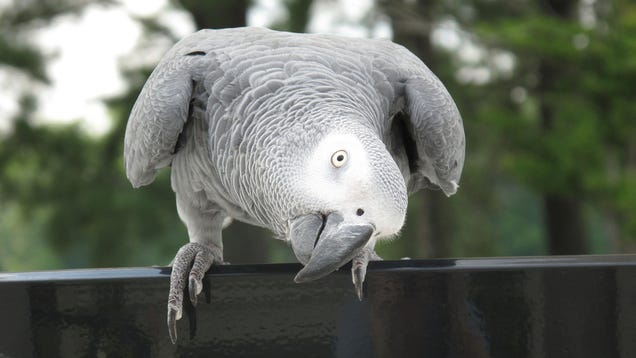

We Finally Know Why Birds Are So Freakishly Smart
by George Dvorsky on Gizmodo, shared by Adam Clark Estes to io9
Birds are capable of extraordinary behavioral feats, from solving complex puzzles to tool making. There may be good reason for that. A new study shows that, pound for pound, birds pack more neurons into their small brains than mammals, including primates.
RC, ThePrettiestOne likes this
13 Jun 19:34


bedupolker: Look ma! I made a tag yourself/alignment chart...
Look ma! I made a tag yourself/alignment chart meme! sapphic girl stereotypes edition, inspired by that old thing..
Any resemblance to preexisting characters, real or imaginary, is purely coincidental. (I’m neutral butch tho)
ThePrettiestOne likes this
13 Jun 18:36
fuckthemgenderroles: We’re different, yes but that doesn’t mean...

RC, ThePrettiestOne likes this
13 Jun 18:35


amey-winehouse: fuck-me-barnes: carmanitaknits: wagrobanite: ...
Members of Congress are living off food stamps for a week to protest Republican cuts. It’s a challenge for them, but GOP cuts would hurt millions of everyday Americans.
Why does this not have more publicity. This needs it!
I want a reality tv show where politicians have to live in poverty for a month. They have to live in Government housing, shop with food stamps, and get only a limited amount of money for clothes. Because here, they still have all their trappings, lilke nice cars and thousand dollar suits. I want them in Walmart jeans trying to determine if they can afford a carton of milk.
Give them a full calendar year. I want to see them confident in January, and sometime around June choking back tears at the Safeway because they are tired, so tired, of eating 25 cent cup noodles, eyeing other peoples’ full grocery carts with a dull bewilderment.
Let me see them despair because they have a persistent nagging cough that won’t go away and might be turning into pneumonia but the minute clinic is $60, which might as well be as six million dollars, either way they ain’t got it to spare - and that doesn’t count the cost of prescriptions. Let me hear them tell people about the muscle cramps they get at night due to eating non-nutritious garbage for months, the weakness from persistent hunger.
Let them know the shame and frustration of only owning one pair of cheap polyester pants for work and one pair of thrift-store jeans, and both persistently have ripped crotches and seams coming undone, no matter how many times they get sewn back up.
Let the women know the particular sort of despair that comes once a month when you can’t afford even the cheapest pads or tampons.
Let them understand the frustration of being charged a $35 fee for a $2 overdraft. Let them watch as the bank holds charges from different days in “pending” till they all come through on the same day, and the bank charges them four times for a single overdraft because “the charges all cleared at the same time”.
I want them to know the particular pain of having to decide between food for the week, or transportation costs to and from work. You can’t have both. Choose wisely.
You do not truly understand poverty until you’ve lived it and a month isn’t enough to encompass it. Not even close.^^^
ThePrettiestOne likes this
13 Jun 15:40


#OrlandoStrong
by cesco7
ThePrettiestOneOK, brain? Can we talk? About how THIS is the one that makes you break down crying at work? Because that's a LITTLE weird? Even for you? Brain?

ThePrettiestOne likes this
13 Jun 15:38
idatedads:Someone’s saying it“Well, it’s been a tough day. I...
Someone’s saying it
“Well, it’s been a tough day. I woke up to a 6:15 text about the murders and I immediately experienced enormous grief. And then, as the day went on, I grew angry.”
“Why?”
“Because the focus has been the influence of ISIS on this murderer. And that might have impacted him? But – you don’t have to go to the middle east to learn this kind of bigotry and hatred. You can get it right here in the United States from fundamentalist Christian leaders and many GOP politicians who have fomented this kind of violence.”
RC, ThePrettiestOne likes this