Impostor Syndrome
When something bugs me that I can't put my finger on, there's usually a contradiction that I'm not seeing. After a few talks, articles and conversations, it seems pretty obvious: it puts JavaScript on a pedestal, even as it makes it irrelevant.
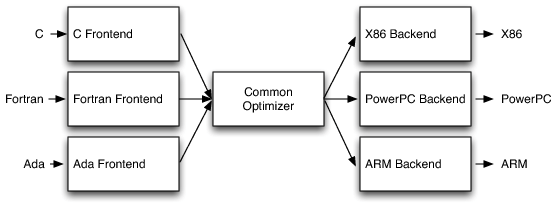
It makes JavaScript irrelevant because with LLVM's infrastructure or similar tools, practically anything can or will be compiled into JS.
But it also makes JavaScript more important, focusing the future optimization efforts of browser makers onto it, despite its ill-suited semantics.
It means JavaScript has nothing to do with it, it's just the poison we ended up with, the bitter pill we supposedly have to swallow. So when Brendan Eich says with a smile "Always bet on JavaScript", what he really means is "Always bet on legacy code" or perhaps "Always bet on politics". When you think about it, it's weird to tell JavaScript developers about Asm.js. It's not actually aimed at them.
Looking around, in the browser there's CoffeeScript, TypeScript and Dart. Outside, there's Python, Ruby, Go and Rust. Even CSS now has offspring. The future of the web is definitely multilingual and some people want to jump ship, they're just not sure which one will actually sail yet.
When faced with a legacy mechanism like UTF-8 or indeed Asm.js, we have to ask, is it actually necessary? In the case of UTF-8, it's a resounding yes: we need to assign unique names to things, and this name has to work with both modern and legacy software, passing through unharmed as much as possible. UTF-8 solves a bunch of problems while causing very few.
But with Asm.js, it's just a nice to have. All Asm.js code is new, there is no vault of legacy code that will stop working if we do it wrong. We can already generate functioning JS for legacy browsers, along with something new for alternative VMs. Having one .js file that does both is merely a convenience, and a dubious one at that.
Indeed, the unique appeal of Asm.js is for the browser maker who implements it first: it lets their JS VM race closer to that much desired Native line. It also turns any demo that uses Asm.js into an instant benchmark, which other vendors have to catch up with. It's a rational choice made in self interest, but also a tragedy of the commons.
Maybe that's a bit hyperbolic, but work with me here. There's a serious amount of defeatism and learned helplessness at work here, and again a contradiction. We seek to get ever closer to native performance, yet fall short by design, resigning ourselves to never quite reaching it. I can't be the only one who finds that completely bizarre, when there's laptops and phones running entirely on a web stack now?
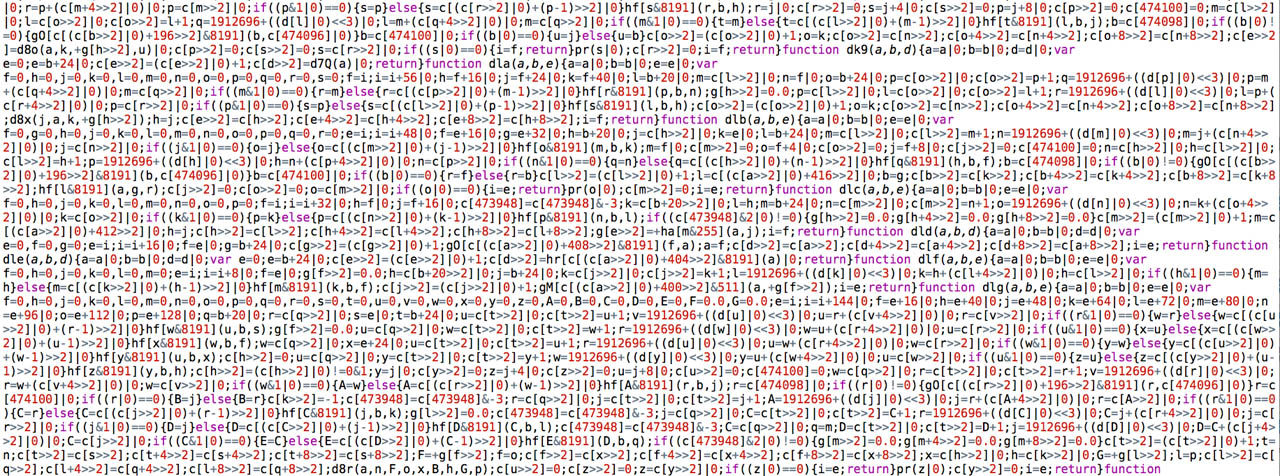
If you look at the possible future of Asm.js, there's SIMD extensions, long ints with value objects, math extensions, support for specific JVM/CLR instructions and more. Asm.js is positioned not just as something that works today, but that leads into a bright future to boot. And yet, it all has to be shoehorned into something that is still 100% JavaScript, even as that target itself consists of moving goalposts.


 La imagen de la fragilidad es, plop, una bomba de jabón de superficie irisada que, ante la mínima perturbación, explota. Sin embargo, aplicando el suficiente frío, las pompas de jabón se pueden congelar, lo que permite tomarlas como si fueran bolas de cristal en las que adivinar el futuro.






 Con sólo una uva cortada por la mitad y colocada en un horno microondas durante unos segundos, puede visualizarse el cuarto estado de la materia: el plasma (los otros son líquido, sólido y gaseoso). Consiste en un gas ionizado, una especie de gas donde los átomos o moléculas que lo componen han perdido parte de sus electrones o todos ellos.



























 No es la primera vez que echamos un vistazo a los robots que se desarrollan en Boston Dynamics,

