An entrancing short film by designer and artist Rus Khasanov (previously) fuses multiple optical tricks into a single work. Splashes of glittery, inky liquids crawl across the screen, resulting in a series of bubbles that mimic magnified shots of human eyes. The hypnotic footage utilizes pareidolia—the inclination to see an object where it physically doesn’t exist—while referencing heterochromia iridum, a fairly common condition in which a person’s irises are multi-colored, sometimes in the forms of spikes radiating around the pupil or swirls that split the tissue with different hues. Khasanov’s rendition mimics that phenomenon through saturated droplets and innumerable veins that plume outward.
For more of the Russia-based artist’s work, check out his Behance and Vimeo, where he shares a range of technicolor photography-based projects.
What began as a task to install a new parking structure in Bansberia, India quickly morphed into an open community center awash with patterned brickwork. Conceived by Abin Design Studio, “Gallery House” spans 380-square-meters and combines multiple masonry techniques to form the asymmetric facade. The Kolkata-based team alternated ceramic blocks created by a local artist and a mixture of rectangular, chevron, and curved bricks sourced from a nearby field, resulting in a variegated, textured structure that mimics the terracotta temples of Bengal.
Positioned opposite the gaping ground entrance, a large staircase spills into the street and offers a seating area for residents hoping to watch the yearly festivities that pass by the building. A spacious hall fills the first floor with a lounge, pantry, and multi-purpose area used for yoga and other classes on the upper stories. When community members head home after the day’s activities, the rooms are converted into dormitories for the staff.
Explore more of the studio’s projects that focus on gathering and social support on its site. (via designboom)
Whenever theorists tried to model these intricate particle motions and interactions in computer simulations, the supernova’s shock wave would stall and fall back on itself...
..turbulence creates extra pressure behind the shock wave, pushing it further from the star’s center. Away from the center, the inward pull of gravity is weaker, and there’s less inward-falling matter to temper the shock wave. The turbulent matter bouncing around behind the shock wave also has more time to absorb neutrinos. Energy from the neutrinos then heats the matter and drives the shock wave into an explosion.
For years, researchers had failed to realize the importance of turbulence, because it only reveals its full impact in simulations run in three dimensions...
In 1987, a giant star exploded right next to our own Milky Way galaxy. It was the brightest and closest supernova since the invention of the telescope some four centuries earlier, and just about every observatory turned to take a look. Perhaps most excitingly, specialized observatories buried deep underground captured shy subatomic particles called neutrinos streaming out of the blast.
These particles were first proposed as the driving force behind supernovas in 1966, which made their detection a source of comfort to theorists who had been trying to understand the inner workings of the explosions. Yet over the decades, astrophysicists had constantly bumped into what appeared to be a fatal flaw in their neutrino-powered models.
Neutrinos are famously aloof particles, and questions remained over exactly how neutrinos transfer their energy to the star’s ordinary matter under the extreme conditions of a collapsing star. Whenever theorists tried to model these intricate particle motions and interactions in computer simulations, the supernova’s shock wave would stall and fall back on itself. The failures “entrenched the idea that our leading theory for how supernovas explode maybe doesn’t work,” said Sean Couch, a computational astrophysicist at Michigan State University.
Of course, the specifics of what goes on deep inside a supernova as it explodes have always been mysterious. It’s a cauldron of extremes, a turbulent soup of transmuting matter, where particles and forces often ignored in our everyday world become critical. Compounding the problem, the explosive interior is largely hidden from view, shrouded by clouds of hot gas. Understanding the details of supernovas “has been a central unsolved problem in astrophysics,” said Adam Burrows, an astrophysicist at Princeton University who has studied supernovas for more than 35 years.
In recent years, however, theorists have been able to home in on the surprisingly complex mechanisms that make supernovas tick. Simulations that explode have become the norm, rather than the exception, Burrows wrote in Nature this month. Rival research groups’ computer codes are now agreeing on how supernova shock waves evolve, while simulations have advanced so far that even the effects of Einstein’s notoriously intricate general relativity are being included. The role of neutrinos is finally becoming understood.
“It’s a watershed moment,” said Couch. What they’re finding is that without turbulence, collapsing stars may never form supernovas at all.
A Chaotic Dance
For much of a star’s life, the inward pull of gravity is delicately balanced by the outward push of radiation from nuclear reactions inside the star’s core. As the star runs out of fuel, gravity takes hold. The core collapses in on itself — plummeting at 150,000 kilometers per hour — causing temperatures to surge to 100 billion degrees Celsius and fusing the core into a solid ball of neutrons.
The outer layers of the star continue to fall inward, but as they hit this incompressible neutron core, they bounce off it, creating a shock wave. In order for the shock wave to become an explosion, it must be driven outward with enough energy to escape the pull of the star’s gravity. The shock wave must also fight against the inward spiral of the star’s outermost layers, which are still falling onto the core.
Until recently, the forces powering the shock wave were only understood in the blurriest of terms. For decades, computers were only powerful enough to run simplified models of the collapsing core. Stars were treated as perfect spheres, with the shock wave emanating from the center the same way in every direction. But as the shock wave moves outward in these one-dimensional models, it slows and then falters.
Only in the last few years, with the growth of supercomputers, have theorists had enough computing power to model massive stars with the complexity needed to achieve explosions. The best models now integrate details such as the micro-level interactions between neutrinos and matter, the disordered motions of fluids, and recent advances in many different fields of physics — from nuclear physics to stellar evolution. Moreover, theorists can now run many simulations each year, allowing them to freely tweak the models and try out different starting conditions.
One turning point came in 2015, when Couch and his collaborators ran a three-dimensional computer model of the final minutes of a massive star’s collapse. Although the simulation only mapped out 160 seconds of the star’s life, it illuminated the role of an underappreciated player that helps stalled shock waves turn into fully fledged explosions.
Hidden inside the belly of the beast, particles twist and turn chaotically. “It’s like boiling water on your stove. There are massive overturns of fluid inside the star, going at thousands of kilometers per second,” said Couch.
This turbulence creates extra pressure behind the shock wave, pushing it further from the star’s center. Away from the center, the inward pull of gravity is weaker, and there’s less inward-falling matter to temper the shock wave. The turbulent matter bouncing around behind the shock wave also has more time to absorb neutrinos. Energy from the neutrinos then heats the matter and drives the shock wave into an explosion.
For years, researchers had failed to realize the importance of turbulence, because it only reveals its full impact in simulations run in three dimensions. “What nature does effortlessly, it has taken us decades to achieve as we went up from one dimension to two and three dimensions,” said Burrows.
These simulations have also revealed that turbulence results in an asymmetric explosion, where the star looks a bit like an hourglass. As the explosion pushes outward in one direction, matter keeps falling onto the core in another direction, fueling the star’s explosion further.
These new simulations are giving researchers a better understanding of exactly how supernovas have shaped the universe we see today. “We can get the correct explosion energy range, and we can get the neutron star masses that we see left behind,” said Burrows. Supernovas are largely responsible for creating the universe’s budget of hefty elements such as oxygen and iron, and theorists are starting to use simulations to predict exactly how much of these heavy elements should be around. “We’re now starting to tackle problems that were unimaginable in the past,” said Tuguldur Sukhbold, a theoretical and computational astrophysicist at Ohio State University.
The Next Blast
Despite the exponential rise in computing power, a supernova simulation is far rarer than an observation in the sky. “Twenty years ago there were around 100 supernovae being discovered every year,” said Edo Berger, an astronomer at Harvard University. “Now we’re discovering 10,000 or 20,000 every year,” a rise driven by new telescopes that quickly and repeatedly scan the night sky. By contrast, in a year theorists carry out around 30 computer simulations. A single simulation, re-creating just a few minutes of core collapse, can take many months. “You check in every day and it’s only gone a millisecond,” said Couch. “It’s like watching molasses in the wintertime.”
The broad accuracy of the new simulations has astrophysicists excited for the next nearby blast. “While we’re waiting for the next supernova , we have a lot of work to do. We need to improve the theoretical modeling to understand what features we could detect,” said Irene Tamborra, a theoretical astrophysicist at the University of Copenhagen. “You cannot miss the opportunity, because it’s such a rare event.”
Most supernovas are too far away from Earth for observatories to detect their neutrinos. Supernovas in the immediate vicinity of the Milky Way — like Supernova 1987A — only occur on average about once every half-century.
But if one does occur, astronomers will be able to “peer directly into the center of the explosion,” said Berger, by observing its gravitational waves. “Different groups have emphasized different processes as being important in the actual explosion of the star. And those different processes have different gravitational wave and neutrino signatures.”
While theorists have now broadly reached a consensus on the most important factors driving supernovas, challenges remain. In particular, the outcome of the explosion is “very strongly dictated” by the structure of a star’s core before it collapses, said Sukhbold. Small differences are magnified into a variety of outcomes by the chaotic collapse, and so the evolution of a star before it collapses must also be accurately modeled.
Other questions include the role of intense magnetic fields in a rotating star’s core. “It’s very possible that you can have a hybrid mechanism of magnetic fields and neutrinos,” said Burrows. The way neutrinos change from one type — or “flavor” — into another and how this affects the explosion is also unclear.
“There are a lot of ingredients that still need to be added to our simulations,” said Tamborra. “If a supernova were to explode tomorrow and it matches our theoretical predictions, then it means that all the ingredients that we are currently missing can safely be neglected. But if this is not the case, then we need to understand why.”
In 1841, the English biologist Richard Owen marveled at the intricate skeleton of a new sea sponge species found near the Philippines. It resembled “a delicate cornucopia,” he wrote, one woven from “stiff, glistening, elastic threads, resembling the finest hairs of spun glass.” The skeleton is indeed made of glass, which the animal, Euplectella aspergillum — nicknamed “Venus’ flower basket,” — creates using acid extracted from seawater.
Scientists still marvel at this sponge 180 years later. Its notable properties include stunning longevity — some glass sponges are thought to live many thousands of years, placing them among the longest-lived animals — and the ability to channel light through its silica strands in the manner of fiber optics. For the last two decades, a group of biologists, materials scientists and engineers at Harvard University has focused on the feature of Venus’ flower basket that attracted Owen: the intricate design of its glass skeleton. Their recent work reveals that the skeleton is, for unknown reasons, exceptionally strong — nearly as uncrushable as possible for this kind of structure.
“It’s sort of the holy grail of engineering design,” said Dhruv Bhate, an associate professor of engineering at Arizona State University who studies the Venus’ flower basket but is not involved in the work of the Harvard team.
The skeleton’s strength derives from its peculiar lattice pattern, which first intrigued the Harvard materials scientist and chemist Joanna Aizenberg about 20 years ago. Katia Bertoldi, one of Aizenberg’s co-authors on the recent studies, was also captivated by the lattice pattern as soon as she saw it. “It’s this periodic architecture, but it’s not a simple one,” Bertoldi said. She and her colleagues wondered, “Why this particular architecture?”
They noted that the glass beams that form the skeleton of the Venus’ flower basket have a lot in common with trusses, the assemblages of beams used to stabilize bridges and skyscrapers. For well over a century, engineers’ preferred design for trusses has been a sturdy lattice consisting of a square grid with diagonals running in both directions for added support. “We’ve been doing this the same way for a long, long time,” said Matheus Fernandes, a graduate student on the team. The skeleton of the Venus’ flower basket, however, has pairs of diagonals running in both directions rather than the single diagonals crisscrossing a typical truss. These pairs are spaced apart so the grid looks like a checkerboard, with diagonals crossing every other square.
The researchers fabricated and computer-simulated a lattice based on the sponge and compared it with three other lattice structures of the same weight, including the standard truss pattern. In simulations and experiments, they saw the bio-inspired lattice withstand the most stress — first from compression in one direction, and then from opposing pressures at three points in another test — before breaking. In further simulations, they varied the number of diagonals as well as their spacing and thickness to find the lattice that could sustain the most compression. It turned out to be the one modeled on the sponge.
With its additional diagonals, the sponge’s lattice has more joints than a traditional truss and less distance between the joints, which may allow the structure to sustain greater compression before buckling, Fernandes said. The team detailed their initial findings about the skeleton’s strength in Nature Materials in September. “Deeper dives” into different aspects of these glassy skeletons are ongoing, according to James Weaver, another co-author.
The researchers are also pursuing a patent for the sponge-inspired lattice they created. Adding more strength to architectural structures without adding more weight could theoretically allow for longer bridges, lighter infrastructure that’s easier to transport, or even more streamlined engineering in vehicles bound for space. “The process of trial and error over millions of years of evolution brings out the best” in materials, said Pablo Zavattieri, a professor in civil engineering at Purdue University.
However, in the case of Venus’ flower basket, the evolutionary purpose of its incompressibility is unclear.
The sponges often live thousands of meters deep where water pressure is extreme, but this pressure comes from all directions, pressing on opposite sides of the glass beams equally and canceling itself out. The sponge doesn’t experience a “crushing force,” explained Clint Penick, a biologist at Kennesaw State University in Georgia, via email.
Penick said the sponge does need a strong structure, however, to stand up and filter plankton from the water. It also needs to contain a pair of shrimps that often permanently inhabit the sponge once they grow too big to leave it. (These occupants have earned the sponge status as a symbol of eternal love in Japan, where it is given as a wedding present.) Their sturdy skeletons may also deter predators or prevent damage from animals that might collide with them, Penick added, though none of this fully explains their ultra-robustness.
Brute strength is not all Venus’ flower basket offers. The lattice walls of its skeleton are just one of several levels of complexity in its structure. Zoom in to see how its fibers can shift slightly within its lattice walls, or how its arrangement of proteins and silica molecules stops fractures in their tracks. Zoom out to examine how the lacy skeleton allows the living sponge to filter water. Bhate’s team is investigating the way some of the strands aren’t completely attached to the others, allowing the skeleton flexibility, and he’s curious about the way the structure would stand up to twisting.
“It’s one of those things that you can spend a lifetime on, and you still have not replicated all those capabilities,” Bhate said. “And that’s why it’s exciting.”
"The story of Cascadia’s decade of policy delay and emissions backsliding is a story of ambitious goals eroded by inertia. It’s a story of overestimating faith in economic logic and underestimating the enduring allure of economic growth. And, south of the 49th Parallel, it’s a tale of a bipartisan consensus split asunder..."
"The imperative to transform fossil fuel-dependent energy systems took center stage... As of 2008 B.C., Washington, and Oregon were among only four provinces and eight states to legally commit to decarbonization... Cascadia’s problem was the rest of its economy. Buildings, industry, and especially transportation generate over two-thirds of Cascadia’s emissions. Carbon-cutting options for those — such as electric heat pumps to replace gas furnaces and urban redesigns to reduce vehicle travel — were more complex and costly than swapping out coal stacks for wind turbines. And none of Cascadia’s governments had policies strong enough to forcefully drive those options into use."
This story was produced in collaboration with InvestigateWest, a nonprofit newsroom in Seattle with a focus on the environment, public health, and government accountability.
With dozens of people killed by wildfires in the western U.S., millions of acres scorched, and choking smoke spreading far into British Columbia, Washington Governor Jay Inslee lit up the news wires in September. “These are not just wildfires,” Inslee asserted at a press conference from Olympia, “these are climate fires.”
Two days later on George Stephanopoulos’ Sunday-morning ABC News talk show, the recent presidential candidate recounted a poignant visit to a town nearly wiped out by the fires. “The only moisture in Eastern Washington was the tears of people who have lost their homes,” said Inslee. “And now we have a blowtorch over our states in the West, which is climate change.”
A rower glides across Lake Union through wildfire smoke that obscures the Seattle skyline, Friday, September 11, 2020. Dan DeLong / InvestigateWest
Just days after his return to the national stage, however, the question in a Seattle courtroom was whether the state he’d run since 2013 should be sanctioned for helping to load and light that torch. On Thursday September 17, an attorney representing Inslee and the entire apparatus of Washington state government stood to tell three masked judges behind a plexiglass shield that courts could not hold the state legally responsible for its part in the climate crisis: The part where it expanded highways. The part where it licensed power plants and factories to emit many tons of greenhouse gases. Where it set building standards that would keep residents’ stoves and furnaces and water heaters polluting the atmosphere for decades to come.
Thick haze from the climate fires still clogged the air outside the appeals courtroom in downtown Seattle as Assistant Attorney General Chris Reitz offered his arguments. The panel of judges peppered him with questions and probed for logical holes.
“I have asthma,” interjected one of the judges, David Mann of the Washington Court of Appeals Division One. “So I have to stay inside, with the windows shut.”
“Why isn’t that affecting my life and my liberty?”
The events leading to this legal confrontation in Washington, years in the making, are akin to those that recently prompted similar battles in Oregon and British Columbia courtrooms — government action and inaction that has increasingly spurred legal actions around the globe. In the Washington case, as in those to the north and south, young people are suing to stop what they call a state-sanctioned degradation of their futures.
One of the Washington plaintiffs is 20-year-old Seattleite Aji Piper, who has been suing the state and U.S. governments over climate’s impact on his life and liberty for five years. As Piper said in a 2018 TED Talk, he is fighting for humanity’s ability to “change places with another, see their plight, adapt, and make better choices.”
But the halting pace and limited progress amplifies the anxiety and anguish that the climate crisis represents for so many young people, he said.
“The worst for me as a plaintiff is when we’re just sitting nowhere and waiting,” Piper said in a Zoom interview after the court hearing.
“It’s frustrating,” agreed his attorney, Andrea Rodgers, from her adjacent Zoom picture box.
“Washington has been defending itself by saying, ‘We have been doing the best we can. We have got Inslee. Look at the progress,’” Rodgers said.
“But emissions don’t lie and the emissions keep rising.”
Twenty-year-old Aji Piper wearing a mask to protect himself during one of Washington’s climate-driven smoke emergencies. Alex Garland
Cascadia’s broken promise
The official record shows that Rodgers and the youth litigants in all three jurisdictions are right at least about this: Washington, British Columbia, and Oregon promised to significantly reduce their emissions of greenhouse gasses by 2020.
But they did not.
This happened even though renewable energy sources and other solutions are available. Technologically speaking, climate change is neither insurmountable nor unaffordable. It’s the politics that have fallen short.
Washington, Oregon, and British Columbia — the heart of an eco-friendly region that’s frequently dubbed Cascadia — consider themselves a global leader on climate action.
The three governments set some of North America’s first mandates to reduce greenhouse gas emissions over a decade ago. And if any place on earth can show the world how to confront the climate crisis, it should be here. Cascadia’s abundant hydropower provides a head start toward living without fossil fuels, and the majority of voters in British Columbia, Washington, and Oregon say they want to make that transition.
Yet Washington, B.C., and Oregon were not on track to meet their 2020 targets. In fact, until Covid hit last year, emissions were rising. Between 2013 and 2018, the most recent five-year period for which Cascadia’s governments have completed counts, emissions rose by about 5, 6, and 7 percent in Washington, Oregon, and B.C., respectively, according to a new analysis by InvestigateWest.
Clayton Aldern / Grist
Over the same period, similarly fast-growing economies such as California and Germany released fewer of the greenhouse gas emissions that cause climate change. “I wouldn’t say we’ve done nothing. But there’s been an awful lot of dithering. We were supposed to do a whole hell of a lot better,” says KC Golden, who spent over a decade at Seattle-based think tank Climate Solutions and now serves on the board of international activist group 350.org.
B.C.’s trend paints a particularly stark picture. In 2018 it came within 0.1 percent of setting a new all-time emissions record for releases of greenhouse gases, according to InvestigateWest’s analysis, which adjusts the province’s official data to enable accurate comparisons with the U.S. figures. Over the five years prior, B.C.’s emissions grew more than five times faster than the Canadian average. And there could be more to come as its government fosters the province’s nascent liquified natural gas export industry.
Golden and other climate policy experts say measures to meet the climate goals set in 2007-2008 prevented some emissions, and may ultimately drive reductions. But they say Earth’s climate doesn’t give A’s for effort. As Golden puts it: “The atmosphere doesn’t care about anything but CO2 molecules [and] how many molecules go into the atmosphere.”
Despite the dithering, Cascadia does have the solutions to climate change within its reach. The example set in California and modeling by Cascadia’s own planners show that renewable energy, electric vehicles, and other solutions exist to get Cascadia off fossil fuels, slashing the carbon dioxide created by burning fossil gas, oil, and coal, and the methane from leaked gas. In other words, Cascadia has the technology required to decarbonize.
Holding Earth’s warming to levels that avoid the worst effects of climate change demands faster reductions here, and everywhere. Global climate experts say that means halving global emissions by 2030. That requires a six-fold speed-up in renewable energy growth, for example, and a 12-fold speedup in electric vehicle sales, according to the World Resources Institute.
So why is environmentally-conscious Cascadia stuck in first gear? The consensus answer from experts and activists interviewed by InvestigateWest: a shortage of political will. The region has been beset by partisan wrangling, fear of job losses, disagreements over how to ensure equity for already polluted and marginalized communities, and misinformation obscuring the full potential of well-documented solutions.
“The constraining factor has always been political feasibility, not economic feasibility,” says political economist and energy modeling expert Mark Jaccard, a professor at Simon Fraser University in Burnaby, B.C., and a former chair of the British Columbia Utilities Commission.
The story of Cascadia’s decade of policy delay and emissions backsliding is a story of ambitious goals eroded by inertia. It’s a story of overestimating faith in economic logic and underestimating the enduring allure of economic growth. And, south of the 49th Parallel, it’s a tale of a bipartisan consensus split asunder, such that fighting for a cleaner future is seen, in some quarters, as an attack on freedom. Or worse.
Clayton Aldern / Grist
Powering down coal
The imperative to transform fossil fuel-dependent energy systems took center stage around the world after the deadly destruction wrought by Hurricane Katrina in 2005 and the record heat of 2007, when Arctic sea ice melted to a fraction of its previous norms. Climate change was no longer just a future threat. It had arrived.
Cascadia lawmakers acted, mandating emissions reductions by 2020 and steeper cuts by 2050. As of 2008 B.C., Washington, and Oregon were among only four provinces and eight states to legally commit to decarbonization.
Oregon and B.C. set ambitious long term goals of 75-77 percent reductions from their 1990 emissions, reflecting the global carbon cuts scientists believed were needed by mid-century to avert the worst of the impending climate disaster. Washington state came in with a relatively modest 50 percent-by-2050 goal reflecting what then-governor Christine Gregoire thought the state could guarantee.
Cascadia’s governments had experience with decarbonization. Hydropower continued to provide more than two-thirds of the region’s power thanks to a long legacy of leadership in energy efficiency. Since the 1970s, making customers more efficient had provided more “virtual” power capacity than actual generation from new power plants burning gas and coal.
All three governments chalked up quick wins in their power sectors.
B.C. immediately scrapped plans for a new gas-fired power plant and two coal generators. The province told its primary utility, provincially-owned BC Hydro, to instead buy additional electricity from renewable energy projects such as wind farms and small-scale hydropower stations. Washington voters and Oregon’s legislature passed some of North America’s first requirements mandating privately-owned utilities to add a rising share of wind, solar, and other types of renewable power. That unleashed a boom in wind power development concentrated along the Columbia River Gorge, the natural wind tunnel that separates the states.
The closure of this coal-burning electrical plant near Boardman, Oregon, late last year will end emissions of about 2 million tons of carbon dioxide each year. The plant is owned by Portland General Electric, which aims to reduce its greenhouse gas emissions 80 percent by 2050. Courtesy Portland General Electric
And guess what? It actually saved consumers money. Falling prices for wind and solar driven by innovation and scale made the mandates more economical.
Rural economic development made the mandates politically palatable. Jackie Dingfelder, a former member of the Oregon legislature who led passage of a package of climate bills in 2007, said representatives for rural counties saw renewable energy plants as a boost to declining tax revenues — one that panned out. “If you drive out in eastern Oregon and Washington you see tons of wind farms and those farmers get royalties and those communities get money,” said Dingfelder.
These power moves delivered for the atmosphere, particularly in Oregon. In 2007 coal provided over one-third of Oregon’s power. A decade later it was less than a quarter, and emissions from electricity consumption had declined by 27 percent.
Oregon also dialed in further reductions to come. In 2010 utility Portland General Electric cut a deal with environmentalists, codified by the legislature, to shut down Oregon’s only in-state coal-burning power plant. The utility got out of a $470-million retrofit of its air pollution controls, which would have extended the plant’s operating life to 2030 or beyond, by agreeing to shutter it in 2020.
Cascadia’s problem was the rest of its economy. Buildings, industry, and especially transportation generate over two-thirds of Cascadia’s emissions. Carbon-cutting options for those — such as electric heat pumps to replace gas furnaces and urban redesigns to reduce vehicle travel — were more complex and costly than swapping out coal stacks for wind turbines. And none of Cascadia’s governments had policies strong enough to forcefully drive those options into use.
Greenhouse gas emissions — about four-fifths of which are carbon-based CO2 and methane from extraction and use of fossil fuels — fell for several years thanks to cleaner electricity, as well as the global financial crisis of 2008. People traveled less, consumed less, and produced less. Fossil fuel use dropped. Cascadia’s emissions fell by 8 percent. Then the economy rebounded. People moved more. Production and consumption rose. And carbon emissions came roaring back.
By 2018 robust economic growth across Cascadia had restored over four-fifths of the 19.5-megatons of annual emissions that the region shed during the downturn.
Reed Schuler, a senior advisor to Inslee on climate, told InvestigateWest that emissions rose because Washington’s economy is among North America’s fastest growing. “There’s more people living and working in buildings, more people driving around, more people flying around,” said Schuler.
However, comparative analysis by InvestigateWest puts the blame squarely on Cascadia’s weak decarbonization policies. Between full economic recovery in 2012 and 2018, the most recent reporting year, California and Cascadia both booked a robust 26 percent increase in GDP. Over that period California drove its annual emissions down by more than 5 percent. Washington’s emissions — and Cascadia’s as a whole — ballooned by over 7 percent.
Clayton Aldern / Grist
Tracking Arnold
California “decoupled” economic growth from rising carbon via a raft of laws and policies that encouraged or mandated use of efficient products and cleaner energy. Many were legislated in 2006 under then-Governor Arnold Schwarzenegger, including the centerpiece: a scheme known as cap and trade. It set a cap on carbon emissions that declined annually, and enforced that cap by requiring polluters to buy credits — sold at auction — for every ton of carbon they released. By putting a price on carbon, cap and trade created a financial incentive to reduce pollution.
Cascadia’s governments all sought to match the breadth of California’s carbon-cutting policies. They sought to follow its harnessing of financial markets to drive down carbon emissions. They failed.
Early efforts in Washington and Oregon to enact cap-and-trade schemes fizzled. Washington approved a bill in 2008 that was later deemed unenforceable. Oregon ran out of time when the global economic meltdown struck that year, stoking economic anxiety. “The recession basically dashed that to the floor,” recalls Portland-based energy policy expert and climate activist Angus Duncan, then an advisor to the governor.
BC, in contrast, raced ahead. Like Schwarzenegger, then-Premier Gordon Campbell was a center-right politician who embraced climate action. BC’s parliamentary government, with its fewer checks on power than the U.S. system, enabled him to move fast — if he had his caucus behind him. In May 2007 Schwarzenegger visited Vancouver, signing a climate agreement and injecting star power into Campbell’s climate vision.
By the end of the year Campbell had surmounted opposition within the province’s business community, and had a climate package in place. In May 2008 Campbell’s Liberal Party majority in the legislature formally approved North America’s first carbon tax. It took effect that July — five years before California’s more complex cap-and-trade system went into effect.
The tax started at C$10 (about US $7.77 today) per metric ton of CO2 emissions anticipated from every liter of gasoline, diesel and natural gas sold in B.C. It was modest — adding just $1 or so to the price of a fill on a small car — but was set to increase annually to reach C$50 (about US $39.43) by 2020.
Within a few years economists were reporting small benefits and a reassuring lack of harms. The tax had trimmed fuel consumption in B.C. compared to other provinces in Canada while stimulating BC’s economy thanks to the government’s design for the revenues. B.C. returned its tax take by lowering income and business taxes and sending rebate checks to residents. The rebate checks protected lower-income residents from rising energy costs. Other measures protected energy-intensive, trade-exposed industries such as cement producers from being pushed out of the province.
Those measures could not, however, protect the tax and its champion from political attacks and misinformation. The province’s left-of-center New Democratic Party took the first swipe. During the 2009 election the NDP ran on an “Axe the Tax” platform, alleging that the carbon tax hurt working families. Campbell’s 20-point lead quickly evaporated.
When Campbell barely held on to his majority, arguments ensued as to whether the tax had nearly pulled him down or narrowly saved him by peeling environmental votes away from the NDP. But in 2011 Campbell’s Liberal party dumped him for a more populist leader. Premier Christy Clark took her lead from B.C.’s business lobbies — including fossil gas interests with large fracking operations in B.C.’s interior. She froze the carbon tax, rolled back funding for other climate measures, and rolled out a sales pitch for LNG investment.
So despite its early policy lead, B.C.’s decarbonization results proved worse than underwhelming. Instead of declining versus 2007, emissions rose through 2018.
Similar dynamics played out on Canada’s national stage, where Prime Minister Stephen Harper gained a majority in parliament in the 2009 election by attacking “job-killing carbon taxes” championed by his rival. Harper’s win kicked off a decade of Canadian climate inaction, including expansion of Alberta’s carbon-intensive oil sands. As Jaccard laments in his 2020 book The Citizen’s Guide to Climate Success, “Canada’s emissions went up rather than down.”
The price of partisanship
To the south, hopes sprung high — but also tanked because of politics. Washington and Oregon governors returned to carbon pricing with their eyes on California’s cap-and-trade program rather than the political bloodbath up north. Alas, the same political crossfire leveled at B.C.’s tax — along with some novel attacks — would doom their carbon trading schemes in the state legislatures.
Inslee pushed carbon pricing after he became governor in 2013, in spite of Republican control of the state senate, where Senator Doug Ericksen, an opponent of climate action whose district includes two refineries, chaired the environment committee. “It was ‘Into the valley of Death, Rode the six hundred’,” recalled Patrick Mazza, a longtime Seattle-based climate policy analyst and activist, evoking the Alfred Tennyson poem “The Charge of the Light Brigade” that immortalized an ill-fated 1854 cavalry charge in Crimea.
Former California Governor Jerry Brown jokes with Washington’s Governor Jay Inslee, left, during a news conference at the Global Climate Action Summit in San Francisco in 2018. Anda Chu / Digital First Media / The Mercury News via Getty Images
Inslee tried several times, and voters rejected two ballot measures, before Washington took a year off from carbon pricing battles in 2019.
Oregon governor Kate Brown led repeated charges over the same ground after she took office in 2015. Republican pushback there led to the strange events of June 2019, when Oregon state senators quit the capitol in Salem, denying Democrats the quorum they needed to outvote the Republicans.
On June 23, 2019 a reporter for The Wall Street Journal reached Oregon State Senator Cliff Bentz by phone. From an undisclosed location in Idaho, Bentz admitted that he and his colleagues were “on the lam” — fugitives from a debate over cap-and-trade legislation advanced by the legislature’s Democratic leaders. Bentz had changed hotels twice over the past four days and secured a burner phone, after Governor Brown ordered the Oregon State Police to find and return the wayward senators.
The senators’ run from law-making — a ruse they reprised last year — capped years of political dissolution that transformed an earlier consensus on climate action into open political warfare. In 2007 Oregon’s climate bills passed on bipartisan votes. In 2020 not one Republican would even cast a vote on a cap and trade measure backed by the state’s utilities.
Climate, said former legislator Dingfelder, is “right up there now with god and guns and abortion.”
Lower-income voters in Oregon and Washington understandably worry about new taxes and higher energy costs. Regressive tax systems in both states mean the lowest 20 percent of earners already pay the highest proportion of their income in taxes. Unions often paint carbon pricing as a job killer, in spite of contrary evidence from B.C. and California. Climate justice groups attack industries’ ability to buy rights to continue polluting the often minority, low-income communities nearby.
And then there’s the influence of corporations that sell fossil fuels or profit most when they are cheap. The sophisticated, well-financed Western States Petroleum Alliance has an especially strong record lobbying in Olympia, thanks to the state’s refineries, which provide over 4,800 jobs, most of which provide a healthy paycheck.
In Oregon, energy-intensive firms such as Koch Industries subsidiary Georgia-Pacific gave $117,619 in campaign donations over a decade to the 11 senators who skipped town, according to reporting by The Oregonian’s Rob Davis. The same firms gave $43,250 to the Democratic senators who stayed to vote.
Dingfelder sees Oregon’s vulnerability to ideology and misinformation as a legacy of decline in Cascadia’s long-standing forestry and mining industries. As well-paid resource jobs evaporated, some states such as California and Washington pivoted faster, investing in universities that then spun off new job creators such as Microsoft and Amazon.
“We were the poor step child,” she said. “A lot of people got left behind.”
Climate as roadkill
As political backlash and game-playing blocked carbon pricing, Cascadia’s economies kept growing along the path of least resistance. In a world awash in cheap fossil fuels, that meant more carbon emissions. Especially from cars, trucks, trains, and planes.
I-5 traffic snakes through downtown Seattle during the evening rush hour in December. Dan DeLong / InvestigateWest
Transportation has long been Cascadia’s top climate challenge, accounting for nearly two-fifths of emissions by the time its economies rebounded from the global economic meltdown in 2012. Six years later vehicle emissions had ballooned by over 10 percent in Washington and Oregon and over 29 percent in BC. (in contrast, California’s grew only 5 percent during that period.)
Cascadia’s transportation policies simply lacked the focus and strength to transform an inefficient system almost exclusively reliant on gasoline and diesel-fueled vehicles.
Fuel standards akin to California’s slowed emissions growth in Oregon and B.C. by requiring fuel suppliers, as a whole, to ratchet down the amount of fossil carbon per gallon in their gasoline and diesel. By 2018 B.C.’s law had prevented the release of over 9 million metric tons of carbon emissions — about as much as 2 million cars produce in a year — according to B.C.’s Ministry of Energy, Mines and Low Carbon Innovation, and costs consumers, at most, 12 cents per gallon according to B.C.’s Utilities Commission.
But much of that reduction occurred outside B.C., where the fuels were produced. And the reduction was small compared to in-province transport emissions. Carbon pollution from B.C. vehicles rose by more than a quarter with the standard in place.
Even if all of the estimated 1.49 million ton cut in carbon-intensity for fuel in 2018 was credited to the province’s carbon balance sheet, BC transport emissions would still have increased that year.
Cascadia efforts to push vehicles to new fuels also proved ineffective. For example Cascadia’s leaders joined Schwarzenegger in 2008 in a Pacific Coast Collaborative promising, among other coastal infrastructure, a string of hydrogen filling stations. But as automakers pivoted from hydrogen-consuming fuel cell vehicles toward faster-growing battery-powered electric vehicles, the Hydrogen Highway faded. California pivoted, ramping up mandates for EVs, but Cascadia’s alternative fuel programs stalled.
The entrenched problem across Cascadia is a failure to stem increasing road and air travel. Cascadia’s governments pinned early hope on high-speed rail between their coastal cities to stem driving and coastal flights — another inaugural project of the Pacific Coast Collaborative. That pricey vision fizzled with the economic meltdown.
What persisted is road construction, and driving. Oregon’s carbon-counters noted in 2018 that annual vehicle-miles of travel on their state’s roads had been growing even faster than the state’s population.
Seizing the high ground
While adults tarried, Cascadia’s youth — and their defenders — cried foul. Cascadia’s policy drift is what set up the September face-off in Washington’s Division 1 Court of Appeals impugning Inslee’s government — and dozens of associated cases.
A battle in a federal courtroom in Vancouver two weeks after Seattle’s hearing pitted lawyers for 15 young people from across Canada against their federal government. Youth such as Haana Edenshaw, from Haida Gwaii, who says rising emissions in B.C. and Canada-wide threaten her culture.
Haida Gwaii, better known to some by its colonial name, the Queen Charlotte Islands, lies over 45 miles from B.C.’s northern coast. Warming seas and weather already threaten iconic Haida resources such as Pacific salmon and yellow cedar. In an interview ahead of last fall’s court hearing, Edenshaw worried aloud about the future of her language, mythology, morality, and science — all of which she described as inseparable from nature and passed to future generations through it. “Elders will tell me things when we’re going to get salmon that otherwise you would just never know,” said Edenshaw.
Haana Edenshaw speaks from the steps of the Vancouver Art Gallery in 2019. Our Children’s Trust
Governments failed to protect the hopes of youth such as Edenshaw in B.C., Aji Piper in Seattle, and Kelsey Cascadia Rose Juliana, a 24-year-old Oregonian who is suing both the U.S. government and her own state.
And governments have vigorously fought these challenges. In September the plaintiffs’ attorneys in Seattle and Vancouver were on defense, fighting government motions to dismiss their claims before judges even considered their merits.
Canada ‘won’ its motion in October and the youth immediately appealed; Washington’s youth still await a ruling on whether they’ll get their day in court. Just two more twists in nearly a decade of “unusually challenging and demanding” litigation is how Eugene, Oregon-based environmental lawyer Julia Olson described the developments in an interview last month.
Olson founded the environmental law group Our Children’s Trust in 2010, hired Rodgers to craft a legal plan, and recruited dozens of collaborators across the U.S. and beyond. On Mother’s Day 2011 they launched legal actions on behalf of youth in all 50 U.S. states and against the U.S., Ukraine and Uganda governments.
The suits, while so far unsuccessful, helped spark the youth climate activism that’s crystallized around Greta Thunberg since 2019. And they set the table for future attempts to achieve in the courtroom what the youthful plaintiffs and their allies have been unable to secure from legislatures.
Rulings so far have affirmed that government action is allowing an existential threat to grow. A decision in the U.S. federal case cited clear evidence that the government has “long promoted fossil fuel use despite knowing that it can cause catastrophic climate change.” The 2-1 majority expressed regret that, in their opinion, U.S. courts could not step into the breach.
But the young people and their lawyers hope they are planting seeds that may later deliver victories. An Oregon Supreme Court decision affirmed that the state had a duty to protect certain natural resources, such as navigable waters, and wrote that duty “might be expanded” in future judgements.
To which Oregon Chief Justice Martha Walters replied in a dissenting opinion: “the time is now.”
“Getting to Zero: Decarbonizing Cascadia” explores the path to low-carbon energy for British Columbia, Washington, and Oregon. All rely heavily on hydropower, are transitioning from resource extraction industries, have rapidly diversifying populations, and face common challenges as they transition off fossil fuels.
At the center of Coderch & Malavia’s artistic practice is the beauty of the human figure and its various expressions. The Valencia-based duo works collaboratively to cast bronze sculptures that explore the nuances of the body through dance-like movements and distinct gestures. Natural details like golden branches and feathered wings embellish many of the heavily patinaed works, Coderch & Malavia share, to evoke themes from classic literature, theater, photography, cinema, and ballet. “The human being is three-dimensional,” they say. “Probably that is the main reason why we are attracted to sculpture. It is the closest artistic representation of ourselves.”
After a discussion on intentions for a new project, the pair generally works with a live model to help the sculpture take shape. “The complicated part is organizing and sharing the physical creation of the work itself because you need double discipline,” they say. “You must learn to trust your partner and be able to share your ideas and your work with him, and, above all, you must put your ego aside in order to stay equal to commit to the final result.”
Get a glimpse into Coderch & Malavia’s process on their site and Instagram, where you can also follow their upcoming exhibitions.
Detail of “Clio’s Dream” (2020), bronze and blue patina
Detail of “Haiku” (2019), bronze
Detail of “Haiku” (2019), bronze
“Moonlight Shadow” (2019), bronze, 80 centimeters
“Odette” (2018), bronze, 68 centimeters
Detail of “Moonlight Shadow” (2019), bronze, 80 centimeters
Suspended within Rosa de Jong’s simple wooden frames are miniature dwellings that climb the steep, rocky terrain. Stilt houses, tents, and exceptionally tall ladders form the idyllic environments that are surrounded by faux moss, minuscule trees, and generally rugged topography. Once assembled, the enchanting scenes appear to float in the open air or within the vertical enclosures of test tubes.
Based in Amsterdam, de Jong (previously) shares with Colossal that she hopes to incorporate water-rooted plants and crystals into future projects. “I feel like a huge part of my work is how I frame things—let’s see if I am able to frame these inspiring natural elements,” she says, noting that the actual boxes are hand-crafted by her father.
On December 16, three 40 foot-long wind turbine blades were delivered via truck from a wind farm in Belfast to the Cork Institute of Technology in southern Ireland. For the next few months, civil engineers will subject the blades to a battery of tests as they design and build a pedestrian bridge that uses pieces of them to replace traditional steel girders. By April, the bridge will be complete, and the Cork County Council will pick it up and install it on a bicycle route connecting the towns of Youghal and Middletown.
If this experimental bridge is a success, it could be the first of many. Angela Nagle, a civil engineering Ph.D. student at the University College Cork who is investigating environmental, economic, and policy issues surrounding blade bridges, hopes to see dozens of them dotting the Irish countryside in the not-so-distant future. With 11,000 tons of blades expected to be decommissioned across Ireland by 2025, there should be no shortage of material to work with.
“What I’d love to do is turn it into a blade waste brokerage business,” Nagle said.
Nagle’s blades-to-bridges dream is part of an emerging effort to find creative ways to deal with blade waste, a fast-growing part of the overall waste stream that poses unique challenges. Because wind turbine blades are very large and sturdy, Nagle and her colleagues at the Re-Wind project are hoping they can be repurposed for electrical transmission towers, bridges, and more. Meanwhile, General Electric recently announced it has begun turning decommissioned wind turbine blades into cement, while scientists at the National Renewable Energy Laboratory are cooking up new materials that could make the blades of the future far more recyclable than today’s state of the art.
Taken together, these innovations — if they prove technically sound and economically viable — could help stave off a looming wind turbine blade waste crisis, something that Re-Wind team lead Larry Bank, a research faculty member at the Georgia Institute of Technology, describes as a “potential black eye” for the wind industry.
“If you are talking about a sustainable, renewable fuel source, it’s not appropriate to then pollute the environment with materials that are decommissioned,” Bank said.
Wind turbines are built to last about 20 years, and most of the turbines in existence have not reached the end of their lifespans yet. But blades often get taken out of service sooner as companies replace them with bigger ones that can produce more energy, a process known as “repowering.” And once old blades are no longer catching the wind, they have to go somewhere.
Unfortunately, in the U.S. and many other countries lacking blade waste regulations, somewhere often means a landfill, where wind turbine blades take up a huge — and growing — amount of space. According to the Electric Power Research Institute, blade sizes have “increased dramatically” in recent years, from an average diameter of 145 feet in 1997 to 367 feet in 2017. And the tough, fiber-reinforced plastics blades are made of don’t break down easily once they’re in the ground.
“They are very difficult to move around, and they are not biodegradable,” Bank said. “It’s like a big, hollow tube that takes up a tremendous amount of space.”
While industry groups will point out that the several million tons of blades projected to enter the U.S. waste stream in the coming decades are a small fraction of the total trash we produce each year, it still would be better for the environment and the climate if we could put these structures — which take a great deal of energy and resources to make — to another use.
Bank’s team is betting we can. Since 2016, Re-Wind, a collaboration among researchers in the U.S., the Republic of Ireland, and Northern Ireland that includes funding from all three governments, has been investigating the feasibility of repurposing blades for a variety of civil engineering projects. Within the next six months, the team expects to have its first two large-scale demonstrations out in the wild.
These include the pedestrian bridge in County Cork, as well as “Blade Pole,” a collaboration with an electric power company to repurpose wind blades as large, high-voltage electrical transmission towers. To test the idea, three decommissioned blades will be installed as power towers on a wind farm in Kansas next summer. While they won’t be connected to the electric grid in this initial trial run, Re-Wind engineers will be studying the durability of the structure to determine if the idea is sound.
“We’ve got all the theory and calculations, but of course, as engineers, we also want to make sure that this works before putting live wires on it,” Bank said.
The Re-Wind team has numerous other ideas it would like to test, including laying blades horizontally along stretches of coastlines to act as wake brakes and help prevent erosion, using them to build better noise barriers for highways, and separating the curved surfaces to use in skate parks, archways, or art installations. Old blades could even be installed underwater to serve as artificial reef scaffolds, perhaps in the same areas where offshore wind turbines are being built.
The group is particularly excited about the prospect of using old blades to construct affordable housing. “One of the first things we looked at was cutting up these blades into pieces that could be given for free or for very low cost to individuals in economically deprived neighborhoods that could be using them for construction,” Bank said, adding that the durability of turbine blades makes them an attractive building material in communities that are vulnerable to extreme weather.
Others, like General Electric, are using old turbine blades to cook up new materials. Last month, the renewable energy division of the conglomerate announced it had begun contracting recycling company Veolia North America to take blades from U.S. wind farms it is in the process of repowering, shred them up, and use them as a feedstock in cement kilns.
Veolia
Using shredded blade waste to produce cement, a technique known as co-processing, was first deployed commercially in Europe about a decade ago. While a bit less glamorous than a skate park, proponents say this application could help solve another environmental challenge: the enormous climate impact of cement-making, which involves heating limestone to more than 2,700 degrees F in a furnace.
Typically, this is done by burning lots of coal.
GE estimates that by burning blades instead, the carbon emissions of cement production can be cut by 27 percent. According to a recent press release, GE plans to recycle “the majority of blades that are replaced during repowering efforts.” This fall, Veolia already processed more than 100.
GE declined to share its data demonstrating the climate benefits of its co-processing technique. But independent research led by Nagle has demonstrated that co-processing is more environmentally friendly than landfilling. However, because co-processing still produces emissions and essentially destroys high-quality construction materials, Nagle and Bank both stressed that repurposing is an even better choice when possible.
“Co-processing is the best thing that can be done with blade waste right now that’s viable,” Nagle said. But it is “definitely better to build bridges out of the blades.”
In the not-so-distant future, there might be another option: recovering the materials wind turbine blades are made of in order to manufacture new ones. This sort of material recycling also has a greater environmental impact than repurposing, but it could become an important waste management solution once large numbers of blades have deteriorated to the point that they can’t be repurposed.
However, today material recycling is difficult because most wind turbine blades are made using a “thermoset resin,” an ultra-sturdy plastic which is cured at high heat in a chemical process that can’t be reversed.
“The typical thermoset materials don’t melt down,” said Derek Berry, a senior wind technology engineer at the National Renewable Energy Laboratory. “Therefore, our options for recycling are limited, less cost effective, and produce recycled material that is less useful in terms of material properties.”
Berry and his team have spent the last five years investigating whether thermoset resins can be replaced with thermoplastics, a different type of polymer that can be melted down and reused. After constructing a 42-foot blade from thermoplastic resin and subjecting it to a battery of tests alongside a traditional thermoset blade, the results were encouraging: The two types of blades have very similar mechanical properties, according to a paper published in October in the journal Renewable Energy.
What’s more, because thermoplastic blades cure at room temperature, they are faster and, potentially, slightly cheaper to make.
While there are still research questions to explore, Berry said his team is now satisfied that thermoplastic resins could be used in blade manufacturing “because of the matching of the material properties” with thermoset resins. The next step, he says, will be for the wind industry to take what the laboratory has learned and apply it at scale.
And Berry expects that the wind industry will start doing just that in the next few years. While recyclability was “low on the list” of the wind industry’s priorities a decade ago, Berry says there has been a “sea change” since that time.
“Today, recyclability is something that is near the top of the list of concerns” for wind energy companies and blade manufacturers alike, Berry said. “All of these companies are saying, ‘We need to change what we’re doing, number one because it’s the right thing to do, number two because regulations might be coming down the road. Number three, because we’re a green industry and we want to remain a green industry.’”
Mallard to go, anyone? Archaeologists have unearthed an ancient thermopolium—aka the Roman equivalent of a street food vendor—at the Regio V site in Pompeii. The well-preserved stand is decorated with multiple frescoes featuring a nereid (nymphs of Greek mythology) riding a sea horse, tall jars with two-handles that commonly were used for storage, and some of the formerly available fare, like mallards and chickens. A rendering of a muscular dog adorns another side of the stand with the insult, “Nicia cineadecacator,” scribed nearby. Various food-based remnants were found, as well, including duck bones, fava beans, wine, and a paella-style dish of pork, goat, bird, fish, and snail, alongside cooking dishes, flasks, and storage vessels.
This thermopolium is thought to be one of about eighty in the Italian city, and excavation on the site began in 2019. When archaeologists discovered that the counter was still in-tact, they extended the project to uncover more of the area. Additional findings now include a small dog’s skeleton and two sets of human bones from people who were trapped when Mount Vesuvius erupted in 79 A.D. Although the remains were disassembled by scavengers who dug up the site in the 17th Century, there’s evidence that one of the individuals was about 50 years and lying down on a bed when the volcano buried the area.
The site is slated to open to the public in the spring of 2021 and is just one of the impressive discoveries in Pompeii during 2020. Watch the video below, which is in Italian, to see the excavation process. (via designboom)
From her studio in Coxsackie, New York, Ruby Silvious (previously) repurposes the thin paper pouches holding her beverage of choice into miniature canvases. Sometimes strung together or ripped to remove the leaves, Silvious’s tea bags depict the quiet, unassuming moments of everyday life: Passersby trudge through the snow, masks hang to dry, and two women meet for a swim on the naturally dyed backdrops. The artist generally keeps the string and tag attached, matching the mundane subject matter with the material’s ritualistic origins.
Following her 2019 release Reclaimed Canvas, Silvious is working on another book and preparing for upcoming solo shows in France, Germany, and Japan. Shop prints on her site, and follow her soothing works on Instagram and Tumblr.
People who grew up with the internet of the 1990s probably remember forums — those clunky, lo-fi spaces where people came together to argue about cars, cycling, video games, cooking, or a million other topics. They had their problems, but in retrospect the internet of those days felt like a magical land of possibility, not a place for organizing pogroms.
What killed most forums is the same thing that killed local journalism across the country, and has turned the internet into a cesspool of abuse, racism, and genocidal propaganda: corporate monopolies. A few giants, led by Facebook and Google, now command an overwhelming share of online activity. What enables the modern online hellscape is Section 230, an obscure legal provision that protects internet companies from certain legal liability, and allows them to grow as large as they have.
It's time to reconsider this liability shield.
Section 230 is part of the Communications Decency Act, and it stipulates that content-hosting companies like Facebook cannot be considered the publisher of that content, and so can't be sued if that content violates the law. As Rachel Lerman explains at the Washington Post, the intent was actually to incentivize website moderation — when one company was sued and defended itself by noting it did no moderation whatsoever, the bill drafters figured this was a bad incentive, and so carved out explicit protection so websites could feel free to moderate without opening themselves up to liability. It seemingly worked alright in the early days of the internet. "The idea was that people would use whichever sites suited them and had rules they agreed with," writes Lerman.
But as Steve Randy Waldman argues in a brilliant article, now that a few corporations have consolidated effective control over the internet, Section 230 doesn't work anything like this. Instead it provides an excuse for the big platforms to do very little moderation, which is a requirement for them to exist because they host such a gigantic firehose of content. Moreover, hate speech and political extremism are at the core of the business model of Facebook and YouTube, because inflammatory content is a very reliable way of producing "engagement" and therefore profits.
The side effects of this business model are bloody indeed. Facebook has been used to coordinate genocide and ethnic cleansing, and a study in Germany found that heavy use was associated with a marked increase in attacks on refugees. Elsewhere, the New Zealand government recently published an investigation into the Christchurch terrorist massacre, and found that the culprit was radicalized on YouTube. As Josh Marshall writes, "Facebook is [akin] to a fantastically profitable nuclear energy company whose profitability is based on dumping the waste on the side of the road and accepting frequent accidents and explosions as inherent to the enterprise."
It's the worst of both worlds — the most commonly-used online spaces are infested with Nazis and pandemic deniers, while massive corporations exercise dictatorial control over what people are allowed to say and see.
This wretched situation strikes at the heart of the early understanding of why the internet was good, and the moral self-justification of the big platforms. By enabling an unprecedented amount of communication — where any people on Earth who are hooked in can talk to each other instantaneously — it was thought the internet would usher in a new age of rational dialogue and human understanding. Free speech was an unqualified good, it was thought, and more speech was by definition better. This ideology allowed the platform behemoths to pose as somehow being on the side of the impoverished masses. "Zuckerberg believes peer-to-peer communications will be responsible for redistributing global power, making it possible for any individual to access and share information," reads a Wired profile of Facebook's founder back in 2016, neatly stating the precise opposite of truth.
It's easy to look back at those days and think we were fools, and undoubtedly there was some naive techno-optimism behind such sentiments. But the early internet genuinely did have many of these characteristics. I know because I was there. We just didn't realize how fragile those early communities were, what made them actually work, and how quickly they would die once capitalism got its teeth into them.
And that brings me back to the forums and blog comment sections of old. The reason these worked as well as they did was not just that people could post on them from anywhere on the globe (though that of course was a precondition). The reason was moderation. Participants quickly realized that if there weren't clear rules about what could be posted, the place would quickly be overrun by trolls or straight-up Nazis, and developed quality standards they could enforce through warnings or bans. That in turn implies a modest scale, because moderating requires work, which is expensive and even to this day impossible to automate well. Mods of course could be abusive, as any person with power can be. But they were key to the functioning of the early internet — and the tiny size of most forums meant that even the bad ones couldn't destabilize entire nations.
The major lesson of the past decade of the big platforms' cancerous growth across the globe is this: Free speech, like any public good, requires regulation. As sociologist Zeynep Tufecki argues, the mere ability to express oneself online means little for free speech today — what matters is the ability to be heard. It is "attention, not speech, that is restricted and of limited quantity that the gatekeepers can control and allocate," she writes. The big platforms have more effective control over speech than any entities in human history, and they use that power to inflame polarization, extremism, conspiracy theories, and genocidal racism, because that rakes in the most short-term profit. They need to be cut down to size, and reforming Section 230 is one way to do it. (As an aside, this is not meant as a replacement for more traditional anti-trust. It would still be a good idea to force the Big Tech barons to sell off their lesser companies, like making Facebook divest itself of Instagram.)
So what do we do? I am not a legal expert, and of course I can't write out a whole new law here. But let me suggest some broad principles. First, as Waldman suggests, there should still be common carriers like internet service providers that would not be liable for the content disseminated over their infrastructure. But they would be required to identify the people or companies transmitting over their services.
Second, all companies that host online content will be considered publishers, but with some distinctions. Those that rely on automated moderation — that is, the big platforms — will be considered strictly liable for everything. However, ones that can prove they made a good-faith moderation effort involving a real person will get the benefit of the doubt, basically as they currently do. So if Facebook's crummy algorithm misses a terrorist cell organizing on its platform for months, it would be criminally liable. But if a celebrity threatens a news website with defamation for a comment posted on an article, the publisher will be able to defend itself by pointing to a hand moderation process (for example, if comments are held for review prior to being published, and actually examined).
The overall point here would be to force the big platforms to undertake the expensive moderation required to actually police their platforms, while simultaneously carving out a space for smaller spaces to operate with some 230-style protections.
Such a proposal would go well with restrictions on abusive lawsuits. As First Amendment lawyer Dan Horwitz points out, monied interests are already suppressing online speech all the time by filing, or threatening to file, lawsuits against people or companies without the means to defend themselves. Even those with money and legal insurance aren't immune — billionaire (and Facebook board member) Peter Thiel, for instance, destroyed the journalism websiteGawker by filing a blizzard of lawsuits on ginned-up pretexts until one stuck and bankrupted the company. A federal "anti-SLAPP" (strategic lawsuit against public participation) law that made such behavior itself illegal and liable for damages would make the legal system more fair, and less the plaything of litigious rich jerks.
A good indicator for whether reformers are on the right track will be Facebook's reaction to any proposed changes. With the previous consensus around Section 230 crumbling, the company has expressed rhetorical support for regulatory adjustments. But what it for sure wants is weak new requirements that it could easily handle but smaller upstart companies could not — effectively entrenching its dominance even further. If Facebook is for it, it is probably bad, and vice versa.
There are sure to be many objections to this proposal. For instance, there was a slight rollback of Section 230 a couple years ago in the form of the SESTA/FOSTA Act, which removed protection for posts about sex trafficking. The idea supposedly was to protect women from exploitation, but it seems to have backfired. Online platforms like Reddit and Craigslist had provided a quasi-legitimate way for workers to conduct business and monitor potential clients, but SESTA/FOSTA effectively forced those pages to shut down whether there was evidence of trafficking or not. Just as many predicted at the time, doing so seems to have driven women back underground or onto the street, where they are more vulnerable to abuse or traffickers (and in the process created a movement of sex worker organizing).
I am definitely in favor of making sex work as safe as possible. But the problem here is not so much Section 230 as the fact that prostitution is illegal, and that police virtually always prosecute the sex workers instead of the johns. The pre-SESTA/FOSTA world was far from ideal, and there was indeed some trafficking on those sites. Sex trafficking would be much easier to deal with if prostitution was legalized and regulated, so that women would not fear going to the authorities to protect themselves.
Make no mistake, amending Section 230 in this way would be a hugely disruptive change — basically blowing up most of the global system of publishing websites as we know it. Facebook, Twitter, YouTube, and all the other big platforms would have to drastically increase the amount of moderation they are doing. The likely endgame for those platforms is that they would end up like network TV — relatively bland and boring, purged of anything seriously controversial. But they would also probably shrink drastically, because it would be more expensive to moderate heavily, and because political discussion would migrate to smaller, more curated websites with paid teams of moderators — or volunteer hobbyists, like how most blogs and forums used to work.
The early promise of the internet has not worked out. But that is because ruthless capitalist profiteers have been allowed to consolidate control over so much of online communication. The few genuinely great early websites that still survive are always regulated — like Wikipedia, which has both moderation and a quasi-constitution establishing rules for what can be published and cited. We could rediscover that early promise by forcing Facebook and it ilk to take responsibility for the civilization-wrecking nightmare they have inflicted on humanity.
Image courtesy of University of Hertfordshire’s Bayfordbury Observatory, shared with permission
Eight years one month. That’s how long a beer can pinhole camera spent capturing this solargraph at the University of Hertfordshire’s Bayfordbury Observatory. Featuring 2,953 light trails of the sun’s movement, the image is thought to be the longest exposure photograph in existence, surpassing Michael Wesely’s record of four years eight months.
Then an MFA student at the university, Regina Valkenborgh set up the camera in 2012 and subsequently forgot about it. This past September, principal technical officer David Campbell discovered it still fastened to one of the observatory’s telescopes, alerting Valkenborgh about the finding. The photographer said in a statement:
It was a stroke of luck that the picture was left untouched, to be saved by David after all these years. I had tried this technique a couple of times at the Observatory before, but the photographs were often ruined by moisture and the photographic paper curled up. I hadn’t intended to capture an exposure for this length of time and to my surprise, it had survived. It could be one of, if not the, longest exposures in existence.
PetaPixel created a handy guide for anyone interested in trying a six-month pinhole camera. You also might enjoy this long-exposure image of the moon streaking across the sky. (via Kottke)
From left: visible light, ultraviolet light, and yellow-filtered UV light. Photo by Jonathan Martin
The platypus has puzzled researchers for centuries. From its venom-filled spurs, milk-secreting skin, and ability to eat a quarter of its body weight every day, the egg-laying mammal even had European zoologists believing it was a hoax well throughout the 19th Century.
A recent study published in the journal Mammalia adds to the duck-billed creature’s lengthy list of peculiarities. Apparently, when illuminated with ultraviolet light, the platypus’s dull, brown coat glows. The discovery happened after Jonathan Martin, an associate professor of forestry at Wisconsin’s Northland College, shined a UV flashlight on a flying squirrel in his backyard, which he found emitted a candy-colored pink hue. He then joined a few colleagues to visit Chicago’s Field Museum, where they replicated the process on the institution’s platypus collection, revealing the animals’ bright green and purple coat.
According to one study, the fluorescent substances are found embedded within mammals’ hair follicles, although scientists aren’t sure why. Sensory biologist Sönke Johnsen told The New York Times that “just finding fluorescence doesn’t mean it has any particular purpose.” Similar radiating colors exist in coral reefs and sea turtles, among other organisms, although the phenomena are less common in mammals.
Overall, the discovery has prompted further questions about whether the platypus can see UV light—most humans cannot, except for on certain items like white T-shirts—and even more interest in what we’ll discover about the curious creature next.
Japan-based artist Jumpei Mitsui is one of just 21 LEGO Certified Professionals in the world—this means his full-time job is to create artworks with the plastic building blocks—and is the youngest of the renowned group. He’s fulfilled this title most recently with a sculptural recreation of Katsushika Hokusai’s “The Great Wave off Kanagawa.” During the course of 400 hours, Mitsui snapped together 50,000 cobalt and white LEGO into an undulating wave that mimics the original woodblock print.
To recreate this iconic work in three-dimensions, Mitsui studied videos of waves crashing and pored over academic papers on the topic. He then sketched a detailed model before assembling the textured water, three boats, and Mount Fuji that span more than five feet.
If you’re in Osaka, Mitsui’s wave is on view permanently at the Hankyu Brick Museum. Otherwise, find a decade’s worth of the artist’s LEGO tutorials on YouTube, and follow his work on Twitter and Instagram. (via Spoon & Tamago)
Since the 12th Century, Japanese artisans have been employing a construction technique that uses just one simple material: wood. Rather than utilize glue, nails, and other fasteners, the traditional art of Japanese wood joinery notches slabs of timber so that the grooves lock together and form a sturdy structure. Yamanashi-based carpenter Dylan Iwakuni demonstrates this process in the endlessly satisfying video above, which depicts multiple styles of the angular joints and how they’re slotted together with the tap of a mallet.
As Iwakuni notes at the end, new joineries often are used in traditional architecture to replace a damaged portion, maintaining the integrity of the original edifice. “Structures built from natural materials and the knowledge and skills passed down generations,” he says. “Through the fine skills and knowledge, Japanese Wooden Architecture has been standing for (thousands of) years.”
Utah is full of strange occurrences these days: first, the mysterious monolith popped up in a remote region of the Southwestern state, and now, the moon was caught peering over its landscape in an act of supernal surveillance.
During Halloween weekend, Phoenix-based photographer Zach Cooley traveled to Arches National Park in Moab, Utah, and staked a spot near this sandstone arch that dates back millions of years. The location wasn’t just a good guess—Cooley relied on three smartphone apps to position himself in the right place at the right time. When the moon passed by the opening, he snapped the incredible juxtaposition, revealing a massive eye embedded in the rocky landscape. The fortuitous photograph subsequently was named NASA’s Photo of the Day, which then mused: “Who’s watching whom?”
There is no task so simple that a developer can't find a harder, more wasteful, and pointless way to do it. For example, let's say you want to know how many rows are in a data grid object?
Hans found this C# snippet in production a few years ago:
int count = 0;
for(int i = 0; i <= dgView.Rows.Count; i++)
{
    count++;
}
To find out how many rows are in our dgView, we start a for loop which counts from 0 to the… Rows.Count in the view. Worse, this has an off-by-one bug, as they use <= to compare, ensuring an extra iteration.
The old saying is "work smarter, not harder," but this code doesn't just work harder, it also works dumber.
[Advertisement]
Otter - Provision your servers automatically without ever needing to log-in to a command prompt. Get started today!
The unbound slats of Pablo Reinoso’s unassuming benches curl sideways and up walls in a tangle of wood and metal. Based just outside of Paris, the French-Argentine artist and designer (previously) applies a rebellious and playful lens to his otherwise simple seating, merging functionality and aesthetics to create roving sculptural artworks. His wall frames snarl in a similar manner with knotted masses descending from their inner edges.
Reinoso’s spaghetti-style works will be included in a group show at Mad Paris from December 16, 2020, to May 11, 2021. Until then, explore more of his projects on his site and Instagram.
“Black Sand” (2018), photo by Pia Torelli
“Déroulé” (2018), photo by Rodrigo Reinoso
“Fire” (2018), photo by Rodrigo Reinoso
“Looping One” (2020), photo by Rodrigo Reinoso
Left: “Marco Buenos Aires II” (2018), photo by Rodrigo Reinoso. Right: “Marco del Sur” (2018)
“Marco Paris IV” (2019), photo by Rodrigo Reinoso
“Spaghetti corten” (2008), corten steel and teak, 80 x 344 x 172 centimeters
“Fourvière Bench” (2018), carved wood and steel, 454 x 445 x 310 centimeters, photo by Rodrigo Reinoso
“Fourvière Bench” (2018), carved wood and steel, 454 x 445 x 310 centimeters, photo by Rodrigo Reinoso
Along the beaches of Hormuz Island in the Persian Gulf lies a series of gumdrop-esque abodes. The multipurpose project, titled “Presence in Hormuz,” features earthen structures that dot the sandy landscape in a textured cluster of peaks and bulbs.
To build the candy-colored domes, ZAV Architects utilized the SuperAdobe process of renowned Iranian architect Nader Khalili, which involves stacking coils of wet earth, and trained local craftsman in the technique. “A carpet is woven with granular knots inspired by the particles that make up the ecotone of the island,” the Tehran-based firm says in a conversation with designboom, noting that the area’s topography inspired much of the architecture. “The sandbags that create the spatial particles (aka domes) are filled with the dredging sand of the Hormuz Dock as if the earth has swollen to produce space for accommodation.”
Most of the bulbous structures hold living accommodations with communal dining, laundry, and prayer areas woven throughout. The vibrant venues were designed as part of an initiative to remedy local economic struggles and bring together tourists and the community in a shared cultural space. ZAV expands on the intention of the project:
In a country where the state struggles with political disputes outside its borders, every architectural project becomes a proposal for internal governing alternatives, asking basic questions: What are the limits of architecture and how can it suggest a political alternative for communal life? How can it attain social agency?
“Presence in Hormuz” follows an earthen cultural center ZAV embedded in the island. You can see minimal renderings of the firm’s projects and upcoming plans on Instagram.
This story was published in partnership with the Daily Yonder, with support from the IRE Freelance Investigative Fellowship Award.
In 2009, App Thacker was hired to run a dredge along the Emory River in eastern Tennessee. Picture an industrialized fleet modeled after Huck Finn’s raft: Nicknamed Adelyn, Kylee, and Shirley, the blue, flat-bottomed boats used mechanical arms called cutterheads to dig up riverbeds and siphon the excavated sediment into shoreline canals. The largest dredge, a two-story behemoth called the Sandpiper, had pipes wide enough to swallow a push lawnmower. Smaller dredges like Thacker’s scuttled behind it, scooping up excess muck like fish skimming a whale’s corpse. They all had the same directive: Remove the thick grey sludge that clogged the Emory.
The sludge was coal ash, the waste leftover when coal is burned to generate electricity. Twelve years ago this month, more than a billion gallons of wet ash burst from a holding pond monitored by the region’s major utility, the Tennessee Valley Authority, or TVA. Thacker, a heavy machinery operator with Knoxville’s 917 union, became one of hundreds of people that TVA contractors hired to clean up the spill. For about four years, Thacker spent every afternoon driving 35 miles from his home to arrive in time for his 5 p.m. shift, just as the makeshift overhead lights illuminating the canals of ash flicked on.
A dredging machine removes sediment and coal ash from the Emory River as a tug boat pushes a barge of debris in 2009. AP Photo / Wade Payne
Dredging at night was hard work. The pump inside the dredge clogged repeatedly, so Thacker took off his shirt and entered water up to his armpits to remove rocks, tree limbs, tires, and other debris, sometimes in below-freezing temperatures. Soon, ringworm-like sores crested along his arms, interwoven with his fading red and blue tattoos. Thacker’s supervisors gave him a cream for the skin lesions, and he began wearing long black cow-birthing gloves while he unclogged pumps. While Thacker knew that the water was contaminated — that was the point of the dredging — he felt relatively safe. After all, TVA was one of the oldest and most respected employers in the state, with a sterling reputation for worker safety.
Then, one night, the dredging stopped.
Sometime between December 2009 and January 2010, roughly halfway through the final, 500-foot-wide section of the Emory designated for cleanup, operators turned off the pumps that sucked the ash from the river. For a multi-billion dollar remediation project, this order was unprecedented. The dredges had been operating 24/7 in an effort to clean up the disaster area as quickly as possible, removing roughly 3,000 cubic yards of material — almost enough to fill an Olympic-sized swimming pool — each day. But official reports from TVA show that the dredging of the Emory encountered unusually high levels of contamination: Sediment samples showed that mercury levels were three times higher in the river than they were in coal ash from the holding pond that caused the disaster.
Then there was the nuclear waste. According to a 2011 TVA report, the river-bound coal ash and sediments contained higher radiation levels than the holding pond. Half of the river sediment samples taken contained cesium-137, a highly soluble compound with a 30-year half-life that can contaminate large bodies of water for well over a generation. It’s best known as the predominant source of radiation in the fallout of the 1986 Chernobyl nuclear disaster. It can cause burns, acute radiation sickness, and death. Exposure also increases the risk for cancer.
A 2009 aerial photo of the coal ash spill taken a few miles away from the Kingston Fossil Plant. Tennessee Valley Authority
Cesium-137 also happens to be a byproduct of the nuclear reactions and weapons testing that began in the 1940s at the 35,000-acre Oak Ridge Reservation, which is roughly 30 miles upstream from Kingston. The federal facility is infamous for its role in the Manhattan Project, which resulted in the U.S. dropping twin atom bombs on Japan at the end of World War II, demonstrating the horrific effects of radiation exposure to the world.
The Kingston coal ash spill was the nation’s largest industrial disaster to date, releasing five times as much toxic material as the 2010 explosion of BP’s Deepwater Horizon oil rig. Workers like Thacker now wonder what they were really exposed to during the cleanup. Coal ash is toxic in its own right, but additional radioactivity may have made the dredged material more dangerous than the ash alone.
An email exchange between TVA and Thacker, who inquired repeatedly about the cause of work stoppage, indicates that the discovery of this additional contamination was responsible for the order demanding that all the dredges abandon the coal ash in the area, leaving roughly 170,000 cubic yards of contaminated material behind. Eventually, with the blessing of state and federal regulators, TVA opted for a “monitored natural recovery” of the Emory River. The utility left the ash to mix naturally with the sediment and preexisting contaminants in the riverbed, promising to monitor the process for up to 30 years to ensure that concentrations of ash-related contaminants decline over time.
While no one was killed by the 2008 coal ash spill itself, dozens of workers have died from illnesses that emerged during or after the cleanup. Hundreds of other workers are sick from respiratory, cardiac, neurological, and blood disorders, as well as cancers; the jury in a 2018 court case determined that many of these ailments could have been caused by long-term coal ash exposure. Whether or not the coal ash alone was responsible for the deluge of illnesses — and whether or not TVA was aware of exposure to additional hazards that it did not disclose to workers — remains an open question.
An aerial view shows the aftermath of the collapse of a retention pond wall at TVA’s Kingston Fossil Plant. AP Photo / Wade Payne, File
In response to inquiries from Grist and the Daily Yonder, a TVA spokesperson wrote that the utility’s “recovery plan was informed by the best available science on how to perform the work safely.” He did not respond to specific questions, alluding to the fact that much of the cleanup was contracted out to a firm called Jacobs Engineering. In an email to Grist and the Daily Yonder, a Jacobs spokesperson confirmed that cesium-137 was present in the lower Emory River and precluded further ash removal. She added that state and federal regulators “approved all cleanup actions” and that “comprehensive testing of water, soil, and air” directly after the spill informed a safety plan the firm distributed to workers.
The apparent mixing of fossil fuel and nuclear waste streams underscores the long relationship between the Kingston and Oak Ridge facilities. When TVA was created by the federal government in 1933 — to control regional floodwaters and provide electricity to seven states including Tennessee, Alabama, and Mississippi — the utility immediately got to work industrializing a region that was still, by many standards, premodern. Massive dams sprang up seemingly overnight. The natural pathways of rivers were diverted, and abandoned towns were buried beneath new lakes that fanned out like blood vessels. Hydroelectricity illuminated the surviving towns for the first time in their history. Soon after, the first of 12 coal-fired power plants rose along the newborn shorelines.
One of these was the Kingston Fossil Plant, which was constructed in 1955 to supply energy for the Oak Ridge nuclear facility. While a row of stacks spewed sulfur and carbon dioxide into the air, 10 percent of the burned coal collected at the bottom of the stacks as ash. To keep this extremely fine and feather-light material from becoming airborne dust, TVA mixed it with water and stored the resulting sludge in makeshift ponds.
Three days before Christmas in 2008, one of those ponds burst under the pressure of over half a century of accumulated dumping. More than 5 million cubic yards of ash — a mass roughly equivalent to the amount of concrete in the Hoover Dam — overflowed into the adjacent waterway. Thick charcoal spears of it stabbed through the surface like Antarctic ice floes, except they smelled like Clorox. The coal ash pond that burst bordered a kidney-shaped section of the Emory River heavily used for recreation. TVA immediately prioritized unclogging the river, and the fleet of flat-bottomed boats Thacker worked on started dredging downstream. Time was of the essence: The spill had contaminated a river system that hundreds of thousands of Tennesseans rely on for drinking water.
Grist / Amelia Bates
Just a few miles downriver from this site, the Emory meets up with the Clinch River in a wide oxbow. Because of the spill’s proximity to the Clinch River and Oak Ridge, TVA knew the disaster could have stirred up not only coal ash — which federal guidelines do not classify as “hazardous” waste, despite its dangers — but also material that the government considers unambiguously hazardous as well. Between the 1950s and 1980s, so much cesium-137 and mercury was released into the Clinch from Oak Ridge that the Department of Energy, or DOE, said that the river and its feeder stream “served as pipelines for contaminants.” Yet TVA and its contractors, with the blessing of both state and federal regulators, classified all 4 million tons of material they recovered from the Emory as “non-hazardous.” It took six years to clean up the entire site, during which workers toiled in the ash unprotected, without the gear routinely required at hazardous waste sites.
TVA documents obtained by Grist and the Daily Yonder, including confidential presentations and internal comments on Kingston cleanup plans, as well as emails and reports unearthed during court proceedings, show that TVA knew that hazardous material from Oak Ridge could interfere mightily with their cleanup efforts. Although one report states that cesium-137 wasn’t found in material dredged from the river, the compound did appear in over half of sediment samples taken from the river itself. How TVA could have prevented this especially radioactive material from mixing in with the material dredged out of the river — and therefore from being handled by more workers on shore, and ultimately shipped to a landfill in Alabama — is unknown. Regardless, workers weren’t informed that encountering such material was even a possibility.
Interviews with those involved in the cleanup and sworn declarations in court indicate that workers were in contact with unambiguously hazardous material, including discarded barrels with nuclear hazard symbols. A documented spike in radiation readings at the site, which state regulators deleted without explanation from public reports in 2009, has raised further questions about the extent of worker exposure.
TVA did not acknowledge these dangerous risk factors publicly. Doing so could have triggered a far more expensive and more stringently regulated cleanup, as well as a stain on the utility’s upstanding reputation. Instead, TVA and its contractors failed to inform workers about the known possibility that unusually high levels of radioactive contamination could put their lives in danger. Whether this potential coverup caused or exacerbated any of the cluster of illnesses that has killed at least 51 former workers since the spill — and wreaked havoc on the lives of hundreds more — may never be known.
App Thacker Grist / Austyn Gaffney
I met App Thacker at the Hones Point Campground in Pendleton, Kentucky, under the clear sky of early evening last spring. Clad in a faded black T-shirt, jeans, and big brown work boots, he sat at a picnic table with Angie, his wife of 24 years. He told me that he believes he was exposed to radioactive material eight to 10 times per shift for approximately 18 months, and he submitted two official complaints to this effect. He said he asked his supervisors roughly a dozen times about the nature of the work stoppage in 2009-2010. According to Thacker, his bosses admitted that it was due to the discovery of radiation, but they insisted he had “no more exposure than an X-ray.” Thacker alleges that no additional information was provided, and no exposure tests were conducted on any of the workers.
Thacker isn’t the only worker who remembers the night the dredges stopped. Kenneth Shepherd, who operated a dredge alongside him, remembers an urgent call over the radio telling him to get out of the river. Two other operators on land, Terry Ellers and Craig Wilkinson, also remember the call. Ellers told me that much of the mysterious radioactive “hot stuff” discovered in the river that night was almost surely removed and shipped out of state along with the ash. He said that his own supervisors didn’t take any precautions to keep workers from being exposed to radiation. Shaken, Ellers asked to be laid off a few weeks later, calling it “one of the best decisions I’ve ever made.”
In June 2013, almost three years after Thacker’s first complaint about radiation exposure, he got a call from Philip Davis, a representative of TVA’s Employee Concerns department. Davis told Thacker that TVA found the claims he’d made to be “unsubstantiated.”
Thacker wasn’t satisfied. Two months after the phone call, he joined a 49-person civil suit against Jacobs. The suit, which has since ballooned to over 200 plaintiffs, alleges that Jacobs neglected worker health and safety by denying them protective equipment like respirators, Tyvek suits, and even basic dust masks. In November 2018, a jury in Knoxville agreed that a litany of illnesses workers have developed — from lung cancer and leukemia to rare blood disorders and severe respiratory conditions — could have been caused by their exposure to coal ash.
Bulldozers and excavators clean up coal ash slurry from the Kingston Fossil Plant. Shawn Poynter
When Davis dismissed Thacker’s complaint back in 2013, he based his decision on reading a 2-year-old report on the Kingston dredging operation. Co-written by TVA and Jacobs, the report corroborates Thacker’s memory: Dredges stopped running through the final section of the Emory and turned around because this section contained so-called “legacy contamination” — TVA’s nickname for nuclear waste abandoned by DOE facilities like Oak Ridge.
In internal TVA emails, Davis said he informed Thacker that cesium-137 stopped the dredging, but he didn’t include details of its deadly effects or even a description of the substance. If containers of cesium-137 are opened, the radionuclide looks like a white powder. Jeff Brewer, a truck driver, described such a powder in an interview with me this spring. Brewer told me he was hauling ash and dirt from a newly dug ditch at the Kingston spill site when an operator in a trackhoe ripped a barrel of white powder out of the ground. The black lid of a 55-gallon drum dangled off the end of his bucket, while two or three more drums sat uncovered in the ditch below.
“Of course that powder flew everywhere, so [TVA and Jacobs supervisors] came out and tried to tell us it was dried-out diesel fuel,” Brewer told me. “My great uncle drove trucks, and I’ve been on a farm all my life. Diesel fuel doesn’t dry up like chalk powder. I don’t know what was in them barrels, but we were told to move from that area.”
One worker who ran dredges told Brewer that he’d hit unexpected radioactive material in the river, but Brewer says company officials and supervisors never announced this finding. “They never told us anything about hitting that radioactive material,” he said. “It came through the workers who was talking to each other. Neither TVA or Jacobs acknowledged that it happened.”
Sworn declarations from twodifferent workers who dredged the river between January and August 2009 say that they “personally observed barrels being removed from the river” and “personally observed approximately two hundred fifty (250) blue metal barrels stored near the wash bay.” Both workers claimed that they saw more than a dozen barrels marked with nuclear hazard symbols lined up on the river’s bank. According to the workers, the remnants of at least one rusty blue barrel with a failed seal were lifted out of the waterway with a dredge head. They were informed that the dredge was tested with a Geiger counter, and then the entire machine was taken out of service and anchored far from shore. The workers also claimed that they asked for dust masks, Tyvek suits, and clean water but were never given any. They had to wash their hands and boots with contaminated river water. (The declarations were part of a lawsuit that county officials filed against Jacobs and TVA last year; Jacobs argues that the suit’s claims “lacked merit,” but ultimately the case was dismissed on procedural grounds.)
Thacker believes no dredges ever returned to the river section where the work stoppage occurred. He says the dredges also weren’t cleaned after hitting this material. The coal ash left behind was never removed from the river, either. Instead, operators like Thacker re-dredged different sections of the Emory for another year until enough material was removed for Jacobs to receive almost a million dollars in bonuses from TVA.
A U.S. Environmental Protection Agency analysis confirms that the ash that was left in the river was “found to be commingled with contamination from the Department of Energy (DOE) Oak Ridge Reservation site. Oak Ridge Associated Universities conducted independent medical screening and concluded there were no adverse health impacts caused by the coal ash spill.” According to a TVA memo, roughly 510,000 cubic yards of ash were left behind across 200 acres of Tennessee waterways, an area roughly two-thirds the size of Chicago’s Grant Park.
“I can take you, a jury, or anybody else on a pontoon boat with a 20-foot stick of PVC pipe and shove in anywhere down there and pull you out a sample,” Thacker told me flatly. “It’s still there.”
For nearly a century, both Oak Ridge and TVA treated their waste with less care than most families treat household garbage. It was often dumped into unlined, and sometimes unmarked, pits that continue to leak into waterways. For decades, Oak Ridge served as the Southeast’s burial ground for nuclear waste. It was stored within watersheds and floodplains that fed the Clinch River. But exactly where and how this waste was buried has been notoriously hard to track.
In 1958, a fire destroyed waste records from Oak Ridge’s first decade of existence. Then, in 1982, a local paper uncovered 2 million tons of mercury leaking into the Clinch from Oak Ridge’s Y-12 facility, a national security complex where uranium was enriched to build the first atomic bombs. The short-lived federal investigation that followed found that Oak Ridge still had no storage records for roughly 12 million cubic feet of radioactive waste, enough to fill the University of Tennessee’s football stadium, which holds more than 100,000 people. At the behest of state regulators and the federal government, TVA assumed the role of Oak Ridge’s environmental watchdog, despite having almost no legal enforcement authority.
David Freeman, the utility’s CEO at the time, sent TVA officials to inspect Y-12 after the mercury leak was discovered. He reported that they found additional “highly toxic items,” including radioactive elements like uranium, thorium, and plutonium, discharged into surrounding waterways. During the federal investigation, Dean Hill Rivkin, a board member with the Legal Environmental Assistance Fund, testified that nearby residents were concerned that disturbances to the Clinch riverbed would unearth sediments containing mercury and radioactive waste.
In 1991, TVA joined the DOE, EPA, and state regulators in an agreement intended to mitigate activities that could disturb legacy contamination in the Watts Bar Reservoir, 30 miles downstream from Kingston. Less than two decades later, even though top management had known about the deeply contaminated waterways for years, TVA began dredging a section of the Emory that sits at the geographic midpoint between Oak Ridge and Watts Bar.
Documents obtained by Grist and the Daily Yonder prove that TVA knew that dredging could unearth hazardous material. Dee Stewart, a deputy director at the EPA, submitted official comments on TVA’s initial dredging plan in February 2009, noting that material dredged from the river would need to be tested for hazardous constituents. If hazardous elements that weren’t typically found in coal ash were discovered above safe limits, the whole soup of ash and sediment “would have to be considered newly-generated hazardous waste and managed as such,” Stewart wrote.
A view of the stacks at the TVA Fossil Plant in Kingston, Tennessee. Shawn Poynter
In the same document, Steven Alexander, head of contaminants at the U.S. Fish and Wildlife Service, also urged TVA to “consider radionuclide analyses of the dredged material as well as existing sediments that may be removed during the dredging process.” TVA told Alexander that their first of three phases of dredging wouldn’t disturb legacy contaminants. But they acknowledged that the second phase, which involved digging deeper into the riverbed closer to the Clinch, might. TVA said they’d focus on “minimizing disturbance of legacy sediment.”
Dredging this sediment, mixing it in with the recovered coal ash, and categorizing the concoction of Kingston’s coal ash and old nuclear waste as “newly-generated hazardous waste” could have been catastrophic for TVA — the nuclear sediments would have touched almost every part of the cleanup operation.
Consider the legacy waste in the riverbed as a handful of sand. After it leaves the river, the ultra-fine material encounters Kingston’s long assembly line: First, it’s dredged by operators like Thacker. Then long pipes shoot it from the river into a series of canals and holding ponds, further mixing it in with the coal ash. Massive machines like dump trucks and trackhoes disperse it onto a plateau that TVA called the Ball Field. There, the tiny particles dry in pancake-like piles across the plain. On particularly windy days, they spin into dust devils with the ash, covering the sky like curtains 100 feet in the air. Once it’s dry enough, the combined coal ash and nuclear material is scooped onto a rail line for shipment to a solid waste landfill 350 miles south in Uniontown, Alabama.
A house sits adjacent to the cleanup zone of the Kingston coal ash spill. Shawn Poynter
Between the Emory and this landfill, hundreds of workers handled the ash. Fugitive dust escaped to nearby communities across two states. Nearly 40,000 train cars eventually dumped the ash in Uniontown, a low-income, 90-percent-Black community near Selma. Prior to the first shipment in June 2009, the ash was tested for radionuclides to make sure it fell below Alabama’s threshold for radium. Samples showed radium levels up to two times the Alabama Department of Public Health’s limit. But the company that owned the landfill argued it should be exempt from the limit, because its own evaluation determined that workers were safe at exposure levels over eight times Alabama’s limits. The state’s public health department granted its request, doubling the threshold for radium exposure.
That same summer, all workers hired at Kingston were required to take a 40-hour training in Hazardous Waste Operations and Emergency Response, or HAZWOPER, approved by the Occupational Safety and Health Administration, or OSHA. Though coal ash is not a federally regulated hazardous waste, the training was required because materials within the ash (like arsenic, cadmium, chromium, copper, lead, mercury, nickel, selenium, and zinc) are individually regulated as hazardous. Most workers took the training in a nearby laundromat or at a local school. Brad Green, a foreman at the Kingston site, testified in the 2018 trial that it was hard to stay awake during the training because workers thought the information about hazardous waste did not pertain to them. “It wasn’t nothing about coal fly ash,” he said. None of the workers who spoke to me heard anything from their supervisors, or those conducting the training, about possible exposure to hazardous waste at Kingston, and they were not given the baseline or follow-up physicals that are legally required at official hazardous waste sites.
Within four years, workers were sharing stories of plummeting testosterone levels, a symptom that multiplestudies have linked to radiation exposure like that experienced by male cancer survivors who have undergone chemotherapy. Men in their 30s and early 40s started taking testosterone injections. Brewer, the truck driver, had his levels plummet by 75 percent. Now, at 46 years old, he takes a shot for his testosterone every other week. Thacker, the dredge operator, was told by his doctor that he had the testosterone levels of a man twice his age. When he reported this symptom to Jacobs, however, Thacker says he was laughed out of their offices.
A response crew at the TVA Fossil Plant in Kingston, Tennessee, works on issues related to the coal ash spill. Shawn Poynter
Dismissal of worker health concerns by TVA is well-documented in recent years. In June 2013, another truck driver named Joe Pursiful submitted an official complaint claiming that a supervisor mocked men on site complaining about low testosterone. “It’s a joke,” the supervisor told Pursiful. “I’ll take up their slack.” (Pursiful died earlier this month, at the age of 61.) In an anonymous complaint to TVA’s Office of Inspector General the following month, another worker claimed that he and others were experiencing bronchial infections, sinus infections, and low testosterone. Nobody took their symptoms seriously. A different supervisor said “the workers were making up the health issues to avoid being laid off,” according to the text of the complaint.
Meanwhile, OSHA did little to ensure its training was implemented. Two months after the spill, OSHA received an anonymous complaint that employees were working in hazardous conditions due to TVA’s negligence. But the agency chose not to act. “OSHA has decided not to conduct an inspection in response to this report,” an agency official wrote to TVA. “However, since the allegations of the violation of standards have been made, you should investigate the alleged violations.” Even as TVA was responsible for investigating itself, the utility was paying Jacobs $12,500 for every month that zero OSHA violations were identified at the site. (According to the Jacobs spokesperson, there were no OSHA violations during the time the contractor was on site.)
A spokesperson for the Department of Labor, the cabinet agency that oversees OSHA, did not respond to Grist and the Daily Yonder’s inquiry about the complaint in question but suggested that standard procedures were followed. “OSHA investigates all safety and health violation allegations within the agency’s jurisdiction,” the spokesperson wrote.
TVA was forced to institute HAZWOPER training in the summer of 2009 because of a new EPA order that governed the site. The order, which stemmed from the Comprehensive Environmental Response, Compensation, Respondent, and Liability Act, or CERCLA, entered Kingston into the nation’s Superfund program. Enrolling in Superfund, which typically monitors hazardous waste sites like old chemical plants and defunct nuclear stations, turned out to be both a blessing and a curse for TVA. On the plus side, CERCLA granted TVA access to a pot of federal cleanup money. On the other, it made the consequences of discovering hazardous material above certain thresholds even more severe.
If hazardous materials were found co-mingling with the coal ash, Superfund law could trigger a change in how the site was managed, officially recategorizing Kingston as a hazardous waste site. The entire cleanup operation would fall under more stringent, more expensive, and more time-consuming guidelines. Cleanup workers, for example, would be required to wear respirators and limit their exposure time. TVA could be vulnerable to new legal claims in both Tennessee and Alabama for initially treating the waste as though it were non-hazardous. (An EPA spokesperson declined to answer specific questions, but he confirmed that the agency approved all cleanup procedures and claimed that TVA was the “lead federal agency” implementing the order.)
Understanding the EPA order requires jumping down a legal rabbit hole. In 1976, Congress passed the Resource Conservation and Recovery Act, or RCRA, which separated household and industrial waste into two separate categories: hazardous and non-hazardous. The mining industry, fearful that increased regulation of its waste materials would run up costs, lobbied Congress for a loophole. Four years later, lawmakers approved an amendment that essentially excluded mining waste from being deemed hazardous, even though much mining activity involves materials considered hazardous under RCRA law. Coal ash, in particular, contains dozens of constituents the EPA considers hazardous.
While the EPA does not list coal ash or coal-fired power plants as a typical source of radiation or radioactive waste, the ash can contain elements emitting radioactivity at 10 times their naturally occurring levels. These higher levels are due to unstable atoms undergoing radioactive decay; their frequencies can be dangerous for people who touch, ingest, or are simply near them. But lobbying from the coal industry has kept more than 3 billion tons of coal ash over 1,400 U.S. sites largely exempt from federal regulation. (In 2015, the Obama administration tried to force the closure of unlined coal ash ponds with new regulation, but the Trump administration weakened the rule this year, installing a loophole that could extend the lives of the ponds.)
“All energy utilities are having a problem admitting that they’ve been using material for the last 50 years that should be kept away from the environment, and weak regulations allow them to do that,” said Avner Vengosh, a professor of geochemistry and water quality at Duke University. “For them, saying it’s hazardous material is the last thing they would do.”
An office space at the TVA Fossil Plant looks out at the Kingston coal-fired facility. Shawn Poynter
Discovering legacy contamination — hazardous waste not subject to the loophole for coal ash — might have required TVA to do just that. The EPA’s Dee Stewart had warned TVA about the “potential implications” of nuclear legacy waste mixing in with their “non-hazardous” waste. According to TVA’s responses to Stewart’s comments, the utility teamed up with the DOE to analyze sediment samples from the Emory and Clinch Rivers for legacy contaminants. A TVA report published in early 2011 states that ash sampling showed cesium-137 within the Emory, but not in the ash taken out of the river. This discovery led to the work stoppage on the final section of the Emory, but it’s unclear if it had any other effect on the way the broader cleanup operation was conducted.
Additional internal documents obtained by Grist and the Daily Yonder demonstrate that TVA was aware that worker exposure to cesium-137, or other forms of legacy contamination, could be a financial and legal nightmare. In July 2009, two months after the CERCLA order, TVA officials gave a confidential internal presentation in which they said that one of the most severe risks to their bottom line would be stopping or altering the cleanup plan they’d already put into place.
In an affidavit from the 2018 trial, a foreman indicated that this fear had been internalized by workers on the ground. According to the affidavit, a Jacobs safety manager, with the support of TVA supervisors, ordered his workers to remove personal protective equipment and destroy common dust masks. (At the onset of the cleanup, many workers had supplied their own safety gear or acquired it from Kingston’s utility room.) The supervisor allegedly stated “that the site was a CERCLA site and that if they wore dust masks or respiratory protection, it would change the status of the site.” A heavy equipment operator recalled at trial that this same safety manager once told him: “If these people knowed what was in this ash, they’d quit.”
In response to allegations that appropriate personal protective equipment was not provided and even discouraged due to the site’s regulatory status, the Jacobs spokesperson told Grist that “the site’s designation as a CERCLA site was not and could not have been based on the use of respiratory protection.” She added that, although plaintiffs alleged they were denied dust masks during the 2018 trial, “we are not aware of any instance in which respiratory protection was denied to a worker who requested it and met the applicable criteria” under the site’s official safety plan.
According to court records, however, early versions of this plan did not list all the constituents in coal ash, including radioactive material. Only four employees ever managed to obtain Jacobs’ approval to secure and use dust masks, though records indicate that dozens asked. Court records also confirm that dust masks were destroyed on site by Jacobs supervisors. No one at the spill site ever received a respirator.
During TVA’s 2009 presentation in the wake of the CERCLA order, the utility worried that the number of health problems could rise if levels of radiation and heavy metals in the coal ash “are deemed to be higher than first reported.” Such radiation levels could lead to another risk: class action lawsuits.
According to recently reported documentation that dates back to the year after the spill, radiation levels were, in fact, much higher than first reported.
Dan Nichols Grist / Courtesy of Dan Nichols
In 2017, a former chemist named Dan Nichols stumbled upon a news story that revealed the existence of the additional health problems TVA feared. High levels of uranium had been measured in the urine of a former cleanup worker named Craig Wilkinson. Like Thacker, Wilkinson had worked the night shift. After dredges piped the coal ash back onshore, Wilkinson used heavy equipment to scoop, flip, and dry the wet ash along the Ball Field.
Although Wilkinson worked at the Kingston site for less than a year, he quickly developed health issues, including chronic sinus infections and breathing problems that eventually led to a double-lung transplant. Frustrated by his sudden decline in health, Wilkinson shelled out over $1,000 for a toxicology test because he wanted to know what occupational hazards might be lingering in his body.
After reading Wilkinson’s story, Nichols sat stunned. Though he was not associated with the spill, he’d been unable to shake his obsession with the Kingston disaster. Nichols had worked as a Memphis-based field chemist for a wastewater technology company, and he was used to studying lab reports on industrial water supplies and samples. For years he’d been trying to solve a mystery that no one else seemed to be aware of: why Kingston regulators deleted and then altered a state-sanctioned report showing extremely high levels of radiation at the cleanup site.
Roughly a month after the spill, Nichols read a Duke University press release stating that ash samples collected at Kingston by a team led by Vengosh, the geochemist, showed radium levels well above those typically found in coal ash. Nichols knew that the state environmental regulator, the Tennessee Department for Environment and Conservation, or TDEC, was also testing soil and ash samples at the site. After seeing Vengosh’s high radium readings, he wondered if TDEC’s report would also show high levels of either radium or uranium. (Radium is a decay element of uranium.) Later that spring, Nichols visited TDEC’s website and discovered the test results.
“I opened it up and went to uranium, and it was just off the charts,” Nichols recalled. In a 2020 affidavit, Nichols reported that these levels were “extremely high so as to be alarming.” At least 27 soil and ash samples were collected from at least 20 different sites surrounding Kingston beginning January 6, 2009. The levels ranged from 84 parts per million (ppm) to 2,000 ppm. The average level was over 500 ppm, as much as 50 times the typical uranium content found in coal ash.
The next morning, when Nichols slumped back into his computer chair and refreshed TDEC’s website, he saw that the report had been changed. The high uranium readings had plummeted. Now the average uranium levels in the ash were 2.88 ppm, a tenth of the typical uranium content found in coal ash and illogically, below levels naturally occurring in soil. Luckily, Nichols had downloaded the unaltered report the night before.
A month later, Nichols sent the two lab reports to one of the attorneys representing Tennessee residents affected by the spill in a lawsuit they’d brought against TVA. According to Nichols, the lawyers weren’t interested. Nevertheless, Nichols was determined to find more proof of the unusually high levels of on-site radiation. In between cutting hay and spraying weeds on his family farm, he spent years poring over information online about TVA, coal ash, and uranium before he stumbled across Wilkinson’s story.
A broken dike at the Kingston Fossil Plant released an estimated 1.1 billion gallons of coal ash into its surroundings. Shawn Poynter
Back in 2014, Wilkinson’s urine tested for unusually high levels of both mercury and uranium. The mercury is more easily explained: The most common cause of mercury contamination, according to the EPA, is coal-fired power plant emissions, which account for 44 percent of all man-made mercury pollution. The 2008 spill released 29 times the mercury reported at the Kingston site for the entire decade before it, and TVA documents show high levels of additional legacy mercury were present in the Clinch River and could have migrated into the Emory. Today, Wilkinson has symptoms attributable to methylmercury poisoning including blurry vision, fatigue, a hearing impairment, memory loss, and loss of coordination that caused him to fall out of the machines he operated until retiring on disability in 2015.
But most shocking to Nichols was the high level of uranium in Wilkinson’s body — it was 10 times the U.S. average, and identical to the median levels that one study found in workers exposed to the substance. Prolonged occupational exposure to uranium is strongly linked to chronic kidney disease, which Wilkinson suffers from. Because Wilkinson’s toxicology results were taken four years after he left Kingston, they likely show lower uranium levels than what he and other cleanup workers initially had.
Wilkinson’s results left no doubt in Nichols’ mind that the original uranium readings he’d saved were significant. A reporter for the Knoxville News-Sentinel, Jamie Satterfield, contacted him after the report he saved showed up in court proceedings. Satterfield published a story about the altered uranium readings in May of this year.
In response to her story, TDEC told the News-Sentinel that its updated uranium readings, which plummeted by 98 percent, were due to a change in the sampling method used for the tests. (Satterfield also reported that radium levels had been lowered between the initial TDEC report Nichols downloaded and the updated one; the department attributed this to a “data entry error.”) In an email response to Grist and the Daily Yonder, a TDEC spokesperson elaborated that the sampling lab, which was neither staffed nor supervised by TDEC, “discovered there were interferences in the analysis of soil and ash samples for uranium” and subsequently changed the method of analysis from one EPA-approved protocol to another. The new results were then published without public notice of the alteration.
“Changing lab reports is a very serious thing,” Nichols said. “But I can assure you data entry errors don’t cause a man to test for unusually high levels of uranium. That’s [TDEC’s] big problem.”
Unbeknownst to Nichols, Russell Johnson, the district attorney with jurisdiction over Roane County, where Kingston is located, had informed TDEC’s commissioner in 2017 that he was beginning a criminal probe into the Kingston cleanup. “I am deeply concerned with the apparent intentional conduct of the cleanup contractors and their supervisors, actions that took place in Roane County, conduct that may indeed have caused serious bodily injury or possibly even death to a number of people,” Johnson wrote in a letter to TDEC.
In concert with the Tennessee Bureau of Investigation, Johnson began investigating whether TVA or its contractors “suppressed information” as part of the coverup alleged in the 2013 worker lawsuit against Jacobs. They now have Nichols’ evidence as well. But despite this ongoing investigation, it’s unclear if workers will ever learn for certain whether or not they were exposed to dangerous substances besides the coal ash itself. (Bob Edwards, an assistant district attorney working under Johnson, told Grist and the Daily Yonder that the district attorney’s office could not comment on a pending investigation.)
A dog walks in front of a home near TVA’s Kingston Fossil Plant. Shawn Poynter
For residents who have lived in the region for generations, however, the illicit off-site dumping of nuclear waste from Oak Ridge is an open secret. Doug Bledsoe, a former cleanup worker, told me that his father worked at Oak Ridge and dumped nuclear waste at the bottom of a coal ash pond. (Bledsoe died of brain cancer in August.) When Angie Thacker worked in a hair salon in town, she recalls old men coming in and telling her that they dumped barrels of nuclear material into the Clinch River. A lifelong resident of Oak Ridge, she remembers learning at an early age not to play in the rivers. (The DOE, which manages the Oak Ridge facilities, did not respond to Grist and the Daily Yonder’s requests for comment.)
Now Angie’s husband is another of the hundreds of examples of people with snowballing health issues tied with Kingston. After the dredging operation ended, App Thacker started operating machines around the Ball Field, but the continual dust exposure led to new skin lesions, high blood pressure, and bronchial infections he couldn’t kick. He eventually cracked his ribs from coughing, and today both Thacker and his wife have chronic obstructive pulmonary disease. He has since developed depression and anxiety, which he still takes medication for today.
Thacker never stopped asking questions while he worked at Kingston. Eventually, he says he was called into a meeting with a TVA supervisor. Thacker told him of the open secret that workers whispered about throughout the site: Radioactive material was dredged from the river and mixed into the coal ash they handled unprotected. (Though the supervisor could not be reached for comment, he confirmed that he’d heard about the dredging of radioactive material from other workers in a 2018 deposition.)
After hearing his story, Thacker remembers the supervisor throwing a rock and saying, “I guess what you’re trying to tell me is we loaded all that shit to Alabama.”
“Yes,” Thacker replied. He was laid off a few weeks later.
This story is a collaboration between Grist and the Daily Yonder, a nonprofit news platform that covers rural issues. Learn more at dailyyonder.com.
"We have to fight to ensure big business pays for the housing debt crisis, not working people who have struggled and suffered during COVID," writes Councilmember Kshama Sawant in this guest editorial. Getty Images
The last nine months have inflicted the greatest economic suffering on working people since the Great Depression. Tens of millions in the US have lost their jobs or income since the start of the pandemic. Nearly one in four households have experienced food insecurity this year. Tens of millions have been unable to pay the rent, and a recent study estimated that 30 to 40 million households could face eviction next year. US Census data revealed that already by the end of October, over half a million renters in Washington state had been forced to accumulate credit card debt or seek short-term loans to meet their basic needs, including rent.
Here in Seattle, I've received hundreds of messages from Seattleites on the brink of homelessness, worried about where their next meal will come from or whether they'll ever be able to return to their jobs after the months of business closures drag on due to COVID. One renter in North Seattle said: "I am disabled & have fallen behind on my rent due to COVID. I would not survive living on the street. That would definitely be my fate if the eviction moratorium were not extended for a long time more."
A single mother of three who is out of work as a waitress said, "Now I am making next to nothing and am making do due to the graciousness of family and friends which cannot go on forever. I and many others need this to be extended."
Another renter in Belltown wrote, "I'm a mom of a two-year-old who was recently laid off again and having trouble paying my rent for the first time this year right now. I'm terrified of being evicted and possibly having to be on the streets with my child."
My office has hosted, alongside Be: Seattle, dozens of renters rights bootcamps, where renters say they face eviction letters or threats despite a moratorium, as corporate landlords eye the December 31 deadline for the moratorium to end.
Big landlords and property management corporations have always gone to court to try to undo Seattle's tenant protections, and when they lose, they try to ignore their legal obligations. With the moratoriums set to expire at the end of the month, they are now trying to roll back or seriously weaken these life-saving protections. Under pressure from them, Democratic Governor Inslee is considering passing a severely watered-down moratorium for next year.
We know that renter organizing works. In March, my socialist Council office organized alongside renters' rights activists and progressive union members and quickly gathered more than 9,000 signatures, including 3,400 in the first day alone, on a petition demanding a citywide moratorium on evictions and foreclosures, forcing Mayor Durkan to issue an executive order protecting tenants and struggling small businesses from eviction during COVID.
We won because working people are starting to recognize that big business and the wealthy must pay for the deep crisis in the capitalist system. Working people should not face crushing debt, while property management corporations, large landlords, big banks, and Wall Street make away with massive profits.
The housing affordability crisis in cities across the nation predates the pandemic by many years and has been a direct product of the capitalist economy. Corporate landlords and Wall Street interests dominate the housing market, and have consolidated increasing profits through the increased exploitation of renters. According to Zillow, America's renters paid an unprecedented $4.5 trillion to landlords in the last decade. Wall Street real estate owners spent a shocking $86.2 million this year just to defeat California's Proposition 21, which would have enabled moderate but crucial improvements to the state's rent control laws.
It's not only corporations like Amazon that are making profits through the pandemic. Essex Property Management, a West Coast company with nearly 12,000 apartments in the Seattle area, and which is one of the most-evicting landlords in Seattle/King County according to renters' rights organizations like Be:Seattle, just announced staggering profits of $473 million for the first nine months of 2020. Equity Apartments, which controls more than 9,400 apartments in the Seattle area and nearly 79,000 nationwide, reported nearly $700 million in profits during the same period. The prominent real estate investment website Mashvisor just reported that even during COVID, "Seattle real estate investors are continuing to enjoy a good return on investment on rental properties," and that the housing affordability crisis is good news for rich investors: "Although affordability continues to be an issue for local residents, it does have a positive aspect for Seattle real estate investors. Owning a rental property in Seattle does mean high demand which translates into good occupancy rates and cash flow," the site reported.
Corporate landlords and right-wing politicians in Olympia claim that there are "bad actors" among renters who may be abusing the moratorium, and say that tenants must "prove" their financial hardship to qualify for eviction protection.
Such means-testing would be a blatant attack by some of the wealthiest in our state on the most vulnerable during a period of unprecedented hardship, and would be nothing short of criminal. In fact, it is the exploitative corporate landlords and Wall Street banks who are the "bad actors" in our society. Weakening the moratoriums would lead to a tsunami of evictions and increased homelessness, putting not just renters but entire communities at increased risk of increased COVID spread.
We cannot rely on the Democratic Party to fight to defend, let alone strengthen, the moratorium. Just as in March, at the start of the COVID crisis, whatever we win will be a function of our power as an independent movement. Just this year, we made Seattle the first and only city to win a winter evictions ban. We won the Amazon Tax to fund a big expansion of affordable housing and the Green New Deal during the height of the Black Lives Matter movement this past summer.
We also know that extending the moratorium will not be enough because it merely pushes the renter debt crisis out. We need to fight to cancel rents, mortgages, utility costs, and debt payments for renters, working-class homeowners, struggling small businesses, and small landlords who have lost income due to COVID and the economic recession. My office is proud to be part of the statewide and national #CancelRent and #CancelMortgage movements, alongside grassroots community organizations like Be:Seattle and the Tenants Union.
The question in this housing struggle is clear: Who will pay for the twin crisis of COVID and the capitalist recession—big business or working people? We have to fight to ensure big business pays for the housing debt crisis, not working people who have struggled and suffered during COVID.
Kshama Sawant represents District 3 of the Seattle City Council.
For Myriam Dion, a newspaper’s narrative qualities go beyond the text on the page. The Montreal-based artist accentuates the daily briefs and profiles in publications like The Wall Street Journal, Financial Times, and Le Monde by overlaying broadsheets with painstakingly cut newsprint. Brilliantly hued flowers veil an issue focused on the wildfires raging across California, while masked subjects appear in the foreground of a piece about the post-COVID economy. Each tableau centers on one narrative, supporting the journalism with intricate motifs and trimmed photographs spread across the unfolded issue.
Masking the text-based print with color and woven sections has been a recent addition to Dion’s practice. “This operation often doubles or triples the working time, but it helps solidify the works (which are already quite fragile) and gives more depth and possibilities to the patterns that I choose and invent,” she writes, noting that weaving thin strips through whole editions visually aligns her works more closely with fiber arts.
More often utilizing vintage copies of North American newspapers than she had previously, the artist has identified a through-line in many of the editions. “For a long time, and even today, the print media has been a forum articulated by and for the male sex, where women have occupied a limited place, and interestingly enough, the newspaper articles I have accumulated document the perception of women in the mass media over the last century,” she says.
Dion will be an artist in residence at the NARS Foundation in Brooklyn in 2021, where she plans to create 8-10 new pieces that merge these historic narratives with traditionally feminine art forms, like lacework and embroidery. The idea is subversive and pays “homage to the female public figures represented in these old newspapers, but more particularly to ordinary women to whom the recognition of any artistic contribution, both from a technical and conceptual point of view, has long been denied by the politics of art.”
View more of Dion’s elaborately collaged projects on her site and Instagram.
“Red Square, Moscow – Containment compliance is controlled thanks to an ‘intelligent surveillance system,’ March 31, 2020, Le Devoir,” collage of newspapers and Japanese papers cut with X-Acto knife, Japanese paper weaving, 60.5 x 59 centimeters
Detail of “Madrid, martyr capital of a grieving Spain, Le Monde, Saturday, April 4, 2020,” collage of newspapers and Japanese papers cut with X-Acto knife, 55.5 x 37.5 centimeters
Detail of “On a marche sur la lune, La Presse, Monday, July 21, 1969,” collage of newspapers and Japanese papers cut with X-Acto knife, Japanese paper weaving, gold and copper leaf, 91 x 63 centimeters
“Coronavirus – China’s risky plan to revive the economy, Financial Times, 11 March 2020,” collage of newspapers and Japanese papers cut with X-Acto knife, Japanese paper weaving, 30.5 x 46 centimeters
Detail of “Coronavirus – China’s risky plan to revive the economy, Financial Times, 11 March 2020,” collage of newspapers and Japanese papers cut with X-Acto knife, Japanese paper weaving, 30.5 x 46 centimeters
“On a marche sur la lune, La Presse, Monday, July 21, 1969,” collage of newspapers and Japanese papers cut with X-Acto knife, Japanese paper weaving, gold and copper leaf, 91 x 63 centimeters
Detail of “Floristic procession – California Blazes, The Wall Street Journal, Saturday / Sunday, August 22-23,” collage of newspapers and Japanese papers cut with X-Acto knife, 84 centimeters diameter
“Madrid, martyr capital of a grieving Spain, Le Monde, Saturday, April 4, 2020,” collage of newspapers and Japanese papers cut with X-Acto knife, 55.5 x 37.5 centimeters
Detail of “Madrid, martyr capital of a grieving Spain, Le Monde, Saturday, April 4, 2020,” collage of newspapers and Japanese papers cut with X-Acto knife, 55.5 x 37.5 centimeters
All images via Marie-Claire Thomas/Wild Blue Media/Channel 4
Archaeologists have discovered an enormous collection of prehistoric art that spreads across a nearly eight-mile-long cliff within the Amazon rainforest. Now dubbed as the “Sistine Chapel of the ancients,” tens of thousands of paintings depict humans and animals like sloths, horses, and the now-extinct palaeolama and mastodon. The latter creatures haven’t occupied regions in South America for almost 12,000 years, which has provided the British-Colombian archaeology team with a timeline for the artworks’ origins.
Although the findings were discovered last year, they’ve been kept private because they’ll be presented as part of a Channel 4 documentary titled Jungle Mystery: Lost Kingdoms of the Amazon, which airs this month. Archaeologist Ella Al-Shamahi, who is leading the television series, told The Guardian that the site, which is located in the Serranía de la Lindosa, required a two-hour drive from San José del Guaviare and an additional four-hour trek on foot to reach. “When we entered Farc territory, it was exactly as a few of us have been screaming about for a long time,” Al-Shamahi said. “Exploration is not over. Scientific discovery is not over but the big discoveries now are going to be found in places that are disputed or hostile,” noting that Colombia has been ravaged by a civil war for decades.
Because of the breadth of the paintings—some are so high on the cliff that they only can be studied with drones—researchers believe the findings will take generations to study. So far, though, they’ve found traces of ochre pigments, in addition to renderings of hallucinogenic plants and depictions of people who appear to be bungee jumping.
The bit that actually changes colour is the tapetum lucidum or “cat’s eye”—a mirrored layer that sits behind the retina. It helps animals to see in dim conditions by reflecting any light that passes through the retina back onto it, allowing its light-detecting cells a second chance to intercept the stray photons. The tapetum is the reason why mammal eyes often glow yellow if you photograph them at night—you’re seeing the camera’s flash reflecting back at you.
Reindeer eyes, by default, are gold. But during the long winter, their pupils dilate for months on end, Yong explains. All of this effort takes a toll on the reindeers’ eyes, which begin to swell and in turn exert pressure on tapetum.
This layer is mostly made up a collagen, a protein whose long fibres are arranged in orderly rows. As the pressure inside the eye builds up, the fluid between the collagen fibres gets squeezed out, and they become more tightly packed. The spacing of these fibres affects the type of light they reflect. With the usual gaps between them, they reflect yellow wavelengths. When squeezed together, they reflect… blue wavelengths.
The wintery blue, Yong writes, is about 1,000 times more sensitive to light than the summery gold. The latter color, on the other hand, helps in the summer by bouncing the majority of light off of the animals’ eyes, effectively acting like a pair of natural sunglasses.
By Lambert Strether of Corrente Readers, I have purchased Obama’s latest autobiography, along with the complimentary handtruck needed to take it home, and now I’m going to have to pull on my yellow waders and read it, as much as I can stand. So that post is coming, but that post is not this post, […]
This storywas originally published by Wiredand is reproduced here as part of the Climate Deskcollaboration.
In 2014, the remaining staff of the International Center for Agricultural Research in the Dry Areas, or ICARDA, fled their beloved gene bank in Tel Hadia, 20 miles south of Aleppo. Syria’s civil war, which had broken out three years earlier, had finally made the staffing of the facility untenable. But the scientists had already shipped off a resource of incalculable value: the seeds of the most important crops on Earth.
The destination of these little bits of genetic information was the Svalbard Global Seed Vault, a frigid facility sticking out of the permafrost on a remote Arctic island. ICARDA staffers had been among the first to deposit seeds after the vault opened in 2008, stashing away unique varieties of chickpeas, lentils, and alfalfa, among many others. They were backing up their own collection, a standard practice among some 1,700 seed gene banks dotted around the world, which are meant to preserve the genes that code our essential crops for resistance to disease, pests, and climate change. Syria’s civil war had been the most dramatic example why you’d want to do such a thing: The treasures inside the ICARDA facility required constant upkeep, and as the war raged on, it became increasingly difficult to tend to them.
Ultimately, the researchers sent three more shipments north between the years 2012 and 2014, before abandoning their own facility. All told, they ended up sending some 116,000 accessions — or seed samples representing a population of plants from a certain location — to chill in Svalbard’s -18 degrees C (-0.4 degrees F) stacks. Those samples represented 83 percent of ICARDA’s total holdings at the time of the outbreak of civil war.
The conflict in Syria has not ceased, but by 2015, the ICARDA staff couldn’t wait to restart operations: A gene bank exists to preserve unique seeds, but also to distribute those seeds to researchers and farmers. So they became the first — and remain the only — depositors to make a withdrawal from Svalbard, combing the stacks for tens of thousands of samples and shipping them to new ancillary operations in Morocco and Lebanon. From each sample they took only 300 seeds, and started planting. “This was a task that really made us not sleep sometimes at night,” says Mariana Yazbek, gene bank manager at ICARDA and a coauthor on a recent paper in Nature Plants describing the saga.
Entrance to the Svalbard Global Seed Vault, the largest seed bank in the world. Arterra / Universal Images Group via Getty Images
After all, they were working with vanishingly few seeds from small samples. If they lost their new crop before it was able to produce more seeds, they’d have wasted that shipment from Svalbard. So they worried about the plants not getting enough rain or facing too many diseases and pests. Crops like wheat and barley dry out in the field as they mature too. “What if a fire breaks and you lose the whole season?” Yazbek asks. “So there are a number of external factors that are beyond our control.”
But, overall, it worked: Over the past five years, they’ve successfully grown more than 100,000 of their original accessions, shipping 81,000 newly grown samples back to Svalbard to bolster their deposit. They’ve also been shipping the new seeds around the world to those who request them — that could include scientists who want to research a more drought-resistant variety of wheat, or farmers who need the same to subsist on a rapidly warming planet. This could well make these researchers the stewards of humanity’s future food supply, ensuring the resiliency of dietary staples like barley, wheat, and chickpeas, as well as forage crops like clover and alfalfa that are eaten by livestock.
Some 11,000 years ago, the Fertile Crescent birthed humanity’s modern food supply, right where ICARDA has operated for the past 40 years. In a great band of productive soil stretching from modern-day Egypt to the Persian Gulf, people planted roots — figuratively and literally — giving up the hunter-gatherer modus operandi for the settled life of agriculture. They planted wheat and barley in controlled environments, using irrigation and tilling the soil. With the resulting bounty of food, human populations swelled, requiring still more food. Today, the nearly 8 billion people of Earth are dependent on these staple crops, the genetic descendants of those wild varieties, now bred to be even more productive.
These have become our monocrops, vast fields of species like wheat that are great at producing a lot of food, but not great at warding off pests and diseases. That’s a problem of genetic diversity — or lack thereof. When our ancestors began selecting the particular wheat plants that produced the most food, they created one-track genetic lines that favored supercharged production. Wild wheat dotted across a landscape, on the other hand, is more genetically diverse — that is, different groups of plants are gifted with different traits. Some of them might have the lucky genes that allow them to resist a specific insect or a disease, and survive to pass those genes along. So when a pest or pestilence invades, at least some part of the wheat supply may survive. But when modern farmers all use the same variety of wheat, the homogeneous crop is more vulnerable to disaster. If the wheat hasn’t been selected to resist whichever specific threat arises, farmers can lose entire harvests.
When modern farmers all use the same variety of wheat, the homogeneous crop is more vulnerable to disaster. Education Images / Universal Images Group via Getty Images
That’s exactly what’s happening right now with a wheat disease called stem rust, caused by a fungus called Ug99 that’s rapidly spreading across Africa, in large part because it threatens between 80 and 90 percent of global wheat varieties. But ICARDA provided researchers with wheat accessions that they hoped could be resistant to the disease. “And yes, they found what they want,” says Ahmed Amri, former head of ICARDA’s genetic resources unit, and now a consultant with the group. (He coauthored the paper with Yazbek.) “And it has launched successful breeding programs to develop varieties that are resistant.”
This is why it’s so critical that ICARDA, or any other gene bank, back up their collections by sending seeds to Svalbard. Some 80 percent of ICARDA’s seed collection is made up of wild species and landraces — unique varieties of plants developed by farmers in a given region. (ICARDA staffers have actually been able to back up 98 percent of their collection in 11 other banks around the world, but they decided it would be more efficient to withdraw from Svalbard, which hosts a more complete collection than any of their other individual backups.)
But once you pull seeds out of a bank, the trick is getting them to actually sprout into plants. When planting in Morocco and Lebanon, ICARDA staffers were only working with a handful of seeds from each Svalbard accession. Yazbek and her colleagues began by considering how a particular species reproduces. Some, like barley, lentils, and chickpeas, pollinate themselves to produce seeds. Others cross-pollinate, meaning individuals of the same species can sometimes pollinate each other. But Yazbek and her colleagues don’t want pollinating insects mixing the genetic material from individuals in different accessions.
Inside the Svalbard seed vault. Jacqueline Pietsch / AFP via Getty Images
“So for these, we simply put them in a large isolation cage, preventing pollinators from coming in, and we keep large distances between accessions of the same species,” says Yazbek. Basically, the cage is a prison of fine mesh that keeps bugs out. “This is enough to prevent cross-pollination,” she continues.
But some cross-pollinating plant species are “self-incompatible,” meaning they need pollinators to carry the genetic materials between individuals of the same species. So for these, Yazbek and her colleagues planted samples from the same accession in a smaller cage, then introduced bumblebees, which happily pollinated the plants.
Their success has been extraordinary. At one point, Yazbek stood in a field in which every known type of wild relative of wheat was growing, the spawn of seeds that not long before had chilled in the Svalbard Arctic vault. “All species are growing in the same field right next to each other. You’re talking about between 25 to 30 species,” says Yazbek. “This was an amazing thing to see all this diversity, at the same time, from different countries.”
These are potentially the seeds of scientific breakthroughs. Climate change has already brought fiercer heat waves and more frequent, severe droughts, all of which combine to imperil crops worldwide. And while modern humans have developed crops optimized for productivity, they’re not necessarily designed for climate resilience. Yet the wild varieties and unique landraces that ICARDA stored away in the Arctic and revived in Morocco and Lebanon are the products of the often harsh conditions of the Fertile Crescent — they’ve already got the genetics to survive on a hot planet.
“The droughts that we are experiencing today — in parts of France or Spain or whatever — have been experienced already in Morocco in the dry areas,” says Amri. “The genes there have been already selected naturally over millions of years to really have those genes of adaptation that will be needed to breed new varieties that will be heat- and drought-tolerant, and disease-resistant.”
This genetic diversity makes the frigid halls of Svalbard a sort of ancient catalog of resilience. “Breeders can tap into some of the diversity that was lost in the domestication process,” says Charlotte Lusty, head of programs and the gene bank platform coordinator at the Global Crop Diversity Trust, which helps run the Svalbard Global Seed Vault. She coauthored the paper with Amri and Yazbek. “Diversity, in a sense, is more relevant to us than ever before,” she says.
Gene banks the world over are fielding more requests for wild varieties of staple crops, Lusty adds. “In gene bank distribution, there is more and more call for some of the wild relatives, in the hope that some of the traits, especially against pests and diseases, can be picked up from species that have grown in the wild,” she says.
In the end, the ICARDA researchers’ triumph is not just their own, but one of international cooperation. In 2001, the International Treaty on Plant Genetic Resources for Food and Agriculture, signed by 146 parties including the European Union, united countries in the pursuit of agricultural biodiversity. “Before we had that international agreement, there was a lot of distrust between countries, and a lot of this ‘We should go it alone’ kind of attitude,” says Ola Westengen, who previously coordinated the Svalbard vault and is now at the Norwegian University of Life Sciences. He was also a coauthor on the paper. “So you had a situation where a lot of unique seed or genetic diversity was sitting in only one gene bank in one country — and then, of course, being very vulnerable if something happened to that particular gene bank,” Westengen continues.
The opening of Svalbard changed all that. Now gene banks the world over share a common repository, a sort of fail-safe against a catastrophe like Syria’s civil war. Last year, Westengen went to Morocco and stood in that field of wheat grown from seed that had journeyed thousands of miles from home and (nearly) back, all crops that could help humanity weather the chaos of climate change. “It was quite emotional, actually,” he says, “to be there and see these seeds that had been sitting in boxes in Svalbard, were now growing out there in the field.”
ProPublica is a nonprofit newsroom that investigates abuses of power. Sign up to receive our biggest stories as soon as they’re published.
This story was co-published with the Honolulu Star-Advertiser, a member of the ProPublica Local Reporting Network.
Officials in Honolulu have granted the developers of a luxury, oceanfront estate tied to Barack Obama a major exemption from environmental laws designed to protect Hawaii’s beaches.
The shoreline permit, issued by Honolulu’s Department of Planning and Permitting on Monday, clears the way for the controversial multimillion dollar renovation of a century-old seawall in the heavily Native Hawaiian community of Waimanalo.
Under state and county laws, such projects are typically banned. Scientists and environmental experts say seawalls are the primary cause of beach loss throughout the state, and officials expect older ones to fall into obsolescence.
But the property owners, including Marty Nesbitt, chair of the Obama Foundation, argued they needed an exemption to protect the sprawling compound they are building in eastern Oahu. State officials and community members say the former president, who was born and raised in Hawaii, is expected to be among the property’s future occupants. Representatives for Nesbitt and Obama did not return requests seeking comment for this story.
As the Honolulu Star-Advertiser and ProPublica reported this summer, the so-called shoreline setback variance is just one of several loopholes that developers have exploited across the islands over the past two decades to get around policies that are supposed to protect the state’s treasured beaches and sensitive coastlines.
The consequences are stark. Oahu has already lost about a quarter of its beaches to seawalls, which essentially cause beaches to drown. Future projections are more dire, with scientists warning that most of Hawaii’s beaches could be lost if hundreds of homes, condos, hotels and roads that line the coasts aren’t moved inland.
Beach advocates and some community leaders in Waimanalo had urged government officials to require Nesbitt to take down the crumbling wall, or at least move it farther inland to restore a portion of the public shoreline. The beach there is virtually gone. The turquoise ocean now slams up against the seawall most of the time, leaving no room for the public to fish or sit along the coast.
Opponents also cited a Honolulu County ordinance, which stresses that it’s the “primary policy of the city to protect and preserve the natural shoreline, especially sandy beaches,” as well as to maintain public access and open space along the shoreline. Secondary to these priorities is the protection of private property from coastal hazards and flooding.
But on Monday, Kathy Sokugawa, the director of the Department of Planning and Permitting, sided with the property owners, approving their request to revamp and expand the seawall. She agreed with the owners that not allowing them to renovate the structure would create a hardship, depriving them of “reasonable use of the land.”
In her decision, Sokugawa noted the seawall fronting the property is at risk of failing and said it was important to repair the wall so that its collapse wouldn’t endanger coastal homes, the nearshore water and public safety.
At the same time, the department is also requiring the property owners to participate in plans to restore a beach right beside the estate.
Critics, however, blasted the decision, saying it was an extraordinary departure from county policy.
Hardship exemptions are typically given out to property owners seeking to protect existing homes. In this case, the owners of the property bulldozed the structures on the site and started construction of new homes before applying for the shoreline setback permit.
Doorae Shin, coordinator for the local Surfrider Foundation, said she’s concerned that the approval sets a “dangerous precedent” for the expansion of many old seawalls, noting similar arguments could be made in their favor.
Sokugawa, who declined an interview request, didn’t address the issue in her final written decision.
The permit marks the last significant regulatory hurdle for developers of the Waimanalo property, which according to building permits will include three new single-family homes, two pools and a guard post. Construction has been underway for the past year.
As the Star-Advertiser and ProPublica reported this summer, the property was purchased by Nesbitt, co-CEO of a Chicago-based private-equity firm, and his wife for $8.7 million in 2015, and they subsequently subdivided the site into two lots. The overall development triggered the state’s Shoreline Protection Act, which requires coastal projects to get an environmental permit from the local government. But the owners skirted the requirement by building homes on each lot just under 7,500 square feet — the threshold under the law.
Consultants for Nesbitt later argued the $3.2 million seawall renovation was necessary in order to protect the property from erosion and ocean-related hazards. The plan will increase the height of some sections of the wall, while two new walls totaling 70 feet in length will be built behind it for support.
During a public hearing last month, the Oahu Surfrider Foundation and Sierra Club testified in opposition to the renovations, as did neighbors concerned about the potential impact of the project on the beach fronting their properties.
A Native Hawaiian community group restoring a historic turtle pond that fronts the property also registered opposition to the project, worried that it will cut off freshwater flowing into the ocean that’s needed for limu, or seaweed.
Honolulu Councilwoman Heidi Tsuneyoshi told county officials that she was gravely concerned that the primary purpose of the seawall repair project was to protect the private estate, as opposed to environmental and cultural resources. She urged planning officials to require the owners to go back and obtain the environmental permit they had skirted. She said that exemption violated the spirit of the law. The county declined.
“I’m just disappointed that this project wasn’t more fully vetted because of the sensitivities of the area,” she said.
The Honolulu Star-Advertiser and ProPublica are spending the year investigating the state’s disappearing beaches. Please get in touch with reporter Sophie Cocke at scocke@staradvertiser.com or 808-295-1851 if you have information you want to share about seawalls or other shoreline hardening structures.
Sophie Cocke is a reporter with the Honolulu Star-Advertiser. She has covered government and politics in Hawaii for the past decade.
"In 1990, a panel of the windscreen on British Airways Flight 5390 fell out at 17k feet, causing the cockpit to decompress & its captain to be sucked halfway out of the aircraft. The crew held onto him for more than 20 minutes as the copilot made an emergency landing. The pilot made a full recovery."
"If I remember correctly, the accident happened because someone eyeballed the screws when they replaced the window, and they were like a millimeter off."
Pretty close. The screws used to secure the windshield were different lengths for different areas. Instead of using a template to know where each screw came out of or referring to the IPC (illustrated parts catalog) they just put the screws in a pile and slammed them back in without ever knowing if the screws were actually grabbing enough threads on the nutplates."
Comments from the discussion thread at the nevertellmetheodds subreddit. I don't have a link to a primary source.
The embedded photos are not from the incident, but rather from a National Geographic reconstruction of the incident. Hat tip to reader Charlie for doing the detective work.
“Self-Portrait with Grey Felt Hat,” September – October 1887, Paris, 4.5 × 37.2 centimeters, Van Gogh Museum
A point of levity during the temporary shutdowns of museums and cultural institutions during the last few months has been the plethora of digital archives making artworks and historical objects available for perusing from the comfort and safety of our couches. A recent addition is Van Gogh Worldwide, a massive collection of the post-impressionist artist’s paintings, sketches, and drawings.
From landscapes to self-portraits to classic still lifes, the archive boasts more than 1,000 artworks, which are sorted by medium, period, and participating institution—those include the Van Gogh Museum, Kröller-Müller Museum, the Rijksmuseum, the Netherlands Institute for Art History, and the Museum Boijmans Van Beuningen. Each digital piece is supported by details about the work, any restorations, and additional images.
In his short lifetime that spanned just 37 years, the prolific Dutch artist created thousands of works, many of which he finished in his final months. His thick brushstrokes are widely recognized today, particularly in masterpieces like “The Starry Night,” although his sketches, drawings, and prints offer a nuanced look at his entire oeuvre. (via My Modern Met)
“Soup Distribution in a Public Soup Kitchen,” March 1883, ‘s Gravenhage, drawing, 56.5 × 44.4 centimeters, Van Gogh Museum
“Montmartre: Behind the Moulin de la Galette,” late July 1887, Paris, 81 × 100 centimeters, Van Gogh Museum
“Terrace of a café at night (Place du Forum),” c. 16 September 1888, Arles, painting, 80.7 × 65.3 centimeters, Kröller-Müller Museum
“Head of a Skeleton with a Burning Cigarette,” 18 January 1886 – early February 1886, Antwerpen, painting, 32.3 × 24.8 centimeters, Van Gogh Museum


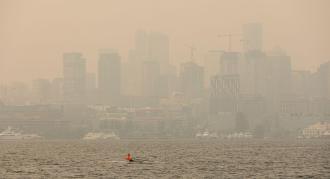

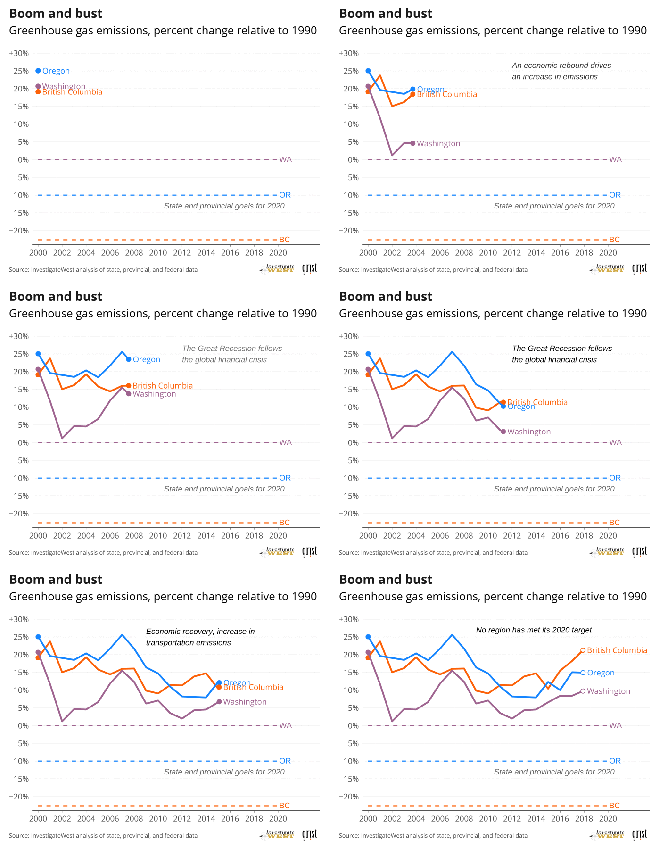
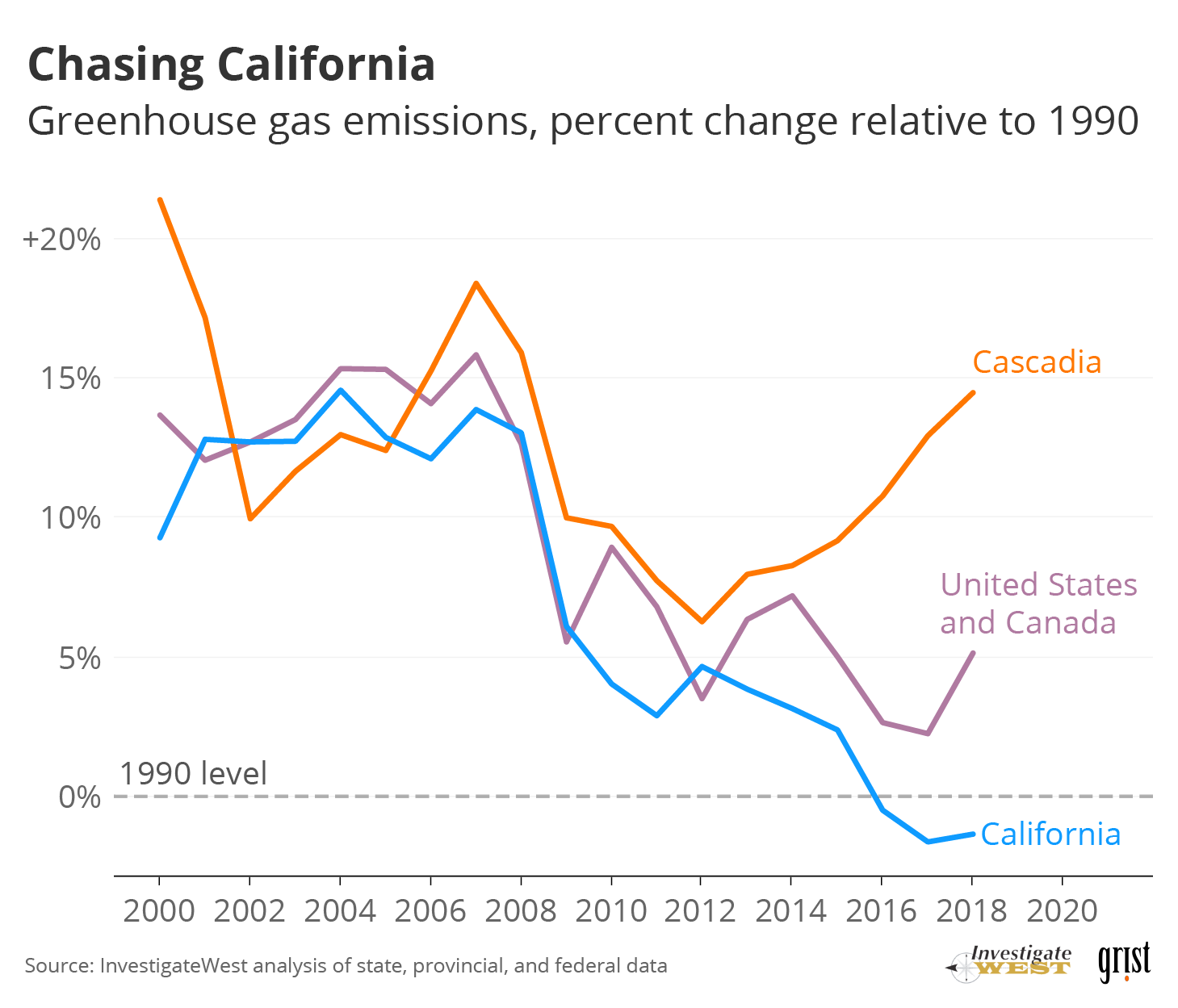
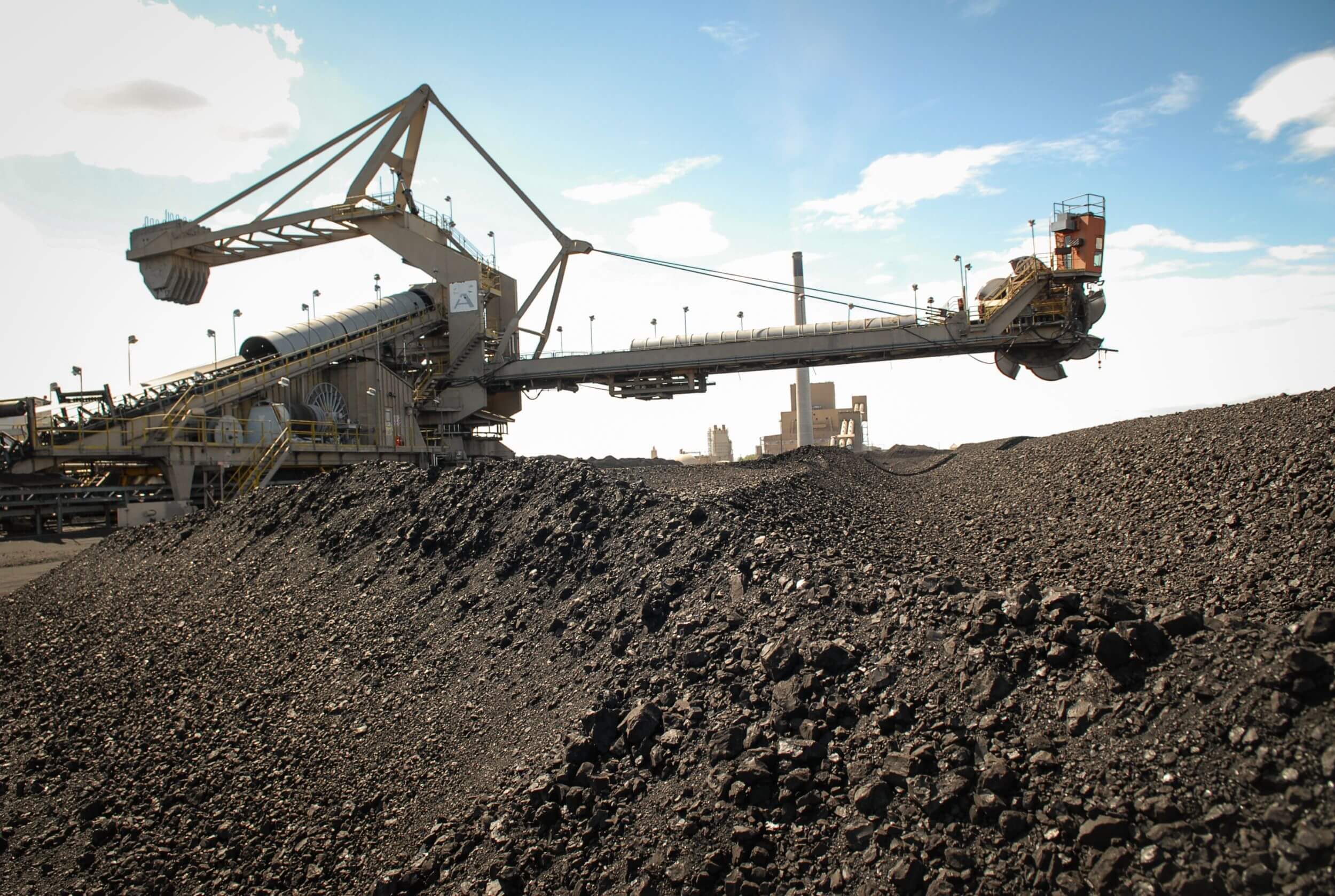


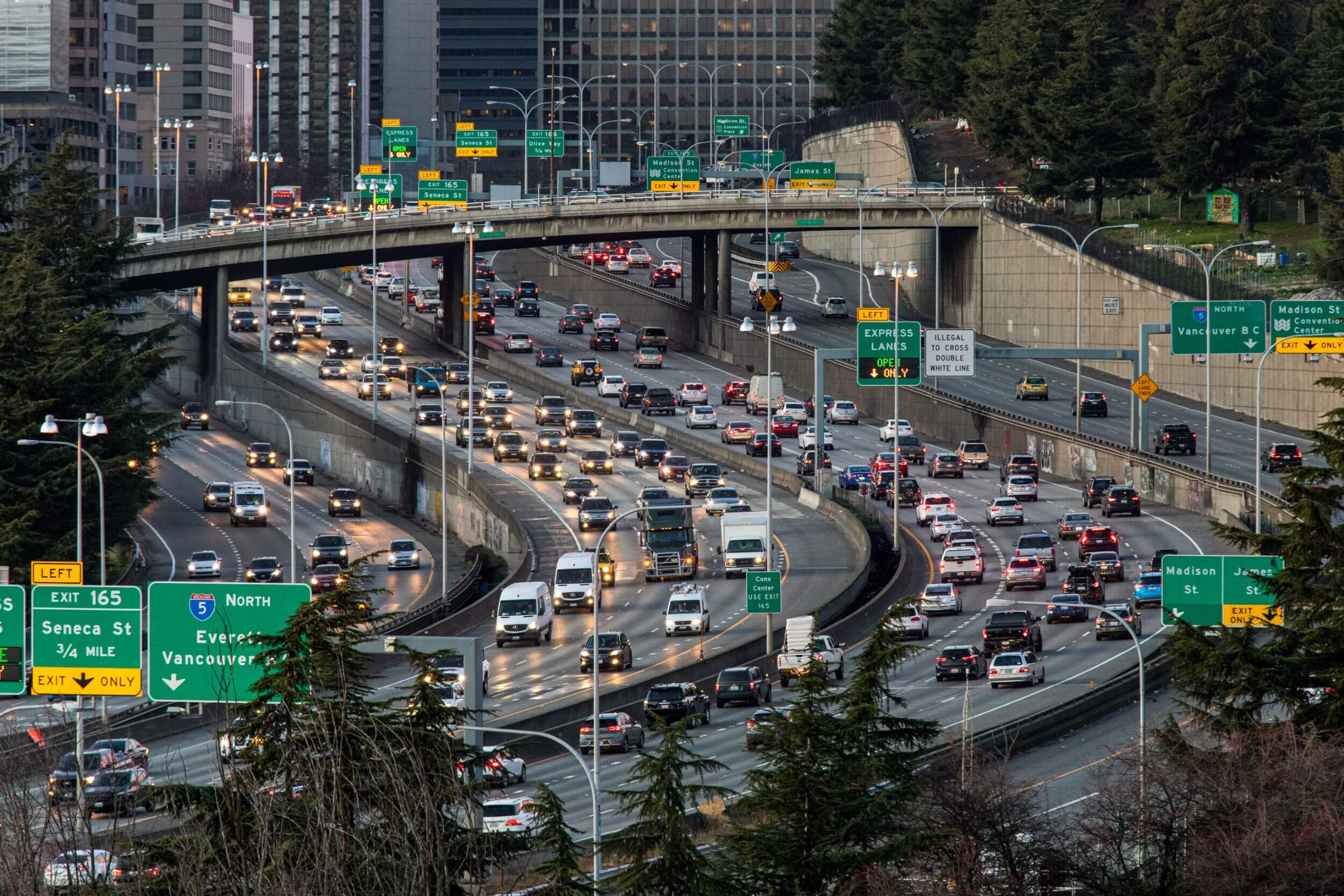
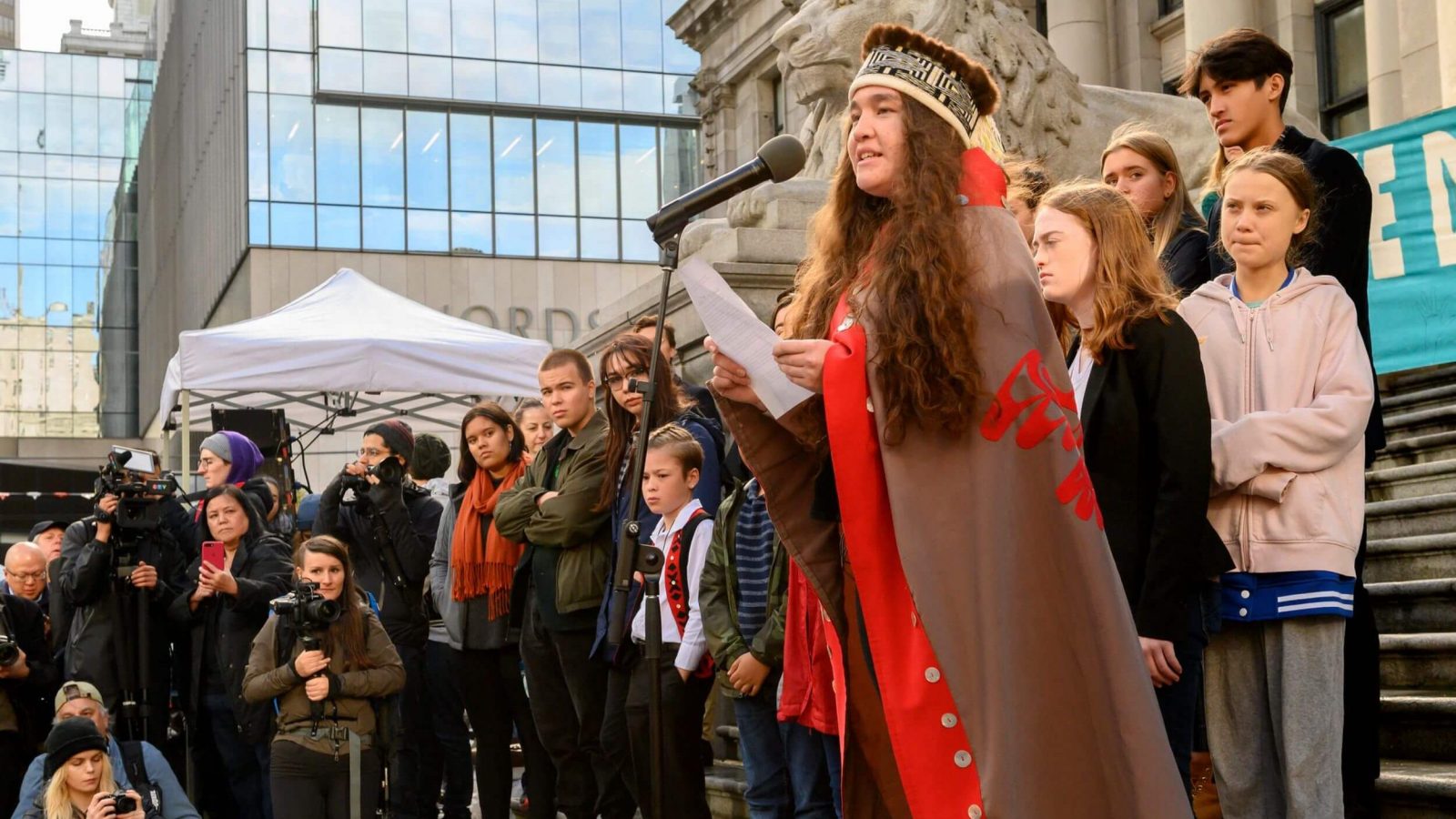
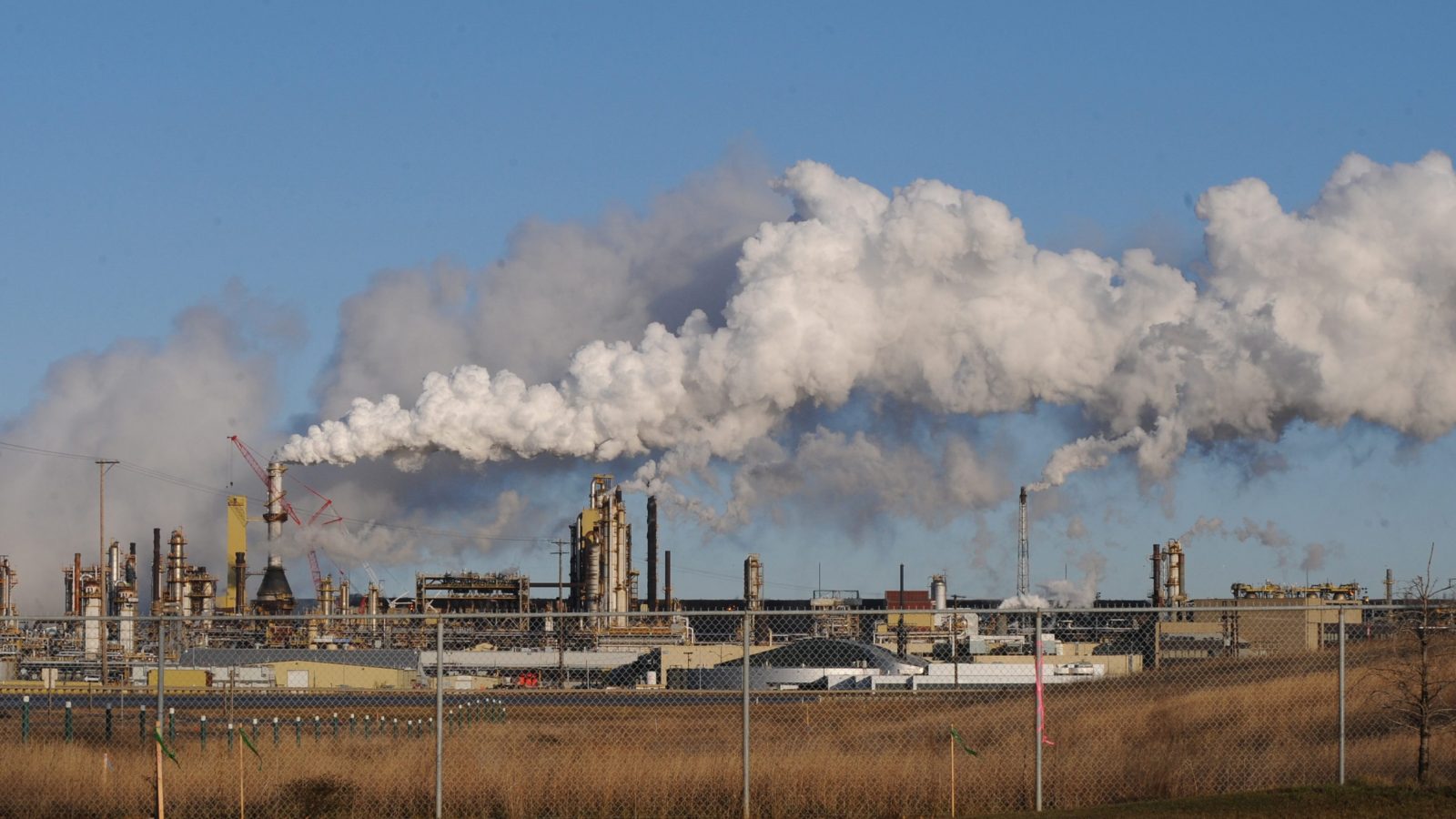


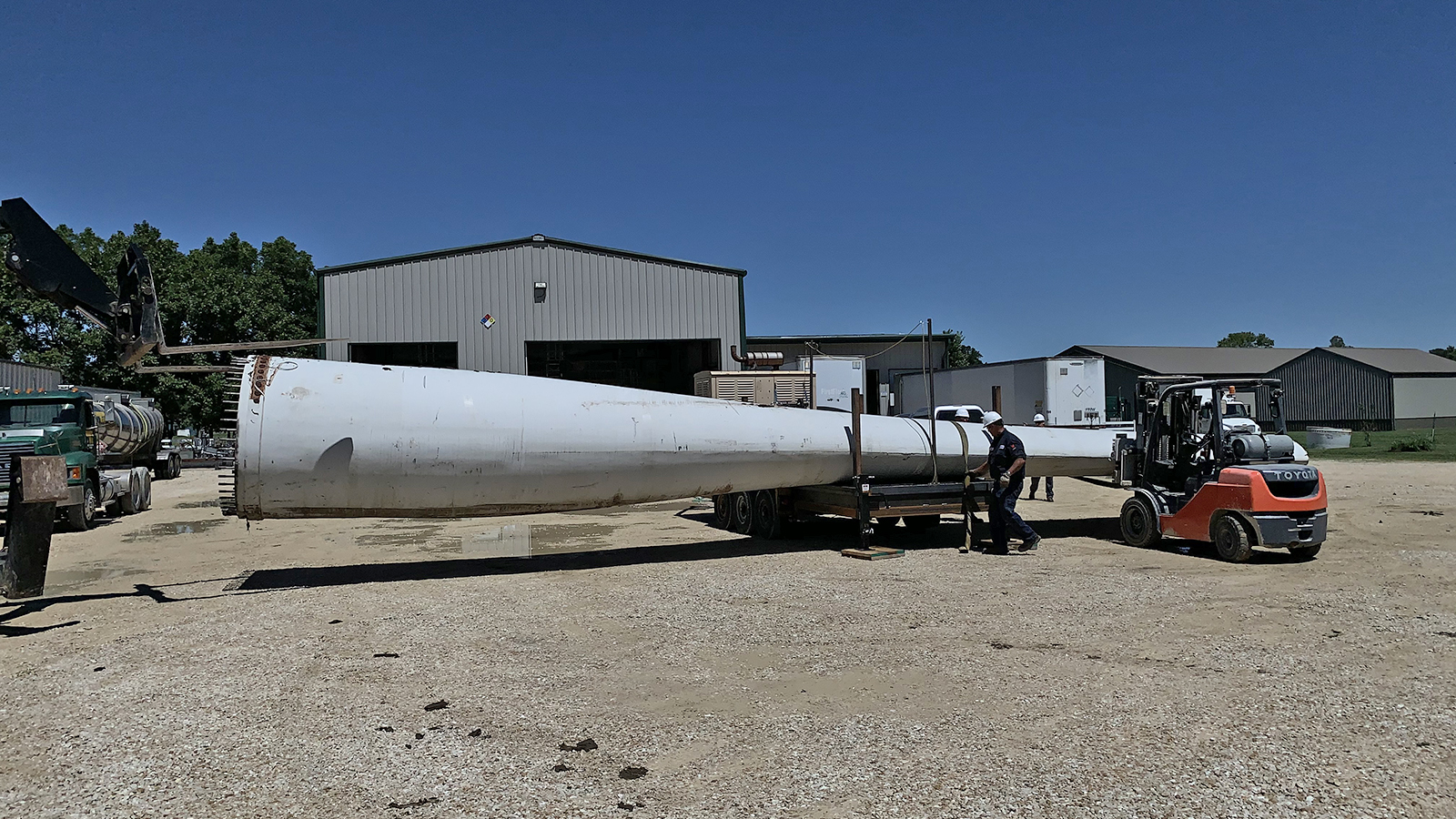
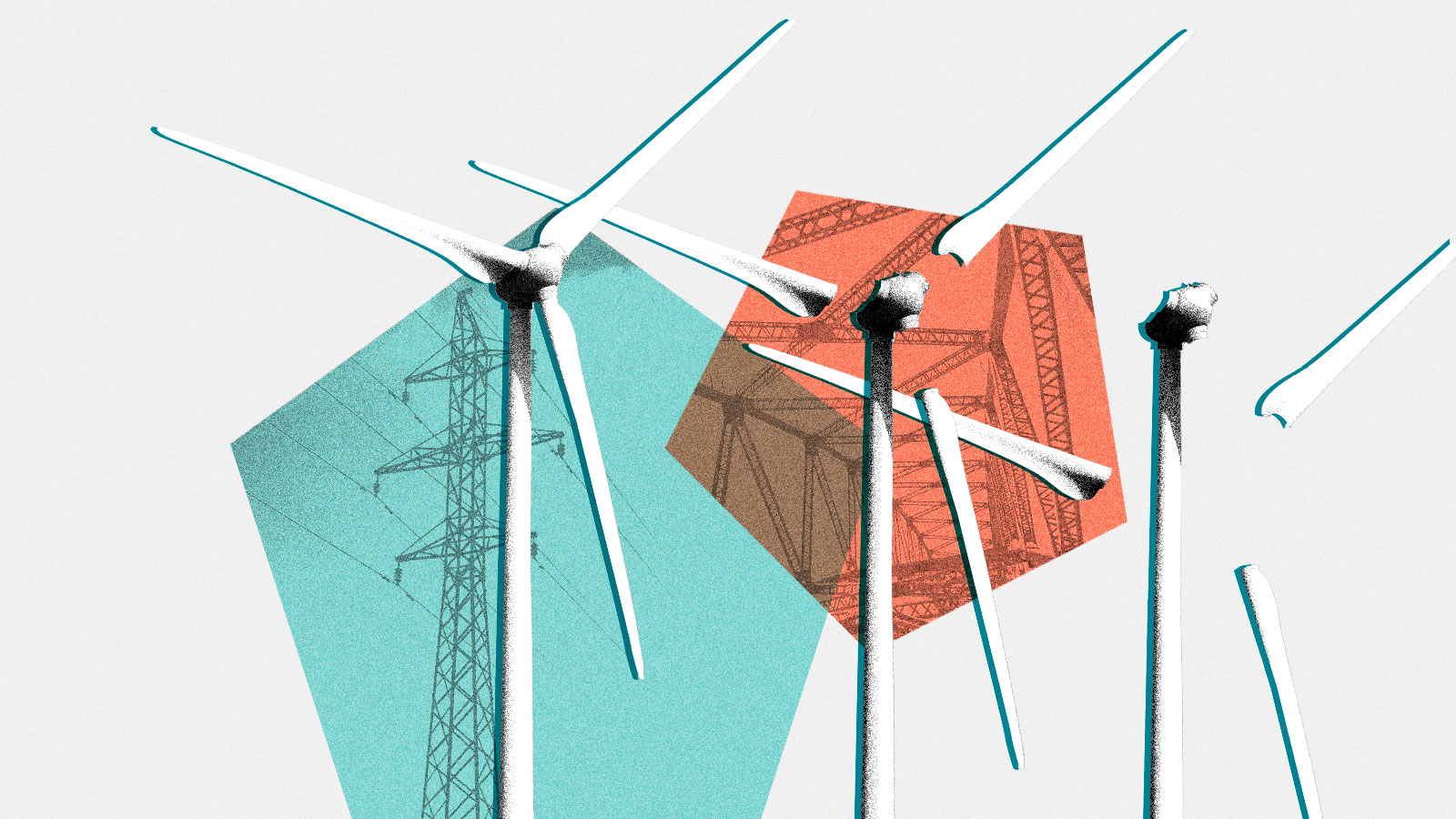


 [Advertisement]