The same physics that governs the behaviour of photons and electrons may also improve online shopping recommendations, say researchers


Submitted by: joseluisskull96
Posted at: 2013-01-14 06:32:47
See full post and comment: http://9gag.com/gag/6329232
Por Edson Medeiros
Comentário ao post "Brasilianas.org - Engenharia de Segurança Cibernética"
Do G1
Rede de espionagem roubou dados em 70 países, diz criadora de antivírus
Operação foi batizada 'Outubro Vermelho', inspirada em livro e filme. Quatro infecções relacionadas ao ataque foram detectadas no Brasil.
Altieres Rohr
A fabricante de antivírus russa Kaspersky Lab anunciou a descoberta de uma rede de espionagem construída por meio de ataques hackers sofisticados. Os ataques infectaram computadores em pelo menos 70 países durante cinco anos e, embora a Kaspersky não nomeie nenhum deles, a informação é que a maioria pertence a agências do governo e principalmente embaixadas, com alguns alvos nas indústrias de energia, militar e comércio. As características técnicas dos ataques apontam para Rússia e China.
A Kaspersky identificou os ataques em outubro de 2012 ao receber a solicitação de um parceiro para analisar um golpe que chegou por e-mail. A companhia também não revelou esse "parceiro".


Read more of this story at Slashdot.












To the extent possible under law,
Cory Doctorow
has waived all copyright and related or neighboring rights to
"RIP, Aaron Swartz."
Update: Go read Lessig: "He was brilliant, and funny. A kid genius. A soul, a conscience, the source of a question I have asked myself a million times: What would Aaron think? That person is gone today, driven to the edge by what a decent society would only call bullying. I get wrong. But I also get proportionality. And if you don’t get both, you don’t deserve to have the power of the United States government behind you."
My friend Aaron Swartz committed suicide yesterday, Jan 11. He was 26. I got woken up with the news about an hour ago. I'm still digesting it -- I suspect I'll be digesting it for a long time -- but I thought it was important to put something public up so that we could talk about it. Aaron was a public guy.
I met Aaron when he was 14 or 15. He was working on XML stuff (he co-wrote the RSS specification when he was 14) and came to San Francisco often, and would stay with Lisa Rein, a friend of mine who was also an XML person and who took care of him and assured his parents he had adult supervision. In so many ways, he was an adult, even then, with a kind of intense, fast intellect that really made me feel like he was part and parcel of the Internet society, like he belonged in the place where your thoughts are what matter, and not who you are or how old you are.
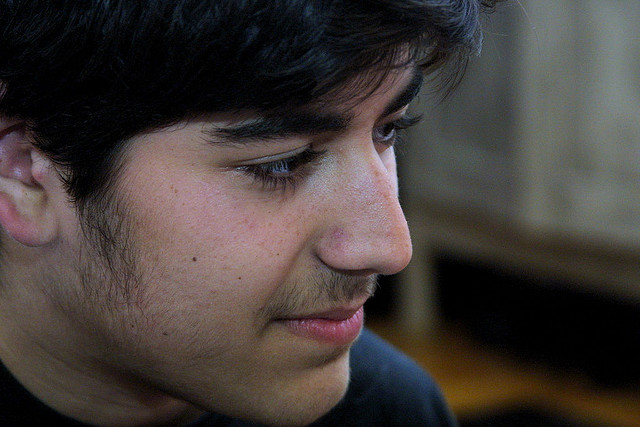
But he was also unmistakably a kid then, too. He would only eat white food. We'd go to a Chinese restaurant and he'd order steamed rice. I suggested that he might be a supertaster and told him how to check it out, and he did, and decided that he was. We had a good talk about the stomach problems he faced and about how he would need to be careful because supertasters have a tendency to avoid "bitter" vegetables and end up deficient in fibre and vitamins. He immediately researched the hell out of the subject, figured out a strategy for eating better, and sorted it. The next time I saw him (in Chicago, where he lived -- he took the El a long way from the suburbs to sit down and chat with me about distributed hash caching), he had a whole program in place.
I introduced him to Larry Lessig, and he was active in the original Creative Commons technical team, and became very involved in technology-freedom issues. Aaron had powerful, deeply felt ideals, but he was also always an impressionable young man, someone who often found himself moved by new passions. He always seemed somehow in search of mentors, and none of those mentors ever seemed to match the impossible standards he held them (and himself) to.
This was cause for real pain and distress for Aaron, and it was the root of his really unfortunate pattern of making high-profile, public denunciations of his friends and mentors. And it's a testament to Aaron's intellect, heart, and friendship that he was always forgiven for this. Many of us "grown ups" in Aaron's life have, over the years, sat down to talk about this, and about our protective feelings for him, and to check in with one another and make sure that no one was too stung by Aaron's disappointment in us. I think we all knew that, whatever the disappointment that Aaron expressed about us, it also reflected a disappointment in himself and the world.
Aaron accomplished some incredible things in his life. He was one of the early builders of Reddit (someone always turns up to point out that he was technically not a co-founder, but he was close enough as makes no damn), got bought by Wired/Conde Nast, engineered his own dismissal and got cashed out, and then became a full-time, uncompromising, reckless and delightful shit-disturber.
The post-Reddit era in Aaron's life was really his coming of age. His stunts were breathtaking. At one point, he singlehandedly liberated 20 percent of US law. PACER, the system that gives Americans access to their own (public domain) case-law, charged a fee for each such access. After activists built RECAP (which allowed its users to put any caselaw they paid for into a free/public repository), Aaron spent a small fortune fetching a titanic amount of data and putting it into the public domain. The feds hated this. They smeared him, the FBI investigated him, and for a while, it looked like he'd be on the pointy end of some bad legal stuff, but he escaped it all, and emerged triumphant.
He also founded a group called DemandProgress, which used his technological savvy, money and passion to leverage victories in huge public policy fights. DemandProgress's work was one of the decisive factors in last year's victory over SOPA/PIPA, and that was only the start of his ambition.
I wrote to Aaron for help with Homeland, the sequel to Little Brother to get his ideas on a next-generation electioneering tool that could be used by committed, passionate candidates who didn't want to end up beholden to monied interests and power-brokers. Here's what he wrote back:
First he decides to take over the whole California Senate, so he can do things at scale. He finds a friend in each Senate district to run and plugs them into a web app he's made for managing their campaigns. It has a database of all the local reporters, so there's lots of local coverage for each of their campaign announcements.
Then it's just a vote-finding machine. First it goes through your contacts list (via Facebook, twitter, IM, email, etc.) and lets you go down the list and try to recruit everyone to be a supporter. Every supporter is then asked to do the same thing with their contacts list. Once it's done people you know, it has you go after local activists who are likely to be supportive. Once all those people are recruited, it does donors (grabbing the local campaign donor records). And then it moves on to voters and people you could register to vote. All the while, it's doing massive A/B testing to optimize talking points for all these things. So as more calls are made and more supporters are recruited, it just keeps getting better and better at figuring out what will persuade people to volunteer. Plus the whole thing is built into a larger game/karma/points thing that makes it utterly addictive, with you always trying to stay one step ahead of your friends.
Meanwhile GIS software that knows where every voter is is calculating the optimal places to hold events around the district. The press database is blasting them out -- and the press is coming, because they're actually fun. Instead of sober speeches about random words, they're much more like standup or the Daily Show -- full of great, witty soundbites that work perfectly in an evening newscast or a newspaper story. And because they're so entertaining and always a little different, they bring quite a following; they become events. And a big part of all of them getting the people there to pull out their smartphones and actually do some recruiting in the app, getting more people hooked on the game.
He doesn't talk like a politician -- he knows you're sick of politicians spouting lies and politicians complaining about politicians spouting lies and the whole damn thing. He admits up front you don't trust a word he says -- and you shouldn't! But here's the difference: he's not in the pocket of the big corporations. And you know how you can tell? Because each week he brings out a new whistleblower to tell a story about how a big corporation has mistreated its workers or the environment or its customers -- just the kind of thing the current corruption in Sacramento is trying to cover up and that only he is going to fix.
(Obviously shades of Sinclair here...)
also you have to read http://books.theinfo.org/go/B005HE8ED4
For his TV ads, his volunteer base all take a stab at making an ad for him and the program automatically A/B tests them by asking people in the district to review a new TV show. The ads are then inserted into the commercial breaks and at the end of the show, when you ask the user how they liked it, you also sneak in some political questions. Web ads are tested by getting people to click on ads for a free personality test and then giving them a personality test with your political ad along the side and asking them some political questions. (Ever see ads for a free personality test? That's what they really are. Everybody turns out to have the personality of a sparkle fish, which is nice and pleasant except when it meets someone it doesn't like, ...) Since it's random, whichever group scores closest to you on the political questions must be most affected by the ad. Then they're bought at what research shows to be the optimal time before the election, with careful selection of television show to maximize the appropriate voter demographics based on Nielsen data.
anyway, i could go on, but i should actually take a break and do some of this... hope you're well
This was so perfect that I basically ran it verbatim in the book. Aaron had an unbeatable combination of political insight, technical skill, and intelligence about people and issues. I think he could have revolutionized American (and worldwide) politics. His legacy may still yet do so.
Somewhere in there, Aaron's recklessness put him right in harm's way. Aaron snuck into MIT and planted a laptop in a utility closet, used it to download a lot of journal articles (many in the public domain), and then snuck in and retrieved it. This sort of thing is pretty par for the course around MIT, and though Aaron wasn't an MIT student, he was a fixture in the Cambridge hacker scene, and associated with Harvard, and generally part of that gang, and Aaron hadn't done anything with the articles (yet), so it seemed likely that it would just fizzle out.
Instead, they threw the book at him. Even though MIT and JSTOR (the journal publisher) backed down, the prosecution kept on. I heard lots of theories: the feds who'd tried unsuccessfully to nail him for the PACER/RECAP stunt had a serious hate-on for him; the feds were chasing down all the Cambridge hackers who had any connection to Bradley Manning in the hopes of turning one of them, and other, less credible theories. A couple of lawyers close to the case told me that they thought Aaron would go to jail.
This morning, a lot of people are speculating that Aaron killed himself because he was worried about doing time. That might be so. Imprisonment is one of my most visceral terrors, and it's at least credible that fear of losing his liberty, of being subjected to violence (and perhaps sexual violence) in prison, was what drove Aaron to take this step.
But Aaron was also a person who'd had problems with depression for many years. He'd written about the subject publicly, and talked about it with his friends.
I don't know if it's productive to speculate about that, but here's a thing that I do wonder about this morning, and that I hope you'll think about, too. I don't know for sure whether Aaron understood that any of us, any of his friends, would have taken a call from him at any hour of the day or night. I don't know if he understood that wherever he was, there were people who cared about him, who admired him, who would get on a plane or a bus or on a video-call and talk to him.
Because whatever problems Aaron was facing, killing himself didn't solve them. Whatever problems Aaron was facing, they will go unsolved forever. If he was lonely, he will never again be embraced by his friends. If he was despairing of the fight, he will never again rally his comrades with brilliant strategies and leadership. If he was sorrowing, he will never again be lifted from it.
Depression strikes so many of us. I've struggled with it, been so low I couldn't see the sky, and found my way back again, though I never thought I would. Talking to people, doing Cognitive Behavioral Therapy, seeking out a counsellor or a Samaritan -- all of these have a chance of bringing you back from those depths. Where there's life, there's hope. Living people can change things, dead people cannot.
I'm so sorry for Aaron, and sorry about Aaron. My sincere condolences to his parents, whom I never met, but who loved their brilliant, magnificently weird son and made sure he always had chaperonage when he went abroad on his adventures. My condolences to his friends, especially Quinn and Lisa, and the ones I know and the ones I don't, and to his comrades at DemandProgress. To the world: we have all lost someone today who had more work to do, and who made the world a better place when he did it.
Goodbye, Aaron.
(Image: IMG_9892.JPG, a Creative Commons Attribution (2.0) image from quinn's photostream)
Ich hab’ heute einige Postings zu Aaron Swartz viel zu frühem Tod gelesen, aber dieses kurze Stück Hacker-Poetry von Tim Berners-Lee hat mir grade das Herz gebrochen.
Aaron is dead.
Wanderers in this crazy world,
we have lost a mentor, a wise elder.Hackers for right, we are one down,
we have lost one of our own.Nurtures, careers, listeners, feeders,
parents all,
we have lost a child.Let us all weep.
timbl
Mehr:
Lawrence Lessig: Prosecutor as bully.
Cory Doctorows Nachruf auf Boing Boing
EFF: Farewell to Aaron Swartz, an extraordinary hacker and activist
My Aaron Swartz, whom I loved
NYTimes: Aaron Swartz, Precocious Programmer and Internet Activist, Dies at 26
Internet-Archive: Aaron Swartz, hero of the open world, dies
Gigaom: The web responds to the death of hacker-activist Aaron Swartz
Guardian: Death of internet activist Aaron Swartz prompts flood of Twitter tributes
[update] Rick Perlstein: Remembering Aaron Swartz: „we are all Aaron Swartz“:
I remember a creature who seemed at first almost to be made up of pure data, disembodied—a millionaire, I had to have guessed, given his early success building a company sold to Condé Nast, but one who seemed to live on other people’s couches. (Am I misremebering that someone told me he crashed in his apartment for a while, curling up to sleep under a sink?)
Only slowly, it seems, did he come to learn that he possessed a body. This is my favorite thing he wrote: about the day “I looked up and realized I couldn’t read the street sign. I definitely used to be able to read that sign, but there it was, big and bright and green along the highway, and all I could make out was a blur. I had gone blind.” Legally blind, it turned out; and then when he got contact lenses, he gave us an account of what it felt like to leave Plato’s cave: “I had no idea the world really looked like this, with such infinite clarity. It looks like a modernist photo or a hyperreal film, everything in focus everywhere. Everyone kept saying ‘oh, do you see the leaves now?’ but the first thing I saw was not the leaves but the people. People, individuated, each with brilliant faces and expressions at gaits, the sun streaming down upon them. I couldn’t help but smile. It’s much harder being a misanthrope when you can see people’s faces.”
This man is dead now.
Update (1/18): Some more information has emerged. First, it’s looking like the prosecution’s strategy was to threaten Aaron with decades of prison time, in order to force him to accept a plea bargain involving at most 6 months. (Carmen Ortiz issued a statement that conveniently skips the first part of the strategy and focuses on the second.) This is standard operating procedure in our wonderful American justice system, due (in part) to the lack of resources actually to bring most cases to trial. The only thing unusual about the practice is the spotlight being shone on it, now that it was done not to some poor unknown schmuck but to a tortured prodigy and nerd hero. Fixing the problem would require far-reaching changes to our justice system.
Second, while I still strongly feel that we should await the results of Hal Abelson’s investigation, I’ve now heard from several sources that there was some sort of high-level decision at MIT—by whom, I have no idea—not to come out in support of Aaron. Crucially, though, I’m unaware of the faculty (or students, for that matter) ever being consulted about this decision, or even knowing that there was anything for MIT to decide. Yesterday, feeling guilty about having done nothing to save Aaron, I found myself wishing that either he or his friends or parents had made an “end run” around the official channels, and informed MIT faculty and students directly of the situation and of MIT’s ability to help. (Or maybe they did, and I simply wasn’t involved?)
Just to make sure I hadn’t missed anything, I searched my inbox for “Swartz”, but all I found relevant to the case were a couple emails from a high-school student shortly after the arrest (for a project he was doing about the case), and then the flurry of emails after Aaron had already committed suicide. By far the most interesting thing that I found was the following:
Aaron Swartz (December 12, 2007): I’m really enjoying the Democritus lecture notes. Any chance we’ll ever see lecture 12?
My response: It’s a-comin’!
As I wrote on this blog at the time of Aaron’s arrest: I would never have advised him to do what he did. Civil disobedience can be an effective tactic, but off-campus access to research papers simply isn’t worth throwing your life away for—especially if your life holds as much spectacular promise as Aaron’s did, judging from everything I’ve read about him. At the same time, I feel certain that the world will eventually catch up to Aaron’s passionate belief that the results of publicly-funded research should be freely available to the public. We can honor Aaron’s memory by supporting the open science movement, and helping the world catch up with him sooner.

Submitted by: thatiscool
Posted at: 2013-01-11 08:18:19
See full post and comment: http://9gag.com/gag/6305401

Submitted by: sebasrivasm
Posted at: 2013-01-10 23:52:21
See full post and comment: http://9gag.com/gag/6303339

Submitted by: _derpina_
Posted at: 2013-01-11 03:32:07
See full post and comment: http://9gag.com/gag/6304494

The Virtual Star Party is one year old. Well, not the Virtual Star Party itself, but our efforts to broadcast a live view from telescopes into a Google+ hangout. Thanks to everyone who has supported us and watched our efforts evolve from those first tentative steps to our comprehensive coverage now.
Astronomers: Mike Phillips, Stuart Forman and Mark Behrendt
Commentary: Dr. Phil Plait and Ray Sanders.
Host: Fraser Cain.
Here are some pictures from the event:

Blue Snowball Nebula by Stuart Forman

M33 Andromeda Nebula by Stuart Forman

Jupiter by Mike Phillips
We run the Virtual Star Party every Sunday night as a live Google+ Hangout. Want to find when it’s happening next? Just circle the Virtual Star Party page on Google+. Visit the Universe Today YouTube channel to see an archive of all our past events.
© Fraser for Universe Today, 2013. | Permalink | One comment |
Post tags:
Feed enhanced by Better Feed from Ozh
During the 1920s, 30s, and 40s, the use of “propaganda posters” were popular for encouraging good behavior — teaching safety, boosting worker morale, and rousing wartime sacrifice. I’ve always enjoyed the art and design of these posters, and decided to have Ted whip up a set of originals to address an area of behavior where modern society is often lacking: smartphone etiquette. Enjoy.
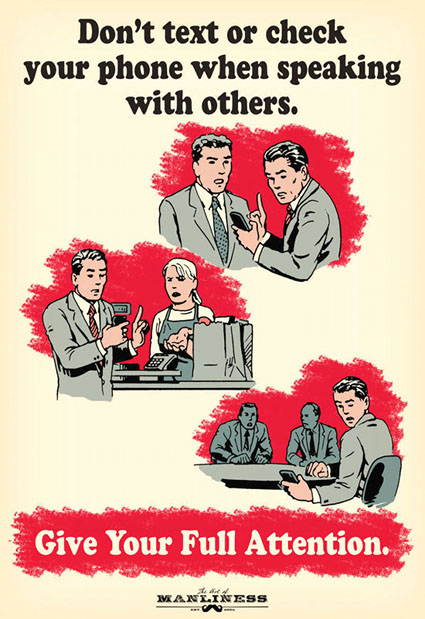

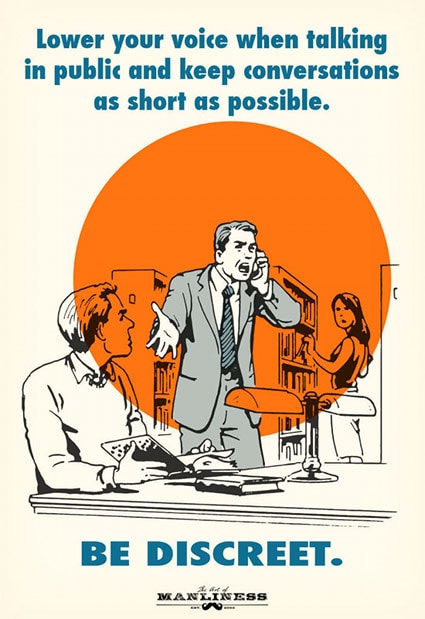
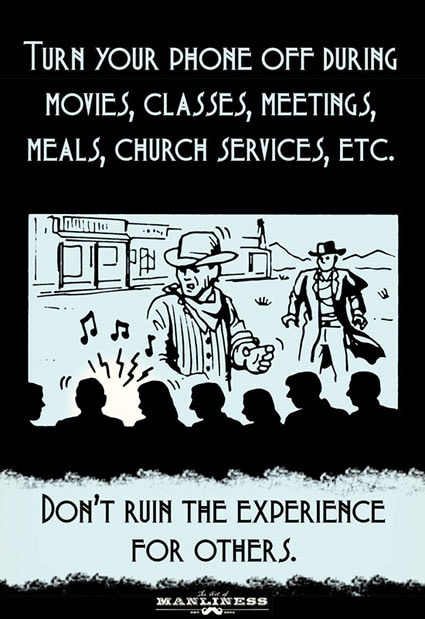
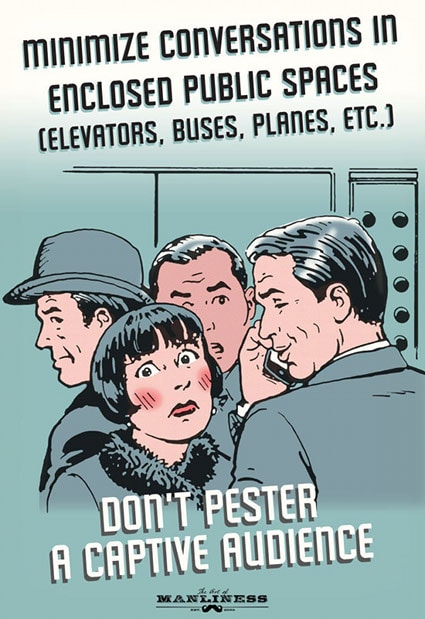
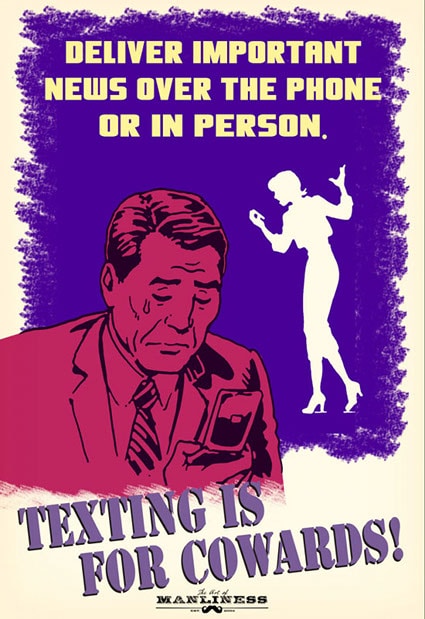
Posters illustrated and designed by Ted Slampyak
Related posts:

 |
 |
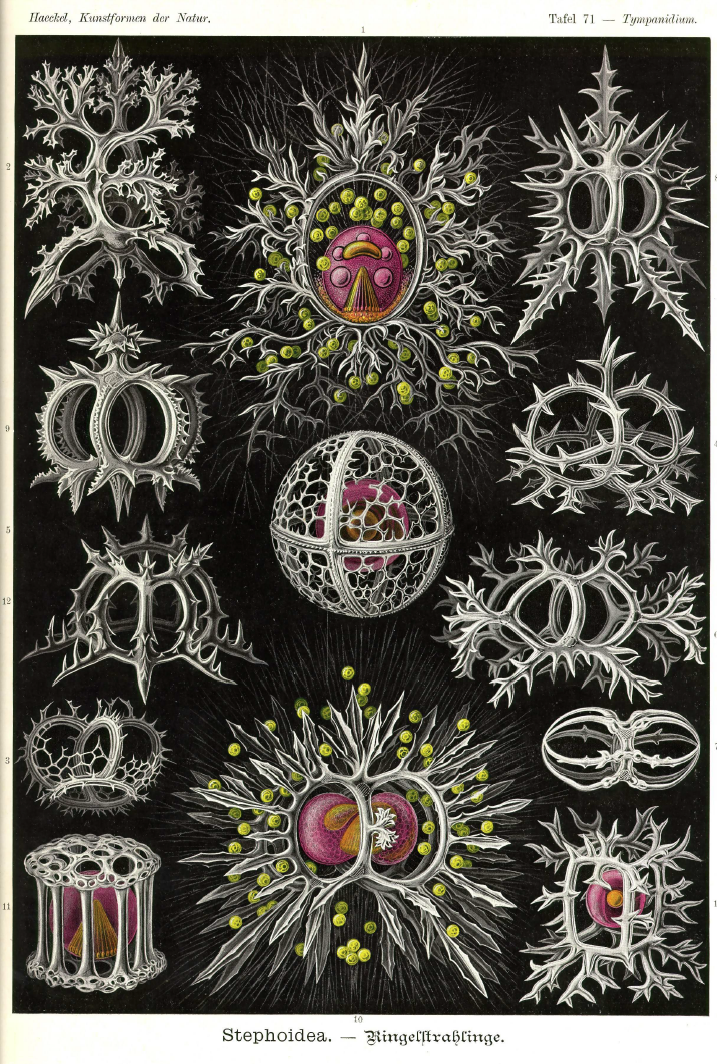
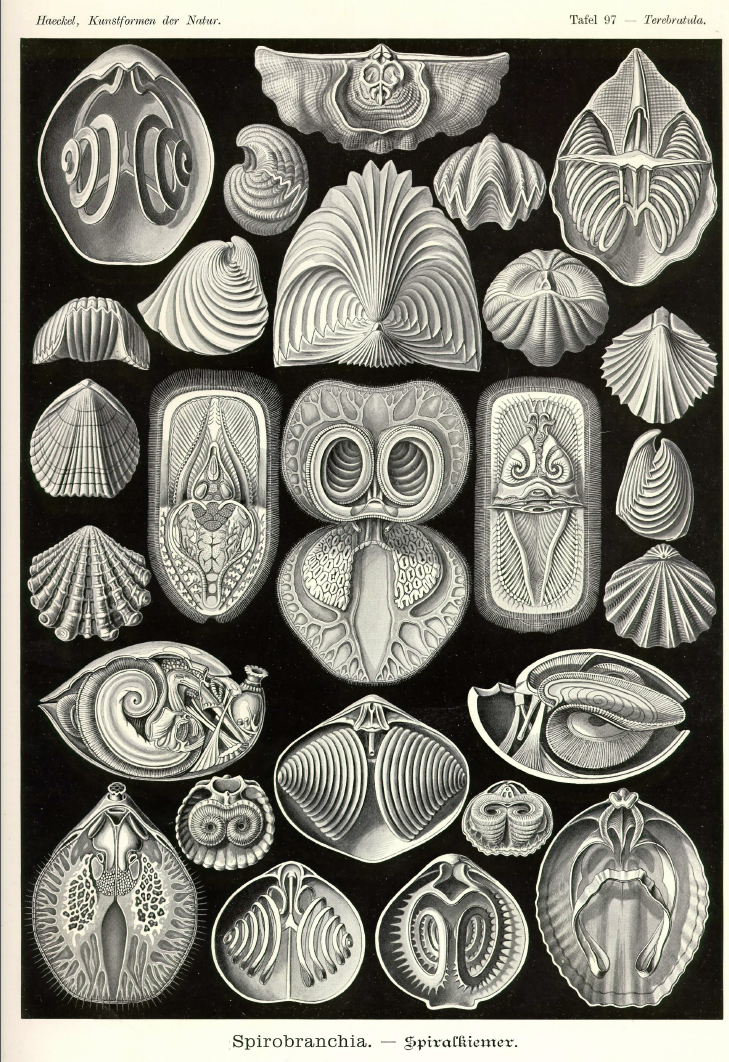
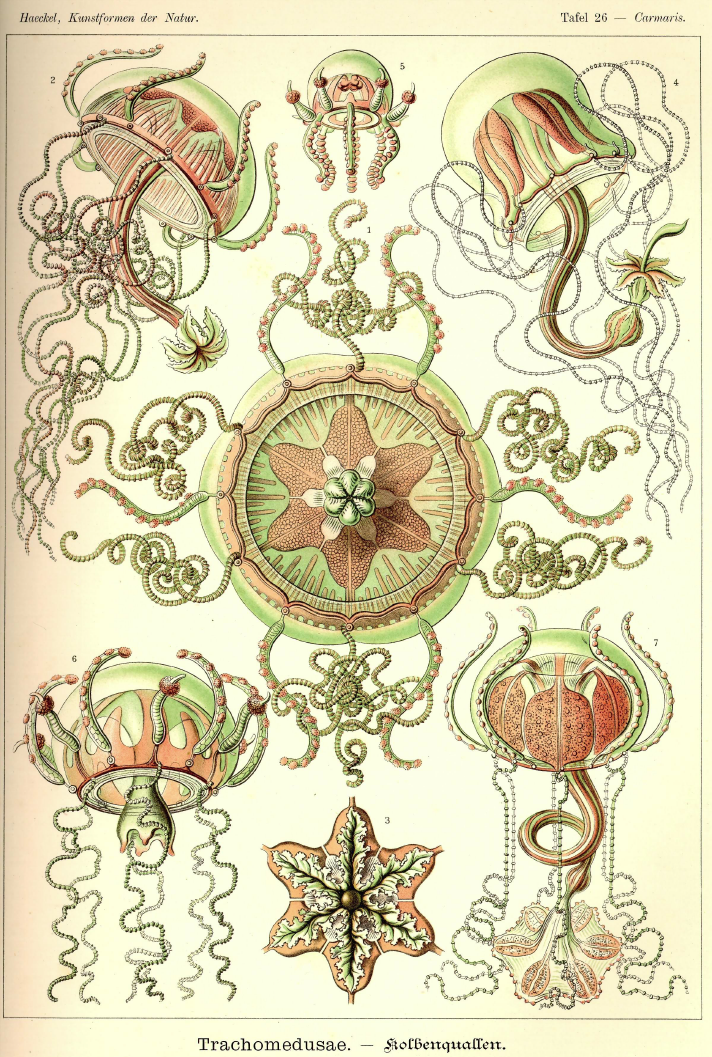
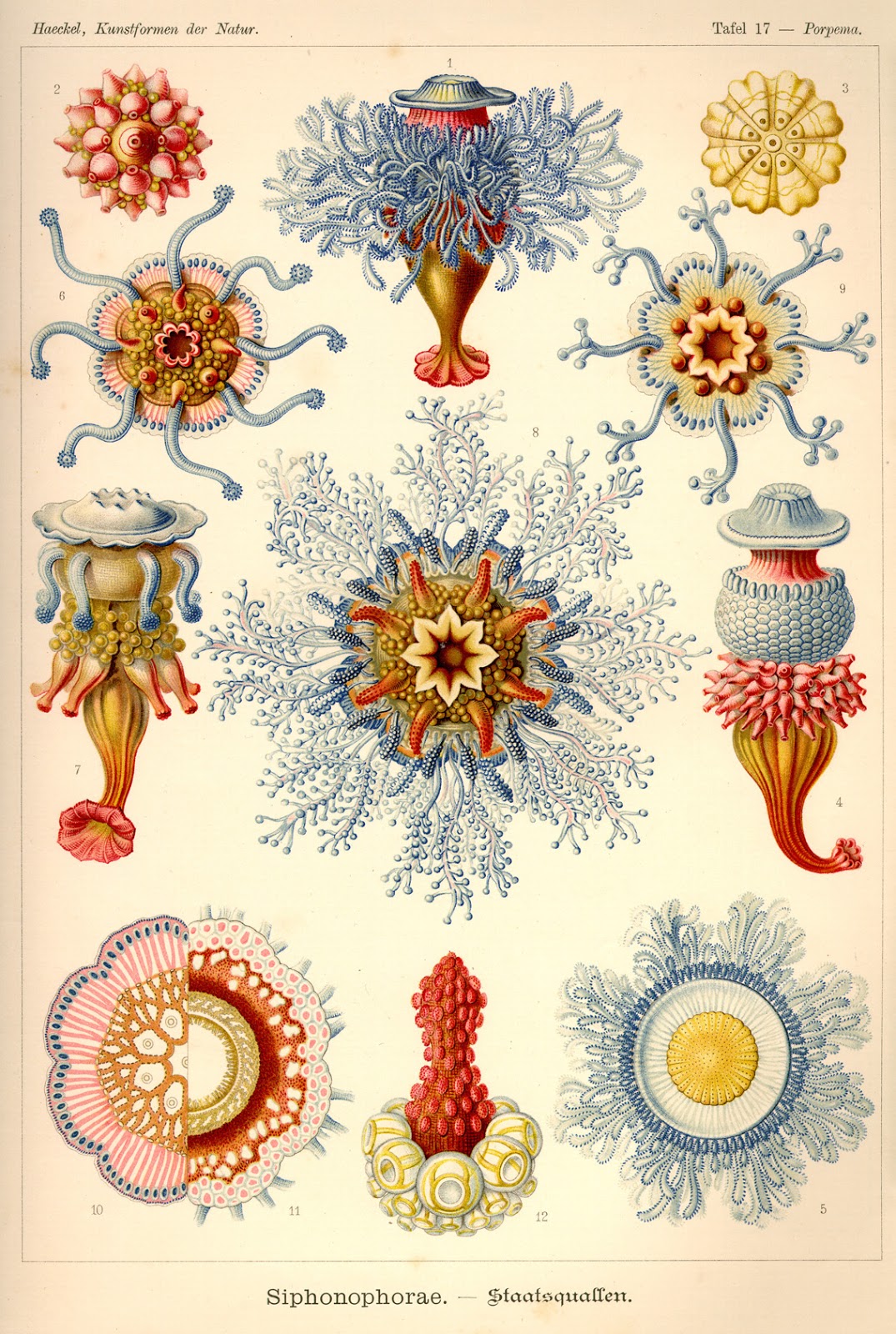
 Ernst Haeckel, portrait by Minouette

.png)





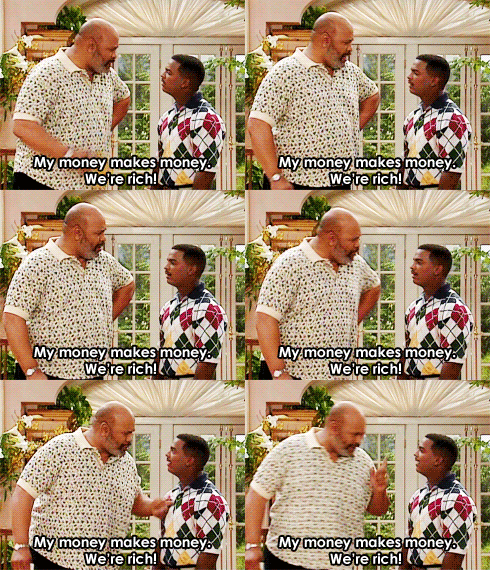



BEST FOURTH WALL BREAK IN TV HISTORY