Shared posts

22 Mar 23:06

/r/Data Is Beautiful

This is a captivating and horrific subreddit to watch in these early days of COVID-19. The charts comparing the rate of growth in Italy vs. other locations are ones I look out for. Two days ago, 793 Italians lost their lives to COVID-19 (we're still waiting on numbers from yesterday). If the trajectories stay the same for the US, and the hospitals here become overwhelmed, we'll be hitting similar numbers.

I also find this animation showing trajectories of coronavirus cases for countries fascinating. In the US, we've utterly failed at slowing the spread, and are making things worse by not acting faster.

22 Mar 18:21

Particle flows show how the coronavirus ramped up

by Nathan Yau

Using a combination of estimates based on cell phone movements and outbreak size, The New York Times shows how the coronavirus started with a few cases and then spread around the world.

The particle flows to represent travel volume from city to city is something else. NYT used a scrollytelling format that starts on a geographic map. You see a few points at first, the virus spreads, and then there’s a transition to an abstract view that looks like a subway map. You end up in the United States with a view of the current estimates.

Just look.

Tags: coronavirus, New York Times, particles

22 Mar 18:15

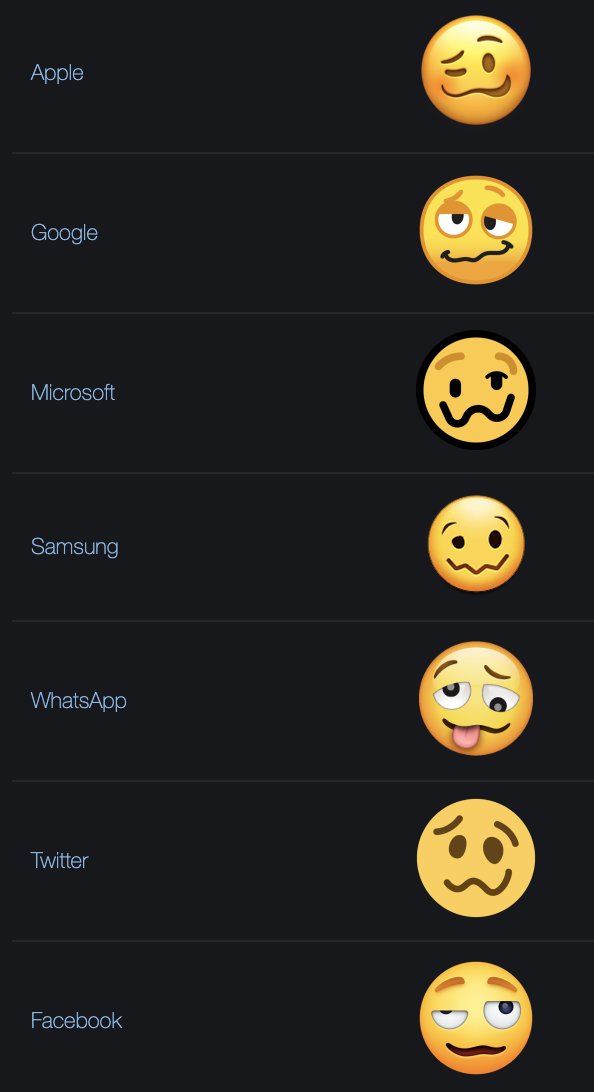
this is the only emoji I use now

by Jennifer Schaffer
🥴

It signifies everything: disorientation, fear, delirium, nausea, uncertainty, stir craziness, embarrassment, humility, looking at the Dow Jones, feeling attracted to certain authoritative New York politicians against your better judgment, the meaningless void of time into which we are all hurtling at unprecedented speed, etc.

I will say, I prefer it best in its WhatsApp iteration. Feels truest in spirit.

Also what is up with Samsung


Sound off in the comments with *your* special quarantine emoji!!!! 🥴🥴🥴
22 Mar 18:15

TekSavvy stops accepting new customer orders due to COVID-19

by Aisha Malik

TekSavvy says that it is temporarily not accepting new customer orders as a result of COVID-19.

The carrier says that this is because it is transitioning call centre staff to work from home. It notes that prospective customers can check its website for updates on when it will resume taking orders.

TekSavvy has not provided any details regarding when it believes it will be able to accept new customers again. However, the carrier notes that existing customers can continue to contact TekSavvy for all services via email. If existing customers are looking to order TV services, they can do so online.

Earlier this month, TekSavvy suspended billing for overages for current customers on capped internet packages.

Source: TekSavvy

The post TekSavvy stops accepting new customer orders due to COVID-19 appeared first on MobileSyrup.

22 Mar 18:13

Wat kun jij eigenlijk?

by Ton Zijlstra

In tijden als deze, wordt er altijd opgeroepen in actie te komen, in beweging te komen en bij te dragen. Maar wat kun jij eigenlijk? Wat kan ik eigenlijk?

Met het thuiswerken de afgelopen week en de komende weken komen er denk ik hele horden mensen achter dat als er echt iets aan de hand is in Nederland, het eigen werk er toch niet zo enorm toe doet. Dat geldt ook voor mijn werk, consultancy. Zelf kan ik weinig. Zo dat is er uit. Ik weet van vrij veel dingen een beetje (precies genoeg om mijn eigen onkunde te herkennen en de kunde van anderen hoger in te schatten), maar heb weinig diepere praktische vaardigheden. Ben geen ingenieur die dingen kan bouwen, ben geen programmeur die nuttige apps uit de mouw schudt, werk niet in de zorg. Ik kan wel klooien met elektronica, en met technici praten, doe wat losse programmeerdingen voor de lol, en heb meningen over mogelijke systeemveranderingen bij de overheid, en bijvoorbeeld de zorg. Mijn diepere expertise ligt in het begeleiden van verandering, systeem- en netwerkdenken, het verbinden van strategie en praktijk in complexe omgevingen, en het zien van mogelijke verbindingen die anderen niet zien. Weinig op het vlak van snel praktische resultaten opleveren dus. Goed zijn in reflecteren helpt in tijden van crisis niet zo heel veel. Het zijn bovendien vaardigheden die in een transactie gerichte cultuur als de Nederlandse op een normale dag al lastig zijn om aan de man te brengen.

Er zijn wel dingen die ik nu kan doen, in het kader van zorgen voor jezelf en de mensen om je heen natuurlijk. Met collega’s hebben we een bedrijf en een NGO overeind te houden, om de werkgelegenheid van ruim een dozijn mensen te beschermen. Daar helpt reflectie wel weer, omdat het naast een rijtje concrete acties, om vooruitzichten gaat voor het komende jaar, en wat je nu al kunt doen. Hetzelfde geldt voor sommige klanten, want deze crisis doet waarschijnlijk veel voor het versnellen van de digitale transformatie van organisaties. Juist omdat het over een paar weken niet over zal zijn, en er dus geen ‘we gaan over tot de orde van de dag’ te verwachten is op korte termijn.
Thuis en rondom huis is het ook eenvoudig te bedenken wat je kunt doen. Zorgen voor en houden van je gezin. Bij de buren checken hoe het gaat, of je boodschappen voor ze kunt doen etc. Vriendelijk zijn naar je omgeving. Afstand houden als je mensen tegen komt maar ze altijd groeten. Je vrienden en bekenden online bijpraten.

Maar verder? Ik zit in verschillende online groepen die heel actief zijn om hun krachten te mobiliseren om bij te dragen aan het bestrijden van de pandemie. Maar omdat ik in de meeste van die groepen de boundary spanner ben, degene die verbindingen legt naar en van buiten, niet de diepere praktische kennis van de rest van de groep heb, voelt het als alleen kunnen roepen van de zijlijn. Als dat roepen gaat om te wijzen op scheve aannames onder het werk van anderen, of aandragen of tweaken van een aanpak, draagt het op zich nog wel bij, maar daar waar ik denk dat de aangewende energie van sommigen uiteindelijk ook maar is om afleiding van de eigen zorgen te vinden niet natuurlijk.

Kortom, ik worstel met waar ik mijn kennis in kan zetten op een manier die er duidelijk toe doet. Waar mijn handelingsvermogen op dit moment ligt. Anders dan voor de eigen privé en zakelijke omgeving zorgen.

En hoe zit dat bij jou? Wat kun jij eigenlijk?


machine translation into English
22 Mar 04:49

#FlattenTheCurve

by Lilia

Originally posted on Facebook

Over the last couple of weeks this has been the most important message flowing through my networks. The coronavirus itself maybe not that scary if you are young and healthy, but there is still a lot that could be done to decrease the danger for those at risk and to make sure that our medical system and the rest of the infrastructures do not get overwhelmed with too many cases at once.

On the other side I also see triggers for many things that I consider good in a long run, like decrease of CO2 emissions due to less economic activity, looking for online alternatives for some parts of work and education or just learning from experience that many of us could do with way less than we are used to.

What I also find important is not to talk about this topic in terms of fear or war, even if it gets to drastic measures at some point. Learn about the risks and take action instead. And if you have little ones overwhelmed with emotions let them imagine MAcorona virus and play that it goes down the drain when hands are washed.

#FlattenTheCurve

The post #FlattenTheCurve appeared first on Mathemagenic.

22 Mar 04:49

Riding the wave

by Lilia

Originally posted on Facebook

My days are measured in black currant drinks and chicken soups. And hugs given – because letting the kids without support for an elusive probability of not getting sick myself is not my choice.

I posted an update as a comment yesterday, but we are further now. The girls are better, Robert is up to eating something after a day of being in bed, Alexander is down with fever.

I have no idea what keeps me from getting the symptoms – maybe this peace inside – it is what it is and the only thing you can do it ride the wave the best way you can. And I had a lot of practice of perfecting chicken soups, giving hugs and staying calm in the last years.

It probably comes once the rest get better. Or not – four people in the house have different ways to handle it and who knows what is mine.

For me illness is an experience – time to learn how to surrender and to ride the wave at the same time. This one is no different, but the scale of it makes it a shared experience. Pain, hardship or facing the worst might be unavoidable. But it is not that much different from giving birth – you prepare and do the best you can, but at some point, you are in it and have to deal with all what it brings.

Thanks for all the questions and wishes – so far it is the wave we can ride. Take care. Find what gives you peace inside. And go outside if you can do so without contacting others – fresh air and sunlight are good in many ways.

The post Riding the wave appeared first on Mathemagenic.

22 Mar 04:48

Addressing the Collegiality Drought

by peter@rukavina.net (Peter Rukavina)

I didn’t know how much I was missing day to day interactions with human beings, at least ones that I have not fathered, until we held Pen Night online tonight, spending two and a half hours together in a videoconference. A meeting that, after a few had dropped out, and with pixelation to protect the innocent attendees, looked like this:

Pixelated rendering of our Pen Night Zoom meeting

It was wonderful. Not quite as nice as a face to face get together, but, as I said as we concluded, something that resulted in at least a 25% increase in the state of my mental health.

It’s good to be reminded that social distancing doesn’t mean that we need to cut off contact with humanity; that this pandemic has come at this time, with the tools and bandwidth to support high-fidelity telepresence, is a great gift.

We used Zoom for the meeting, an app that all the cool kids seem to have landed on all at once over the last year (one wonders whether its status as the hip anti-Skype will hold once the calculus lectures start to be offered via Zoom next week as e-learning fires up across the continent).

You can use Zoom for free to host a meeting for up to 100 people for up to 40 minutes; I upgraded my Zoom to the $15.00/month plan which allows meetings of up to 24 hours (what a Pen Night that would be!).

This is my second Zoom of the pandemic era, and in both cases the attendees were a mix of young and old, digital-savvy and not; everyone seemed to figure it out without needing additional support, which is perhaps Zoom’s greatest selling feature: it just works.

If you have a board or a club or a group or a night, and you want to keep it going despite the need for us all to remain apart, I heartily recommend you consider this as an option; tonight it wasn’t so much the inks and the pens and the paper and the notebooks that was the important thing for me, it was the collegiality. Collegiality seems in short supply these days; fortunately it’s easily manufactured.

22 Mar 04:48

DNA Lounge: Wherein Slim's is closing.

by jwz
mkalus shared this story from jwz.

Well, Golden Voice has taken Slim's out back and shot it in the head. The Chronicle reports:

Slim's staff was informed on Wednesday that the 11th Street nightclub will close permanently after more than 30 years. The decision had been made late last year, long before the coronavirus pandemic forced its immediate shutdown, Scaggs told The Chronicle [...]

Scaggs, Caufield and Hellman operated the clubs and free festival for their love of music. They laughed about competitors who were in the business for the money. Slim's owners failed to take a dime of profit out of the clubs all these years. [...]

Caufield, an original investor in Silicon Valley startups from America Online to Google, loved owning the club. He would get behind the bar and pour free drinks. [...] "What were billionaires like Warren and Frank doing caring about some blues club? It was a gift they gave themselves."

That's a pretty gross framing there, "a gift they gave themselves." He's saying that it wasn't about building a place for artists to thrive, creating community, or about giving back to their community. No, it has to be about what they got out of it personally.

Let's be very clear about this: Slim's never made a dime. Its 30 year cultural legacy -- and an incredible legacy it was -- only got to happen because of the whims of billionaires. If you look at what they did through the myopic lens of calling it a "business" -- that is, a financial instrument where you put money in one end, turn the crank, and more money comes out the other end -- then you'd consider it a spectacular failure.

But that's not what we, who run nightclubs, do. We facilitate the creation of our culture: You push money in one side, turn the crank, and what comes out the other side is art and community and music and stories.

But not money. Never money.

So if Caufield is to be believed, it means that all this time, Slim's was two or three rich dudes throwing a party for themselves... "And, whatever, I guess all of you plebes can attend, until we get bored with it."

So here we are, and the Money Men who had been supporting Slim's for so many decades finally decided to stop doing so. Two years ago, they sold it off to multinational superpredator Golden Voice. And, surprise surpise, the new owners Gordon Gecko'ed that shit, because, if at any moment a thing is worth more money by cutting it up and selling it off for parts, that's what they'll do. Then they move on, and consume and destroy the next thing, and so on, and so on.

In the DNA Lounge version of this story, I've been funding this place for decades off my 90s Startup money, and that money is nearly gone, because I was never rich like those guys are.

DNA Lounge isn't some whim of a group of dilettante plutocrats. It's not some side-hobby I toy around with when I'm not private-jetting off to my fifth mansion or luxurious doomsday bunker or whatever. This is all I do. I didn't expect this to be my life's work, but it is, because I think it's important.

I hope you think it's important too, and want DNA Lounge, your community, and all our communities here, to continue to exist after this pandemic lockdown. Please share our donation links. Please donate or contribute to our Patreon. Without our communities becoming much more heavily involved, this could be the end of the DNA Lounge project.

The "two or three rich dudes" model is not sustainable, because two or three people, billionaires or not, are not a community.

And let me close by casting a particularly strong side-eye to those of you working in the tech industry. You're making a quarter million a year and thinking "Wellllll.... I do like that place. Maybe I'll kick in $10 a month..."

If you add a couple-or-three zeroes onto that, then your community, all our other communities, and DNA Lounge itself, might just make it through this pandemic.

22 Mar 04:38

Covid 19 Tracking

Get Your Epidemiology from Epidemiologists

The COVID-19 pandemic continues to rage. I’m strongly committed to what should be the uncontroversial view that we should listen to the recommendations of those institutions and individuals with strong expertise in the relevant fields of Public Health, Epidemiology, Disease Control, and Infection Modeling. I also think that the open availability of data, and the free availability of methods to look at data, is generally a good thing. The tricky part is when these potentially conflict. For example, in a period of crisis it is reasonable to want to find out what’s happening and to inform yourself as much as possible about how events are unfolding. People who work with data of some sort will naturally want to look at the available trends themselves. But maybe those same people don’t know a great deal about how disease works, or how information about it is collected and processed, or what is likely to happen in a situation like the one we’re experiencing. At such times, there’s a balance to be struck between using the available tools to come to an informed opinion and recklessly mucking about with data when you don’t really know what you’re doing. This is especially important when, as is the case now, the Executive response to the crisis in the United States (and in several other countries) has been criminally irresponsible, to the point where even elementary facts about the spread of the disease over the past few months are being distorted.

Speaking for myself, I definitely want look at what the trends are and I prefer to do so by working directly with the data that official agencies and reliable reporting produces. So in this post I’ll show how I’m doing that. But I definitely don’t want to publicly mess around beyond this. While I might idly fit some models or play with various extrapolations of the data in the privacy of my own home, I’m very conscious that I am not in a position to do this in a professional capacity. So I will firmly set that aside here. There are already many well-qualified people working publicly to actually analyze and model the data, as opposed to looking descriptively at what is happening. For a very good overview of some of the challenges and standard approaches to modeling and forecasting epidemics, read Rob Hyndman’s excellent post. His summary is particularly useful (and cautionary) for anyone coming to the data from e.g. an Econometric or Time Series point of view where it’s natural to think in terms of forecasting with lagged variables.

Anyway, I just want to get an overview of best-available counts of deaths. I’m going to show you how to get the data to draw this graph.

Cumulative COVID-19 Deaths

Cumulative COVID-19 Deaths

Looking at COVID-19 Data from the European Centers for Disease Control

Each day, the ECDC publishes a a summary spreadsheet of global case and death counts since the beginning of the epidemic. This is good data collated by an EU-wide agency, and it’s what I’ve been using to keep up with the trends. There are other reliable sources, too, most notably the Johns Hopkins Coronavirus Dashboard. Here’s what I’ve been doing to get it into R. Again my principal reason for sharing this code is not to add much of anything on the public side. It’s much more of a pedagogical exercise. If you want to look at this data, here’s one way to do that. Along the way I’ll talk about a few of the things needed to work with the data in a reasonably clean way. Then I’ll end up drawing the plot that everyone draws—showing cumulative trends by country in deaths, counted in days since a threshold level of fatalities.

Preparation

First we load some libraries to help us out.

 1
 2
 3
 4
 5
 6
 7
 8
 9
10


library(tidyverse)
library(lubridate)
library(here)
library(janitor)
library(socviz)
library(ggrepel)
library(paletteer)

Next, we set things up by writing some functions that will help us grab and clean the data. In reality, of course, these functions got written piecemeal and were then cleaned up and moved to the front of the file. I didn’t sit down and write them off the top of my head.

The first one is going to grab the spreadsheet from the ECDC and both save the .xlsx file to our data/ folder and create a tibble of the results.

 1
 2
 3
 4
 5
 6
 7
 8
 9
10
11
12
13
14
15
16
17
18
19
20
21
22
23
24
25


## Download today's excel file, saving it to data/ and reading it in
get_ecdc_data <- function(url = "https://www.ecdc.europa.eu/sites/default/files/documents/",
                          fname = "COVID-19-geographic-distribution-worldwide-", 
                          date = lubridate::today(), 
                          ext = "xlsx", 
                          dest = "data") {
  
  target <-  paste0(url, fname, date, ".", ext)
  message("target: ", target)

  destination <- fs::path(here::here("data"), paste0(fname, date), ext = ext)
  message("saving to: ", destination)
  
  tf <- tempfile(fileext = ext)
  curl::curl_download(target, tf)
  fs::file_copy(tf, destination)
  
  switch(ext, 
  xls = janitor::clean_names(readxl::read_xls(tf)),
  xlsx = janitor::clean_names(readxl::read_xlsx(tf))
  )
}                          

Things to notice: We have to use curl_download() to get the file, because read_xls cannot directly grab an Excel file from a URL in the way that e.g. read_csv() can for a .csv file. So we create a temporary file handle and use curl to download the data file to it. Then we copy the file to its permanent home in our data/ folder, and we read the target file into R with the appropriate readxl function.

As we’ll see in a moment, the country codes contained in the ECDC data are not quite standard. It will be useful in the long run to make sure that every country has standardized two- and three-letter abbreviations. Some of the countries in the ECDC’s geo_id variable are missing these. This is a very common situation in data cleaning, where we have a big table with some data we know is missing (e.g., a country code), and we know for sure which cases the data are missing for, and we have a little lookup table that can fill in the blanks. The operation we will need to perform here is called a coalescing join. Before I knew that’s what it was called, I used to do this manually (I’ll show you below). But a little googling eventually revealed both the proper name for this operation and also a very useful function, written by Edward Visel that does exactly what I want:

 1
 2
 3
 4
 5
 6
 7
 8
 9
10
11
12
13
14
15
16
17
18
19
20
21
22
23
24
25
26
27


coalesce_join <- function(x, y, 
                          by = NULL, suffix = c(".x", ".y"), 
                          join = dplyr::full_join, ...) {
    joined <- join(x, y, by = by, suffix = suffix, ...)
    # names of desired output
    cols <- dplyr::union(names(x), names(y))
    
    to_coalesce <- names(joined)[!names(joined) %in% cols]
    suffix_used <- suffix[ifelse(endsWith(to_coalesce, suffix[1]), 1, 2)]
    # remove suffixes and deduplicate
    to_coalesce <- unique(substr(
        to_coalesce, 
        1, 
        nchar(to_coalesce) - nchar(suffix_used)
    ))
    
    coalesced <- purrr::map_dfc(to_coalesce, ~dplyr::coalesce(
        joined[[paste0(.x, suffix[1])]], 
        joined[[paste0(.x, suffix[2])]]
    ))
    names(coalesced) <- to_coalesce
    
    dplyr::bind_cols(joined, coalesced)[cols]
}

Next we set up some country codes using ISO2 and ISO3 abbreviations.

 1
 2
 3
 4
 5
 6
 7
 8
 9
10
11
12
13
14
15
16
17
18
19
20
21
22
23
24
25
26
27
28
29
30
31
32
33
34
35
36
37
38
39
40
41
42
43
44
45
46
47
48
49
50
51
52
53
54
55
56
57
58
59
60
61
62


iso3_cnames <- read_csv("data/countries_iso3.csv")
iso2_to_iso3 <- read_csv("data/iso2_to_iso3.csv")

cname_table <- left_join(iso3_cnames, iso2_to_iso3)

cname_table

# A tibble: 249 x 3
   iso3  cname               iso2 
   <chr> <chr>               <chr>
 1 AFG   Afghanistan         AF   
 2 ALA   Åland Islands       AX   
 3 ALB   Albania             AL   
 4 DZA   Algeria             DZ   
 5 ASM   American Samoa      AS   
 6 AND   Andorra             AD   
 7 AGO   Angola              AO   
 8 AIA   Anguilla            AI   
 9 ATA   Antarctica          AQ   
10 ATG   Antigua and Barbuda AG   
# … with 239 more rows
eu <- c("AUT", "BEL", "BGR", "HRV", "CYP", "CZE", "DNK", "EST", "FIN", "FRA",
        "DEU", "GRC", "HUN", "IRL", "ITA", "LVA", "LTU", "LUX", "MLT", "NLD",
        "POL", "PRT", "ROU", "SVK", "SVN", "ESP", "SWE", "GBR")

europe <- c("ALB", "AND", "AUT", "BLR", "BEL", "BIH", "BGR", "HRV", "CYP", "CZE",
        "DNK", "EST", "FRO", "FIN", "FRA", "DEU", "GIB", "GRC", "HUN", "ISL",
        "IRL", "ITA", "LVA", "LIE", "LTU", "LUX", "MKD", "MLT", "MDA", "MCO",
        "NLD", "NOR", "POL", "PRT", "ROU", "RUS", "SMR", "SRB", "SVK", "SVN",
        "ESP", "SWE", "CHE", "UKR", "GBR", "VAT", "RSB", "IMN", "MNE")

north_america <- c("AIA", "ATG", "ABW", "BHS", "BRB", "BLZ", "BMU", "VGB", "CAN", "CYM",
        "CRI", "CUB", "CUW", "DMA", "DOM", "SLV", "GRL", "GRD", "GLP", "GTM",
        "HTI", "HND", "JAM", "MTQ", "MEX", "SPM", "MSR", "ANT", "KNA", "NIC",
        "PAN", "PRI", "KNA", "LCA", "SPM", "VCT", "TTO", "TCA", "VIR", "USA",
        "SXM")

south_america <- c("ARG", "BOL", "BRA", "CHL", "COL", "ECU", "FLK", "GUF", "GUY", "PRY",
                   "PER", "SUR", "URY", "VEN")


africa <- c("DZA", "AGO", "SHN", "BEN", "BWA", "BFA", "BDI", "CMR", "CPV", "CAF",
        "TCD", "COM", "COG", "DJI", "EGY", "GNQ", "ERI", "ETH", "GAB", "GMB",
        "GHA", "GNB", "GIN", "CIV", "KEN", "LSO", "LBR", "LBY", "MDG", "MWI",
        "MLI", "MRT", "MUS", "MYT", "MAR", "MOZ", "NAM", "NER", "NGA", "STP",
        "REU", "RWA", "STP", "SEN", "SYC", "SLE", "SOM", "ZAF", "SHN", "SDN",
        "SWZ", "TZA", "TGO", "TUN", "UGA", "COD", "ZMB", "TZA", "ZWE", "SSD",
        "COD")

asia <- c("AFG", "ARM", "AZE", "BHR", "BGD", "BTN", "BRN", "KHM", "CHN", "CXR",
        "CCK", "IOT", "GEO", "HKG", "IND", "IDN", "IRN", "IRQ", "ISR", "JPN",
        "JOR", "KAZ", "PRK", "KOR", "KWT", "KGZ", "LAO", "LBN", "MAC", "MYS",
        "MDV", "MNG", "MMR", "NPL", "OMN", "PAK", "PHL", "QAT", "SAU", "SGP",
        "LKA", "SYR", "TWN", "TJK", "THA", "TUR", "TKM", "ARE", "UZB", "VNM",
        "YEM", "PSE")

oceania <- c("ASM", "AUS", "NZL", "COK", "FJI", "PYF", "GUM", "KIR", "MNP", "MHL",
        "FSM", "UMI", "NRU", "NCL", "NZL", "NIU", "NFK", "PLW", "PNG", "MNP",
        "SLB", "TKL", "TON", "TUV", "VUT", "UMI", "WLF", "WSM", "TLS")

Now Actually Get the Data

The next step is to read the data. The file should be called COVID-19-geographic-distribution-worldwide- with the date appended and the extension .xlsx. But as it turns out there is a typo in the filename. The distribution part is misspelled disbtribution. I think it must have been introduced early on in the data collection process and so far—possibly by accident, but also possibly so as not to break a thousand scripts like this one—they have not been fixing the typo.

 1
 2
 3
 4
 5
 6
 7
 8
 9
10
11
12
13
14
15
16
17
18
19
20
21
22
23


covid_raw <- get_ecdc_data(url = "https://www.ecdc.europa.eu/sites/default/files/documents/",
                           fname = "COVID-19-geographic-disbtribution-worldwide-",
                           ext = "xlsx")
covid_raw

# A tibble: 6,012 x 8
   date_rep              day month  year cases deaths countries_and_t…
   <dttm>              <dbl> <dbl> <dbl> <dbl>  <dbl> <chr>           
 1 2020-03-21 00:00:00    21     3  2020     2      0 Afghanistan     
 2 2020-03-20 00:00:00    20     3  2020     0      0 Afghanistan     
 3 2020-03-19 00:00:00    19     3  2020     0      0 Afghanistan     
 4 2020-03-18 00:00:00    18     3  2020     1      0 Afghanistan     
 5 2020-03-17 00:00:00    17     3  2020     5      0 Afghanistan     
 6 2020-03-16 00:00:00    16     3  2020     6      0 Afghanistan     
 7 2020-03-15 00:00:00    15     3  2020     3      0 Afghanistan     
 8 2020-03-11 00:00:00    11     3  2020     3      0 Afghanistan     
 9 2020-03-08 00:00:00     8     3  2020     3      0 Afghanistan     
10 2020-03-02 00:00:00     2     3  2020     0      0 Afghanistan     
# … with 6,002 more rows, and 1 more variable: geo_id <chr>


That’s our base data. The get_ecdc_data() function uses file_copy() from the fs library to move the temporary file to the data/ folder. It will not overwrite a file if it finds one with that name already there. So if you grab the data more than once a day, you’ll need to decide what to do with the file you already downloaded.

The geo_id country code column isn’t visible here. We’re going to duplicate it (naming it iso2) and then join our table of two- and three-letter country codes. It has an iso2 column as well.

 1
 2
 3
 4
 5
 6
 7
 8
 9
10
11
12
13
14
15
16
17
18
19
20
21
22
23
24
25
26
27


covid <- covid_raw %>%
  mutate(date = lubridate::ymd(date_rep),
         iso2 = geo_id)

## merge in the iso country names
covid <- left_join(covid, cname_table)

covid

# A tibble: 6,012 x 12
   date_rep              day month  year cases deaths countries_and_t…
   <dttm>              <dbl> <dbl> <dbl> <dbl>  <dbl> <chr>           
 1 2020-03-21 00:00:00    21     3  2020     2      0 Afghanistan     
 2 2020-03-20 00:00:00    20     3  2020     0      0 Afghanistan     
 3 2020-03-19 00:00:00    19     3  2020     0      0 Afghanistan     
 4 2020-03-18 00:00:00    18     3  2020     1      0 Afghanistan     
 5 2020-03-17 00:00:00    17     3  2020     5      0 Afghanistan     
 6 2020-03-16 00:00:00    16     3  2020     6      0 Afghanistan     
 7 2020-03-15 00:00:00    15     3  2020     3      0 Afghanistan     
 8 2020-03-11 00:00:00    11     3  2020     3      0 Afghanistan     
 9 2020-03-08 00:00:00     8     3  2020     3      0 Afghanistan     
10 2020-03-02 00:00:00     2     3  2020     0      0 Afghanistan     
# … with 6,002 more rows, and 5 more variables: geo_id <chr>,
#   date <date>, iso2 <chr>, iso3 <chr>, cname <chr>

At this point we can notice a couple of things about the dataset. For example, not everything in the dataset is a country. This one’s a cruise ship:

 1
 2
 3
 4
 5
 6
 7
 8
 9
10
11
12
13


## Looks like a missing data code
covid %>% 
  filter(cases == -9)

# A tibble: 1 x 12
  date_rep              day month  year cases deaths countries_and_t…
  <dttm>              <dbl> <dbl> <dbl> <dbl>  <dbl> <chr>           
1 2020-03-10 00:00:00    10     3  2020    -9      1 Cases_on_an_int…
# … with 5 more variables: geo_id <chr>, date <date>, iso2 <chr>,
#   iso3 <chr>, cname <chr>

We can also learn, using an anti_join() that not all the ECDC’s geo_id country codes match up with the ISO codes:

 1
 2
 3
 4
 5
 6
 7
 8
 9
10
11
12
13
14
15
16
17


anti_join(covid, cname_table) %>%
  select(geo_id, countries_and_territories, iso2, iso3, cname) %>%
  distinct()

# A tibble: 7 x 5
  geo_id   countries_and_territories               iso2    iso3  cname
  <chr>    <chr>                                   <chr>   <chr> <chr>
1 JPG11668 Cases_on_an_international_conveyance_J… JPG116… <NA>  <NA> 
2 PYF      French_Polynesia                        PYF     <NA>  <NA> 
3 EL       Greece                                  EL      <NA>  <NA> 
4 XK       Kosovo                                  XK      <NA>  <NA> 
5 NA       Namibia                                 NA      <NA>  <NA> 
6 AN       Netherlands_Antilles                    AN      <NA>  <NA> 
7 UK       United_Kingdom                          UK      <NA>  <NA> 

Let’s fix this. I made a small crosswalk file that can be coalesced into the missing values. In an added little wrinkle, we need to specify the na argument in read_csv explicity because the missing country codes include Namibia, which has an ISO country code of “NA”! This is different from the missing data code NA but read_csv() won’t know this by default.

 1
 2
 3
 4
 5
 6
 7
 8
 9
10
11
12
13
14
15


cname_xwalk <- read_csv("data/ecdc_to_iso2_xwalk.csv",
                        na = "")

cname_xwalk

# A tibble: 4 x 3
  geo_id iso3  cname         
  <chr>  <chr> <chr>         
1 UK     GBR   United Kingdom
2 EL     GRC   Greece        
3 NA     NAM   Namibia       
4 XK     XKV   Kosovo        

I used to do coalescing like this:

1
2
3
4
5
6
7
8


# covid <- covid %>%
#   left_join(cname_xwalk, by = "geo_id") %>% 
#   mutate(iso3 = coalesce(iso3.x, iso3.y),
#          cname = coalesce(cname.x, cname.y)) %>% 
#   select(-iso3.x, -iso3.y, cname.x, cname.y)

Actually, I used to do it using match() and some index vectors, like an animal. But now I can use Edward Visel’s handy function instead.

 1
 2
 3
 4
 5
 6
 7
 8
 9
10
11
12
13
14
15
16
17
18
19
20
21


covid <- coalesce_join(covid, cname_xwalk, 
                       by = "geo_id", join = dplyr::left_join)

## Take a look again
anti_join(covid, cname_table) %>%
  select(geo_id, countries_and_territories, iso2, iso3, cname) %>%
  distinct()

# A tibble: 7 x 5
  geo_id   countries_and_territories         iso2    iso3  cname      
  <chr>    <chr>                             <chr>   <chr> <chr>      
1 JPG11668 Cases_on_an_international_convey… JPG116… <NA>  <NA>       
2 PYF      French_Polynesia                  PYF     <NA>  <NA>       
3 EL       Greece                            EL      GRC   Greece     
4 XK       Kosovo                            XK      XKV   Kosovo     
5 NA       Namibia                           NA      NAM   Namibia    
6 AN       Netherlands_Antilles              AN      <NA>  <NA>       
7 UK       United_Kingdom                    UK      GBR   United Kin…

Looks like a couple of new territories have been added to the ECDC file since I made the crosswalk file. I’ll have to update that soon.

Calculate and Plot Cumulative Mortality

Now we can actually analyze the data (in the privacy of our own home). Let’s draw the plot that everyone draws, looking at cumulative counts. We’ll take an arbitrary threshold for number of deaths, let’s say ten, start every country from zero days when they hit ten deaths, and count the cumulative deaths since that day. Again, note that we are not modeling or extrapolating from the data here, we’re just focusing on getting a count of deaths attributed to the disease. The numbers are definitely undercounts because not all deaths directly attributable to COVID-19 have been counted as such at this point. Not everyone who died from it was tested for it, and so e.g. a chunk of direct COVID-19 deaths will have been mis-classified as flu deaths.

 1
 2
 3
 4
 5
 6
 7
 8
 9
10
11
12
13
14
15
16
17
18
19
20
21
22
23
24
25
26
27
28
29
30
31
32


cov_curve <- covid %>%
  select(date, cname, iso3, cases, deaths) %>%
  drop_na(iso3) %>%
  group_by(iso3) %>%
  arrange(date) %>%
  mutate(cu_cases = cumsum(cases), 
         cu_deaths = cumsum(deaths)) %>%
  filter(cu_deaths > 9) %>%
  mutate(days_elapsed = date - min(date),
         end_label = ifelse(date == max(date), cname, NA))

cov_curve

# A tibble: 245 x 9
# Groups:   iso3 [21]
   date       cname iso3  cases deaths cu_cases cu_deaths days_elapsed
   <date>     <chr> <chr> <dbl>  <dbl>    <dbl>     <dbl> <drtn>      
 1 2020-01-22 China CHN     140     11      526        17 0 days      
 2 2020-01-23 China CHN      97      0      623        17 1 days      
 3 2020-01-24 China CHN     259      9      882        26 2 days      
 4 2020-01-25 China CHN     441     15     1323        41 3 days      
 5 2020-01-26 China CHN     665     15     1988        56 4 days      
 6 2020-01-27 China CHN     787     25     2775        81 5 days      
 7 2020-01-28 China CHN    1753     25     4528       106 6 days      
 8 2020-01-29 China CHN    1466     26     5994       132 7 days      
 9 2020-01-30 China CHN    1740     38     7734       170 8 days      
10 2020-01-31 China CHN    1980     43     9714       213 9 days      
# … with 235 more rows, and 1 more variable: end_label <chr>


See how at the end there we create an end_label variable for use in the plot. It only has values for the most recent day in the dataset (i.e. the country name if date is max(date), otherwise NA).

Now we’ll narrow our focus to a few countries and make the plot.

 1
 2
 3
 4
 5
 6
 7
 8
 9
10
11
12
13
14
15
16
17
18
19
20
21
22
23
24
25
26
27
28
29
30
31
32
33
34
35
36
37
38


focus_cn <- c("CHN", "GBR", "USA", "IRN", "JPN",
              "KOR", "ITA", "FRA", "ESP")


cov_curve %>%
  filter(iso3 %in% focus_cn) %>% ## focus on just a few countries, defined above
  mutate(end_label = recode(end_label, `United States` = "USA",
                        `Iran, Islamic Republic of` = "Iran", 
                        `Korea, Republic of` = "South Korea", 
                        `United Kingdom` = "UK")) %>%
  ggplot(mapping = aes(x = days_elapsed, y = cu_deaths, 
         color = cname, label = end_label, 
         group = cname)) + 
  geom_line(size = 0.8) + 
  geom_text_repel(nudge_x = 1.1,
                  nudge_y = 0.1, 
                  segment.color = NA) + 
  guides(color = FALSE) + 
  scale_color_manual(values = prismatic::clr_darken(paletteer_d("ggsci::category20_d3"), 0.2)) +
  scale_y_continuous(labels = scales::comma_format(accuracy = 1), 
                     breaks = 2^seq(4, 12),
                     trans = "log2") + 
  labs(x = "Days Since 10th Confirmed Death", 
       y = "Cumulative Number of Deaths (log scale)", 
       title = "Cumulative Deaths from COVID-19, Selected Countries", 
       subtitle = paste("Data as of", format(max(cov_curve$date), "%A, %B %e, %Y")), 
       caption = "Kieran Healy @kjhealy / Data: ECDC") + 
    theme(plot.title = element_text(size = rel(2), face = "bold"),
          plot.subtitle = element_text(size = rel(1.5)),
          axis.text.y = element_text(size = rel(2)),
          axis.title.x = element_text(size = rel(1.5)),
          axis.title.y = element_text(size = rel(1.5)),
          axis.text.x = element_text(size = rel(2)),
          legend.text = element_text(size = rel(2))
          )

Again, a few small details polish the plot. We do a quick bit of recoding on the end_label to shorten some country names, and use geom_text_repel() to put the labels at the end of the line. We get our y-axis breaks with 2^seq(4, 12), which (as case numbers rise) will be easier to extend than manually typing all the numbers. I use a base 2 log scale for the reasons Dr Drang gives here. It’s useful to look at the doubling time, which base 2 helps you see, rather than powers of ten. (The graphs won’t look any different.) Finally on the thematic side we can date-stamp the title of the graph using the opaque but standard UNIX date formatting codes, with paste("Data as of", format(max(cov_curve$date), "%A, %B %e, %Y")).

And here’s our figure.

Cumulative COVID-19 Deaths

Cumulative COVID-19 Deaths

The GitHub repository for this post also has some code to pull U.S. data from the COVID Tracking Project currently being run by a group of volunteers.

22 Mar 00:13

We're down to the last four slices of bread...

by peter@rukavina.net (Peter Rukavina)

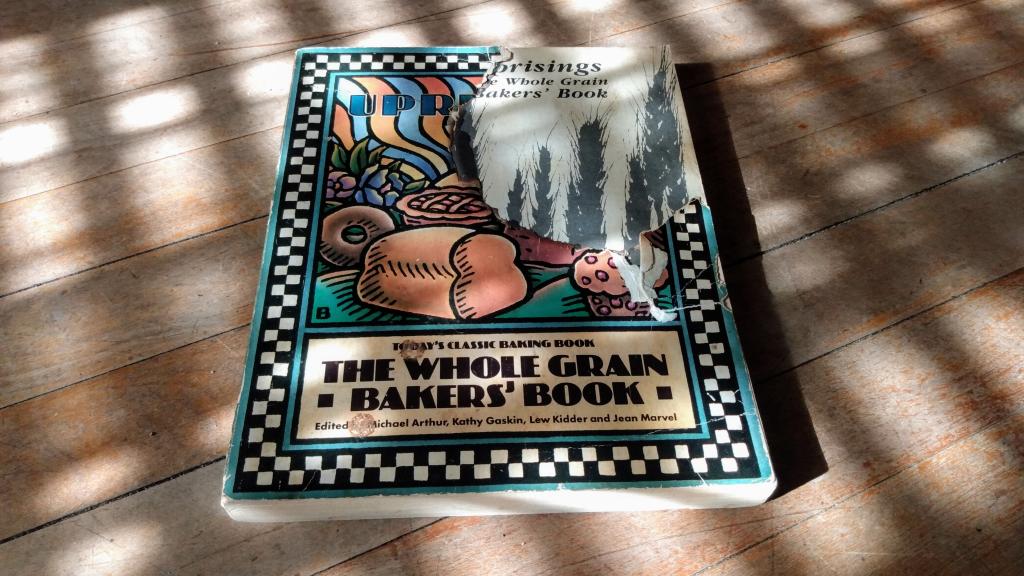
Time to resurrect a long dormant skillset and get some dough rising.

I like books that wear their history on their sleeves.

22 Mar 00:13

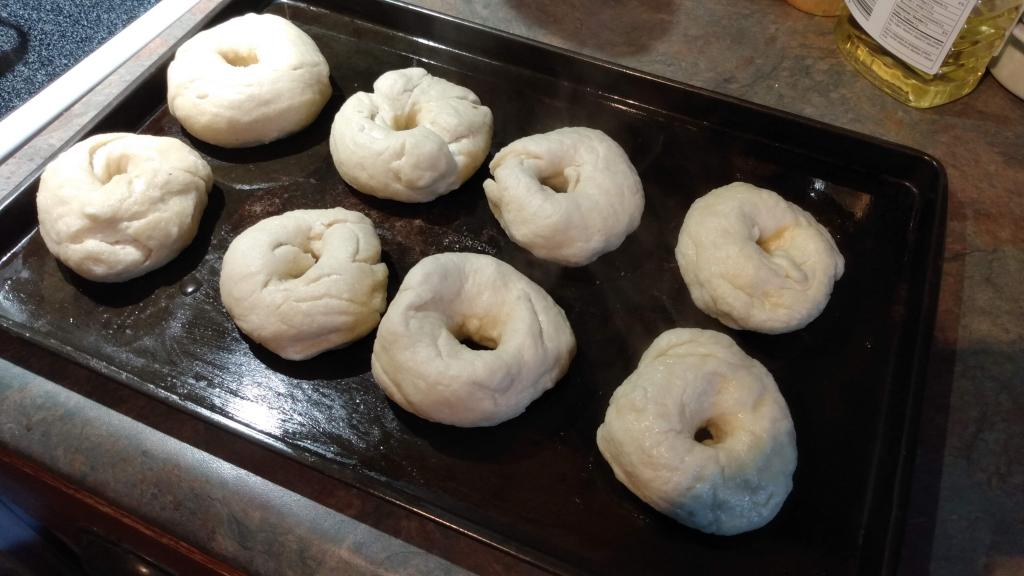
Bagels, boiled and ready for baking...

by peter@rukavina.net (Peter Rukavina)
22 Mar 00:13

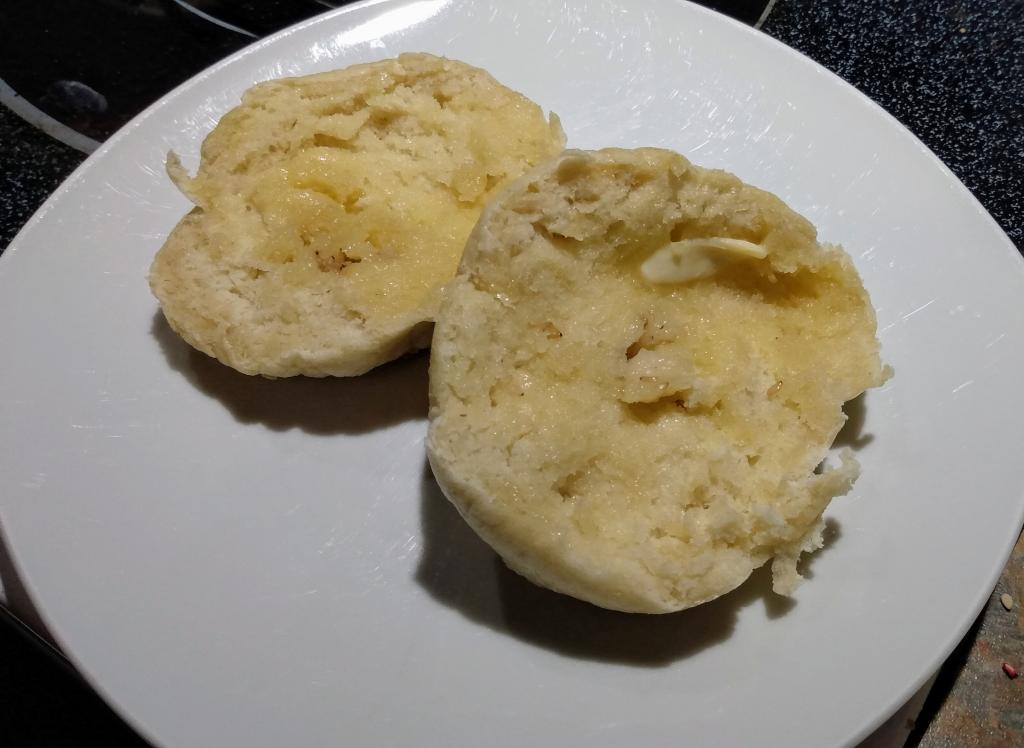
Bagel!

by peter@rukavina.net (Peter Rukavina)

Sliced, buttered, ready to accompany supper.

22 Mar 00:12

Plague 1: Dry-fried Chicken (ganbian ji 干煸鸡)

Last night: Dry-fried Chicken (ganbian ji 干煸鸡) from https://amzn.to/33ztKdr . surprisingly good. Made with with stuff on hand, substituting asparagus for green pepper. It’s an emergency!

Estimates for Q2 GDP changes are very modest — down 12%, maybe down 24%. I don’t see how that’s possible. Everyone is going to get laid off; I don't think there's an independent restaurant in our city that will survive. Lots of people won’t be able to make rent — and a lot of the people to whom they pay rent are the family upstairs, who count on the rent check to make ends meet. Even if you can work from home, the productivity loss is enormous: I’m good at this, and getting my workflow right on a new MacBook Pro has meant installing a half dozen apps — Transmit, Slack, DropDmg, SD Notary, Tot, a big Xcode update — and attendant fiddling and registration and whatnot. A quarter that was down 24% would be unprecedented, but I can’t imagine how we could achieve it.

22 Mar 00:12

Plague 2: Lamb

Dinner update #2: lamb shoulder, Brussels sprouts, steak fries, les heretiques. Pecan pie.

Lamb was 24hr sous vide at 137F With garlic and dried rosemary, finished on grill. Excellent. very tender, flavorful. 137 was just short of medium; might try 133 next time.

Brussels sprouts: chop and render 2 slices bacon. Reserve bacon, keep fat. Saute sprout over med-high heat until slightly charred, salt, cheap “balsamic“ in quantity. Reduce to a thick glaze. Add the bacon.

The new continues dismal. I sent a memo to all our local officials, following up on a memo I sent nine days back, pointing out apparent hazards that seem not to have been publicly addressed. I’m far from convinced local officials understand the enormity of the situation, or that they have resources to do more than react to immediate crying needs. Soon, a wave of disaster will overwhelm us all.

21 Mar 22:11

hacker-news-to-sqlite

hacker-news-to-sqlite

The latest in my Dogsheep series of tools: hacker-news-to-sqlite uses the Hacker News API to fetch your comments and submissions from Hacker News and save them to a SQLite database.

Via @simonw

21 Mar 22:10

Weeknote 12/2020

by Doug Belshaw

I’m not sure what can be said that hasn’t already been said about the last few days. Schools are now shut in the UK, along with pubs, restaurants, etc. While we’re not on imposed lockdown like Italy or Spain, we decided to keep the kids home early, and I’ve persuaded my parents to limit the amount they go out.

I just wish we’d listened to Bill Gates back in 2015.

It’s hard to imagine a global pandemic when everything is fine, I guess.


As usual, I split my week between MoodleNet and working on things for the co-op. This week, however, I added into the mix contributing a small amount to the homeschooling of our children.

With everything that’s going on around educational institutions pivoting to online learning, now would be the perfect time to launch MoodleNet. Teachers across different institutions could be sharing collections of resources and engaging in pedagogical discussion via the platform.

However, we only have a small, part-time team working on this. In addition, we’re essentially inventing a new category of social networking. It’s complicated, and we’re a few weeks away from federation testing, never mind user testing.

That’s why, this week, I brought forward work on a crowdfunding plan. Doing so means we should be able to increase the capacity of the existing team, and/or hire more people to work on the project. More details on that soon.

On the co-op front, we all worked on a very productive short pre-mortem for joint ventures that we enter into. I always enjoy doing these kinds of activities, as they’re so enlightening and collaborative. I also did a little bit of work on our collaboration with Greenpeace. Our planned in-person work is currently being re-scoped to online.


Overall, though, my life hasn’t been so different to normal. To be honest, at times it’s felt more like me working from home while the kids are on half-term rather than living through a life-threatening pandemic.

A decade ago, I would have been a ‘key worker’, a teacher and senior leader in schools. My life, like so many people’s I know, would have been turned upside down. But over the last 10 years I’ve slowly retreated into spending 95% of my time at home, interspersed with national and international travel.

It’s not such a bad life if you get the right balance of exercise, nutrition, and sleep — what I call the ‘three pillars’ of productivity. What I’m going to miss is mixing up the routine over the next few months through travel. At least my wife and I got to visit Bruges just before all this began.


When we were in Bruges, the Belgian city of beer and waffles, I did put my Lent fast of refined sugar and alcohol on hold. Other than that, however, I have been avoiding them both, and lost a noticeable amount of weight.

Continuing to avoid sugar and alcohol during what could be months at home with one’s family, however, would be a test to anyone’s willpower. So I’ve re-scoped what I’m doing to help me differentiate weekdays and weekends. During the week I’ll avoid refined sugar and alcohol, but allow myself (as I did last night) a bit of cake and whisky at the weekends!


Right now, everyone is so full of advice for what others should be doing. Most of this is well-meaning, some of it is a desperate pitch for work, and a small percentage of it is self-aggrandising. I’m just looking after myself and the people around me. If everyone does that, I think we’ll be OK.

As Seth Godin pointed out this week, panic loves company. He links to a post by Margo Aaron in which she encourages us to disconnect from outrage culture:

The worst possible thing to do for your immune system is to live in a constant state of stress. And if this global pandemic requires a healthy strong immune system in order to fight it, then the most responsible thing you can do if you’re feeling afraid is to stop watching the news.

The story you’re telling yourself is you can’t disconnect because you won’t be “informed.” I’m telling you: You’re not informed as it is. The only thing you have to gain by strategically disconnecting is your sanity.

Margo Aarson

So there we are. I’m not going be disconnecting from Twitter and social media, not during the week anyway.


Next week looks a lot like this week, and so on, and on, into the distance. My aim is to keep spirits up, resources stocked, and exercise done. After an enjoyable Friday meetup via video conference of some of the members of our Slack channel, I may try and make that a weekly thing.


Photo taken by me during a family walk in the wilds of Northumberland earlier this week.

21 Mar 22:09

Logitech Zubehör für das Homeoffice

by Volker Weber

logik780.jpg

Wer wochen- oder gar monatelang zu Hause arbeiten muss, braucht gescheite Eingabegeräte. Ich habe sehr gute Erfahrungen mit Logitech gemacht, deshalb ein paar Tips für richtig gute Produkte:

  • Logitech MX Keys Plus Handballenauflage als externe Tastatur für den Laptop oder PC
  • Logitech MX Master 3 ist mit Abstand die beste Maus, die ich kenne.
  • Wer gut mit zehn Fingern schreiben kann, wird sich mit der Logitech Ergo K860, ebenfalls mit Handballenauflage, einen Gefallen tun. Aber Vorsicht, die braucht viel Platz auf dem Tisch.
  • Logitech K780 ist eine tolle Tastatur für iPad und iPhone. Bis zu drei Geräte per Bluetooth verbinden und zwischen ihnen umschalten. Die runden Tasten sind etwas gewöhnungsbedürftig, aber man trifft garantiert nicht die falsche.

Die Logitech Webcams sind leider aktuell vergriffen, oder sie werden zu Mondpreisen verkauft.

21 Mar 22:00

Isolation cycles to rinse, repeat, remix

by Megan Farokhmanesh
I feel fine. I am healthy. I am ok. This will all pass.

I have been staring at the wall for an undetermined amount of time.

What day is it?

Fucking furious. How are people still not following social distancing rules? Why are people traveling? Why are people taking risks?  Everyone is an asshole. I am also an asshole, for calling everyone an asshole.

Everyone is an asshole. I am not an asshole.

I miss my friends. Are they ok? I wish I could see them.

Everyone is an asshole.

I feel intimately connected to people I never thought I would.

I miss the weird crush of people in New York at any given time.

I miss the darkness of bars and the smell of strangers and the sweat from being crammed into rooms because there are always more people and there is never enough space.

I miss walking around without fear.

I am encouraged by the people around (ha ha "around") me.

I am proud of those who are enduring, even now.

The mere thought of food is making me sick.

Is that a scratch in my throat? It is. I'm fine.

It's allergies.

I am getting sick. I wasn't safe enough. I'm definitely sick.

It's allergies.

I'm fine.

I can't sleep.

I can't stop sleeping.

I need to eat everything in my fridge right now.

I need to clean every inch of my apartment right now.

I mean...is [redacted] actually kind of hot or is this just pandemic brain? Anyone?

I have been staring at Twitter for an undetermined amount of time.

I have so much manic energy and so much time to use it. I'm going to finally learn that thing I've always wanted to. I'm going to write more. I feel clear-headed and alert.

I can't focus.

I feel hopeless.

I feel ok.

I feel anxious.

I feel like things will be alright, even if it takes time.

I feel like I am learning to appreciate the things I took for granted.

I feel so alone.

I feel like I've hit my stride. I'm having a good time.

I'm happy.

I'm content.

I miss my friends.
21 Mar 21:56

Lecturing and Teaching Remotely — My Setup and Approach

by David Eaves
I just ran a workshop/facilitate this morning for a number of the Chief Digital Officers from several European capital cities to help them share best practices and shared challenges in their respond to COVID19. I very much enjoyed the session and my set up has me excited about how remote teaching can approximate the intimacy […]
21 Mar 04:35

The Coronavirus: A Spiritual Perspective!

You could say that words poured through me, not out of me.
 
What a turbulent and unpredicted ride over the last few weeks as we have all been dealing with a tsunami of news reports from around the globe. Unlike many health related risks in the past, Covid-19 is impacting the world – all of us, not just one country or region. We can no longer feel safe because it’s happening “to those people over there” as humanity’s ego so often does. We are all being hit by a virus that we as a global community are still trying to understand.
 
The Coronavirus itself isn’t new but the strain is – as such, even the medical community is in unchartered territory as are the hospitals who are trying to ramp up support, beds, and supplies if the pandemic spreads.
 
On top of being in unchartered territory, the fact that we don’t have enough testing kits yet, we are faced with even more uncertainty and doubt.
 
We’re told that it is highly contagious – that it can pass through hair and eyelashes, can live on physical substances, such as stainless steel, metal and plastic for up to 3 days. (think grocery carts and door knobs) and on cardboard for up to 24 hours (think Amazon packages and UPS boxes).
 
With this deluge of information -- some of it hype and some of it real -- how do we know what reality is? And, can we truly control that reality?
 
WHAT IS REALITY?
 
As with any flood of fear-instigating data, there’s always someone who can financially benefit and often it tends to be large corporations, pharma and yes, governments. The result of hysteria and panic can be potentially worse than the virus itself.
 
Gaia and the world-green
 
So even if some of this is in play, it doesn’t mean that the facts from medical doctors are not very real nor does it mean that the threat isn’t very real.
 
Some people have raised questions such as: “if we are truly to step into a greater consciousness, knowing what we know about manifestation and the higher vibrational energies that we all hold, are we not giving into the fear being created around us by staying at home?


Are we not giving into mass consciousness? Are we not allowing ourselves to be controlled? Are we not creating more damage by staying away from others when at this volatile time, we need to be unified more than ever?”
As with everything in a Quantum World view, there are no absolutes and so the answer is YES and NO.
 
Consider this: if there are no absolutes and only probabilities with multiple layers and complexities, imagine that Covid-19 has its own consciousness. What if humanity called its consciousness into our dimension on purpose?
 
OUR COLLECTIVE SOULS RESPOND TO HUMANITY'S AND GAIA'S HEARTACHE
 
In a world of growing isolation where so many have been building stronger relationships with their phones and social media accounts than the loved ones in front of them, we have been starving for a type of human connection that doesn’t exist in a data bank in the cloud.
 
We are craving for a re-connection to the Earth, one which humanity has been pillaging in unhealthy ways for decades upon decades.
 
Gaia herself is calling out to be healed, asking humanity to wake up and see the repercussions of our actions.
What a better way for humanity to ‘get the message’ than for its consciousness to call forth an intrusive and disruptive consciousness to wake us up, even if that be in the form of a virus.
 
The Laws of Attraction and Repulsion ensue, that we as individual energy forms and yet part of the ‘whole’, will repeatedly bring forth whatever it takes for us to either wake up, or repeat the same pattern of disharmony over and over again.
 
Enter the domino effect which disruption often creates, where we are forced to take a step back and get out of the mud.
 
Our eyes have been so glued to a tree for so long (aka digital screens) that we have lost sight of the forest, the collective good and ‘all that is’ we are an integral part of. In this process, we have no choice but to return to our innate understanding that all is interconnected regardless of our belief systems, the color of our skin, the culture and language that we perceive defines us and so on.
 
We return to Oneness knowing that we are part of a universal consciousness and that universal consciousness is part of us– we don’t operate out of time and space but we are time and space, not separate from it.
 
In other words, what if the virus is in fact a medicine for humanity, a sort of self-correcting one?
 
BUT, WHAT ABOUT PHYSICAL SEPARATION? HOW DOES THAT HELP US HEAL DURING SO MUCH UNCERTAINTY?
 
There’s no question that there will be physical and emotional ramifications from this so called self-correcting medicine. Family members, especially those whose immune systems are compromised or the elderly, may die. We will miss the physical connection we have grown accustomed to in everyday life – at work, school and in our communities.
 
There’s no denying that all of this feels painfully real in the physical world in this dimension in the here and now. But, how we interpret, process and handle the crisis we are faced with collectively as a global community is what is so critical to our healing.
 
Many have been living and suffering for a long time from a different kind of pain….a disconnection from themselves, from others and from Gaia herself. For those who were awake or in the process of “waking up,” there was an unprecedented inner knowing that we better change our ways or die.
 
When the natural order of things – all living things – are in disharmony, Gaia needs to rebalance and because we are connected to Gaia’s consciousness, that combined consciousness comes forward as ONE energy to self-correct.
 
The natural laws of the Universe have kicked in, forcing us to go inward and remember what’s truly important. Once you do, you’ll begin to see a bigger picture consciousness that is presenting itself from a macro-view. Rather than see the virus as some kind of evil manifestation, imagine that it as the emergence of divine intervention.
 
As with every re-balancing, old ways of doing and seeing things will die. Old orders, archetypes and structures will die off or at a minimum, diminish so a new way of seeing and doing things can finally sit into the creator’s seat, get the voice it deserves and ultimately begin to thrive.
 
So, rewind the clock back to when I said that in a Quantum World view, there are no absolutes to the answer of “are we are giving in to old patterning by isolating ourselves right now?”
 
Let’s look at a YES response. Yes, because we don’t want to feed and give voice to the fear that could emerge on a global scale if we allow it to, which leads to the ego raising its ugly head. The fight or flight mechanism of “I better save myself or I will die.” That is a lower vibrational mindset that doesn’t serve us or the collective whole.
 
Let’s look at a NO response. No, because we are allowing a new consciousness to emerge to correct the natural order and going with the ebb and flow of that energy, a bit like a martial artist approaches his or her opponent. Remember that we still exist in a human body which can catch the Covid-19 (known as a novel virus) even if our immune systems are strong.
 
While it may not have a deadly impact on those who are young and healthy, it doesn’t prohibit us from being a vector, which means we can ‘host’ the virus and pass it along even without symptoms or ever getting ill.
 
So, because we are connected to other living things, we need to think about the impact we could have on others, especially those with impaired immune systems and the elderly. From this perspective, we have a social responsibility to carry out social distancing, at least for a little while.
 
For those of you who feel that being together during this time is the most important thing, consider a higher purpose, that of the natural law of order correcting itself. Rather than feel stressed and anxious, use this time to go inward and reflect.
 
This is also a time for allowing what is, a time for allowing just you and your Higher Self to BE in silence with the here and now. Alone. Listen to your inner voice that will guide you in ways that no one else can.
 
MINDFUL INTENTION: Peace, Love, Inner Knowing
 
If this is a time to reflect and be alone, does that mean during this time, we don’t provide support to others? No, of course not – remember that we are all connected after all.
 
But, first and foremost, it means understanding the energy of the Covid-19 consciousness and working WITH the energy, not fighting it, nor retreating out of fear but out of respect for the energy. In understanding how to work with the energy of a new consciousness we don’t yet understand, being humble is part of the process. We want to go with the flow of what the bigger picture has in mind for humanity, from a place of EBB and FLOW. Qigong masters understand this well.
 
Also during this time, mindful intentional meditation and staying in a high vibrational energy of unconditional love is what is also called for – it is not only powerful and healing for ourselves, but for those who are infected with the virus and the planet as a whole. This is about emerging with the FLOW of Universal Energy, not taking one side or the other.
 
Think of it as a retreat for soulful reflection and in that inward time, we can also support others energetically (remember there are no borders or boundaries to our energy fields).
 
Then, we may re-emerge feeling renewed physically, emotionally and mentally. On the other side lies a world which has shed a layer of skin or two and shall show us a new consciousness we can either embrace or not.
 
I hope we all learn from the lesson and embrace it collectively as a whole. Rather than fight it, go to fear or over analyze it, truly feel into the blessing that this correction will ultimately create for humanity.
 
Blessings to you at this time.
21 Mar 00:46

Google delays Chrome, Chrome OS updates, impacts other Chromium browsers

by Jonathan Lamont
Google Chrome on Pixel 4

Google is delaying Chrome and Chrome OS updates due to “adjusted work schedules,” and it’s impacting other browsers.

In a statement the company posted on its blog, Google said it wasn’t going to roll out Chrome 81. It was initially due out earlier this week for desktop and Android. The next version of Chrome OS, expected next week, is delayed as well. However, Google says it will prioritize updates related to security, which it will push to Chrome 80.

You can read the full statement below:

“Due to adjusted work schedules at this time, we are pausing upcoming Chrome and Chrome OS releases. Our primary objectives are to ensure they continue to be stable, secure, and work reliably for anyone who depends on them. We’ll continue to prioritize any updates related to security, which will be included in Chrome 80. Please, follow this blog for updates.”

While the search giant doesn’t specifically mention it, the delay is likely caused by the coronavirus spreading COVID-19. Several companies have shifted to remote work set-ups or closed offices entirely in response to the outbreak. Google is among those companies, and announced earlier this week that the majority of its employees would switch to remote work.

Additionally, Google noted the change may impact products updates, but that all of its products would remain functional.

Further, by not implementing new user-facing features, Google also ensures Chrome remains stable during the outbreak.

Unfortunately, the delay has also had a snowball effect. Several other browsers rely on Chromium, the open-source underpinnings of Chrome. With Chrome delaying transitioning Chrome 81 from beta to stable, other Chromium-based browsers are following suit. Notably, Microsoft’s new Edge browser will not push out its version 81 update to keep consistent with Chromium.

Source: Google Via: Input, 9to5Google

The post Google delays Chrome, Chrome OS updates, impacts other Chromium browsers appeared first on MobileSyrup.

21 Mar 00:46

How I lead remote learning in Hong Kong during school closures

Ng Wai Ying, Microsoft Education, Mar 20, 2020
Icon

I liked this post from an educator describing his experiences - what worked and what didn't - during recent school closure in Hong Kong. Among the lessons: try first ("I started by selecting some of my Grade 6 students to help me pilot live lessons"); fostering student engagement and a positive culture ("I share examples of good student work online to provide recognition"); group writing and editing with tablets and pencils ("We use OneNote as a collaboration space for group work").

Web: [Direct Link] [This Post]
21 Mar 00:45

Microsoft teases future of Windows 10 design in new video

by Jonathan Lamont

After Microsoft announced its Windows 10 operating system hit a billion active users this week, the company shared a new video teasing upcoming UI changes and features.

Posted to Instagram by Panos Panay, Microsoft’s chief product officer, the video shows changes to the Start menu, File Explorer and more.

We’ve known Microsoft was planning to tweak the Start menu for a while, but seeing it puts the changes into perspective. To start, the company will reduce the colour of tiles in the Start menu to highlight apps instead. There also appears to be changes to how tiles are spaced in the interface.

Additionally, the video teases a new File Explorer app based on Microsoft’s Fluent Design system. Fluent Design finds its way to the right-click menu as well.

The video suggests Windows 10 will become more inclusive and offer options for adjusting pointer size and colour.

And of course, the teaser prominently highlights the new icons Microsoft designed, some of which have already made their way to Windows users.

All in all, the teaser promises a bright future for Windows 10. I can’t wait for the new look to start hitting my devices.

Source: Instagram Via: The Verge

The post Microsoft teases future of Windows 10 design in new video appeared first on MobileSyrup.

21 Mar 00:45

Notes From a State Of Emergency

by Rui Carmo

Portugal is in a (mild, but official) state of emergency since Wednesday. Borders and shops are closed, people are required (but not yet coerced) to stay indoors, limit their outings to indispensable errands, etc.

My mindset this week has been somewhat random, partly because the kids are home and they need feeding, support and whatever little guidance we can provide1 while schools try to get their act together and partly because everyone else we work with is undergoing the same transition, so schedules have pretty much gone out the window.

Productivity and focus are, obviously, on the low side, and a lot of time was spent chatting with friends regarding tech, ways of working and other non-epidemologic concerns (and yeah, we’ve been plotting simulations left and right, but I’ve given up on those given the small amount of samples and wide regional variation).

So here are a few tech-related notes on some odds and ends that surfaced in those conversations throughout the week.

Bandwidth

We’re good. Portugal has always been much better off than, say, the UK in terms of broadband connectivity, and most of the streaming/video call issues people had earlier in the week were really back-end stuff and not carrier/last-mile related.

And knowing how things are laid out across the land (which isn’t that big, and with very few carriers I’m quite familiar with), if anything were to break or clog up, it would have done so by now.

But regardless of root cause, I expect any future outages are going to take longer to fix than usual, and we’re just going to have to be patient with it.

Online Shopping

We also still have food, and working supply chains–the borders are not closed to cargo.

Online stores have buckled under the load (most notably supermarkets). Not just logistically, but also technically (502 errors for hours, funky online queueing systems, etc.), and to the point of rambunctious parody:

Parody illustrations courtesy of David Ramalho.

Technically, I blame years of outstanding technical debt–never mind if this is an unpredictable situation. But they are also experiencing an utter failure to communicate with customers and change existing processes.

Something as simple as putting up a big NO DELIVERY SLOTS UNTIL X banner on the home page (for instance) would save people the trouble of spending hours trying to log on and glacially adding items to their shopping cart (sometimes 15 minutes at a go) only to give up in utter frustration upon reaching checkout.

There’s a lesson here in terms of UX and scalability, I’m sure, but I’m also sure it’s going to be lost on some people.

Collaboration Tools

I’ve been in the game since ISDN video calls (worked on video over ATM in the 90s and 3G video calling as well, which effectively rates me as an expert in animated postage stamps), and it’s surprising how little things have changed from a cultural perspective–many people have never done so much as an “old school” Skype call and businesses are still very new to the whole thing despite all the cool new tech we’ve had for years.

The way I see it, one of the biggest risks right now (for companies and users alike) is wasting time switching between multiple platforms. That just confuses people and wastes precious time for the IT folk that have to support them (because even if it’s free, that support time also comes at a cost).

Don’t panic. Think about what you need, pick one or two solutions, and stick with them. If you’re not in charge of deciding, don’t waste people’s time with random suggestions either. People have better things to do right now than try $RANDOM_SERVICE, there’s too much change going on–don’t add to the chaos even if you mean well.

Think about how people will coordinate, how things integrate with calendaring and e-mail, how well it works on smartphones and tablets, how to run meetings/lectures with the number of people you really need and (something many people forget about until it’s too late) if you can control access to screencast/conference call recordings and easily share them only with participants after the fact.

Don’t be lax on security. Just sending out links for people to join with one click works great, sure, but you really want to plan ahead and make sure you don’t have more headaches down the line.

At this time I have four or five different solutions on hand, and it’s all WebRTC underneath. You might prefer a specific client or service over another based on arbitrary features, user experience or sheer bias, but they are all 95% the same where it regards the videoconferencing features. The other 5% are what matters.

On a personal level, just use what makes sense. We use FaceTime and WhatsApp (because Android…) for family calls. The kids are using Zoom (which we also use for the podcast) because they don’t have phones, and pretty much all my friends are on Slack.

But I set up a free Teams workspace so that we could keep tabs on kids’ homework (files, checklists, e-mails, etc.), and we’re fully in control of who accesses it and what data is stored there.

Your mileage (and awareness of pitfalls) may vary. Me, I have to spend my days inside Teams anyway (granted that I don’t like either the aesthetics and the UX of the chat bits, but we do run the entirety of Microsoft’s business on it).

For workspaces, video calls and screen sharing, it’s been rock solid (especially on iOS and macOS), and I’m utterly fed up with people shunning it for no good reason2.

Gadgetry

Holding on to old hardware has paid off somewhat, as has having lots of knick-knacks around. There are now two permanent home offices in the house (besides a shared workspace), and old gear has been pressed back into service:

  • I dug out an AirPort Express to improve coverage (and good thing I had already gotten an Extreme from eBay a few months back)
  • My two ancient P2270 monitors are back in service, as are multiple dongles of various descriptions
  • I’m really glad I had an extra USB-C to HDMI adapter lying around (I got this one on a whim to play around with Samsung DeX, and had the foresight of spending an extra €5 on something that was Mac-compatible).
  • I’m also turning a Raspberry Pi Zero W into an AirPlay display using RPiPlay, which works quite well even if Apple has kneecapped the protocol to 1080p.

And there’s a bit more audio and music gear around (which I’ll write about separately).

I just hope nothing critical breaks in the meantime (our toaster gave up the ghost the other day, and it was a sobering reminder that these days even the dumbest possible appliances have unrepairable digital circuitry in them).


  1. Which, of course, is never quite enough. ↩︎

  2. Okay, so you don’t like purple. I get it. ↩︎


21 Mar 00:44

Not in my Town! The Ultimate NIMBY in the COVID-19 Crisis

by Sandy James Planner

COVID-19-Testing-Texas-1024x536-1

COVID-19-Testing-Texas-1024x536-1

What happens when NIMBY (Not In MY BackYard) behaviour impacts the health of the whole community? In Darien Connecticut   the town  was going to have their first drive-through COVID-19 testing site set up.

The testing was to begin in a parking lot at the Darien Town Hall. But residents complained copiously to town officials, not wanting a testing facility so close to their residences. The town Mayor and Council nixed the facility.

What exactly is Darien? It is a small town of 21,000 people that is one of the wealthiest in the United States, and is ranked in the top ten of Bloomberg’s current list of “America’s Richest Places. The average household income is over $350,000.

Most of the residents here commute to Manhattan for work.  Here are the amenities in Darien: there’s eleven parks, two public beaches, the private Tokeneke beach club, three country clubs including the first organized golf club in Connecticut, a hunt club, the public Darien Boat Club, and Noroton Yacht Club.”

The drive-through testing was to be in a lower parking lot adjacent to the Town Hall for residents that had a doctor’s order and had already been screened and given an appointment.

“In a post on Twitter, Hartford Mayor Luke Bronin called the decision “maddening,” and said that homeowners near where the testing was scheduled to take place should not be “offended,” because it was only going to be temporary.”

The Mayor of Darien responded that there was no need to throw social media stones at Darien residents not wanting a  drive-in virus check facility in their town.

Darien is in Fairfield County where there were 102 confirmed cases of COVID-19 as of Friday March 20.

With thanks to Dan Seljak-Byrne for the link.

town_hall

town_hall

Images: ReformAustin & Darien


21 Mar 00:43

Spring and the season of COVID-19

by jnyyz

The world is a different place than it was a mere week ago. Today was the second day of spring, and it was warm if very windy, and yet Toronto was basically shut down due to the spread of the COVID-19 virus. U of T has moved all classes online for the balance of the semester, and all buildings are closed as of tonight. I had to go in to button up a few last things in my lab.

Downtown, the ratio of bikes to cars is as high as I’ve ever seen it.

With the worry about the virus, I find myself doing strange things like going down to Chinatown to buy masks. I am fully aware that things won’t protect me, but it seems like common courtesy now to be wearing one when I’m out and about doing some shopping.

As I’m working from home now, I’ve discovered that Lucy barks like crazy if I’m talking to someone on the computer unless I put her on my lap.

Of course with COVID-19 all over the news, it is hard not to obsess over the global rise in the number of cases. I had trouble finding a semi log plot of the #cases for Canada versus other countries, so I made my own with a little help from the worldometer corona virus page, and the wayback machine. These are the number of cases per capita.

Although various people have informed me that the numbers from China and Iran are not necessarily to be trusted, you can see some interesting and upsetting trends here. Firstly it is clear that the numbers for China (royal blue) have largely plateaued. South Korea (yellow) seems to have their numbers somewhat under control as well. The continuation of the upward trend for Italy (orange) is what has overwhelmed their medical system. Japan (green) has a more gradual slope, but there are some concerns of serious undertesting that keep their numbers down. The US (light blue) and Canada (navy) are still on a strong upward trend as well. If these lines cross the number of ICU beds per capita, that is very bad news. For the US, that number is about -3.5 on this scale (also this the total number of ICU beds, of which at least half are normally occupied). For Canada, the number is -4. When there is talk about “flattening the curve” we want the number of cases to stay below the capacity of the medical system if at all possible.

The last couple of days of data show that perhaps the rate of growth for Canada is slowing a bit, especially compared to the US. However, this could be a sign of the fact that the number of tests for the US has greatly increased over the past few days. If we compare the ratio of the #cases per capita for the US vs Canada, it looks like this:

This ratio was much less than one before March 9 simply because the amount of testing that was being done in the US was much delayed compared to Canada. They are now at about double the #cases per capita compared to Canada, and from the previous graph, you can see that they just pulled even with China.

None of this is good news, and it will be a good two weeks before we actually expect to see the effect of interventions such as the closing of schools and universities, or social distancing. In the meantime, if the present rate of increase continues, the US will be at about 100x the current number of cases in those two weeks, i.e. approaching 2 million people. Hopefully this will not come to pass.

Several jurisdictions have gone under some form of lockdown, where people are told to stay at home unless for medical reasons, or for shopping for food. The entire state of California is under lockdown, but the SF Bike Coalition has clarified that going on a bike ride is allowed, as long as people stay at least 2m apart at all times.

This is better news than in Spain, where cycling is no longer allowed for now.

Fingers crossed. Let’s all try to do our part.

21 Mar 00:42

Finally, I can let myself go!

by Megan Farokhmanesh
Today in the shower, as I reached for the shampoo, my hand brushed against my cotton candy pink razor. It's the first time I've touched it in days. Shaving in the middle of a pandemic? I feel like I'm putting a pretty pot of flowers outside of a burning building. I feel like I'm polishing a car the engine has just fallen out of. I feel like the string quartet playing farewell songs on the Titanic, from the movie Titanic, probably.


I used to be like you. I was so groomed, so intent on at least looking like I had my shit together. I got manicures, used expensive hair products, religiously cared for my brows. I paid people a lot of money to make me feel that if I could not dance and jump and stretch with the grace of a gazelle that I deserved to die alone. Approximately every month and a half, I listened intently to a woman as she ripped the hair off my pussy, bookending each of my yelps with comments like "It's hard." (ah) "My grandma raised me, really." (ah, fuck that one hurt) "I don't talk to my mom much anymore. You want your asshole waxed too?" (yes pleaHH FUCK)

There's a poorly constructed, colored-in-crayon chart in my head tracking things like how often I've been showering, or when the last time I put on makeup was, or which outfits I've worn more than twice this week. Who am I now? Just a girl, sitting on her couch in a cat onesie, asking this pint of ice cream why I didn't get it in a bigger size. The dumbbell set I've used once sits silently in the corner. I forgot how to feel shame somewhere around quarantine day 8.


21 Mar 00:42

Into the chrysalis

by Chris Corrigan

My friend Elizabeth Hunt reminded me on twitter of a conversation I had with her in Glasgow a couple of years ago when she attended a complexity workshop I was offering with Bronagh Gallagher. It was a conversation around what is sometimes called the mid-life crisis, and somehow the image that came to mind when Elizabeth told me how she was doing was one of a chrysalis.

This will be a non-scientific post, so if you are an actual entomologist I apologize for appropriating your field here. But chrysalises both inspire and baffle me. The thought that a caterpillar can crawl into a sac made of its own body and dissolve its form and come out as a butterfly is a cliched image of transformation, but holy crap. Stop for a moment and really think about that. Does the caterpillar know this is going to happen? If it does that shows some tremendous trust. If it doesn’t, then that shows some incredible courage. It just hangs out there, isolating itself from the rest of the world and changing in ways it can never understand.

Does a caterpillar see a butterfly and go “that will be me one day?”

So yes, we are all heading into our chrysalises. Over the past few days, I have been on calls and courses with colleagues all over including in Canada, the USA, the UK, Moldova, Denmark, Colombia, The Netherlands, Australia, Italy, and Brazil. Every single one of us is isolating and practicing social distance. We are all doing the same thing. We have never been more unified in action, and never more physically separated from each other. We have all climbed into our cocoons and are waiting for the imaginal discs to come into play and elongate and grow into our new ways of being. We might be here for a long time. We are going to learn some things.

I am struck by how we are learning to let go of policies and rules that are based on punishment and retribution and choosing to govern social relationships a little more on trust. Relaxing the need for doctors’ notes. Forgiving interest on student loans. Preventing evictions if people are sick or recently laid off and can’t make the rent. We are starting to see things happening that are countercultural to brutal capitalism and a society that is governed by the fear of ordinary people taking advantage of the system. Small things, small changes. Still very gooey. Imaginal discs.

Whatever we are in right now is not the final stage. We are entering an interregnum that will be as big a challenge as any that humanity has faced. It is as big as climate change but more present, so we are actually acting like it is a real emergency, instead of rhetorically calling it an emergency and carrying on as before.

Have some empathy for the caterpillar who creates its chrysalis and becomes a pupa. It may believe that this is now how things are, and meanwhile, at an unconscious level, the imaginal discs are swirling about in its corporeal soup, with a different idea about what it is to become.

Inside the chrysalis, your ideas about yourself dissolve and life itself takes over. Watch for the small signals, watch for what happens at the edges. Amplify the acts of kindness and possibility that you see in your community and your personal life. Document and grow the new practices you discover be they helpfulness, attention, curiosity, or competence. Stifle the urge to seek cortisol hits from triggering events and social media that make you angry, or the outrage merchants that still crave a hold on your consciousness. Instead, cocoon yourself and study your imagination. Those of us that are not of any use in the immediate safety effort must use this time to prepare to lift us all into what comes next. The first responders and caregivers will be tired and we will need to take over for them and govern and lead in a way that is informed by their example and by the things we are all now discovering are possible.

Into the goo, friends.

20 Mar 17:49

i guess words mean things

by kait sanchez
It's funny how words or phrases will enter and exit our daily vocabulary in ways we’d never expect. Nowadays everyone is suddenly an amateur epidemiologist, talking about ‘respiratory droplets’ and ‘flattening the curve.’ But the biggest change I’ve felt has been around a pretty simple word: ‘home’.

My mom and I lost our house last year. There’s a whole sordid tale, but the tl;dr version is that the house I grew up in, the one my mom was also raised in, had to be sold because of messy finances and old divorce papers. That house was our home. It was my home. Even when I was apartment-hopping in the city, in my mind I always had that singular, true home waiting for me. 

I haven’t been able to refer to our new apartment as home. I always just say, “I’m gonna head back to the apartment.” If I want to mix things up I’ll say ‘domicile’ or maybe ‘habitat.’ I feel a twinge in my spirit any time I end up saying ‘home’ for the sake of brevity or clarity. My jaw aches when I force my mouth around this word that has always held infinitely more meaning than ‘the place where I dwell.’ 

I know all the corny little sayings. Home is where the heart is. Home is where the wifi automatically connects. Home is wherever I’m with you. (I actually made a small embroidery of that one for my mom last year before the shit hit the fan. She loves that song. The embroidery is hanging in our new kitchen, and it squeezes my heart every time I see it.) Pithy truisms don’t make pills any easier to swallow. 

But social distancing has been like high-intensity interval training for this particularly stubborn muscle in my brain. Everyone is working from home. 

Yeah I have an old macbook at home, but it should be able to run this software. 

Let’s all grab books to take home. 

I don’t have any toilet paper at home. 

Are they sending you home early?

Being forced to stay in this fake home more often, and to mention it in every meaningless workplace conversation, has made me start to lean into the bite. I guess times of crisis tend to speed up certain processes of adjustment, or loosen weird emotional philosophies. Part of me is still convinced I’m just temporarily staying in a particularly personalized hotel room, but yes, I’m working from home. Also I really need to find toilet paper.