Shared posts

11 Dec 17:03

Google Introduces Featured Photos Screensaver for macOS

by John Voorhees

Popular Google+ photos have been available via Google's Wallpapers app on Android and on Google Fiber and Chromecast devices, but today, Google is bringing them to macOS too. Google’s Featured Photos Screensaver rotates through a selection of high-resolution photographs that have been publicly shared on Google+ and don’t include people in them. Each photo also includes information about the photographer that took the shot and links to more of their work. If you’re a photographer and want your photos to be considered for inclusion in the app, you can learn more here.

→ Source: plus.google.com

30 Nov 22:26

You can now play Pac-Man and other mobile games on Facebook Messenger and News Feed

by Rose Behar

In case you needed any more excuse to waste time on Facebook, the company is now rolling out ‘Instant Games’ to Messenger and News Feed for mobile and web, allowing users to compete against their friends in such classics as Pac-Man and Space Invaders.

An extension of its previous, ‘secret’ but exceedingly popular game offerings, which were limited to soccer, basketball and chess, Messenger’s new Instant Games gives users access to 17 games at launch. In addition to the ones mentioned above, there is also Words With Friends: Frenzy, Galaga and Templar 2048.

facebook messenger games

The update is now rolling out to iOS v8 and Android v5 or later devices in Canada and 29 other countries, and is immediately available via the web. To get started, update Messenger and enter the conversation where you’d like to start a game (it can be with a group or just one-on-one) and tap the game controller icon. Once you’re finished playing, the game will post your score to the conversation, challenging those involved to see if they can beat your score.

“We think this is just the beginning for games on Messenger,” Facebook states in an announcement blog post, “Look for new titles to be added, and for new ways to play.”

Related: How to play soccer — and all the rest of Facebook’s hidden games — in Messenger

SourceFacebook
30 Nov 22:25

36 Days and 36 Design Prompts Lead to 36 Spectacular Typographical Creations

by Andrew Nunes for The Creators Project

All images courtesy the artist

36 Days of Type is a yearly challenge created by Spanish designers Nina Sans and Rafa Goicoechea, which invites people across the world to design a new font every day for 36 consecutive days. For this year’s edition, up-and-coming visual designer Jesseca Dollano stepped up to the plate and designed an expansive typeface for the challenge, one that manages to be futuristically cybernetic, mildly retro, and strangely cohesive at the same time.

The most interesting part of Dollano’s typeface is her numerical set, which functions like a time machine of typographical history in reverse. Beginning with a ‘0’ that is splintered into geometric 3D sections as if it were a NASA architectural blueprint, the numbers slowly become more corporeal and evocative of typographical styles from the 70s and 80s by the time ‘8’ and ‘9’ roll around.

Even their color palettes reflect this pattern of polished futurism, beginning with sleek, cold, and calculated blues and purples until bubbly reds and yellow burst into the font. Dollano later created another version of the typeface in an entirely synchronized palette revolving around shades of turquoise, yellow, and green.

Despite the fact that the Hong Kong-born, New York-based designer primarily works on app interfaces, infographics, and Samsung ads, this wasn’t Dollano’s first foray into typography. Her earlier project One Rock Alphabet saw the designer create an entire typeface from photographed movements of rocks, an idea she derived from a passage in physicist Alan Lightman’s book Einstein’s Dreams.

36 Days of Type marked a departure from a more formal and composed typographical style into something energetic and less constrained. It's the first time she engaged in a time-based, durational design project, a feat that was challenging to say the least. “Designing anything at all (even if it’s something small) for 36 days straight will be a challenge for anyone. There is just not enough time in a day, especially after work,” Dollano tells The Creators Project.

“A friend actually challenged me to do this and it ended up becoming a competition between the two of us on who gets featured the most,” she adds. “I almost didn’t have a social life, as I was so dedicated to this project. I thought I couldn’t do it at first, but in the end, I managed!”

More of Jesseca Dollano’s works can be found on her website, and more information on the 36 Days of Type challenge is available here.

Related:

100+ Swiss Designers—1 New Typography Exhibition

‘Stranger Things’-ify Anything with This Typography Generator

"Picasso of Design" Paul Rand’s Manifesto Is Back in Print

30 Nov 17:14

Emarsys – Making the Most of Compose

by Jon Silvers
Emarsys – Making the Most of Compose

In this article, we take a look at long-time Compose customer, Emarsys, who runs Compose-hosted MongoDB, PostgreSQL and Redis for their micro-services architected marketing automation platform.

Emarsys has been delivering email campaigns for customers since 2000, but it was in 2010 that the company made a critical pivot from offering CRM and email services to a full-serviced marketing automation solution. That included moving to a microservices architecture.

The microservices architecture is key for Emarsys for delivering value to their clients faster. They have accelerated development of entirely new modules by supporting greater autonomy for their engineers. Developers are encouraged to code in their favorite languages with their choice of tools in their preferred cloud. The majority of development happens in their Budapest office. We spoke with Andras Fincza, Head of Engineering and László Merklik, Senior Vice President of Core Products, about their application and use of Compose-hosted services.

Emarsys – Making the Most of Compose

Unlike marketing automation vendors who are focused on the B2B space, Emarsys works with B2C customers. While B2B marketing automation solutions are tailored for smaller data sets, Emarsys is built for scale. "If you have 2 million or 60 million contacts, there's an explosion of data and simple metrics solutions won't suffice," said Merklik.

Merklik added: "So the problem for a marketer is that it became the age of point solutions – you have a solution for personalization, you have a solution for push, you have a solution for automation, and so forth. But in the end it's impossible to get that information in one place, make sense of it, build your marketing strategy, and execute it with all these point solutions. So what we're trying to solve is this gap – this huge gap in the information and the execution of the strategy. We want to let our customers define their strategy but not have to worry about how to get and use data."

The Emarsys application is split into two different infrastructures, a legacy infrastructure (built in PHP) and a new cloud-based infrastructure on Compose, Heroku and other as-a-Service platforms. Everything works together seamlessly using REST APIs to communicate across the entire stack. The huge data sets they work with are analyzed through an AI module for example. To some degree, Compose epitomizes why they have moved to a microservices architecture. It's simply much easier for developers to focus on writing great code instead of managing infrastructure.

"Our developers need to write maintainable code and be on-call if something breaks or it needs work," said Fincza, "So it really motivates them to write resilient code. On the other side, we want to provide them with state-of-the-art solutions to manage the services they write, so this is why we use Compose, for example, because it frees up our operations time and helps the team focus on the code quality and the product itself."

So how does their team of 70+ developers and data scientists work in unison to build a microservices platform? As Fincza describes it, they have followed the same type of system that Spotify's engineering team has championed in which they've split their teams into "clans" to focus on different themes, such as content or reporting. The company embraces OKRs for setting goals; they have a 12-18 month high-level product roadmap that is broken into 4 month release. Each team derives their own objectives in support of the high-level roadmap.

Compose-hosted MongoDB, PostgreSQL and Redis are used by various engineering clans for different parts of the application. In addition to Compose freeing up time for their team to focus on app development, Fincza added, "One of the best things we have from Compose is the reliability. We've had no critical incidents or anything that I can recall."

Every day, and often several times per day, they release code into production which has helped them capitalize on the great output from their team. The thoughtful combination of top-down OKRs with small teams broken into themes helps their teams be more agile and release code into production daily. All that work has paid off: Emarsys has grown into a market leader in marketing automation with 15 offices worldwide and more than 1,500 clients running 250,000+ personalized campaigns each month.

If you'd like to read more about Emarsys' development and technology, you can find them blogging on Medium on the Emarsys Craftlab.


If you have any feedback about this or any other Compose article, drop the Compose Articles team a line at articles@compose.com. We're happy to hear from you.

30 Nov 17:14

Worms or Bust

Ars Technica: Worms or bust: The story of Britain’s most tenacious indie games company.

I remember playing Worms 20 years ago in college, and the hours wasted away playing it with roommates. I loved that game, and I guess I still do?

There is version of it out on iOS, I should pop it on my iPad and take it for a spin with my daughter.

29 Nov 15:45

Visual collection of bird sounds

by Nathan Yau

Different species of birds make different sounds. However, the sounds are so quick and compressed that it can be tough to pick out what is what. So Kyle McDonald, Manny Tan, and Yotam Mann created a “fingerprint” for each bird song and used machine learning to classify. Through the visual browser, you can play sounds and search for bird types. Similar sounds are closer to each other.

Tags: birds, Google, machine learning, nature

29 Nov 15:45

Panic Discontinuing Status Board

by John Voorhees

Panic announced that it is discontinuing its Status Board app and remove it from the App Store within the next couple of weeks. Status Board was inspired by the custom webpage pictured above that Panic developed and displayed on a large display in its offices to track company statistics. Panic brought its status board to iOS in 2013 with pre-made modules and the ability to create custom widgets and display the whole thing on an iPad or TV.

Panic decided to discontinue Status Board for a few reasons:

First, we had hoped to find a sweet spot between consumer and pro users, but the market for Status Board turned out to be almost entirely pro, which limits potential sales on iOS — as we’ve learned the hard way over the past couple of years, there’s not a lot of overlap right now between “pro” and “iOS”. Second, pro users are more likely to want a larger number of integrations with new services and data sources, something that’s hard to provide with limited revenue, which left the app “close but not quite” for many users. Finally, in the pro/corporate universe, we were simply on the wrong end of the overall “want a status board” budget: companies would buy a $3,000 display for our $10 app.

I’m sad to see Status Board go. One of the first programming projects I ever created was a custom Status Board widget. I’ve used the app on and off over the years and just last weekend I was thinking I should revisit it and make myself a board for my current projects. I may still do that because despite the fact that Status Board will no longer be supported, it will remain available to anyone who previously purchased it and will continue to work until something in iOS changes that breaks it.

→ Source: panic.com

29 Nov 15:43

Bell confirms Amazon Prime Video officially going live December 1st in Canada

by Ian Hardy

Many Canadians have already been enjoying select programming on Amazon Prime Video for approximately two weeks, but they won’t have to wait much longer to use the streaming platform in an official capacity.

Today, during the CRTC’s hearing on renewal of TV licenses, Bell confirmed that Amazon’s on-demand streaming service will officially go live on December 1st.

During the opening presentation, Mary Ann Turcke, President of Bell Media, stated, “Now, a new global OTT (over-the-top) competitor — Amazon Prime — is entering the Canadian market in two days. So it’s not just out fellow Canadian broadcasters who will try to outbid us for first-run, original programming but it’s Netflix and Amazon, two entities that are not subject to the same regulatory requirements as us and that have astronomically more buying power than we do.”

Bell operates CraveTV. The company recently announced it surpassed 1 million subscribers. Meanwhile, Shomi, the joint venture between Rogers and Shaw, is set to shutter on November 30th.

According to latest stats from June, an estimated 5.2 million Canadians subscribe to Netflix, an increase of 1 million in the past year. The Los Gatos, California-based company generates some $600 million in revenues thanks to Canadian subscribers.

Unfortunately, there was no indication if the full Amazon Prime Video content will be available to Canadians or if it will be limited to select titles.

Related: How to watch Amazon Prime Video in Canada

Source CRTC
29 Nov 15:43

Virtual Forest

by Alex Bate

The RICOH THETA S is a fairly affordable consumer 360° camera, which allows users to capture interesting locations and events for viewing through VR headsets and mobile-equipped Google Cardboard. When set up alongside a Raspberry Pi acting as a controller, plus a protective bubble, various cables, and good ol’ Mother Nature, the camera becomes a gateway to a serene escape from city life.

Virtual Forest

Ecologist Koen Hufkens, from the Richardson Lab in the Department of Organismic and Evolutionary Biology at Harvard University, decided to do exactly that, creating the Virtual Forest with the aim of “showing people how the forest changes throughout the seasons…and the beauty of the forest”.

The camera takes a still photograph every 15 minutes, uploading it for our viewing pleasure. The setup currently only supports daylight viewing, as the camera is not equipped for night vision, so check your watch first.

one autumn day

360 view of a day in a North-Eastern Hardwood forest during autumn

The build cost somewhere in the region of $500 to create; Hufkens provides a complete ingredients list here, with supporting code on GitHub. He also aims to improve the setup by using the new Nikon KeyMission, which can record video at 4K ultra-HD resolution.

The Virtual Forest has been placed deep within the heart of Harvard Forest, a university-owned plot of land used both by researchers and by the general public. If you live nearby, you could go look at it and possibly even appear in a photo. Please resist the urge to photobomb, though, because that would totally defeat the peopleless zen tranquility that we’re feeling here in Pi Towers.

The post Virtual Forest appeared first on Raspberry Pi.

29 Nov 15:42

Not Reagan’s GOP? Trump’s? Two-headed Monster?

image

In case all the puzzle pieces haven’t fallen into place, Stephen Moore, Trump’s economic advisor and the founder of the Club for Growth, makes it clear for Republican law makers at a recent meeting in DC, saying that the GOP is no longer the party of Ronald Reagan conservatism. It’s now Trump’s GOP, which is a populist working-class party, he says.

Jonathan Swan, Trump adviser tells House Republicans: You’re no longer Reagan’s party

Asked about his comments to the GOP lawmakers, Moore told The Hill he was giving them a dose of reality.

“Just as Reagan converted the GOP into a conservative party, Trump has converted the GOP into a populist working-class party,” Moore said in an interview Wednesday. “In some ways this will be good for conservatives and in other ways possibly frustrating.”

Moore has spent much of his career advocating for huge tax and spending cuts and free trade. He’s been as close to a purist ideological conservative as they come, but he says the experience of traveling around Rust Belt states to support Trump has altered his politics.

“It turned me more into a populist,” he said, expressing frustration with the way some in the Beltway media dismissed the economic concerns of voters in states like Ohio, Pennsylvania and Michigan.

“Having spent the last three or four months on the campaign trail, it opens your eyes to the everyday anxieties and financial stress people are facing,” Moore added. “I’m pro-immigration and pro-trade, but we better make sure as we pursue these policies we’re not creating economic undertow in these areas.”

After such a transformative experience — and after witnessing Trump’s stunning victory — Moore now believes Republican House members should be less ideologically pure and instead help Trump give the voters what he promised them.

“He wants to spend all this money on infrastructure,” Moore said, referring to Trump’s potentially trillion-dollar infrastructure package.  

It’s a massive spending bill that naturally appeals far more to Democrats than Republicans. Moore, who has worked for the ultra-conservative Heritage Foundation, is not a fan of the stimulus package, but he is prepared to support it.

“I don’t want to spend all that money on infrastructure,” Moore said. “I think it’s mostly a waste of money. But if the voters want it, they should get it.”

Moore went on to state that the traditional GOP was all for free trade, but populist dogma is to counter pacts like TPP.

That sounds very neat and tidy, but the reality on the ground is more messy, as Trump is bringing more of the old guard into his administration, we’re more likely to have a two-headed monster, with competing agendas, and a great deal of friction and confusion.

29 Nov 15:41

UK court finds Uber drivers are not self-employed, with major implications for on-demand economics

A UK employment tribunal has punctured the core premise of Uber’s working model, that Uber drivers are self-employed independent contractors and not employees.

The court directly castigated the company, stating Uber had twisted the reality of the situation to its own ends for the express goal of benefitting from misclassifying workers as self-employed:

resorting in its documentation to fictions, twisted language and even brand new terminology.

[…]

The notion that Uber in London is a mosaic of 30,000 small businesses linked by a common ‘platform’ is to our minds faintly ridiculous. Drivers do not and cannot negotiate with passengers … They are offered and accept trips strictly on Uber’s terms.

The UK is becoming the nexus of growing alarm about pay and business practices in the ‘on-demand’ economy, with Theresa May’s government kicking off a review of these work practices and the Revenue and Customs agency is setting up a specialist unit to investigate companies that seek to categorize workers as ‘self-employed’, in order to deny them ‘employment rights and benefits they are entitled to’. That R&C unit was the outgrowth of a Guardian investigation into low pay at Hermes, the delivery company.

The implications of the recent Uber finding are stark, since it undermines Uber’s on-demand economic model, which rests on the classification of drivers as self-employed and therefore not receiving benefits, like paid holidays, and minimum wage. If Uber is in fact an employer and not a platform, the magic of its formula falls apart, and the valuation it has as a disruptor of the transportation market is at risk.

If similar results take place in the US, and Uber becomes the employer of its US drivers, the company might not only take on minimum wage requirements, but also social security, car insurance, maintenance, gas, and other expenses incurred by drivers. Basically, the bottom of the on-demand economy could fall out.

Uber plans to appeal the case, and it could wind up at the UK supreme court. 40,000 Uber drivers in the UK – and 420,000 other workers in the on-demand economy – could be misclassified as self-employed. Is ‘on-demand’ really just a Ponzi scheme, on the verge of collapse?

29 Nov 08:42

Benedict Evans, Cameras, ecommerce and machine learning

Benedict Evans, Cameras, ecommerce and machine learning:

Mobile means that, for the first time, pretty much everyone on earth will have a camera, taking vastly more images than were ever taken on film (‘How many pictures?’). This feels like a profound change on a par with, say, the transistor radio making music ubiquitous.


[…]

We should expect that every image ever taken can be searched or analyzed, and some kind of insight extracted, at massive scale. Every glossy magazine archive is now a structured data set, and so is every video feed. With that incentive (and that smarthome supply chain) far more images and video will be captured. 

[…]

Now, suppose you buy the last ten years’ issues of Elle Decoration on eBay and drop them into just the right neural networks, and then give that system a photo of your living room and ask which lamps it recommends? All those captioned photos, and the copy around them, are training data. And yet, if you don’t show the user an actual photo from that archive, just a recommendation based on it, you probably don’t need to pay the original print publisher itself anything at all. (Machine learning will be fruitful grounds for IP lawyers.) We don’t have this yet, but we know, pretty much, how we might do it. We have a roadmap to recognize some kind of preferences, automatically, at scale. 

I find this piece insightful, but it’s odd that Evans talks about the video coming from cars but not the stream of images and meaning in Pinterest. There’s already a giant network of humans adding and filtering images coming from sources like Elle Decoration. A great deal can be inferred from what people do with those images, and perhaps that activity is more helpful than AIs simply analyzing billions of photos. 

29 Nov 08:34

Pogue's Basics: Money - Extended warranties

When you buy a new car, phone, microwave, camera, or whatever, the salesperson often offers you the chance to buy an extended warranty. The salesperson gets a commission.

An amazing number of us give in. For example, 40 percent of new-fridge buyers pony up for the extra warranty.

The truth is, though, that an extended warranty is a bet: that your appliance will break outside the original warranty (of say, 90 days or a year) but inside the extended warranty period.

But the statistics show that they almost never do. If a new product fails, it’s almost always soon after purchase, well within the original warranty period. For years, Consumer Reports has been tracking product failure rates. They’ve discovered that extended warranties are a rip-off.

There are a few situations when the extra coverage is more likely to pay off: with used cars, laptops, and cell phones — as long as the policy covers everything, including loss, theft, and dropping.

Remember, though, that your credit card may offer extended-warranty coverage automatically. It’s a common perk for credit cards.
In general, extended warranties are a waste of money.

More from Pogue:

Pogue’s cheap, unexpected tech gifts #2: ThinOptics glasses

A dozen iOS 10 feature gems that Apple forgot to mention

GoPro’s most exciting mount yet: a drone

Professional-looking blurry backgrounds come to the iPhone 7 Plus

Pogue’s Basics: Turn off Samsung’s Smart Guide

Pogue Basics: Touch and hold Google Maps

The Apple Watch 2 is faster, waterproof—and more overloaded than ever

We sent a balloon into space — and an epic scavenger hunt ensued

Now I get it: Snapchat

The new Fitbits are smarter, better-looking, and more well-rounded


29 Nov 08:34

It’s a postfact world.


It’s a postfact world.

29 Nov 08:34

It’s not about the salt

by Rex Hammock

Marketing gurus are calling this an advertising and content campaign.

Huh?

They’re calling it “branded music” too.

Huh?

Calling this content marketing because there’s a Morton’s salt ad at the end and it’s being released on YouTube is about as innovative as every video ever produced. (Remember, they are all created as a content marketing campaign to sell music.)

If a salt company wants to pay for product placement, they can do so, but don’t call it innovative marketing.

On the other hand, the video is spectacularly innovative.

And for the record, I just spent five minutes promoting this to the 12 people who read this blog.

29 Nov 08:34

The Glass Room: Looking into Your Online Life

by Denelle Dixon-Thayer

It’s that time of year! The excitement of Black Friday carries into today – CyberMonday – the juxtaposition of the analog age and the digital age. Both days are fueled by media and retailers alike and are about shopping. And both days are heavily reliant on the things that we want, that we need and what we think others want and need. And, all of it is powered by the data about us as consumers. So, today – the day of electronic shopping – is the perfect day to provoke some deep thinking on how our digital lives impact our privacy and online security. How do we do this?

One way is by launching “The Glass Room” – an art exhibition and educational space that teaches visitors about the relationship between technology, privacy and online security. The Glass Room will be open in downtown New York City for most of the holiday shopping season. Anyone can enter the “UnStore” for free to get a behind the scenes look at what happens to your privacy online. You’ll also get access to a crew of “InGeniouses” who can help you with online privacy and data tips and tricks. The Glass Room has 54 interactive works that show visitors the relationship between your personal data and the technology services and products you use.

glass-room

This is no small task. Most of us don’t think about our online security and privacy every day. As with our personal health it is important but presumed. Still, when we don’t take preventative care of ourselves, we are at greater risk for getting sick.

The same is true online. We are impacted by security and privacy issues everyday without even realizing it. In the crush of our daily lives, few of us have the time to learn how to better protect ourselves and preserve our privacy online. We don’t always take enough time to get our checkups, eat healthily and stay active – but we would be healthier if we did. We are launching The Glass Room to allow you to think, enjoy and learn how to do a checkup of your online health.

We can buy just about anything we imagine on CyberMonday and have it immediately shipped to our door. We have to work a little harder to protect our priceless privacy and security online. As we collectively exercise our shopping muscles, I hope we can also think about the broader importance of our online behaviors to maintaining our online health.

If you are in New York City, please come down to The Glass Room and join the discussion. You can also check out all the projects, products and stories that The Glass Room will show you to look into your online life from different perspectives by visiting The Glass Room online.


29 Nov 08:34

It's OK to Copy Sometimes

Khoi Vinh: The Underestimated Merits of Copying Someone Else’s Work

"This got me thinking about the value of copying. In this day and age, copying in any artistic pursuit is taboo. Culturally, economically and legally we emphasize the new and the novel, if not the original, and we look down on copying as lazy and ethically bereft. And rightly so; there’s nothing to redeem the act of copying another work and presenting it as your own.

"On the other hand, there’s a compelling case to be made for copying as a learning technique. It’s a time honored form of learning and apprenticeship in painting, for example; if you’ve ever visited an art museum you’ve probably seen art students with easels and palettes literally reproducing canvases from the great masters."

See also: Good Artists Copy

29 Nov 08:33

Connection Pooling with MongoDB

by Neil Dewhurst
Connection Pooling with MongoDB

TL;DR Making proper use of connection pooling can massively improve the performance of your MongoDB deployment.

At Compose we often get support tickets from customers asking about the performance of their MongoDB deployments. In many cases, these issues can be addressed with a straightforward adjustment to how your applications connect to your database.

Connecting to MongoDB the easy, but inefficient way

Let's take a look at some basic Node.js code for an app connection to a MongoDB deployment. You can find your connection string in the Connection Info panel in your Compose deployment overview. It will look something like this:

Connection Pooling with MongoDB

Drop a username and password in where indicated and you're ready to make connections.

var express = require('express');  
var app = express();  
var MongoClient = require('mongodb').MongoClient;  
var assert = require('assert');

// Connection URL
var url = '[connectionString]]';

// start server on port 3000
app.listen(3000, '0.0.0.0', function() {  
  // print a message when the server starts listening
  console.log("server starting");
});

// Use connect method to connect to the server when the page is requested
app.get('/', function(request, response) {  
  MongoClient.connect(url, function(err, db) {
    assert.equal(null, err);
    db.listCollections({}).toArray(function(err, collections) {
        assert.equal(null, err);
        collections.forEach(function(collection) {
            console.log(collection);
        });
        db.close();
    })
    response.send('Connected - see console for a list of available collections');
  });
});

Here we define a simple app using express, and connect to a MongoDB database in our deployment using the provided connection string. We start the server running, then respond to page requests at the home page by connecting to the database and outputting a list of available collections. Then we close the connection and wait for the next request. Simple and straightforward.

The problem with this approach is that every time the home page is requested, we make a new connection to the database, and connections can be expensive things to create, especially where authentication is involved. A good way to cut down on your connections expenses is to use connection pooling.

What is connection pooling

Think of your connections like a delivery service: if you are taking delivery of a hundred packages, it's going to take a long time and result in a lot of wasted effort if you have to sign for each parcel individually, take it upstairs, and wait for the courier to ring the doorbell for the next parcel, which you'll have to sign for, take upstairs etc.

It's better for you (and better for the courier) if you can answer the door once, and sign for as many parcels as you feel like carrying upstairs before returning for some more. That, in a nutshell, is what connection pooling offers.

All these individual connections can also cause problems if they are left idle instead of being closed after they have been used, as every open connection consumes some server RAM. In terms of your friendly courier, that would be like you having multiple doors and multiple couriers, and you not bothering to return to a door after taking a delivery. A courier isn't allowed to leave until you've closed the door and said goodbye to confirm the delivery has been accepted, so he just waits there. Meanwhile, other couriers keep arriving, until eventually they run out of doors and start queuing up behind the couriers who are already there. Eventually, some of them are going to get bored, and your parcels will be returned undelivered.

With connection pooling, rather than isolating connection requests, we can group them together. This way we can make fewer connection requests: once you're in the pool you're trusted as long as you stay in there, and will only need to re-authenticate and reconnect if you leave and then try to come back later.

Sounds great - how do I use it?

We're going to make two changes to the way we connect to our database. Instead of having our app wait around for a request before connecting to the database we're going to have it connect when the application starts, and we're going to give ourselves a pool of connections to draw from as and when we need them.

Here we're using the node-mongodb-native driver, which like most available MongoDB drivers has an option that you can use to set the size of your connection pool. For this driver, it's called poolSize, and has a default value of 5. We can make use of the poolsize option by creating a database connection variable in advance, and letting the driver allocate available spaces as new connection requests come in:

// This is a global variable we'll use for handing the MongoDB client
var mongodb;

// Connection URL
var url = '[connectionString]';

// Create the db connection
MongoClient.connect(url, function(err, db) {  
    assert.equal(null, err);
    mongodb=db;
    }
);

To change the size of the connection pool from the default, we can pass poolSize in as an option:

// Create the database connection
MongoClient.connect(url, {  
  poolSize: 10
  // other options can go here
},function(err, db) {
    assert.equal(null, err);
    mongodb=db;
    }
);

Now we have a connection ready and waiting. To use our new connection, we just need to make use of our new global variable, mongodb when a request is made:

// Use the connect method to connect to the server when the page is requested
app.get('/', function(request, response) {  
    mongodb.listCollections({}).toArray(function(err, collections) {
        assert.equal(null, err);
        collections.forEach(function(collection) {
            console.log(collection);
        });
    })
    response.send('See console for a list of available collections');
});

Anything else?

No, not really. Just letting the driver handle the connection pool for you will give you a big boost over running with individual connection requests.


If you have any feedback about this or any other Compose article, drop the Compose Articles team a line at articles@compose.com. We're happy to hear from you.

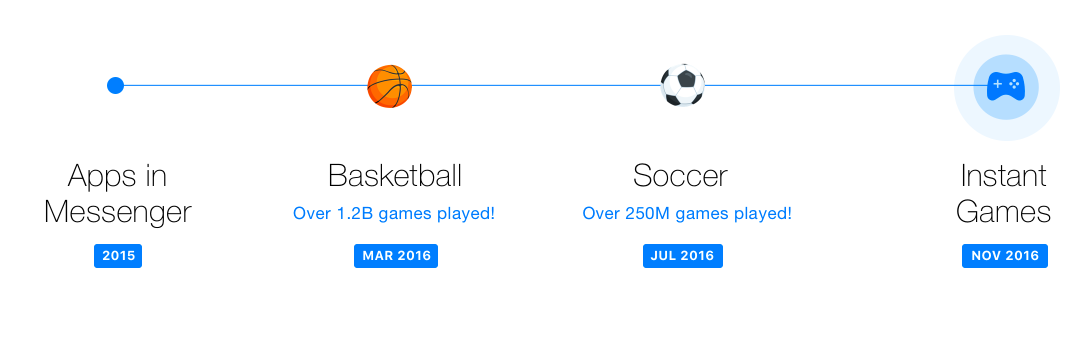
Image by Paul Morris
29 Nov 08:33

I’ve launched a Mozilla Donation Campaign for #CyberMonday craziness.

by Bogomil Shopov

I have started a small campaign today and I am so happy to see it working – 138 engagements so far and a few donations. There is no way to see the donations, but I can see more “I have donated” tweets in the target languages. Please retweet and take action :) Feeling like spending […]

The post I’ve launched a Mozilla Donation Campaign for #CyberMonday craziness. appeared first on Bogomil Shopov.

29 Nov 08:33

Extreme Shop Test of Noise-Cancelling Headphones

by Dennis Baum

backbeat_pro_2_woman_in_cafe_rgb_screen_04oct16-1

I spend a fair amount of time in a noisy professional wood shop where we use a robotic router, industrial sander, and huge vacuums. The router makes noise, and so does the sander, but it’s the vacuums that are really loud and obnoxious. The sawdust generated by the router and sanders has to go somewhere. We collect barrels of sawdust every day, all of it sucked up by noisy shop vacs and a huge noisy dust collector. My point? It’s very loud. We have to protect our hearing.

We could wear ear plugs but by the end of an eight-hour day, our ears get tired of being packed with foam. Over-the-ear hearing protection is more comfortable. But both leave you listening to your own thoughts… hour after boring hour. What is a woodworker–or anyone who works in a noisy environment–supposed to do to maintain sanity and focus?

Invest in a good pair of noise-cancelling headphones so you can listen while you work–to podcasts, books, or music. A good pair of headphones, preferably with Active Noise Cancelling, is just as important as supportive and protective shoes.

Dennis in the shot

When we get noise-cancelling headphones at GeekGirlfriends.com, I take them to the shop. Working in a noisy environment for eight hours quickly reveals the difference between headphones that claim to be awesome and those that are must have.

Here are the headphones I have run through the wood shop. (And when possible, worn on an airplane.) They all sound amazing when I’m wearing them and listening to music, books, or podcasts. It’s not just the sound quality, but the extra features that set them apart.

A Audio Legacy ANC

A super nice feature in this pair of headphones is that the ear covers swivel. This means the A Audio Legacy ($124) headphones are a little more comfortable over your ears, and more importantly you can pull them down around your neck so that you can listen to something or someone while your headphones rest comfortably against your chest, leaving you free to turn your head from side-to-side unobstructed. The problem with these is that they require batteries (2x AAA) instead of being rechargeable, so you will be burning through batteries. And since they are not wireless, I had to run the cord down my shirt to keep it out of the way of my work.

JBL Everest Elite 700

This pair of headphones has two features I really appreciated in the shop–they are wireless and rechargeable. The JBL Everest Elite 700 ($300, currently on sale for $225) includes the ability to customize the sound equalization for your ears. That means when I put them on, I can run through a quick sound-check, and microphones inside the ear pads listen to the response of my ear canal, tweaking the equalization to balance the sound just for me. Since they are wireless, I really appreciated being free of a cord, but I had to charge the headphones every night. If I forgot, they would not make it through a second day. And when they run out of power, they emit a spine-tingling sound right as they shut off which I find frightening and terrible. The biggest problem with these, though, is the ear covers do not swivel. If you pull them down around your neck, you can’t turn your head from side-to-side at all. So in order to have a conversation with someone, you have to pull them off all the way and hold them, or else set them down.

Plantronics BackBeat PRO 2

These are my favorites!


The Plantronics BackBeat PRO 2 ($200) are wireless, connect quickly and easily, and stay connected. If you have the new iPhone, you’ll need something wireless, because the iPhone doesn’t have a headphone jack. (Get these.) The ear covers are low profile and swivel, so if you put them around your neck, they get comfortably out of the way. I hate setting headphones down in a dirty shop, so I really like this feature. They are rechargeable, and the batteries can easily make it through two full workdays. If I forget to plug them in one night, they are still ready to go for a full second day. When the batteries die, you can plug in a headphone cable but the noise-cancelling won’t work if they are out of power.

The BackBeat PRO 2 also has a few great bonus features: An easy-to-reach switch that allows you to choose between active noise cancelling, regular listening, and open listening mode which takes the ambient sounds and plays them right into your headphones. So if you need to hear what’s going on in the shop or someone walks up to tell you something, all you have to do is flip the switch and your music is paused and you can listen to the room instead. This takes a little bit of explanation to reassure others that you can hear them even though headphones are over your ears, but everyone gets used to it quickly. Plantronics got their start making headsets for the space industry, so these headphones–like all their products–include a microphone so you can use them like a headset to take a phone call. And, finally, a feature that I thought was excessive at first, but came to realize is pure genius: The auto-pause feature. If you pull these headphones off your head, they instantly sense that you removed them and pause what you are listening to. When you put them back over your ears, they hit play again. This may not matter much when listening to music–I usually don’t care if I miss half a song while my boss tells me which job to work on next–but if I am listening to an audio book or a podcast, missing two or three minutes drives me crazy. Now I don’t have to fumble for my pause button or rewind thirty seconds at a time until I find my place again when the conversation is over. This is an unbelievably nice feature. And check out the price! How they fit so many features into a comfortable package, and at this price, is beyond me. Thank you, space age!

They are out of stock on Amazon at the moment but the BackBeat Pro 2 Special Edition is available. The exact same features with a more stylish aesthetic for a few dollars more. An excellent gift for anyone who works or plays in a noisy environment.


29 Nov 08:33

Planning Product Discovery

Much of product discovery work doesn't actually require a lot of planning. We need to come up with a solution to a particular problem, and often this is straight forward, and we can proceed quickly to delivery work.  But for certain efforts, this is decidedly not the case, and some planning and true problem solving becomes critically important.  Big projects and especially initiatives (projects spanning multiple teams) are common examples.

Discovery Sprints have some planning built into the start of the week, but we don’t do discovery sprints that often as they’re a special tool for an intense effort especially where we need to make a big decision in a short period of time.

For the other cases where some planning is called for but not with the time-boxed structure of a discovery sprint, I wanted to talk about how we frame our discovery work to ensure alignment and identify key risks.

There are really two goals here: 

The first is to ensure the team is all on the same page in terms of clarity of purpose and alignment.  In particular, we need to agree on the specific problem we are intending to solve (also referred to as “job to be done” if you prefer that nomenclature), which user or customers you’re solving that problem for, and how will you know if you’ve succeeded.  Not accidentally, these should align directly to your OKR’s.

The second purpose is to identify the big risks that will need to be tackled during the discovery work.  I find that most teams tend to gravitate towards a particular type of risk that they might be most comfortable with.  Two common examples I find is that a team will immediately proceed to tackling technology risks – especially performance or scale.  Or, the team may zero in on usability risks.  They know this change involves a complex work-flow and they’re nervous about that so they want to dive in there.

Those are both legitimate risks, but they’re far from the only risks, and at least in my experience, those are often the easier risks to tackle.

We must also consider value risk – do the customers actually want this particular problem solved, or is our proposed solution good enough to get people to switch from what they have now?

And then there’s the often messy stakeholder risk where we have to make sure that the solution we come up with in discovery actually works for the different parts of the company.  Here are some common examples of that:

- Financial risk – can we afford this solution?

- Business development risk – does this solution work for our partners?

- Marketing risk – is this solution consistent with our brand?

- Sales risk – is this solution compatible with our go to market strategy?

- Legal risk – is this solution something we can legally actually do?

- Ethical risk – is this solution something we should do?

Again, for many things we won’t have concerns along these dimensions, but when we do, it’s something that we need to tackle aggressively.

If the product manager, designer and tech lead do not feel there’s a significant risk for any of these areas, then normally we would just proceed to delivery, fully realizing there’s a chance the team will occasionally be proven wrong.  However, this is preferable to the alternative of having the team be extremely conservative and testing every assumption.  We like to use our discovery time and validation techniques for those situations where we know there’s a significant risk, or where members of the team disagree.

There is a very rich example of this in the news of late.  You’ve no doubt all heard of the fake news problem on Facebook.  Imagine you’re on a product team tasked with tackling this very difficult problem.  Certainly there’s very promising technologies, such as natural language processing, and machine learning more generally, that may be able to help.  And that’s what most people are talking about right now, but there are some broader issues as well:  Who gets to define truth?  Is it even appropriate for Facebook to take on that role?  And how does all of this mesh with Mark Zuckerberg's product vision?  Are there freedom of speech concerns (real or perceived)?  How does this get reconciled with different cultural norms around the world, and even censorship?  What are the financial implications of restricting monetization on news stories?  What are the sales channel implications?

These are all very real risks that will substantially impact any proposed solution.  This gets to the heart of what makes product difficult, and why tackling these risks in discovery is so critical to coming up with solutions that work not just for your customers, but for your company as well.

29 Nov 08:33

Kurz-Doku über die Electronic Cassette Culture: Blank Tape

by Ronny
mkalus shared this story from Das Kraftfuttermischwerk.

Manche Leute da draußen schwören immer noch, oder besser wieder, auf die gute alte Kassette. Vinyl Factory hat sich diese Szene mal ein bisschen genauer angesehen und diesen Beitrag darüber gedreht. Sympathische Sache, aber ich hab gar kein Tapedeck mehr. Nirgends.

„Experimental and avant garde music has always sought release through peripheral channels. Where in the past that might have been via a number of hand-painted records handed out at concerts or between friends within local scenes, independent labels with creativity (rather than cash) to burn are turning to cassettes as an available, affordable and more immediate medium to release music on.

And where in the past, DIY cassette culture may have been more central to grassroots punk and hip-hop culture, electronic music producers are now exploiting the analogue texture of tape for its sonic qualities too.“


(Direktlink, via Vinyl Factory)

29 Nov 08:31

Bell joins Facebook’s open-source telecom infrastructure project as first Canadian carrier

by Rose Behar

Nine months following its launch, Bell is now the first Canadian carrier member of Facebook’s international open-source telecom infrastructure project, which aims to speed up the development of new technologies and provide the world with increased wireless access.

“Scaling traditional telecom infrastructure to meet this global data challenge is not moving as fast as people need it to. We know there isn’t a single solution for this, and no one company can tackle the problem alone,” states Facebook’s blog post announcing the Telecom Infrastructure Project (TIP).

The company cites the success of the company’s Open Compute Project as an inspiration for TIP, writing, “We know from our experience with the Open Compute Project that the best way to accelerate the pace of innovation is for companies to collaborate and to work in the open.”

Facebook, Intel and Nokia pledged to contribute an initial suite of reference designs for infrastructure that would accelerate the development of next-generation wireless technology, like 5G networks. The projects — which are divvied into three categories: access, backhaul and core and management — are readily accessible on the TIP website. Meanwhile, operators from around the world signed on to help “define and deploy the technology as it fits their needs.”

Bell joins the TIP ranks alongside members such as Deutsche Telekom, Vodafone, Cisco and Broadcom. While it is the first Canadian carrier member, it is not the first Canadian member of TIP. NuRAN, a supplier of GSM, LTE and White Space radio access network (RAN) and backhaul products, joined in March 2016.

Update 29/11/16: This post initially stated Bell was the first Canadian member of TIP. NuRAN contacted to MobileSyrup to let us know this was not the case. Bell is simply the first consumer-facing carrier. The article has been updated to reflect this.

Related: Facebook might be testing a public Wi-Fi detection feature

SourceTIP
29 Nov 08:31

Google’s Pixel will generate $3.8 billion USD in 2017, according to analyst estimates

by Rose Behar

Multinational financial services corporation Morgan Stanley has estimated that Google’s Pixel smartphone will generate $3.8 billion USD in revenue in 2017, with an expected five to six million units sold. Morgan Stanley also predicts the company will generate $2 billion over the last three months of 2016 (October, November and December) through the sale of 3 million Pixels.

While this may sound like a significant amount of revenue, in comparison to Apple’s numbers it still seems a bit meager. Apple sold 212 million iPhones in the 2016 financial year, generating $137 billion in revenue. Additionally, the financial institution expects the Pixel will be half as profitable as the iPhone, due to a higher cost of materials. Where Apple enjoys a 41 gross percent profit margin, Morgan Stanley estimates the Pixel has a 22 percent to 25 percent gross profit margin.

It’s still a very strong showing for the company’s first Made by Google-branded phone, however, and Morgan Stanley analysts are optimistic that the phone’s unique features, such as Google Assistant, Pixel camera and Daydream VR support will lead consumers to pump more money than ever before into the Android ecosystem.

Related: Google Pixel review: The high-end Android you’ve been waiting for

29 Nov 08:30

Twitter Favorites: [MaggieShipstead] What if Twitter kicked DJT off?

Maggie Shipstead @MaggieShipstead
What if Twitter kicked DJT off?
29 Nov 08:30

Identifying And Solving Problems The Community Way

by Richard Millington

iTunes crashed any time I tried to download a purchased song.

I filed a support ticket and contacted Apple. The account rep sent me a link to their community with a solution from a member. It reads like this:

Open iTunes > click parental controls > disable access to the iTunes store (but enabling access to iTunes U).
Restart iTunes > click parental controls > enable access to the iTunes store.
Restart iTunes > click downloads > and download songs.

Not exactly a Jobsian solution is it?

Communities can help identify problems the organization isn’t aware of and develop solutions that might be tricky for the organization to suggest officially.

The trick is providing the customer support team with the permission to use the solutions developed by users to help other users.

Far too many organizations refuse to do this. They ignore the immediate solution in favour of a quicker response…perhaps an update in a future software patch.

Few people care about official solutions, they just want a solution. A workaround today is better than an official update next month.

29 Nov 08:29

Twitter Favorites: [stateofthecity] A reminder that just b/c I'm not tweeting about something, doesn't mean I'm not pounding my fists on the nearest desk in fury about it.

Brian F. Kelcey @stateofthecity
A reminder that just b/c I'm not tweeting about something, doesn't mean I'm not pounding my fists on the nearest desk in fury about it.
29 Nov 08:29

Pyshark to Analyze Wireshark Decodes With Python

by Martin

Wireshark is a great tool and sometimes I wonder if I use it more often than a word processor. It’s great to analyze things manually in real time or from saved packet captures after the fact. On top of that wouldn’t it be great if you could analyze network packets in your own code and act when a defined set of conditions are met? For a long time I thought that this would be a lot of hassle to pull off but it’s actually a lot easier than I thought.

Recently, a colleague of mine introduced my to pyshark, a wrapper for Wireshark’s command line companion tshark. Pyshark makes it almost trivial to analyze network traffic in Python as everything Wireshark decodes in each packet is made available as a variable!

Here’s a simple example taken from pyshark’s Github page that shows how the Python command line interpreter (I used python3 and not the older python 2.x) can be used to access packets in a pcap file:

>>> import pyshark
>>> cap = pyshark.FileCapture('/tmp/mycapture.cap')
>>> cap
<FileCapture /tmp/mycapture.cap (589 packets)>
>>> print cap[0]
Packet (Length: 698)
Layer ETH:
 Destination: BLANKED
 Source: BLANKED
 Type: IP (0x0800)
Layer IP:
 Version: 4
 Header Length: 20 bytes
 Differentiated Services Field: 0x00 (DSCP 0x00: Default; ECN: 0x00: Not-ECT (Not ECN-Capable Transport))
 Total Length: 684
[...]

Three commands and you are there. Incredible! It’s also possible to analyze network traffic in real time in exactly the same way by sniffing on a live network interface on the machine instead of specifying a capture file.

Since I don’t use Python every day, it took me a while to find out how to get the object and variable names that are generated for each packet to access their contents as the print command above only prints the content but not the variable names. Eventually I found out that a combination of ‘pprint’ and ‘vars’ does the trick. Here’s how the commands look like to get all objects/variables for the udp part of the 3rd packet of a capture that is accessed with the commands above:

>>> from pprint import pprint
>>> pprint(vars(cap[3].udp))
{'_all_fields': {'udp.checksum': '0x0000e99e',
                 'udp.checksum_bad': '0',
                 'udp.checksum_good': '0',
                 'udp.dstport': '6000',
                 'udp.length': '7611',
                 'udp.port': '5064',
                 'udp.srcport': '5064',
                 'udp.stream': '0'},
 '_layer_name': 'udp',
 'raw_mode': False}

In your own code, the UDP destination port of that packet can then be accessed via cap[3].udp.dstport. Getting the variable used to describe the content of other layers works in the same way.

It’s going to be fun to explore this further!


29 Nov 07:52

That’s Not Art

by Eric Karjaluoto

Comics. That’s where it all started for me. The stories, the characters, the drawings, that strange floppy book—and even Marvel’s distinct moiré patterns (in the ’80s): I loved every part of that experience. I wanted to create things that looked as good as the comics I admired. No matter what form this took, I craved to play some part in that world. So, I drew.

I lost track of my teacher’s instruction because I was doodling. I didn’t start weekend homework until Sunday night, because I was drawing. And, of course, I spent more time on the cover than the book report. None of this was about making something as serious as “art.” It was about the excitement that came from making something of my own.

By high-school, I figured I should go into commercial art. This seemed like a real career path—that allowed you to draw. I liked logos, and visual things that folks would see in their everyday activities. My instructor urged me to think bigger, though. He wasn’t excited about commercial work, and encouraged me to paint. In time, I grew to love painting, too—and even managed to sneak into art school to pursue this interest.

Art school was weird, though. There were classes in which we had to weigh dragons. In others, we had to radiate from our navels. In yet others we debated the nature of art. This sort of screwed me up. I went from loving the act of making to feeling lost.

That “what is art?” debate messed with my head. At the time, art seemed to be about an idea and how well you defended it. The ability to render something well wasn’t important. Installations were popular, but I didn’t ever feel moved by one of them. Similarly, folks at art school liked talking about vague concepts. Again, I found myself lost in this. I figured that if the average person couldn’t relate to art, the act became elitist.

This question about what art is, resulted in another—more toxic—question: What isn’t art? And for that, I had many answers. Those wildlife painters? They didn’t make art! They were doing what a camera could do. That guy painting planets with spray paint, for tourists? Disgusting! Selling out his craft like a cheap amusement. Jana Sterbak’s meat dress? That wasn’t art! That was more “wanksterism” aimed at securing Canada Council funding. (I can go on, but I think you get the picture.)

By the time I finished art school, I mostly called myself a painter. I didn’t feel comfortable saying I was an artist. In time, I acquiesced, simply because I was tired of saying, “pictures, not walls.” Still, though, that description felt lofty. I didn’t believe I deserved to use it.

Lately, I find myself looking for a word to describe what my friends and I do. Some of it is design, or at least involves design. Sometimes it’s more startup-like, but not always. At times the end-product might hang in a gallery, but mostly not. For lack of a better term, I find myself calling this “work,” but that feels clumsy. It sounds like a verb—and a form of joyless toil. So, I find myself increasing using that word: art.

We often think of art as that stuff you find in a gallery. But, be honest, when did you last go to a gallery? Right. I thought so. (I’m no different.) Part of this relates to fear, and the questions that come from it: “Am I the only person who doesn’t understand this stuff?” “Am I too dumb to be in this place?” “Can they tell that I don’t have enough money to buy anything here?”

This was my problem with art: it felt like a world of insiders. Some had the money, social capital, and knowledge to be a part of that world. Most didn’t, though. But what if that 1900s idea of “what art is” doesn’t matter any longer? Given how few actually took part in that world, one might argue that it never did.

I say it’s all art: The comics, the logos, the hyper-realistic wildlife paintings, tourist mementos crafted on the sidewalk, conceptual works, and those many indefinable side-projects. It doesn’t end there, though. It’s in the doodles, graffiti, craft-making (which is too often disparaged as trivial), screen-printed posters, television programs, podcasts, inventions, memes, code… It’s all art.

Whether others “get it” or not doesn’t matter. The part that matters is the making. Art is not binary. There is no good art or bad art. Quality is subjective, and quite probably irrelevant. There will be critics. There will be people who say what’s in and what’s out. Perhaps we needn’t pay them much attention. They were never the interesting part, anyway.

When I look at art from this vantage point, it all becomes wonderful. So many people doing cool things, just because they want to. That’s amazing, and we should celebrate this practice. We needn’t define, shelter, or hide from art. It’s fluid. It’s for all of us to enjoy. And we shouldn’t leave art-making only to those who call themselves artists.

P.S., A visit to Colossal is a great way to find new art.

29 Nov 07:51

How much do streets cost?

by Stephen Rees

cost-of-street

This graphic appeared in my Twitter stream today posted by Professor Chris Oliver of Anstruther, Scotland. I started following him merely because he happens to come from Forest Gate, but if you are on Twitter he is definitely worth a follow @CyclingSurgeon. The graphic is also Creative Commons.


Filed under: Transportation