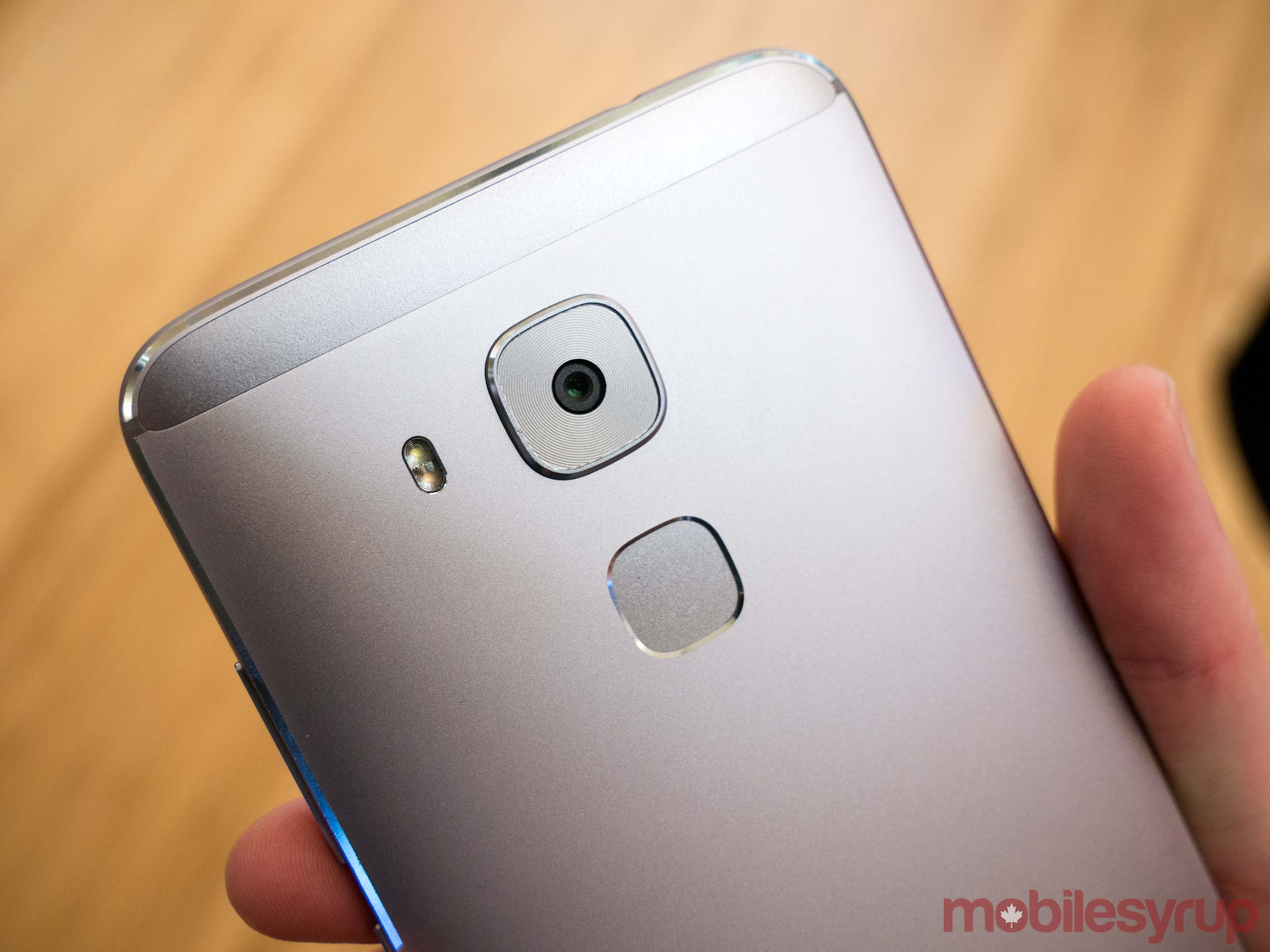
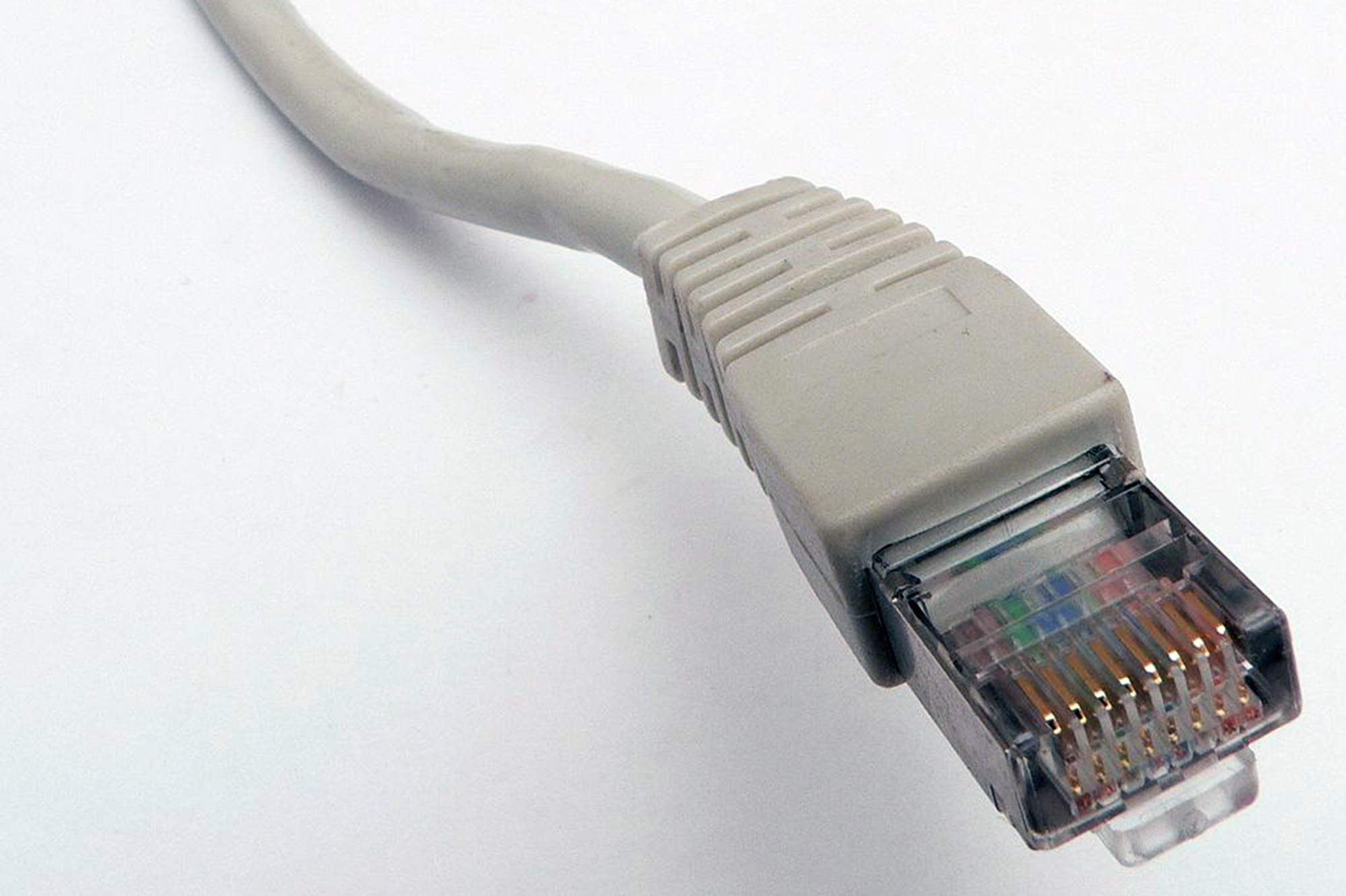
This past summer I decided my website need to be refreshed. Rewriting the site from scratch in JavaScript (actually TypeScript) gave me a chance look beyond the façade of the web and better understand how the Web works and the simple mechanisms it is built on.
The Work Weeks are Mozilla-wide meetings of all the core teams and as many community contributors as we can successfully invite over. This is not always easy or possible, due to many limitations and problems with international travel… There was a rumour that the Work Weeks in 2020 will be done fully in WebVR, to make it possible for everyone with the right hardware to attend – hopefully from inside of your favourite browser ;-) Good bye, giant carbon footprint!
Work Weeks happen every six months and are usually full of retrospectives, introspectives, and mapping out the future of “all things Mozilla”. They usually are places (and times) of the highest “density of Mozillian per square meter” throughout the year.
What you find below is a summary and explanation of what happened during the most recent Work Week, together with several useful (and fun) links. Unfortunately, the layout and setup of the meeting spaces did not create an environment suited for recordings, so we had to give up on that idea.
Day 0: Monday
Everyone got a bit of time to get settled, unpack, and prepare for the busy week ahead. We managed to not get lost in the ever-growing and shifting crowd and find each other in the evening for a small welcoming reception with everyone else who made it to the venue on time.
Day 1: Tuesday
The conference proper started with a big plenary session that included the speakers at the heart of Mozilla – the people we usually treat as our Northern Star when plotting the course across the whole community, also for SUMO. You can hear their thoughts on Air Mozilla, using the links below (it may require you to log in first):
After a good and energetic kick off, we got together in the Marketing space to talk about the road behind us and the road ahead. The “Unconference” was a medley of mini-projects to address some of the key areas on which the Marketing team has been (or should be) working. We split into several large groups and worked face-to-face with people we usually see only on screens – this definitely got the creative juices flowing, and you can expect positive changes in the way our larger team functions in the coming year.
We also had a chance to look back and review some of the biggest hurdles and achievements of our last 12 months. SUMO, while definitely not central to the larger team’s efforts (since we all work on making Mozilla and the web better, not just our little corners of it), got an honest applause from everyone, mostly for the great work that all of you are doing for the benefit of the users around the world.
Also, this was the first (and possibly last) day for grabbing a fresh sticker or two. They were disappearing and reappearing on laptops, phones, and other objects at an astounding rate.
Day 2: Wednesday
The Marketing talks and mini-sessions continued, and we managed to carve out a healthy chunk of time for SUMO stuff. with a walkthrough of the upcoming localization flow on Lithium, and a session on the Internet Awareness (slides) (notes) – probably our biggest new project for the upcoming year, for which your input and energy are indispensable.
This was also the first day for the “elective” sessions (where you could choose from a long list of presentations and chats on very focused topics). This idea worked out amazingly well, because we were all there to share and learn from each other. This very often meant getting a bit outside of our “comfort area” – and going beyond what we would usually do for Mozilla’s mission. This included a multitude of interesting and thought-provoking topics. A bit of fun was included as well.
The rain kept going, but so did we. We even had a small tsunami alert popping up for about 30 minutes, but luckily we avoided getting wetter than absolutely necessary (AKA showering). You can’t stop the ‘zilla!
For SUMO, we had Madalina and Patrick walk us through a session on Lithium as our new platform, summarising where we were and what were the next steps for us. If you’re curious about that part of SUMO’s operations, you can always take a look at the documents we’ve kept using so far: your feedback and the Platform meeting notes.
Right after lunch, Chris Beard joined the whole Marketing team for a bit of Q&A – and while the . We also had an extra helping of the “elective” sessions – some of which were daringly ambitious and we can’t wait to see what the next year brings as their result!
This was the final day, and it held many a highlight for the whole crew, primarily thanks to those who delivered their “SUMO Show & Tell” mini-talks. We had the pleasure of listening to:
Cynthia and Jhonatas from Mozilla Brasil talking about their work on SUMO participation in 2016 and 2017. If you want to learn how to make visually striking compositions, do talk to Cynthia – she did a great job with these:
Alex from Mozilla Mexico talking (and showing, using highly confidential materials) his idea for a “Mozilla Router”. If you have more questions, ask Alex!
Noah talking about the ups and downs on Social Support for SUMO
Caspy giving us more insight into inner workings of http://reddit.com/r/firefox (who we want to be good friends with!) and proposing a (secret for now) campaign to promote internet safety and privacy among our users.
If you have any questions about the topics above, please contact them directly – the user profile pages offer a way to do so easily for logged in users through Private Messages.
We also continued chats and explorations within Marketing from the previous days, while trying to get some “daily” work done (not easy, but not impossible).
Just like with Chris the day before, afternoon had Mitchell Baker visiting us for a very honest and down-to-earth Q&A session.
So, by Friday we were all in great spirits, even if a bit tired. Many things have been said and heard – some rather serious, others not so much. And even if some of us were in a rather defiant mood, all good things come to an end. After the wrap up meetings and sessions, we all gathered for the final act of the Work Week – a well-deserved party!
Key Takeaways for SUMO
2016 was not an easy year, but we did well for the resources and options we had available. It was a year of (sometimes forced) change and experimentation.
None of the really big things that we all have done or will do can happen without you, the contributors.
There are many other places outside of SUMO that offer help to users of Mozilla’s software (in many languages), and we have to make sure we work with them to create a healthy and useful support ecosystem without stepping on each other’s toes.
While there is a large variety of tools and methods across Mozilla to get different things done, the organization is heading towards standardizing the key elements of contributing; we do want to keep the innovation mindset, but we also want to make participation easier and faster, wherever reasonably possible.
The diversity in participation many of us take for granted takes a lot of effort and hard work to maintain; we will do our best to include and support everyone through our contributions.
2017 will be a challenging year, as we work on keeping the site active and useful on a completely new platform; we also want to preserve the legacy of Kitsune in a meaningful way, making its code available to everyone interested in tinkering with it.
In 2017 we will expand our involvement within Mozilla’s Marketing and Social efforts. We are planning for a year of growth, big bets, and nurturing excellence for the benefit of our community and users.
Each and every time a large number of Mozillians get together, there is a bit of chaos, a bit of drama, a lot of ideas, many mini and maxi brainstorms, and heaps of good energy flowing around. This time was no different and the general attitude was that what we all do together for the web and its users will never be easy… but we will never stop and we’ll try to make it as much fun as possible. We hope you join us along for this bumpy, exciting, and fulfilling ride. Mahalo!
With #mozlove,
Your SUMO Team
P.S. In the interest of the page loading faster on slower connections, we decided to not post a lot of graphics and/or photos in this post. Below, you can find Mozillians’ group effort at documenting the whole event:
Josh Marshall, who is generally one of the better political commentators out there, recently wrote a piece called Why You’re Fooling Yourself About Fake News. The point of the piece is that liberals who believe that fake news sways elections are wrong. Fake news, says Marshall, is a demand-driven phenomena: the people reading and believing fake news are reading it as an expression of beliefs that are already set. This has been common wisdom for a while, and during the flurry of calls from reporters I got after the election it was probably the top question I was asked — Sure, people saw that Hillary may have killed an FBI agent — but given how extreme you’d have be to believe that, how could it sway any votes?
So caveats first. A lot of what we repost falls into what I’ve called “Identity Headlines“. I repost something on the homelessness problem in Silicon Valley partially to raise awareness, but largely to show that I’m the sort of person who cares about the homeless and hates Silicon Valley dicks. I don’t even need to read the article to achieve this effect, and if I’m like most people on most days, I probably don’t.
Fake news is similar, and in this way is demand -driven. A lot of people really, really, really hated Hillary Clinton, but after multiple hacks and leaks and congressional investigations the actual world was still not producing headlines that adequately expressed the level of hatred and suspicion many people felt. So the market stepped in and created some fake ones. Headline-as-bumper-sticker problem solved!
Now, that headline above gets much closer to how a lot of people felt about Clinton than all of the stuff about how she may have said that some Bernie supporters were living at home with their parents or that people were deplorable. So people share and repost it, and it’s doubtful that the people who did that, at least initially, changed their vote. As Josh says, they were in the market for this from the start.
But I can’t stress this enough: this is only one half of the equation, and I remain confused that smart people can’t see that.
Fake News Headlines Had an Impact on Beliefs of Non-Posting Readers
The first problem with the “fake news only solidified partisanship” is what data we have about readers (not re-posters) tends to contradict that. Actually, “contradicts” is an understatement.
Now caveats on the analysis I’m about to show. Surveys on “Did you hear about X?” have some issues. Some people, put on the spot about what they know, want to appear knowledgeable, and a lot of people on opinion polls want to express a sort of personal orientation to the world more than a specific reaction to poll questions. There’s a survey on conspiracy theories, for example, where the pollsters asked about a fictional conspiracy — the North Dakota Crash — only to find that 32% endorsed it. By fictional conspiracy, by the way, I don’t mean just “conspiracy that is not true” but “conspiracy the pollster invented that has never been talked about before.” In a similar vein, we’ve never quite been able to tease out how many Americans believe that Obama is a Muslim and how many of them have been using that question as a proxy for how they feel about Obama.
But caveats aside, the one poll I’ve seen that’s actually asked folks what stories they saw and if they believed them is this one from Buzzfeed. And even when mentally accounting for some general-issue polll weirdness the results are still surprising.
The first finding was that a large percentage of people had seen fake headlines — as large as any real story. And the exposure was far less polarized than one would think. For example, for the infamous FBI Murder-Suicide headline, 22% of respondents had seen it, but about 40% of those who had seen it were Clinton voters.
Now we know that the Clinton voters who saw such anti-Clinton and pro-Trump fake stories are going to be much more likely to reject those stories as false. But how much more likely? Keep in mind these stories intimate that Clinton had an FBI agent killed and that the Pope endorsed Donald Trump. They are not subtle.
What we find surprised even me. Among Clinton voters that remembered a fake headline, the majority believed it in almost all instances.
That FBI agent story, for example? Over 50% of Clinton voters who remembered it believed it. Over 60% of Clinton voters who remembered the story about Trump protesters being paid believed that as well.
Is it a perfect way to assess this? No — I have some issues with the methodology of the poll. I think a different approach would shave some points off here. But even if you cut these effect in half, they are still completely inconsistent with the idea that fake headlines don’t influence belief, or that partisan leanings innoculate people against them.
Don’t like the study? Do another one (seriously, do it — we need a better one). But at the moment it’s the best evidence we have as to what went on, and it supports the idea that headlines matter.
If a bunch of Democrats went to the polls to vote for Hillary despite the fact she may have murdered an FBI agent, is it hard to believe that at least some Democrats didn’t stay home out of disgust? In fact, isn’t it probable?
How many? We don’t know. But we do know that it would only take about a football stadium’s worth of voters across three states to sway the election. This poll suggests that millions of Clinton voters went to the polls believing damaging stories about Clinton that were completely false. Millions. It really does not seem a stretch to think this had an impact.
What do these voters look like? I’ve met them, personally. Folks — Democrats, even — that believe that maybe Seth Rich, a DNC worker who died in a street robbery last summer, might have been killed because he knew too much about the DNC leaks, or was going to leak additional material. When pressed, they retreat into “well, I didn’t say definitely, but something is weird there.”
Um, no. Nothing is weird there at all. What’s weird is seriously considering this possibility.
The Weird Nihilism of the Fake News Didn’t Matter Argument
So we get then to the second point: maybe people did believe these stories, but they didn’t have an effect. Clinton voters thought — oh, the FBI agent died suspiciously, but that doesn’t prove anything. And there’s a 5% chance that Clinton may have killed a 20-something computer-voting specialist at the DNC, but that’s OK, because I like her policies.
Taken to it’s logical conclusion this amounts to a sort of nihilism, because it implies that “real news” doesn’t matter either.
Josh believes, for example, that the Comey letters did serious damage to Clinton, and may have lost her the election (for what it’s worth, I agree). But if we believe that people are innoculated against headlines by partisan belief, how is that possible? Under the pure “Identity Headlines” analysis no one’s opinions should have changed — pro-Clinton folks would read the Comey letter headlines and think “Well, more interference” and pro-Trump folks would read the headlines and say “Yep, Crooked Hillary” and the needle wouldn’t move.
But of course that’s not what happened. And I’ll quote Josh here:
Just to put my cards on the table, I believe there is a good likelihood, probably even a probability, that if the Russian subversion campaign had never happened and James Comey had never released his letter, Hillary Clinton would be prepping to become our new President. My own guess is that Comey’s letter had the bigger impact. These were both profoundly damaging events in the race and Clinton lost by very tight margins in most of the newly (hopefully temporarily) red states. I see little way to challenge this assertion.
So the Comey headlines hurt, but the fake headlines did not? How is this a tenable position?
Not to belabor the point, but imagine a world where Comey did not release a letter about the Weiner emails, but a large percentage of voters believed he had, due to fake headlines. Why would we expect that the real news would have a different impact than fake news? To a gullible reader, the fake event and the real event have equal impact.We don’t live in a world where we experience fake news differently from real news — to the reader they are equally mediated events, and indistinguishable from one another.
There’s a good argument to be made that events, and campaigns, and news, and scandals don’t matter for the vast majority of voters. They probably don’t. But to say that fake news can’t swing an election you have to move from an argument that people are resistant to news to one that they are impervious to it. And this is in fact to say that nothing in a campaign matters — not positions, not actions, not scandals, not ill-considered comments. Not the campaign itself, or the coverage it generates. That just doesn’t make sense.
The use of an electronic device — such as a smartphone, tablet, or GPS — has been banned by all Canadian provinces and territories (except for Nunavut) for years. Still, while provincial governments have run a number of education campaigns during that time, distracted driving has grown to one of the leading causes of death on the road in Canada.
The latest stat is from the Canadian Automobile Association (CAA) states that 33 percent of Canadians have texted while stopped at a red light in the last month.
“These numbers are troubling,” says Jeff Walker, VP of public affairs for CAA National. “The effect of texting at a red light lingers well after the light turns green, making it a dangerous driving habit. It’s socially unacceptable to drive drunk, and that’s where we need to get with texting. Attitudes are beginning to shift, but our actions need to follow.”
The fines for distracted driving differ across the country. Quebec has the lowest with an $80 fine while Prince Edward Island has a maximum fine of $,1200.
To help keep the roads safe and spread the message in a different manner, the CAA has worked with Splash Works and build an iOS, Android, and online game called TXT U L8R, which allows players to avoid distractions on the road such as putting on makeup, shaving, eating a burger, using the GPS and mobile device.
Good evening, ladies and gentlemen! Please find your seats and silence your phones… it’s time now for the 12th annual Pogie Awards!
This time of year, the web teems with “best products of the year” articles. But the Pogie awards are different.
These are awards for the best feature ideas within products—even if the products themselves aren’t so hot. The point is to celebrate the inspiration that struck some designer or engineer—and to hail that idea’s successful journey out of committee, past the lawyers, and into the hands of the public.
So what were the best ideas in tech of 2016?
The envelopes, please!
The Bright Idea Award
The Smart Charge light bulb is an LED bulb, and that’s a great start. In other words, it lasts practically forever, and uses very little power. It’s the size of a normal bulb, so you can screw it into any lamp or fixture.
Its big idea? In case of a power failure, this bulb stays on. It’s got its own battery backup. When the power’s out, this bulb behaves exactly as it always has, for a total of four more hours of light. (The battery recharges whenever the power isn’t out.) You’ve performed your last frantic hunt for a working flashlight.
The Smart Charge light bulb stays on even in a power failure.
But here’s where your mind will fall apart: You can still turn this bulb on and off from the wall switch, even when the power is out.
How the—??
(It has something to do with checking the impedance of your house’s wiring. All I know is that the bulb doesn’t come on unless there’s at least one non-smart appliance on the same circuit, like a normal lightbulb.)
The Sharp Focus Award
Next up: The Sharp Focus Award. This year, the award goes to a strange, lovely little feature of the iPhone 7 Plus: Portrait Mode.
The 7 Plus has two camera lenses: one wider angle, one a 2X zoom. Clever software lets you blend the zoom to any degree between them (or, using digital zooming, go all the way up to 10X).
But the two-lens setup has a second benefit: It lets the camera tell the foreground subject apart from its background. And with that knowledge, the phone can create a soft blurry-background look, like what you see in professional portraits.
Blurry background brought to you by iPhone 7 Plus.
Now, the blur in this case is not optically created, the way an SLR makes it. It’s created with software—a glorified Photoshop filter.
And Apple’s (AAPL) not the first company to try it. Some Samsung phones, years ago, offered a similar feature. But without dual lenses, those phones didn’t have great luck distinguishing the subject from its background, and you often wound up with hideous “leaking” of the blurriness effect.
Apple’s effect on the other hand, generally looks fantastic, even when the outline of the subject is complex (like frizzy hair).
As long as the distance is right and the light is good, the results are fantastic.
One for the Kids Award
We move on now to the One for the Kids Award.
Booster seats for kids are kind of big and frustrating—basically, they’re not portable. Every time your kid gets in a taxi or a rental car or another family’s car, guess what? No booster seat.
But the MiFold booster seat is so small, you can carry it anywhere. Instead of lifting the kid up, it pulls the seatbelt down, achieving the same safety effect without the bulk.
The MiFold folding booster seat in its opened-up position.
Great, great idea.
Find My Ride Award
The winner of our Find My Ride award this year is the Uber Beacon, a wireless light that Uber drivers will soon be putting on their dashboards.
Because it can glow any color, your app tells you what color to look for when you order your ride—so when the car pulls up, you’ll know it’s here for you. No more guessing games after dark. No more getting into the wrong Uber by accident.
You’ll never get into the wrong Uber again.
A simple, great idea.
Straight Orientation Award
And now we come to what the committee calls the Straight Orientation Award! And it goes this year to one particular feature on one particular drone. It’s called Smart Mode, and it’s on the Yuneec Typhoon H.
This might take some explanation. In most drones of this type, the right joystick controls the flying direction. But that can be tricky if the drone has gotten turned around in flight. Suddenly, pushing the joystick forward doesn’t fly the drone forward; it may zoom in some totally unexpected direction, depending on where the nose is pointing.
The Yuneec Typhoon H eliminates confusion if your drone has gotten turned around in the sky.
But in Smart Mode, the drone always flies the way you’re pushing the stick, no matter which way the drone is facing. It’s brilliant, it’s optional, and it’s ingenious.
Music to my Feet Award
I’m particularly pleased that we can offer the world’s musicians a little something this year, in the form of the Music to my Feet Award.
These days, many musicians don’t use sheet music on music stands; instead, they use iPads or phones or laptops to display the score. But then how do you turn the page in the middle of playing, when your hands are on your instrument?
The iRig Blue Turn solves that problem neatly. It’s an inexpensive, compact, wireless foot pedal that lets you turn the page with a toe-press.
Turn your music pages by foot.
Total Recall Award
These days, the internet places thousands of claims on our attention! In the course of a week, we read stuff in our email, in texts, in chats, in tweets, and on hundreds of web pages. Which is why the phrase for the new millennium is: “Oh, where did I read that?”
Wonder no more!
Atlas Recall is a photographic memory for your computer. It remembers every document, every web page, every email that’s crossed your screen—so you can search for it and pull it up later.
Atlas Recall tries to remember everything that’s ever crossed your screen.
It’s got its bugs and limitations, as I wrote in my full review. But remember: These awards go to the best ideas, not the best products—and this idea is sensational.
The Pogie Ultimo 2016
And finally, we come to our biggest award of the evening: The Pogie Ultimo!
The one idea that has the most potential to improve the lives of the downtrodden technology-using masses with a single, ingenious stroke. And that award goes to mesh WiFi!
From the dawn of wireless, we’ve expected one WiFi router to broadcast WiFi signal to every corner of our homes. It’s an impossible task. Walls and corners and ceilings kill that idea. The result: DEAD SPOTS.
But the new thing in routers this year is mesh networks. Instead of one WiFi transmitter, it’s a set of them, which you’re supposed to space evenly through your house. The result is a single “mesh network,” a roaming network, that blankets the entire house in good, strong, signal. (Their marketing pitch goes like this: Expecting a single router to fill an entire home with WiFi is like expecting one speaker to fill every room with music.)
Mesh WiFi networks: the end of dead spots.
Mesh WiFi smashes the dead-zone problem like a sledge hammer on an ant. It’s gorgeous, joyous, and drop-dead simple to set up.
The first one out the gate was Eero, but now there are similar sets from Google (GOOG, GOOGL) Netgear (NTGR), Luma, Amplifi, and others.
Happy New Year
And there you have it, folks—the 2016 Pogie Awards. Let these bursts of inspiration show you that even products that are turkeys… sometimes harbor a little bit of gravy. Good night, everyone—and happy New Year!
David Pogue, tech columnist for Yahoo Finance, welcomes non-toxic comments in the Comments below. On the Web, he’s davidpogue.com. On Twitter, he’s @pogue. On email, he’s poguester@yahoo.com. You can read all his articles here (http://finance.yahoo.com/news/david-pogue/), or you can sign up to get his columns by email (http://j.mp/P4Qgnh).
Despite Twitter’s popularity amid some circles, particularly in the media industry, the platform is struggling in the growth department. In an effort to mitigate this issue, the social media platform’s CEO Jack Dorsey took to the social media network he created asking users what they’d like to see the platform ‘improve of create in 2017.”
While many responded with snarky comments about the overall direction of the platform, top requests gathered via @jack’s various replies include an edit button for tweets, bookmark button (favouriting tweets basically already does this) and more importantly, better safety and reporting tools.
Following in the footsteps of Brian Chesky: what's the most important thing you want to see Twitter improve or create in 2017? #Twitter2017
Twitter’s CEO says he’s considering all of these features as new inclusions to the service in 2017, particularly the ability to edit tweets, an often requested feature from users.
“Is it more important to edit for spelling/corrections? 5 minute window to edit mistakes or do you need to be able to edit anytime?,” said Dorsey in a tweet. “We’re thinking a lot about it.”
Twitter has reportedly never considered adding an edit option in the past, unlike services like Facebook and the social media giant’s image sharing platform Instagram, which have both featured the ability to edit posts and comments for awhile now. Twitter has stated that it’s concerned that because tweets can be embedded on websites, that allowing users to edit content posted to the social network at a later date could cause issues to arise.
@cloleaf is it more important to edit for spelling/corrections? 5 minute window to edit mistakes or do you need to be able to edit anytime?
Orange leader. Dominance and narcissism and corruption and bullshit and lies. Families breaking up. The claim of making the world great masking a business empire.
And I can’t help but feel like, in a way, all of America just joined Scientology. (Not literally, of course.)
* * *
The Man in the High Castle has long been my favorite Philip K. Dick novel, and one of my favorite novels ever.
(My Mom pushed it on me when I was a teenager. I’ve been a Dickhead ever since.)
In it, the Germans and Japanese won the second World War (or did they?) and America is split up and occupied — by the Japanese empire on the west and the Reich to the east.
I’m five episodes into the TV show. It doesn’t faithfully track the novel — it’s much more of a thriller than I remember from the book. Which is fine: the novel is a novel, and the TV show is a TV show.
And I can hardly pull myself away, not least because it also speaks to the current moment.
When I started this blog in 2007, a running theme was "Can interactive experiences like video games be written in a functional style?" These are programs heavily based around mutable state. They evolve, often drastically, during development, so there isn't a perfect up-front design to architect around. These were issues curiously avoided by the functional programming proponents of the 1980s and 1990s.
It's still not given much attention in 2016 in either. I regularly see excited tutorials about mapping and folding and closures and immutable variables, and even JavaScript has these things now, but there's a next step that's rarely discussed and much more difficult: how to keep the benefits of immutability in large and messy programs that could gain the most from functional solutions--like video games.
Before getting to that, here are the more skeptical functional programming articles I wrote, so it doesn't look like I'm a raving advocate:
I took a straightforward, arguably naive, approach to interactive functional programs: no monads (because I didn't understand them), no functional-reactive programming (ditto, plus all implementations had severe performance problems), and instead worked with the basic toolkit of function calls and immutable data structures. It's completely possible to write a video game (mostly) in that style, but it's not a commonly taught methodology. "Purely Functional Retrogames" has most of the key lessons, but I added some additional techniques later:
The bulk of my experience came from rewriting a 60fps 2D shooter in mostly-pure Erlang. I wrote about it in An Outrageous Port, but there's not much detail. It really needed to be a multi-part series with actual code.
For completeness, here are the other articles that directly discuss FP:
Samsung’s Note 7 combustion issue and subsequent recall of 2.5 million devices didn’t do much to benefit Apple during the holiday sales season, according to Yahoo’s Flurry Analytics.
The firm’s data shows that Apple’s products accounted for 44 percent of activated smartphones and tablets between December 19th and 25th, down from 49.1 percent in 2015. Meanwhile, Samsung saw a bump from 19.8 percent in 2015 to 21 percent. The results are surprising considering the Note 7 recall became a global media phenomenon, which many expected to permanently taint the brand.
“Most of those who bought or wanted to buy a Note 7 opted for a different high-end Galaxy phone,” said NPD Group primary hardware analyst Stephen Baker in an interview with the Wall Street Journal, adding that in addition to loyalty to the Android platform “Samsung was able to fend off other Android competition, and Apple, too, thanks to Apple’s own lack of a wowing product this year.”
Consumer tech and mobile industry consultant Chetan Sharma concurred with Baker in the WSJ report, stating: “Apple has the strongest ecosystem, with its hardware, software and app and content stores. iPhone users looking for an upgrade stick with Apple. But in a year when Samsung dropped the ball in a huge way [Apple] didn’t have a phone with a compelling enough feature set to lure Samsung owners away.”
There are four really good points in this quick overview of the future of learning. Keith Devlin is optimistic overall, saying we may be at the beginning of a genuine science of learning, much as medicine was at the beginning of the 20th century. This is not based on so-called neuroscience based on MRI - "A good analogy would be trying to diagnose an engine fault in a car by moving a thermometer over the hood." No, what new technology offers the hope of improved educational research - "Classroom studies invariably end up as studies of the teacher as much as of the students, and often measure the effect of the students’ home environment rather than what goes on in the classroom." It will allow us to dig deeper into real learning - "What is missing is any insight into what is actually going on in the student’ s mind— something that can be very different from what the evidence shows." We need to know why a student comes up with right or wrong answers - "part of what is going on is that many earlier studies measured knowledge rather than thinking ability. The learning gains found in the studies I am referring to are not knowledge acquired or algorithmic procedures mastered, rather high-level problem solving ability."
This short guide (16 page PDF) calmly discusses the key elements of IT security for the average user. It's directed at staff and students of EPFL specifically, so there are some references that might not make sense to the general reader (such as the advice to use the EPFL VPN to read email) but in the absence of anything else I would not hesitate to distribute it.
Despite being critically panned by many players — mostly for its expensive $13.99 CAD price tag — Nintendo’s first serious foray into the mobile space is headed to Android at some point in the near future.
Pre-registration for the Android version of Super Mario Run is now open. Nintendo launched similar pre-registration for the iOS version of the game.
To pre-register, which Nintendo says will immediately notify you when the game becomes available, navigate to this link, and then click “pre-register.”
It’s unclear if Nintendo plans to adopt the same free-to-play model with the Android version of Super Mario Run. In the iOS app, the game’s first three levels are free, with the rest of the title costing $13.99.
Super Mario Run was downloaded 40 million times in its first four days of availability.
Let’s start this new year properly! We will have another beta testday, Firefox 51 beta 12 next Friday, 6th January. We will be focusing our testing on WebGL 2.0, Zoom Indicator and Flash support (New version of flash in Linux – 24)features. Check out the detailed instructions via this etherpad.
No previous testing experience is required, so feel free to join us on #qa IRC channel where our moderators will offer you guidance and answer your questions.
See you on the first Friday from 2017! Have a happy new year!
In Europe horrendous incidents have occurred with large trucks used as weapons in cities where people are gathering and celebrating. In medieval times city walls, moats and watch men protected citizens.
There may be a 21st century approach to these measures in cities like London that have identified their historic “Square Mile” as being under threat of a terrorist attack. The “Square Mile” is the nerve centre of global financial interests and holds nearly 10 trillion pounds in banking assets. Securing access to this area is the City of London’s responsibility, with powers and laws that have been given to the City since medieval times.
The BBC News reports that upon the recommendations of MI5 and counter terrorism police rising street bollards and crash proof steel barricades have been proposed to thwart any “hostile vehicle-borne security threat”. This type of barricade was first introduced in the early 1990’s as a response to the IRA (Irish Republican Army) bombing of the Baltic Exchange. The Gherkin building now stands on the site of that building.
Manned checkpoints are also going to be reinstituted, something that was phased out after the 1994 IRA ceasefire. It is expected that the 5 million pound (8.2 million Canadian dollar) security steel ring may be in place within five years, providing a band of security around the square mile.
Metro Vancouver has had a few “snow events” recently which have thwarted active transportation and transit users. It is very true that these events have been less frequent in recent years. It is also true that people are also walking and cycling more in all kinds of weather. Global News reported that icy walkways along the False Creek Seawall were still not salted by the 27th and were causing pedestrian slipping and sliding. If you were wondering, commercial businesses and home owners are responsible for shovelling out their respective sidewalks. But public walkways and the sidewalk noted below? It’s the municipalities’ responsibility.
In Delta, 52nd Street which is the street that is not only a walking loop but also directly connects the Tsawwassen Mills mega mall with the rest of Tsawwassen has one sidewalk going down a very steep slope. While the road was salted and sanded, pedestrians were left to grapple for themselves down the icy sidewalk surface last weekend. This is the street that the Mayor of Delta wants a pedestrian overpass over Highway 17 -if the pedestrians can make it down the frozen incline with no salting by the Corporation.
In Metro Vancouver where we are supportive of all season active transportation and so hoping that those not driving with snow tires will keep their vehicles off the winter road, we should be ensuring that the walking and cycling paths are salted and safe for citizens. It’s quite simply the right thing to do. Sure citizens should shovel out the sidewalks in front of their houses as a courtesy-but municipal salting of heavily used sidewalks and icy public walkways is necessary for safety and comfort too.
Christopher Cheung and pal Jeremy Nuttall in the Tyee record their thoughts on the newly-opened Evergreen line and the changes underway around it. It’s a broad look at the effects of rapid transit on mostly car-dependent suburbs. The interviewees range from look-ahead mayors to travelling families.
Trains bring change, not just in colonial histories, but as new transit lines connect regions today. Trains bring development along their routes, and rising real estate prices. Trains bring new people to existing communities who think they are new. Trains mean cars can be left at home and trains bring in new workers that are only a commute away. . . .
Photo by Christopher Cheung
. . . . I think about a recent CBC interview with the mayors of the two cities on the transit route that highlighted the hopes and concerns.
Port Moody’s Mike Clay: “We’re losing the suburban feel. The suburbs are becoming more urban. We’re all sort of in this together.”
Coquitlam’s Richard Stewart: “We know that this region is going to get another million people in the next 25 years and we have to be able to get as much [as] possible near to SkyTrain lines, near rapid transit systems, near transit hubs, so that we can minimize the 600,000 cars that a million people would produce
Though Samsung hasn’t stated it explicitly, the exclusion of the company’s only Android Wear watch, the Gear Live, from the Android Wear 2.0 update list furthers the idea that it’s eschewing Google’s wearable operating system in favour of its own Tizen OS.
While Samsung’s Gear Live is admittedly around two years old — which could be partly the reason behind skipping the update — Deidre Richardson of Tizen Experts points out that the smartwatch market is not yet as fast-paced as the smartphone market (when it comes to both software and hardware releases) and adds that the LG G Watch R, which is on the update list, is over two years old. Samsung could easily have signed up for the update if it had an interest in furthering its development for the OS.
In May 2016, multiple Samsung executives told Fast Company that “no more Samsung Android Wear devices are in development or being planned,” further stating that Tizen is “far more battery efficient than Android Wear.” It later reneged slightly on the statements, telling MobileSyrup in a statement: “Samsung has not made any announcement concerning Android Wear and we have not changed our commitment to any of our platforms.”
Actions speak louder than words, however, and for the immediate future, it appears the future for Samsung’s wearables is Tizen-based.
“No people ever recognize their dictator in advance,” she reflected in 1935. “He never stands for election on the platform of dictatorship. He always represents himself as the instrument [of] the Incorporated National Will.” Applying the lesson to the U.S., she wrote, “When our dictator turns up you can depend on it that he will be one of the boys, and he will stand for everything traditionally American.””
In this era of Open Government, constituents expect to be offered great services online. This can require moving an entire government to a new digital platform in order to deliver ambitious digital experiences that support the needs of citizens. It takes work, but many governments from the United States to Australia have demonstrated that with the right technology and strategy in place, governments can successfully adopt a new platform. Unfortunately this is not always the case.
I find the impending outcomes of this project to be disheartening as current timelines suggest that the migration will continue to be delayed, run over budget, and strain taxpayers. While I hope that Canada.ca will develop into a valuable resource for its citizens, I agree with Tom Cochran, Acquia's Chief Digital Strategist for Public Sector -- who ran digital platforms at the White House and U.S. Department of State -- that the prospects for Canada.ca are dim given the way the project was designed and is being implemented.
The root of Canada.ca's problem appears to be the decision to migrate 1,500 departments and 17 million pages into a single site. I'm guessing that the goal of having a single site is to offer citizens a central entry point to connect with their government. A single site strategy can be extremely effective, for example the City of Boston's single site is home to over 200,000 web page spanning 120 city departments, and offers a truly user-centric experience. With 17 million pages to migrate, Canada.ca is eighty-five times bigger than Boston.gov. A project of this magnitude should have considered using a multi-site approach where different agencies and departments have their own sites, but can use a common platform, toolset and shared infrastructure.
While difficulties with Canada.ca may have started with the ambitious attempt to move every department to a single domain, the complexities of this strategy are likely amplified through the implementation of a single-source proprietary solution. I find it unfortunate that Canada's procurement models did not favor Open Source. The Canadian government has a tenured history of utilizing Open Source, and there is a lot of existing Drupal talent in the country. In rejecting an open platform, the Canadian Government lost the opportunity to engage a skilled community of native, Open Source developers.
How to do it: Australian Government
Transforming an entire nation's digital strategy is challenging, but other public sector leaders have proven it is possible. Take the Australian Government. In 2015, John Sheridan, Sharyn Clarkson and their team in the Department of Finance moved their department's site from a legacy environment to Drupal and the cloud. The Department of Finance's success has grown into the Drupal distribution govCMS, which is currently supporting over 52 government agencies across 6 jurisdictions in Australia. Much like Canada.ca, the goal of govCMS is to provide citizens with a more intuitive platform to engage with their government.
The guiding principle of govCMS is to govern but to not seek control. Each government department requires flexibility to service the needs of their particular audiences. While single-site solutions do work as umbrellas for some organizations, the City of Boston being a great example, most large (government) organizations that have a state-of-the-art approach follow a hub and spoke model where different sites share code, templates and infrastructure. While sharing is strongly encouraged it is not required. This allows each department to independently innovate and adopt the platform how they choose.
The Open Source nature of govCMS has encouraged both innovation and collaboration across many Australian departments. One of the most remarkable examples of this is that a federal agency and a state agency coordinated their development efforts to build a data visualization capability on an open data CKAN repository. The Department of Environment initiated the development of the CKAN module necessary to pull and analyze data from a variety of departments. The Victorian Department of Premier and Cabinet recognized that they too could utilize the module to propel their budget report and aided in the co-development of the govCMS CKAN. This is an incredible example of how Open Source allows agencies to extend functionality across departments, regardless of vendor involvement. By setting up a model which removed the barriers to share, govCMS has provided Australia the freedom to truly innovate.
Seeing is believing: shifting the prevailing mindset
A distributed model using multiple sites to leverage an Open Source platform where infrastructure, code and templates are shared allows for governance and innovation to co-exist. I've written about this model here in a post about Loosening control the Open Source Way. I believe that a multi-site approach based on Open Source is the only way to move an entire government to a new digital strategy and platform.
It can be incredibly hard for organizations to understand this. After all, this is not about product features, technical capabilities or commercial support, but about a completely different way of working and innovating. It's a hard sell because we have to change the lens through which organizations see the world; away from procuring proprietary software that provides perceived safety and control, to a world that allows frictionless innovation and sharing through the loosening of control without losing control. For us to successfully market and sell the innovation that comes out of Drupal, Open Source and cloud, we have to shift how people think and challenge the prevailing model.
In many ways, organizations have to see it to believe it. What is exciting about the Australian government is that it helps others see the potential of a decentralized service model predicated on Open Source software with a Drupal distribution at its heart. The Australian government has created an ecosystem of frictionless sharing that is cheaper, faster, and enables better results.
What is next for Canada?
It’s difficult for me to see a light at the end of the tunnel for Canadian citizens. While the Canadian government can stay the course -– and all indications so far are that they will -- that path has a high price tag, long delays and slow innovation. An alternative would be for Ottawa to hit the pause button and reassess their strategy. They could look externally to how governments in Washington, Canberra, and countless others approached their mission to support the digital needs of its citizens. I know that there are countless Drupal experts working both within the government and at dozens of Drupal agencies throughout Canada that are eager to show their government a better way forward.
2016 may have been a tough year to get through, but it’s important, for mental health purposes, to remember it wasn’t all bad. If I put aside thoughts of exploding phones, dying cultural icons and a former reality TV stars becoming the U.S. president just for a moment, I can find many things that made me smile in 2016.
Chief among them is coming to work at MobileSyrup. Here, I get the opportunity to try fascinating new gadgets and talk to people who are seriously trying to make the world better through technology on a daily basis.
Those moments and devices are what comprise my five favourite things of 2016.
5G development shows results
As 2016 progressed, it was heartening to see frequent updates on the development of 5G technology — which could provide standard rates of 10GB/S over the air — from major players including Telus, Huawei, Rogers, Bell, Nokia, the Ontario government and the BC government. In May Huawei announced it would invest $16 million in an effort to accelerate ‘5G Ontario.’ Shortly after, Bell announced it would soon begin 5G trials — the last of the Big Three Canadian telecoms to delve into the space.
In July, Bell announced it had conducted its first trial together with Nokia. Subsequently in October, tests held by Telus and Huawei in the duo’s 5G Living Lab in Vancouver recorded a successful trial of 29.3Gbps. The two companies then deployed two new 5G technologies in November that furthered their goals. With all this activity, Canada may just deliver commercially available 5G service before the Next Generation Mobile Networks consortium’s expected date of 2020.
The smartphone market is stagnating, but mid-range devices are better than ever
In my position as new kid on the block, I was given the opportunity to review many of 2016’s most anticipated mid-range or otherwise budget-friendly Android devices, and was extremely pleasantly surprised by the standard of quality. While it’s fair to say that smartphones aren’t as exciting as they once were, and that less significant milestones are being made, the upside is that devices as a whole are levelling out at reasonable level of quality and at a fairly reasonable price.
For those looking for a mid-range or inexpensive flagship Android that performs in many ways just as well as heavy-hitters like the iPhone 7 or Samsung Galaxy S7, there were many options this year. Just to name a few: Moto G4 Plus, Axon 7, OnePlus 3, Moto Z Play, Asus Zenfone 3 and Huawei Nova Plus. From flagship-worthy camera experiences to two day batteries, these devices posed compelling threats to the pricey top-tier devices on the market.
Learning to code toys proliferate, bringing fun to digital education
Teaching kids to code has been getting buzz for quite a few years, but until very recently it wasn’t very easy. Turns out sitting a five-year-old down at a computer and demanding they learn Javascript doesn’t always yield the best results. In 2016, however, the educational toy market has finally caught up with parents’ desire to teach their kids one of the most valuable 21st century skills a person can have. Osmo offers tactile coding skills through snap-together puzzle pieces and a cute iPad game.
Fisher Price’s Code-a-Pillar allows very young children to create code by snapping together a caterpillar’s body in the right sequence to tell it where to move. Circuit Maze is a logic game for one that teaches about circuitry, for the budding engineer. If there’s no more room for toys in your house after the holidays, try downloading Scratch Jr. or Hopscotch on your mobile device for the little one.
Tecla is helping facilitate freedom through mobile accessibility
One thing we may not think about while we spend large portions of our days on our mobile devices, is what the mobile experience is like for those who are differently abled. For instance, the blind, the deaf and those who don’t have the same range of motion or use of their limbs. I know I hadn’t — not until I met Mauricio Meza, co-founder of Tecla, a device that facilitates the use of touchscreen smartphones for those unable to operate them with ease.
The truth is, however, that true mobile accessibility is not just a desirable feature, but an addition that has the power to put able-bodied and differently-abled people on common ground in our increasingly digital world. Not only that, but it’s much less common than it should be. While one of my favourite moments of 2016 was learning about Tecla and what it does, one of my wishes for the mobile industry at large in 2017 is that it will step up its game in accessibility development.
The internet becomes more accessible to those who need it most
The Big Three Canadian carriers frequently have a contentious relationships with Canadian consumers due to providing some of the world’s most expensive plans, but Rogers and Telus have made the news this year for offering or expanding subsidized internet programs for those who can’t afford that important resource.
Additionally, the CRTC has now declared that broadband internet access is a basic telecommunication service that must be offered to all Canadians and set 50mbps download and 10mbps upload as the new national objective for broadband service. This move will likely mean that those who love in rural areas will be better served in the future. Ideally, in 2017 and beyond, all Canadians who need access to the internet will find it much easier to gain than ever before.
Bullshit is much harder to detect when we want to agree with it. The first and most important step is to recognise the limits of our own cognition. We must be humble about our ability to justify our own beliefs. These are the keys to adopting a critical mindset – which is our only hope in a world so full of bullshit.
I aggressively prune my inbox, but Aeon’s mailing list is one of a handful of publications that makes the cut. You should sign-up for their mailing list.
After the spate of fake news in circulation over the last year or so numerous guides have been published to help you spot fake news. Unfortunately, few of them are effective. The reason for this is that they tend to focus on whether or not the source is authoritative. But authorities lie. Whether they're an old school newspaper, or just an old school, these days they all have a vested interest. They want you to believe them. So how do you cope? That's what this article is about.
In a timely holiday gift to Windows fans, a leaked beta build of Windows 10 has revealed the development of a ‘game mode’ that could optimize gaming performance on Windows PCs.
Twitter user @h0x0d was the first to find the mode, noting that build 14997 contains a dynamic link library (DLL) titled gamemode.dll. DLLs hold codes and procedures for Windows programs that can be used by multiple programs at the same time.
.@h0x0d looks like Windows will adjust its resource allocation logic (for CPU/Gfx etc.) to prioritize the "Game" when running in "Game Mode"
@h0x0d added that it appears the mode will adjust resource allocation on the computer to prioritize the game over any other application running in the background. Prioritization of the game would then lead to faster and smoother performance during gameplay, making the machine akin to a dedicated console.
Though it’s impossible to know for certain, the mode could debut along with the next major Windows update, the Windows 10 Creators Update, which is scheduled for Spring 2017.
“You row forward looking back, and telling this history is part of helping people navigate toward the future. We need a litany, a rosary, a sutra, a mantra, a war chant for our victories. The past is set in daylight, and it can become a torch we can carry into the night that is the future.”
 The Work Weeks are Mozilla-wide meetings of all the core teams and as many community contributors as we can successfully invite over. This is not always easy or possible, due to many limitations and problems with international travel… There was a rumour that the Work Weeks in 2020 will be done fully in WebVR, to make it possible for everyone with the right hardware to attend – hopefully from inside of your favourite browser ;-) Good bye, giant carbon footprint!
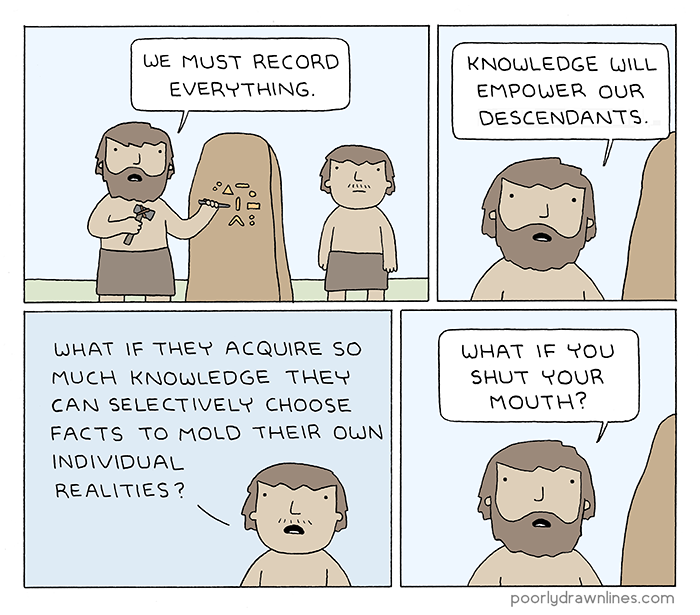
 Poorly Drawn Lines.


 Saturday Morning Breakfast Cereal.