Más de doscientas prohibiciones de libros de Stephen King en escuelas públicas de Estados Unidos fueron registradas por PEN América para el ciclo escolar 2024-2025. La situación afecta la accesibilidad de obras literarias en bibliotecas escolares, con el mayor número de restricciones concentradas en algunos estados. El informe anual “Banned in the USA”, documentó 6.800 casos de libros supeditados a prohibiciones temporales o permanentes durante el ciclo escolar en curso. Las restricciones se ubican principalmente en Florida, Texas y Tennessee,
El presidente Donald Trump quería un regalo para el rey Carlos. Antes de su visita de Estado al Reino Unido el mes pasado, el gobierno empezó a buscar un artefacto relacionado con el presidente Dwight D. Eisenhower que el presidente pudiera regalar al monarca británico: una espada quizá, o algo más que representara el papel de Eisenhower como comandante supremo de las fuerzas aliadas en la Segunda Guerra Mundial.
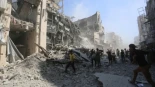
La oenegé Médicos Sin Fronteras (MSF) ha informado este jueves de que un ataque llevado a cabo por el Ejército de Israel en la Franja de Gaza ha matado a uno de sus trabajadores y ha herido a otros cuatro, uno de los cuales se encuentra en estado crítico. MSF ha identificado al fallecido como Omar Hayek, de 42 años, y ha lamentado que se trata de su decimocuarto trabajador asesinado en Gaza desde el 7 de octubre de 2023.
El diario dirigido por Eduardo Inda envía una petición de rectificación en la que confirma toda la información publicada por lamarea.com, pero rechaza que las informaciones pactadas por OKdiario y ACOM puedan enmarcarse “en la definición de ‘propaganda’”.
En otro de los episodios personales de Tecnología Informal me tocó hablar de Silver.dev, la empresa que fundé en agosto de 2023 y que este año cumple dos años. Pero esta vez no soy yo quien lleva la voz: hablan los empleados y la gente cercana a Silver.
Un relato que muestra cómo se armó el equipo, qué aprendimos sobre volumen y calidad, por qué hoy todos nuestros candidatos tienen que hacer entrevistas técnicas y cómo vivimos nuestros valores: Autenticidad Radical, Results-Based, Clean Shop y Force of Nature. Entre anécdotas y momentos clave aparecen la primera Mac, el Tetris viral, el primer placement y el premio por romper récords de comisión.
Más que un detrás de escena, es el manifiesto de por qué existe Silver: conectar talento argentino con startups de alto nivel y decir la verdad para que la gente mejore.
🔗 Búsquedas abiertas: silver.dev/jobs 🎓 Prepará tus entrevistas con Interview Ready: ready.silver.dev
A pesar de que varias sociedades viven hoy en un estado de opulencia, curiosamente, hallamos un creciente malestar social. La catedrática María Xesús Froxán señala que «la depresión es una forma de adaptación [involuntaria] en una sociedad del bienestar». Y este malestar ha sido caldo de cultivo para el renacimiento del estoicismo.
Hay influencers que lo citan con frases motivacionales fuera de contexto, empresarios que lo recomiendan e incluso atletas que lo utilizan como mantra. Sin embargo, en no escasas ocasiones, lo que se vende como filosofía estoica no es más que una caricatura conveniente. Un recorte frívolo que torna un pensamiento complejo y secular en una lista de consejos de autoayuda para alcanzar el fallo muscular en el gimnasio.
El estoicismo no nació en la Antigua Grecia como una diligente receta para el éxito capitalista –apréciese el anacronismo–, ni como un blindaje emocional al estilo de la masculinidad tóxica. Zenón de Citio, su fundador, propuso algo más que aguantar los golpes de la vida con cara de póker. No se trata de ocultar las emociones ni el dolor. Se trata de vivir de acuerdo con la razón y con el curso de la naturaleza, en armonía, cultivando virtudes como la sabiduría o la templanza. La insensibilidad, ocultar las pasiones y el dominio de uno mismo no deben confundirse. Y es que es el último fin, el aplomo ante los avatares del destino, la aceptación racional de lo que no depende de uno, aquello que pregonaron los estoicos.
La era digital ha reducido esta meta a un eslogan del tipo «No expreses tus afectos y tira pa’lante». Ha mutado en un manual de supervivencia emocional para hombres con miedo a parecer vulnerables. Esta versión diluida del estoicismo original es cómoda puesto que no exige un verdadero esfuerzo de transformación interna. Tampoco un compromiso ético. Únicamente una actitud distante ante los problemas que no gustan. Y es evidente: eso vende.
Zenón de Citio proponía vivir de acuerdo con la razón y con el curso de la naturaleza, cultivando virtudes como la sabiduría o la templanza
Por añadidura, el problema aflora con la confusión del estoico con alguien frío y cínico. Pero nada más alejado. Séneca, gran referente del estoicismo romano, escribió largo y tendido sobre las emociones, reconociéndolas como parte medular de la condición humana. En ningún momento abogó por su negación, sino por su comprensión y gestión.
Después de nacer esclavo, Epicteto, otro insigne faro de esta escuela, habló de la libertad interior que se consigue al discernir lo que depende de uno de lo que no. Pulida con esmero, esta es la piedra angular de su pensamiento. No hay que apretar los dientes y tragarse las lágrimas, hay que construir una vida que obvie los impulsos y las preocupaciones vacuas.
La confusión contemporánea se agrava cuando el estoicismo se mezcla en el balde de la productividad. Muchos lo interpretan como un arma para aumentar su eficiencia, para resistir al estrés, para ser invencibles en la selva capitalista. Pero el estoico no procura rendir más, lo que quiere es vivir mejor. De hecho, el cómo lograr más cosas, más dinero o más tiempo, eso es precisamente lo que rehúye. Cuando Marco Aurelio escribió sus Meditaciones, no lo hizo para alcanzar el top de ventas. Como emperador, tampoco diría que buscaba aumentar sus followers. Siguiendo sus palabras, escribió para recordarse a sí mismo el valor de actuar con serenidad y humildad.
El estoicismo genuino no vende porque no promete éxito, ni alimenta al ego, ni idolatra la fuerza bruta. Es una filosofía con un barniz determinista que pone de relieve que la única libertad posible reside en cómo reaccionamos ante lo inevitable. Lo que choca contra la obsesa cultura que todo lo quiere controlar. En esta línea, se podría decir que el estoicismo es contracultural al incidir en que no somos el centro del universo. Igualmente, por mucho que te esfuerces por guiar tu vida con la eficiencia, esta –tu vida– terminará desvaneciéndose como río en el mar.
Hay un viejo koan zen que se pregunta: «¿Qué pasa si una fuerza imparable choca contra un objeto inamovible?». La contestación es irrelevante. Lo importante está en el espíritu de la paradoja. Hay tensiones que no se resuelven ni con fuerza ni con la negación. Y así, los estoicos clásicos no ofrecieron fórmulas para ningún dilema. Solo una actitud: ante las embestidas de lo incontrolable, el cultivo de la templanza; ante las tragedias, el conocimiento del curso de las cosas; ante el caos, la virtud. En suma –es preciso reiterarlo–, esta es más una cuestión de libertad y sabiduría que de fuerza.
Una última distorsión moderna consiste en exponer el estoicismo como una postura individualista (casi parecería que liberal). Sin negar el énfasis que ponen en la responsabilidad personal, los estoicos clásicos nunca han abanderado un aislamiento egoísta. Lo que sí han hecho, en cambio, es destacar el compromiso ético con los demás. Somos parte de una comunidad racional y, por consiguiente, ser estoico supone actuar con justicia y comprensión. Escúchese a Séneca: «Dondequiera que haya un humano, hay una oportunidad para la bondad».
Lo recomendable es hacer eso. Leer a los propios estoicos. Sin anacronismos ni distorsiones interesadas. Solo así se podrán degustar, no sin cierto esfuerzo, sus verdaderos frutos.
«Se solía ver a los preppers como unos bichos raros extremos», confirma a la NBC una preparacionista, Jennifer Council. Y, sin embargo, las cosas han cambiado un tanto en los últimos años y prepararse para el fin del mundo —o lo que se pueda sentir más o menos de esa manera— ya no es tan raro. Algo que era muy estadounidense y muy de nicho ha dejado de serlo.
Pero ¿de qué hablamos cuando hablamos de los preppers? «El prepping es una institución cultural estadounidense», concluye en una entrevista Robert Kirsch, profesor asistente de la Arizona State University y coautor de Be Prepared: Doomsday Prepping in the United States. Según Kirsch, desde la propia fundación del país su población se ha obsesionado un poco con ser «ciudadanía preparada» y también con lograr ser capaces de sobrevivir más allá de los elementos (y en solitario). Muchos de sus recurrentes mitos históricos (como el del Salvaje Oeste) están conectados con la supervivencia. Algunas corrientes religiosas estadounidenses también tienen muy presente el potencial apocalipsis, tanto como algo que va a pasar como ante lo que hay que prepararse.
Con todo, los preppers son algo que arranca en el siglo XX, muy conectado con el contexto de la amenaza nuclear de la segunda mitad de ese período. La idea de base es contar con una preparación que permitirá sobrevivir a cualquier situación extrema, desde tener comida a recursos para afrontar el colapso de las infraestructuras.
Aun así, el movimiento prepper se percibió durante décadas asociado a una cierta visión política. El retrato robot del prepper estadounidense era el de un hombre blanco, conservador y nacionalista, entregado a una defensa de la autosuficiencia que conecta bastante con una visión del mundo en la que tampoco se pagan impuestos o se considera que el Estado no debe encargarse de ofrecer seguridad y garantías. Sin embargo, las cosas han cambiado. Como señalan en el ya citado artículo de la NBC, la cantidad de preppers estadounidenses se ha doblado en los últimos años y también se ha hecho mucho más diversa a nivel demográfico y político. Actualmente, el 39% de la población estadounidense ya se identifica como prepper.
La cantidad de ‘preppers’ se ha doblado en los últimos años en Estados Unidos
Quizás esto se explica porque ha dejado de ser menos una cuestión de matices políticos como una respuesta a un contexto que se ha hecho más complejo. Además, cada vez se desdibujan más las fronteras geográficas: los desastres naturales son cada vez más comunes por el cambio climático y la cuestión geopolítica ha complicado las cosas.
Solo hay que pensar cómo el inicio de la guerra en Ucrania generó un boom de interés por los búnkeres o por las pastillas de yodo en Europa. Suecia o Finlandia han actualizado sus recomendaciones ante la población de qué hacer ante las amenazas externas. El kit de supervivencia de la Unión Europea —que pidió a la población tener recursos para ser autosuficientes durante 72 horas— fue recibido en redes sociales con humor y memes, hasta que el gran apagón de abril en España y Portugal hizo que la gente se lanzase a comprar en masa linternas y radios. Una cadena alemana de supermercados ha estado vendiendo «habitaciones del pánico» y WC secos porque, según explicaban a la televisión pública, habían visto el interés de los consumidores por esos productos.
Asimismo, los grandes billonarios tecnológicos se están entregando a un frenesí de preparaciones para el, consideran, inevitable fin del mundo tal y como lo conocemos. Algunos de los grandes nombres de Silicon Valley son preppers a su manera, y lo son con grandes cantidades de dinero –incluso están construyendo búnkeres millonarios–. Como cuenta en La supervivencia de los más ricos (Capitán Swing) Douglas Rushkoff su mayor temor es cómo van a lograr que no se les amotinen los trabajadores encargados de mantener sus búnkeres.
En Estados Unidos, como explica un reportaje de The New Yorker que se adentró en este mercado, existe toda una oferta inmobiliaria de búnkeres y refugios, que se cotizan a cifras millonarias. En España, se ha disparado en un 200% el interés en estos y su construcción. Salen a una media de 150.000 euros por búnker y serán algo muy exclusivo: a diferencia de Suiza, que tiene una plaza de búnker para cada uno de sus habitantes, en España son un bien bastante escaso.
También ha crecido el interés por los cursos de supervivencia tras el apagón de abril. «Antes venían cuatro apasionados de la naturaleza y ahora vienen familias enteras con niños», dijo a 20Minutos una de las escuelas que ofrecen este tipo de formaciones. Rompen, eso sí, con los mitos y la imagen que vinculamos al preparacionismo vía Estados Unidos. Nada de armas y aires paramilitares. «No se trata de eso, sino de tener cabeza y estar preparados con sentido común».
«El preparacionismo es caro y no todos los salarios se pueden permitir ciertos elementos. Hay que tener cosas, si las puedes comprar, pero la clave está en volver a nuestros abuelos», sintetiza Jesús Vergara, de Work Nature, a Faro de Vigo, y recomienda «ser cauto y prepararse bien». Esto conecta con iniciativas de sostenibilidad que buscan la autonomía y reducir el desperdicio de recursos. Así, el apartamento del futuro francés es autosuficiente y permite no depender de las redes comunes para acceder a agua potable o hasta comida. Y las ecoaldeas permiten una conexión con la naturaleza y no depender de recursos externos.
En este episodio hablamos con José Carlos Ruiz Sánchez, filósofo y profesor de la Universidad de Córdoba, sobre filosofía, educación posfelicidad, ocio, epistemología y mucho más.
00:00 Inicio 00:06:42 ¿Ensayo o novela? 00:08:49 Obsesión por la productividad 00:18:51 ¿Qué hace un filósofo? 00:25:04 Doxografía en filosofía 00:39:38 ¿Es una paradoja el pensamiento crítico? 00:46:22 ChatGPT y problemas con estudiantes 00:53:30 ¿Cómo recuperar la creatividad? 00:57:22 Uso de ChatGPT 01:00:05 Correlación y causalidad 01:05:54 ¿Consideras que la educación va a peor? 01:17:25 Discursos políticos cada vez peores 01:22:47 La posfelicidad 01:37:21 ¿Tenemos vidas sin biografías? 01:51:51 ¿Vivimos una epidemia de soledad? 01:56:56 Esperanza y optimismo 02:01:16 ¿Crees en Dios?
En el último número de La Marea nos propusimos dedicar nuestro dossier principal al 50º aniversario de la ocupación del Sáhara Occidental por parte de Marruecos y al papel que España tuvo en aquella traición. Medio siglo después, ya son varias las generaciones de saharauis que han nacido en el exilio. Es el caso de Jadiya Ali, traductora y trabajadora de una ONG y que nació y aún vive en los campamentos de refugiados de Tinduf, en Argelia. Su voz forma parte de una serie de testimonios saharauis recogidos para nuestro dossier.
«A cincuenta años del inicio de la ocupación marroquí del Sáhara Occidental, es crucial hablar de la hipocresía incesante con la que los Estados occidentales y muchos otros en nuestro propio continente gestionan este conflicto», señala Jadiya, exponiendo un discurso que no difiere demasiado del que esgrimen los habitantes de otros países golpeados por guerras, genocidios, hambrunas o catástrofes. Allí, muy pocos esperan nada ya de Europa después de tantas promesas inclumplidas. «Enarbolan discursos de defensa de los derechos humanos y del derecho internacional mientras, en la práctica, sostienen al ocupante priorizando intereses económicos y estratégicos, entre otros, por encima de la legalidad y la justicia», continúa Jadiya.
El Sáhara Occidental, como Palestina, también es testigo de cómo las resoluciones de Naciones Unidas se quedan en papel mojado. Incluso de cómo las sentencias del Tribunal de Justicia de la Unión Europea se renegocian entre los países implicados para vaciarlas de contenido. El comercio está por delante de los derechos, y «esta silenciosa complicidad –señala Jadiya– legitima la represión sistemática que lleva a cabo el régimen marroquí sobre la población saharaui en los territorios ocupados, donde se niega la libertad de expresión en todas sus formas, se criminaliza la identidad saharaui y se vulneran los derechos humanos de forma continua».
Pero lamentarse por unos Estados cooptados por los poderes económicos no es suficiente. Jadiya va más allá: «Es igualmente urgente recordar que la responsabilidad no recae solo en los gobiernos, sino también en los ciudadanos de esos países, quienes tienen el poder y el deber de exigir un posicionamiento claro y coherente con la legalidad internacional: el reconocimiento del derecho del pueblo saharaui a la autodeterminación y a la independencia».
Su reivindicación interpela directamente al pueblo español, al que un día pertenecieron sus antepasados. Su implicación es necesaria para «poner fin a medio siglo de ocupación ilegal, que divide a un pueblo entero entre campamentos de refugiados y territorios ocupados separados por el segundo muro más largo del mundo, que está sembrado con casi 10.000 minas antipersona y antivehículo. No es solo una cuestión de justicia histórica hacia mi pueblo, sino de dignidad humana y de respeto a la legalidad y al derecho internacional»
Ali, que vive en los campamentos, considera urgente cuestionar el modelo de cooperación y ayuda humanitaria, que a menudo «se diseña sin escuchar a quienes la reciben y sin tener en cuenta la naturaleza política del conflicto, reproduciendo dinámicas de dependencia y silenciando la voz del propio pueblo saharaui». Esos recursos, además, «no siempre responden a las necesidades reales de la comunidad».
«Descolonizar el modelo actual de prestación de ayuda humanitaria –explica Ali– supone poner en el centro la participación de la comunidad afectada, en este caso la saharaui». A su juicio, es necesario «entender que la asistencia no puede ir por separado de la causa fundamental: la necesidad de una solución justa y definitiva que resida en el respeto al derecho inalienable del pueblo saharaui a la autodeterminación y la independencia. Solo de esta forma la cooperación internacional y la ayuda humanitaria dejarán de ser un parche momentáneo para convertirse en verdaderas herramientas para poner fin a esta injusticia».
Testimonios: Laura Casielles | Edición: Manuel Ligero
Esta entrevista con la traductora Jadiya Ali forma parte del trabajo realizado para elaborar el dossier que ‘La Marea’ le ha dedicado al Sáhara Occidental en su último número. Puedes comprar la revista aquí o suscribirte para seguir apoyando el periodismo independiente.
Cristina Martín nos habla sobre la sociedad y los periodistas infantilizados, y sobre los fact checkers, como agentes para la manipulación y la censura.
La guerra internacional que se libra en Ucrania incrementa la peligrosidad de arrastrar definitivamente a toda Europa a un enfrentamiento directo con Rusia. Los líderes de la Unión Europea parecen ya haber tomado la decisión definitiva a este respecto. La inusual y masiva reunión de generales y almirantes en Estados Unidos, con llamativas declaraciones tanto del secretario de Defensa como del propio presidente Donald Trump, tampoco son buenos augurios. Mientras, Trump, deseoso de ser el próximo receptor del premio Nobel de la Paz, presenta un plan de paz para Gaza más que cuestionable. Por otro lado, las fuerzas estadounidenses parecen ya estar dispuestas para el asalto definitivo a Venezuela. Todos estos temas y muchos más son analizados con el máximo detalle por el coronel José Luis Pontijas, uno de los militares más prestigiosos del Ejército español. Hoy, viernes 3, en directo, a las 20.00, en El Canal Del Coronel.
Cuando pensamos en la resiliencia, casi siempre nos imaginamos grandes historias de superación. Personas que, tras una tragedia, reconstruyen su vida desde cero. Héroes cotidianos que logran sobreponerse a pérdidas devastadoras, enfermedades o desastres. Y aunque esas narrativas inspiran, también pueden hacernos creer que la resiliencia es una especie de batalla épica contra la adversidad. Sin embargo, existe otra forma de resistir que es igualmente importante: la microrresiliencia.
¿Qué es la microrresiliencia?
La microrresiliencia no va de hazañas monumentales, sino de gestos discretos y constantes. Es la capacidad para reponernos y adaptarnos a los contratiempos y urgencias del día a día, muchas veces sin que nadie lo note. Es el conjunto de acciones que nos ayudan a mantenernos a flote en medio del estrés, las tensiones y las frustraciones cotidianas.
De cierta forma, es como un músculo que ejercitamos con microentrenamientos: tomar una pausa consciente en medio de una discusión, elegir una respuesta más calmada cuando sentimos ira, buscar un momento de humor en un día tenso o reconectar con lo que nos da sentido cuando todo parece desordenado. No siempre podemos controlar las grandes tormentas, pero podemos protegemos de las lluvias ligeras que caen a diario.
De hecho, uno de los problemas de nuestra cultura es que subestimamos esas pequeñas acciones. Creemos que no cuentan porque no son espectaculares, pero en realidad, son las que crean esa base emocional sólida que nos sostiene cuando llega una crisis mayor.
El valor de la resiliencia cotidiana
Lo bueno de la microrresiliencia es que no requiere habilidades extraordinarias ni cambios drásticos en el estilo de vida. No necesitamos convertirnos en expertos en meditación, ni hacer un retiro de silencio o practicar yoga durante cinco horas al día (aunque, si lo hacemos, puede ayudar). Se trata de identificar y cultivar microhábitos que nos devuelvan la claridad, la energía y el equilibrio.
Eso significa que la microresiliencia tiene un carácter profundamente proactivo. No esperamos a que el estrés nos desborde para reaccionar, sino que tomamos medidas antes.
La microrresiliencia puede manifestarse cuando, por ejemplo, respiramos profundamente tres veces antes de contestar a un correo que nos incomoda, caminamos diez minutos al aire libre para despejar la mente o escuchamos una canción que nos levante el ánimo o nos motive a seguir adelante. Esas simples acciones pueden marcar la diferencia entre un sistema inmunológico psicológico debilitado y uno preparado para responder con eficacia cuando llegue el vendaval.
La ciencia lo confirma. Un estudio realizado en la Universidad de Rotterdam reveló que la microrresiliencia protege nuestro estado de ánimo y reduce el riesgo de desarrollar trastornos mentales.
Otra investigación llevada a cabo en la Universidad de Cornell indicó que la capacidad para recuperarnos de los factores estresantes cotidianos puede predecir nuestra salud a largo plazo y nos ayudará a volver más rápido a la normalidad ante los grandes eventos adversos. Es como si, con cada pequeño acto de microrresiliencia, estuviéramos entrenando nuestra mente para responder con flexibilidad en lugar de rigidez.
Los pilares de la microrresiliencia
La microrresiliencia también implica aprender a cambiar de perspectiva rápidamente. No se trata de ignorar lo negativo, sino de encuadrar las experiencias en un marco más amplio. Ante un imprevisto, podemos quedarnos atrapados en el pensamiento “todo me sale mal” o preguntarnos: “¿qué puedo hacer para mejorar esta situación?”. Ese cambio de enfoque no elimina el problema, pero nos saca de la parálisis y nos devuelve cierto sentido de control.
Por supuesto, practicar la microrresiliencia no significa que nada nos afecte. Habrá días en los que no podamos con todo y que solo logremos cumplir con lo mínimo. Y está bien. La idea no es mantenernos siempre en un estado de optimismo forzado, sino tener recursos para recuperarnos más rápido si caemos. Es un proceso, no una exigencia. De hecho, la presión por “ser resiliente” todo el tiempo puede convertirse en una trampa que nos agote aún más.
La microrresiliencia también se nutre de la autocompasión. Tratarse con amabilidad en lugar de con dureza cuando cometemos errores o nos sentimos sobrepasados forma parte de ese proceso de autocuidado y recuperación. La autocrítica excesiva no nos hace más fuertes; al contrario, erosiona nuestra confianza y nos deja con menos energía para afrontar los retos. Ser amables con nosotros mismos nos da la tranquilidad mental necesaria para ajustar el rumbo justo cuando las cosas se tuercen.
Las relaciones que cultivamos son otro pilar de la microrresiliencia. Contar con personas con quienes podamos compartir preocupaciones, a quienes pedirles consejo o simplemente distraernos del estrés diario, multiplica nuestra capacidad de recuperación. Incluso intercambios breves, como una conversación ligera, un mensaje de apoyo o unas risas compartidas, actúan como «microdescansos emocionales».
Pequeños gestos, grandes repercusiones
El gran valor de la microrresiliencia es que tiene un carácter acumulativo. Cada microacción no es un hecho aislado, sino que forma parte de un patrón mayor que, con el tiempo, refuerza nuestro equilibrio emocional. Igual que ahorrar pequeñas cantidades de dinero acaba generando un fondo importante, invertir en pequeñas pausas, cambios de perspectiva o gestos de autocuidado crea una especie de “colchón” psicológico. Y ese colchón, llegado el momento, amortiguará caídas que de otro modo serían devastadoras.
Esta práctica cotidiana nos prepara para los imprevistos y nos permite atravesar las jornadas más complicadas sin quedarnos exhaustos. No necesita grandes discursos interiores ni gestos heroicos: basta con prestar atención a lo que nos desgasta y a lo que nos restaura, y actuar en consecuencia en dosis pequeñas, pero constantes.
Quizá nunca aparezca en titulares ni inspire películas, pero la microrresiliencia es, en el fondo, la verdadera fortaleza silenciosa. La que no espera aplausos, pero nos permite seguir avanzando incluso en los días en que lo único que parece posible es dar un paso más. Es el arte de cuidarnos lo suficiente como para poder estar presentes, para los demás y para nosotros mismos, en este viaje impredecible que es la vida.
Referencias Biliográficas:
Zietse, J. et. Al. (2025) Daily resilience: A systematic review of measures and associations with well-being and mental health in experience sampling studies. Dev Psychopathol; 22: 1-26.
Ong, A. D. & Leger, K. A. (2022) Advancing the Study of Resilience to Daily Stressors. Perspect Psychol Sci; 17(6): 1591-1603.
Greta Thunberg tirando móviles y plástico al mar... Pijos traumatizando a sus hijos con despedidas faslas... Qué pena que Israel no haya permitido a la flotilla llegar a Gaza...
This multi-part blog series is a backstory that deep-dives into the motivation behind building Kubernetes Operators for running databases. This seventh installment in this series outlines my take on the shared responsibility model for the Assisted and AI-Assisted Database Management product, attempts to answer why I chose to rely on the Operator and wrap up with listing some of the Kubernetes challenges.
Image generated by Google Gemini
Written by: Boris Dali, Database Engineer @ Google (LinkedIn)
Disclaimer
First off, the disclaimer: this blog series is neither a Google official documentation, nor it is an authoritative source. For the former, docs on AlloyDB Omni in particular, please see here and for the latter, please feel free to reach out to the AlloyDB product team. Google Cloud official blogs are posted here. Medium hosts Google Cloud Community here. This is neither. The opinions I express here in this blog post series are my own and may not represent or agree with Google’s official position on the subject.
So what is it then? Well, if you think of this blog series as the one engineer’s pseudo random ramblings on a particular topic (“running databases in containers on K8s” that is), you won’t be far off 🙂.
Recap
If you missed part 1, part 2, part 3, part 4, part 5 and part 6 of this backstory and want to follow along, it may be a more logical place to start there (and yes, if you haven’t read it, apologies in advance, it’s not exactly a short read 🙂)
To recap, I started with the goal of exploring my reasoning behind the decision to invest into containers and K8s as a viable alternative to the more mainstream ways of running databases, but went down the rabbit hole of building the foundation first. It took me four installments in this blog series to define with sufficient (I hope) depth what those 13 expectations are. In the fifth installment I presented what I referred to as “a reality check” to see how cloud provider’s DBaaS systems fare against my expectations. TL;DR: they didn’t 😭.
Finally in the sixth installment in this series I outlined the solution that in my mind closes the gap and satisfies many of my 13 expectations. That solution is what I referred to as the Assisted and AI-Assisted Database Management product. Portable, run-anywhere (including being temporarily disconnected and even fully air-gapped), leaving a customer in the driver seat with the “root” privileges and offering declarative management interface, just like SQL, but in the form of the YAML manifests to state the desired database intent.
Assisted Database Management product doesn’t yet have a commonly accepted delineation of responsibilities, no clear line in the sand with respect to what a cloud provider vs. a customer is responsible for and so I think it’s critical to define the shared responsibility model to set the right expectations for both parties.
Shared Responsibility Model
In contrast to the fully managed DBaaS systems where a service provider accepts most of the responsibilities and just exposes an API and SQL endpoints, for the Assisted Management product to succeed, both a product provider and a customer are to collaborate and play by the following rules (disclaimer: please see the top of this and the rest of the blog posts in this series, but it bears repeating: this is just my aspirational list from some six years ago and so not all features have been implemented [yet?] in AlloyDB Omni K8s Operator — see the official documentation for details on what’s actually available today and please follow the upcoming blogs on specific subjects):
Provider:
Defines the exact expectations and the rules of the game for a customer to follow to ensure a successful collaboration. In my opinion, this is critical because in contrast to a fully managed DBaaS where you can get away with just following the best practices because a service provider carries most of the weight, here both parties have to play along.
Provides a downloadable product (an Operator for K8s or an RPM for VMs and a fully compatible Postgres database), security vulnerability and functional bug fixes in the form of patches and new releases. It’s up to a customer to decide to apply a provided fix or not, but a provider is to publish release notes and notify registered customers of both a problem (CVE, functional bug) and a patch once it becomes available.
Provides a rich and well documented set of Prometheus metrics¹. That is, in addition to the standard Operator metrics, a Critical User Journey (CUJ) can’t be marked as completed by a product provider without delivering a set of metrics, sample alerts (with the recommended thresholds) and Grafana dashboards. A customer is obviously free to use any observability platforms of their choice, but the Grafana dashboards are to come with the product “out of the box” (and if Grafana is not the o11y tool of choice, they can be used as a reference).
Enumerates the list of mandatory metrics that customers are expected to scrape from the Prometheus endpoints and create alerts on. Provide templates for scraping and for creating alerts in common frameworks, e.g. Prometheus alerts, Grafana alerts, etc.
The rest of the Prometheus metrics can be considered as optional as they provide additional information for the purpose of investigation if needed at a later time, but do not serve as the base for customer alerting of critical events in a product.
Defines a clear and documented set of the K8s events associated with every CUJ. Similar to the metrics, alerts and dashboards, a CUJ is not to be marked as complete (i.e. not GA ready), until the set of K8s events is defined, tested and published in the docs.
Provides conditional SLO (see expectation#6 in the earlier post) based on the traffic light supportability behavior and if a “supported status” is marked as green, enable the otherwise grayed out SLOs. If a customer is to break a contract (e.g. by deleting one of the AlloyDB Omni views from the system catalog or run out of space and ignore an alert or disallow a scheduled backup or delete a StatefulSet or scale down the Controller to 0 or delete a storage class or…), do everything possible to diagnose the problem and show a path to get back to a supported state. To be sure, the supportability traffic light is not to punish a customer, rather indicate that one of the prerequisites for a normal product functionality of an Operator or a database are off. This is the innovation because in contrast to DBaaS systems that run and are fully controlled by the cloud providers on their own hardware and are watched like a hawk by their SREs, Assisted Database Management products run on any K8s distribution and work with many variations of BYO storage and compute. alloydbomnichk is a CLI designed to deliver on what’s described in this bullet point.
The above requirement is to facilitate a provider to deliver diagnostic tools for their product and a database, so that a customer can either self-diagnose and address an issue on their own (aka “shift-right support”, which is preferable) or automatically gather the artifacts for a customer to generate an incident that a customer can review and upload to the support team. Provide customers with an AI-based troubleshooting tool hosted on Google Cloud where a customer can describe their problem in a natural language and get recommendations based on Google’s internal knowledge base and previous experience.
Introduces a concept of a Critical Incident (CI) to facilitate troubleshooting where any abnormal behavior detected by a Controller is to result in creating a condition in a Custom Resource (CR) status with the timestamp, type of an incident and a clear error/warning message that is to point further to a runbook. CIs are to be actionable or they shouldn’t be raised at all. All CIs are to be numbered and so are the runbooks. The runbooks are to be hosted on Google Cloud alongside the official Operator documentation and provided to a customer in a downloadable format if a customer opts for hosting it internally. In addition to the unexpected (by a Controller) outcome, CI is to include SLO violations as CR status conditions as well (assuming of course that the supportability traffic light is lit as green).
The goal of the above requirement from the provider is so that when a customer creates an incident and contacts support, there’s a clear CI number associated with an error condition and an expectation that a customer already looked at the right runbook, couldn’t resolve an issue at hand and auto gathered a snapshot of the required artifacts for troubleshooting (e.g. CR description including status and conditions, STS, Pod and Controller logs, K8s events, including events history, etc.).
Ultimately the objective of these strict requirements is to get to the point where if no CI, no abnormal metric value, no alerts, no events are raised, whatever a possible problem that a customer is facing, they need to look outside of the Operator (at a storage, compute, networking, environment, etc.). And yes, if the Operator itself becomes unhealthy, this is to be reflected in the standard Operator metrics for customers to see.
Allows for a customer to operate a product (an Operator and a database) in a disconnected or even fully air-gapped environment, where it’s a customer’s responsibility to get the patches, transfer them to a location accessible by the Operator and trigger an upgrade. If a product is to operate in a connected mode, show an indication to a customer when a new patch/fix is available for download.
Allows a customer to manage their on-prem hosted (or hosted on other clouds) AlloyDB Omni databases from a cloud console alongside AlloyDB databases created “natively” on Google Cloud. In particular, allows a customer to register these databases, upload logs, metrics, alerts, etc. — see expectation#11 for details.
Provides an ability for a customer to create an AlloyDB replica on Google Cloud for an AlloyDB Omni database created on-prem or other clouds.
Provides customers with the two-tier Control Plane in the form of the two Operators that can be installed together in the same K8s cluster (in which case they both can be packaged in single Helm chart or OLM bundle for simplicity) or in separate clusters. The first, customer facing, Operator is to facilitate the fleet management operations (e.g. change a database flag for all Dev databases) and so it effectively acts as a management plane, while the second tier Operator is to act as a local control plane (that doesn’t know or care about other clusters, Controllers deployed in them and replicas they may be hosting).
Provides customers with the AlloyDB Omni SQL CLI utility called alloydbomnisql for managing database clusters via SQL-like commands to orchestrate multi-step declarative database cluster changes as a single, atomic, transaction-like operation (with the automatic roll back of all changes if any of the individual commands in a block fail half way through):
cat <<EOF | alloydbomnisql -
set dbservice=alloydbomni
set connect=<path to kubeconfig>:ns
# set whenever sqlerror exit-and-rollback (default behavior)

# SQL to be converted to YAML or call an existing YAML directly:
create dbcluster pg1 --type=postgres --version 17;
create dbcluster ora1 --from_file=<local path to YAML|URL>;

load from <storage bucket|URL> into <dbcluster>;

update dbcluster set cpu_count=4, memory=100M, disk=1G where name=pg1;

select * from dbclusters;
EOF

# Think of Omni SQL as a TF for a hybrid and multi-cloud database management
Provides GitOps friendly database management interface where customer checked-in intended state doesn’t get overridden by the Operator’s Controllers.
Provides GitOps flow where database changes checked-in into a repo get optionally deployed on-merge to a Build database, a customer-defined soaking period is observed (a week by default) after which the change automatically propagates to Test, Staging, etc. environments. For this change to be applied to Prod, but default, an SRE manual approval is required, but the flow of the environments (e.g. like this), the soaking period, the revert criteria and the necessary approvals are all fully configurable by a customer. The overall idea is offer customers a way to ensure consistency across the database fleet, so that config adjustments, patches or any other changes that affect database behavior are peer-reviewed, documented and can be automatically propagated through the fleet in the orderly fashion via a progressive rollout or not at all (i.e. rolled back all the way if problems are discovered with a new config/patch).
Provides customers with the ability to mix and match individual services
Provides detailed guides and documentation for all major database CUJs, including backups, patching, HA/DR, security and user management, monitoring, logging, etc. An AI chatbot is to be available on a provider’s cloud to accept customers requests in a natural language, scour its knowledge base and provide steps to resolve a problem at hand. Depending on the customer’s feedback, an AI is either to proceed with troubleshooting or if stuck, file a ticket with the support team on customer’s behalf.
Stands by their product and provides customer support for it, including support for all the tools (OSS or proprietary) used/included by a product. For the OSS tools used in a product, a provider is to either work with the upstream vendor or patch (and contribute upstream) an OSS fix required by a customer.
Customer:
Retains the “root” privilege on their K8s cluster (so a cluster admin role) or a VM, as well as the full privileges on a database cluster.
Reviews the provider’s rules and best practices for the Assisted Management product and assesses if it suits their needs. If it’s a good fit a customer is to follow the rules, scrape the mandatory metrics from their favorite tool and create alerts as instructed by a provider in their favorite alerting framework.
Check the support status either via alloydbomnichk CLI or a corresponding CR. If the status is other than green, review the recommendations to get back to a supported state.
(Optional, but recommended) Subscribes to a provider’s mechanism of being notified when fixes (especially the critical CVE fixes) become available for download. A customer is to decide on whether to apply a patch or skip based on the release notes published by a provider.
Provisions the underlying infrastructure (if used on-prem) or requests one from a cloud provider if used on a public/private cloud, but in any case, ensure that there’s sufficient capacity according to the requirements outlined by a provider.
While it may be acceptable for a provider to declare some of the CUJs as beta-complete without providing all of the deliverables outlined above (e.g. metrics, alerts, dashboards, events, CIs, runbooks, docs), in general, a CUJ is not to be marked as GA without the complete set (i.e. it should be part of the provider’s pre-release checklist).
For instance, if scheduled backups start failing, a set of metrics is to be emitted and a customer is to create an alert to be notified that something (likely in the customer environment, e.g. disk space) changed and requires attention. If a sync HA replica creation hangs because the underlying backup operation gets stuck (e.g. due to the Cilium or other CNI rule changes), an operation is to be time-capped, a CI, an event and a metric are to be raised to reflect the problem.
¹ Why Prometheus in particular? My intent here is not to start another holy war on various observability and alerting tools. As a product provider, it’s pivotal for us to emit metrics, particularly for the CIs that affect the major CUJs. As stated here, this is our core side of the obligation in the shared responsibility model (and the expectation here is that customers would scrape and alert on on these metrics). The tool is secondary, but we had to settle on something. Prometheus and Grafana are widely adopted and well known in the K8s land. Google Distributed Cloud also relies on Prometheus and our Database K8s Operator is used in both, so it seemed like a fitting choice. That being said, there are customers that prefer Kibana and the ELK stack for instance, in which case our Grafana dashboards can be used as a reference.
Additionally, as a reviewer pointed out, Prometheus metrics syntax is a “subset” of OpenTelemetry metrics and so customers can use a single otel collector deployment to convert Prometheus metrics to other otel-compatible formats and send to monitoring backends other than Prometheus.
Why the Operator?
So I settled on K8s because of all the reasons discussed in this blog series, see my 13 expectations that I thought would resonate with some of the on-prem customers who may not be fully satisfied with the existing cloud providers’ DBaaS systems. But why use an Operator for the Assisted Database Management product, especially since it’s obvious that some customers may remain on VMs for a while and we would need to cater for them too?
Assisted Database Management: AlloyDB Omni K8s Operator (image generated by Google Gemini)
Well, I had a few reasons in mind and I’m curious if you’d agree with me:
First off, the Operator pattern is a common and really powerful K8s extensibility construct. Operators are well known, well documented (e.g. see this recommendation for building Operators for stateful workloads) and there are frameworks in place for scaffolding and getting an Operator off the ground in no time. I used Kubebuilder, but Red Hat’s Operator framework is widely used as well.
The idea behind AlloyDB Omni Operator was to encapsulate the human DBA knowledge of managing databases on-prem. A customer states their intent through the CR interface, which is watched by a Controller to trigger a reconcile loop to (ultimately) translate it into a live state (or that the live state converges to the intent). This is important because requests fail and databases are the top of the stack and complex enough that something often goes astray. The Operator gives a customer a virtual DBA in a box, a DBA copilot if you will, that not only provides automation (that can be done by other means), but understands the unhappy paths of how database management operations fail and attempts to rectify them automatically on customer’s behalf.
This is the key difference between traditional / legacy on-prem downloadable products that offer imperative user experience. A DBA is to try a command and if it fails, they try to figure out the reason for the initial failure and perhaps retry. And if a chain of commands is needed to accomplish a task at hand, the error handling around each command inevitably leads to scripts. That’s one of the reasons that DBAs are usually pretty proficient at scripting, but these scripts need to be maintained, evolve as the dependencies change, features get deprecated with releases, etc. and so as a result, these scripts often become brittle and end up becoming a tech debt. Well, with the Operator, that knowledge of predicting failures and handling them is encapsulated inside the Controllers (or to be more precise, the logic is often split between the Controller code and the data plane gRPC daemon that runs inside the database Pod).
Put it another way, as with any declarative API,the work is done by the system — by the virtual DBA that is — not by the user.
A customer still needs to state their desired intent, but then it’s up to the AlloyDB Omni K8s Operator to converge the live system to a state that reflects that intent, even if that means overcoming failures –including cascading failures– along the way. That is, if a backup fails, we attempt to figure out what went wrong and possibly retake it if the error is deemed transient (or take a full backup or a differential + WAL log backup, etc.). If a patch application fails, we roll back to the previous, healthy state. If a change to a static flag leads to the database not starting, we try to set it back to the previous value and restart a database to bring it back to a working state (or to fail over to a good, sync replica that doesn’t contain that change).
This may seem obvious to the cloud customers used to the UI or CLI of DBaaS like AlloyDB Cloud, Cloud SQL or similar systems, but the intent-driven automation is quite innovative for the on-prem customers that still hold “all the keys to the castle”, keep the root privileges, own their HW and own their fate as far as deciding on the patching schedule and yet getting a step up from the DIY software products. This is our core advantage, the essence of what I refer to as the Assisted Database Management.
So far I didn’t say anything about HA/DR story for databases running on K8s (I’m hoping to dedicate a series of separate posts on that subject), but in a nutshell, my idea was to get as close as possible to Oracle’s MAA (with RAC being the cornerstone of HA and Active Data Guard primarily supporting the DR story), but without the MAA’s price tag. That is, in my opinion, Oracle achieved the unthinkable in successfully conquering the complexity of the distributed, multi-server computing to allow not only HA, but also the horizontal write scale-out of their database, and yet, in my option, they failed in making it easy for customers to operate it. This is the reason for building an extensive PSO arm, support organization and numerous consultants that are never out of work because of all the problems that the high end RAC databases need careful catering for (or… was it all done by design? 😉). Well, enter K8s where countless engineers from various companies all over the world work on a similar problem, but in a generic way, not specific to databases and the delineation of the work is very clear: a Pod. That is, in contrast to Oracle¹, I don’t need to engineer an HA solution across the whole stack. Node reboots, which leads to respawning a Pod on a different one is not my concern. That is, the lower level compute is being taken care of for me and so I don’t intend to compete with K8s native Pod problems. I complement it. I invest into what brings me the differentiation, which is the availability of the software running inside the Pod. And so my two tier control plane driven HA is designed to build upon the native, out of the box, platform provided Pod resilience.
The only reason I wrote the previous paragraph in this intro/motivation series is to provide an example of a controller’s reconciliation loop that is automatically triggered when a primary CR’s status shows any sign of trouble (read: an HA-related CI, see above in “Shared Responsibility Model” for the CI definition) that warrant a failover.
The other important aspect that I get from relying on the Operator pattern is the Customer Resource Definitions (CRD), that in the case of the database management I’d like to think of as a meta model that sits on top of a relational model (ERD implemented in a form of a database schema), which in turn models the real world. Viewing CRDs as the meta model (metadata in MDM context, anyone?) that not only presents customers with the ability to state their database intent, but also to get a feedback loop from the live databases is what opens a pipeline for generating operational and business insights. Remember my expectation#4? Databases are really good at detecting a change (via object stats collection processes carried out by Oracle CBO or the Postgres query planner). Can’t beat them at their own game and there’s no need to. Once a change is detected however, what’s missing is an understanding of what the change is, what could’ve caused the change and whether it’s “meaningful enough”. These artifacts get flown back from a database to the K8s CRs and fed to the LLM model with the appropriate prompts for analysis. This is the other benefit of the Operator pattern and the CRDs that come with it.
To be sure, K8s is not the only ecosystem that allows the extension of the built-in types with the CRDs, but once you couple it with the associated Controllers, it suddenly opens the possibility for building loosely coupled services. Build them and offer them to customers as a set of individual, self-contained modules that can be purchased a-la-carte to work independently or Lego-assembled into a coherent system. Indeed, if multiple services are purchased by a customer either at once or gradually, overtime (e.g. Backup, Monitoring, Patching, etc), a well engineered Assisted Database Management system implemented on K8s suddenly starts looking rather similar to a DBaaS 🙂.
That is a rather unique feature, very different from the monolith DBaaS systems where you get to work with –and to pay for– all of the offered services or none at all (other than Cloud SQL’s Enterprise and Enterprise Plus Editions and a few others). As Kelsey Hightower famously noted, “rubbing K8s on Postgres won’t turn it into a Cloud SQL”, but I believe that K8s, as the new compute platform, empowers the smart engineering of designing individual and predominantly self-contained services that can be bundled together, thus enabling building richer and more flexible database services.
The other important reason to implement the Assisted Database Management in the form of an Operator is that the same codebase is also used for delivering the fully managed DBaaS in Google Distributed Cloud, which is a complete air-gapped HW/SW on-prem solution (see this fantastic video for technical details of how the whole cloud was reimagined with K8s and Operators) and yes, DBaaS delivered by our team and out of the same codebase is a key backbone of that offering too, so it made sense to align.
Finally, it turns out that the Operator pattern can actually lend itself rather nicely for non-K8s deployments on VMs. This finding is a bit of a pleasant surprise and it took us quite a bit of engineering (some of which is still ongoing), but there’s a way to carefully engineer controllers in a way that the logic in them can be reused on VMs (where you obviously don’t get the CRDs and reconcile loops). More on this in a separate post.
I hope this list above builds sufficient arguments in favor of implementing Assisted Database Management as an Operator in favor of other solutions. And again, not all of what I describe above is already implemented, but the important thing is that the Operator pattern doesn’t preclude us from delivering this even if it doesn’t happen immediately (customer demand often takes precedence over the roadmap and makes us take detours, like integration with the MS Active Directory or HashiCorp Vault or…).
¹ When I say “in contrast to Oracle”, I’m referring strictly to the Oracle HA solution (with the failure modes like a node failure, including a node that carries a primary, or any other failure modes that may lead to unavailability of a primary instance), not the horizontal multi-writer scale-out capability of it… yet. Maybe we’ll get there next 😉.
Kubernetes Challenges
Despite all of the arguments I presented in this blog series, I’d like to acknowledge that in my opinion it’s still early days for K8s to offer the proper support for enterprise database computing. Yes, K8s keeps advancing quickly and is becoming widely adopted, but it is still a maturing product and there’s no doubt in my mind that it would need (and it’s going to) evolve a lot to cover what I perceive as “gaps”. One strong reason that inspires optimism is that all/most of the recent innovations, AI being the front runner of course, benefit K8s ecosystem directly because many of the AI workloads run as Pods on K8s, which further fuels the K8s already fast innovation and maturity. However, it is not my intention to sugarcoat, so I wanted to list some of the existing “gaps” –or perhaps my pet peeves– based on our experience of building database Operators over the past few years:
The credentials and RBAC of the K8s cluster admin and the normal users are stored in the same place (etcd). This seems like a potential major security flaw. One can argue that it’s not much different from /etc/passwd, /etc/group and /etc/shadow, but there are stronger commonly accepted systems built on top of it like SELinux, AppArmor and similar to, for instance, disallow privileged commands even if you are root. OPA Gatekeeper is one way to address this concern in the K8s land, but it’s not yet commonly used by the on-prem customers.
The other challenge that we grappled with is how K8s conflates the user inputs and default values. The declarative world is beautiful, but if an Operator changes your input into a canonical format (via a controller or a mutating webhook) or it relies on the default values of seemingly optional fields in the spec, your GitOps tools will have hard time detecting the configuration drift. One solution that we found useful to address this concern is to avoid storing defaults as user input.
The isolation and multi tenancy requirements are more challenging to implement on K8s because a Pod is not considered a security boundary and short of using in-Pod VMs (e.g. kube-virt), it may be more difficult to prevent a break out to the node OS and taking over a kubelet due to a kernel vulnerability in a container OS even if AppArmor or a similar protection is enabled (sandboxing Pods could be one option to combat this via Kata containers or gVisor, but there are downsides to this method as well).
Service disruptions are more pronounced in K8s for now. Not only the master nodes need to be updated regularly (which is usually not really visible by customers, even though GKE updates it roughly every month, because it only affects the CRUD K8s operations), but also the worker nodes. The latter hosts the database Pods within a Stateful Set and the typical techniques commonly suggested for the stateless apps (e.g. relying on the Replica Set or using Pod Disruption Budget and draining nodes or creating a new K8s cluster and moving the workloads over) don’t work well for databases.
Enterprise storage support for K8s is still in the early stages. Yes, there’s a CSI standard, but there are differences between the storage providers (not everyone even supports snapshots, at least in a reliable way) and the basic operations like increasing a PV size may lead to downtime (the allow volume expansion feature is relatively new, available in beta as of CSI 1.16). The fact that the Pod spec is immutable and so mounting/unmounting volumes leads to downtime is hard to swallow given that these are common, no-downtime operations on VMs. As such, in my opinion the storage SIG and the community have some work cut out for them before we can call the storage support mature in K8s, but I expect this area to evolve quickly as we add and mature our database Operators.
Guaranteeing storage performance is still an evolving area, e.g. see this proposal. Many cloud providers tie the storage performance with both the K8s node (aka compute) size as well as the volume size. The additional complexity with K8s is that a number of noisy neighbors may land on the same node making it challenging to guarantee that a particular database gets at a minimum the IOPs (let alone latency) that a user expects.
(this was written a while ago, so I skimmed it now before publishing and updated it because K8s evolves and advances quickly, which is my bigger point): The much awaited Volume Attributes Class, which allows modifying IOPs and other volume characteristics on the fly, just graduated to GA in K8s 1.34.
I find it more challenging in K8s to tweak the Linux knobs that are typically adjusted for database workloads, such as Huge Pages, Direct I/O and other Linux tunables.
Under extreme circumstances it appears that the way K8s uses cgroups and the CFS scheduling granularities (cfs_period_us), may lead to the database CPU starvation, particularly when there are many small Pods that happen to run on the same node as a large database. It appears that CFS allocates fractions of CPU time to each cgroup (and each Pod is its own cgroup), but once the time allocated is used up for that period, that process is blocked from running in the same period and more time is only made available in the next period. This seems reasonable for a fully loaded system, but this throttling appears to also kick in if there is still idle CPU available. I like this article that explains this further.
Basic network security requires careful planning, well beyond creating a VPC, firewall rules and network peerings. The egress traffic is typically SNAT-ed to the node IP address and if a node runs multiple workloads, not just databases, it may be difficult to secure it on its own, but also for replication and database links, particularly if a database Pod gets rescheduled to another node. Depending on the LB mechanism, source IP may be challenging to preserve during the SNAT-ing of the ingress traffic, which makes it more difficult to implement IP-based ACLs for database access and auditing.
This list is obviously not complete, but I look at these items as challenges to overcome, not a deterrent. Some of the above points were less obvious, so we learned them the hard way and had to be quite creative with our Operator design to overcome what we consider the lack of the platform features, with additional custom code on our side. That is to say that in my mind this list represents the gaps that I believe K8s would close off as it matures, but I don’t look at these gaps as something that makes K8s a fundamentally flawed system.
The important thing for me is that K8s provides portable, well defined and consistent primitives that allow service providers to build powerful abstractions on top of them. K8s as a compute platform with the database Operator on top does solve many of my 13 expectations and so overall, in my mind, the benefits outlined above outweigh what I perceive as the present and temporary K8s shortcomings. And yes, I intend to explore these in more detail once I’m done with this “motivation for K8s backstory” series.
Almost there!
It took me 7 posts in this blog series, but I hope I answered the questions that I started with. That is, I hope that the backstory I presented here explains the motivation for investing into the K8s ecosystem and building the K8s Operators for hosting databases. In the next (and final!) post in this series I’ll provide the summary of what we discussed so far.
The Omni Database Engineering team at Google is the one that makes the magic presented in this blog series happen. I was the first, founding engineer, helped build the team, became a TL and later UberTL, so I believe I have a good perspective of why and how we approached the Operators and evolved them over time. Today, AlloyDB Omni K8s Operator is the production grade database management solution used by major banks, retailers and other customers and the eng team deserves all the credit.
I’d also like to thank Marc Fielding, Martin Nash, Hemanth Siddulugari, Eric Chen and Enhao Cui for reviewing these blog posts, correcting my broken English and my broken thoughts. All the remaining mistakes and inaccuracies are obviously still mine.
Para comprobar la veracidad de las palabras de una persona, la prueba clave es ver si su comportamiento concuerda con sus afirmaciones. Sánchez usa a la Armada para crear cortinas de humo: una malversación para tapar otra La ultraizquierda lanzó el bulo del 'genocidio' cuando había más muertos en Israel que en Gaza Veamos el […]
1. Moving people to a new team just so they can be fired
This got relayed to me from a coworker who is in a supervisory role, Dorothy. She has a direct report who she is working on terminating, as this individual has not been meeting the basic requirements of the job, including the essential functions. They were already given an extended probation and continue to not meet the requirements of the role. There’s a whole backstory to it, but a new development has occurred that seems really suspect.
Dorothy was told by her supervisor, Sophia, that once this person is out, they will transfer another employee to Dorothy’s team who has been performing poorly for years, despite repeated interventions by their current supervisor, Rose. Sophia wants to transfer this person to Dorothy’s team so Dorothy can fire them, because “Dorothy now knows the process.” Sophia plans to repeat that with a third poorly performing employee currently being supervisored by Sophia (in lieu of Blanche, who retired a month ago).
This is obviously incredibly messed up, but my question is … HOW messed up? Transferring people to a different team explicitly so they can be fired feels like stepping into illegal territory! Also, I’ve told Dorothy she should be documenting this in as many ways as possible, because this seems like the type of thing that could then be used later down the line to get rid of her.
Clearly, the supervisors who are supervising these poorly performing employees should be the ones to handle any terminations — they are the ones who know the person’s work! It is part of the responsibility of a supervisor! But what should Dorothy be doing to protect herself or stop this from happening?
Yikes, this is ridiculous! It’s not illegal — companies can use whatever process they want to fire someone, as long as it’s not discriminatory — but it’s terrible management and incredibly unfair to Dorothy. Sure, she has “learned the process” by dealing with her current person, but there’s no reason Rose can’t “learn the process” too — and it’s part of Rose’s job to do that when it’s needed. Dorothy presumably didn’t sign up to be the company firer, and if she agrees to keep letting people be transferred over to her so she can fire them, it’s going to affect her reputation: people will think that Dorothy’s team is where you get sent to be fired, or that Dorothy is a bad manager who fires people without cause.
Dorothy should push back with her own manager and say she’s not willing to take on firing processes for other managers. She can point out that it’s time-intensive and emotionally draining, and that while she will of course take that on when there’s a problem on her own team, it’s far too great of a burden to take it on for teams that aren’t even her own. She should be firm about this, because the idea is ludicrous enough that there’s a good chance they’ll cave if she flatly refuses.
(For what it’s worth, I’m betting that Rose is a big problem here: she’s had an employee who’s been performing badly for years and hasn’t dealt with it, and apparently Sophia considers her incapable of dealing with the situation now. Although obviously Sophia is also a big problem, as the architect of this bonkers idea.)
2. Should my company have been more discreet about only some people getting retention bonuses?
I am very happy at my company and feel well-treated. A few years ago, the owner/CEO went into semi-retirement and sold half the business to NewCEO (but he still does some work behind the scenes from home). When he made the announcement about this, he also stated that he was giving all employees who had worked there more than a year a large bonus to thank us for our hard work in helping grow the business. My understanding was that it was a retention bonus as well as a thank-you, to be paid out in chunks of money a year apart (I assume to make sure the transition to NewCEO was smooth with little turnover, which it was).
Fast-forward a few months later, and a Teams message went out from NewCEO saying, “All employees hired more than one year from X date, your bonuses will appear in your next paycheck.” I was very happy and grateful to get this substantial bonus — after all, OldCEO didn’t have to do this! But two newer women who had missed the one-year mark were blindsided and very upset by this. One was in tears. Either they weren’t at the meeting when it was announced or were hired since, I’m not sure.
Should the company have done this more discreetly, not mentioning it on company-wide Teams? The bonuses weren’t a secret (even though amounts weren’t made public). Or should they have given everyone a bonus just to avoid hard feelings? Should they have given the new women a heads-up? I’m not sure that would have been well-received either.
Yes, they should have been more discreet about it. Sending out a message announcing some people but not at all are getting substantial bonuses is a recipe for the people who aren’t getting them to be upset, even if there’s a clear, objective reason for who falls in which category. It’s naive to think it won’t. (It’s also naive for people not to understand that bonuses sometimes work like this, but the company still should have foreseen this.)
I’m not saying they should have hidden it; trying to do that could cause worse problems if it eventually came out anyway, which it probably would. But sending a blithe “people in category X, your bonuses will appear in your next paycheck” message to the whole company was tactless and unnecessary.
That said, tears are a pretty strong reaction and I wonder if something more was going on there.
3. Should I offer feedback to unprofessional intern candidates?
I’m a program manager at a small nonprofit. Along with managing the several interns we have, I’m also the person who receives their application materials. I’m currently in the middle of hiring for a marketing internship, and while I’ve seen some strong candidates and am looking forward to interviewing them, I’ve also seen some … less than great application materials.
I remember being in college and am sure I made some errors in professionalism while applying for internships, but it wasn’t quite on the level of having a shirtless picture of a guy (which is not applicable to the nonprofit I work for, although I’m sure it might be for some roles?) as the cover of my online portfolio. I received one application from someone who simply just said “Thanks” in the body of their email, and another applicant sent me an attachment of a .txt file that contained a link to their LinkedIn in lieu of a resume.
I feel very strongly about replying to all applicants, even if just to say “We appreciate your interest, but we’ve decided to go with a stronger candidate” because I know how disappointing it is to get radio silence. Would it be a kindness to also gently point out the issues I notice? I don’t want to preach to them, and I would never want to do it in a demeaning or demoralizing way, but not saying anything that could help them in the future feels unkind. Am I overthinking this?
It would be a kindness and I understand the impulse because I used to have it too, but it’s not a good use of your time and it’s not your job.
If someone specifically asked for feedback, I’d be more inclined to offer some, but otherwise there are lots of resources on job-hunting and communicating with employers out there. Plus, “don’t include a shirtless photo on your portfolio” and “your email is way too brusque” is just not the kind of thing that you, an employer with no relationship with these candidates, are well positioned to offer. If it were something more straightforward like “yellow type on a grey background is making your resume hard to read,” then sure.
In my first week at my new job, we had a team-building outing. Everyone was expected to attend. We had to leave the office at 2 p.m. and the outing was over by 6:30. This week, I noticed that three hours of my PTO had been deducted for it. This also happened before. Last summer, while I was interning for the same company, I had to go to a team lunch (which I ended up having to pay for myself, btw) that ran over, and (because I was hourly at the time) they deducted the 1.5 hours the lunch ran over from my paycheck.
As a newly hired employee fresh out of college (and intern, at the time) I don’t feel like I can skip out on these team activities. Do I have any recourse? Obviously I do not want my PTO used for what are essentially mandatory work events. Is it even legal?
If you’re required to attend, it’s work time and must be paid. However, they can charge your PTO for it — because that’s still paid time. The law on paying you for required work stuff just mandates that you be paid; it doesn’t look at whether that pay is coming out of your PTO balance or not.
But it’s still BS and completely contrary to logical understanding of what PTO is. (And wow, way to team-build; I’m sure that didn’t have the effect they were going for.)
You could approach it this way: “I don’t think this PTO should have been deducted from my check because the team-building event was mandatory — so work time, rather than me taking time off. Is there a way to get this fixed?”
No se puede decir que no estuviéramos advertidos o que no hubiera sido imaginable. El Plan de prevención de Riesgos de inundación que redactaron el año 2001 las conselleries de Interior y de Medio Ambiente del Govern balear, se acompañaba un detalladísimo mapa de las redes de drenaje y de las zonas inundables de todo Baleares, incluidas Ibiza y Formentera, por supuesto. Un mapa en el que se cartografía las áreas que serían anegadas en caso de una lluvia atípicamente intensa. En el caso de la isla de Ibiza, el estudio señala que el reducido...
etiquetas: ibiza, eivissa, zonas inundables, torrente, govern, prevención de riesgos
Al margen del discurso pro empresa que mantiene la gestión de gobierno que encabeza Javier Milei, el éxodo de compañías transnacionales sigue siendo un comportamiento marcado a través de los años y en los últimos meses la tendencia incluso parece haber ganado más velocidad. El clima de tensión política imperante, combinado con las complicaciones financieras y la caída del consumo que atraviesa la Argentina, terminan por desalentar el desembarco de capitales foráneos.
La zona de bajas emisiones se instauró en Granada el pasado miércoles 1 de octubre. Pues bien, una mujer de las que ya ha sido sancionada no ha estado muy avispada. Aunque ella creía que sí. La conductora quiso modificar su matrícula y lo hizo de la forma más chapucera posible: usando cinta aislante para convertir el número 6 en un 8. Evidentemente, la titular del vehículo no se salió con la suya. ¿El resultado? Ha sido multada con 6.000 euros y se le han restado seis puntos del carnet de conducir. La Policía informa también de que este...
Tras conquistar el mercado mundial de los coches eléctricos, las empresas chinas se lanzan a una nueva conquista: los camiones eléctricos. Los fabricantes chinos esperan imponerse frente a los actores históricos del sector aplicando exactamente el mismo método que con los automóviles. Las ventas de camiones eléctricos crecieron casi un 80 % a nivel mundial en 2024, hasta alcanzar cerca del 2 % del mercado mundial, según la Agencia Internacional de la Energía (AIE). Entre los fabricantes que más contribuyeron a ese crecimiento, BYD.
Las Nuevas Generaciones (NNGG) del Partido Popular (PP) se han hecho eco de un vídeo en el que se ve el momento en el que Israel detiene a la activista Greta Thunberg, que viajaba a bordo del ‘Alma’, y lo han acompañado de un mensaje que refleja la indiferencia de los populares con la masacre. “Se terminó el crucero”, han defendido.
etiquetas: nuevas, generaciones, pp, flotilla, gaza, israel
El sector del transporte se prepara para encajar un golpe que desencadenará una subida general de sus tarifas y amenaza con generar otra espiral de inflación. Si nada cambia en enero de 2027 entrará en vigor en España el nuevo régimen comercial de derechos de emisión, que extenderá la obligación de comprar en el mercado los derechos para poder emitir gases de efecto invernadero.España enfrentará un aumento de hasta 45 céntimos por litro en el precio del combustible debido a la implementación de un nuevo régimen de derechos de emisión que
etiquetas: derechos de emisión, aumento de precios, emisiones de gases, transporte
El Círculo de Bellas Artes reúne la mayor retrospectiva en España del fotógrafo, 250 piezas, entre imágenes, publicaciones y objetos, sobre la guerra y sobre la vida en color de la paz
A Mónica García se le enquista la legislatura. La ministra de Sanidad no es capaz de sacar sus propuestas más ambiciosas por falta de apoyo parlamentario, y la reforma del estatuto marco de la profesión sanitaria se ha encallado en la negociación con los sindicatos.Mónica García ya no ocupa el lugar en la manifestación y la huelga que tantas veces alentó en su etapa en la oposición contra Isabel Díaz Ayuso en la Comunidad de Madrid. Ahora, como ministra, se enfrenta a su segunda huelga médica y al descontento generalizado en el ámbito sanitario por su propuesta de estatuto marco, que marcará las condiciones laborales de estos profesionales para los próximos años.
Este viernes, la ministra de Sanidad tendrá enfrente una huelga médica liderada por la Confederación Española de Sindicatos Médicos (CESM). La misma organización a la que está ligada Amyts, el sindicato que encabezó la huelga en la Atención Primaria de la Comunidad de Madrid, que se prolongó meses y en la que profesionales sanitarios llegaron a encerrarse en la Consejería de Sanidad.
"La Consejería accede a una nueva reunión con las y los médicos en su quinta semana de huelga. Esperamos que el encuentro sea fructífero, que el gobierno de Ayuso escuche y ponga solución a las malas condiciones que vive la atención primaria en Madrid", decía entonces Mónica García. "Nuestra sanidad ha aguantado carros y carretas durante estos años, pero no aguanta cuatro años más de la negligencia del programa de la señora Ayuso", manifestó en la protesta masiva que se convocó en la capital en el mismo período para proteger la sanidad pública.
Ahora las tornas han cambiado, y Mónica García enfrenta protestas y su segunda huelga en el cargo. Las consignas que recibe son parecidas a las que apoyaba contra la presidenta madrileña:“Queremos negociar, estatuto de verdad”, “Mónica, traidora, paga bien la hora” o “Mónica, petarda, haz tú la guardia". A la protesta de este miércoles se sumaron los profesionales de Enfermería: "Basta ya de abusos contra los que sostenemos la sanidad pública".
Los médicos consideran "insuficientes las escasas propuestas de modificaciones ofrecidas para mejorar las condiciones laborales de los profesionales". Consideran que se mantiene una clasificación profesional inadecuada para el colectivo y que no se recogen aspectos "cruciales" como el desarrollo profesional continuo, la mejora del modelo retributivo o la regulación específica de la jornada laboral, que no quieren que esté ligada a las “necesidades del servicio”. Este punto genera especial fricción, pues los facultativos reclaman que se debe respetar el descanso y la conciliación, además de mejorar la retribución.
La propuesta de Mónica García ha generado el rechazo de todos los representantes de los médicos; el Consejo General de Colegios Oficiales de Médicos (Cgcom); la Federación de Asociaciones Científico Médicas de España (Facme); la Confederación Española de Sindicatos Médicos (CESM); la Conferencia Nacional de Decanos de Facultades de Medicina; y el Consejo Estatal de Estudiantes de Medicina.
Los médicos consideran que están ante una oportunidad que puede resultar histórica para dar una vuelta definitiva a la actual situación de la profesión, que ha conducido a numerosos facultativos a abandonar España tras formarse en busca de mejores condiciones. Esta situación ha provocado un déficit de profesionales en numerosas especialidades. Las plazas MIR de Atención Primaria o las de Salud Pública (que fueron cruciales en pandemia) quedan vacantes año tras año por falta de incentivos.
Esta escasez de sanitariosafecta también a la sanidad privada. El Foro de la Profesión Médica, que engloba a las asociaciones mencionadas anteriormente, cree que es imprescindible insistir en que "la mejor manera de captar y retener talento en el Sistema Nacional de Salud es contar con una normativa específica que regule de manera adecuada al colectivo y evite la creciente fuga de profesionales".
En palabras de Tomás Cobo, presidente de la Organización Médica Colegial (OMC), "aunque la razón visible de esta huelga es el anteproyecto de Ley del Estatuto Marco, la razón que subyace es mucho más profunda: es la desesperanza, el cansancio y el malestar de todos los médicos españoles por cómo se nos considera y cómo se nos trata".
Los sanitarios muestran su rechazo al grito de "ministra incompetente"
Los sanitarios muestran su rechazo al grito de "ministra incompetente"
Sanidad se reunirá con los sindicatos
Pese al ruido de la calle, fuentes del Ministerio de Sanidad señalan a El Confidencial que habrá una reunión monográfica con los sindicatos del ámbito (Satse, CCOO, UGT, CSIF y CIG-Saúde) para abordar tres temas diferentes. Se abordarán la clasificación profesional junto con las retribuciones ("aunque saben que esto no puede ir en la ley"), la jubilación (parcial y anticipada) y la jornada, que deberá coordinarse con la futura normativa en Seguridad Social.
Mónica García se juega mucho en estas negociaciones, ya que apenas ha conseguido poner en marcha la Agencia Estatal de Salud Pública (una vez incluidas las enmiendas del PP que frenarán el nombramiento de Fernando Simón como director). Además del estatuto marco, le queda la baza de la ley antitabaco, aunque no cuenta con el suficiente apoyo parlamentario.
Material world: Arena, sal, acero, cobre, petróleo y litio. Construyeron el mundo. Transformarán el futuro. Ed Conway. Traducción de Marc Jiménez Buzzi. Ediciones Península (10 de septiembre de 2024). 527 páginas.
En este libro el autor habla de seis materiales básicos para nuestro mundo cada vez menos material en los que a menudo ni pensamos acostumbrados a vivir en nuestras casas con todos los servicios.
Se trata de la arena, la sal, el acero, el cobre, el petróleo, y el litio. Y muchos de sus derivados o productos que se obtienen de rebote durante su proceso de producción.
Como dice el subtítulo del libro, construyeron el mundo y transformarán el futuro.
Me ha hecho reflexionar sobre ese montón de cosas y procesos que son necesarios para disponer y disfrutar de ese mundo «etéreo» en el que vivimos pero que no podría existir sin estos productos en los que nunca, o muy raramente, pensamos.
Me ha gustado mucho porque de cada uno de los capítulos traza una historia de cómo lo descubrimos, de cómo descubrimos sus aplicaciones, y de cómo hemos llegado a depender de ellos. Y es que todos ellos son muy difícilmente sustituibles. Si es que es posible sustituirlos.
El autor hace varios viajes alrededor del mundo siguiéndolos, como por ejemplo en el caso de la arena, que existe en muy distintas calidades con distintas características y aplicaciones y que utilizamos tanto para la construcción como para fabricar vidrio o esos chips que van dentro de nuestros ordenadores, móviles y similares.
Me ha hecho mucha gracia, por ejemplo, descubrir que la mayor planta de producción de silicio metálico del mundo fuera de China, el que se usa para producir circuitos integrados, está a menos de diez kilómetros de mi casa. Aunque luego se va a Alemania a que lo procesen y de ahí a Estados Unidos para fabricar los chips. Y que la arena que allí se trata sale del cuarzo extraído de una cantera a apenas unas decenas de kilómetros de mi casa.
De hecho me he hecho una lista de sitios que salen en el libro y que me gustaría ver, aunque en muchos casos es imposible por aquello de los secretos industriales de los procesos que se llevan a cabo en ellos. Pero muchos se pueden ver en Google Maps. O al menos las huellas que van dejando, como por ejemplo la ciudad de Chuquicamata en Chile, que hoy en día es una ciudad abandonada porque poco a poco los restos de la minería de cobre la van cubriendo. O la mina Serrabal de la que sale el cuarzo a partir del que se produce el silicio metálico que mencionaba antes.
Me ha parecido, simplemente, el mejor libro de divulgación que he leído en mucho tiempo. Que además termina de forma optimista, con el mensaje de que ahora que sabemos más de cómo la extracción de todos esos materiales afecta al mundo y ahora que también sabemos mejor como reciclarlos, es posible que consigamos no terminar con nuestro planeta.
Así que entra en mi lista de muy recomendadísimos no sólo de este año sino que diría que de todos los tiempos.
Eso sí, si puedes léelo en inglés. Como en español se titula igual que en inglés al bajarme la muestra para Kindle para ver si me lo compraba me confundí y descargué la edición en español. Y en las pocas páginas que incluye encontré varios fallos de traducción como por ejemplo lápiz de plomo por lead pencil en vez de lápiz a secas, o fondo de un pez por bottom of a fish cuando el autor claramente se refiere al culo de un pez… Del que sale un tipo de arena muy fina y muy apreciada.
(Descubrí el libro gracias a Iñako, que es un gran recomendador de libros, al menos para mi gusto).
_____ Los enlaces a las dos ediciones del libro en Amazon llevan nuestro código de asociado. Así que si compras alguna de ellas o incluso alguna cosa más que no tenga nada que ver tras seguirlos es posible que cobremos alguna pequeña comisión.