08 Sep 13:20
by Guido
A few weeks ago, I came across Tableau which can be useful in my field of research despite the fact that it is meant to be used for something completely different.
What does it do?
Tableau is an interactive data analysis tool. The overall aim is to get a visual feedback from the data as fast as possible without the typical cycle of writing code, checking the output, thinking, and starting over. The software is quite flexible and allows storing the data in database servers like MySQL or PostgreSQL and leverages their capability of organising data.
What does it look like?
Here is a screencast that gives you a rough idea of what is possible. (Make sure that you select a high quality to see the user interface, perhaps even use full screen.)
Are there more sophisticated examples of analysis? How can I get data into the database?
These topics will be covered over the next weeks once I find the time to write a bit about them, as they are better off as a text rather than a video, I guess. If you have any questions on Tableau in the context of molecular dynamics simulations, please just leave a comment and I will try to cover this in future posts.
08 Aug 20:22
by Eoin Murray, David P. Ellis, Thomas Meany, Frederick F. Flother, James P. Lee, Jonathan P. Griffiths, Geb A. C. Jones, Ian Farrer, David A. Ritchie, Anthony J. Bennet, Andrew J. Shields
Fundamental to integrated photonic quantum computing is an on-chip method for
routing and modulating quantum light emission. We demonstrate a hybrid
integration platform consisting of arbitrarily designed waveguide circuits and
single photon sources. InAs quantum dots (QD) embedded in GaAs are bonded to an
SiON waveguide chip such that the QD emission is coupled to the waveguide mode.
The waveguides are SiON core embedded in a SiO2 cladding. A tuneable Mach
Zehnder modulates the emission between two output ports and can act as a
path-encoded qubit preparation device. The single photon nature of the emission
was veri?ed by an on-chip Hanbury Brown and Twiss measurement.
08 Aug 11:58
by Nicholas C. Harris, Gregory R. Steinbrecher, Jacob Mower, Yoav Lahini, Mihika Prabhu, Tom Baehr-Jones, Michael Hochberg, Seth Lloyd, Dirk Englund
Environmental noise and disorder play critical roles in quantum particle and
wave transport in complex media, including solid-state and biological systems.
Recent work has predicted that coupling between noisy environments and
disordered systems, in which coherent transport has been arrested due to
localization effects, could actually enhance transport. Photonic integrated
circuits are promising platforms for studying such effects, with a central goal
being the development of large systems providing low-loss, high-fidelity
control over all parameters of the transport problem. Here, we fully map the
role of disorder in quantum transport using a nanophotonic processor consisting
of a mesh of 88 generalized beamsplitters programmable on microsecond
timescales. Over 64,400 transport experiments, we observe several distinct
transport regimes, including environment-assisted quantum transport and the
''quantum Goldilocks'' regime in strong, statically disordered discrete-time
systems. Low loss and high-fidelity programmable transformations make this
nanophotonic processor a promising platform for many-boson quantum simulation
experiments.
08 Aug 11:46
by I. Gozhyk, M. Boudreau, H. Rabbani Haghighi, N. Djellali, S. Forget, S. Chenais, C. Ulysse, A. Brosseau, S. Gauvin, J. Zyss, M. Lebental
Hybrid pumping appears as a promising compromise in order to reach the much
coveted goal of an electrically pumped organic laser. In such configuration the
organic material is optically pumped by an electrically pumped inorganic device
on chip. This engineering solution requires therefore an optimization of the
organic gain medium under optical pumping. Here, we report a detailed study of
the gain features of dye-doped polymer thin films. In particular we introduce
the gain efficiency $K$, in order to facilitate comparison between different
materials and experimental conditions. The gain efficiency was measured with
various setups (pump-probe amplification, variable stripe length method, laser
thresholds) in order to study several factors which modify the actual gain of a
layer, namely the confinement factor, the pump polarization, the molecular
anisotropy, and the re-absorption. For instance, for a 600 nm thick 5 wt\% DCM
doped PMMA layer, the different experimental approaches give a consistent value
$K\simeq$ 80 cm.MW$^{-1}$. On the contrary, the usual model predicting the gain
from the characteristics of the material leads to an overestimation by two
orders of magnitude, which raises a serious problem in the design of actual
devices. In this context, we demonstrate the feasibility to infer the gain
efficiency from the laser threshold of well-calibrated devices. Besides,
temporal measurements at the picosecond scale were carried out to support the
analysis.
08 Aug 11:45
by D. Bouchet, D. Cao, R. Carminati, Y. De Wilde, V. Krachmalnicoff
We demonstrate plasmon assisted energy transfer between fluorophores located
at distances up to $7 \, \mu$m on the top of a thin silver film. Thanks to the
strong confinement and large propagation length of surface plasmon polaritons,
the range of the energy transfer is almost two orders of magnitude larger than
the values reported in the literature so far. The parameters driving the energy
transfer range are thoroughly characterized and are in very good agreement with
theoretically expected values.
Donate to arXiv
08 Aug 11:44
by Jonathan A. Kurvits, Mingming Jiang, Rashid Zia
Fourier microscopy is becoming an increasingly important tool for the
analysis of optical nanostructures and quantum emitters. However, achieving
quantitative Fourier space measurements requires a thorough understanding of
the impact of aberrations introduced by optical microscopes, which have been
optimized for conventional real-space imaging. Here, we present a detailed
framework for analyzing the performance of microscope objectives for several
common Fourier imaging configurations. To this end, we model objectives from
Nikon, Olympus, and Zeiss using parameters that were inferred from patent
literature and confirmed, where possible, by physical disassembly. We then
examine the aberrations most relevant to Fourier microscopy, including the
alignment tolerances of apodization factors for different objective classes,
the effect of magnification on the modulation transfer function, and
vignetting-induced reductions of the effective numerical aperture for
wide-field measurements. Based on this analysis, we identify an optimal
objective class and imaging configuration for Fourier microscopy. In addition,
as a resource for future studies, the Zemax files for the objectives and setups
used in this analysis have been made publicly available.
22 Jul 10:40
by Giuseppe Vallone, Davide Bacco, Daniele Dequal, Simone Gaiarin, Vincenza Luceri, Giuseppe Bianco, and Paolo Villoresi
Author(s): Giuseppe Vallone, Davide Bacco, Daniele Dequal, Simone Gaiarin, Vincenza Luceri, Giuseppe Bianco, and Paolo Villoresi
Fragile photon states useful for quantum communication can be faithfully transmitted and distinguished over a link between an orbiting satellite and a telescope on Earth.
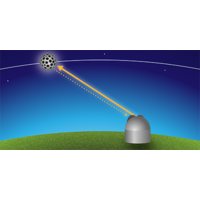
[Phys. Rev. Lett. 115, 040502] Published Mon Jul 20, 2015
21 Jul 16:43
by Marc Abrahams
Gian-Carlo Rota explained, in 1997, a difference between mathematicians and scientists:
 To a scientist, nature is a primeval forest to be explored, rich in surprising and unpredictable fauna, endowed with mysterious laws that scientists bravely wrest from the jungle. Once discovered, the laws of nature are written up by scientists for the benefit of posterity, in a language that sometimes – but not always – happens to be the language of mathematics. A scientist need not be fluent in that peculiar language that is called mathematics, just as he or she need not be fluent in Urdu or Gaelic.
Mathematicians do not agree with this view.

21 Jul 16:42
by Zilong Wang, Jun Zhao, Bettina Frank, Qiandong Ran, Giorgio Adamo, Harald Giessen and Cesare Soci

Nano Letters
DOI: 10.1021/acs.nanolett.5b01760

17 Jul 20:58
by Su-Yang Xu
17 Jul 20:56
by Kai Müller, Kevin A. Fischer, Armand Rundquist, Constantin Dory, Konstantinos G. Lagoudakis, Tomas Sarmiento, Yousif A. Kelaita, Victoria Borish, and Jelena Vučković
Author(s): Kai Müller, Kevin A. Fischer, Armand Rundquist, Constantin Dory, Konstantinos G. Lagoudakis, Tomas Sarmiento, Yousif A. Kelaita, Victoria Borish, and Jelena Vučković
With the assistance of lattice vibrations, quantum dots perform as single-photon emitters.
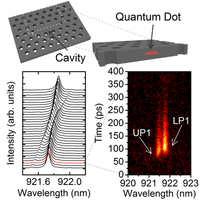
[Phys. Rev. X 5, 031006] Published Thu Jul 16, 2015
16 Jul 12:48
by Stefan Kuhn, Peter Asenbaum, Alon Kosloff, Michele Sclafani, Benjamin A. Stickler, Stefan Nimmrichter, Klaus Hornberger, Ori Cheshnovsky, Fernando Patolsky and Markus Arndt

Nano Letters
DOI: 10.1021/acs.nanolett.5b02302

15 Jul 06:10
by Mohammadreza Khorasaninejad, Francesco Aieta, Pritpal Kanhaiya, Mikhail A. Kats, Patrice Genevet, David Rousso and Federico Capasso

Nano Letters
DOI: 10.1021/acs.nanolett.5b01727

14 Jul 13:33
by Martin Mayer, Leonardo Scarabelli, Katia March, Thomas Altantzis, Moritz Tebbe, Mathieu Kociak, Sara Bals, F. Javier García de Abajo, Andreas Fery and Luis M. Liz-Marzán

Nano Letters
DOI: 10.1021/acs.nanolett.5b01833

14 Jul 13:32
by A. Cazé John C. Schotland
A. Cazé, John C. Schotland
The radiative transport equation (RTE) is used widely to describe the propagation of multiply scattered light in disordered media. In this tutorial, we present two derivations of the RTE for scalar wave fields. The first derivation is based on diagrammatic perturbation theory, while the second ... [J. Opt. Soc. Am. A 32, 1475-1484 (2015)]
14 Jul 13:32
by Valentina Parigi
Article
Exploiting the full structuration of light fields for storing multiple degrees of freedom holds great promise for applications in classical and quantum optics. Here, the authors demonstrate the storage of spatio-polarization-patterned beams into an optical memory, and its retrieval at the single-photon level.
Nature Communications doi: 10.1038/ncomms8706
Authors: Valentina Parigi, Vincenzo D’Ambrosio, Christophe Arnold, Lorenzo Marrucci, Fabio Sciarrino, Julien Laurat

12 Jul 18:40
by G. Reithmaier, M. Kaniber, F. Flassig, S. Lichtmannecker, K. Müller, A. Andrejew, J. Vučković, R. Gross and J. J. Finley

Nano Letters
DOI: 10.1021/acs.nanolett.5b01444

12 Jul 18:38
by Xiaoxia Wang, Xiujuan Zhuang, Sen Yang, Yu Chen, Qinglin Zhang, Xiaoli Zhu, Hong Zhou, Pengfei Guo, Junwu Liang, Yu Huang, Anlian Pan, and Xiangfeng Duan
Author(s): Xiaoxia Wang, Xiujuan Zhuang, Sen Yang, Yu Chen, Qinglin Zhang, Xiaoli Zhu, Hong Zhou, Pengfei Guo, Junwu Liang, Yu Huang, Anlian Pan, and Xiangfeng Duan
Researchers have demonstrated an amplifier for near-infrared light that is 20 times more powerful than previous devices and small enough to fit on an integrated circuit
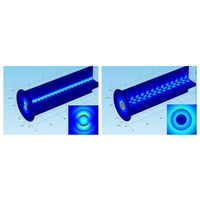
[Phys. Rev. Lett. 115, 027403] Published Fri Jul 10, 2015
10 Jul 11:22
by Nicholas W. Bartlett
Roboticists have begun to design biologically inspired robots with soft or partially soft bodies, which have the potential to be more robust and adaptable, and safer for human interaction, than traditional rigid robots. However, key challenges in the design and manufacture of soft robots include the complex fabrication processes and the interfacing of soft and rigid components. We used multimaterial three-dimensional (3D) printing to manufacture a combustion-powered robot whose body transitions from a rigid core to a soft exterior. This stiffness gradient, spanning three orders of magnitude in modulus, enables reliable interfacing between rigid driving components (controller, battery, etc.) and the primarily soft body, and also enhances performance. Powered by the combustion of butane and oxygen, this robot is able to perform untethered jumping.
Authors: Nicholas W. Bartlett, Michael T. Tolley, Johannes T. B. Overvelde, James C. Weaver, Bobak Mosadegh, Katia Bertoldi, George M. Whitesides, Robert J. Wood
10 Jul 11:22
by Daniel Rodrigo
Infrared spectroscopy is the technique of choice for chemical identification of biomolecules through their vibrational fingerprints. However, infrared light interacts poorly with nanometric-size molecules. We exploit the unique electro-optical properties of graphene to demonstrate a high-sensitivity tunable plasmonic biosensor for chemically specific label-free detection of protein monolayers. The plasmon resonance of nanostructured graphene is dynamically tuned to selectively probe the protein at different frequencies and extract its complex refractive index. Additionally, the extreme spatial light confinement in graphene—up to two orders of magnitude higher than in metals—produces an unprecedentedly high overlap with nanometric biomolecules, enabling superior sensitivity in the detection of their refractive index and vibrational fingerprints. The combination of tunable spectral selectivity and enhanced sensitivity of graphene opens exciting prospects for biosensing.
Authors: Daniel Rodrigo, Odeta Limaj, Davide Janner, Dordaneh Etezadi, F. Javier García de Abajo, Valerio Pruneri, Hatice Altug
09 Jul 20:42
by Samuel D. Stranks, Simon M. Wood, Konrad Wojciechowski, Felix Deschler, Michael Saliba, Hitesh Khandelwal, Jay B. Patel, Steve J. Elston, Laura M. Herz, Michael B. Johnston, Albertus P. H. J. Schenning, Michael G. Debije, Moritz K. Riede, Stephen M. Morris and Henry J. Snaith

Nano Letters
DOI: 10.1021/acs.nanolett.5b00678

08 Jul 12:09
by Kenneth M. Goodfellow, Chitraleema Chakraborty, Ryan Beams, Lukas Novotny and A. Nick Vamivakas

Nano Letters
DOI: 10.1021/acs.nanolett.5b01898

08 Jul 12:07
by Héctor Matías López, Jérémie Gachelin, Carine Douarche, Harold Auradou, and Eric Clément
Author(s): Héctor Matías López, Jérémie Gachelin, Carine Douarche, Harold Auradou, and Eric Clément
Self-propelling bacteria can reduce the viscosity of a fluid to zero through a collective organization of their swimming.
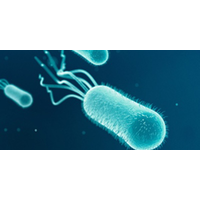
[Phys. Rev. Lett. 115, 028301] Published Tue Jul 07, 2015
07 Jul 14:06
by Christian Wagner, Matthew F. B. Green, Philipp Leinen, Thorsten Deilmann, Peter Krüger, Michael Rohlfing, Ruslan Temirov, and F. Stefan Tautz
Author(s): Christian Wagner, Matthew F. B. Green, Philipp Leinen, Thorsten Deilmann, Peter Krüger, Michael Rohlfing, Ruslan Temirov, and F. Stefan Tautz
A new scanning probe technique provides increased sensitivity to the electrostatic potential surrounding a single atom or molecule.
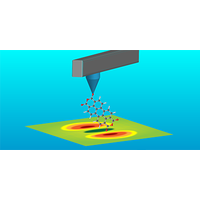
[Phys. Rev. Lett. 115, 026101] Published Mon Jul 06, 2015
05 Jul 14:43
by Yaakov Lumer, Lee Drori, Yoav Hazan, and Mordechai Segev
Author(s): Yaakov Lumer, Lee Drori, Yoav Hazan, and Mordechai Segev
The Talbot effect, where an optical field reproduces itself at constant intervals along a straight propgation line, has been demonstrated along a bent trajectory.
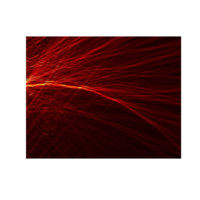
[Phys. Rev. Lett. 115, 013901] Published Thu Jul 02, 2015
03 Jul 17:09
by Frank Verstraete
Nature Physics 11, 524 (2015).
doi:10.1038/nphys3381
Author: Frank Verstraete
Quantum many-body systems are often so complex as to be intractable. An algorithm that finds the ground state of any one-dimensional quantum system has now been devised, proving that the many-body problem is tractable for quantum spin chains.

03 Jul 17:08
by G. Semeghini
Nature Physics 11, 554 (2015).
doi:10.1038/nphys3339
Authors: G. Semeghini, M. Landini, P. Castilho, S. Roy, G. Spagnolli, A. Trenkwalder, M. Fattori, M. Inguscio & G. Modugno

03 Jul 08:25
by Michael Luck
As work by the
Department of Informatics team at King's building a replacement receptionist robot (for the Strand Campus reception) progresses, and the competition to provide a face for her comes to a close, the Channel 4 TV series "Humans" is also underway.
The Independent last Saturday featured an article with one of the leaders of the robot receptionist project, Dr Matthew Howard from the
Centre for Robotics Research....
“This technology can do great things to help people,” says Dr Howard, who believes familiarity of movement and feel will breed trust. “We would like to get robots interacting with people in their everyday lives. If a robot behaves in a way that you can understand and relate to, not only are you more comfortable, you are more safe around it. You can predict how it will move because you have been around humans for your whole life. As a robot designer, you can exploit that fact.”
See the full article.

