21 Jan 11:55
by Robin Ogier, Yurui Fang, Mikael Käll, and Mikael Svedendahl
Author(s): Robin Ogier, Yurui Fang, Mikael Käll, and Mikael Svedendahl
Many of tomorrow’s photonic devices, including optical biosensors, may rely on light signals with highly particular polarization properties. A new experiment shows that an ultrathin layer of gold particles can selectively absorb or reflect a light beam depending on its polarization handedness.
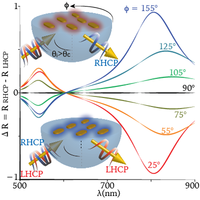
[Phys. Rev. X 5, 041019] Published Wed Nov 04, 2015
08 Dec 19:55
by Marc S. Lavine
08 Dec 19:55
by C. Riek
The ground state of quantum systems is characterized by zero-point motion. This motion, in the form of vacuum fluctuations, is generally considered to be an elusive phenomenon that manifests itself only indirectly. Here, we report direct detection of the vacuum fluctuations of electromagnetic radiation in free space. The ground-state electric-field variance is inversely proportional to the four-dimensional space-time volume, which we sampled electro-optically with tightly focused laser pulses lasting a few femtoseconds. Subcycle temporal readout and nonlinear coupling far from resonance provide signals from purely virtual photons without amplification. Our findings enable an extreme time-domain approach to quantum physics, with nondestructive access to the quantum state of light. Operating at multiterahertz frequencies, such techniques might also allow time-resolved studies of intrinsic fluctuations of elementary excitations in condensed matter.
Authors: C. Riek, D. V. Seletskiy, A. S. Moskalenko, J. F. Schmidt, P. Krauspe, S. Eckart, S. Eggert, G. Burkard, A. Leitenstorfer
09 Nov 14:43
by Joel Carpenter
Nature Photonics 9, 751 (2015).
doi:10.1038/nphoton.2015.188
Authors: Joel Carpenter, Benjamin J. Eggleton & Jochen Schröder

06 Nov 16:47
by Robin Ogier, Yurui Fang, Mikael Käll, and Mikael Svedendahl
Author(s): Robin Ogier, Yurui Fang, Mikael Käll, and Mikael Svedendahl
Many of tomorrow’s photonic devices, including optical biosensors, may rely on light signals with highly particular polarization properties. A new experiment shows that an ultrathin layer of gold particles can selectively absorb or reflect a light beam depending on its polarization handedness.
[Phys. Rev. X 5, 041019] Published Wed Nov 04, 2015
06 Nov 14:46
by Robin Ogier, Yurui Fang, Mikael Käll, and Mikael Svedendahl
Author(s): Robin Ogier, Yurui Fang, Mikael Käll, and Mikael Svedendahl
Many of tomorrow’s photonic devices, including optical biosensors, may rely on light signals with highly particular polarization properties. A new experiment shows that an ultrathin layer of gold particles can selectively absorb or reflect a light beam depending on its polarization handedness.
[Phys. Rev. X 5, 041019] Published Wed Nov 04, 2015
05 Nov 21:48
by H. Esat Kondakci
Nature Physics 11, 930 (2015).
doi:10.1038/nphys3482
Authors: H. Esat Kondakci, Ayman F. Abouraddy & Bahaa E. A. Saleh
The formation of gaps—forbidden ranges in the values of a physical parameter—is common to a variety of physical systems: from energy bandgaps of electrons in periodic lattices and their analogues in photonic, phononic and plasmonic systems to pseudo-energy gaps in aperiodic quasicrystals. Here, we predict a thermalization gap for light propagating in finite disordered structures characterized by disorder-immune chiral symmetry—the appearance of the eigenvalues and eigenvectors in skew-symmetric pairs. In these systems, the span of sub-thermal photon statistics is inaccessible to input coherent light, which—once the steady state is reached—always emerges with super-thermal statistics no matter how small the disorder level. We formulate an independent constraint of the input field for the chiral symmetry to be activated and the gap to be observed. This unique feature enables a new form of photon-statistics interferometry: the deterministic tuning of photon statistics via controlled excitation symmetry breaking realized by sculpting the amplitude or phase of the input coherent field.

05 Nov 21:48
by Alexander Szameit
Nature Physics 11, 895 (2015).
doi:10.1038/nphys3498
Author: Alexander Szameit
Disorder in arrays of evanescently coupled waveguides turns out to have unexpected consequences on the photon number statistics of coherent light.

05 Nov 17:16
by J. C. López Carreño, C. Sánchez Muñoz, D. Sanvitto, E. del Valle, and F. P. Laussy
Author(s): J. C. López Carreño, C. Sánchez Muñoz, D. Sanvitto, E. del Valle, and F. P. Laussy
Pure quantum states could be generated in polaritonic systems by exciting them with a quantum light source rather than a laser.
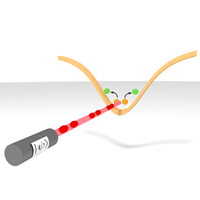
[Phys. Rev. Lett. 115, 196402] Published Wed Nov 04, 2015
05 Nov 11:10
by Amir Arbabi
Nature Nanotechnology 10, 937 (2015).
doi:10.1038/nnano.2015.186
Authors: Amir Arbabi, Yu Horie, Mahmood Bagheri & Andrei Faraon
Metasurfaces are planar structures that locally modify the polarization, phase and amplitude of light in reflection or transmission, thus enabling lithographically patterned flat optical components with functionalities controlled by design. Transmissive metasurfaces are especially important, as most optical systems used in practice operate in transmission. Several types of transmissive metasurface have been realized, but with either low transmission efficiencies or limited control over polarization and phase. Here, we show a metasurface platform based on high-contrast dielectric elliptical nanoposts that provides complete control of polarization and phase with subwavelength spatial resolution and an experimentally measured efficiency ranging from 72% to 97%, depending on the exact design. Such complete control enables the realization of most free-space transmissive optical elements such as lenses, phase plates, wave plates, polarizers, beamsplitters, as well as polarization-switchable phase holograms and arbitrary vector beam generators using the same metamaterial platform.

05 Nov 11:09
by E. Doruk Onal, Kaan Guven
The expanding application spectrum of plasmonic nanoantennas demand versatile
design approaches to tailor the antenna properties for specific requirements.
The design efforts primarily concentrate on shifting the operation wavelength
or enhancing the local fields by manipulating the size and shape of the
nanoantenna. Here, we propose a design path to control the absorption and
scattering characteristics of a dipole nanoantenna by introducing a hollow
region inside the nanostructure. The resulting contour geometry can
significantly suppress the scattering of the dipole nanoantenna and enhance its
absorption simultaneously. Both the dipole and the contour dipole nanoantenna
couple to equivalent amount of the incident radiation. The dipole nanoantenna
scatters 84% of the coupled power (absorbs the remaining 16%) whereas the
contour dipole structure scatters only 28% of the coupled power (absorbs the
remaining 72%). This constitutes the transformation from scatter to absorber
nanoantenna. The scattering of a contour nanoantenna can be further suppressed
by incorporating a lossless dielectric in the hollow region without altering
its absorption. We also demonstrate the applicability of scattering suppression
and absorption enhancement features of the contour design in other nanoantenna
geometries such as the self-assembly compatible nanoantenna structures of
nanodisk and nanoring chains. The benefits of the contour design can be readily
utilized in diverse applications; including bioplasmonics, medical
diagnosis/therapy, cloaked sensing, photovoltaics and thermoplasmonics.
03 Nov 20:20
by Sébastien Moulinet and Mokhtar Adda-Bedia
Author(s): Sébastien Moulinet and Mokhtar Adda-Bedia
A balloon with low internal pressure bursts through the growth of a single crack, but above a critical pressure, it breaks apart from multiple cracks.
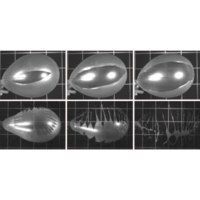
[Phys. Rev. Lett. 115, 184301] Published Fri Oct 30, 2015
03 Nov 20:19
by A. Berger, R. Alcaraz de la Osa, A. K. Suszka, M. Pancaldi, J. M. Saiz, F. Moreno, H. P. Oepen, and P. Vavassori
Author(s): A. Berger, R. Alcaraz de la Osa, A. K. Suszka, M. Pancaldi, J. M. Saiz, F. Moreno, H. P. Oepen, and P. Vavassori
Ferromagnetic nanodiscs can exhibit an enhancement, of more than 100%, in their magneto-optical activity. This effect could be used in nano-optical devices for communications, energy harvesting, and biosensors.
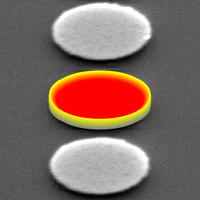
[Phys. Rev. Lett. 115, 187403] Published Fri Oct 30, 2015
30 Oct 20:34
by G. Di Martino, F. B. Michaelis, A. R. Salmon, S. Hofmann and J. J. Baumberg

Nano Letters
DOI: 10.1021/acs.nanolett.5b02953

30 Oct 10:22
by Yuanmu Yang, Wenyi Wang, Abdelaziz Boulesbaa, Ivan I. Kravchenko, Dayrl P. Briggs, Alexander Puretzky, David Geohegan and Jason Valentine

Nano Letters
DOI: 10.1021/acs.nanolett.5b02802

30 Oct 10:22
by Ankun Yang, Zhongyang Li, Michael P. Knudson, Alexander J. Hryn, Weijia Wang, Koray Aydin and Teri W. Odom

ACS Nano
DOI: 10.1021/acsnano.5b05419

27 Oct 20:36
by Zhongming Li, Weizhi Mao, Mary Sajini Devadas and Gregory V. Hartland

Nano Letters
DOI: 10.1021/acs.nanolett.5b03833

27 Oct 20:36
by Freddy T. Rabouw, Marko Kamp, Relinde J. A. van Dijk-Moes, Daniel R. Gamelin, A. Femius Koenderink, Andries Meijerink and Daniël Vanmaekelbergh

Nano Letters
DOI: 10.1021/acs.nanolett.5b03818

27 Oct 20:36
by Pan Wang, Yipei Wang, Zongyin Yang, Xin Guo, Xing Lin, Xiao-Chong Yu, Yun-Feng Xiao, Wei Fang, Lei Zhang, Guowei Lu, Qihuang Gong and Limin Tong

Nano Letters
DOI: 10.1021/acs.nanolett.5b03330

24 Oct 19:56
by Yoshio Nishiyama, Kohei Imura and Hiromi Okamoto

Nano Letters
DOI: 10.1021/acs.nanolett.5b03610

22 Oct 15:24
by Leonetta Baldassarre, Emilie Sakat, Jacopo Frigerio, Antonio Samarelli, Kevin Gallacher, Eugenio Calandrini, Giovanni Isella, Douglas J. Paul, Michele Ortolani and Paolo Biagioni

Nano Letters
DOI: 10.1021/acs.nanolett.5b03247

21 Oct 14:40
by Heesun Jung, Hoon Cha, Daedu Lee and Sangwoon Yoon

ACS Nano
DOI: 10.1021/acsnano.5b05568

20 Oct 21:44
by Lobsang Wangdu
19 Oct 10:16
by admin@smbc-comics.com

Hovertext: A can also pass the Turing test by making people less human.
New comic!Today's News:
Today's comic reveals David Shiffman's SECRET PLOT.
17 Oct 18:59
by Toon Coenen, David T. Schoen, Sander A. Mann, Said R. K. Rodriguez, Benjamin J. M. Brenny, Albert Polman and Mark L. Brongersma

Nano Letters
DOI: 10.1021/acs.nanolett.5b03614

09 Oct 13:36
by Young-Shin Park, Wan Ki Bae, Thomas Baker, Jaehoon Lim and Victor I. Klimov

Nano Letters
DOI: 10.1021/acs.nanolett.5b02595

07 Oct 19:03
by KyeoReh Lee, Junsung Lee, Jung-Hoon Park, Ji-Ho Park, and YongKeun Park
Author(s): KyeoReh Lee, Junsung Lee, Jung-Hoon Park, Ji-Ho Park, and YongKeun Park
Rewinding the arrow of time via phase conjugation is an intriguing phenomenon made possible by the wave property of light. Here, we demonstrate the realization of a one-wave optical phase conjugation mirror using a spatial light modulator. An adaptable single-mode filter is created, and a phase-conj…
[Phys. Rev. Lett. 115, 153902] Published Tue Oct 06, 2015
07 Oct 19:01
by A. B. Young, A. C. T. Thijssen, D. M. Beggs, P. Androvitsaneas, L. Kuipers, J. G. Rarity, S. Hughes, and R. Oulton
Author(s): A. B. Young, A. C. T. Thijssen, D. M. Beggs, P. Androvitsaneas, L. Kuipers, J. G. Rarity, S. Hughes, and R. Oulton
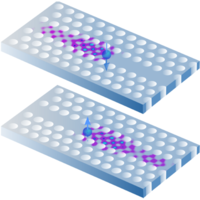
Entangled states of spin orientation and directional photons could be created by carefully placing of a quantum dot in a photonic crystal waveguide.
[Phys. Rev. Lett. 115, 153901] Published Tue Oct 06, 2015
07 Oct 18:16
by Petr Stepanov, Adrien Delga, Niels Gregersen, Emanuel Peinke, Mathieu Munsch, Jean Teissier, Jesper Mørk, Maxime Richard, Joël Bleuse, Jean-Michel Gérard and Julien Claudon
Photonic
trumpets are broadband dielectric antennas that efficiently funnel the emission of a point-like quantum emitter—such as a semiconductor quantum dot—into a Gaussian free-space beam. After describing guidelines for the taper design, we present a “giant” photonic
trumpet. The device features a bottom diameter of 210 nm and a
wide top facet. Using Fourier microscopy, we show that 95% of the emitted beam is intercepted by a modest numerical aperture of 0.35. Furthermore, far-field measurements reveal a highly Gaussian angular profile, in agreement with the predicted overlap to a Gaussian beam
. Future application prospects include the direct coupling of these devices to a cleaved single-mode optical fiber. The calculated transmission from the taper base to the fiber already reaches 0.59, and we discuss strategies to further improve this figure of merit.
07 Oct 18:15
by Hartsfield, T., Chang, W.-S., Yang, S.-C., Ma, T., Shi, J., Sun, L., Shvets, G., Link, S., Li, X.
Plasmonic cavities represent a promising platform for controlling light–matter interaction due to their exceptionally small mode volume and high density of photonic states. Using plasmonic cavities for enhancing light’s coupling to individual two-level systems, such as single semiconductor quantum dots (QD), is particularly desirable for exploring cavity quantum electrodynamic (QED)...
