Mohammad Ramezani, Alexei Halpin, Antonio I. Fernández-Domínguez, Johannes Feist, Said Rahimzadeh-Kalaleh Rodriguez, Francisco J. Garcia-Vidal, Jaime Gómez Rivas
Metallic nanostructures provide a toolkit for the generation of coherent light below the diffraction limit. Plasmonic-based lasing relies on the population inversion of emitters (such as organic fluorophores) along with feedback provided by plasmonic resonances. In this regime, known as weak ... [Optica 4, 31-37 (2017)]
Riccardo Sapienza
Shared posts
01 Jan 23:22
Phase Transitions in Diffusion of Light
by Roxana Rezvani Naraghi and Aristide Dogariu
Author(s): Roxana Rezvani Naraghi and Aristide Dogariu
It has been a long time belief that, with increasing the scattering strength of multiple scattering media, the transport of light gradually slows down and, eventually, comes to a halt corresponding to a localized state. Here we present experimental evidence that different stages emerge in this evolu…
[Phys. Rev. Lett. 117, 263901] Published Wed Dec 21, 2016
26 Dec 19:54

Photovoltaic concepts inspired by coherence effects in photosynthetic systems
by Jean-Luc Brédas
Nature Materials 16, 35 (2017). doi:10.1038/nmat4767
Authors: Jean-Luc Brédas, Edward H. Sargent & Gregory D. Scholes
24 Dec 08:02
[Research Article] Nanometer resolution imaging and tracking of fluorescent molecules with minimal photon fluxes
by Francisco Balzarotti
24 Dec 08:02
[Report] Strong coupling of a single electron in silicon to a microwave photon
by X. Mi
24 Dec 08:00
Whispering Gallery Mode Lasing from Self-Assembled Hexagonal Perovskite Single Crystals and Porous Thin Films Decorated by Dielectric Spherical Resonators
by Packiyaraj Perumal, Cih-Su Wang, Karunakara Moorthy Boopathi, Golam Haider, Wei-Cheng Liao and Yang-Fang Chen

ACS Photonics
DOI: 10.1021/acsphotonics.6b00725
21 Dec 09:05
Where Does Energy Go in Electron Energy Loss Spectroscopy of Nanostructures?
by Gabriel D. Bernasconi, Jérémy Butet, Valentin Flauraud, Duncan Alexander, Juergen Brugger and Olivier J. F. Martin

ACS Photonics
DOI: 10.1021/acsphotonics.6b00761
15 Dec 18:21
Wave propagation through disordered media without backscattering and intensity variations. (arXiv:1612.03070v1 [physics.optics])
by Konstantinos G. Markis, Andre Brandstötter, Philipp Ambichl, Ziad H. Musslimani, Stefan Rotter
A fundamental manifestation of wave scattering in a disordered medium is the highly complex intensity pattern the waves acquire due to multi-path interference. Here we show that these intensity variations can be entirely suppressed by adding disorder-specific gain and loss components to the medium. The resulting constant-intensity (CI) waves in such non-Hermitian scattering landscapes are free of any backscattering and feature perfect transmission through the disorder. An experimental demonstration of these unique wave states is envisioned based on spatially modulated pump beams that can flexibly control the gain and loss components in an active medium.
Jacopo.bertolotti likes this
15 Dec 10:26
Photoinduced Modification of Single-Photon Emitters in Hexagonal Boron Nitride
by Zav Shotan, Harishankar Jayakumar, Christopher R. Considine, Mažena Mackoit, Helmut Fedder, Jörg Wrachtrup, Audrius Alkauskas, Marcus W. Doherty, Vinod M. Menon and Carlos A. Meriles

ACS Photonics
DOI: 10.1021/acsphotonics.6b00736
15 Dec 08:20

Light Manipulation by Guanine Crystals in Organisms: Biogenic Scatterers, Mirrors, Multilayer Reflectors and Photonic Crystals
by Dvir Gur, Benjamin A. Palmer, Steve Weiner, Lia Addadi
Guanine crystals are widely used in nature to manipulate light. The first part of this feature article explores how organisms are able to construct an extraordinary array of optical “devices” including diffuse scatterers, broadband and narrowband reflectors, tunable photonic crystals, and image-forming mirrors by varying the size, morphology, and arrangement of guanine crystals. The second part presents an overview of some of the properties of crystalline guanine to explain why this material is ideally suited for such optical applications. The high reflectivity of many natural optical systems ultimately derives from the fact that guanine crystals have an extremely high refractive index—a product of its anisotropic crystal structure comprised of densely stacked H-bonded layers. In order to optimize their reflectivity, many organisms exert exquisite control over the crystal morphology, forming plate-like single crystals in which the high refractive index face is preferentially expressed. Guanine-based optics are used in a wide range of biological functions such as in camouflage, display, and vision, and exhibit a degree of versatility, tunability, and complexity that is difficult to incorporate into artificial devices using conventional engineering approaches. These biological systems could inspire the next generation of advanced optical materials.

How are organisms able to construct and control diffuse scatterers in white spiders, broadband and narrowband reflectors in fish scales, tunable photonic crystals in chameleons and copepods, and image-forming mirrors in scallop eyes? Just by varying the size, morphology, and arrangement of the guanine crystals in their cells.
14 Dec 20:44


Optical Nanoimaging of Hyperbolic Surface Polaritons at the Edges of van der Waals Materials
by P. Li, I. Dolado, F. J. Alfaro-Mozaz, A. Yu. Nikitin, F. Casanova, L. E. Hueso, S. Vélez and R. Hillenbrand

Nano Letters
DOI: 10.1021/acs.nanolett.6b03920
13 Dec 09:54
Designer Multimode Localized Random Lasing in Amorphous Lattices at Terahertz Frequencies
by Yongquan Zeng, Guozhen Liang, Hou Kun Liang, Shampy Mansha, Bo Meng, Tao Liu, Xiaonan Hu, Jin Tao, Lianhe Li, Alexander Giles Davies, Edmund Harold Linfield, Ying Zhang, Yidong Chong and Qi Jie Wang

ACS Photonics
DOI: 10.1021/acsphotonics.6b00711
12 Dec 10:31
[Report] Quantum optical circulator controlled by a single chirally coupled atom
by Michael Scheucher
12 Dec 10:28


Fluorescence Enhancement and Spectral Shaping of Silicon Quantum Dot Monolayer by Plasmonic Gap Resonances
by Shiho Yashima, Hiroshi Sugimoto, Hiroyuki Takashina and Minoru Fujii

The Journal of Physical Chemistry C
DOI: 10.1021/acs.jpcc.6b09124
12 Dec 10:27
Suppressed Quenching and Strong Coupling of Purcell-Enhanced Single-Molecule Emission in Plasmonic Nanocavities. (arXiv:1612.02611v2 [physics.optics] UPDATED)
by Nuttawut Kongsuwan, Angela Demetriadou, Rohit Chikkaraddy, Felix Benz, Vladimir A. Turek, Ulrich F. Keyser, Jeremy J. Baumberg, Ortwin Hess
An emitter in the vicinity of a metal nanostructure is quenched by its decay through non-radiative channels, leading to the belief in a zone of inactivity for emitters placed within $<$10nm of a plasmonic nanostructure. Here we demonstrate that in tightly-coupled plasmonic resonators forming nanocavities "quenching is quenched" due to plasmon mixing. Unlike isolated nanoparticles, plasmonic nanocavities show mode hybridization which massively enhances emitter excitation and decay via radiative channels. This creates ideal conditions for realizing single-molecule strong-coupling with plasmons, evident in dynamic Rabi-oscillations and experimentally confirmed by laterally dependent emitter placement through DNA-origami.
12 Dec 10:27
Optical magnetic detection of single-neuron action potentials using quantum defects in diamond [Physics]
by John F. Barry, Matthew J. Turner, Jennifer M. Schloss, David R. Glenn, Yuyu Song, Mikhail D. Lukin, Hongkun Park, Ronald L. Walsworth
Magnetic fields from neuronal action potentials (APs) pass largely unperturbed through biological tissue, allowing magnetic measurements of AP dynamics to be performed extracellularly or even outside intact organisms. To date, however, magnetic techniques for sensing neuronal activity have either operated at the macroscale with coarse spatial and/or temporal resolution—e.g., magnetic...
09 Dec 09:33
Perfect Transmission through Disordered Media. (arXiv:1612.02451v2 [physics.class-ph] UPDATED)
by Chris King, Simon Horsley, Tom Philbin
The transmission of a wave through a randomly chosen `pile of plates' typically decreases exponentially with the number of plates, a phenomenon closely related to Anderson localisation. In apparent contradiction we construct disordered planar permittivity profiles which are complex-valued (i.e. have reactive and dissipative properties) that appear to vary randomly with position, yet are one-way reflectionless for all angles of incidence and exhibit a transmission coefficient of unity. We contrast these complex-valued 'random' planar permittivity profiles with a family of real-valued, two-way reflectionless and perfectly transmitting disordered permittivity profiles that function only for a single angle of incidence and frequency.
Jacopo.bertolotti likes this
08 Dec 20:53

Holographic free-electron light source
by Guanhai Li
Riccardo Sapienzalo chiamavano bull's eye diffraction
Holographic free-electron light source
Nature Communications, Published online: 2 December 2016; doi:10.1038/ncomms13705
Controlling the generation of light in nano-scale systems is a challenging task and is of growing importance. Here, Li et al. propose a means of controlling the wavefront of light emanating from a single nano scale emitter by holographic principles using a plasmonic metasurface.
06 Dec 09:23

The quasiparticle zoo
by Liesbeth Venema
Nature Physics 12, 1085 (2016). doi:10.1038/nphys3977
Authors: Liesbeth Venema, Bart Verberck, Iulia Georgescu, Giacomo Prando, Elsa Couderc, Silvia Milana, Maria Maragkou, Lina Persechini, Giulia Pacchioni & Luke Fleet
Quasiparticles are an extremely useful concept that provides a more intuitive understanding of complex phenomena in many-body physics. As such, they appear in various contexts, linking ideas across different fields and supplying a common language.
Jacopo.bertolotti likes this
06 Dec 09:22

Anderson Localization of Thermal Phonons Leads to a Thermal Conductivity Maximum
by Jonathan Mendoza and Gang Chen

Nano Letters
DOI: 10.1021/acs.nanolett.6b03550
Xuzhen199 likes this
04 Dec 21:04
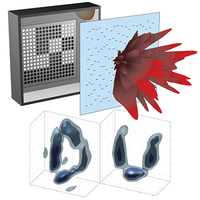
Microwave Imaging Using a Disordered Cavity with a Dynamically Tunable Impedance Surface
by Timothy Sleasman, Mohammadreza F. Imani, Jonah N. Gollub, and David R. Smith
Author(s): Timothy Sleasman, Mohammadreza F. Imani, Jonah N. Gollub, and David R. Smith
When coupled to a tuning mechanism, a disordered medium provides a powerful means for shaping electromagnetic waveforms. The authors leverage this functionality to conduct volumetric computational imaging: A deformed cavity is outfitted with tailored, irregular surfaces, and its microwave resonant modes are projected into an imaging domain to retrieve the scene’s spatial information. This approach could be applied to biomedical imaging, security screening, or wireless power transfer or telecommunications.
[Phys. Rev. Applied 6, 054019] Published Tue Nov 29, 2016
02 Dec 21:31
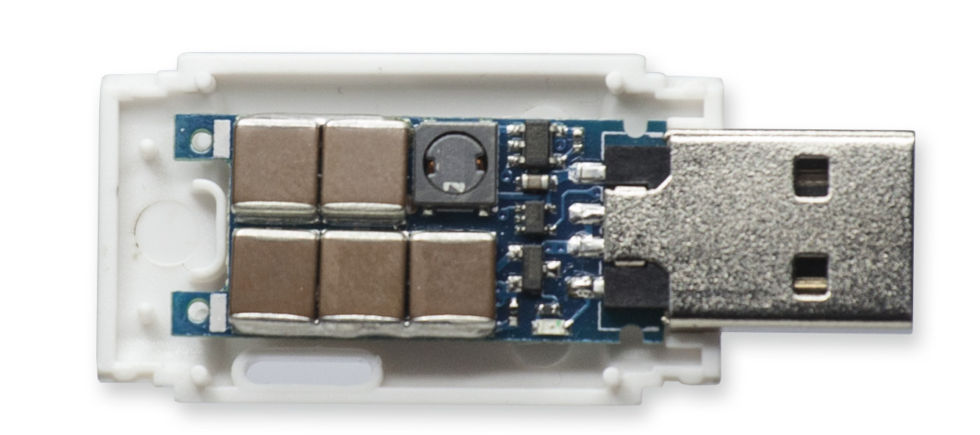
USB Killer, yours for $50, lets you easily fry almost every device
by Sebastian Anthony
Last year we wrote about the "USB Killer"—a DIY USB stick that fried almost everything (laptops, smartphones, consoles, cars) that it was plugged into. Now the USB Killer has been mass produced—you can buy it online for about £50/$50. Now everyone can destroy just about every computer that has a USB port. Hooray.
The commercialised USB Killer looks like a fairly humdrum memory stick. You can even purchase a "Test Shield" for £15/$15, which lets you try out the kill stick—watch the spark of electricity arc between the two wires!—without actually frying the target device, though I'm not sure why you would want to spend £65 to do that. The website proudly states that the USB Killer is CE approved, meaning it has passed a number of EU electrical safety directives.
02 Dec 09:33
11/30/16 PHD comic: 'Academic Apps'
| Piled Higher & Deeper by Jorge Cham |
www.phdcomics.com
|
|
 |
||
|
title:
"Academic Apps" - originally published
11/30/2016
For the latest news in PHD Comics, CLICK HERE! |
||
01 Dec 09:31

Lithographically Defined, Room Temperature Low Threshold Subwavelength Red-Emitting Hybrid Plasmonic Lasers
by Ning Liu, Agnieszka Gocalinska, John Justice, Farzan Gity, Ian Povey, Brendan McCarthy, Martyn Pemble, Emanuele Pelucchi, Hong Wei, Christophe Silien, Hongxing Xu and Brian Corbett

Nano Letters
DOI: 10.1021/acs.nanolett.6b04017
01 Dec 09:30

Split-Wedge Antennas with Sub-5 nm Gaps for Plasmonic Nanofocusing
by Xiaoshu Chen, Nathan C. Lindquist, Daniel J. Klemme, Prashant Nagpal, David J. Norris and Sang-Hyun Oh

Nano Letters
DOI: 10.1021/acs.nanolett.6b04113
30 Nov 08:46
Unreasonable effectiveness of learning neural networks: From accessible states and robust ensembles to basic algorithmic schemes [Computer Sciences]
by Carlo Baldassi, Christian Borgs, Jennifer T. Chayes, Alessandro Ingrosso, Carlo Lucibello, Luca Saglietti, Riccardo Zecchina
In artificial neural networks, learning from data is a computationally demanding task in which a large number of connection weights are iteratively tuned through stochastic-gradient-based heuristic processes over a cost function. It is not well understood how learning occurs in these systems, in particular how they avoid getting trapped in...
29 Nov 19:38
Ultrafast Coherent Dynamics of a Photonic Crystal All-Optical Switch
by Pierre Colman, Per Lunnemann, Yi Yu, and Jesper Mørk
Author(s): Pierre Colman, Per Lunnemann, Yi Yu, and Jesper Mørk
We present pump-probe measurements of an all-optical photonic crystal switch based on a nanocavity, resolving fast coherent temporal dynamics. The measurements demonstrate the importance of coherent effects typically neglected when considering nanocavity dynamics. In particular, we report the observ…
[Phys. Rev. Lett. 117, 233901] Published Tue Nov 29, 2016
24 Nov 08:27
Far- and Near-Field Broad-Band Magneto-Optical Functionalities Using Magnetoplasmonic Nanorods
by Gaspar Armelles, Alfonso Cebollada, Fernando García, Antonio García-Martín and Nuno de Sousa

ACS Photonics
DOI: 10.1021/acsphotonics.6b00670
24 Nov 08:18

Photoinduced Force Mapping of Plasmonic Nanostructures
by Thejaswi U. Tumkur, Xiao Yang, Benjamin Cerjan, Naomi J. Halas, Peter Nordlander and Isabell Thomann

Nano Letters
DOI: 10.1021/acs.nanolett.6b04245