Shared posts

28 Mar 20:06

Localization in random fractal lattices

by Arkadiusz Kosior and Krzysztof Sacha

Author(s): Arkadiusz Kosior and Krzysztof Sacha

Localization and transport of a quantum particle in fractal lattices with random-site connectivity and without any diagonal disorder are investigated. It is the random hopping terms that introduce disorder-causing localization of a single-particle wave function. The lattices are generated so that their fractal (Hausdorff and spectral) dimensions are independently controlled. Therefore, it is possible to analyze how different fractal dimensions influence the localization properties, which is the main purpose of this paper.


[Phys. Rev. B 95, 104206] Published Mon Mar 27, 2017

27 Mar 20:29

All-Dielectric Color Filters Using SiGe-Based Mie Resonator Arrays

by Thomas Wood, Meher Naffouti, Johann Berthelot, Thomas David, Jean-Benoît Claude, Léo Métayer, Anne Delobbe, Luc Favre, Antoine Ronda, Isabelle Berbezier, Nicolas Bonod and Marco Abbarchi

TOC Graphic

ACS Photonics
DOI: 10.1021/acsphotonics.6b00944
26 Mar 21:07

Single-Photon Nanoantennas

by A. Femius Koenderink

TOC Graphic

ACS Photonics
DOI: 10.1021/acsphotonics.7b00061
23 Mar 22:32

Generation of Coherent Light by a Moving Medium

by Anatoly A. Svidzinsky, Fu Li, and Xiwen Zhang

Author(s): Anatoly A. Svidzinsky, Fu Li, and Xiwen Zhang

We show that steady nonuniform motion of a medium through an optical resonator can yield light amplification at the resonator frequency. High gain can be achieved if at the generated frequency the medium refractive index is close to zero or the medium has a very strong frequency dispersion. We also ...


[Phys. Rev. Lett. 118, 123902] Published Thu Mar 23, 2017

23 Mar 21:59

Predatory journals recruit fake editor

by Piotr Sorokowski

Predatory journals recruit fake editor

Nature 543, 7646 (2017). doi:10.1038/543481a

Authors: Piotr Sorokowski, Emanuel Kulczycki, Agnieszka Sorokowska & Katarzyna Pisanski

An investigation finds that dozens of academic titles offered 'Dr Fraud' — a sham, unqualified scientist — a place on their editorial board. Katarzyna Pisanski and colleagues report.

23 Mar 08:58

Complex Active Optical Networks as a New Laser Concept

by Stefano Lepri, Cosimo Trono, and Giovanni Giacomelli

Author(s): Stefano Lepri, Cosimo Trono, and Giovanni Giacomelli

Complex optical networks containing one or more gain sections are investigated, and the evidence of lasing action is reported; the emission spectrum reflects the topological disorder induced by the connections. A theoretical description compares well with the measurements, mapping the networks to di...


[Phys. Rev. Lett. 118, 123901] Published Tue Mar 21, 2017

21 Mar 21:35

Implementing structural slow light on short length scales: the photonic speed bump

by Rémi Faggiani
Rémi Faggiani, Jianji Yang, Richard Hostein, Philippe Lalanne
One-dimensional (1D) infinite periodic systems exhibit vanishing group velocity and diverging density of states (DOS) near band edges. However, in practice, systems have finite sizes, and inevitably, this prompts the question of whether helpful physical quantities related to infinite systems, such ... [Optica 4, 393-399 (2017)]
21 Mar 21:34

Mode Volume, Energy Transfer, and Spaser Threshold in Plasmonic Systems with Gain

by Tigran V. Shahbazyan

TOC Graphic

ACS Photonics
DOI: 10.1021/acsphotonics.7b00088
18 Mar 21:21

How Light Is Emitted by Plasmonic Metals

by Jan Mertens, Marie-Elena Kleemann, Rohit Chikkaraddy, Prineha Narang and Jeremy J. Baumberg

TOC Graphic

Nano Letters
DOI: 10.1021/acs.nanolett.7b00332
18 Mar 21:18

Efficient Third Harmonic Generation from Metal–Dielectric Hybrid Nanoantennas

by Toshihiko Shibanuma, Gustavo Grinblat, Pablo Albella and Stefan A. Maier

TOC Graphic

Nano Letters
DOI: 10.1021/acs.nanolett.7b00462
16 Mar 17:31

High-resolution non-destructive three-dimensional imaging of integrated circuits

by Mirko Holler

High-resolution non-destructive three-dimensional imaging of integrated circuits

Nature 543, 7645 (2017). doi:10.1038/nature21698

Authors: Mirko Holler, Manuel Guizar-Sicairos, Esther H. R. Tsai, Roberto Dinapoli, Elisabeth Müller, Oliver Bunk, Jörg Raabe & Gabriel Aeppli

Modern nanoelectronics has advanced to a point at which it is impossible to image entire devices and their interconnections non-destructively because of their small feature sizes and the complex three-dimensional structures resulting from their integration on a chip. This metrology gap implies a lack of direct feedback between design and manufacturing processes, and hampers quality control during production, shipment and use. Here we demonstrate that X-ray ptychography—a high-resolution coherent diffractive imaging technique—can create three-dimensional images of integrated circuits of known and unknown designs with a lateral resolution in all directions down to 14.6 nanometres. We obtained detailed device geometries and corresponding elemental maps, and show how the devices are integrated with each other to form the chip. Our experiments represent a major advance in chip inspection and reverse engineering over the traditional destructive electron microscopy and ion milling techniques. Foreseeable developments in X-ray sources, optics and detectors, as well as adoption of an instrument geometry optimized for planar rather than cylindrical samples, could lead to a thousand-fold increase in efficiency, with concomitant reductions in scan times and voxel sizes.

15 Mar 23:06

Metasurface Polarization Optics: Independent Phase Control of Arbitrary Orthogonal States of Polarization

by J. P. Balthasar Mueller, Noah A. Rubin, Robert C. Devlin, Benedikt Groever, and Federico Capasso

Author(s): J. P. Balthasar Mueller, Noah A. Rubin, Robert C. Devlin, Benedikt Groever, and Federico Capasso

We present a method allowing for the imposition of two independent and arbitrary phase profiles on any pair of orthogonal states of polarization—linear, circular, or elliptical—relying only on simple, linearly birefringent wave plate elements arranged into metasurfaces. This stands in contrast to pr...


[Phys. Rev. Lett. 118, 113901] Published Tue Mar 14, 2017

15 Mar 23:01

Researchers should reach beyond the science bubble

Researchers should reach beyond the science bubble

Nature 542, 7642 (2017). doi:10.1038/542391a

Scientists in the United States and elsewhere ought to address the needs and employment prospects of taxpayers who have seen little benefit from scientific advances.

15 Mar 23:00

Static non-reciprocity in mechanical metamaterials

by Corentin Coulais

Static non-reciprocity in mechanical metamaterials

Nature 542, 7642 (2017). doi:10.1038/nature21044

Authors: Corentin Coulais, Dimitrios Sounas & Andrea Alù

Reciprocity is a general, fundamental principle governing various physical systems, which ensures that the transfer function—the transmission of a physical quantity, say light intensity—between any two points in space is identical, regardless of geometrical or material asymmetries. Breaking this transmission symmetry offers enhanced control over signal transport, isolation and source protection. So far, devices that break reciprocity (and therefore show non-reciprocity) have been mostly considered in dynamic systems involving electromagnetic, acoustic and mechanical wave propagation associated with fields varying in space and time. Here we show that it is possible to break reciprocity in static systems, realizing mechanical metamaterials that exhibit vastly different output displacements under excitation from different sides, as well as one-way displacement amplification. This is achieved by combining large nonlinearities with suitable geometrical asymmetries and/or topological features. In addition to extending non-reciprocity and isolation to statics, our work sheds light on energy propagation in nonlinear materials with asymmetric crystalline structures and topological properties. We anticipate that breaking reciprocity will open avenues for energy absorption, conversion and harvesting, soft robotics, prosthetics and optomechanics.

12 Mar 21:11

Photonic hyperuniform networks obtained by silicon double inversion of polymer templates

by Nicolas Muller
Nicolas Muller, Jakub Haberko, Catherine Marichy, Frank Scheffold
Hyperuniform disordered networks belong to a peculiar class of structured materials predicted to display isotropic complete photonic bandgaps for a refractive index contrast larger than 3. The practical realization of such photonic designer materials is challenging, however, as it requires control ... [Optica 4, 361-366 (2017)]
12 Mar 21:00

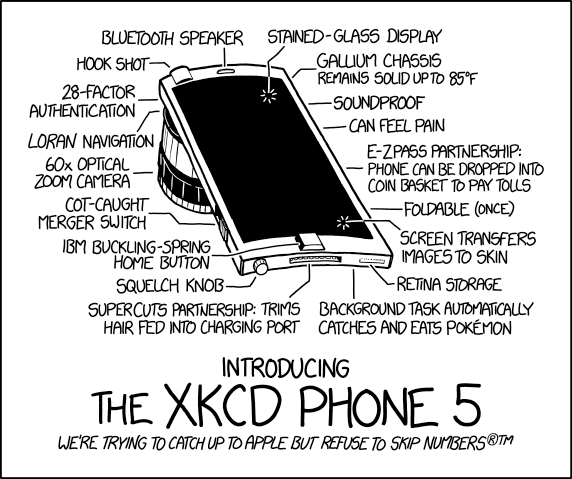
xkcd Phone 5

The phone will be collected by the toll operators and mailed back to you within 4-6 weeks.
08 Mar 14:53

Directional Local Density of States of Classical and Quantum Propagating Surface Plasmons

by Martin Berthel, Quanbo Jiang, Aline Pham, Joel Bellessa, Cyriaque Genet, Serge Huant, and Aurélien Drezet

Author(s): Martin Berthel, Quanbo Jiang, Aline Pham, Joel Bellessa, Cyriaque Genet, Serge Huant, and Aurélien Drezet

Surface plasmons (SPs) are key excitations for manipulating light in two dimensions, as in integrated optical circuits on chips. Here the authors show how to filter, in selected directions, the signal due to SP motion in a collimating device. Considering both the classical and quantum optical regimes, they interpret their findings in terms of a propagative electromagnetic local density of states. This approach could also be used in other quantum-technology contexts, e.g. to optimize the coupling efficiency of quantum emitters.


[Phys. Rev. Applied 7, 014021] Published Fri Jan 27, 2017

08 Mar 14:51

Synopsis: A Neat Way to Slow Down Light

A new technique slows down light in a crystal by simply shining a laser on it and varying an applied voltage.


[Physics] Published Tue Mar 07, 2017

07 Mar 21:01

Optical Phase Conjugation with Less Than a Photon per Degree of Freedom

by M. Jang, C. Yang, and I. M. Vellekoop

Author(s): M. Jang, C. Yang, and I. M. Vellekoop

When a beam of light is sent through a nearly opaque material, the scattered light that emerges can be unscrambled even with few photons detected.


[Phys. Rev. Lett. 118, 093902] Published Fri Mar 03, 2017

04 Mar 21:04

Science is told by the victors and Learning to build models

by Ross H. McKenzie
A common quote about history is that "History is written by the victors". The over-simplified point is that sometimes the losers of a war are obliterated (or at least lose power) and so don't have the opportunity to tell their side of the story. In contrast, the victors want to propagate a one-sided story about their heroic win over their immoral adversaries. The origin of this quote is debatable but there is certainly a nice article where George Orwell discusses the problem in the context of World War II.

What does this have to do with teaching science?
The problem is that textbooks present nice clean discussions of successful theories and models that rarely engage with the complex and tortuous path that was taken to get to the final version.
If the goal is "efficient" learning and minimisation of confusion this is appropriate.
However, we should ask whether this is the best way for students to actually learn how to DO and understand science.

I have been thinking about this because this week I am teaching the Drude model in my solid state physics course. Because of its simplicity and success, it is an amazing and beautiful theory. But, it is worth thinking about two key steps in constructing the model; steps that are common (and highly non-trivial) in constructing any theoretical model in science.

1. Deciding which experimental observables and results one wants to describe.

2. Deciding which parameters or properties will be ingredients of the model.

For 1. it is Ohm's law, Fourier's law, Hall effect, Drude peak, UV transparency of metals, Weidemann-Franz, magnetoresistance, thermoelectric effect, specific heat, ...

For 2. one starts with only conduction electrons (not valence electrons or ions), no crystal structure or chemical detail (except valence), and focuses on averages (velocity, scattering time, density) rather than standard deviations, ...

In hindsight, it is all "obvious" and "reasonable" but spare a thought for Drude in 1900. It was only 3 years after the discovery of the electron, before people were even certain that atoms existed, and certainly before the Bohr model...

This issue is worth thinking about as we struggle to describe and understand complex systems such as society, the economy, or biological networks. One can nicely see 1. and 2. above in a modest and helpful article by William Bialek, Perspectives on theory at the interface of physics and biology.

01 Mar 14:03

Lasing Action with Gold Nanorod Hyperbolic Metamaterials

by Rohith Chandrasekar, Zhuoxian Wang, Xiangeng Meng, Shaimaa I. Azzam, Mikhail Y. Shalaginov, Alexei Lagutchev, Young L. Kim, Alexander Wei, Alexander V. Kildishev, Alexandra Boltasseva and Vladimir M. Shalaev

TOC Graphic

ACS Photonics
DOI: 10.1021/acsphotonics.7b00010
01 Mar 14:03

Deep Learning for Design and Retrieval of Nano-photonic Structures. (arXiv:1702.07949v3 [physics.optics] UPDATED)

by Itzik Malkiel, Achiya Nagler, Michael Mrejen, Uri Arieli, Lior Wolf, Haim Suchowski

Our visual perception of our surroundings is ultimately limited by the diffraction limit, which stipulates that optical information smaller than roughly half the illumination wavelength is not retrievable. Over the past decades, many breakthroughs have led to unprecedented imaging capabilities beyond the diffraction-limit, with applications in biology and nanotechnology. In this context, nano-photonics has revolutionized the field of optics in recent years by enabling the manipulation of light-matter interaction with subwavelength structures. However, despite the many advances in this field, its impact and penetration in our daily life has been hindered by a convoluted and iterative process, cycling through modeling, nanofabrication and nano-characterization. The fundamental reason is the fact that not only the prediction of the optical response is very time consuming and requires solving Maxwell's equations with dedicated numerical packages. But, more significantly, the inverse problem, i.e. designing a nanostructure with an on-demand optical response, is currently a prohibitive task even with the most advanced numerical tools due to the high non-linearity of the problem. Here, we harness the power of Deep Learning, a new path in modern machine learning, and show its ability to predict the geometry of nanostructures based solely on their far-field response. This approach also addresses in a direct way the currently inaccessible inverse problem breaking the ground for on-demand design of optical response with applications such as sensing, imaging and also for plasmon's mediated cancer thermotherapy.

25 Feb 21:13

Parity-time symmetry in coherently coupled vertical cavity laser arrays

by Zihe Gao
Zihe Gao, Stewart T. M. Fryslie, Bradley J. Thompson, P. Scott Carney, Kent D. Choquette
We report parity-time (PT) symmetry breaking in electrically injected, coherently coupled, vertical cavity surface emitting laser arrays. We predict beam steering, mode evolution, and mode hopping as consequences of the non-Hermiticity of the array, analyzed by the temporal coupled-mode theory with ... [Optica 4, 323-329 (2017)]
25 Feb 21:10

Scalable Quantum Photonics with Single Color Centers in Silicon Carbide

by Marina Radulaski, Matthias Widmann, Matthias Niethammer, Jingyuan Linda Zhang, Sang-Yun Lee, Torsten Rendler, Konstantinos G. Lagoudakis, Nguyen Tien Son, Erik Janzén, Takeshi Ohshima, Jörg Wrachtrup and Jelena Vučković

TOC Graphic

Nano Letters
DOI: 10.1021/acs.nanolett.6b05102
25 Feb 21:10

Impact of the Electronic Band Structure in High-Harmonic Generation Spectra of Solids

by Nicolas Tancogne-Dejean, Oliver D. Mücke, Franz X. Kärtner, and Angel Rubio

Author(s): Nicolas Tancogne-Dejean, Oliver D. Mücke, Franz X. Kärtner, and Angel Rubio

Advanced first-principles calculations reveal that the generation of high harmonic spectra is enhanced by the inhomogeneity of the electron­-nuclei potential, which is obtained from the band structure.


[Phys. Rev. Lett. 118, 087403] Published Fri Feb 24, 2017

18 Feb 20:47

Marangoni Bursting: Evaporation-Induced Emulsification of Binary Mixtures on a Liquid Layer

by L. Keiser, H. Bense, P. Colinet, J. Bico, and E. Reyssat

Author(s): L. Keiser, H. Bense, P. Colinet, J. Bico, and E. Reyssat

A drop of water-alcohol mixture on a layer of oil was caught on video bursting into thousands of tiny droplets.


[Phys. Rev. Lett. 118, 074504] Published Fri Feb 17, 2017

17 Feb 20:26

How Ultranarrow Gap Symmetries Control Plasmonic Nanocavity Modes: From Cubes to Spheres in the Nanoparticle-on-Mirror

by Rohit Chikkaraddy, Xuezhi Zheng, Felix Benz, Laura J. Brooks, Bart de Nijs, Cloudy Carnegie, Marie-Elena Kleemann, Jan Mertens, Richard W. Bowman, Guy A. E. Vandenbosch, Victor V. Moshchalkov and Jeremy J. Baumberg

TOC Graphic

ACS Photonics
DOI: 10.1021/acsphotonics.6b00908
17 Feb 20:22

Anderson Transition for Classical Transport in Composite Materials

by Murphy, N. Benjamin; Cherkaev, Elena; Golden, Kenneth M.
Title: Anderson Transition for Classical Transport in Composite Materials
Author(s): Murphy, N. Benjamin; Cherkaev, Elena; Golden, Kenneth M.
Source: PHYSICAL REVIEW LETTERS, 118 (3): JAN 19 2017
Document Type: Article
17 Feb 20:22

Novel Lasers Based on Resonant Dark States

by Sotiris Droulias, Aditya Jain, Thomas Koschny, and Costas M. Soukoulis

Author(s): Sotiris Droulias, Aditya Jain, Thomas Koschny, and Costas M. Soukoulis

The route to miniaturization of laser systems has so far led to the utilization of diverse materials and techniques for reaching the desired laser oscillation at small scales. Unfortunately, at some point all approaches encounter a trade-off between the system dimensions and the Q factor, especially...


[Phys. Rev. Lett. 118, 073901] Published Fri Feb 17, 2017

17 Feb 20:14

[Event] Complex Nanophotonics Science Camp 2017

by sebastien.popoff@telecom-paristech.fr (Sébastien Popoff)


Complex Nanophotonics Science Camp 2017


25 to 28 July 2017

 Cumberland Lodge

Windsor Great Park, Berkshire, UK

Hosted by: Jacopo Bertolotti (University of Exeter, UK), Otto Muskens (Southampton University, UK), Sylvain Gigan (LKB-ENS, France), Riccardo Sapienza (King’s College London, UK)

Institut d'études scientifiques de Cargèse

Link: here